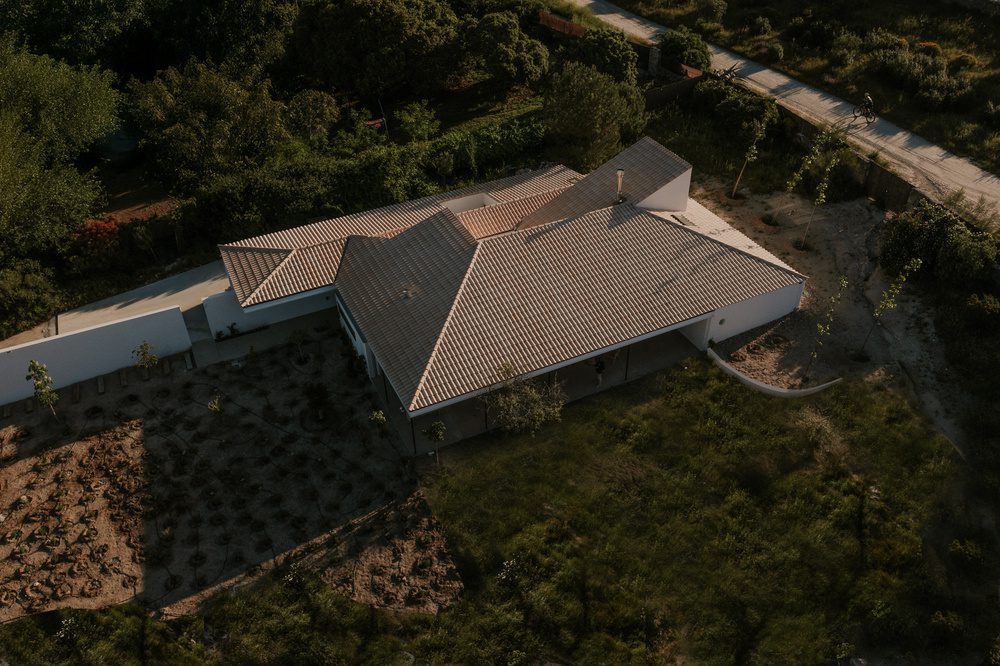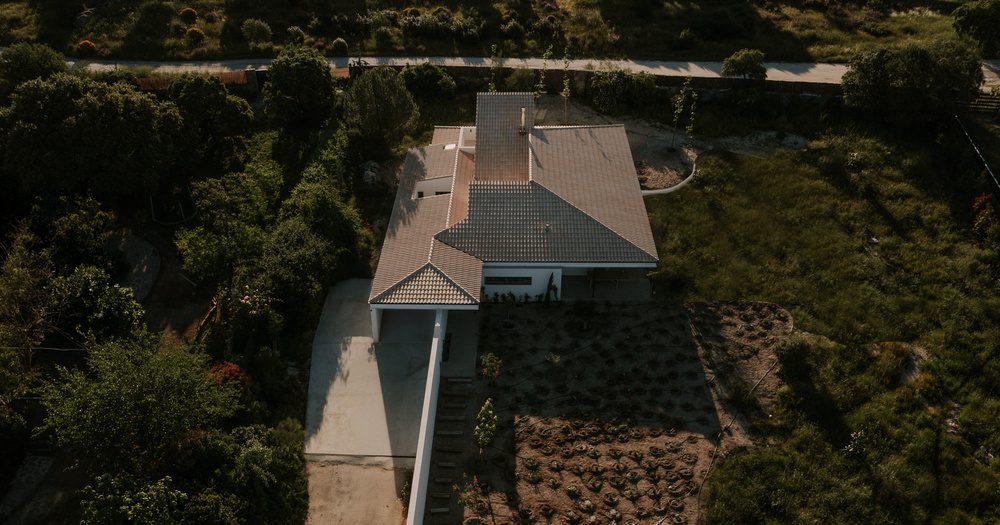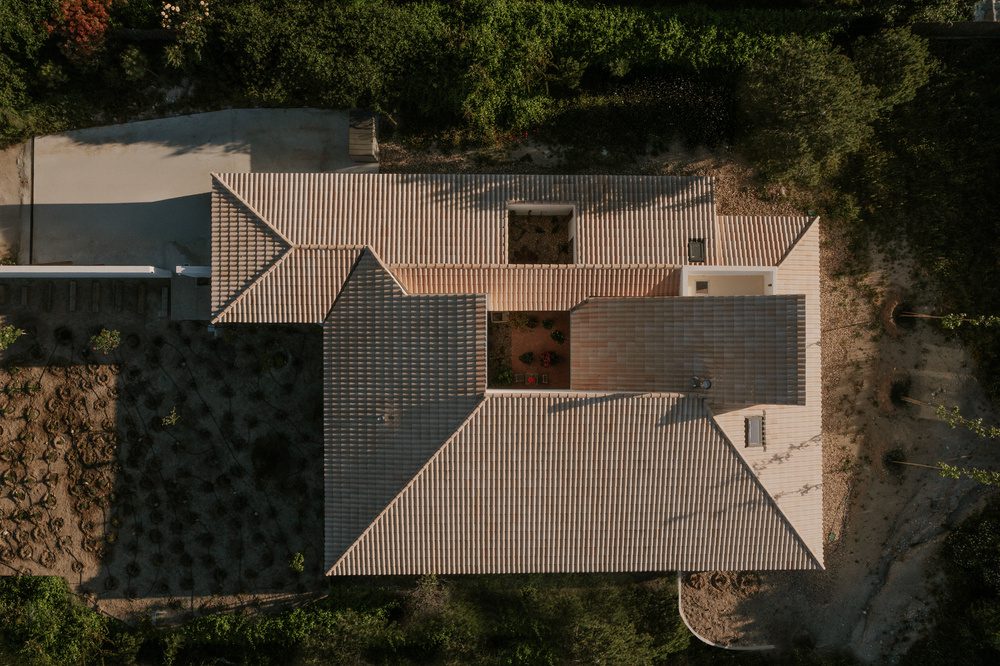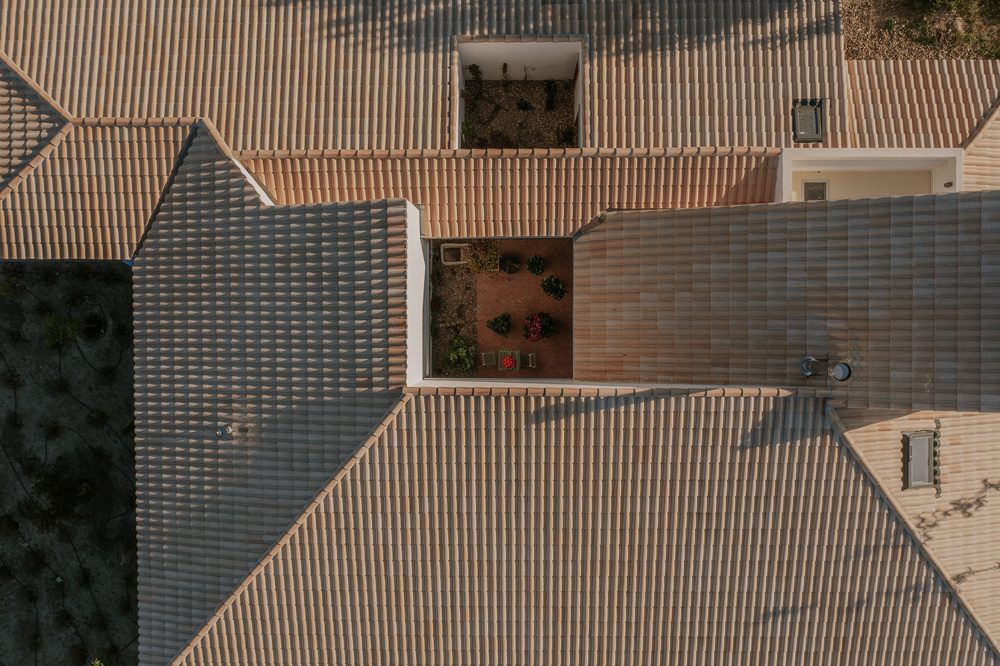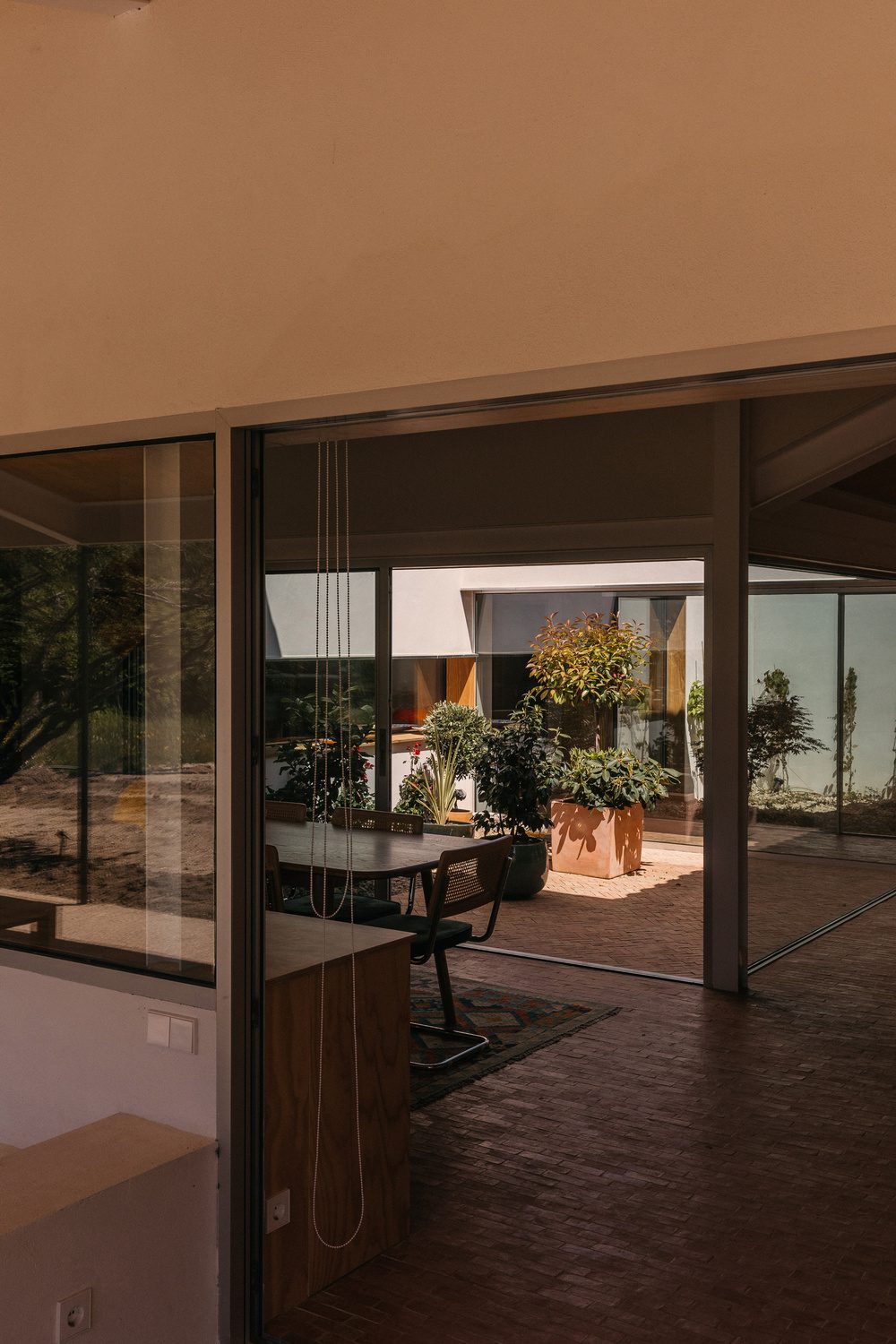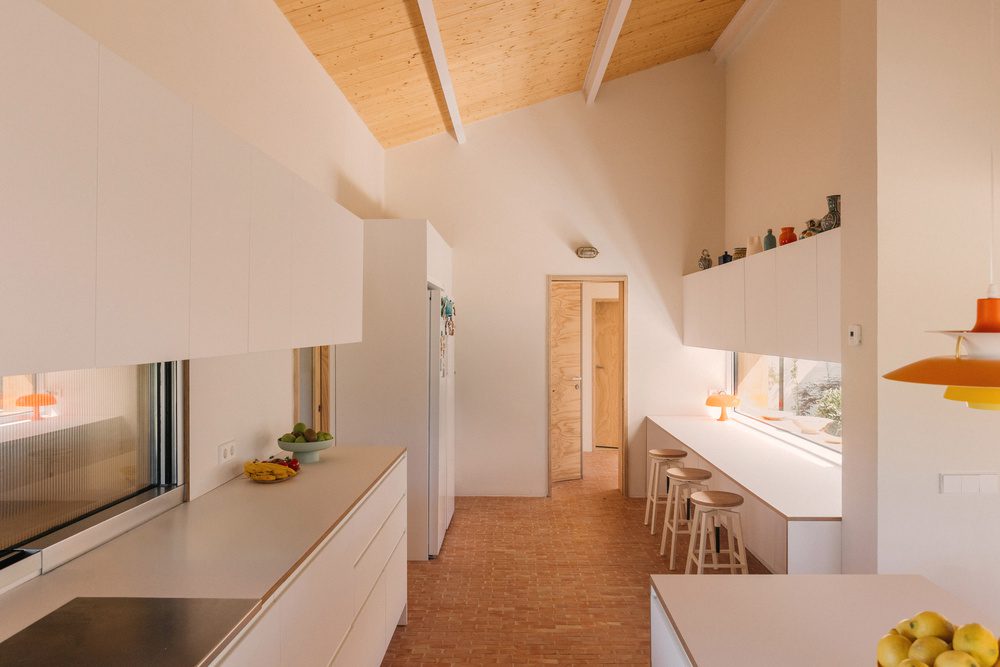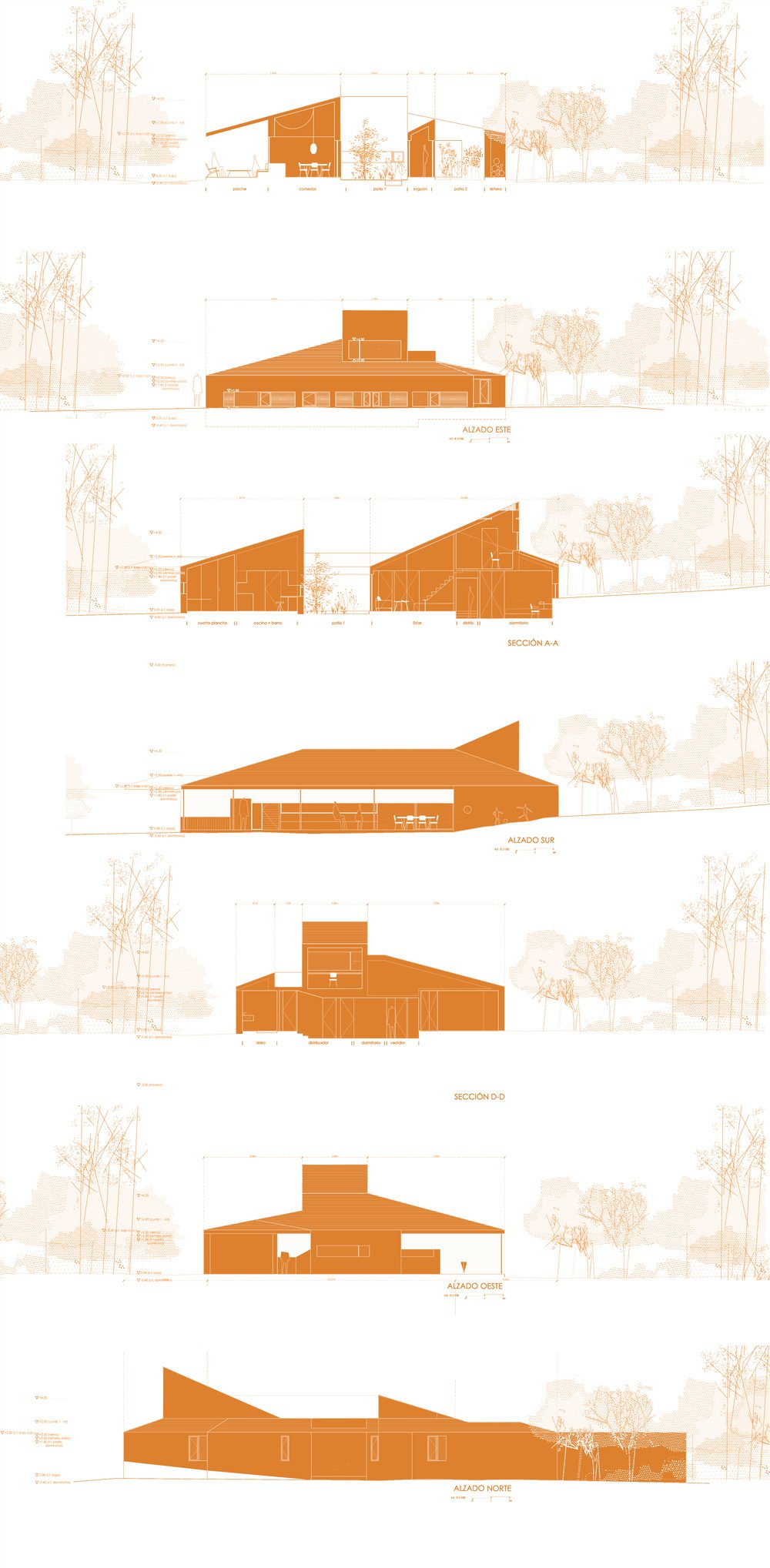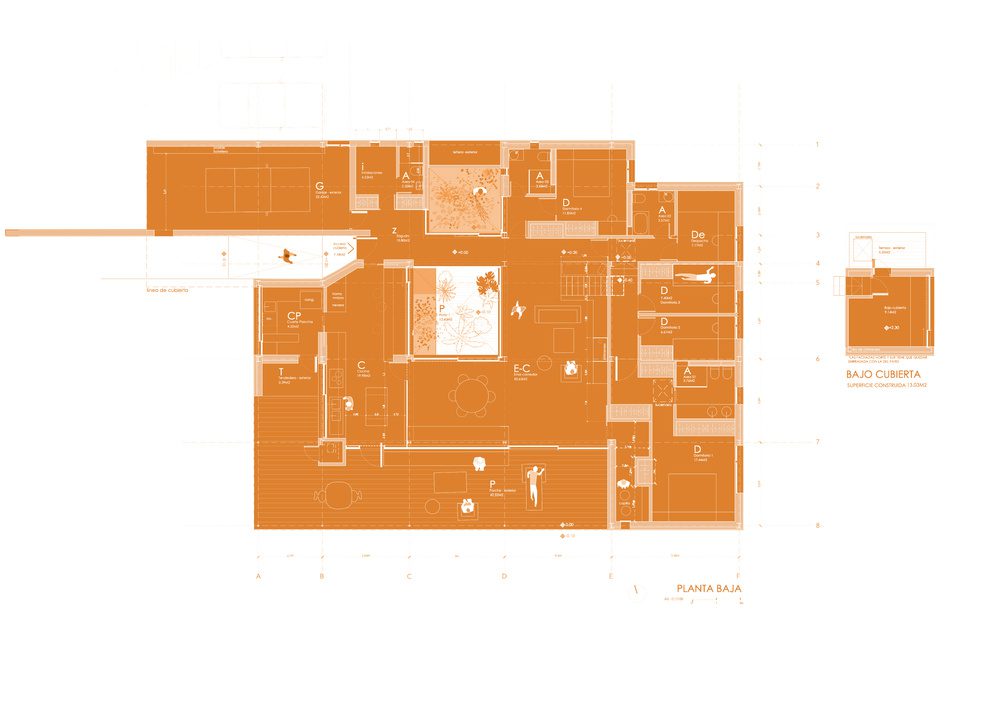


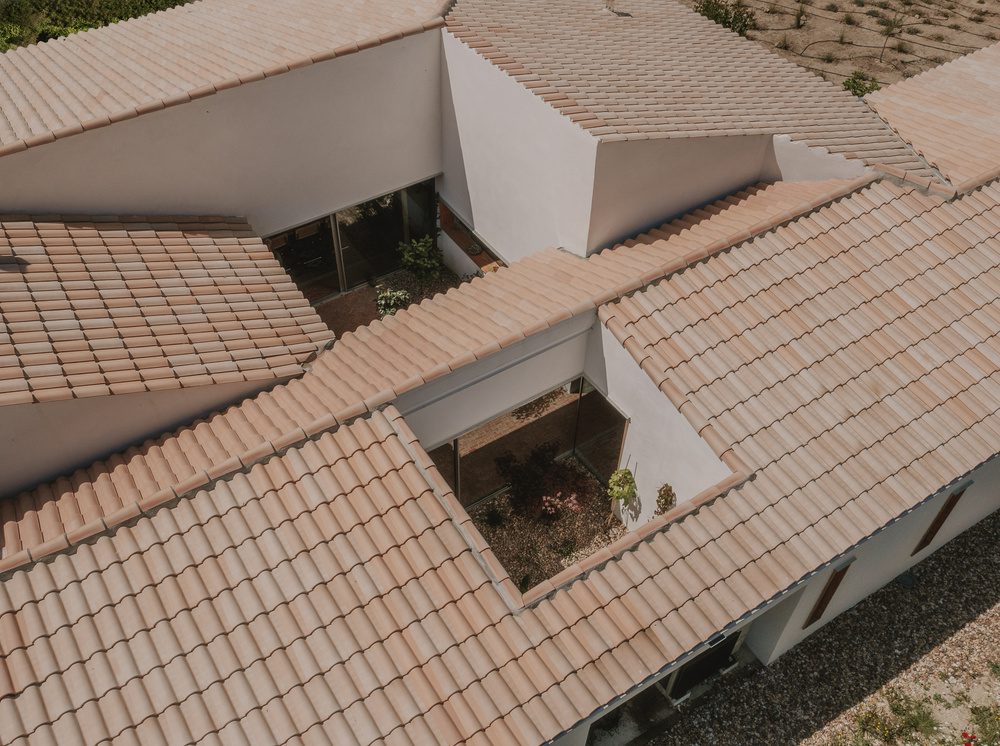
Rosa María House is organized around two patios that give shape to the space and infuse it with meaning. They are not merely voids between walls—they are lived spaces that draw the garden into the interior and blur the boundaries between inside and out. In winter, they gather light generously; in summer, the water in the reflecting pool brings coolness and a gentle murmur that quietly accompanies life.
© Paco Marín
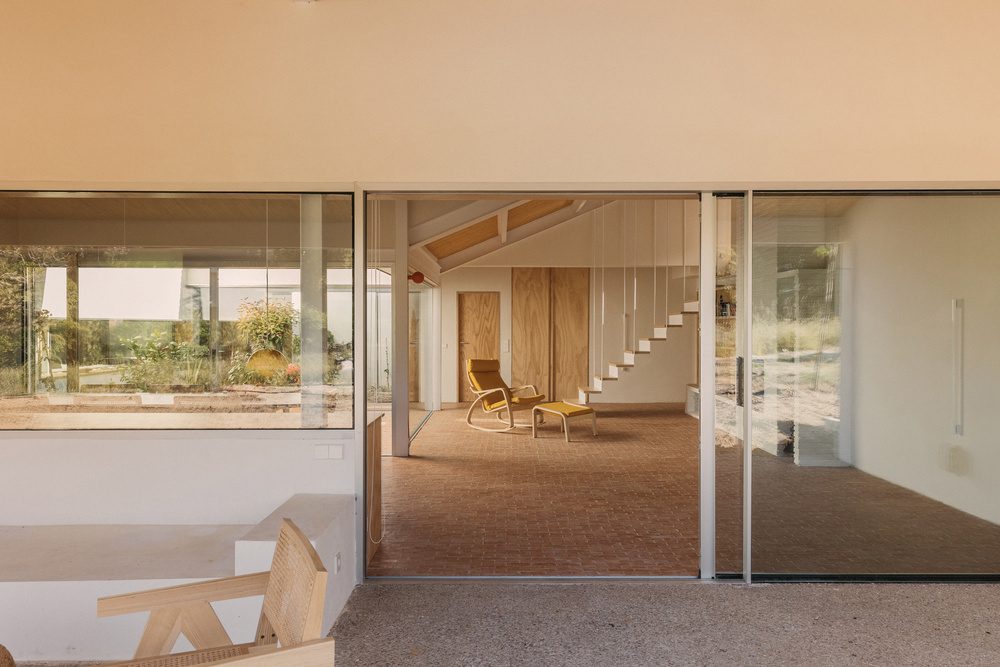
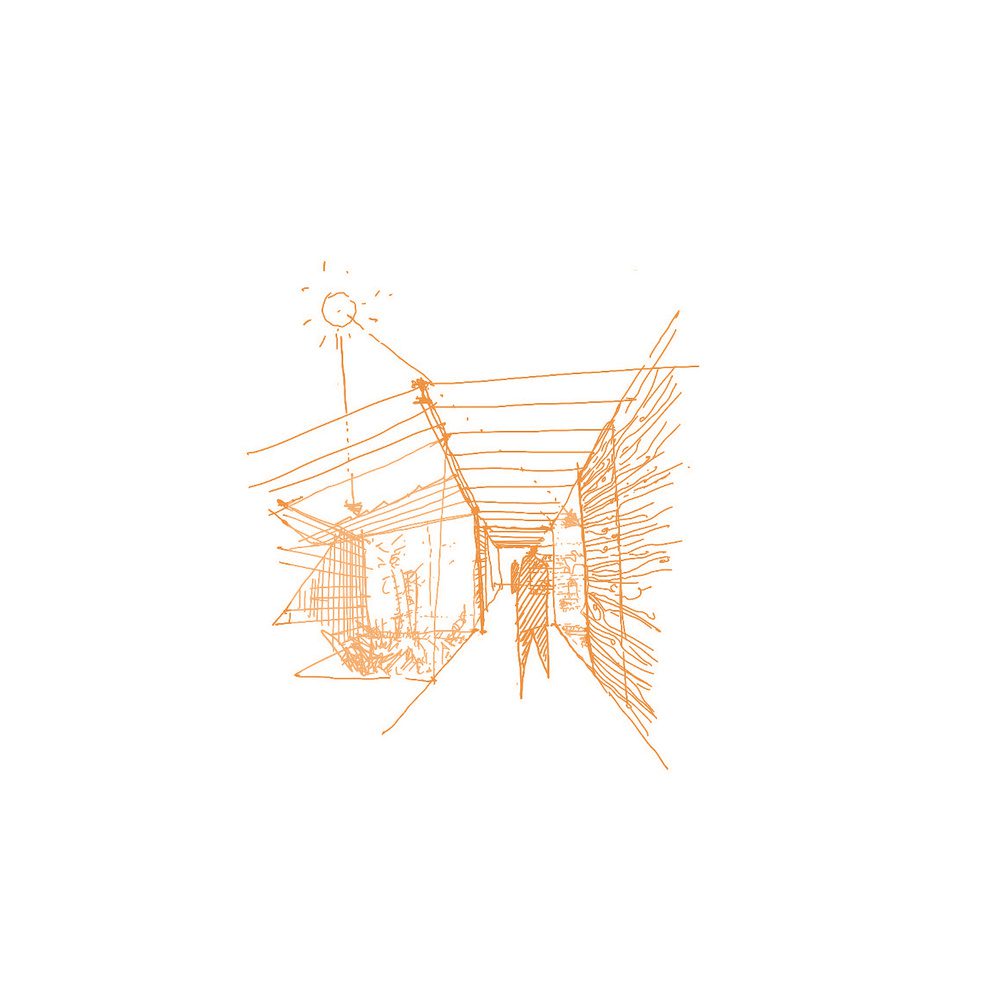
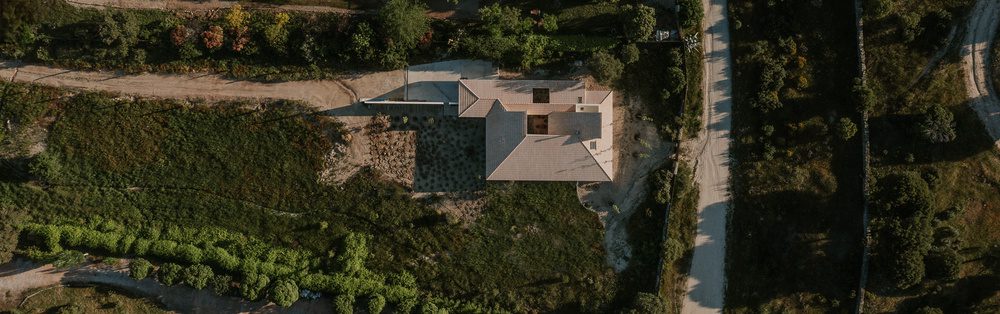
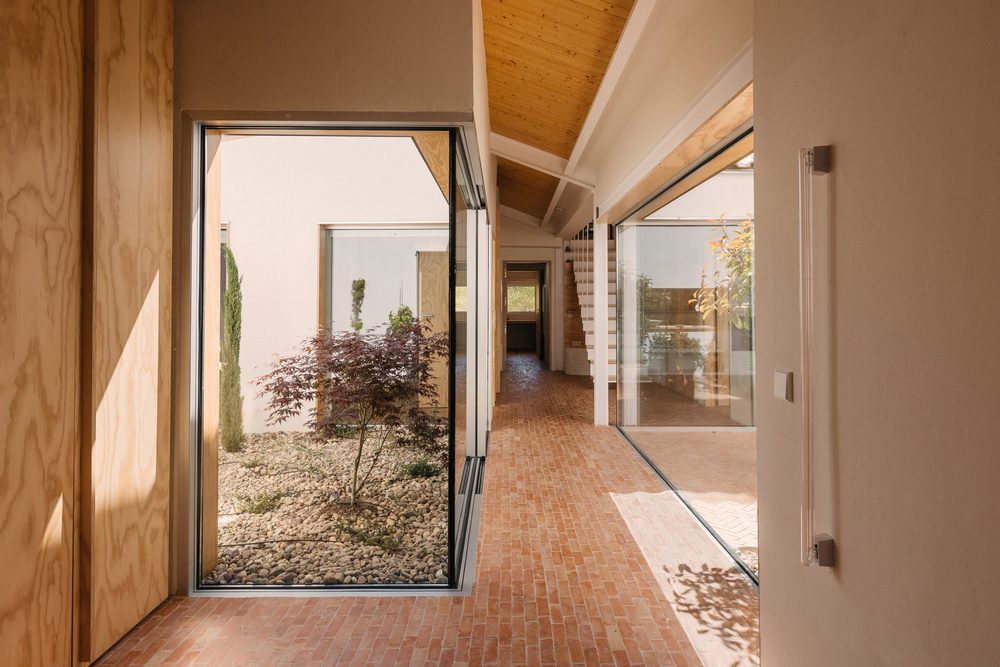
The entrance to the house unfolds as a measured, almost ceremonial sequence. A long white wall guides the approach with discretion, leading to a porch shaded by wooden slats. From there, a gentle, elongated ramp begins to ascend almost imperceptibly, as the space narrows and the light gradually dims. The transition from exterior to interior, from brightness to shadow, is thus carefully amplified. The entrance hall maintains this restrained height, and a faint, filtered light begins to seep in through the patios, which naturally guide and structure the path. It is they who set the rhythm of the house, leading toward the main space, where the volume rises and natural light finally floods in.
© Paco Marín
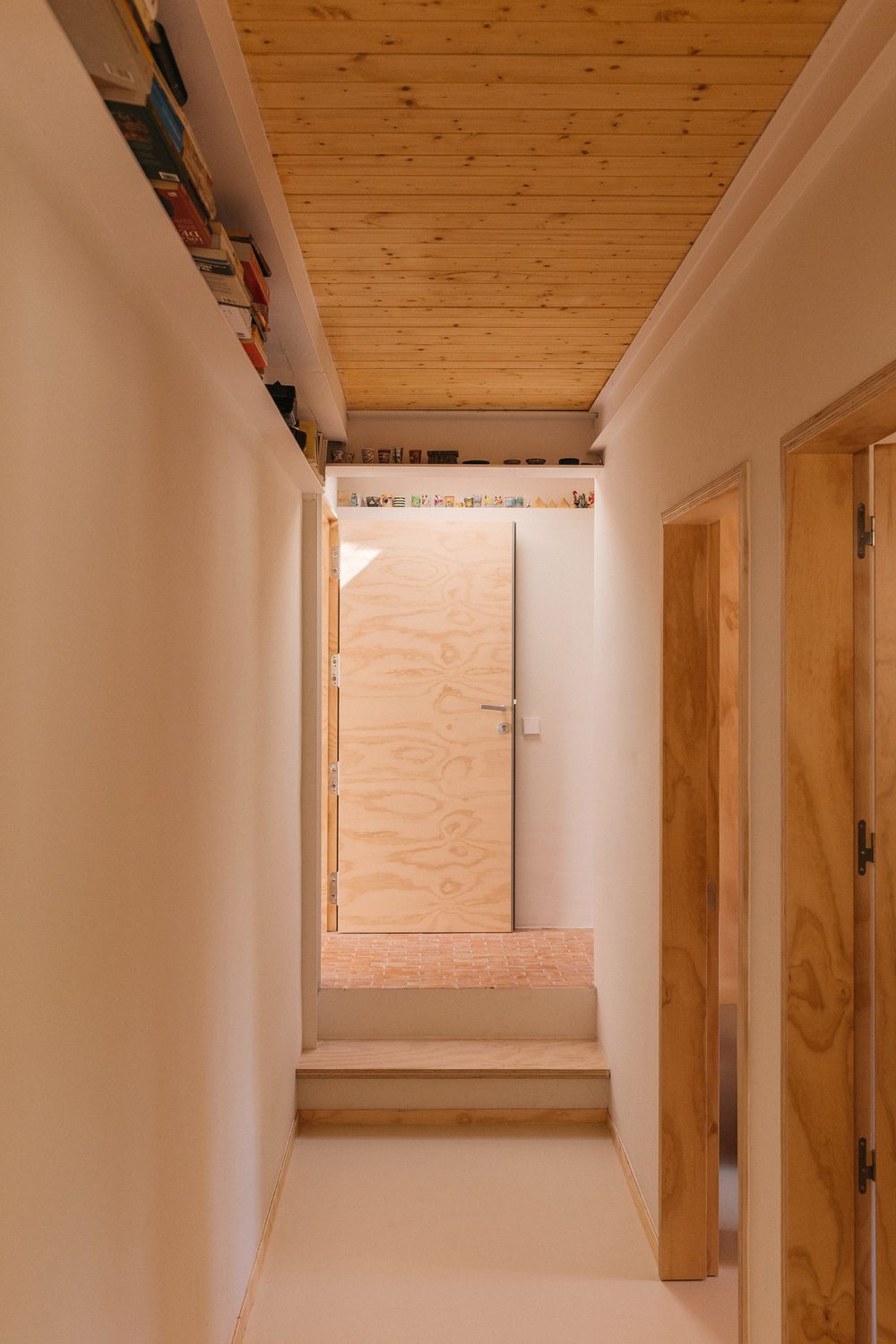
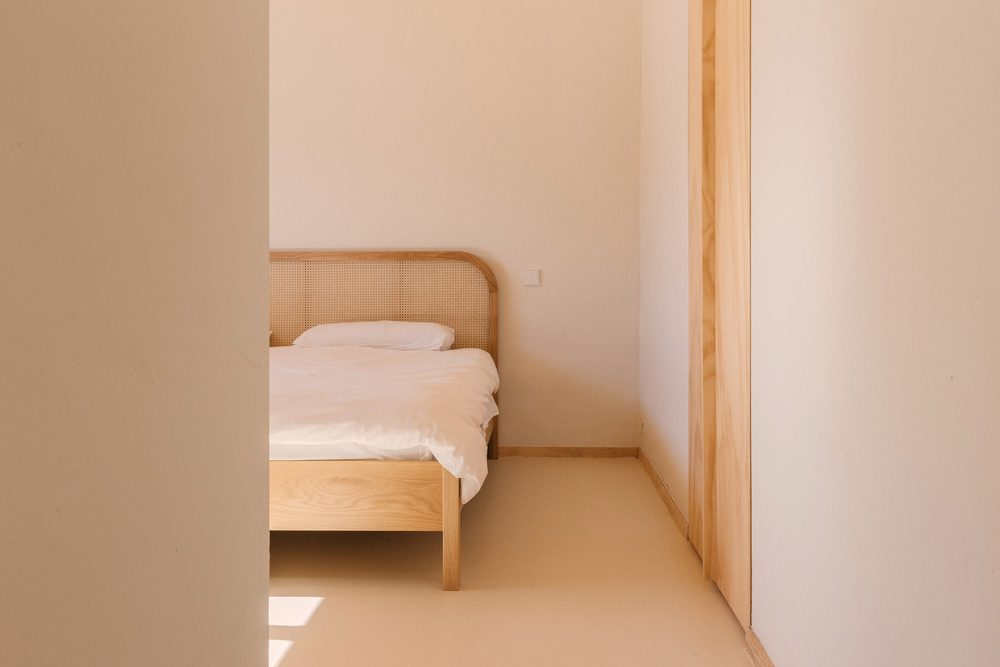
The architecture opens up only then—after a quiet, deliberate journey full of intention. The project stems from a search for the essential: proper orientation, serene proportions, and honesty in the use of materials. The bedrooms face east, welcoming the morning sun, and are set slightly lower than the rest of the house. This difference in level allows for an intimate visual connection with the garden, almost at ground level, and contributes to thermal comfort during the warmer months.
© Paco Marín
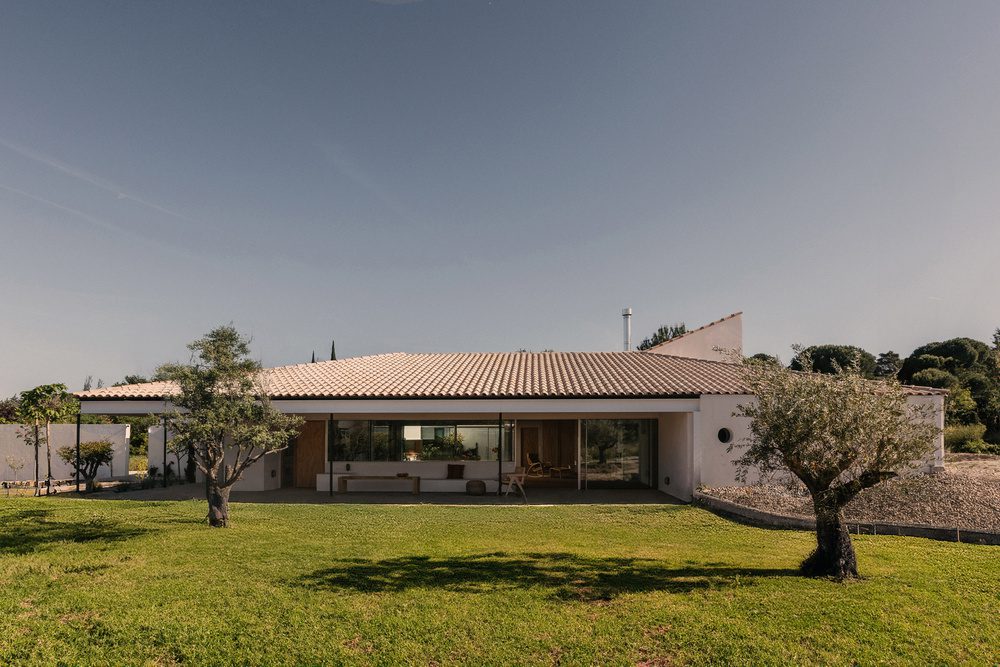
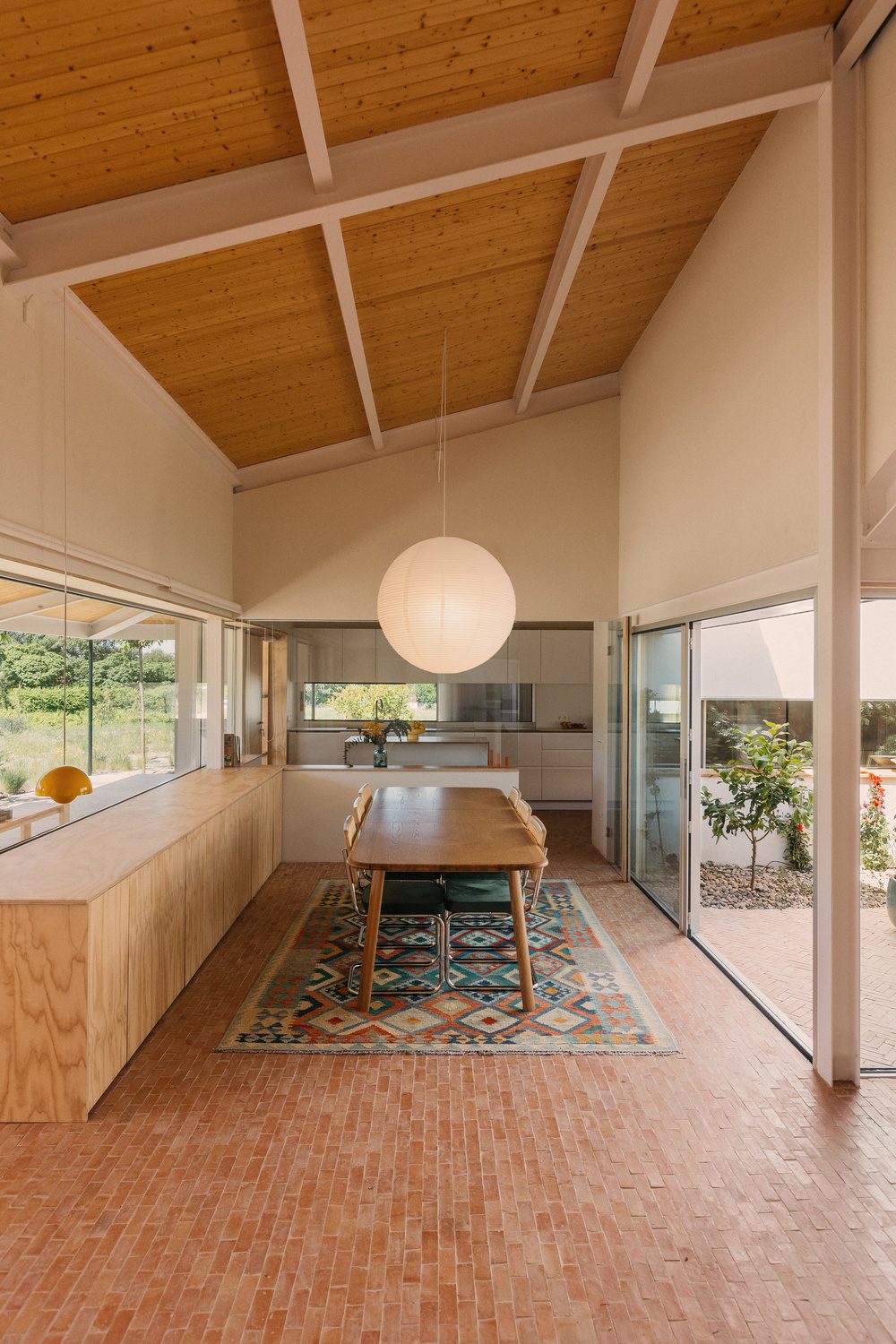
Daily life is organized around the main patio. The living and dining rooms open out toward it and extend to a large south-facing porch that shields the glazed openings from excessive sunlight and allows for a way of living on the threshold between interior and exterior.
© Paco Marín
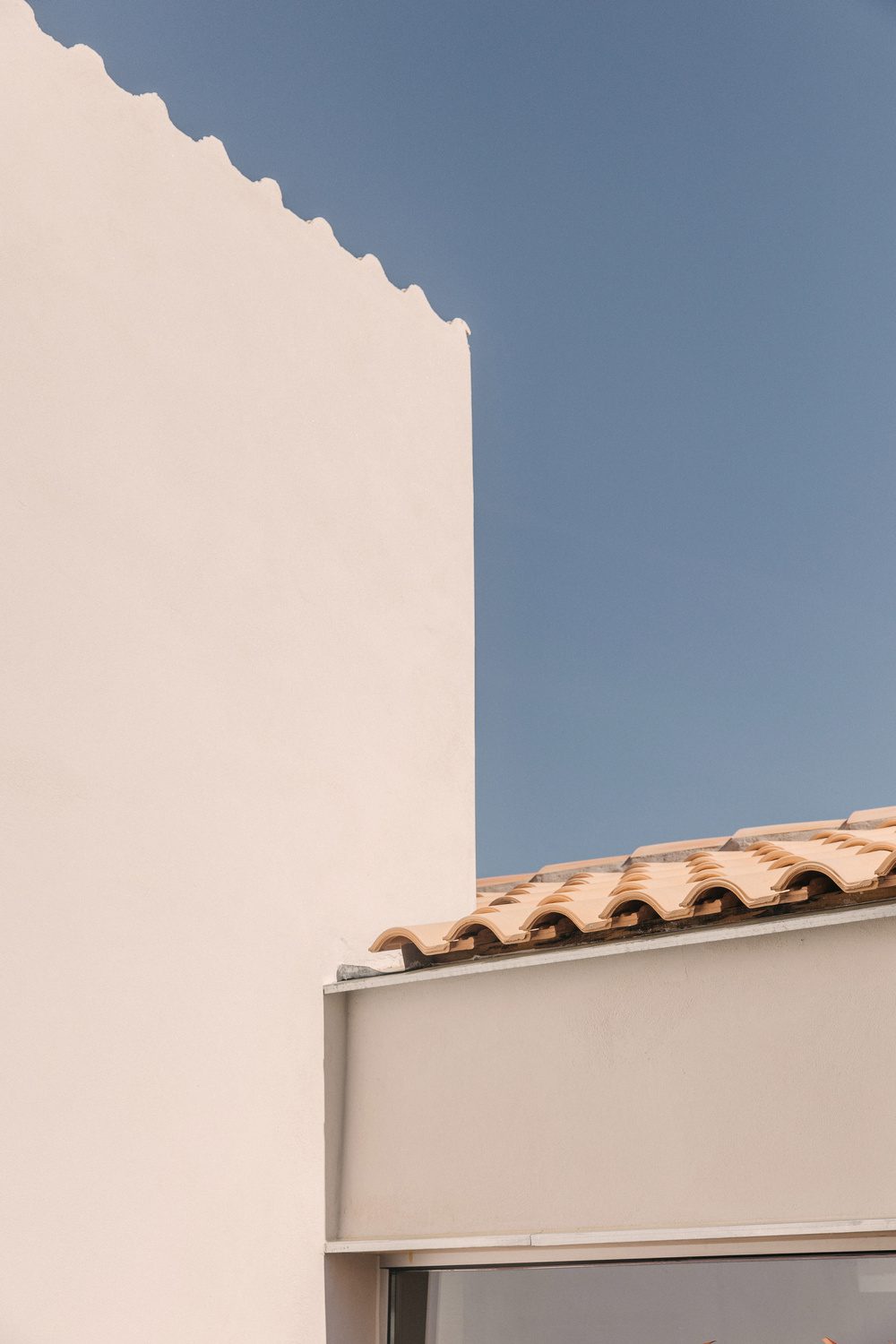
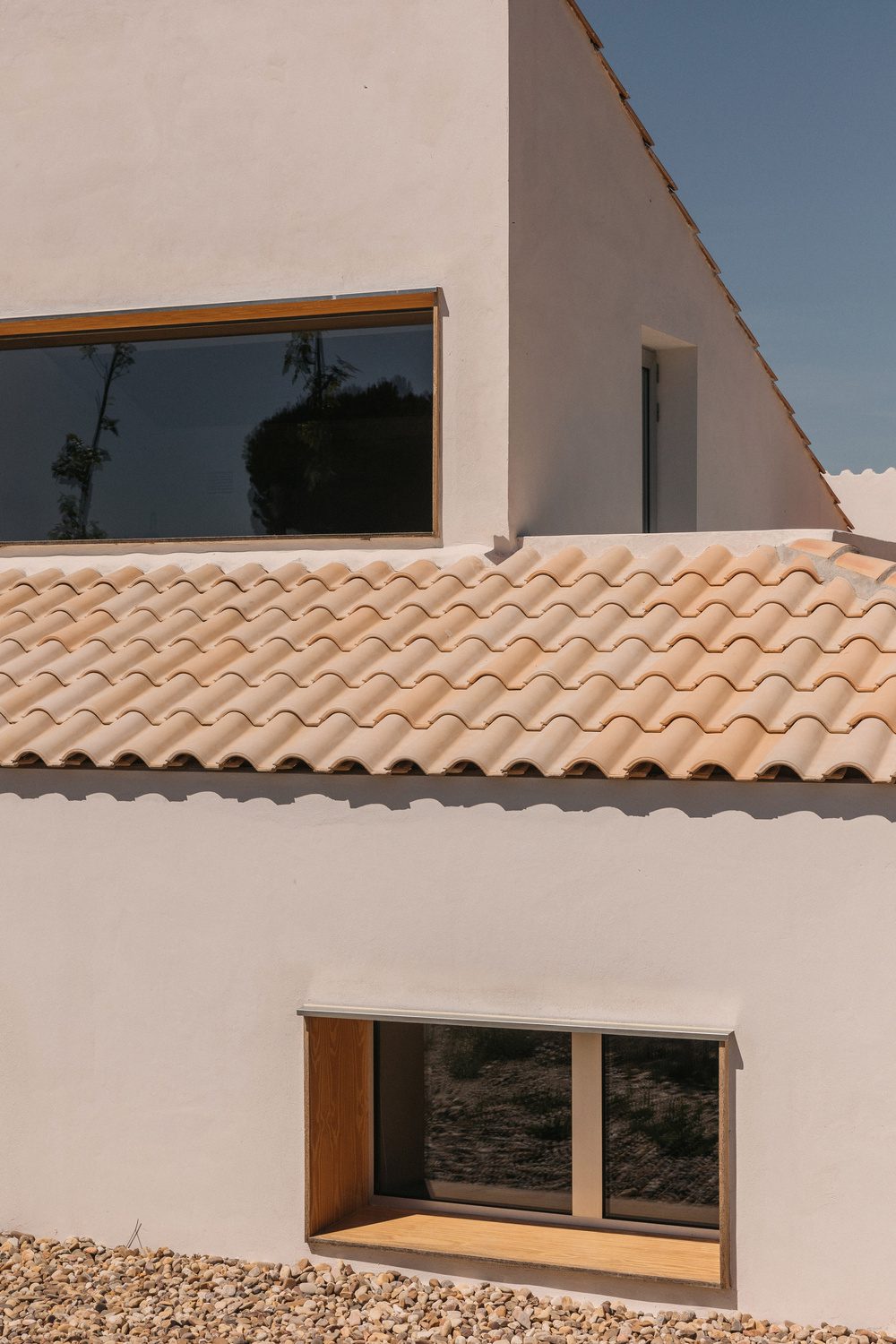
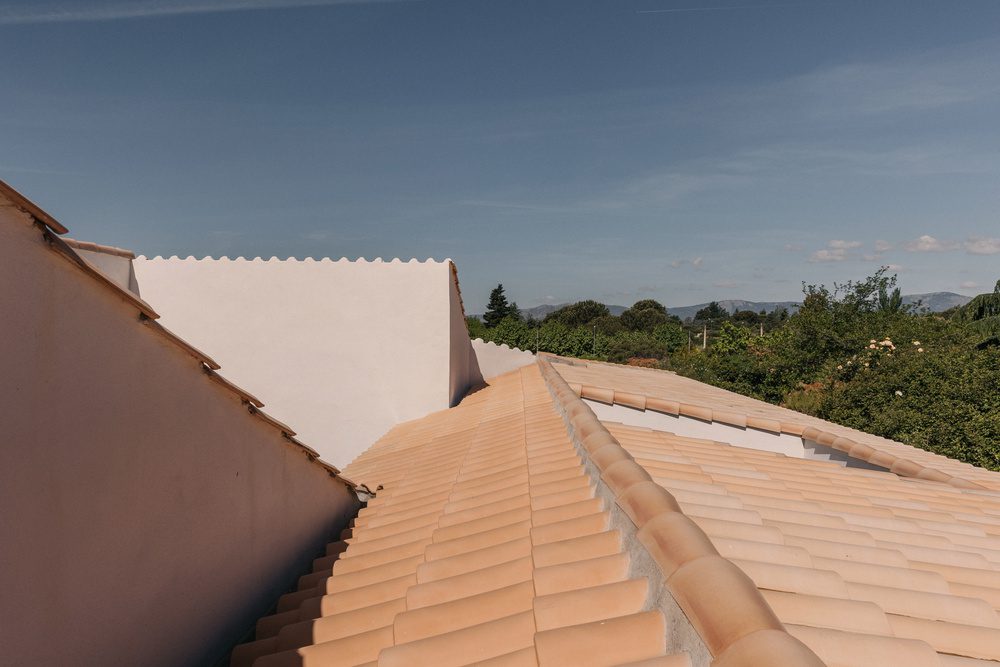
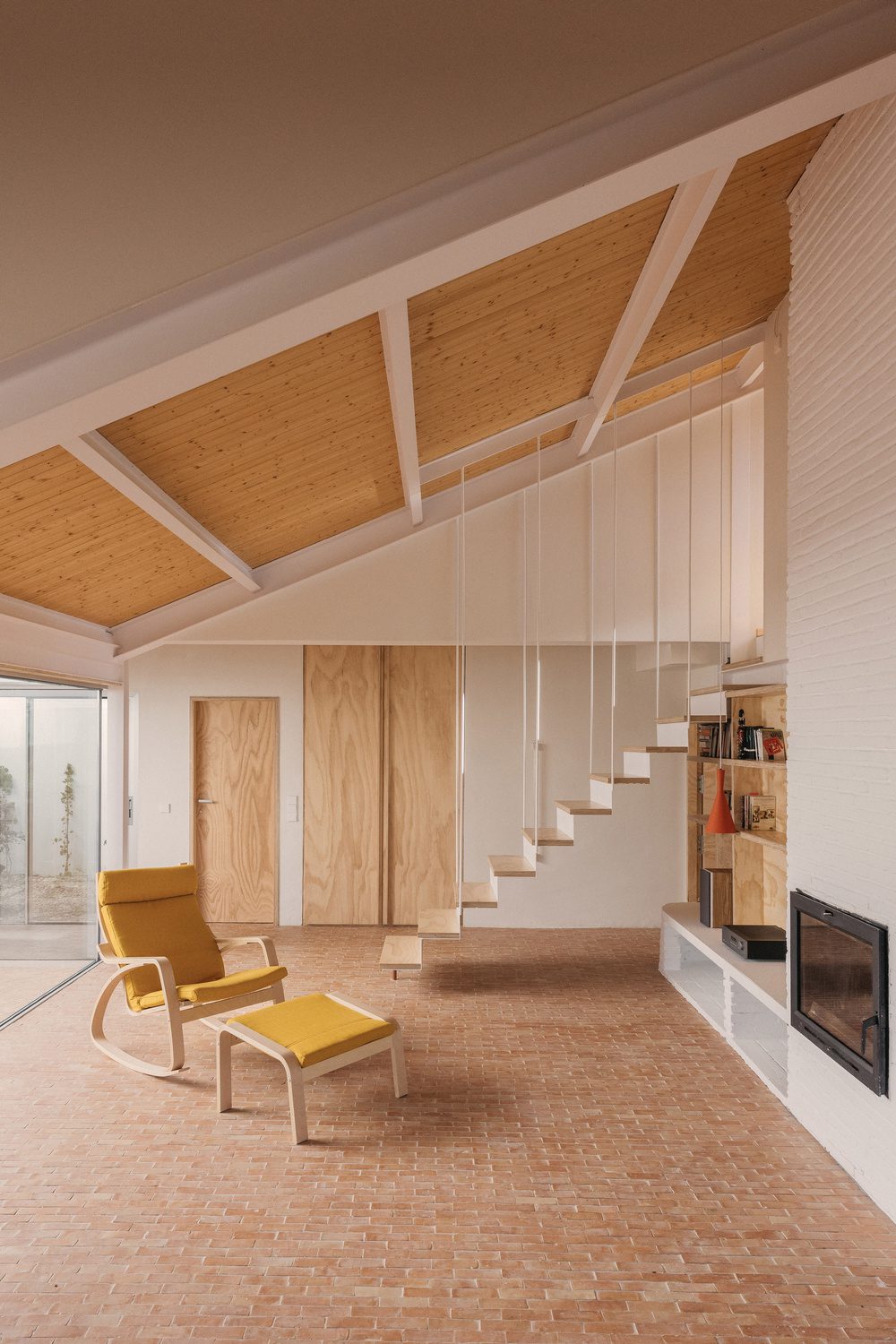
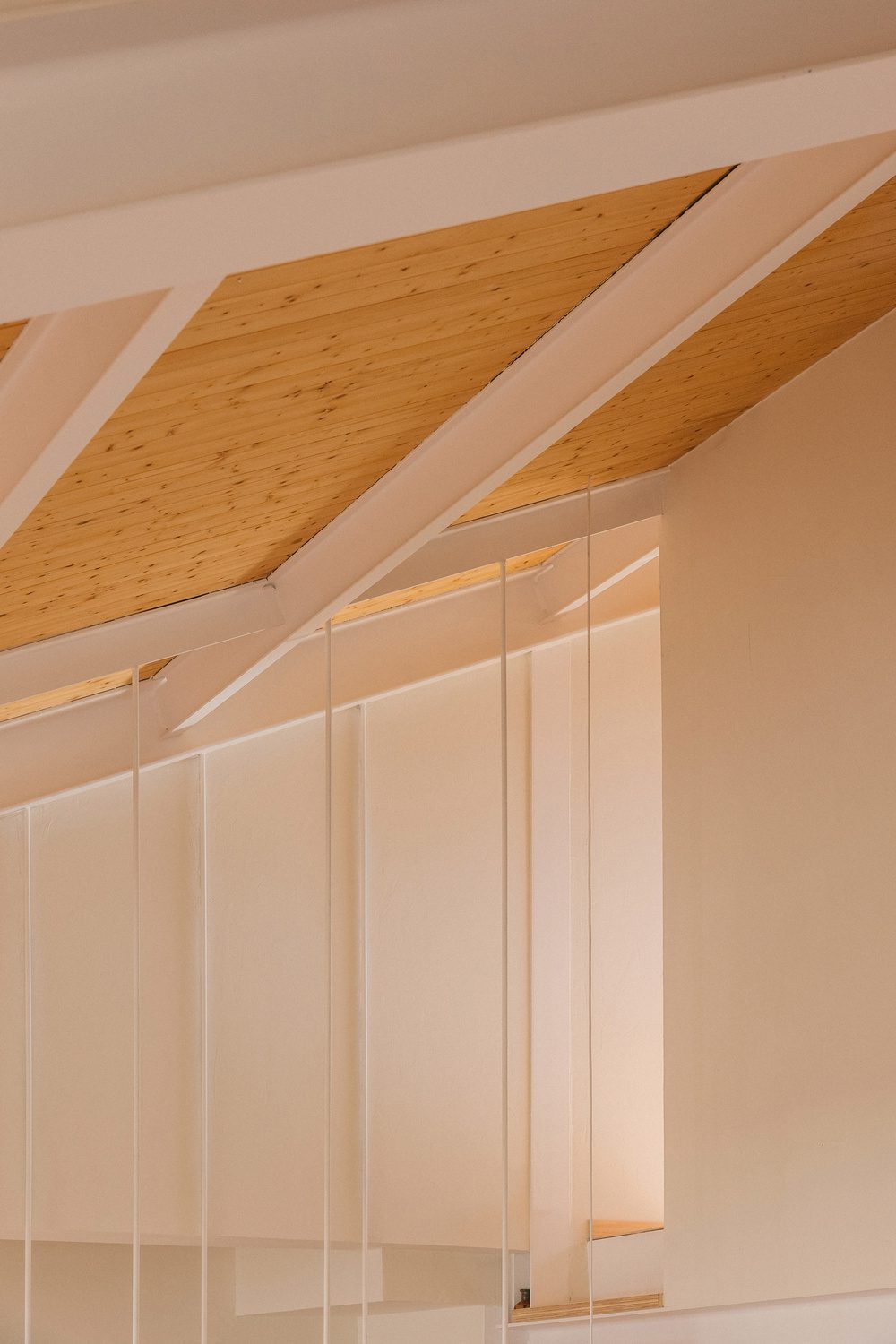
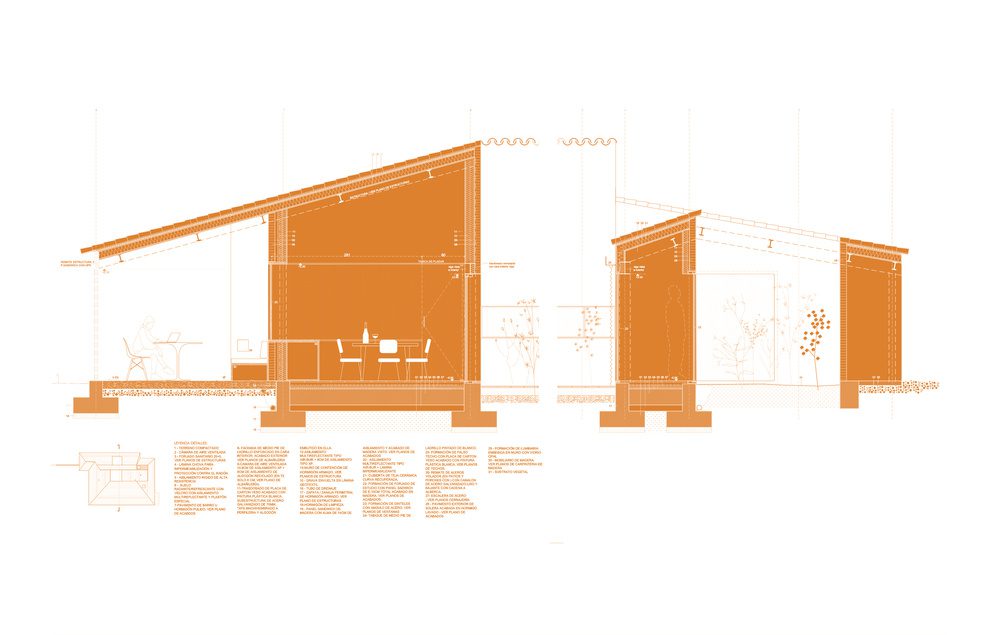
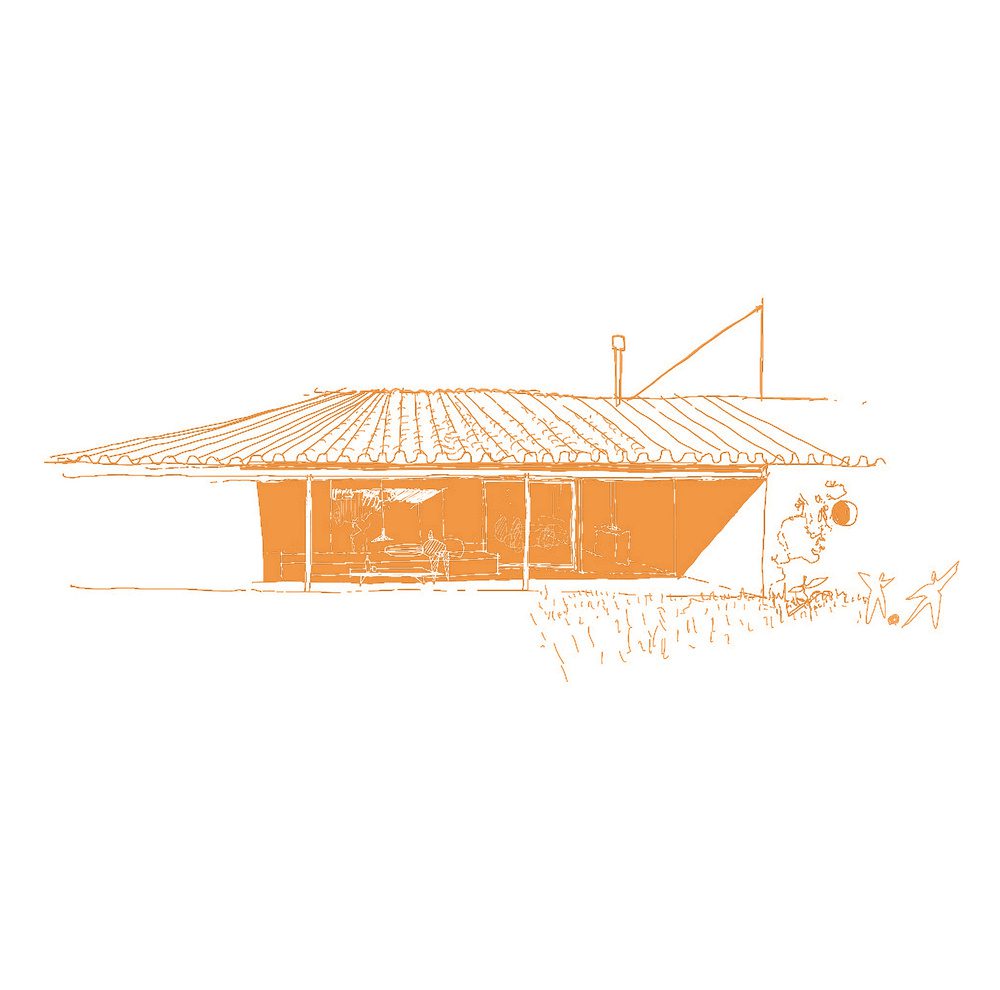
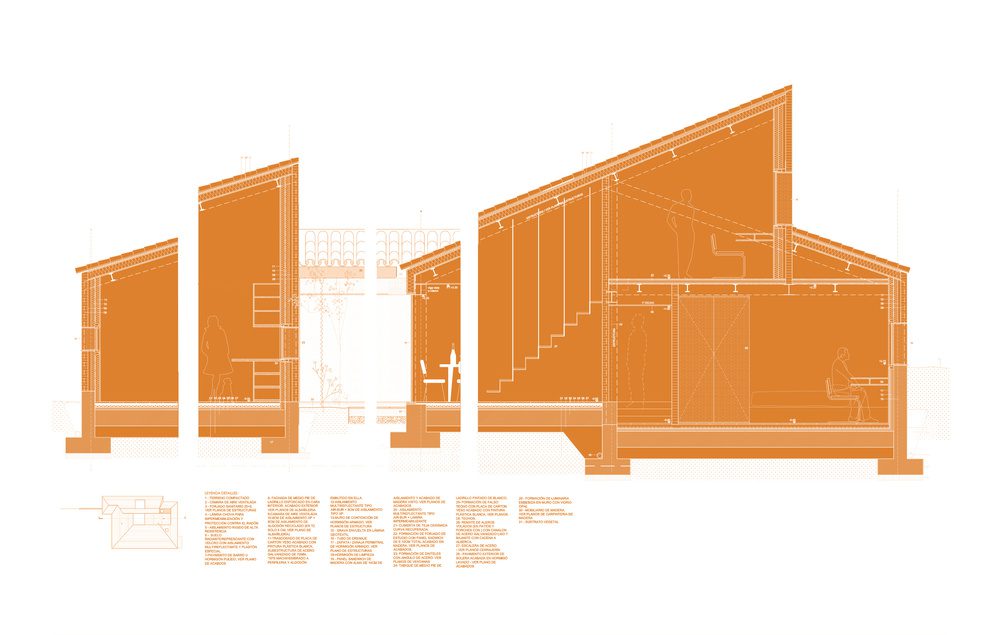
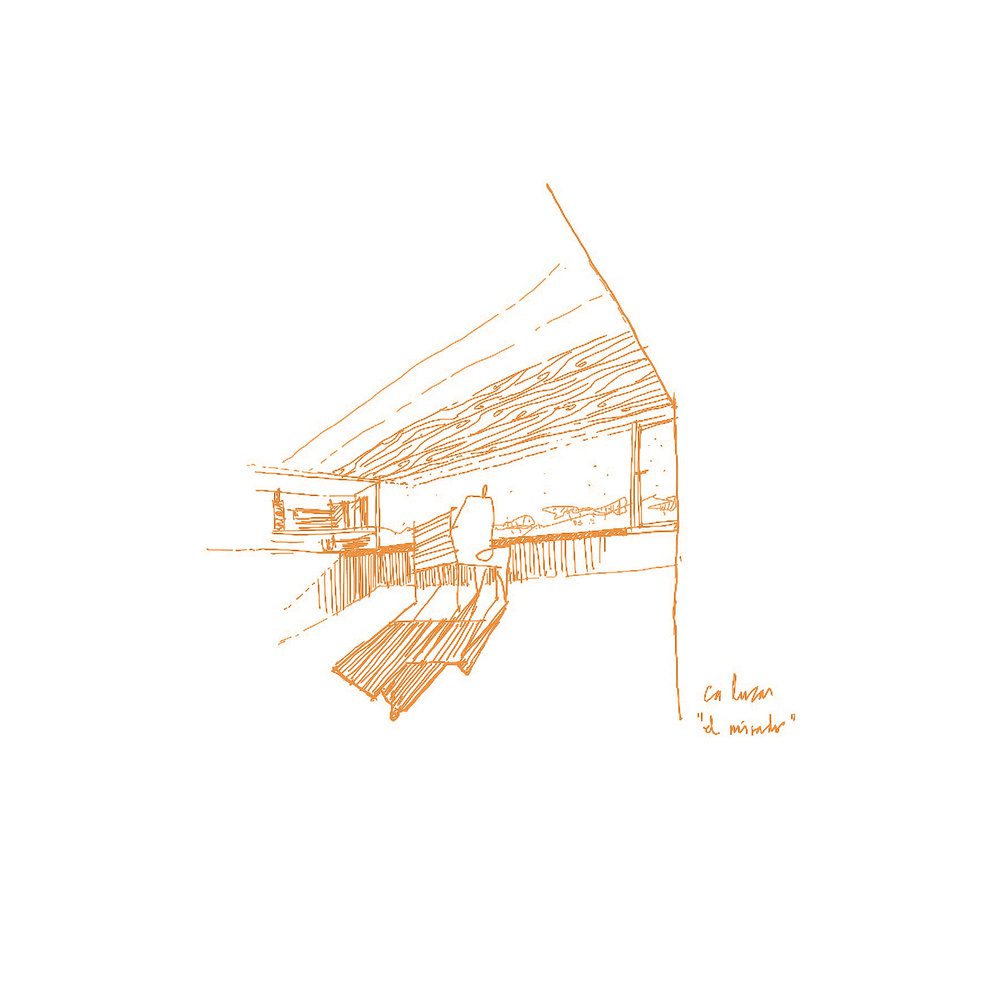
The roof does more than simply cover; it folds with precise geometry, gathering and softening the light, creating an expression that is sober yet distinctive. From the volume that rises above the rest of the house sits the study—a suspended space for work and contemplation, visually connected to the surrounding oaks and granite outcrops.
Sketch – Study
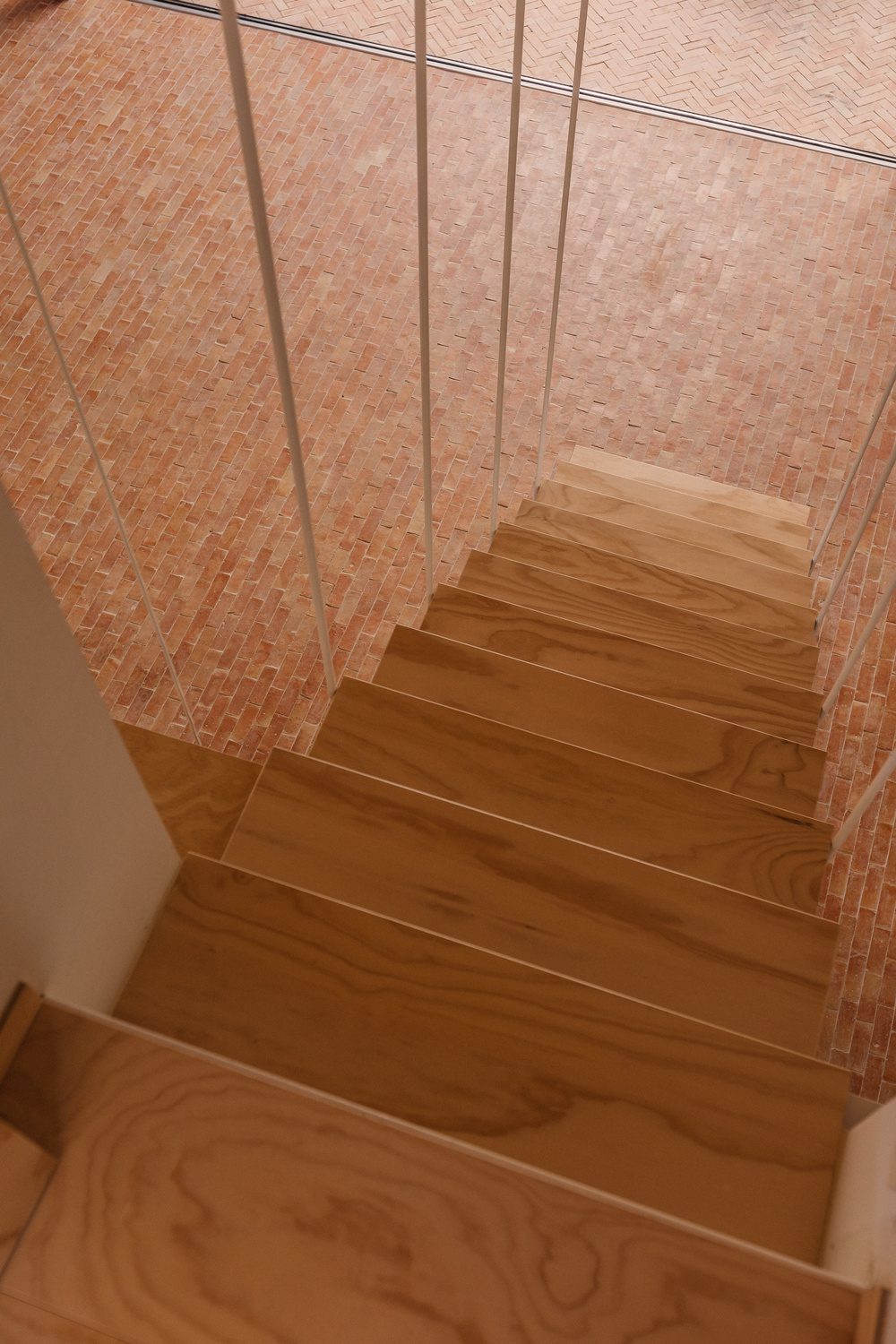
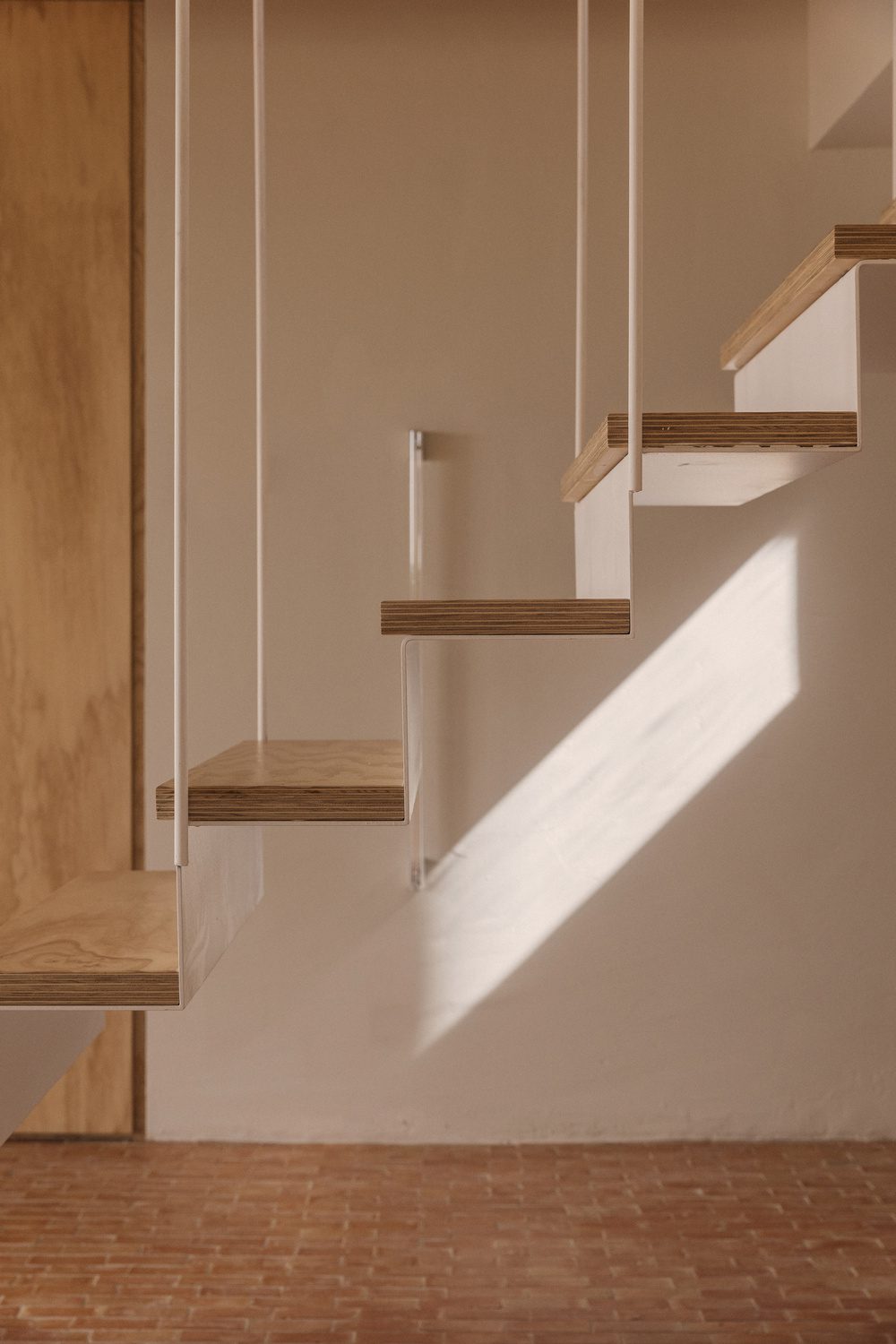
One of the most distinctive elements of the project is the staircase leading to this study. Light and suspended, made of metal with wooden treads, it floats in space like an autonomous piece. It hangs from the upper structure without direct supports, and its presence elegantly marks the vertical core of the house. It not only leads to the elevated study—facing the hills of Galapagar—but also subtly structures the transition toward the bedroom area, as if guiding the path without dictating it.
© Paco Marín
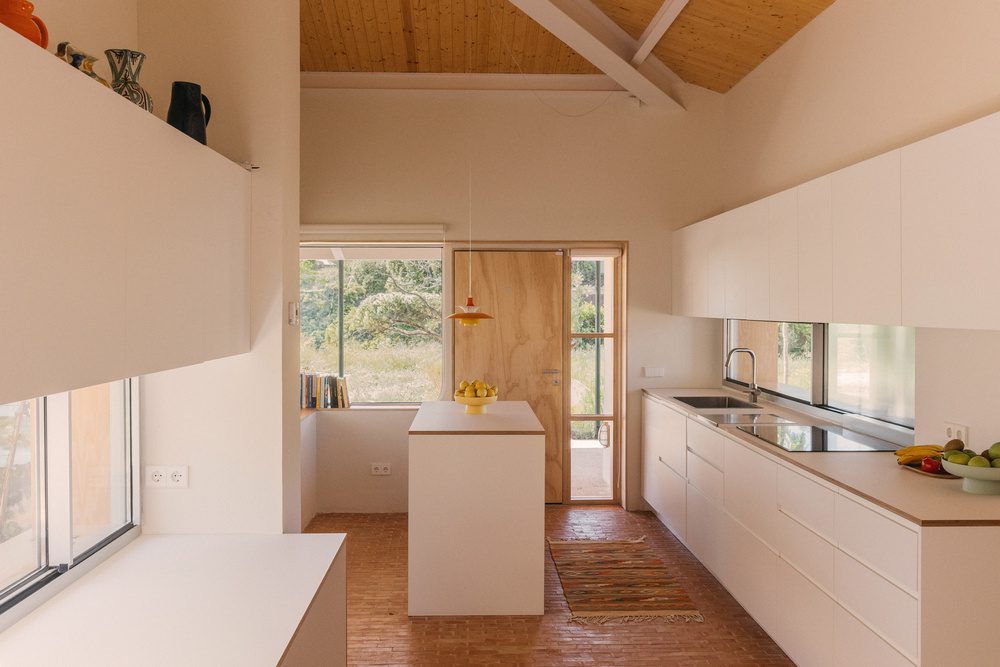
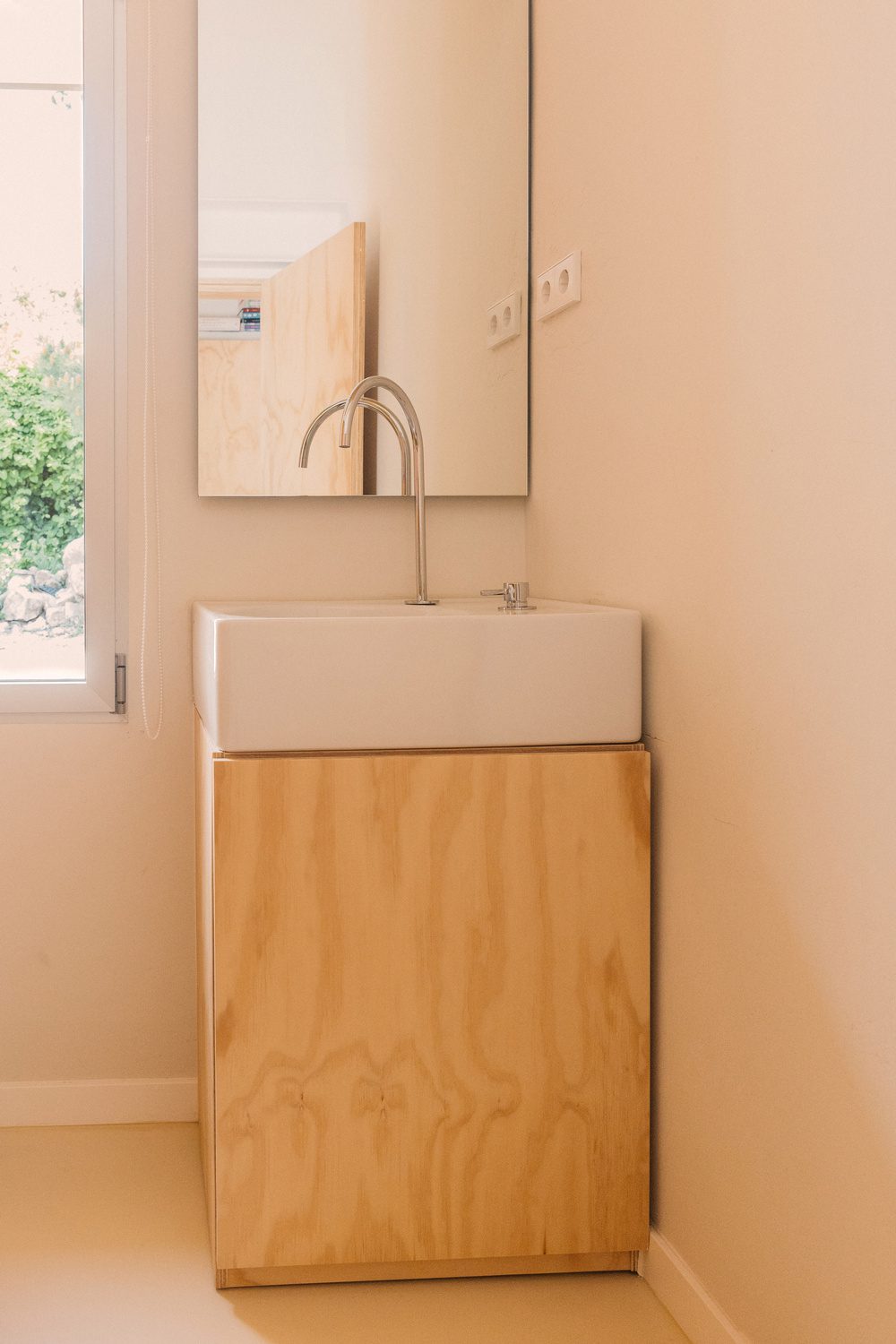
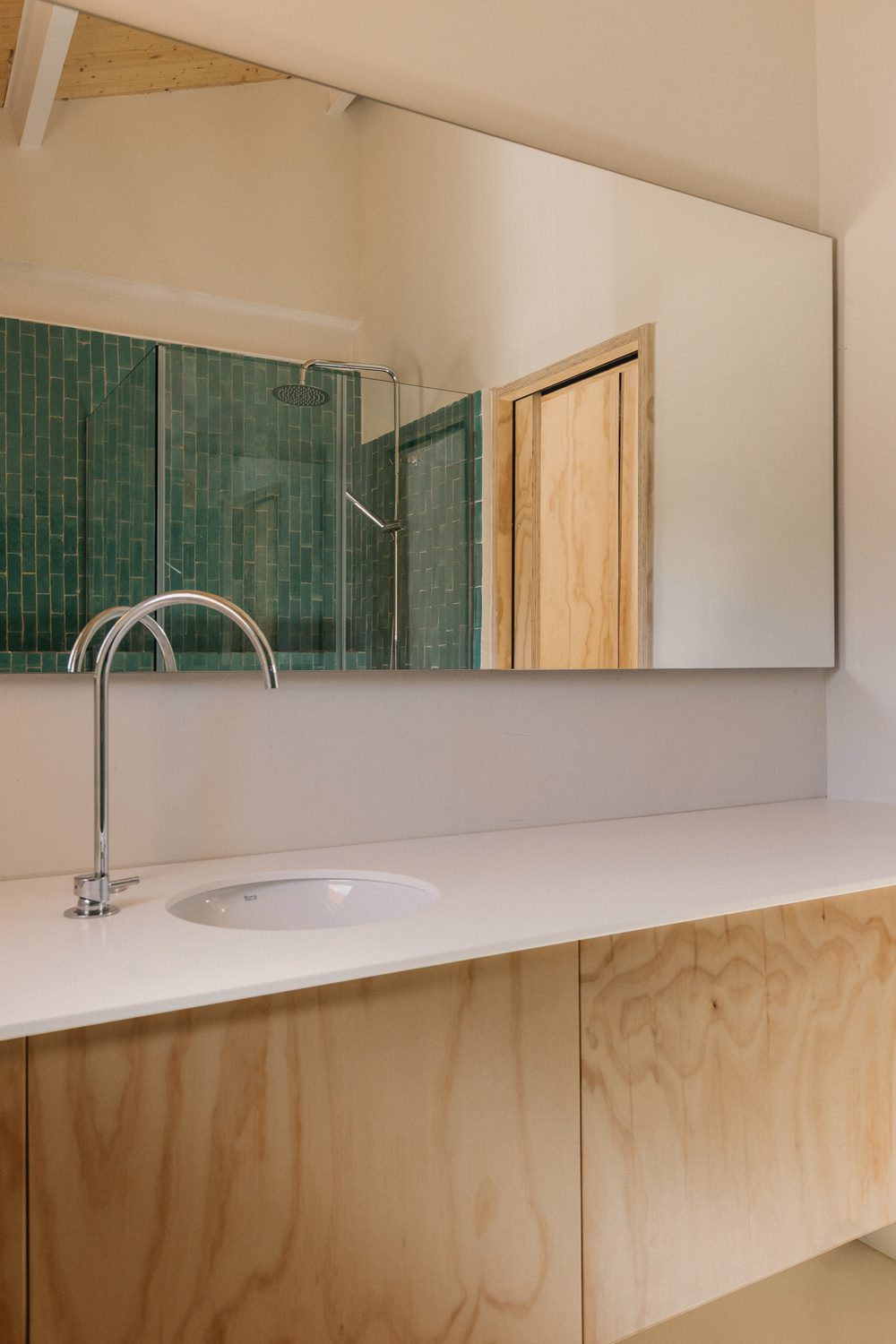
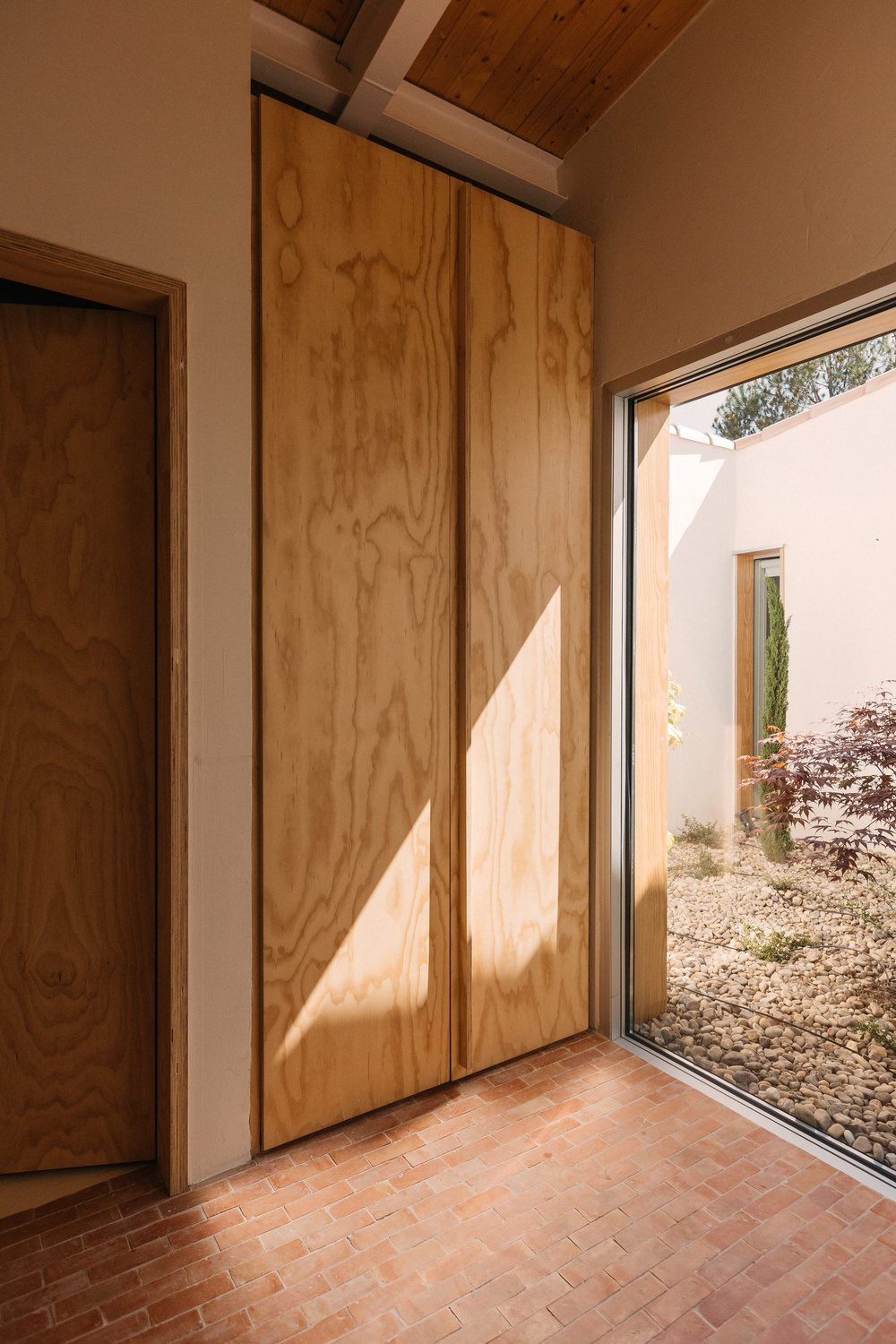
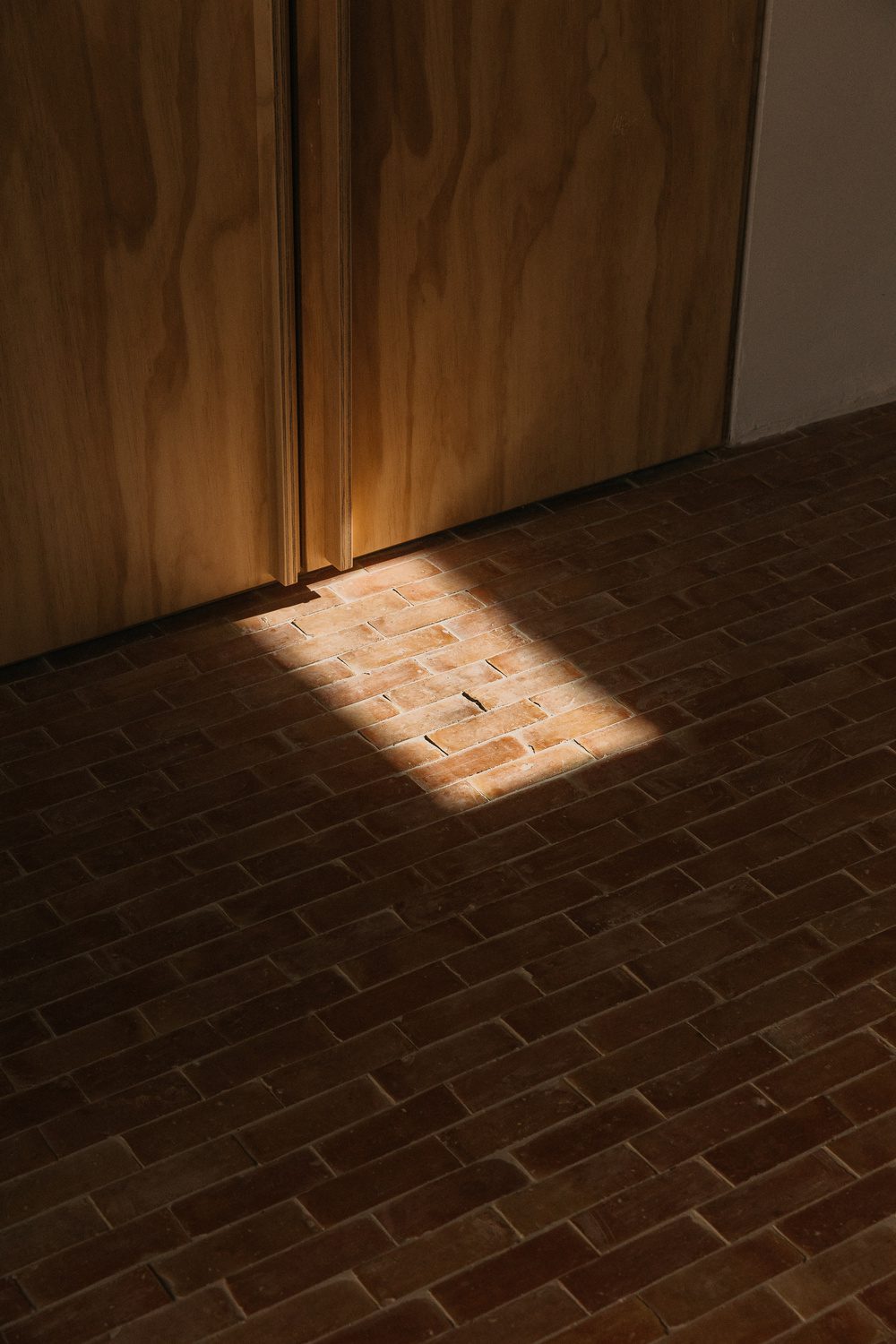
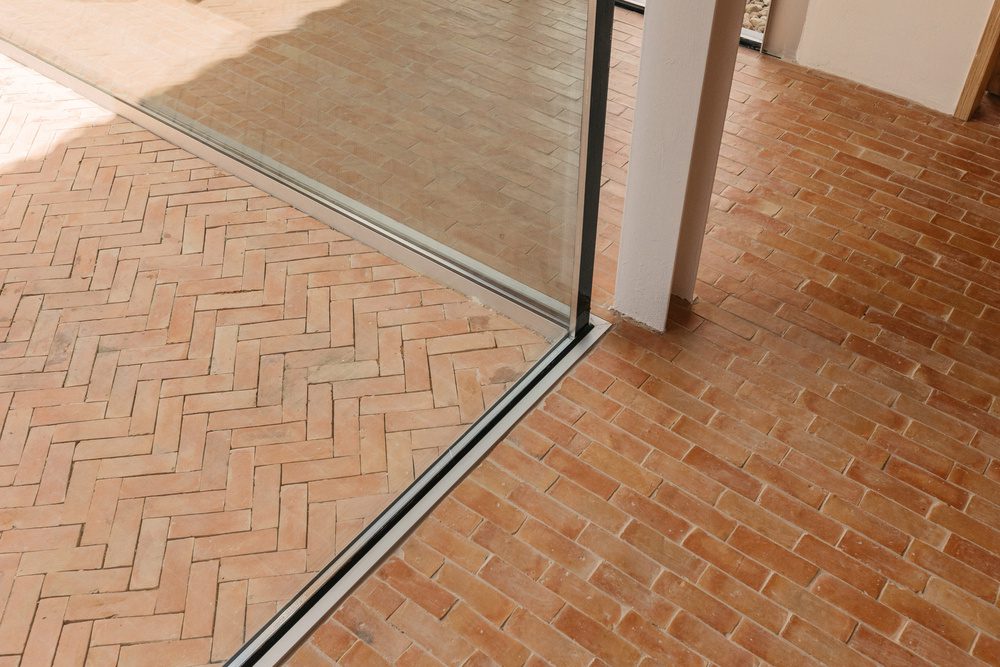
The materials used follow a logic of harmony and permanence over time: whiterendered walls and warm pine wood. The flooring is made of hand-fired clay tiles crafted in Morocco. Each piece, unique and irregular, was carefully laid by Moroccan artisans over the course of several weeks. Their meticulous work took longer than the entire assembly of the metal roof structure, making this floor a true jewel of the house.
© Paco Marín
That structure, by contrast, was prefabricated in a workshop and arrived on site already cut, allowing for quick and precise installation—a clear expression of efficiency and control.
© Paco Marín
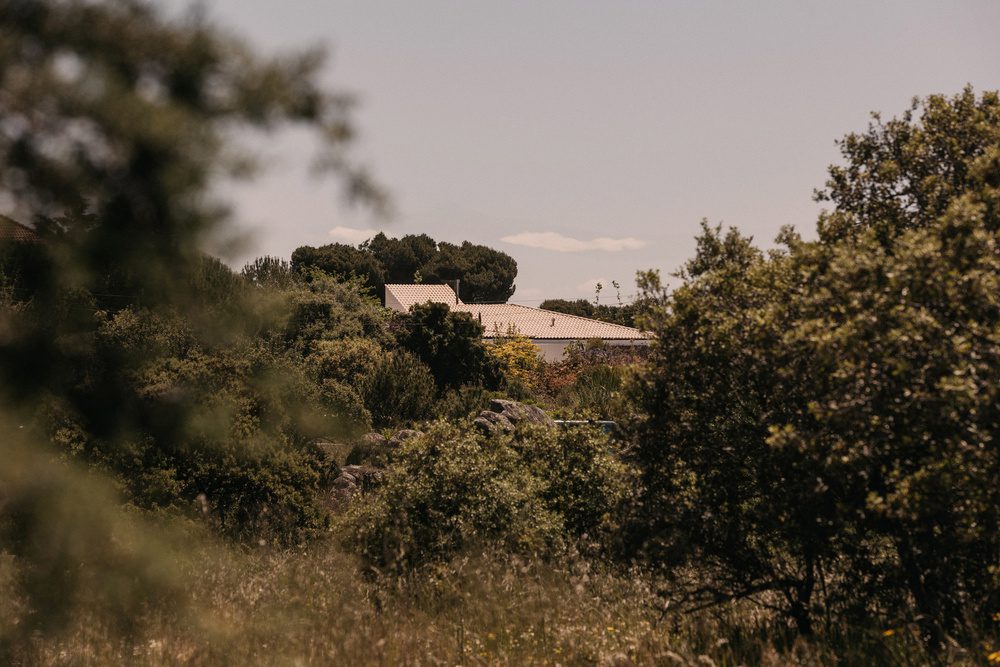
This is not an architecture that seeks to stand out, but a house that allows itself to be inhabited. One that converses with its surroundings and with time, and that aspires— through restraint—to accompany life in a natural and quiet way.
© Paco Marín
This is not an architecture that seeks to stand out, but a house that allows itself to be inhabited. One that converses with its surroundings and with time, and that aspires— through restraint—to accompany life in a natural and quiet way.
Project info:
-
Architects: delavegacanolasso
- Country: Madrid, Spain
- Area: 320 m²
- Year: 2024
-
Photographs: Paco Marín, Studio Cafecito
-
Lead Architects: Ignacio de la Vega, Pilar Cano Lasso