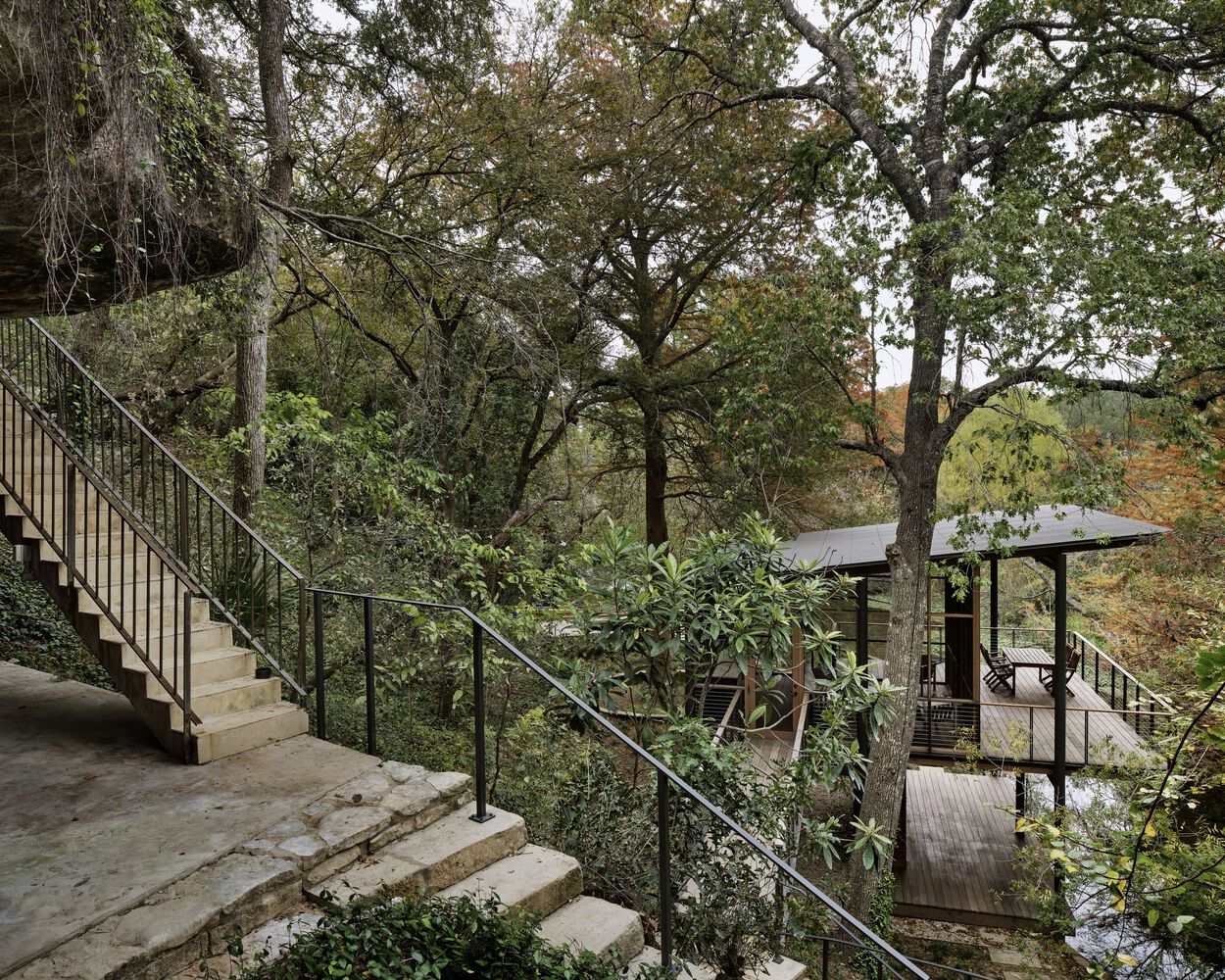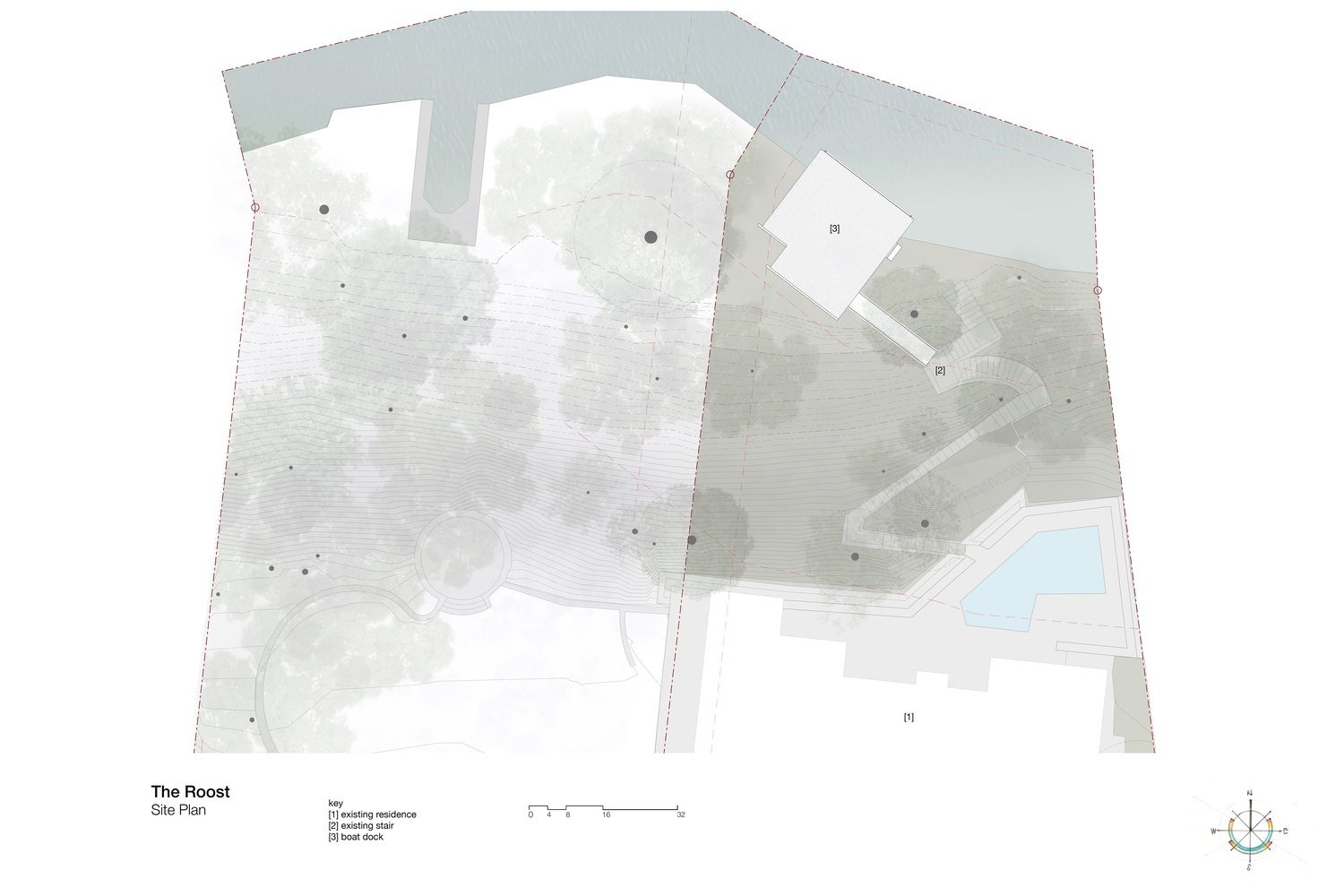

Nestled across the water from a nature preserve, Roost Platform 928-square-foot project sits just minutes from downtown Austin. At the bottom of a bluff, fifty feet below the surrounding neighborhood, Roost Platform is sheltered by large trees along the secluded waterway that is only navigable by canoes and kayaks. Reaching the site is a journey descending an extensive staircase, passing through a natural stone grotto, down into the wetland habitat.
© Leonid Furmansky
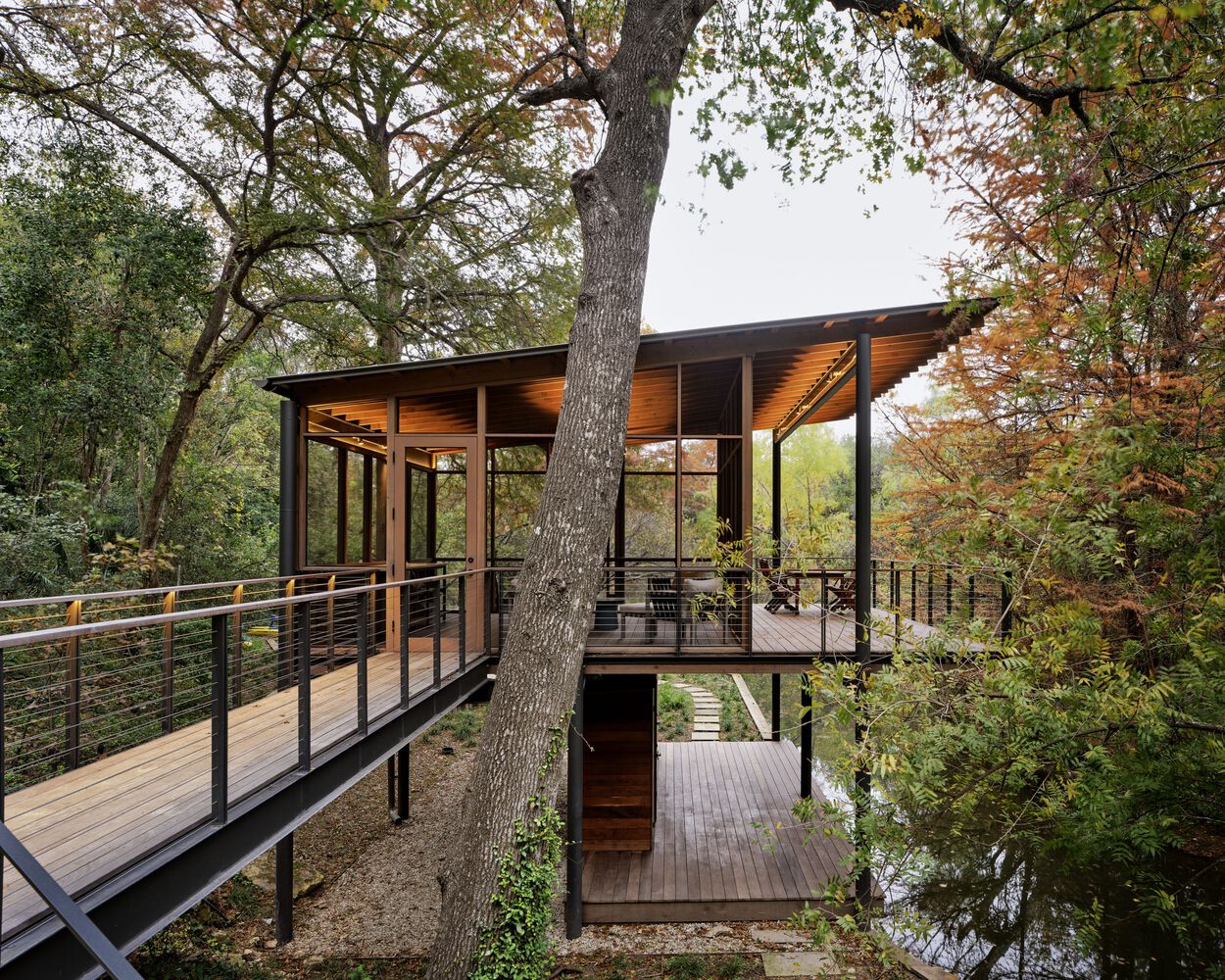
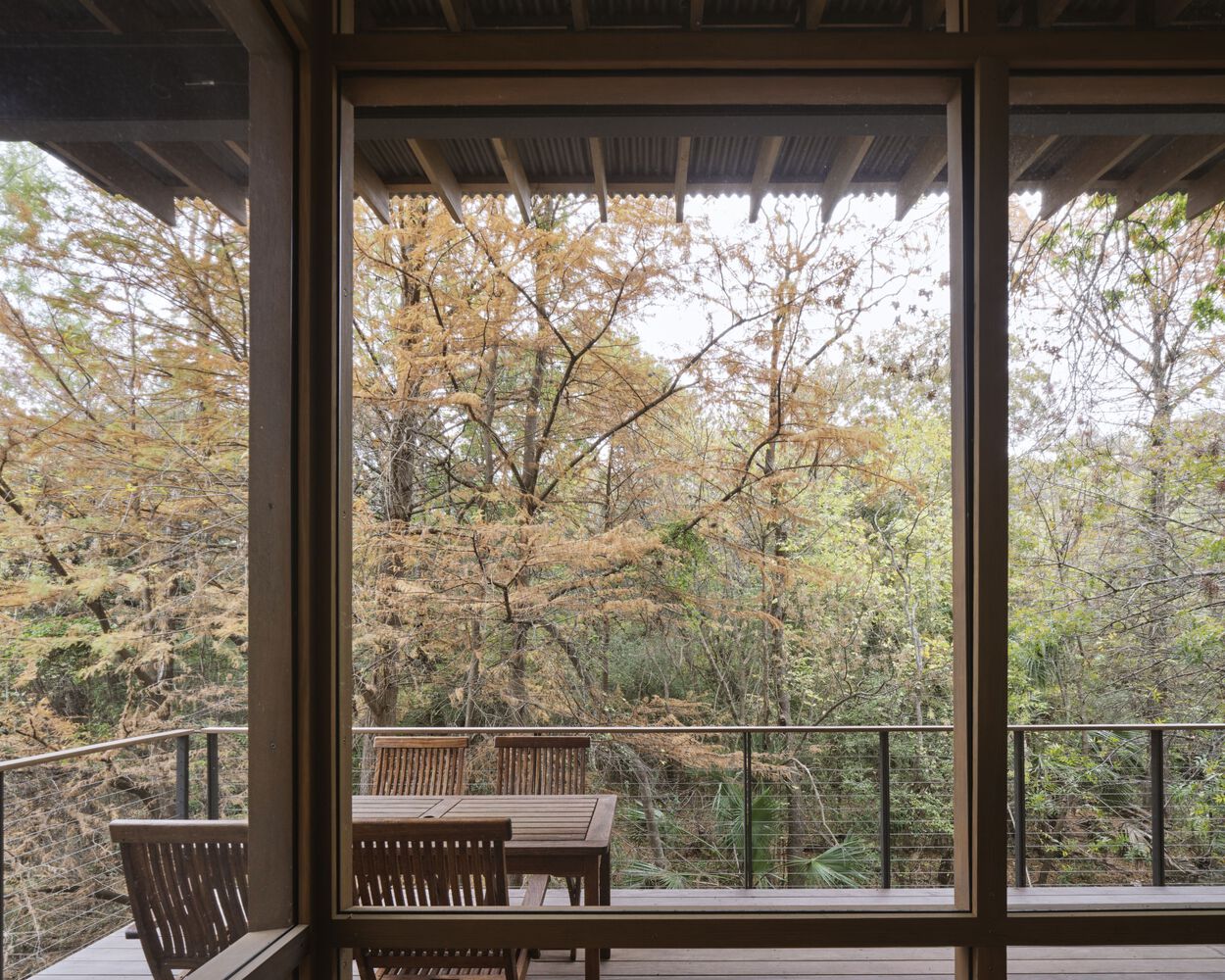
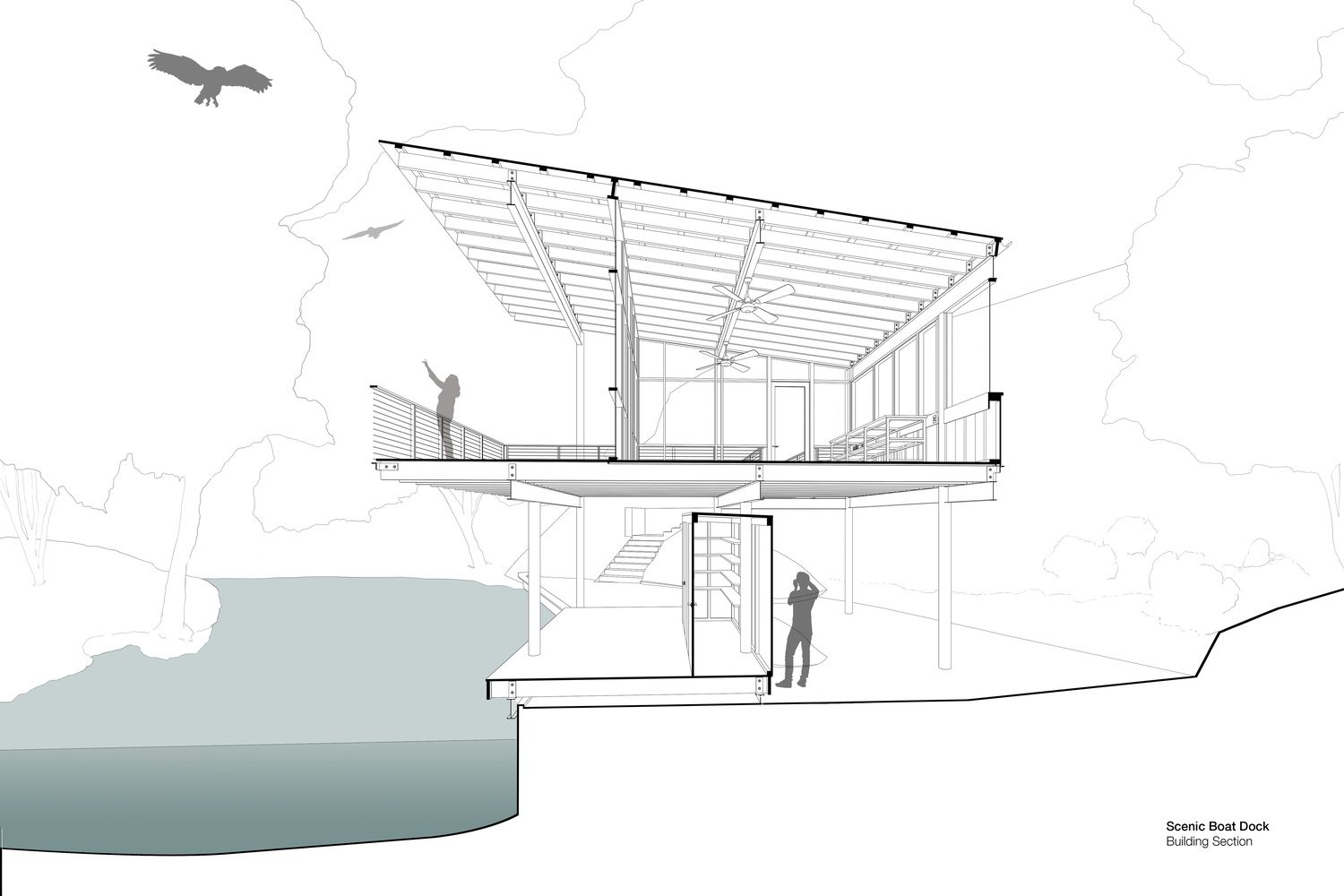
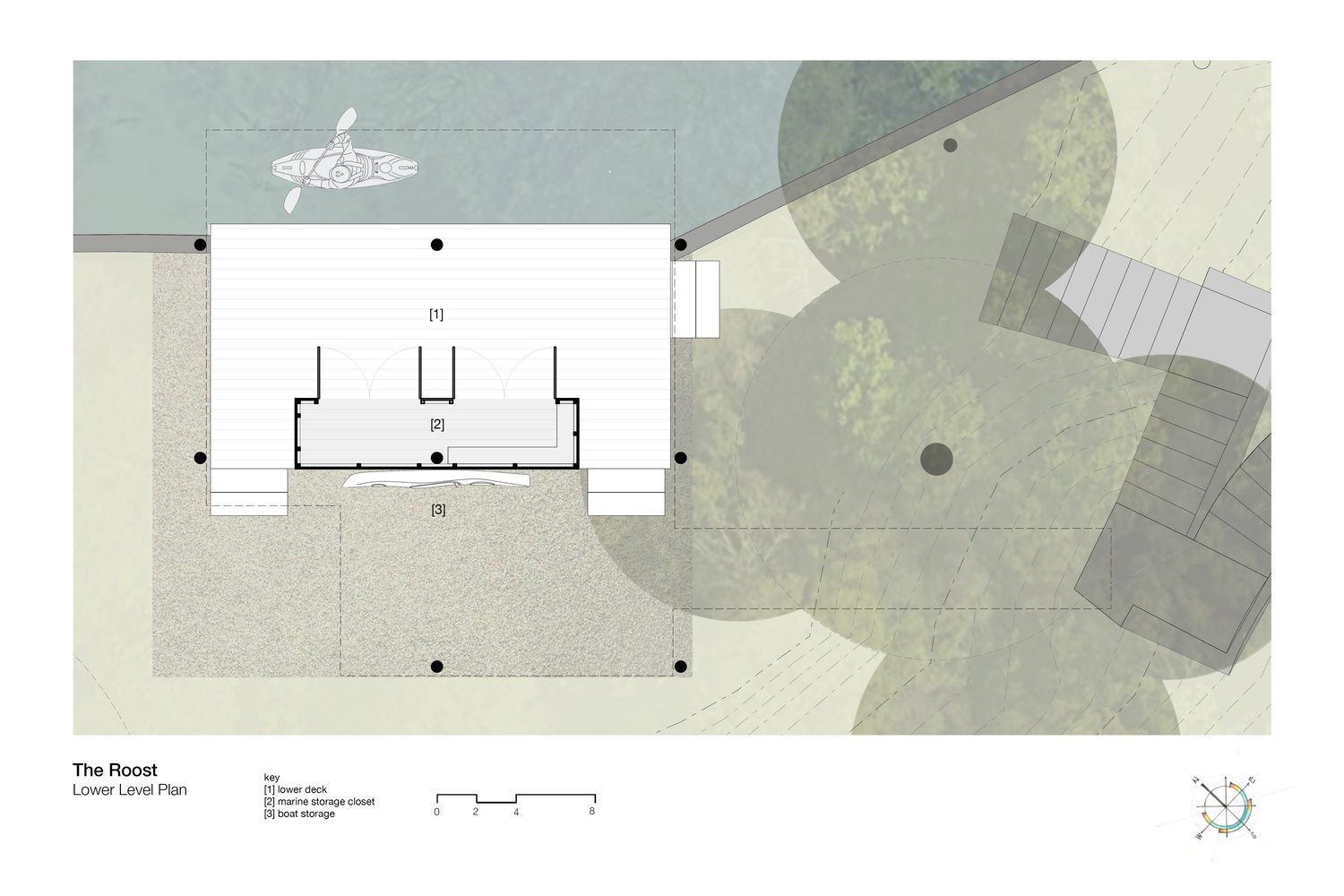
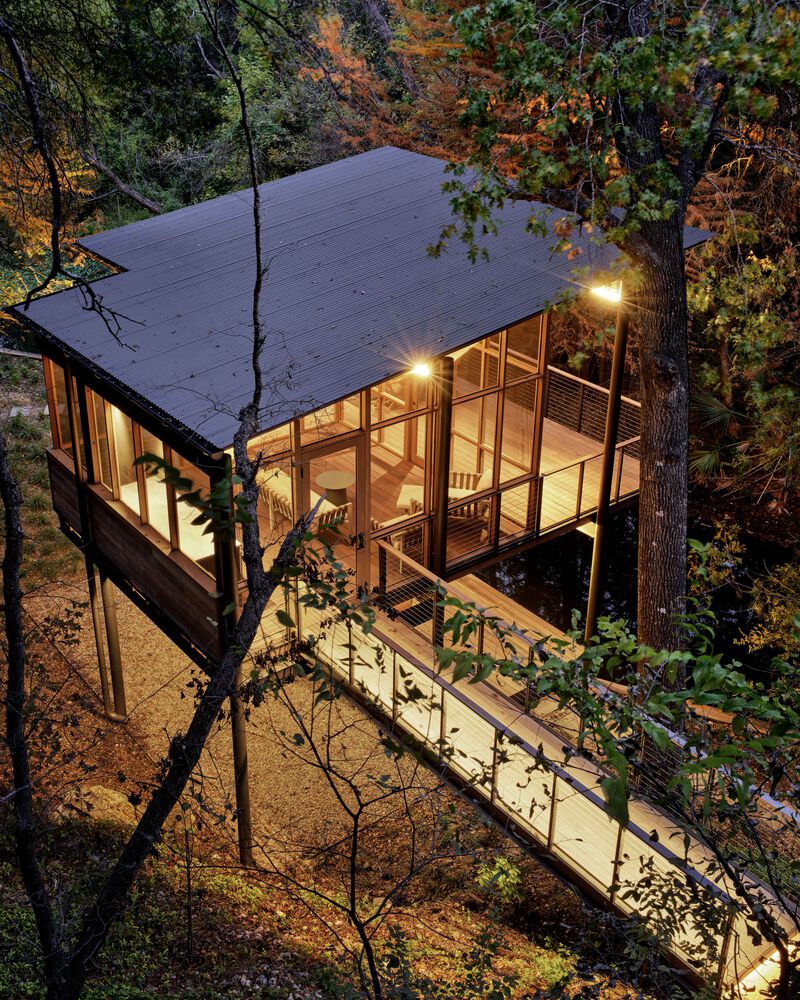
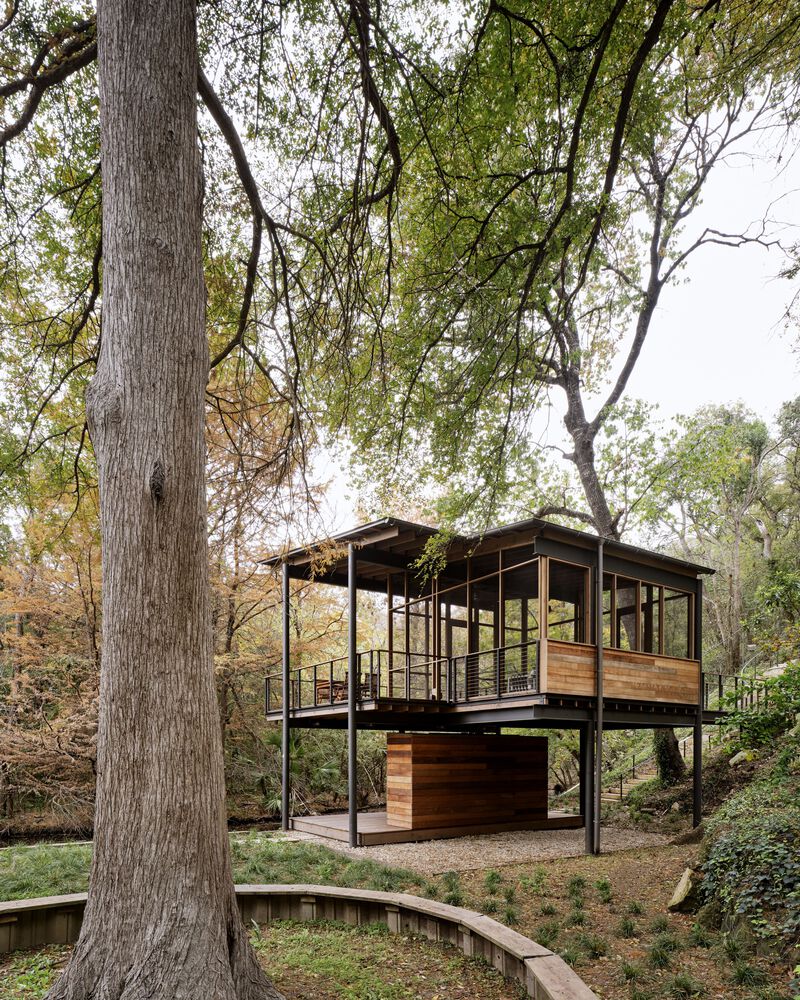
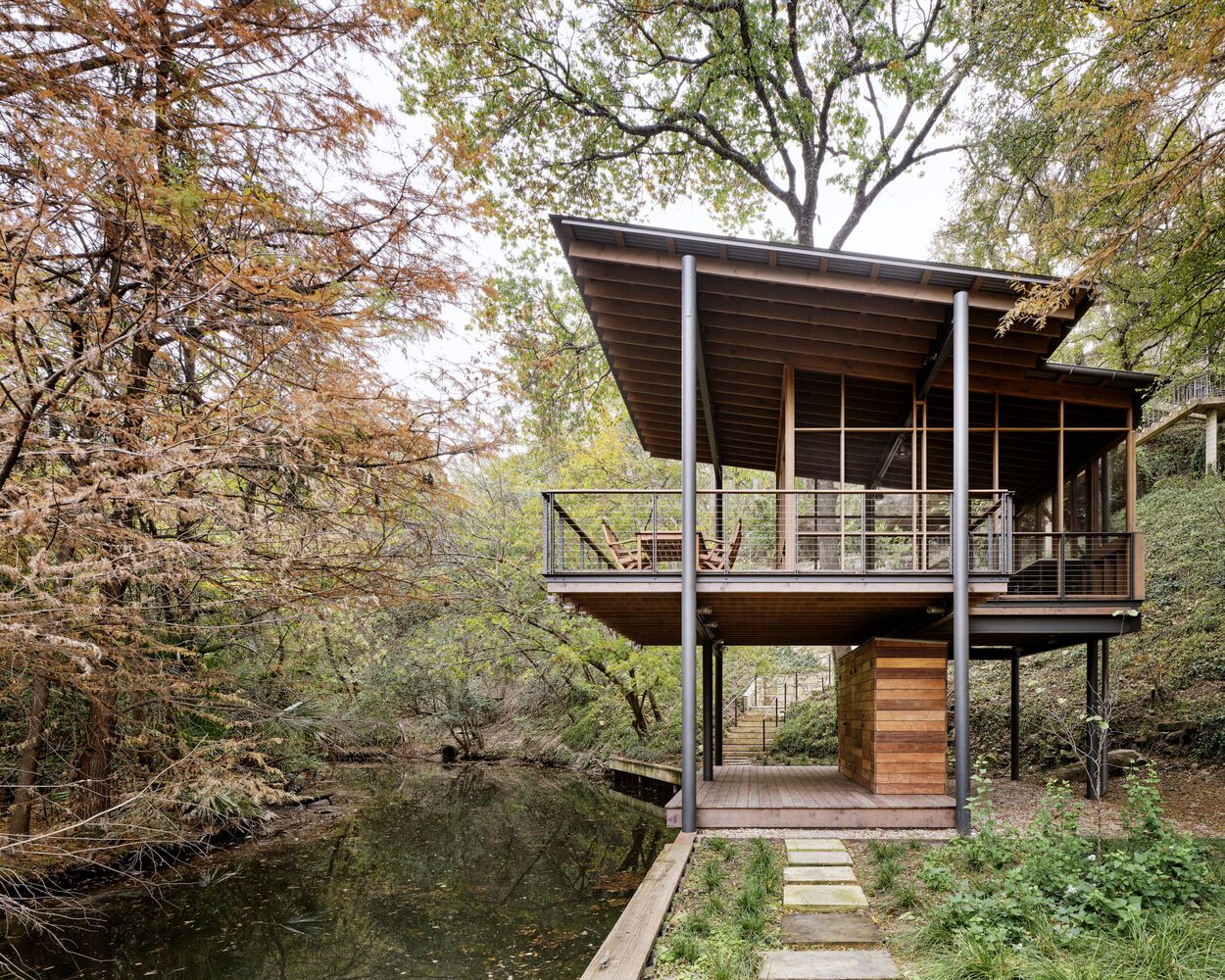
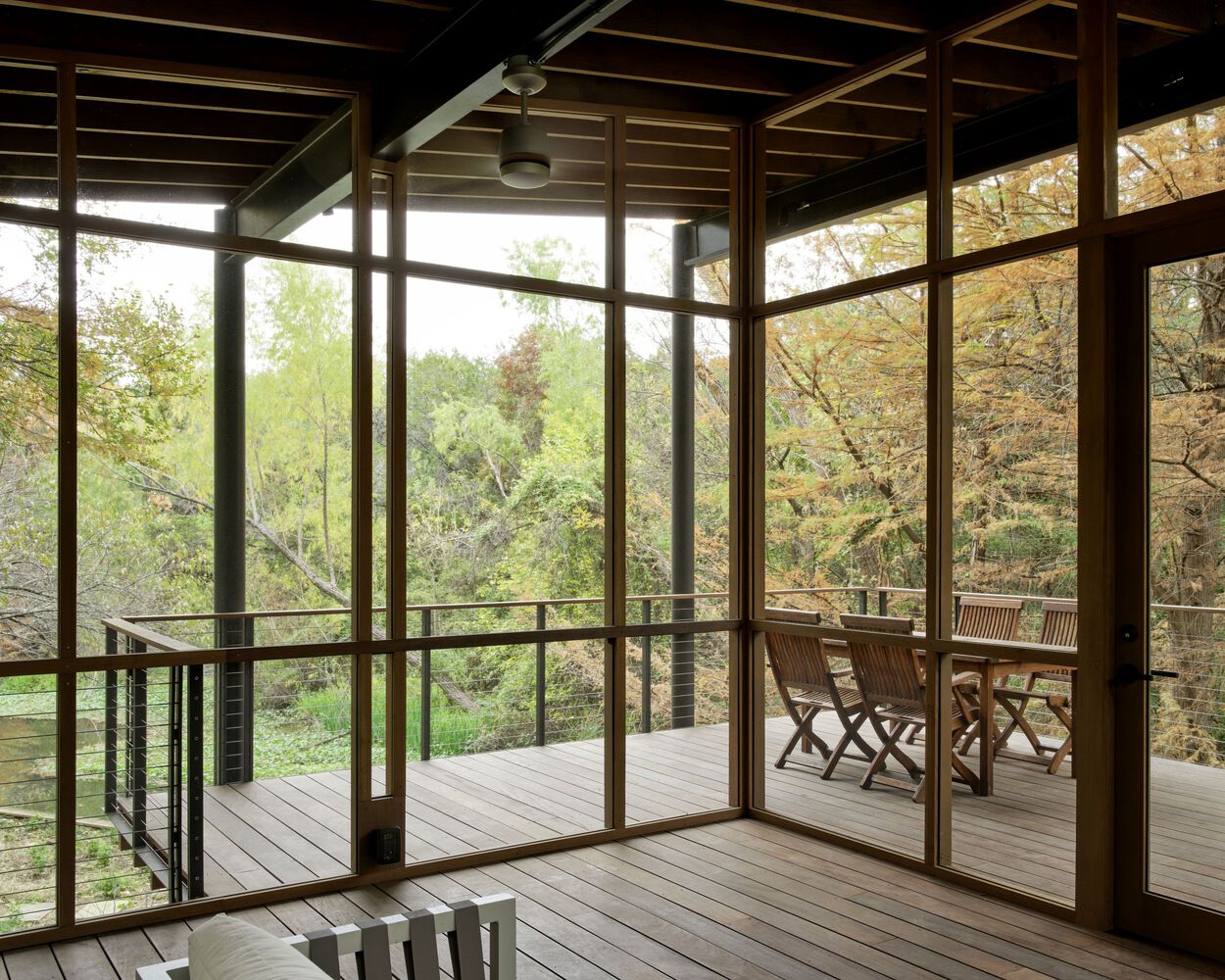
Conceived as an elevated platform to allow the owners to inhabit nature, the platform floats over the water, providing views into the trees and down the slough. While the screened porch is a protected space for lounging and birdwatching, the area below the platform serves as a boat launch and provides access to the shoreline. The structure expands the living area of the Owner’s home without adding any additional conditioned square footage.
© Leonid Furmansky
The site presented many challenges. The project sits on an environmentally sensitive wetland that is only accessible by small boat or via a long, tight staircase that was unsuitable for construction access. To decrease the impact on the wetlands, the design team developed a strategy to lift the habitable spaces of the project to a second level and provide access via a bridge. This minimized construction at the ground plane while giving the occupants a perch from which to observe local flora and fauna. The new structure has even become a roost for owls in the evening as they hunt along the water’s edge.
© Leonid Furmansky
In addition to a comfortable perch for birdwatching, the owners desired a durable and resilient structure. The previous structure on the site had experienced flooding, common along the slough during long periods of rain. The Owners wanted to build a structure that would be able to withstand the inevitable flooding and that had a minimal impact on the habitat and ecosystems of the surrounding site. The owner challenged the design team to develop a design that would exist in harmony with the site and minimize its impact in terms of the final design and construction methods. Project goals included reducing the footprint, minimizing the impact on the waterway, and limiting construction impacts by reusing the existing superstructure of steel piers.
© Leonid Furmansky
The biggest design challenge was taking the existing structure and reappropriating it to minimize site impacts while meeting the owners’ goals in a cohesive design that integrates into its natural setting. By using and extending the existing piers, a framework for the secondary wood structure was created. Materials and finishes were chosen not only to be resilient in flooding situations, a program requirement, but to create a light, airy structure that dissolves into its environment.

© Leonid Furmansky
All materials had to be brought to the site via a small barge, emphasizing the importance of not only durable materials but also timeless and resilient design & construction strategies. The minimal area of the lower-level deck allows native plantings to reclaim the natural wetland area. The replacement of the existing structure with this new elevated dock has also allowed for the restoration of natural hydrology.
Project Info:
-
Architects: Furman + Keil Architects
- Country: United States, Austin,
- Area: 928 ft²
- Year: 2023
-
Photographs: Leonid Furmansky
-
Manufacturers: Lutron, Sherwin-Williams, Baldwin, Benjamin Moore, Douglas Fir, Ipe, Lueders Limestone, Modern Fan. Co., Summitt
-
Principal Architect: Troy Miller, Philip Keil, Gary Furman
- Project Manager: Maanasa Nathan, Dawson Williams
- Permit Consultants: Lake Austin Boat Dock & Shoreline Permits