


Riyadh Metro Station
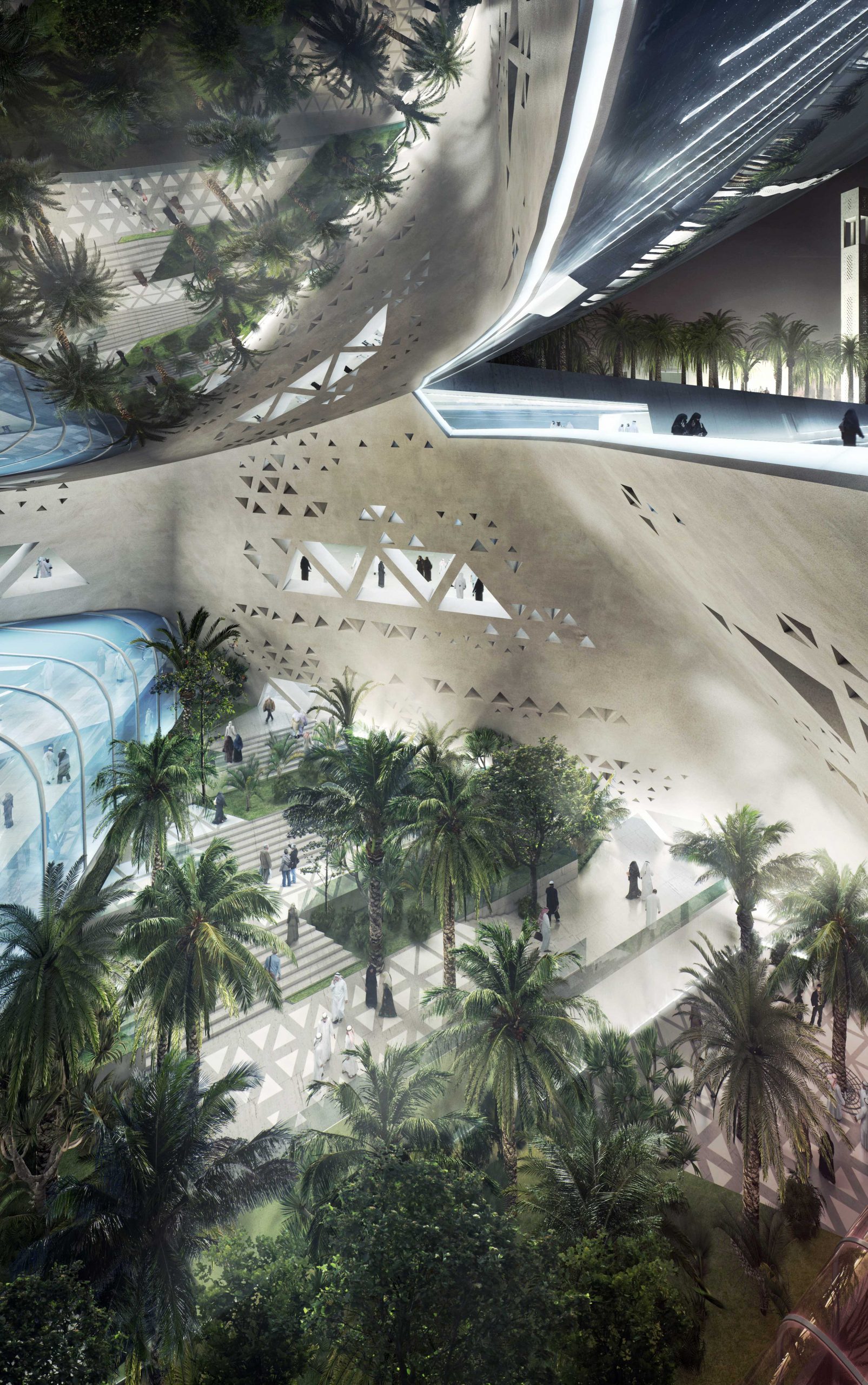
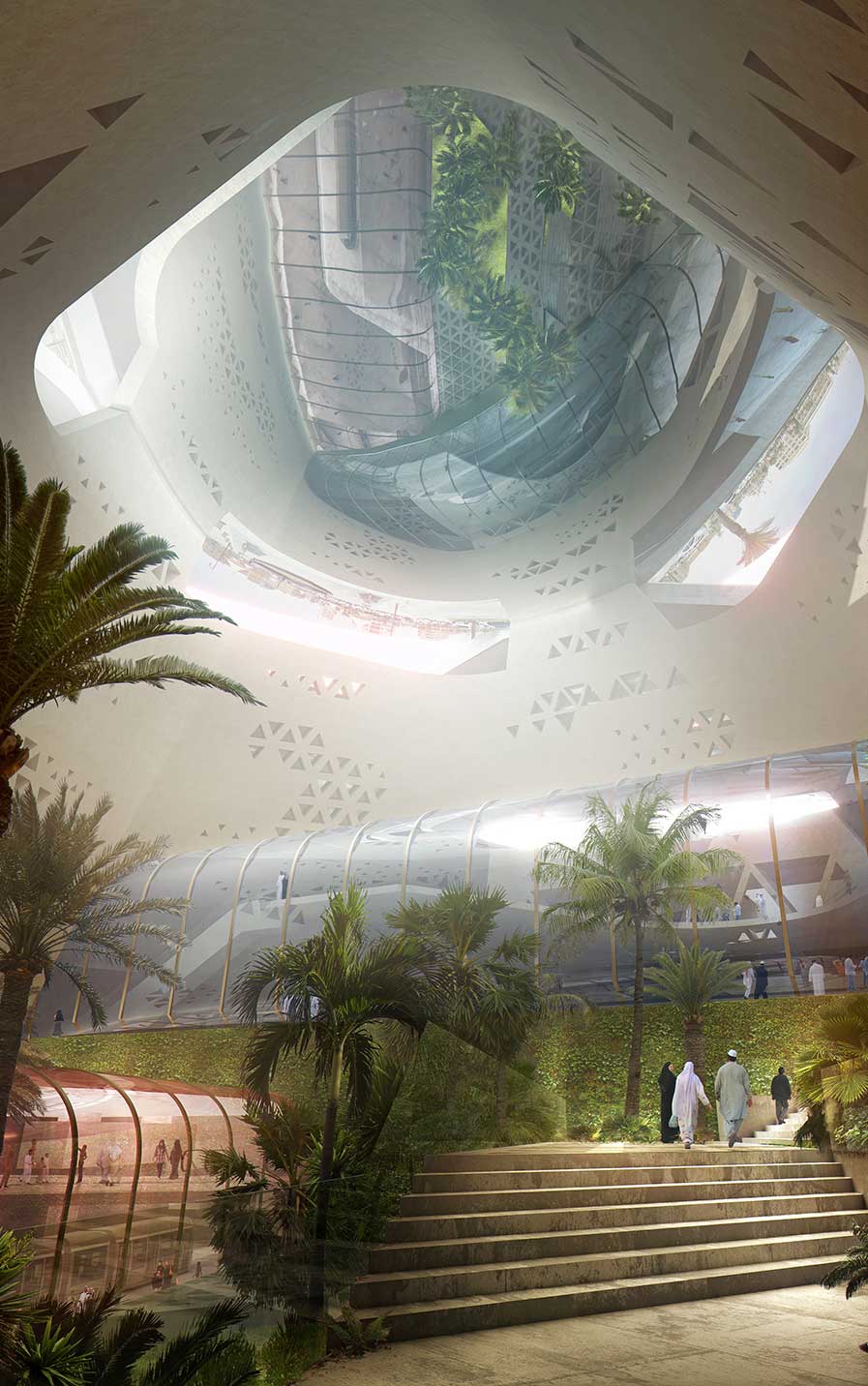
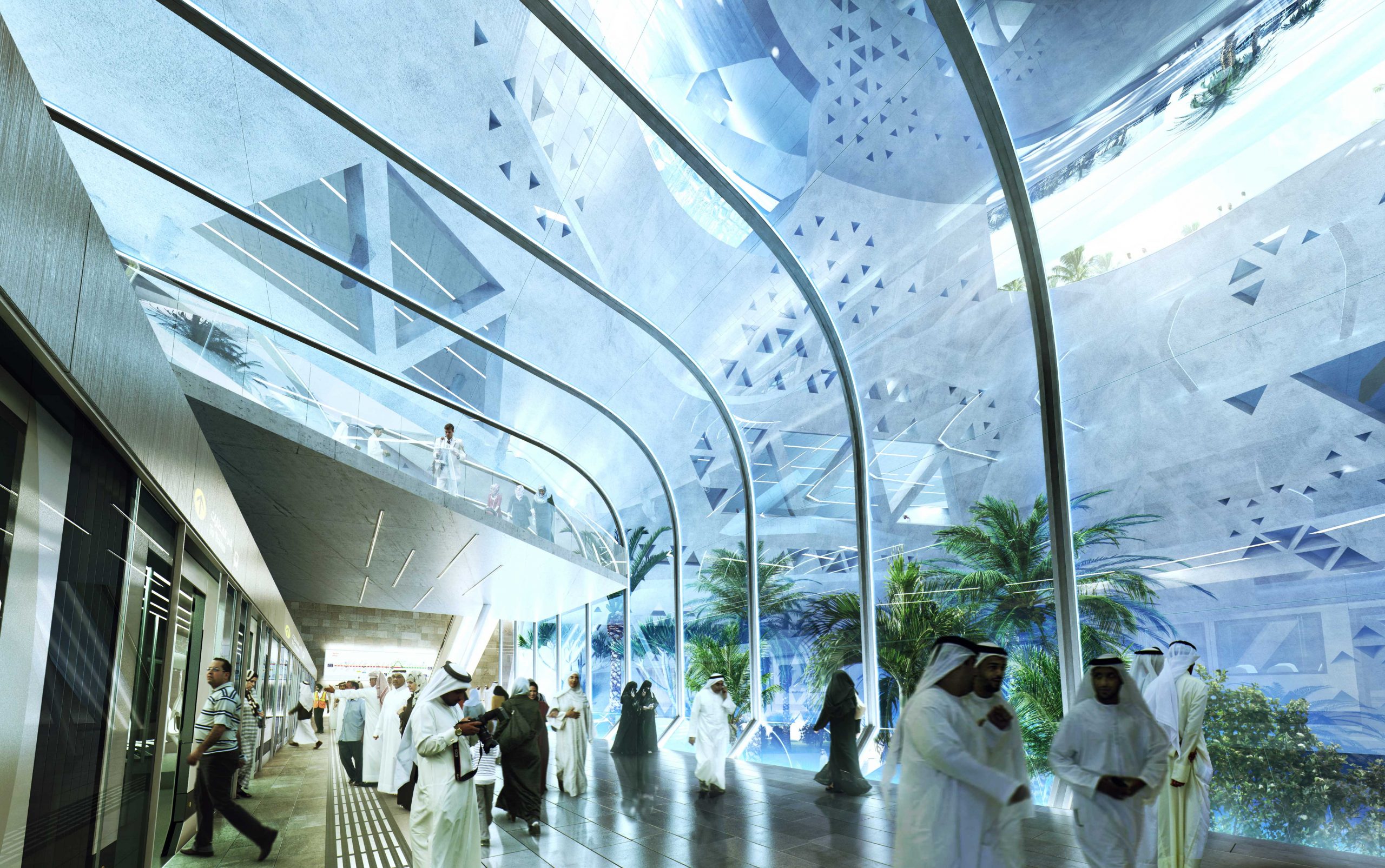
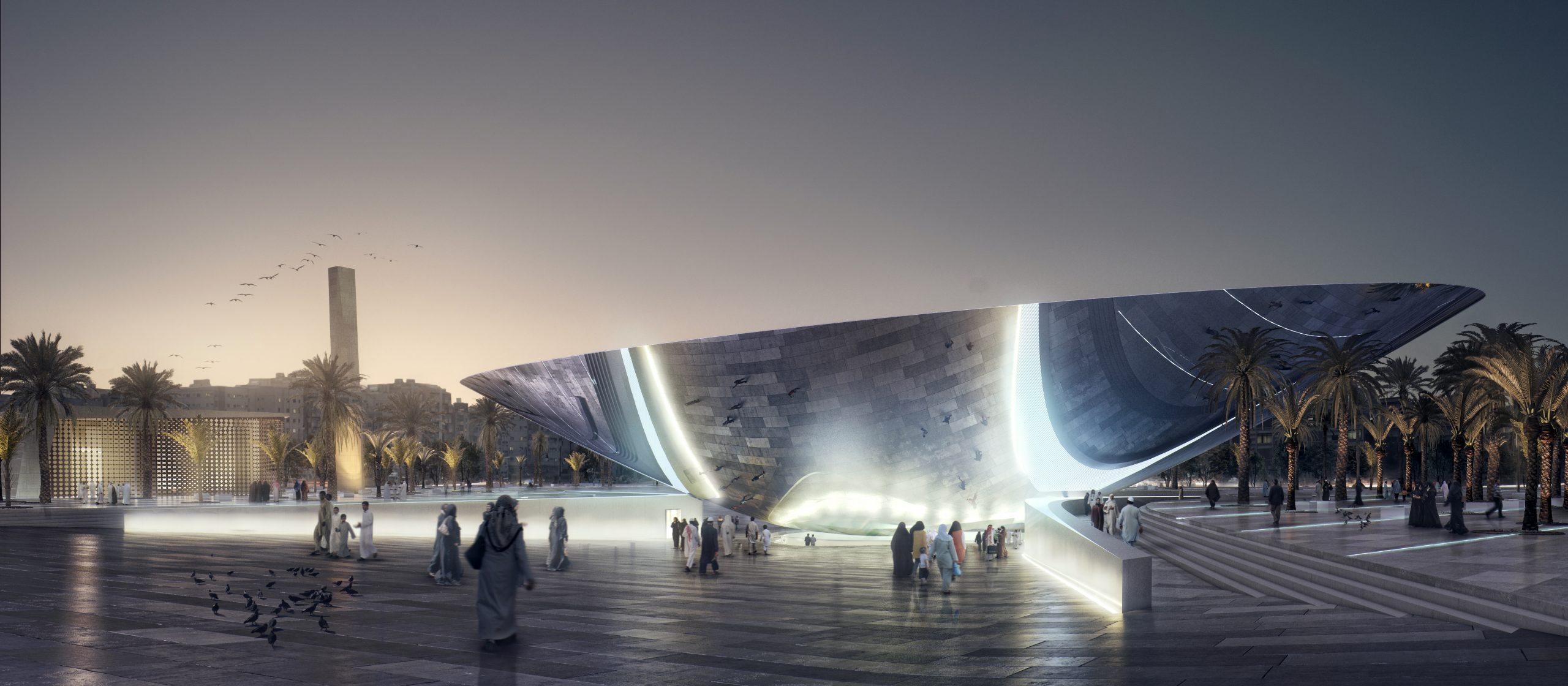
“Qasr Al Hokm” Downtown Metro Station is one of the most luxurious and intelligent designs we have seen for public spaces. The Downtown Riyadh Metro Station is a sustainable solution, which brings together ground level with underground, by the reflective canopy that shades the public spaces and directs daylight into the train station.While the canopy, placed on a large inclined wall, indirectly bring light down and unifies the design, the glazed steel façade separates the subway lines from the atrium, which holds an unexpected accessible garden. The common ground of the plaza is filled with palm trees, which are placed in the direction of the Mecca and provide shadow to pedestrians. Their irrigation is assured by water channels along the plaza floor.
courtesy of Snøhetta
The nature-inspired solutions are not only beautiful, but practical. The atrium garden can be used as a waiting space for users, being accessible from two platforms. The inside of the canopy has a build in daylight harvesting system, based on fiber optic, which channels it to the underground levels.Snohetta’s design is a wonderful example of working with multipurpose in mind: not only does the design have a multitude of sustainable solutions, but it’s economically intelligent, since it will provide public transportation and reduce traffic problems, and heavily socially inclined, because it offers a new, interesting space for people to not only pass through and wait for the trains, but to meet and spend time. The design breaks barriers between interior-exterior, ground level and underground, local culture and general urban principles, and, obviously, between natural and man built.
courtesy of Snøhetta
By: Lidia Ratoi

Lidia Ratoi is a Romanian architect, educator, and researcher, currently serving as Assistant Professor at the University of Hong Kong’s Department of Architecture. With a background in both architectural design and theory, her work explores the intersections of technology, media, and politics in the built environment. Ratoi’s research focuses on the aesthetics of power, surveillance, and virtuality, with a strong interest in critical and speculative design. She has practiced internationally and exhibited in venues across Europe and Asia. Passionate about challenging conventional narratives, Ratoi integrates digital tools with philosophical inquiry, encouraging experimental approaches to architecture. Her contributions continue to shape emerging discourses in design and architectural pedagogy.