


Harvard Architecture graduate, Conway Pedron, solved a given present condition of ordering nodes. The nodes would modestly be attached using a single fabricated ribbon of wood. This ribbon of surface would offer isolation between particular points of the structure.
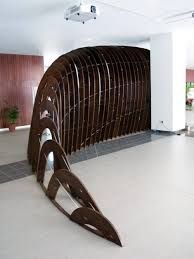
Courtesy of © Conway Pedrom
These fabricated joints would be located only between the ceiling and floor right at the spaces where the nodes are. The sectional exploitation of the ribbon and the equivalent signifiers in the space of the lobby and the structure of the existing lobby and the rigidity of the ceiling and floor circumstances creates a more roundabout and vibrating distribution system.
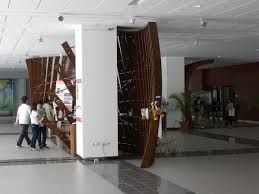
Courtesy of © Conway Pedrom
The system if parametrically derived. It fabricates lateral embers, which match up to the concentration of the stresses functional to the initial ribbon at the moments of forceful curvature. Basically the lateral members would be designed in a logical way, similar to the expansion of genes in Conrad Waddington’s Epigeneti Landscape model. This method creates a unsurprising result at the same time has an aesthetically satisfying sense of unpredictability.
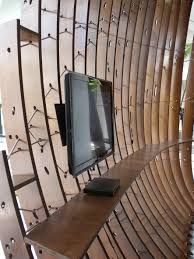
Courtesy of © Conway Pedrom

Anastasia Andreieva is an accomplished Architectural Projects Editor at Arch2O, bringing a unique blend of linguistic expertise and design enthusiasm to the team. Born and raised in Ukraine, she holds a Master’s degree in Languages from Taras Shevchenko National University of Kyiv. Her deep passion for architecture and visual storytelling led her to transition from translation and editorial roles into the world of design media. With a keen eye for conceptual clarity and narrative structure, Anastasia curates and presents global architectural projects with precision and flair. She is particularly drawn to parametric and digital design, cultural context, and emerging voices in architecture. When I’m not analyzing the latest architectural trends, you’ll probably find me searching for hidden gems in cityscapes or appreciating the beauty of well-crafted spaces. After all, great design—like great connections—can be found in the most unexpected places. Speaking of connections, because architecture isn’t the only thing that brings people together.