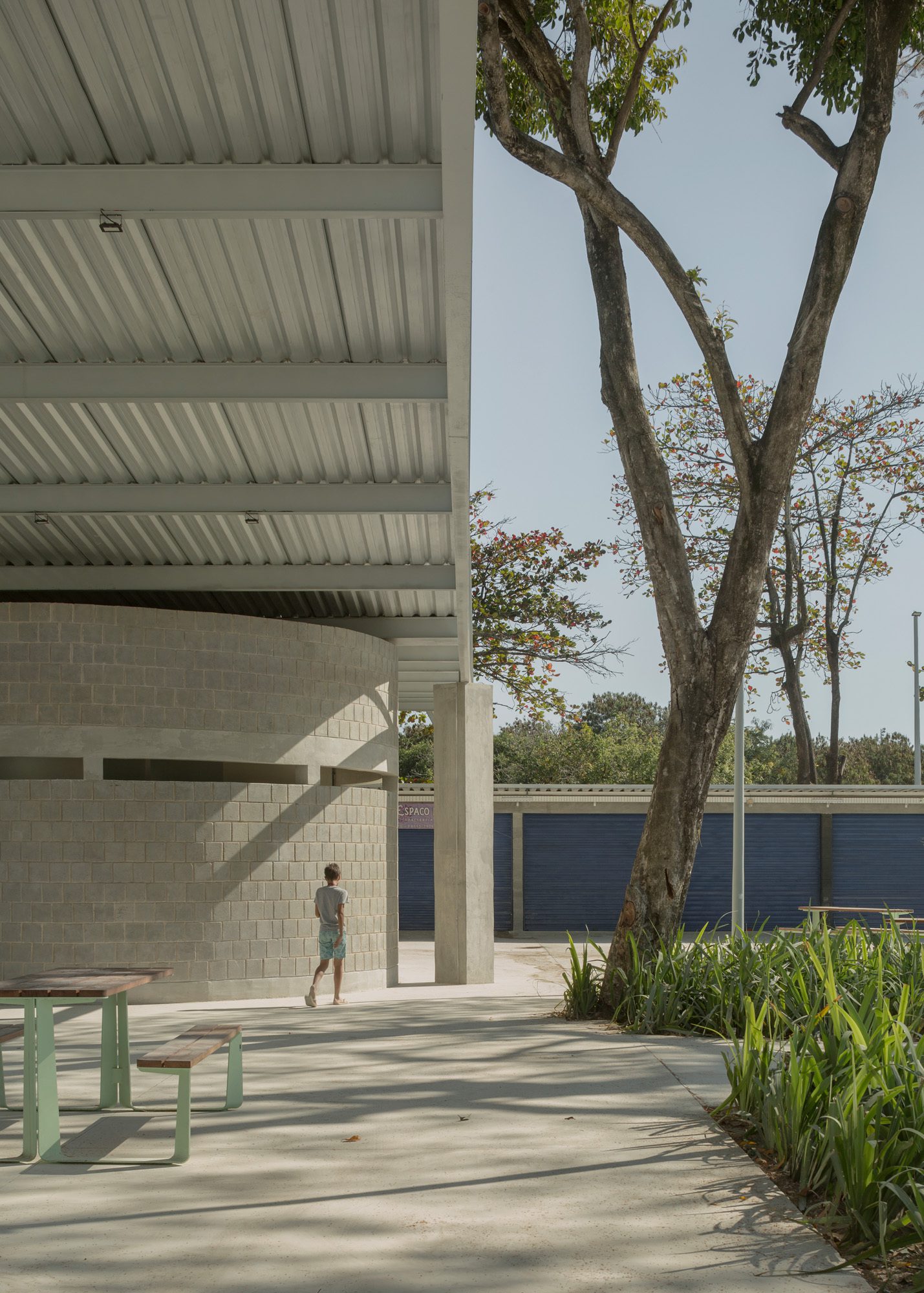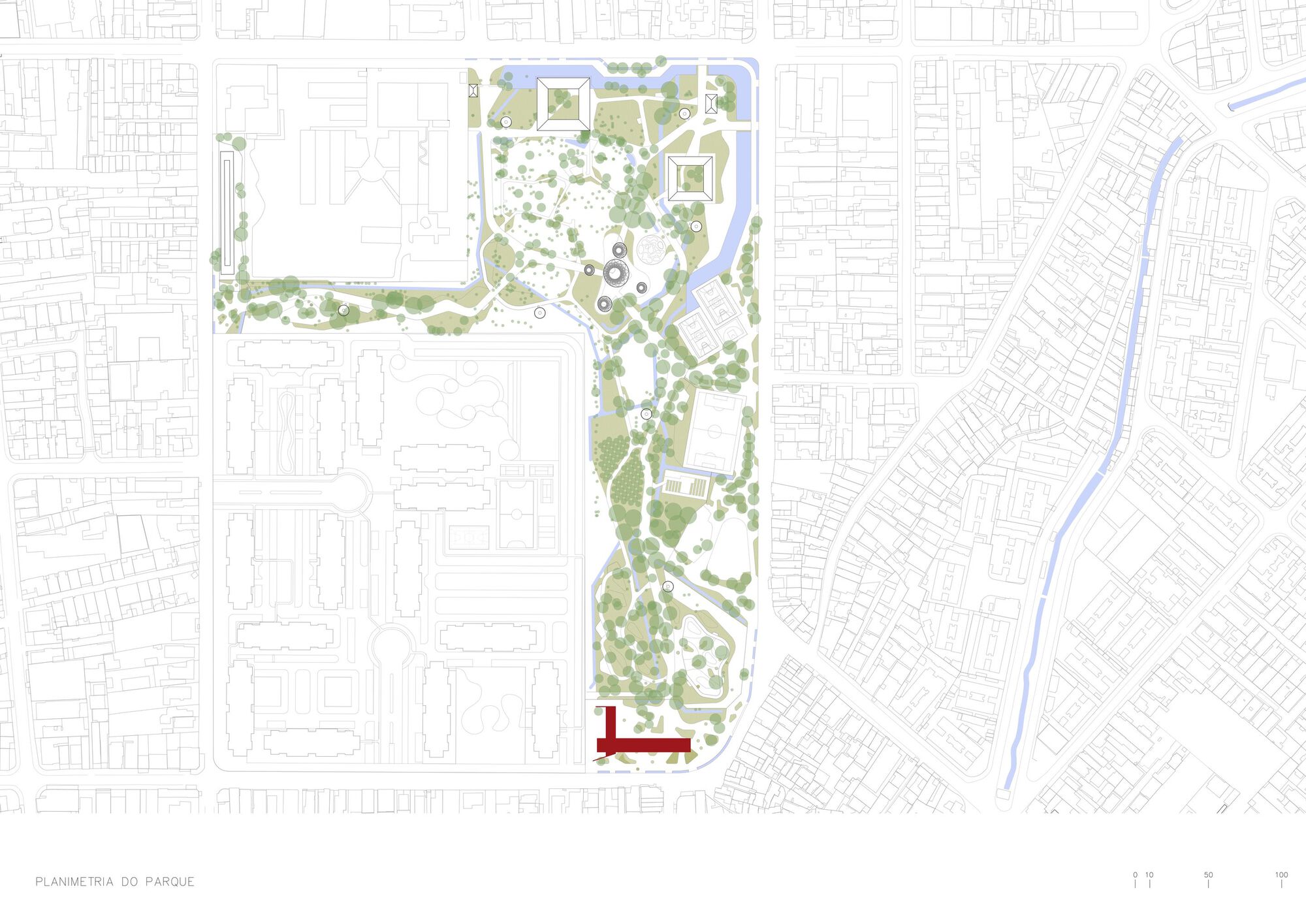


Realengo Park Market Square is part of the architectural complex of Parque Realengo, still under construction. The Park has been the subject of long-standing questioning by various social movements that debate the periphery, green areas and environmental racism. Like several construction processes in the city of Rio de Janeiro, its dynamics also involve expropriations and relocation processes. The Market Square is born from a pre-existing condition. Before its design, residents surrounding the park occupied the corner with small commercial buildings. The proposed architectural project provided for the full relocation of these buildings, however, the complex dynamics of a bidding process and execution of a public work meant that only part of the proposal was carried out.
© Federico Cairoli
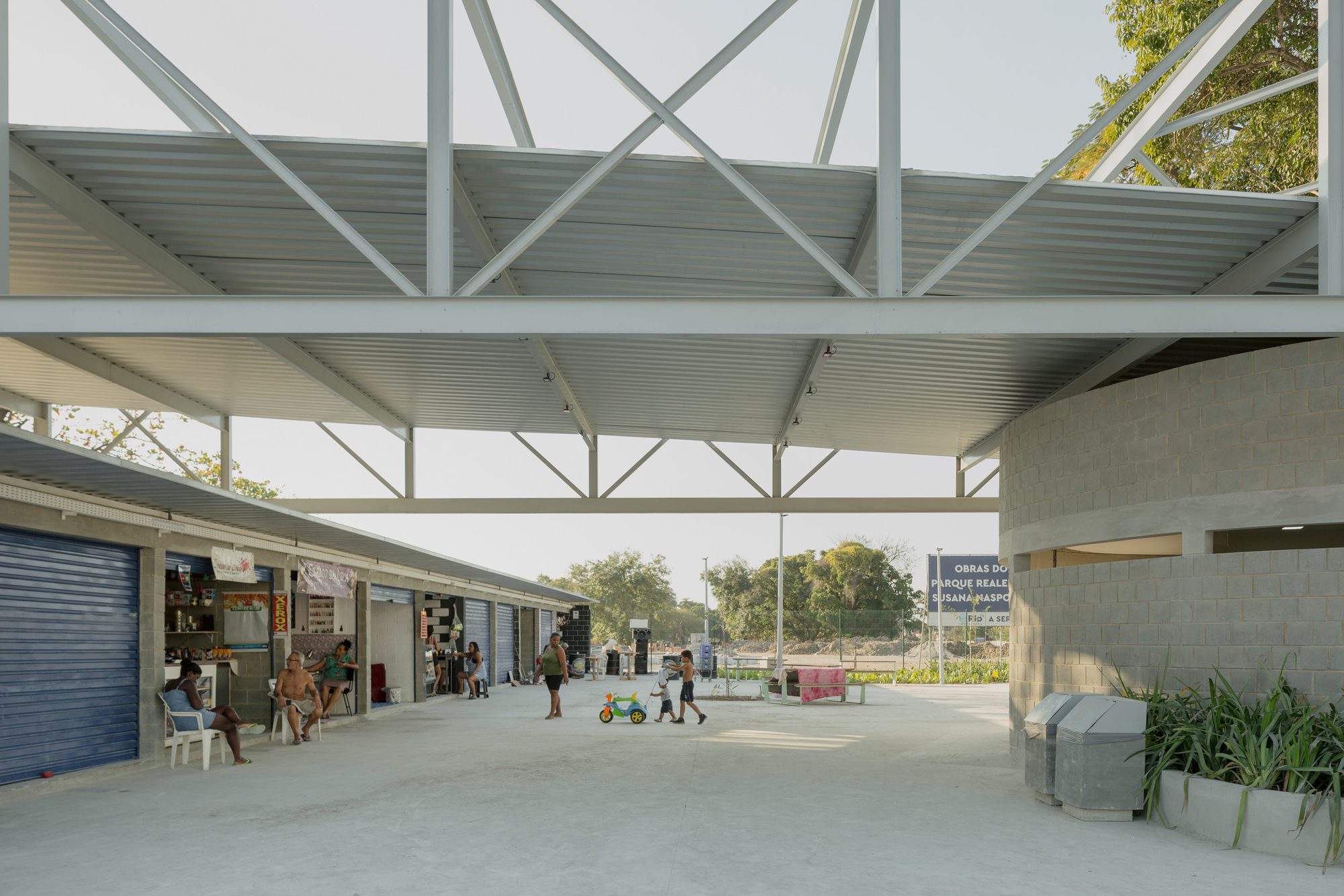
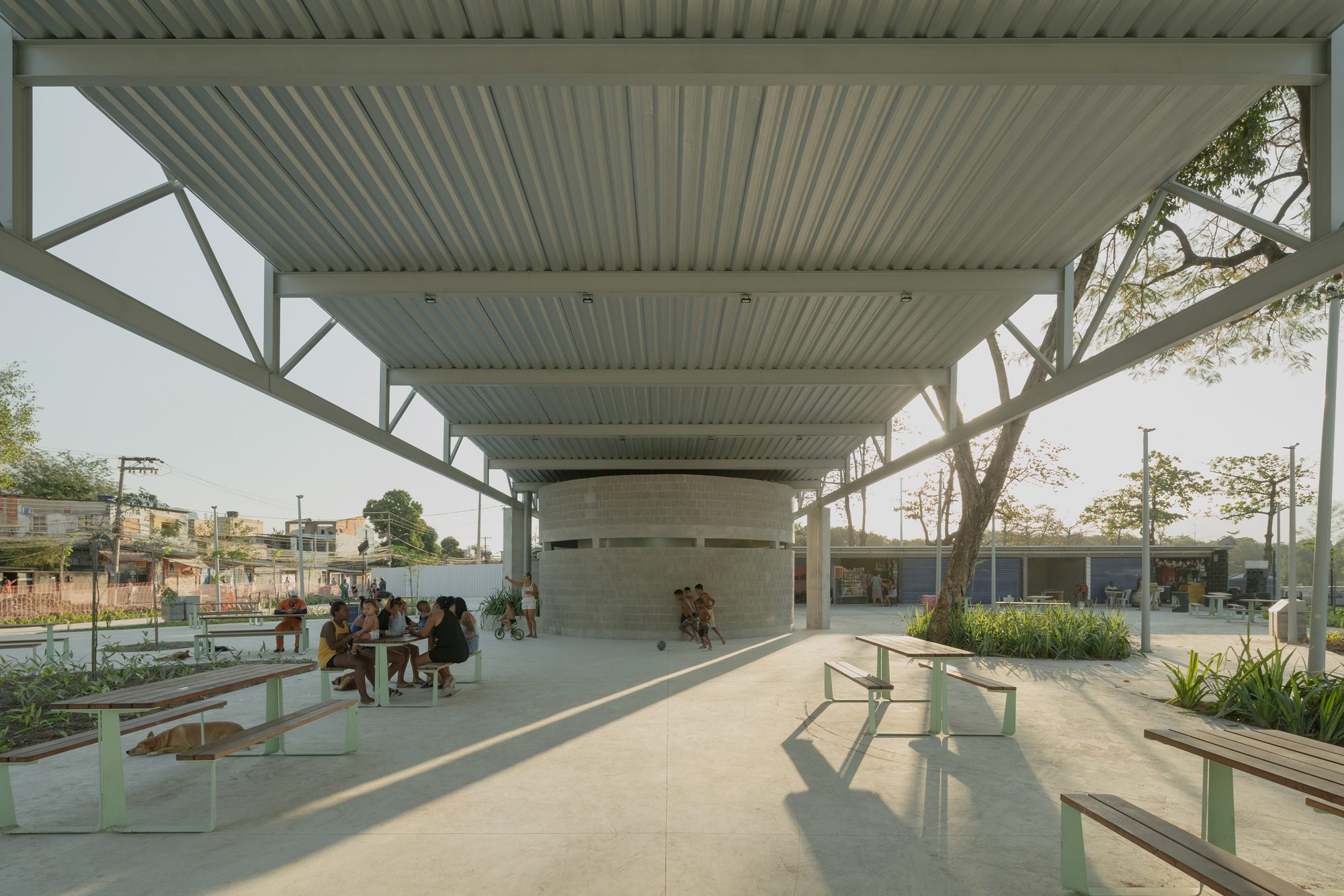
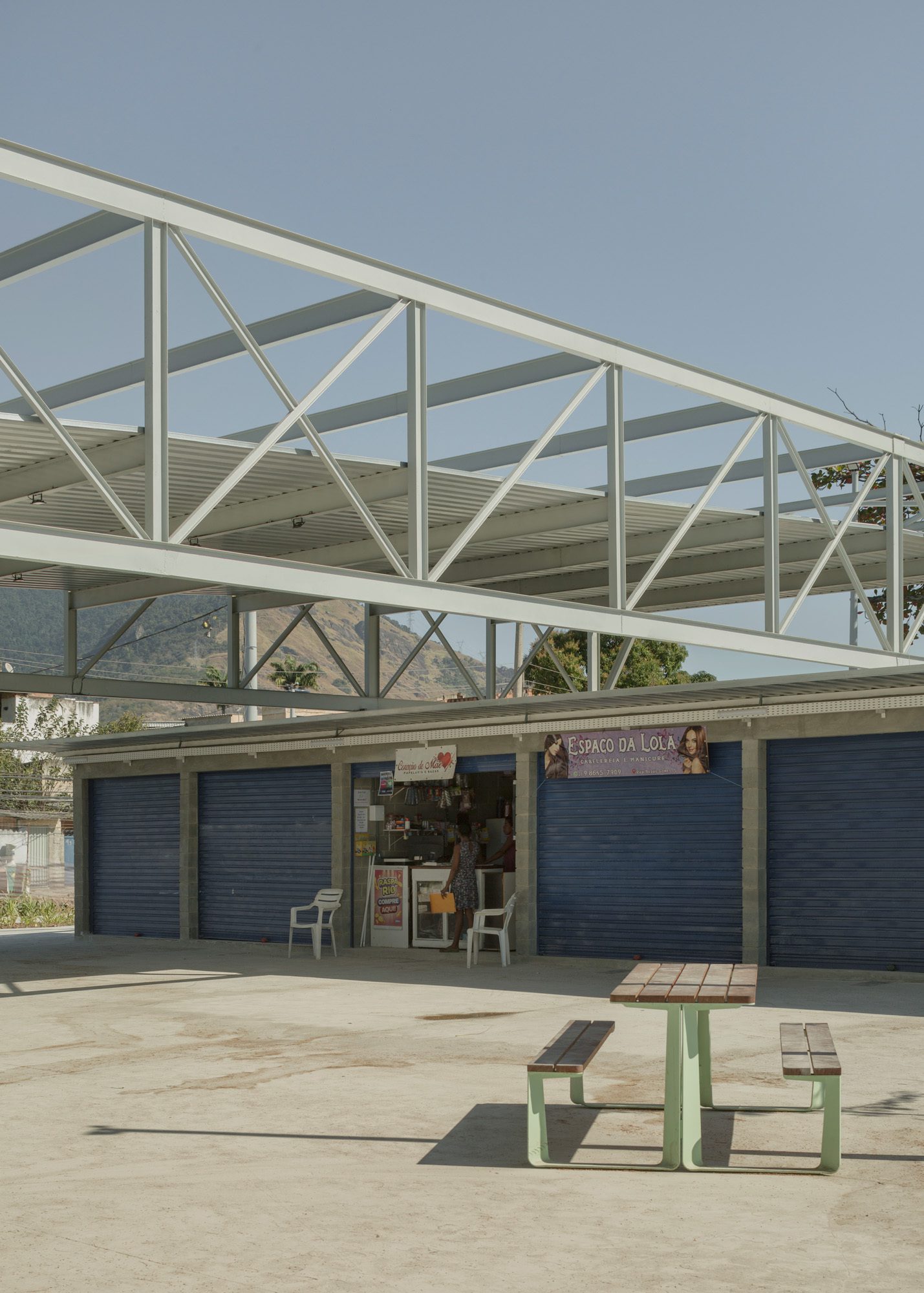
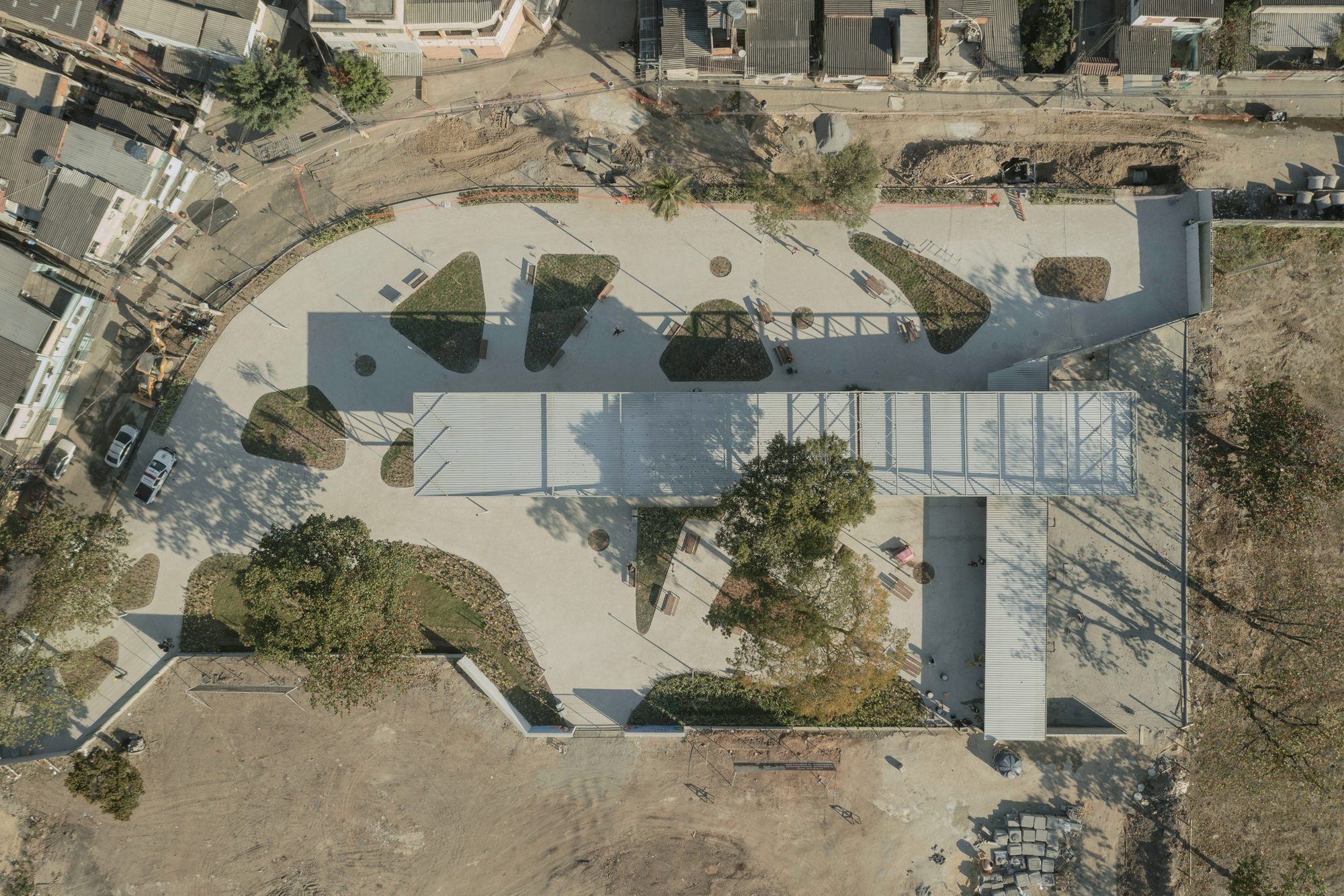
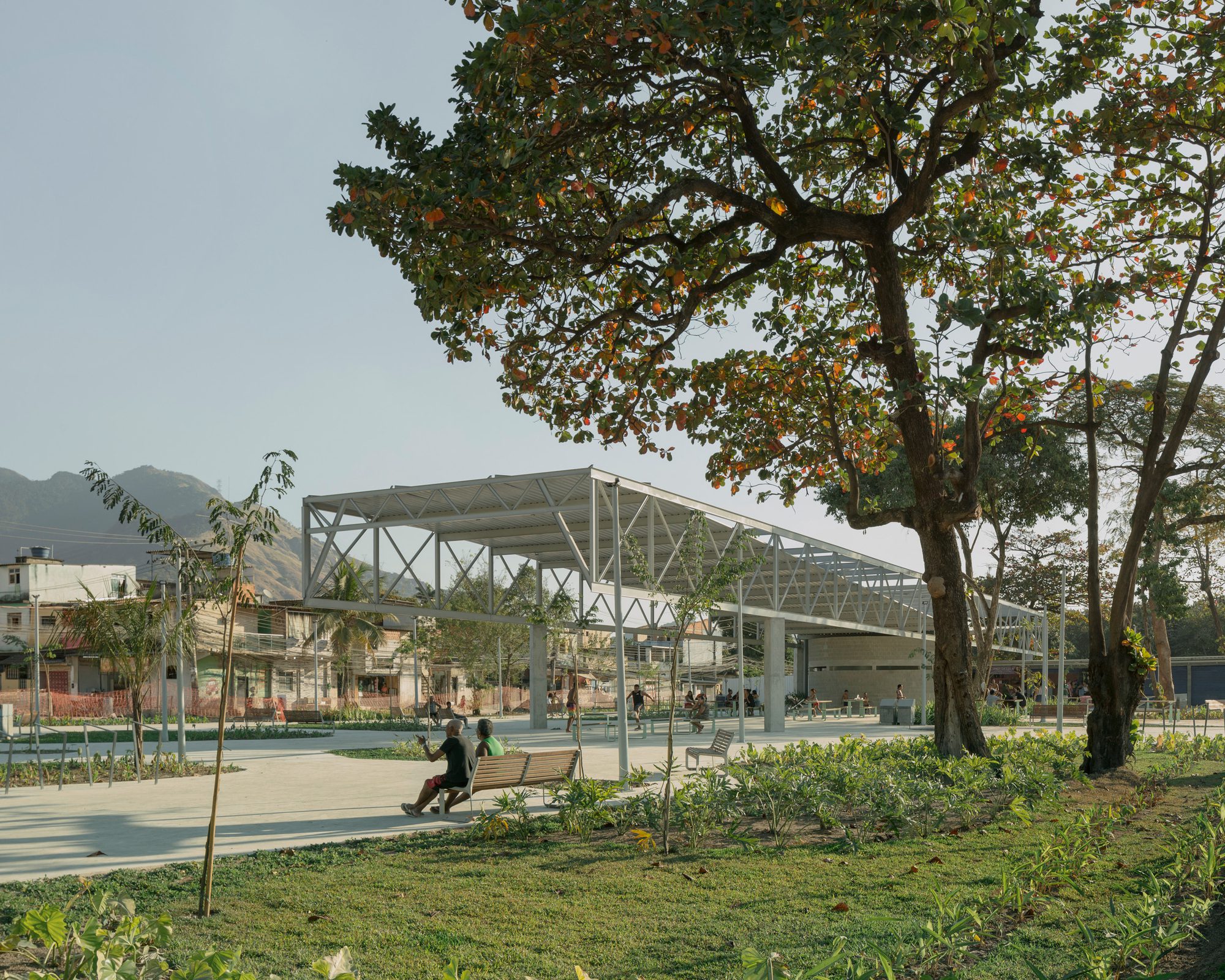
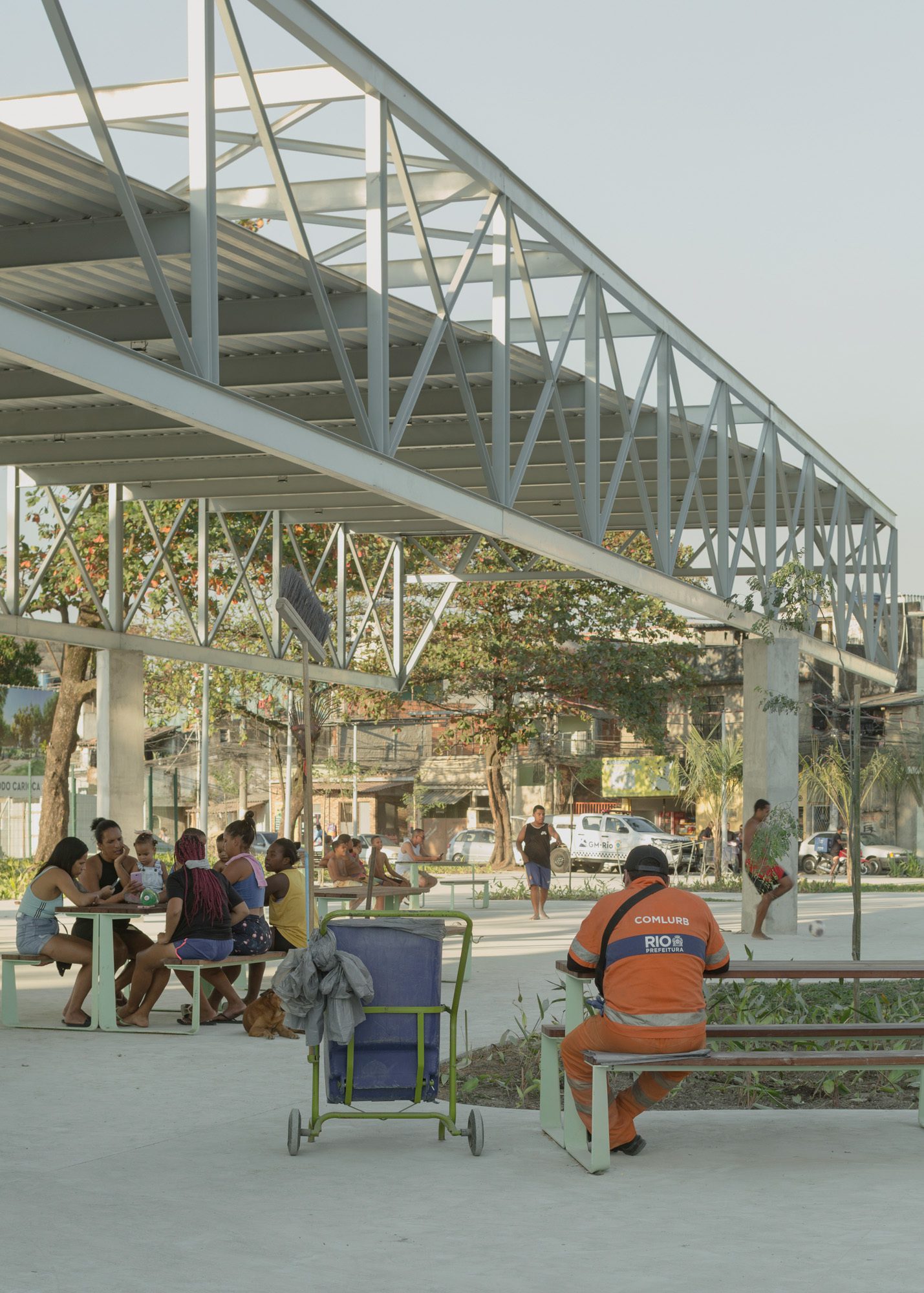
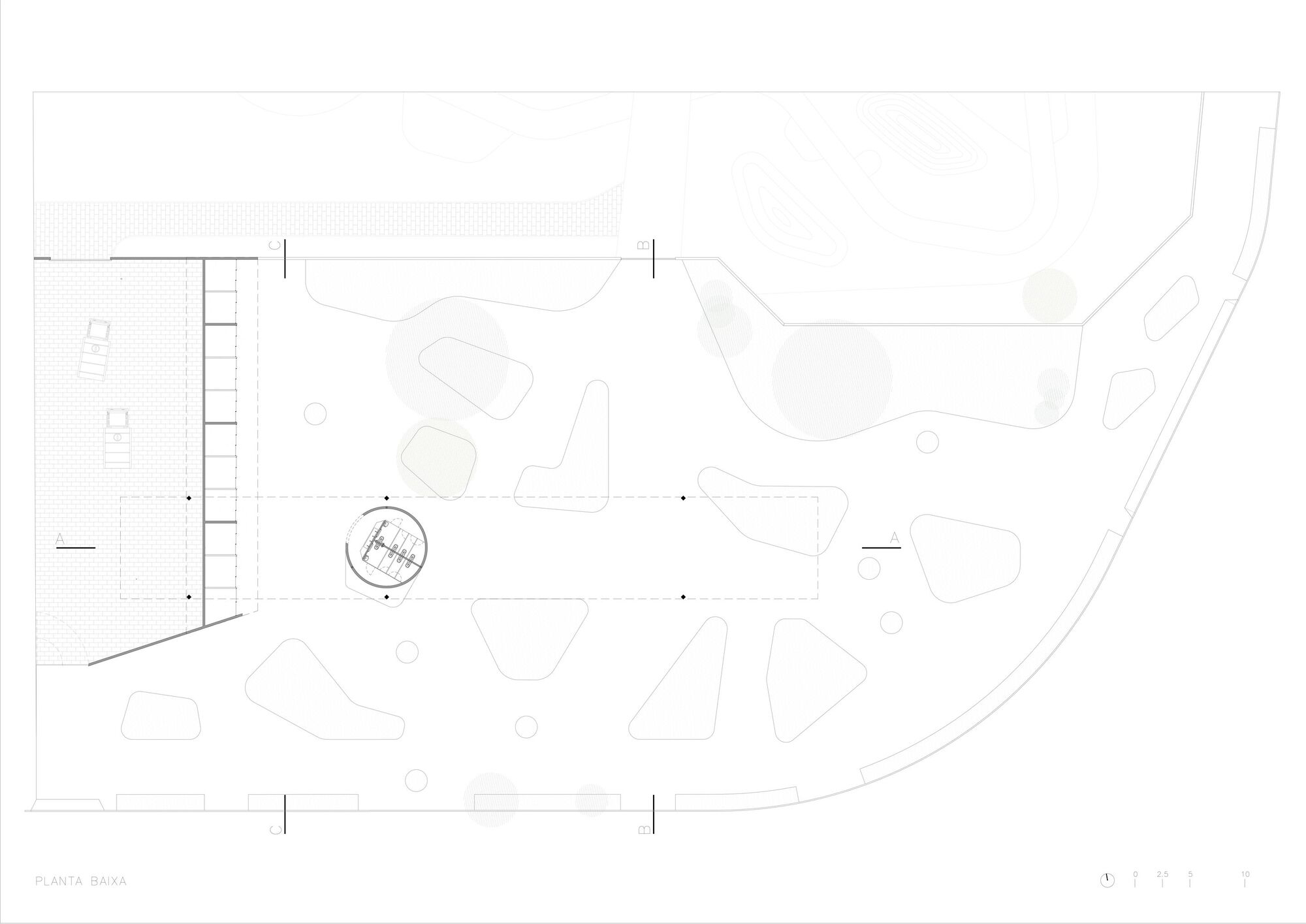
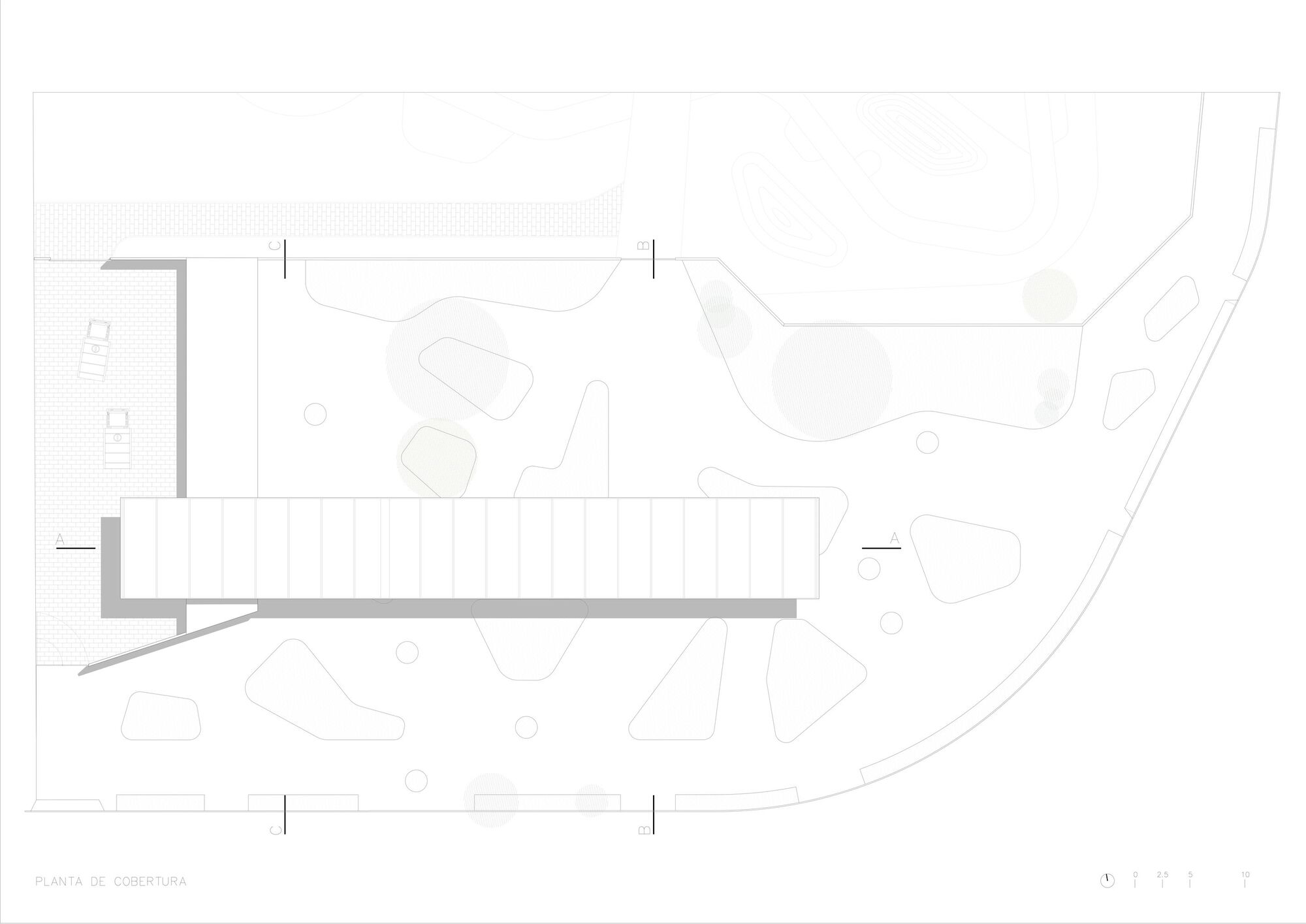
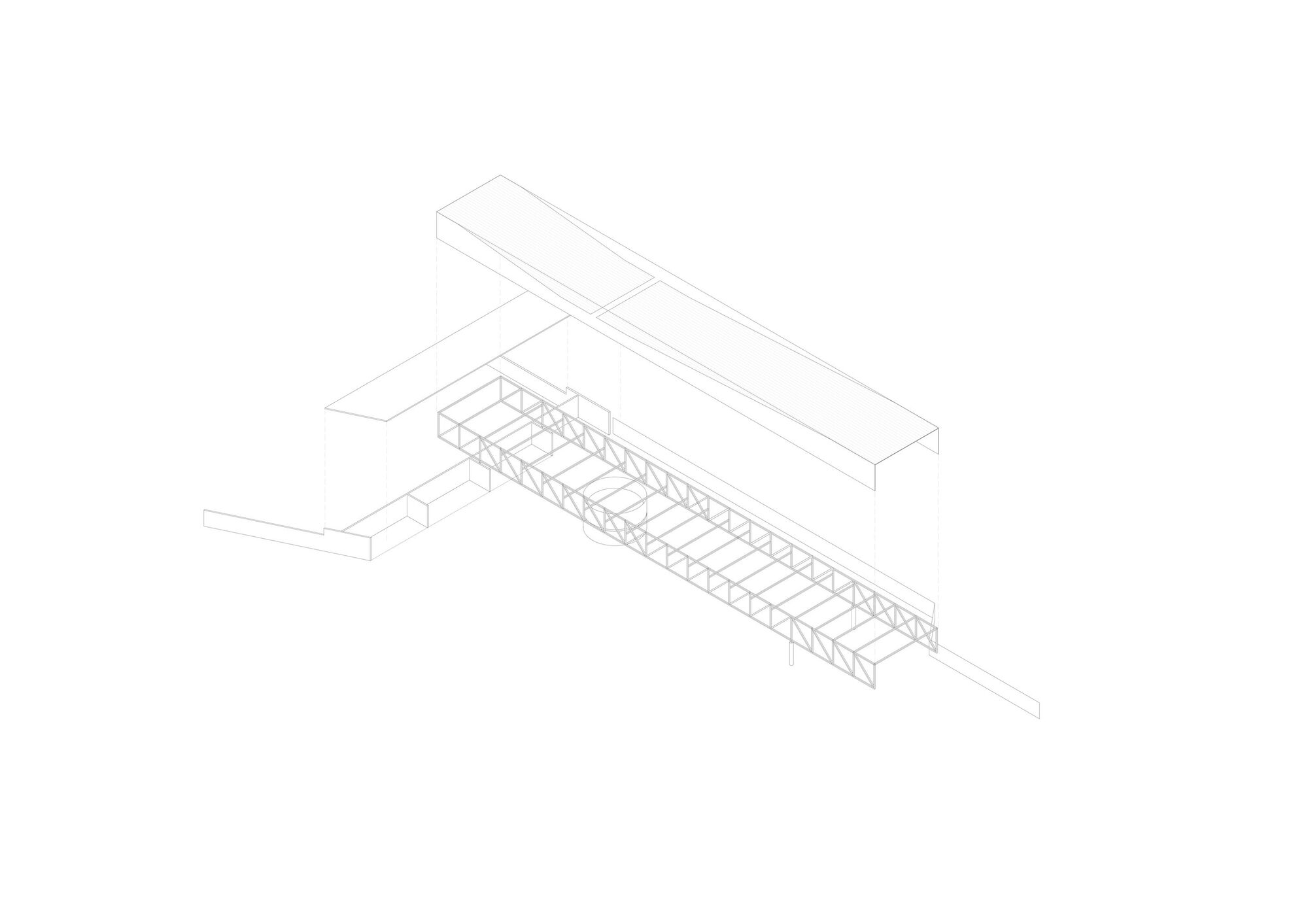
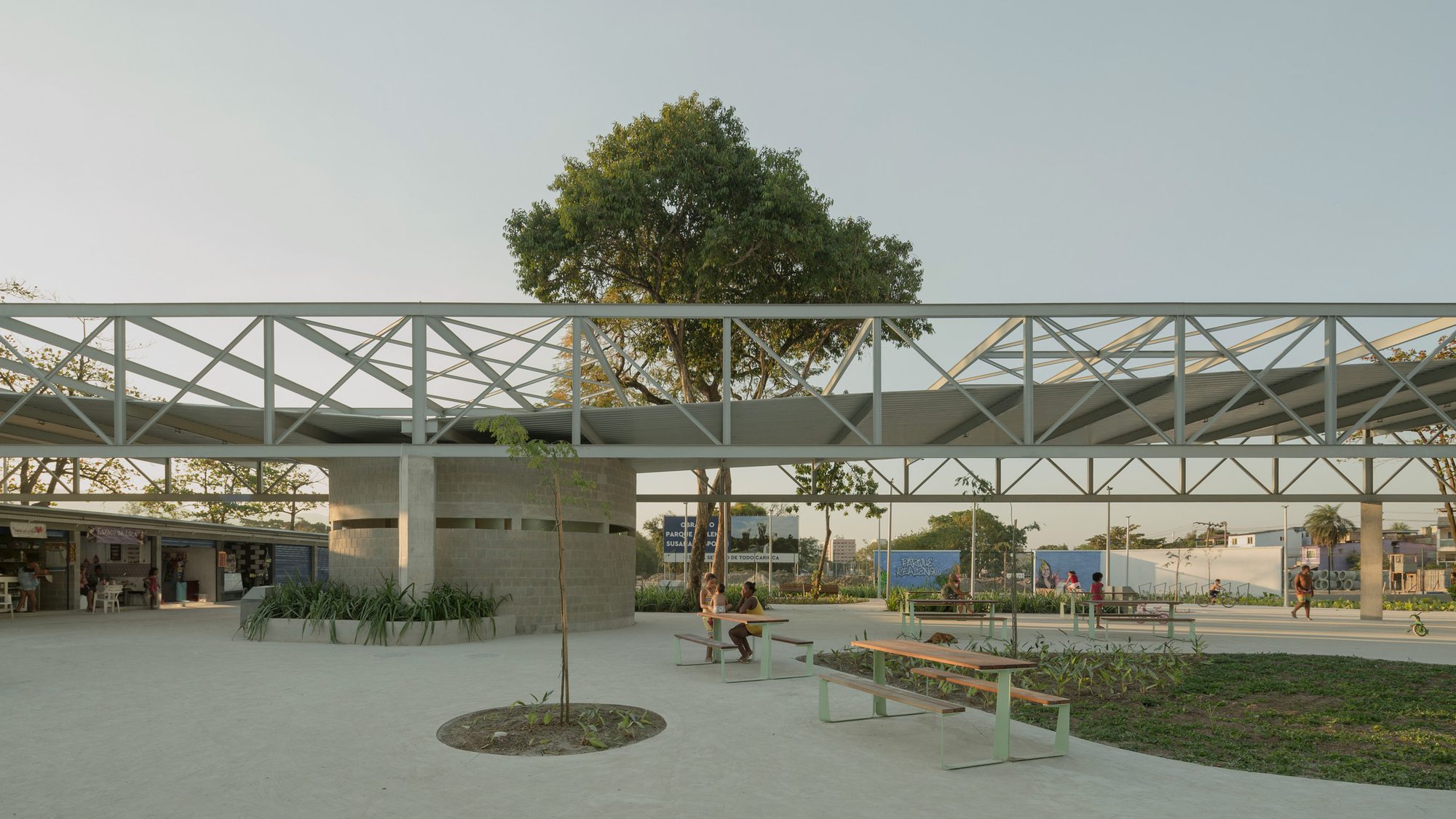
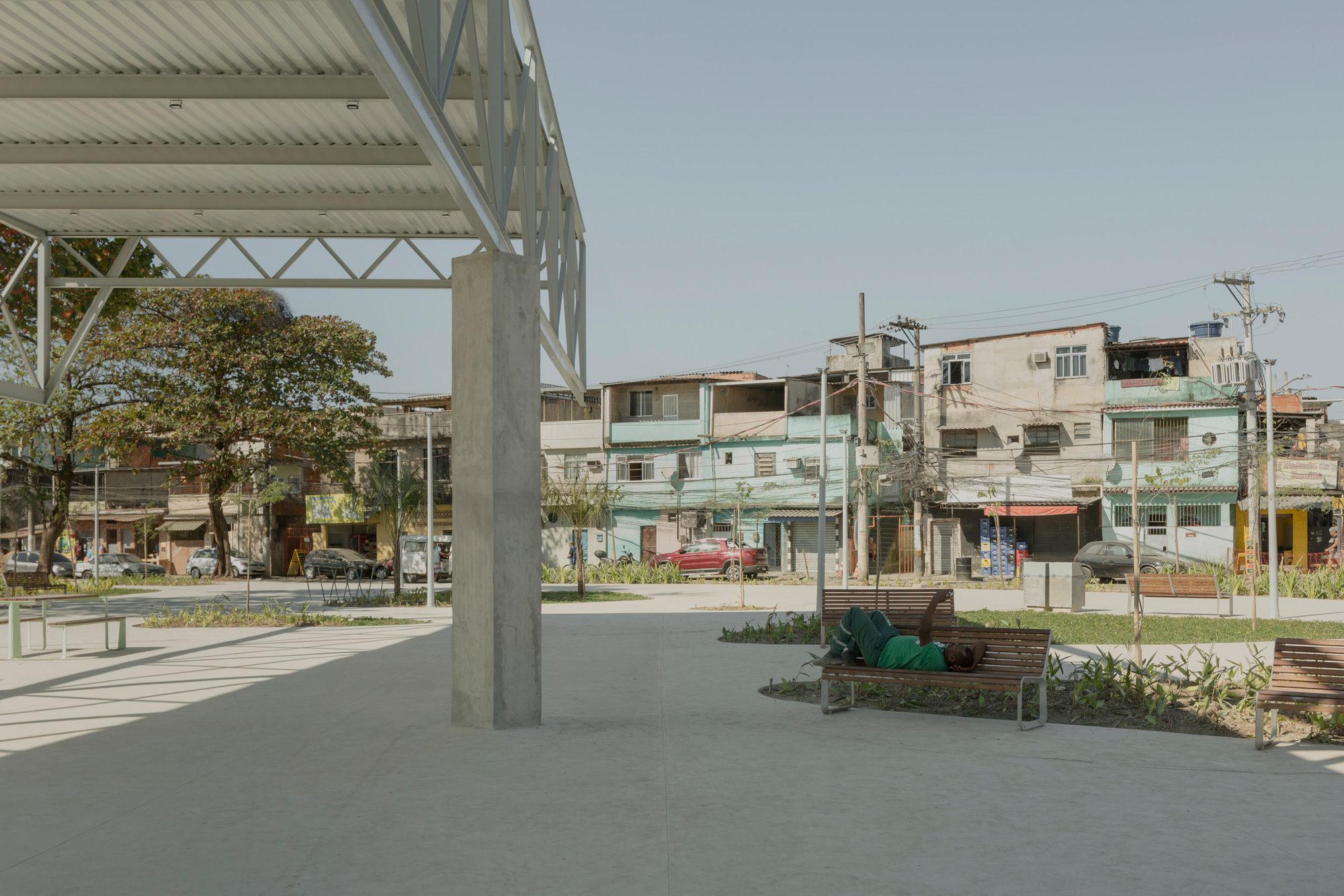
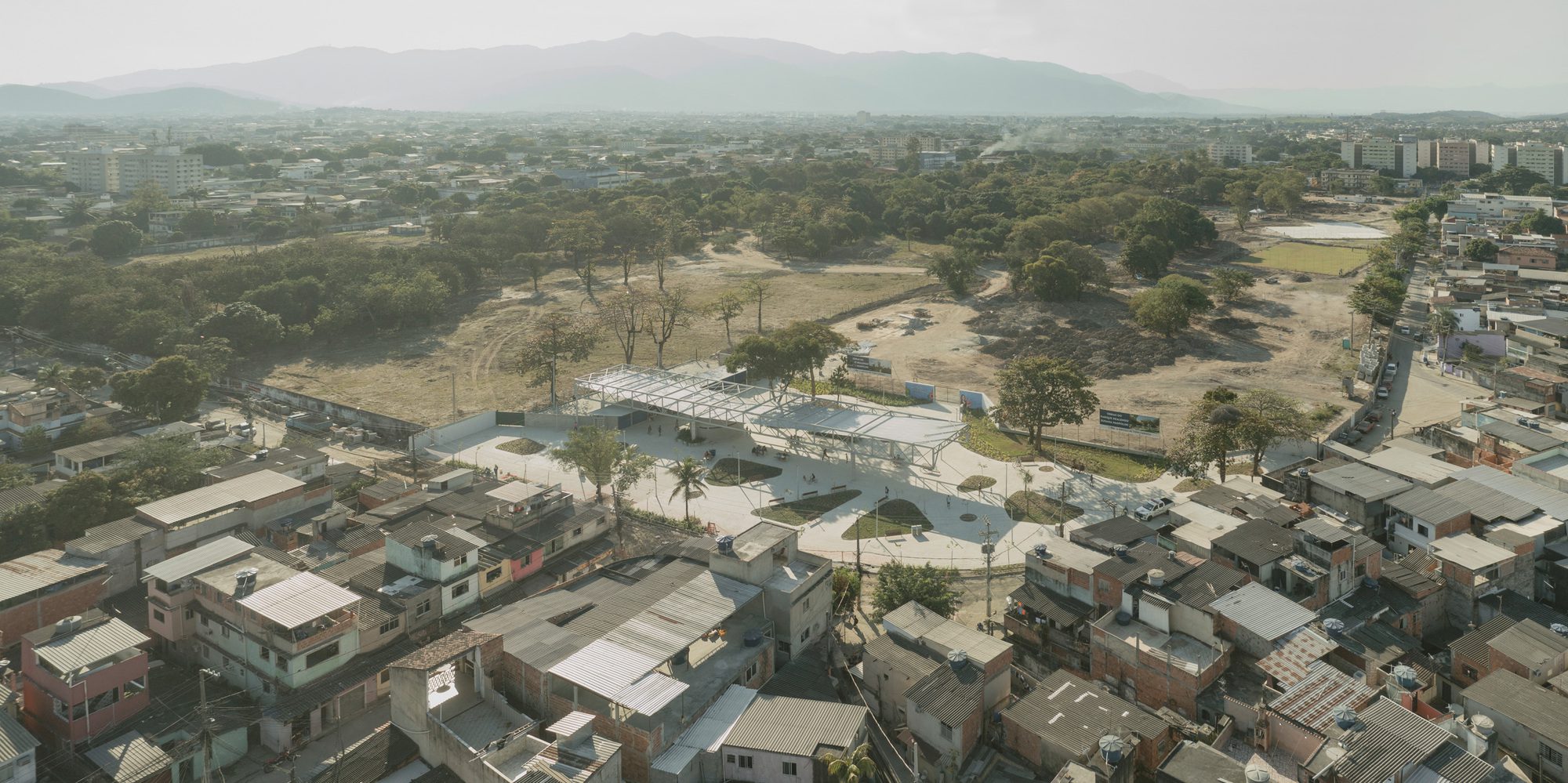
The project consists of two linear and horizontal buildings, with different heights, which intersect and form, on the one hand, a large entrance roof and, on the other, a shopping arcade. Before, the stores that made up the occupation filled the contour of the corner, leaving only a narrow sidewalk and a road for cars in front. Now, they open onto a square space that communicates with the Ideal community entrance hall and the motorcycle taxi stop. Located in an L shape, they make up a large public square that invites residents to experience the space, using it in different ways.
© Federico Cairoli
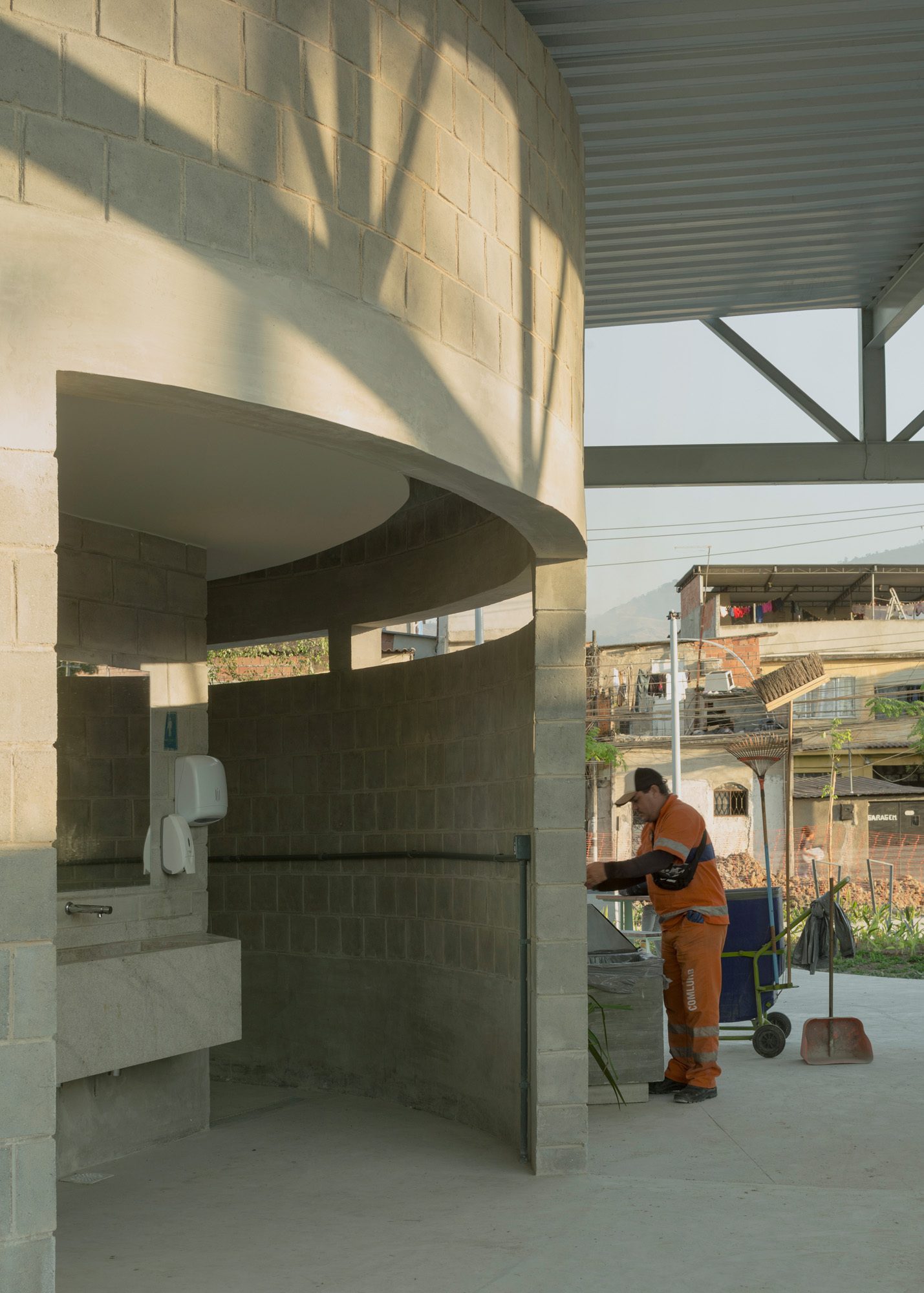
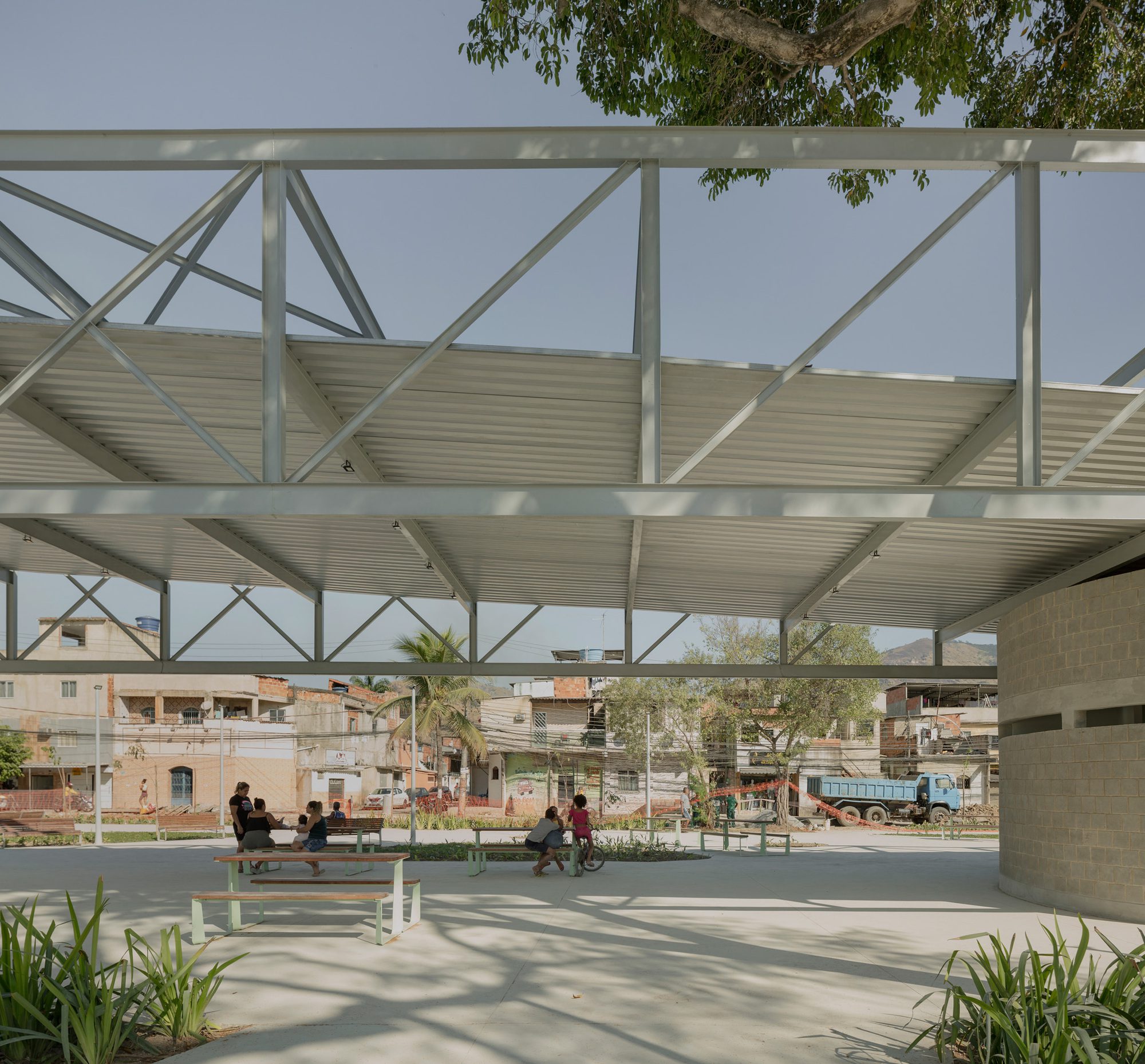
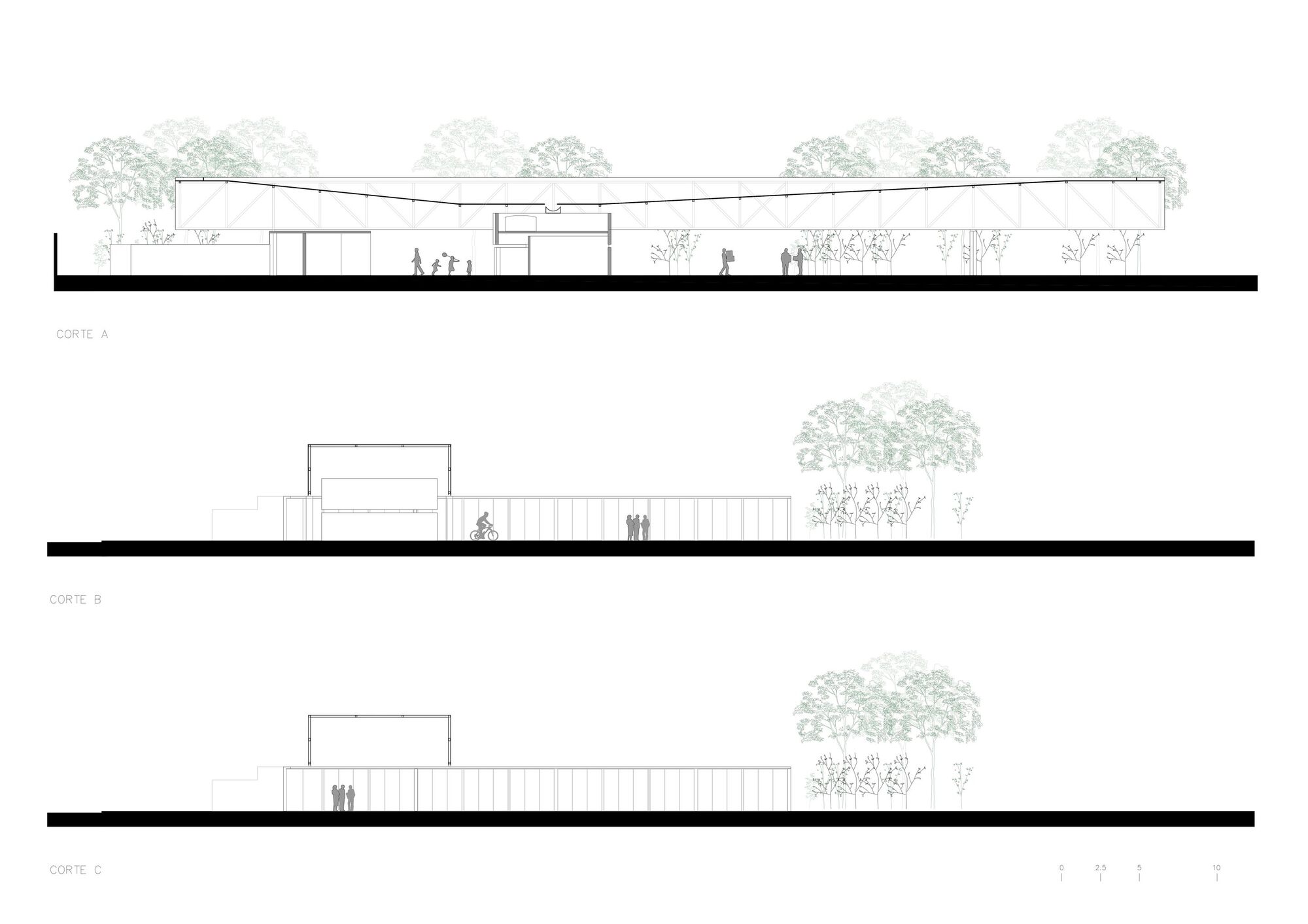
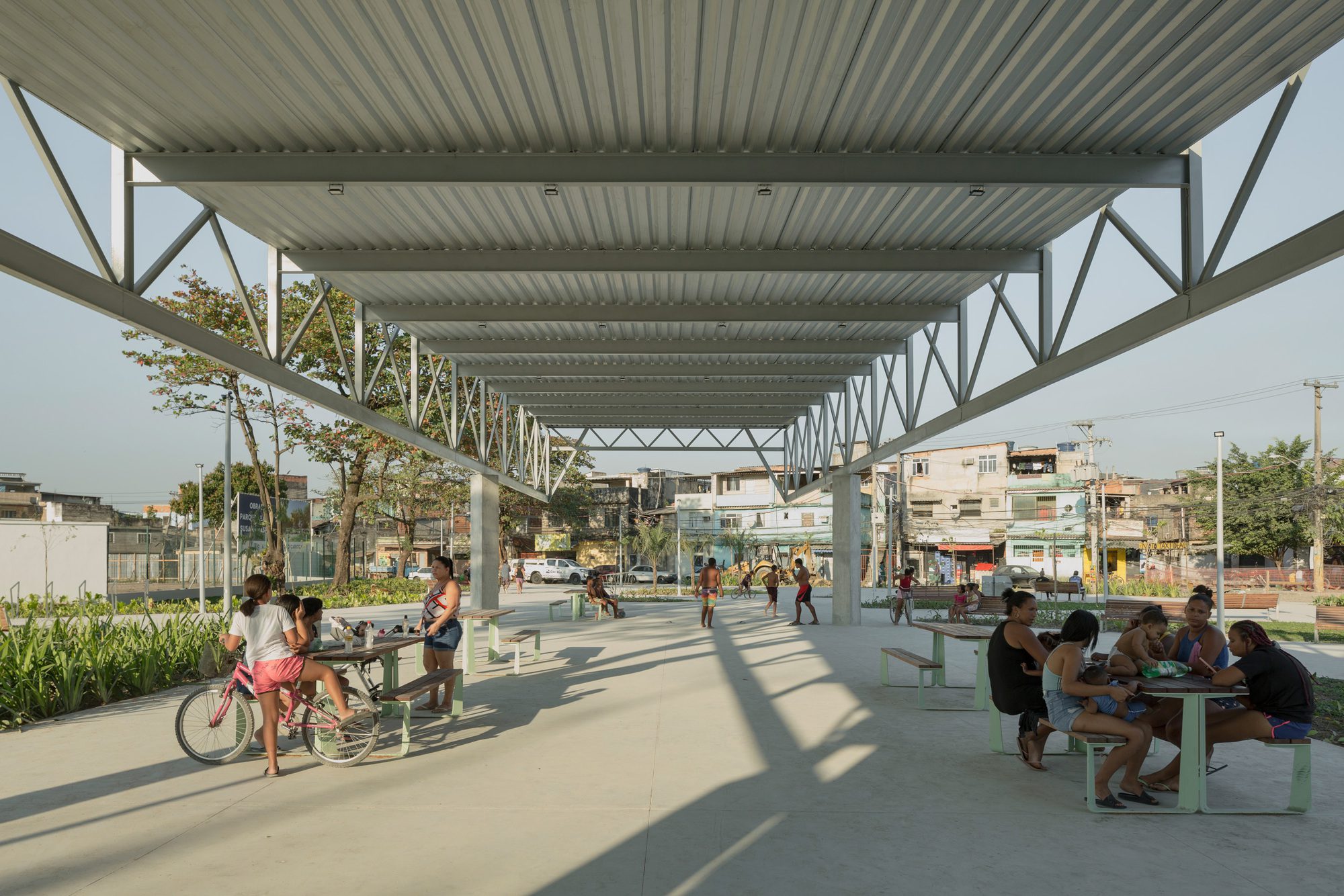
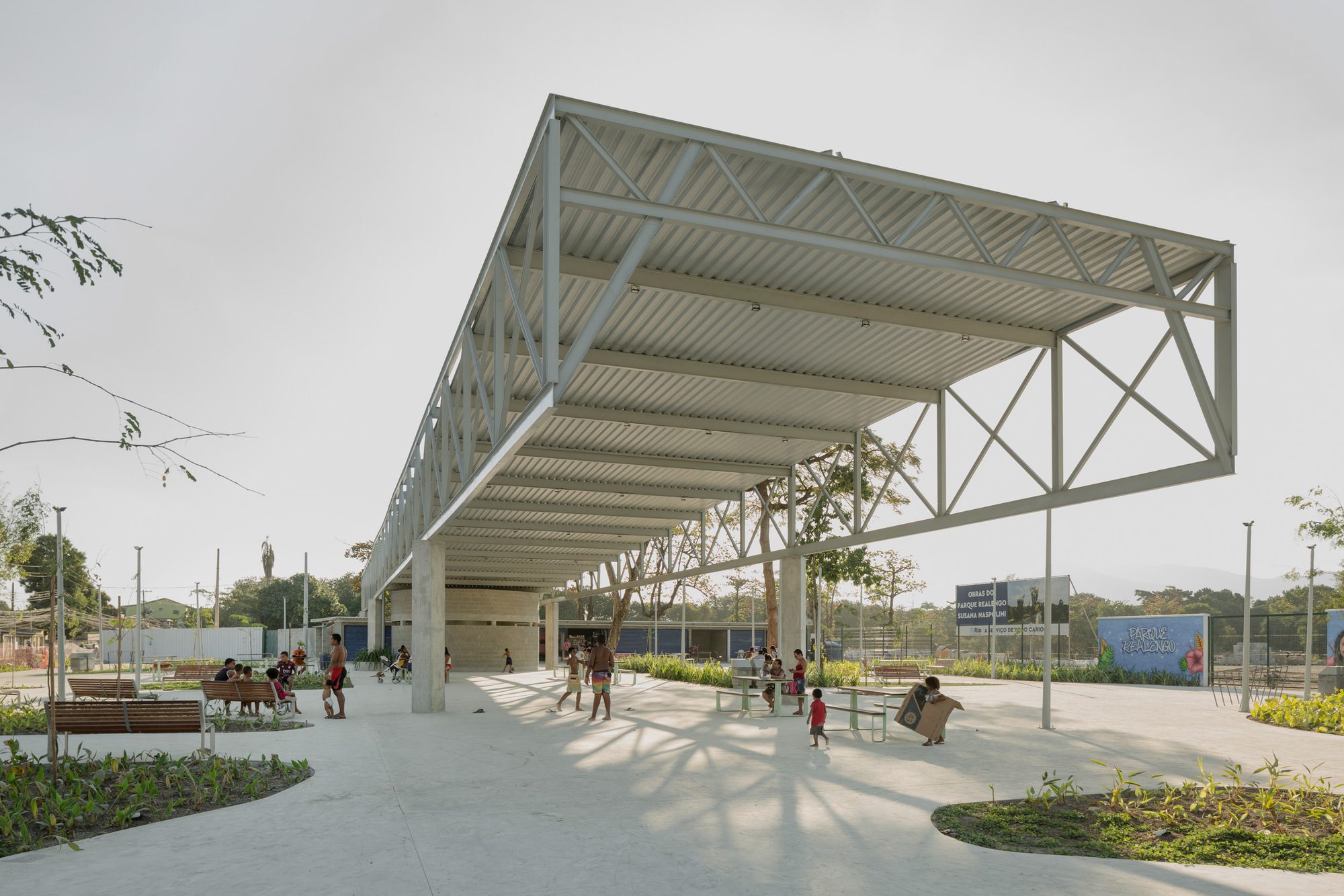
The formal character that differentiates the two constructions also translates into a programmatic character. The linear roof’s main function is to provide shade and mark a kind of portico, which functions as one of the park’s entrances. As it is a large gap with little programmatic direction, this space can be read as indeterminate, opening up the possibility for occupation with diverse and ephemeral programs. The second blade, in counterpoint, is built with a scale closer to the body. It housed 11 stores that served to relocate pre-existing stores. Local commerce, in addition to being extremely important for the dynamic existence of several residents, here also drives the use of this public space and, even more so, with a program that already existed before its reorganization. Below the larger blade, there is also a public bathroom that supports both the stores and the use of the space. And, finally, organizing all these programs, a public square was designed outside the boundaries of the park, enabling full-time use and appropriation of the space.
© Federico Cairoli
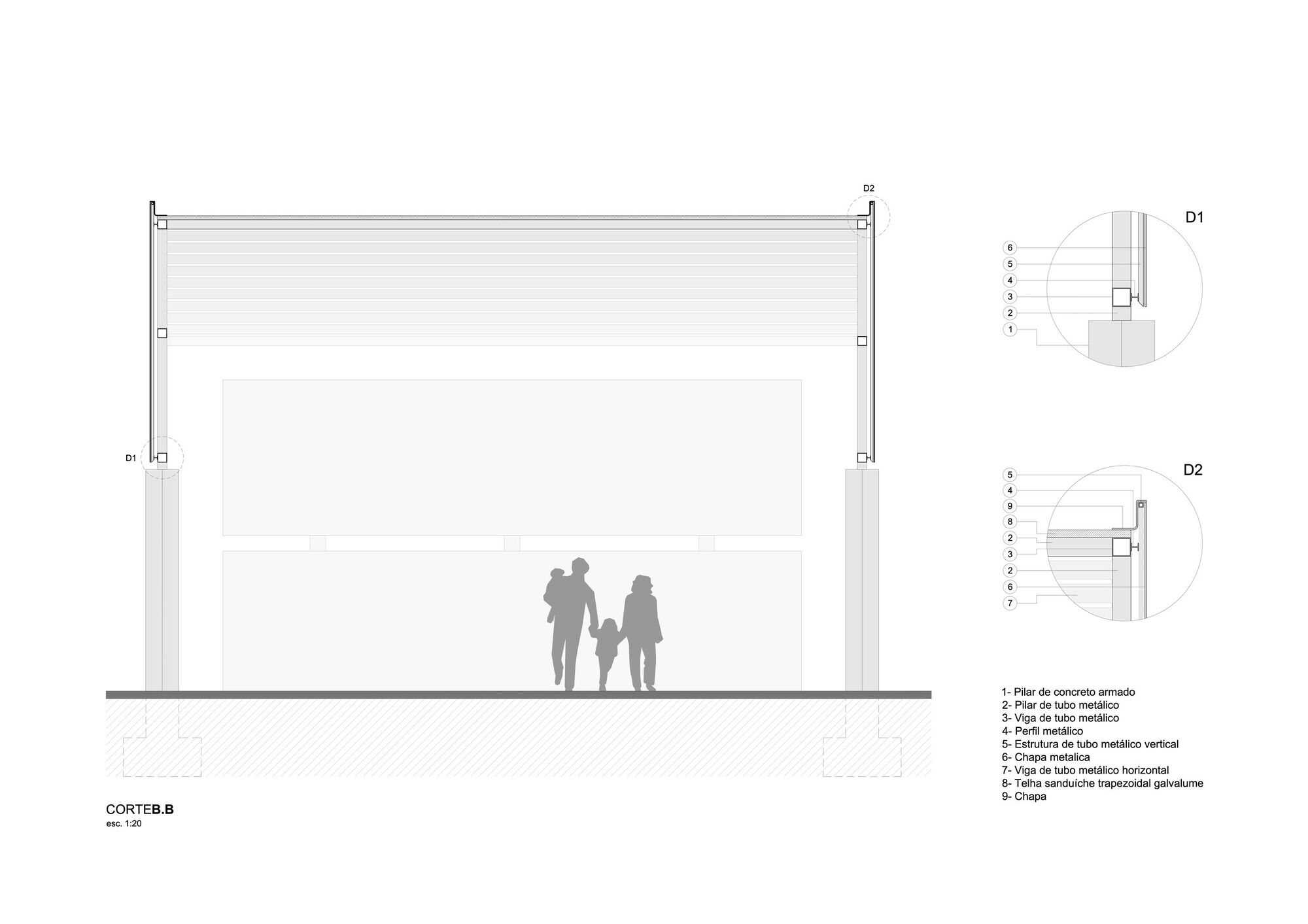
The structure of the access roof follows a construction system with 3 meter long metal profiles, which, when articulated, form two trusses 66 meters long and 3 meters high. These trusses are connected by 9 meter long metal profiles, thus forming a structural box. This height and beam system are justified by better structural efficiency, ensuring the maturity of larger spans with less support, in addition to enabling the use of slimmer profiles. At the ends, this structural box is supported on square-section, rotated concrete pillars, in order to encourage continuity of flow. The shopping gallery is constructed of structural concrete block walls that support a steel frame slab.
© Federico Cairoli
It can be considered that the early opening of the External Market was intended to respond to demands against a process of removal that would occur of existing stores, a process that counts on the participation of the project team to provide, within the design, areas capable of relocation. And, in addition, it is primarily a territorial monitoring and advocacy process, mobilized by the Realengo 2030 Agenda, directed by Roberta Freire.
© Federico Cairoli
Thinking about the construction of public equipment is also thinking about the decline of a posture of architectural production as necessarily a success. Even though the construction of this park meets the wishes of social movements, it is necessary to understand the process of implementing urban architecture as a social process that goes beyond design. To achieve this, we understand that there is a need to consider the dynamics of city construction collectively, not as posthumous occupations to the delivery of the built product in indeterminate spaces, but as constitutive and participants in the design process. The Market Square thus becomes an important object for thinking about this debate.
Project Info
Architects: Ayako Arquitetura, Helena Meirelles arquitetura, Larissa Monteiro, Zebulun Arquitetura, messina | rivas
Area: 790 m²
Year: 2023
Country: Realengo, Brazil
Photographs: Federico Cairoli
Lead Architects: Carlos Zebulun, Francisco Rivas, Helena Meirelles, Juliana Ayako, Larissa Monteiro e Rodrigo Messina
Urban Landscape: Ecomimesis Soluções Ecológicas LTDA
Project Management: Ricardo Kawamoto
Structure: Kleber Ribeiro
Water Treatment: Ana Kling
Lighting: Carlos Florido
Geometric Pavement: Leandro Vaz e Jorge Luiza da Silva
Installations: Paulo Roberto Silva
Execution: Ecomimesis Soluções Ecológicas LTDA e Cone Engenharia