

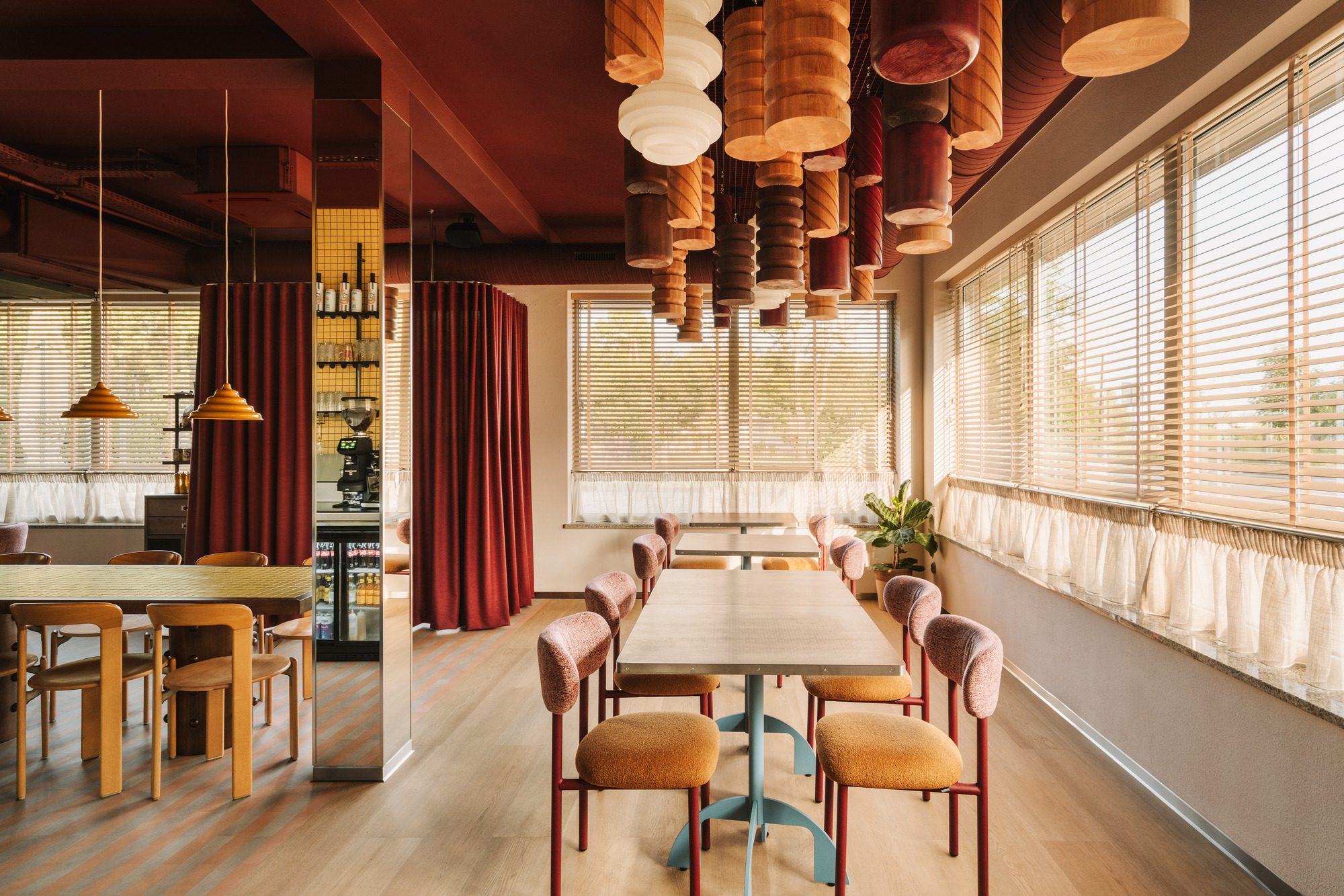
RAGU Restaurant, The inspiration for the new Ragu was Italian hospitality, the neighborhood rhythm of the day, and pasta – understood both symbolically and literally. Our aim was to capture the atmosphere of a small Italian trattoria: homely, relaxed, and conducive to gatherings. Guests were meant to have the opportunity both to celebrate meals together and to spend time in smaller groups.
© Migdal Studio
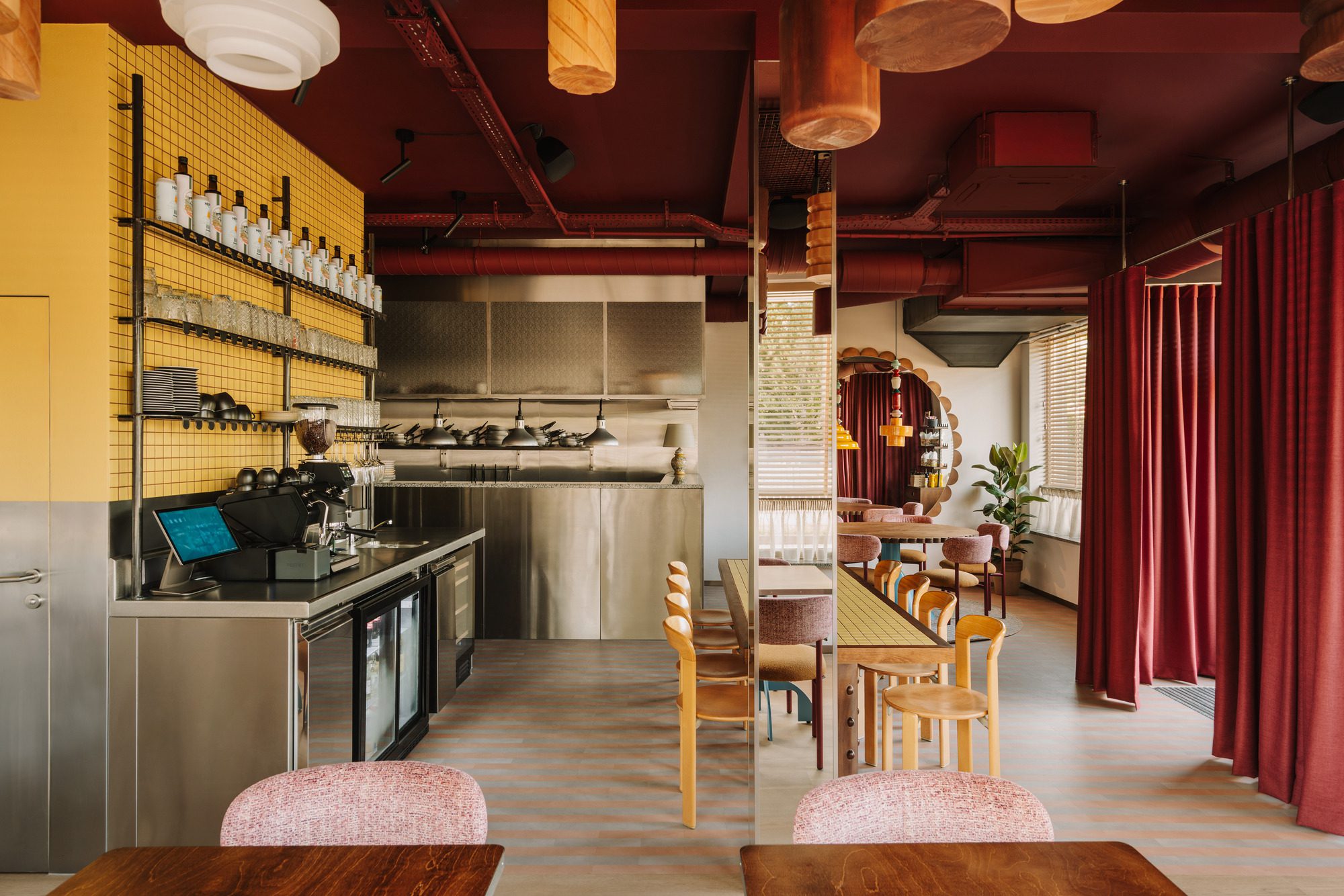
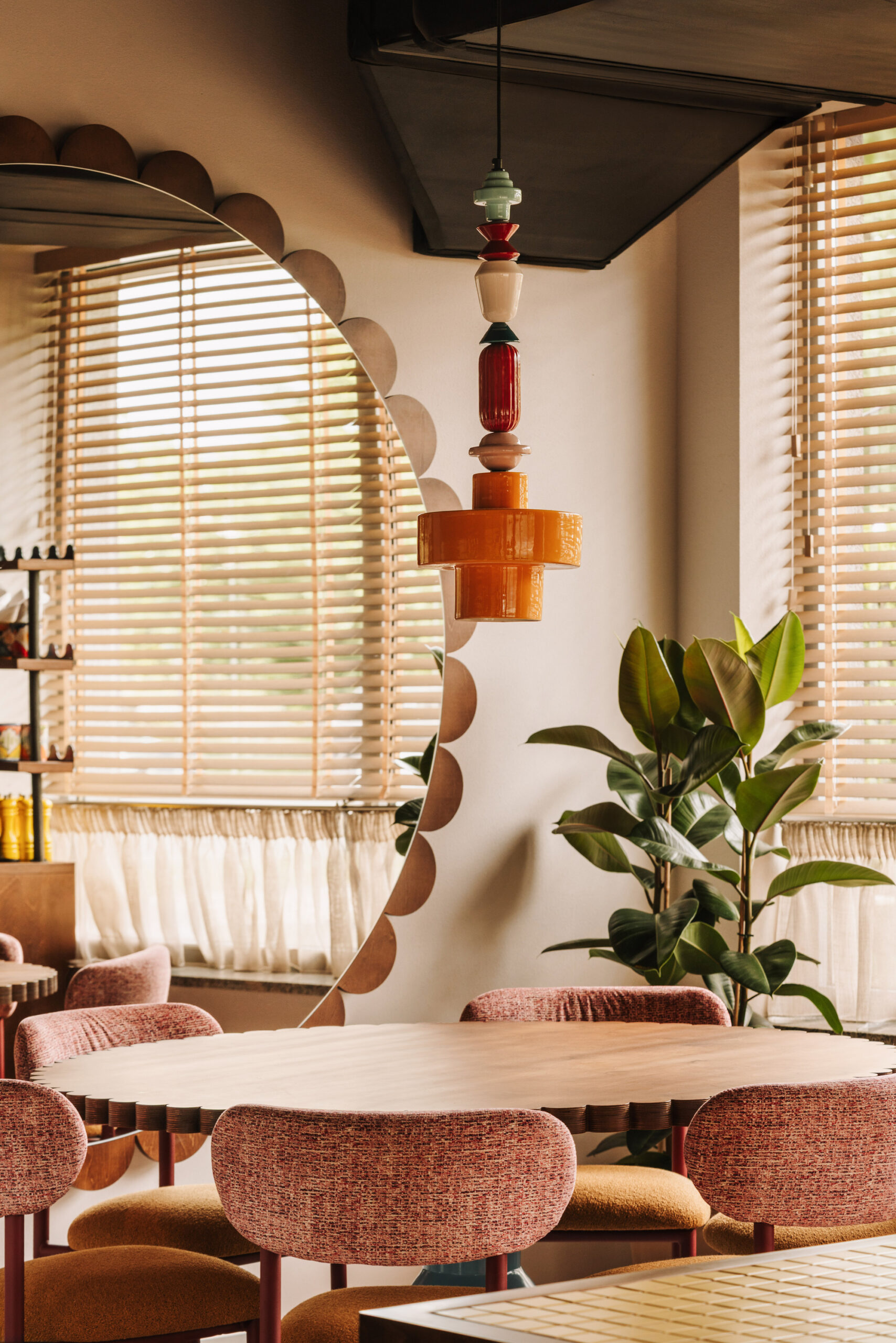
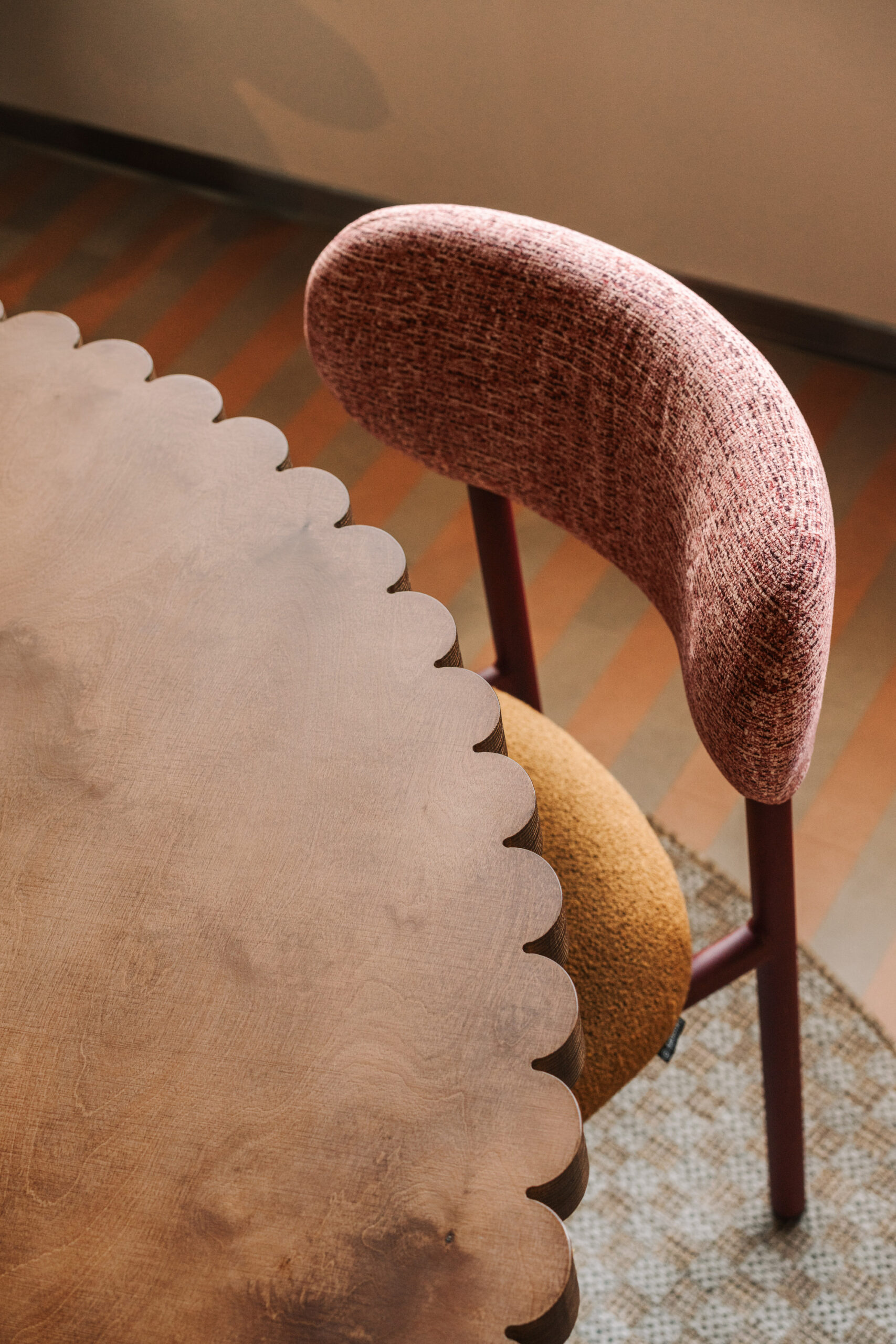
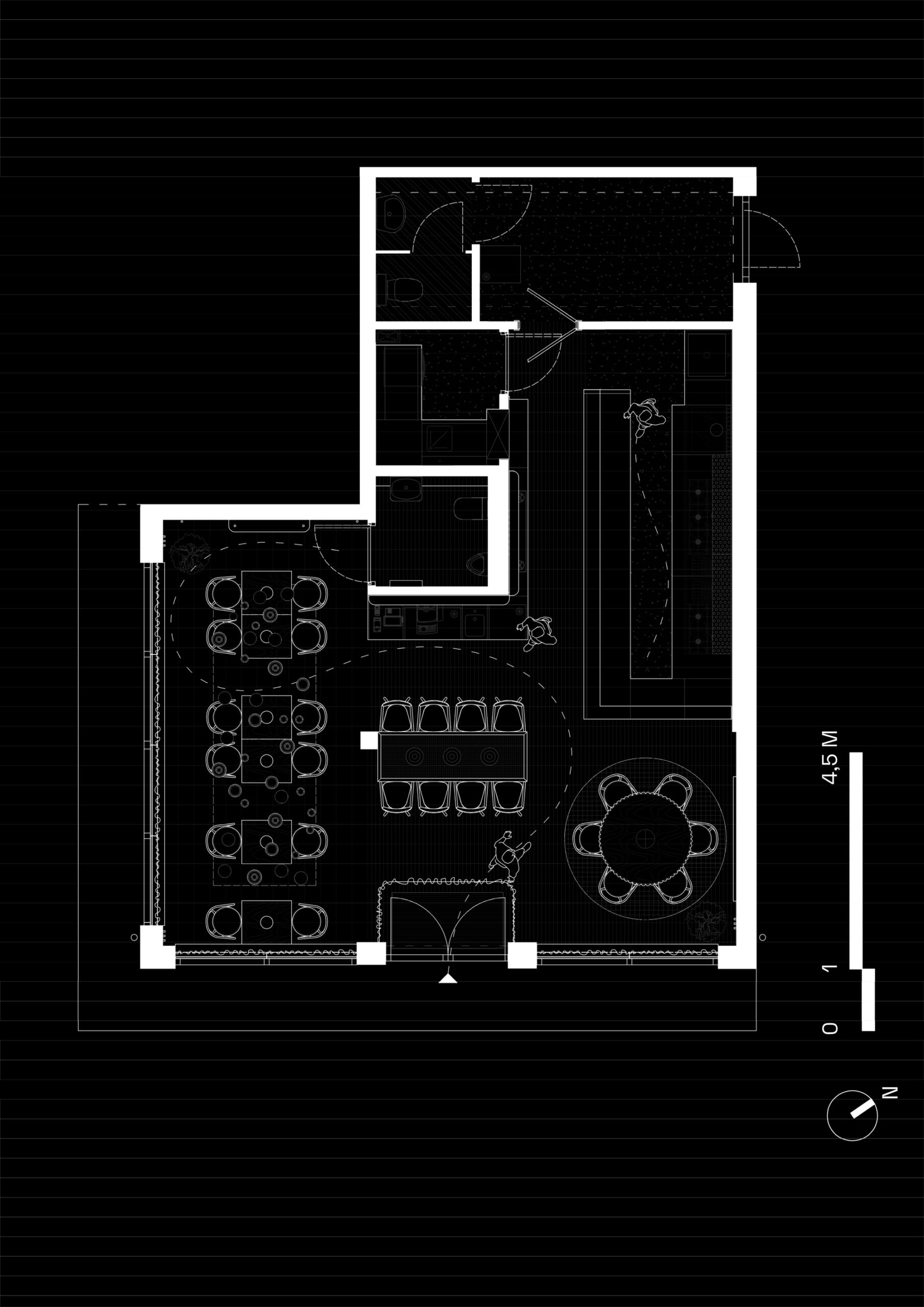
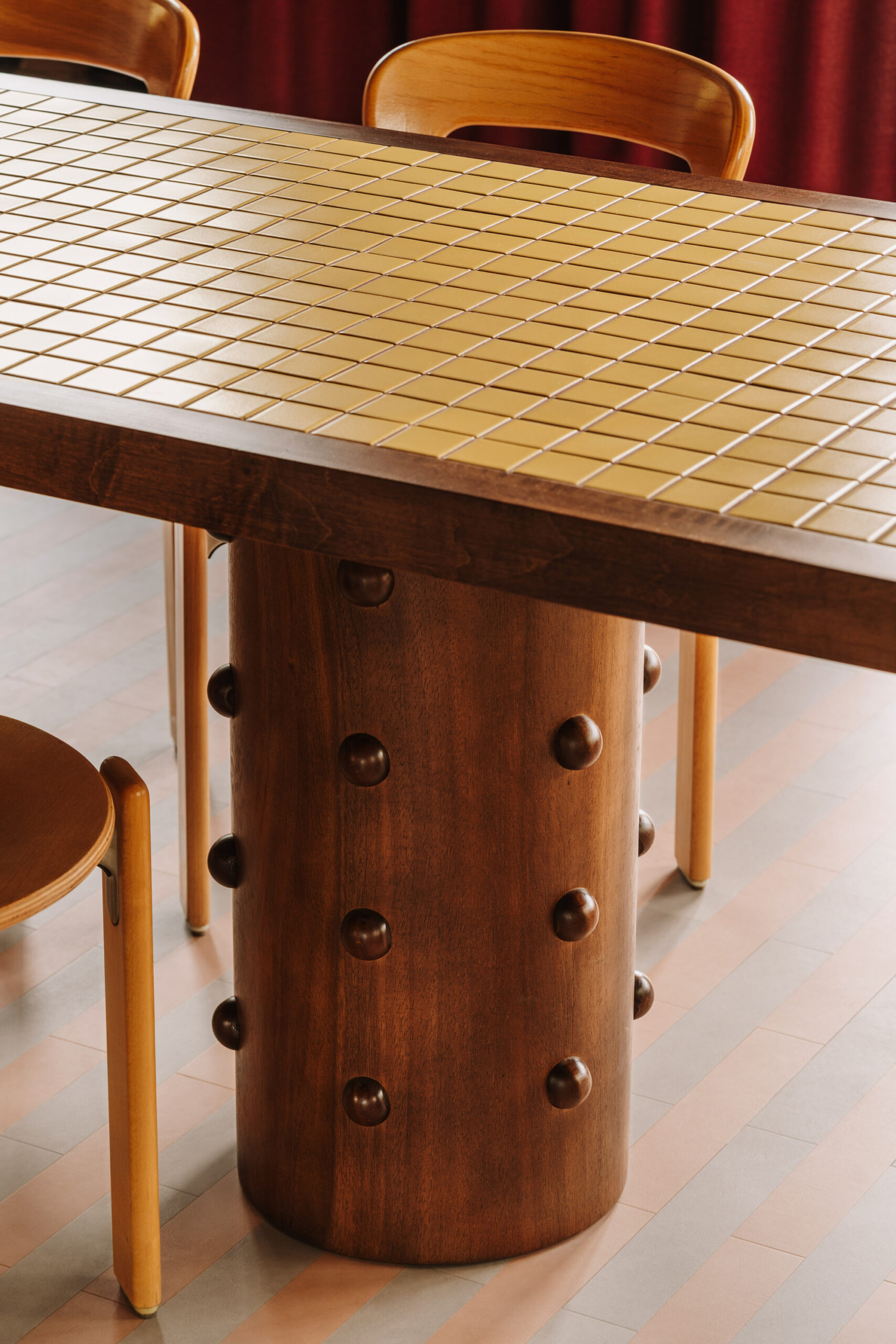
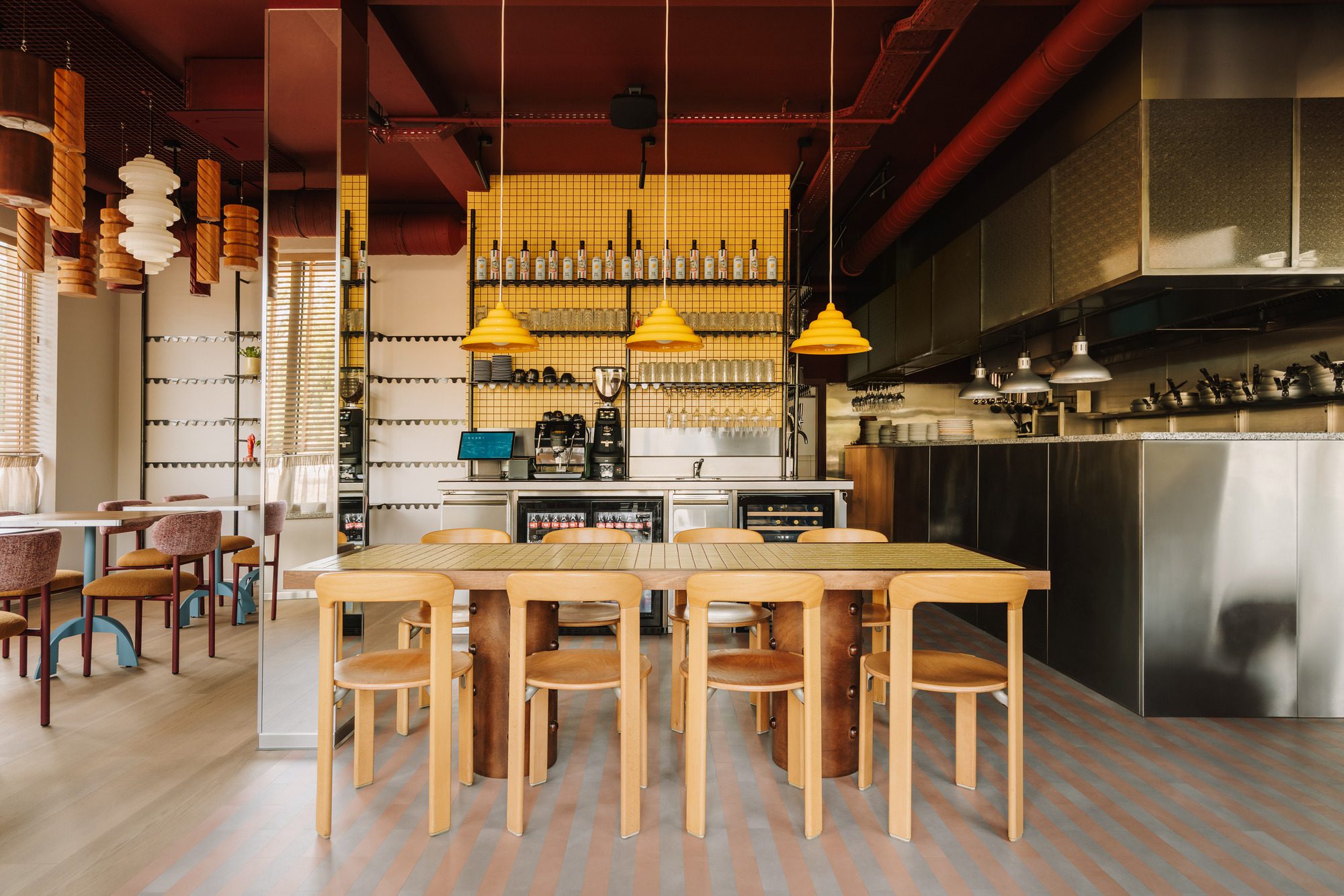
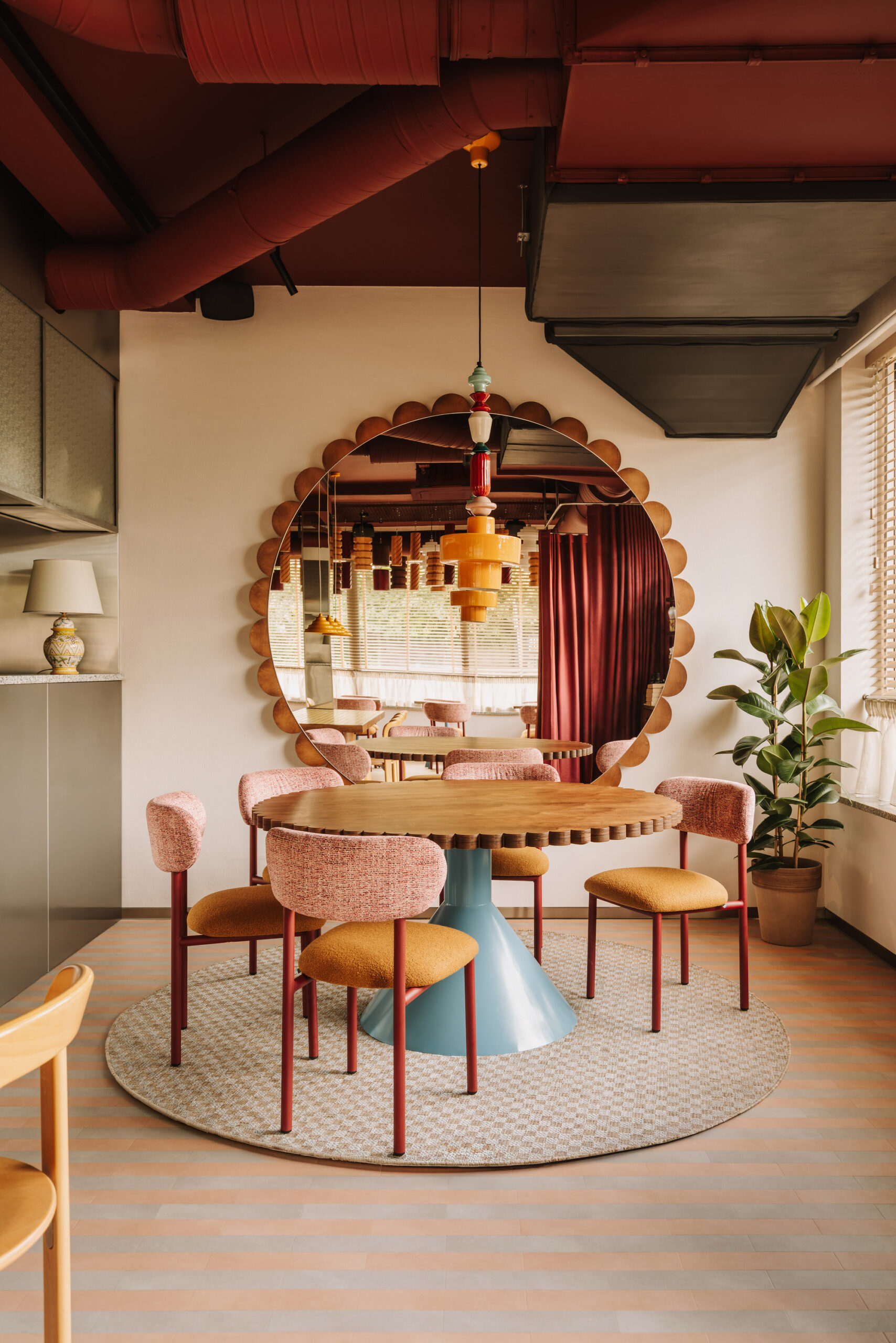
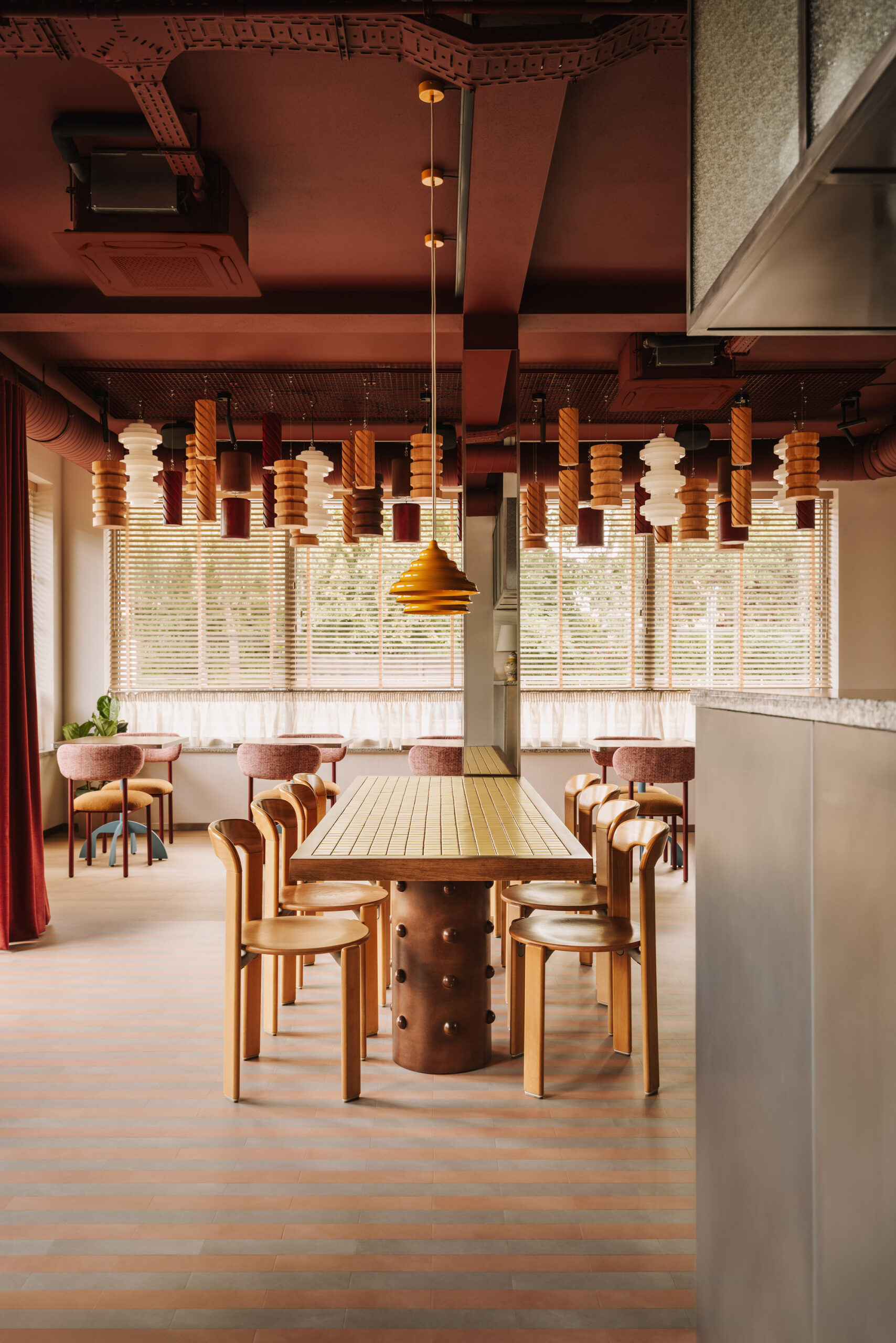
The biggest challenge was the limited space. It was necessary to reconcile a fully equipped kitchen with a comfortable and functional area for guests. The first spatial layouts, although logical, did not provide the desired atmosphere; therefore, we moved away from classic schemes and opted for solutions that naturally encourage integration. As a result, the dining room was organized around two communal tables: a rectangular one with a mosaic top and a round one, reminiscent of a biscuit.
© Migdal Studio
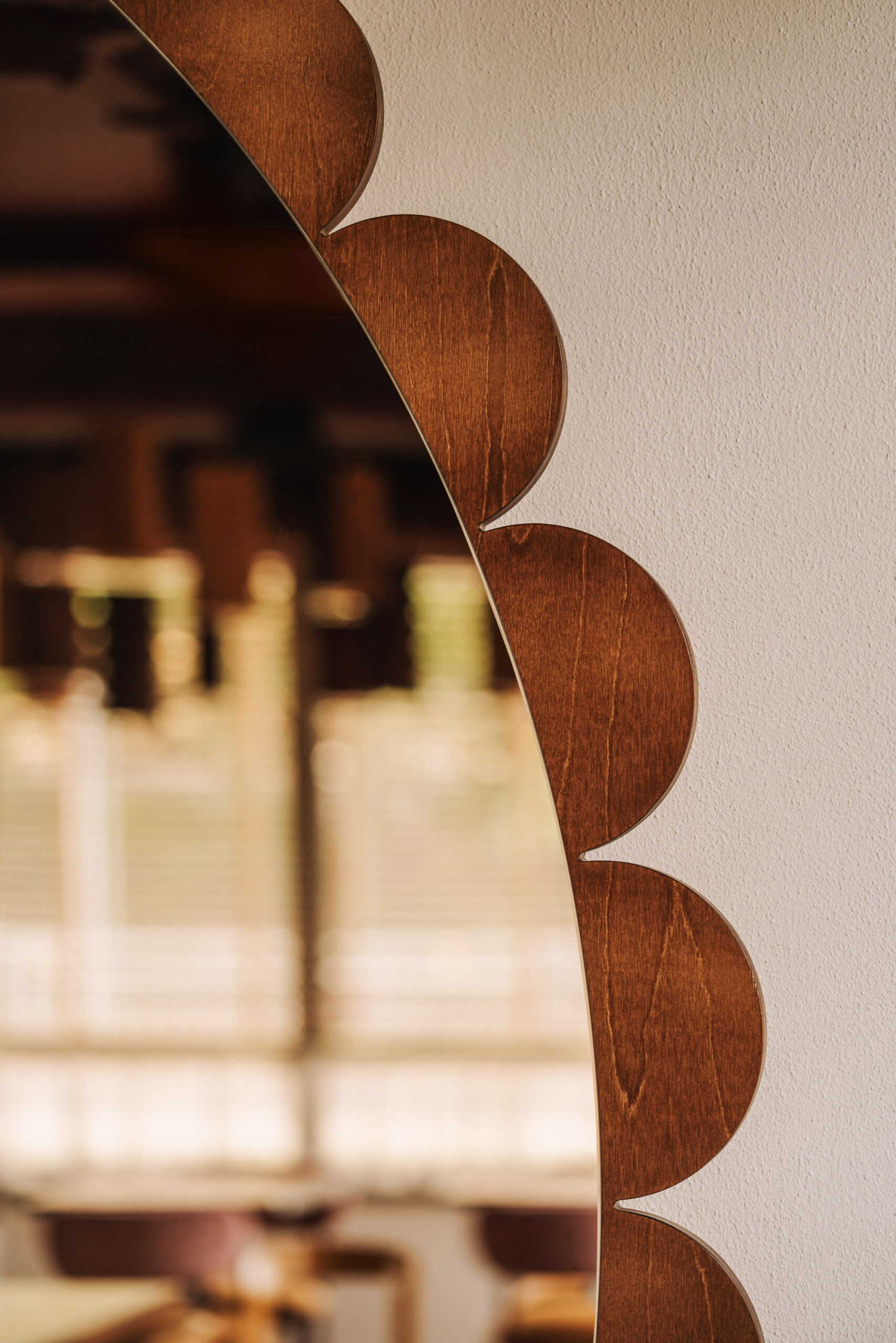
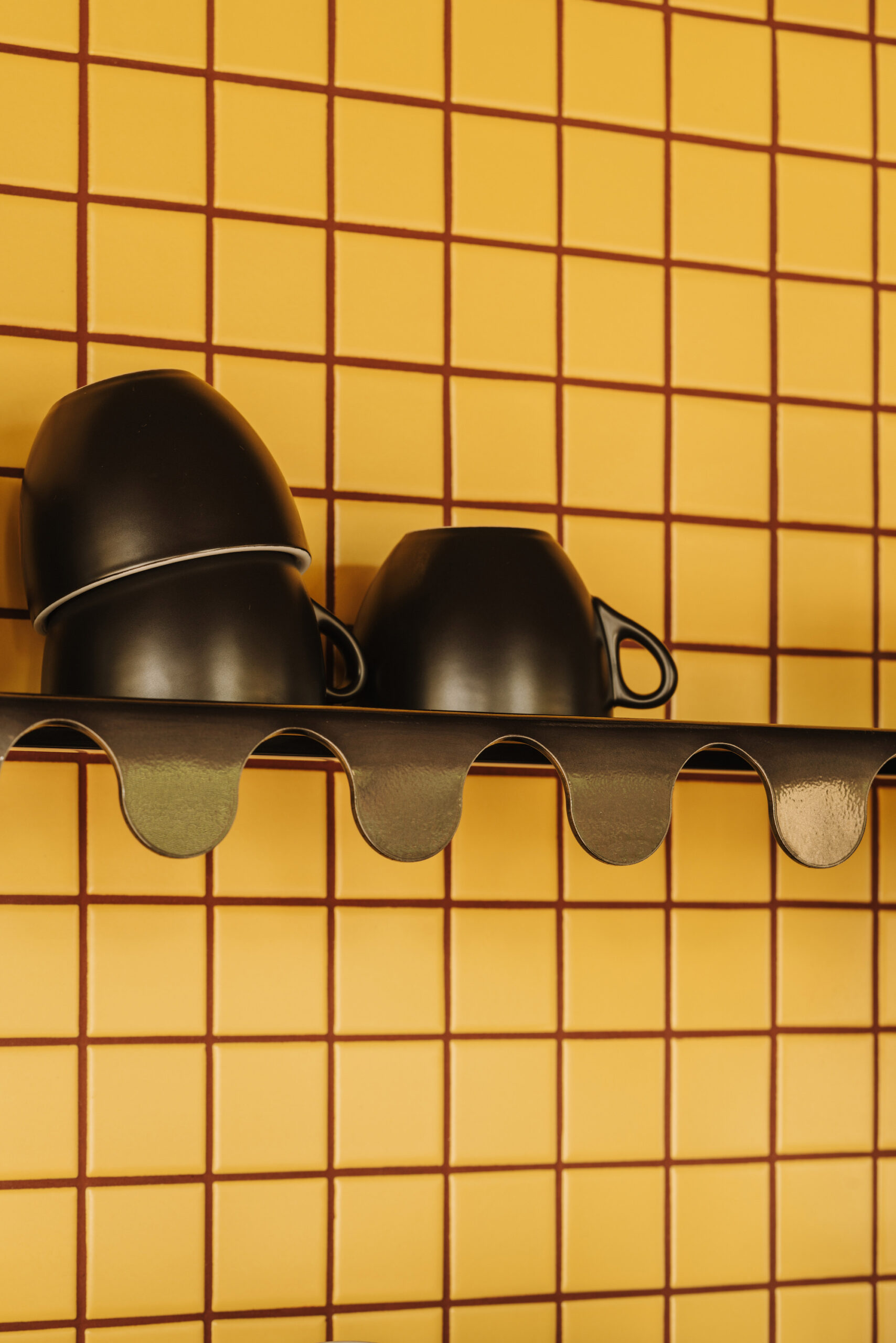
Technically, the project combines contemporary forms with modernist and Memphis-inspired accents. Brushed steel, walnut plywood, and ornamental glass were used. Texture also played a major role in mosaics, striped vinyl flooring, cut plywood, and steel elements create a layered yet legible composition. A distinctive accent is the yellow color, consistently applied as a recognizable feature of the Ragu brand.
© Migdal Studio
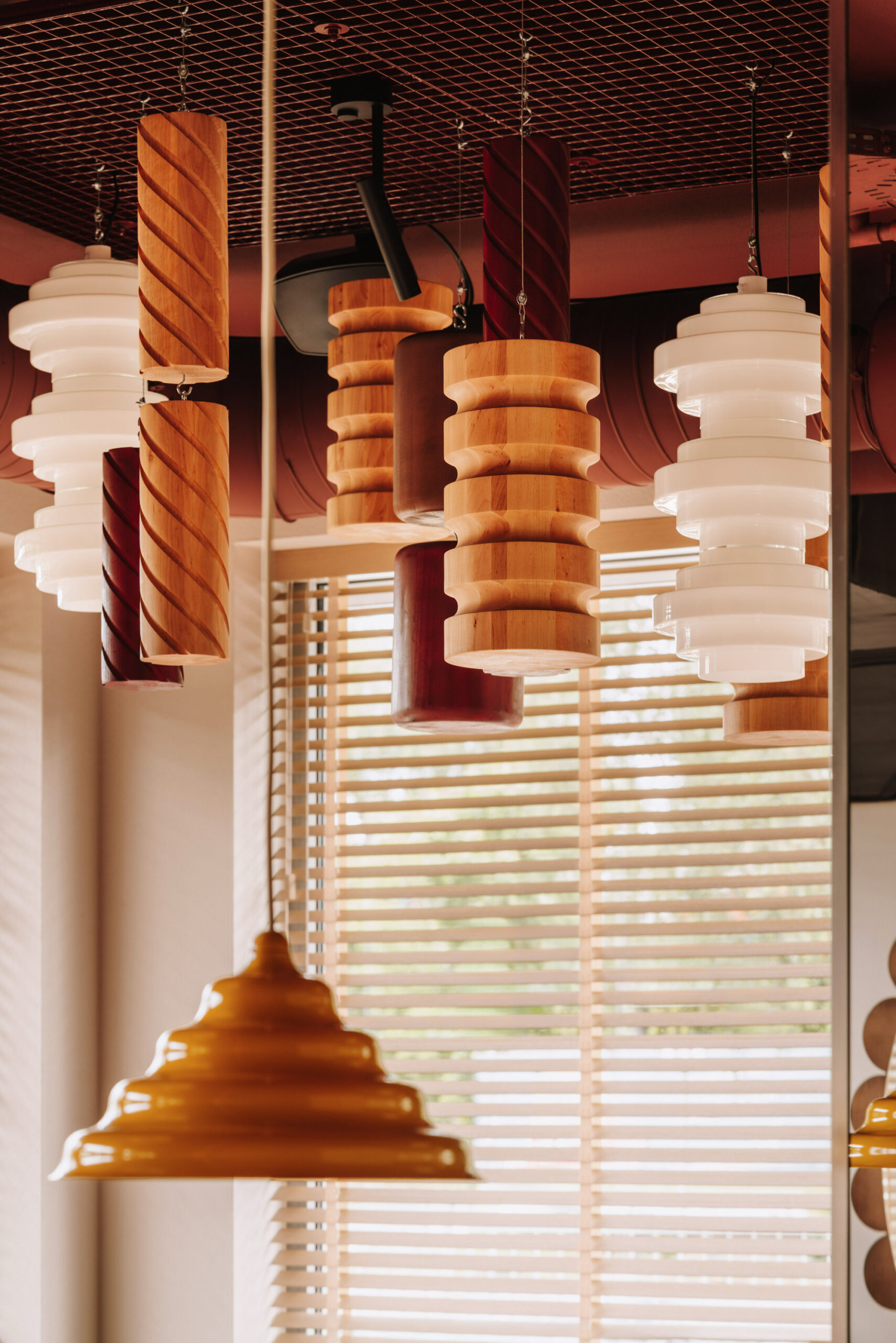
Most of the elements were custom-made: tables, kitchen and bar fittings, shelving, as well as a bespoke lighting installation inspired by pasta shapes. Collaboration with a carpenter and turner made it possible to create unique light fixtures, while the selection of chairs from classic HAY models to Satelliet chairs upholstered in unconventional fabrics introduced a balance between craftsmanship and contemporary design.
© Migdal Studio
The spatial layout resulted from the need to make the most of the limited floor area while fostering a sense of community. The kitchen and bar are visible from every spot in the restaurant, reinforcing the feeling of openness and homeliness. A biscuit-shaped mirror over two meters in diameter further enlarges the space visually and echoes the motif of pasta forms.
© Migdal Studio
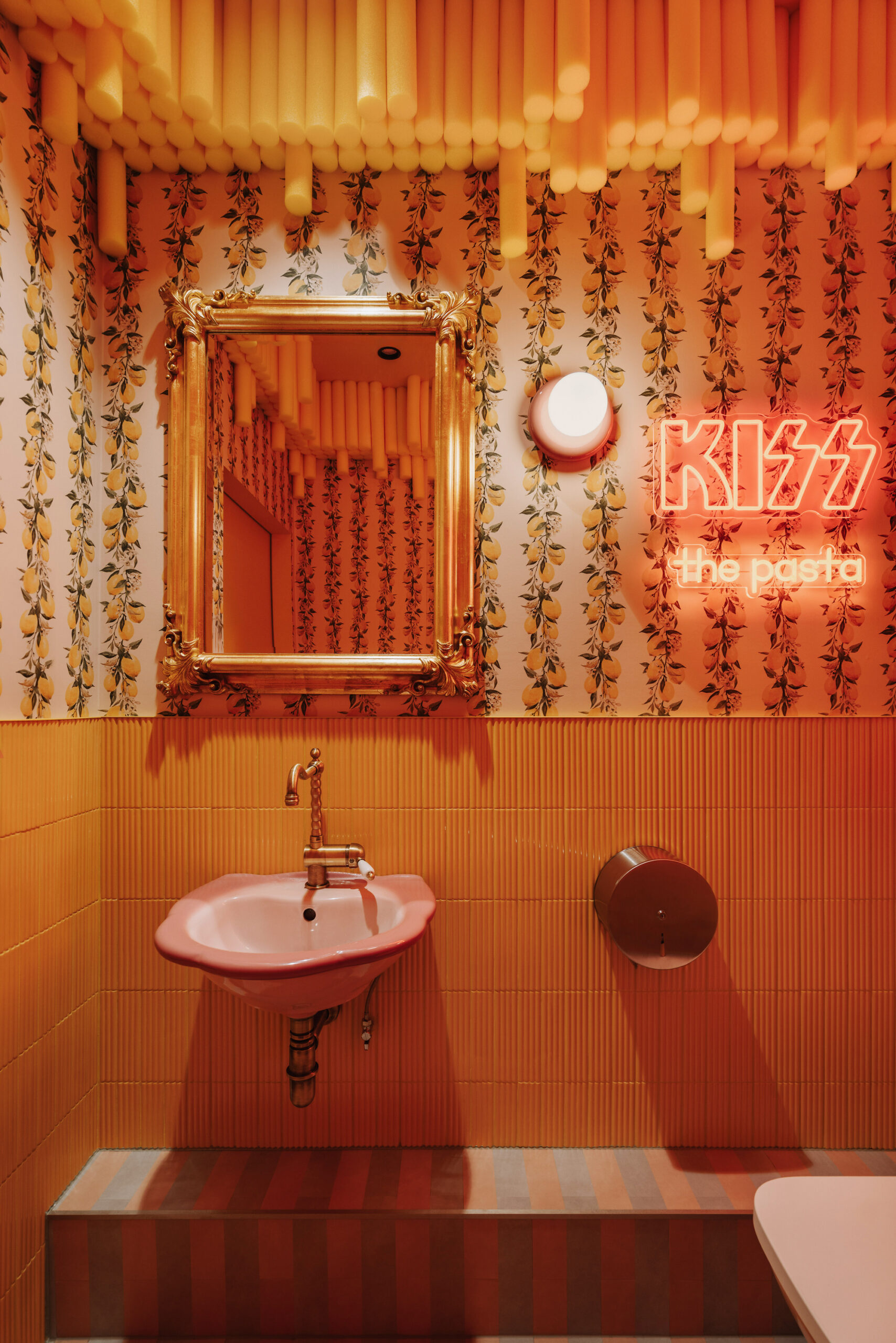
A special accent is the restroom designed more boldly, with humor and references to Sicily. A lemon-patterned wallpaper, relief tiles reminiscent of pasta, and colorful pool noodles hanging from the ceiling create a lighthearted, playful contrast to the main dining area.
Project Info
Architects: CUDO:
Country: Poland, Wrocław
Area: 90 m²
Year: 2025
Photographs: Migdal Studio
Manufacturers Rako, Artera, Equipe, Ferroluce, HAY, Nodi, Satelliet furniture: Rako
Design Team: CUDO
Partners And Interior Designers: Tomasz Borowiak, Aleksander Czerwonka – Jabloński,
Project Manager And Interior Designer: Anna Wójcik
Senior Interior Designer: Kaja Onichimowska
ID: Hart Studio