


“Qianhai’s Guiwan Park is a bold, responsible, and balanced exemplar of new urban landscape infrastructure. The transformation from hermetic canal to woven green infrastructure in just two years is a model for all waterfront cities.” – 2023 Awards Jury. In mid-October 2023, the American Society of Landscape Architects (ASLA) held its annual awards ceremony in Minneapolis, USA. Among the international contenders, the Qianhai Guiwan Park project, led by Field Operations, is the only non-U.S. project from China that received the annual Professional General Design Honor Award. This groundbreaking project, Qianhai Guiwan Park, brought together a multidisciplinary team of experts from over 19 fields including engineering, geology, transportation, architecture, and structural engineering. It serves as a testament to China’s prowess in construction and innovation, as the team collectively tackled a global challenge with daring innovation and unwavering dedication. Notably, core members of the team from Field Operations, involved since 2016, proudly represented the project at the esteemed awards ceremony. Through its trailblazing approach and cutting-edge engineering, Qianhai Guiwan Park is not only reshaping the landscape but also transforming the way people live, offering a distinctive contribution to societal advancement.
© Holi Photography
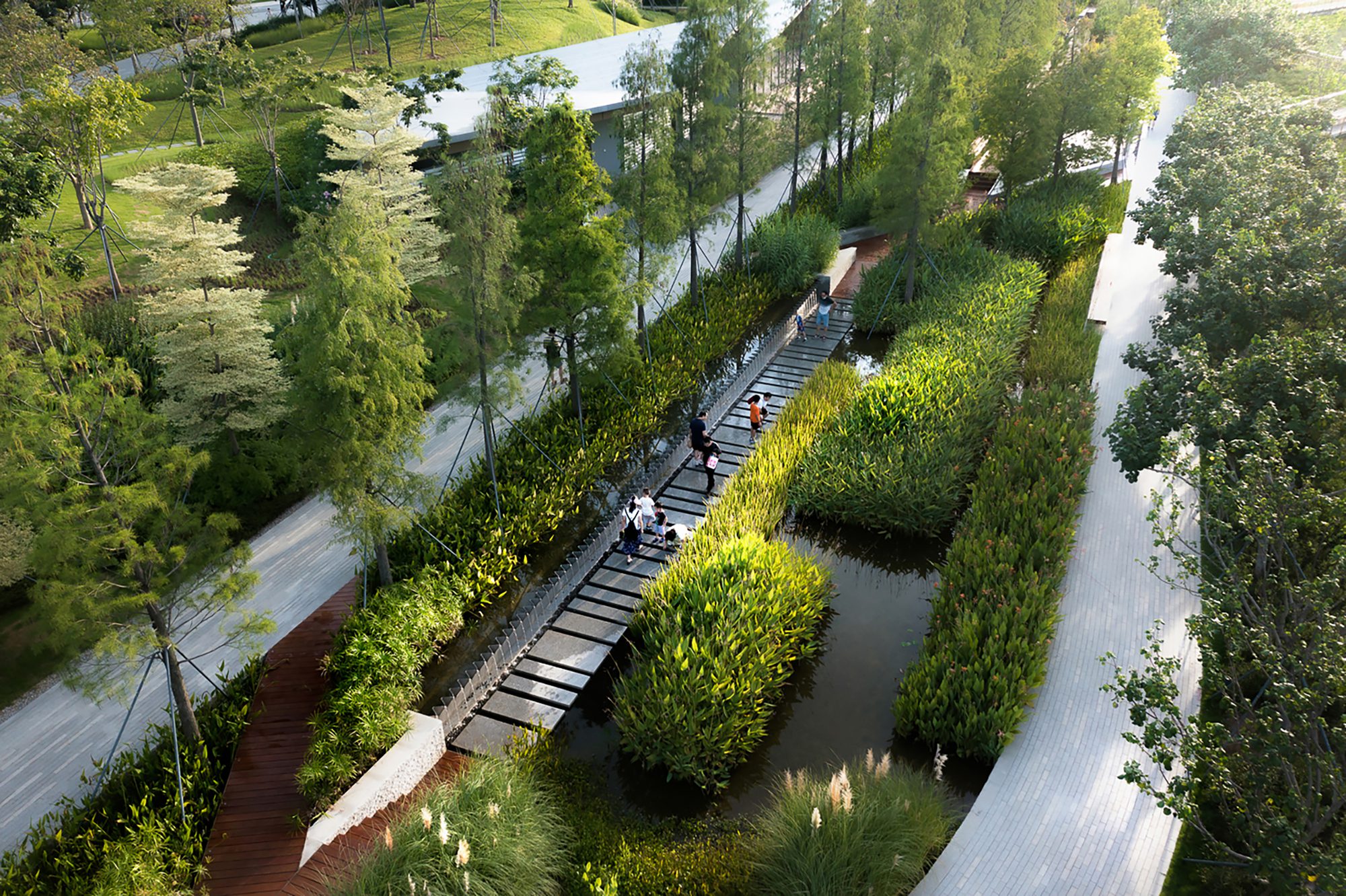
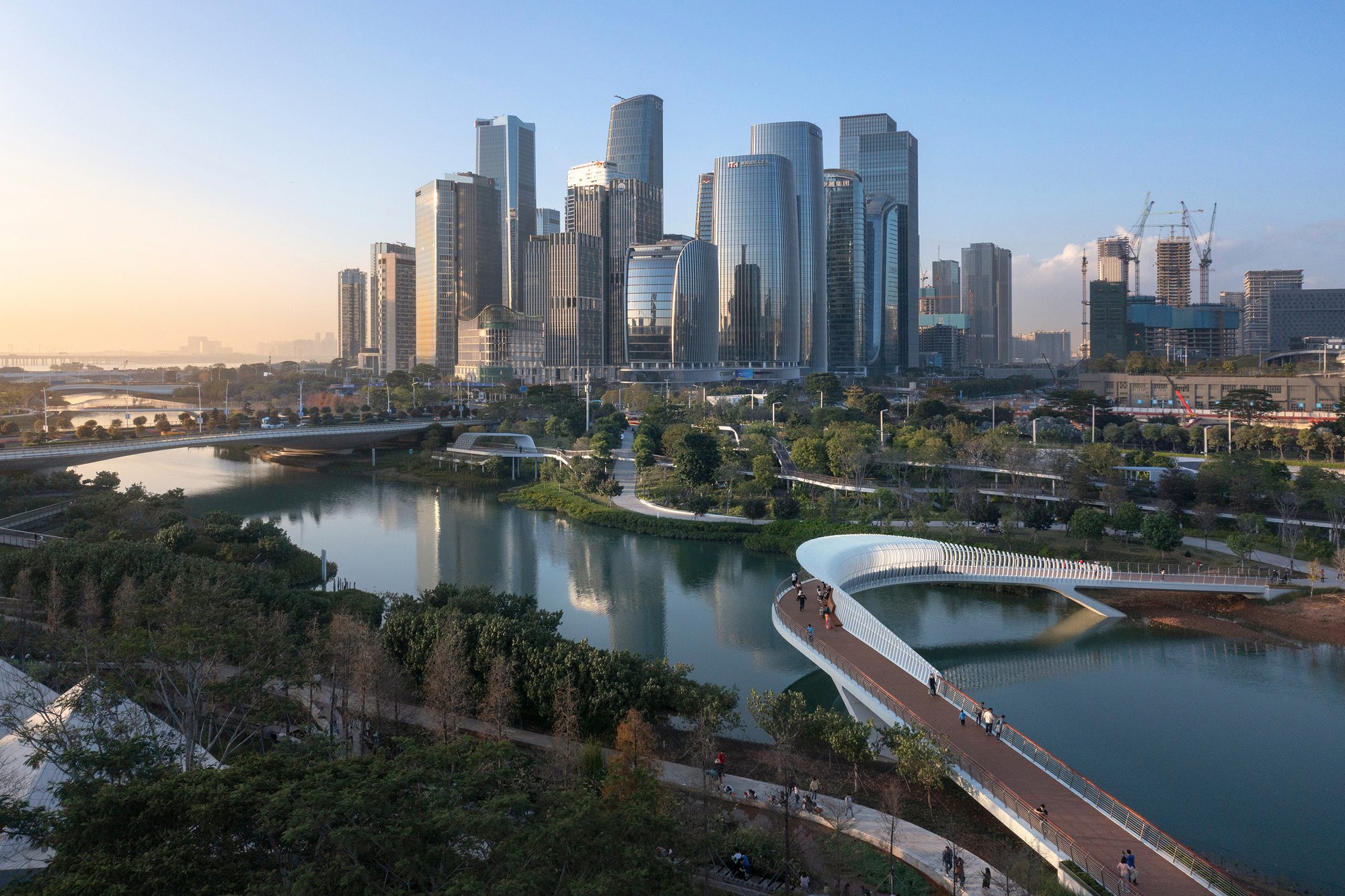
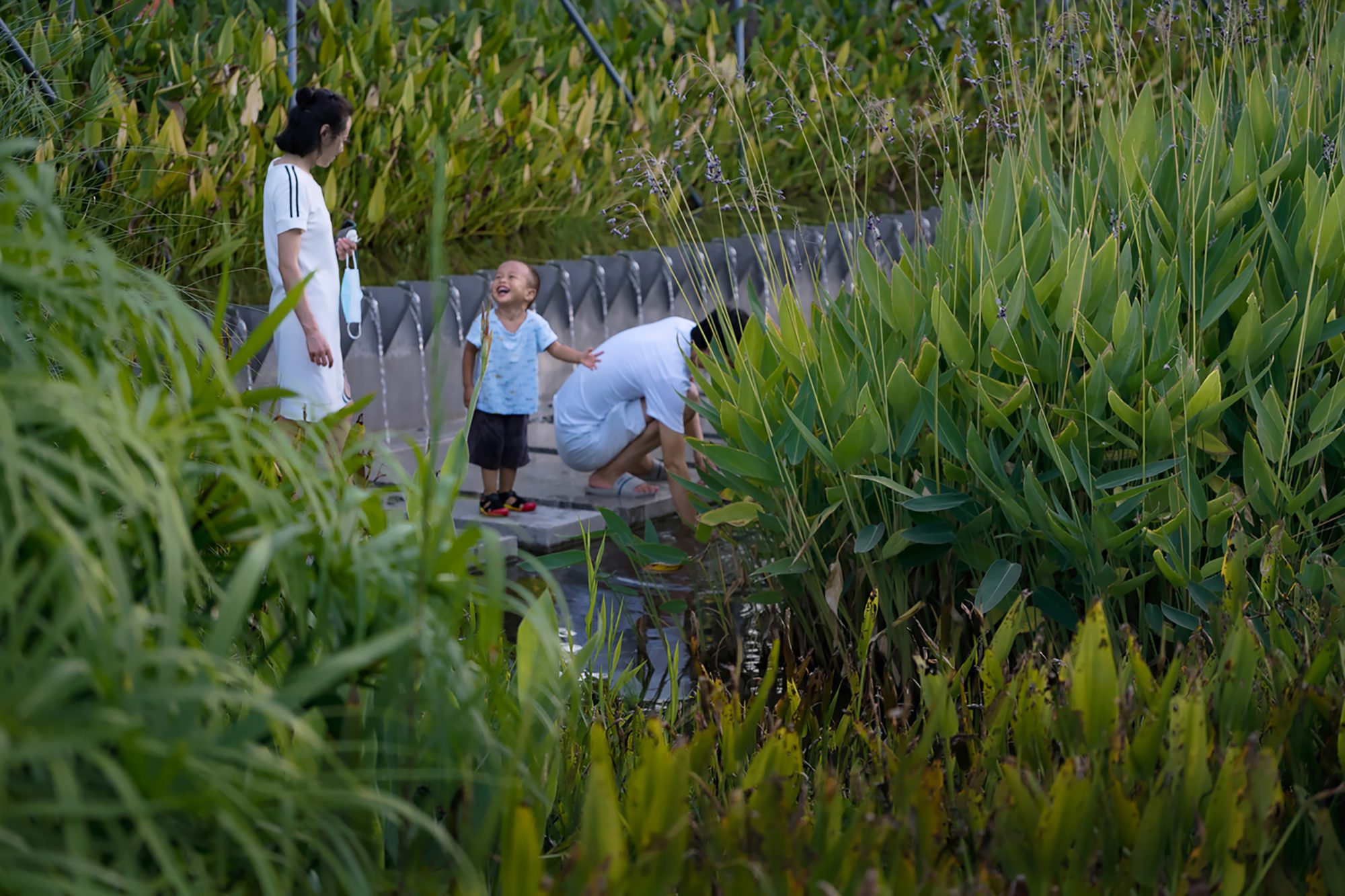
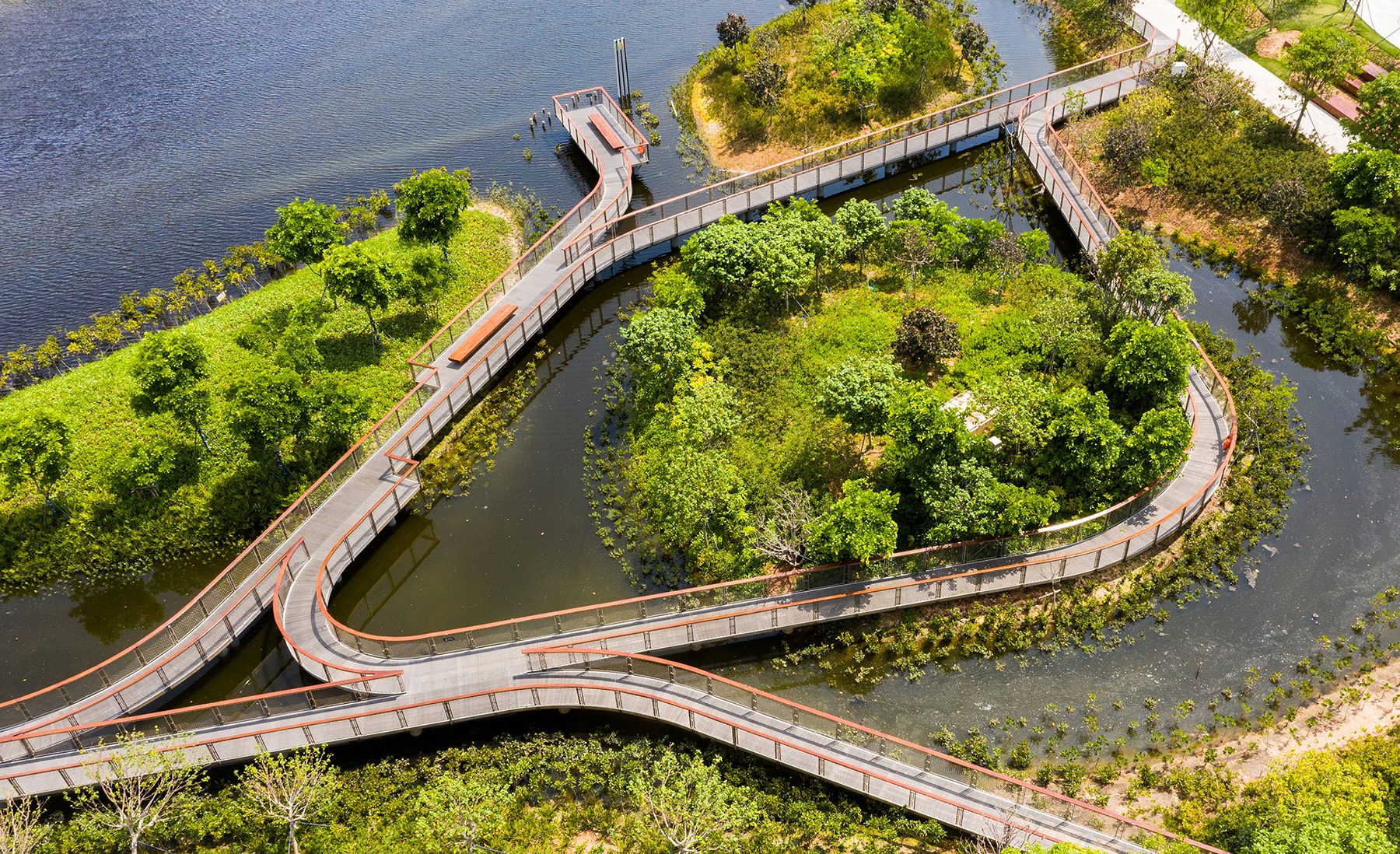
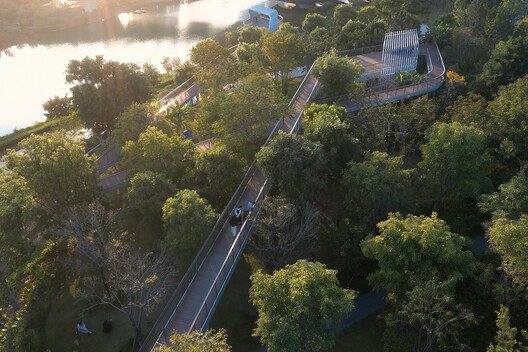
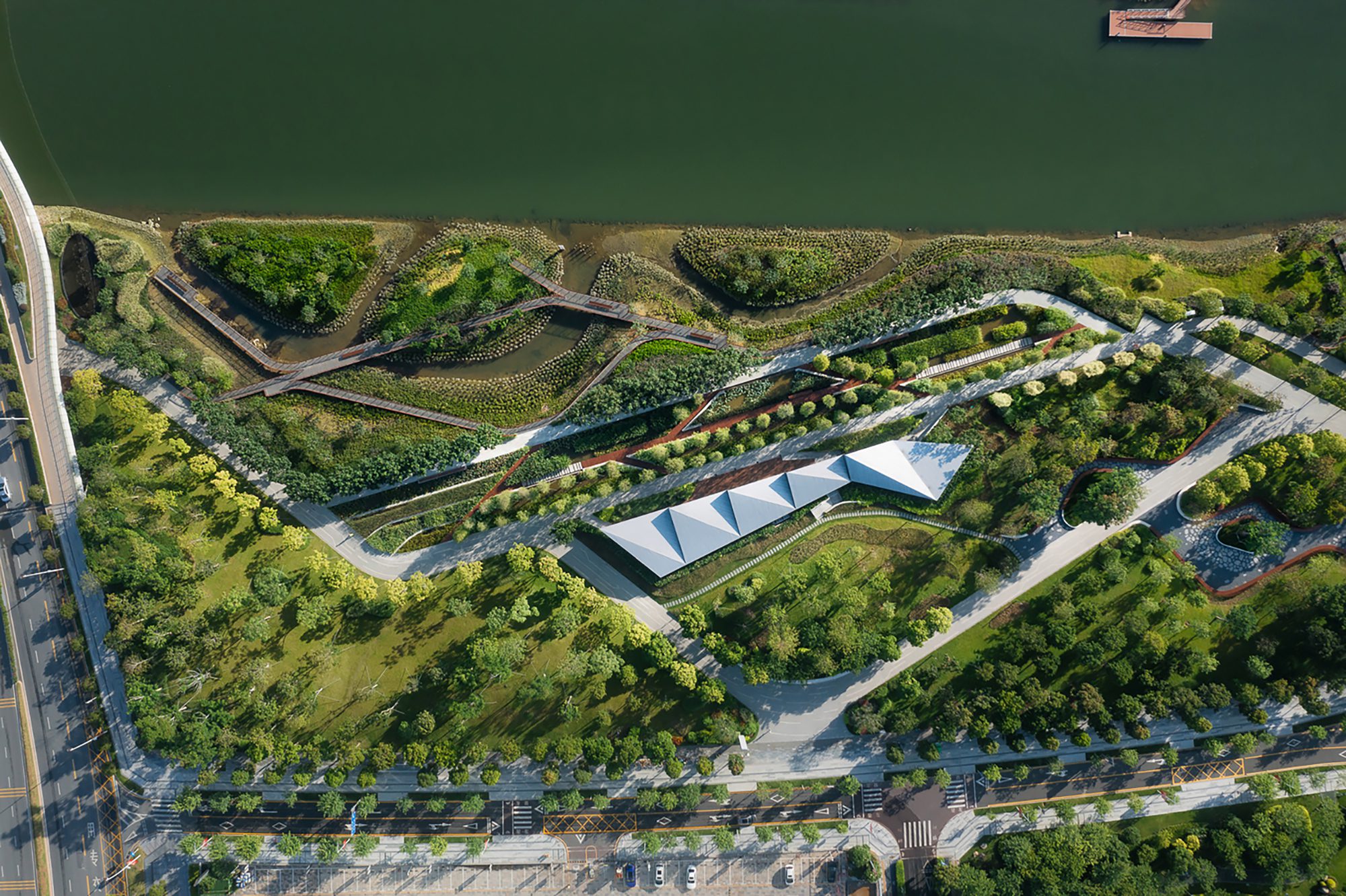
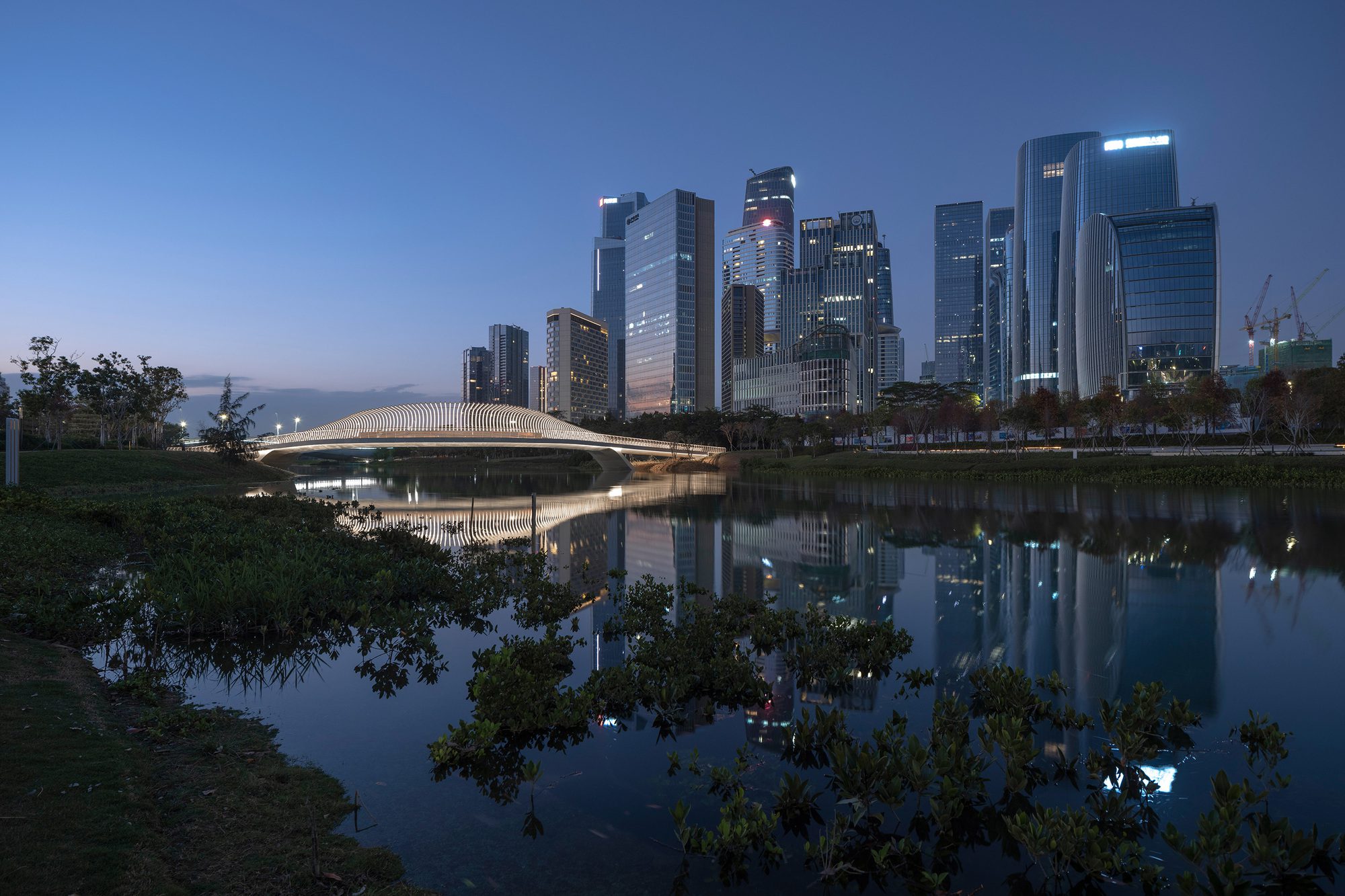
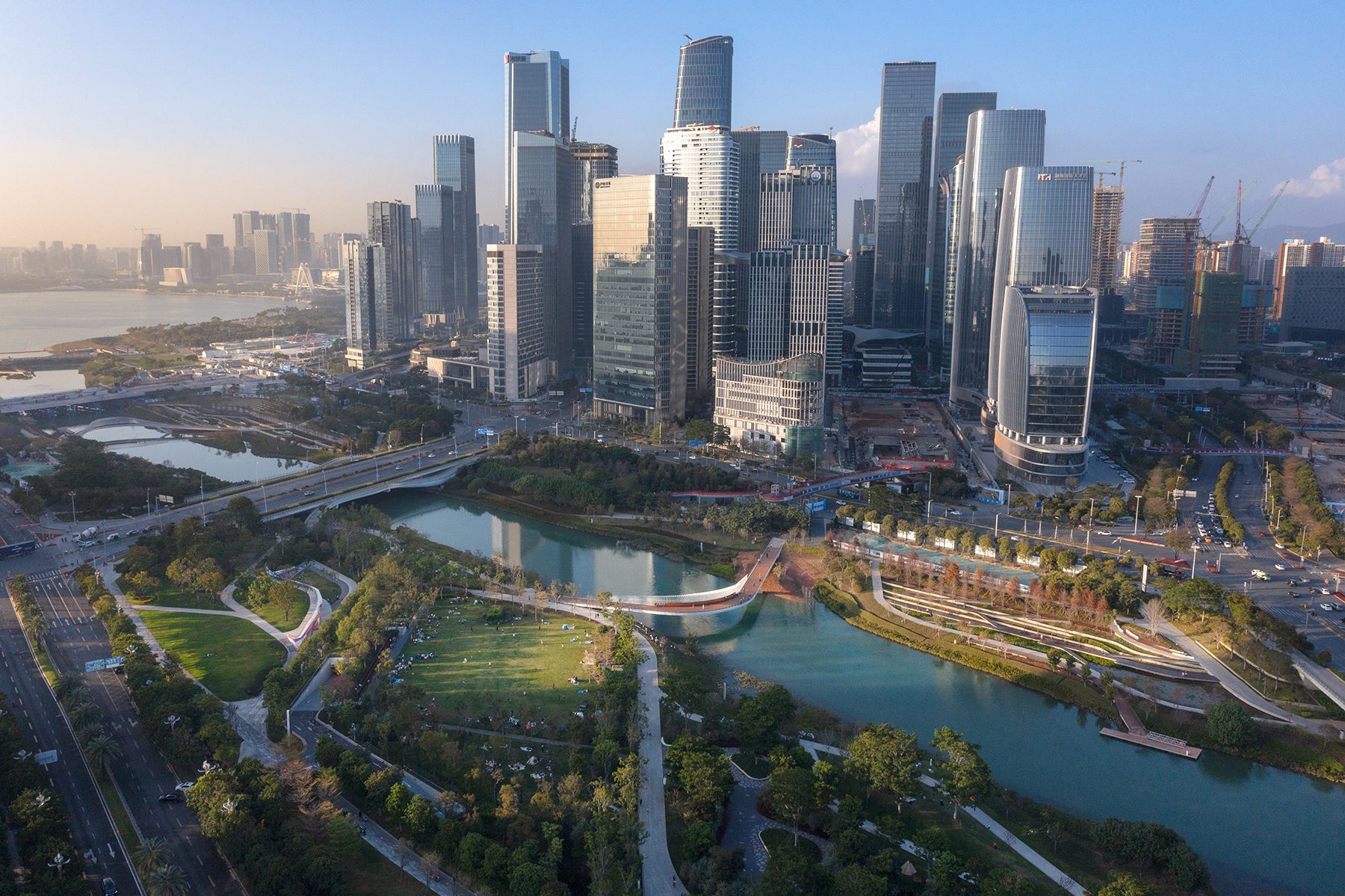
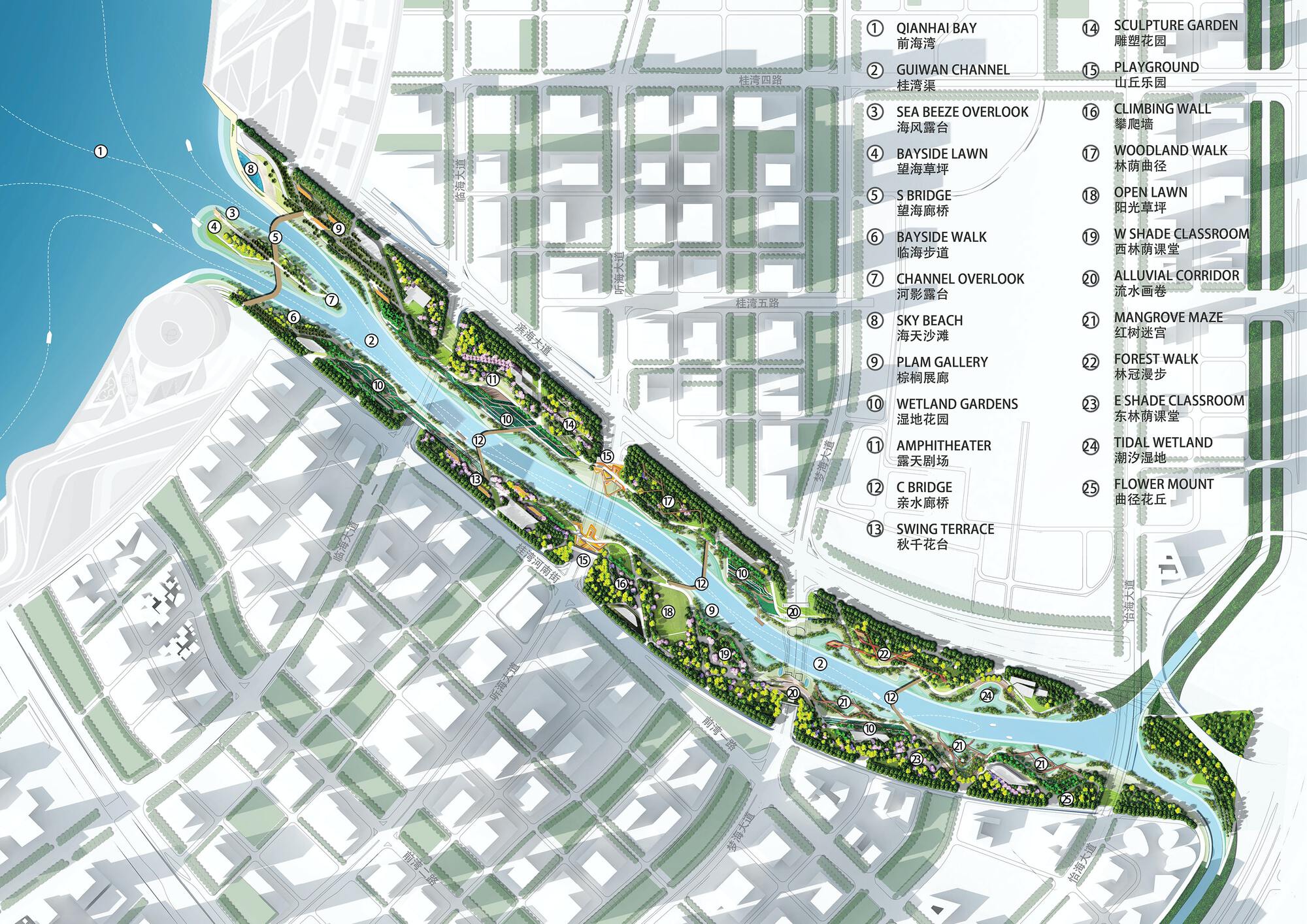
Project Statement. Guiwan Park is the first “water finger” to be built for Qianhai Water City, an innovative and sustainable new city. As the green core, Guiwan Park supports the city center and creates large-scale blue-green infrastructure for stormwater management, flood protection, and habitat recovery. A continuous coastal park, Guiwan Park features 51,000 sqm of mangroves, 18,000 sqm of freshwater wetland, and 255,000 sqm of parkland, naturalizing the tidal corridor and creating a harmony of beauty and ecological performance. The park combines ecological, social, and urban functions with zones that support sports, leisure, recreation, and nature exploration, creating a “hyper-nature” that brings together natural ecology and strengthens an urban energy web.
© Holi Photography
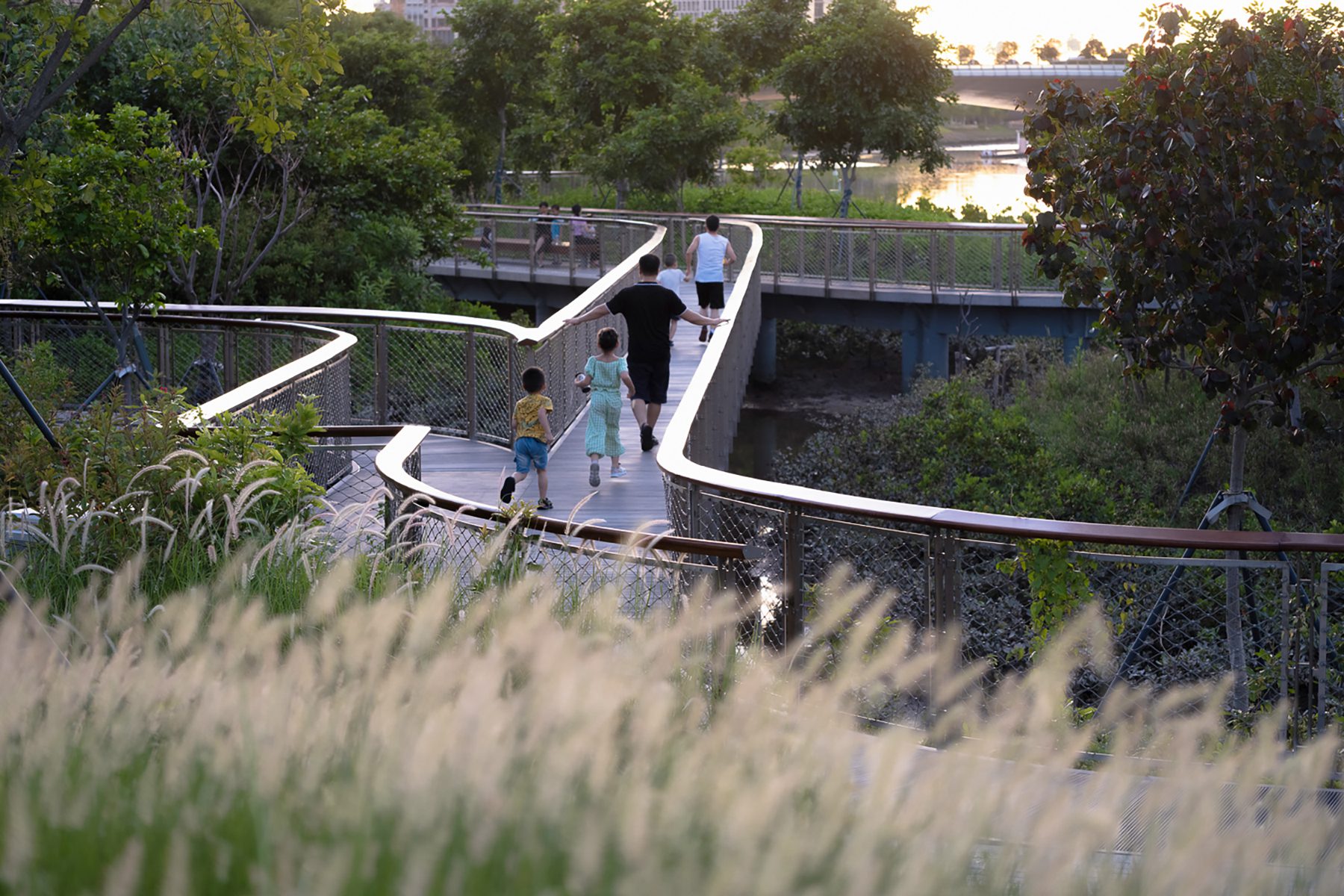
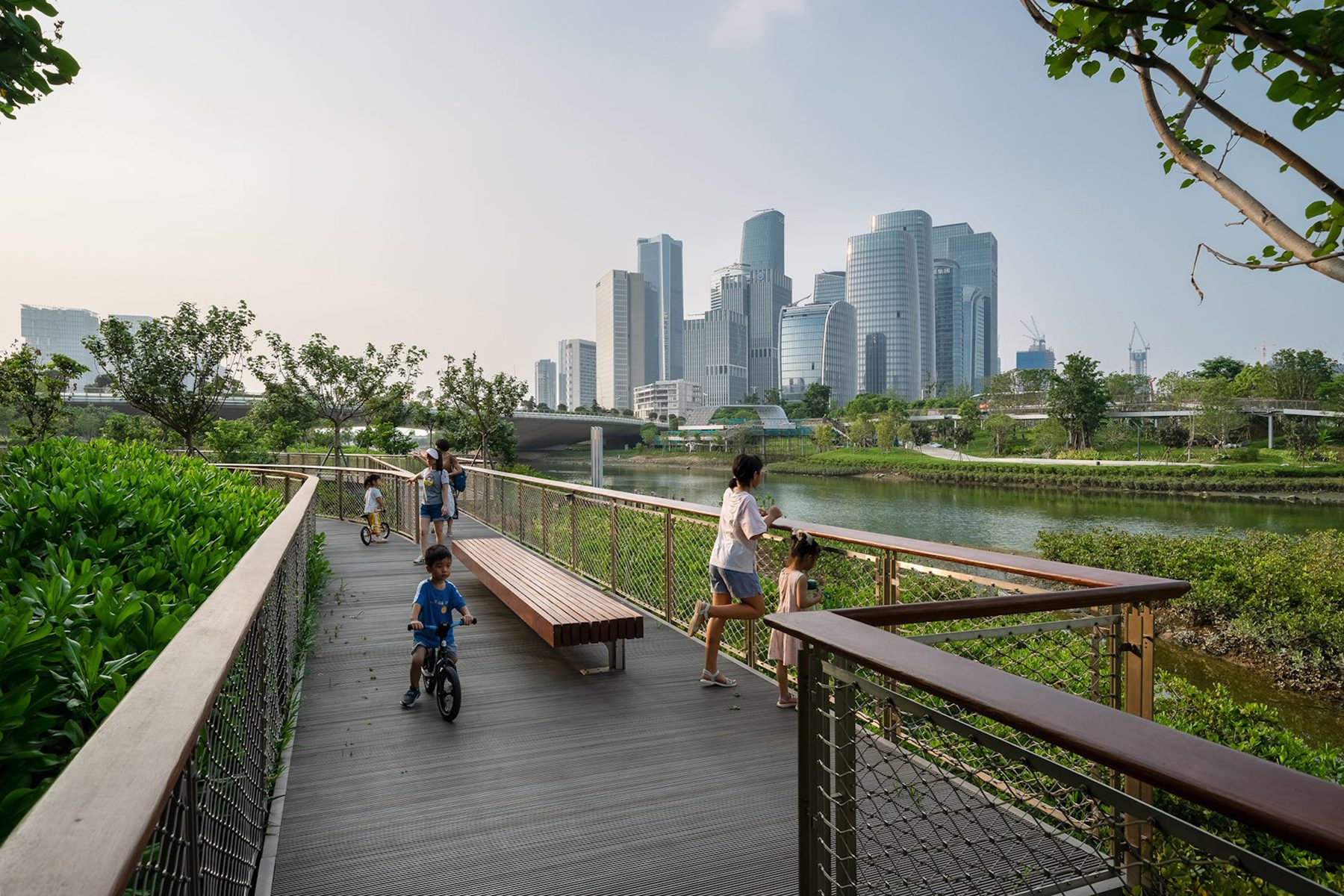
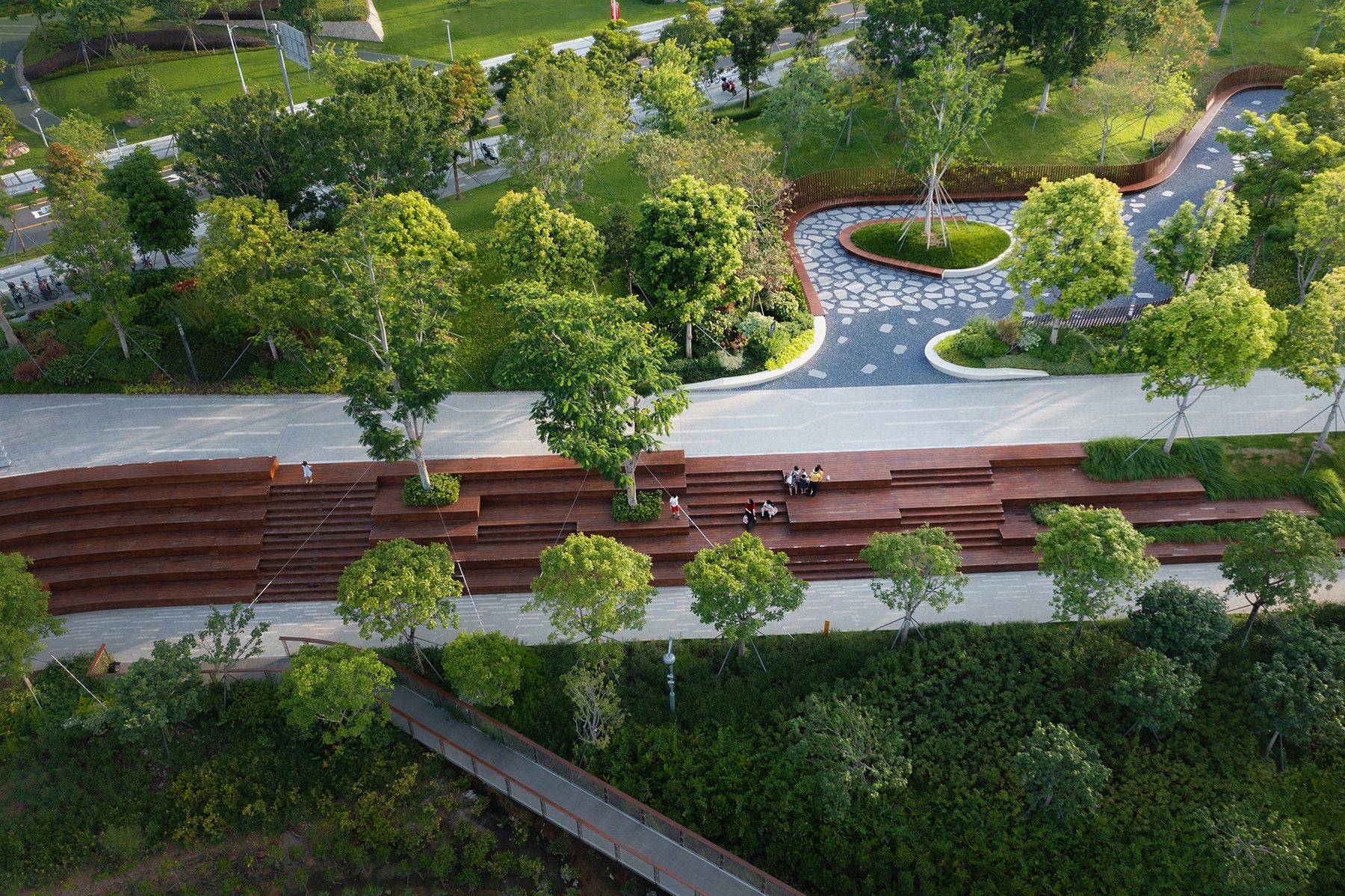
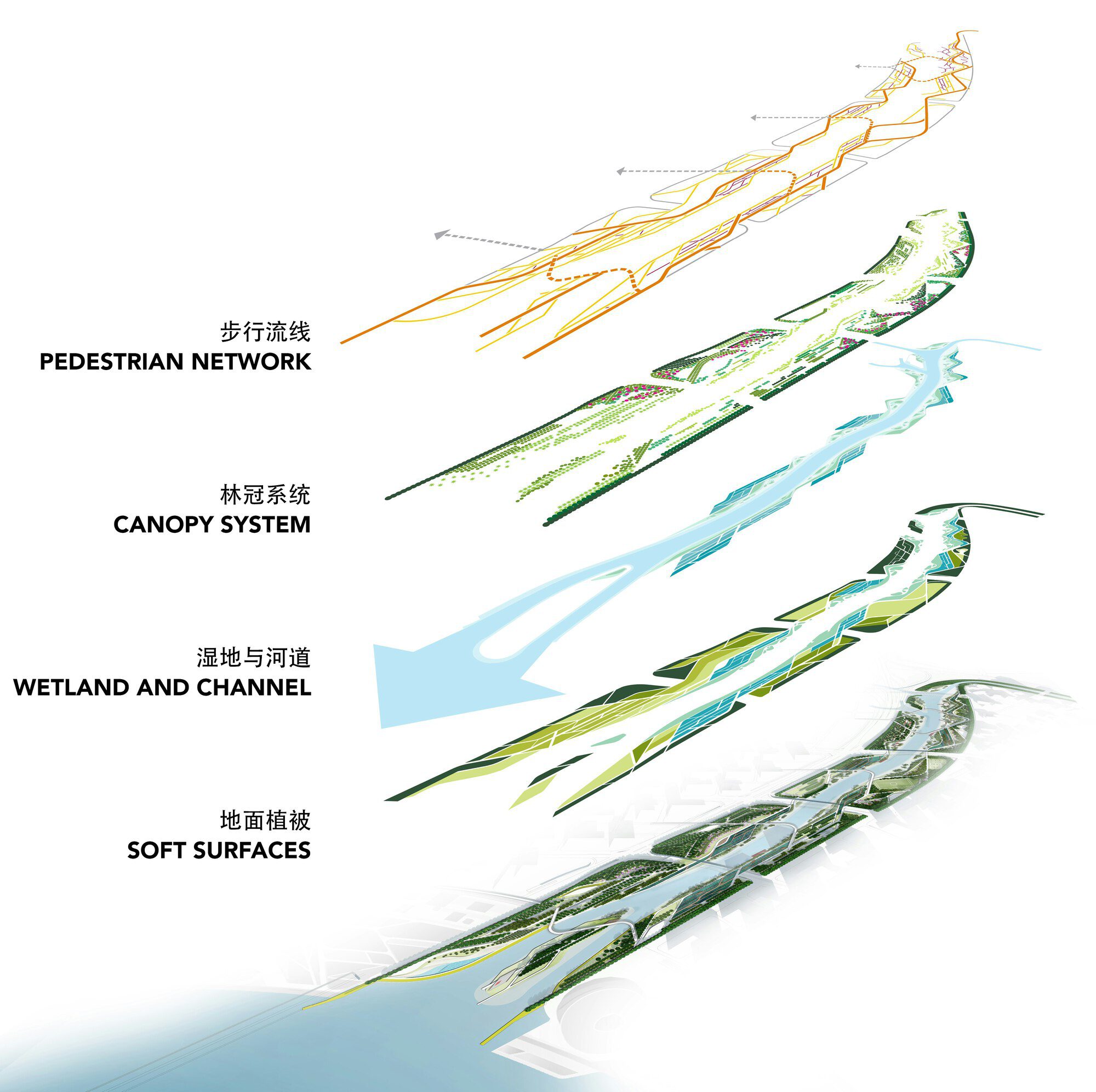
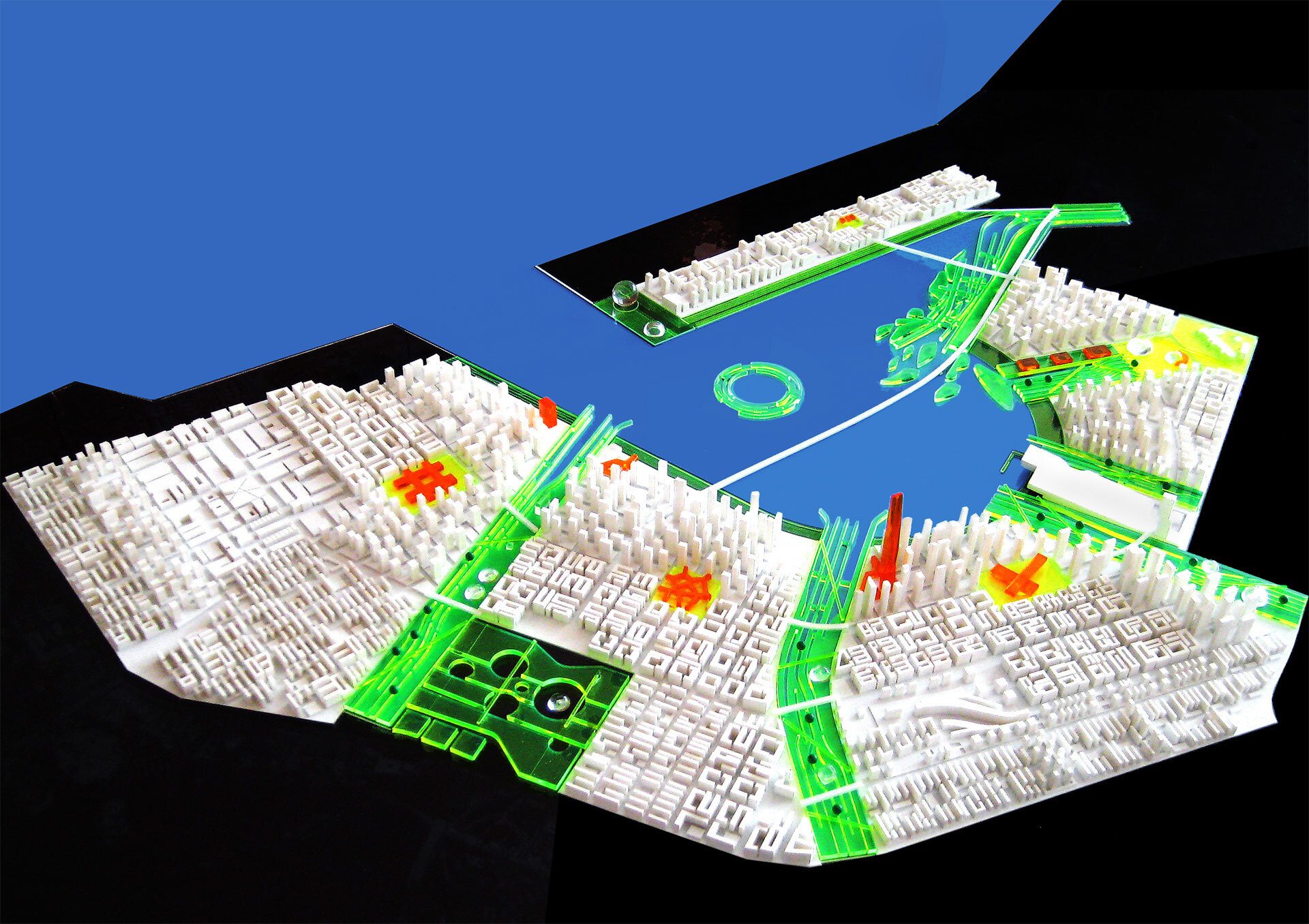
From Qianhai Water City to the Guiwan Park. Qianhai Water City creates a new identity for a coastal city with five development districts defined by large green “water fingers” between neighborhoods. This framework outlines a strategy for a more resilient, ecological city. Guiwan Park is the first of five “water fingers” to be built in Qianhai. The park provides a one-of-a-kind amenity by integrating blue-green infrastructure with active and passive recreation, ecology, habitat, and cultural programs, centered around a tidal channel that protects the city and inland area from flooding and improves water quality. As a central park, this large-scale open space is critical to the city’s needs as it develops. The 2.2-kilometer-long, 45-hectare park incorporates programming that caters to an urban context in the west and transitions as it becomes more residential in the east. By synchronizing a pedestrian network, canopy system, wetlands, the canal, and soft surfaces, Guiwan Park cultivates interaction between them, fostering an integrated ecosystem.
© Holi Photography
Ecological Performance. Guiwan Park’s three terraces—woodland, freshwater wetland, and saltwater wetland—accommodate a steep elevation change between the park’s main road, which sits at 6 meters above sea level, and the central channel water level, which varies from -1 to 2.0 meters. As part of China’s “sponge cities,” the park and its terraces absorb and treat rainwater, including water from the surrounding roads, capturing 90% of annual rainfall and reducing nonpoint source pollution by 72%. Guiwan Park utilizes low-impact development strategies for stormwater management, including grass and gravel swales along main pathways, rain gardens with a sunken greenbelt, and underground tanks for a rainwater filtration and reuse system.
© ZC Studio
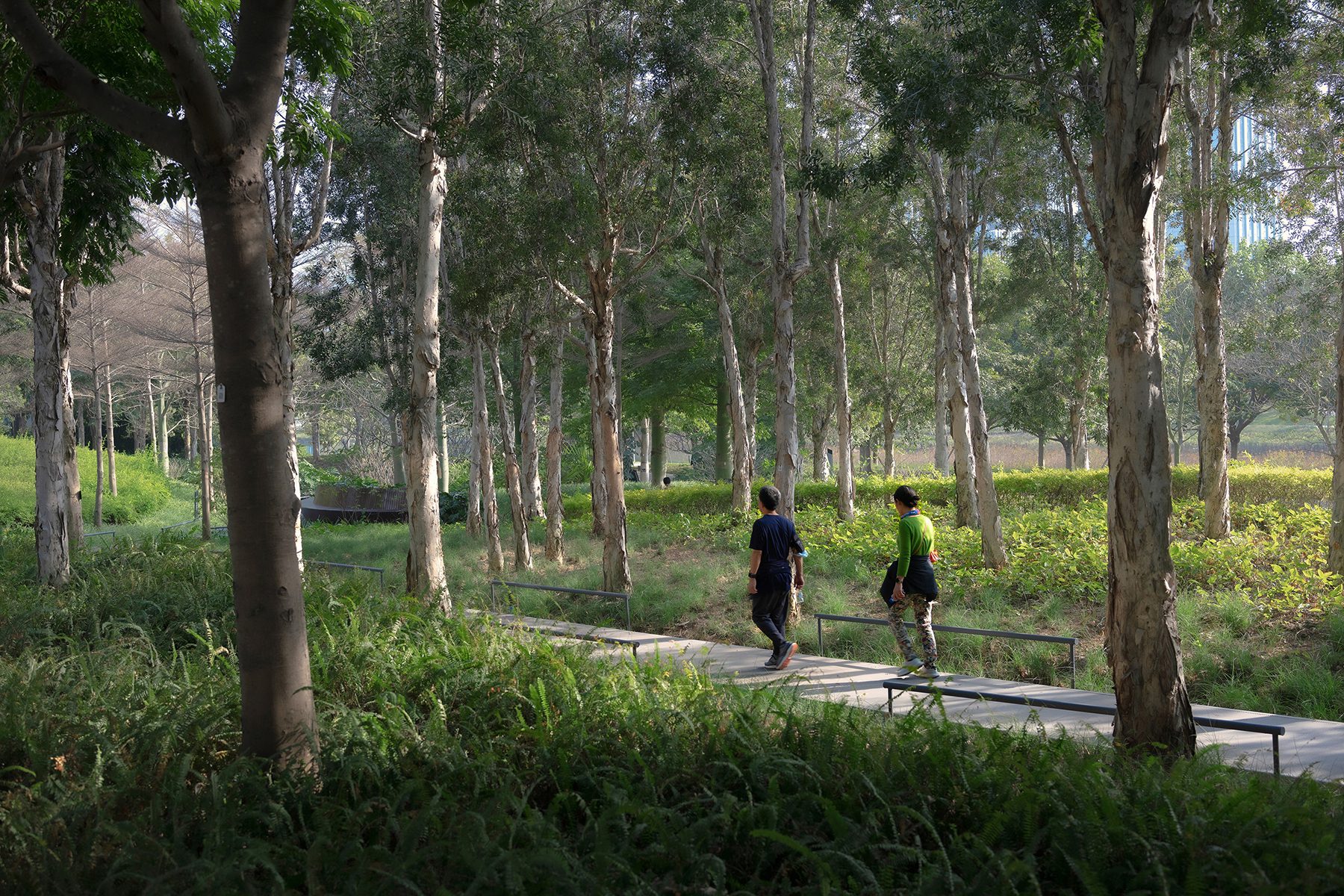
Biodiversity & Habitat Recovery. Guiwan Park features a coastal and continuous topography that incorporates native subtropical plantings, including 51,000 sqm of mangroves that have expanded from 3 to 17 species. The park’s diverse living grounds include forests, bosques, lawns, freshwater wetlands, and saltwater wetlands that increase biodiversity and create new and unique habitat conditions. There has been a resulting re-emergence of many species native to the area, including herons, egrets, curlew, mudskippers, and crabs. Within the first year, the new wetlands have attracted 21 species of macrobenthos, contributing to a healthy marine ecosystem.
© Holi Photography
Smart Park. Guiwan Park incorporates technology that monitors soil, irrigation, insects, water levels, and tree conditions. This data is used by maintenance staff to support operations and monitor as the park’s species develop and mature. The same data has been used in partnerships with local institutions to better understand ecological restoration within urban environments, using Guiwan Park as a case study. In addition, an app for visitors allows them to navigate the park with a digital fly-through and learn more about its ecological benefits.
© Holi Photography
Impact. Guiwan Park sets a new benchmark, creating a vibrant park that blends design with ecological performance and social interaction. As coastal cities face the effects of climate change, Guiwan Park serves as an example of ecological rehabilitation on a damaged and reclaimed site, leading the way for a more resilient city that harnesses the impact of large-scale blue-green infrastructure while creating restorative open spaces.
Project Info
Architects: Field Operations
Country: China, Shenzhen
Area: 452700 m²
Year: 2022
Photographs: Holi Photography, ZC Studio
Supervisor Company: Zhonghai Supervision Co., Ltd.
Survey Company: Shenzhen Gongkan Geotechnical Group Co., Ltd.
Design Team: FIELD OPERATIONS, Xiangming Zhu, National Survey and Design Master, Shanghai Landscape Architecture Design & Research Institute, Shanghai Engineering Construction Consulting and Supervision, Shenzhen Hangcheng Studio
Cost Consultant: Shenzhen Chengxinhang Engineering Consulting
Mangrove Monitoring Consultant: Shenzhen University
Construction Company: Guangzhou Pubang Landscape Co., Ltd./ LingNan Eco&Culture-Tourism Co., Ltd. / Shenzhen Zhonglv Environment Group Co., Ltd./ Shenzhen Youkun Sign Engineering Manufacturing Co.,Ltd./Shenzhen Jieshida Industrial Co., Ltd./Shenzhen Dasheng Environmental Art Co., Ltd./Shenzhen Shenhua Mechanical and Electrical Installation Engineering Co., Ltd./ The Second Construction Limited Company of China Construction Eighth Engineering Division/China Railway Guangzhou Engineering Bureau Group Shenzhen Engineering Co., Ltd./China Fifteenth Metallurgical Construction Group Co., Ltd./ China Southwest Architectural Design and Research Institute Corp.Ltd.
Clients: Shenzhen Qianhai Construction & Investment Holding Group

Madeline Brooks is a Projects Editor at Arch2O, where she has been shaping and refining architectural content since March 2024. With over a decade of experience in editorial work, she has curated, revised, and published an array of projects covering architecture, urbanism, and public space design. A graduate of the Harvard University Graduate School of Design, Madeline brings a strong academic foundation and a discerning editorial eye to each piece she oversees. Since joining Arch2O, she has played a pivotal role in shaping the platform’s editorial direction, with a focus on sustainability, social relevance, and cutting-edge design. Madeline excels at translating complex architectural ideas into clear, engaging stories that resonate with both industry professionals and general readers. She works closely with architects, designers, and global contributors to ensure every project is presented with clarity, depth, and compelling visual narrative. Her editorial leadership continues to elevate Arch2O’s role in global architectural dialogue.