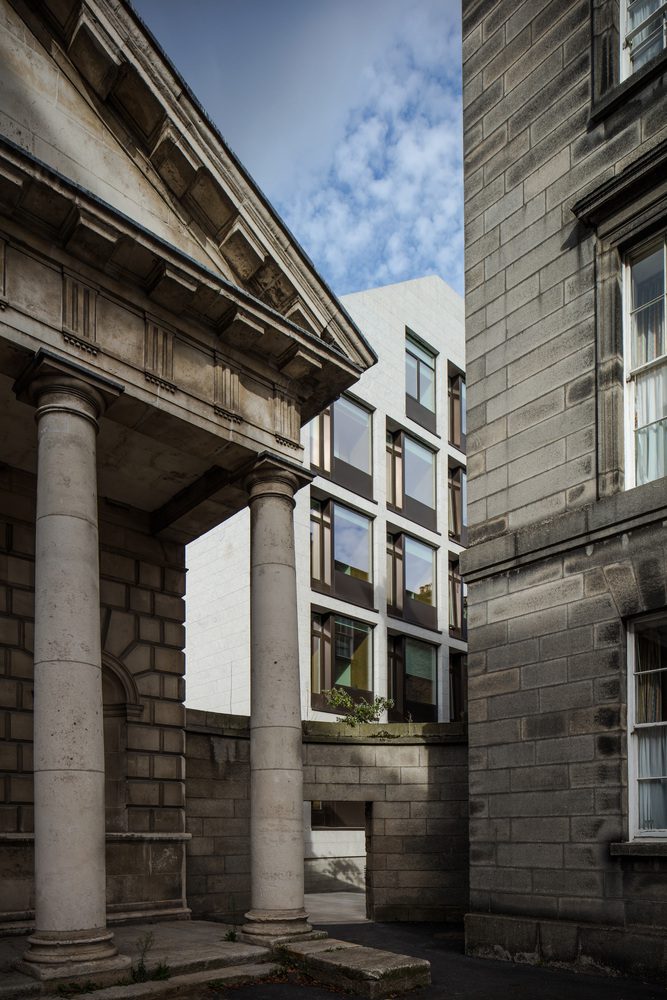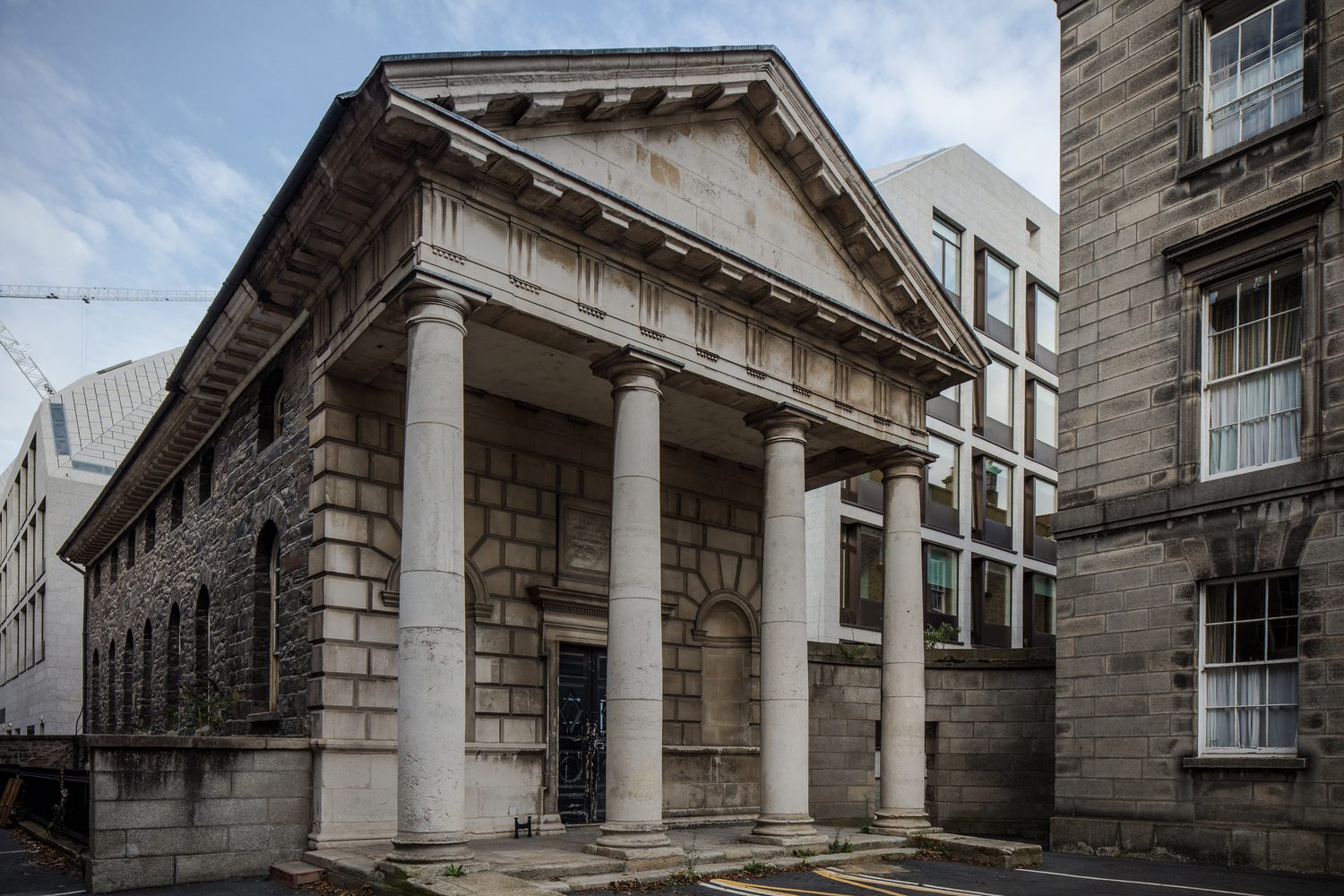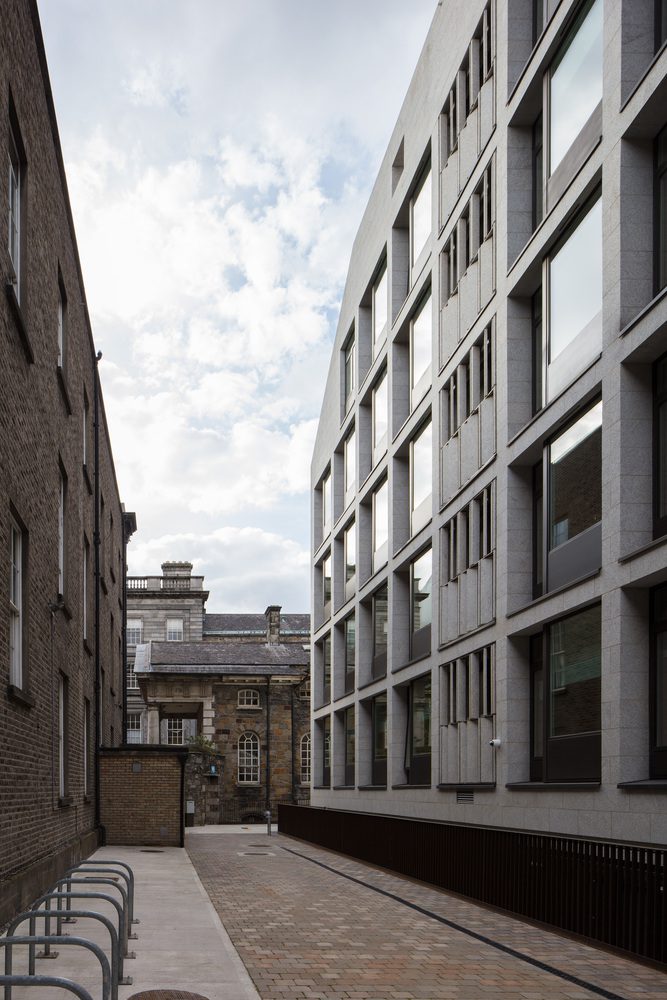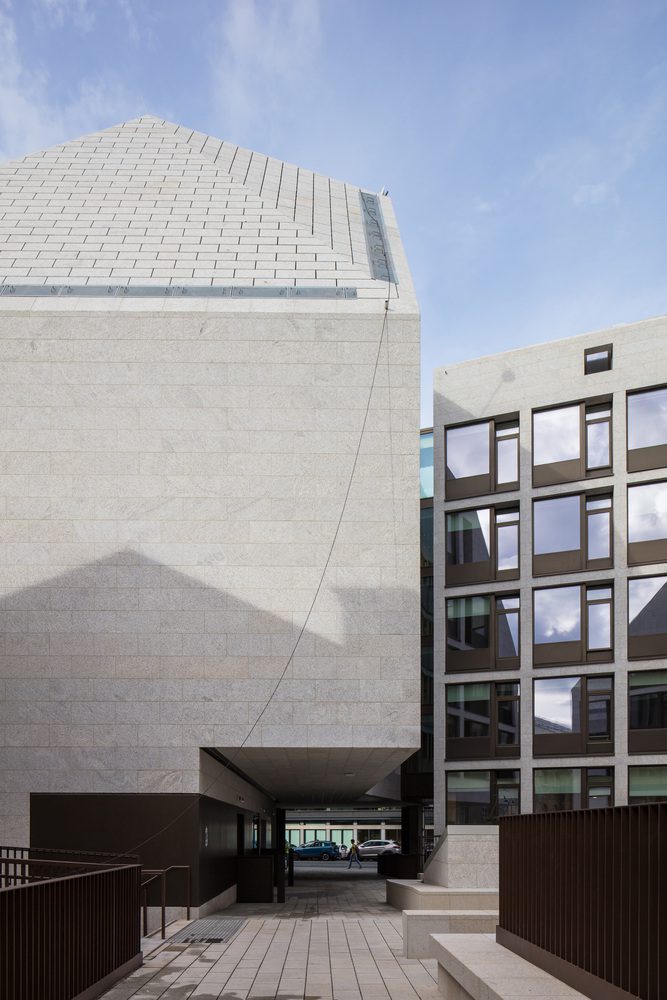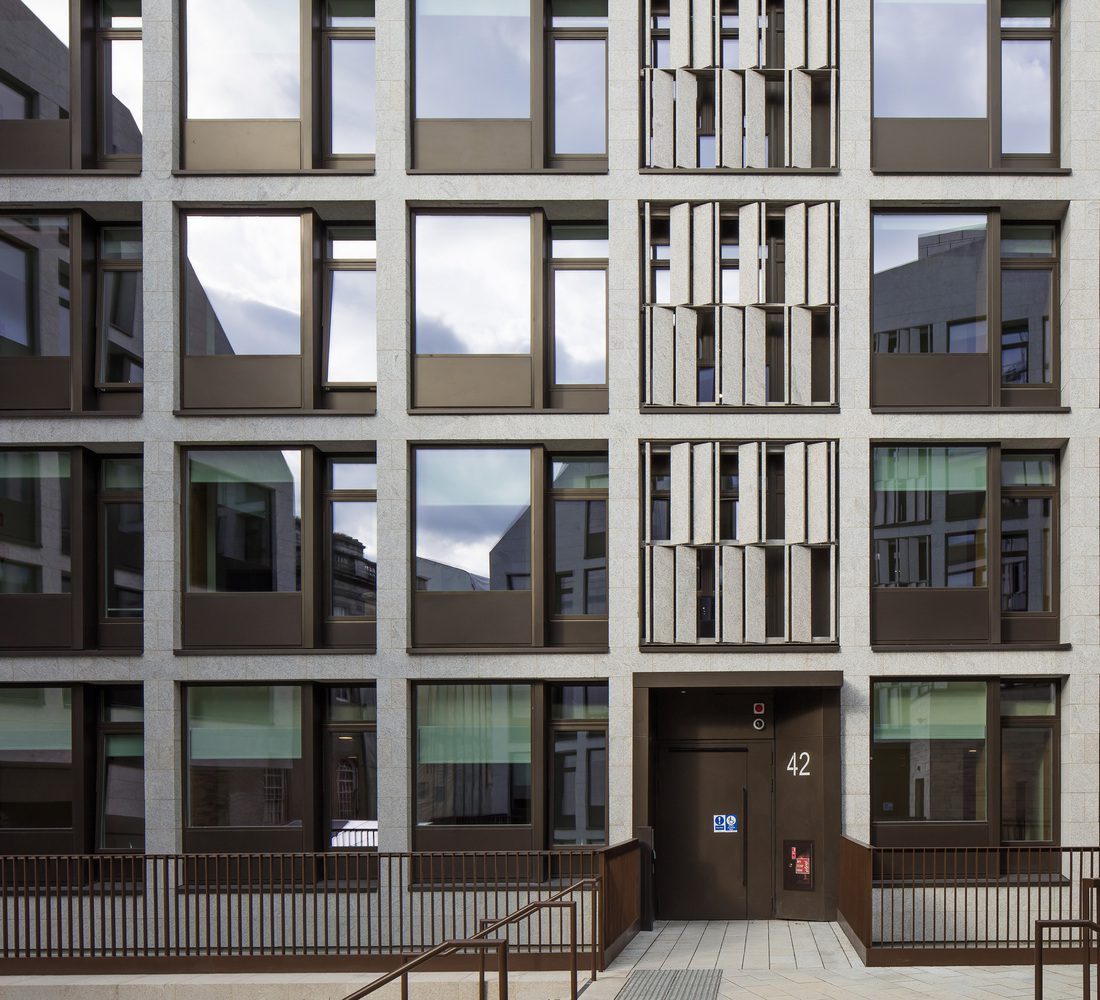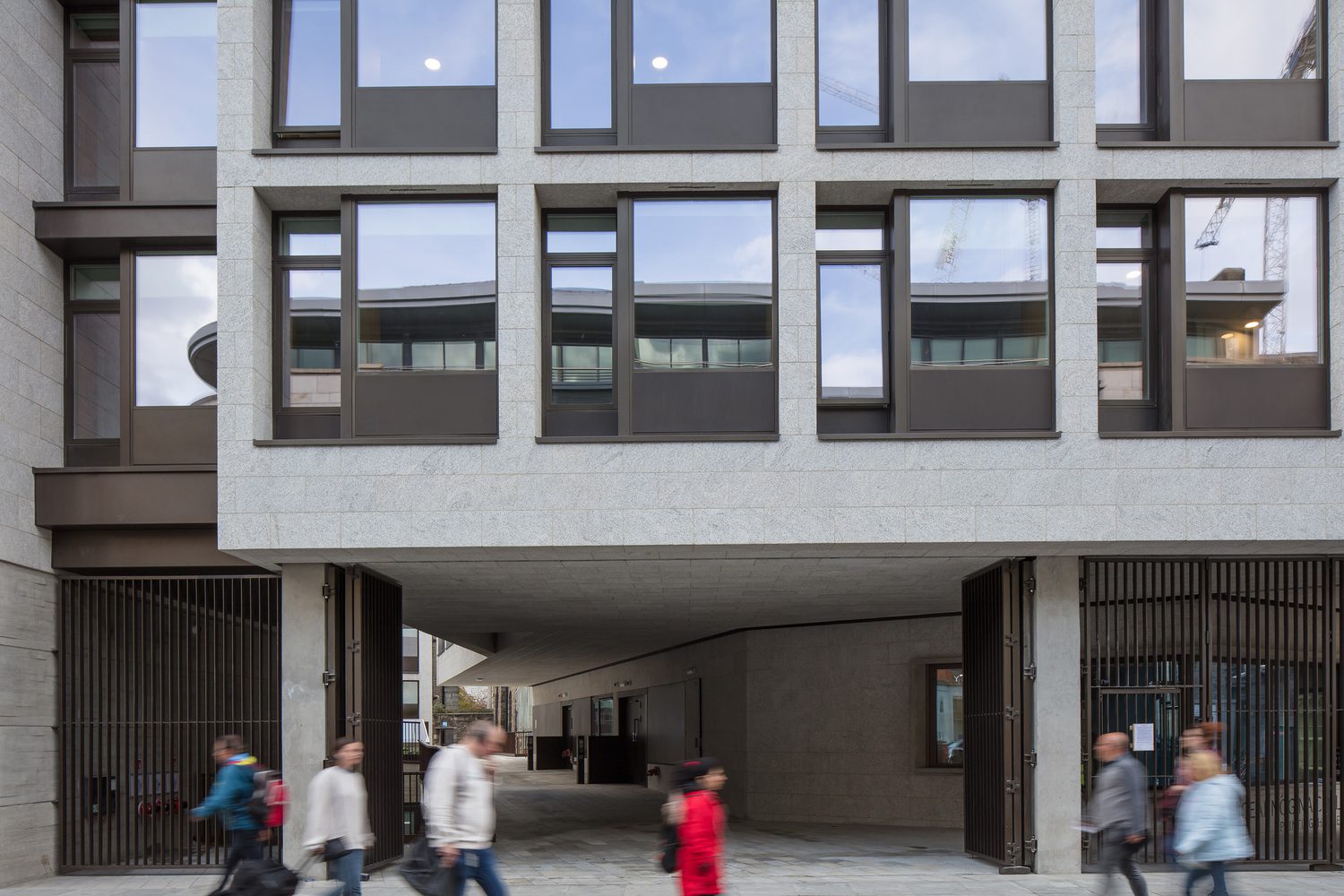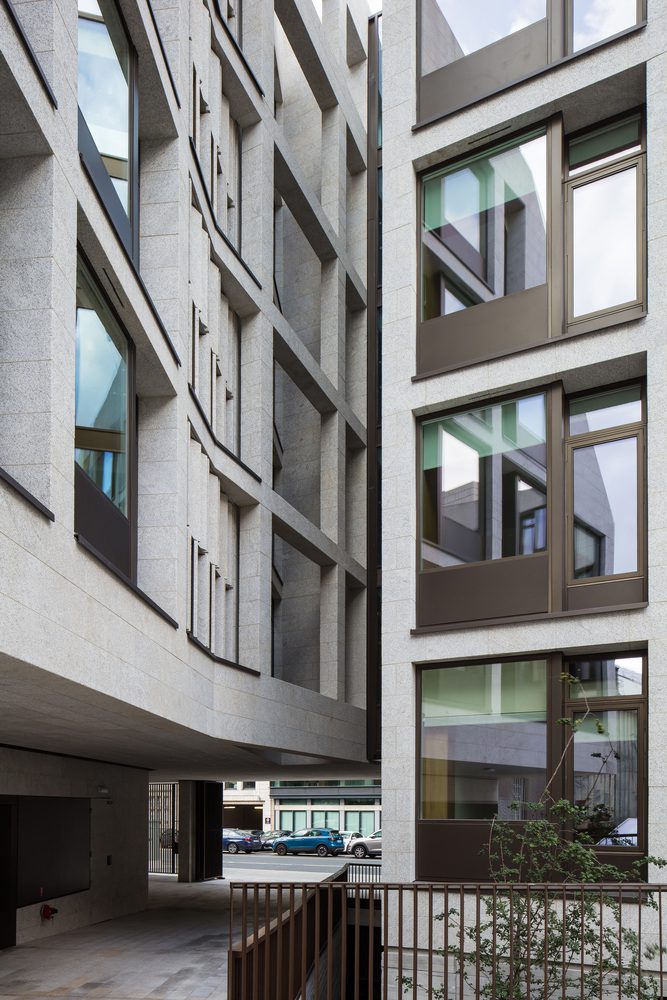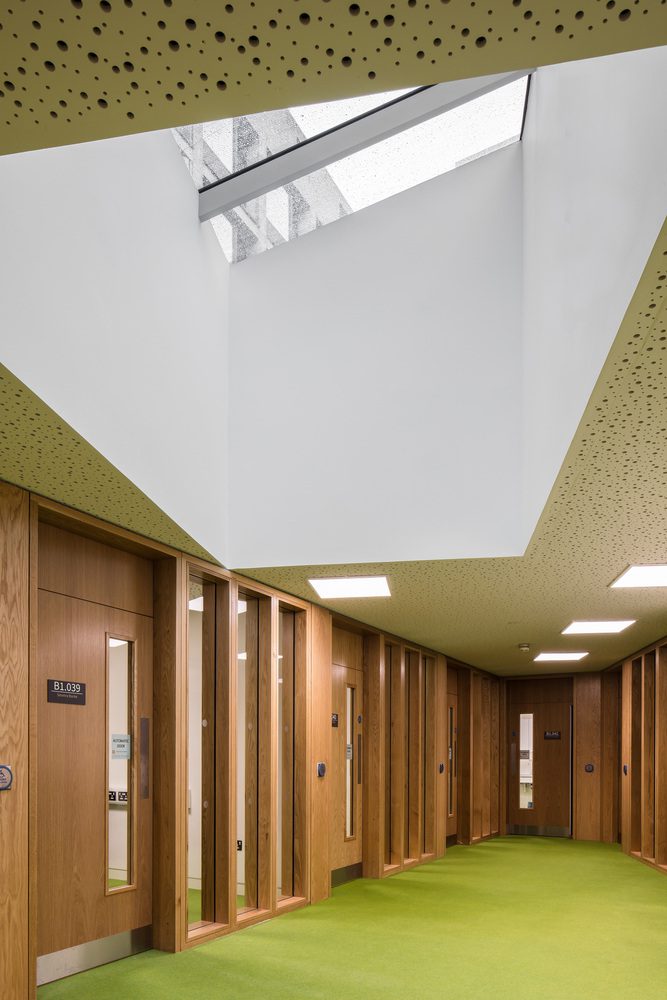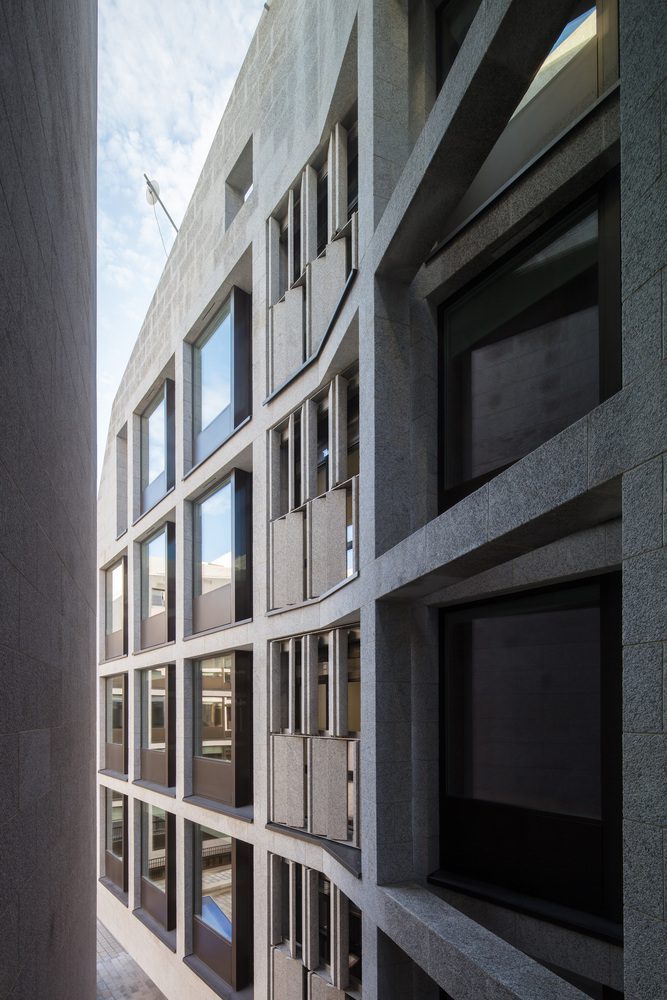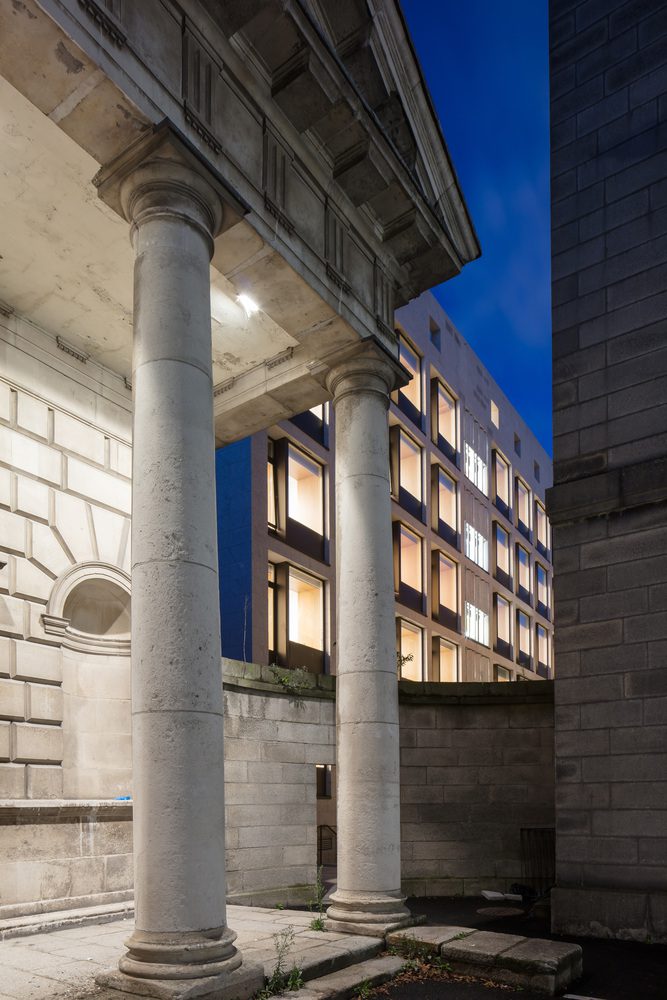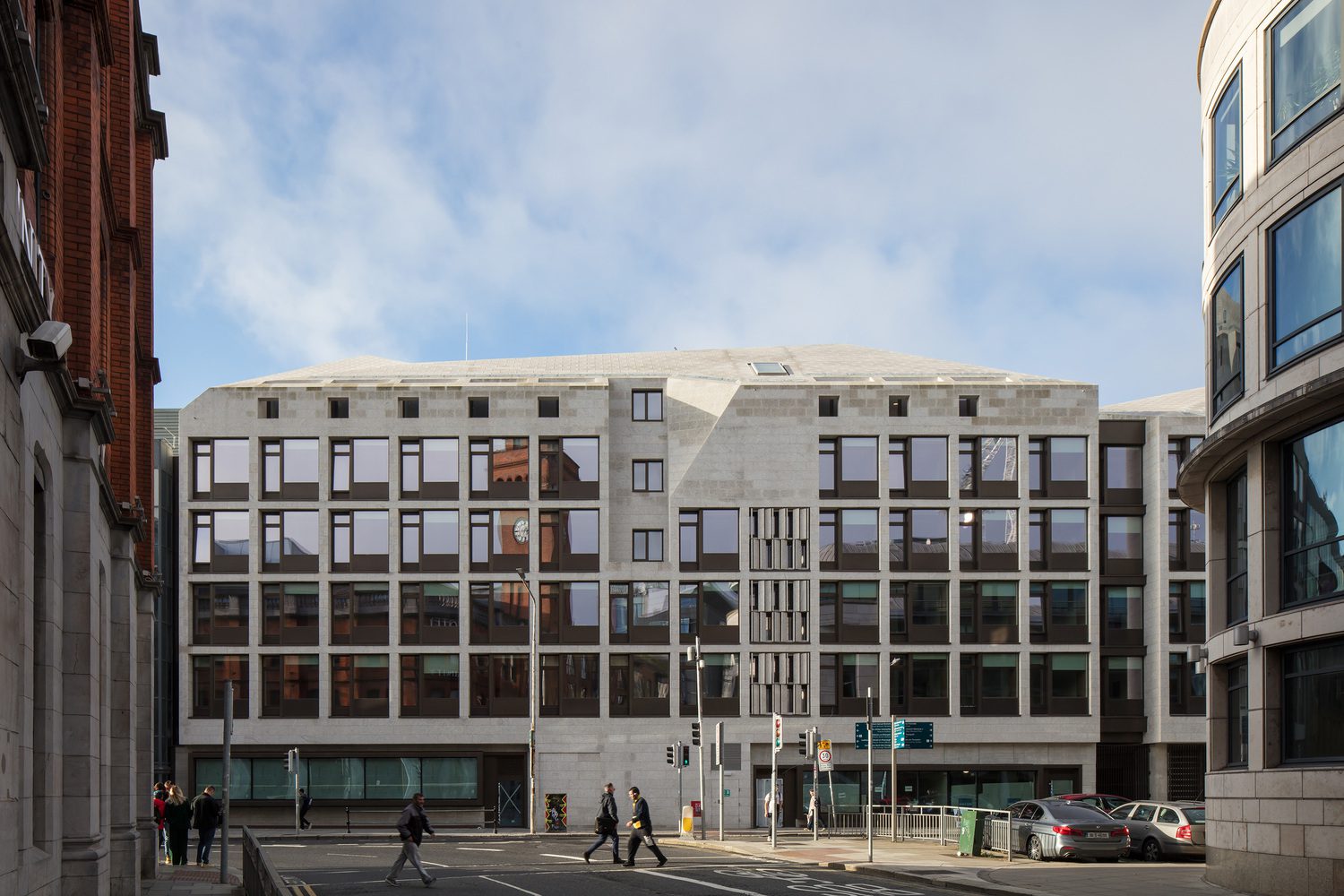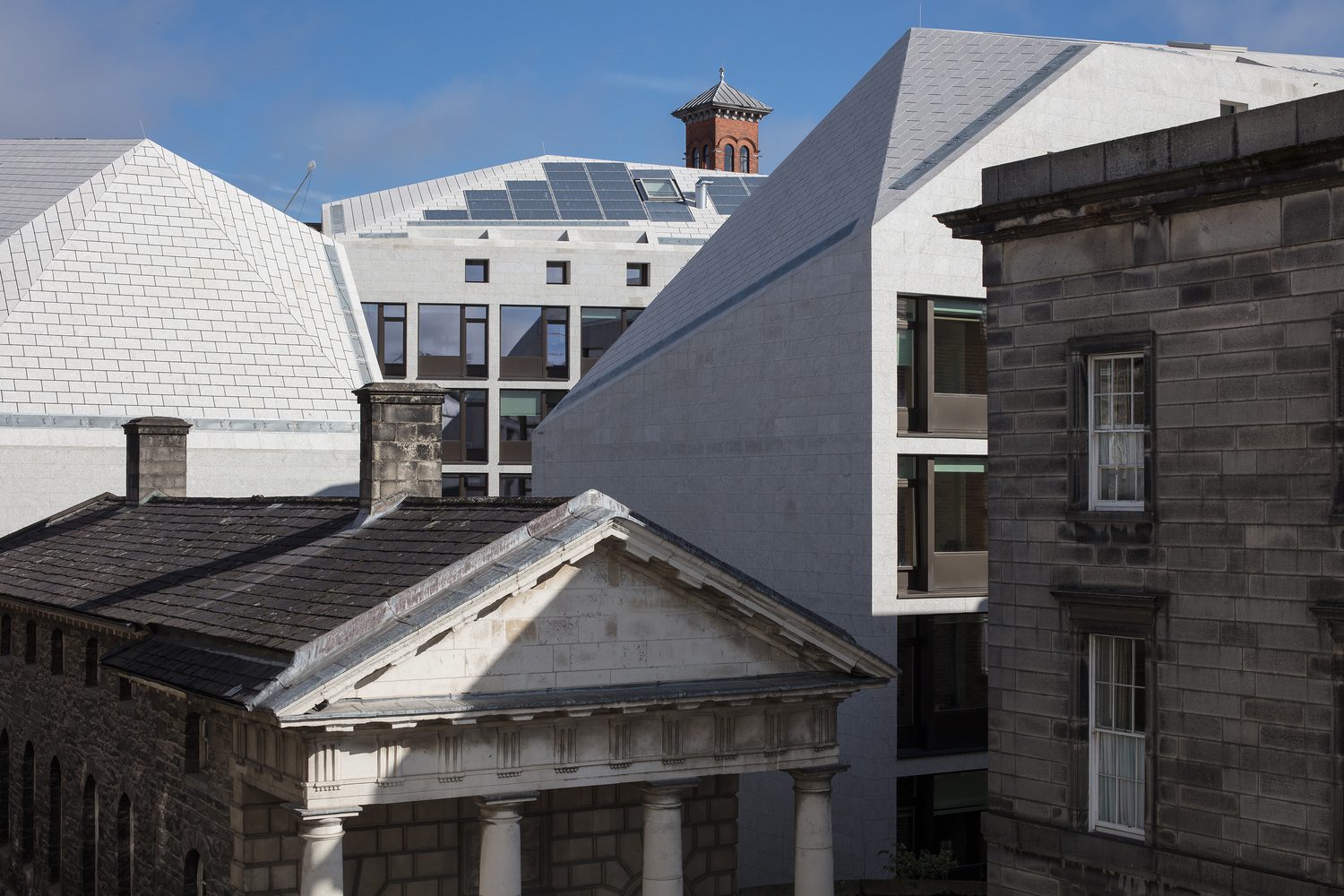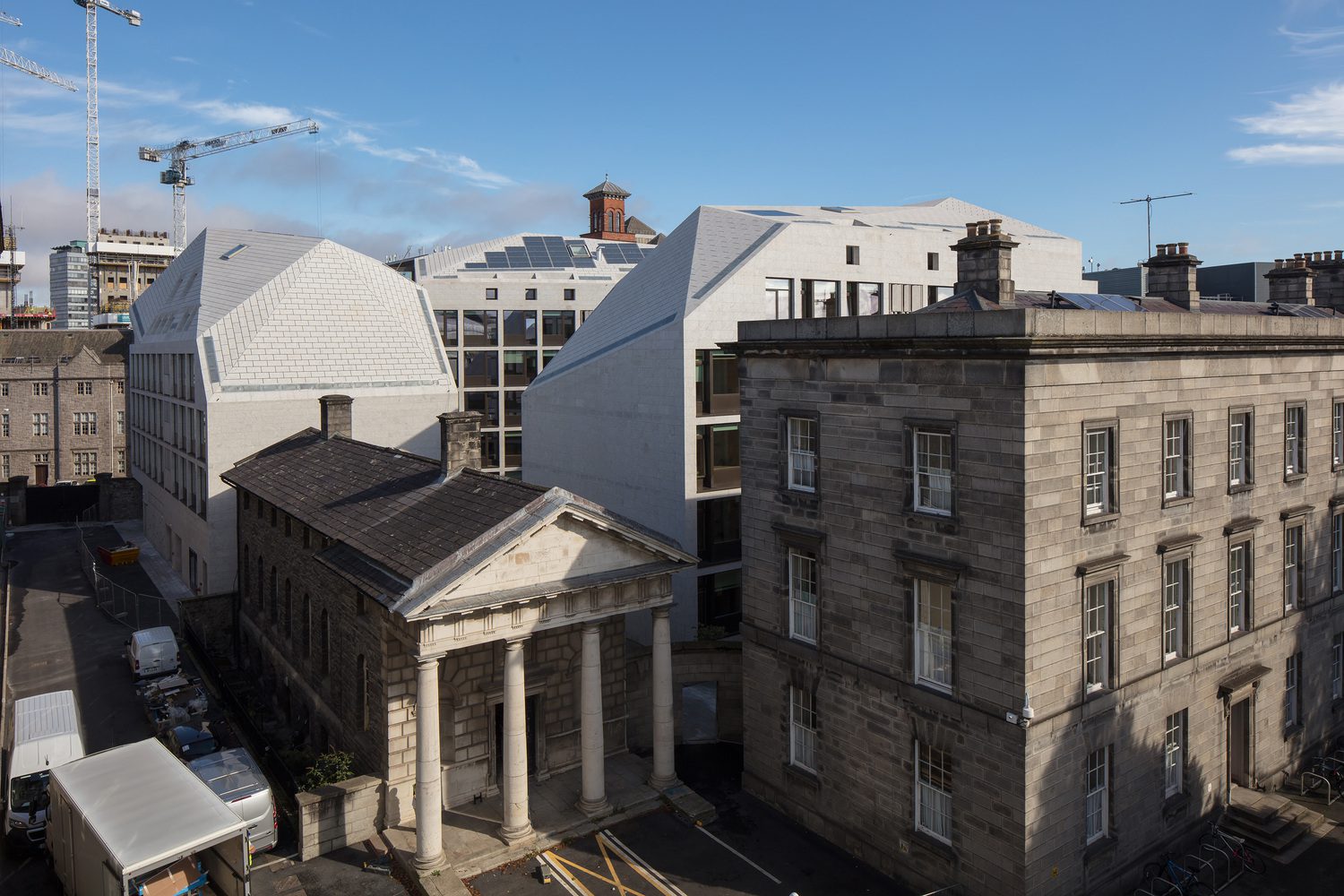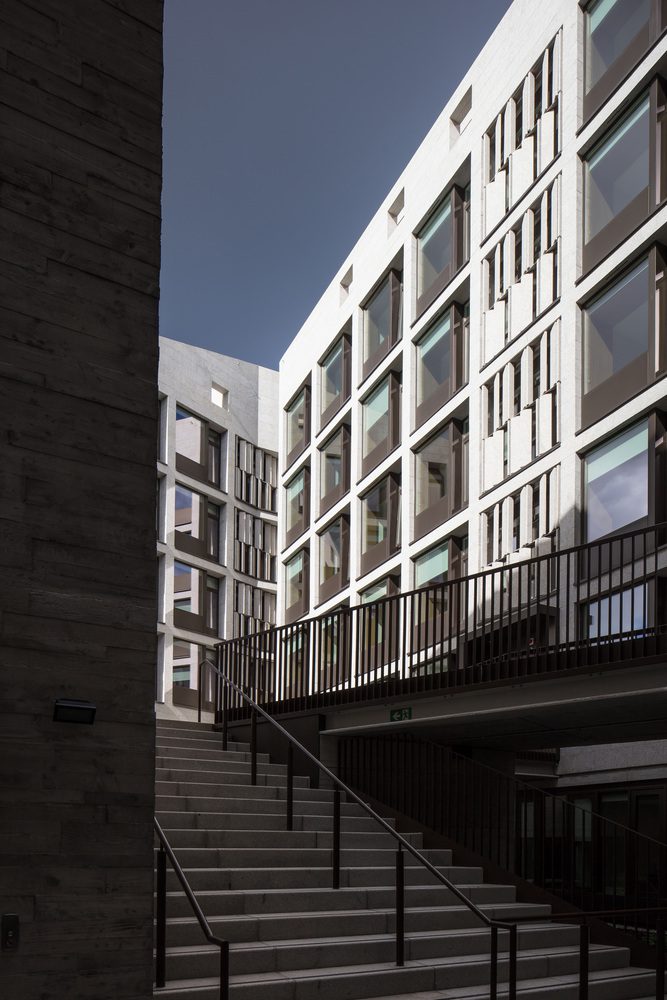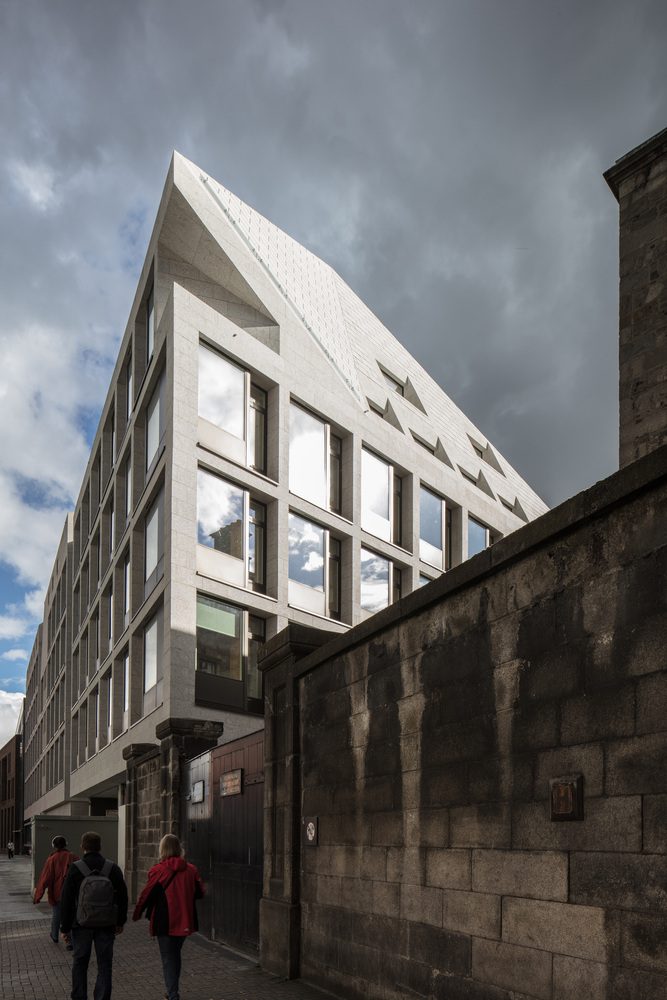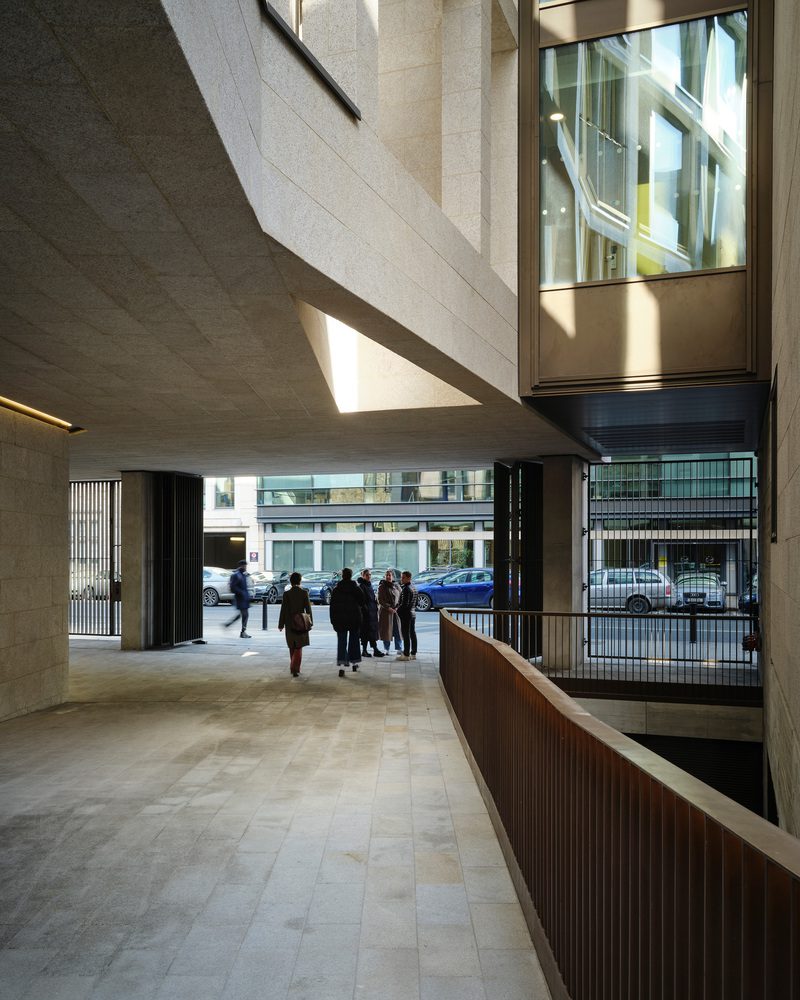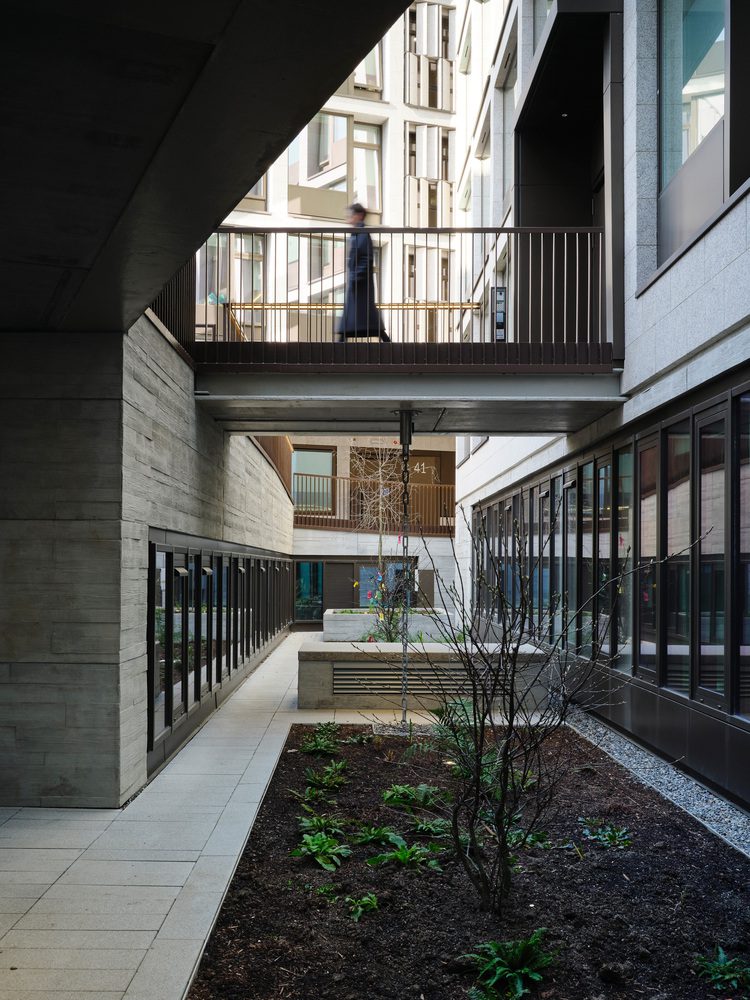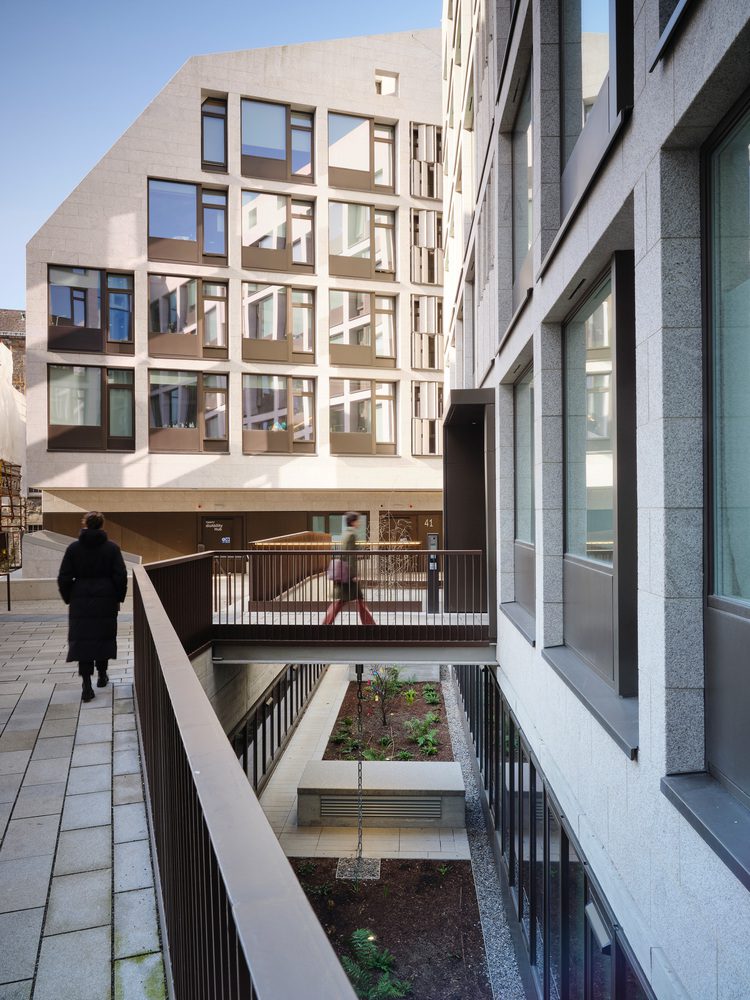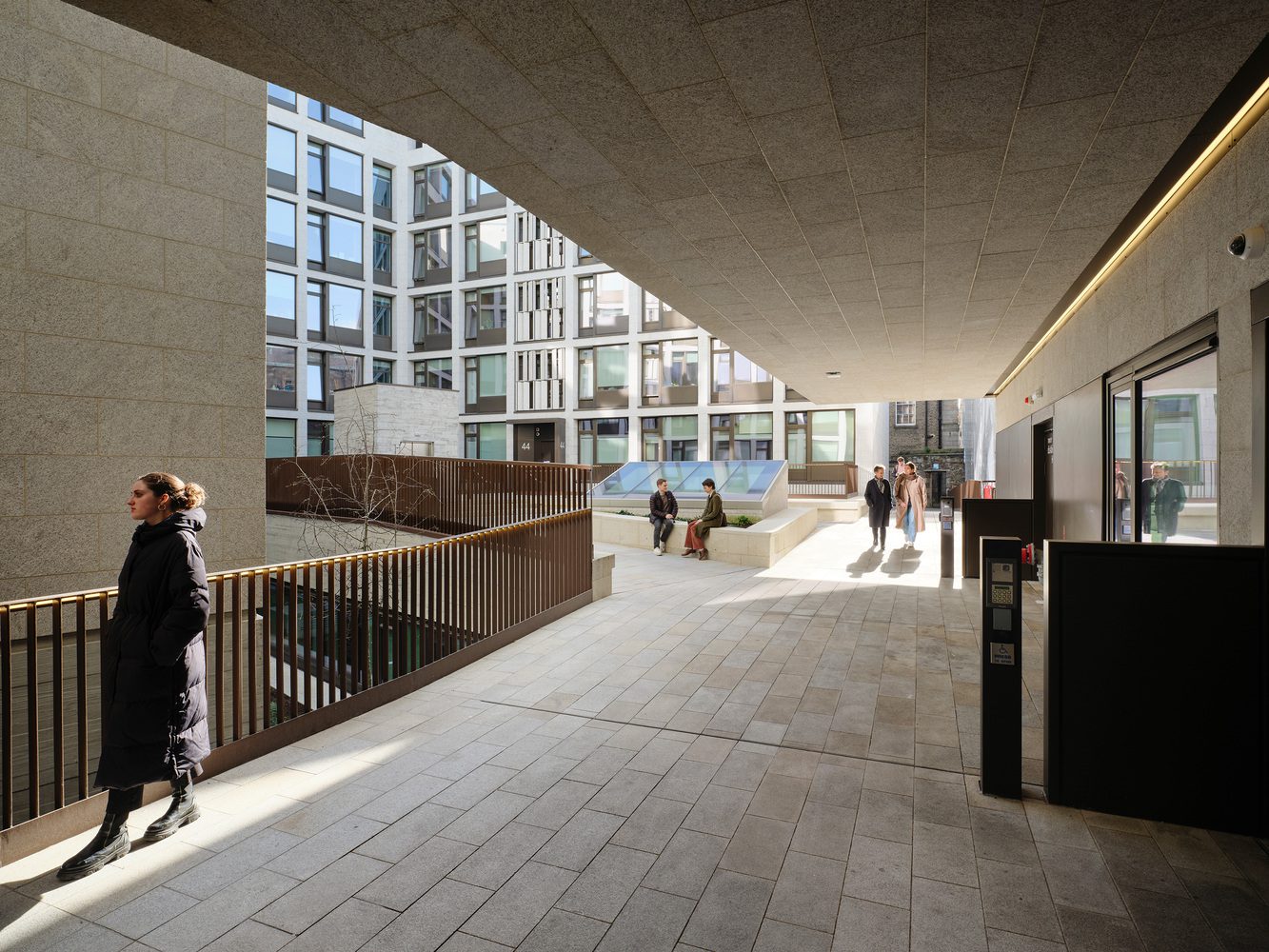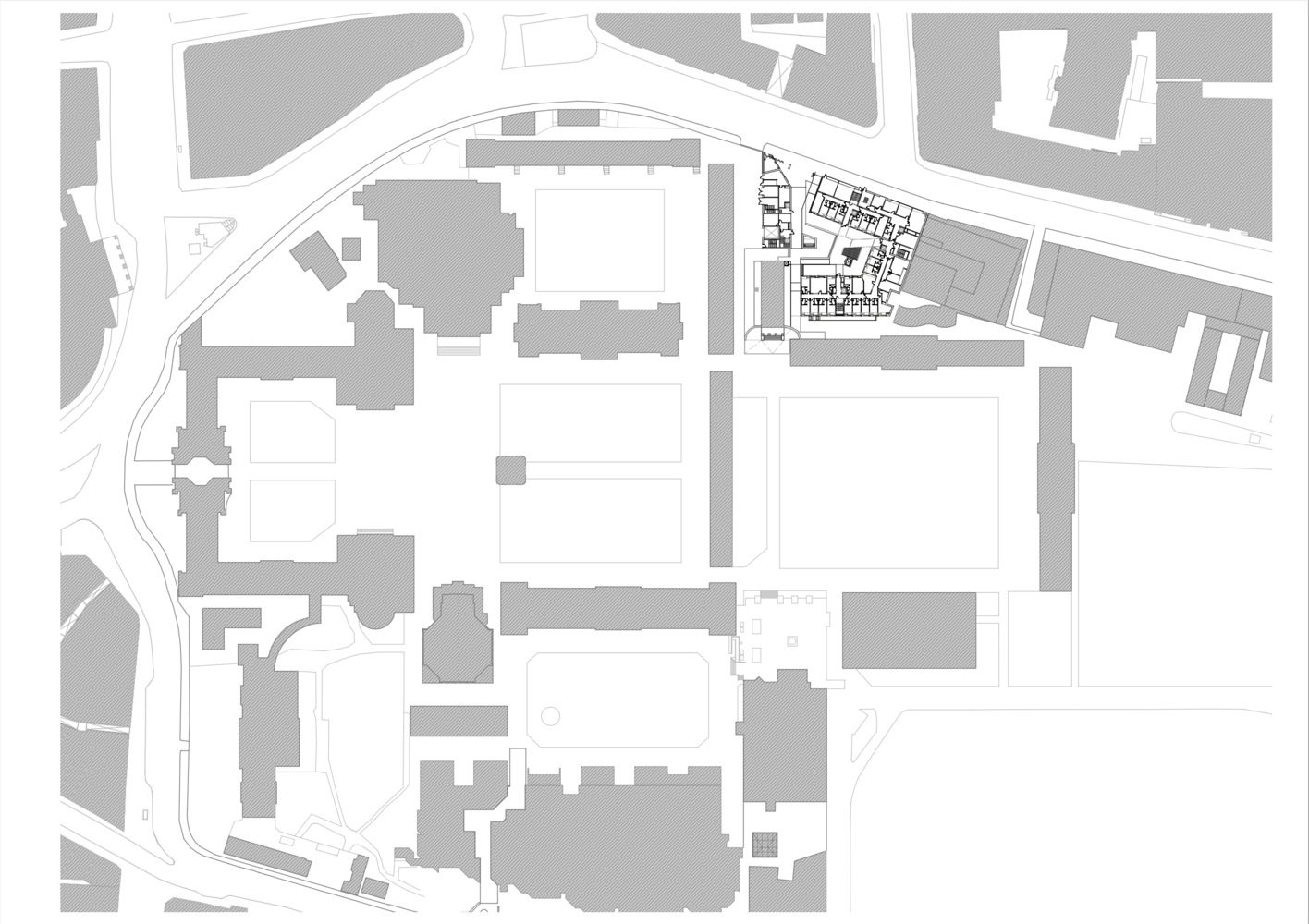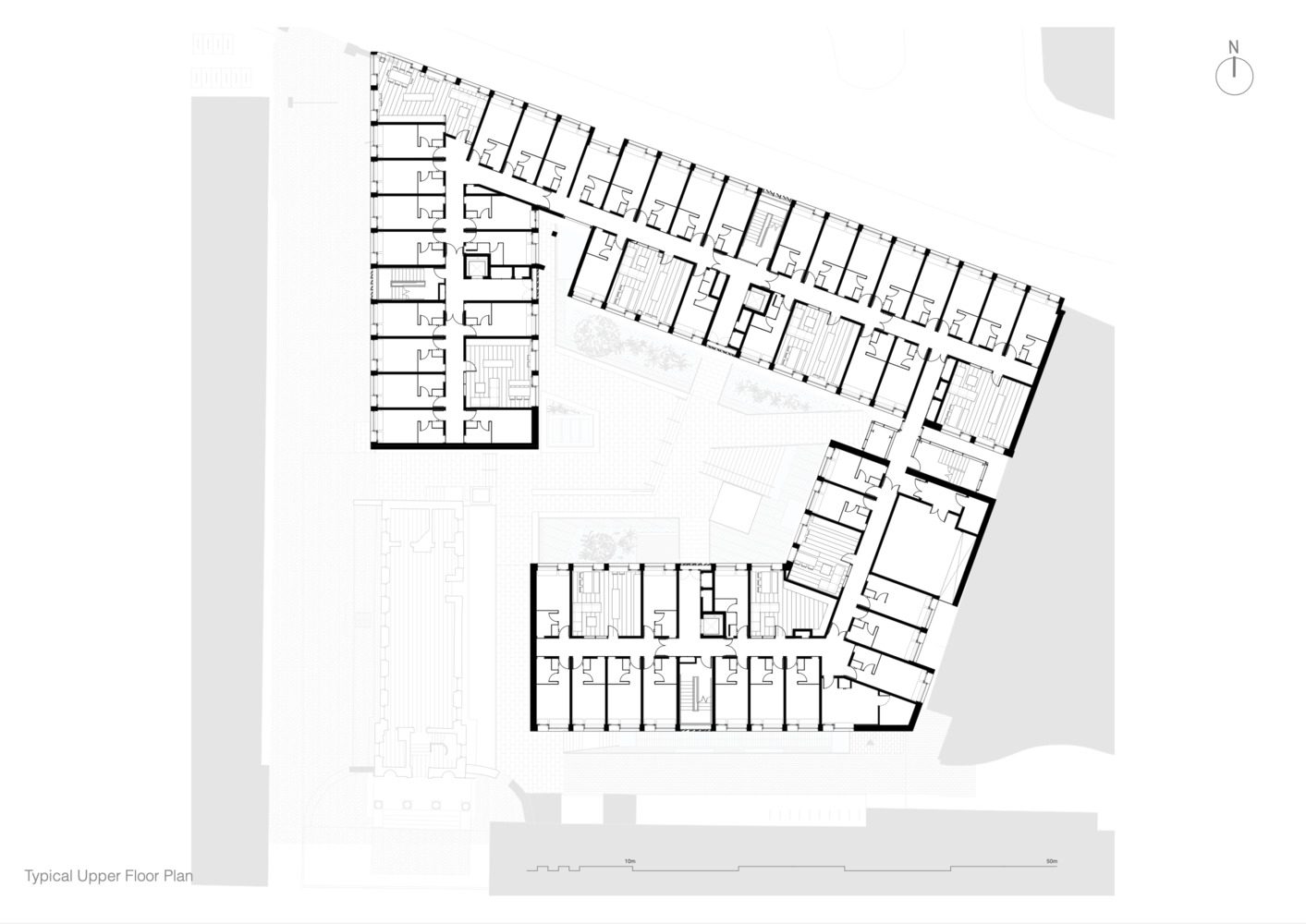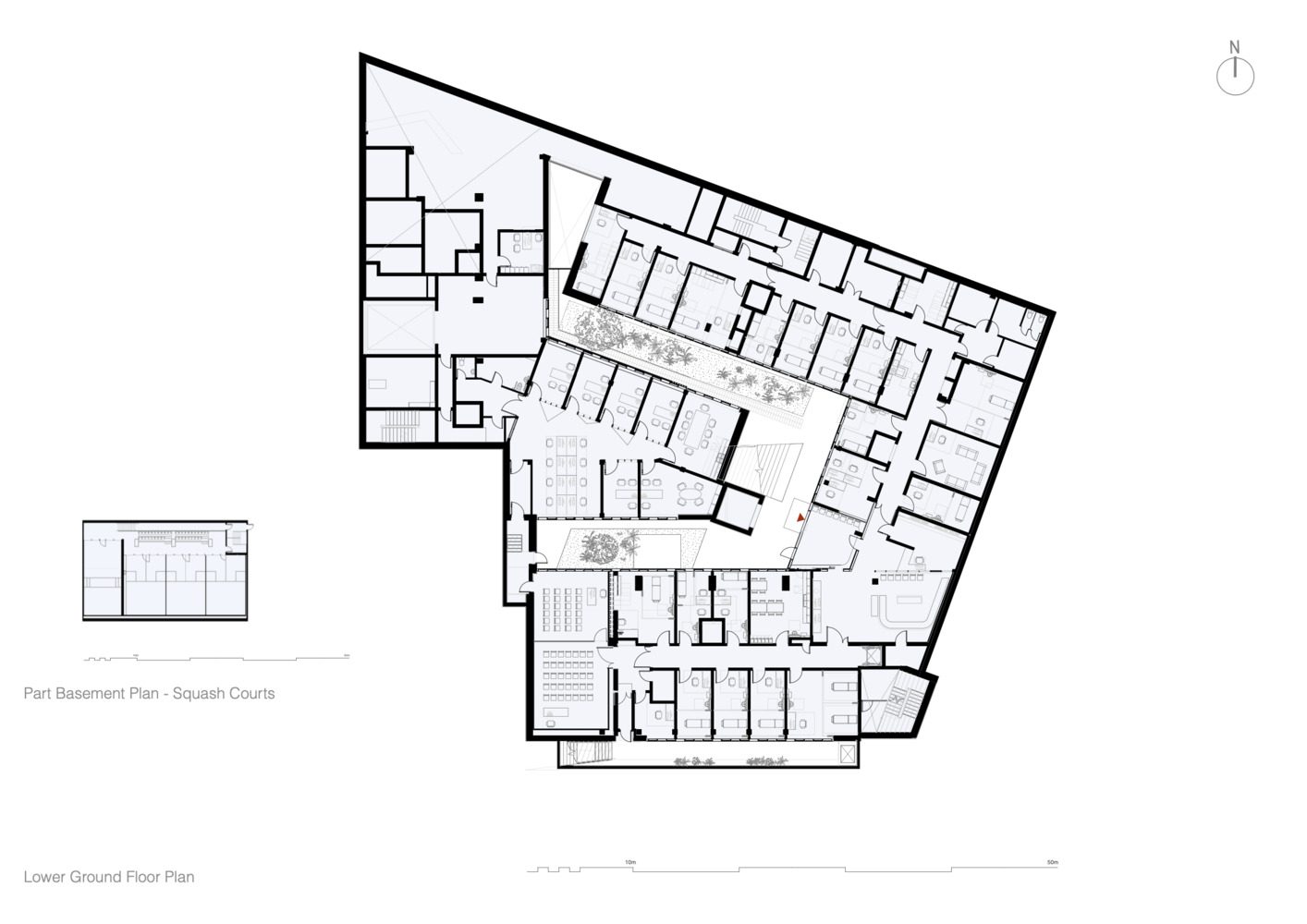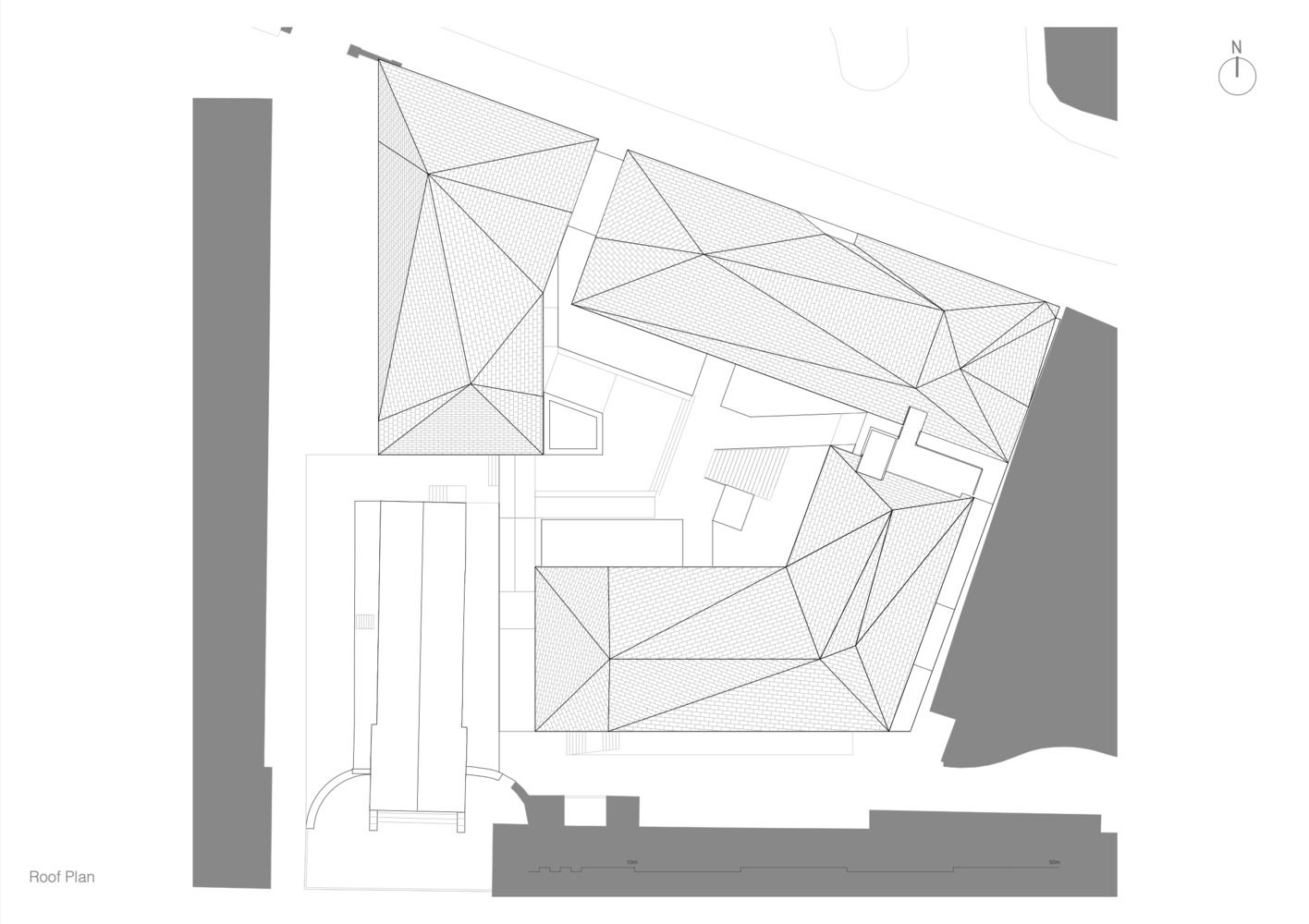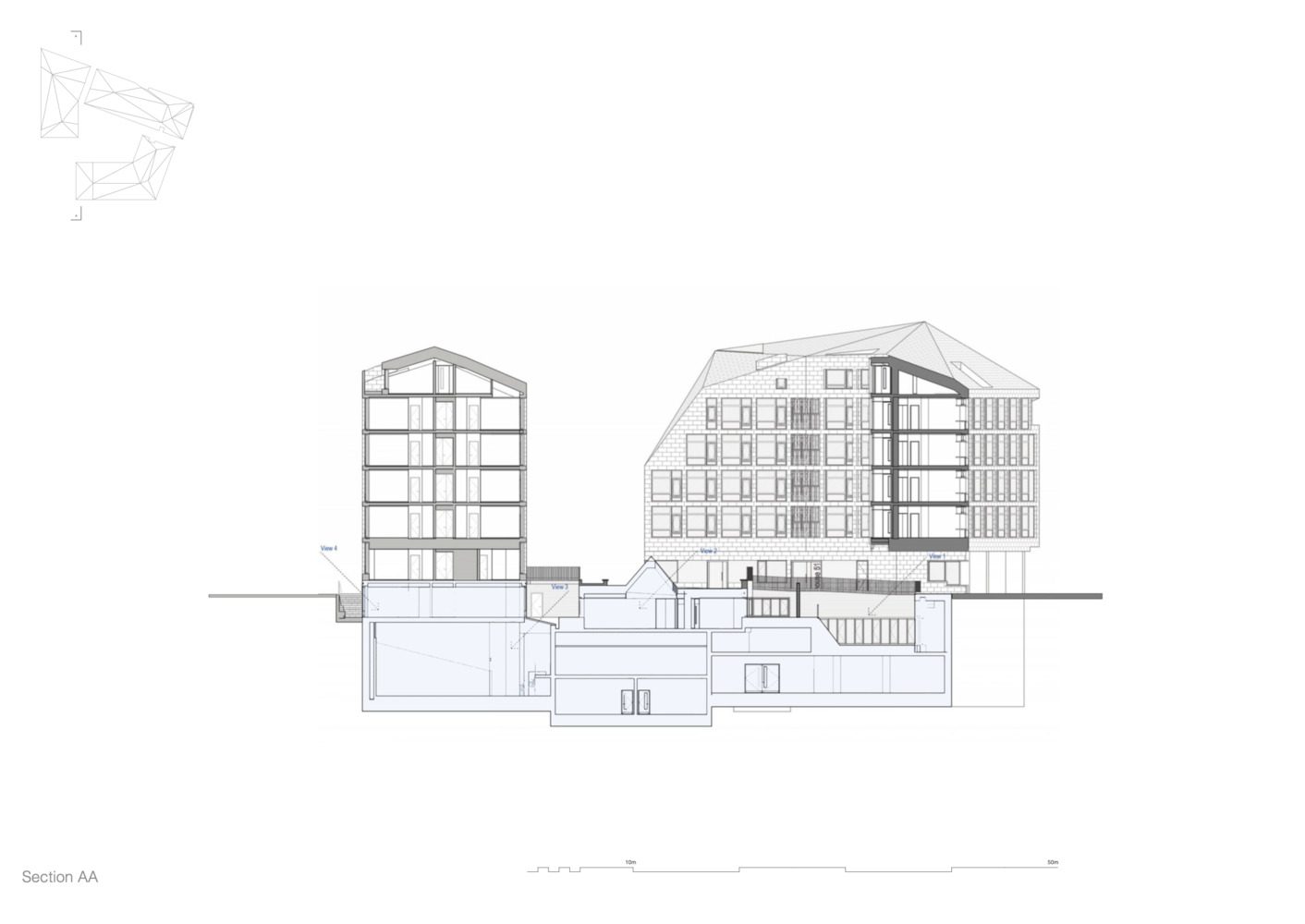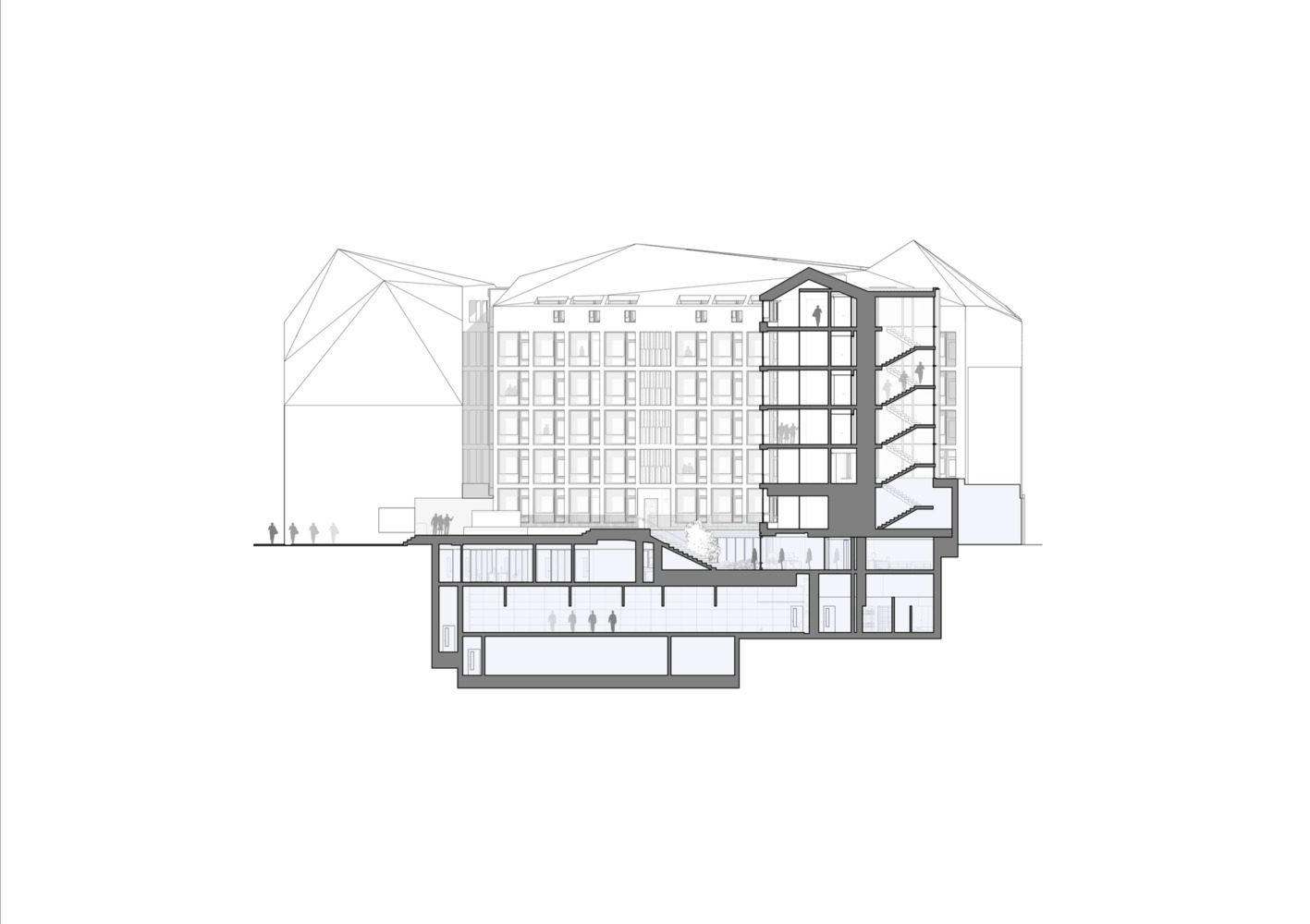


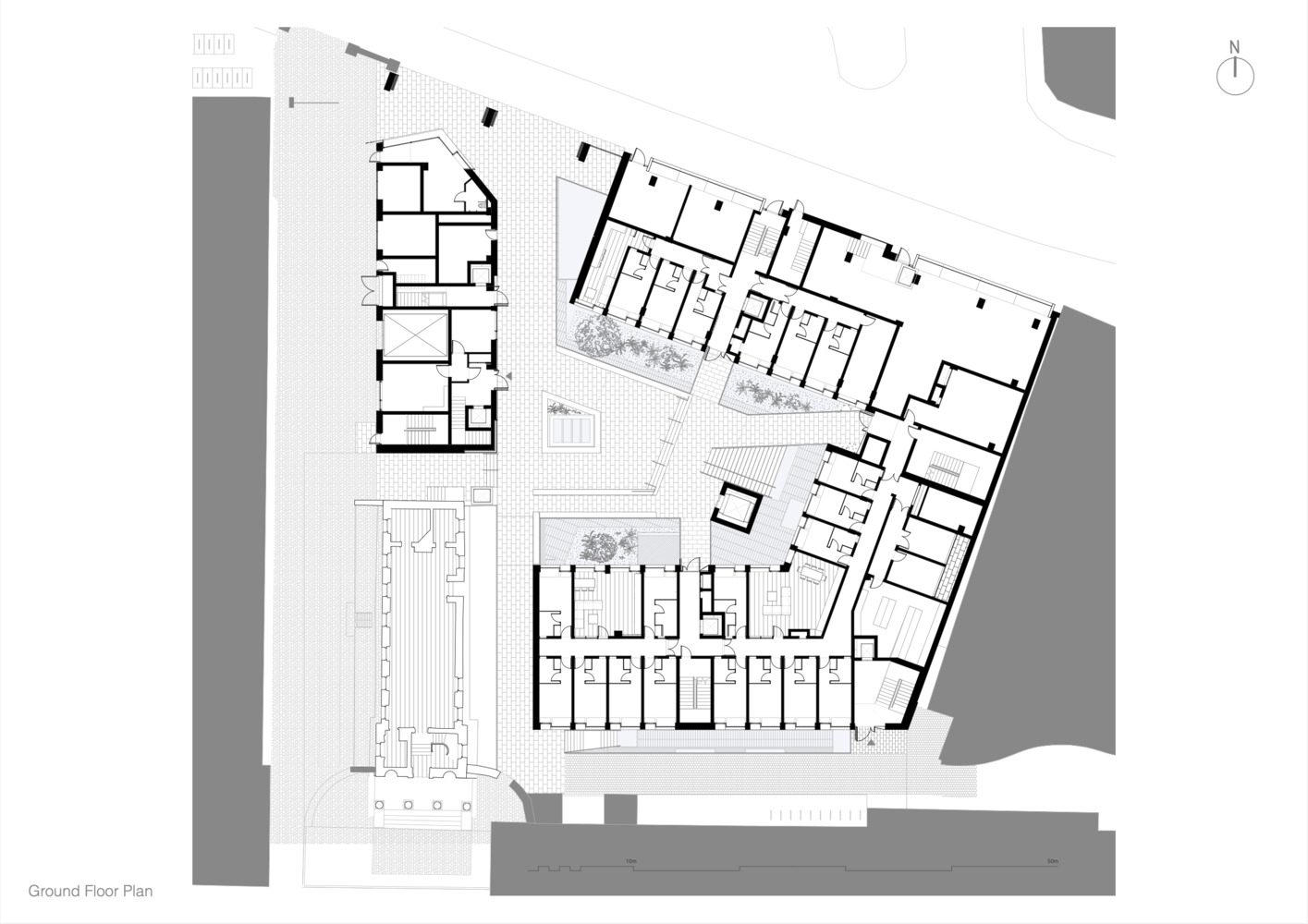
Printing House Square is the first new square to be built in Trinity for 200 years. McCullough Mulvin Architects were appointed to the project after winning a limited competition. The design creates a new gateway between college and city, opening the historic campus along what had previously been an impermeable section of Pearse Street. The courtyard form provides student accommodation, health and disability services, and a sports centre – its stone roof folding down to provide an intimate context around the 18th century Printing House.
© Christian Richters
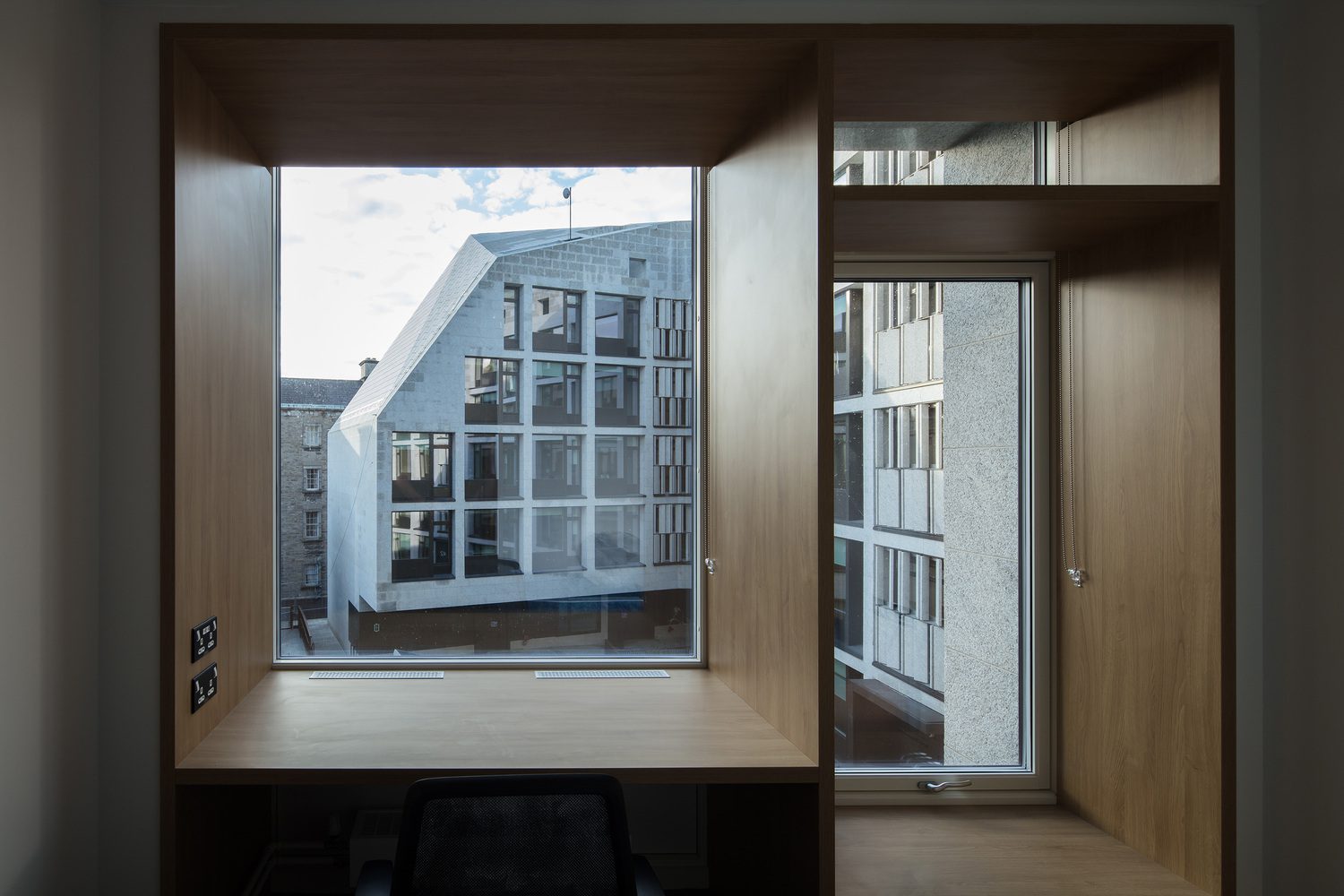
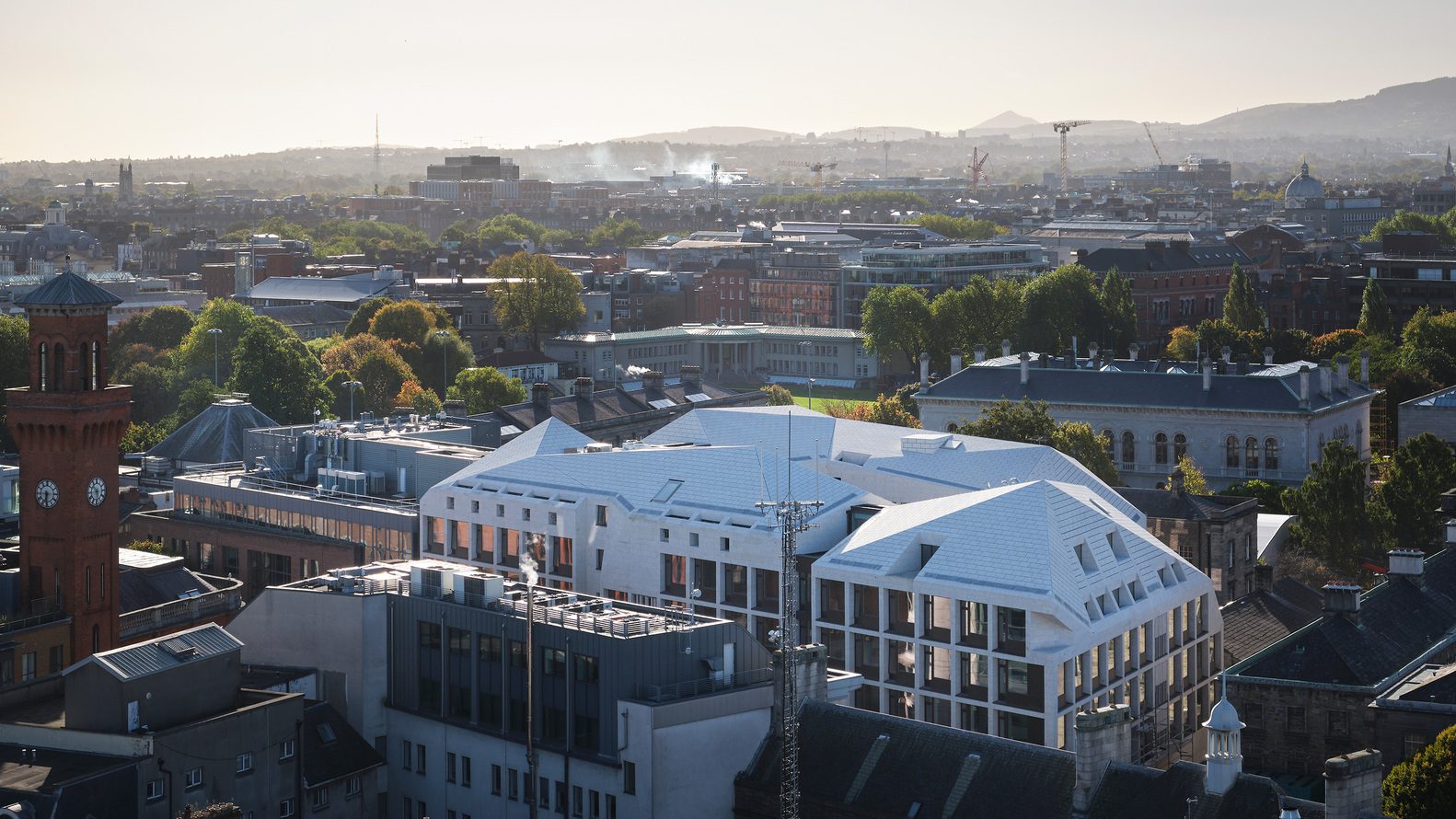
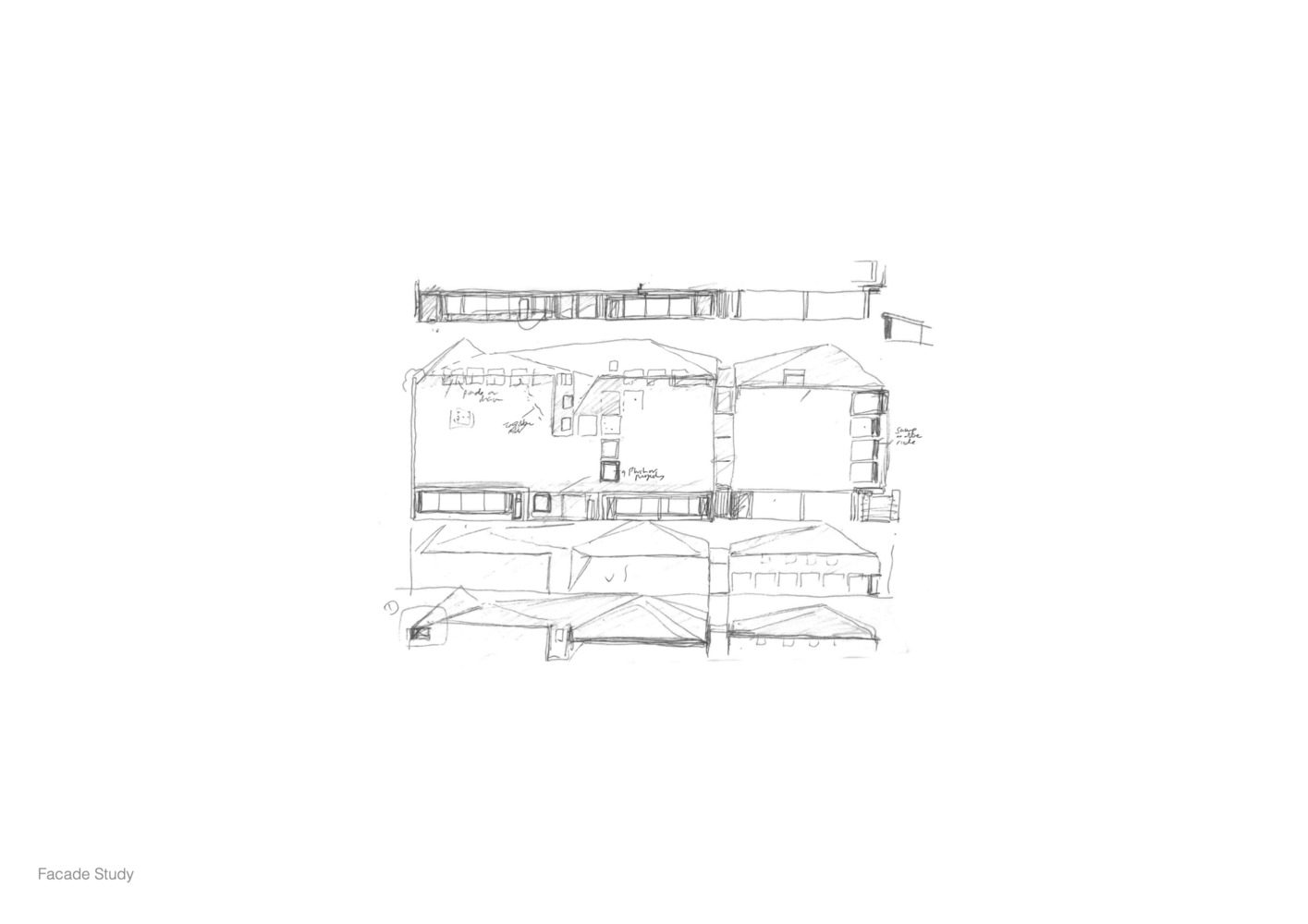
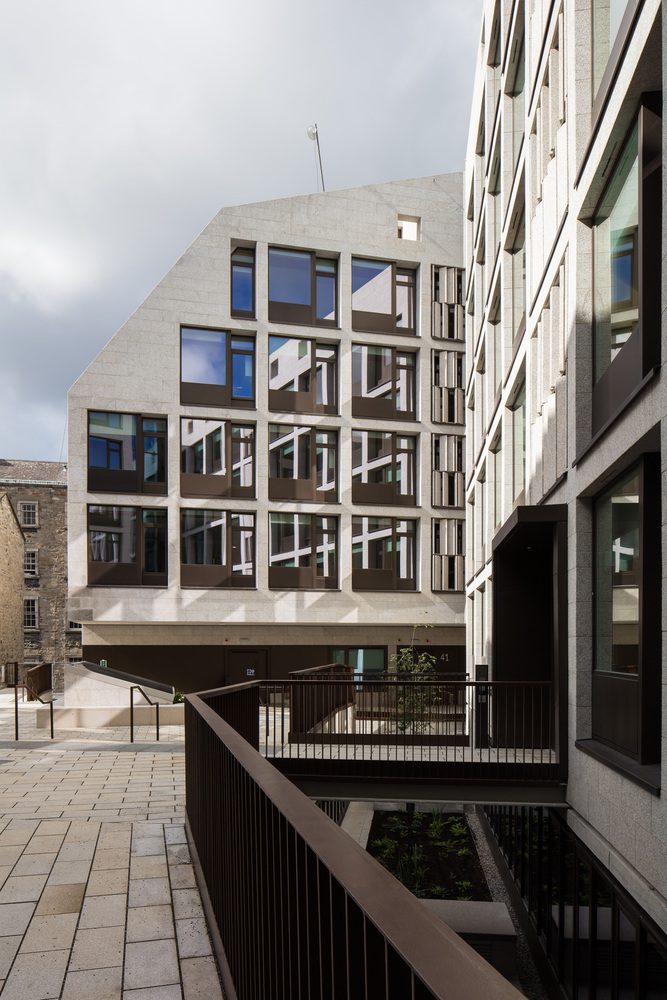
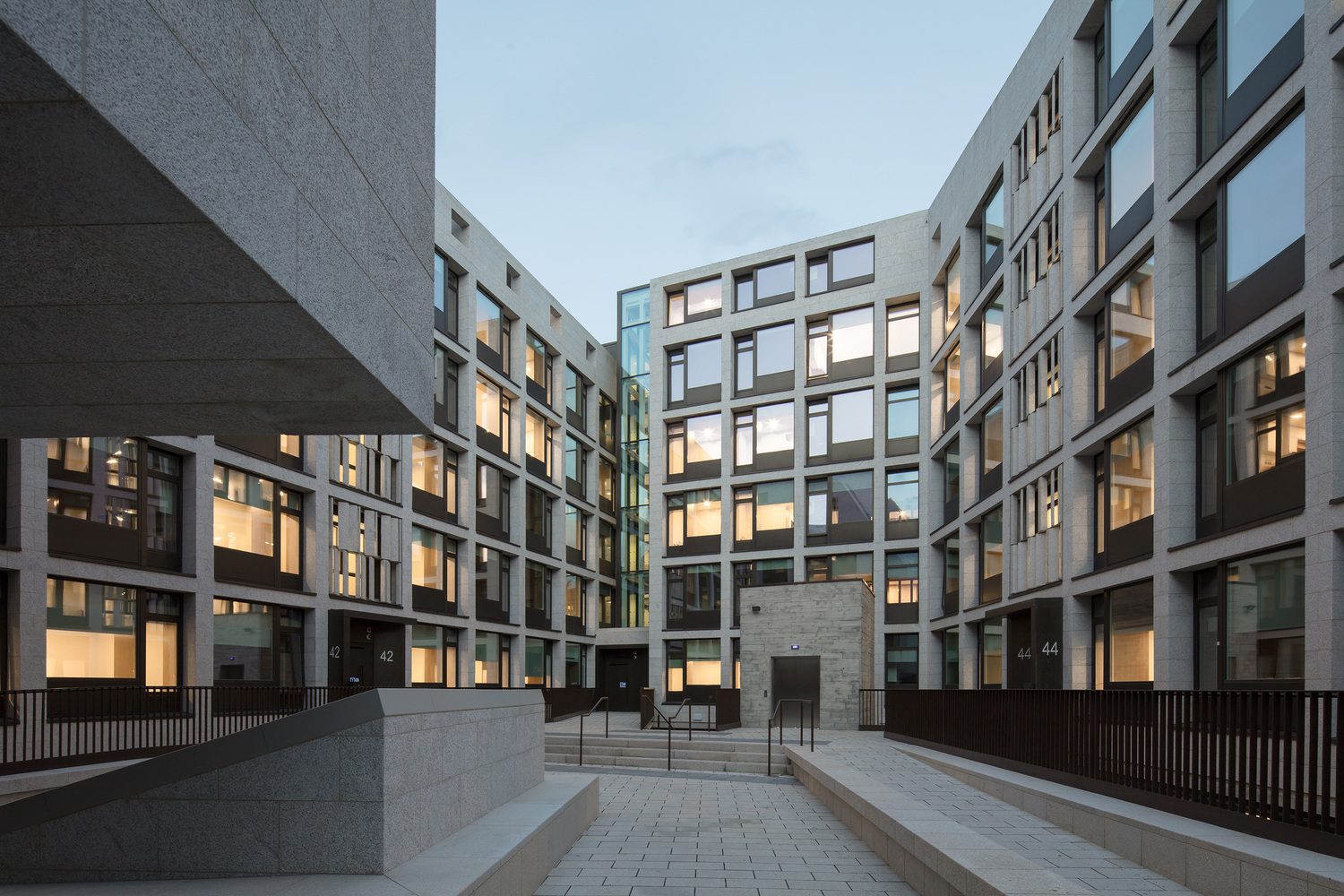
The building form is like a granite rock with a distinctive undulating stone roof, reflecting the mountains in distant view and, at closer quarters, a grouping of ordinary Georgian roofs in the city. The building’s materiality reflects its form and location with a board-marked concrete working plinth supporting a granite-clad upper world. Glimpses are provided from the courtyard, through landscaped cuts, to facilities at lower levels. The building establishes a strong formal and material relationship between contemporary architecture and historic fabric, blind stone gables folding around the Printing House’s Classical temple architecture to create a rocky landscape setting, allowing it to retain precedence in views from New Square and the Berkeley Library.
Ground Floor Plan
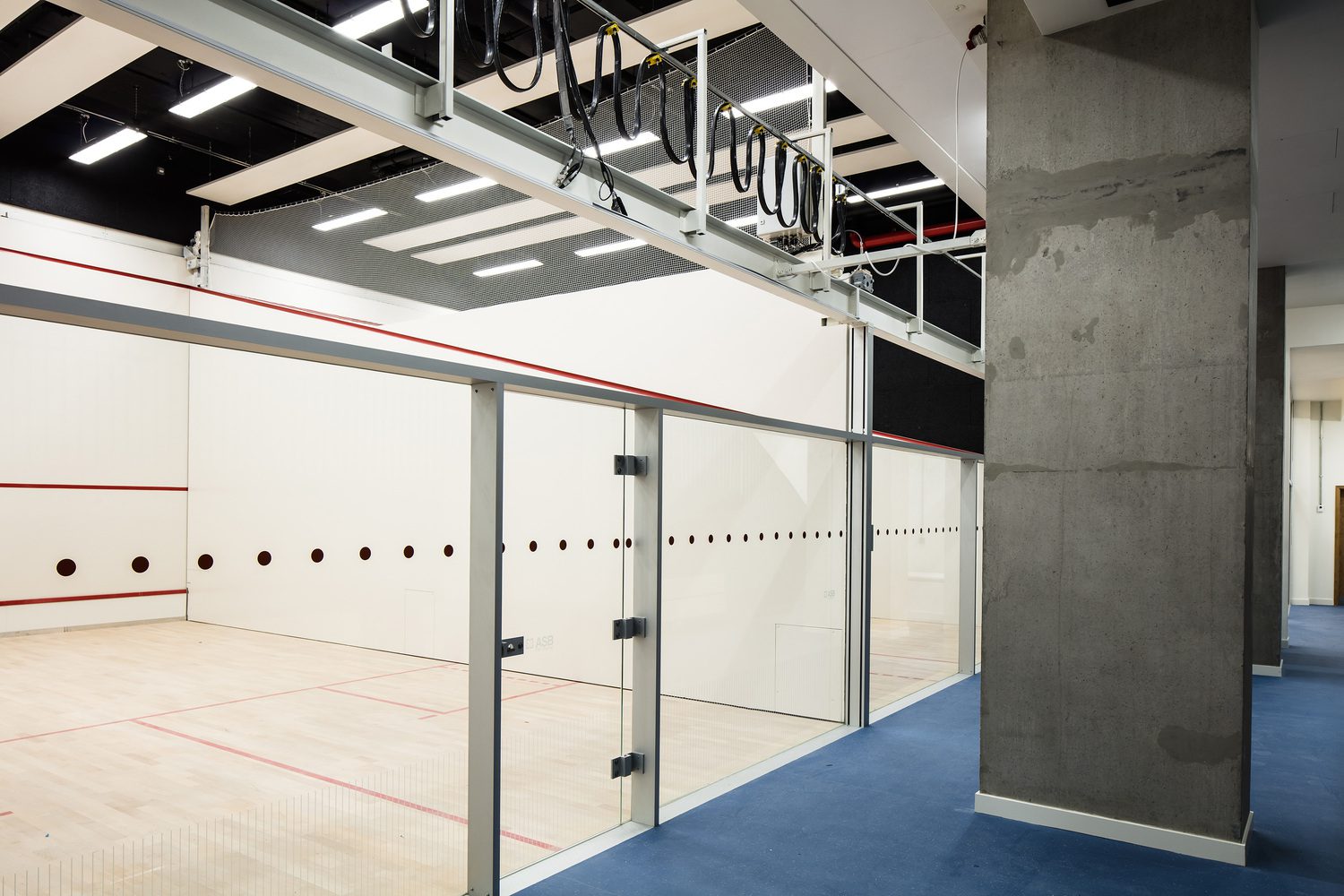
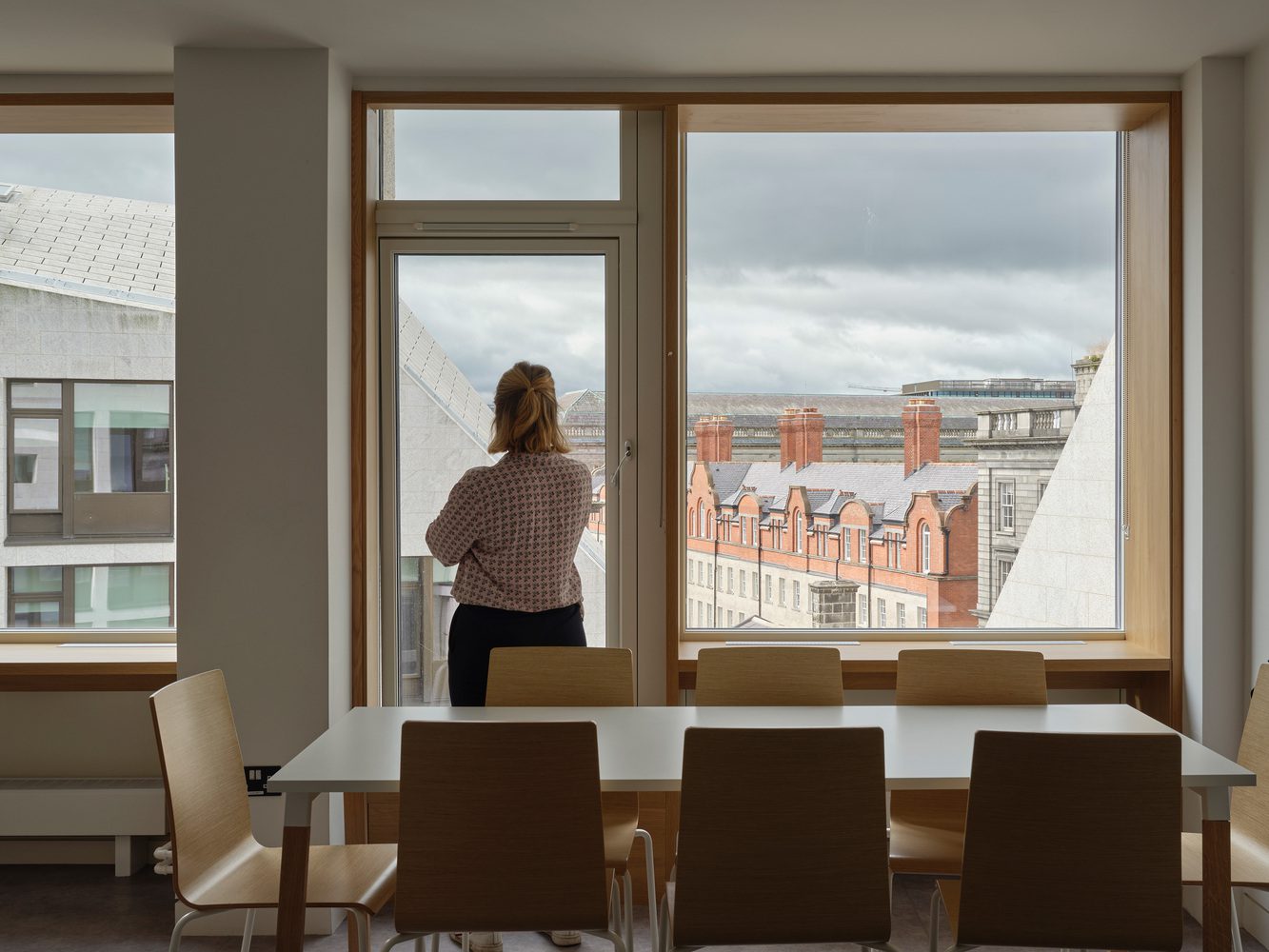
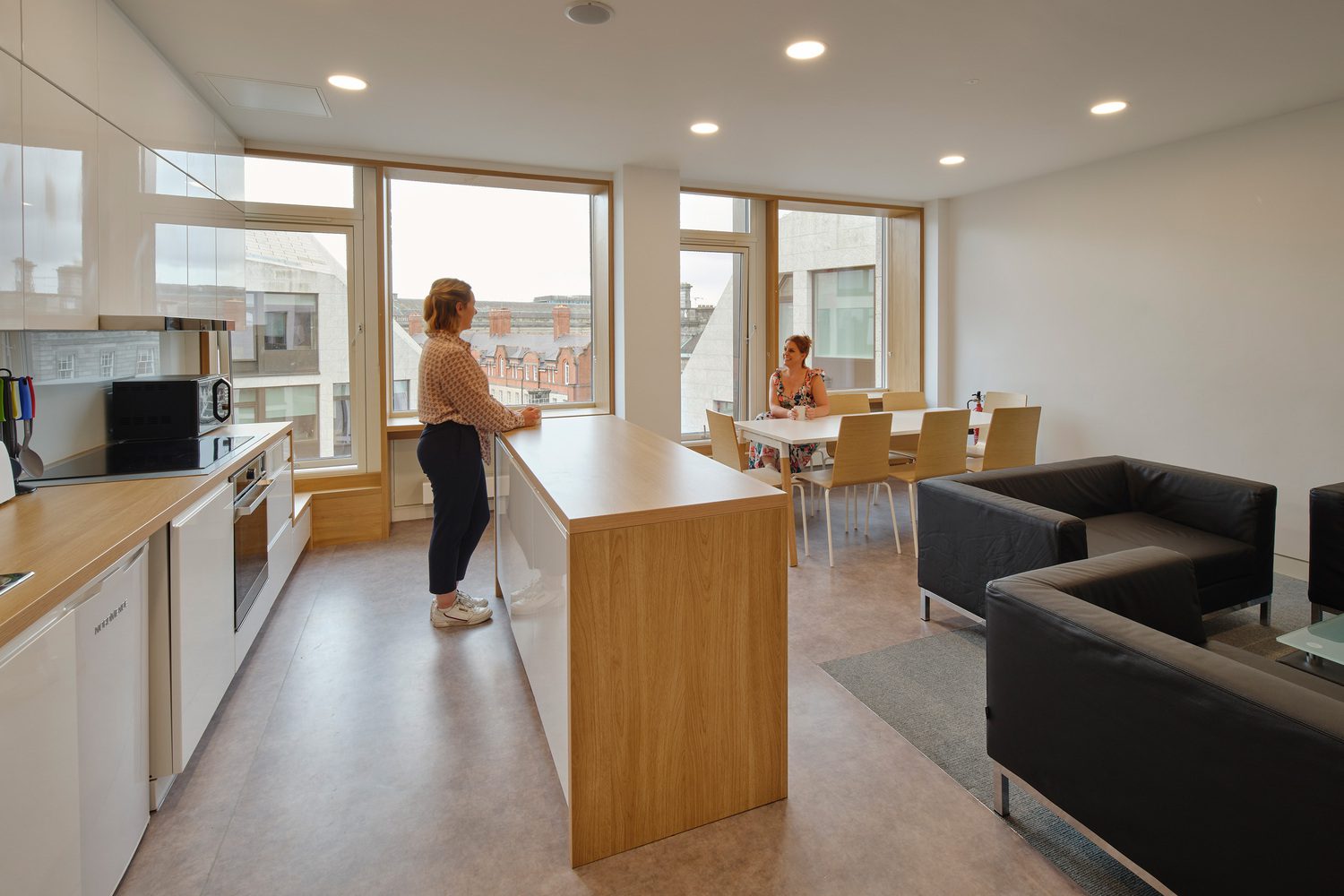
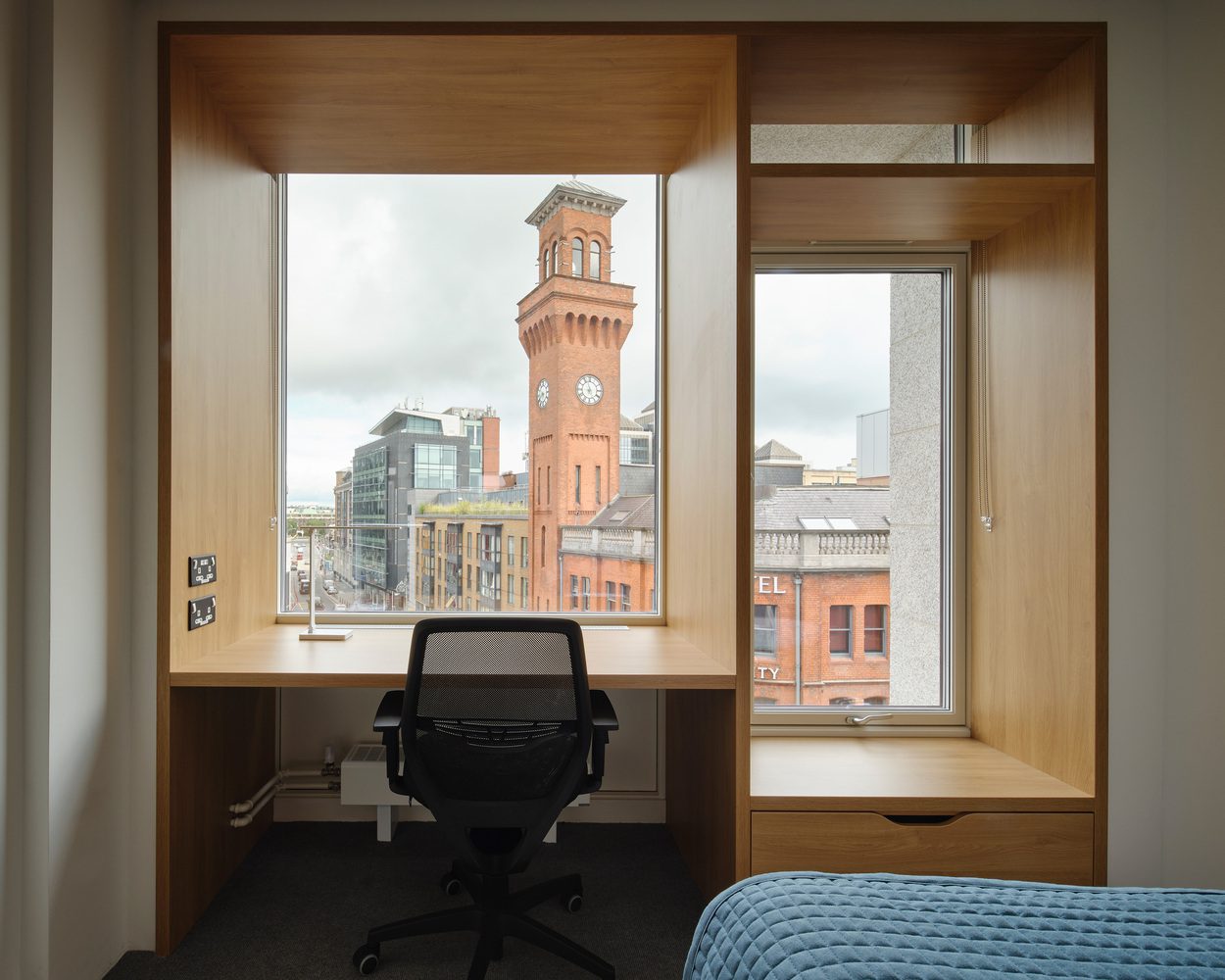
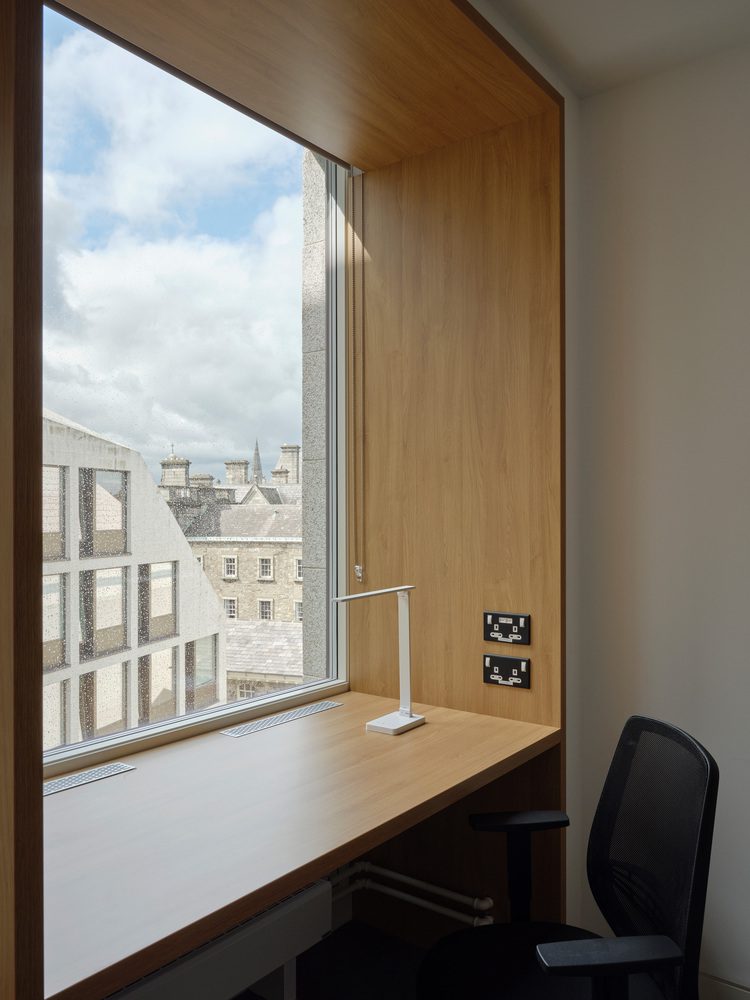
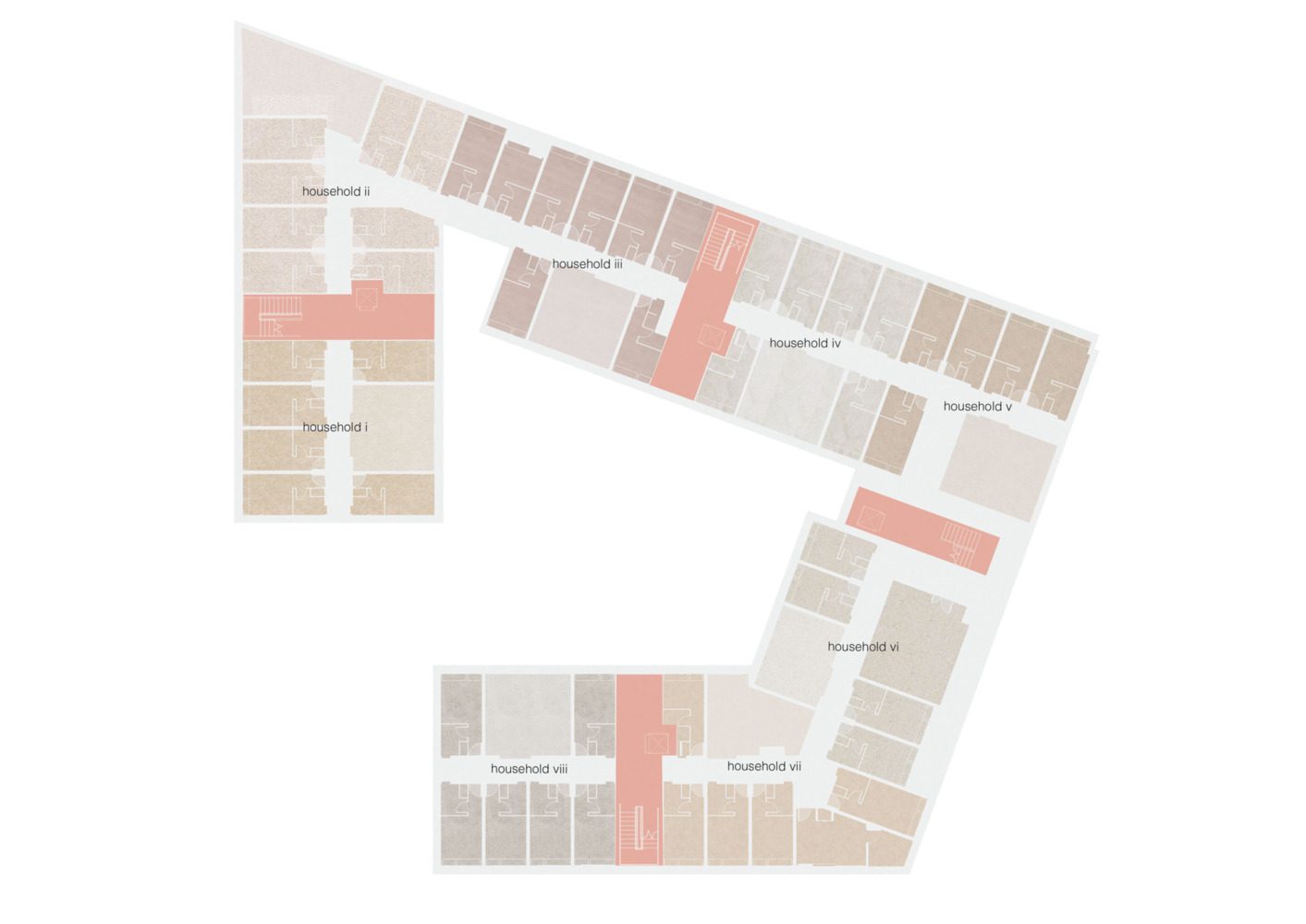
Households of six to eight students share a kitchen/living/dining space – a total of 250 bedspaces – which float over the Health Centre and Disability Services; all these facilities are naturally lit. Sports Centre services include squash, handball, and triathlon training, the squash courts being designed as flexible spaces with movable walls to allow for a variety of uses in the future. Trinity’s policies of inclusivity are focused on creating optimum conditions for students and staff to live, work, and learn. This building enshrines these principles, being fully accessible to all. A huge variety of environments create appropriate settings for people of all abilities and needs – from lower convivial households of rooms where younger students meet, live, and play together, to the more monastic top floor, which folds quiet, calm volumetric rooms into roofspaces like Paris garrets with uplifting views through tiny granite courtyards.
© Christian Richters
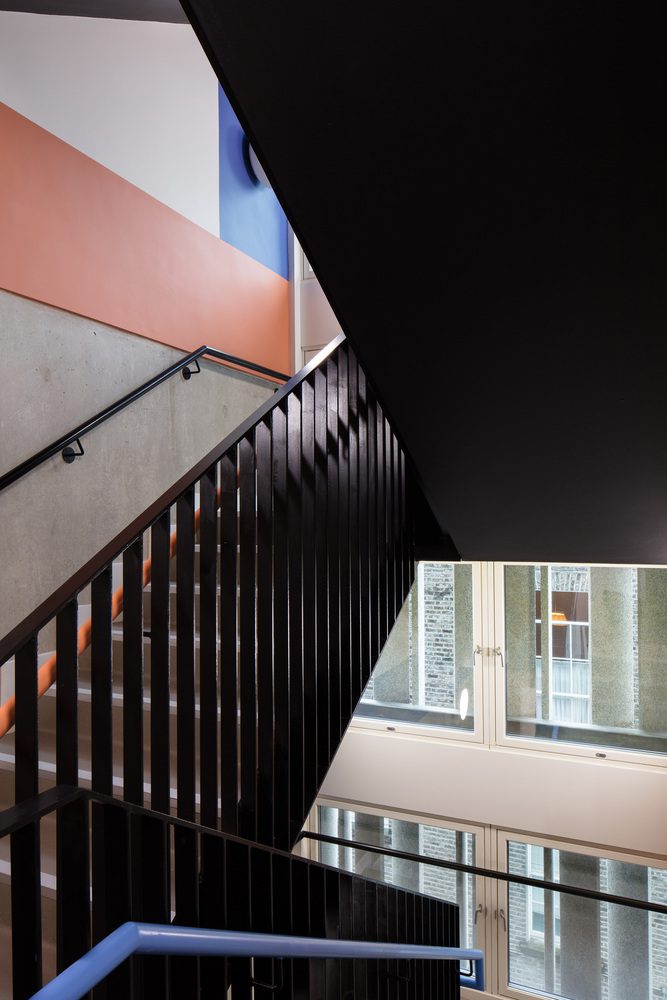
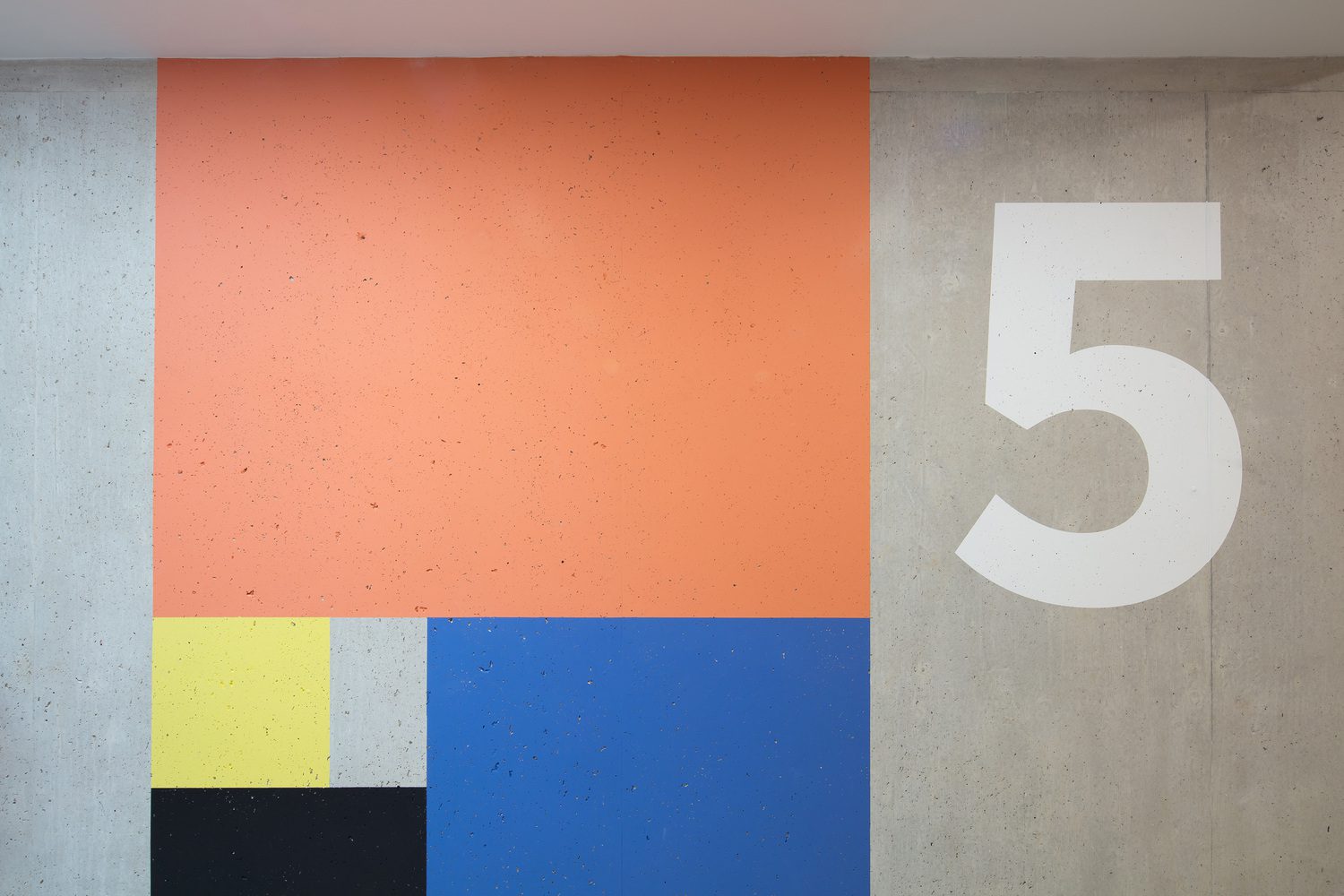
Printing House Square intensifies development on this precious city centre site. Intensive use of the site suggested deep basements for indoor sports, cutting away structure to bring light deep into the Health Centre and Disability Services, making the building section like an iceberg. For the structure, Ecocem concrete is used throughout. All building elements are highly insulated and airtight for excellent U values. Services are sustainably designed, including basement CHP, rooftop air source heat pumps, percussive taps to reduce water wastage, and movement-controlled lighting. Energy monitoring displayed on screens in each household encourages the reduction of energy usage. Rainwater harvesting irrigates landscaping. Materials were also selected for sustainability: natural stone cladding, linoleum floors, exposed concrete, and timber from certified sustainable sources. Wayfinding was developed through the use of colour, with each household given a different colour within a tight range, which is reflected in the staircases to provide a sense of identity for every household. The building is BREEAM Excellent.
Project Info:
-
Architects: Mccullough Mulvin Architects
- Country: Ireland
- Area: 8000 m²
- Year: 2022
-
Photographs: Christian Richters, Ros Kavanagh
-
Design Team: Niall McCullough, Valerie Mulvin
-
Architecture Offices: O’Mahony Pike
-
Engineering & Consulting > Structural: O’Connor Sutton Cronin
-
Engineering & Consulting > Services: J. V. Tierney & Co.
-
Engineering & Consulting > Environmental Sustainability: SES Ltd, Cundall
-
Engineering & Consulting > Quantity Surveying: Linesight
-
Landscape Architecture: Stephen Diamond Associates