


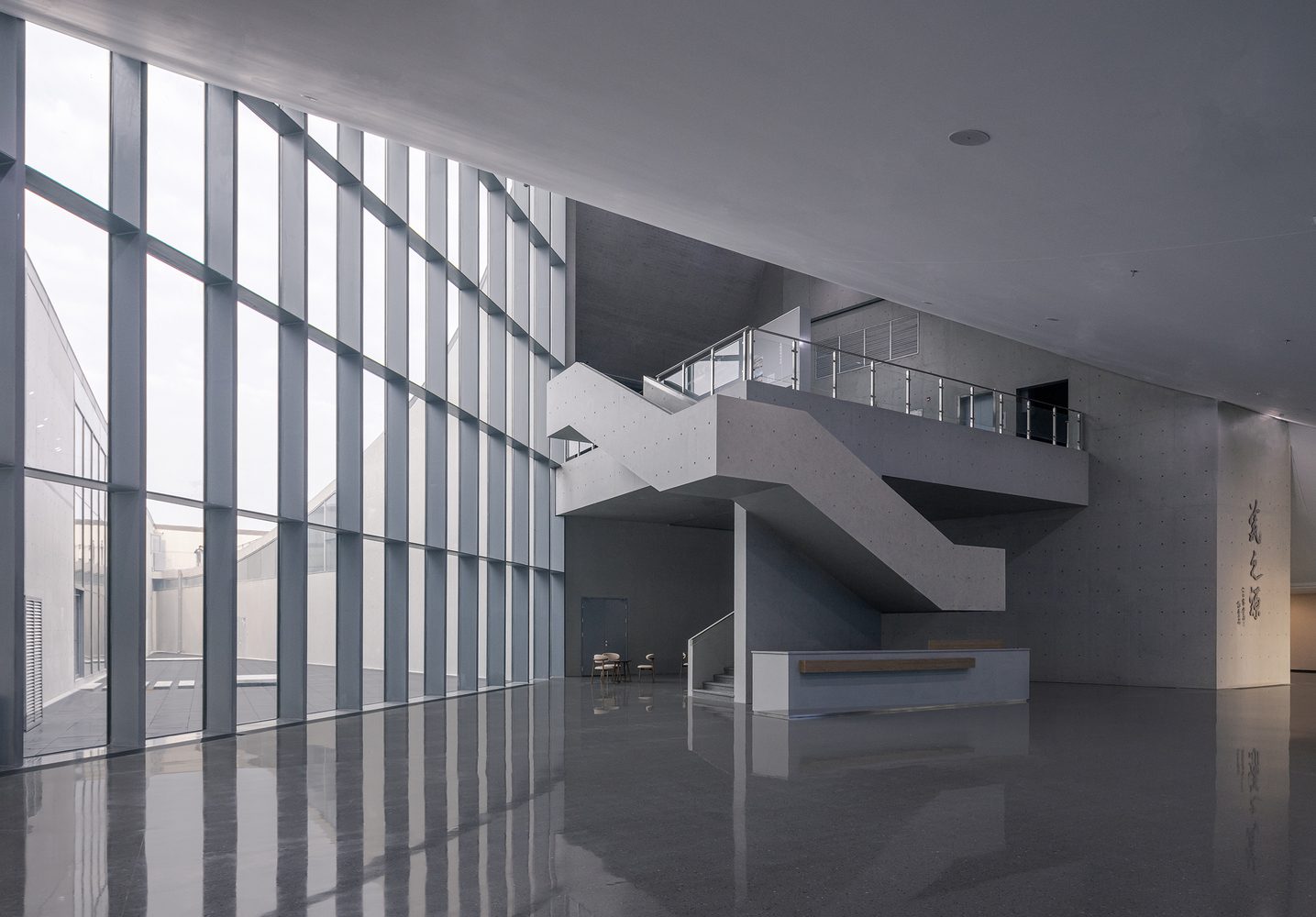
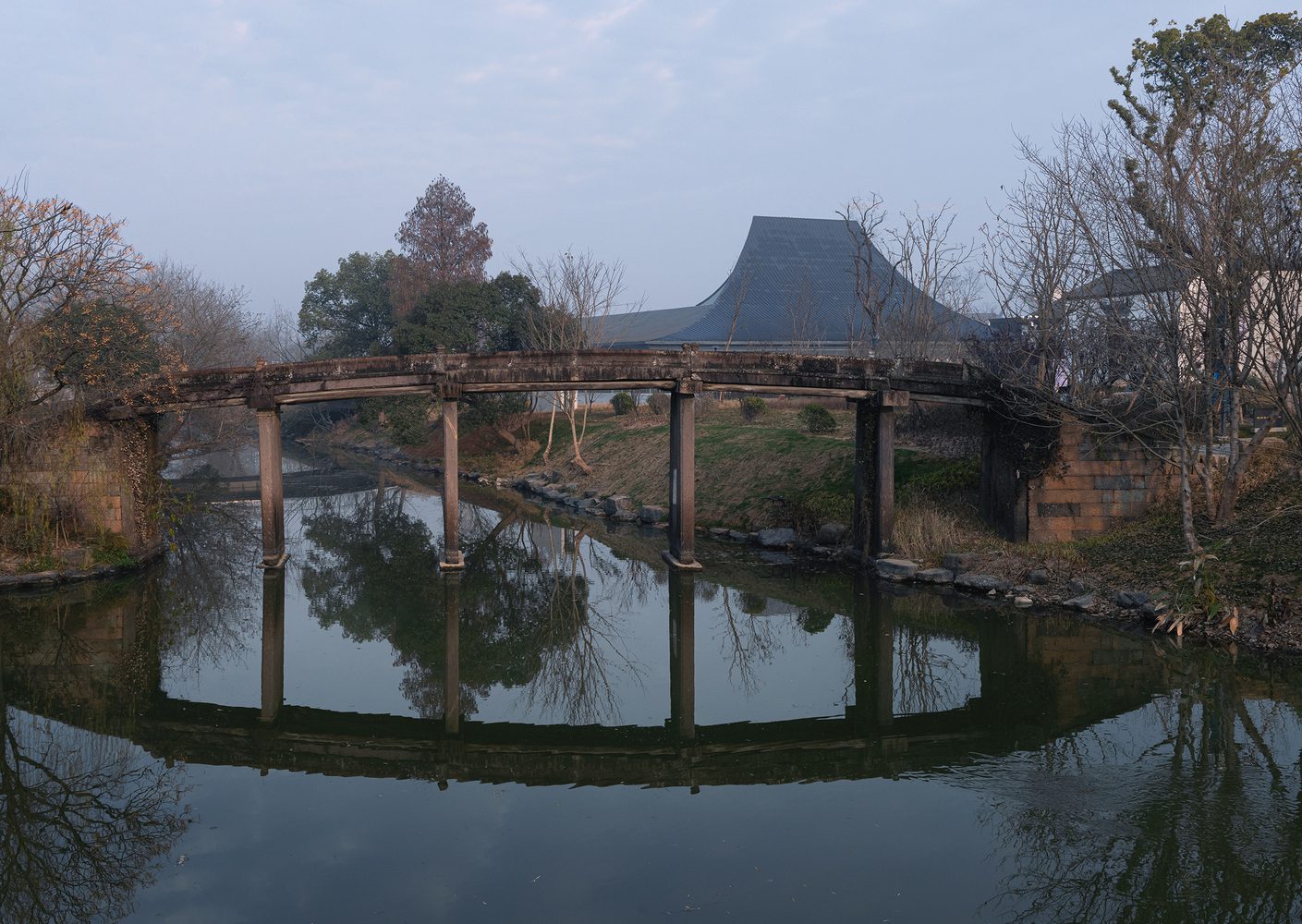
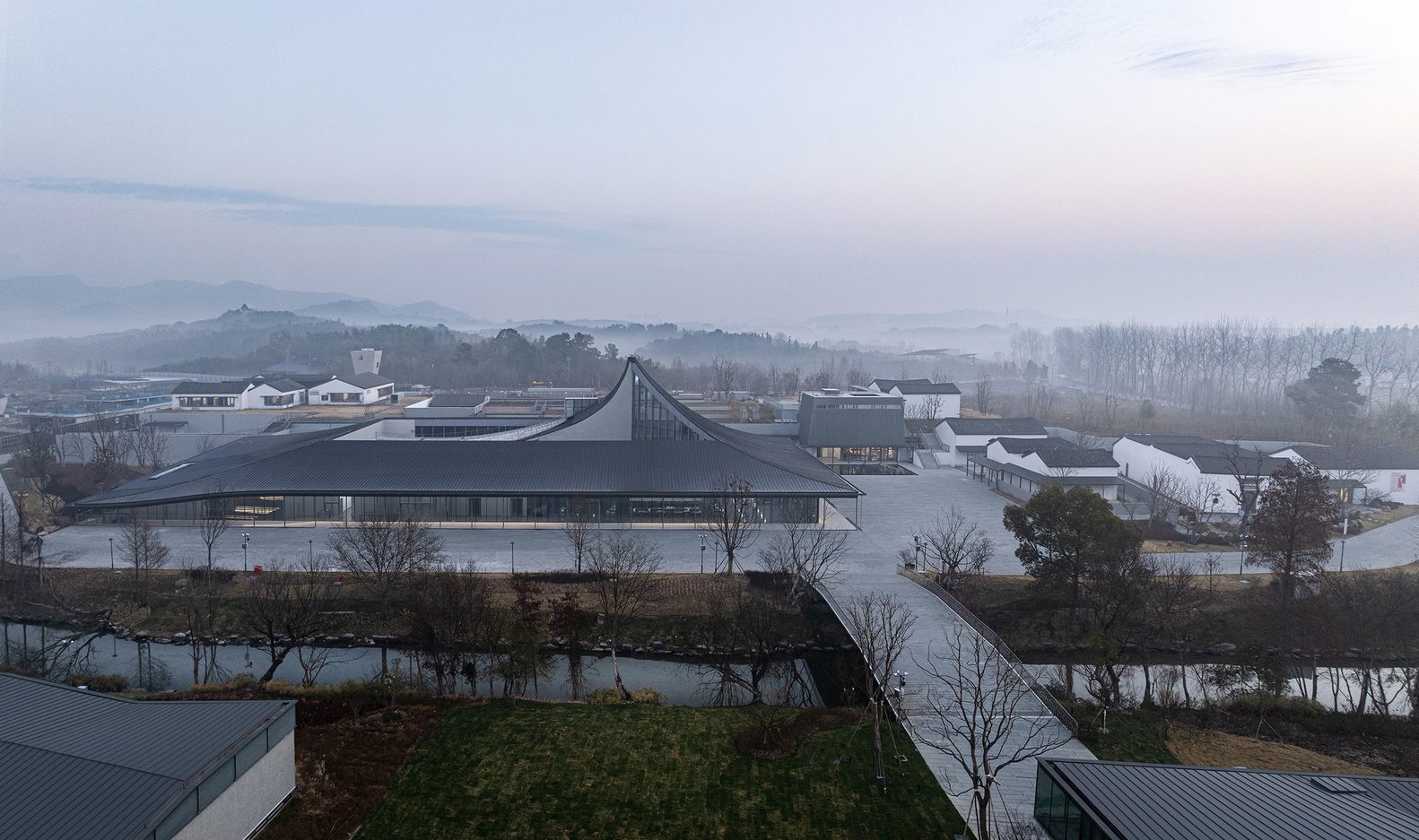
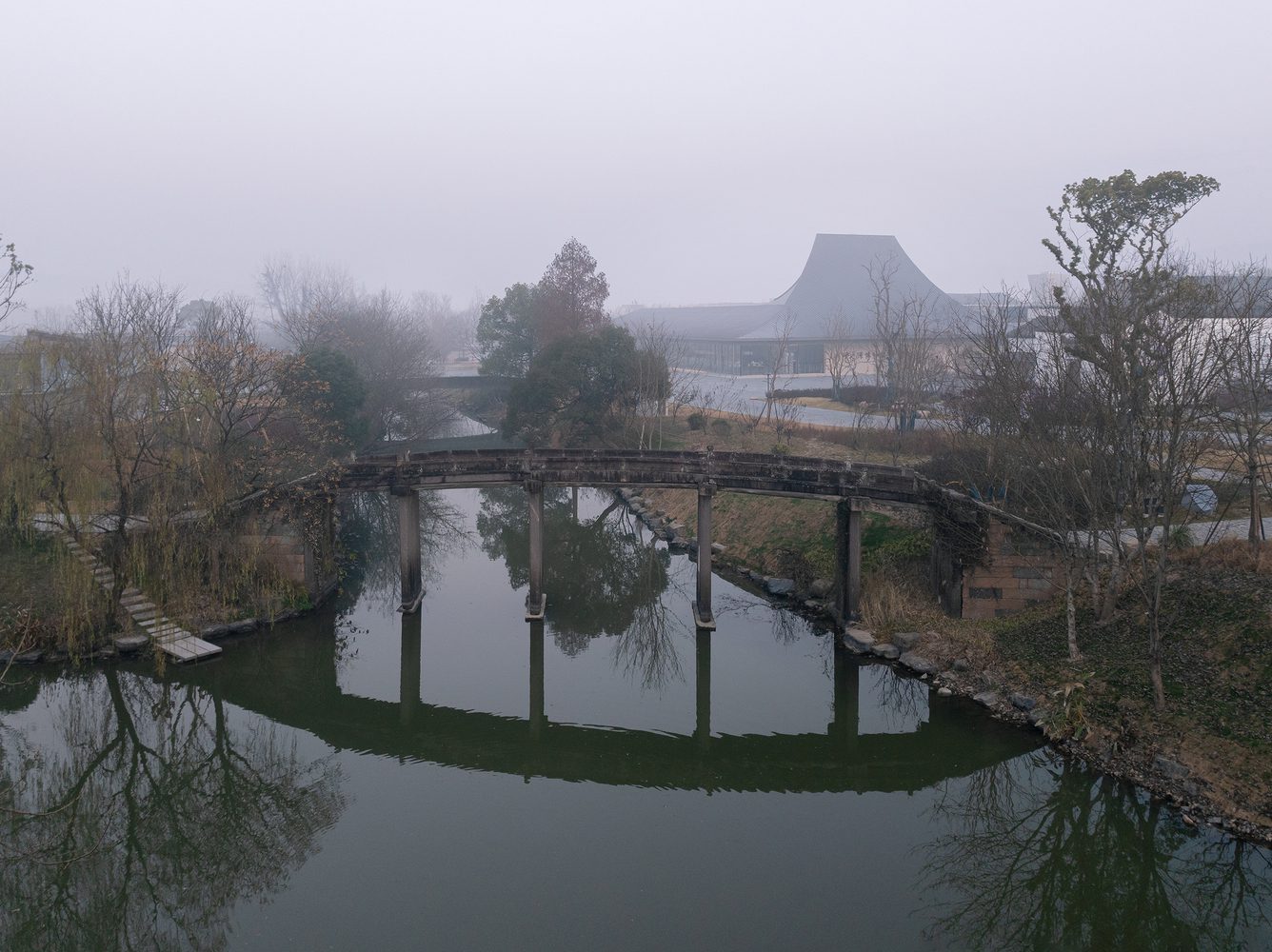
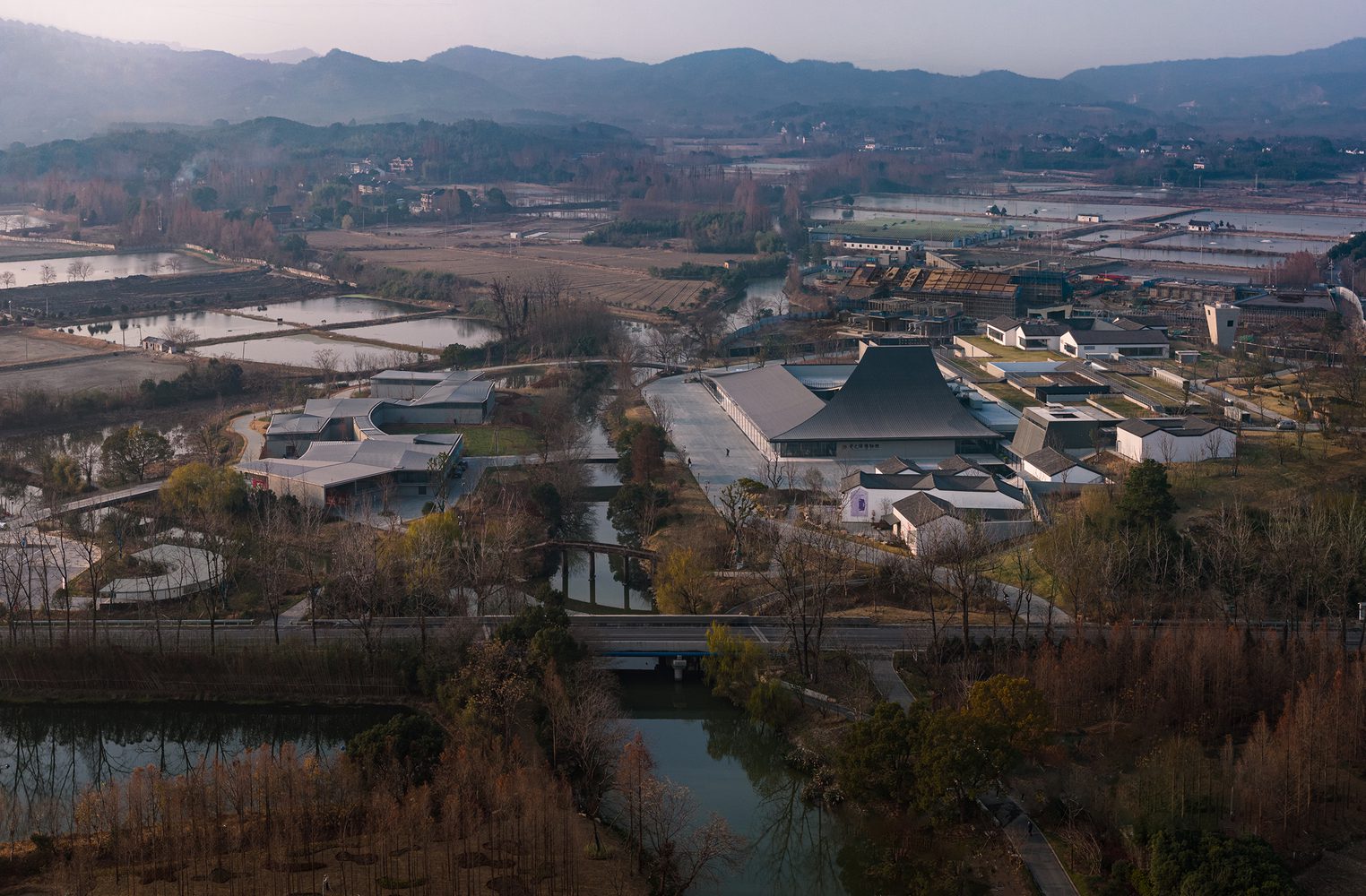
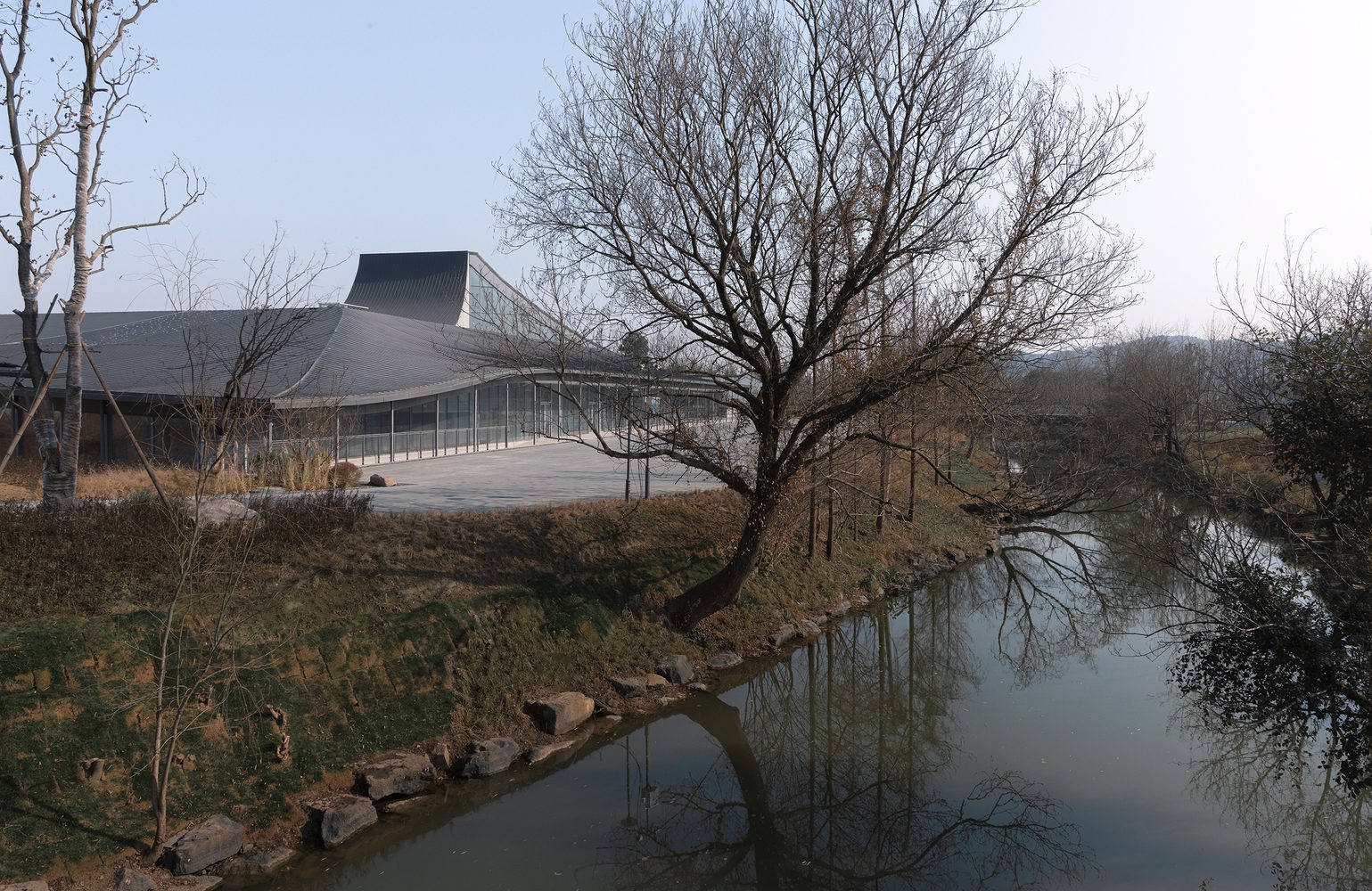
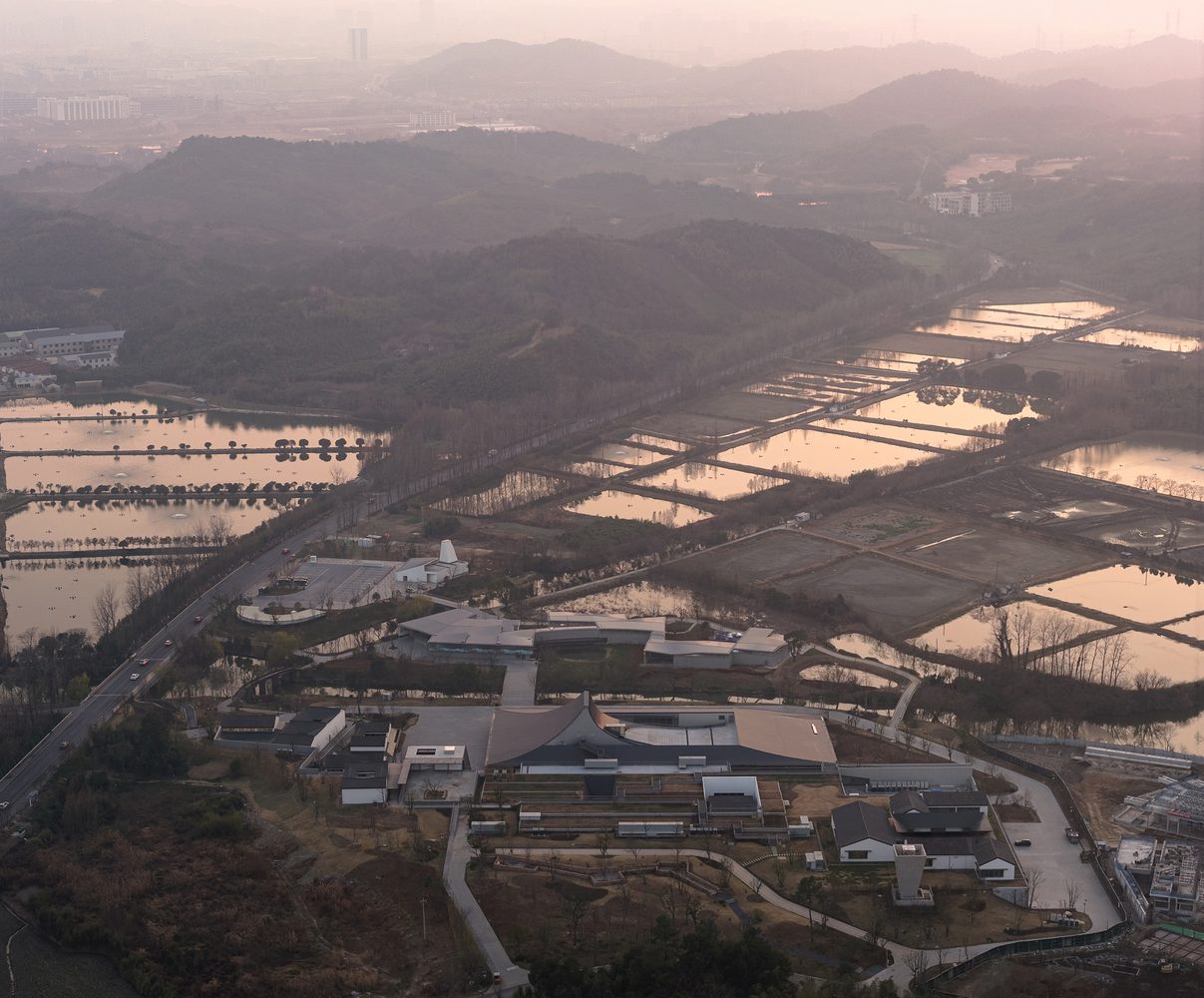
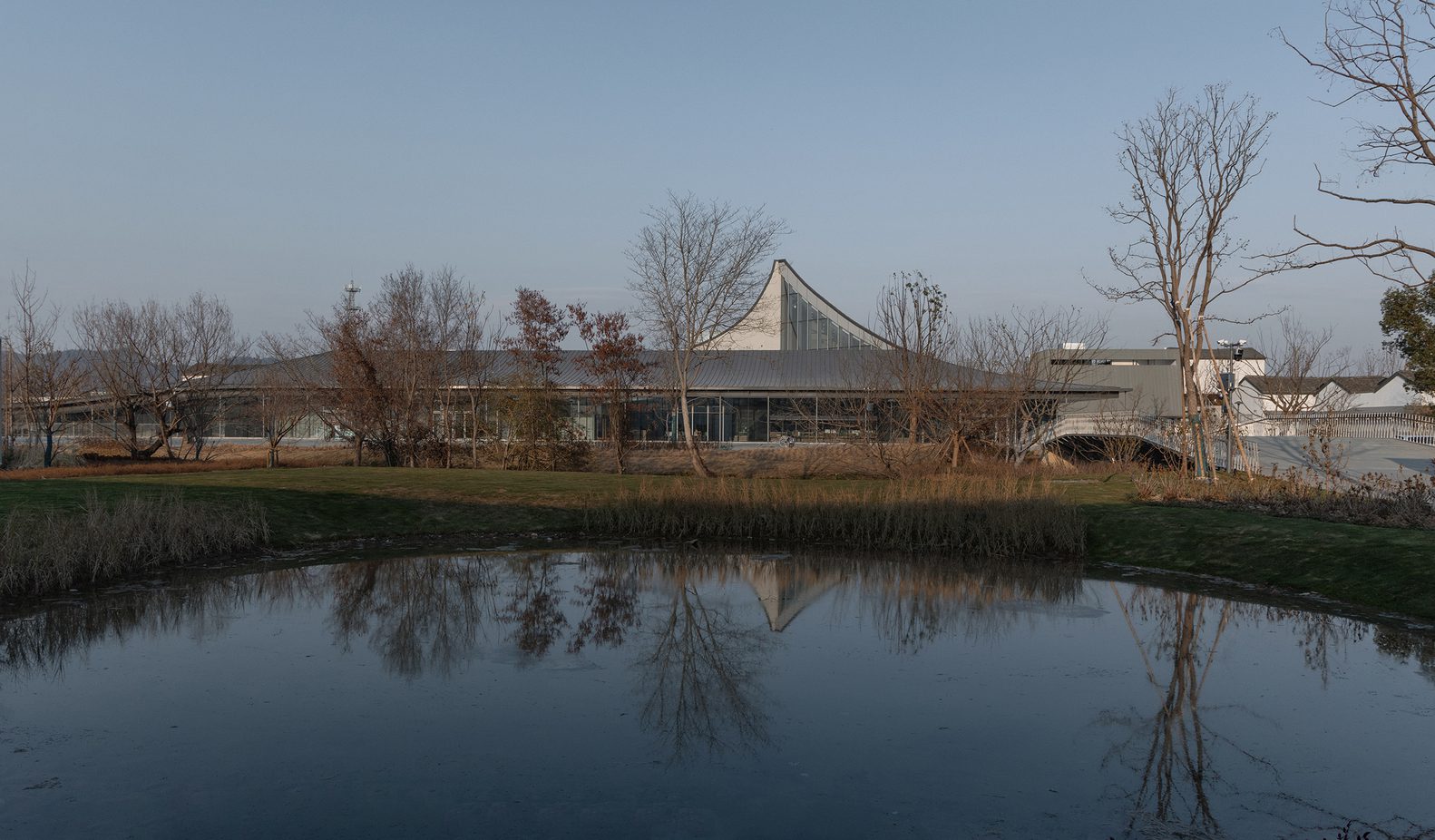
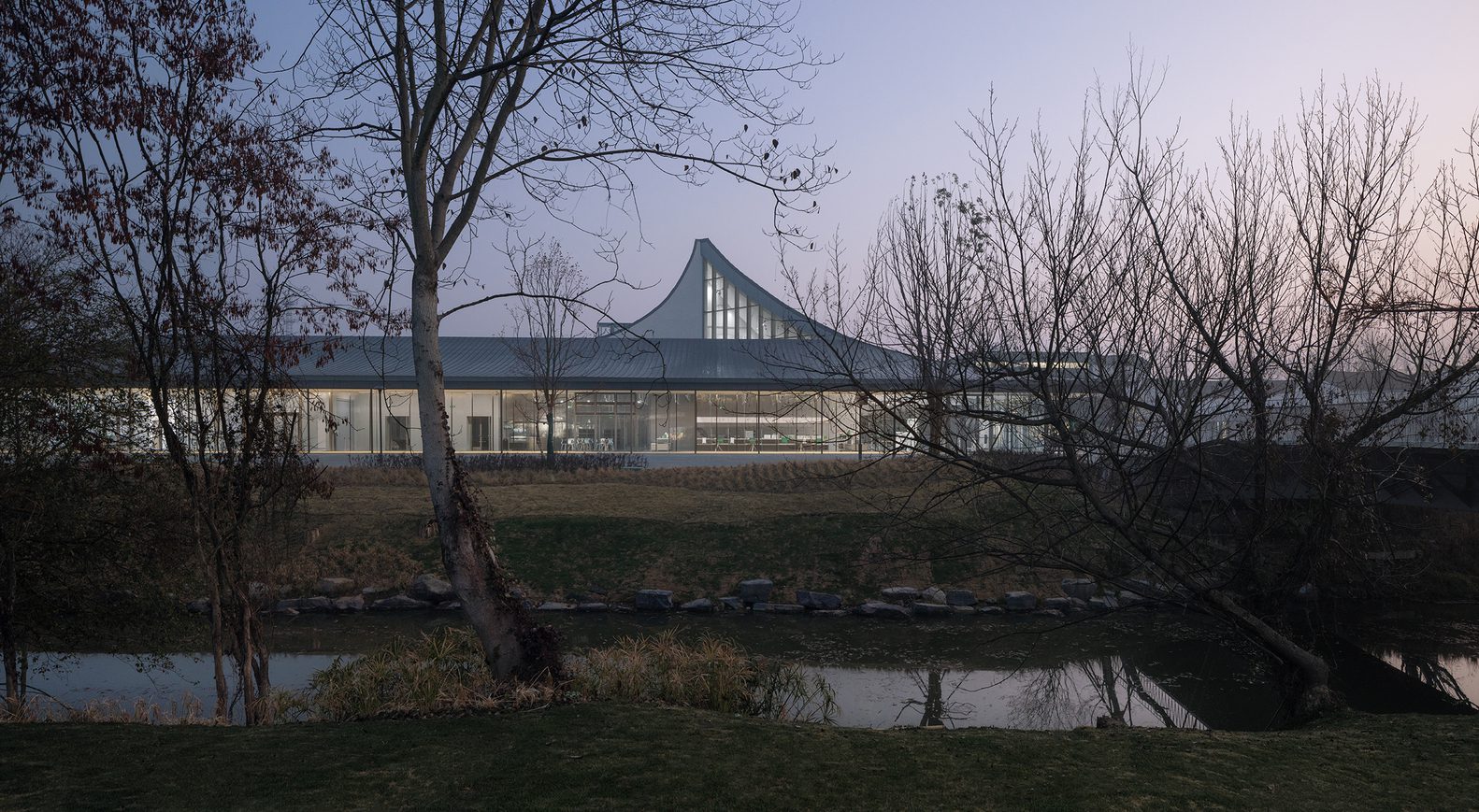
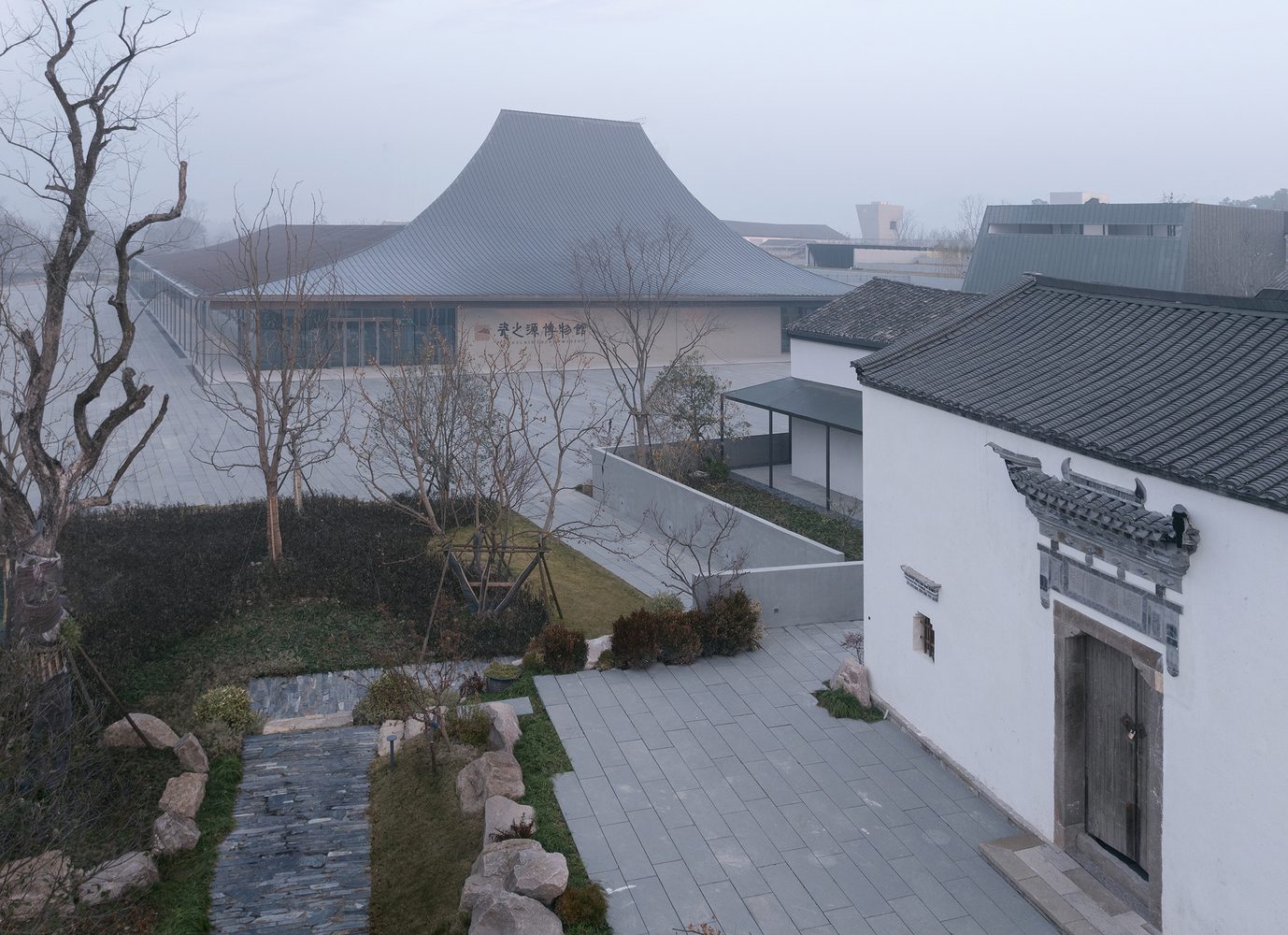
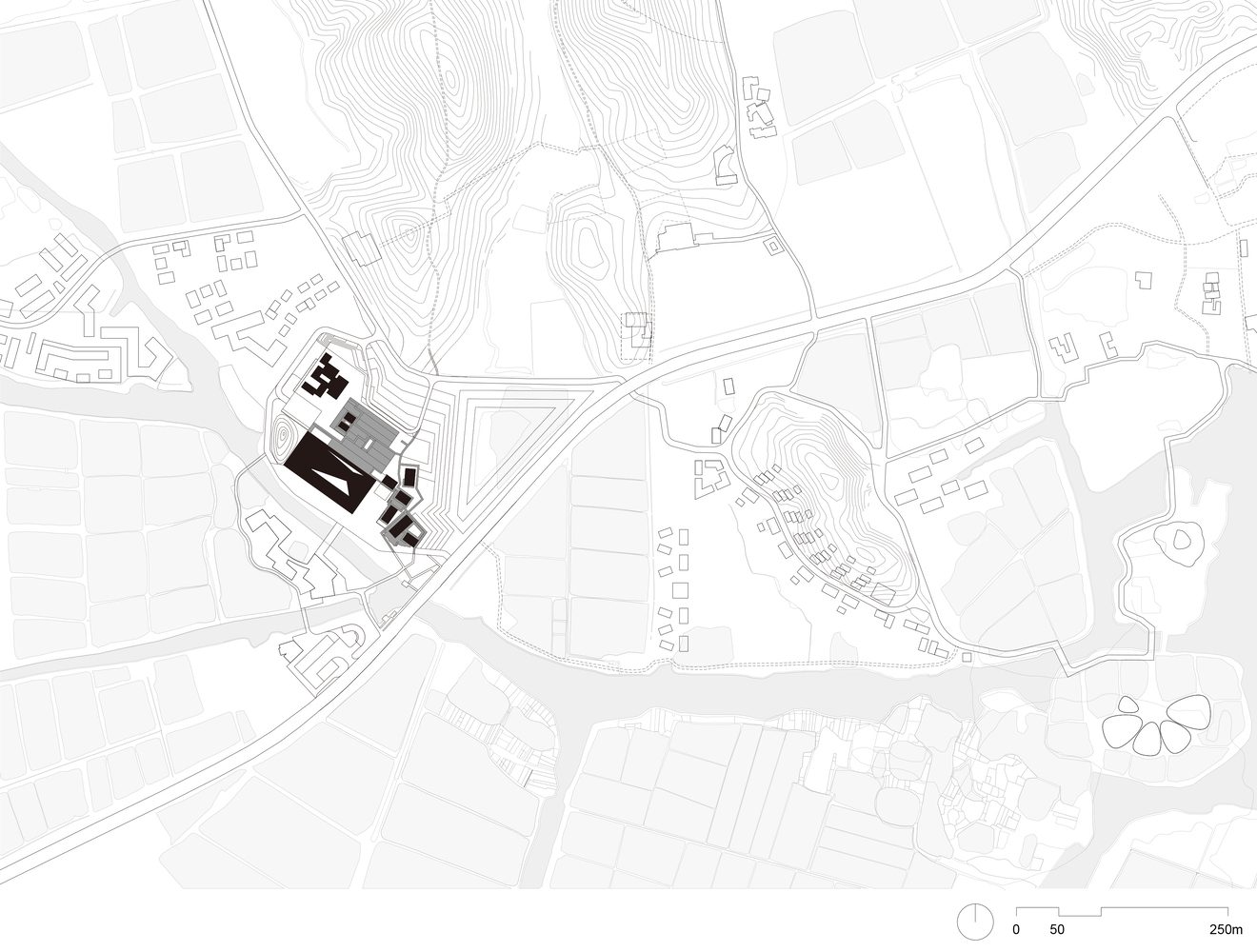
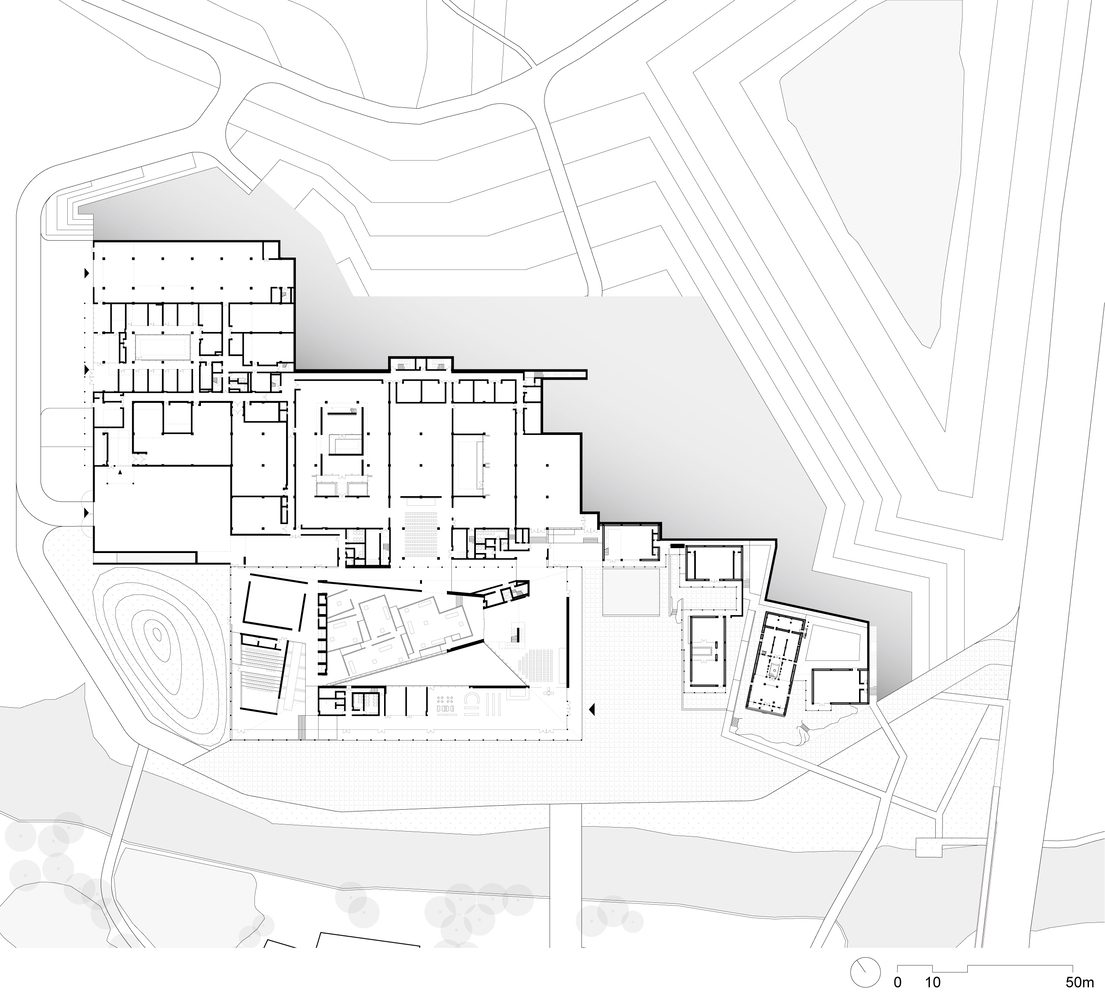
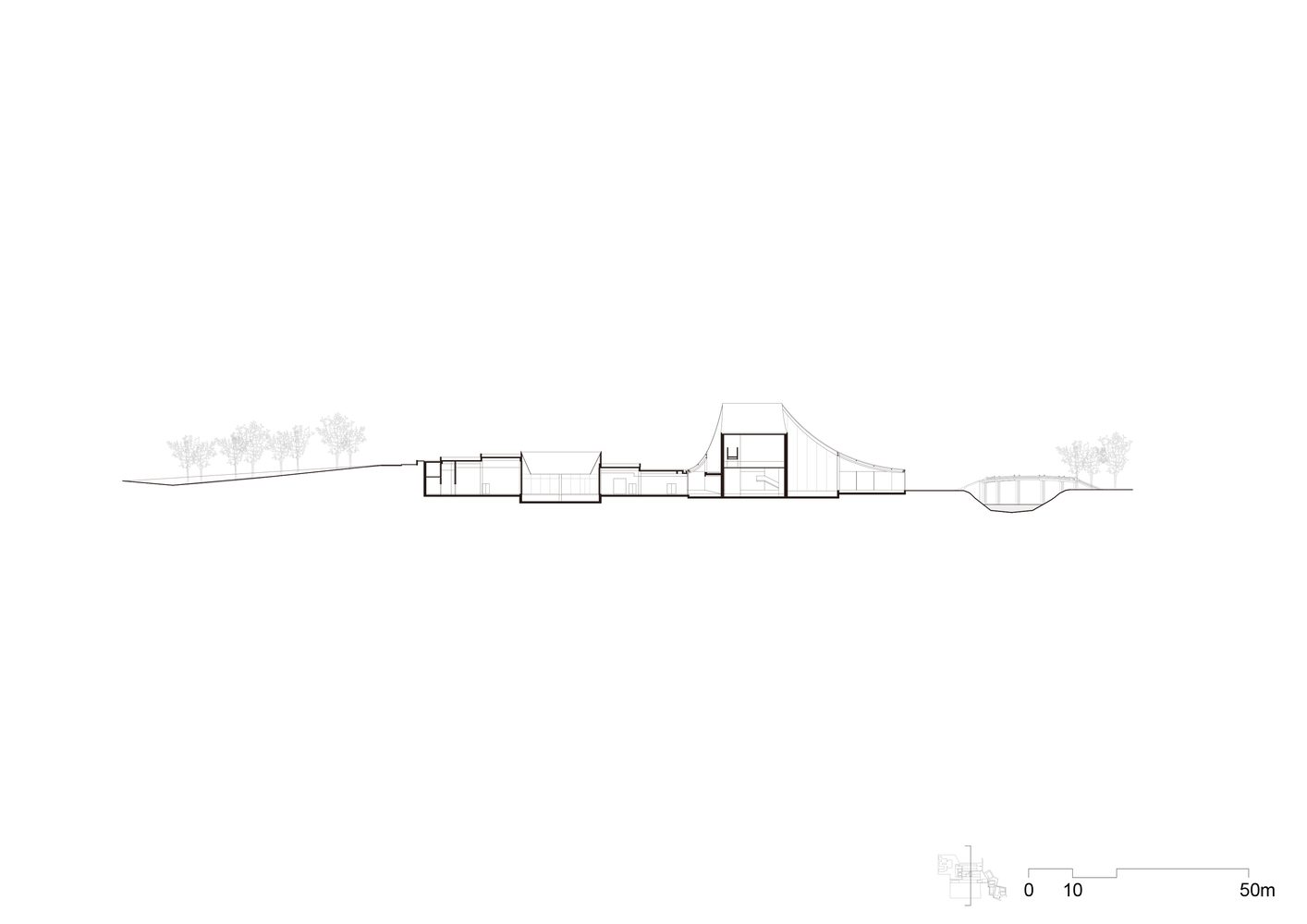
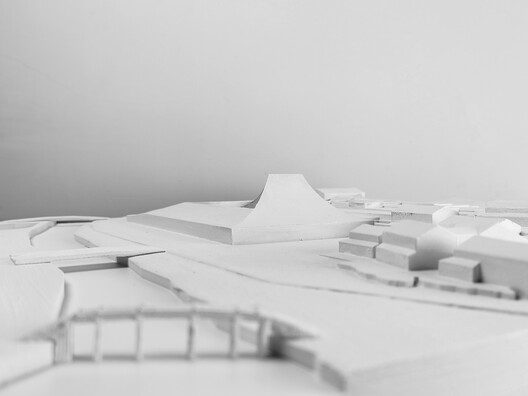
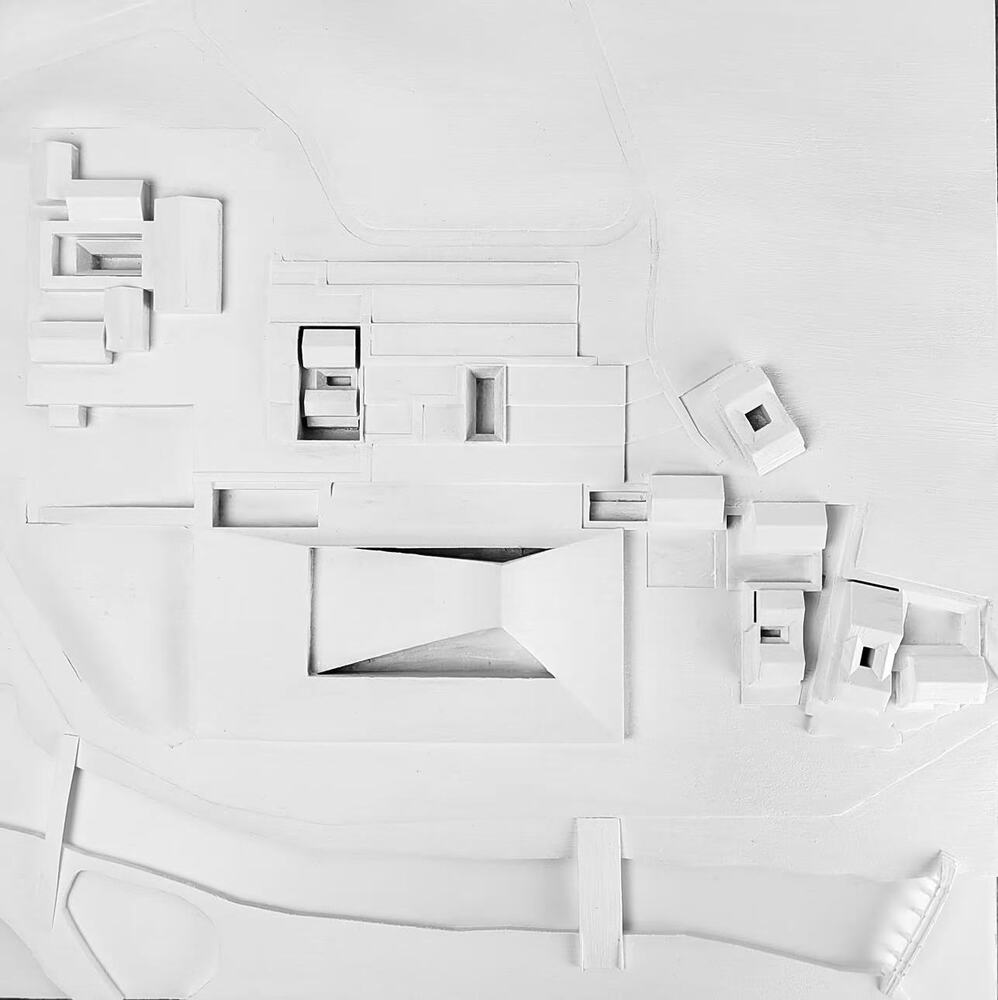
The Porcelain Source Museum is located on the former site of Longsheng Village in Deqing County, Zhejiang Province. To the north of the site are the remains of primitive porcelain kilns dating from the Shang through the Warring States periods, while a small river runs along the southern edge, spanned by the Wukang Shishe Bridge, originally constructed during the Yuan dynasty. Within the site, portions of the original village dwellings have been preserved, reconstructed, or adapted and incorporated into the museum’s exhibition spaces, serving as thematic galleries or support facilities, thereby allowing elements of the site’s historical fabric to be sustained. The main body of the museum is composed of two parts. One part extends longitudinally along the riverbank, adopting a rectilinear plan while presenting an overall architectural form of an organic character.
© Schran Images
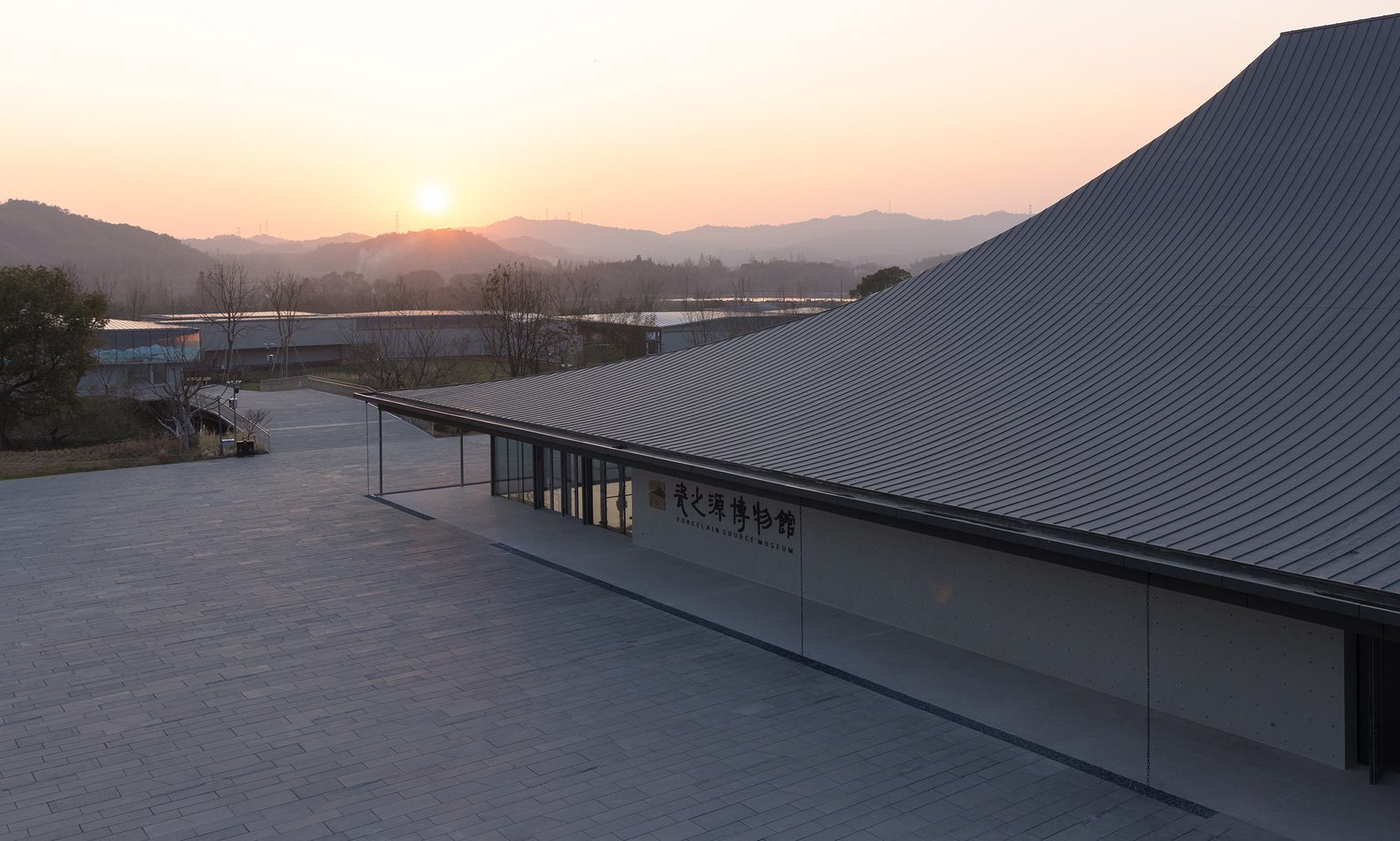
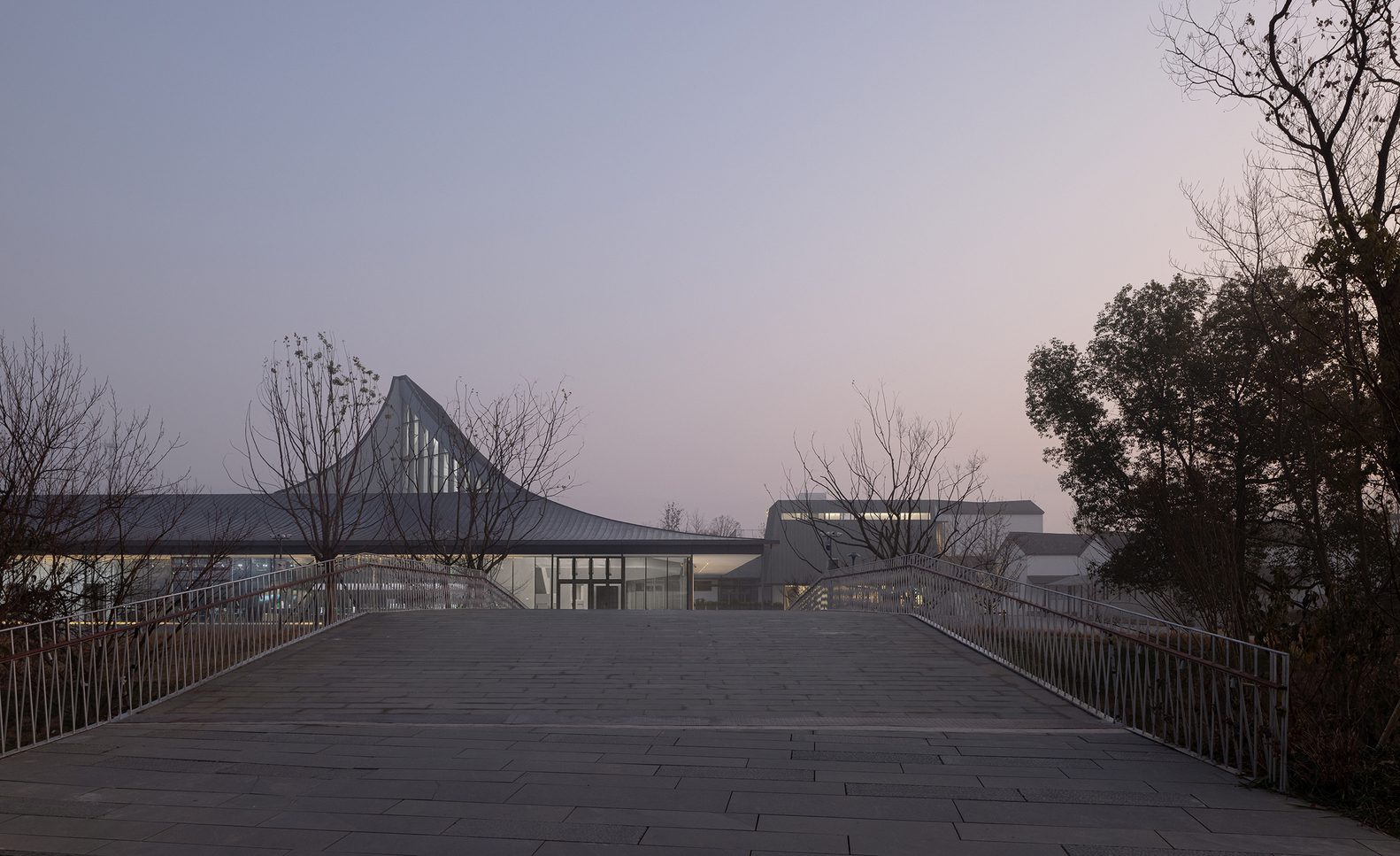
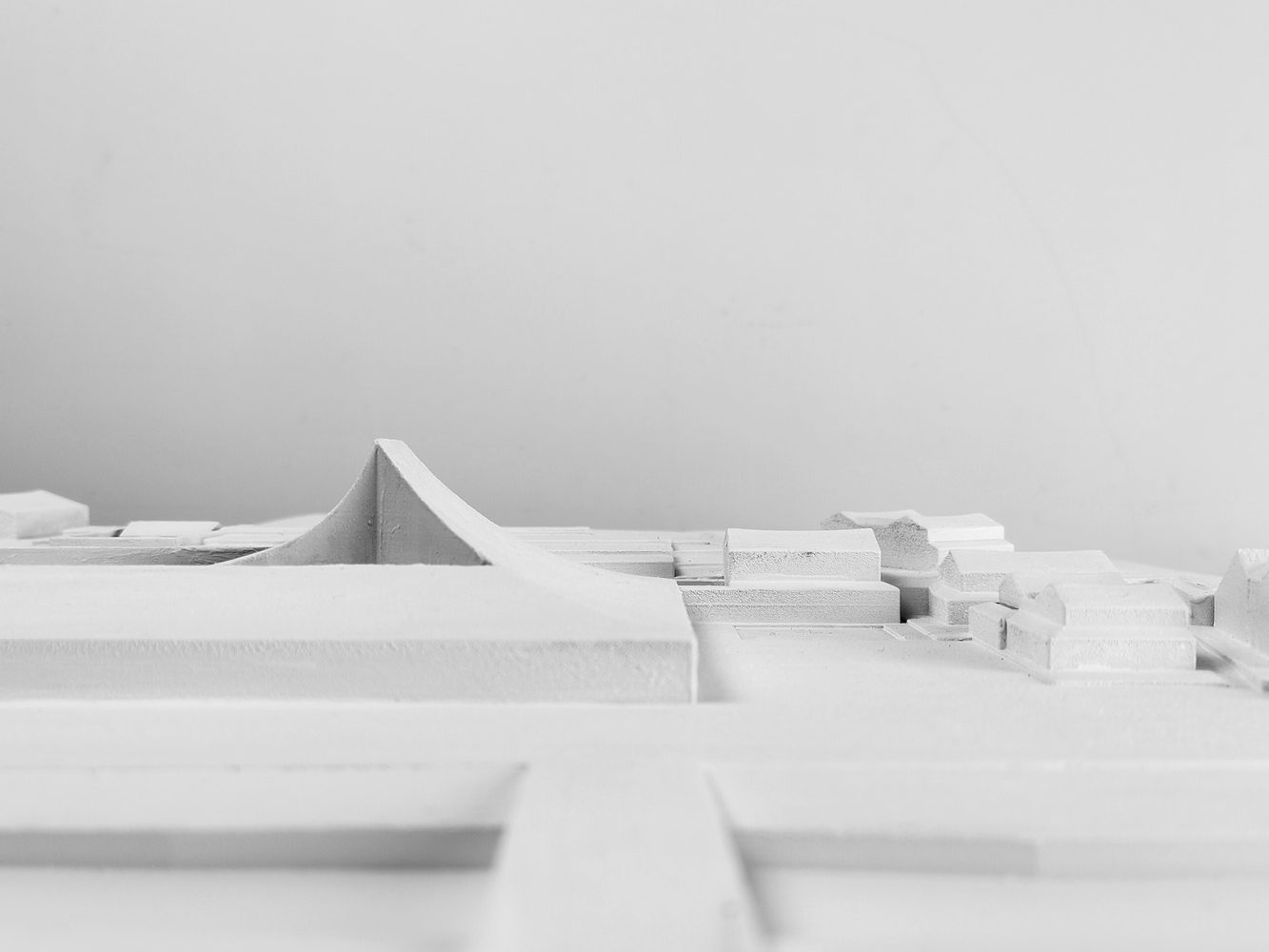
Verandas unfolding with the undulating terrain, a relatively slender system of columns, and a roof form carrying references to Xieshan or Wudian typologies together constitute an architectural image marked by compositional hybridity and semantic multiplicity. In formal terms, this image evokes associations with Chinese traditional architecture; at the same time, through the incorporation of new scale relationships, curvilinear structural systems, and contemporary material languages, the building is positioned in a state of juxtaposition between traditional imagery and contemporary expression, generating at the perceptual level a hesitation toward established architectural categories.
©Schran Images
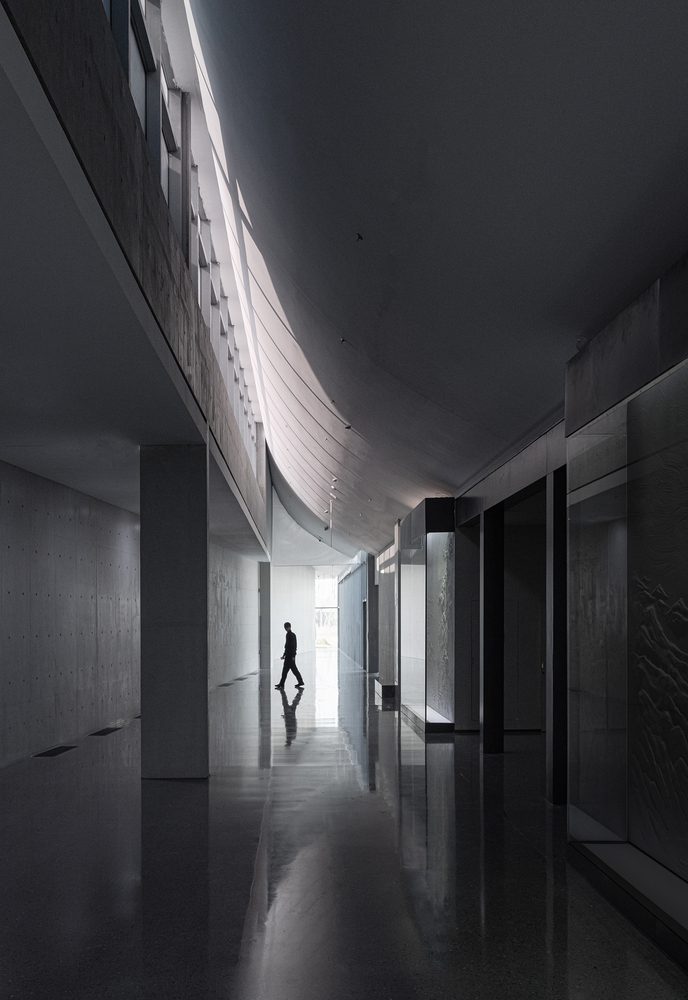
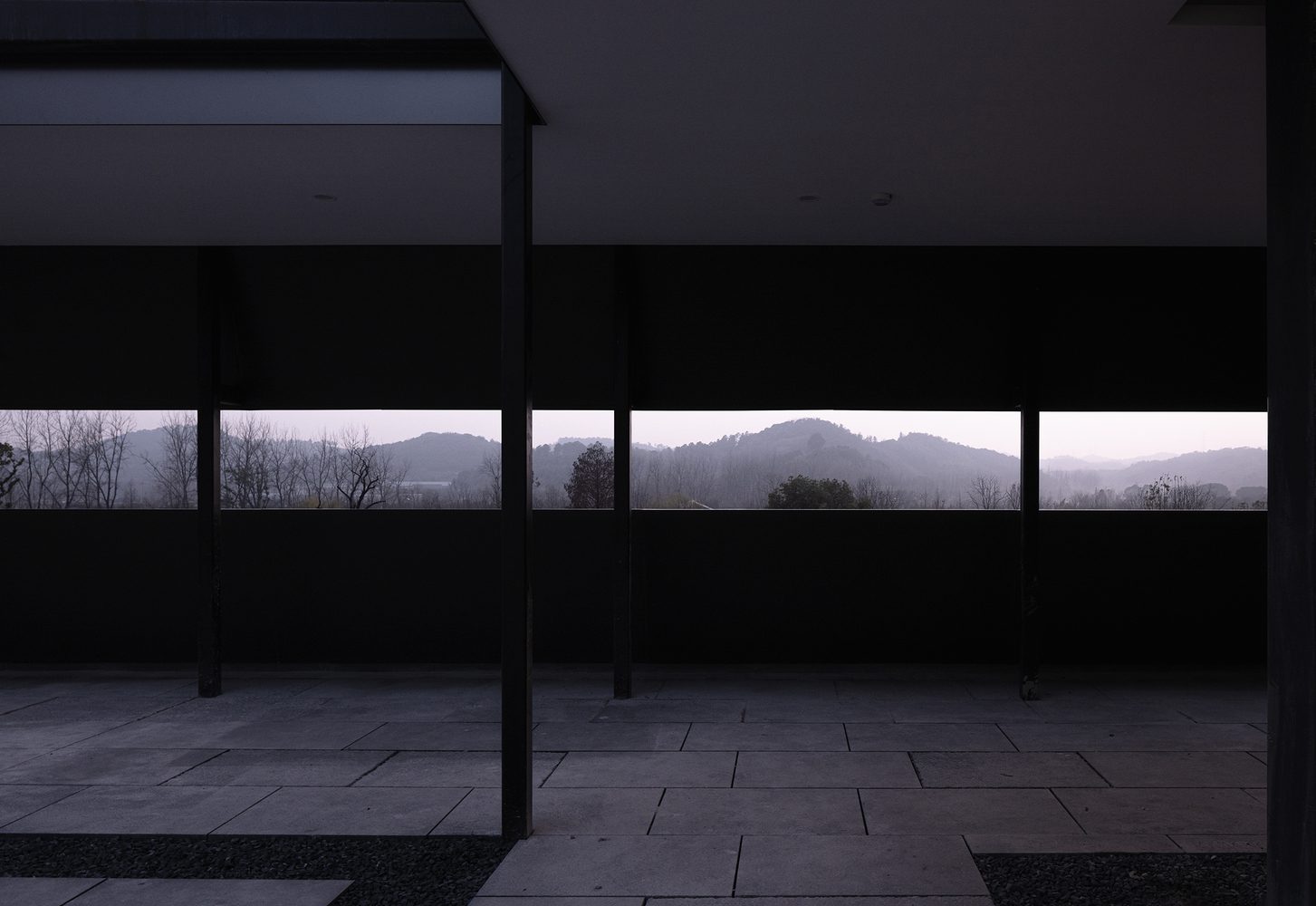
The eaves of the main building are articulated at a relatively low height, even lower than those of the adjacent preserved village dwellings. This scale relationship establishes a relative sense of coordination between the large-scale public building and the smaller-scale residential fabric. Within the museum, the main hall and verandas open outward, incorporating the Yuan-dynasty Shishe Bridge and the river into the overall spatial experience, where they become part of the interior perceptual field, thereby reinforcing the continuity between the building and its surrounding environment.
©Schran Images
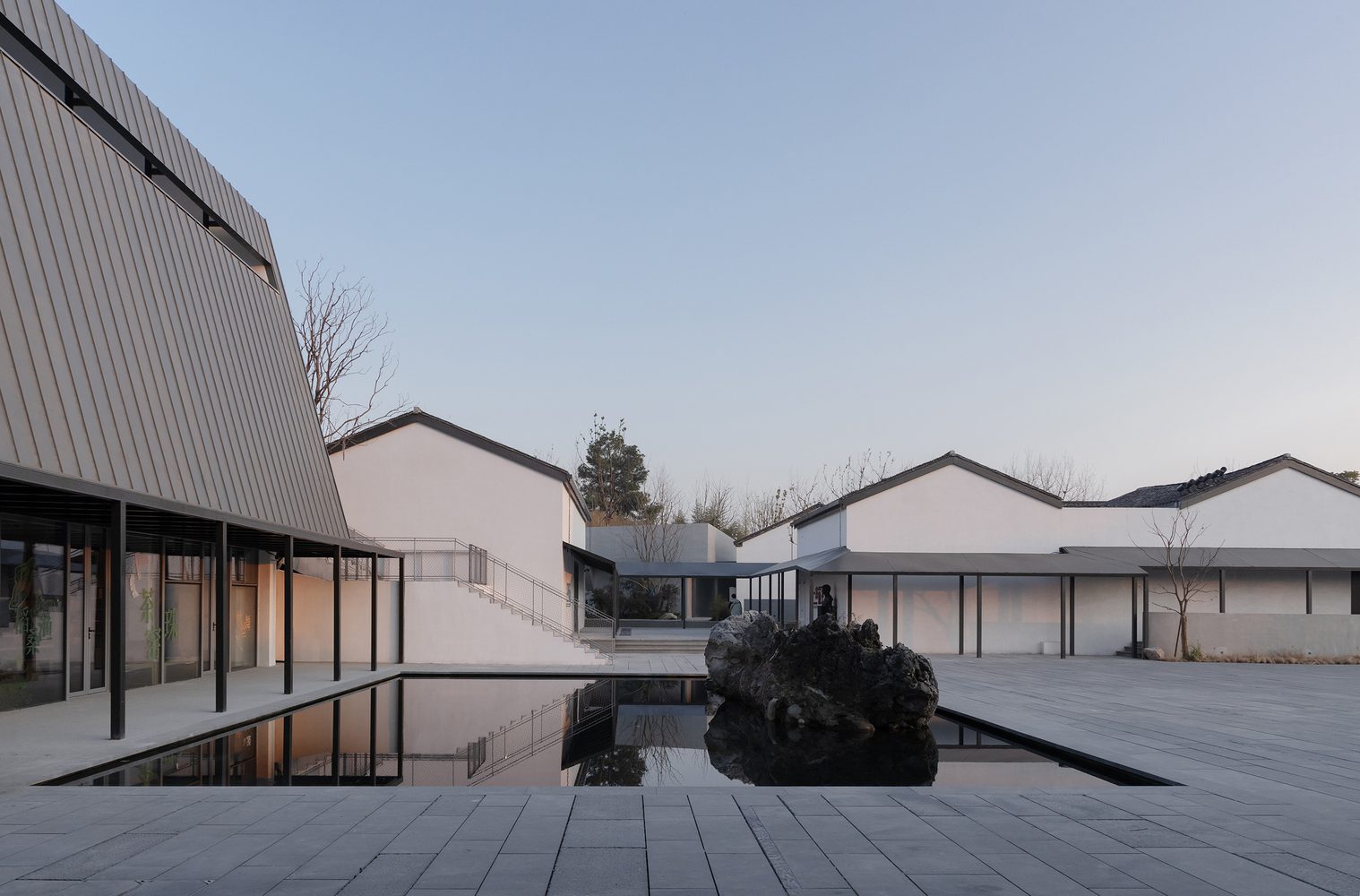
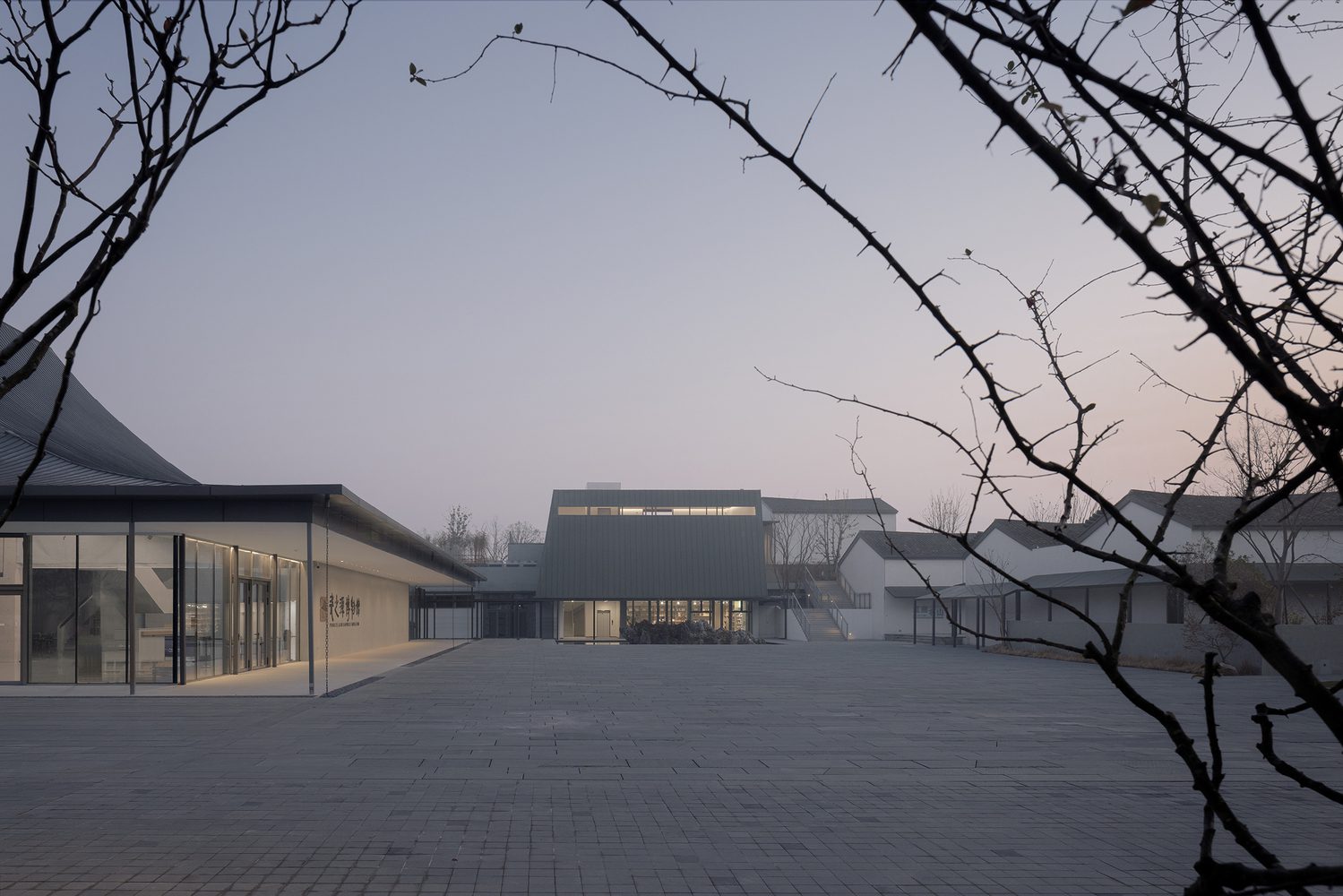
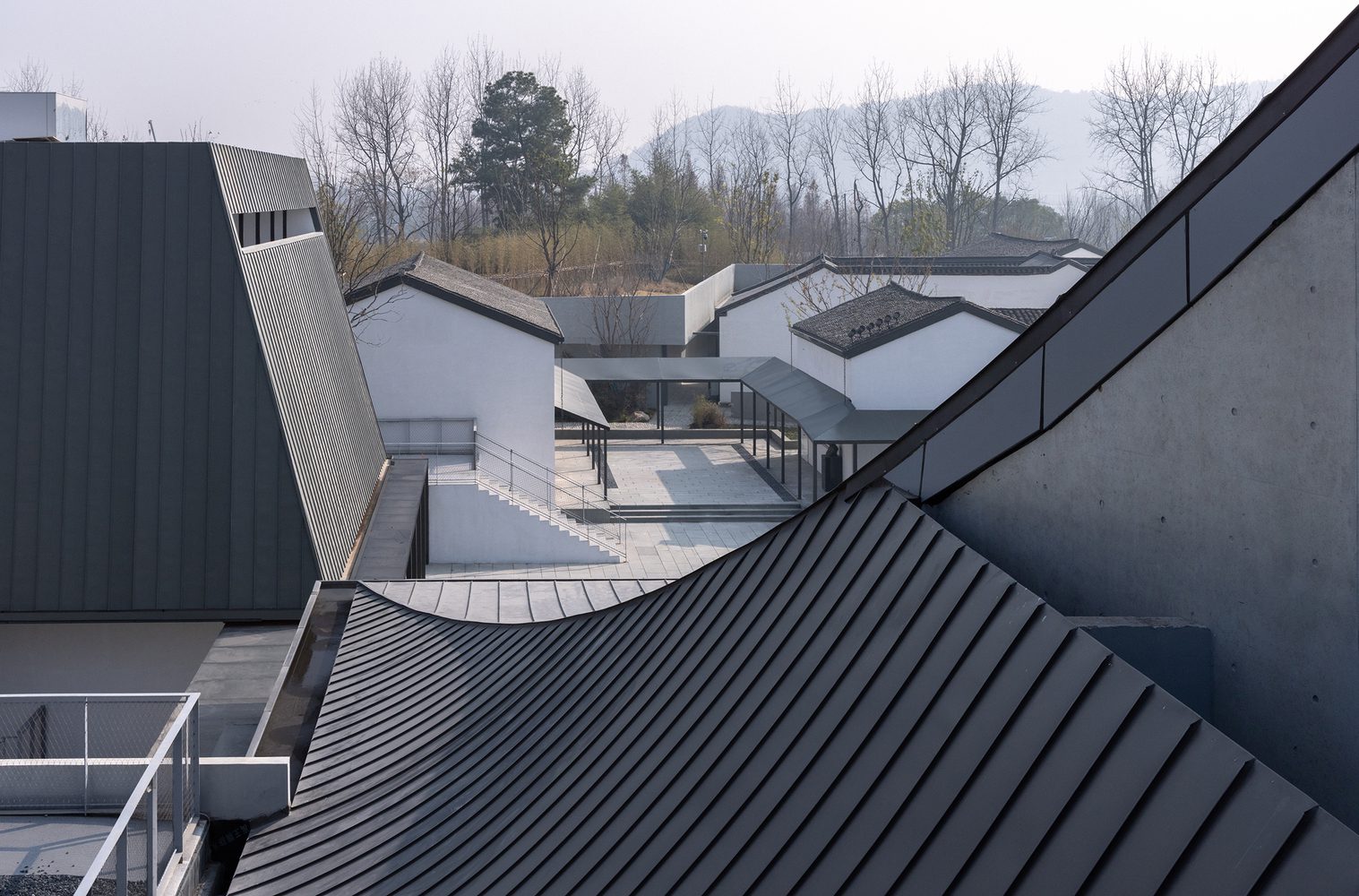
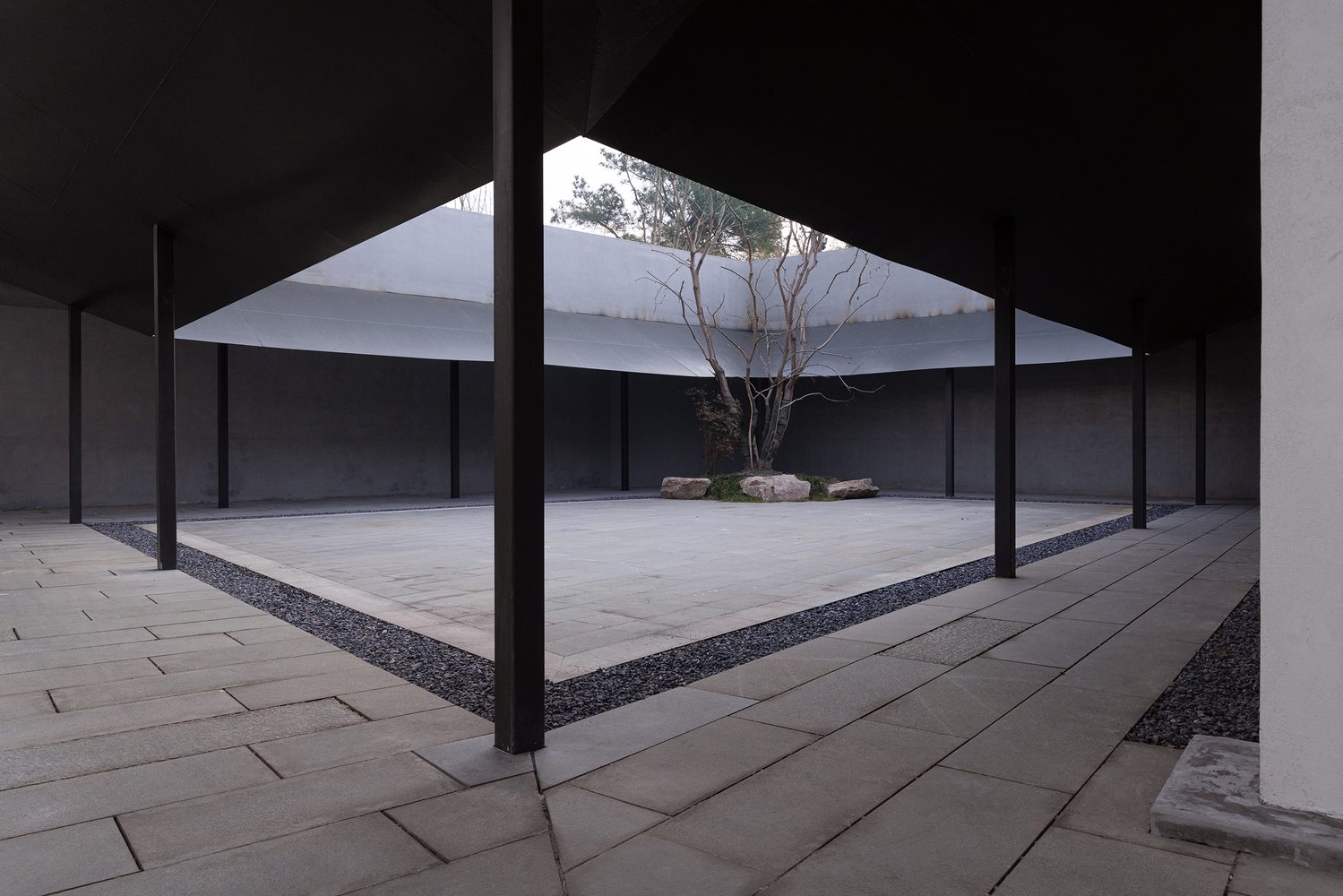
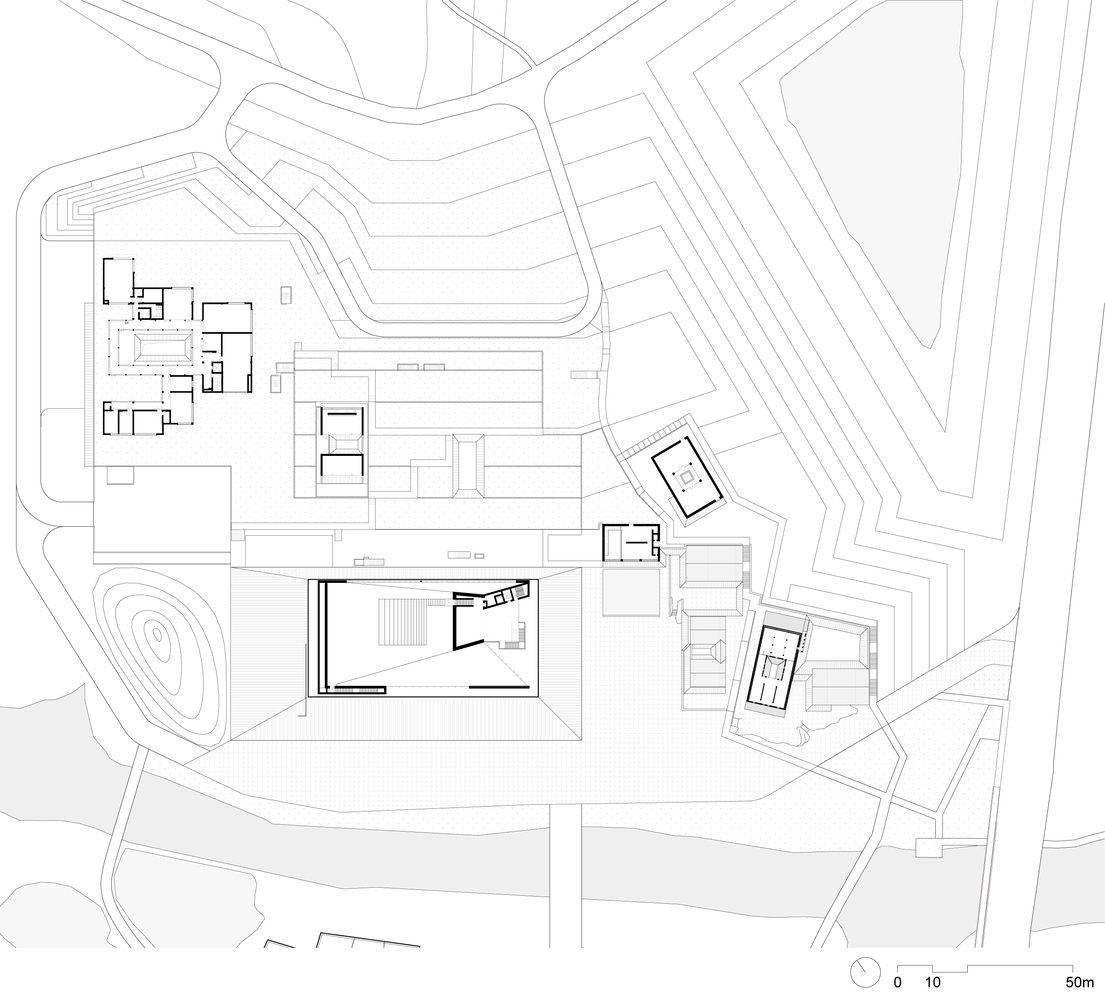
The other part of the museum is relatively subdued in its formal presence and adopts a landscape-based architectural approach, allowing the relationship between programmatic scale and the scale of the site to be moderated. By following the site’s topographical variations, the building is partially embedded into the terrain, while two courtyards are introduced to organize natural daylight and ventilation and to enrich the spatial sequence.
© Schran Images
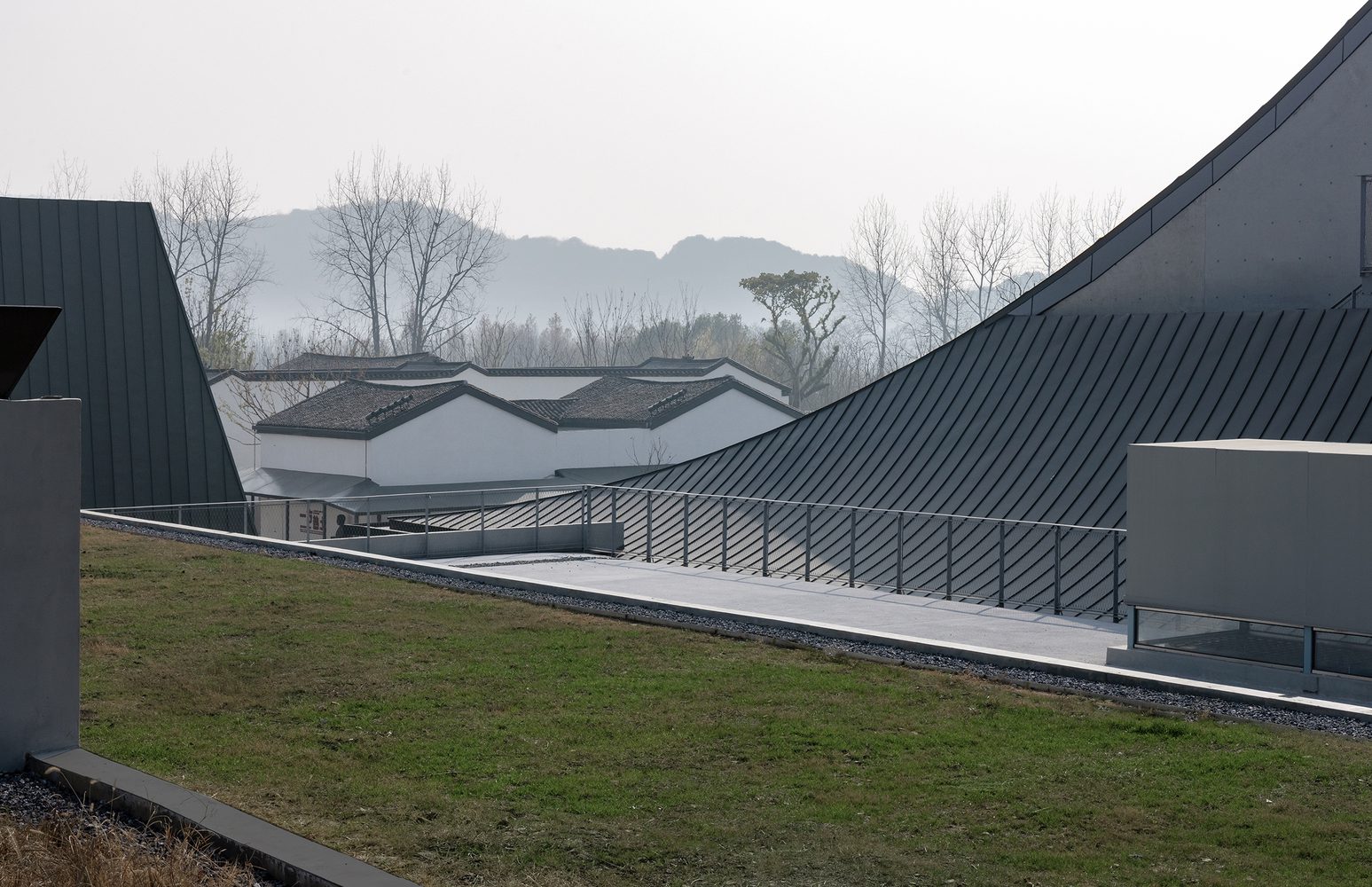
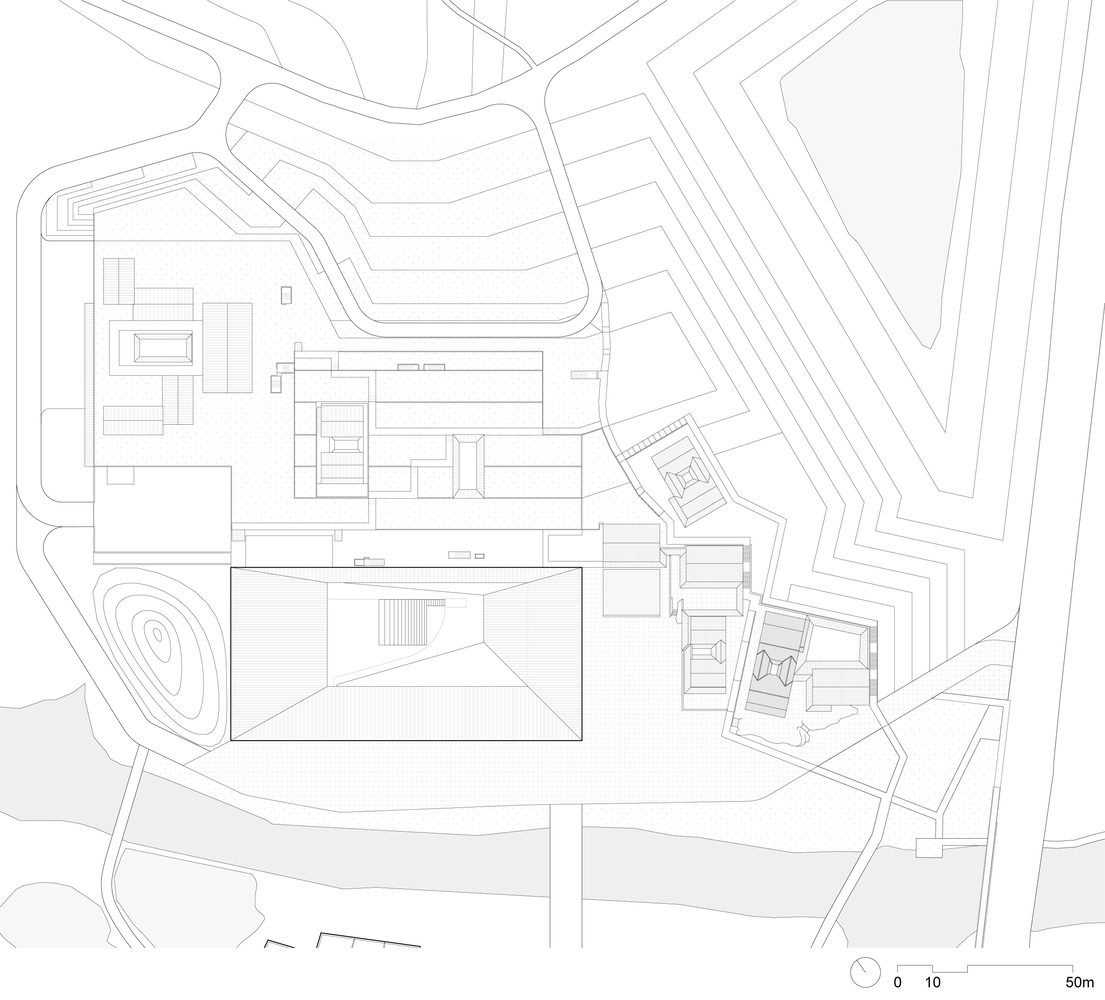
One courtyard reconstructs, on its original footprint, a traditional two-courtyard dwelling that serves as a thematic exhibition space for local culture, continuing the scale and order of the former village fabric. The other courtyard employs a contemporary expression in steel plate construction, establishing a spatial atmosphere that corresponds to that of the traditional veranda. The roof of this landscape-integrated portion takes the form of a linear geometric composition articulated through changes in elevation; in its morphology, it maintains continuity with the surrounding agricultural terraced landscape, functioning as a backdrop to the main building while situating the architecture within a broader regional context.
©Schran Images
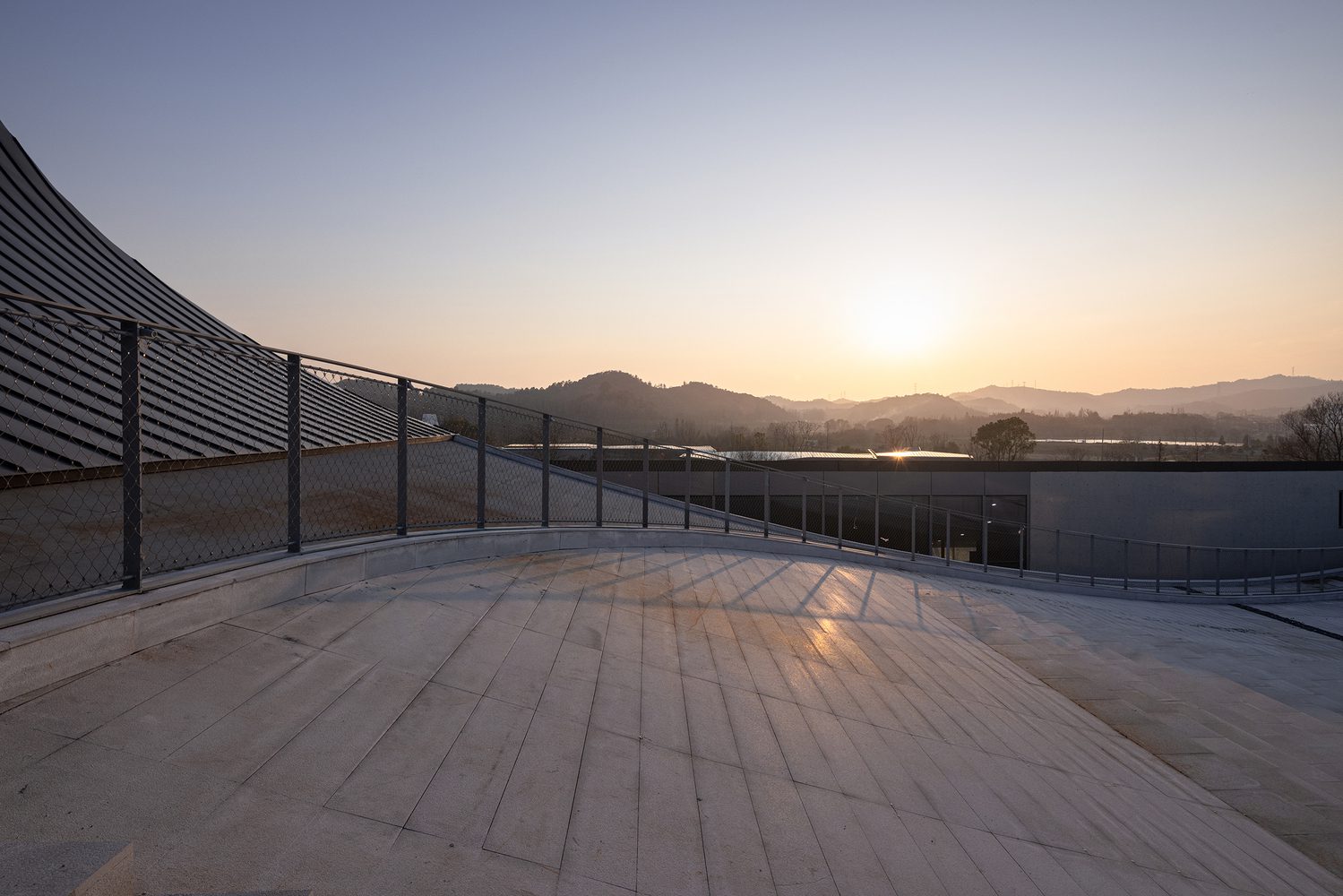
The curvilinear roof of the main museum may be understood, on the one hand, as an abstract transformation of traditional architectural forms, and on the other, as a continuation of the surrounding landscape. The open-air theater integrated into the roof incorporates distant mountains and nearby water into the building’s use and perception, allowing the natural environment to assume a role within the museum’s spatial narrative. As the main building occupies the former site of the village, an early design proposal envisioned integrating the original village foundations into the interior exhibition spaces as a possible means of exploring the relationship between the new architectural structure and the historical substrate. This proposal was not fully retained in the final implementation.
Project Info:
-
Architects: Atelier Deshaus
- Country: China,Huzhou
- Area: 17206 m²
- Year: 2025
-
Photography: Schran Images
-
Landscape Design: YIYU Design Limited
-
Structural Design: AND Office
- Principal: Liu Yichun
- Design Team: Chan Hiongai, Wang Zhuohao, Zhang Xiaoqi, Ji Hongliang
- Corporate Design: Architecture and Engineering Co., Ltd. of Southeast University, Panlu Yangshen Enterprise Consultant (Shanghai) Co., Ltd

Sophie Tremblay is a Montreal-based architectural editor and designer with a focus on sustainable urban development. A McGill University architecture graduate, she began her career in adaptive reuse, blending modern design with historical structures. As a Project Editor at Arch2O, she curates stories that connect traditional practice with forward-thinking design. Her writing highlights architecture's role in community engagement and social impact. Sophie has contributed to Canadian Architect and continues to collaborate with local studios on community-driven projects throughout Quebec, maintaining a hands-on approach that informs both her design sensibility and editorial perspective.