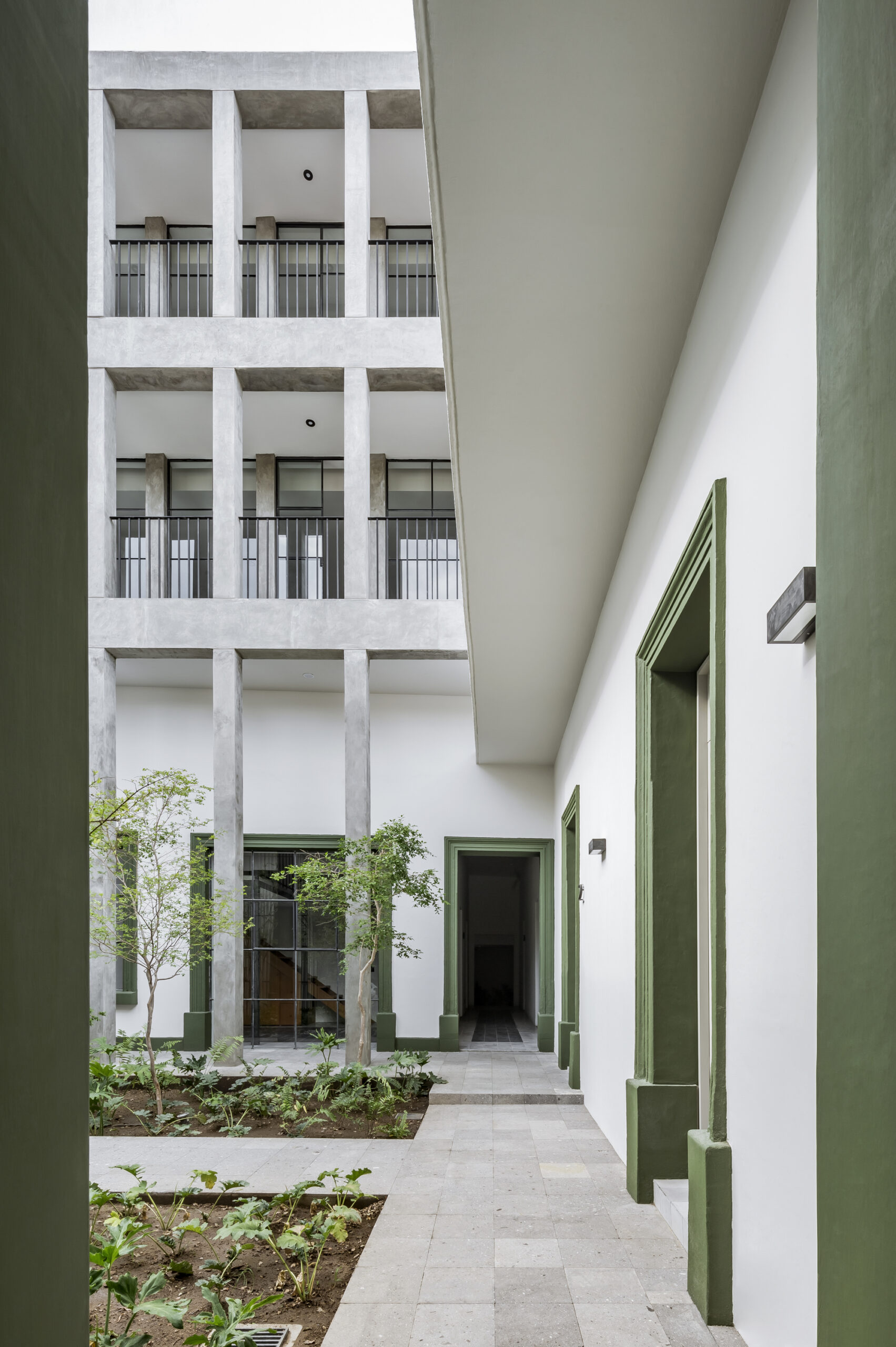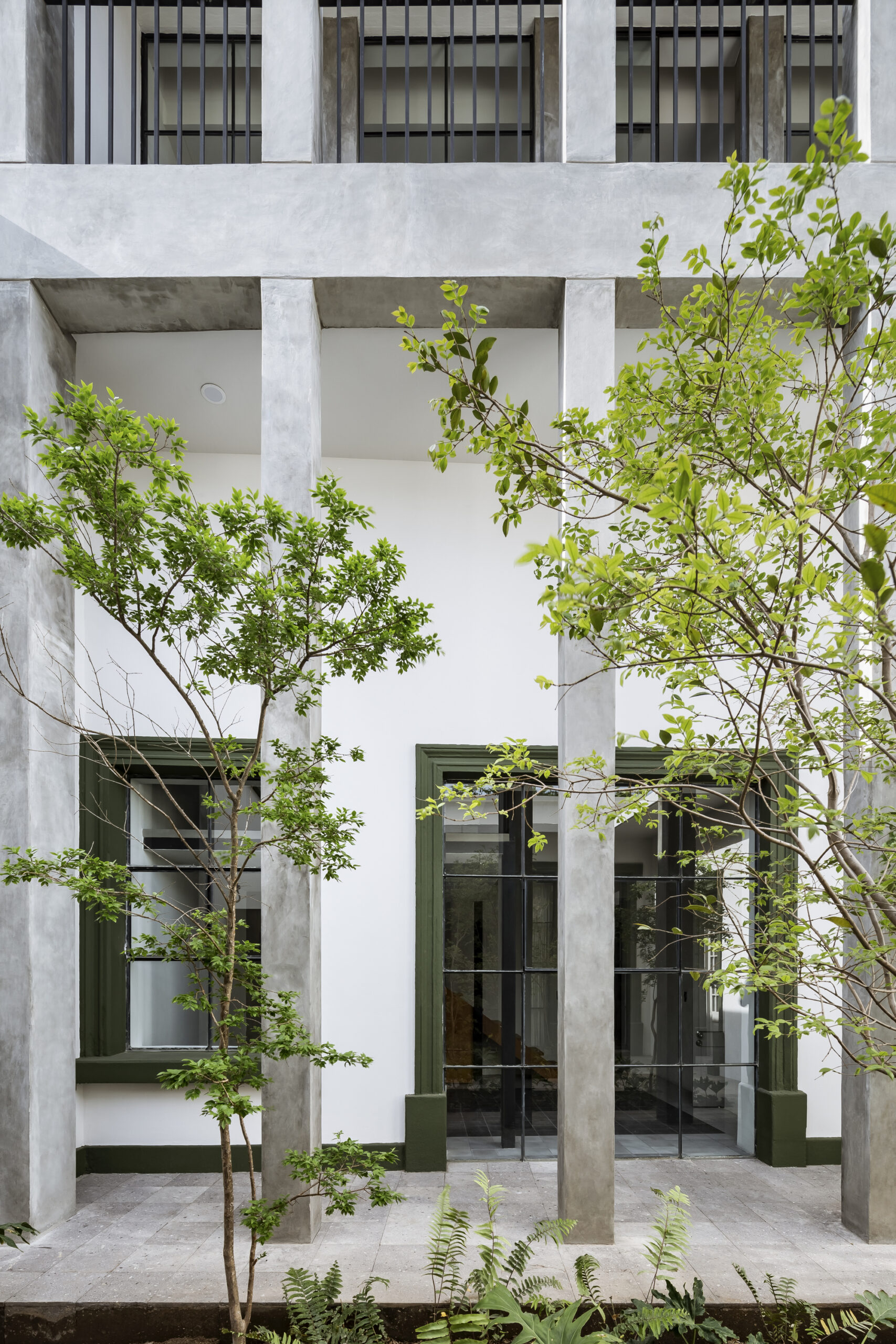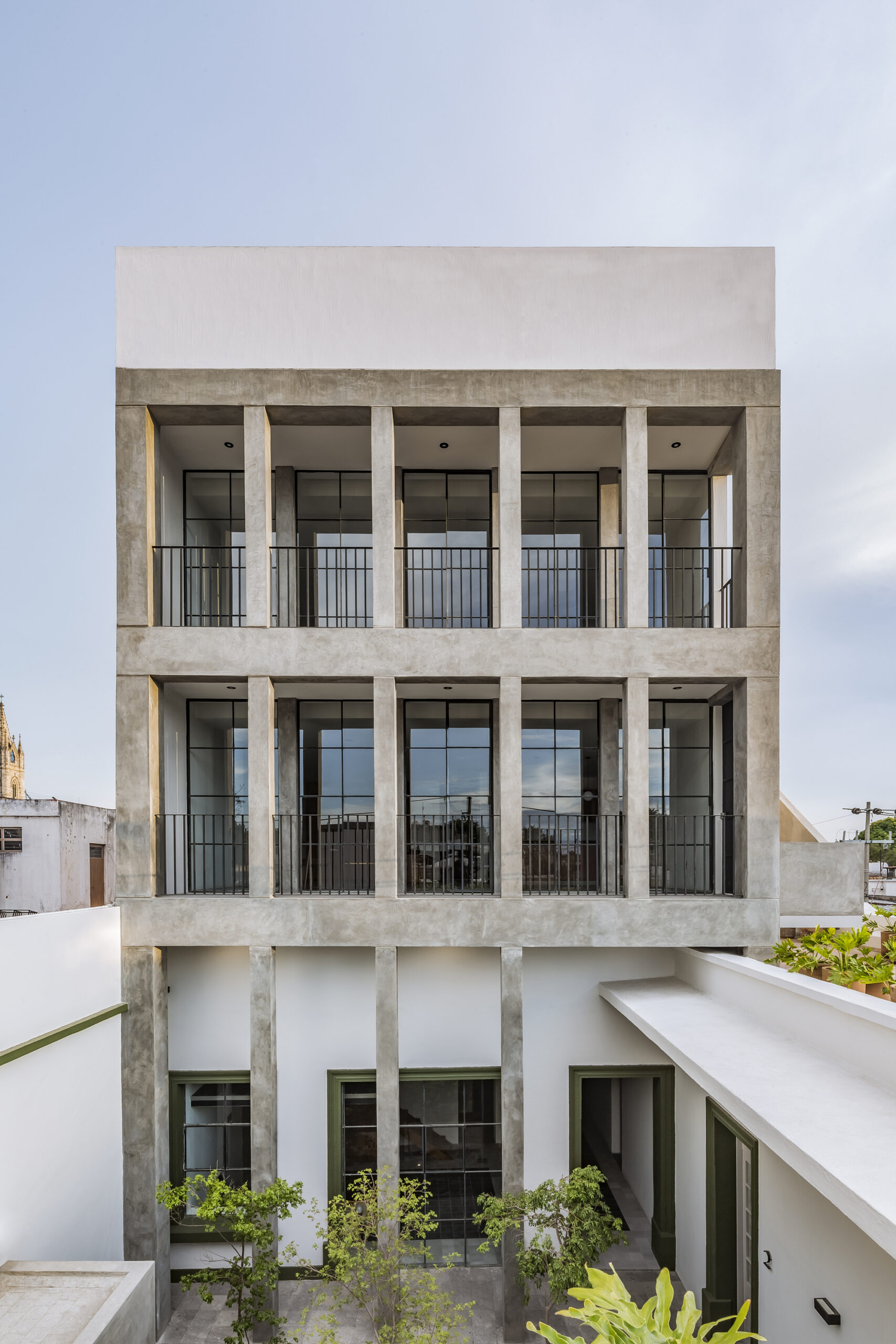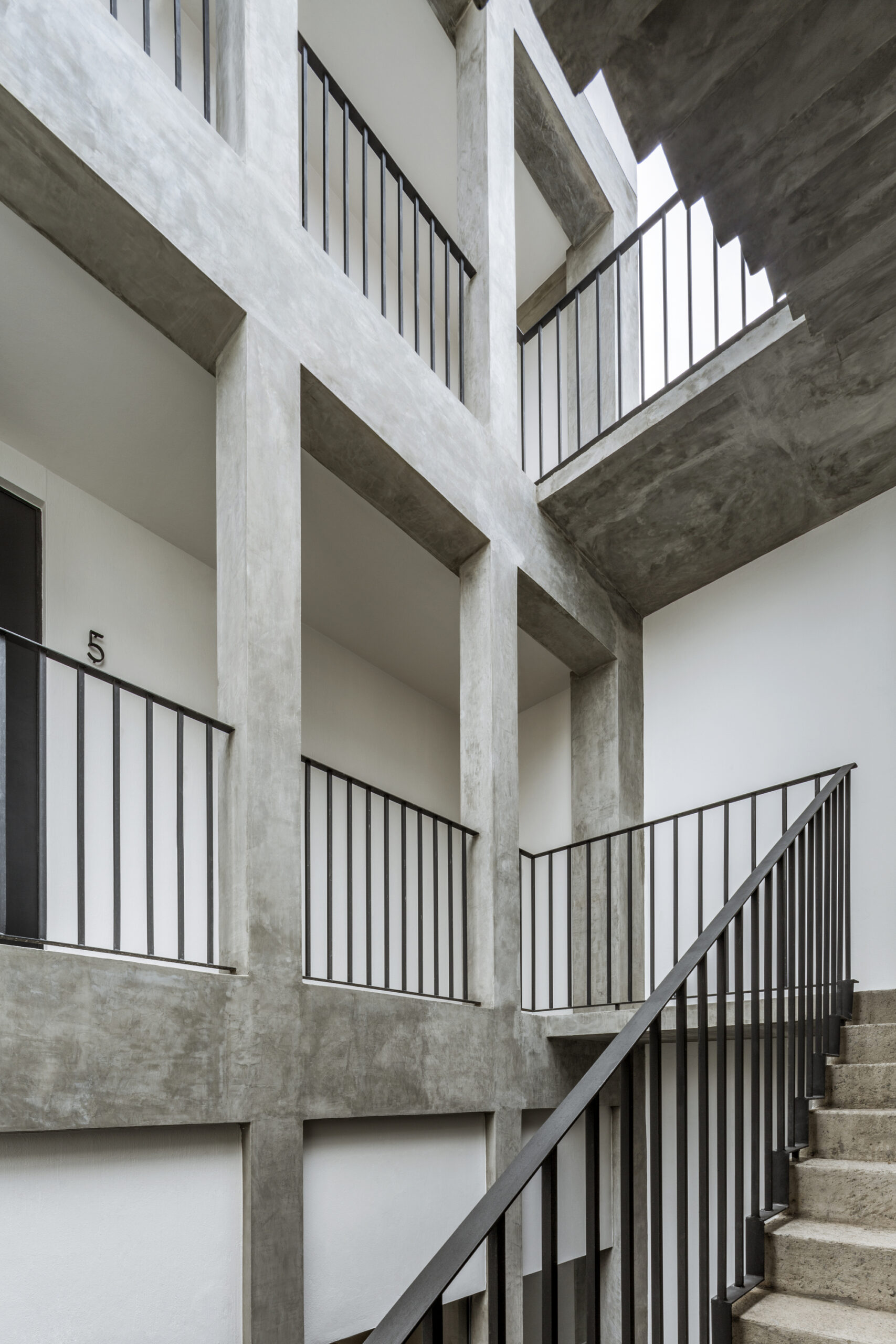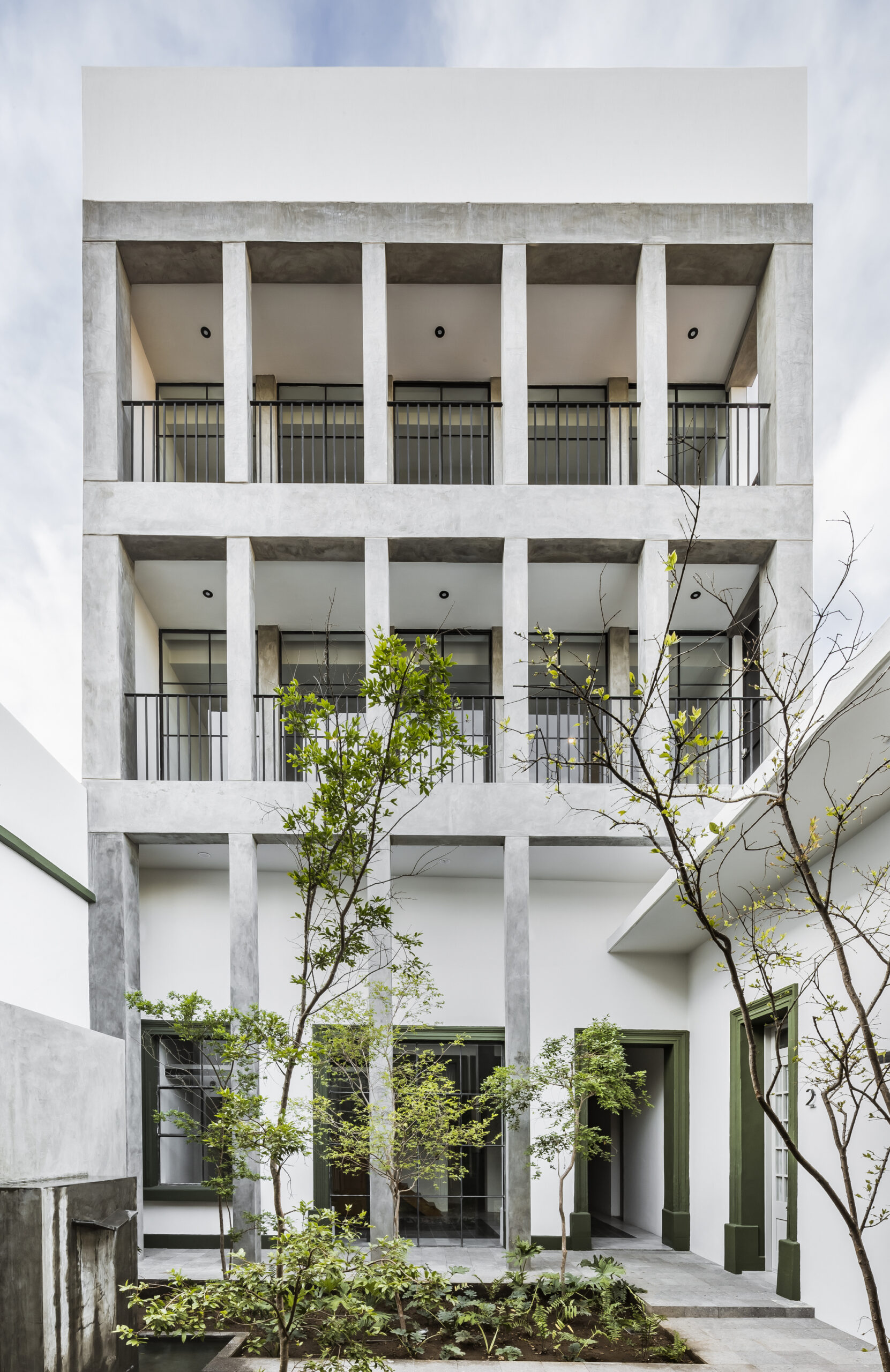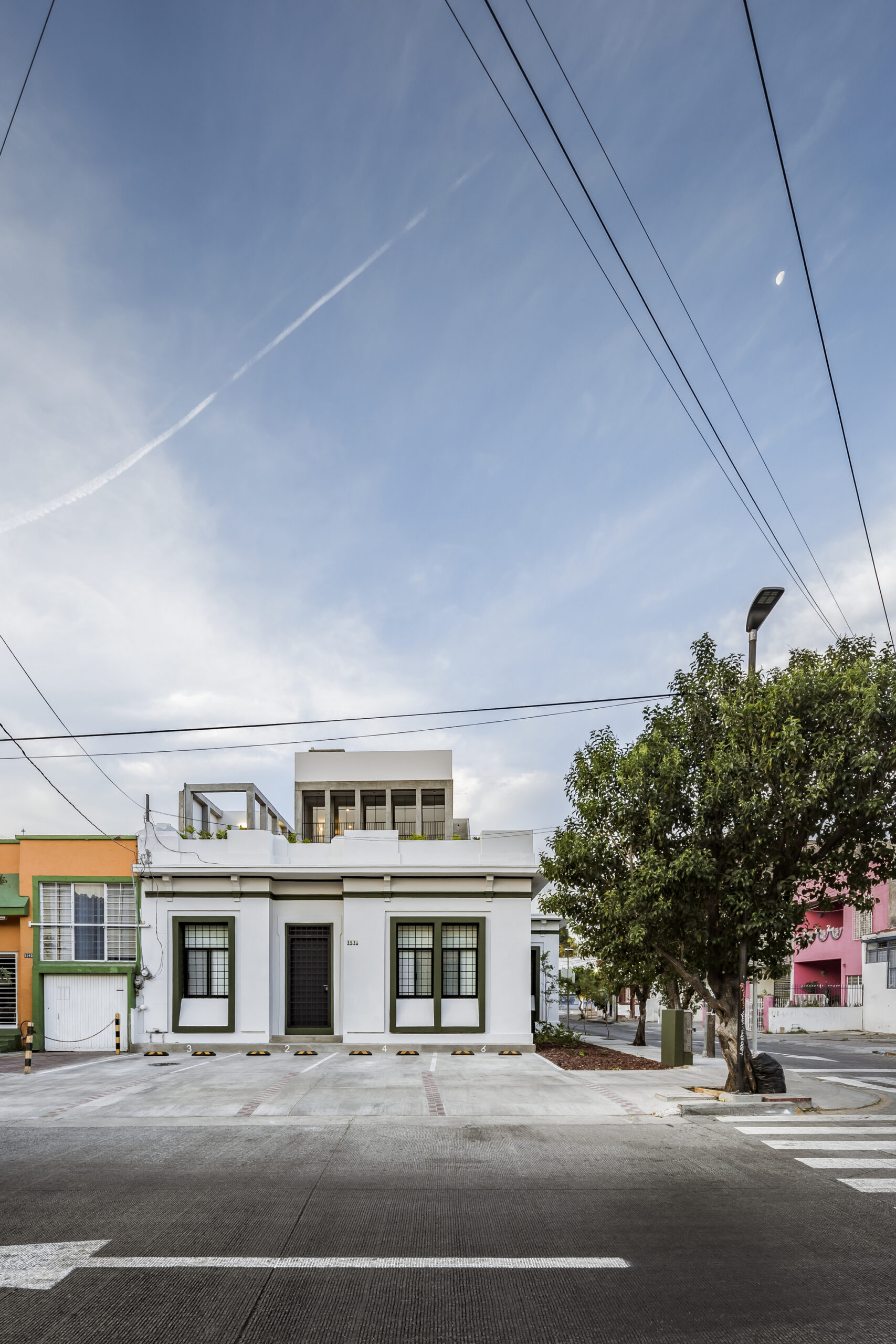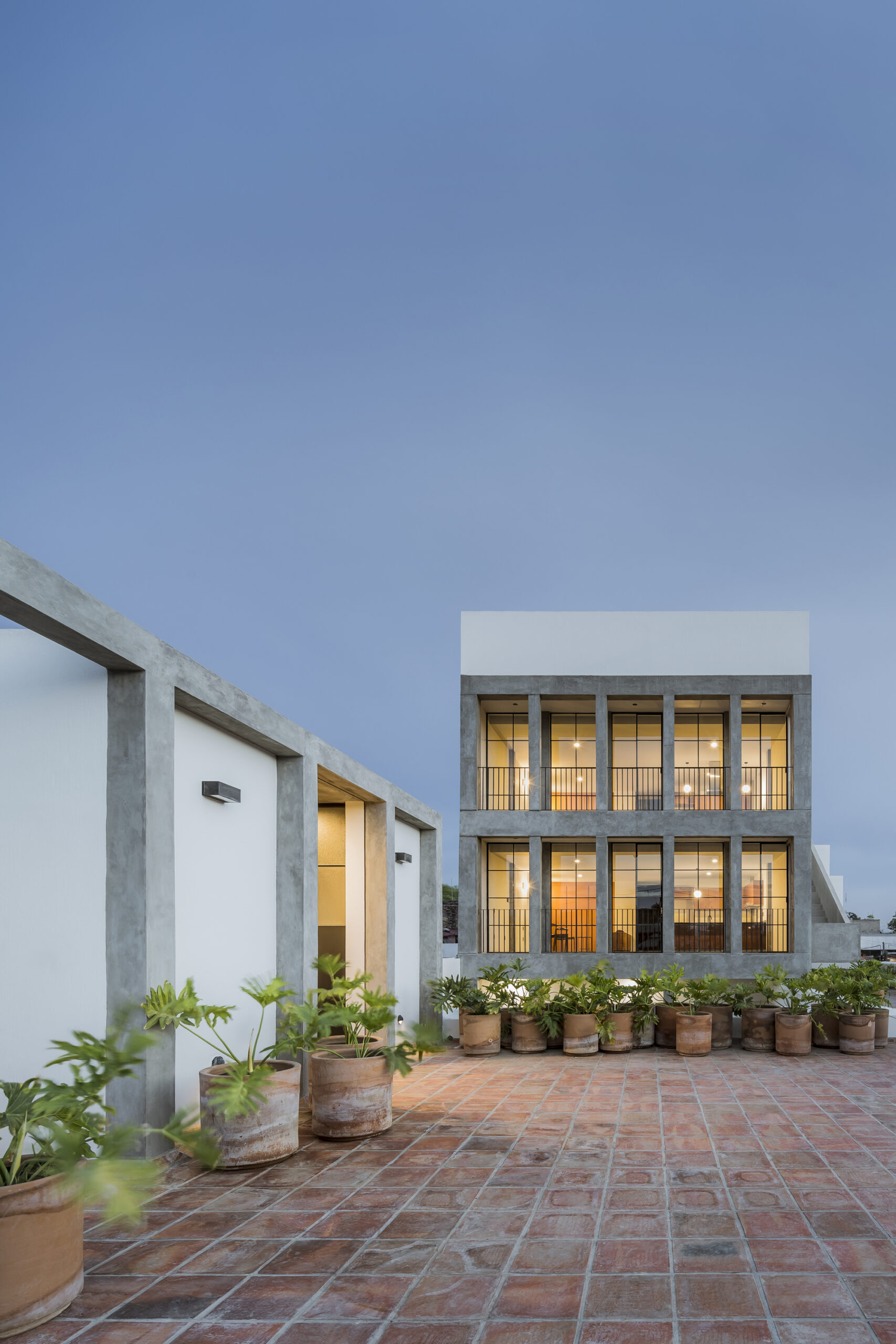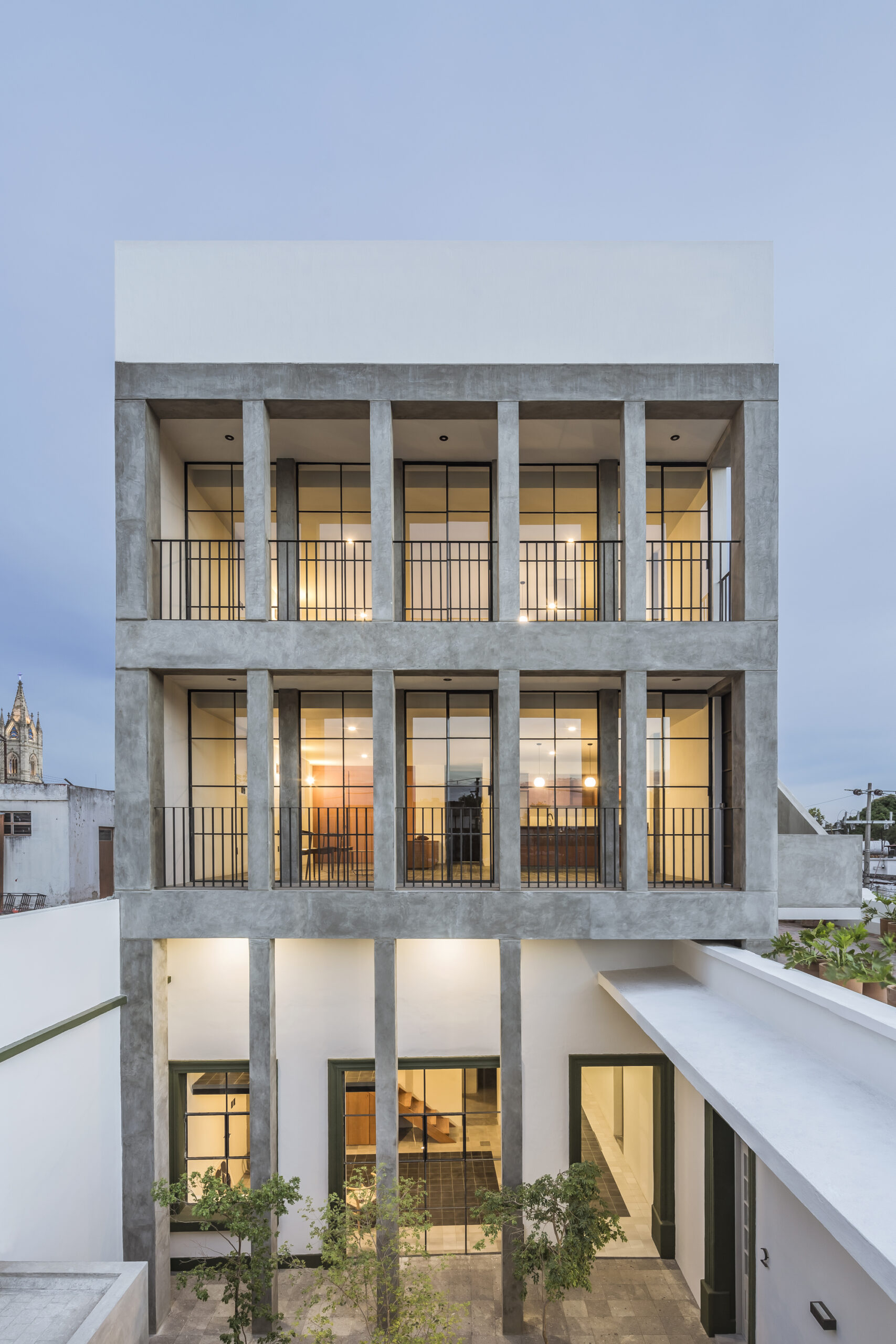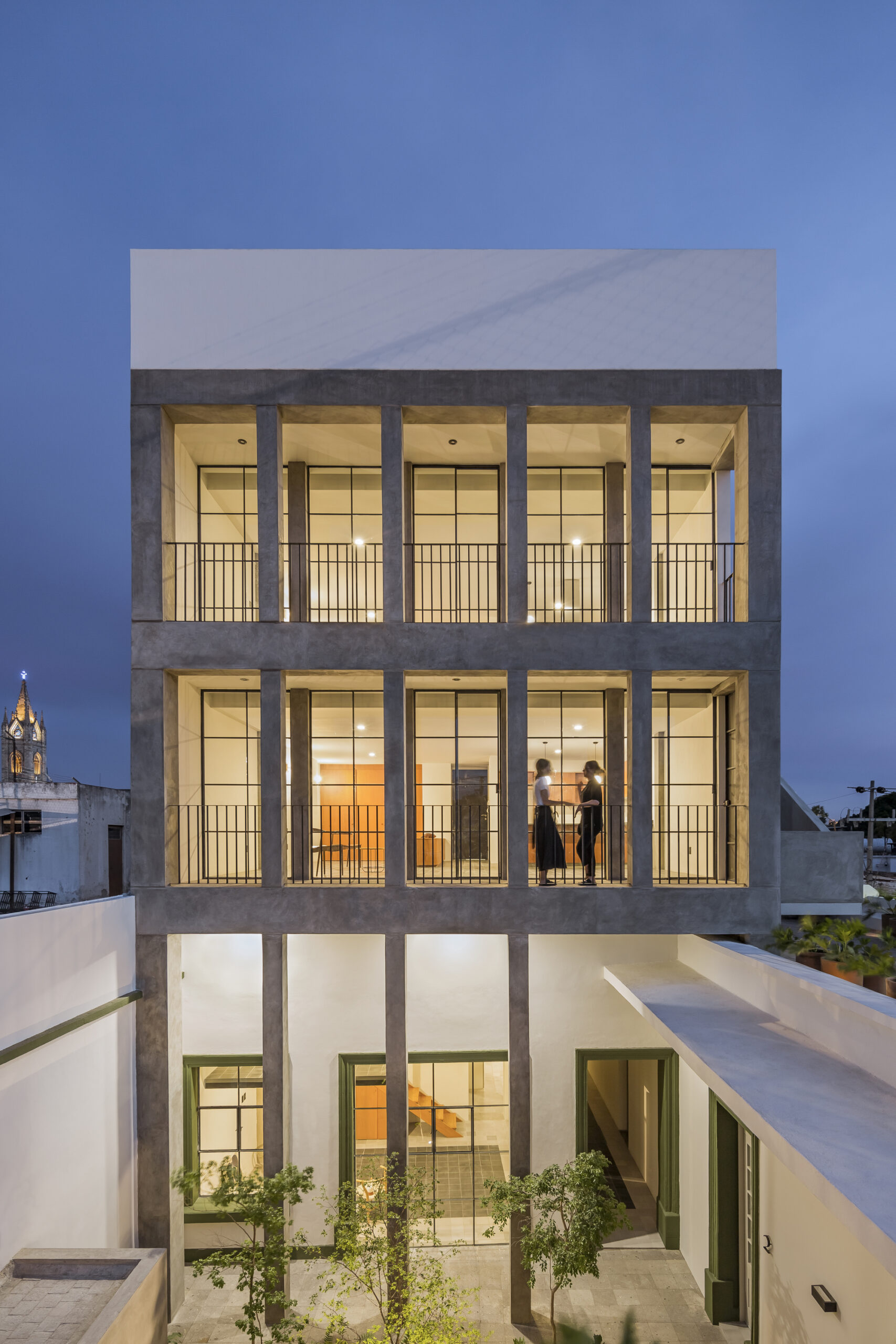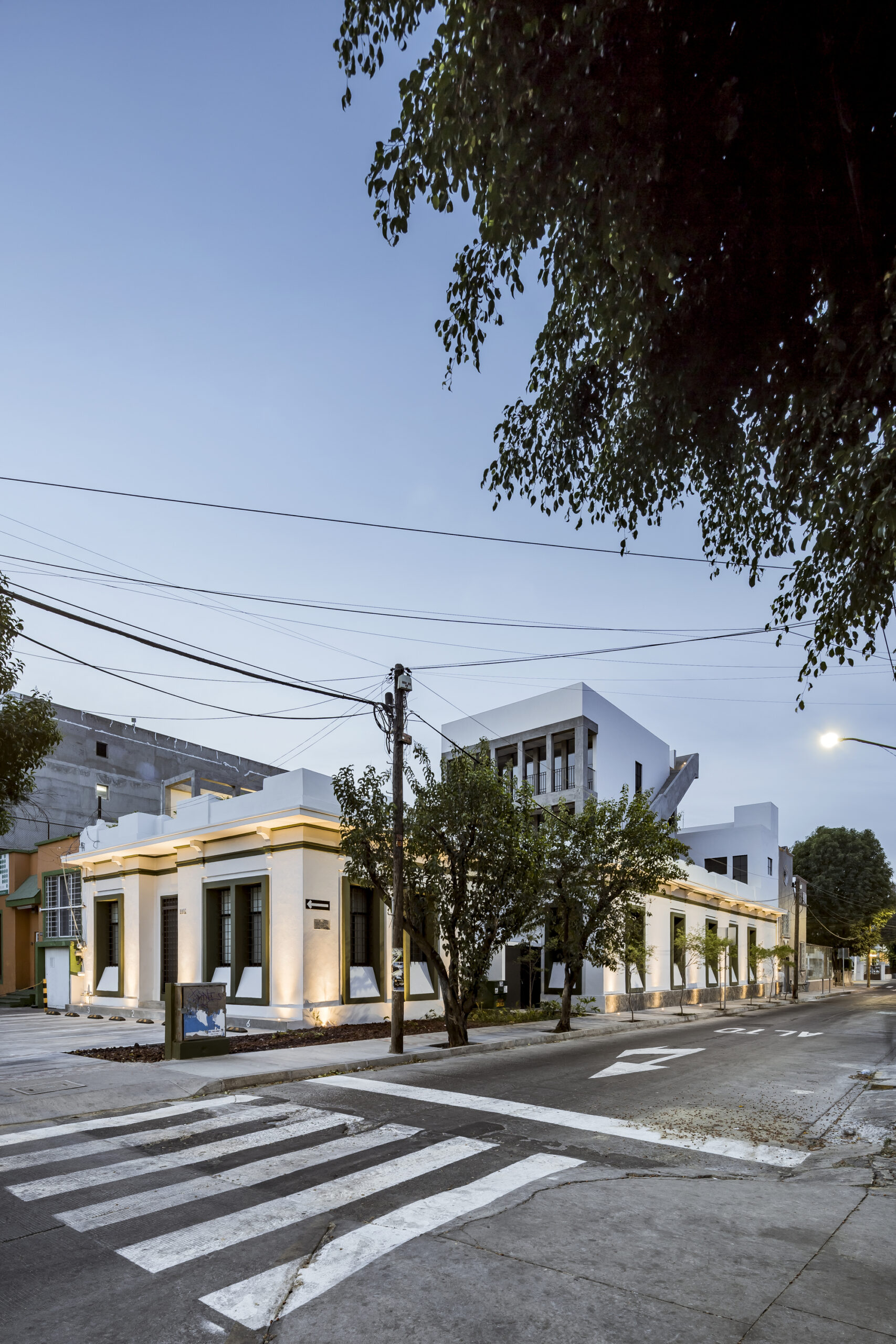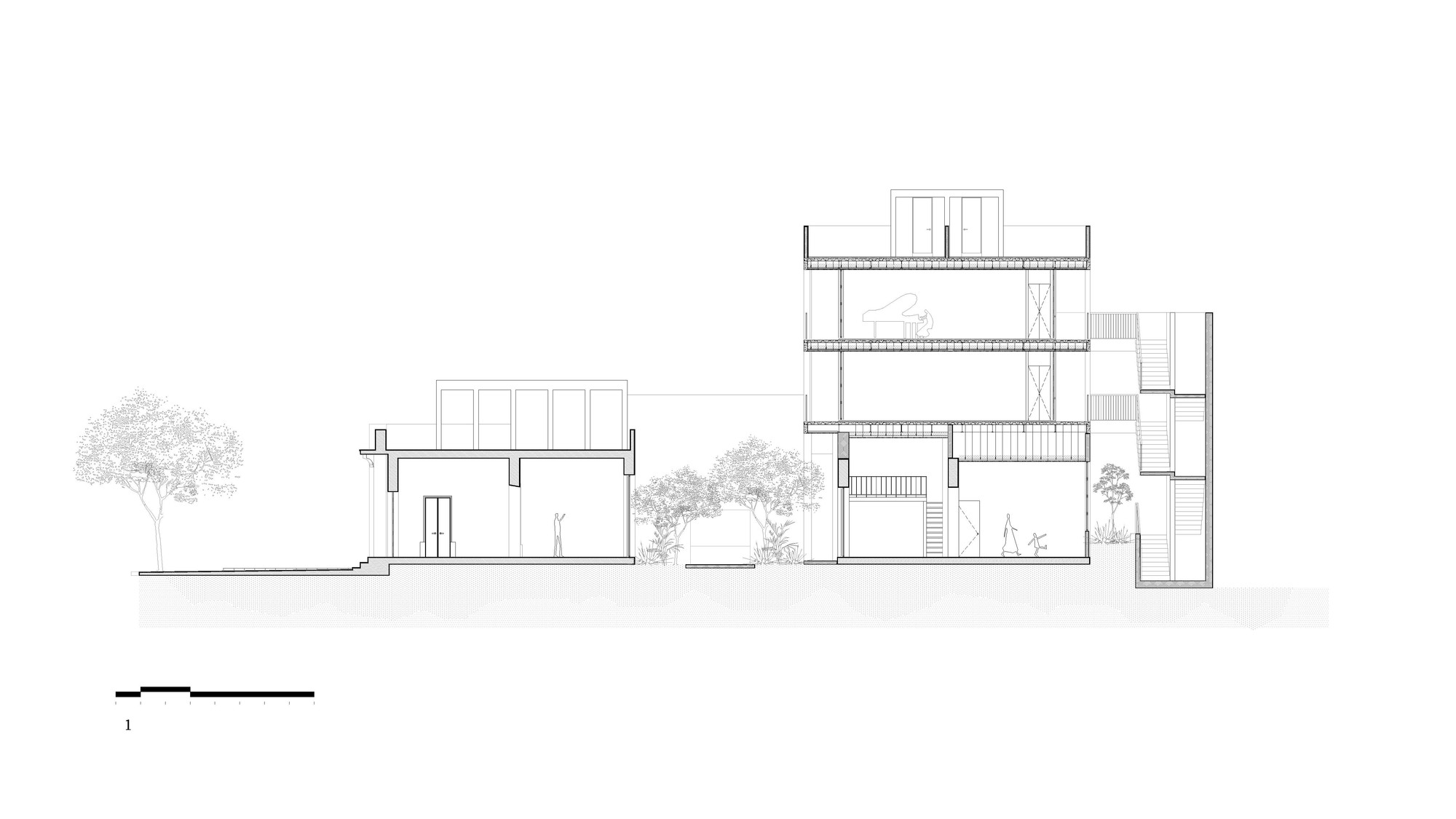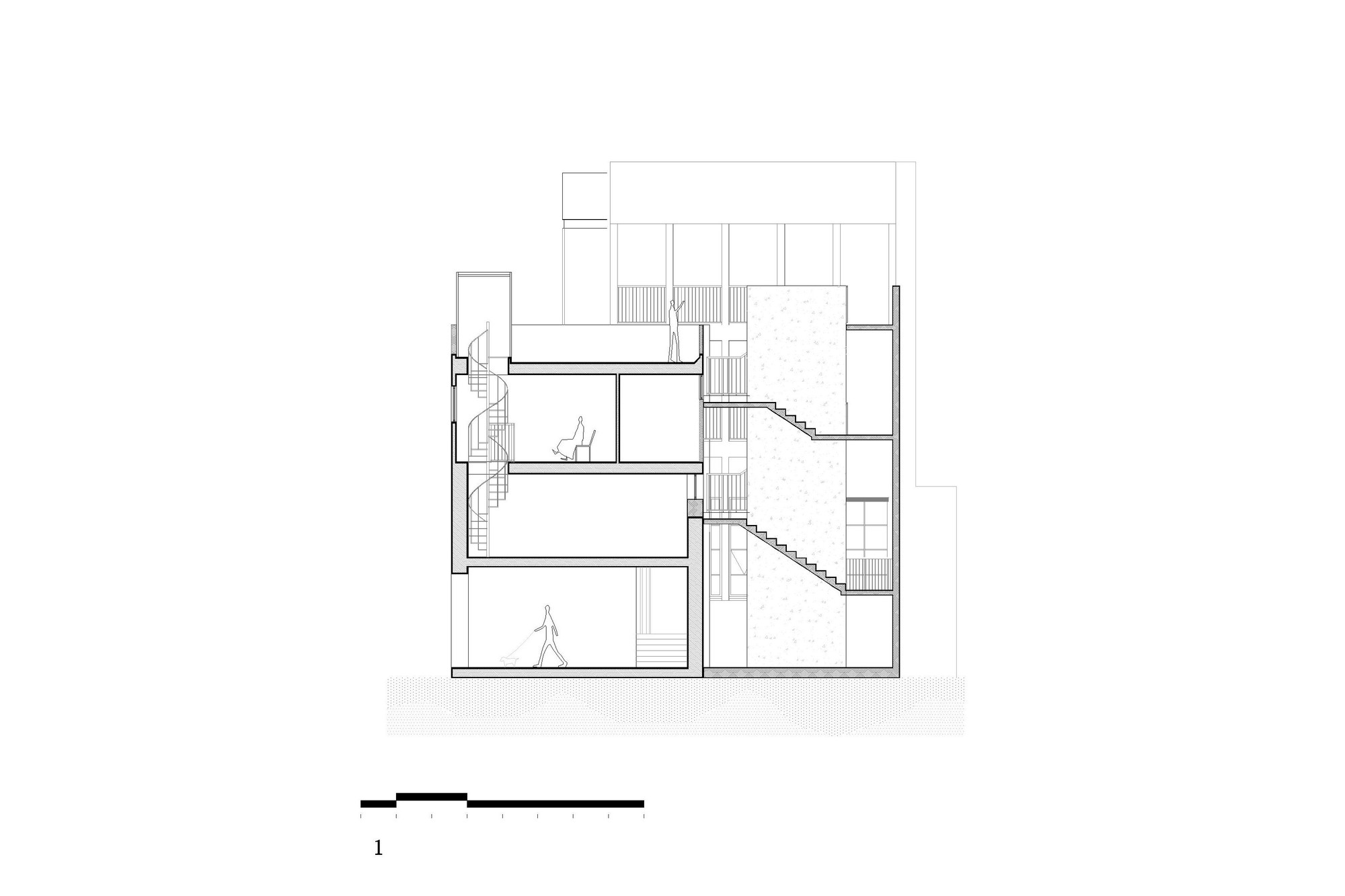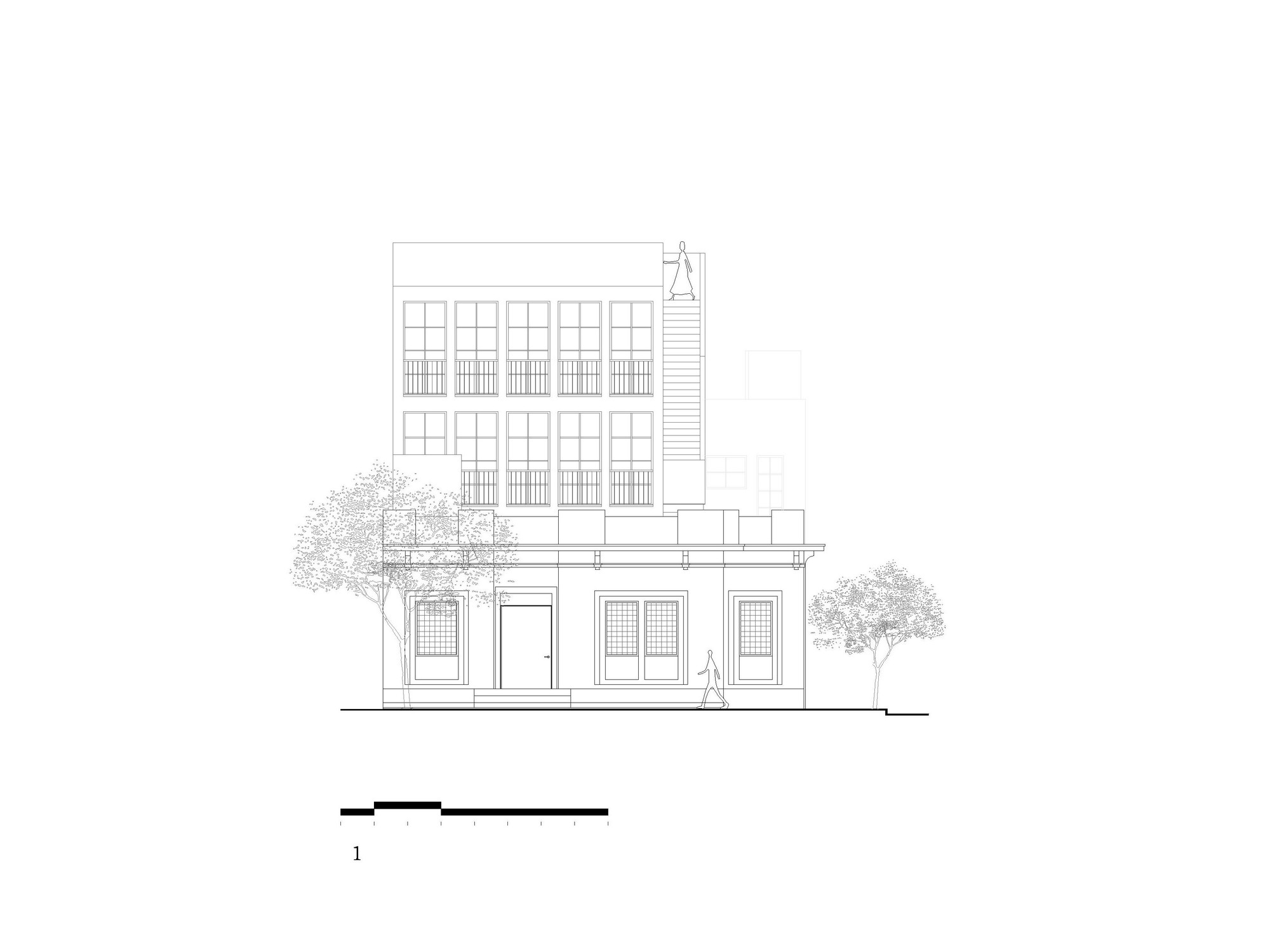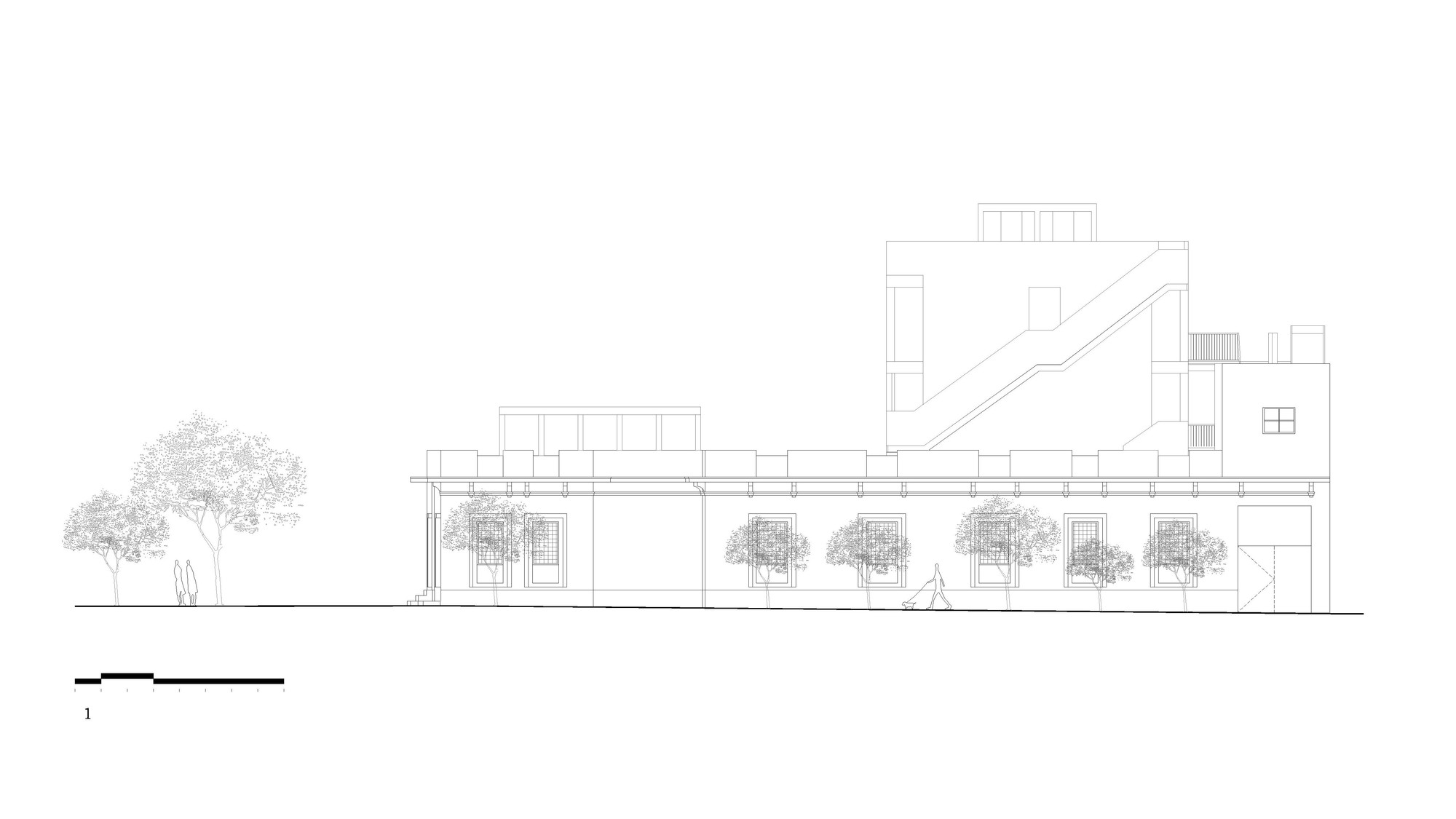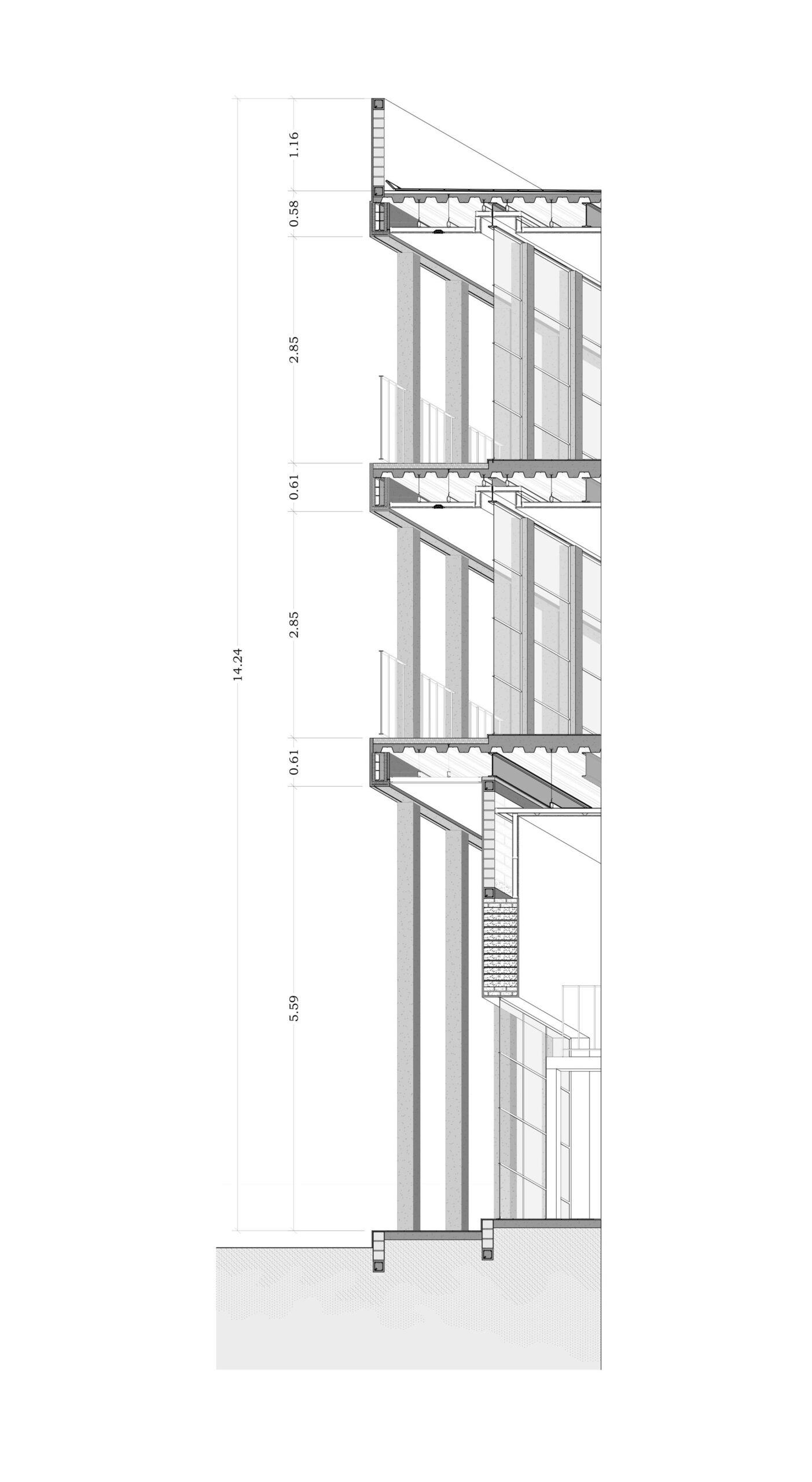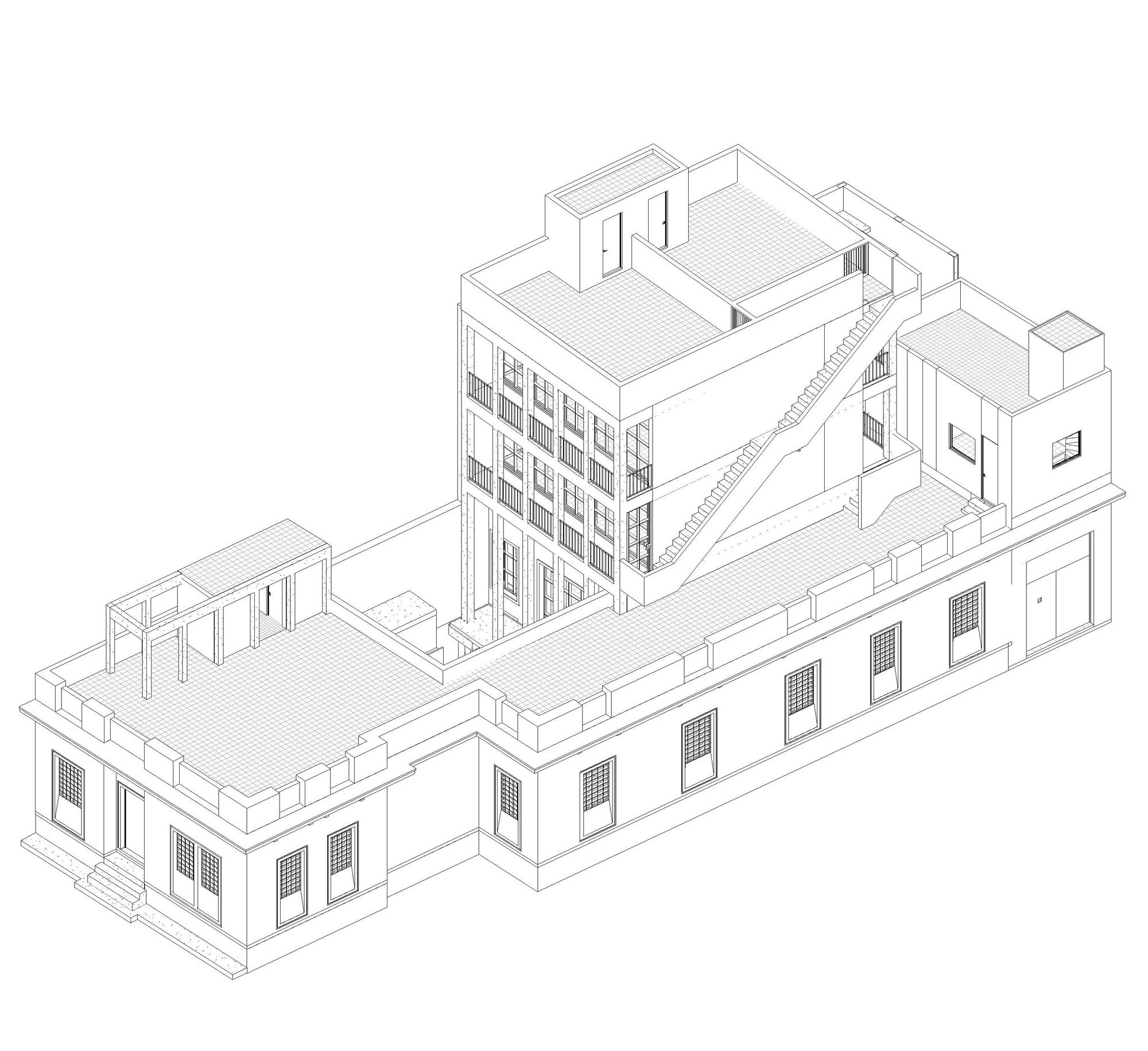


Pedro House aims to rescue the city’s architectural heritage by restoring an early-20th century building and adding an annex to the back, thus establishing a discrete and respectful dialogue between the historical and contemporary. As part of a large-scale urban reactivation plan for Guadalajara’s Historic Center, Casa Pedro plays a role in the re-densification of an area that is partially unoccupied and devitalized.
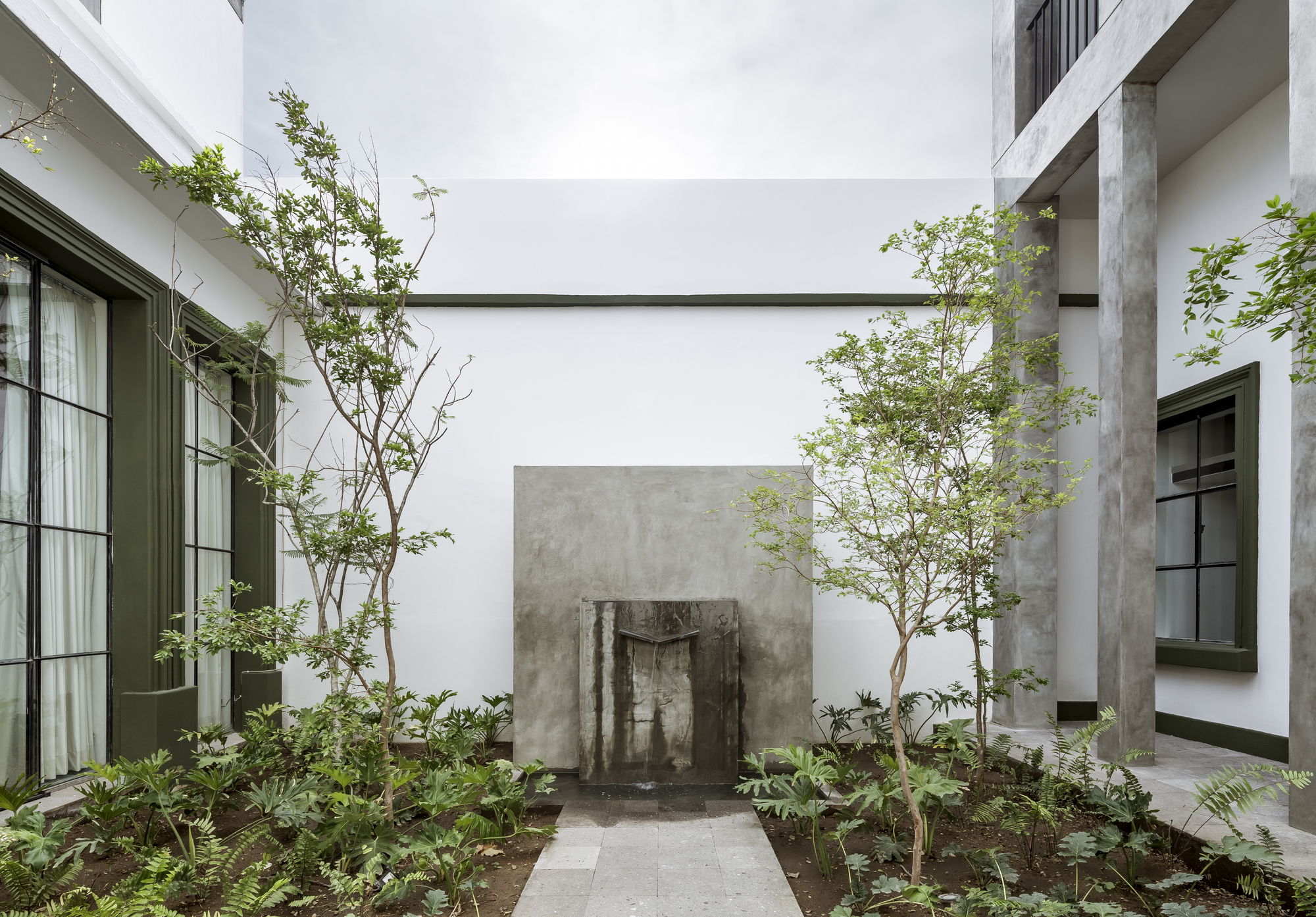
© César Béjar
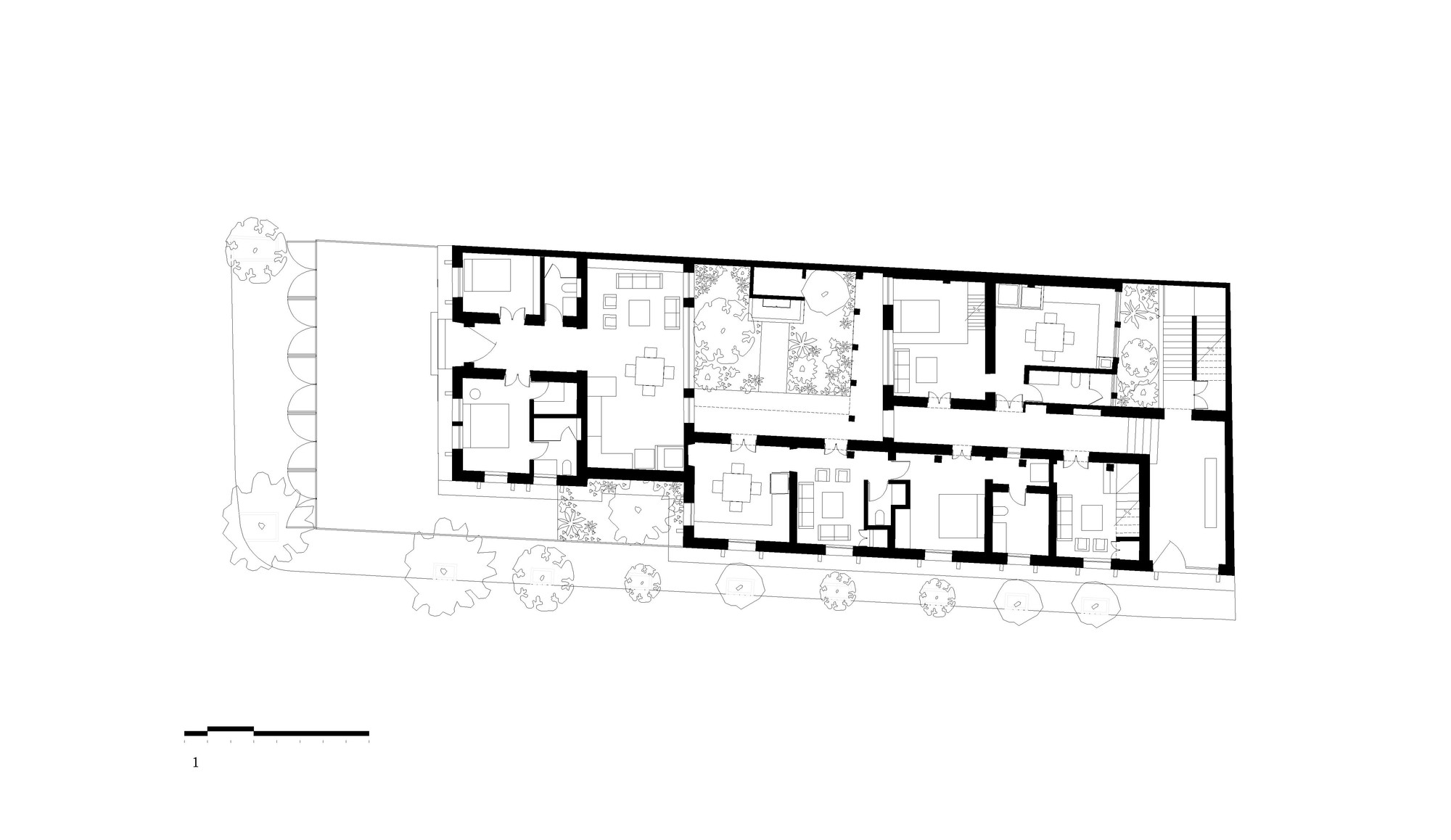
The restoration respected the preexisting doors and windows that divided the home, while the annex was placed in the lesser-seen terrace area in order to avoid modifying the building’s original circulations and central patio, which functions as the heart of the project.
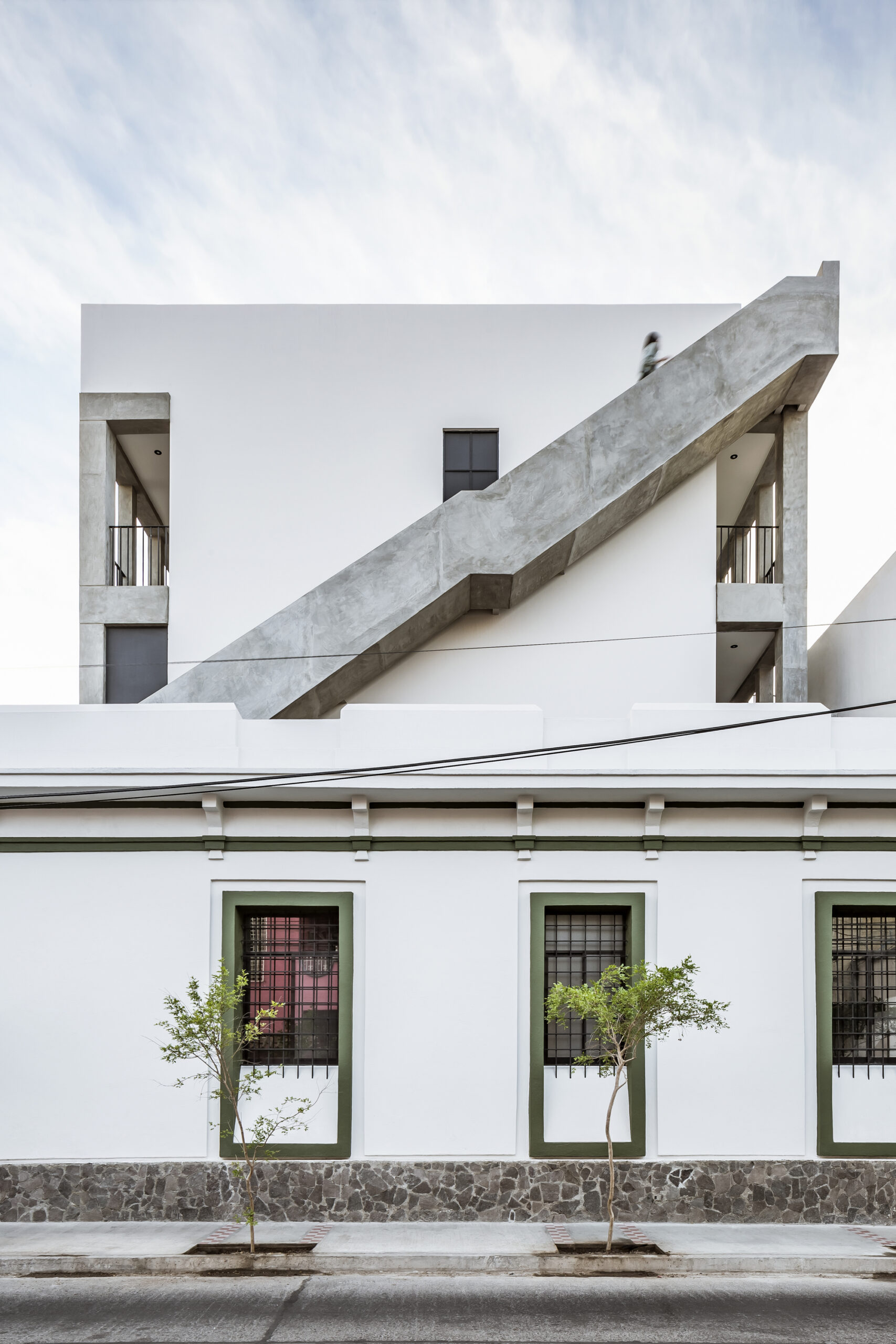
© César Béjar
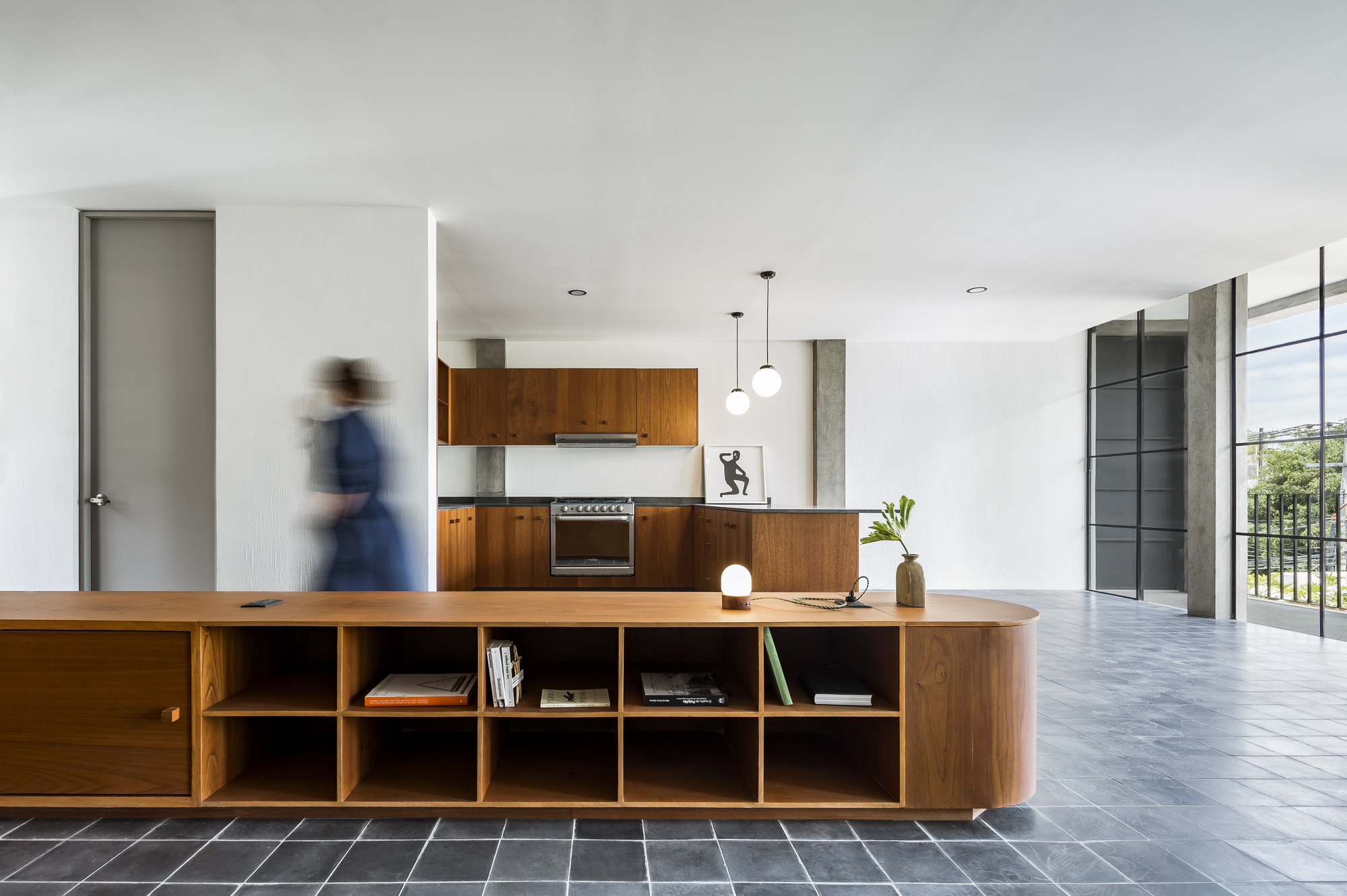
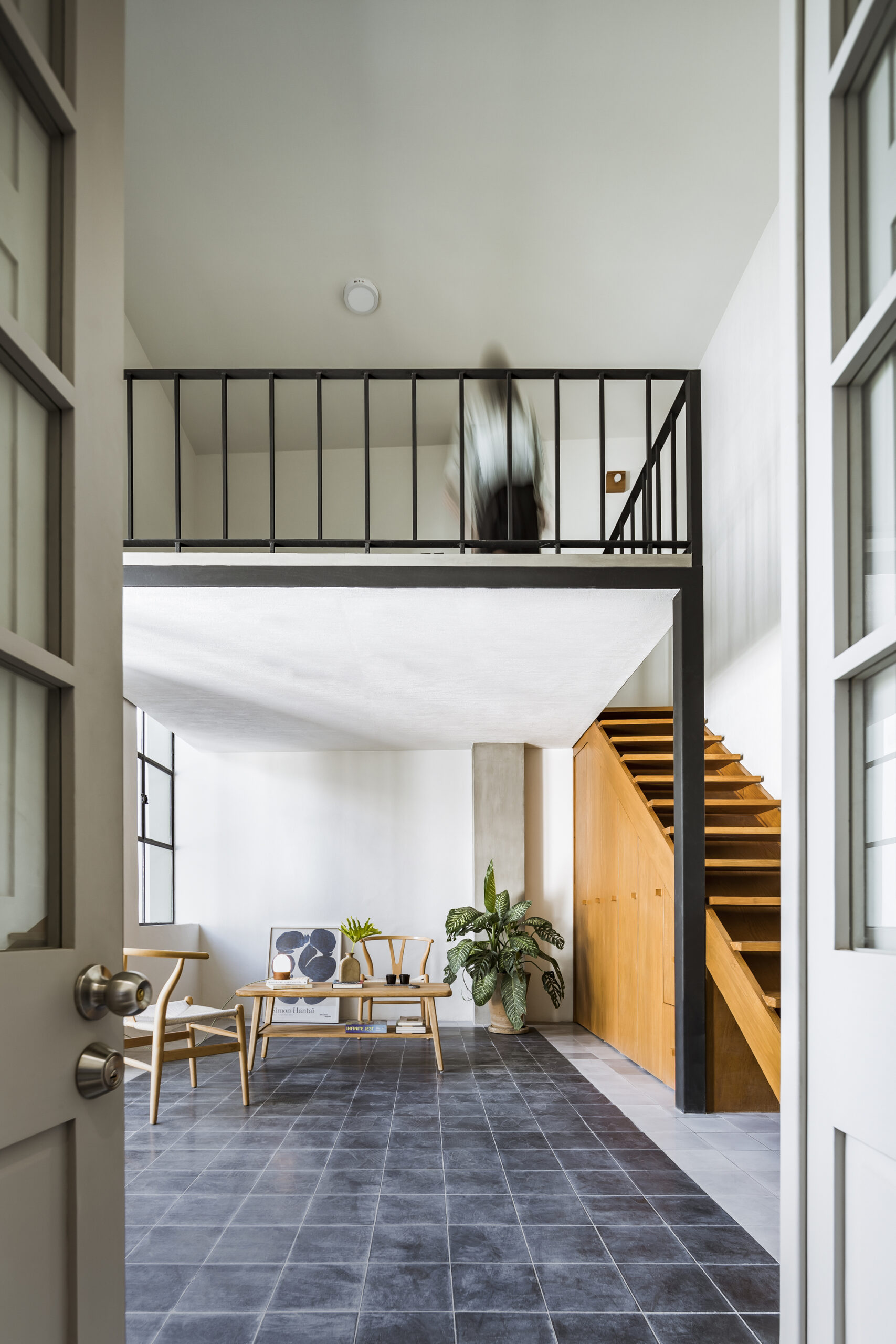
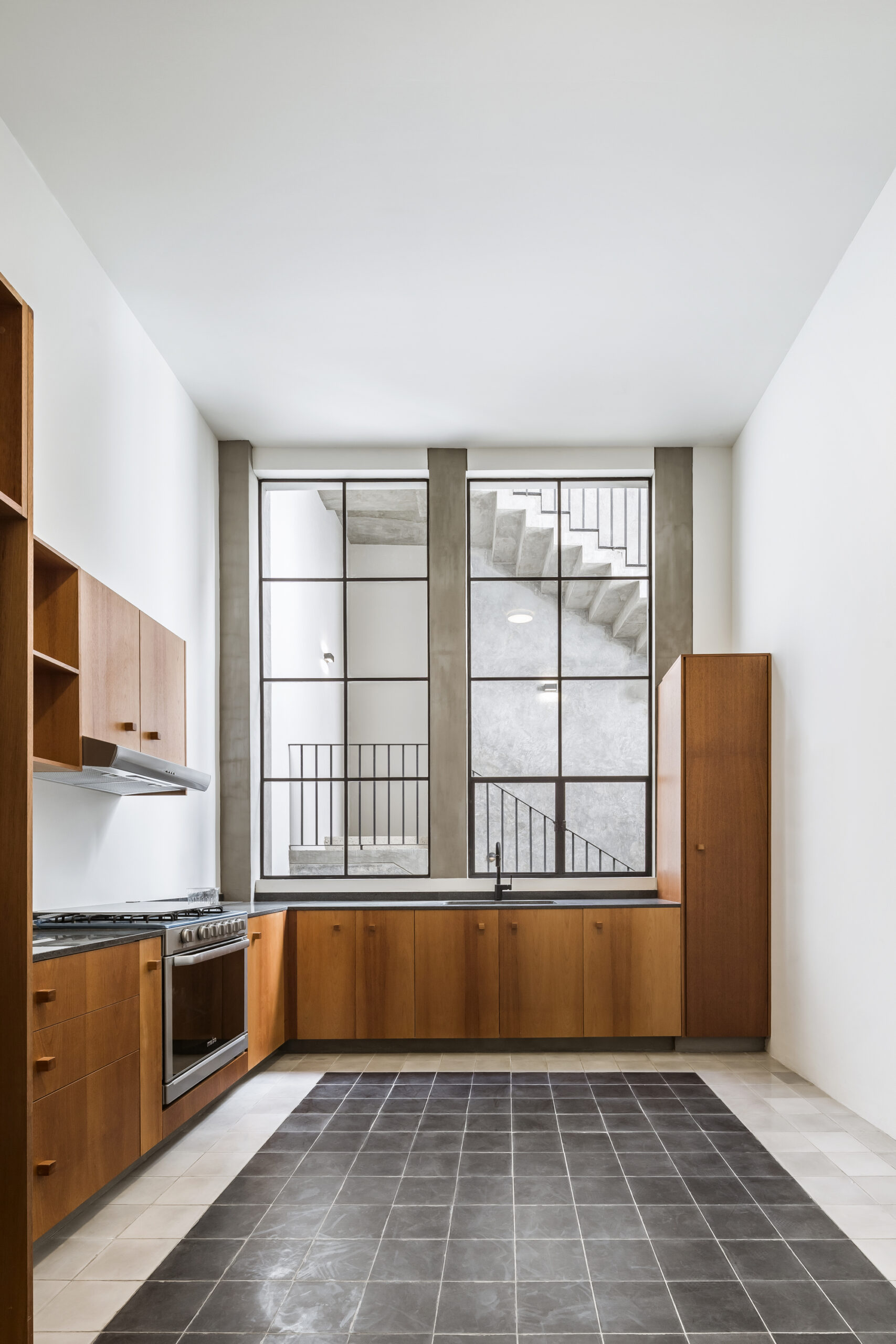
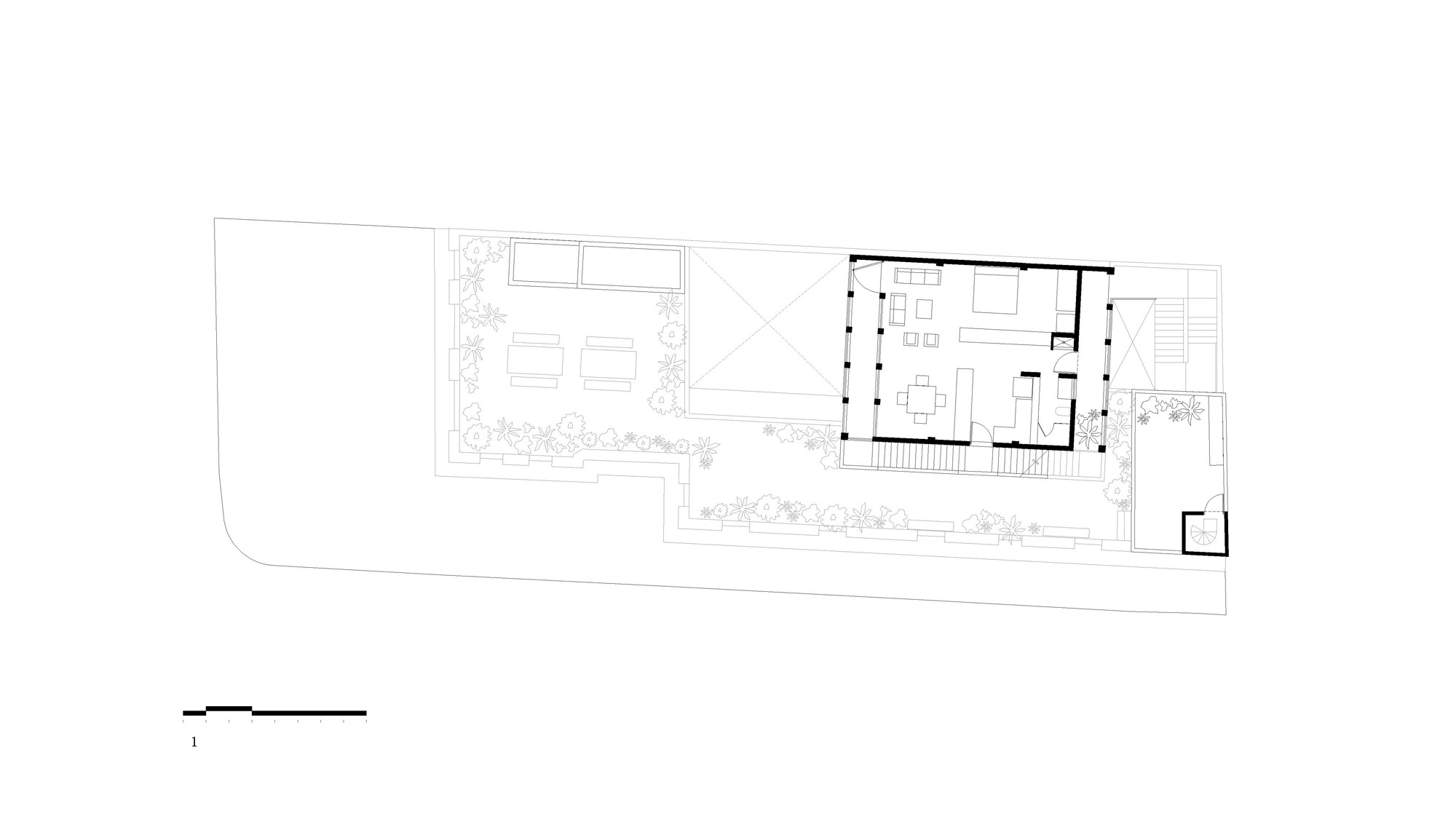
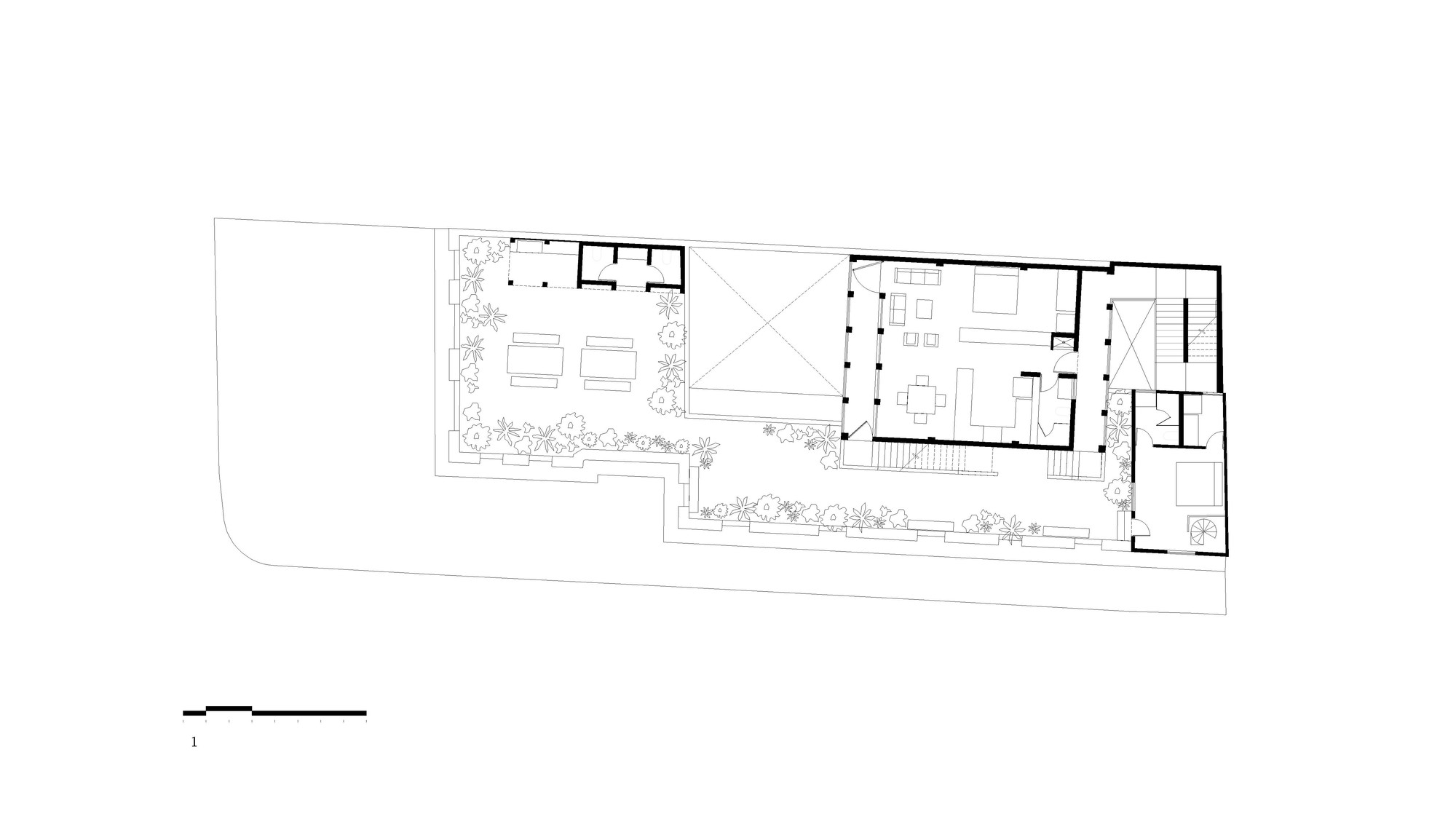
Six residential units are located throughout the house — four within the original building and two in the annex — in typologies suited for one person or a couple, as well as larger ones that are able to accomodate a family. Respecting the project’s original distribution ensured that each apartment unit within the heritage house is unique. Both of the units located in the annex function as open-plan lofts. On the rooftop, a green space adds to the building’s shared-use areas.
Project Info
Architects: Diagrama Arquitectos
Area: 525 m²
Year: 2019
Country: Guadalajara, Mexico
Photographs: César Béjar
Manufacturers: AutoDesk, Adobe, Trimble
Lead Architects: Luis Aurelio Piña Plaza, Laura Elena Barba Prieto
Design Team: Arturo Molina
Clients: Huella Desarrollos
Landscape: BAC Taller de paisajismo
Collaborators: Isadora Vargas, Gisela Reyes, Regina Alarcón.