

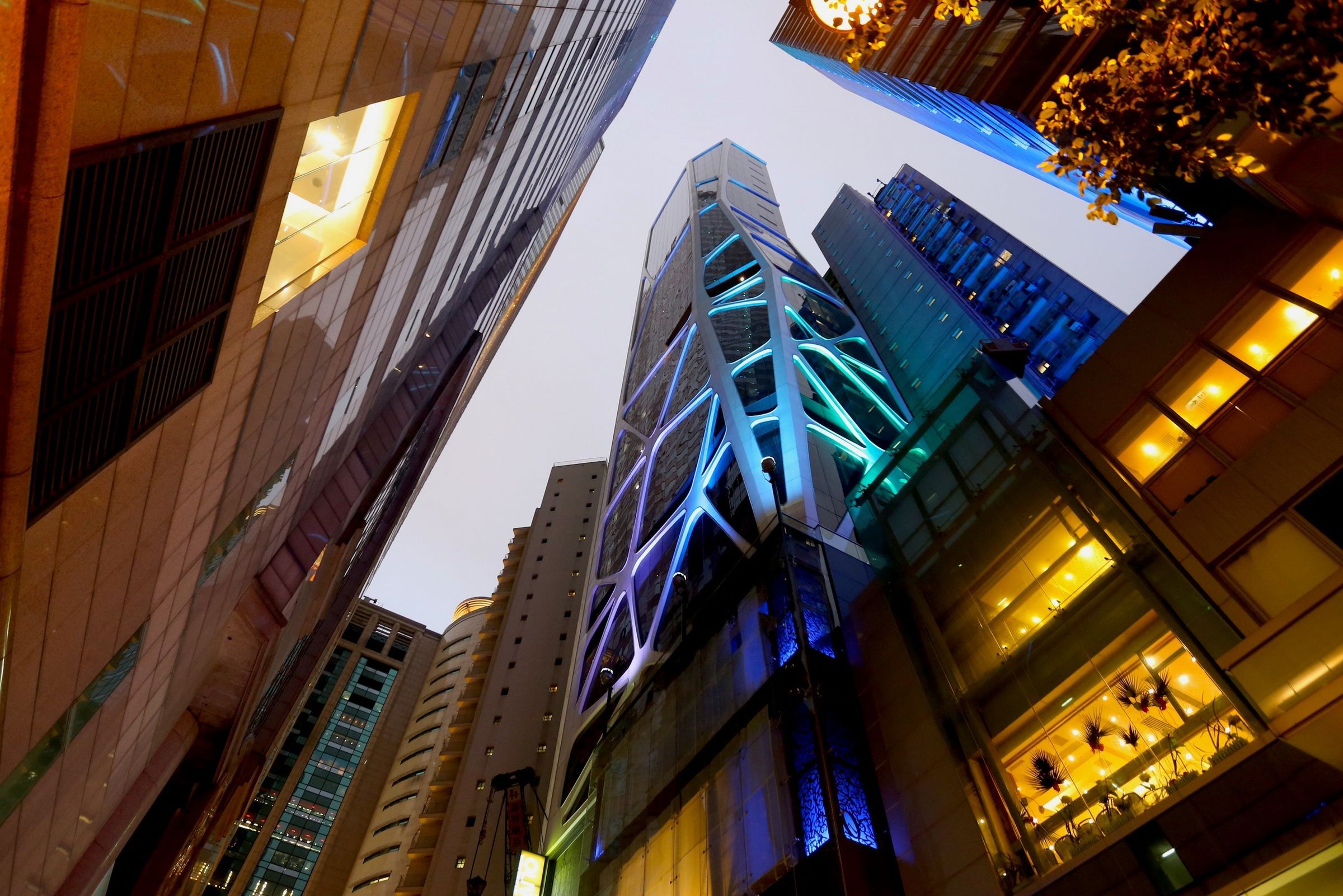
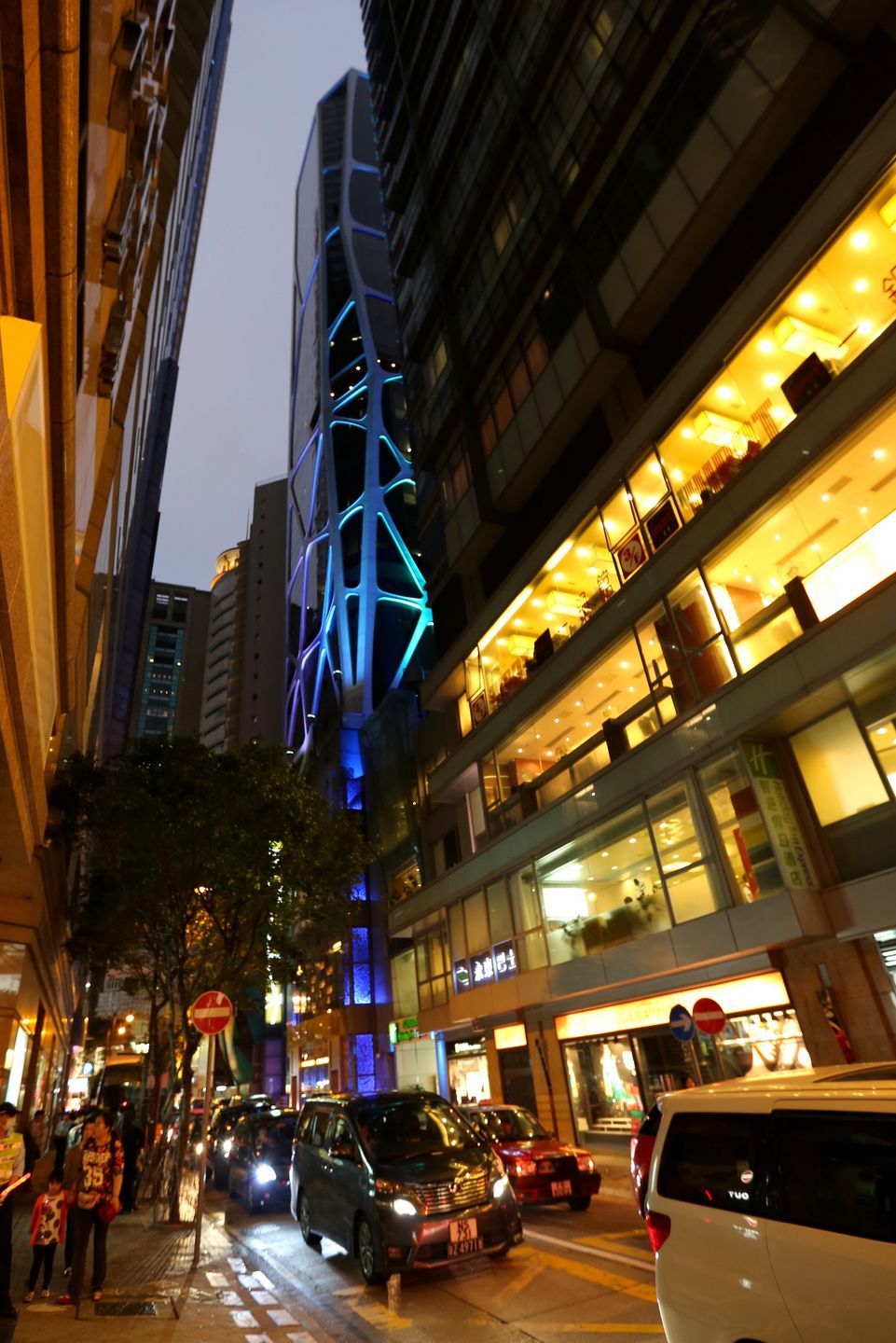
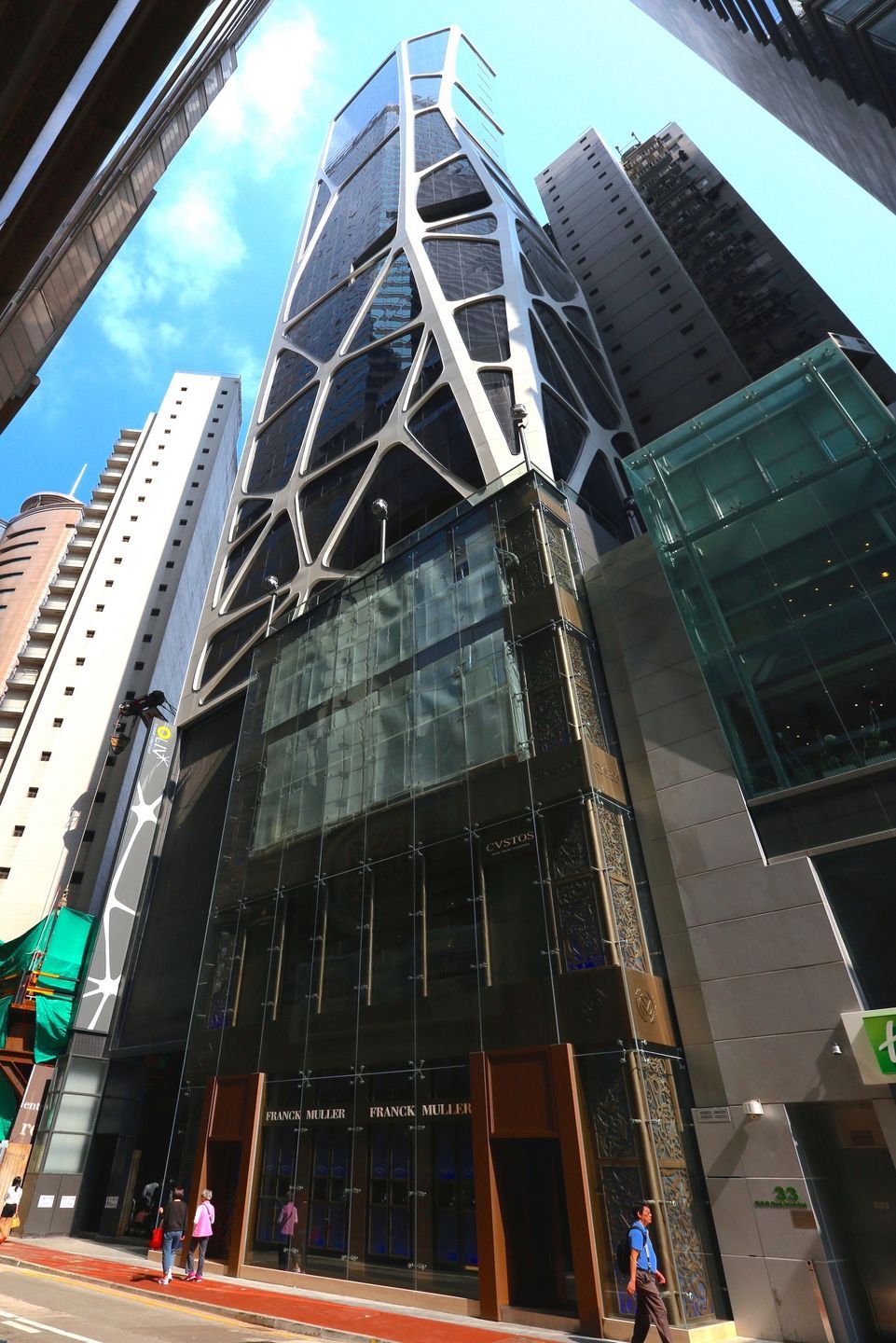
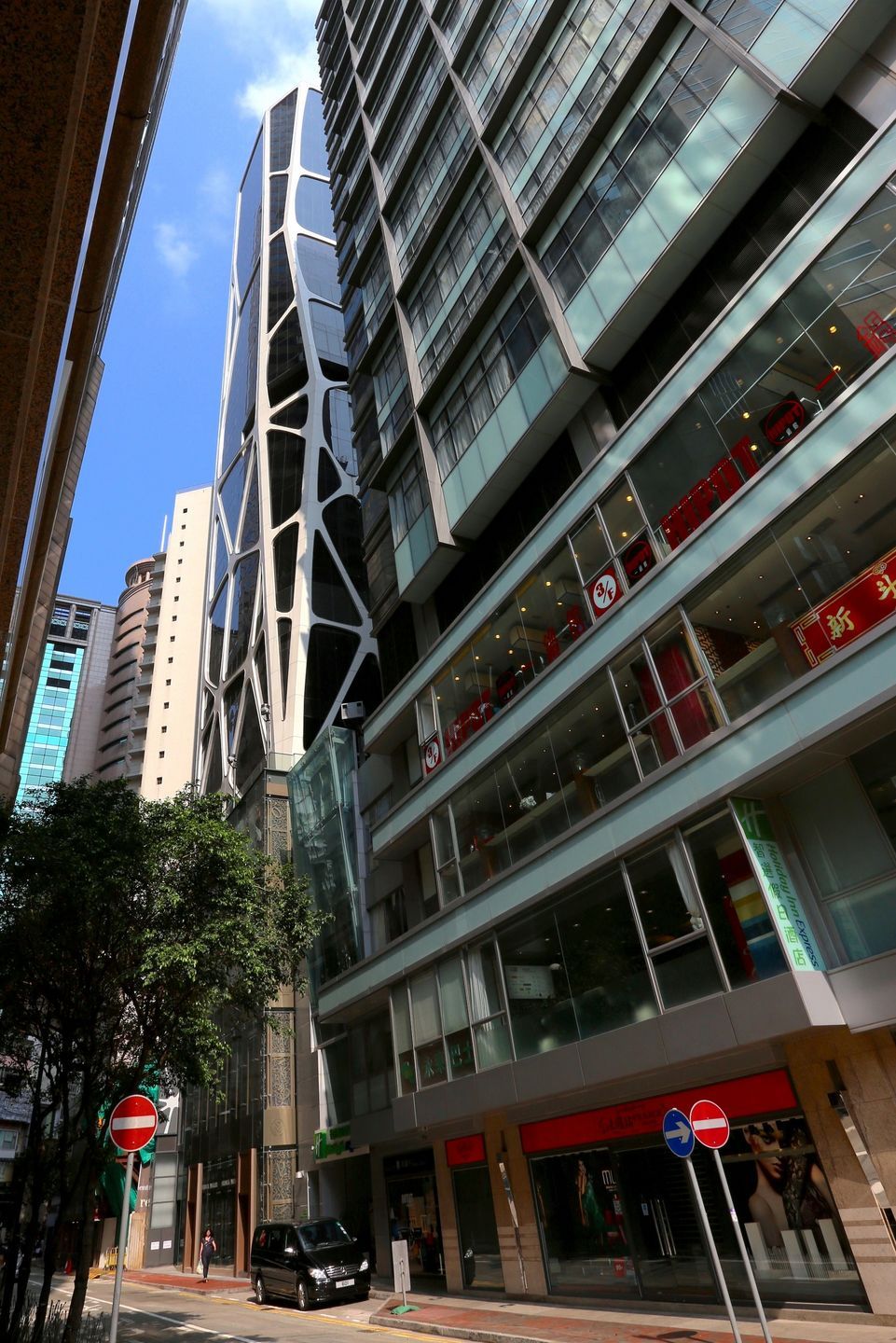
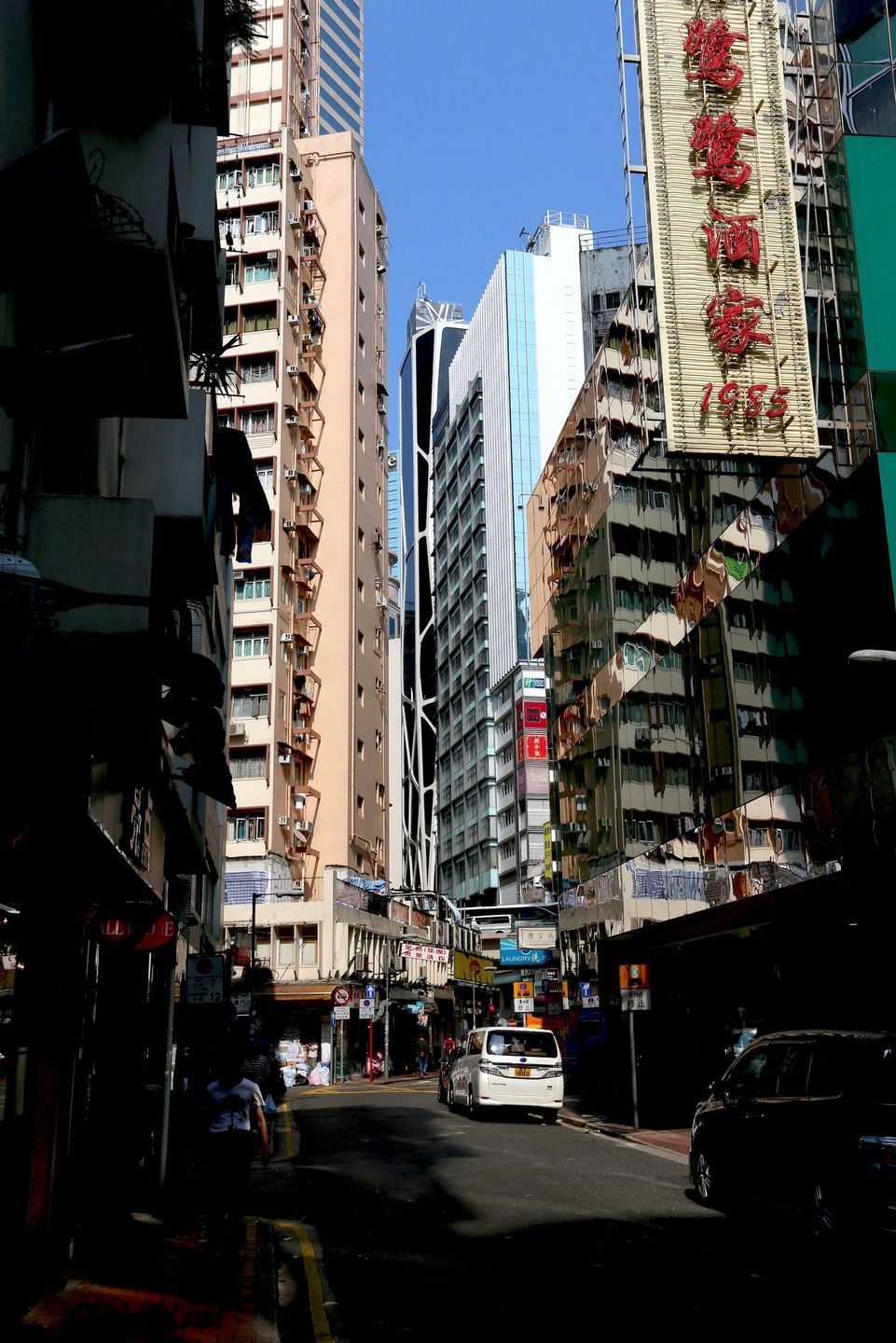
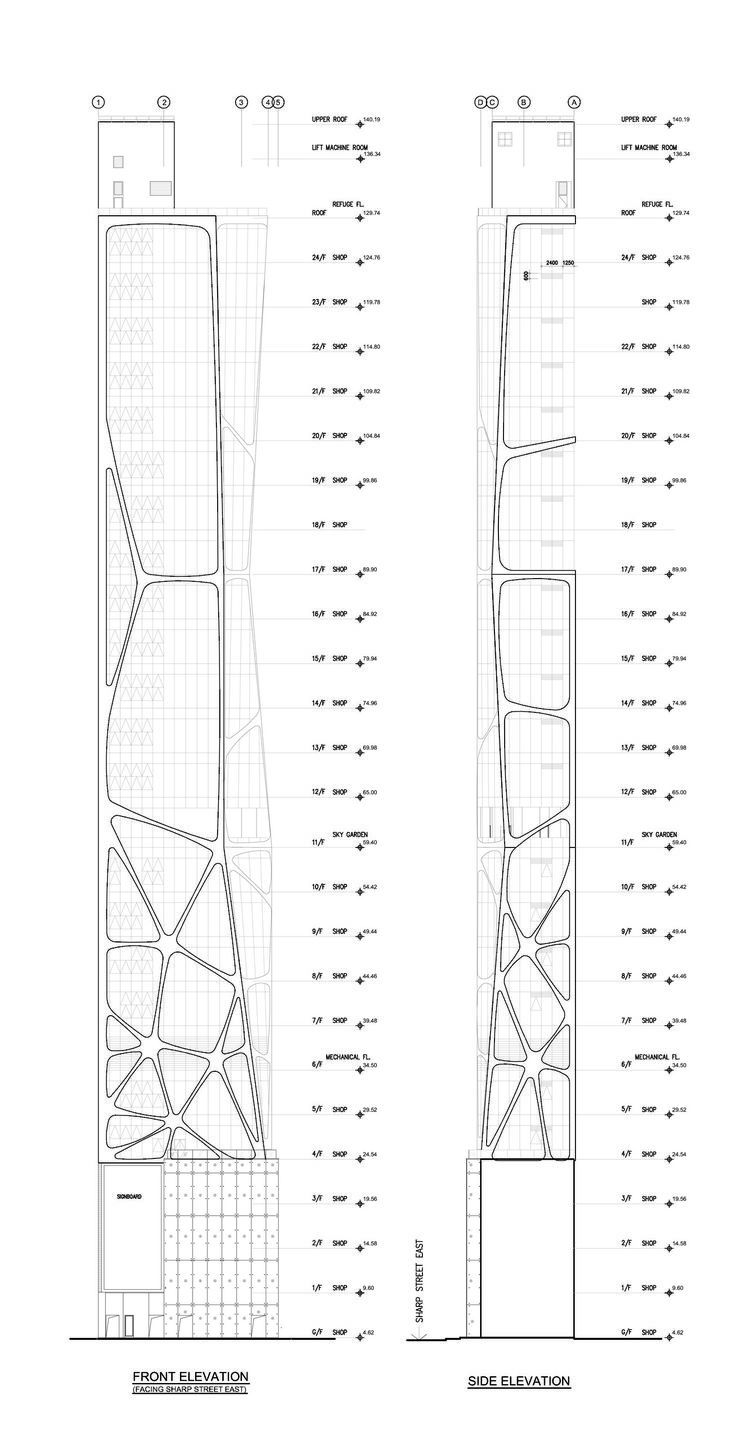
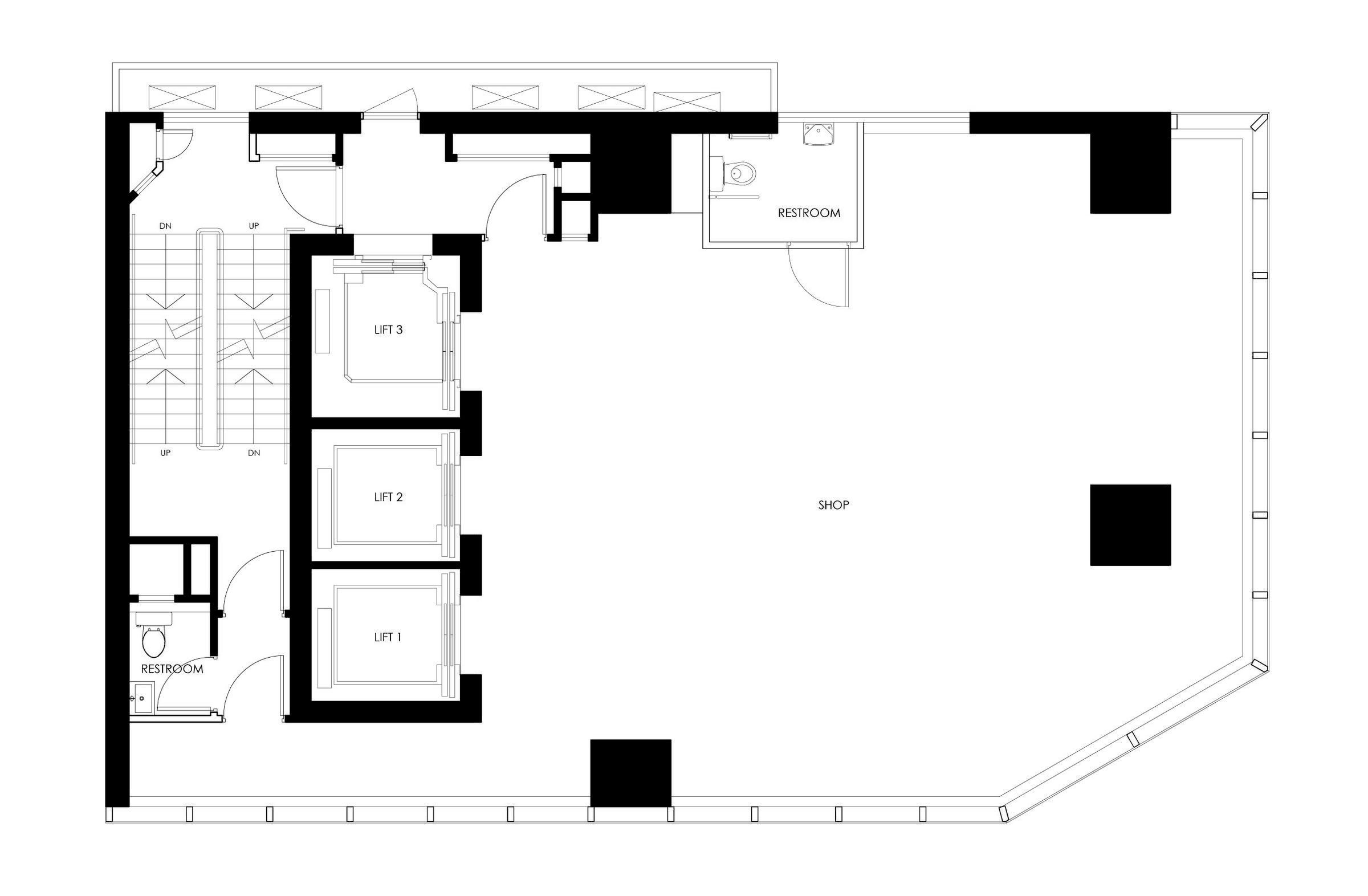
The commercial building OLIV designed by Theo Texture spans about 100 meters tall and is located at the active shopping area of Causeway Bay of Hong Kong, China. The site comprises of a small portion of urban area, roughly around 200 m² where each individual floor height is also about 5 meters high.
The design used the precedence of an olive tree where the floor plates were slightly altered, allowing the building to have the notion as if its twisting as it extends upwards, similar to the branches of an olive tree. The exterior consists of a network of steel connections creating a kind of geometrical presence that allows it to stand out in the downtown areas of Hong Kong.
It pushes the building envelop in comparison to the surrounding skyscrapers, where the exterior’s slight kinks have been made to exaggerate the overall structure. The exterior is also enclosed with a kind of triple envelop skin, where as the interior consists of layers of mullions that are orthogonally shaped. A gray coloured curtain wall system is used to represent the organic nature of the exterior cladding.
The use of layering was to bring about a resemblance to the knots within an olive tree that than transforming the urban distract into a radiant light source.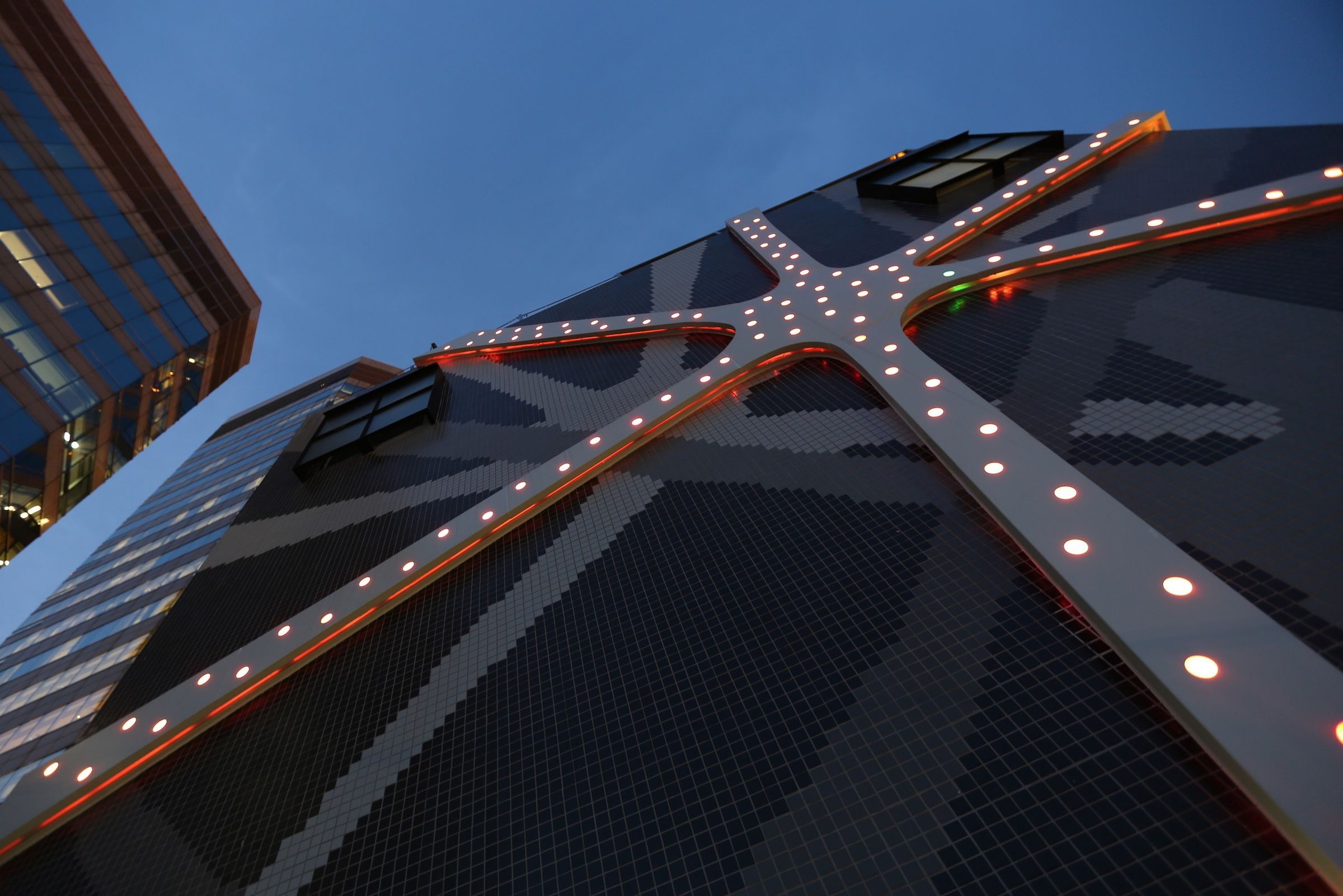

Anastasia Andreieva is an accomplished Architectural Projects Editor at Arch2O, bringing a unique blend of linguistic expertise and design enthusiasm to the team. Born and raised in Ukraine, she holds a Master’s degree in Languages from Taras Shevchenko National University of Kyiv. Her deep passion for architecture and visual storytelling led her to transition from translation and editorial roles into the world of design media. With a keen eye for conceptual clarity and narrative structure, Anastasia curates and presents global architectural projects with precision and flair. She is particularly drawn to parametric and digital design, cultural context, and emerging voices in architecture. When I’m not analyzing the latest architectural trends, you’ll probably find me searching for hidden gems in cityscapes or appreciating the beauty of well-crafted spaces. After all, great design—like great connections—can be found in the most unexpected places. Speaking of connections, because architecture isn’t the only thing that brings people together.