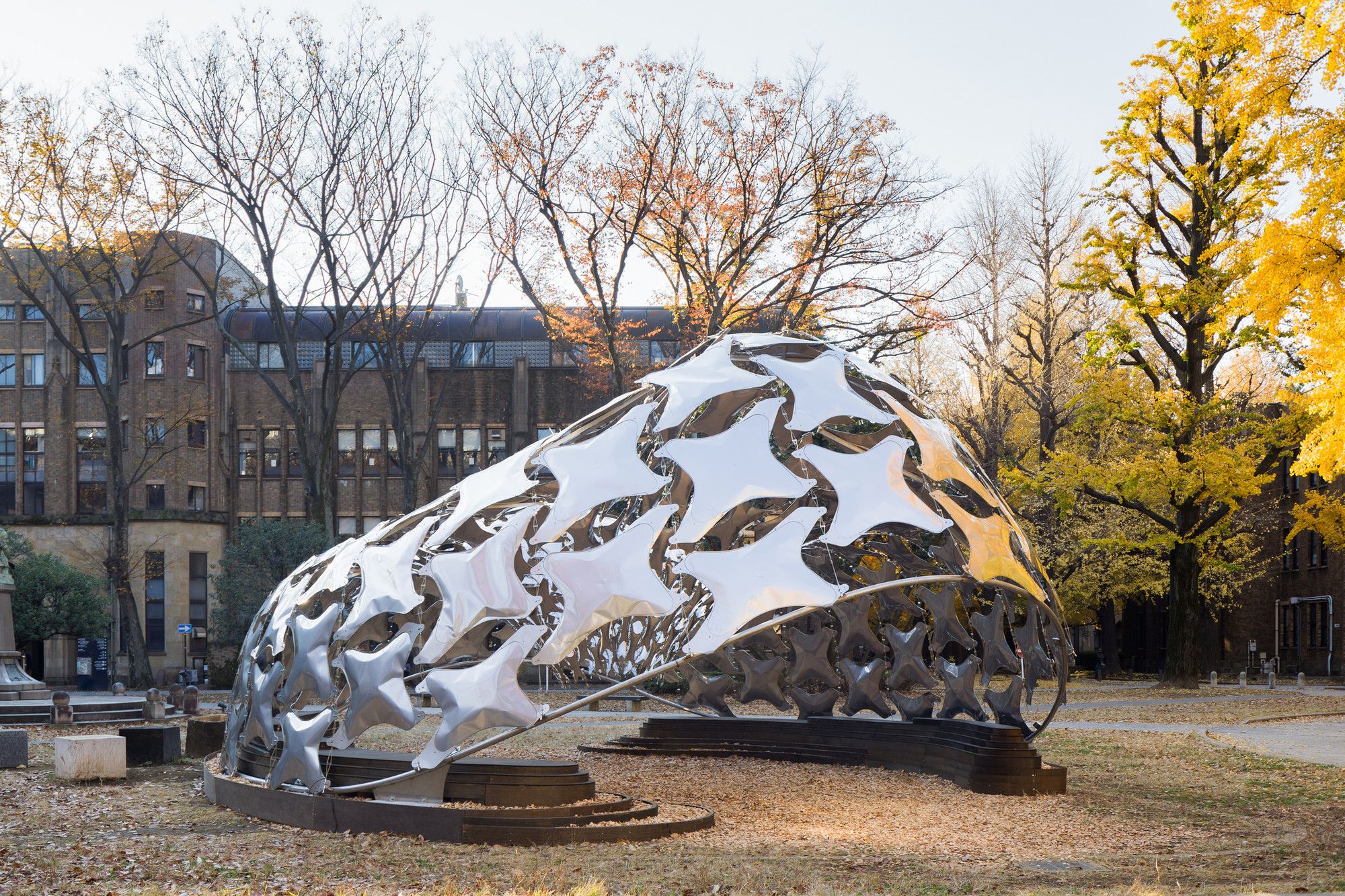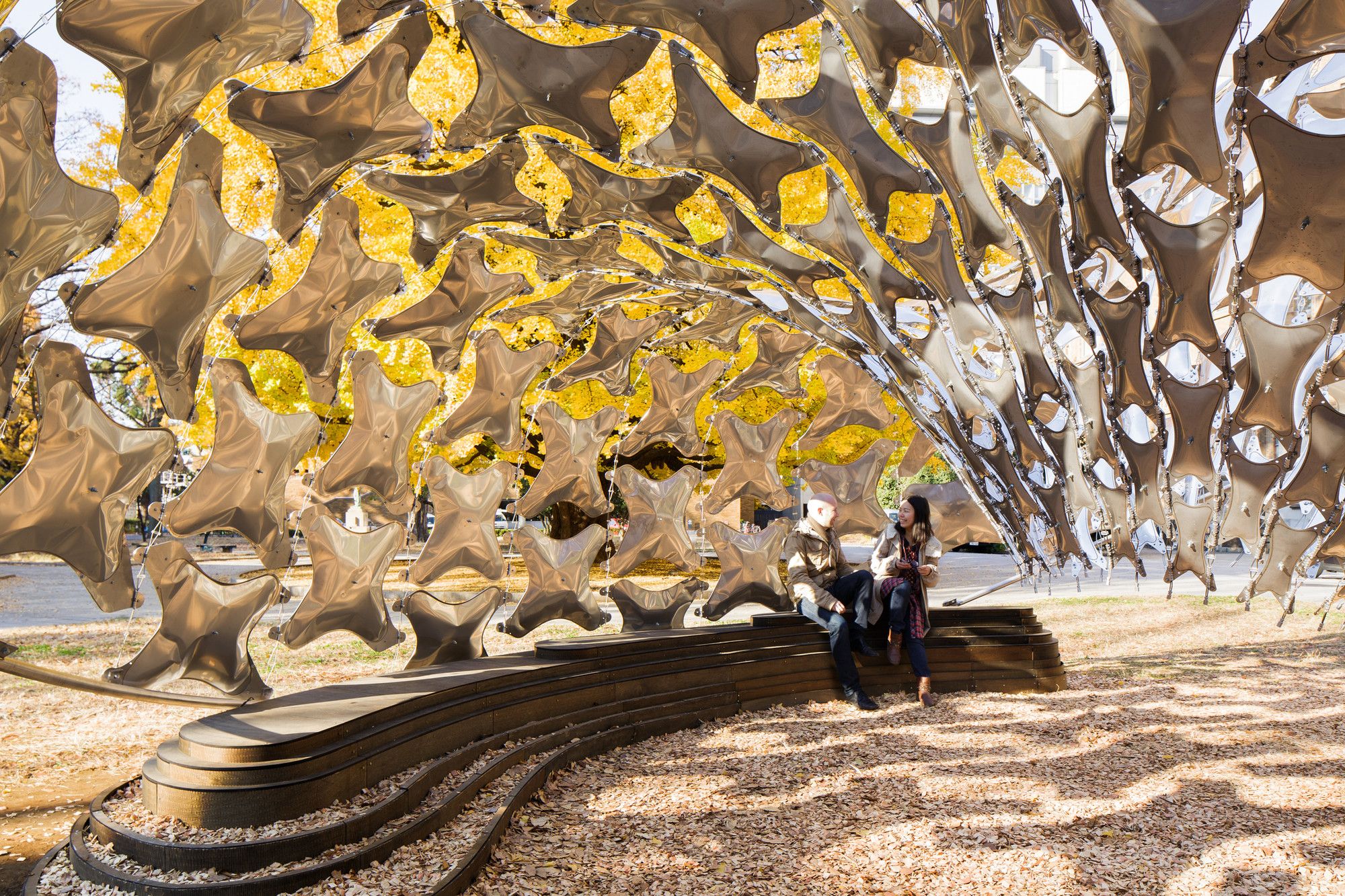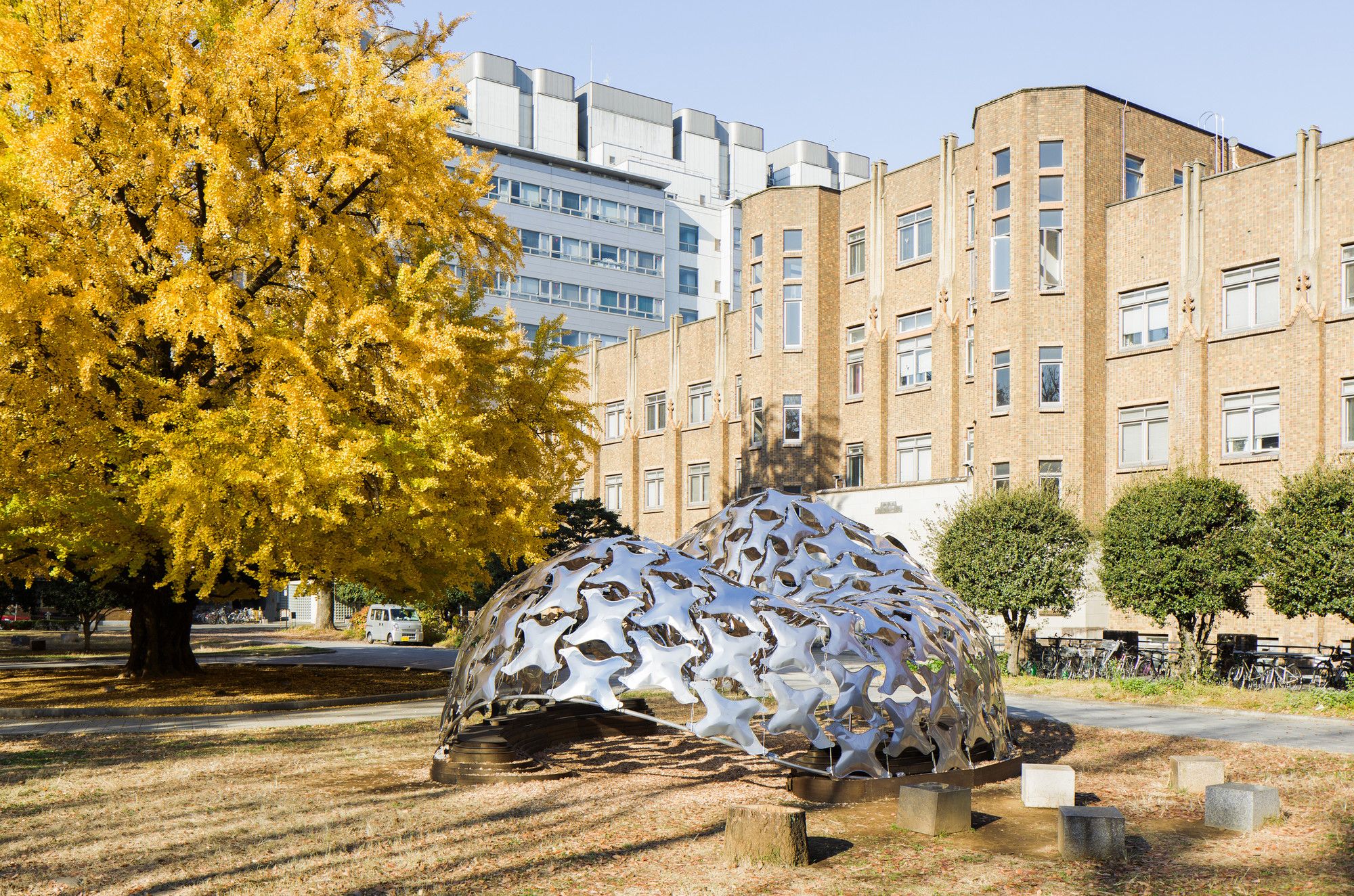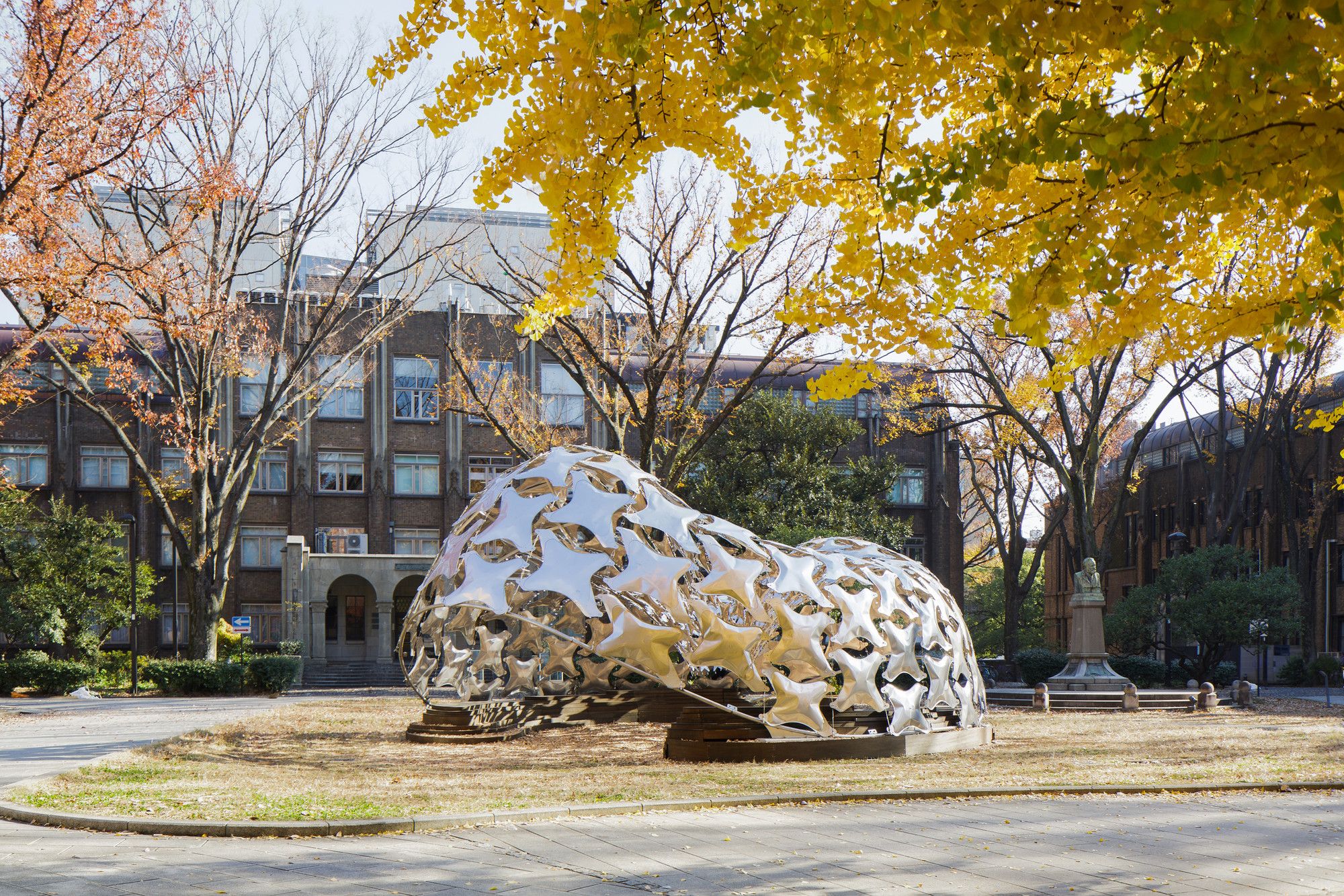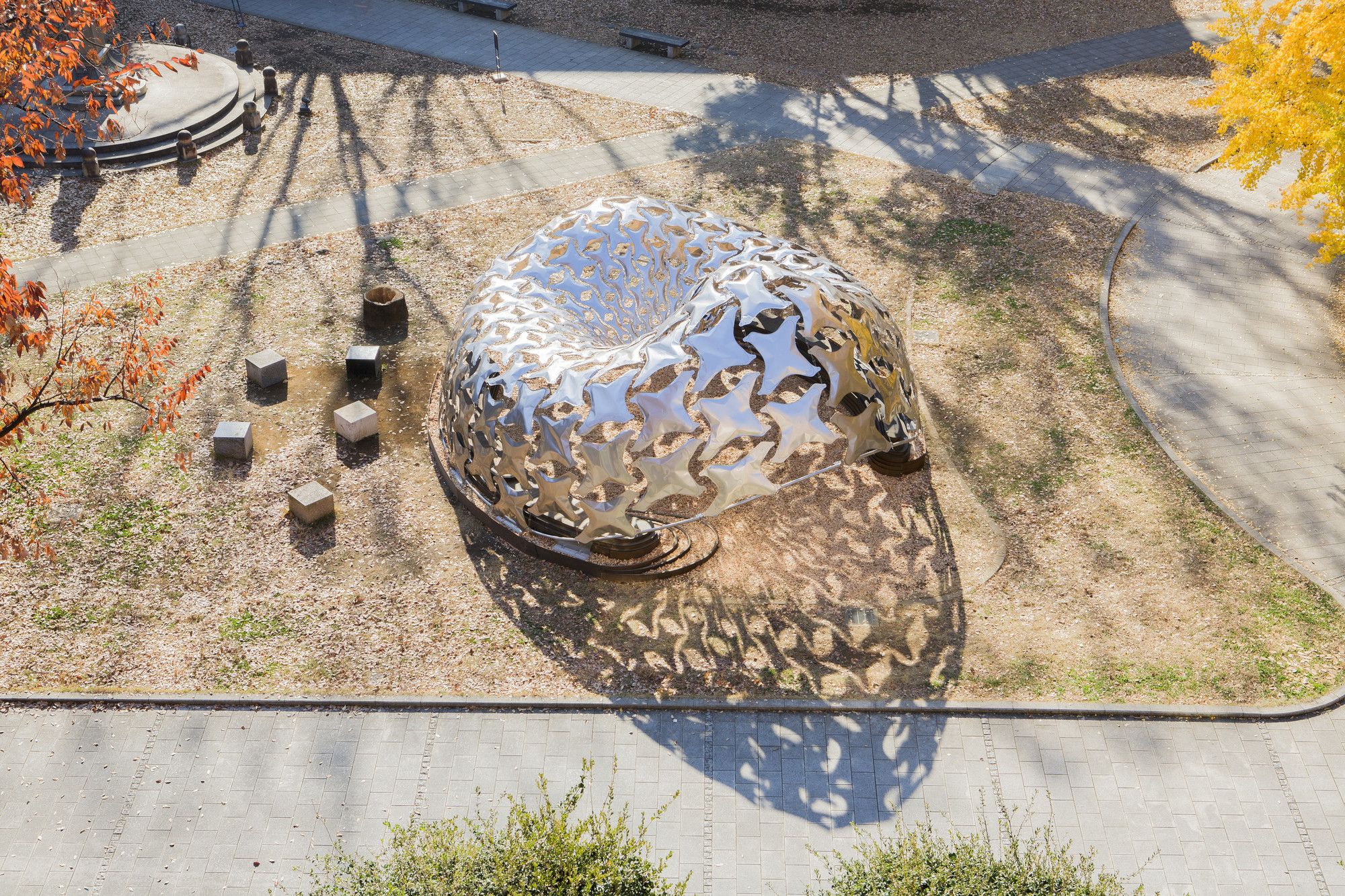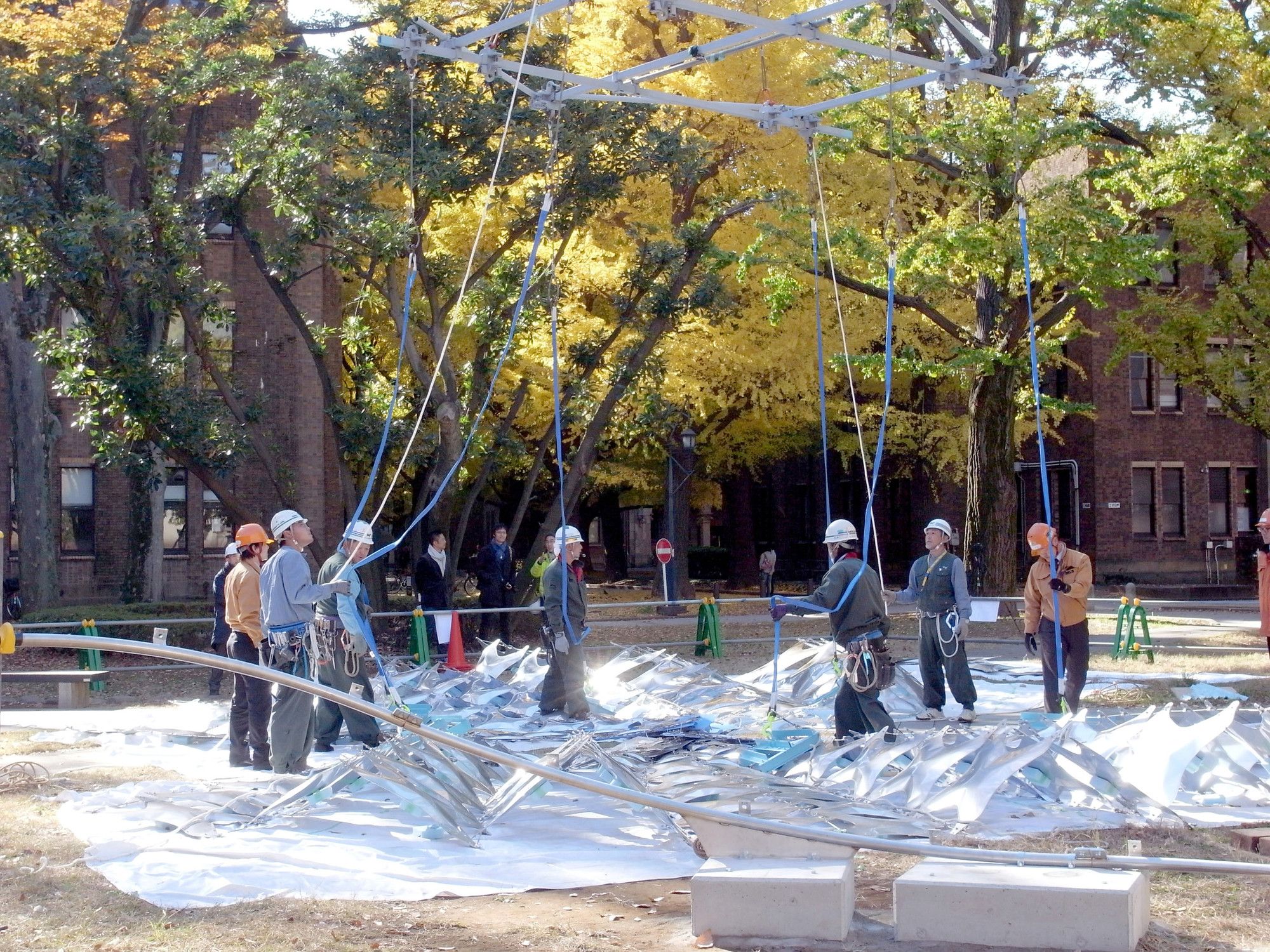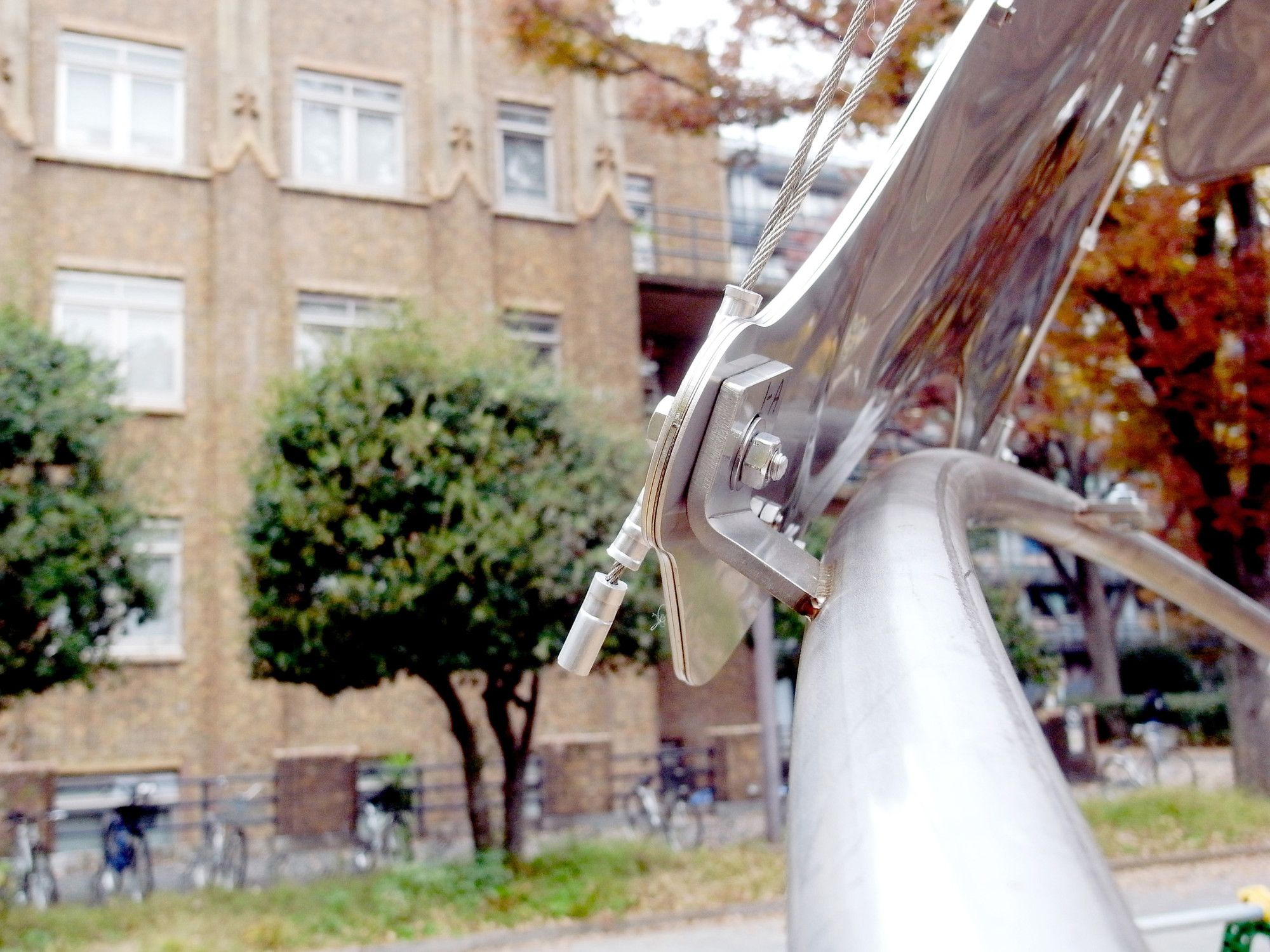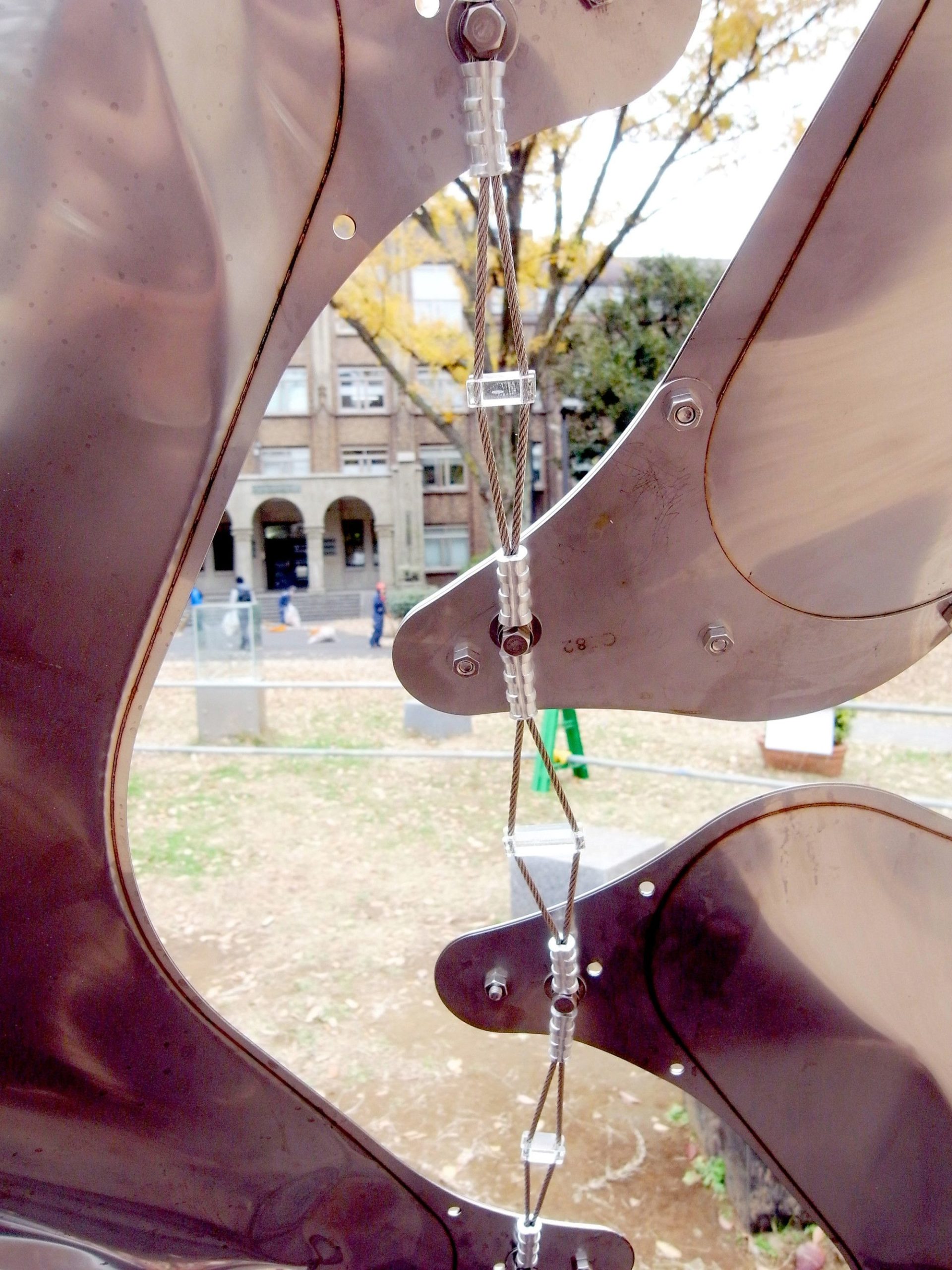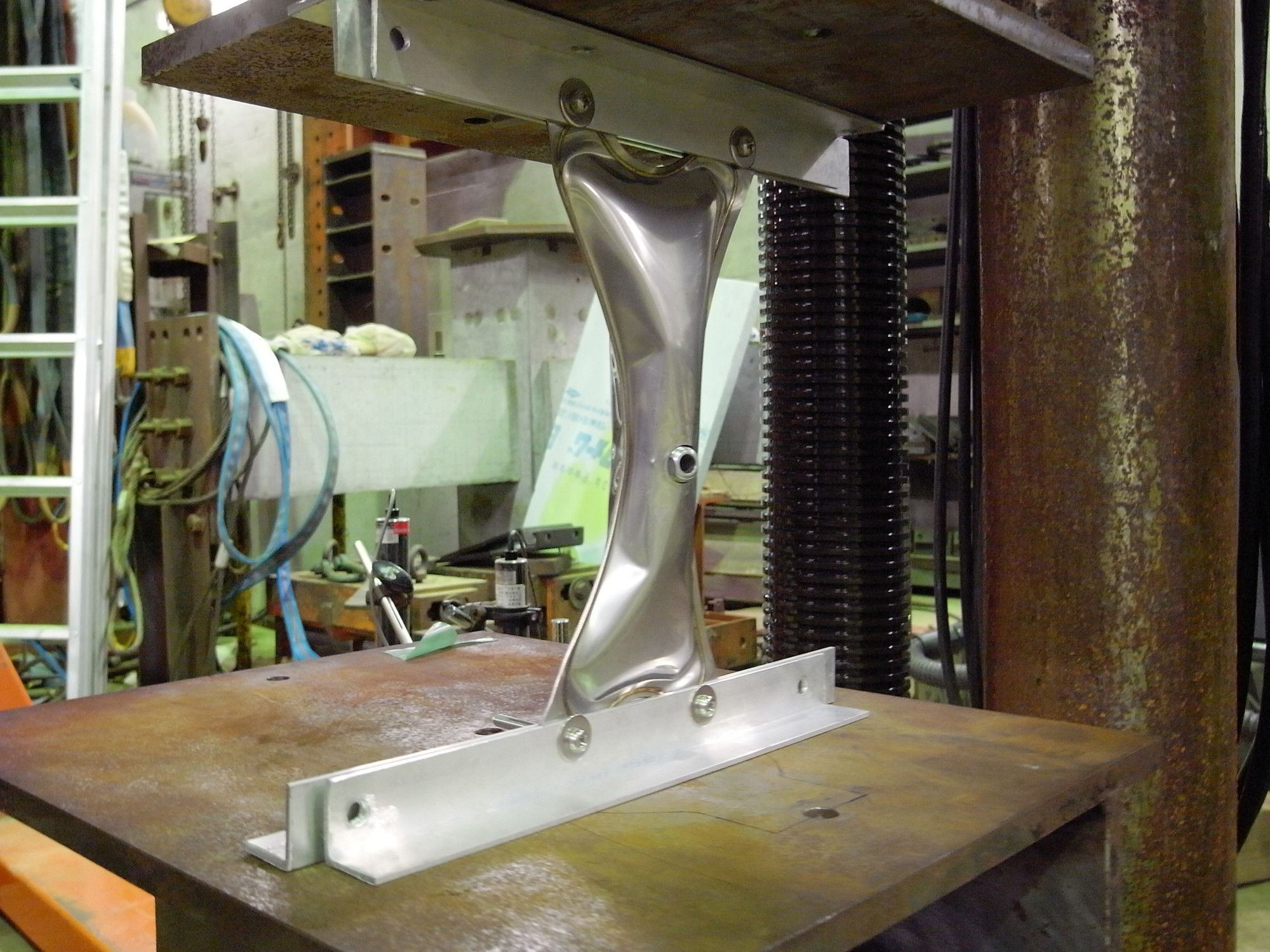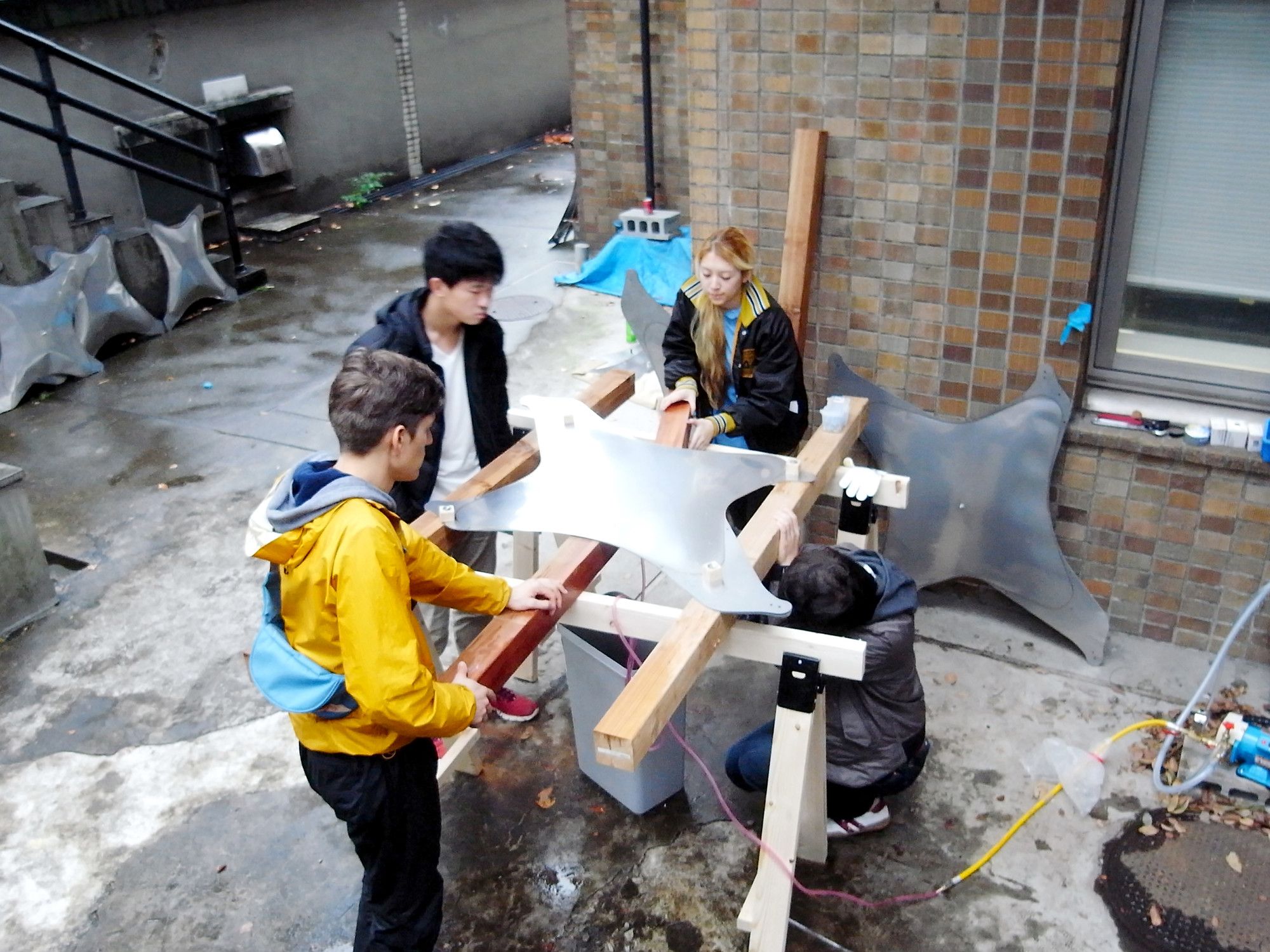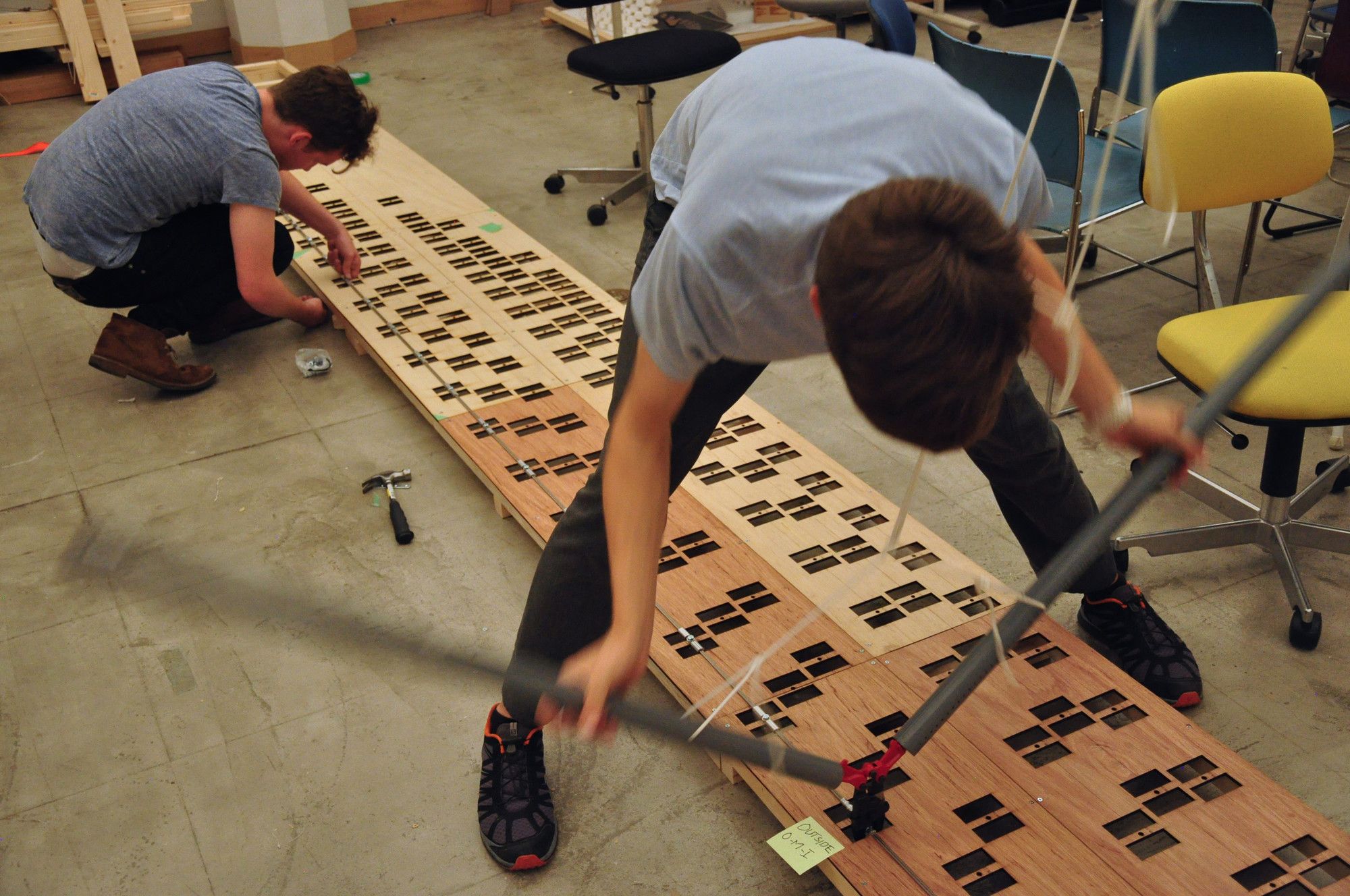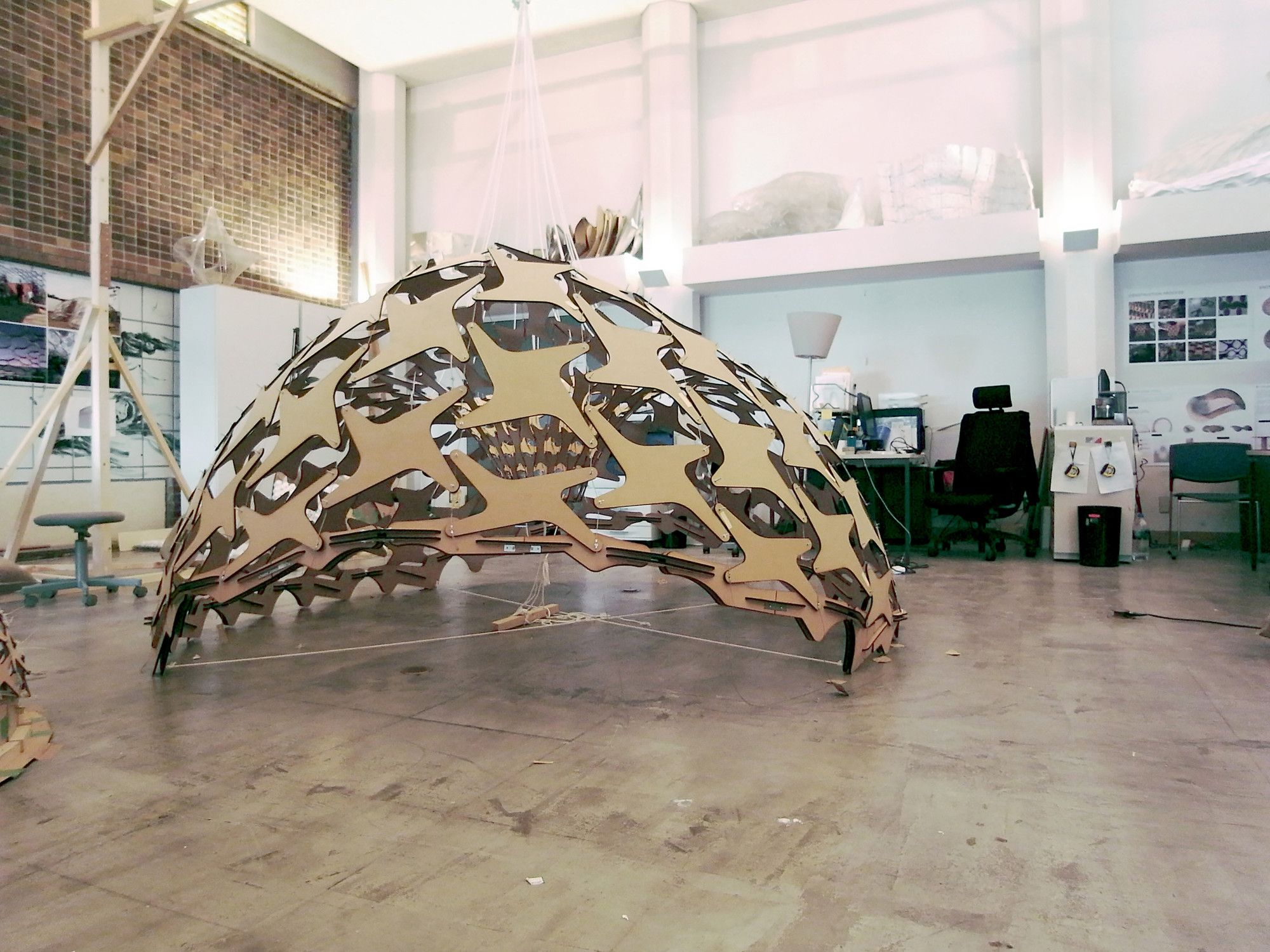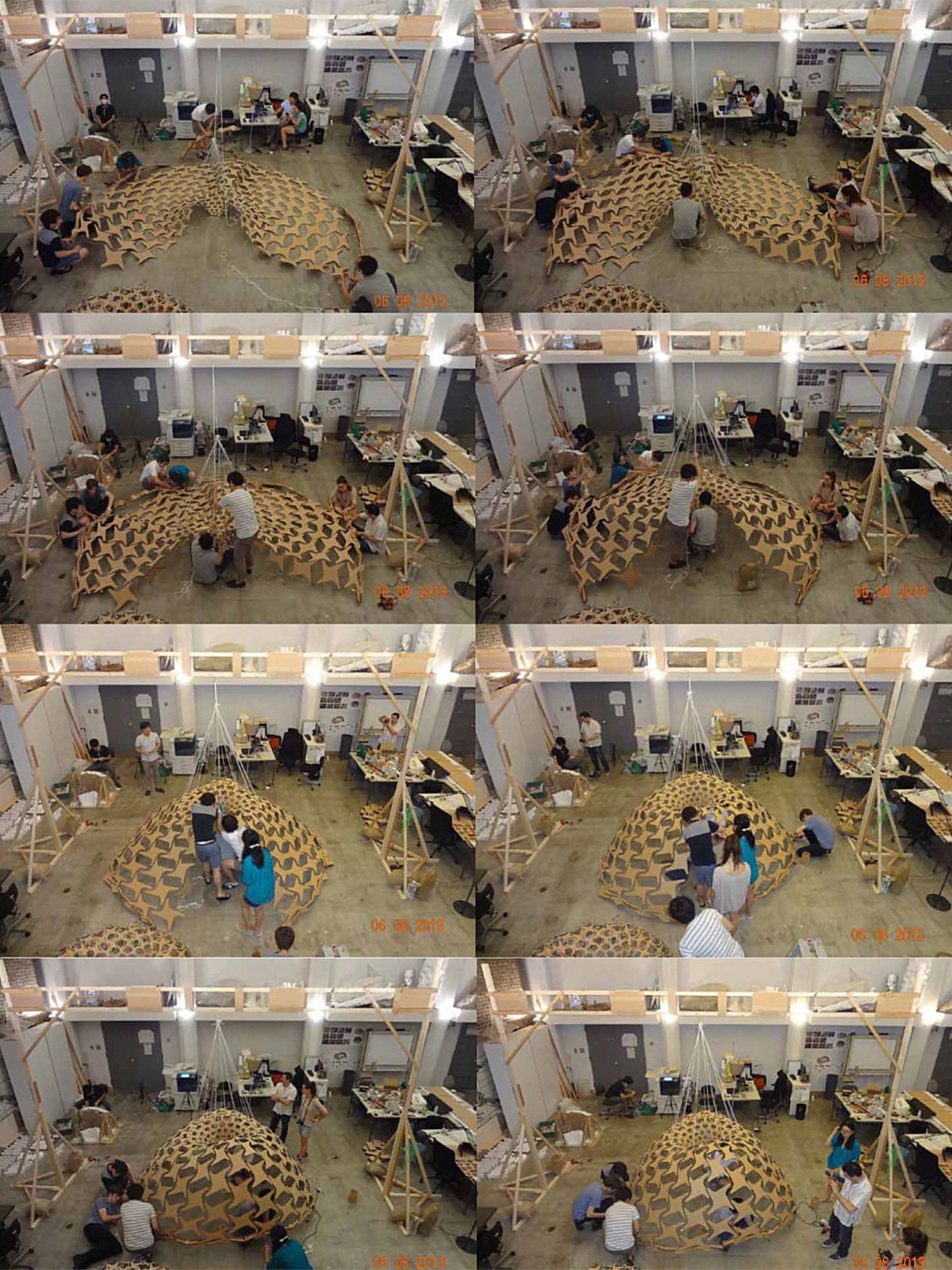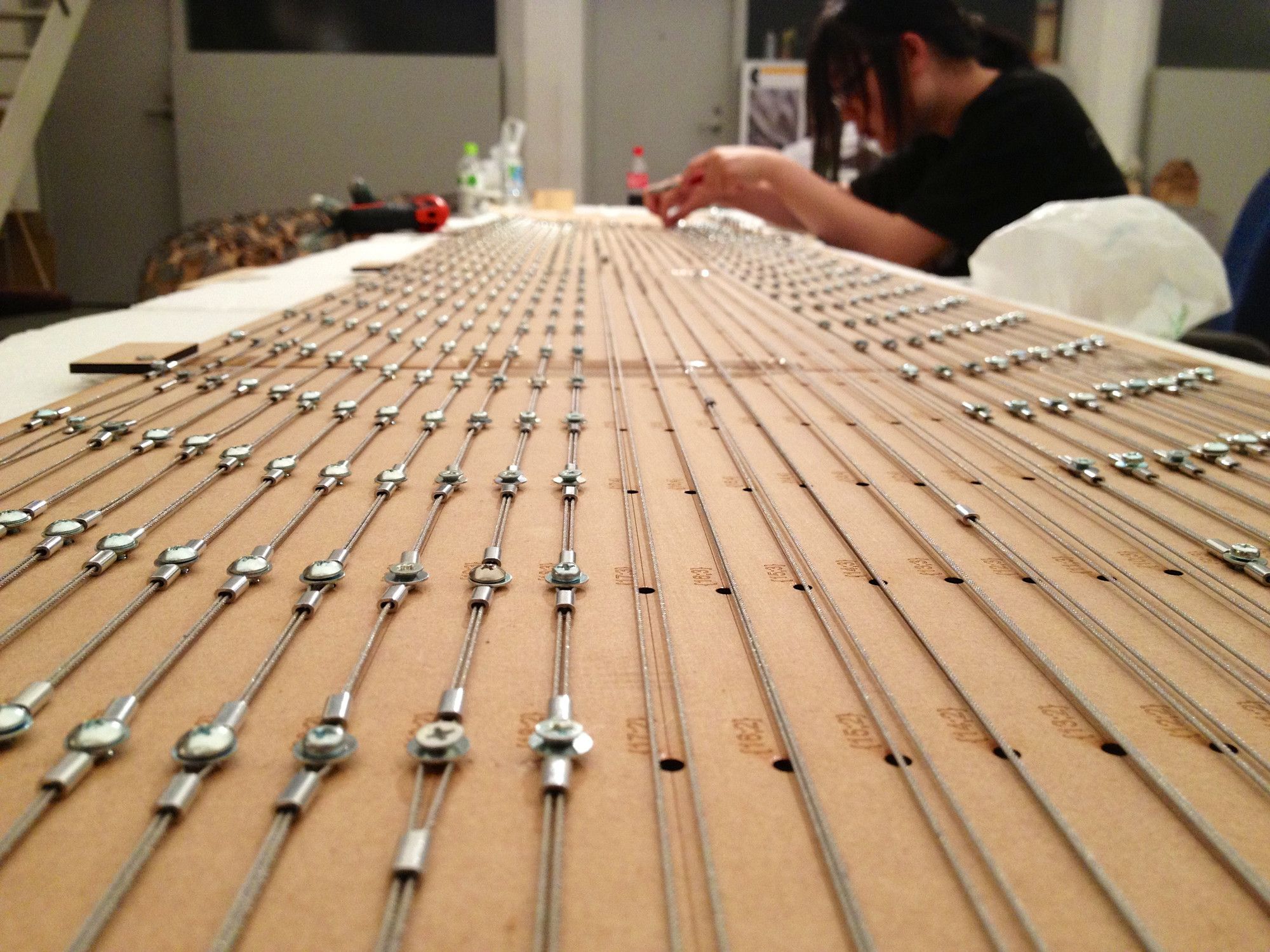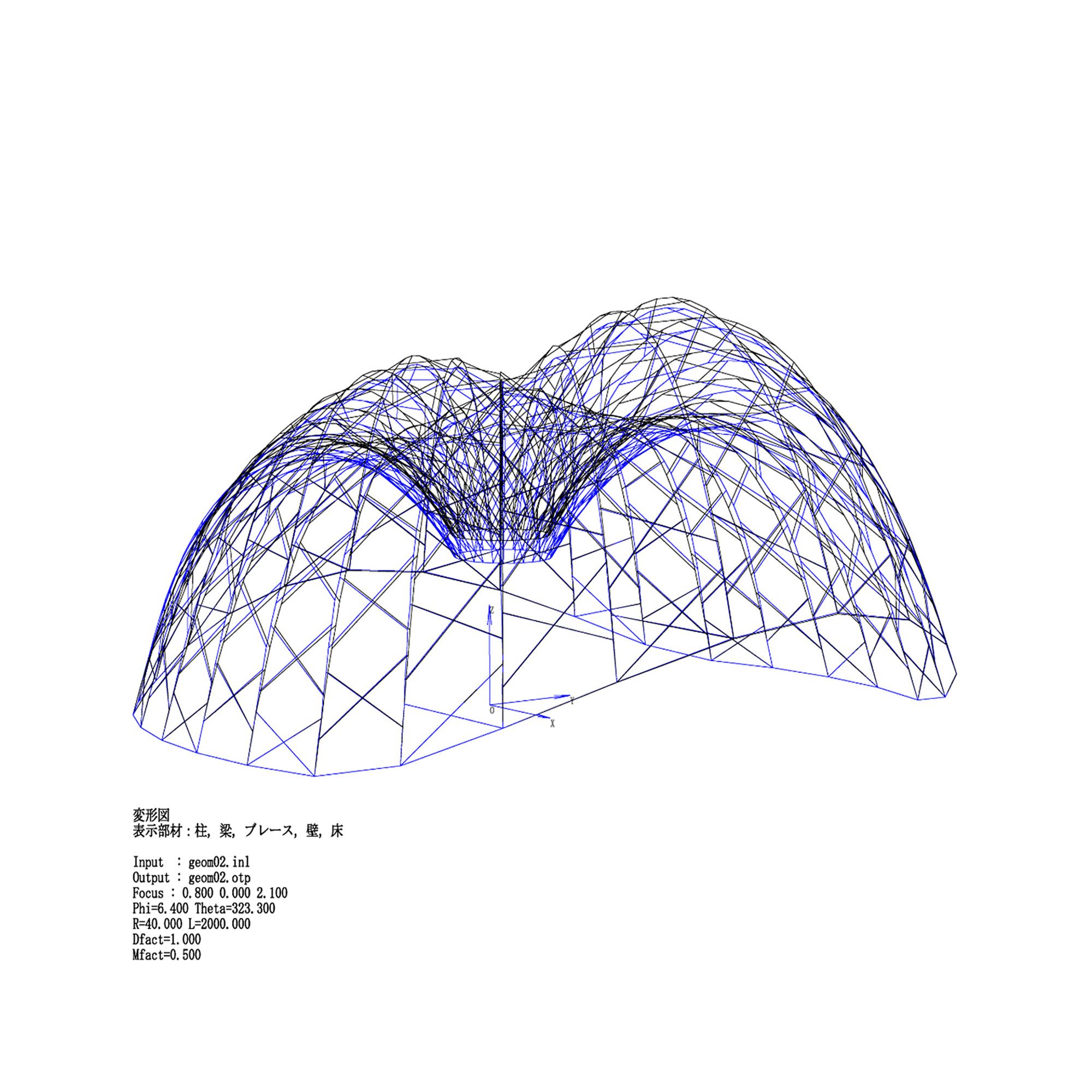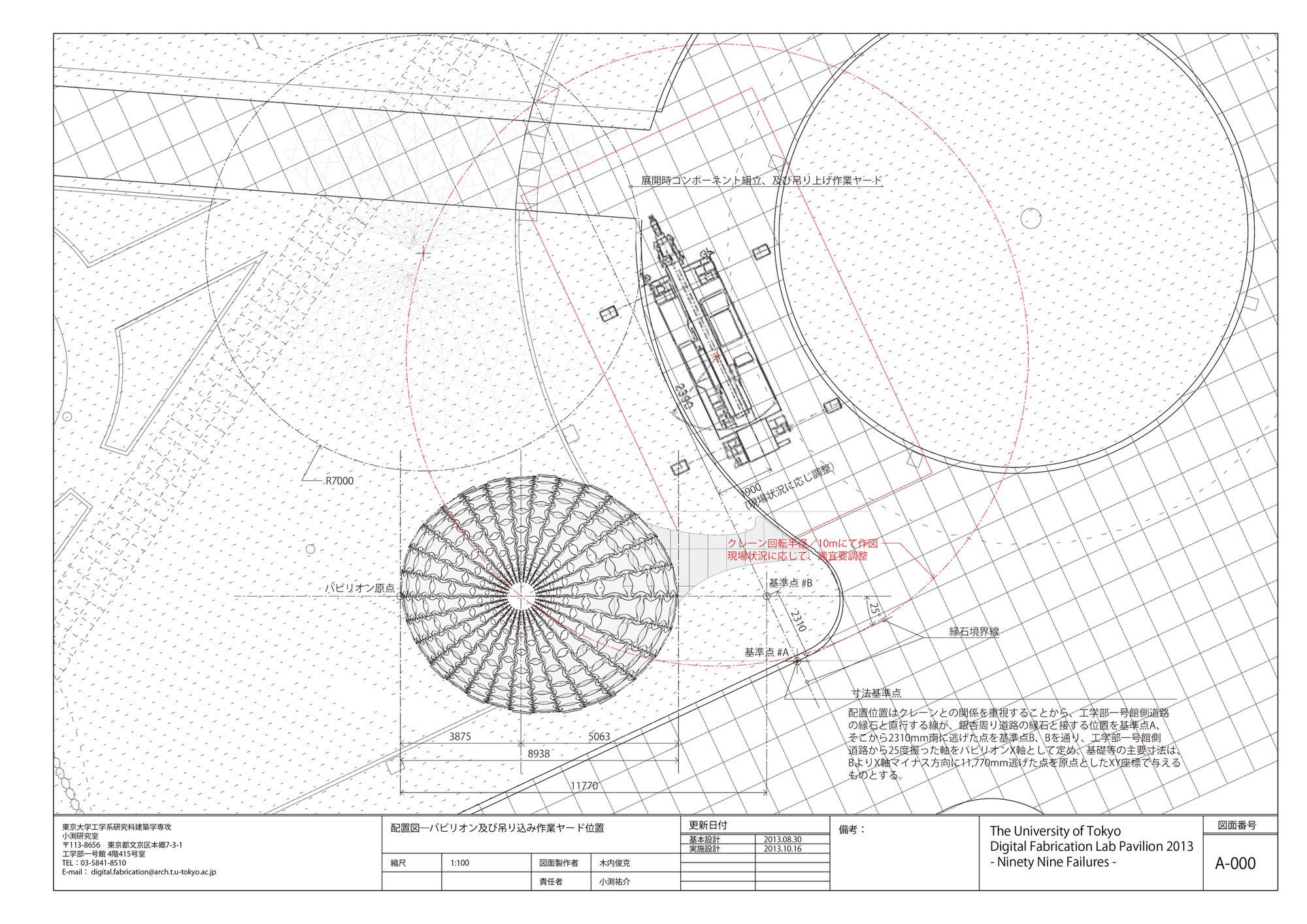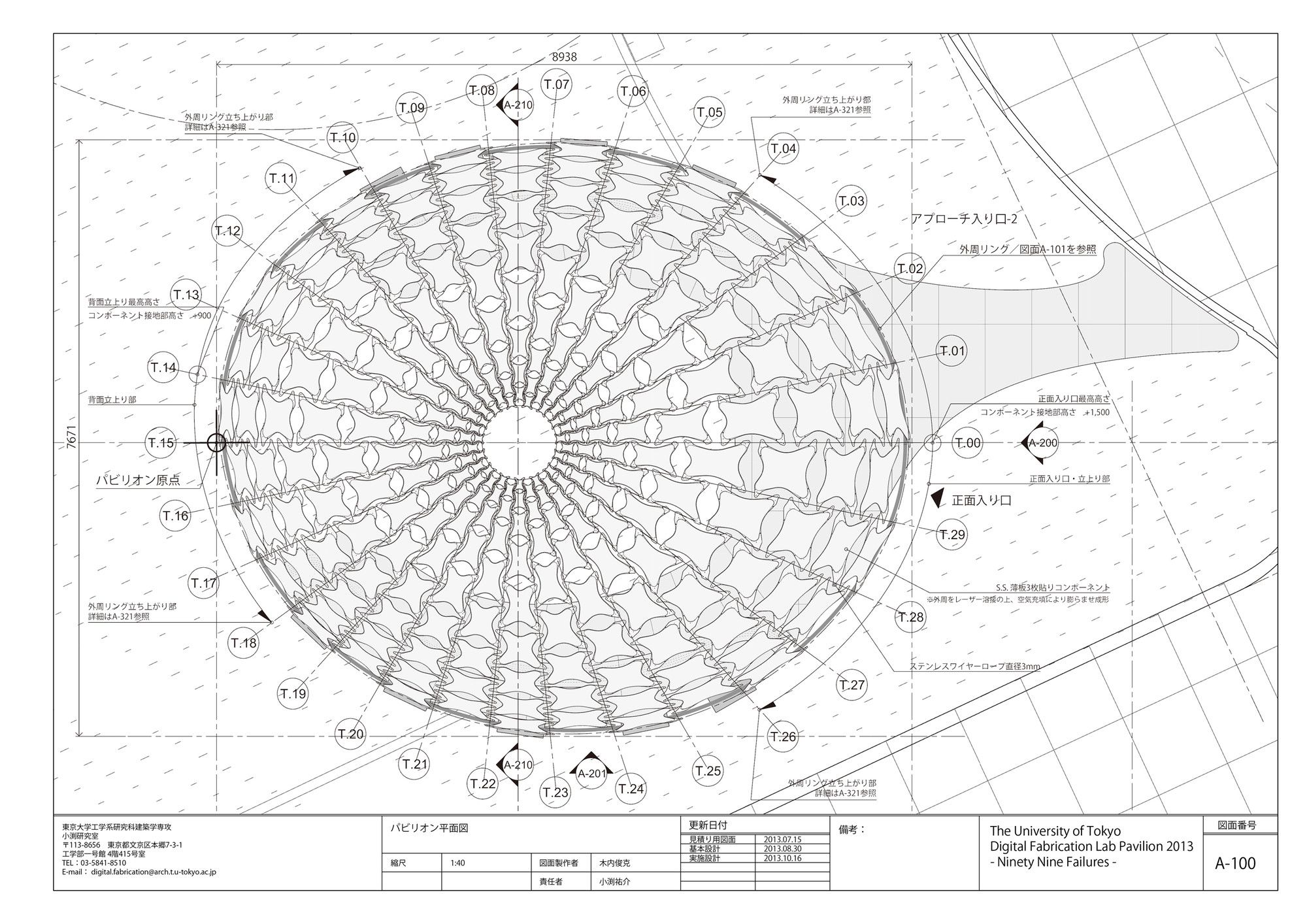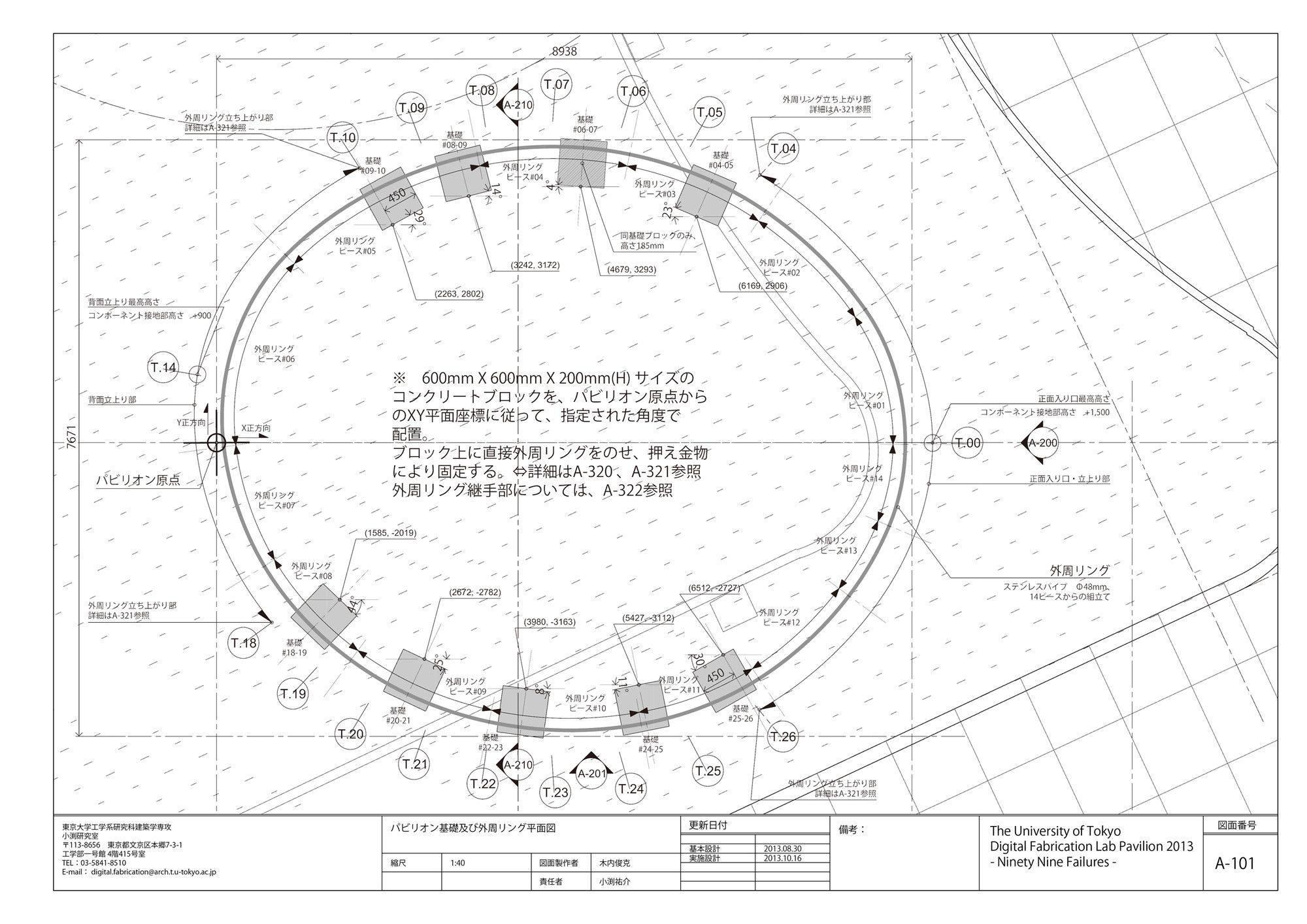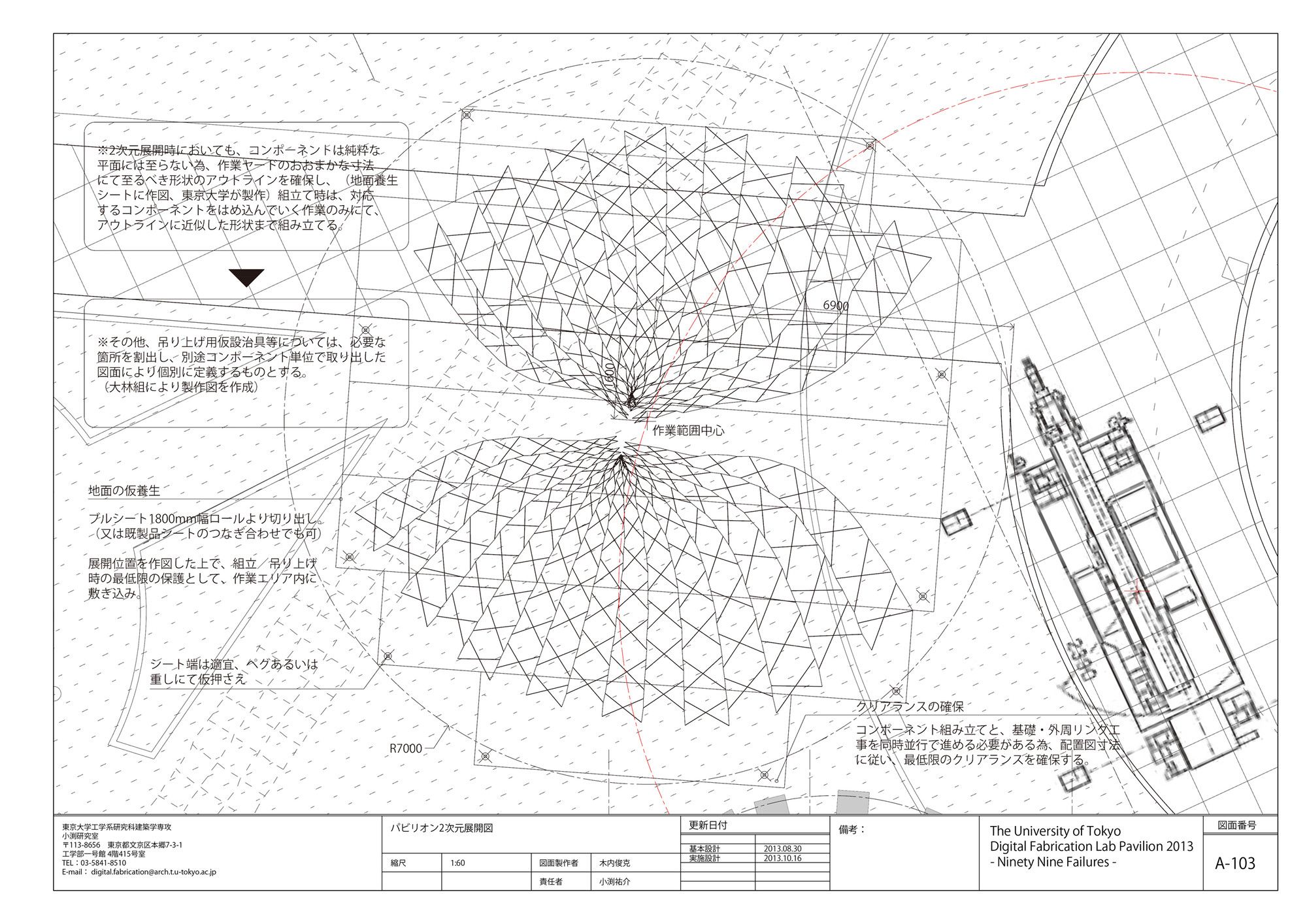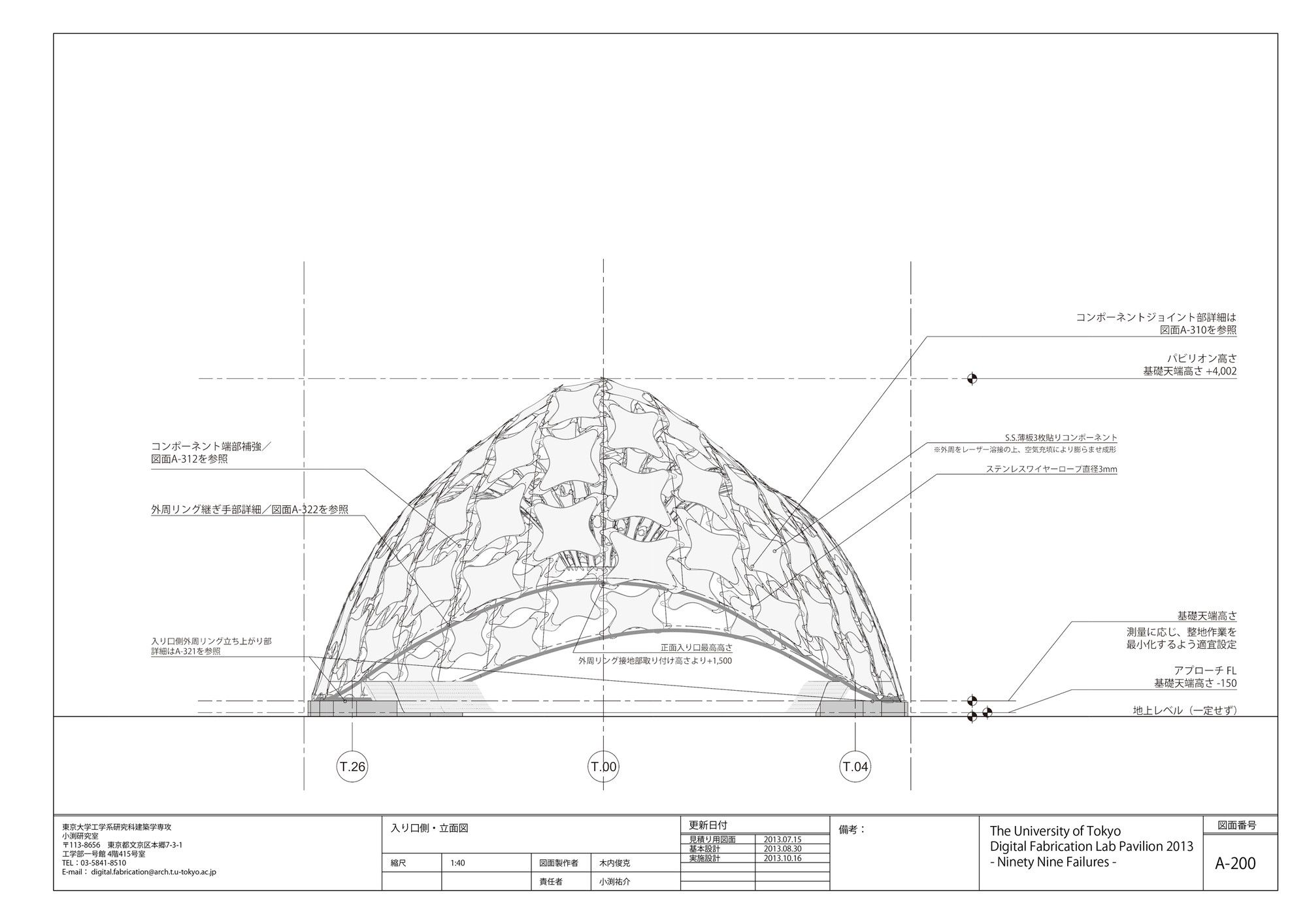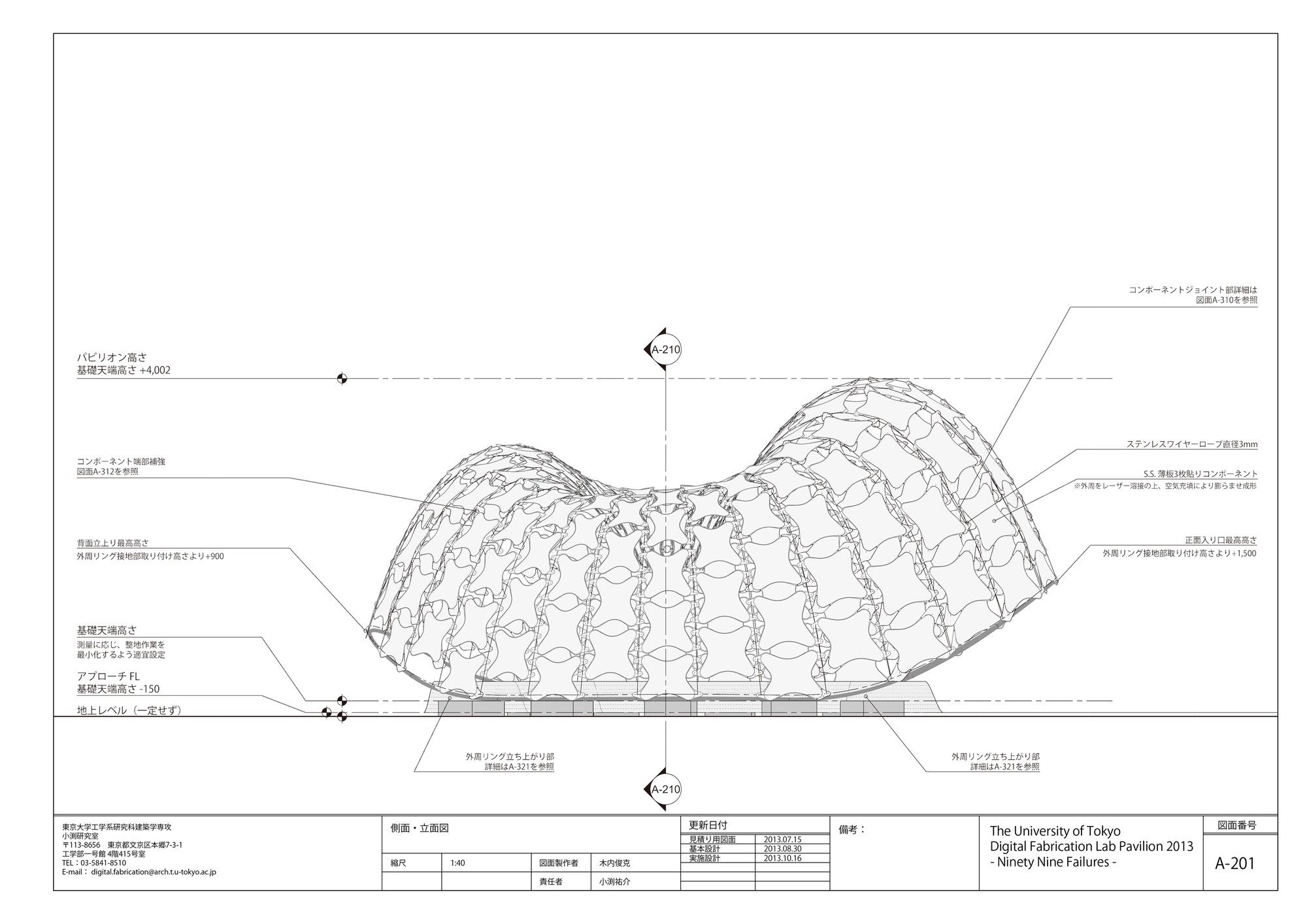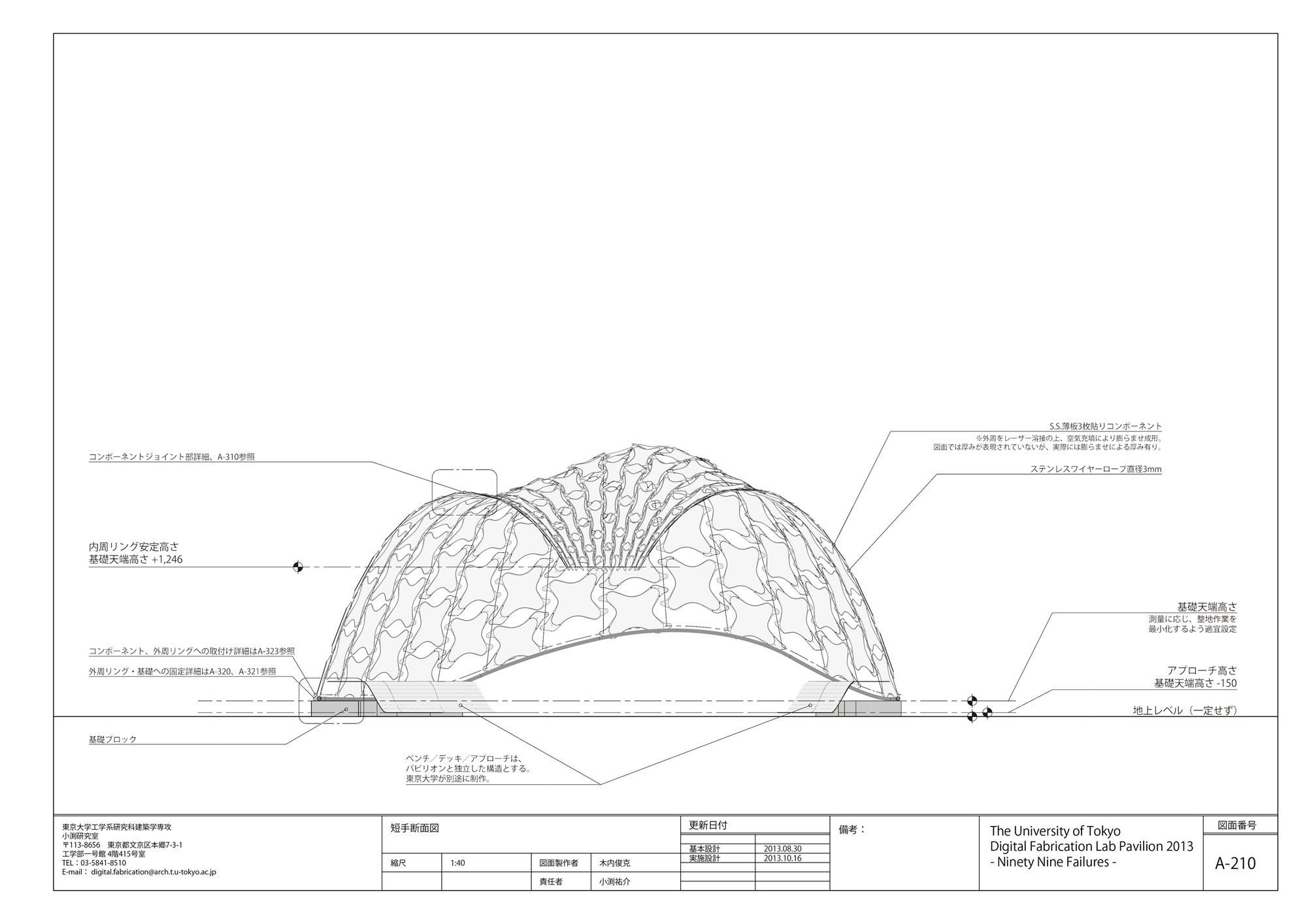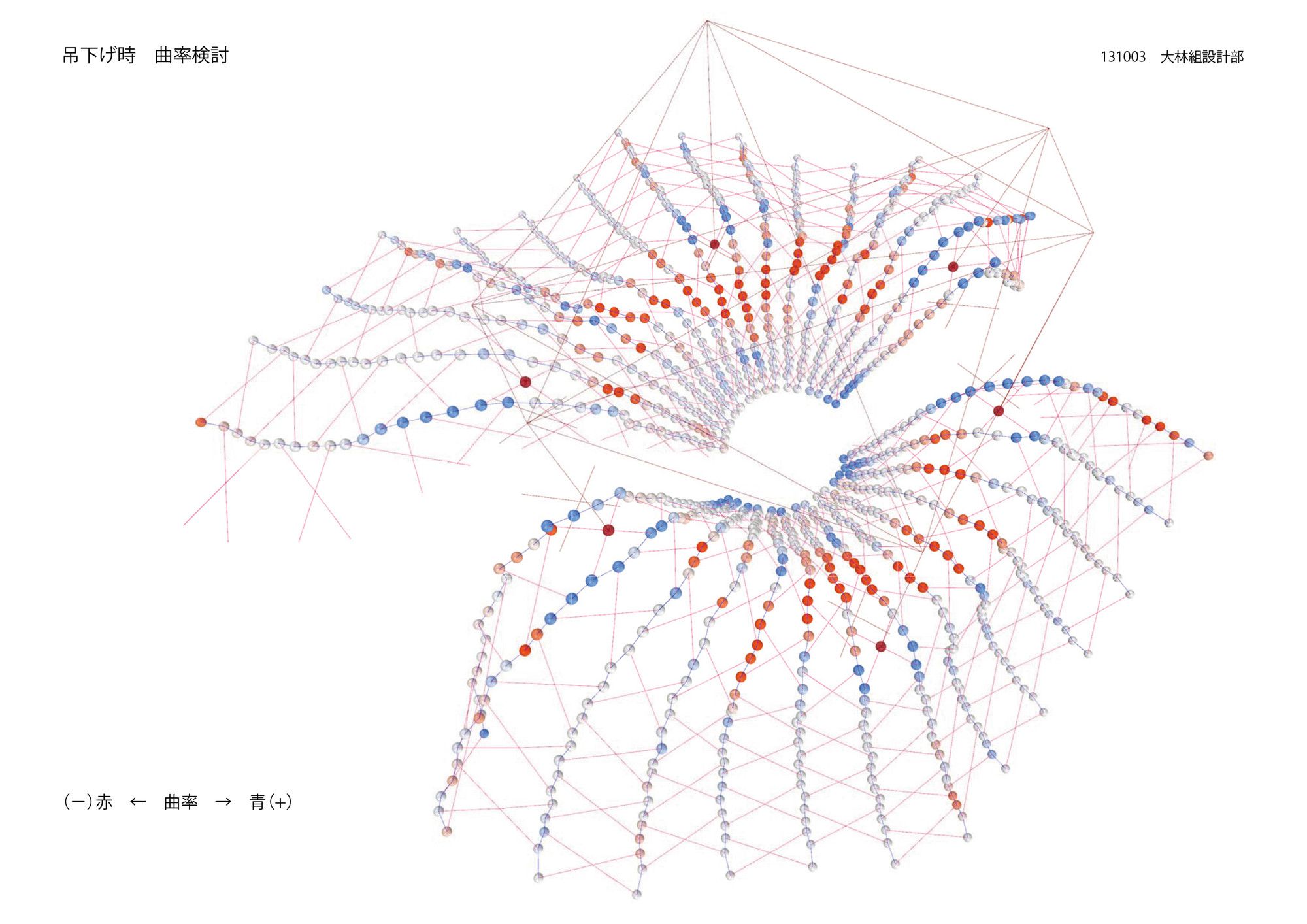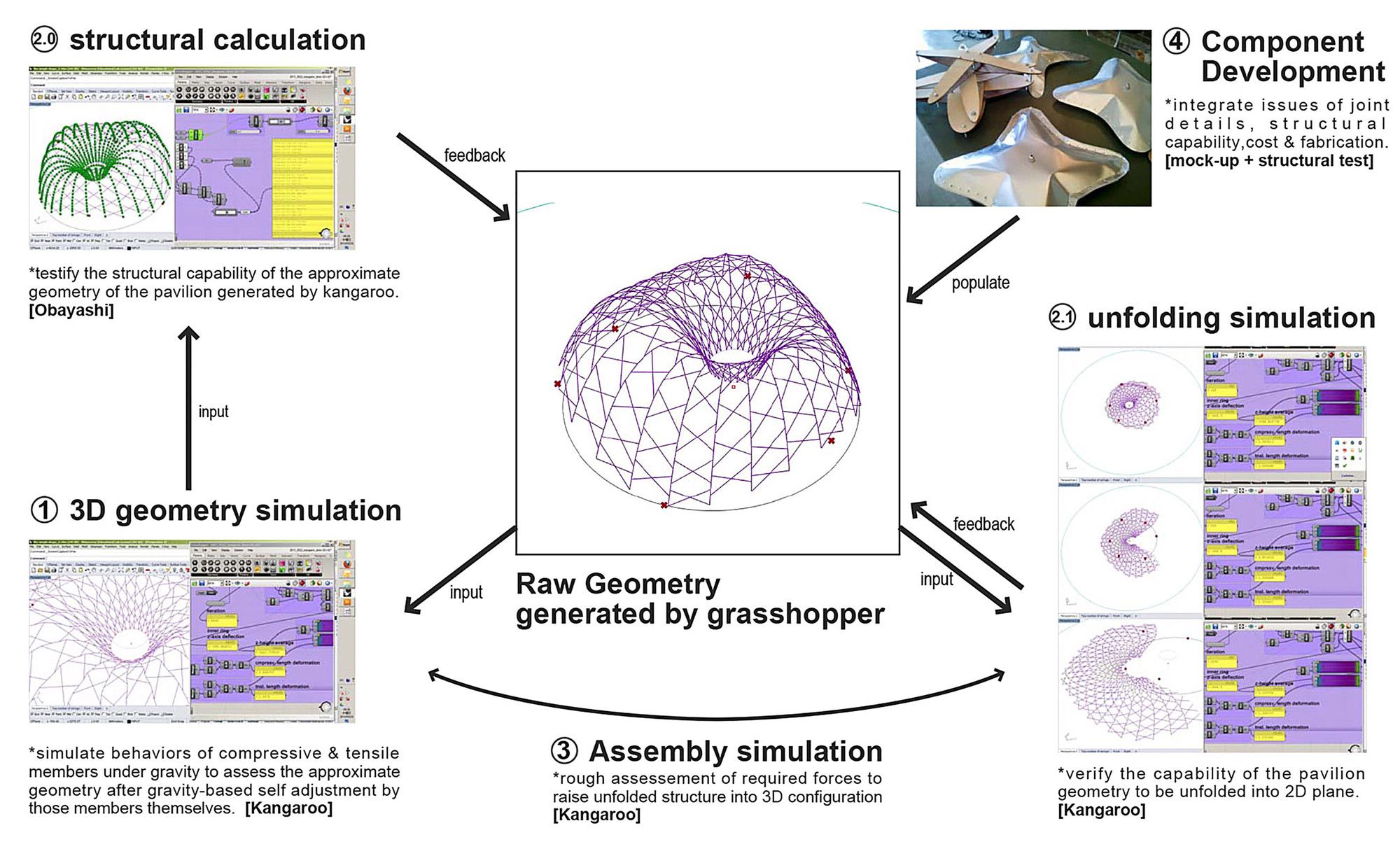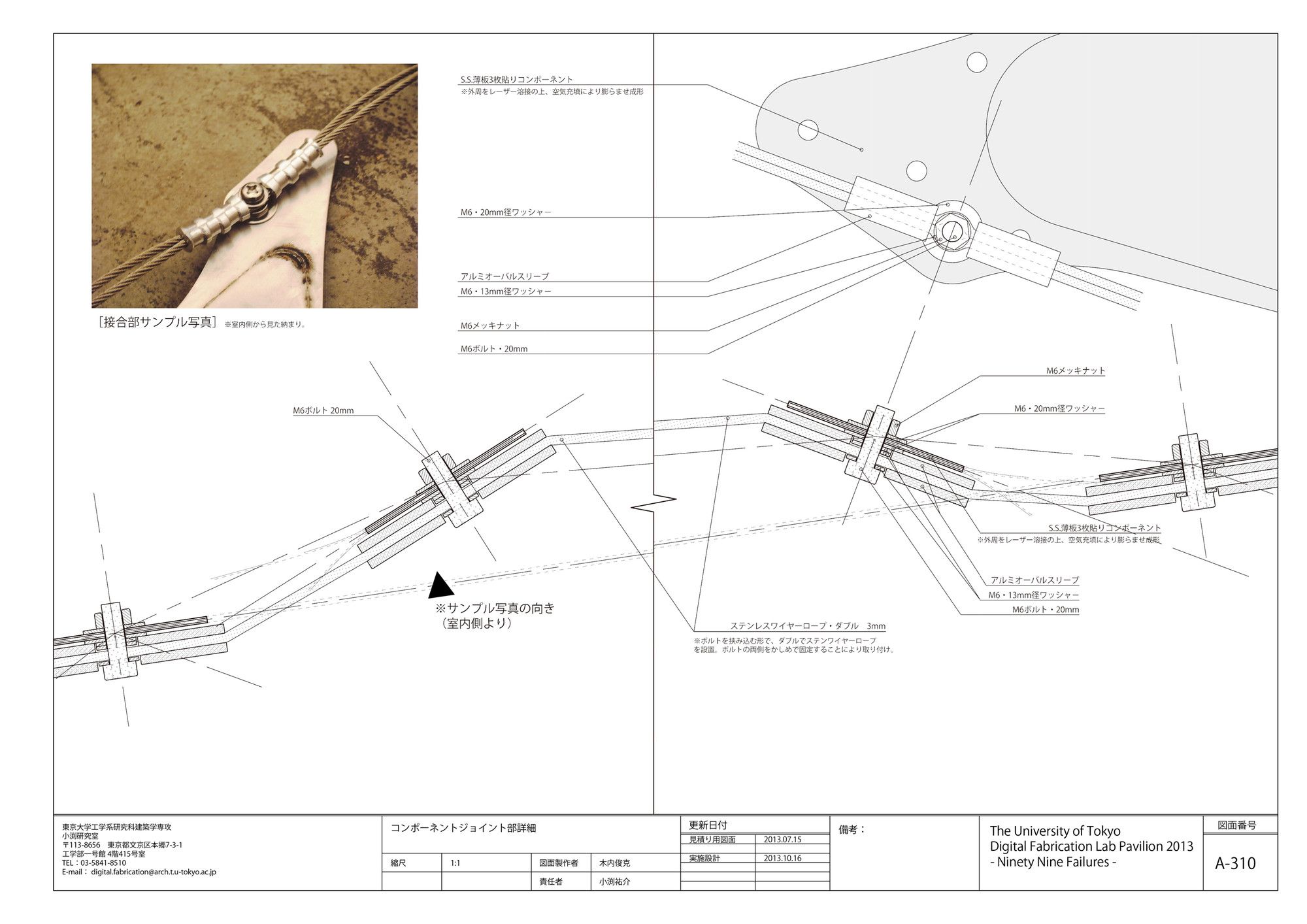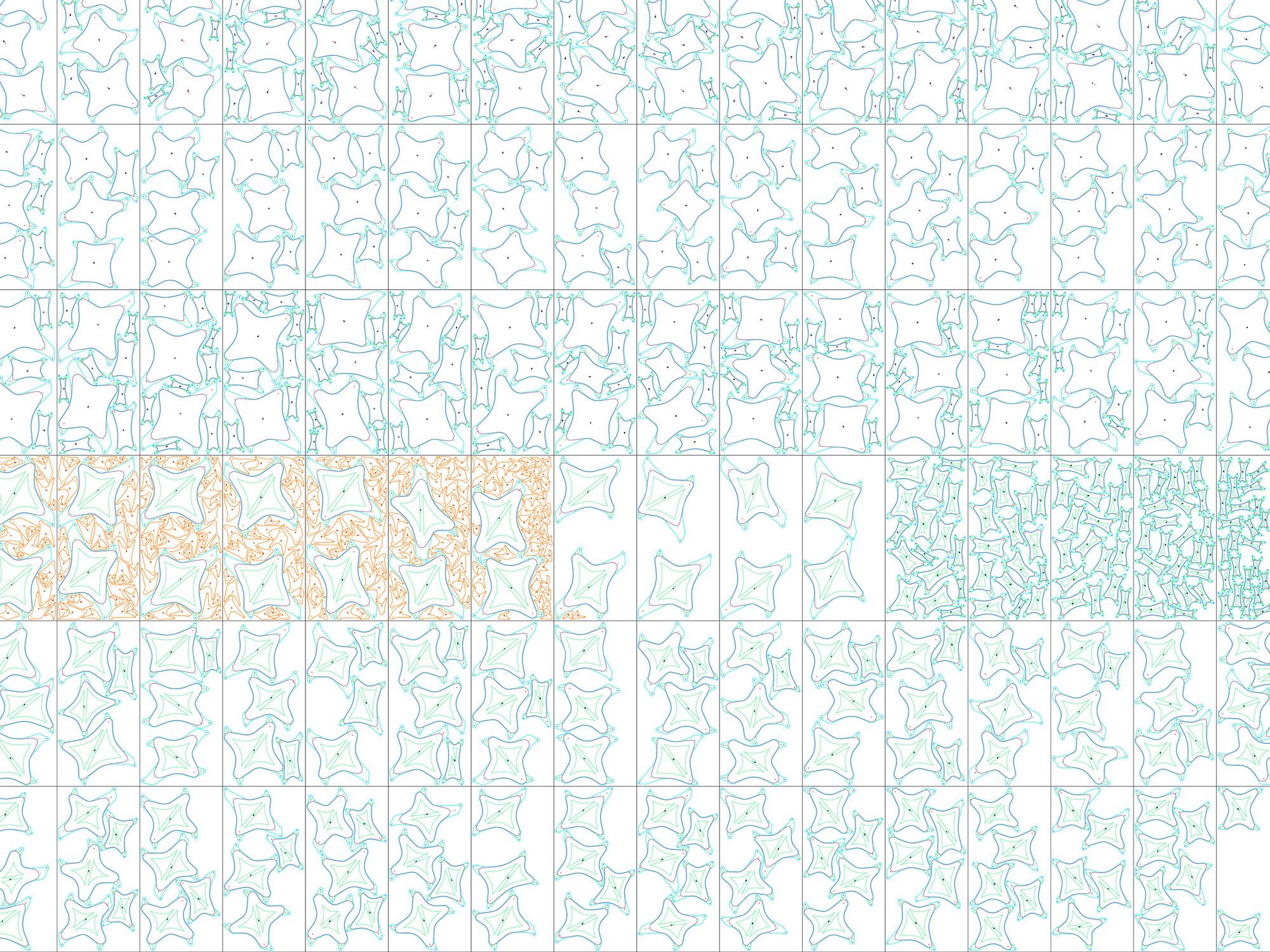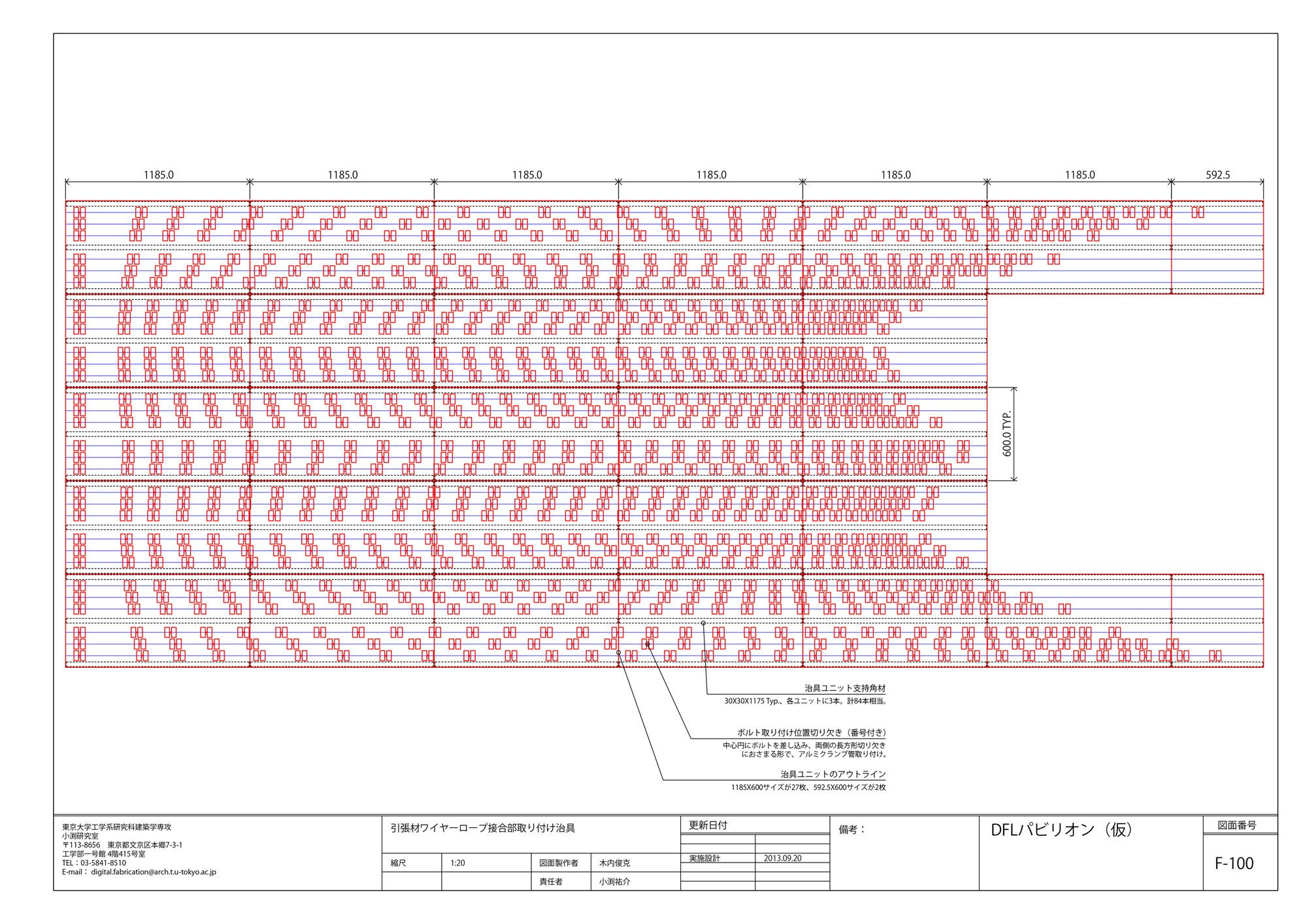


Ninety Nine Failures, the third pavilion project by the Digital Fabrication Laboratory of the University of Tokyo, Japan seeks to pay respect to the many failures before a success in the practice of architecture. Under the initiative of Kengo Kuma and Yuseke Obuchi, the pavilion expresses a highly immersive structural, material and spatially perceptual experience. The pavilion is the outcome of the lab’s investigation of structural and material behaviours in tensigrity models.
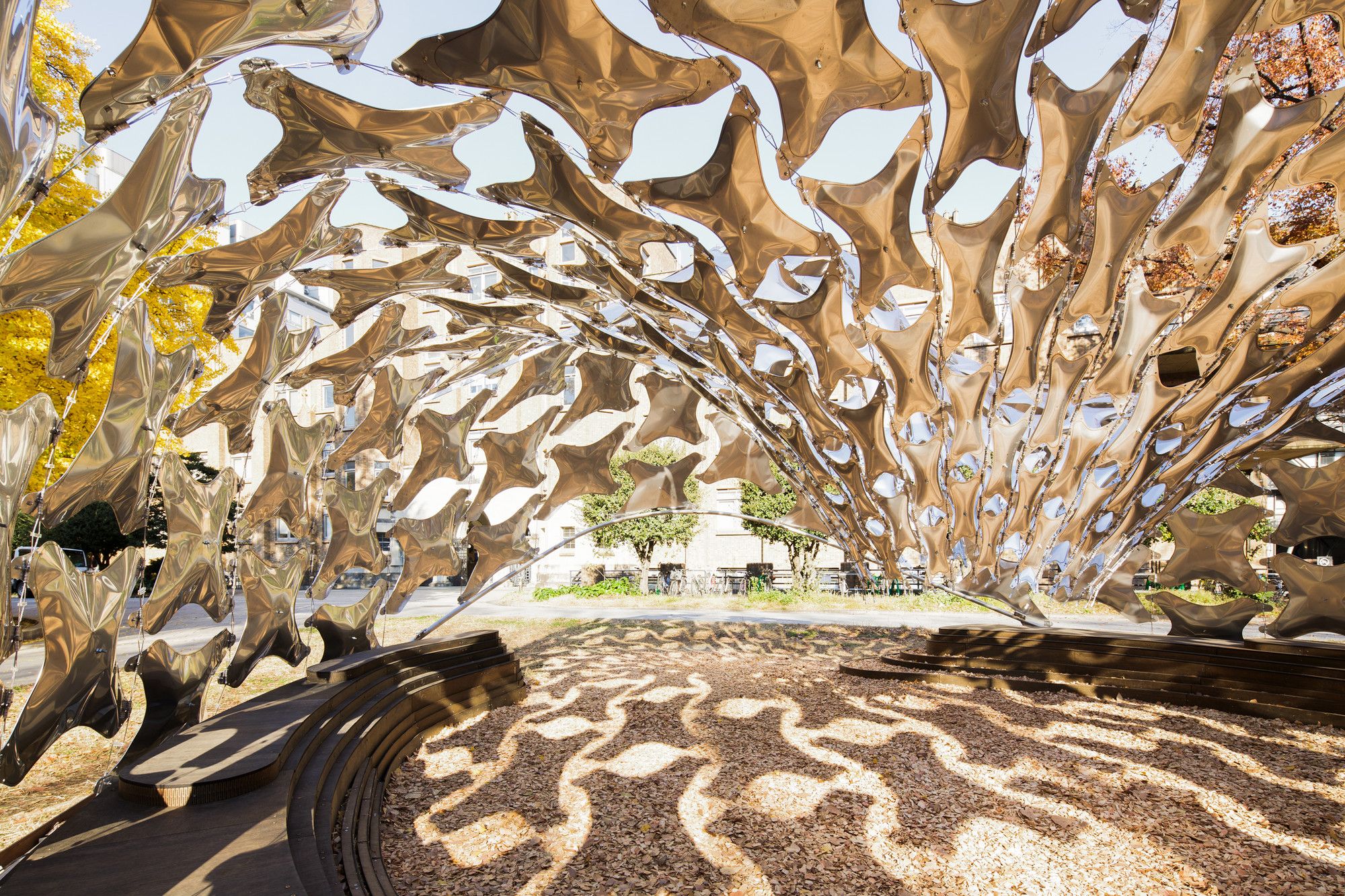
© Hayato Wakabayashi
Tensigrity models are explorations of balancing tension and compression forces in sculptural objects.It dates back to the 1940’s and was coined by Buckminster Fuller who described it as synergetic explorations in structure and geometrical forms.
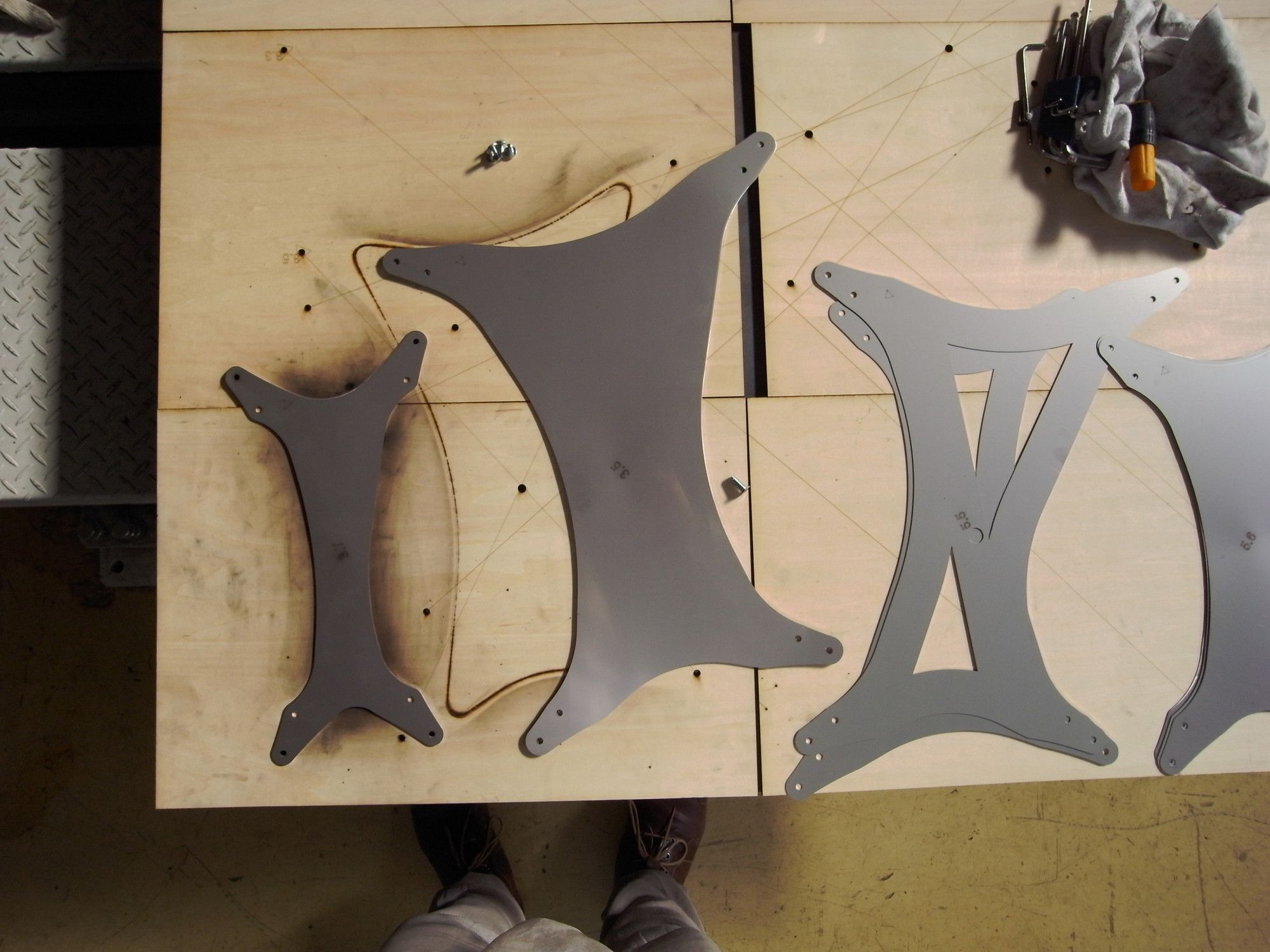
Courtesy of The University of Tokyo Digital Fabrication Lab
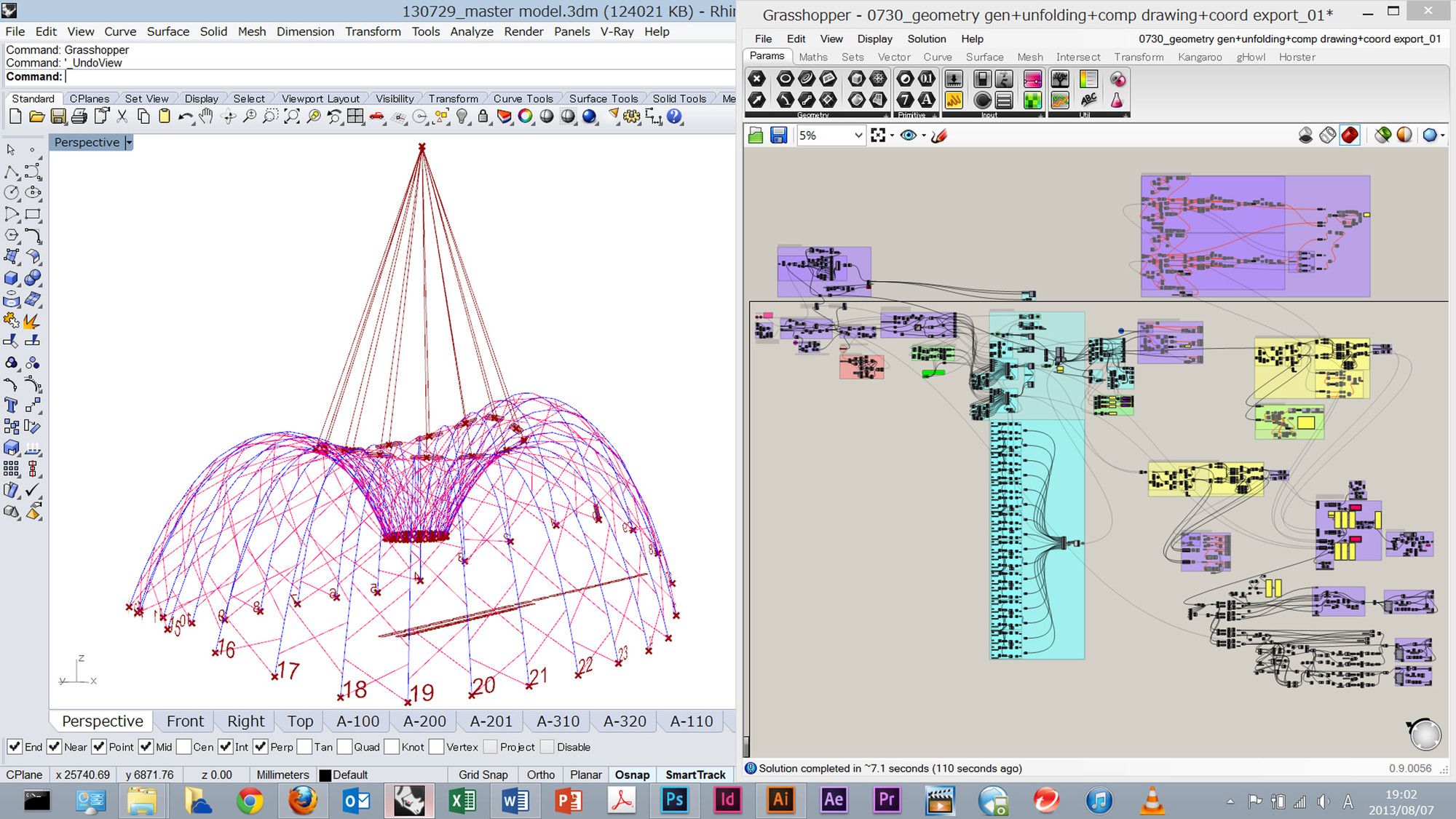
The tensigrity studies at the lab aim at investigating prototypical geometries to reconcile the contemporary issues of resource and material scarcity. The pavilion therefore serves as a conceptual and practical tool to generate a series of ideas rather than swiftly arrive at direct engineering solutions to these problems.
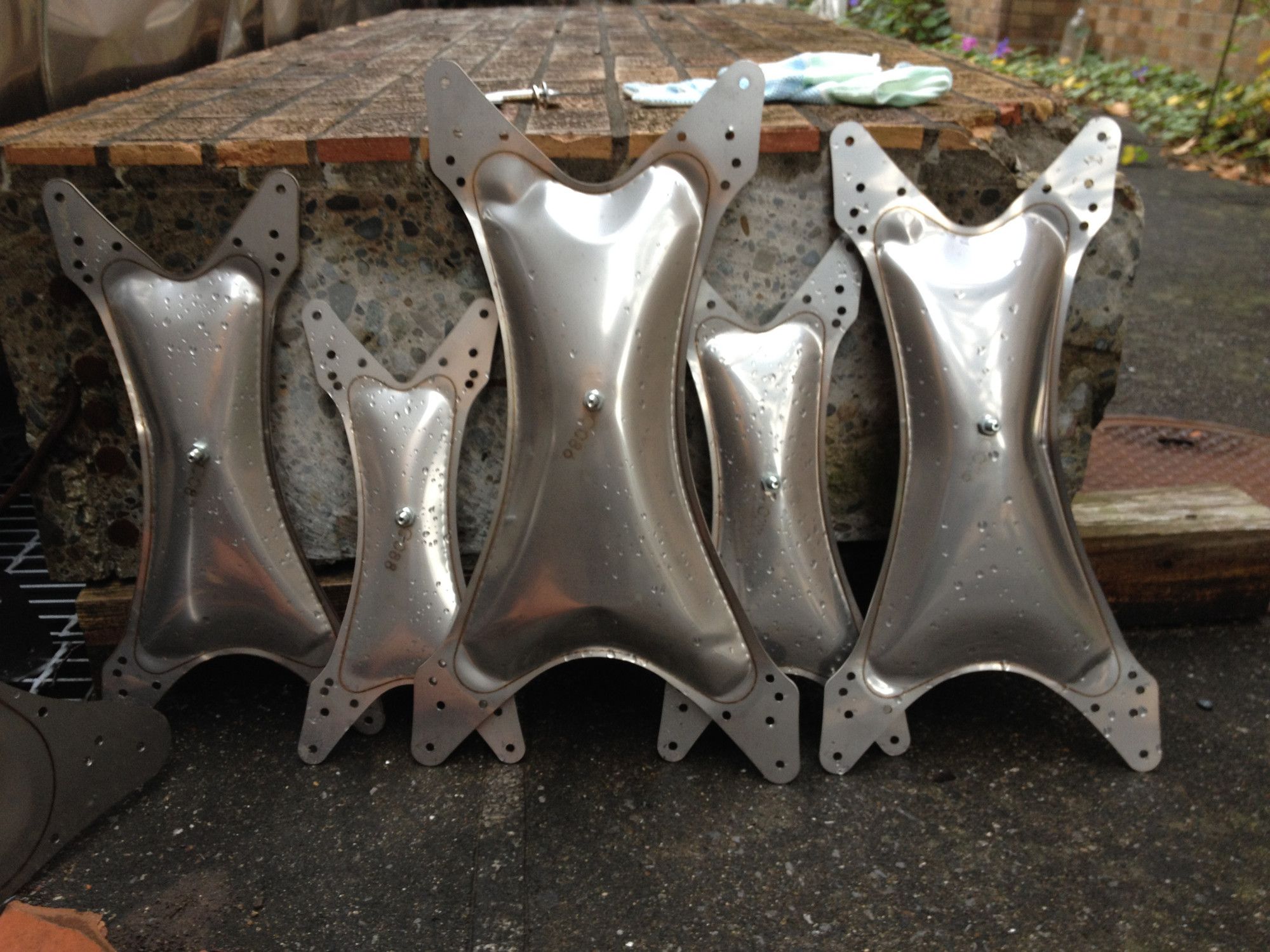
Courtesy of The University of Tokyo Digital Fabrication Lab
Obayashi Corporation, one of the project collaborators was invited to help choose a studio project for final realisation. The final choice according to studio assistant Toshiktasu Kiuchi was related to the “potential of the geometric form to be controlled and calibrated along the process of construction”.
Project info:
Architects: The University of Tokyo Digital Fabrication Lab
Country: Japan
Year: 2013
Photographs: Hayato Wakabayashi, Courtesy of The University of Tokyo Digital Fabrication Lab