


Mushtari
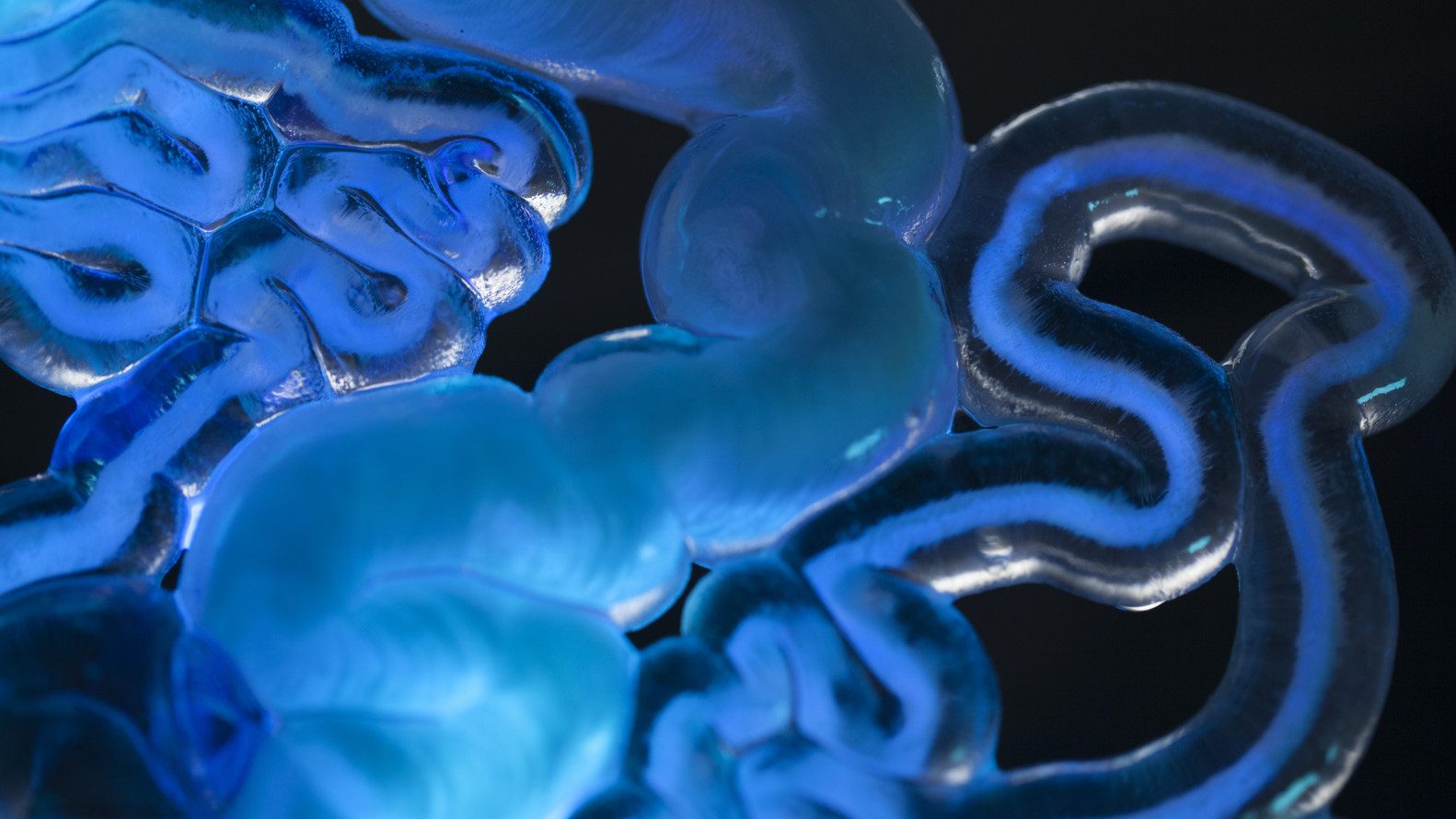
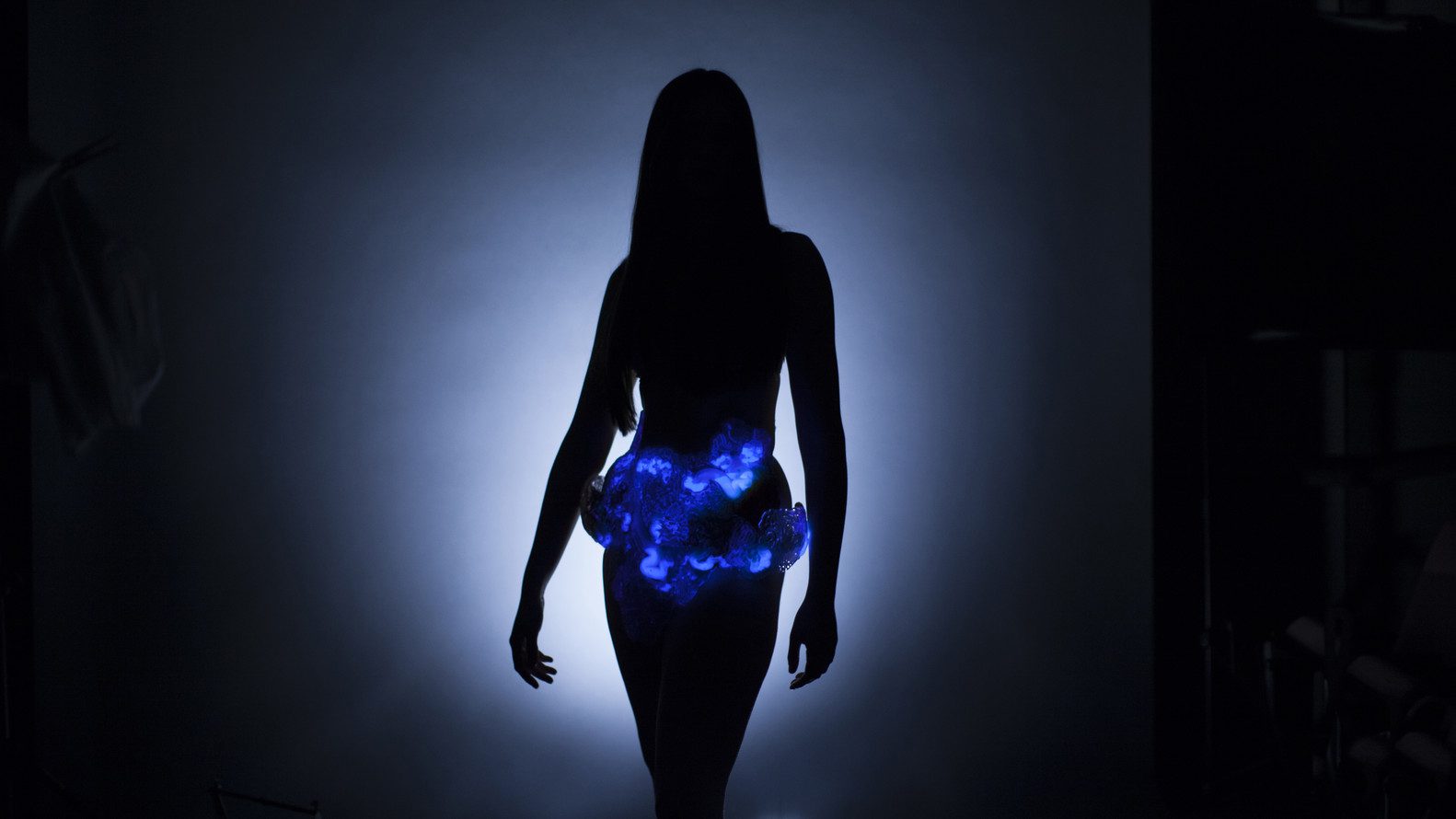
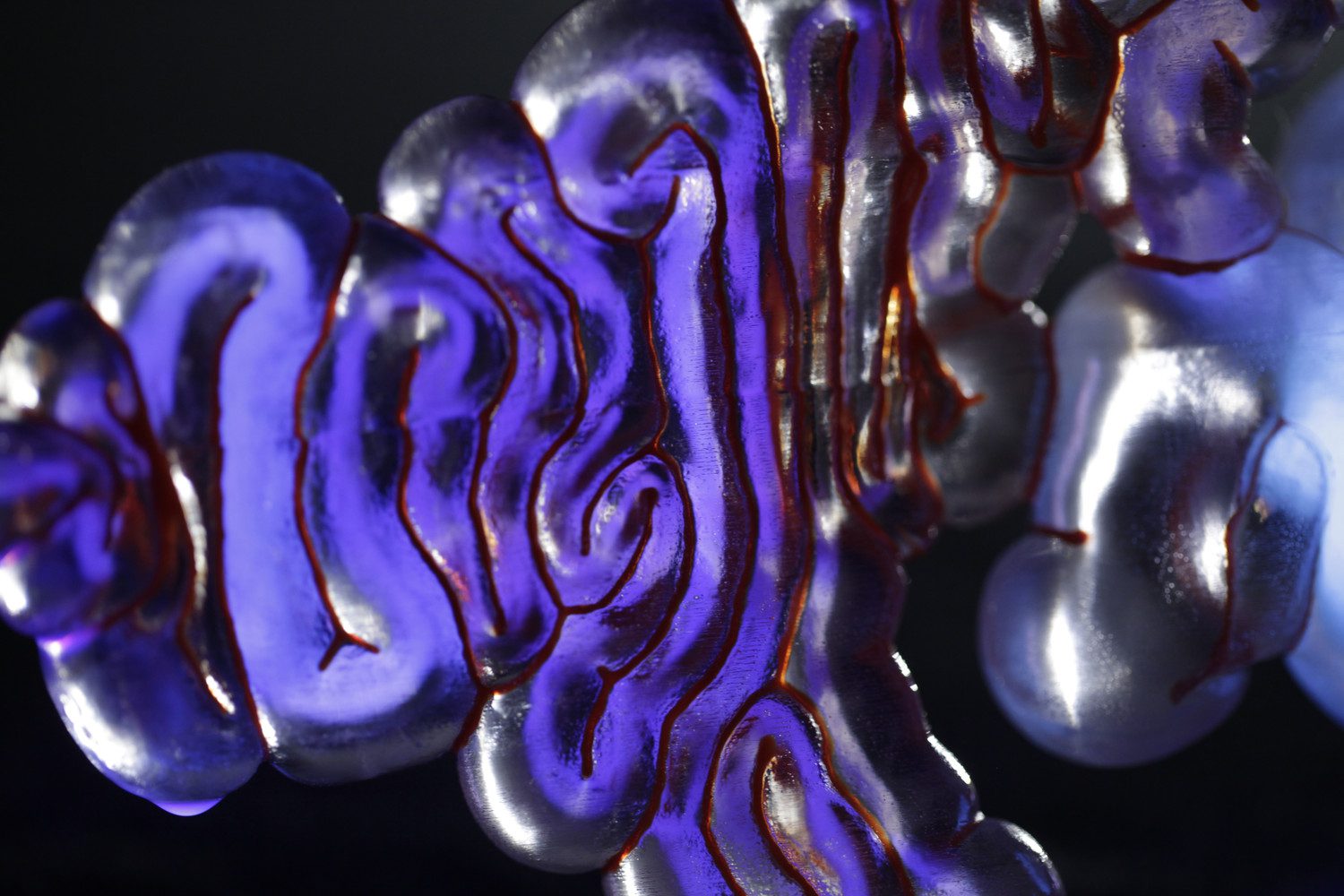
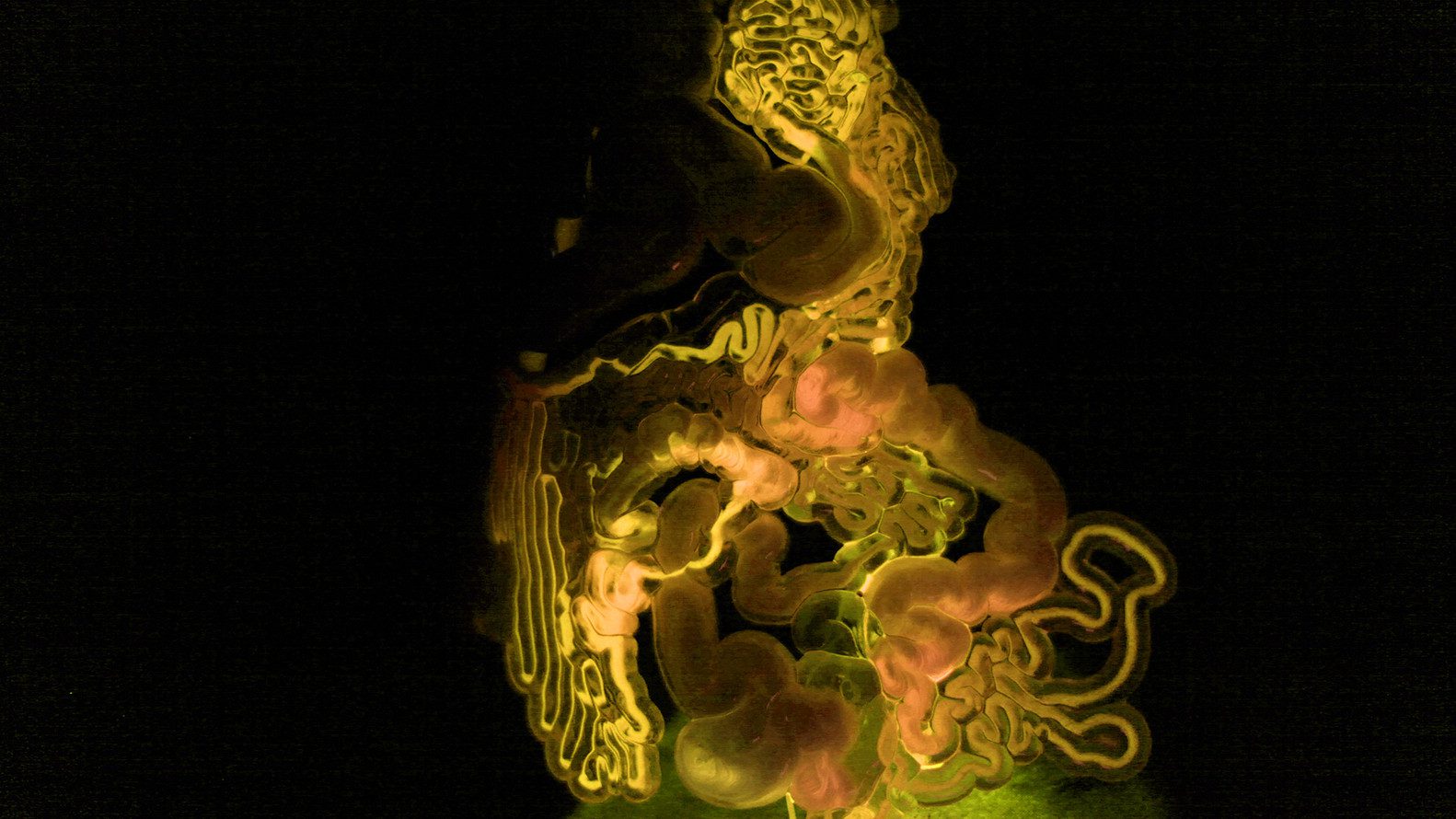
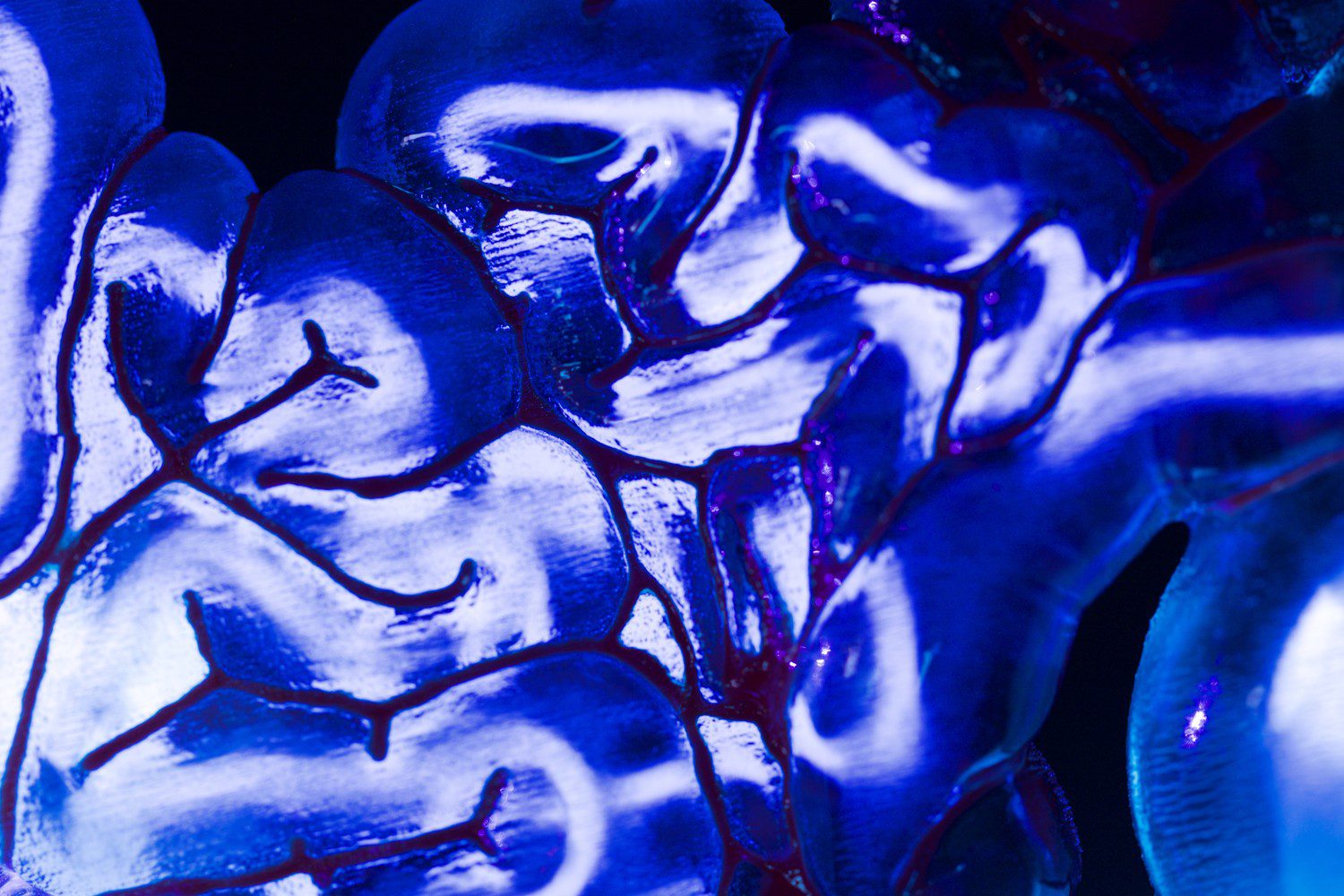
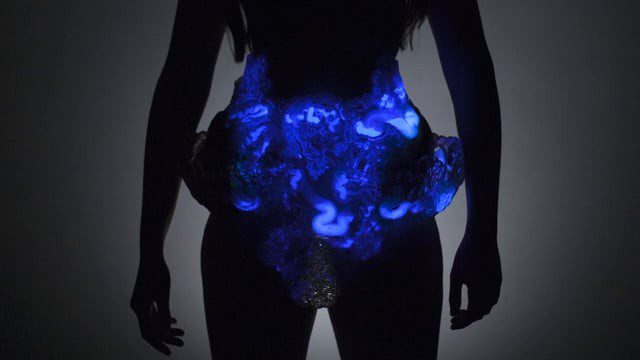
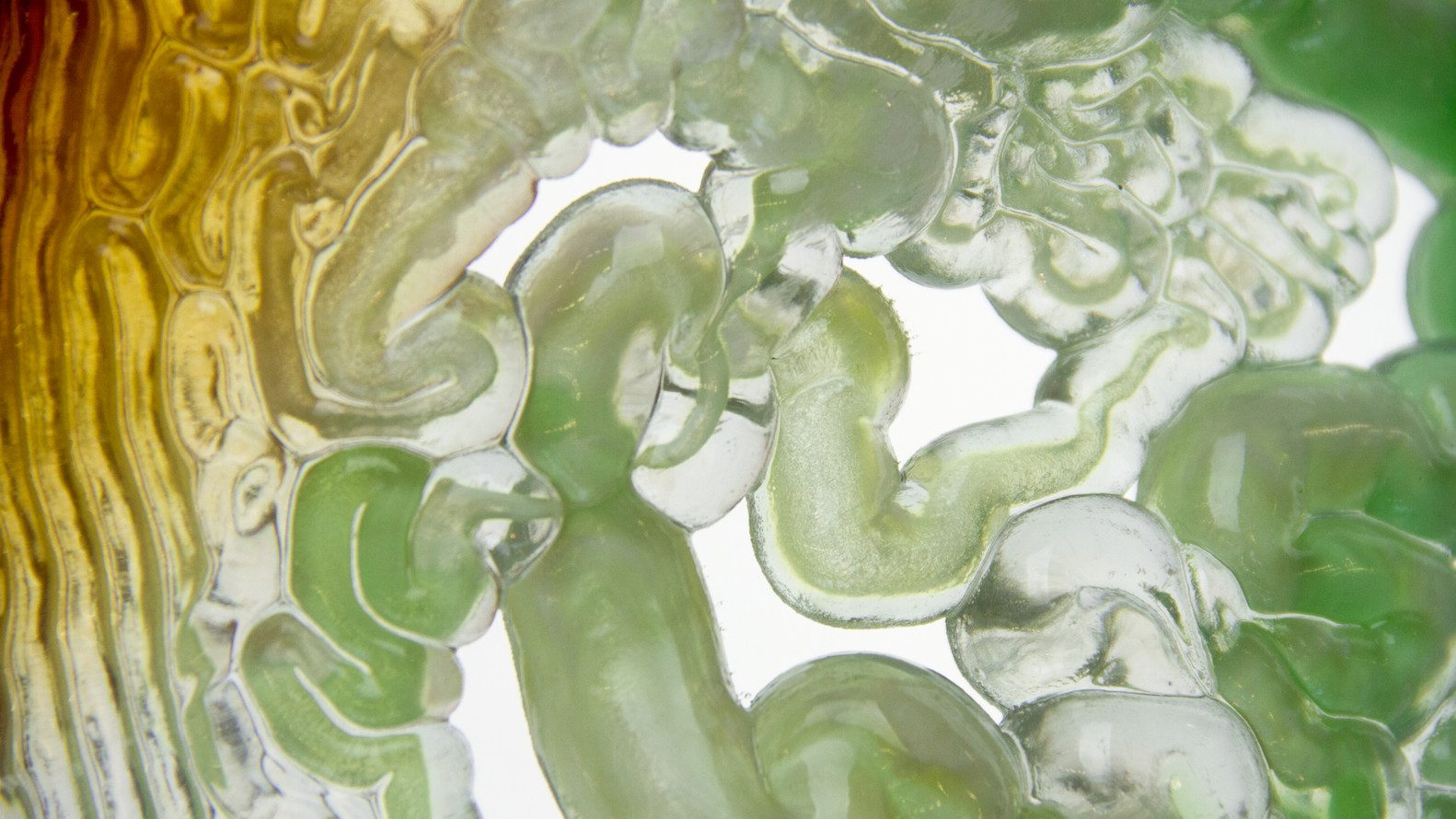
Part of the Wanderers, an astrobiological exploration, Mushtari is a “wearable skin” designed by Neri Oxman, doctor, architect, designer and professor at MIT Media Lab. The 58 meters long 3d-printed tube with a diameter varying between 1 and 2,5 cm, is folded into a coloured gastrointestinal inspired shape skirt. The name Mushtari is Arabic for planet Jupiter, a reference to the rich heritage and philosophy of the medieval Arabic culture concerning astronomy. Mushtari is a transparent 3D-printed structure, that is hosting a living bacterial culture, able to eat, reproduce and support life, an “organ system for consuming and digesting biomass, absorbing nutrients and expelling waste”.
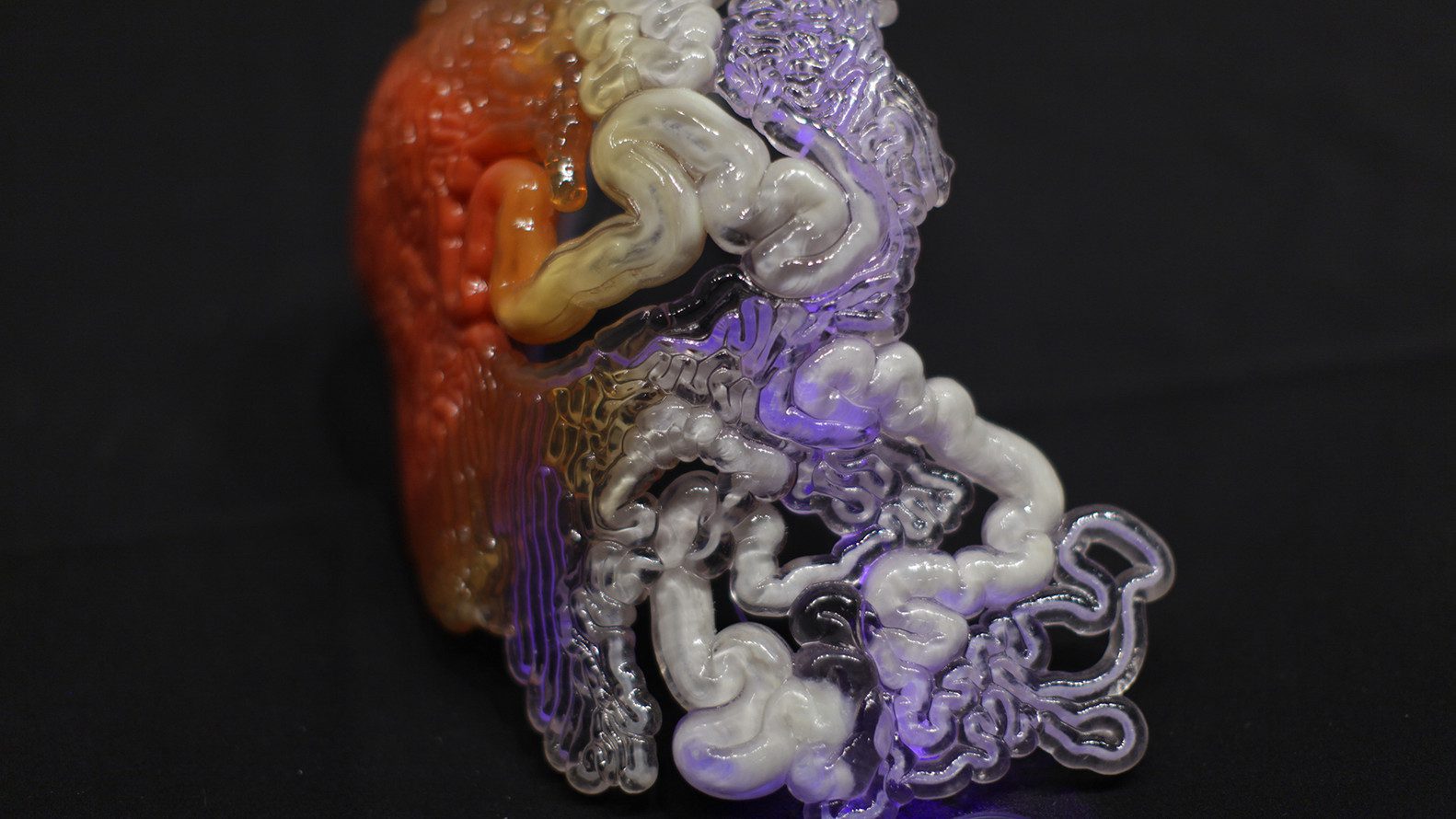
Courtesy of Mediated Matter Group
It was built as an answer to the question “How can we design relationships between the most primitive and sophisticated forms of life?” The transparency of the mass supporting skin allows sun rays to penetrate inside, creating and maintaining a nourishing environment for the cultures that live inside. The living culture inside is a combination of a photosynthetic and a compatible microbe, that are codependent. The photosynthetic microbes are converting the sun light into sucrose, which is being used by the compatible microbes to create “useful products for humans and microbes” , a system that works as a “microbial factory”.
“Each wearable is designed for a specific extreme environment where it transforms elements that are found in the atmosphere to one of the classical elements supporting life: oxygen for breathing, photons for seeing, biomass for eating, biofuels for moving, and calcium for building,” which would be needed for traveling and living on other planets, not suited with the right conditions for human thriving. Neri Oxman’s Wanderers is a series of amazingly surreal projects with long term vision, that explore a totally new approach on science vs. technology. She is bringing the most simple unicellular organisms in a symbiose with the newest technologies, which opens a dialog for the integration of the two, and some unanswered questions, like: Who controls these microorganisms? How can you teach them to give you exactly what you expect of them? And if you can’t, are we willing to let them develop and evolve by themselves?
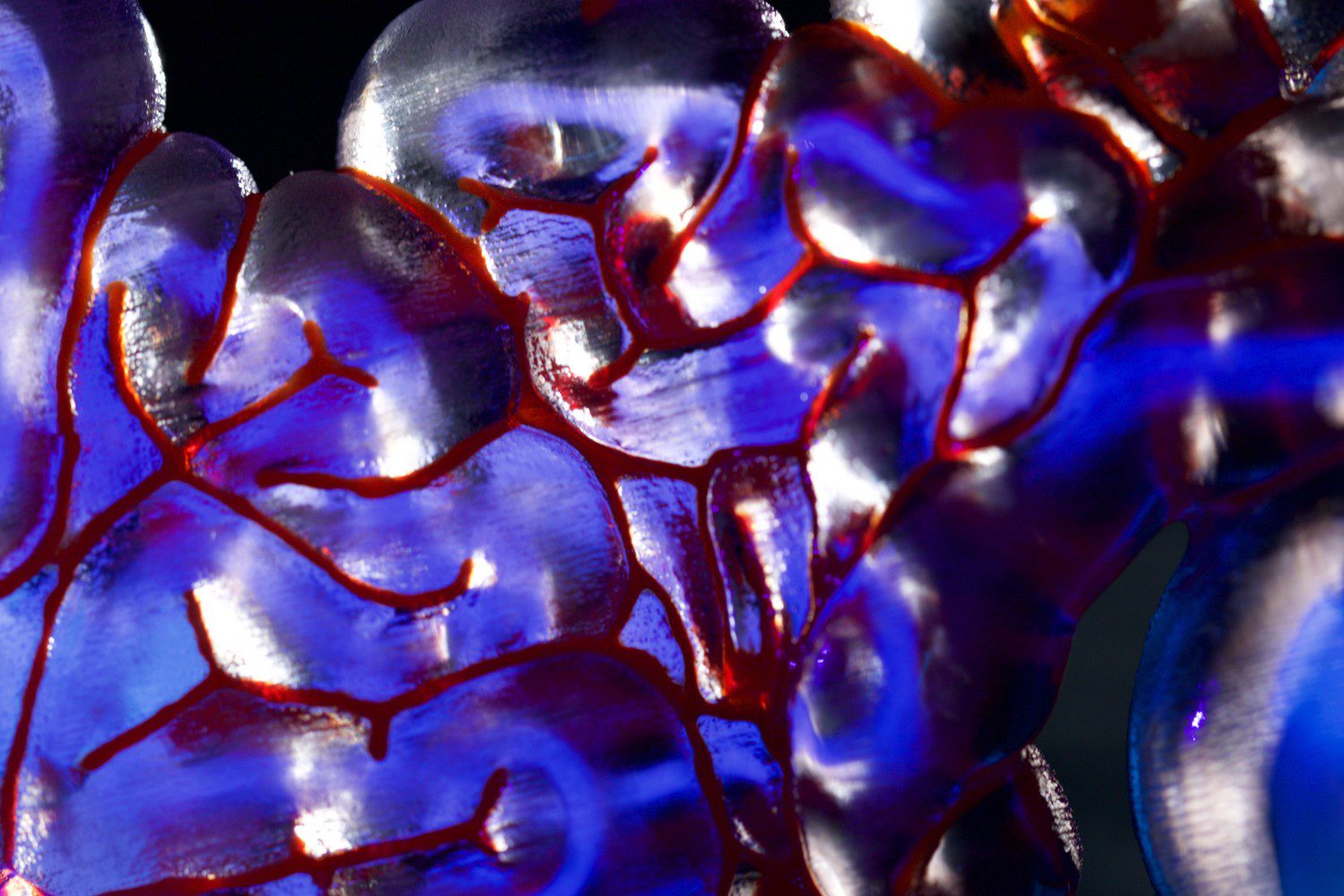
Courtesy of Mediated Matter Group

Cristina Juc is passionate about the intersection of technology, design, and architecture. A former Assistant Editor and Writing Intern at Arch2O, she contributed insightful content exploring innovation in the built environment. Her involvement in events like the Transylvania Biennial of Architecture reflects her ongoing commitment to architectural discourse. Currently the Executive Director at Spherik Accelerator, Cristina supports startups driving change across creative and tech industries. With a background in community building and educational tech, she continues to champion forward-thinking solutions that shape how we design, build, and experience space.