


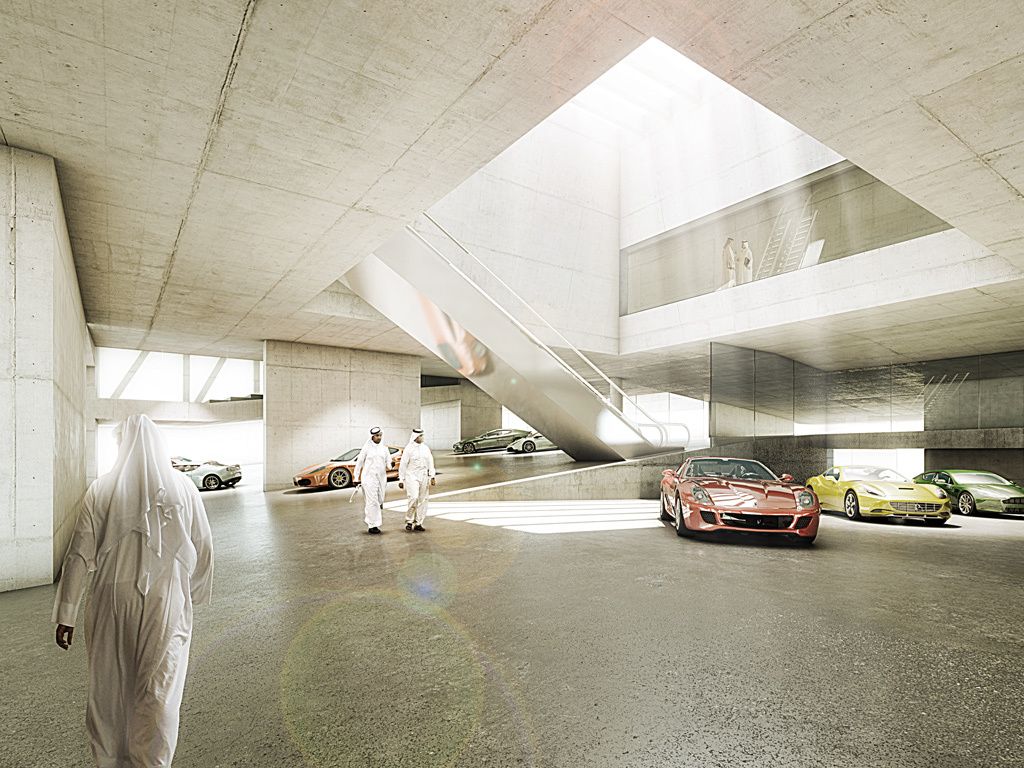
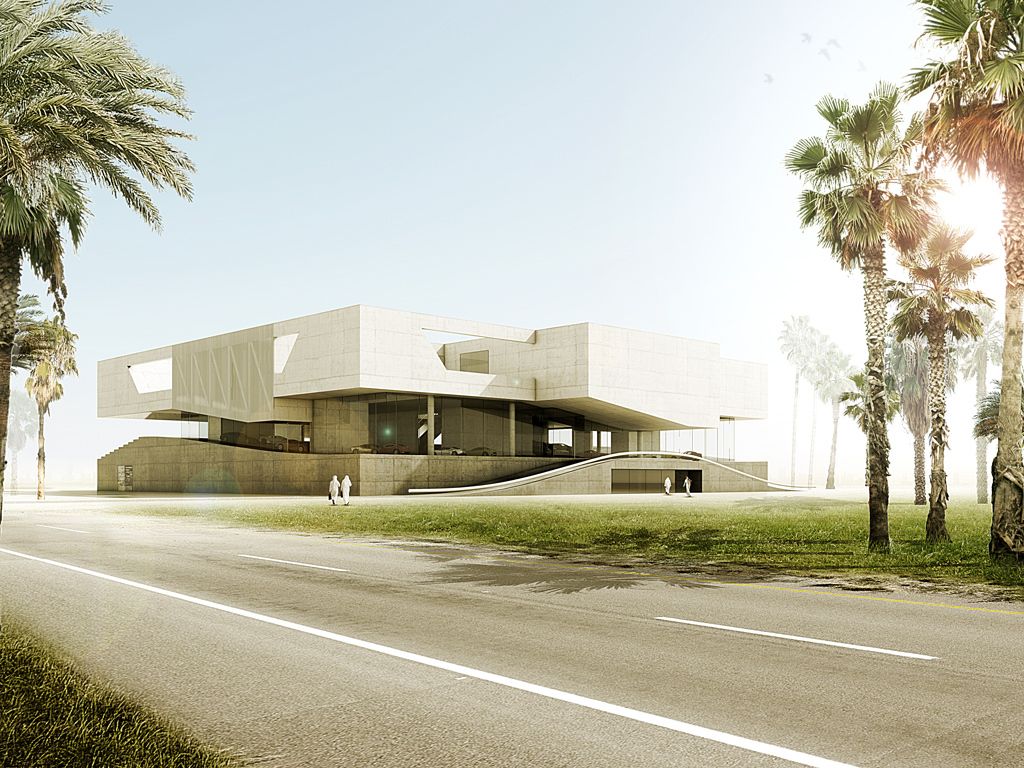
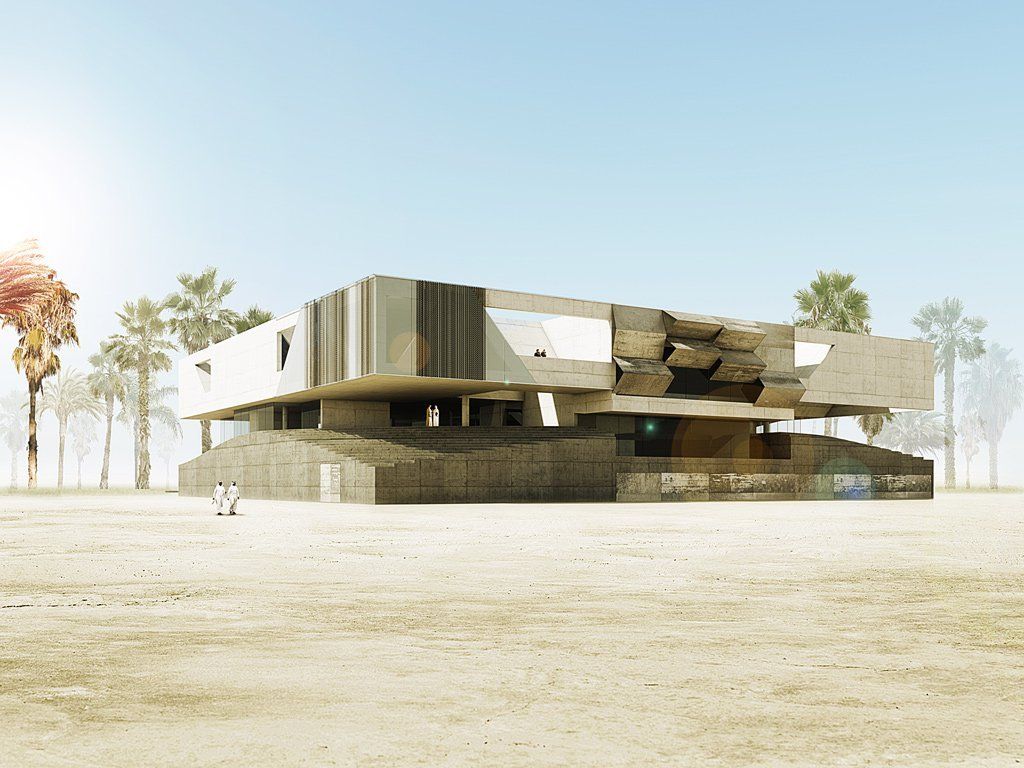
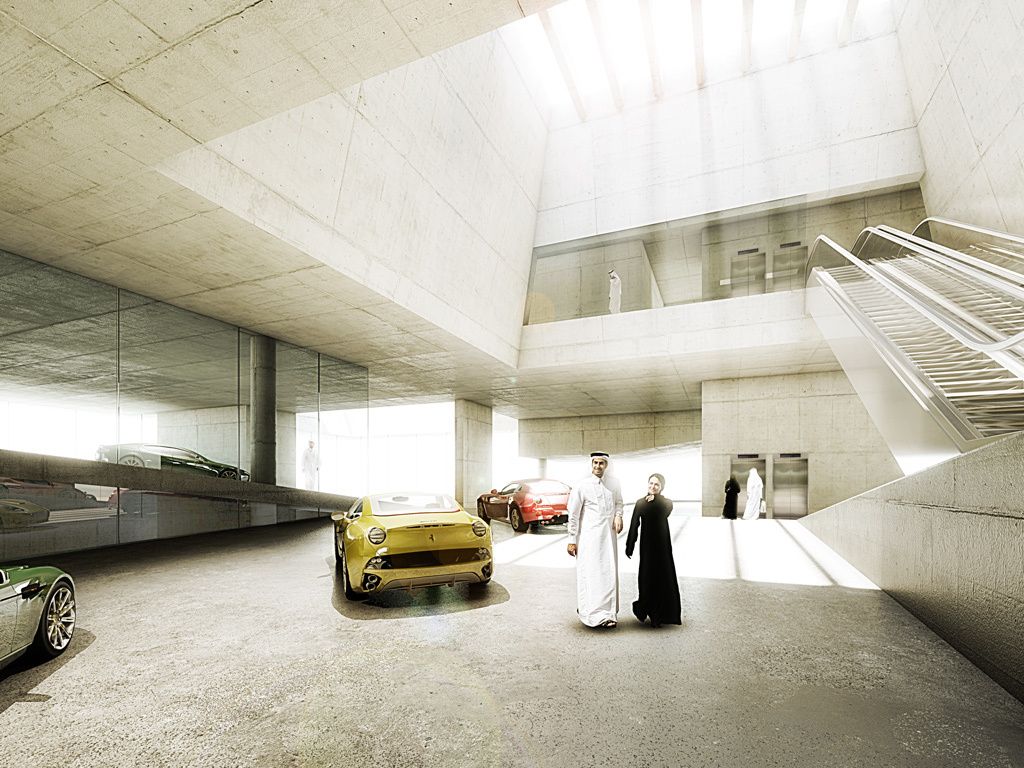
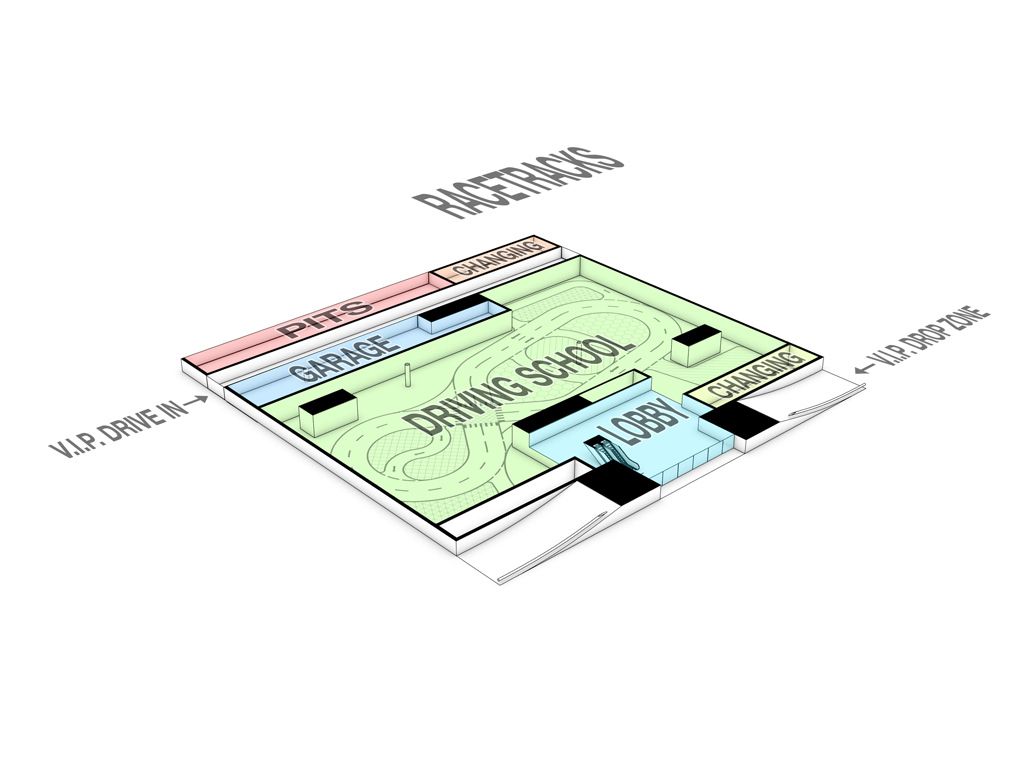
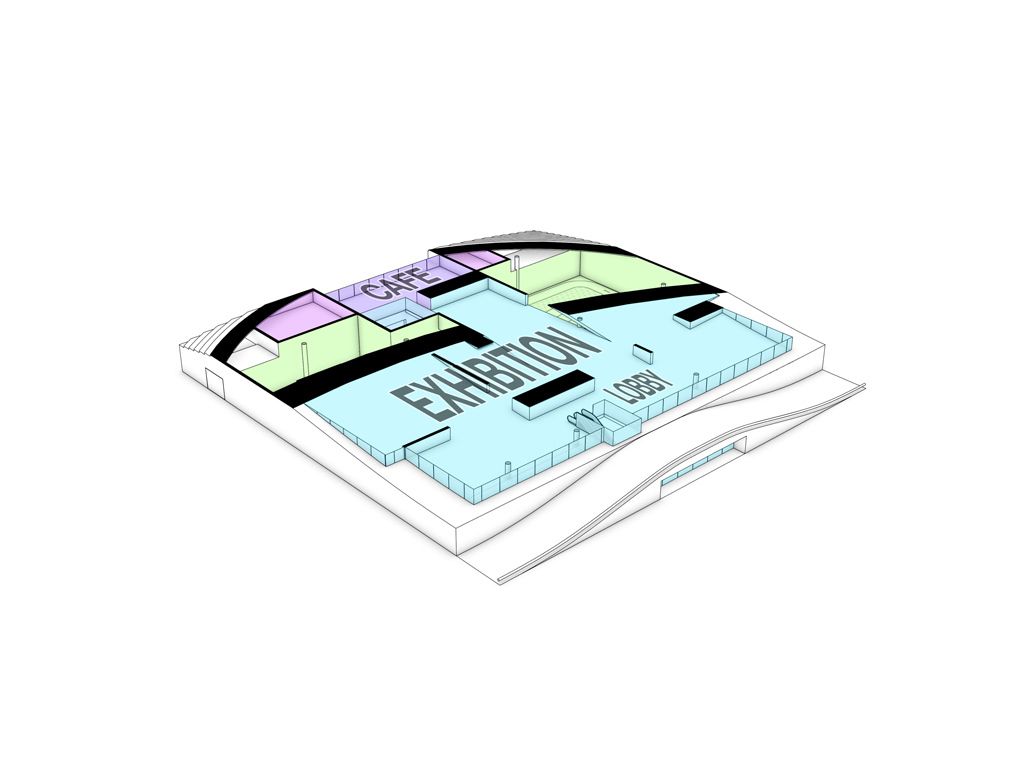
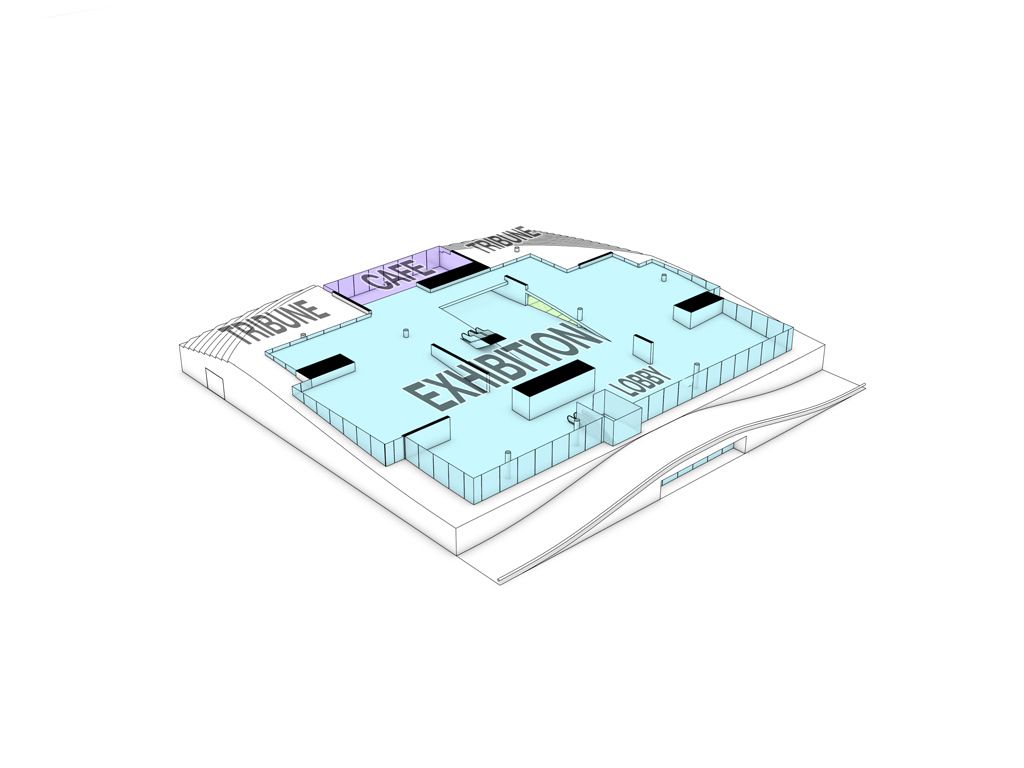
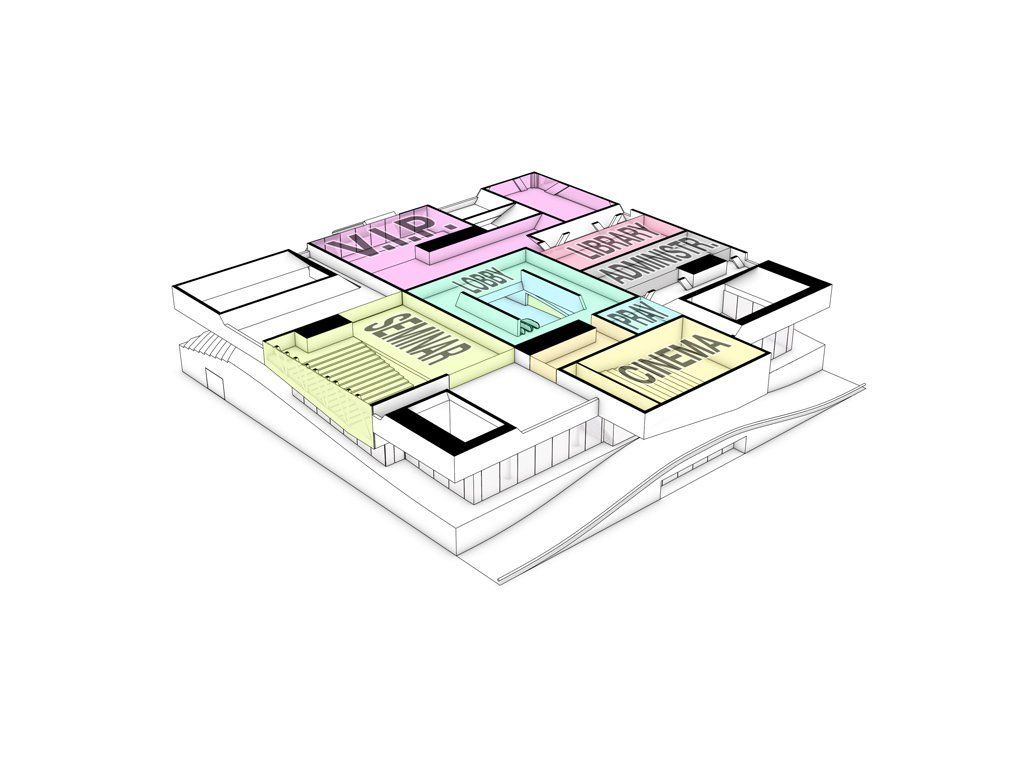
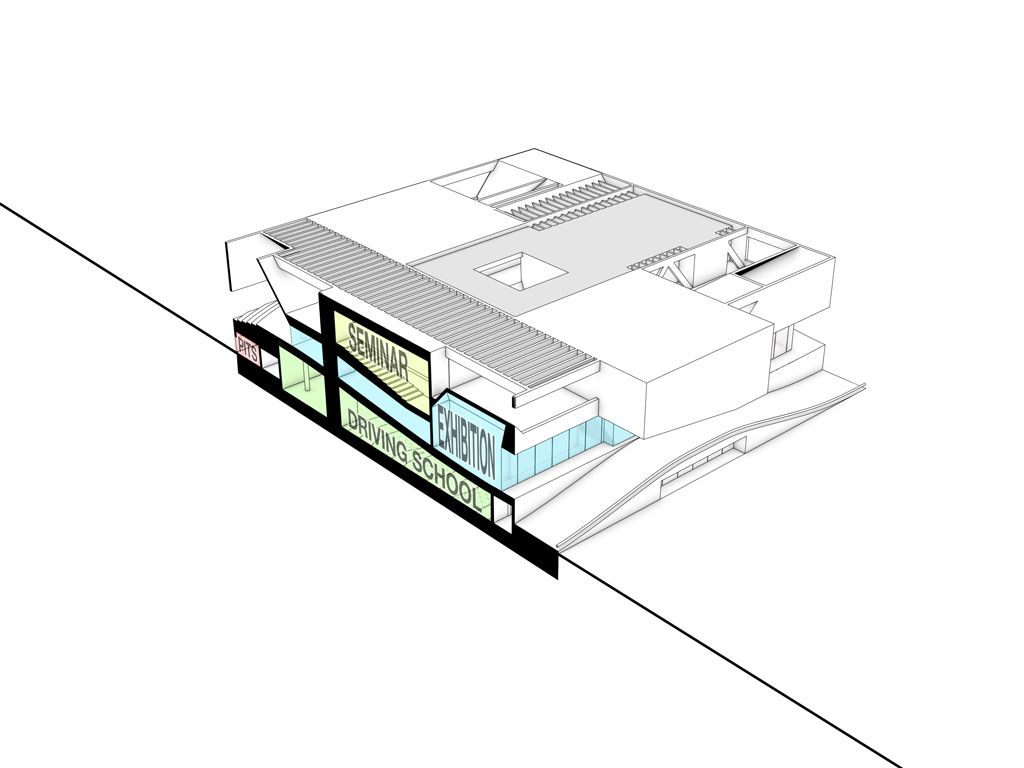
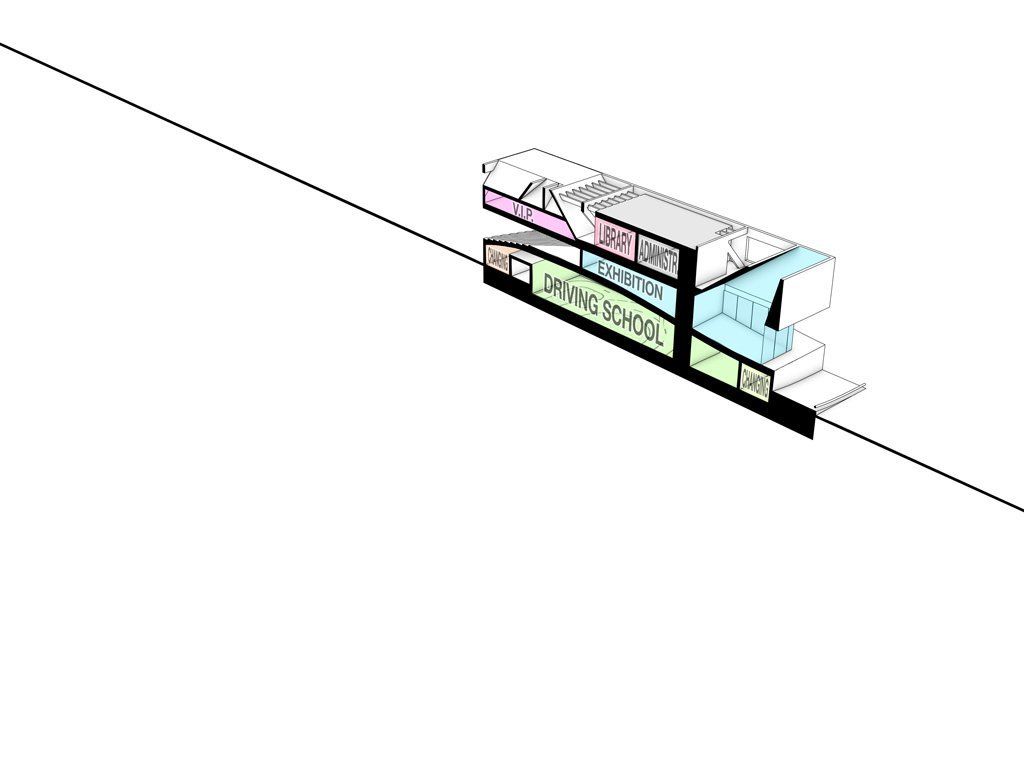
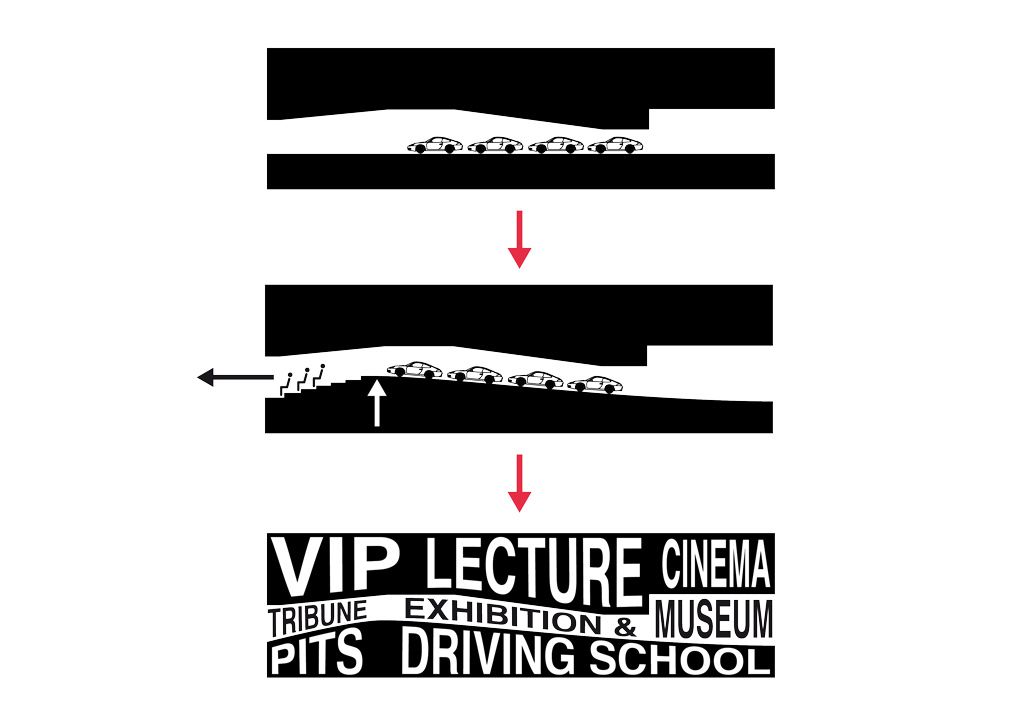
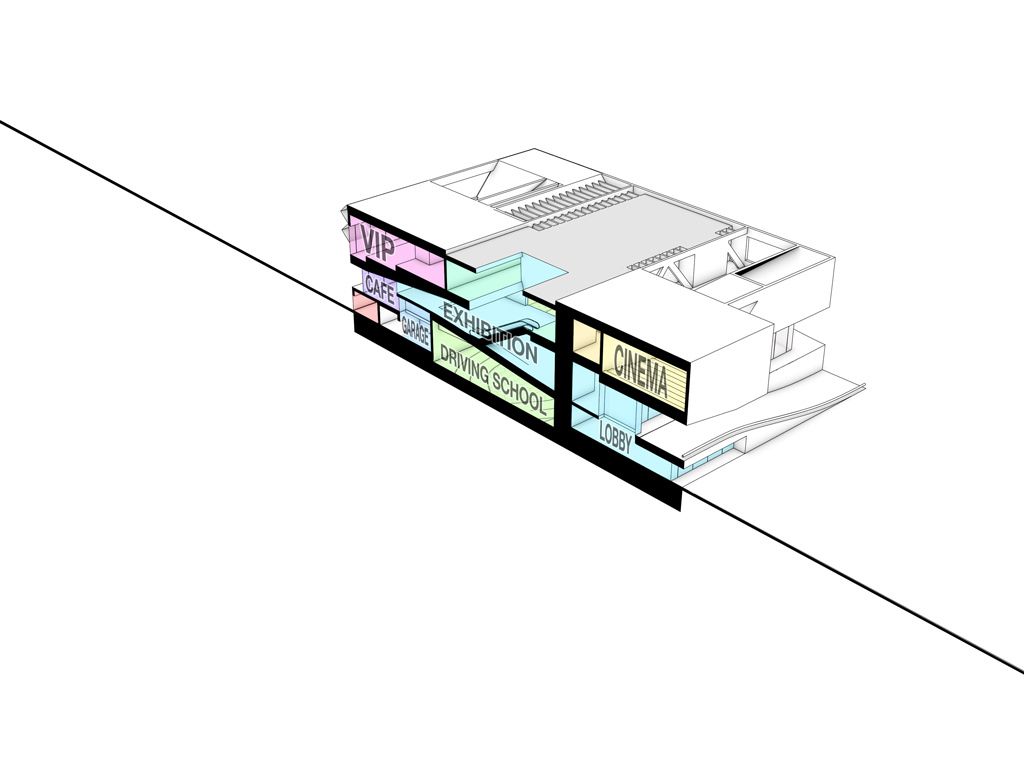
Located next to a new race track and a dragster speedway, the museum is another component of the projected “Motor Sports Complex“ in Kuwait City. Its main function is to be a public showroom for the King‘s private collection of vintage racing cars. Besides the main exhibition hall with approximately 50 cars, it also houses a pit-building including a garage for restoration, a driving school for kids, a little conference center, a cinema and some private VIP spaces.
Courtesy of Marc Anton Dahmen / Studio DMTW
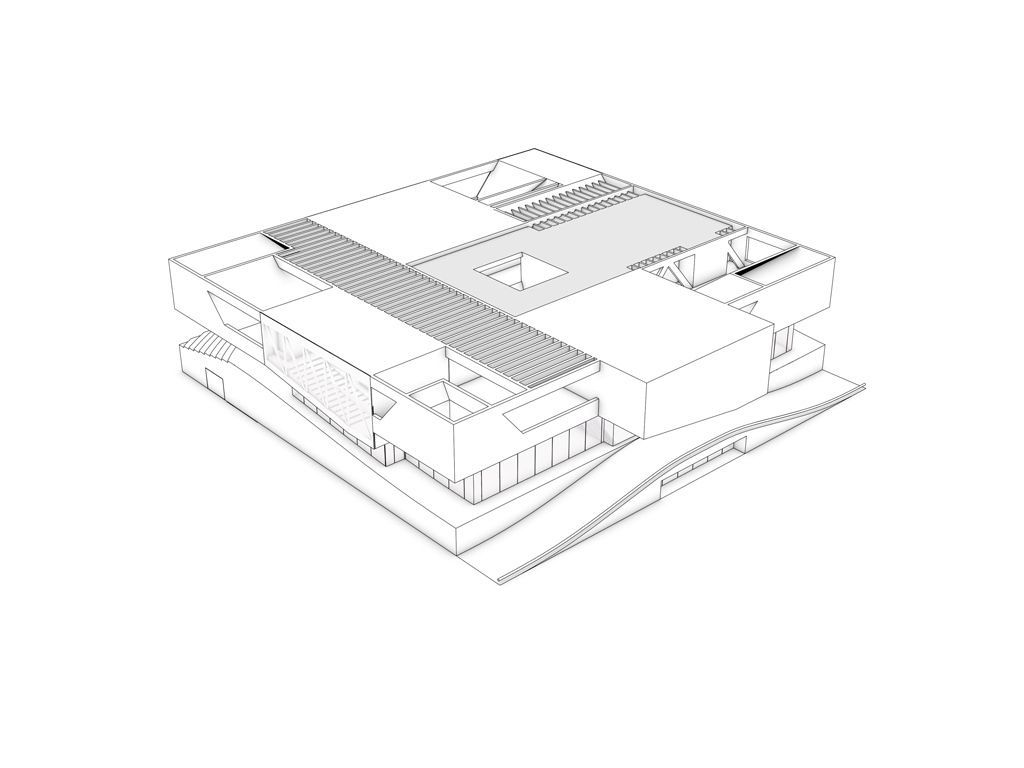
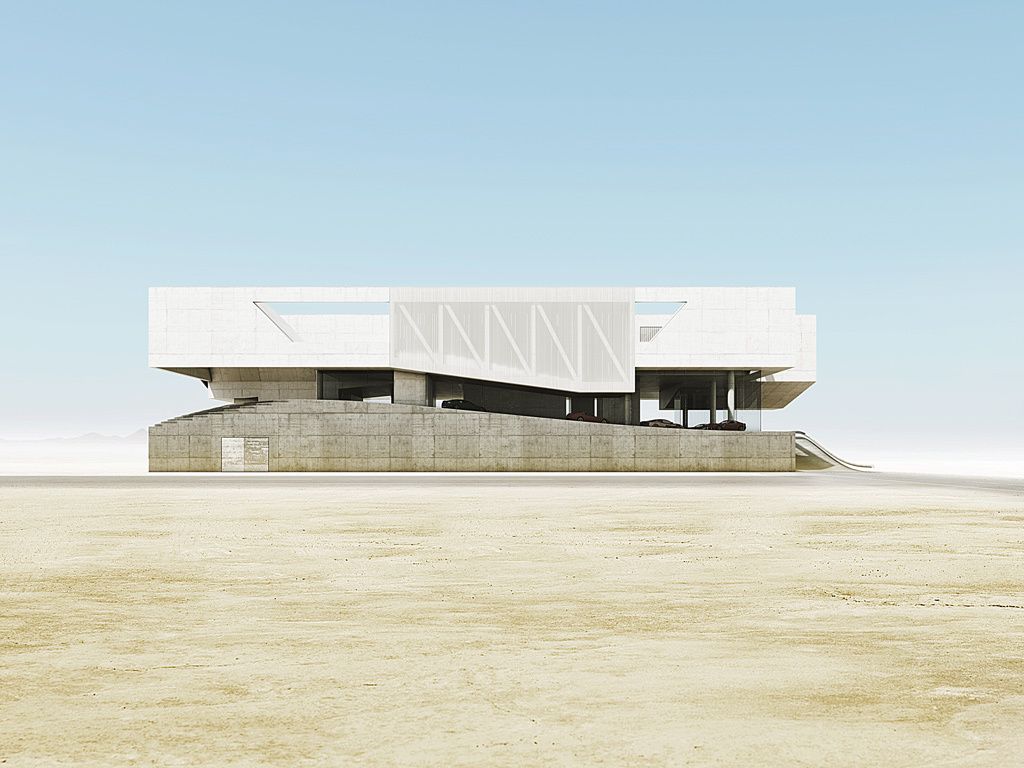
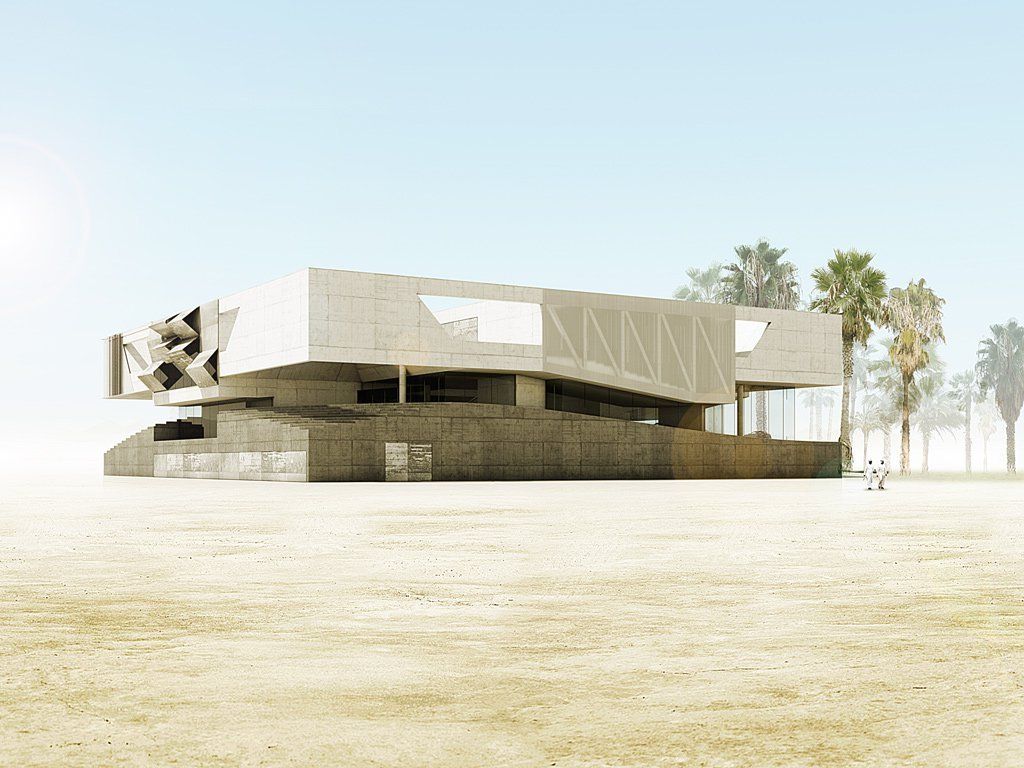
The volume is split into three main parts which are stacked on top of each other. The public layer in the middle – in between all the car-related facilities on the ground-floor and the conference spaces and VIP area on the top floor – acts as kind of an open transparent gap, presenting all the King‘s cars. A concrete landscape transforms from the exhibition space on the one side to a concentric tribune on the other side – allowing view connections to the upper and lower levels. A big ramp leads up to the main exhibition floor, serving as a drop off zone for the King‘s special guests, covering the main entrance on the groundfloor.
Due to the local climate the major part of the outer facade is closed. The heavy concrete structure provides enough mass to cool down the entire building. Only the „gap“ is totally glazed. A huge set back protects the exhibition space from direct sunlight and provides diffuse natural lighting and a great view over the whole race track.
Courtesy of Marc Anton Dahmen / Studio DMTW
Credits:
Team & credits: Marc Anton Dahmen
Year: 2012
Status: commission / on hold Location: Kuwait City
Courtesy of Marc Anton Dahmen

Ibrahim Abdelhady is an architect, academic, and media entrepreneur with over two decades of experience in architecture and digital publishing. He is the Founder and CEO of Arch2O.com, a leading platform in architectural media, renowned for showcasing innovative projects, student work, and critical discourse in design. Holding dual PhDs in Architecture, Dr. Abdelhady combines academic rigor with industry insight, shaping both future architects and architectural thought. He actively teaches, conducts research, and contributes to the global architecture community through his writing, lectures, and media ventures. His work bridges the gap between practice and academia, pushing the boundaries of how architecture is communicated in the digital age.