


Mosaic Habitat by Alexis De Bosscher explores innovative housing solutions for the cities of tomorrow, addressing the rapid growth of informal settlements and the future of urban living.
The mosaic habitat is an attempt to respond to this.
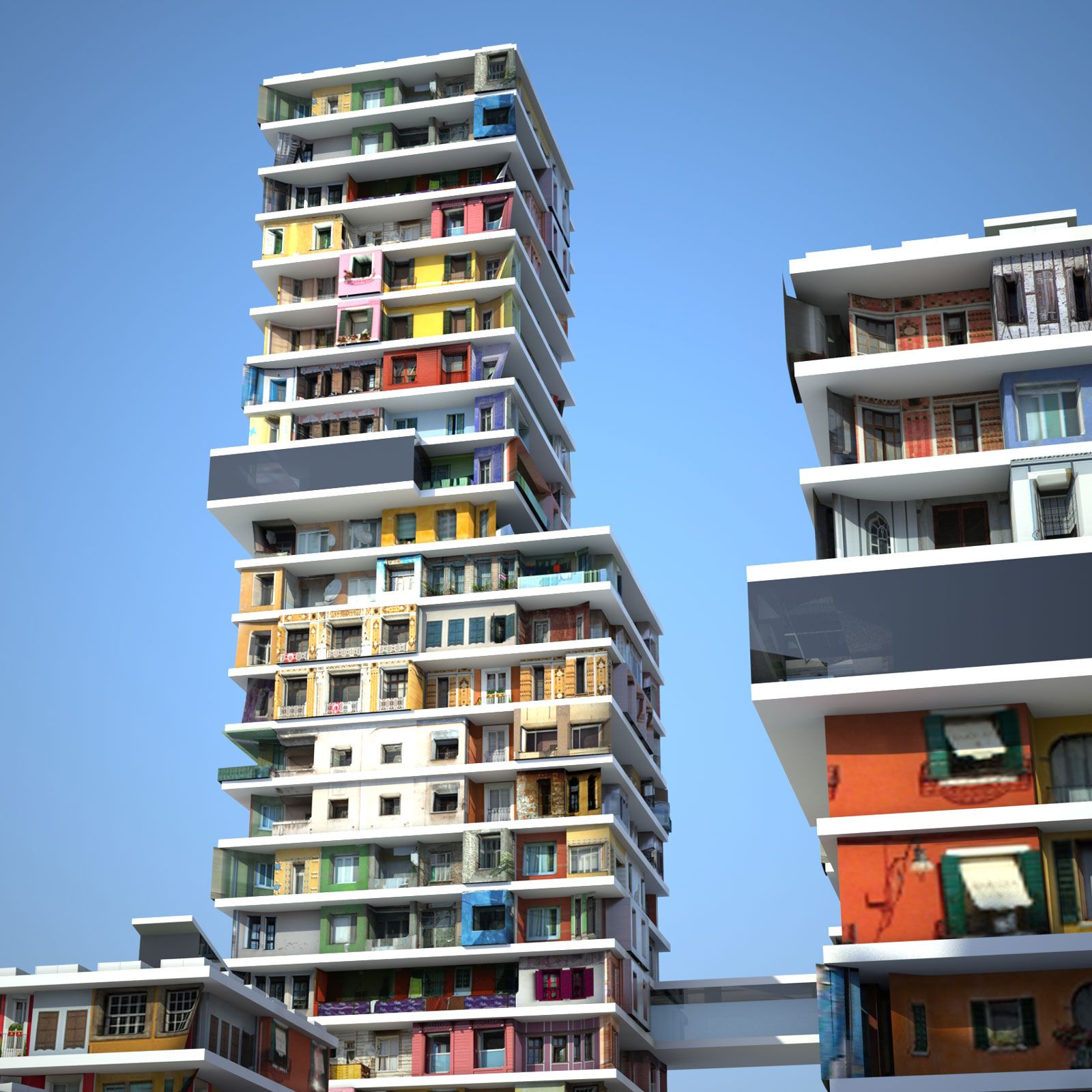
© Alexis De Bosscher
The informal housing or Gecekondu in Istanbul is a spontaneous response to the massive growth the city knows since 1945. Due to the high unemployment rate the informal settlers have a very low or no income. The Gecekondu settlements are uncontrolled, poorly built and present severe risks in case of earthquakes and strong rains, common in Istanbul. A safe and controlled solution must be found for these new settlements. An attempt to this is made by the Toki typology. The government replaces informal houses by cheap monofonctional housing blocks.
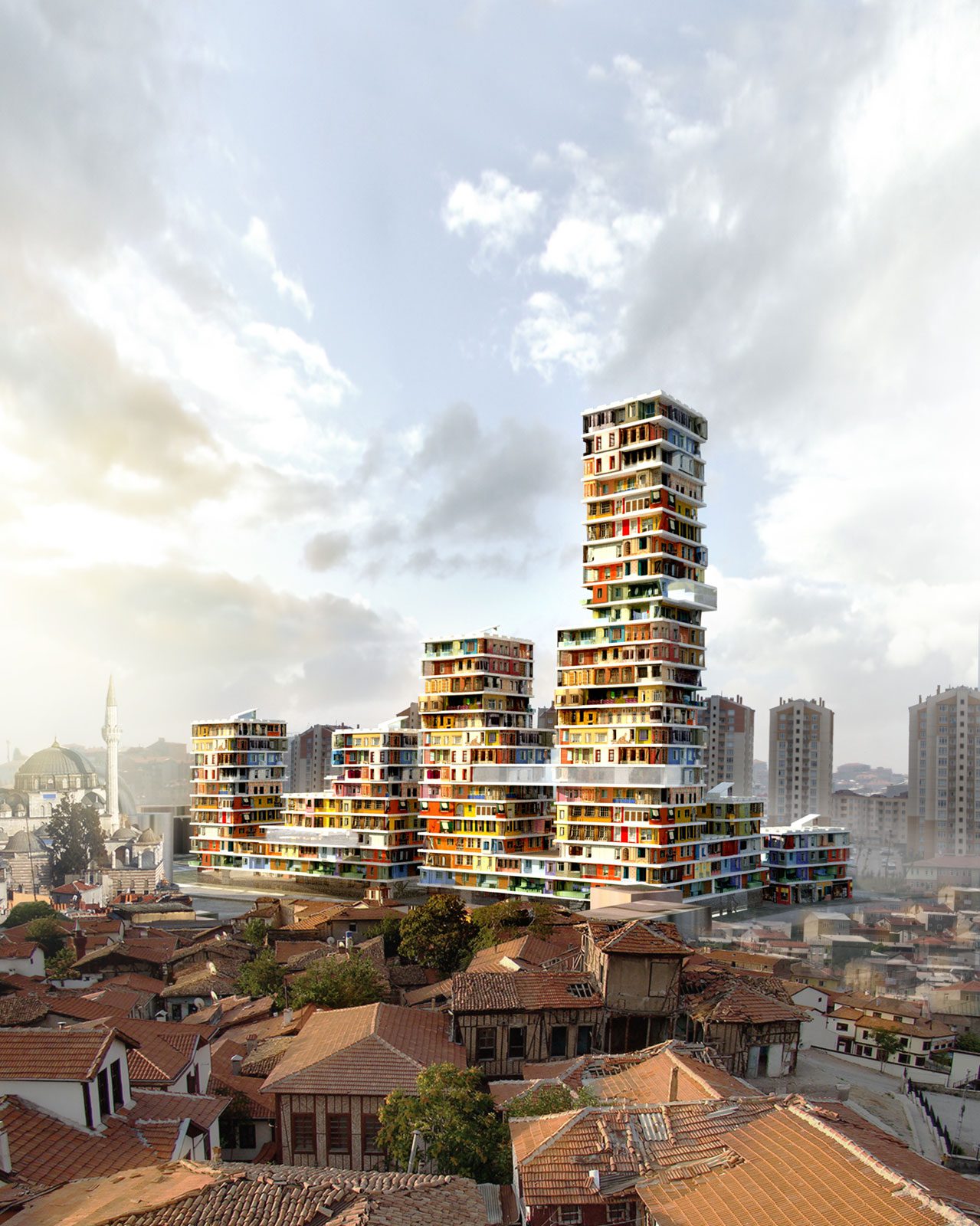
© Alexis De Bosscher
The problem with Toki is that the informal housing culture, living structure of these informal communities is erased from the map. They are replaced by modern monofunctional blocks of apartments. The inhabitants have to buy their new units. Due to their low and irregular income they can only afford small apartments to host their large family. The rigid structure of this typology makes it impossible to evolve over time.
Another problem appears when purchasing apartments: Some inhabitants need to get a loan to pay their new home, but due to the irregularities of their income they can end up selling their houses to pay the debts.
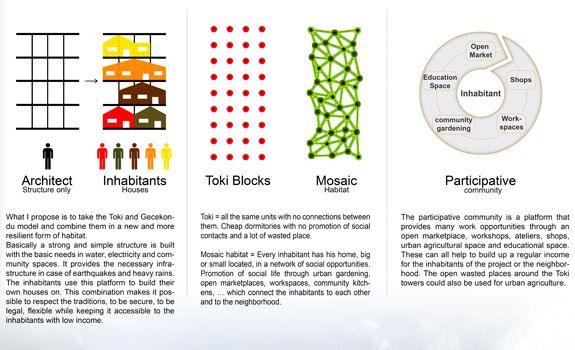
© Alexis De Bosscher
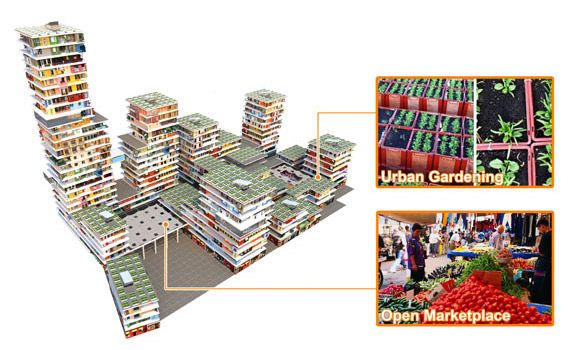
What I propose is a participative project. The project integrates the need for dense, cheap settlements with the spontaneous housing typology. Basically a strong and simple structure is built with the basic needs in water and electricity. It provides the necessary infrastructure in case of earthquakes and heavy rains. The residents use this platform to build their own houses on. To make the initial costs drop for the inhabitants, there are community spaces placed on regular intervals with community kitchens and bathrooms. These are for the inhabitants who cannot afford it or for those who did not make the investment yet. It makes it possible for everyone to buy larger spaces and be flexible over time when a later investment can be made.
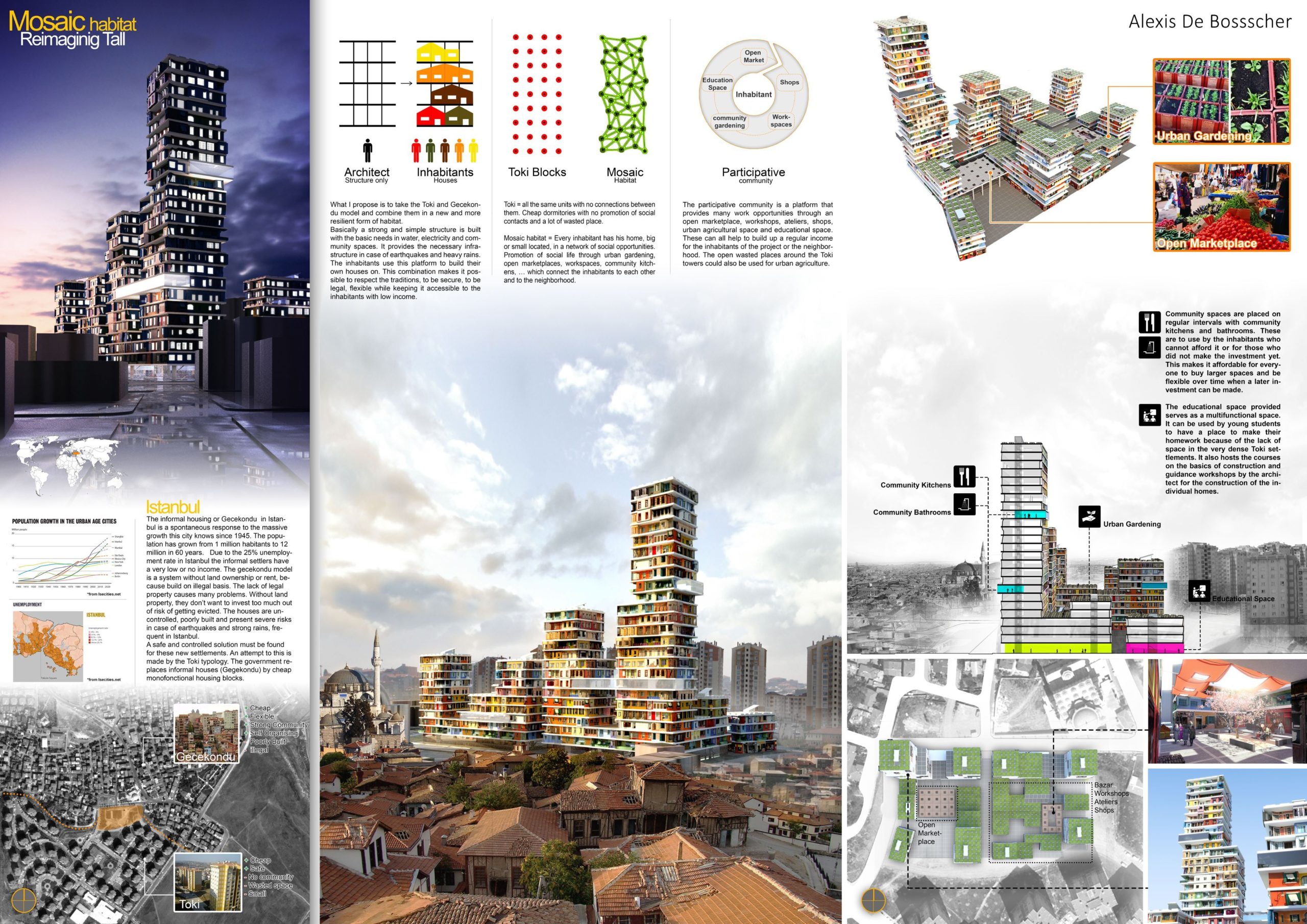
© Alexis De Bosscher
The inhabitants who cannot afford the space will get a flexible loan that has similarities with micro-credits. The inhabitants will have the opportunity to work through an open marketplace, workshops, ateliers, shops, urban agriculture and educational space. These can all help to build up a regular income for the inhabitants of the project or the neighborhood.
The educational space can be used by young students to have a place to make their homework because of the lack of space in the very dense Toki settlements. It also hosts the courses on the basics of construction and guidance workshops by the architect for the construction of the individual homes.
© Alexis De Bosscher
Project info:
Designer: Alexis De Bosscher.
School: Ucl loci Bruxelles ( The project produced while in Erasmus in Germany at the KIT Karlsruhe- The project awarded the first place at the 2nd CTBUH International Student Design Competition)

Anastasia Andreieva is an accomplished Architectural Projects Editor at Arch2O, bringing a unique blend of linguistic expertise and design enthusiasm to the team. Born and raised in Ukraine, she holds a Master’s degree in Languages from Taras Shevchenko National University of Kyiv. Her deep passion for architecture and visual storytelling led her to transition from translation and editorial roles into the world of design media. With a keen eye for conceptual clarity and narrative structure, Anastasia curates and presents global architectural projects with precision and flair. She is particularly drawn to parametric and digital design, cultural context, and emerging voices in architecture. When I’m not analyzing the latest architectural trends, you’ll probably find me searching for hidden gems in cityscapes or appreciating the beauty of well-crafted spaces. After all, great design—like great connections—can be found in the most unexpected places. Speaking of connections, because architecture isn’t the only thing that brings people together.