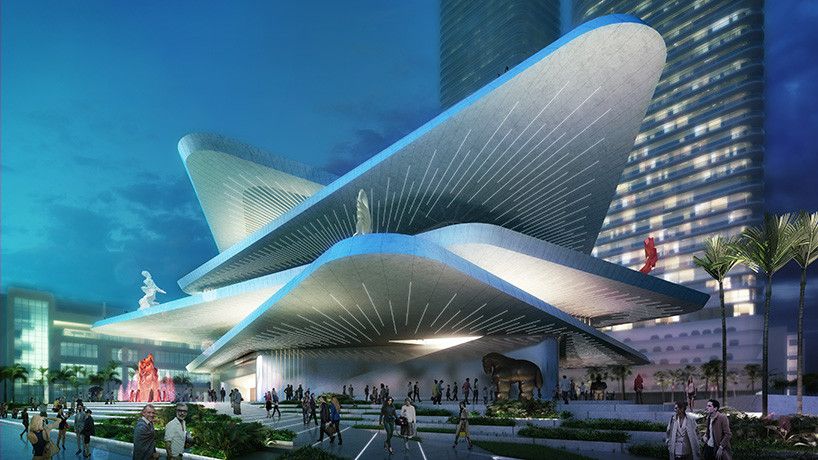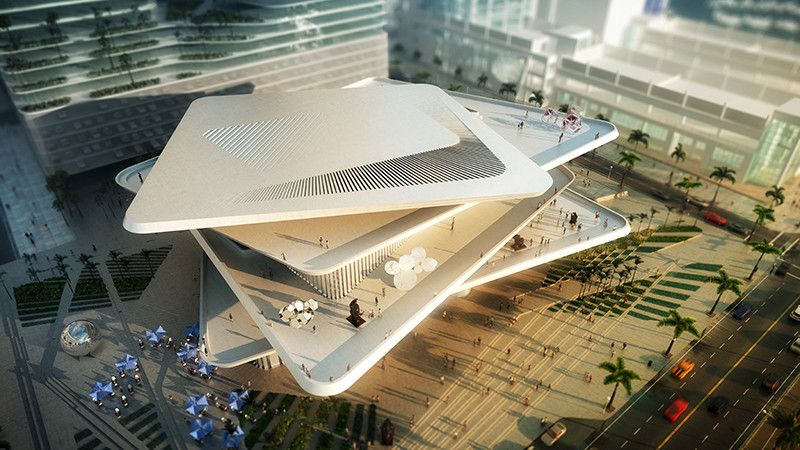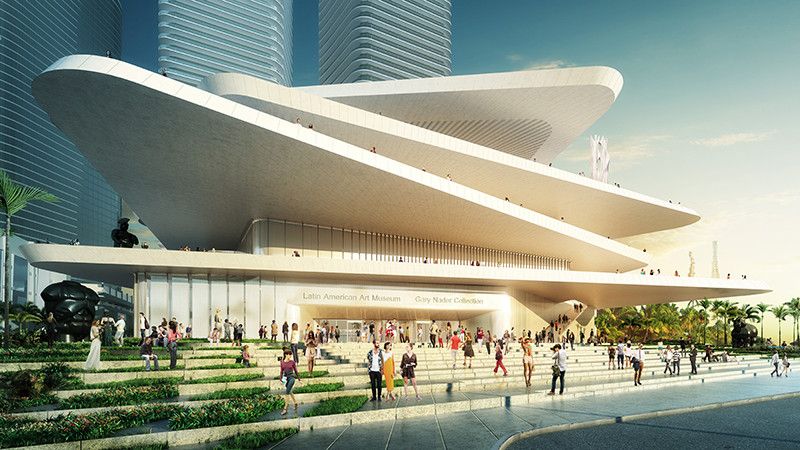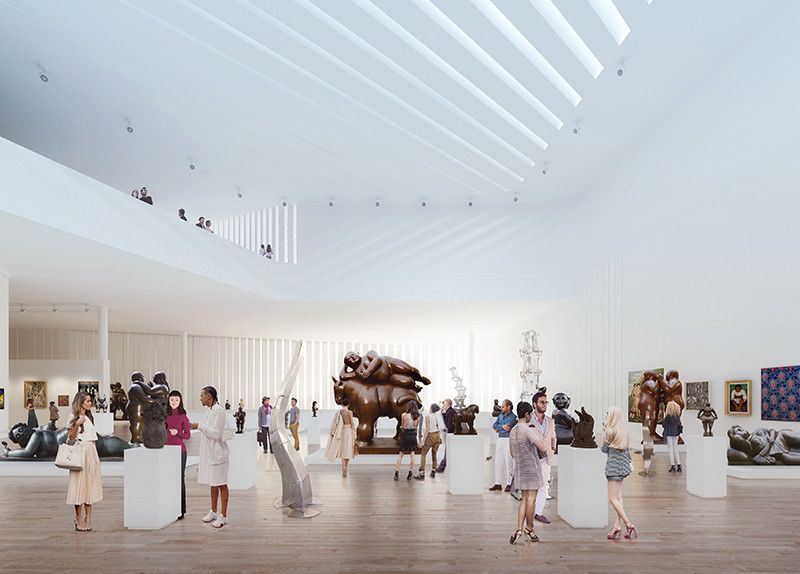


Museum of Latin American Art: After a period of speculation, Mexican architect Fernando Romero (principal architect at FR-EE) has confirmed that he will be designing the new Museum of Latin American Art in Miami, which will reportedly host ‘one of the most ambitious collections of Latin American art’ in the world.
Courtesy of FR-EE / Fernando Romero EnterprisE
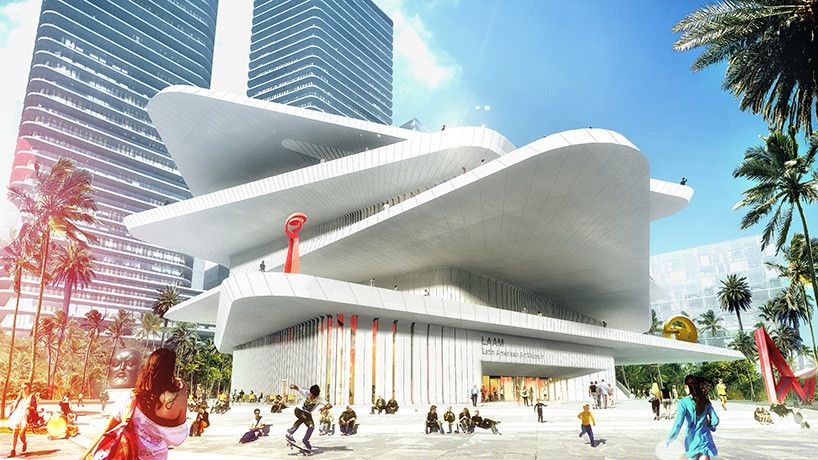
The Museum of Latin American Art building’s principle is simple:
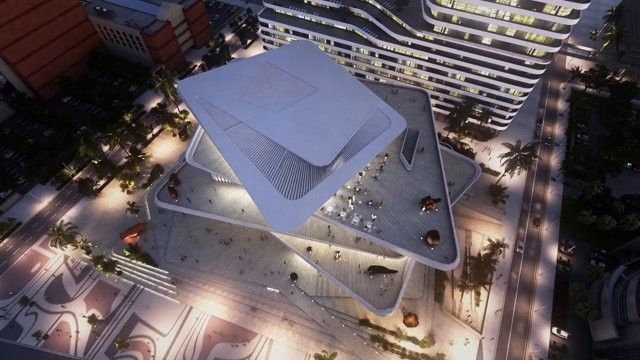
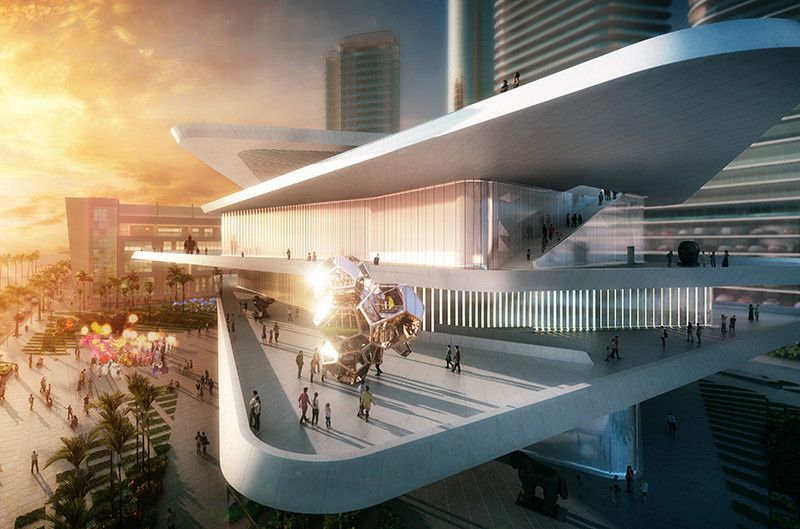
Translation around a vertical axe. The beauty comes from the fact that it is imagined as a ‘cascade’ of four overlapping terraces. The building will be only four stories high, which will help to blend into the local urban scenery, since the rototranslated elements could be perceived as pretty heavy.
Courtesy of FR-EE / Fernando Romero EnterprisE
“The building will be part of a housing complex in Biscayne Boulevard and will be a unique main access for the residents of the apartments, becoming a of meeting point for the residents and their visits“, according to the architect.
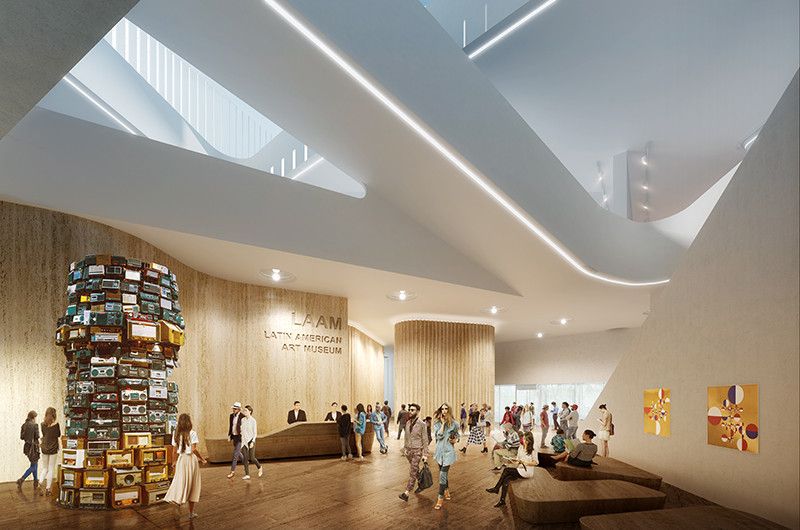
Courtesy of FR-EE / Fernando Romero EnterprisE
Each floor has a specific story and functionality. The first one will be used to showcase works from young, emerging artists, but will also host the museum shop and café, while the next level will be dedicated to temporary exhibitions from Latin Americans. The second floor will host the museum of Latin American art’s permanent collection, while the third will only hold a restaurant.
The staircases are designed in a manner in which they will ’emphasize the benefits of the tropical architecture’, since the architectural aim of the building is to offer a space for Latin American artists to display their work and get a chance to be discovered, while becoming one of the most significant institutions of this kind in the USA and transform Miami into a more culture-inclined city than it is at the moment.
Project Information :
Architect : FR-EE/Fernando Romero
Project Location : Miami, USA
Project Area : 90000.0 square feet
Project Team : Fernando Romero, Sergio Rebelo, Unai Artetxe, Daniela Gallo, Sunny Ruoting, Celia Julve, João Urbano, Jessica Wang, Yuri Jeong, Alex Zee, Feifei Song, Qingyi Chen, Francisco Crisóstomo, Wen Zhu