


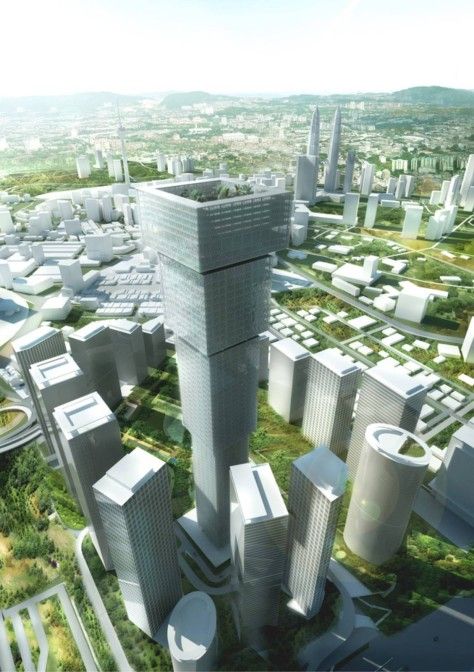
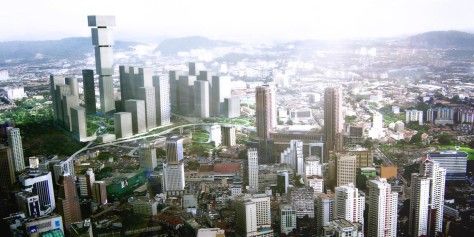
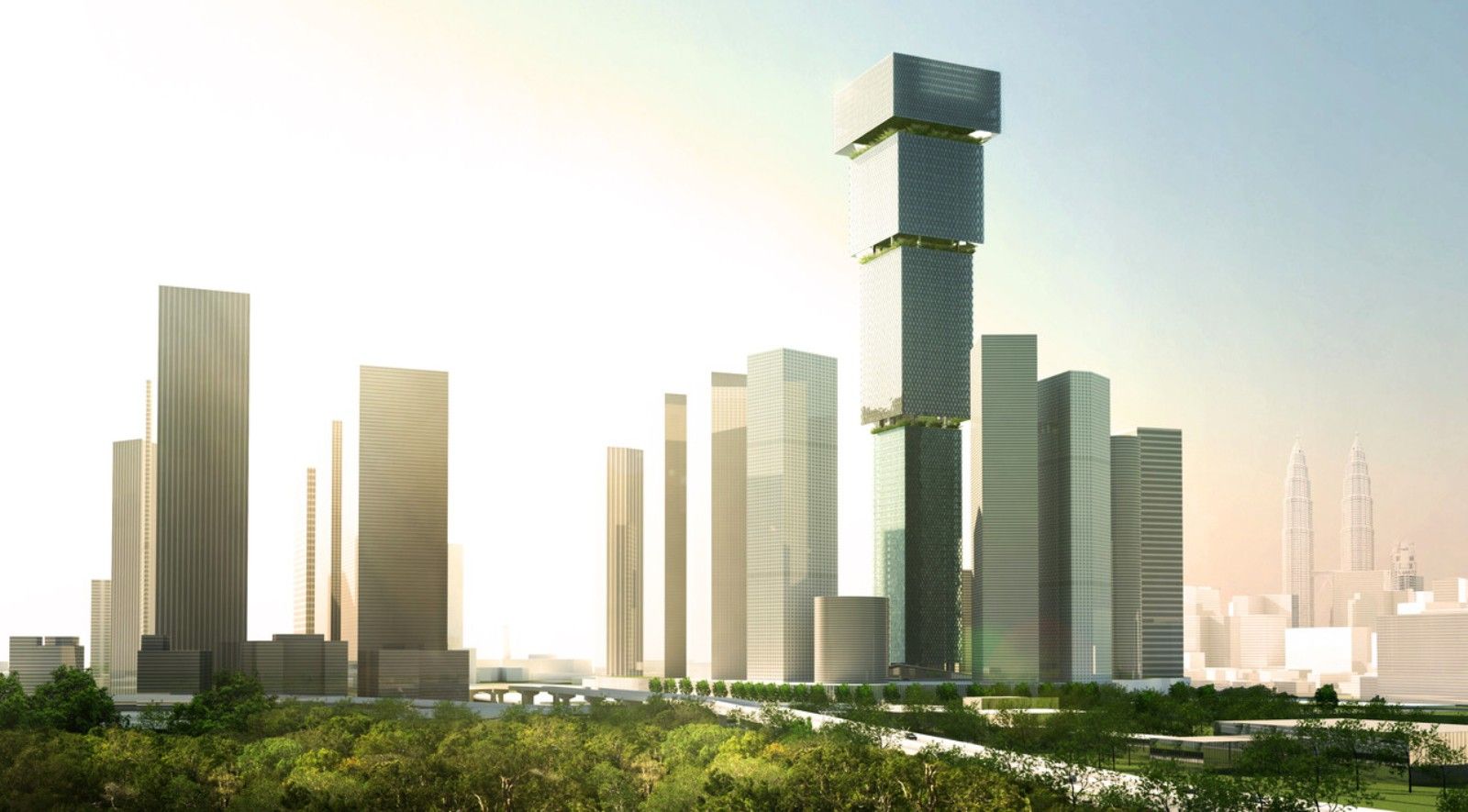
In its efforts to rethink the way avant-garde architecture is designed, Bjarke Ingles Group have completed the design of a revolutionized signature tower in Kuala Lumpur. The tower is set to link the twin Patronas of Kuala Lumpur even further, enhancing the skyline of the city in an unprecedented way.
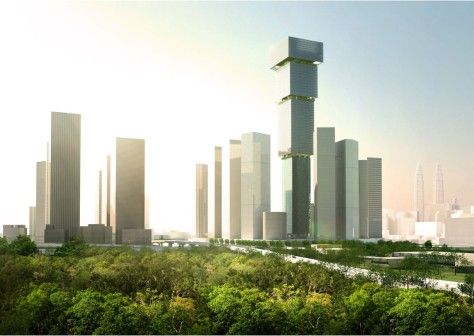
To start, the design team had to realize the challenges they had to overcome designing a new icon in town. The team summarized these challenges with the following questions: Was it possible to create a new landmark as striking as the Petronas Towers? How could a new tower enter into a dialogue with the unique silhouette of the Petronas that would be a respectful conversation rather than a power struggle or beauty pageant?
photography by © Biarke Ingels Group
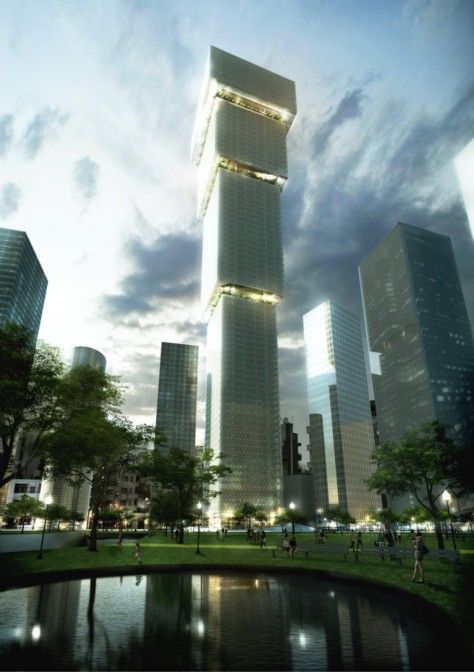
The tower solves many site-related issues in a creative way, and addresses many skyscraper related controversies logically when thoroughly examined. The main issues are the lost sense of scale, sustainability, profitability, and the social anatomy of the building. The designer splits the skyscraper into four entities, creates green inner connecting spaces, sets the value for each entity, and defines the positive social function of each through the design itself.
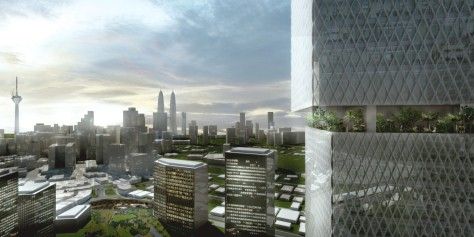
Four main entities make up the building: the commercial Spire, comprising the low-value spaces, the Slab that contains offices with a slightly higher value, the corporate-oriented Cube, and finally the Courtyard hotel featuring the most valuable spaces of the tower. The separation of the different forms creates some of the most astonishing public spaces of the city.
photography by © Biarke Ingels Group
The exterior finishing of the building will be a double skin façade system, allowing for the control of the amount of wind, sun-rays, and light entering the building. The technology will still have a modernist aesthetic value, as it will form an arabesque pattern that will wrap the whole building.
The group describes the design as the architectural interpretation of a Rubin’s vase: “Like an architectural Rubin’s vase—the famous illusion of perception that oscillates between foreground and background, making viewers see two opposing faces or a single vase the new landmark tower occupies the slice of sky that remains, the Rubin’s Vase between the Petronas towers”.

photography by © Biarke Ingels Group
By: Hazem Raa






Hazem Raad is an editor at Arch2O with a keen interest in the intersection of urban planning, politics, and technology in the Middle East. Holding a Master of Science in Urban Planning from The Bartlett's Development Planning Unit at University College London, his editorial lens is shaped by critical inquiry into contestation, border-making practices, and the role of big data in urban governance. Hazem’s writing explores how spatial dynamics and digital infrastructures intersect with socio-political realities, bringing analytical depth and regional nuance to Arch2O’s urban discourse.