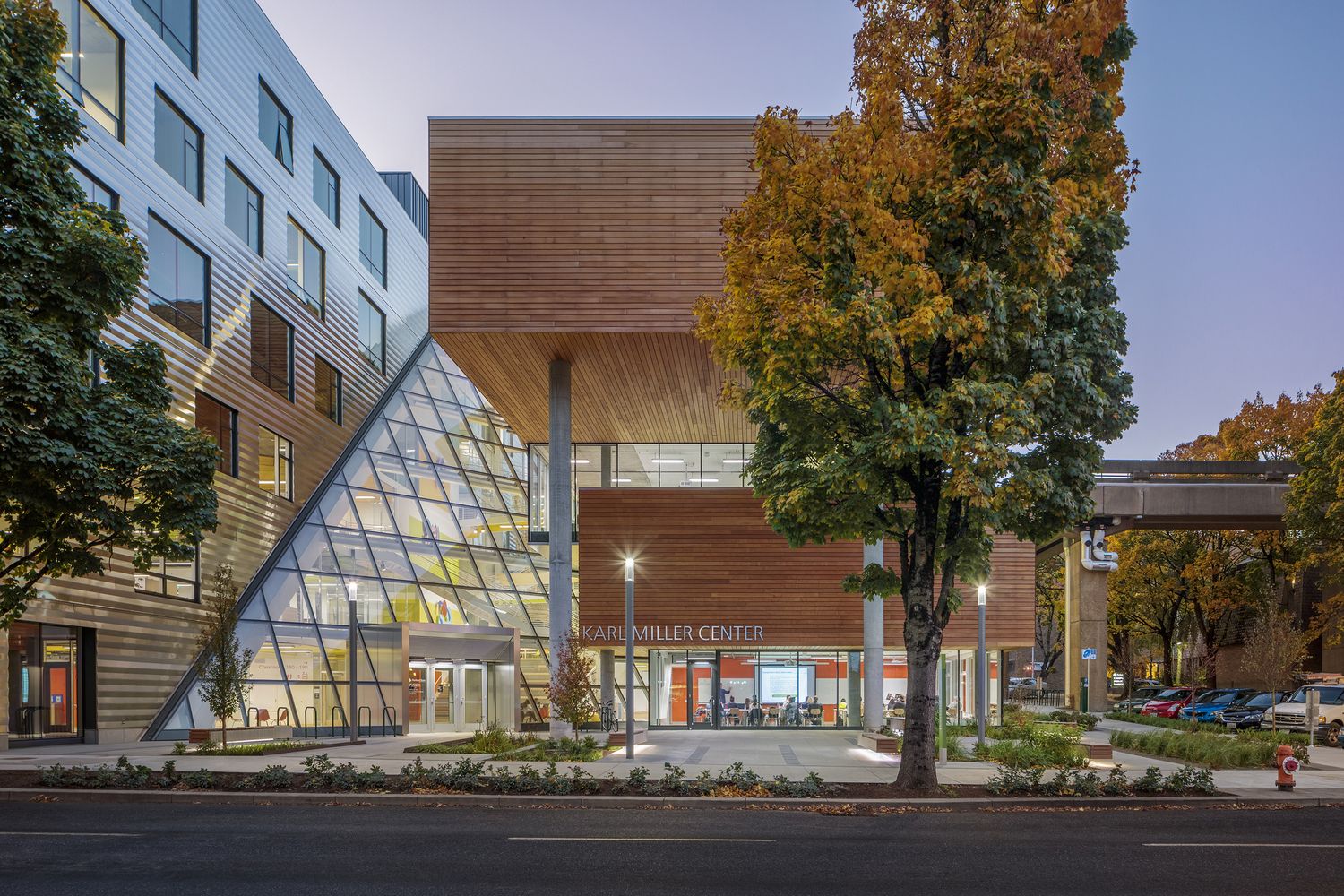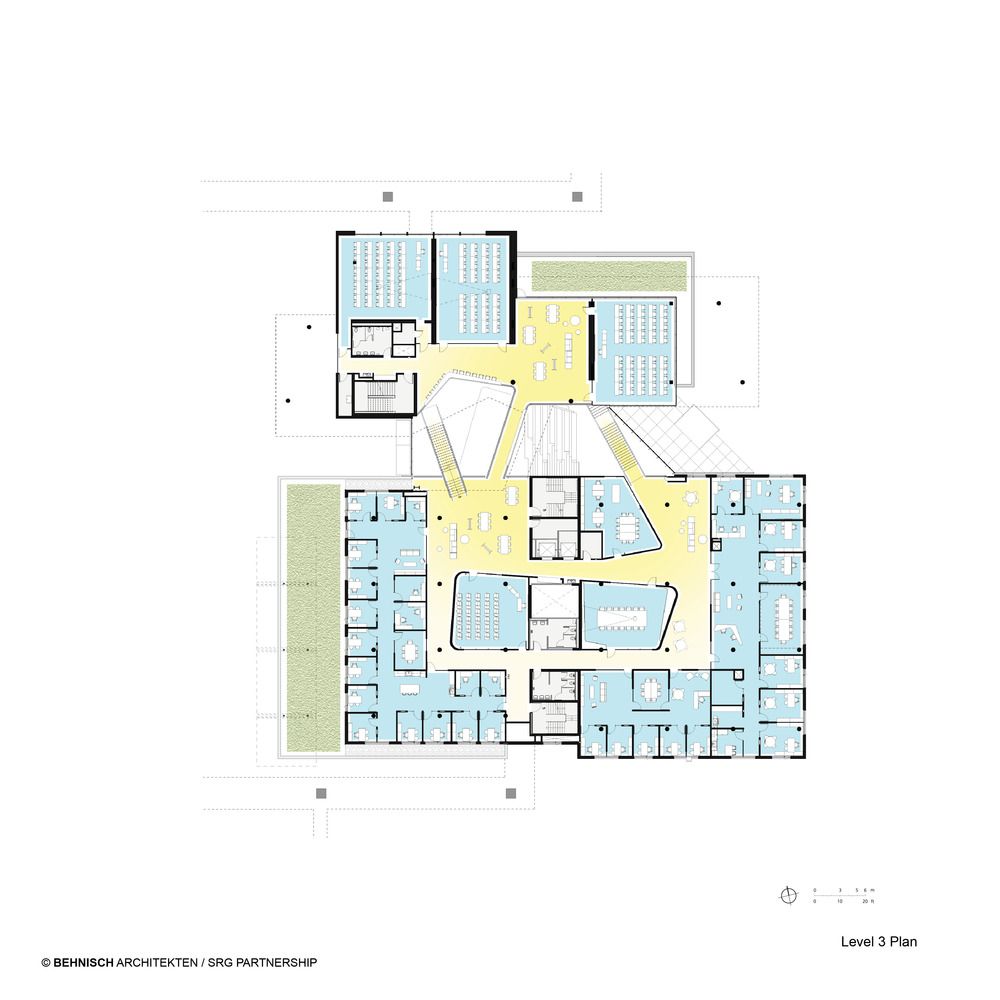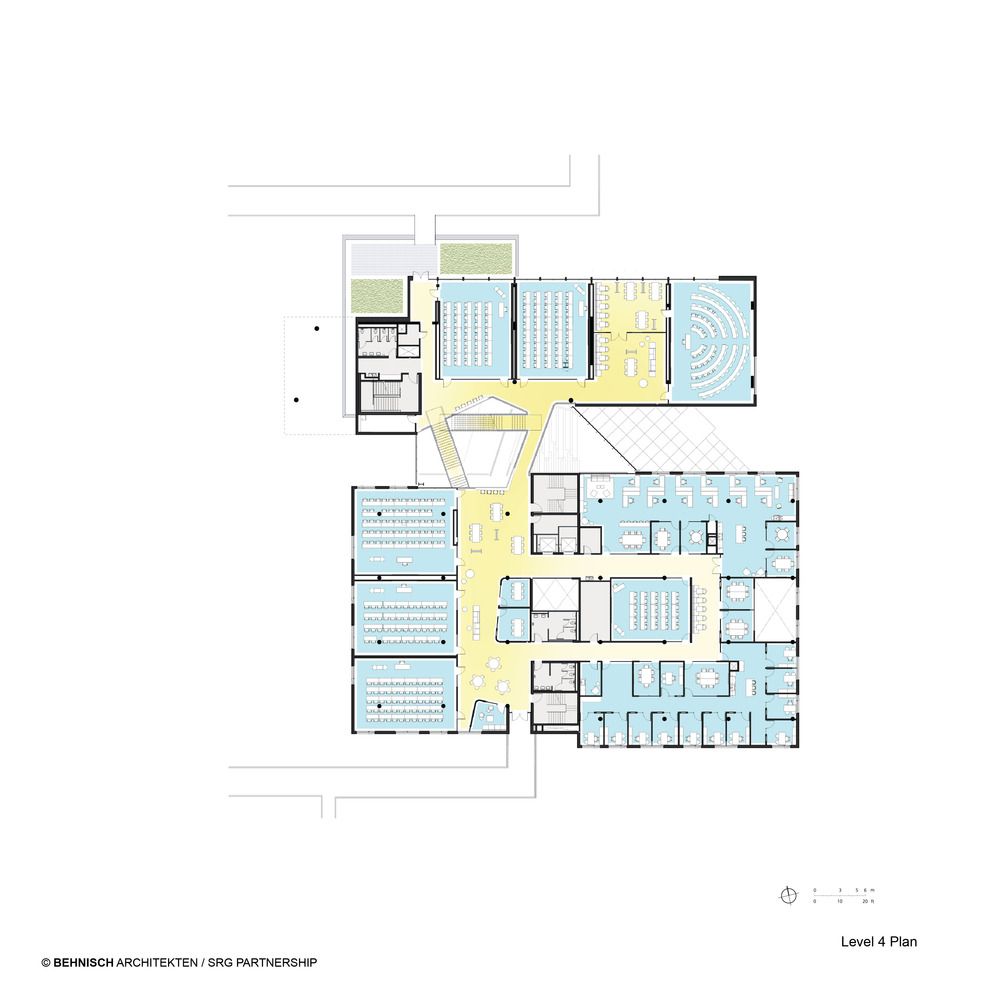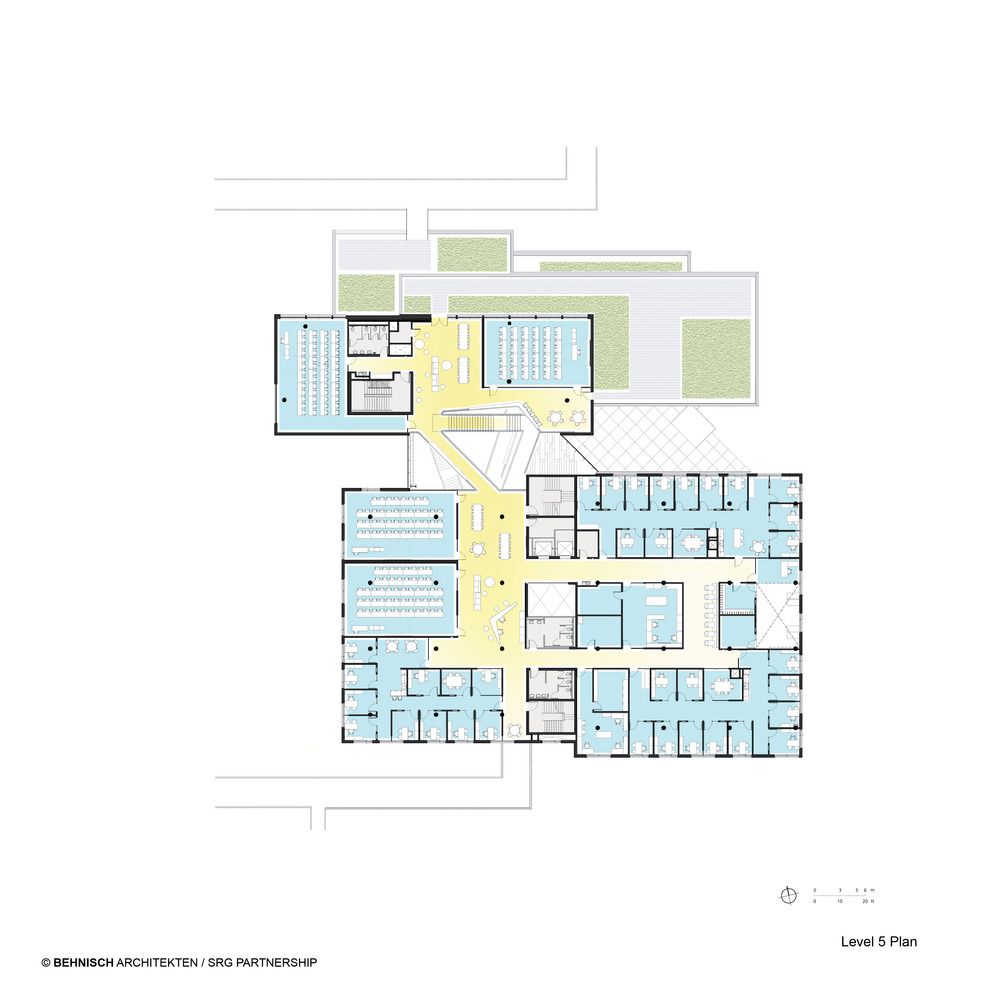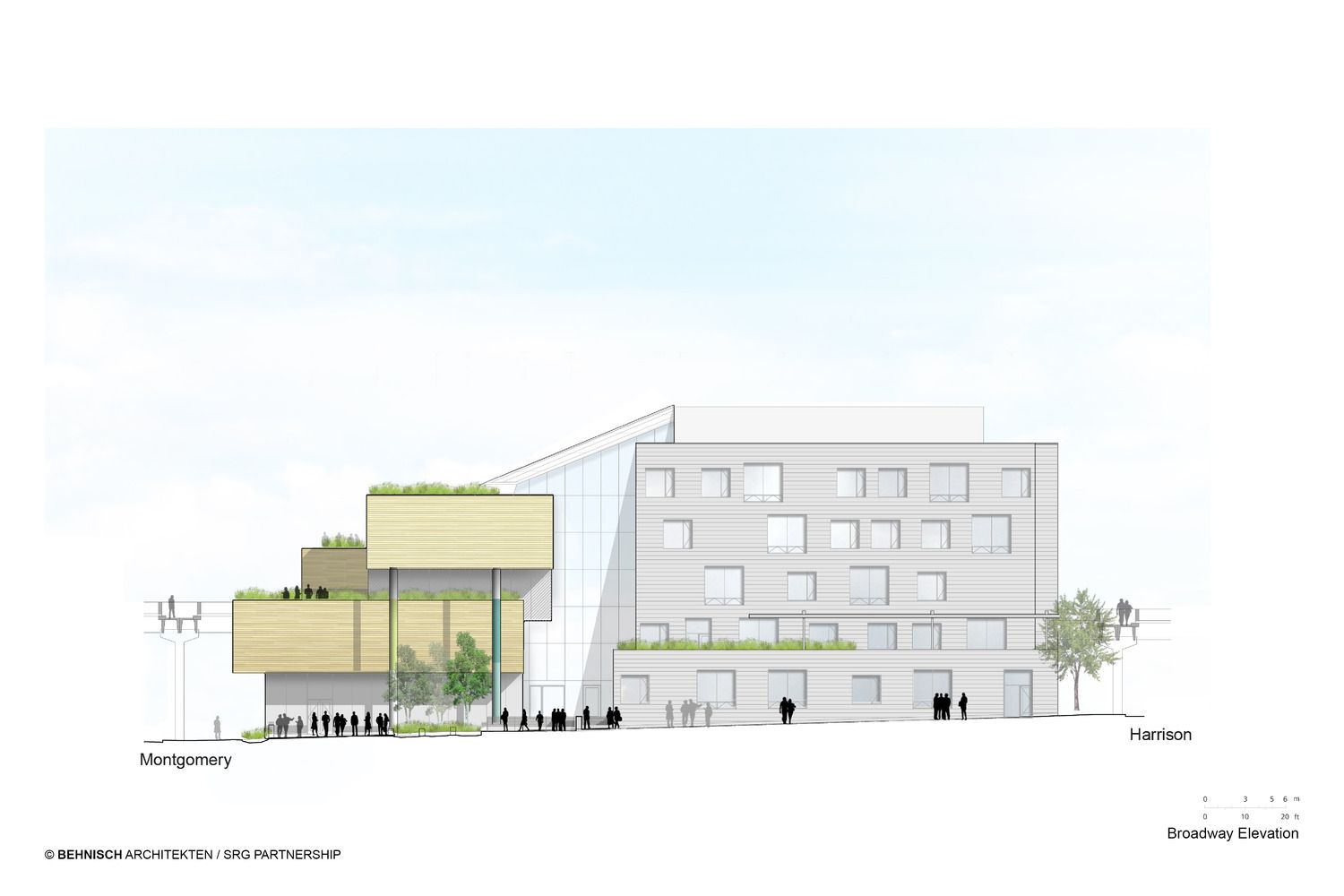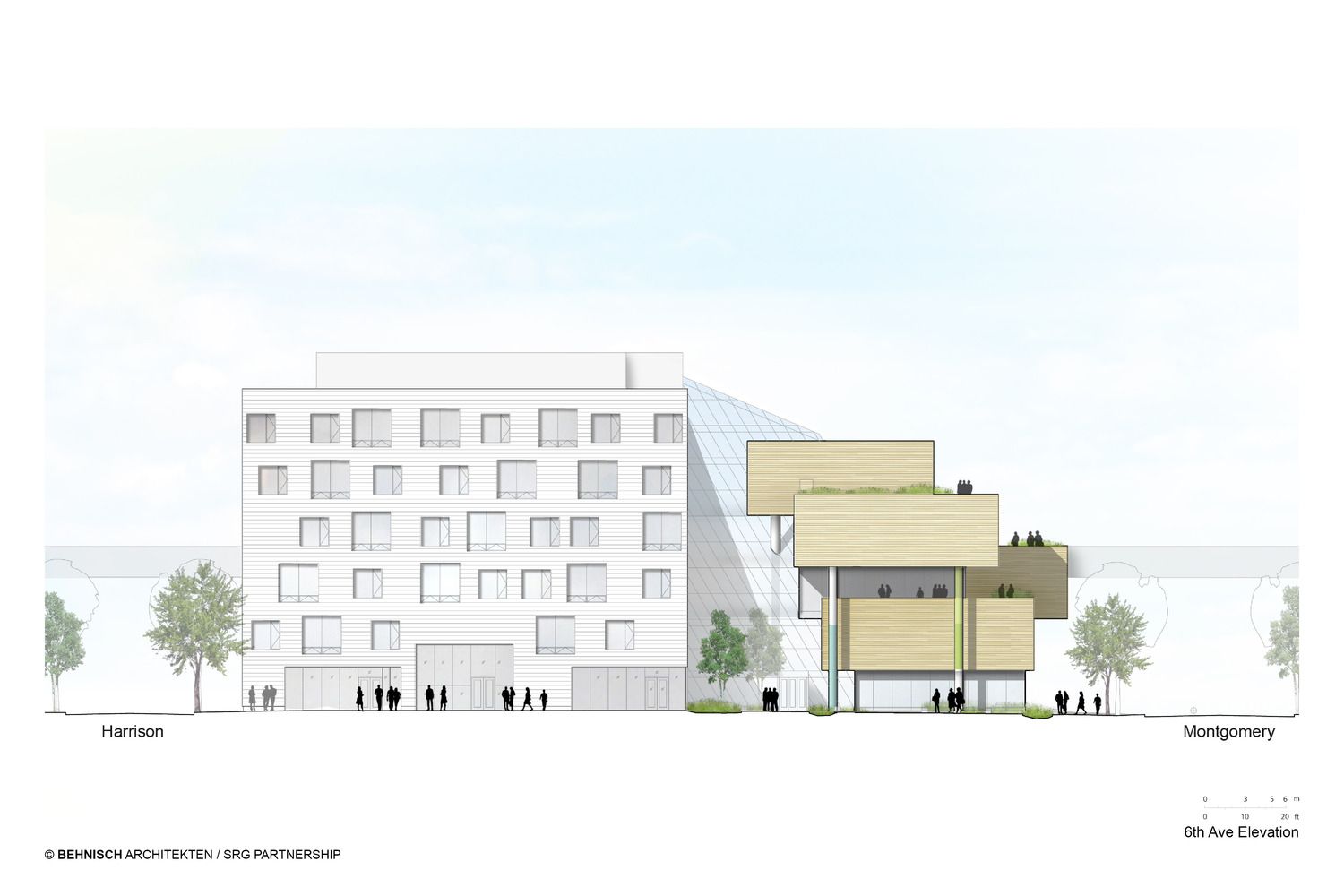


Located in downtown Portland, the Karl Miller Center, home to Portland State University’s School of Business, is uniquely integrated with the city’s rich network of public spaces and diverse urban uses. But that wasn’t always the case.
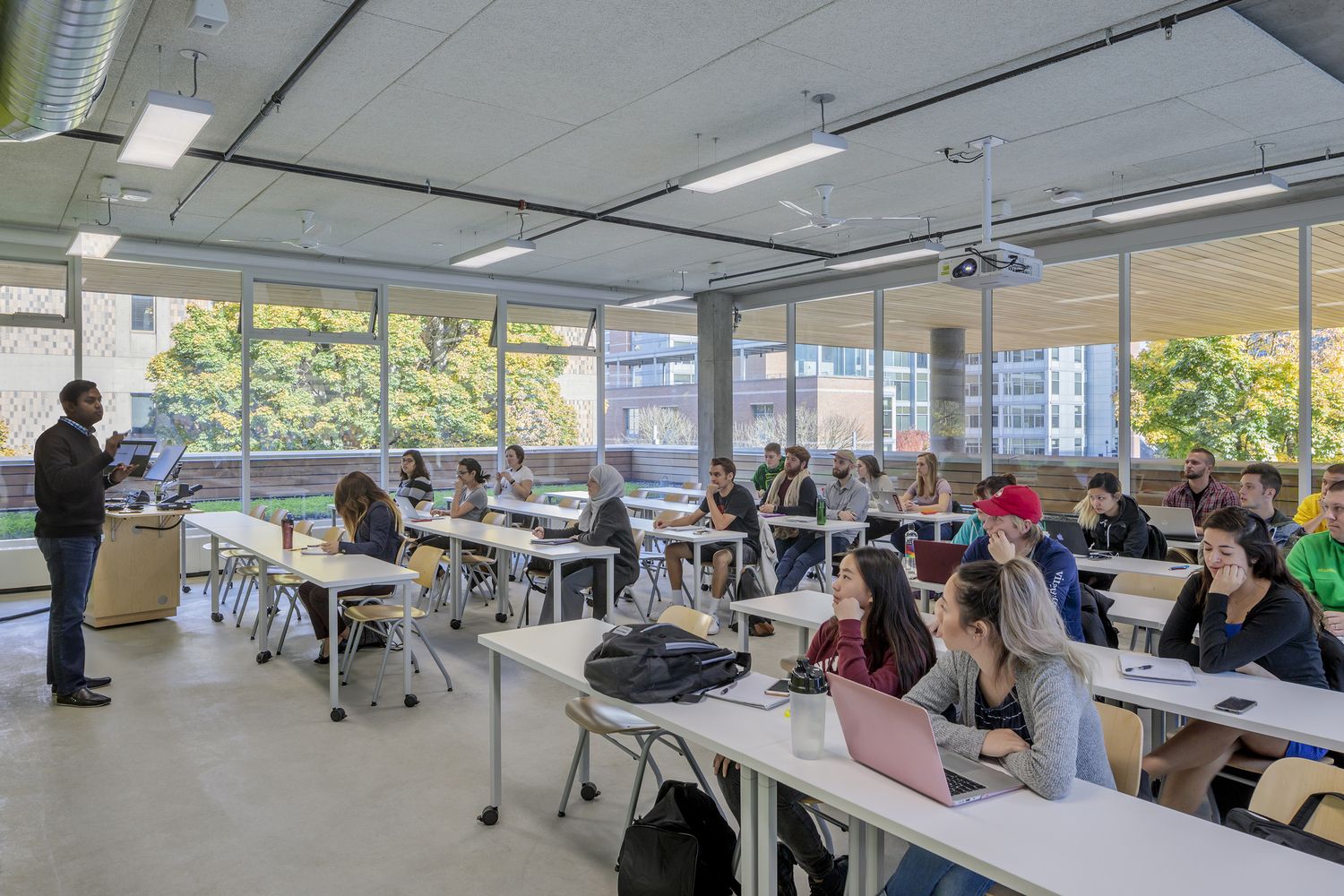
The original building —a 100,000-square-foot 1970s structure in which students had nowhere to gather for “informal” learning, faculty offices were separated from classrooms and student spaces, and access to daylight and fresh air was minimal —did not reflect the University’s students, faculty, or commitment to its sustainability curriculum.
Karl Miller Center’s Challenges:
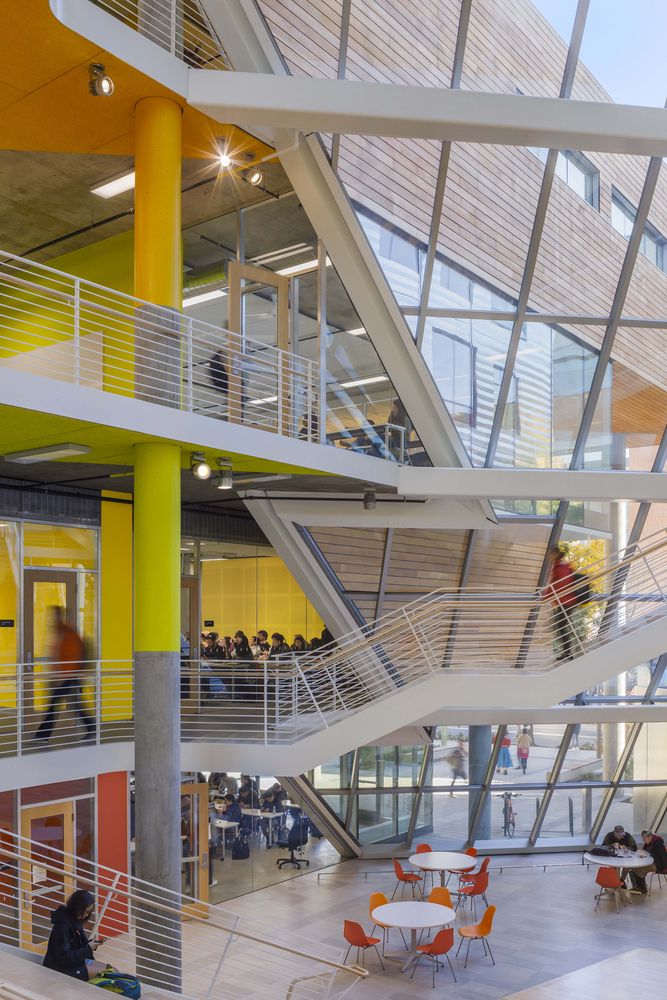
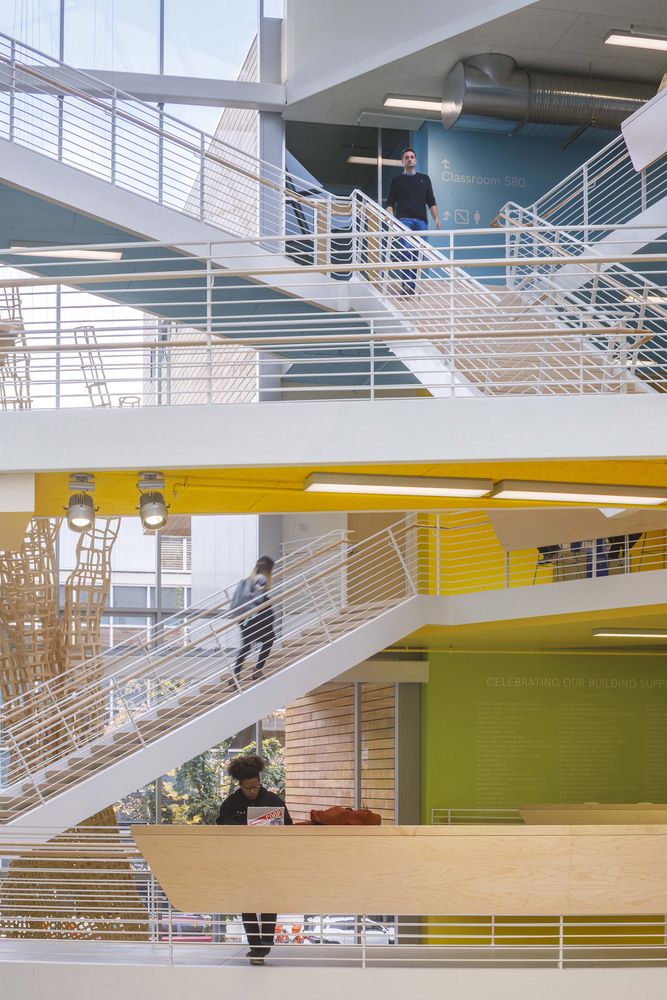
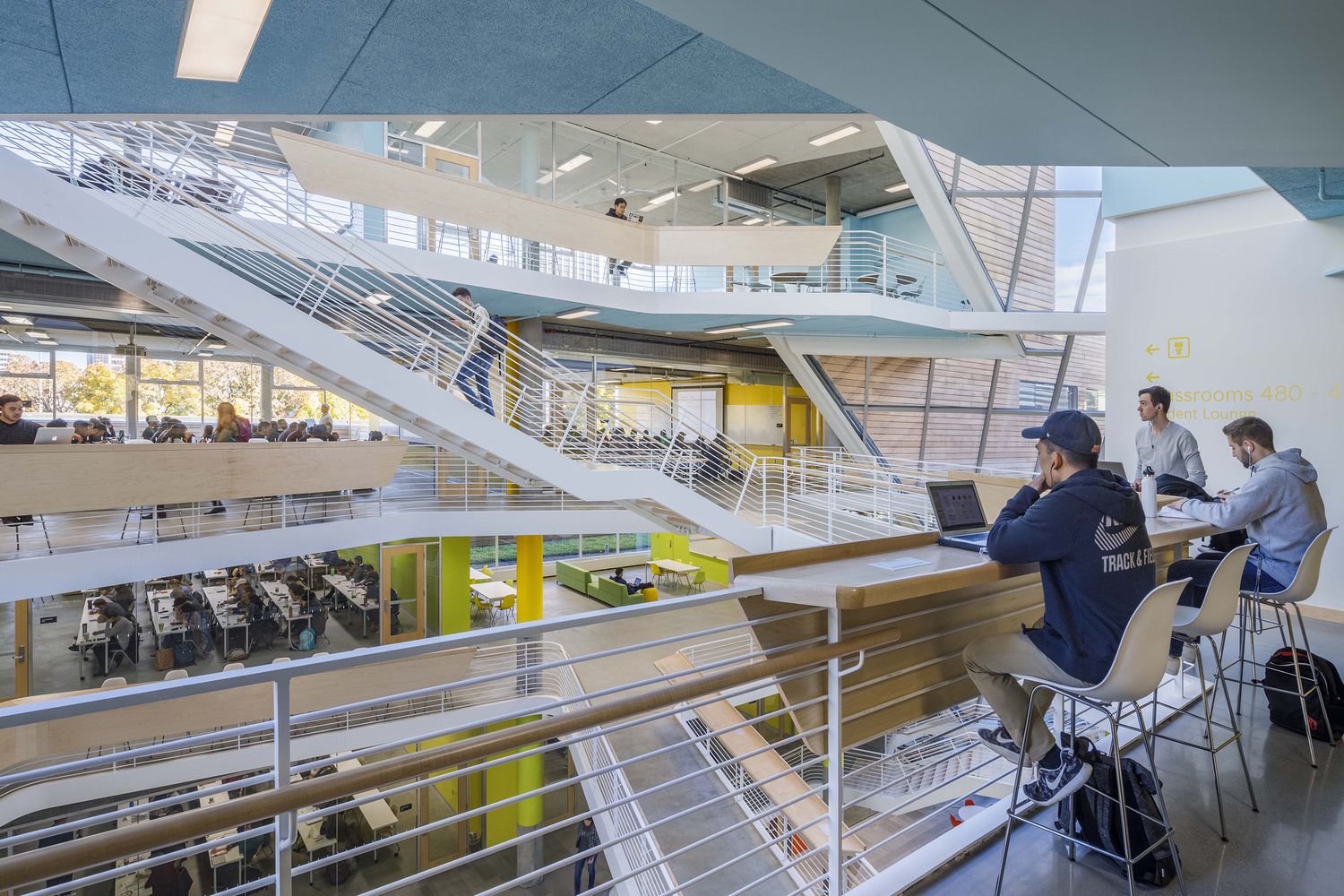
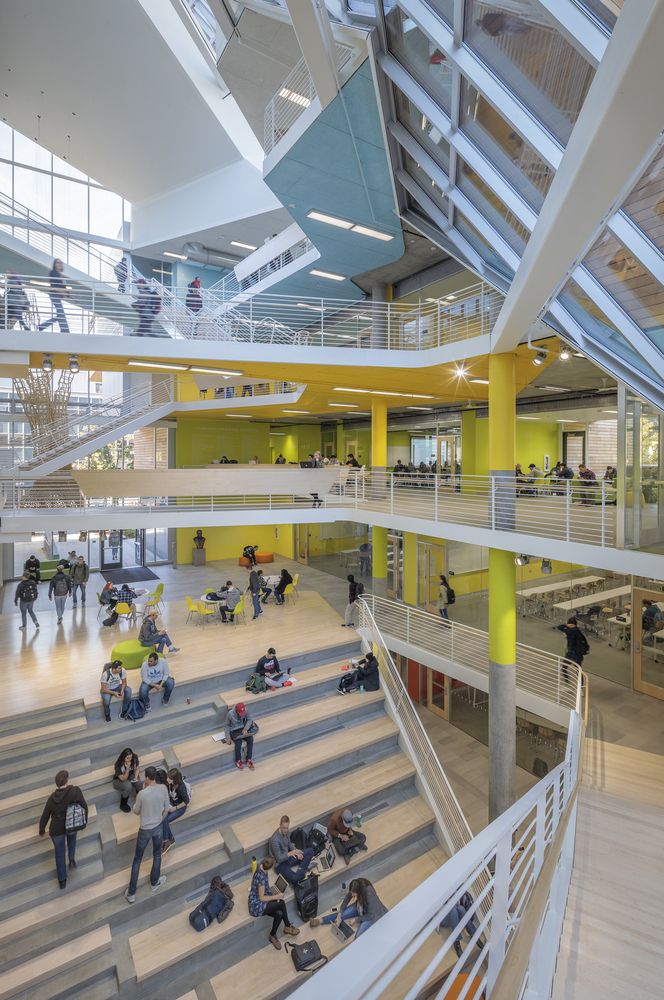
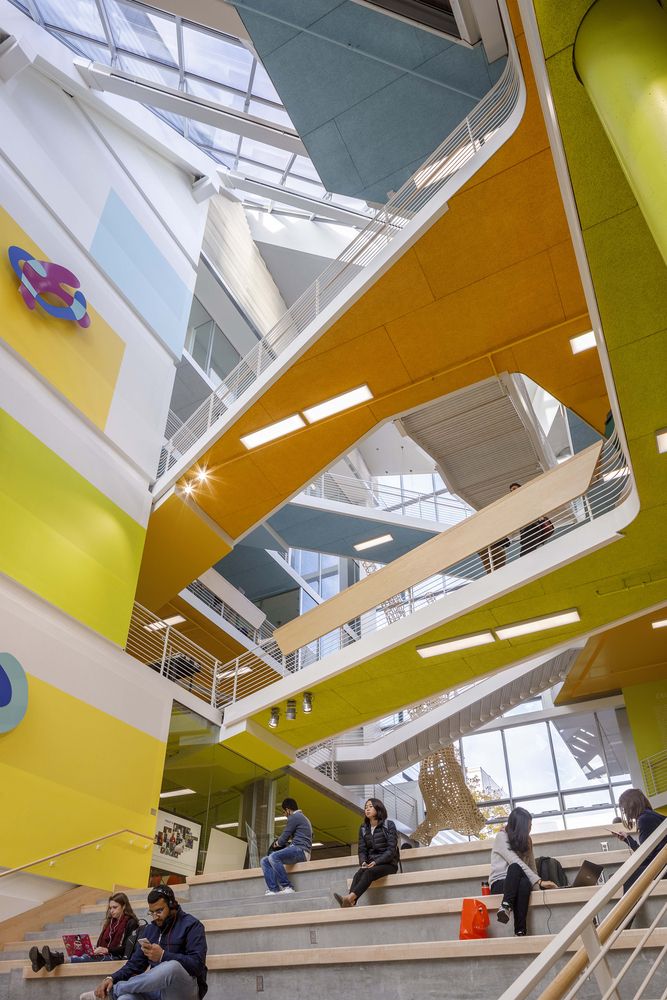
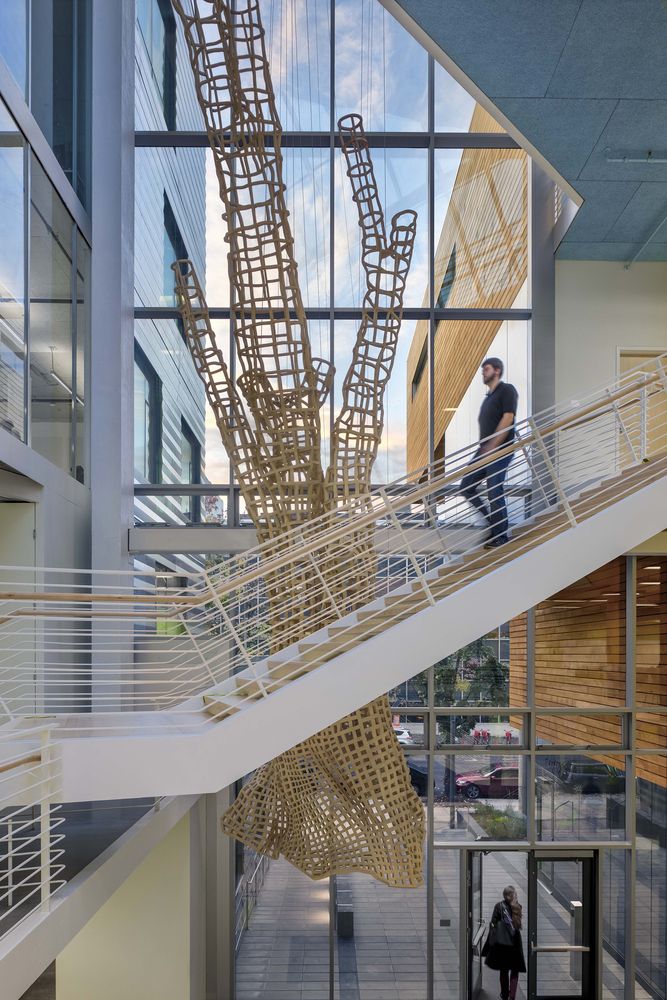
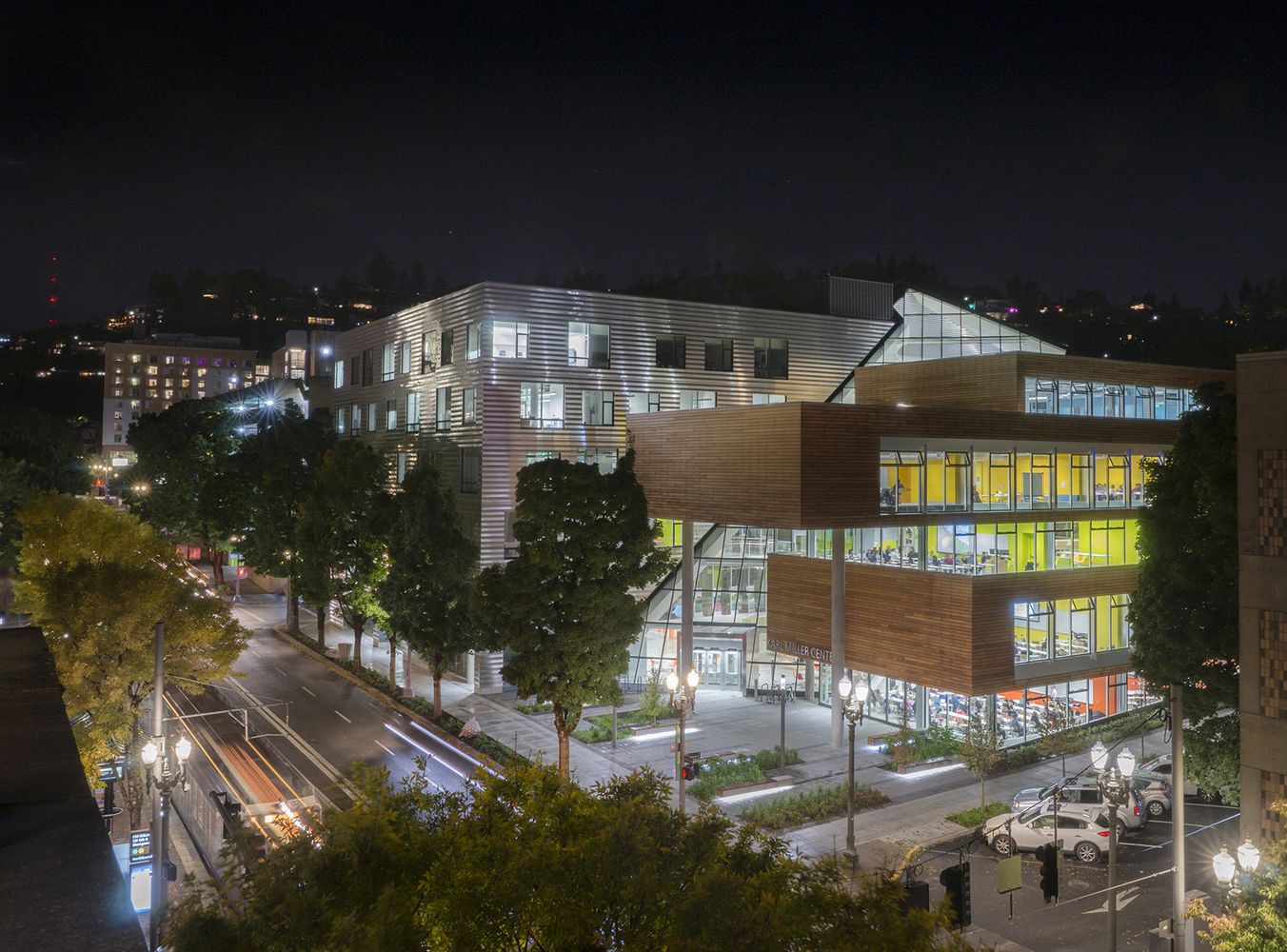
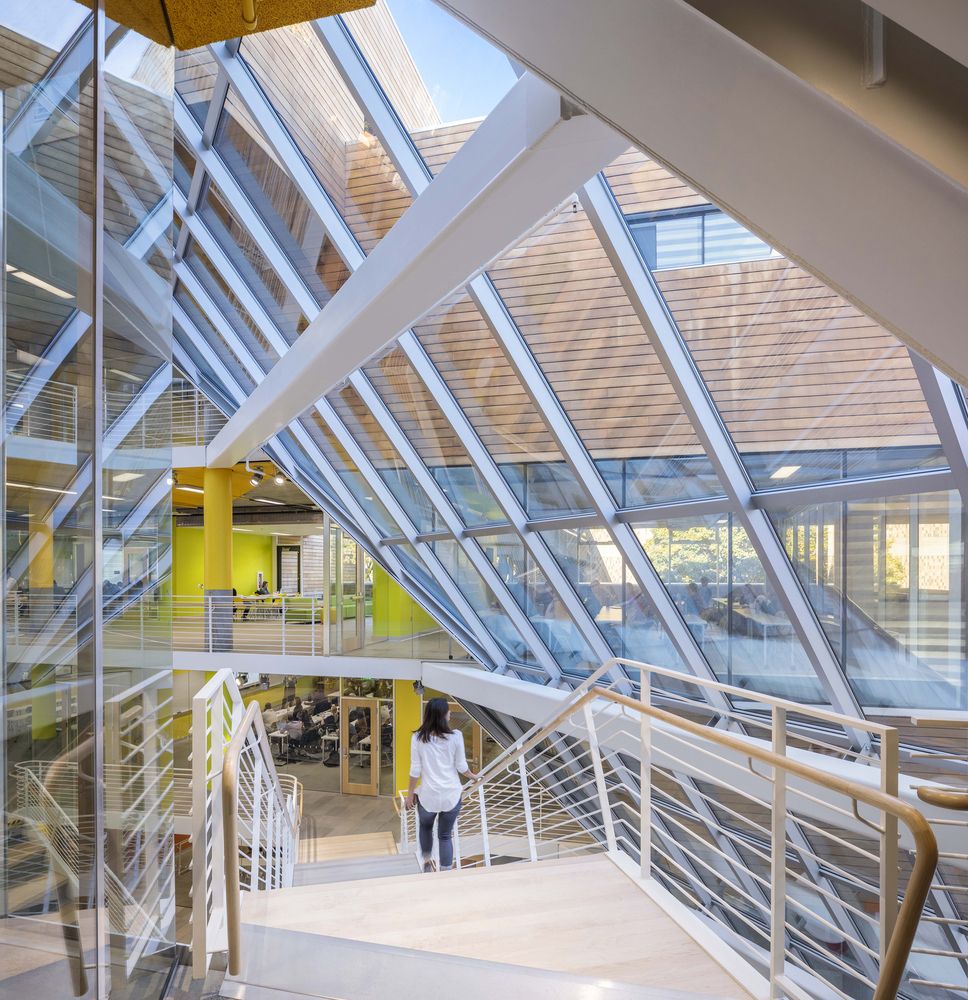
One of the design challenges for the Karl Miller Center design was to breathe new life into this less-than-ideal existing structure and to do so in a way that generated a new architectural identity for the school. Driven by a diverse programmatic and performance-based approach, the response was a project that orients users around a multi-story central space that collects and amplifies daylight and suffuses the deep floor plates of the older structure with new life.
LEED-Platinum certified, the building utilizes a variety of innovative, yet largely passive, low-tech climate concepts to minimize the environmental impact, reducing the total site EUI of the new building to less than half the original, pre-renovated structure. Taking advantage of Portland’s temperate climate, all new construction is designed without any mechanical cooling equipment.
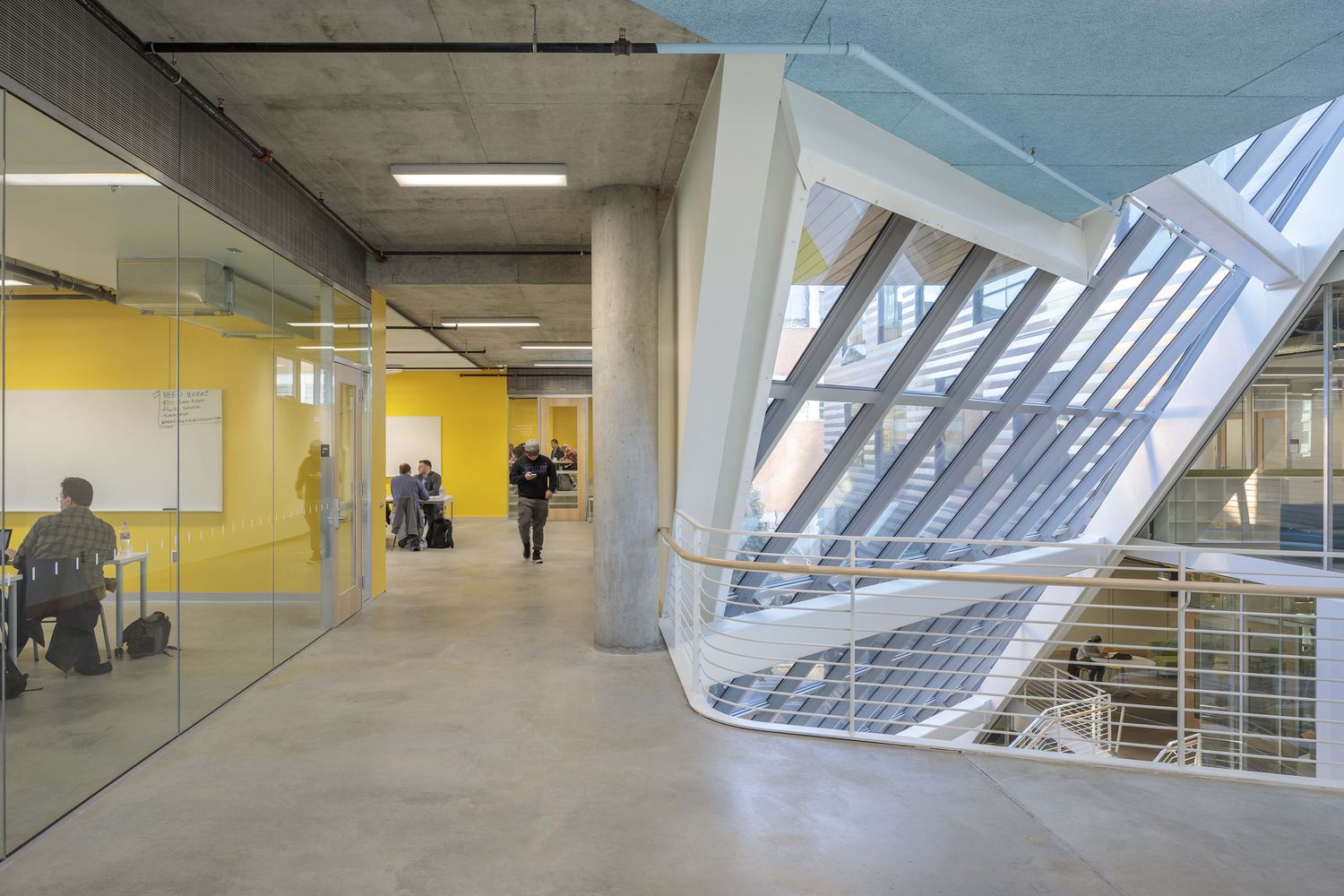
Indoor air quality, daylight, and views to the outdoors as well as acoustic and thermal comfort were also studied in detail during the design process in an effort to create a ‘lighter’, more flexible form of building that fuses sustainability, urban activity, and campus life while simultaneously prioritizing human comfort and well-being.
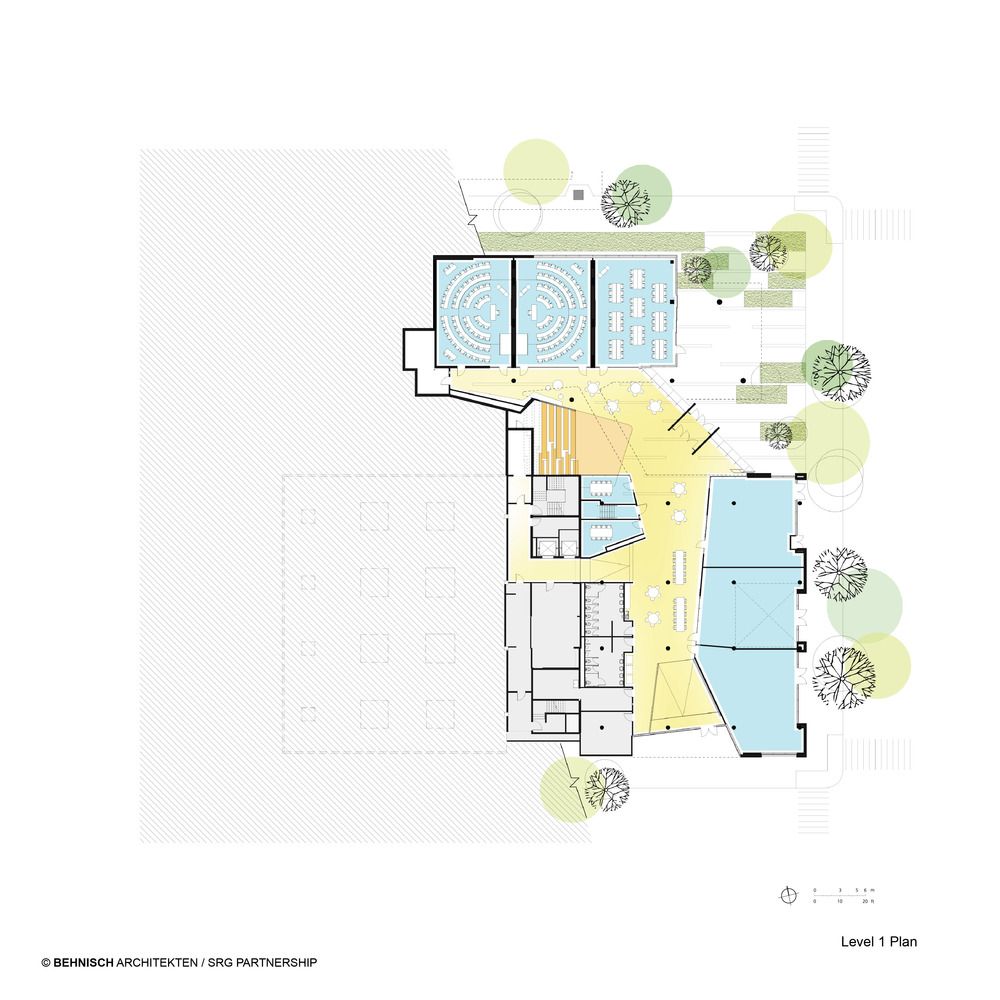
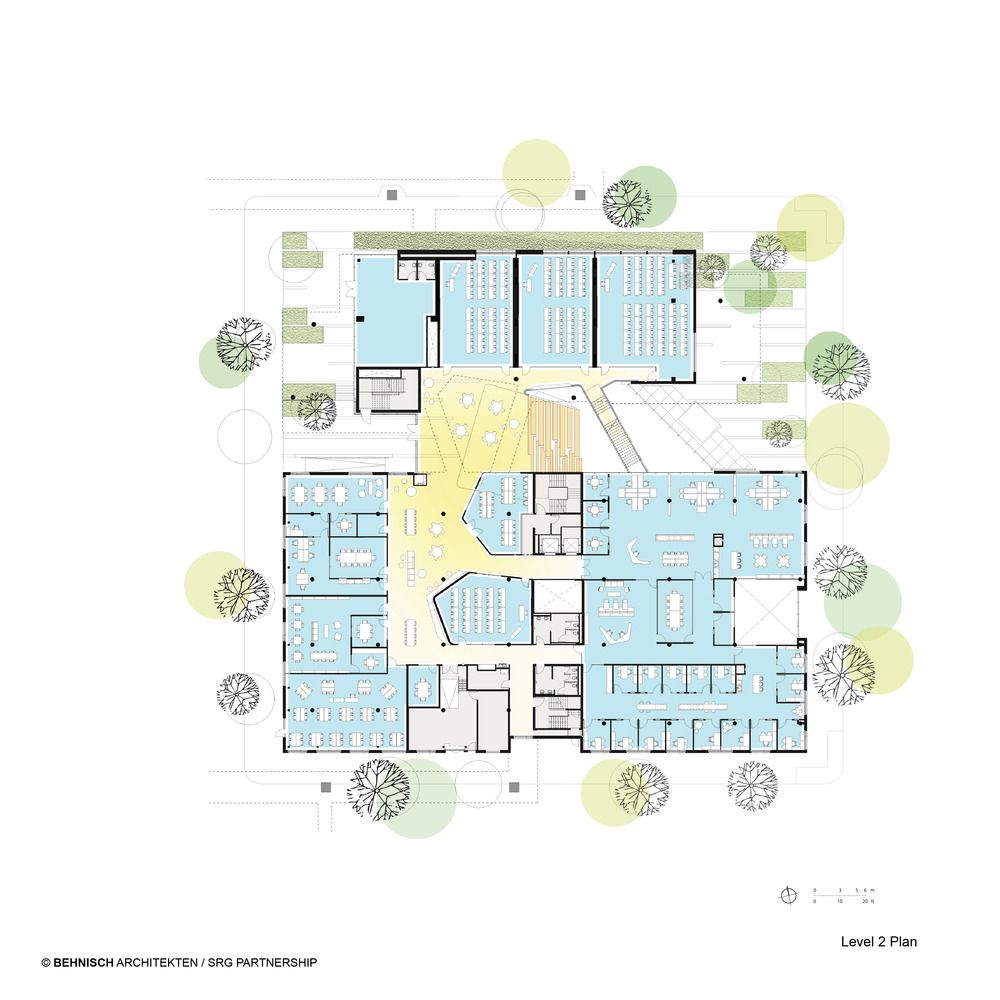
By arranging a variety of spaces—meeting and study areas, gardens, classrooms, business incubators, student spaces, faculty and administrative offices, and retail—to maximize communication and connectivity, the project promotes an inclusive attitude toward learning.
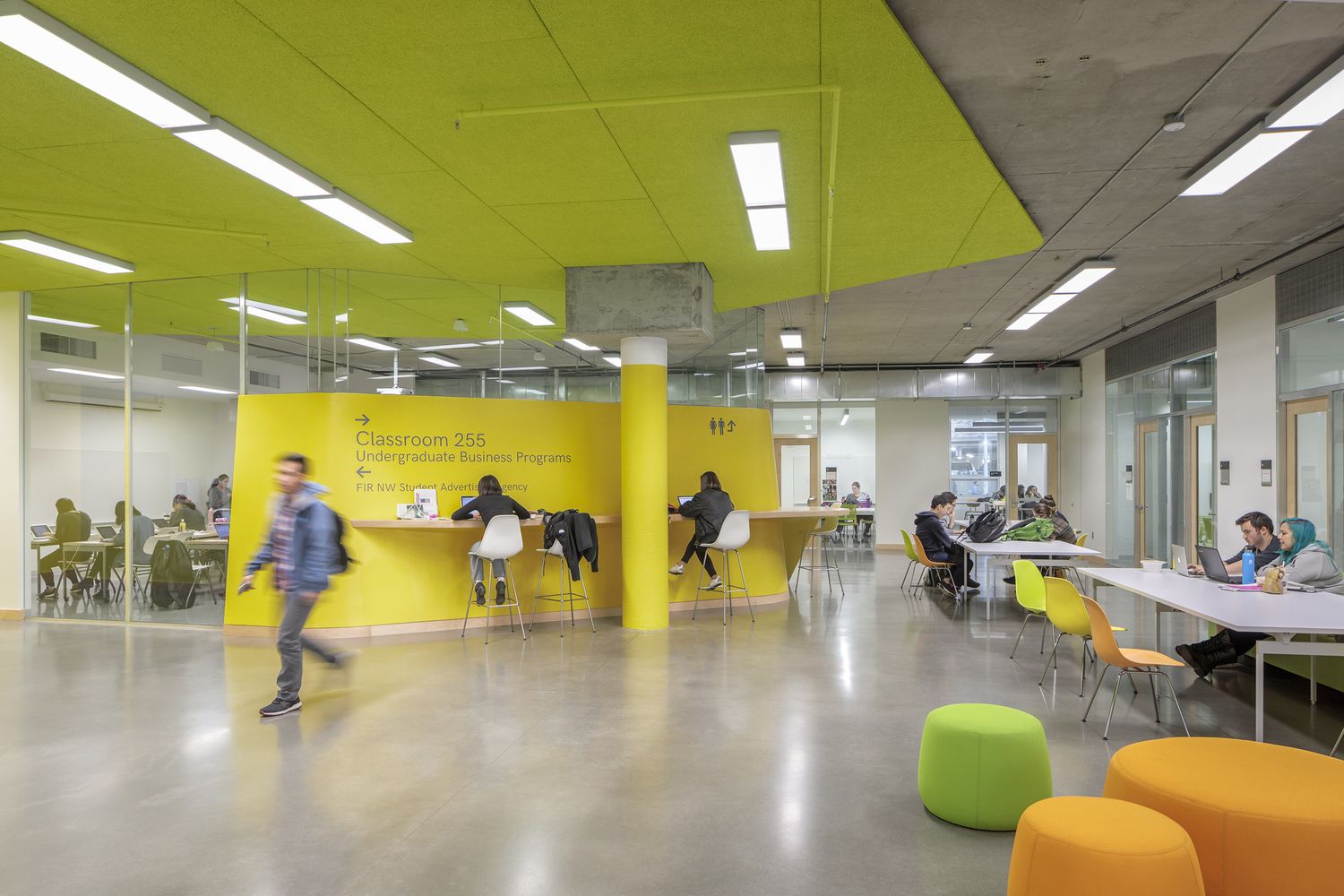
Flexible, student-focused informal learning spaces are evenly distributed throughout the building acting as social anchor points, helping to elevate the space beyond a transitional corridor and create a pedestrian-friendly space for students and the greater University community.
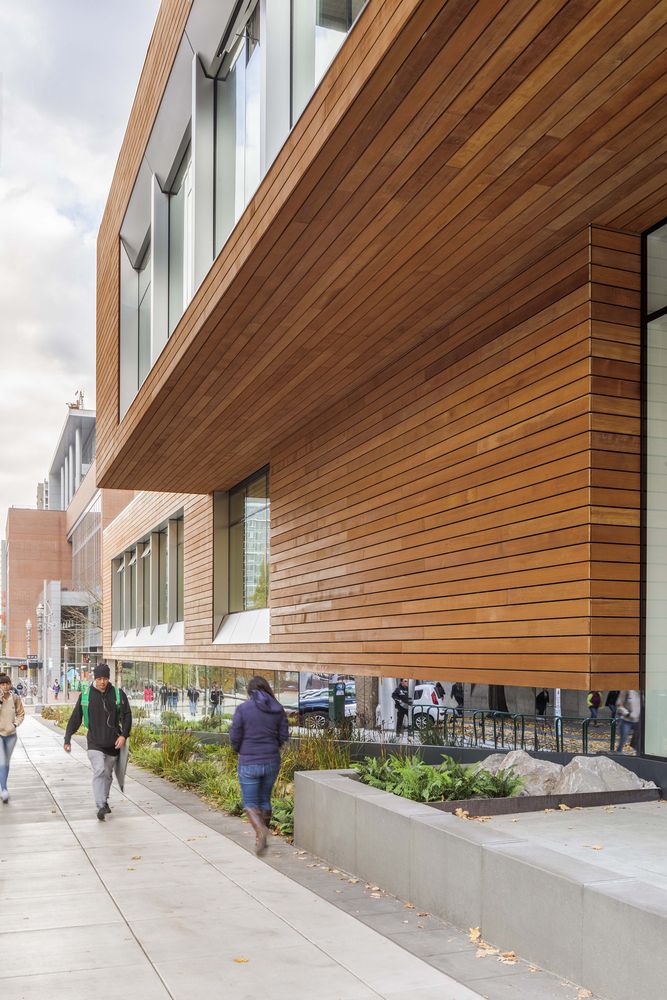
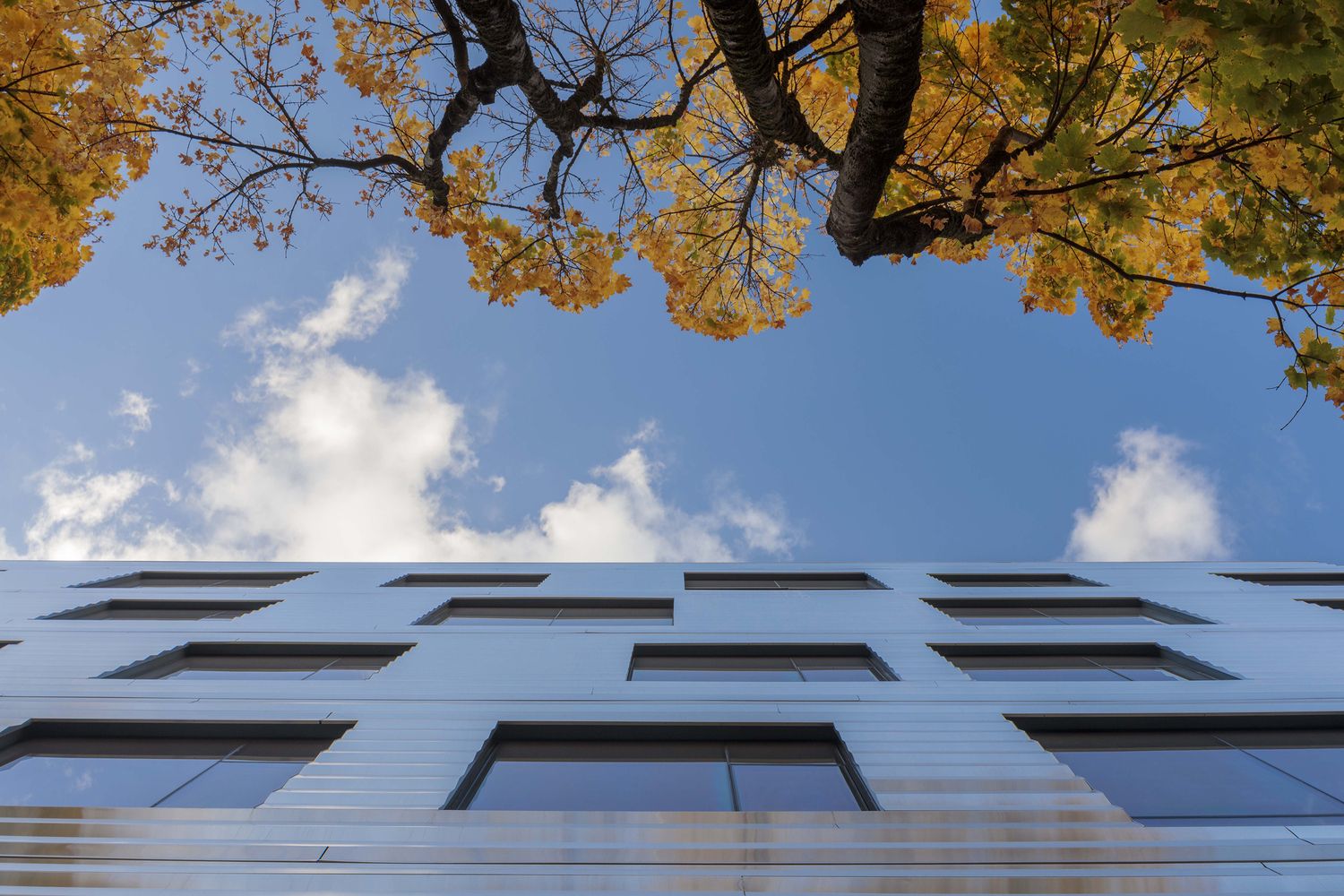
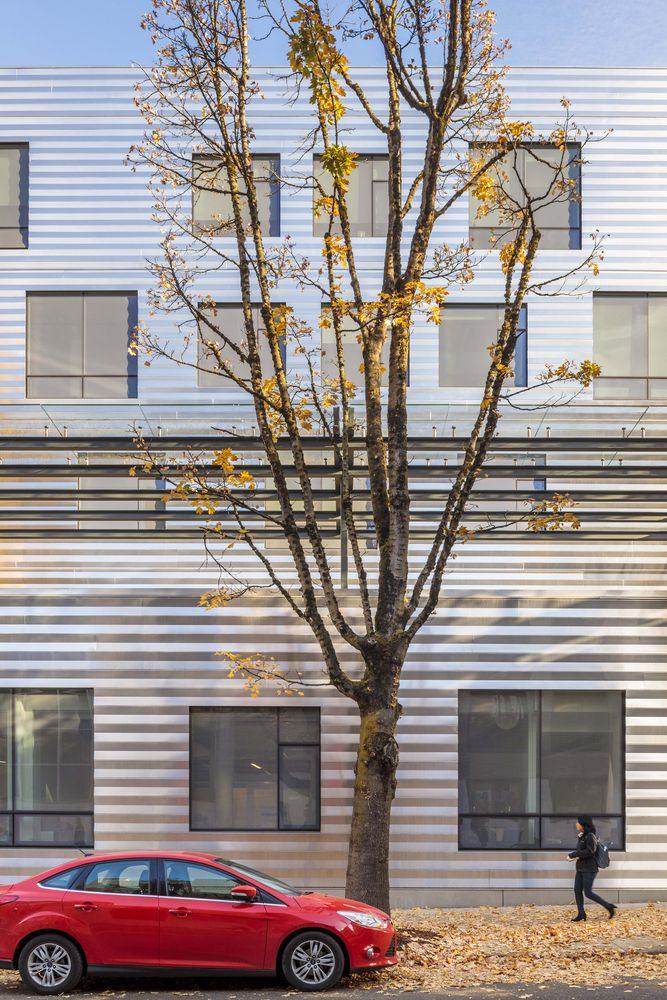
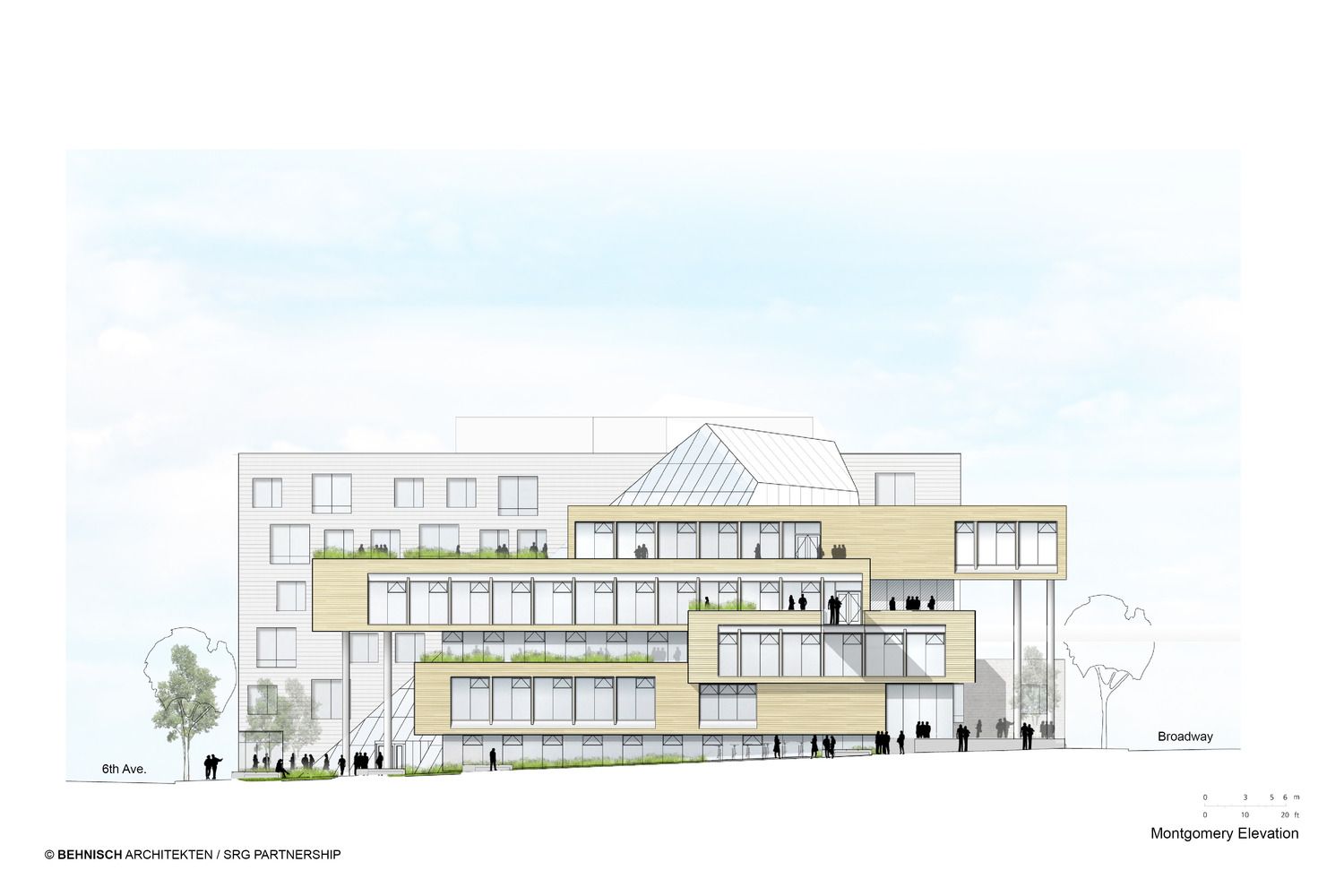
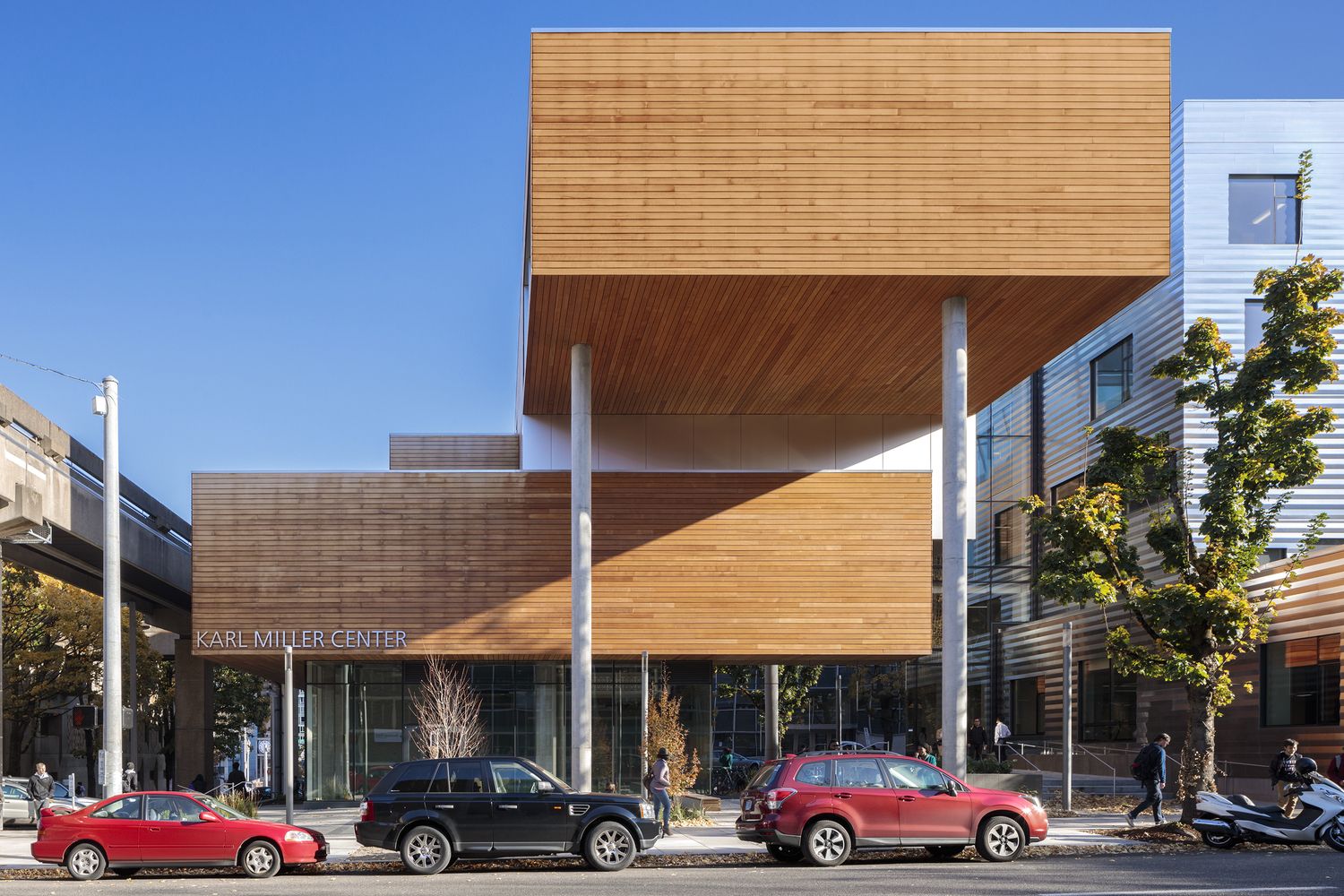
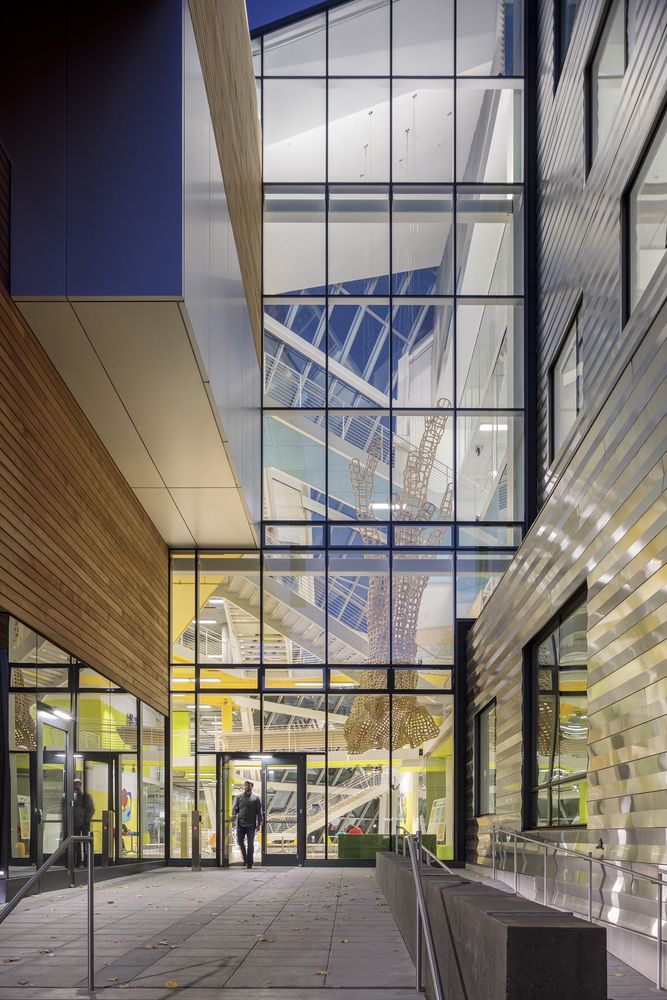
Appearing as two distinct structures sharing a city block, the renovated existing building, retrofitted with a metal panel facade system broken up by an irregular composition of punched windows, contrasts yet complements the new, dynamic, and shifting 45,000-square-foot addition, clad in regionally sourced FSC-certified Alaskan Yellow Cedar.
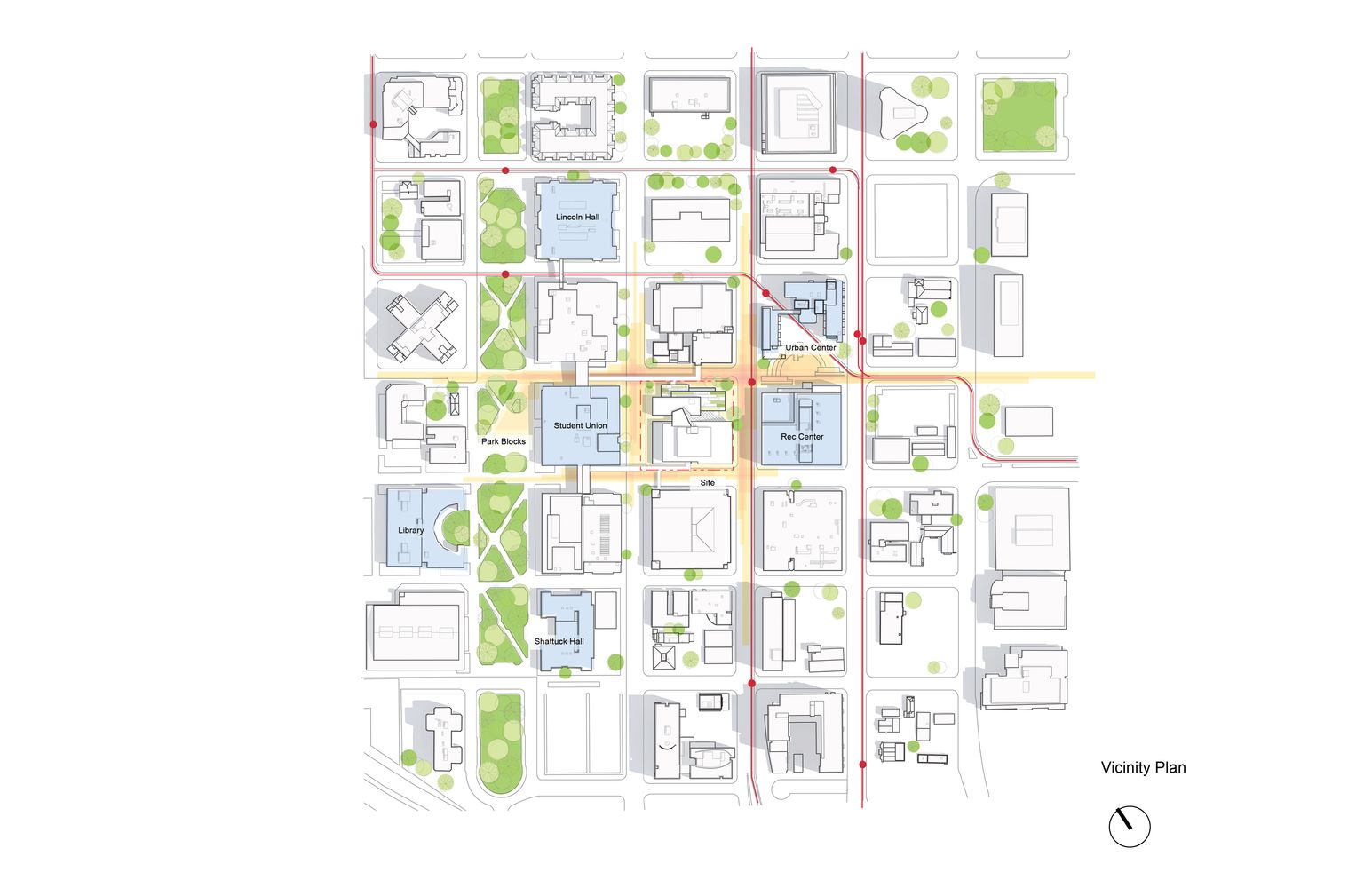
This approach, coupled with a series of terraced, occupiable green roofs and new circulation pathways linking the urban center, local parks, transportation stops, and nearby campus buildings, enhances the public realm by providing a more diverse streetscape. With a one-story grade differential, two ground levels are formed, further activating the atrium and exterior plazas within and around the project site.
Project Info:
Architects: Behnisch Architekten, SRG Partnership
Project Type: Educational, University
Location: PORTLAND, UNITED STATES
Area: 145000 ft²
Year: 2017
Photographs: Brad Feinknopf, Janis Rozkalns
Manufacturers: Big Ass Fans, Morin Corp., Bega, Benjamin Moore, Hartung Glass Industries, Zumtobel, Buffalo Welding, Culver Glass, FSC, Functional Fenestration, Reynobond, Silexsystem
Lead Architects: Michael, Kocher (project leader), Franziska Gloeckler, Ye Won Ji, Ryan Otterson, Josh Kleinman, Ping Pai, Blair Eckleberry
Climate Engineering: Transsolar
Civil: KPFF
Structural: Catena
Lighting: Luma/Littlefish
Landscape Architecture: Mayer/Reed
MEP: PAE
Acoustics + Audio Visual: Listen to Acoustics