


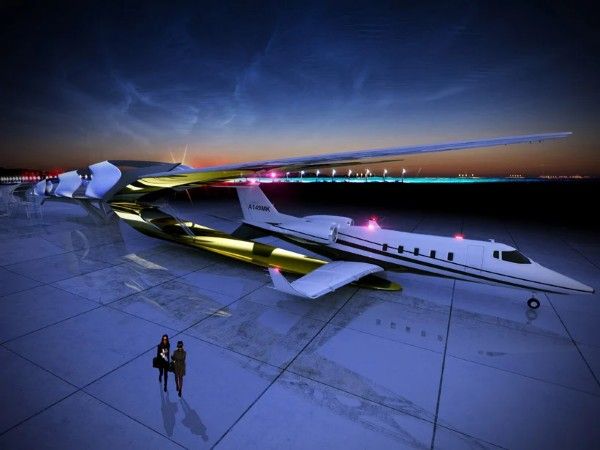
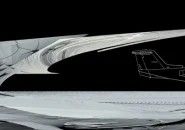
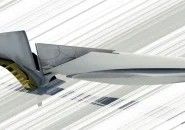
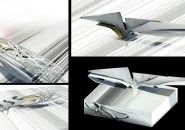
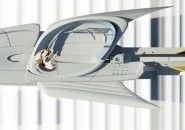
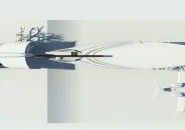
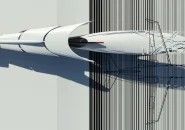
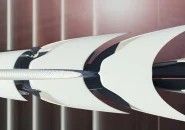
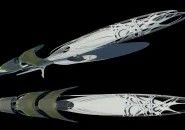
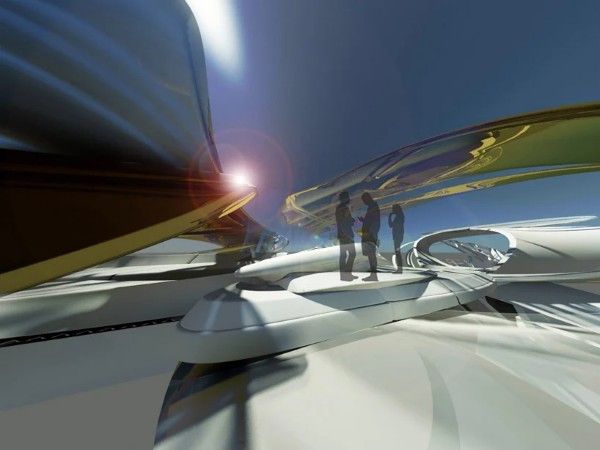
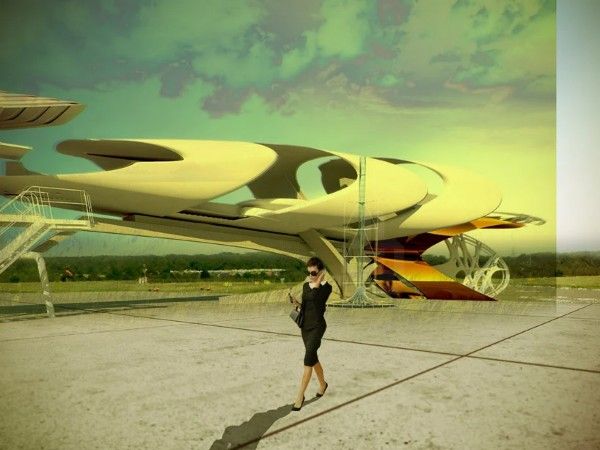
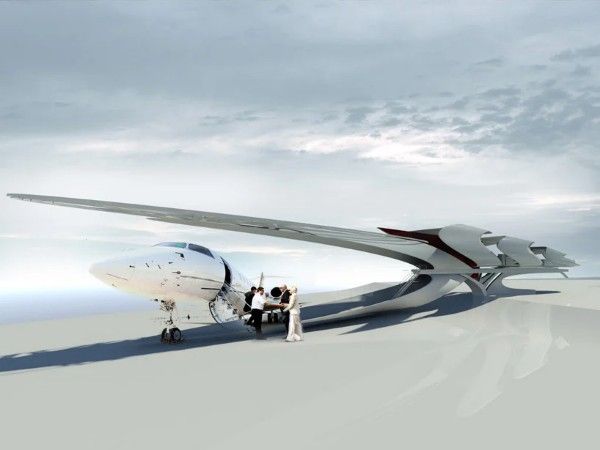
A private client’ s short stay hotel hangar that can be wheeled to different docking locations at their private airfield. The hotel lounge is an extension of the private jet which enables the passengers to rest for a period of 24 hours before departure, negating the need to leave the private airstrip in search of accomodation whilst the plane refuels or undergoes maintenance. The scheme is composed of three telescopic fibreglass polymer clad shells, the exterior contains perspex encased tritium sections which glow, they have a ten year life span without the need for an external power supply. The scheme can be dismantled for easier transportation.
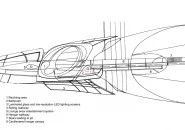
The hydropneumatic suspension sections can be moved apart similar to that of an airport passenger jet bridge, they are cantileverd from the main structural steel frame stem which locks the cantilevered hangar roof whilst counterbalancing the lounge rooms, both sections are secured at an angle into this movable structural rig which also acts as an anchor for the scheme. Rain water is filtered in order to be used by the hotel room services.
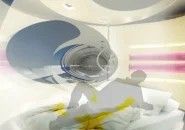
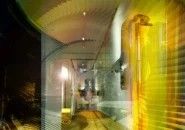
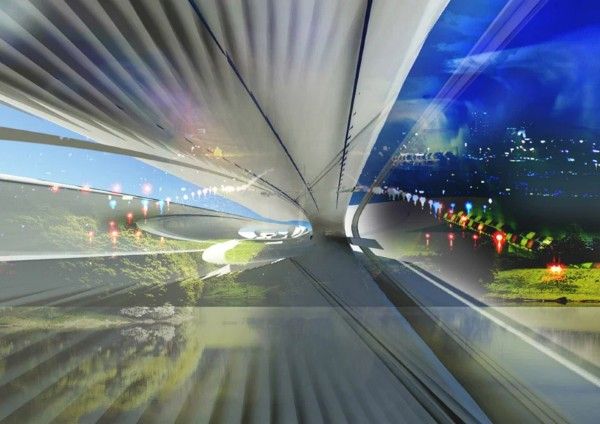
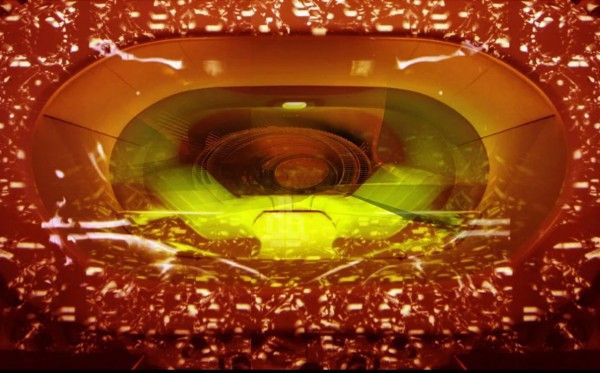
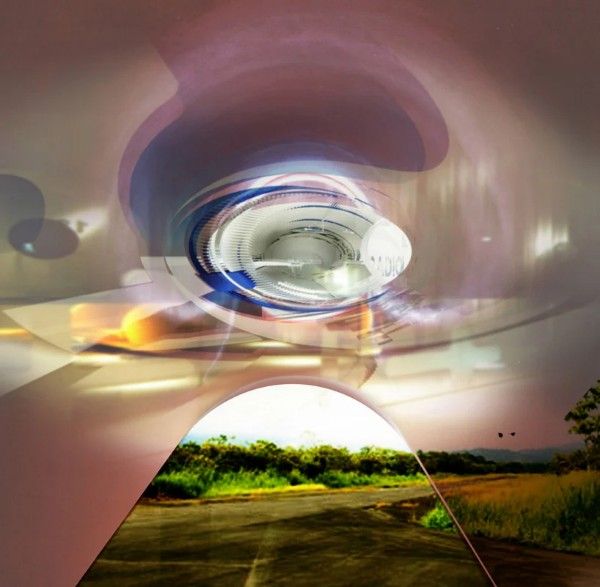
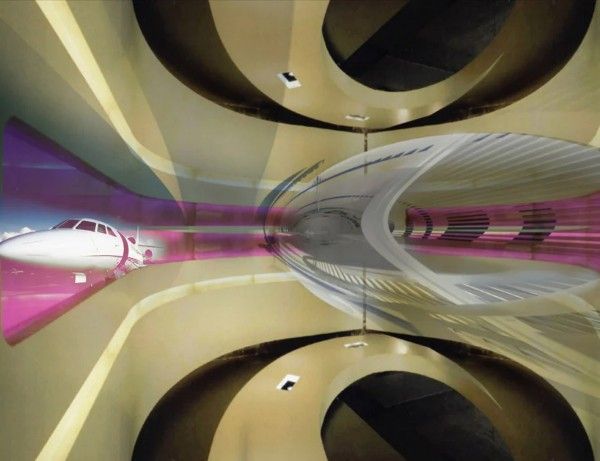
A seamless polished chrome cantillevered canopy displays the jet within a highly reflective environment which can be shuttered off when necessary, the surfaces are sealed to not only showcase the plane but keep the area clean of rain water contamination making it a self cleaning hangar. A creased rubber section connects all three fibre glass shells which expands and contracts according to the shells movements. The expandable interior sections are lined with a combination of laminated glass , photovoltaic cells and low-resolution LED Lighting which can be programmed to create any fully immersive environment which either connects you with the existing horizon line and context or completly dislocates you from it.
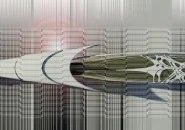
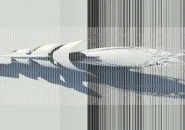
The design concept mimics the heat haze, shimmering effect of high temperatures during takeoff and landing, altering our perception of the immediate environment, the architecture is an extension of the dynamics of it’s context, using pattern recognition, digital and radioactive technology to blur the edges between the virtual and actual.
The second stage implements a hot air updraft tower to contribute to sustainable energy and environmental design considerations.





Courtesy of Margot Krasojevic

Ibrahim Abdelhady is an architect, academic, and media entrepreneur with over two decades of experience in architecture and digital publishing. He is the Founder and CEO of Arch2O.com, a leading platform in architectural media, renowned for showcasing innovative projects, student work, and critical discourse in design. Holding dual PhDs in Architecture, Dr. Abdelhady combines academic rigor with industry insight, shaping both future architects and architectural thought. He actively teaches, conducts research, and contributes to the global architecture community through his writing, lectures, and media ventures. His work bridges the gap between practice and academia, pushing the boundaries of how architecture is communicated in the digital age.