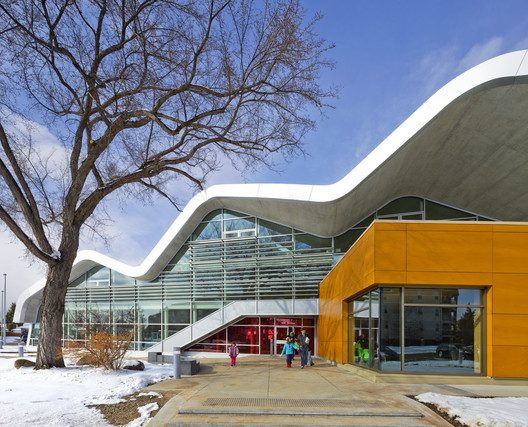
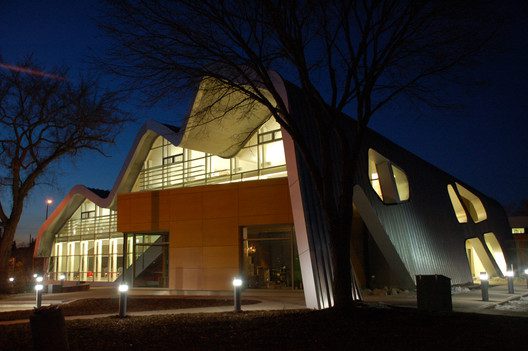
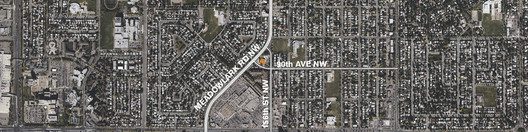
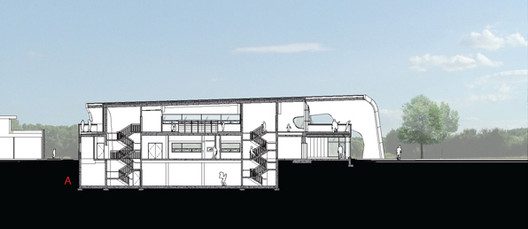
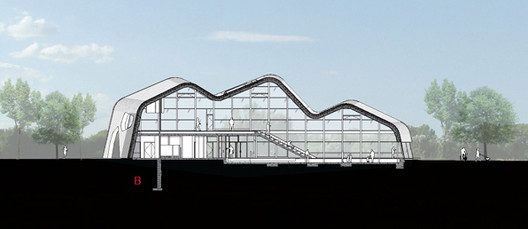
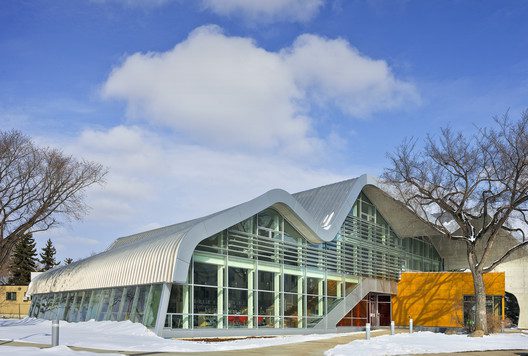
Jasper Place Branch Library by HCMA and Dub Architects is a response to a client’s brief that sought to create an open and memorable flexible building, which responds to the changing place of libraries in our modern society. The brief required a sustainable building that could fulfil present and future needs while embracing all demographics and possible future reorganisations.
© Gerry Kopelow
The client’s goal was mainly to provide a new social heart in an old neighbourhood. Current changes in book publishing have led to the prominence of e-books and other media; as a result the traditional collections of libraries have reduced drastically. This has led to the library taking on a new vocation as a social magnet for interaction along side knowledge sharing.
© Gerry Kopelow
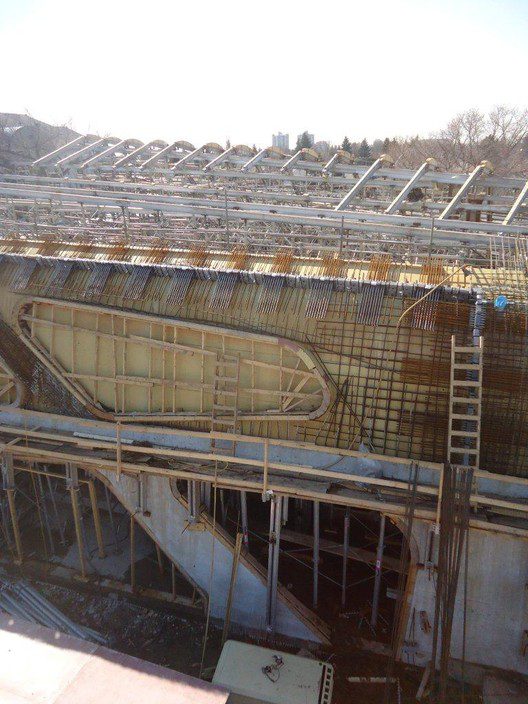
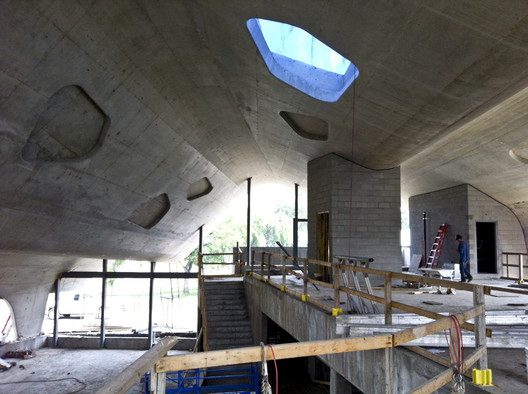
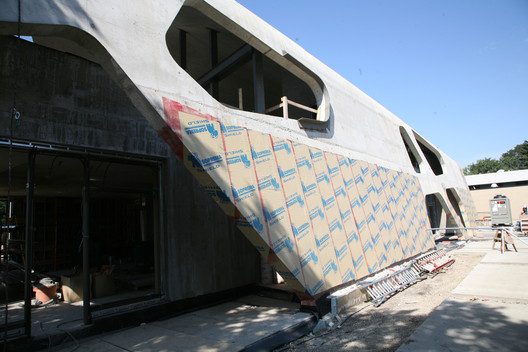
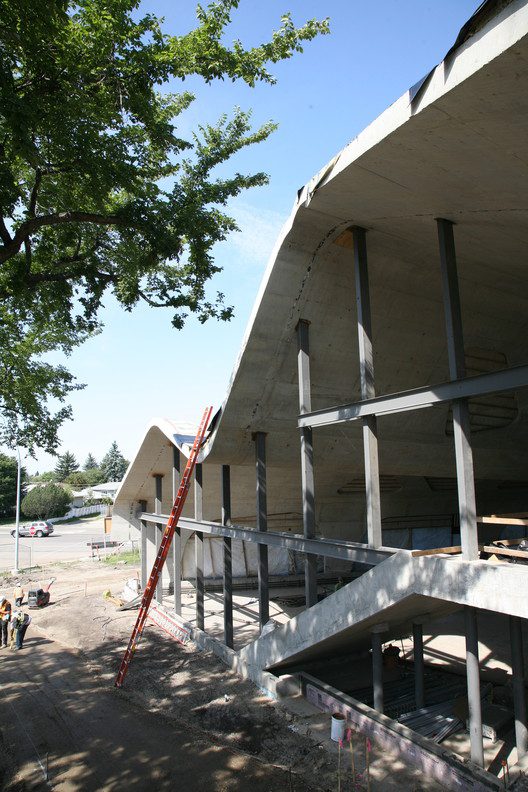
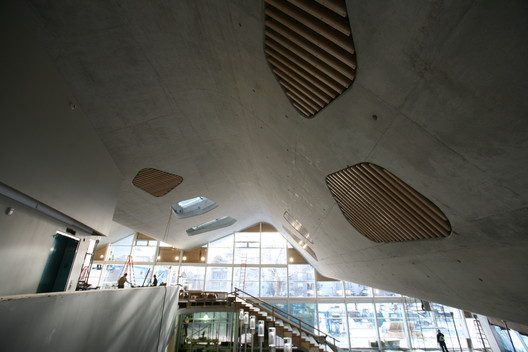
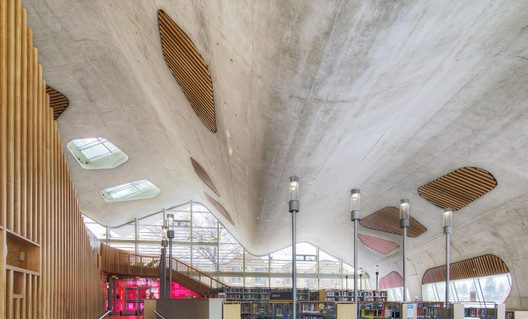
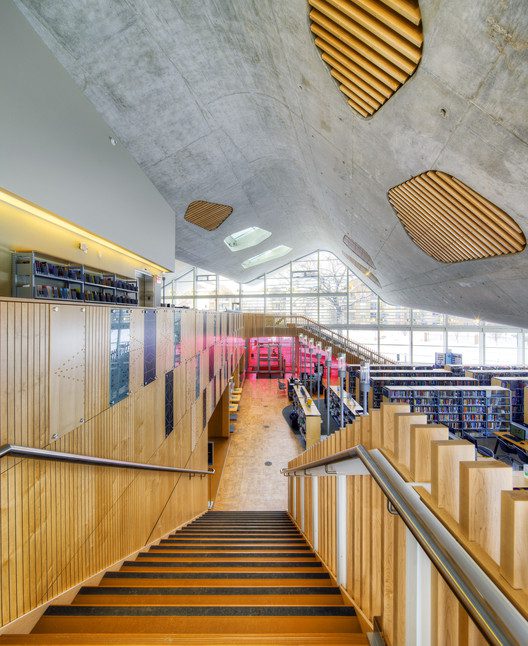
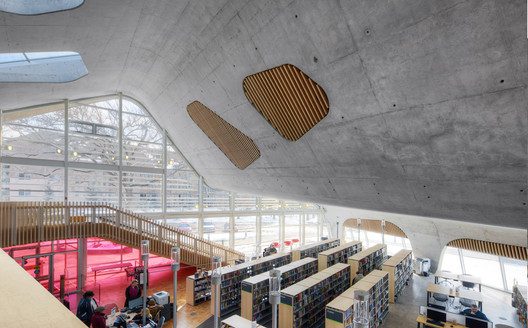
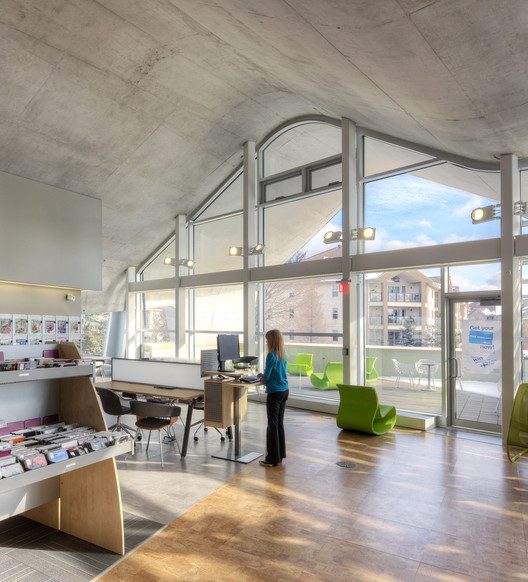
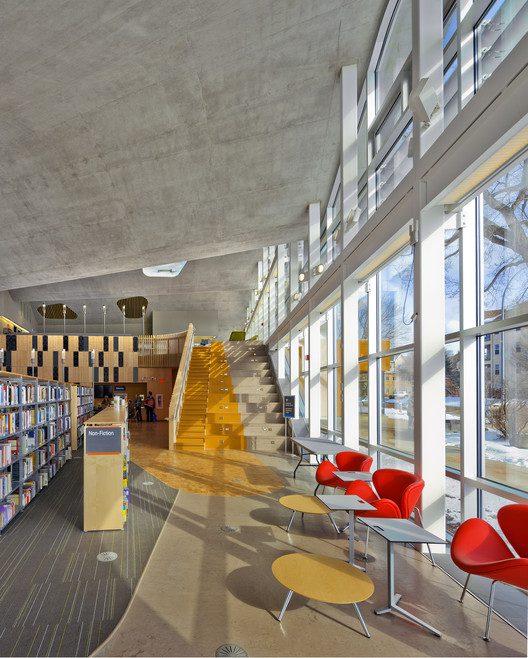
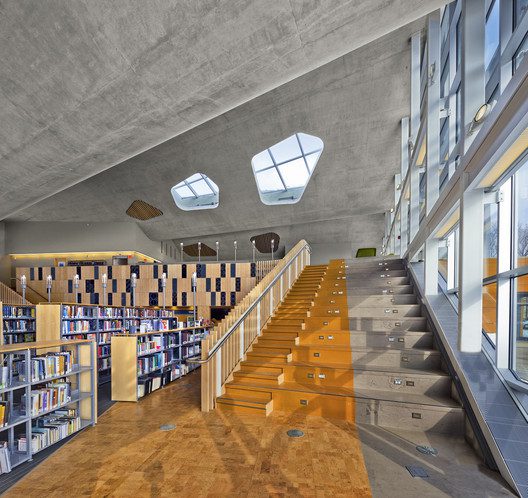
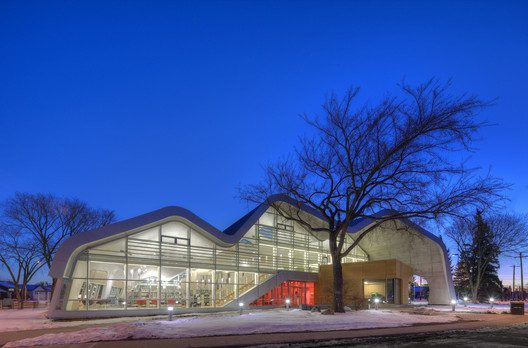
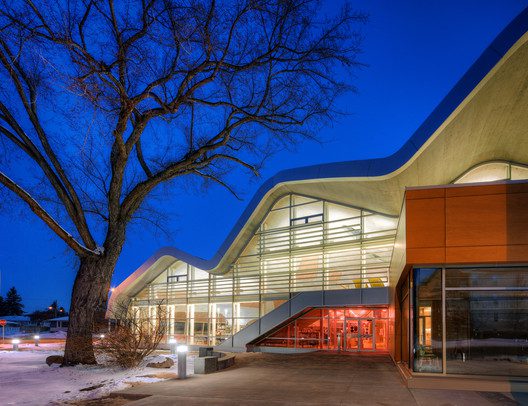
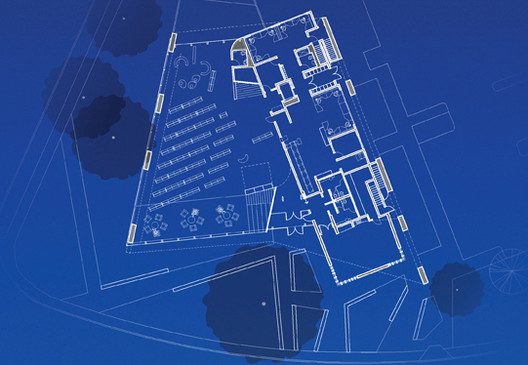
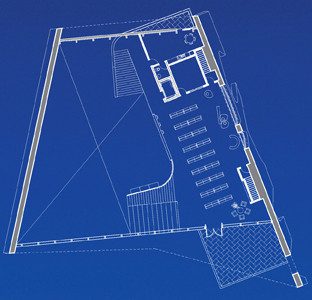
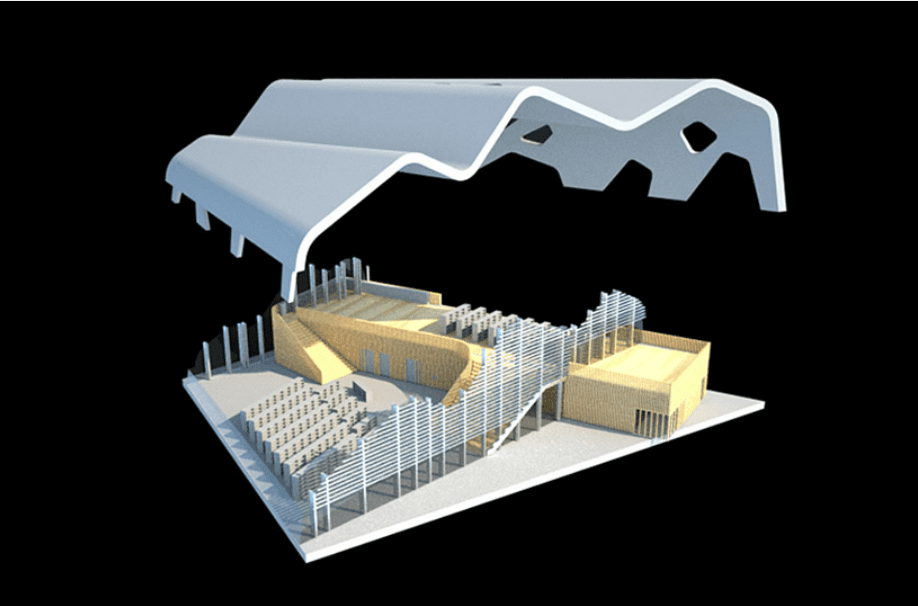
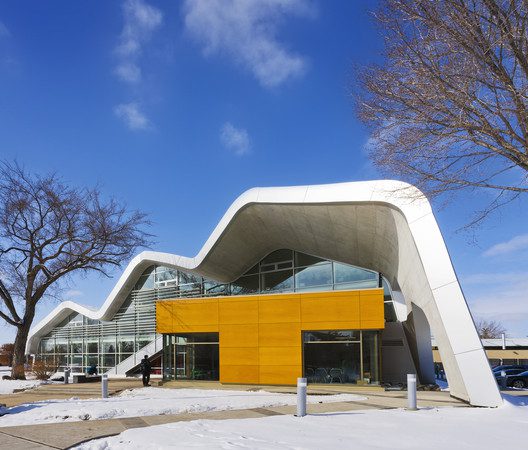
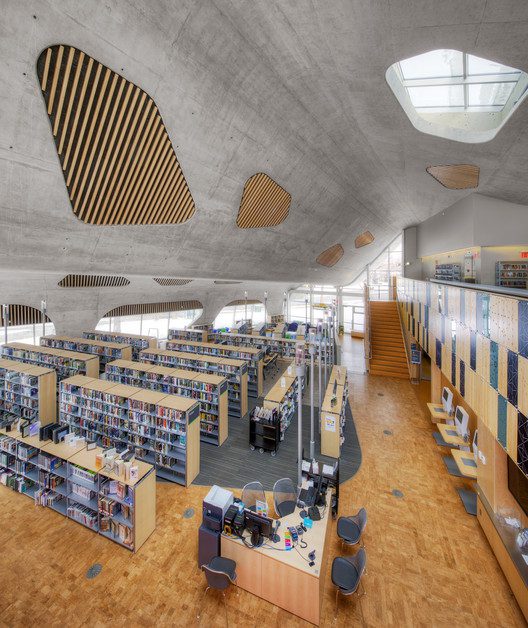
In this regard the response of the designers was to have a new building larger than the former but with a limited collection. This permitted them to have enough space to maximize social potential and interaction for the present and future reorganisations. Architecturally, the architects opted for a flexible column-free social space covered by an undulating roof form.
© Gerry Kopelow
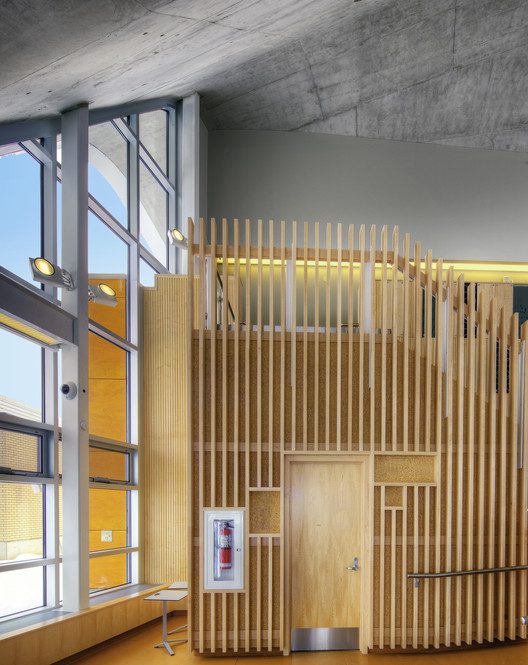
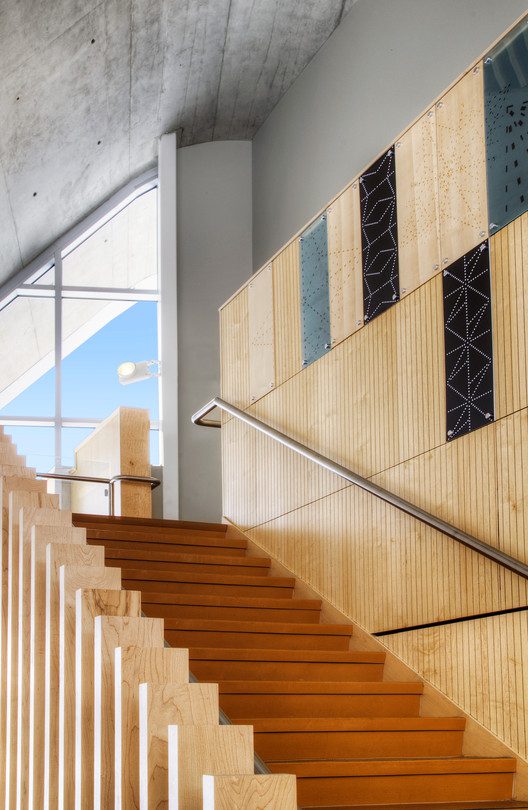
The space includes a continuous raised floor that provides flexibility. The traditional service spaces are located beneath a raised portion of this social space. The stairs form a continuous circulation loop at each end of the upper level. A terrace at the south side of the upper level provides a public space. The design was a shortlisted project for the World Building of the Year 2013 and hopes to achieve LEED Gold Certification.
Project info:
Architects: HCMA Architects, Dub Architects
Country: Canada
Area: 1400 m²
Year: 2012
Photographs: Gerry Kopelow
Manufacturers: Schöck, Alucobond