


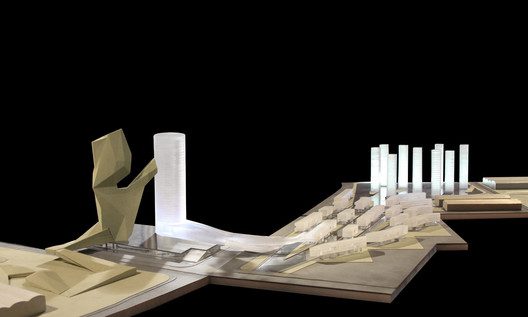
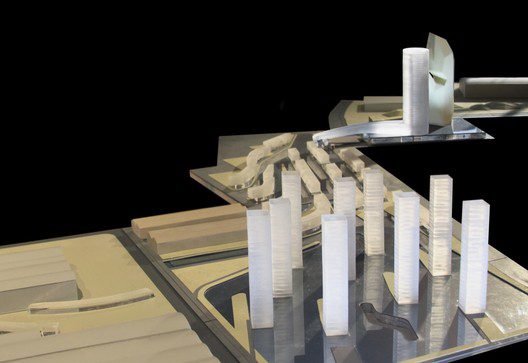
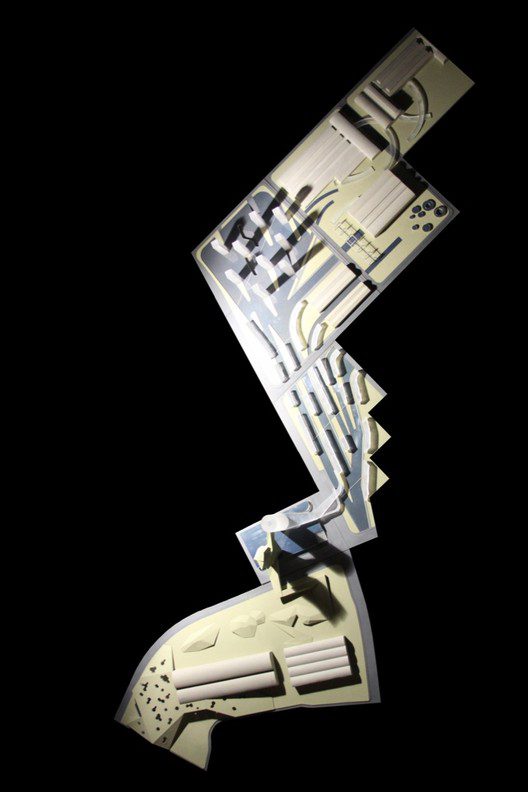
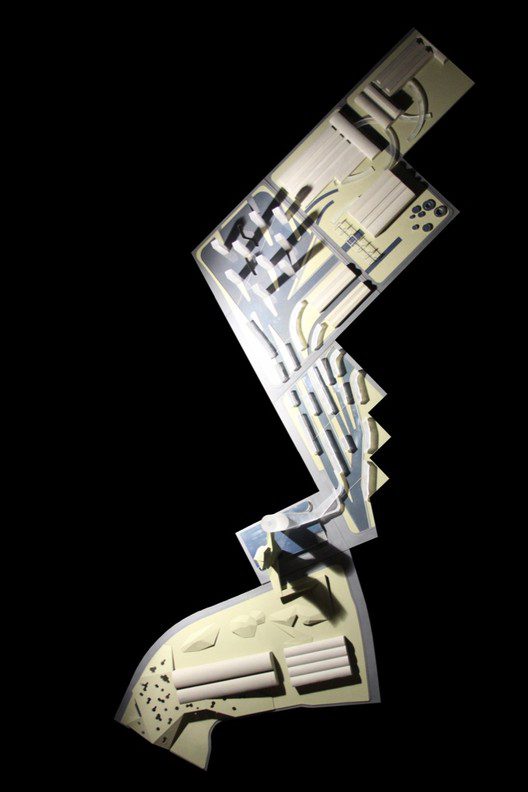
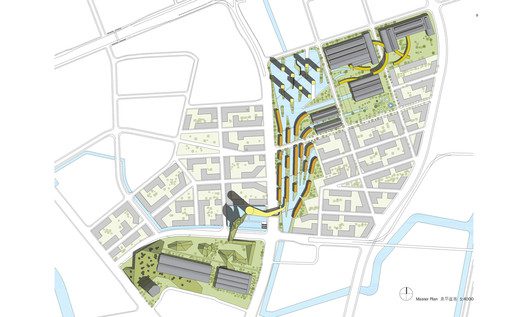
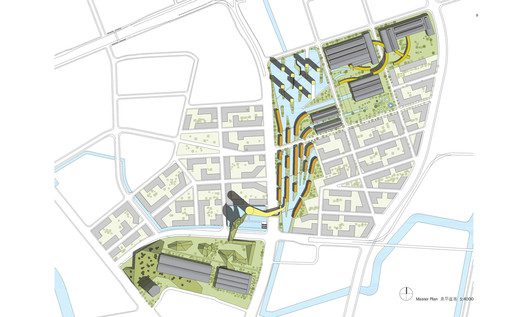
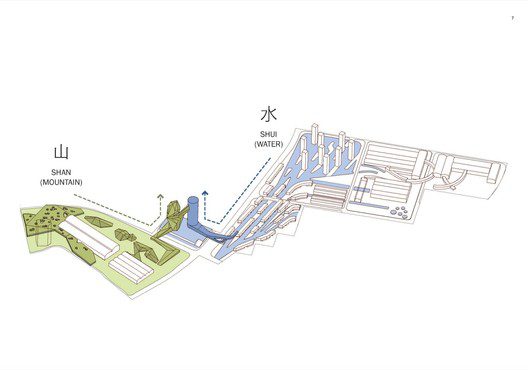
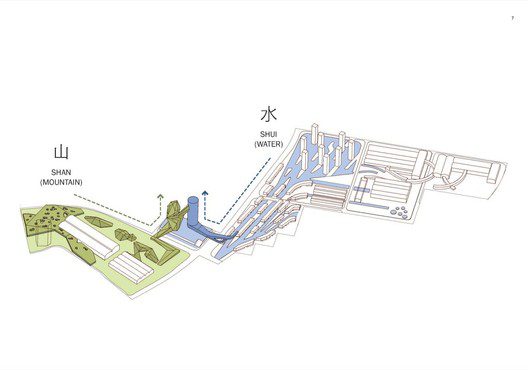
The International Touring Complex Hangzhou, China is a proposal by Steven Holl Architects to design a major urban quarter on a former industrial site. On a site for oxygen and boiler plants, this design was conceived based on Shan-Shui, meaning mountain and water, which is also a Chinese painting style. From above the shape of the site appears to resemble a “bow tie” where two towers are placed at the gathering. One tower branches towards the tributary forms approaching the oxygen sector while the other branches towards the landscape forms of the boiler sector, a respectful nod to the former use of the area.
© Steven Holl Architects
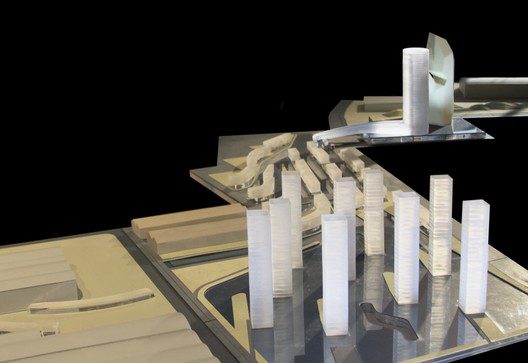
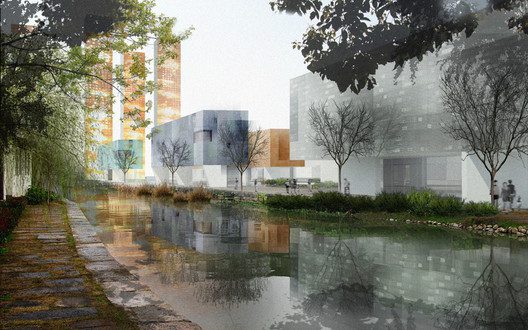
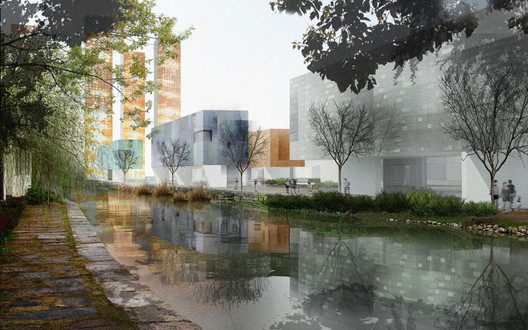
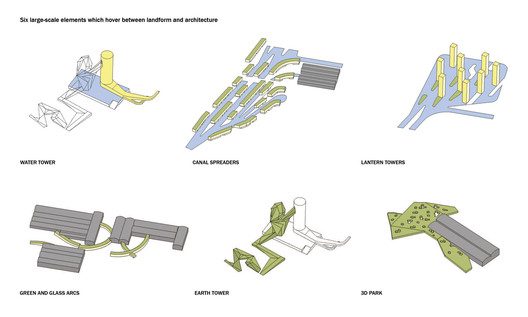
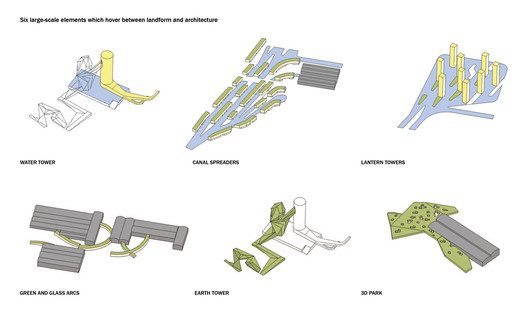
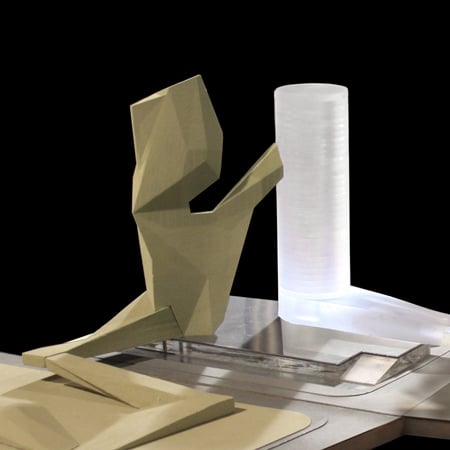
There are six large-scale elements that intersect and transform the existing factory buildings; invigorating them with new programs. These new elements consist of a water tower, canal spreaders, lantern towers, green and glass arcs, mountain tower, and 3D park. The water tower is a glass circular tower that branches out to provide pedestrian circulation to the North, and houses offices with retail space at the base with a restaurant and event space at the top. The canal spreaders creates a new zone for recreational waterstrips, that is park like and open to views, consisting of thin buildings designed for a variety of housing types.
© Steven Holl Architects
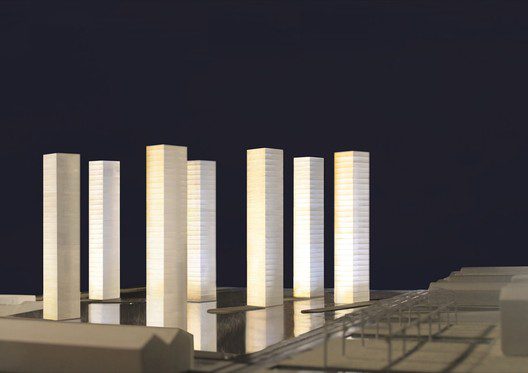
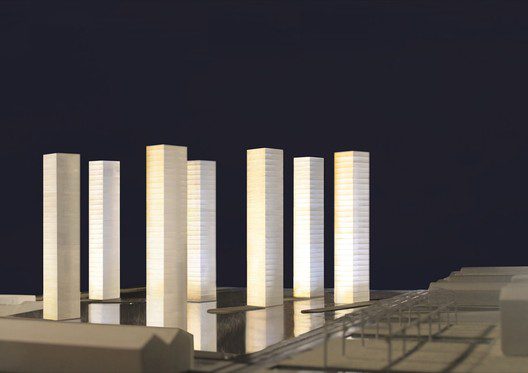
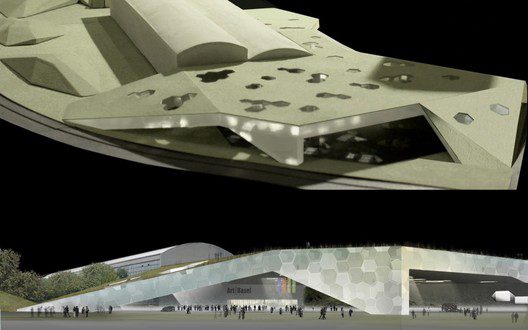
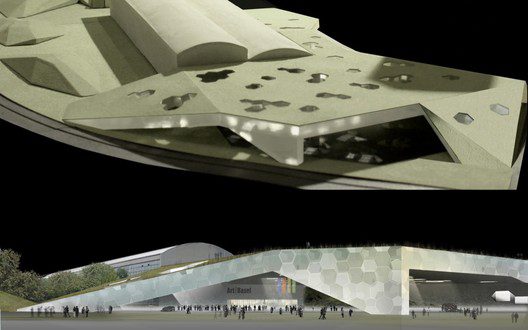
The lantern towers are made up of a photovoltaic curtain wall that will gather the sun’s energy during the day and at night one elevation of each tower will glow via special Fresnel glass. These towers contain loft apartments, where a health club, spa, retail shopping, and parking levels connect the lower floors. The green and glass arcs pierce the oxygen plant, and provide functional connections and service programs such as cafes, W.C., bicycle storage and information booths. The mountain tower is made of translucent ceramic skin and green roofs branches to a landscape of faceted green mounds at the boiler buildings. Programmatically, the mountain tower has a hotel with service apartments, an event space, a restaurant at the top, and retail space on the lower, as well as a bridge connecting it to the water tower. Finally the 3D park, a tilted landform of natural grasses, is punctured for light, where the structure is a dodecahedron truss which contains a hotel, restaurants, and cafes.
© Steven Holl Architects
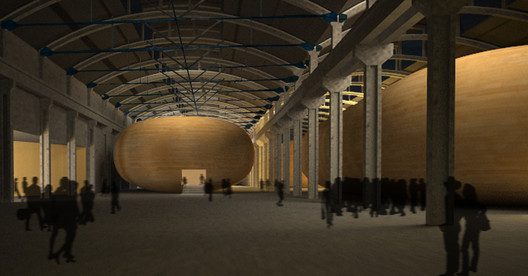
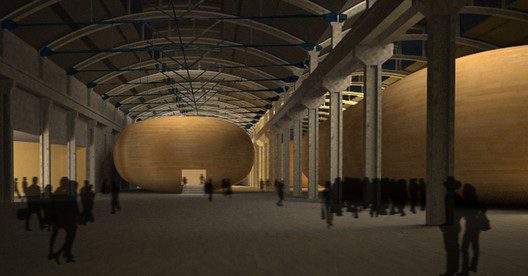
As with all the elements proposed for the site, a fusion of landscape and architecture is being portrayed. The design proposes different scenarios for the reuse of the existing boilers and oxygen buildings but leaves the exact locations open for program flexibility. The strategy of keeping the basic industrial shells raw, with minimal restoration, and articulating the interior pavilions will allow for interior variety and a flexible programmatic plan as well. As a final thought for the future of this site, the old factory building shells were left relatively untouched to allow the opportunity for new experimental designs. With everything that is going on within this project, all the elements have a nice rhythm to them, placed strategically on the site for the best possible outcome that not only embraces the future for this area, but combines that with the spirit of old Hangzhou as well.

Kristin Hoover is an editor at Arch2O and a proud graduate of Virginia Tech. Since joining in July 2014, she has authored over 200 insightful articles covering everything from adaptive reuse and cultural centers to eco-buildings and urban infrastructure . With a passion for architectural storytelling, Kristin skillfully curates and crafts compelling narratives that bring design innovation to life. Her editorial work reflects a broad yet finely honed interest in how architecture intersects with society, technology, and the environment—making her a key voice shaping Arch2O’s explorations of contemporary built form.