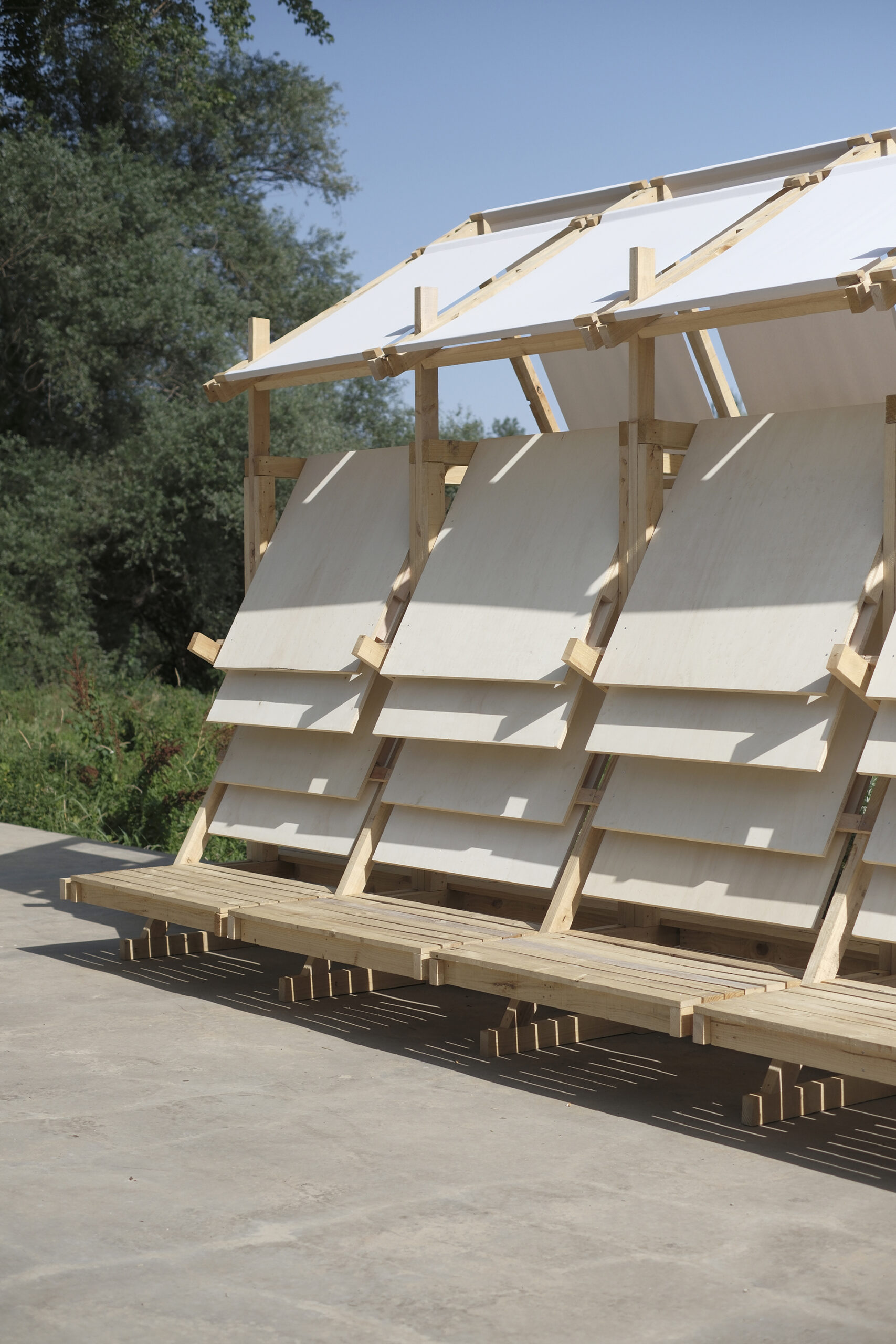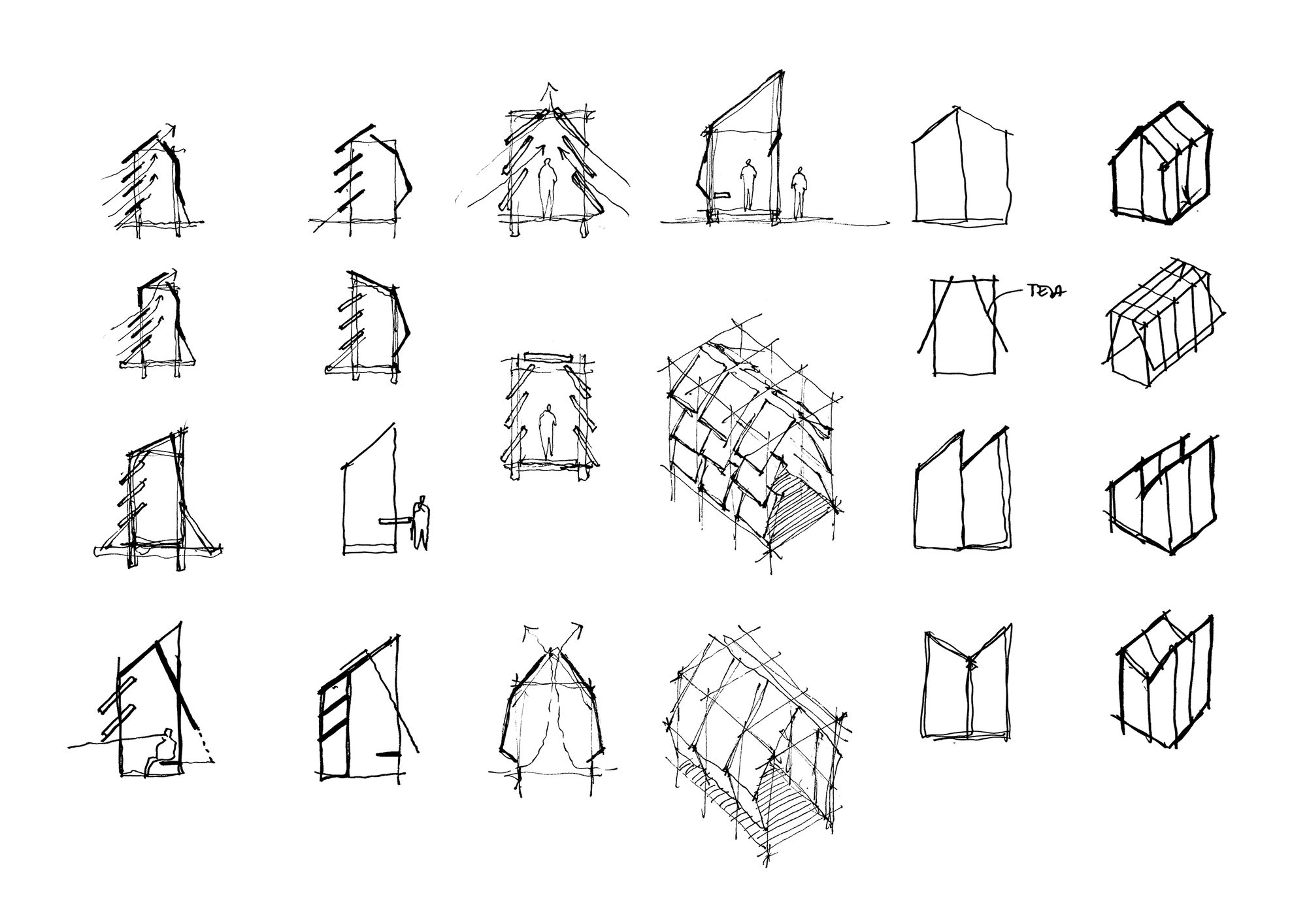


Inhabiting the River Intervention, Habitar el Río was created for Concéntrico 2025, the International Festival of Architecture and Design in Logroño. The festival reimagines underused public spaces through temporary installations, inviting architects and designers to explore how we relate to the city through themes such as climate, water, food, and social rituals.
© Erazo Pugliese
The 2025 edition emphasized ecological awareness and collective inhabitation, turning the city into a testing ground for sustainable and inclusive urban futures.
© Erazo Pugliese
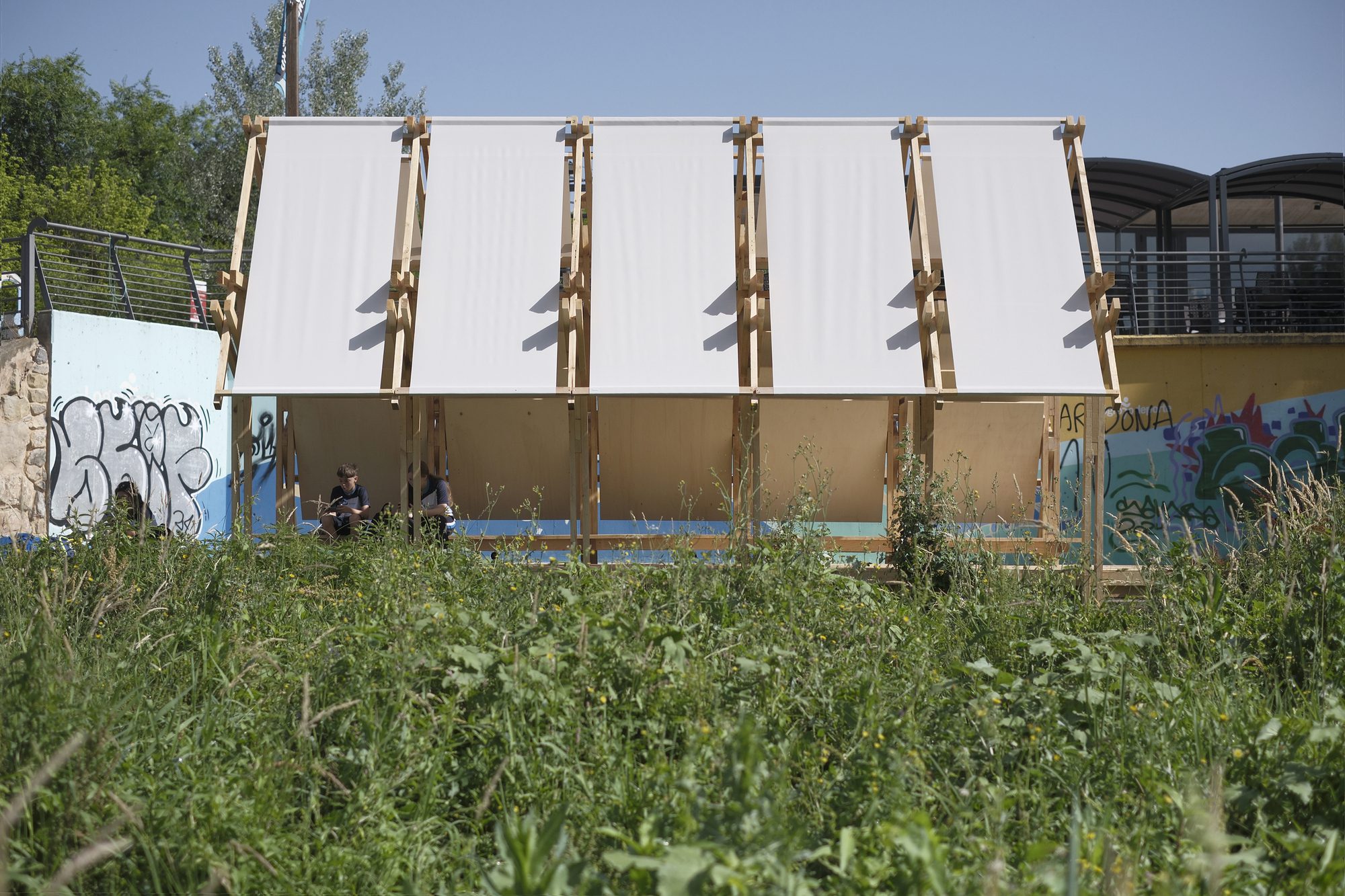
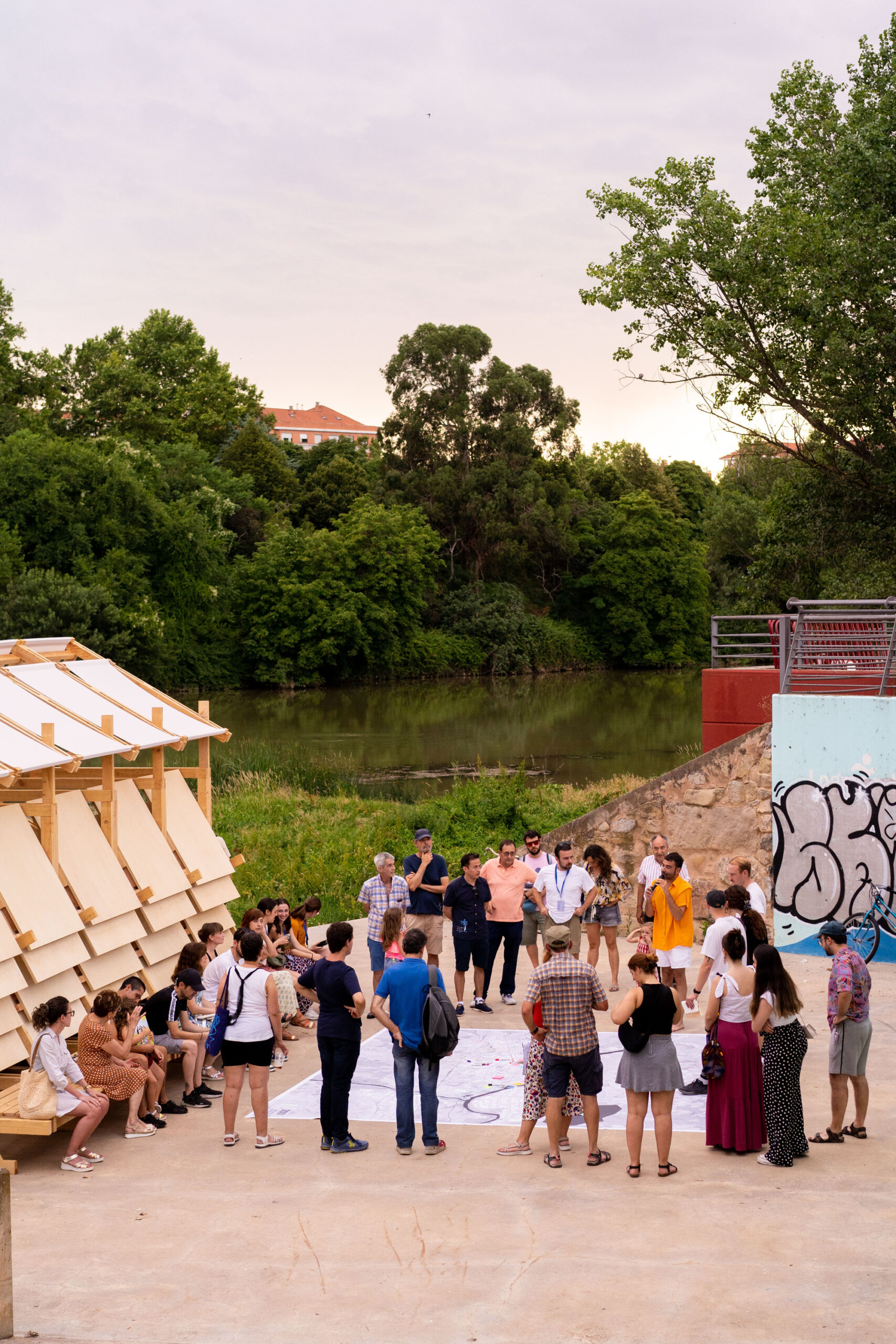
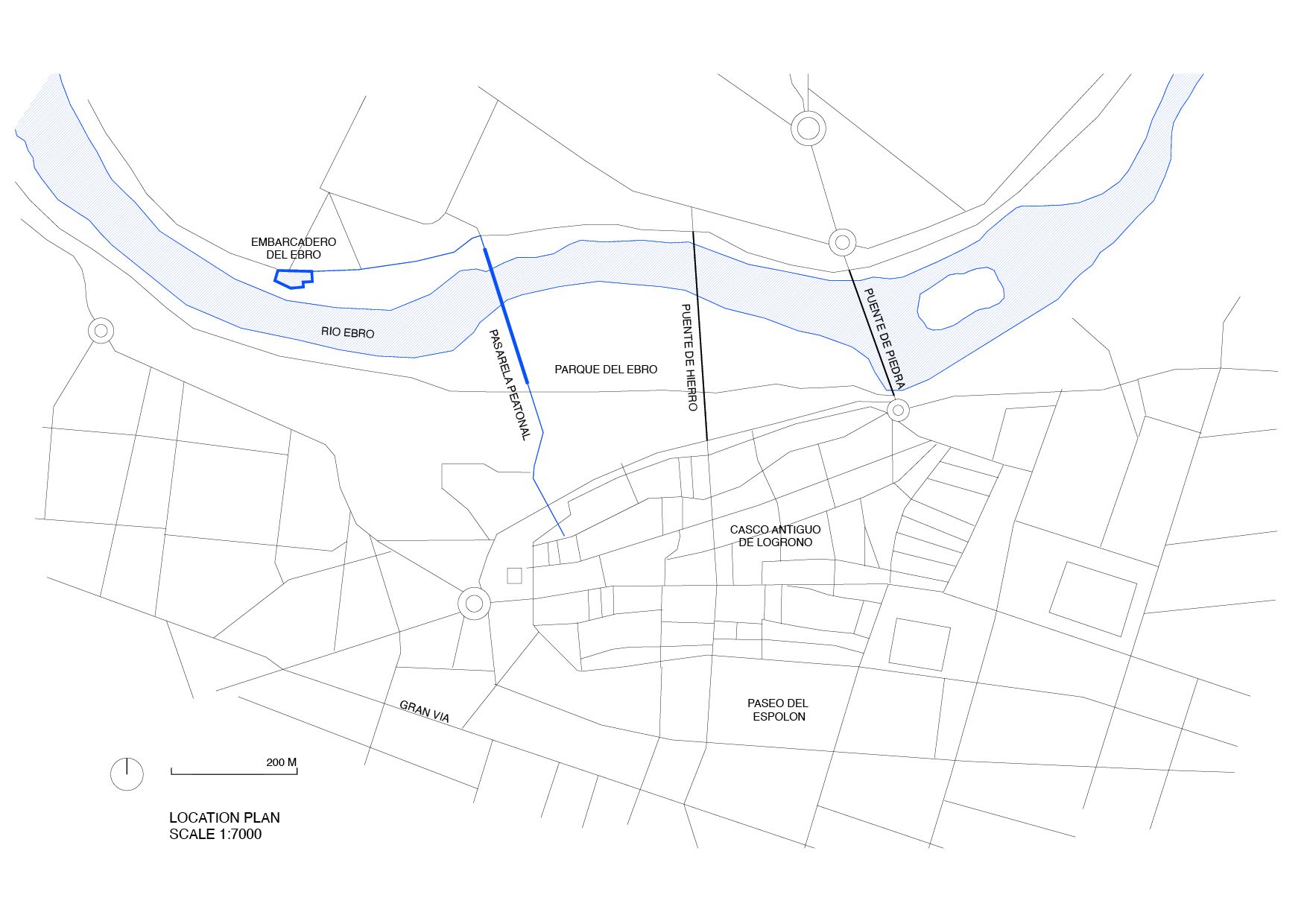
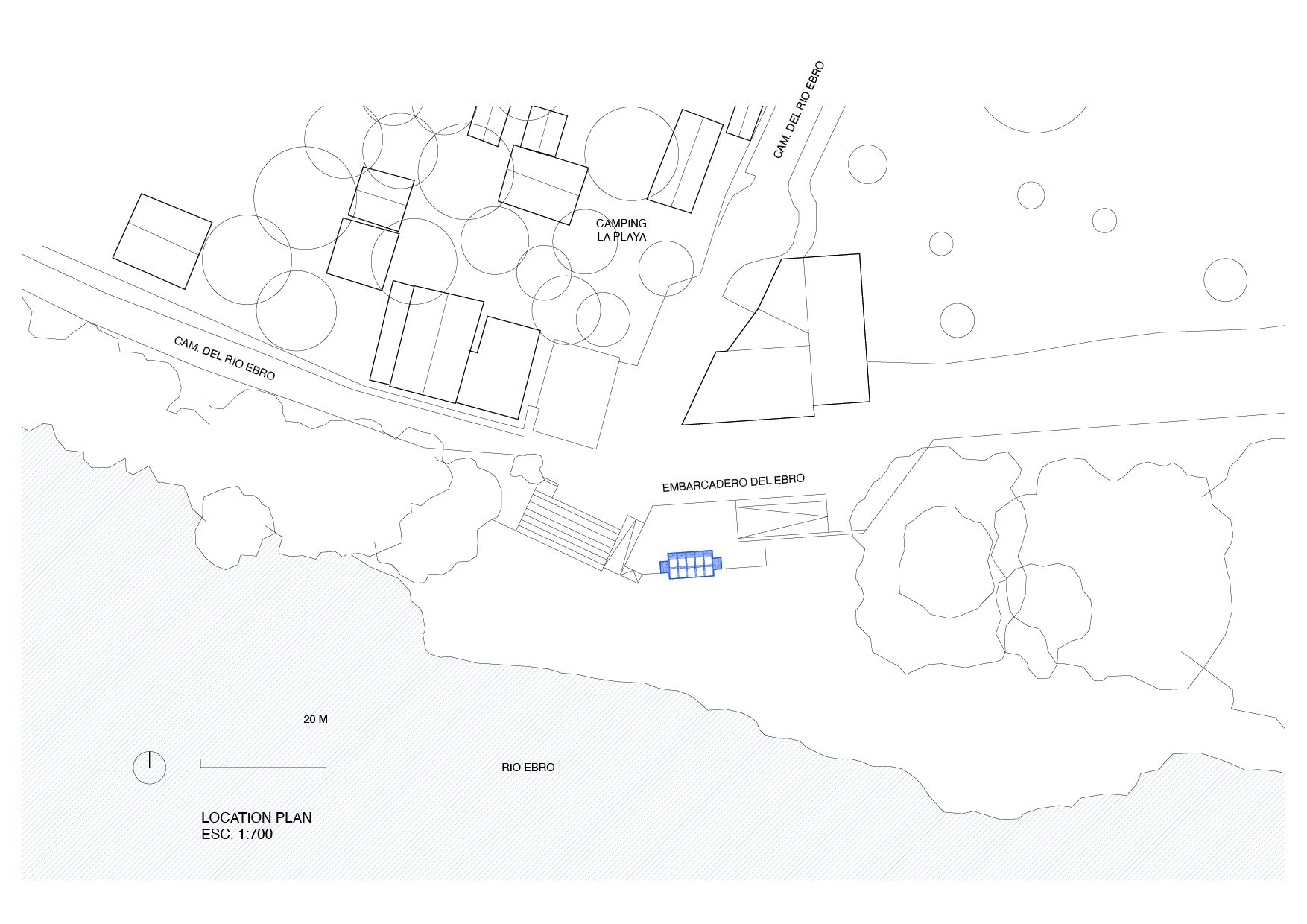
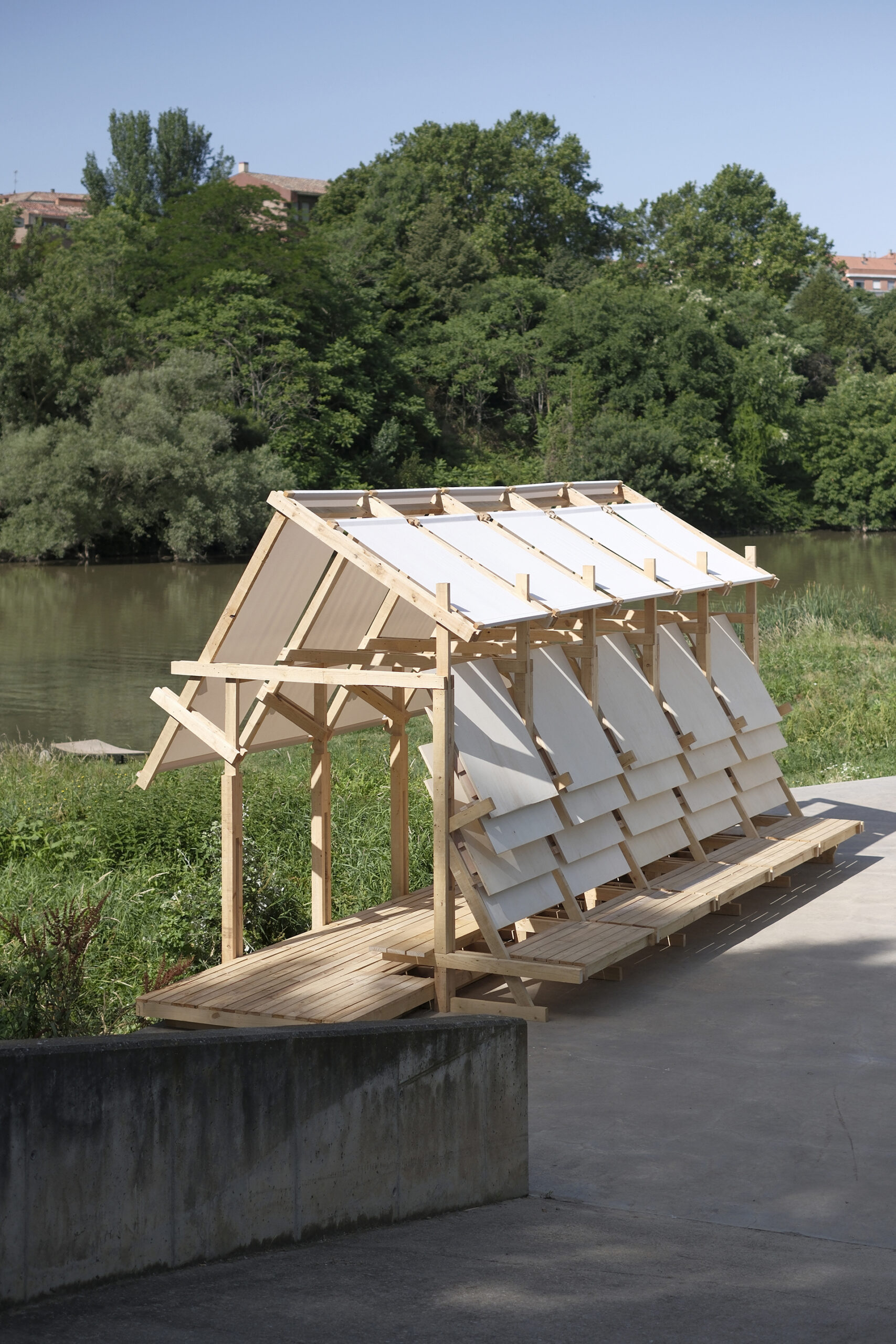
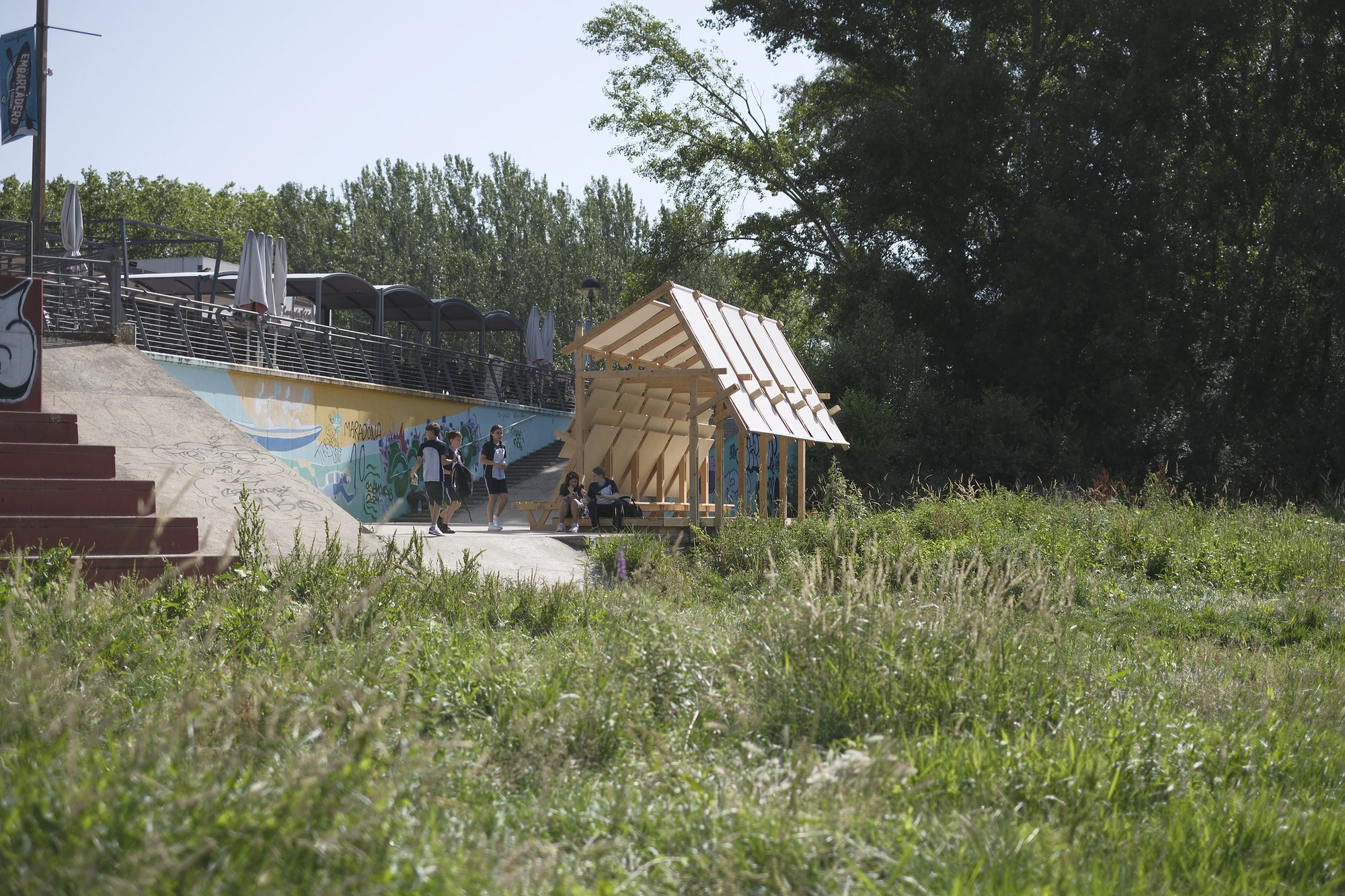
This project was installed on the north bank of the Ebro river, between an underused concrete dock and the season-shifting water levels of the river. This transitional condition represented the opportunity to create a habitable space that would promote the interaction between the man-made city and the natural environment.
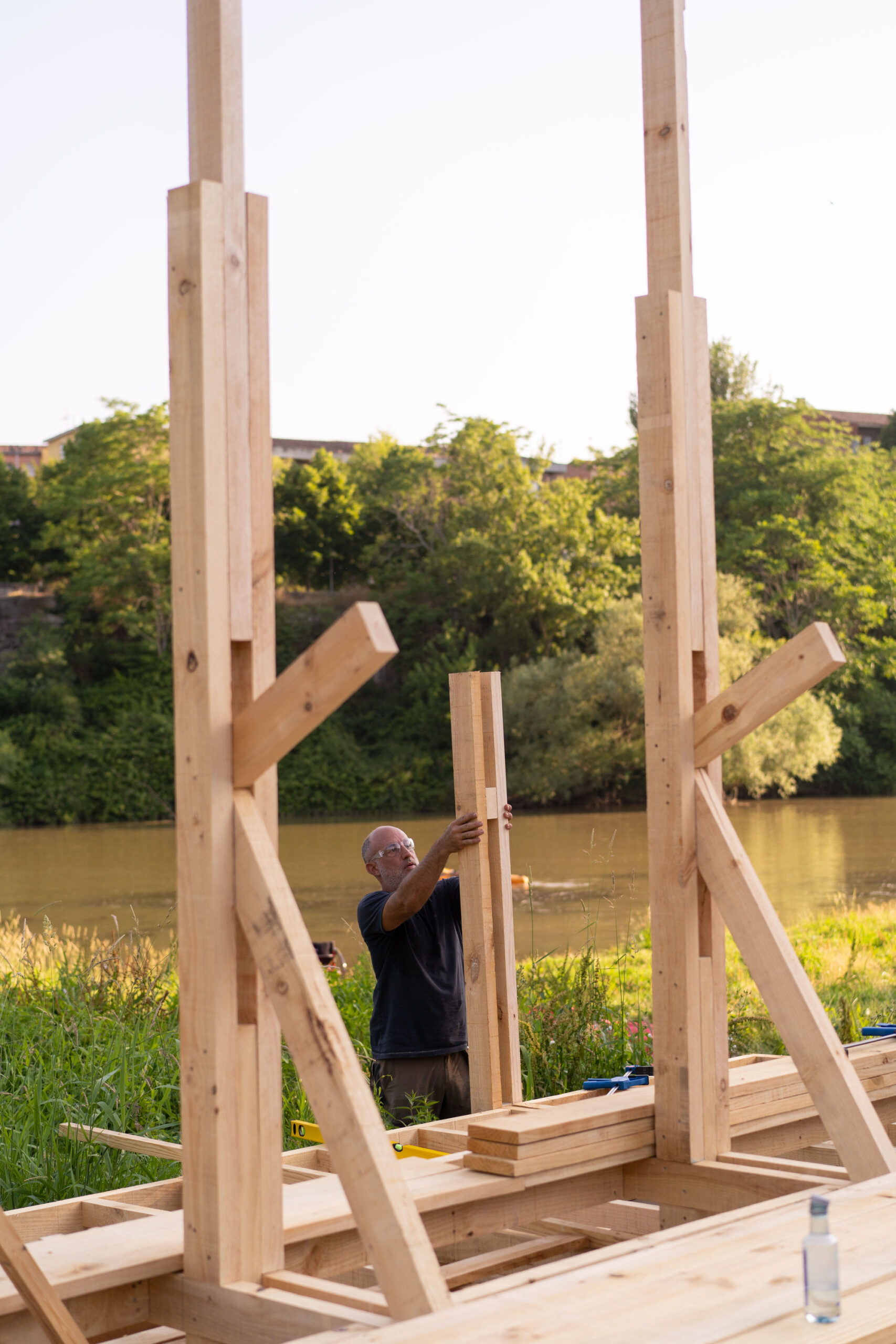
© Erazo Pugliese
Our installation responded to both the Festival’s intentions and to site conditions by reactivating a neglected riverfront edge—once a bathing area, now reduced to a passageway—with a hand-made shaded wooden space that encouraged both environmental responsiveness and social rituals such as pausing, learning, exchanging and contemplating river life.
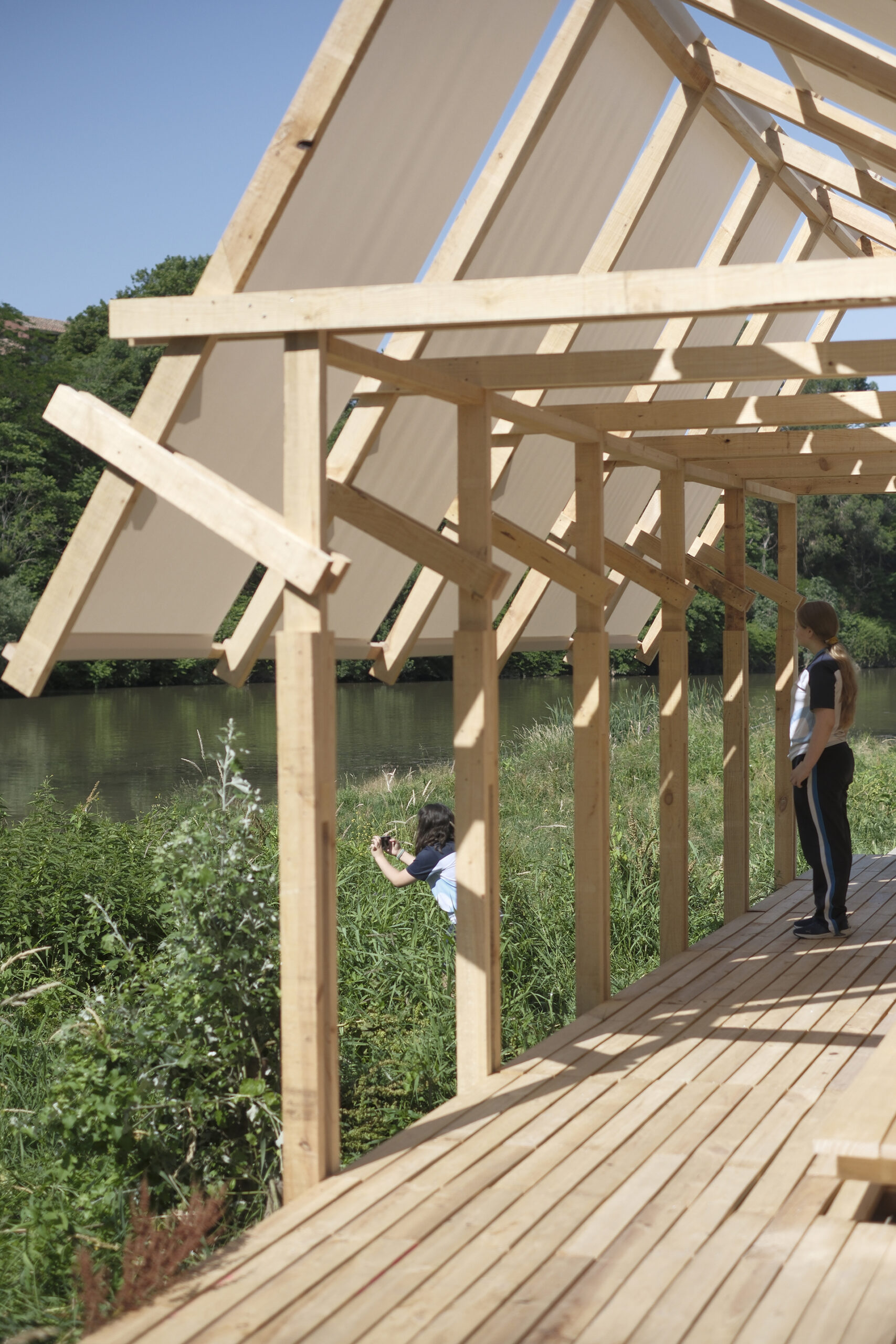
© Erazo Pugliese
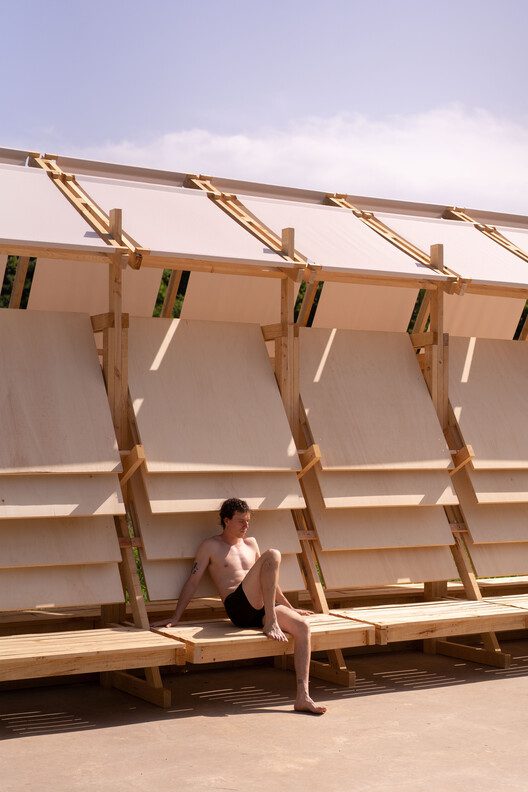
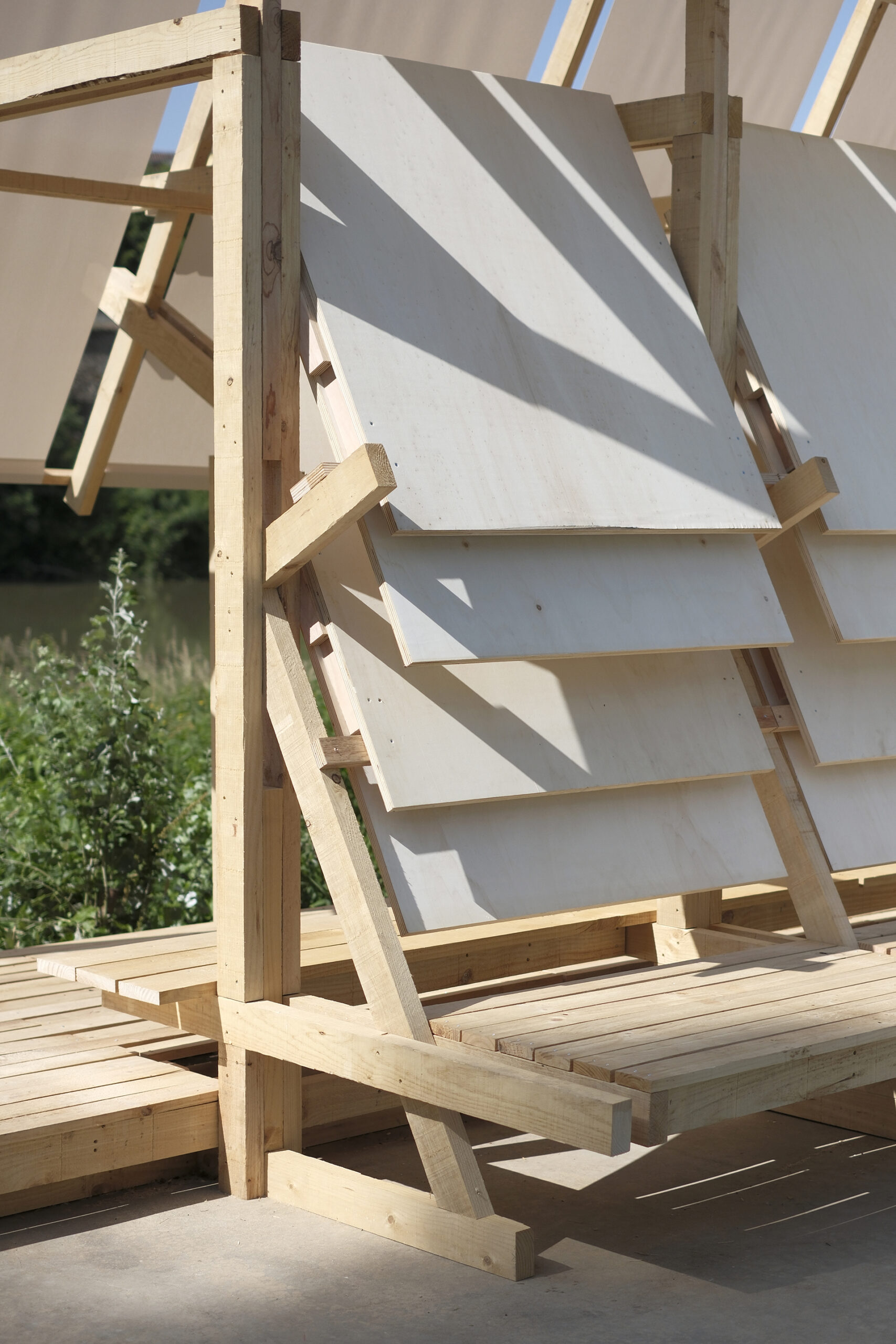
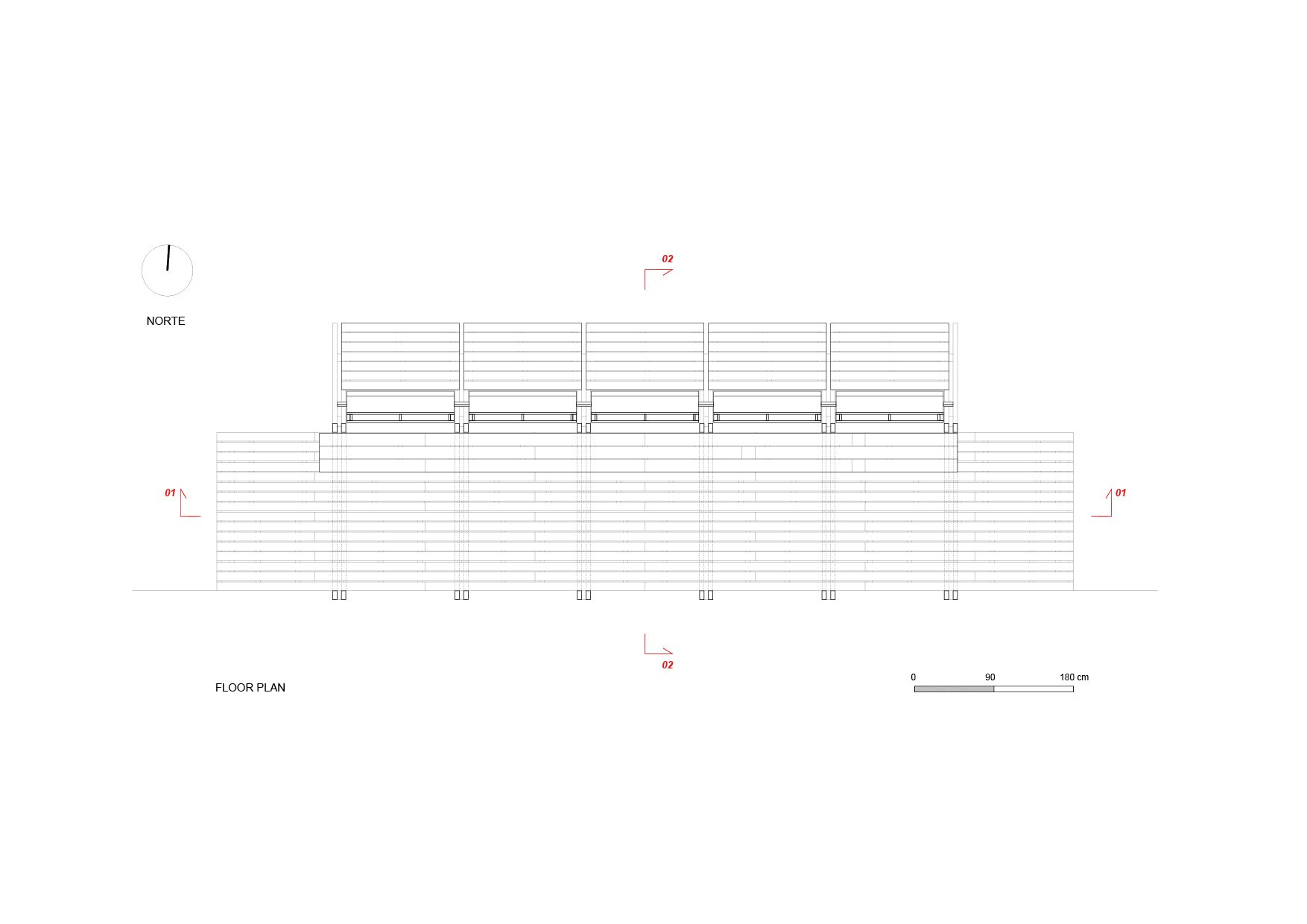
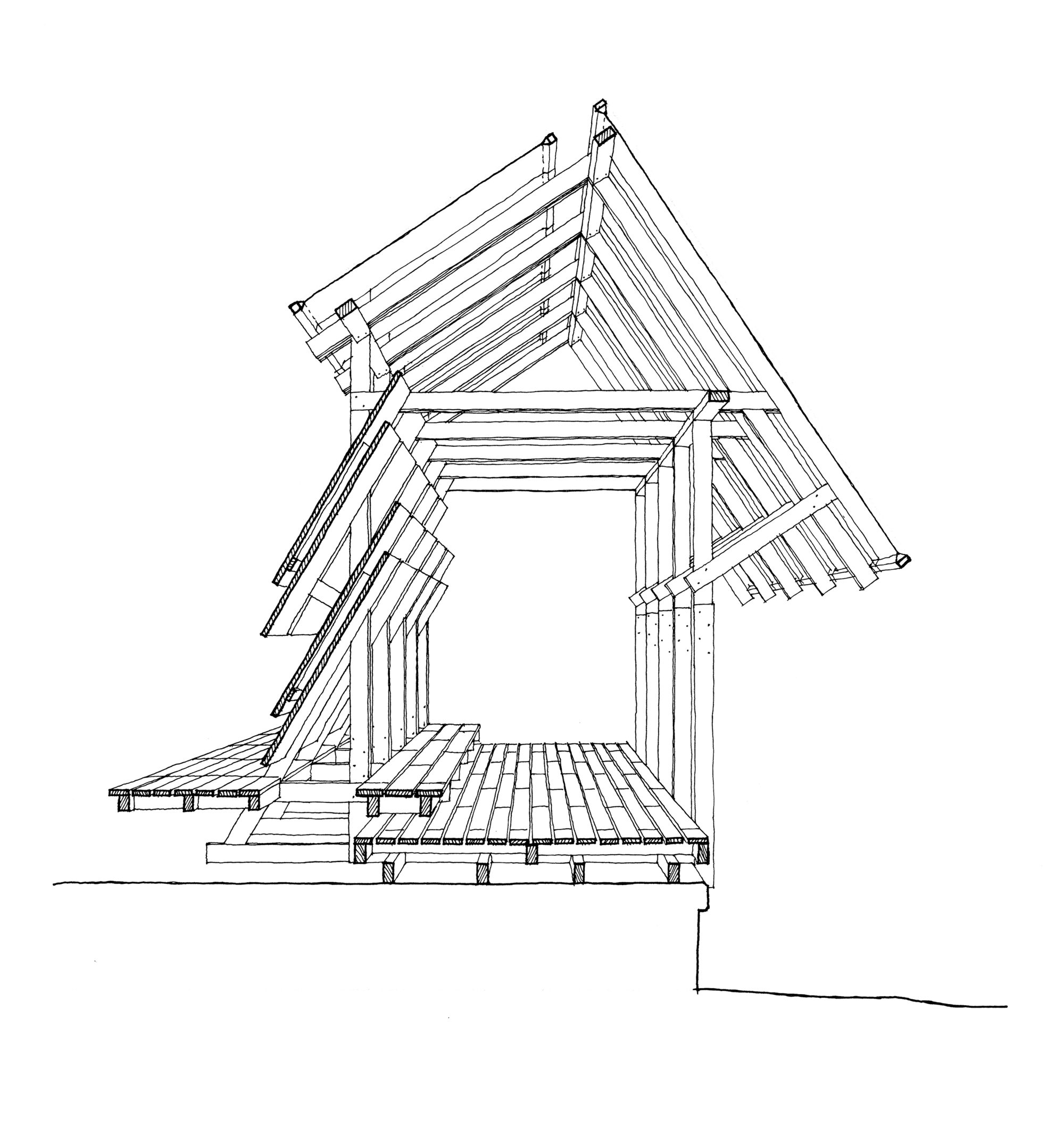
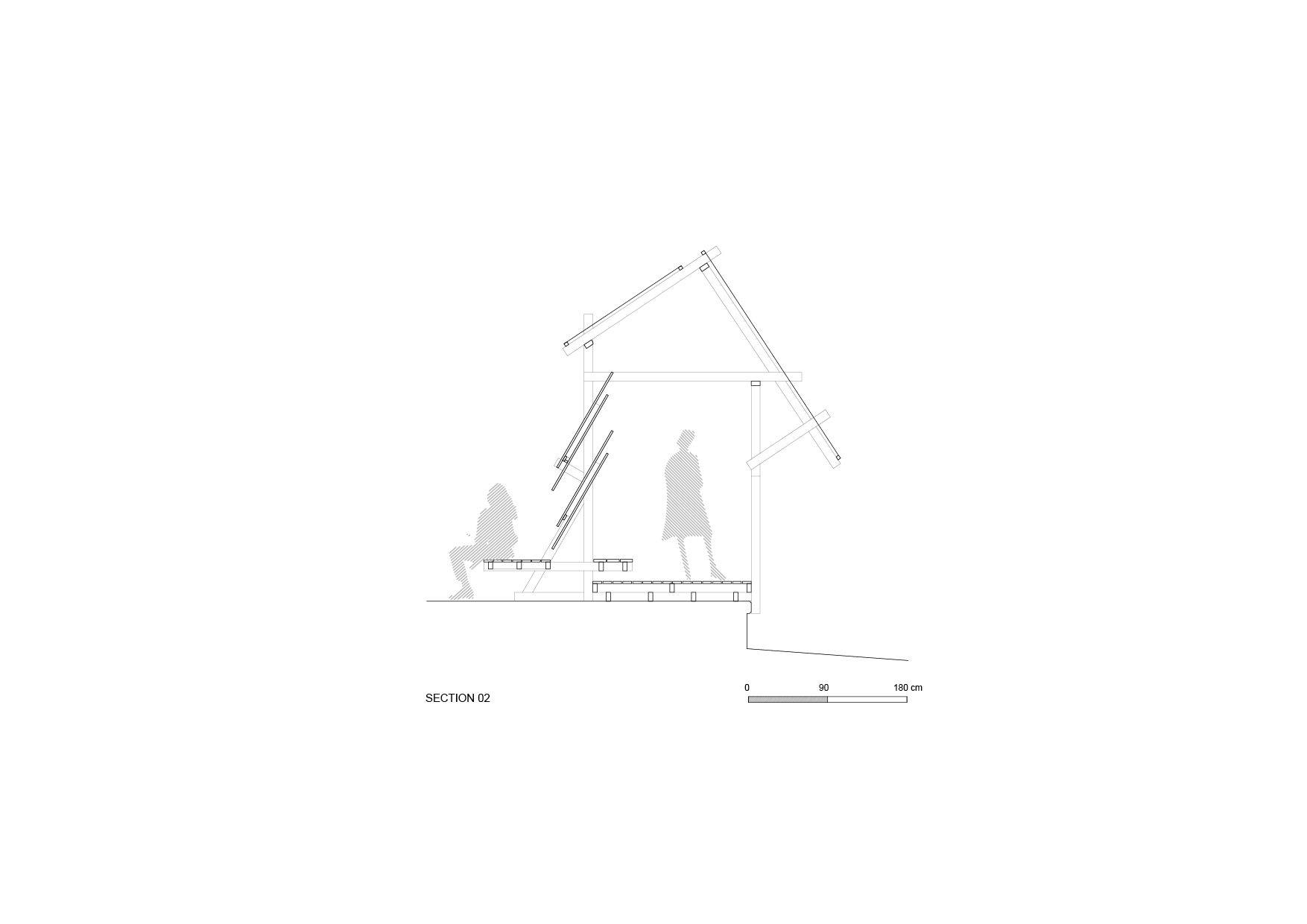
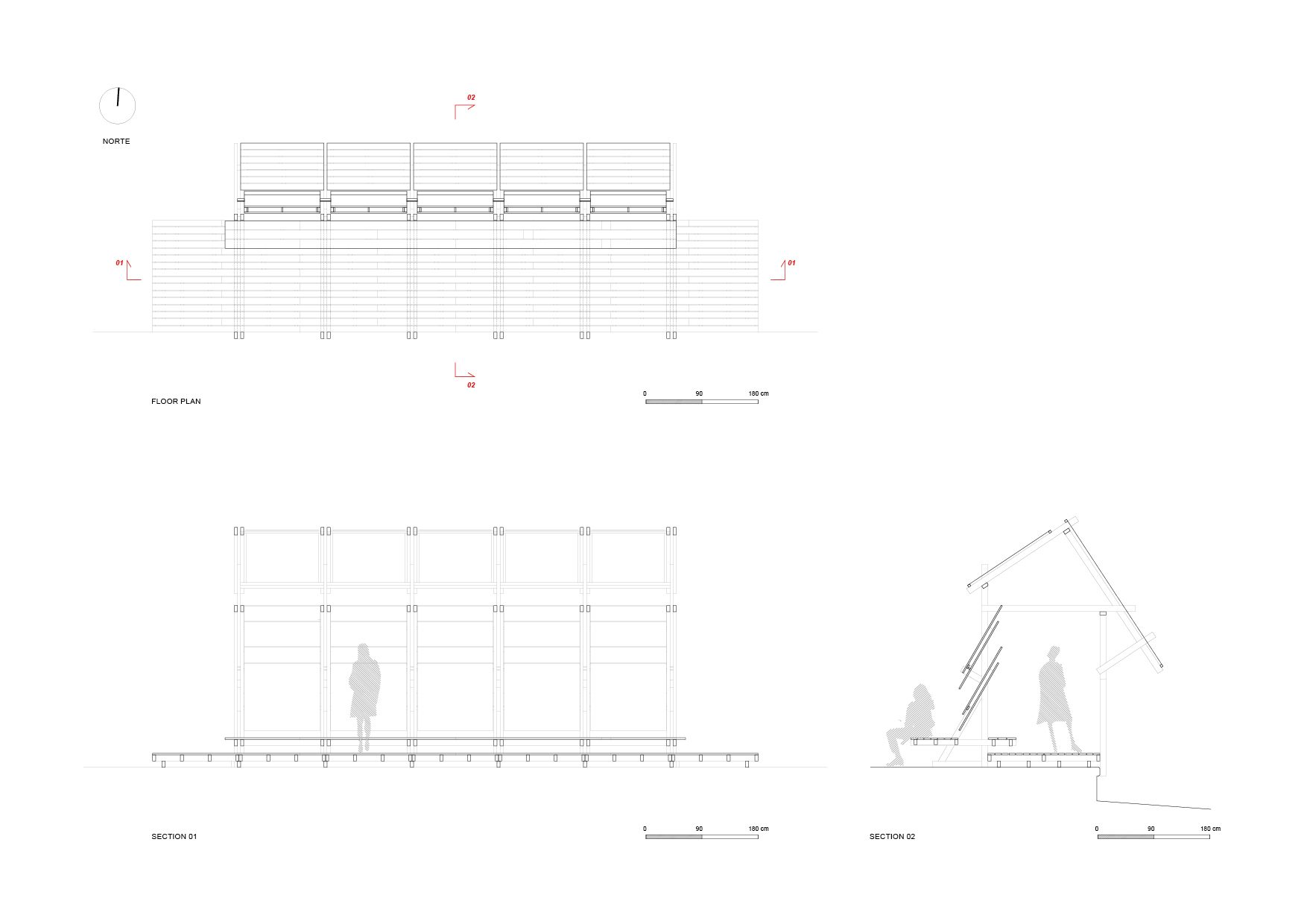
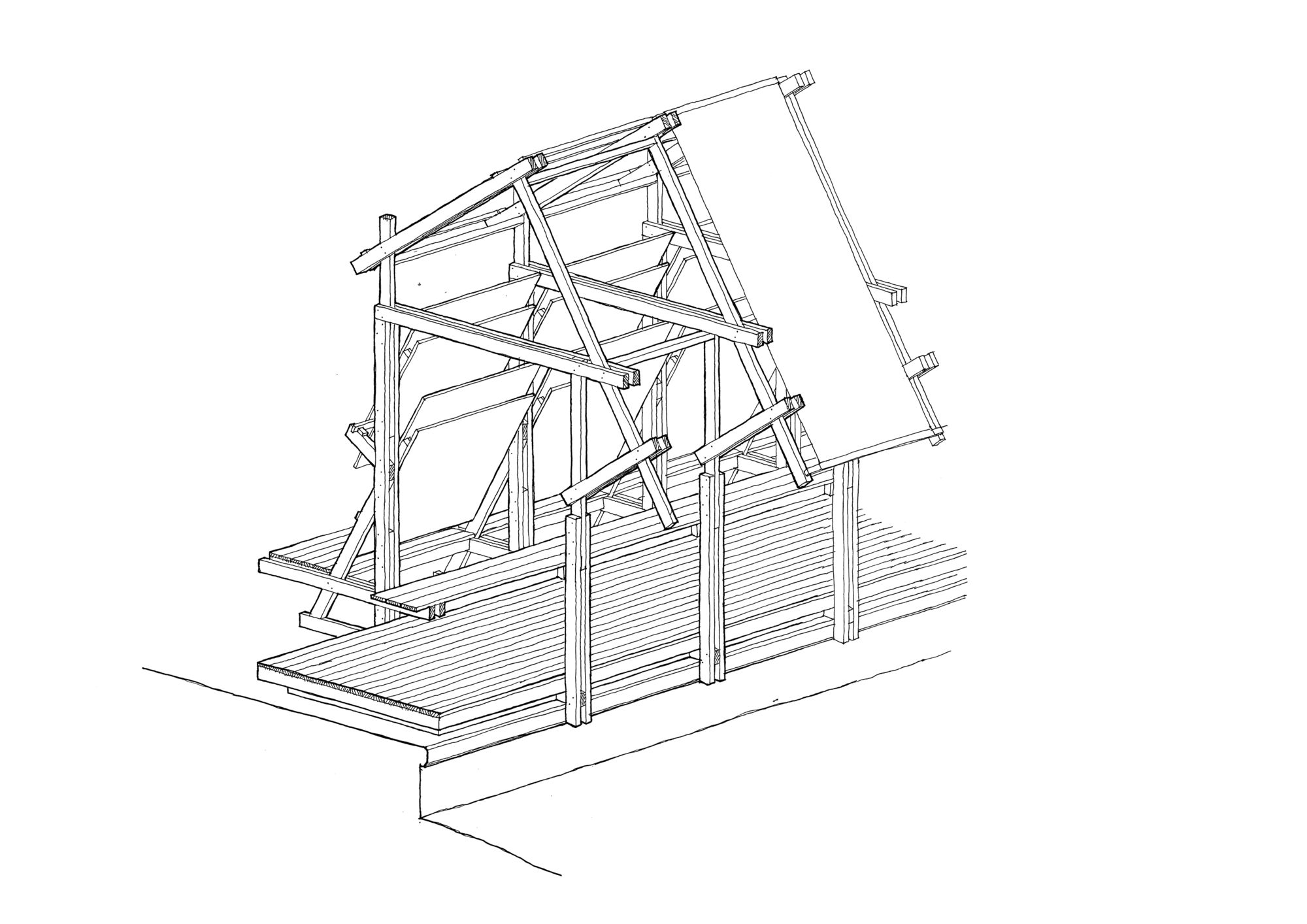
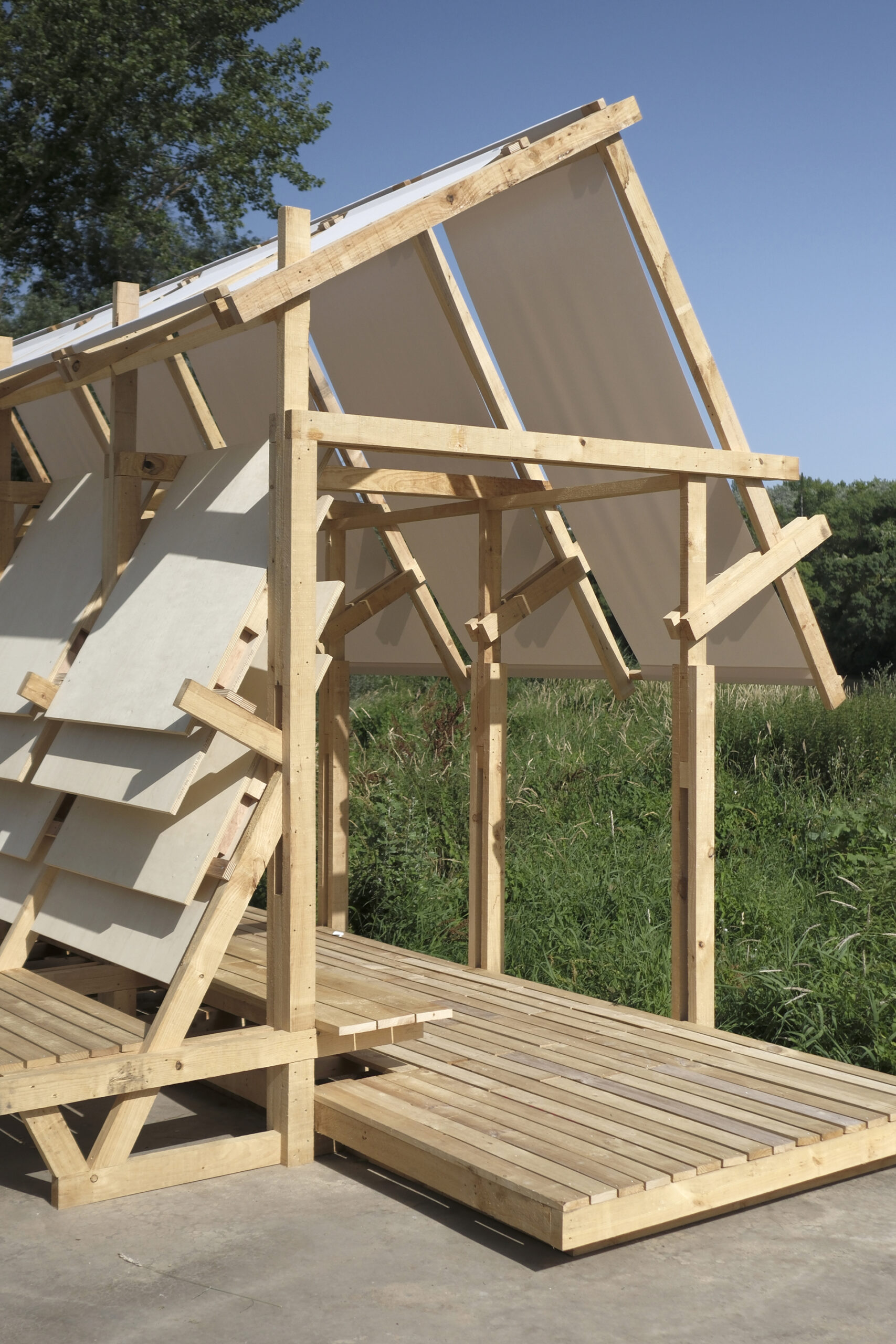
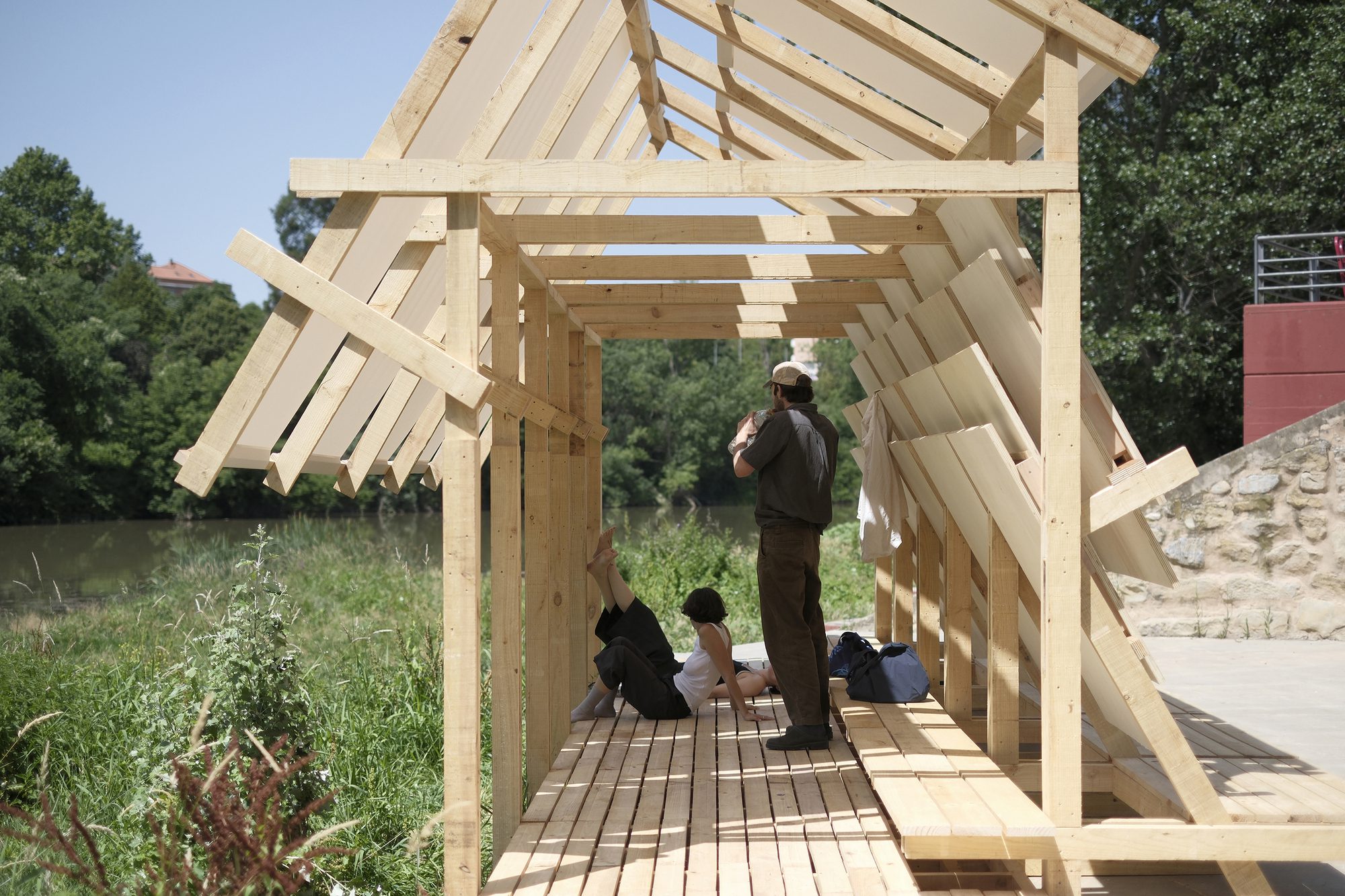
The southern façade opened to the river while remaining shaded from direct sunlight. On the north, plywood panels block glare from the adjacent concrete wall and facilitate passive ventilation by directing hot air upward—helping to dissipate the heat absorbed by the slab throughout the day.
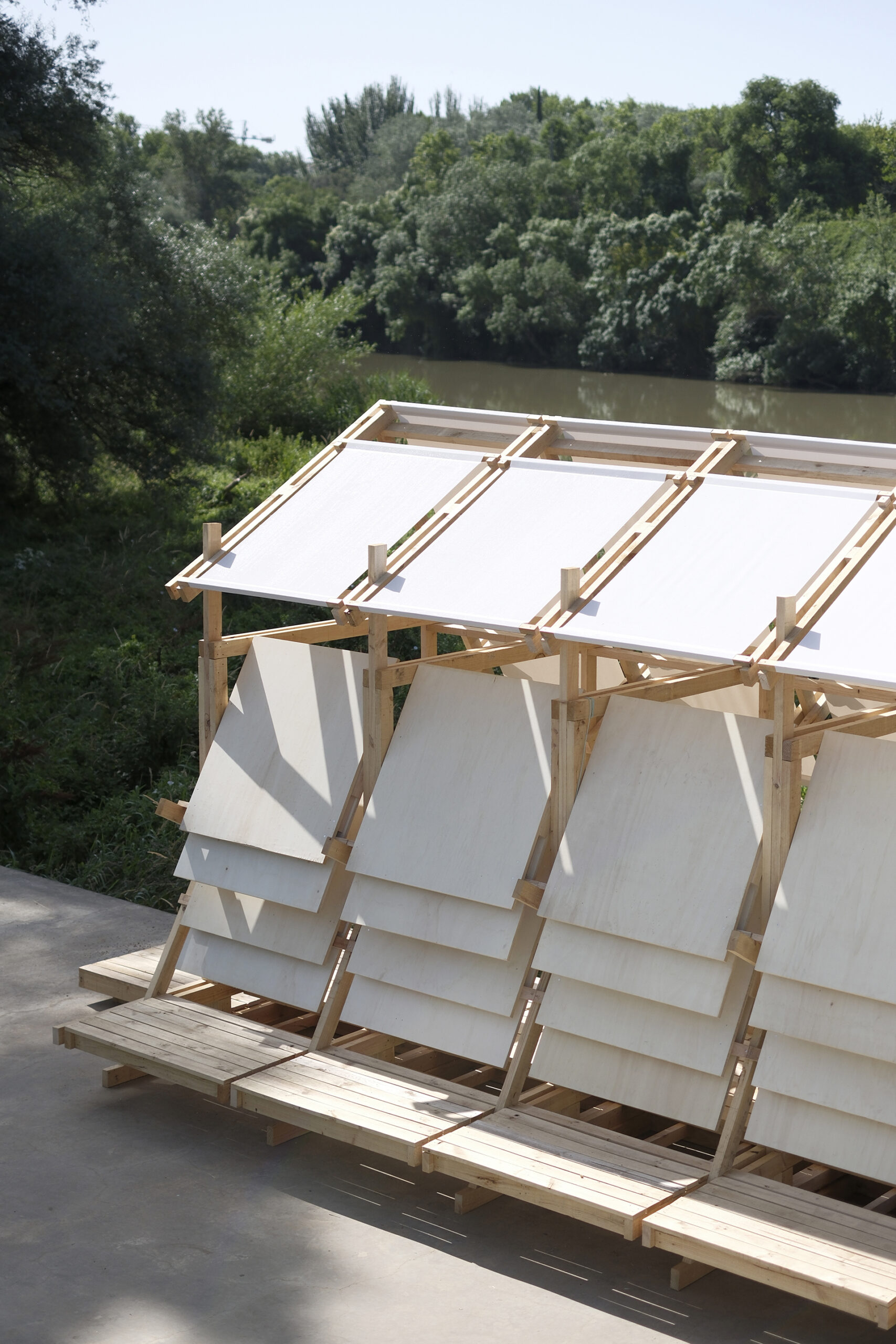
© Erazo Pugliese
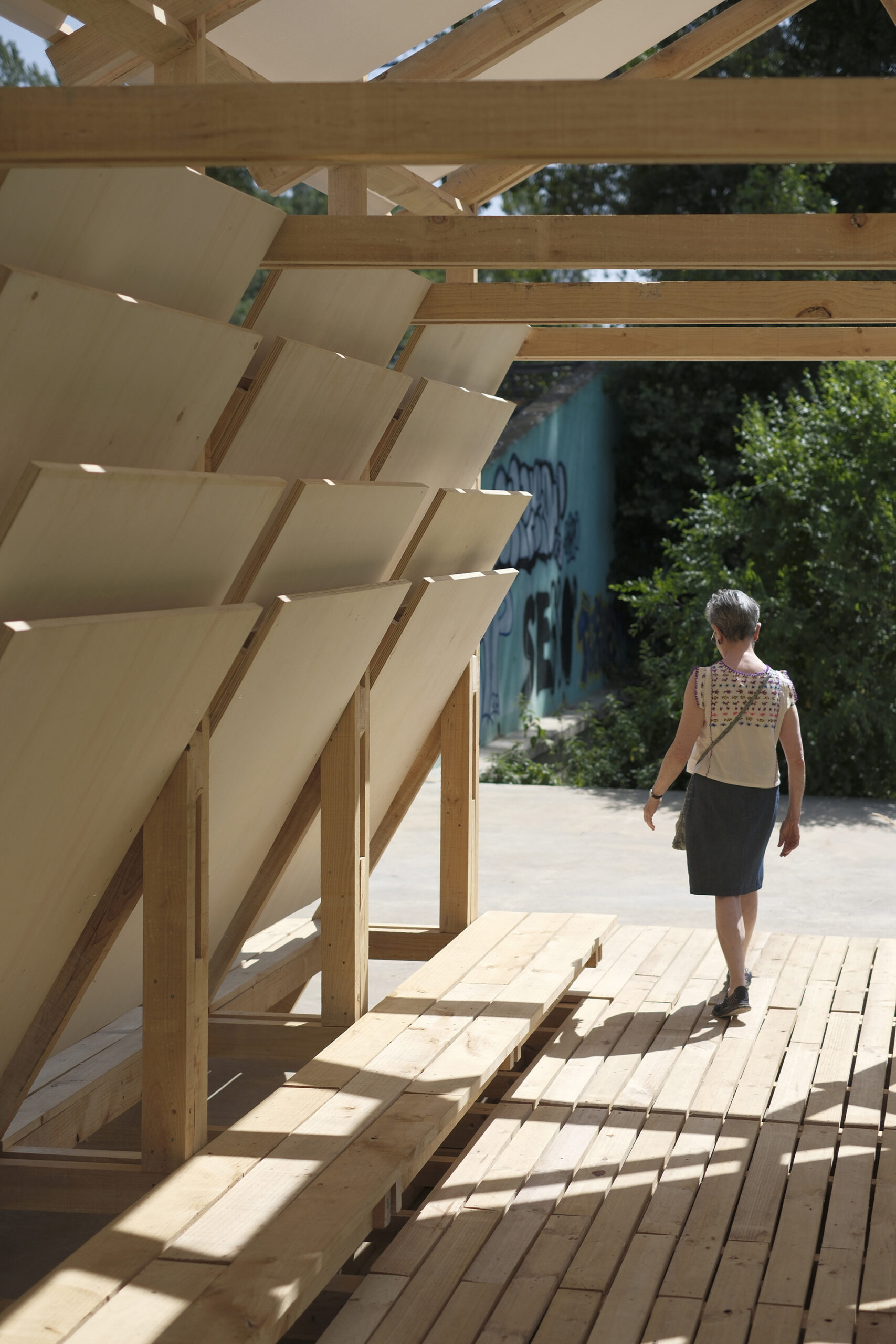
This new ‘Place’ became a calm, protected retreat where visitors could sit, lie down, or pass through while observing the river’s daily activity—canoeists rowing, listening to birds singing, trees shifting in the wind, currents flowing, and the barking of dogs on their daily walks.
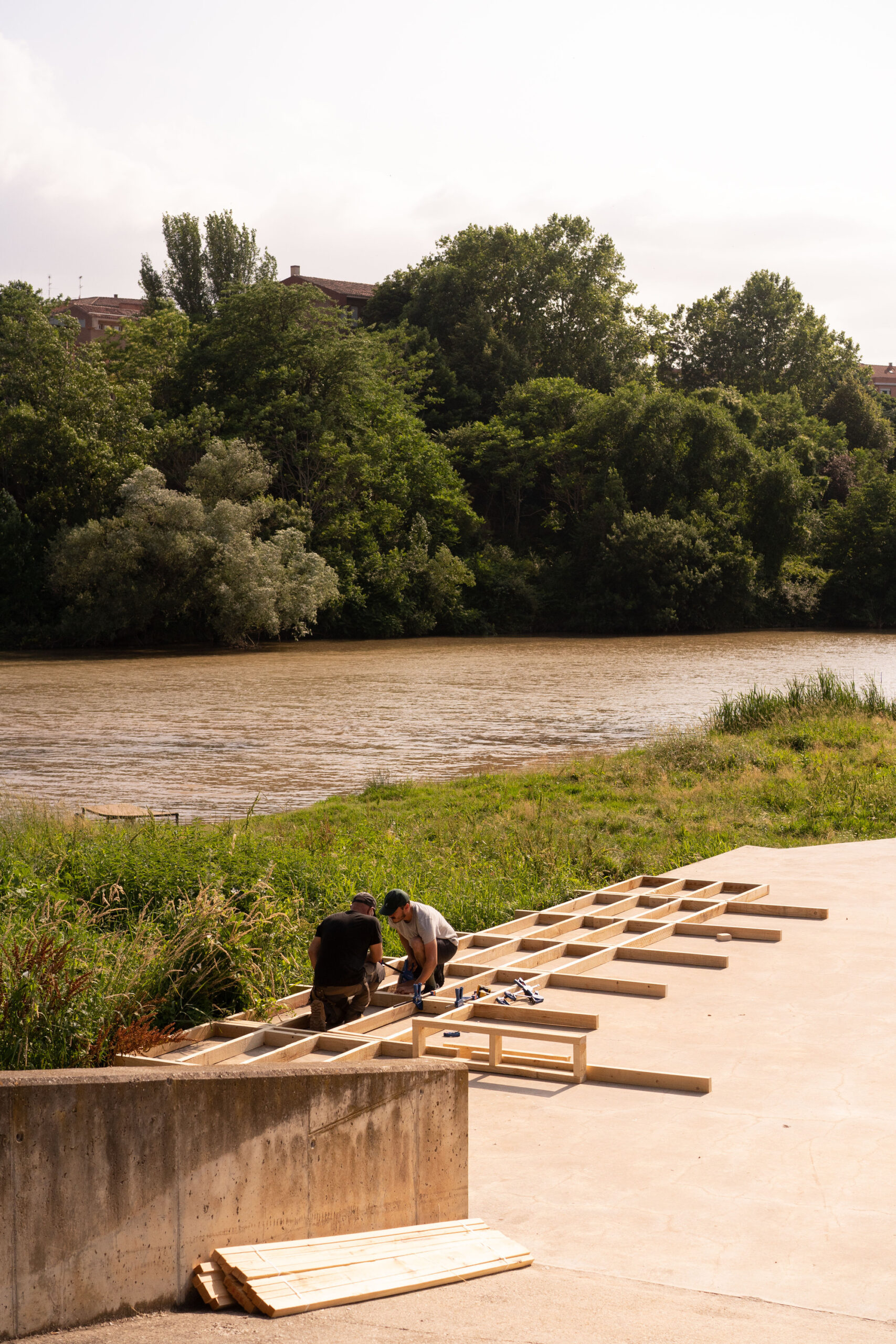
© Erazo Pugliese
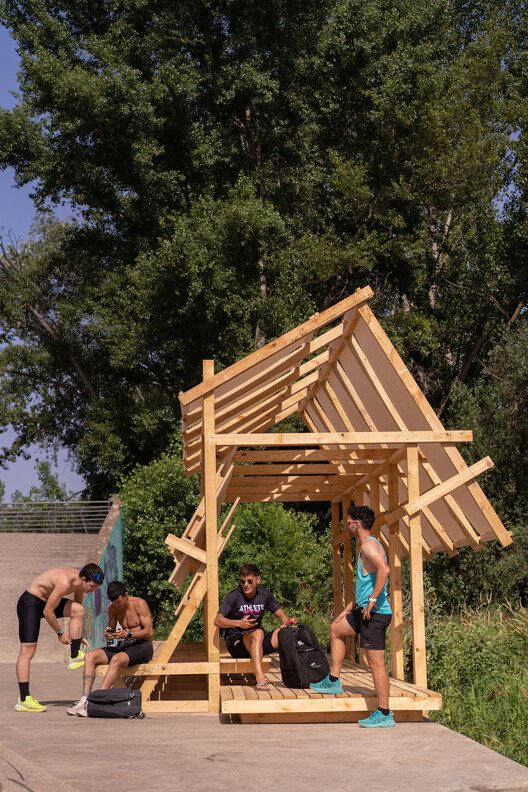
On the northern side, a second bench was added during the construction phase responding to activities already happening on site: Canoeists often used the platform to prepare equipment or teach newbies techniques and theoretical aspects of the sport. This addition completed the aim of connecting the river and the city by means of a transitional space or new ‘infrastructure’ that looked to and served both.
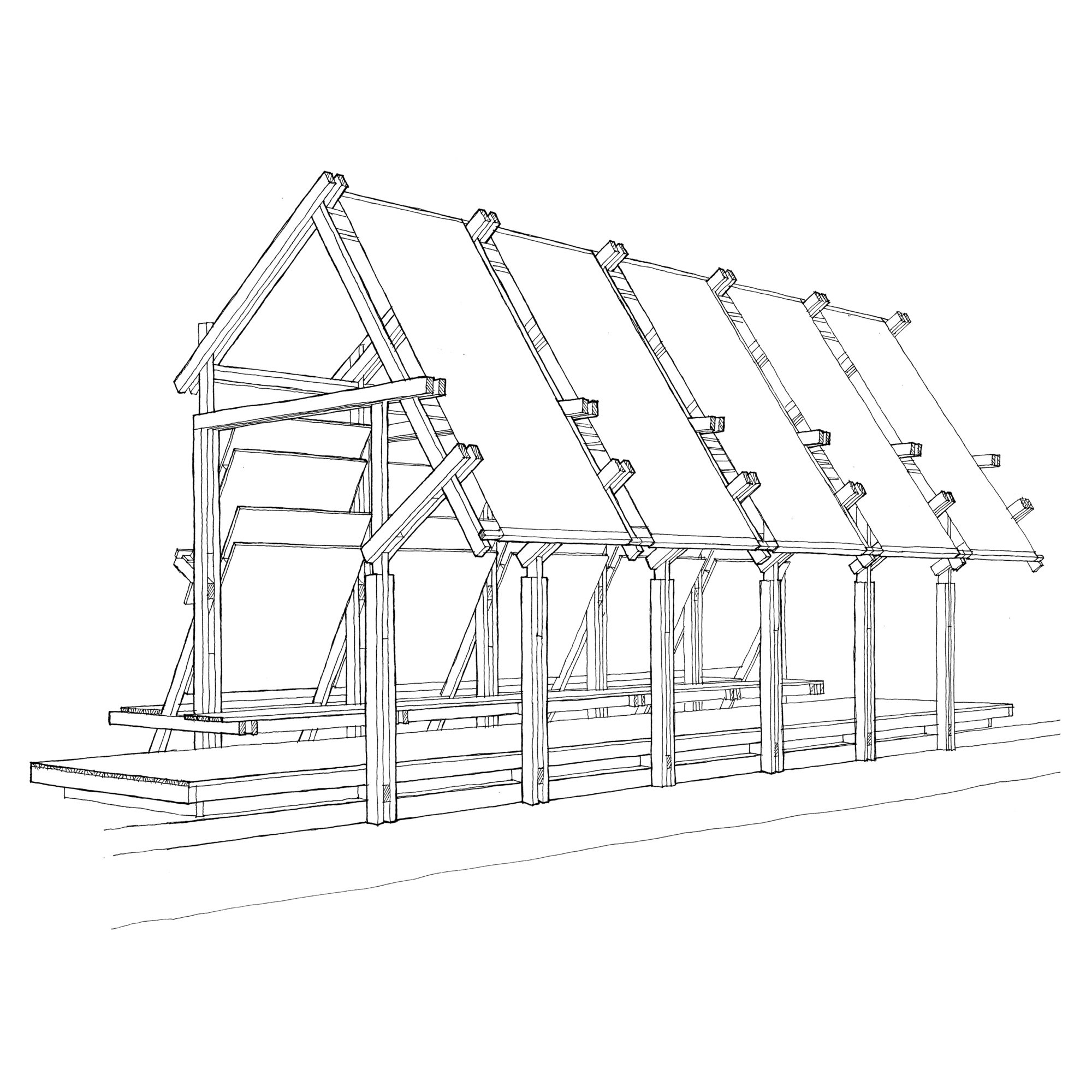
Axonometric
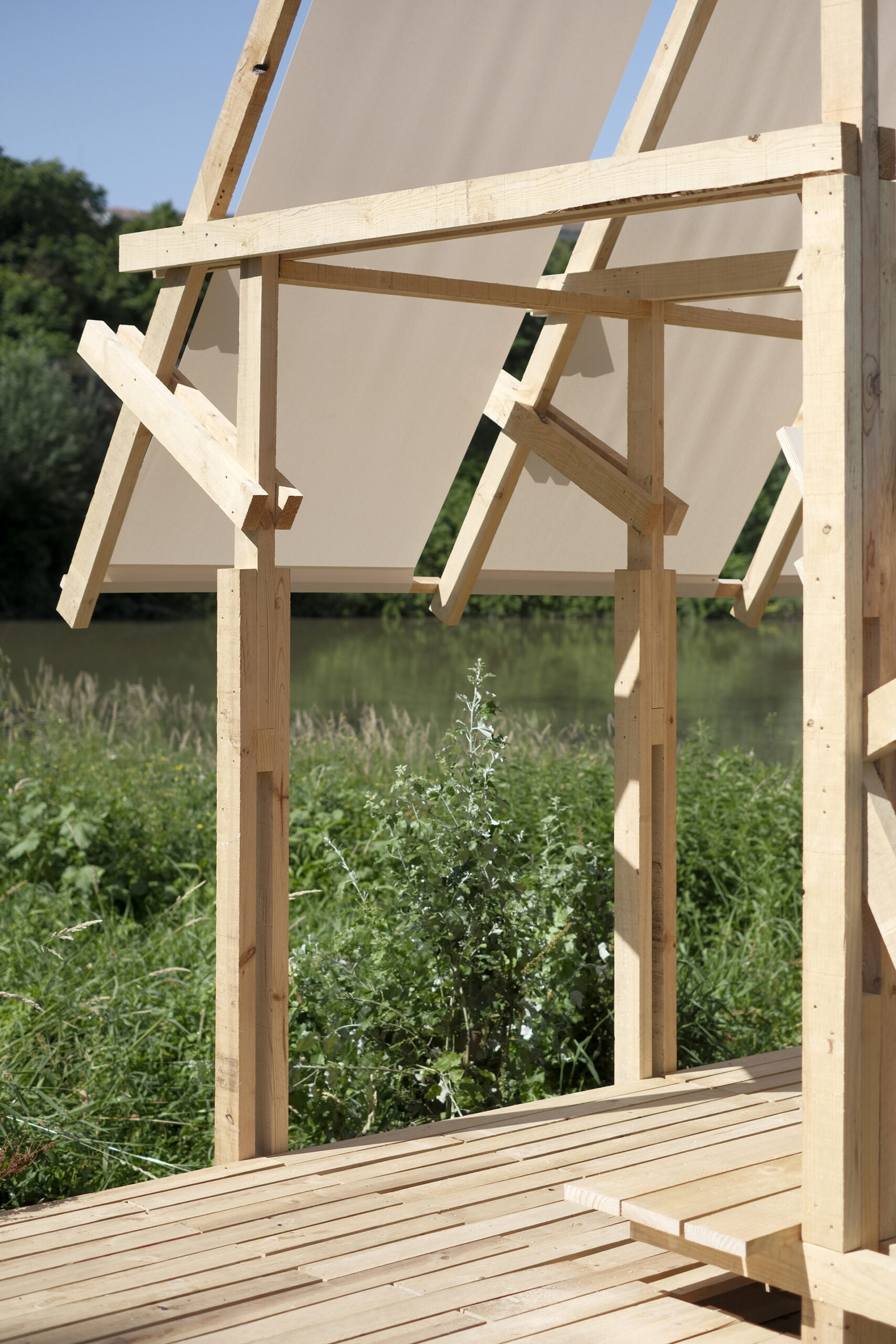
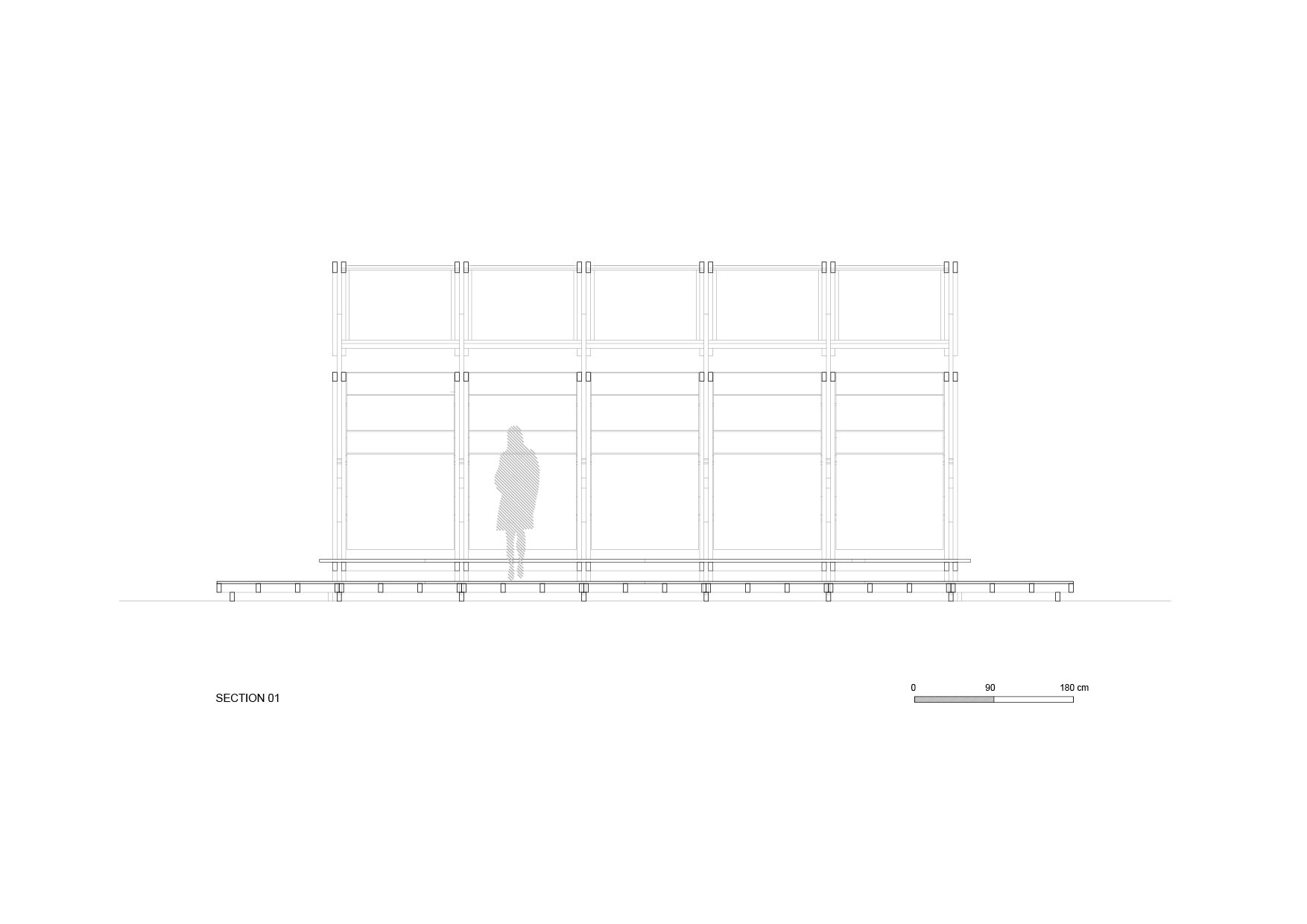
The structure was built collaboratively with students from the Faculty of Architecture at CESUGA (Centro de Estudios Universitarios de Galicia), between prefabrication in A Coruña and on-site assembly in Logroño. The project was supported by Maderas Besteiro, Bandalux, Xunta de Galicia, and the Spanish Association for Forestry Sustainability (PEFC).
© Erazo Pugliese
After Concentrico’s closure and the removal of all installations, Habitar el rio was moved and re-built on the mountains near Logroño, in the town of Viniegra de Abajo, next to the river Urbión. It will remain indefinitely.
Project Info
Architects: Erazo Pugliese
Country: Spain, Logroño
Area: 27 m²
Year: 2025
Photographs: Erazo Pugliese
Manufacturers BANDALUX, Garnica Plywood, Maderas Besteiro, Spax: BANDALUX
Professor Architects: Javier Caride
Coordination And Management: Erazo Pugliese, Silvia Blanco Agüeira, Director of Architectural studies
Collaborators: CESUGA (Centro de Estudios Superiores Universitarios de Galicia)
Other Collaborators: Maderas Besteiro, Garnica, Bandalux, XERA (Agencia Gallega de la Industria Forestal/Agency for Forest-based Industry) – XUNTA DE GALICIA and the Spanish Association for Forestry Sustainability (PEFC)
Directora Del Departamento De Arquitectura En Cesuga: Silvia Blanco Agüeira
Equipo De Estudiantes: Hugo Mosquera Ares, Julia Artal Souto, Laura Fernández González, Carmen Carbajo, Figueiral Alejandro, Orgeira Beiro, Clara Fernández Domínguez