


Designed by Malgorzata Blachnicka as Michal Holcer, the Huba mountain shelter was inspired from traditional alpine architecture. The shelter is designed to be have a compact size and use least materials to cause the least possible impact on its natural surroundings.
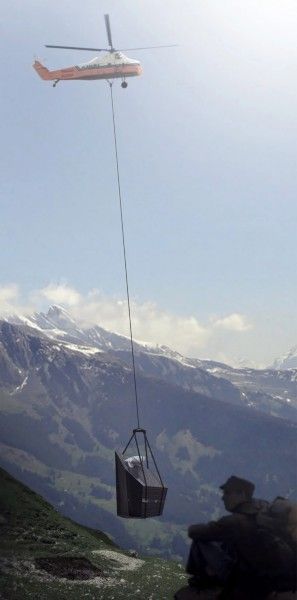
huba can easily be placed into high mountain terrain
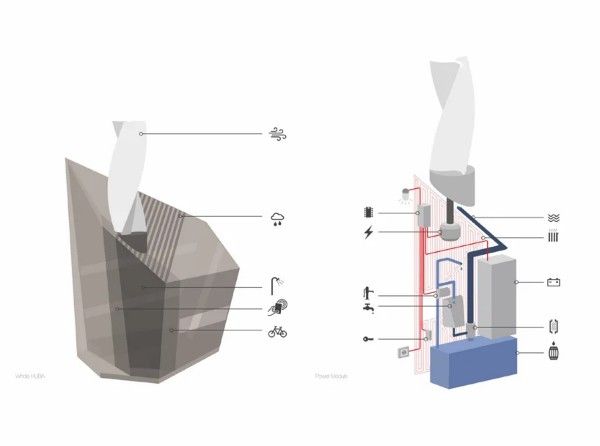
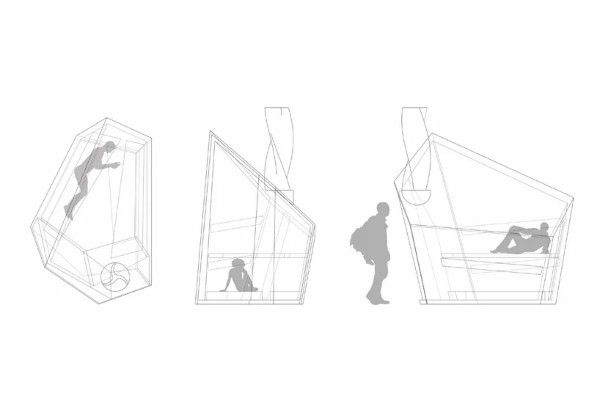
As the shelter is intended to be located at 1000 m above sea level, it can be airdropped in any location and is equipped with an effective vertical wind turbine, which is used to produce energy. The energy is stored within a battery to supply the building’s heating, lighting and water pump. Also, rainwater is collected with the aid of roof tiles and stored in a tank to be filtered for drinking.
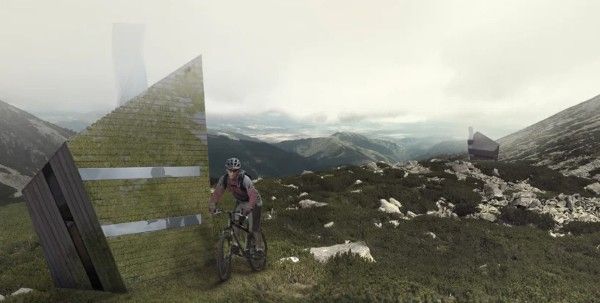
view showing ‘huba’ in its intended alpine context
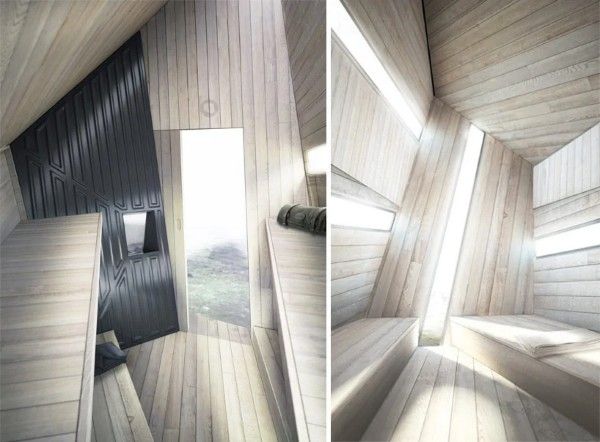
The self-sufficient structure forms an interesting interior by intersecting different planes on different angles. Small windows cut through the walls to create narrow beams of light.
The shelter accommodates four resting places, two hanging beds as well as a washbasin.
By Marwah Garib



Anastasia Andreieva is an accomplished Architectural Projects Editor at Arch2O, bringing a unique blend of linguistic expertise and design enthusiasm to the team. Born and raised in Ukraine, she holds a Master’s degree in Languages from Taras Shevchenko National University of Kyiv. Her deep passion for architecture and visual storytelling led her to transition from translation and editorial roles into the world of design media. With a keen eye for conceptual clarity and narrative structure, Anastasia curates and presents global architectural projects with precision and flair. She is particularly drawn to parametric and digital design, cultural context, and emerging voices in architecture. When I’m not analyzing the latest architectural trends, you’ll probably find me searching for hidden gems in cityscapes or appreciating the beauty of well-crafted spaces. After all, great design—like great connections—can be found in the most unexpected places. Speaking of connections, because architecture isn’t the only thing that brings people together.