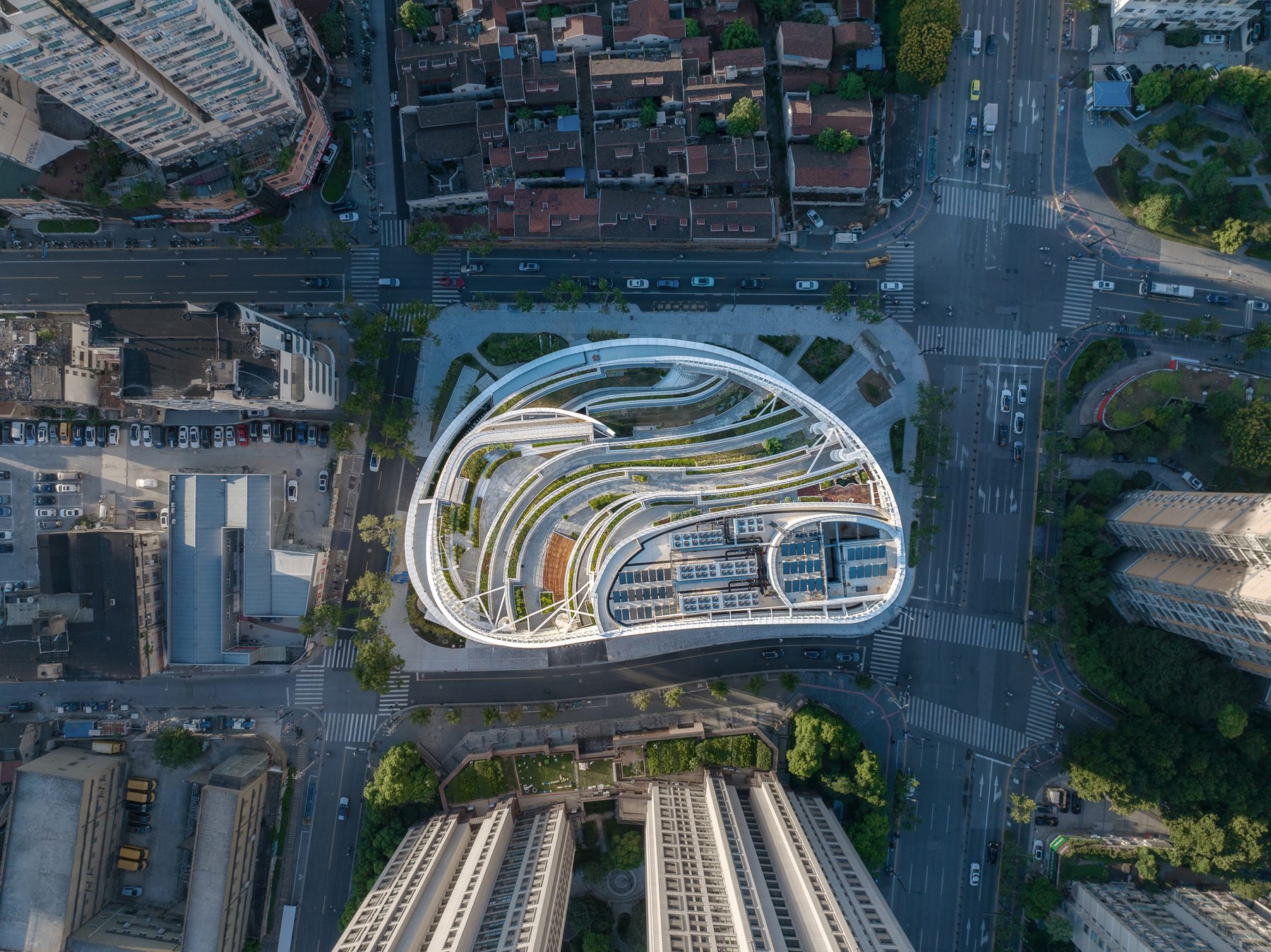
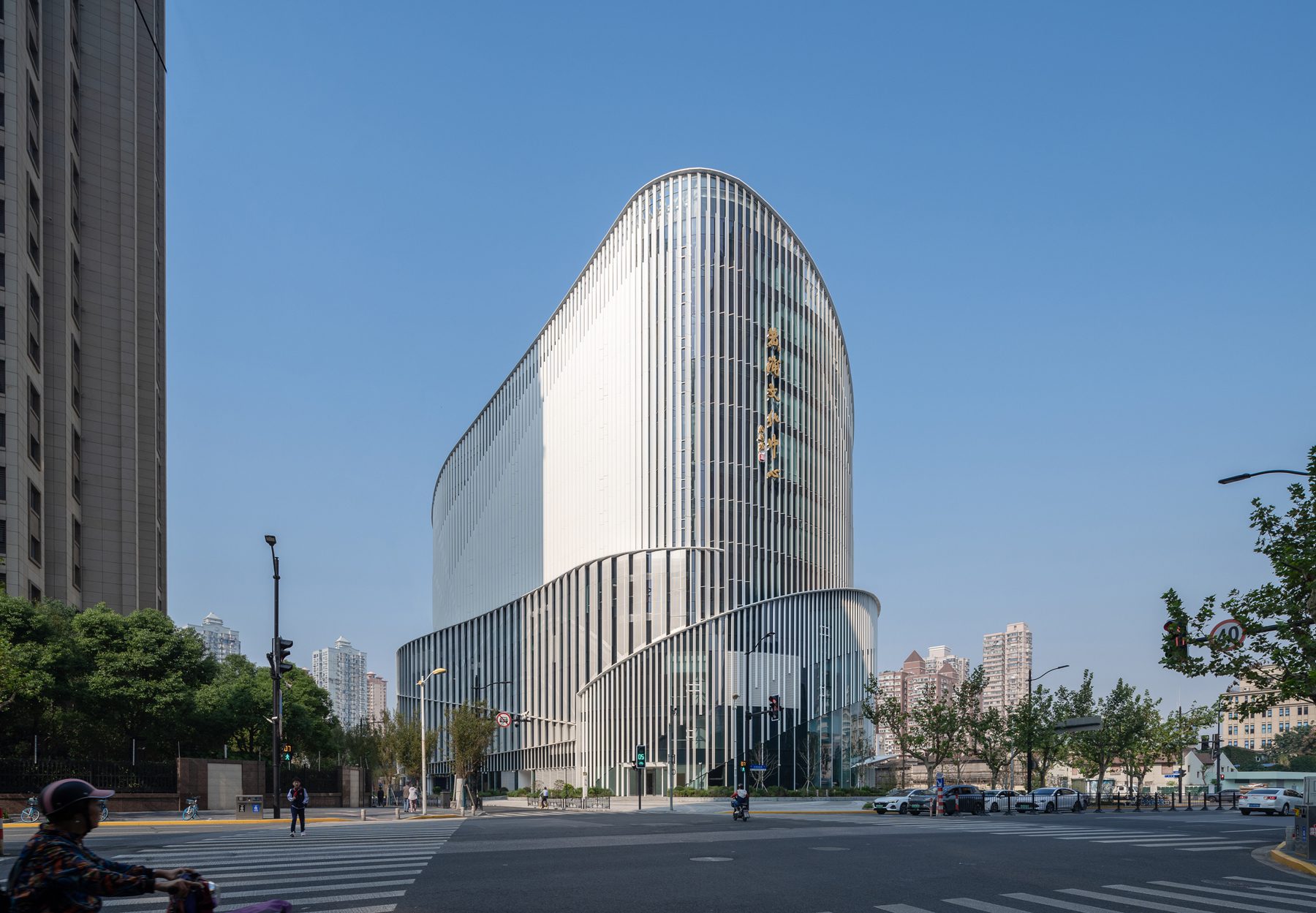
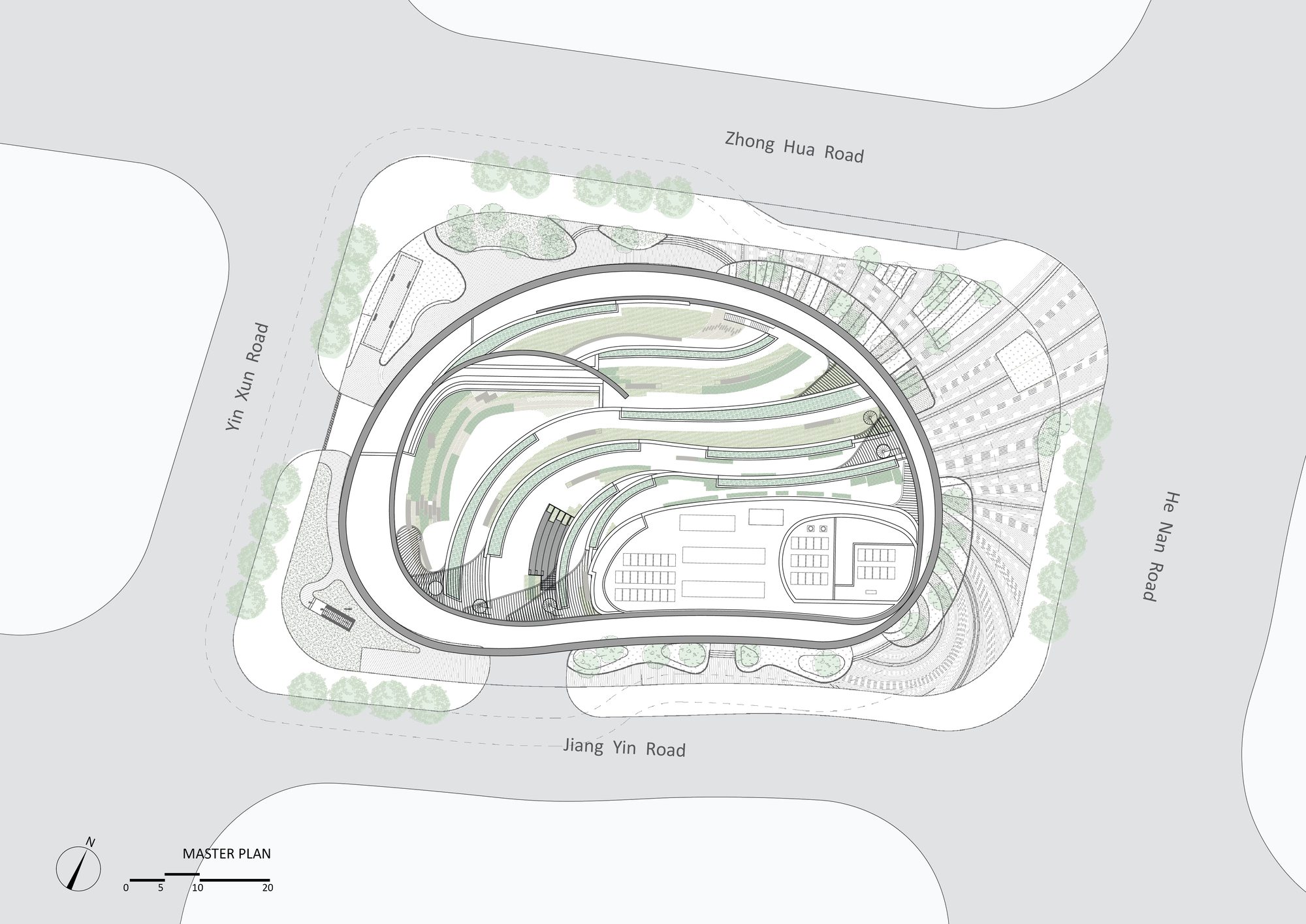
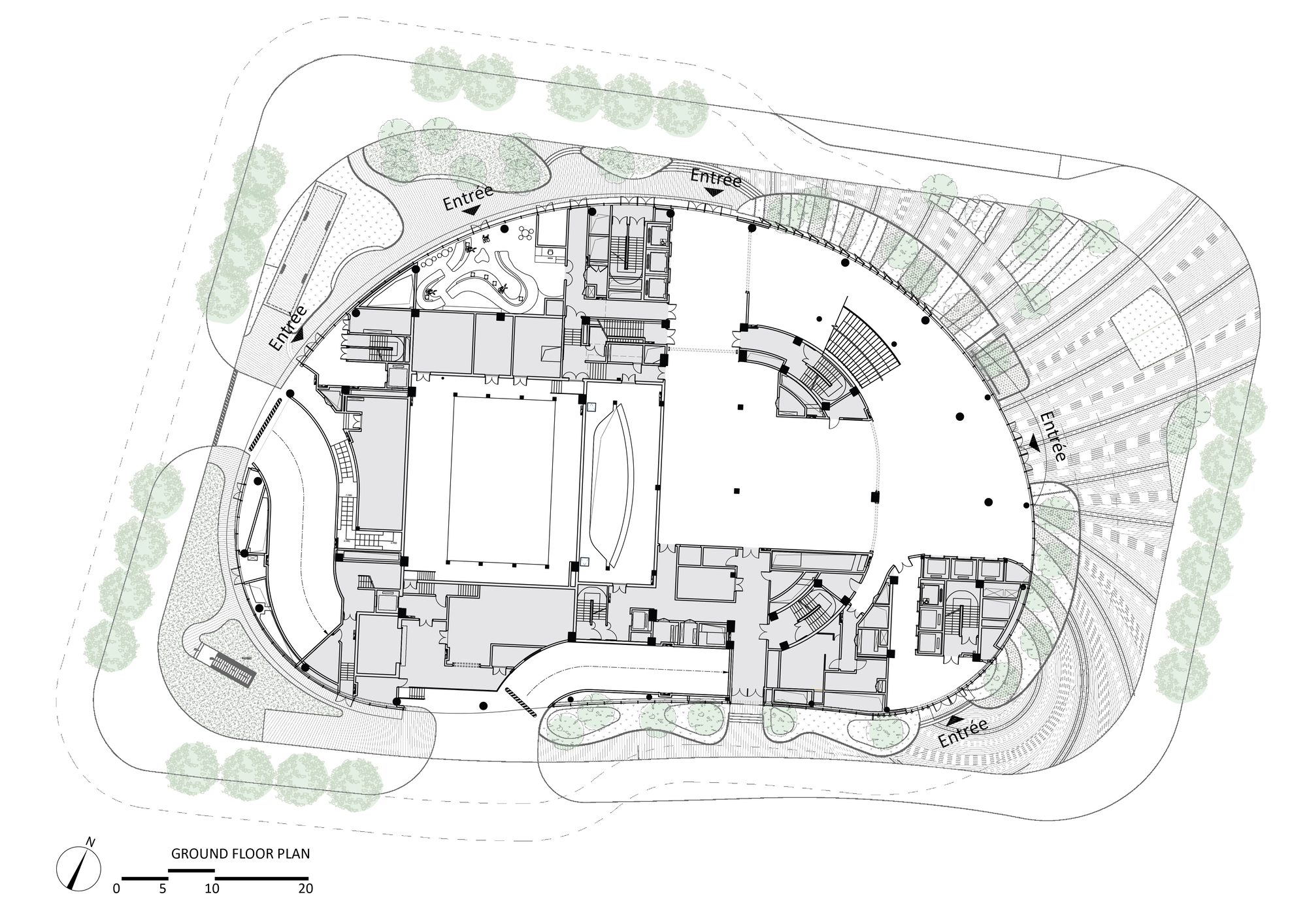
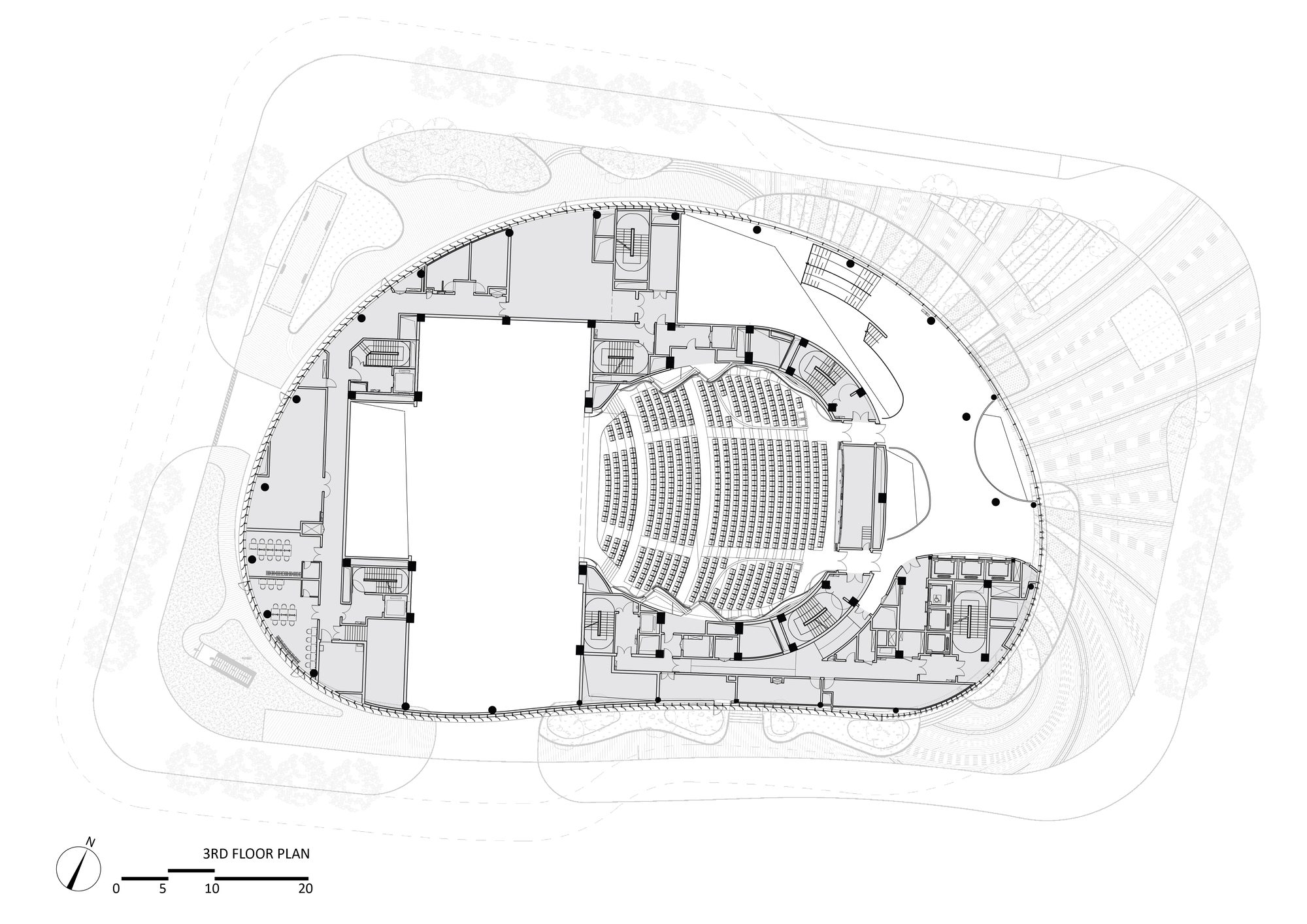
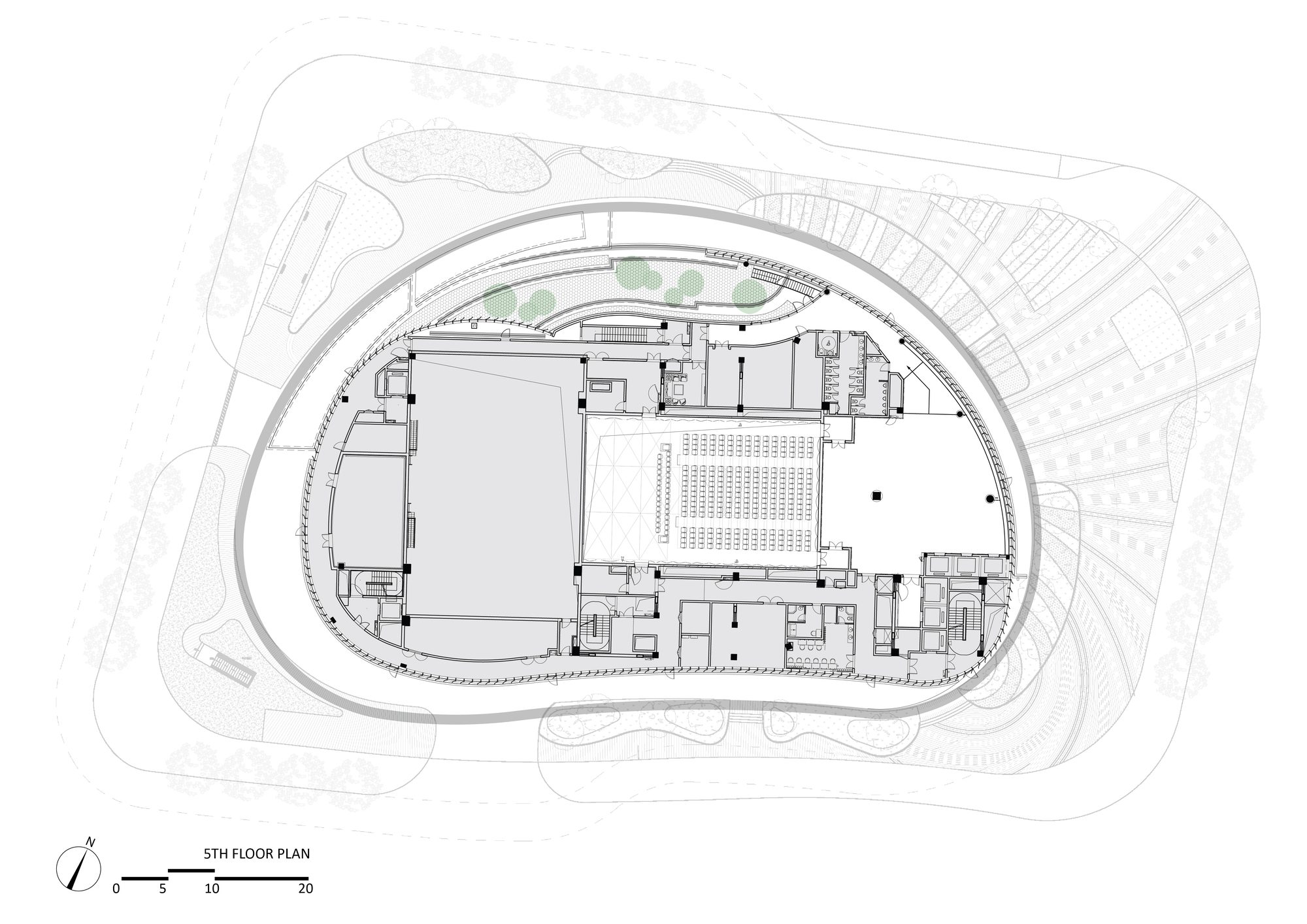
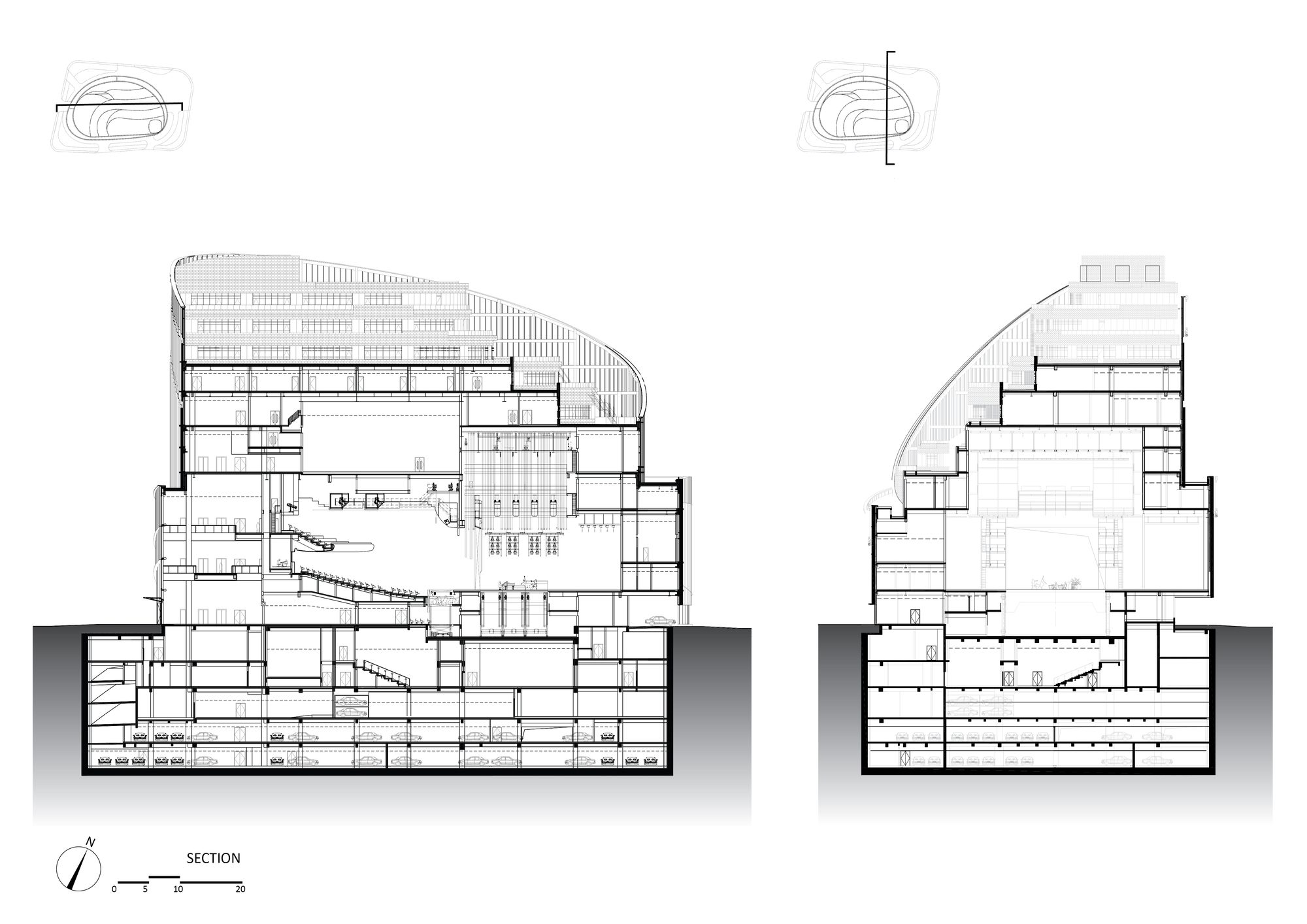
The Huang Pu Cultural Centre occupies a site area of 6,360 square meters, with an above-ground area of 21,744 square meters and an underground area of 23,692 square meters. The building stands at a height of 60 meters. Located at the southern edge of the old city wall in Huangpu District, Shanghai, the project’s design must balance functionality and symbolism, ensuring that it becomes a distinctive cultural landmark in the heart of Huangpu while accommodating diverse usage scenarios.
© 3000 images
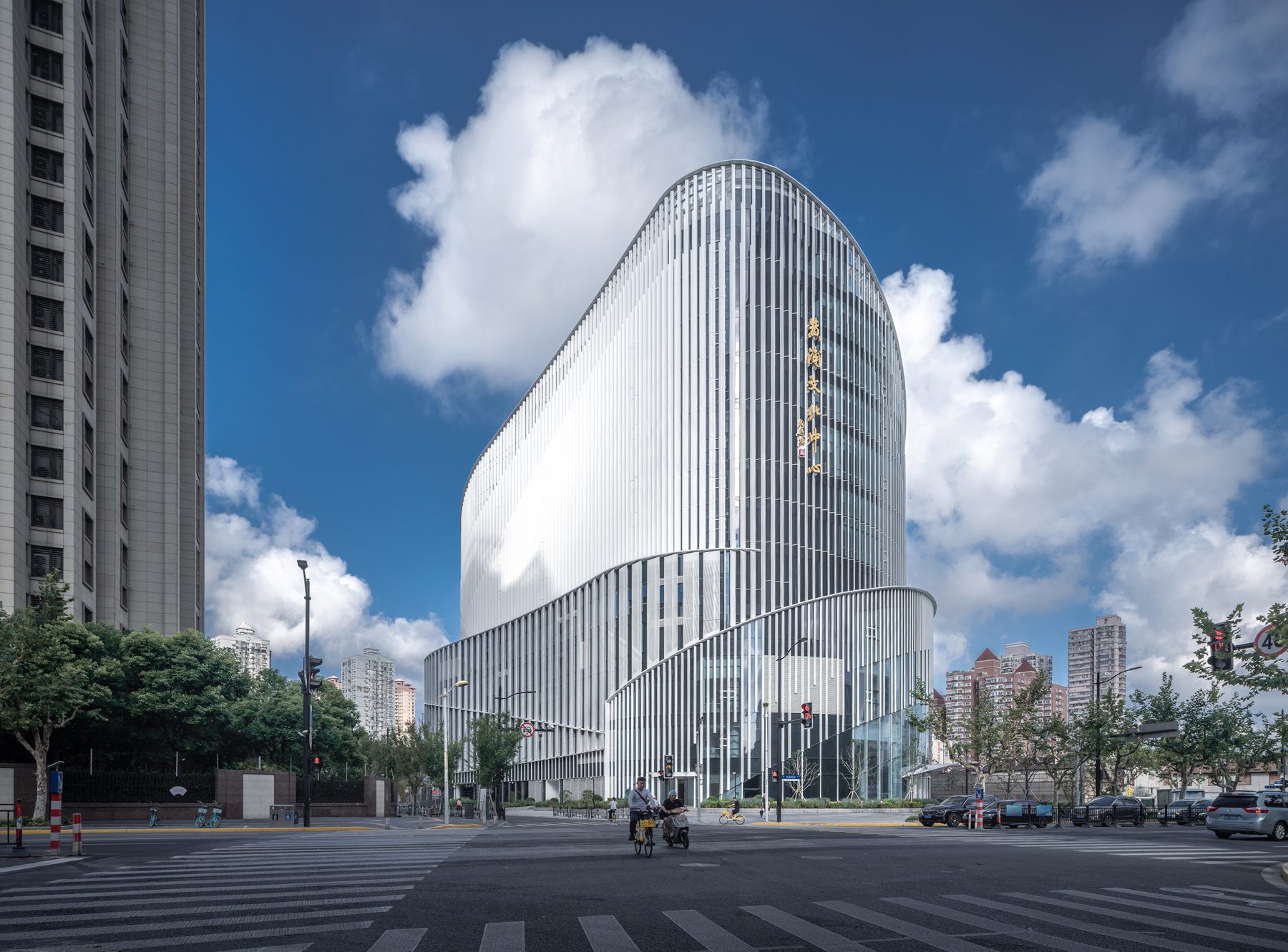
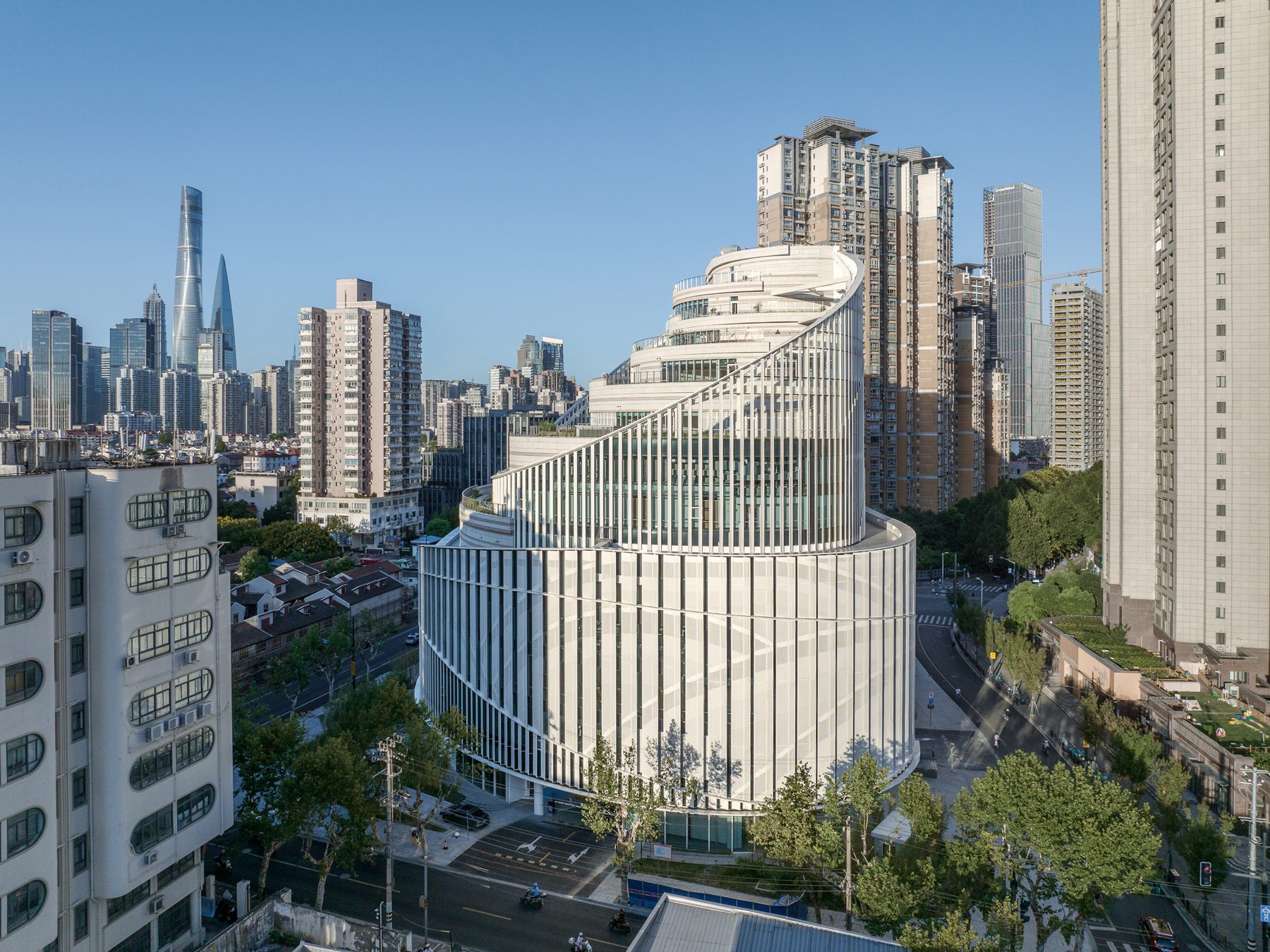
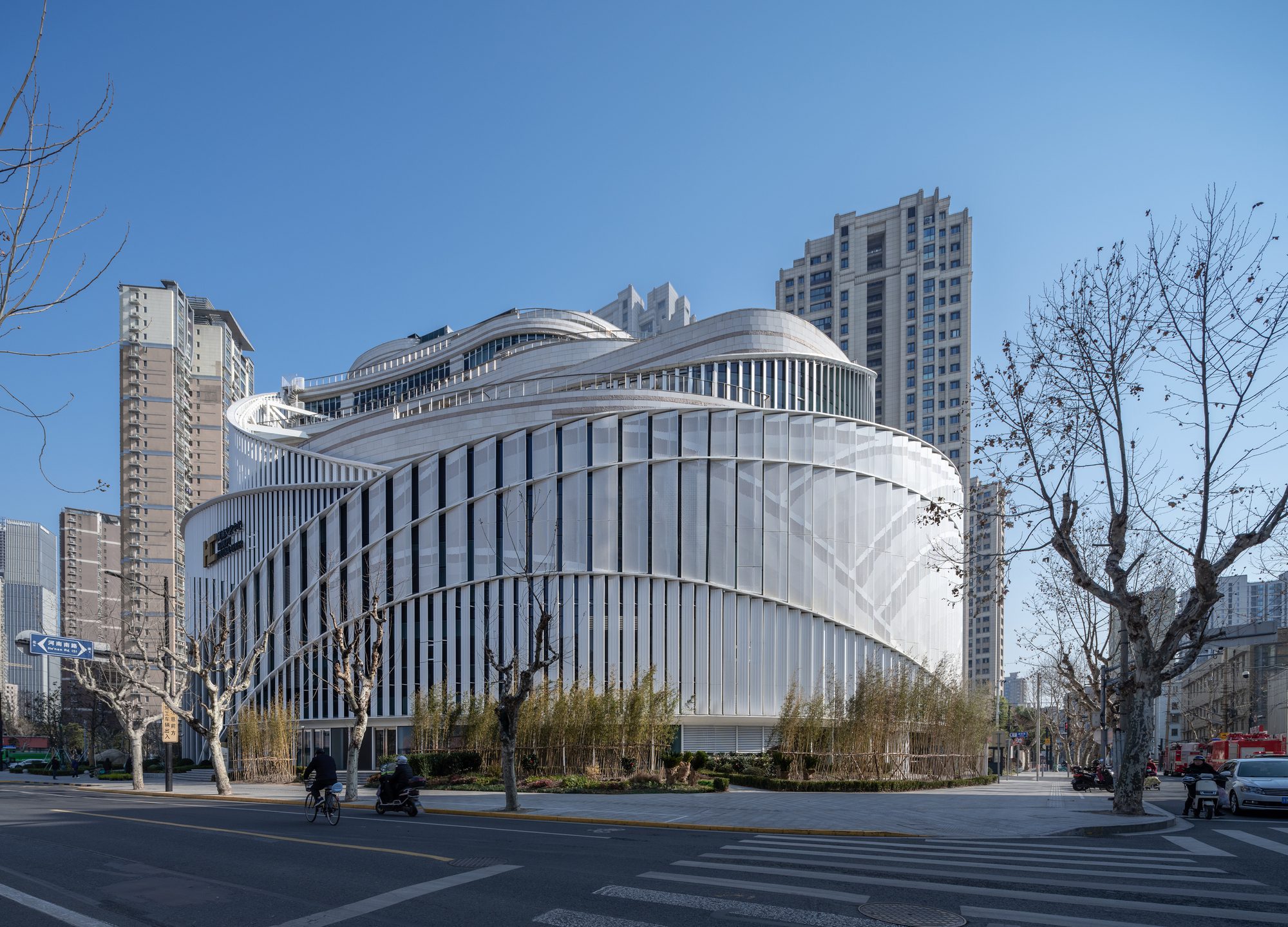
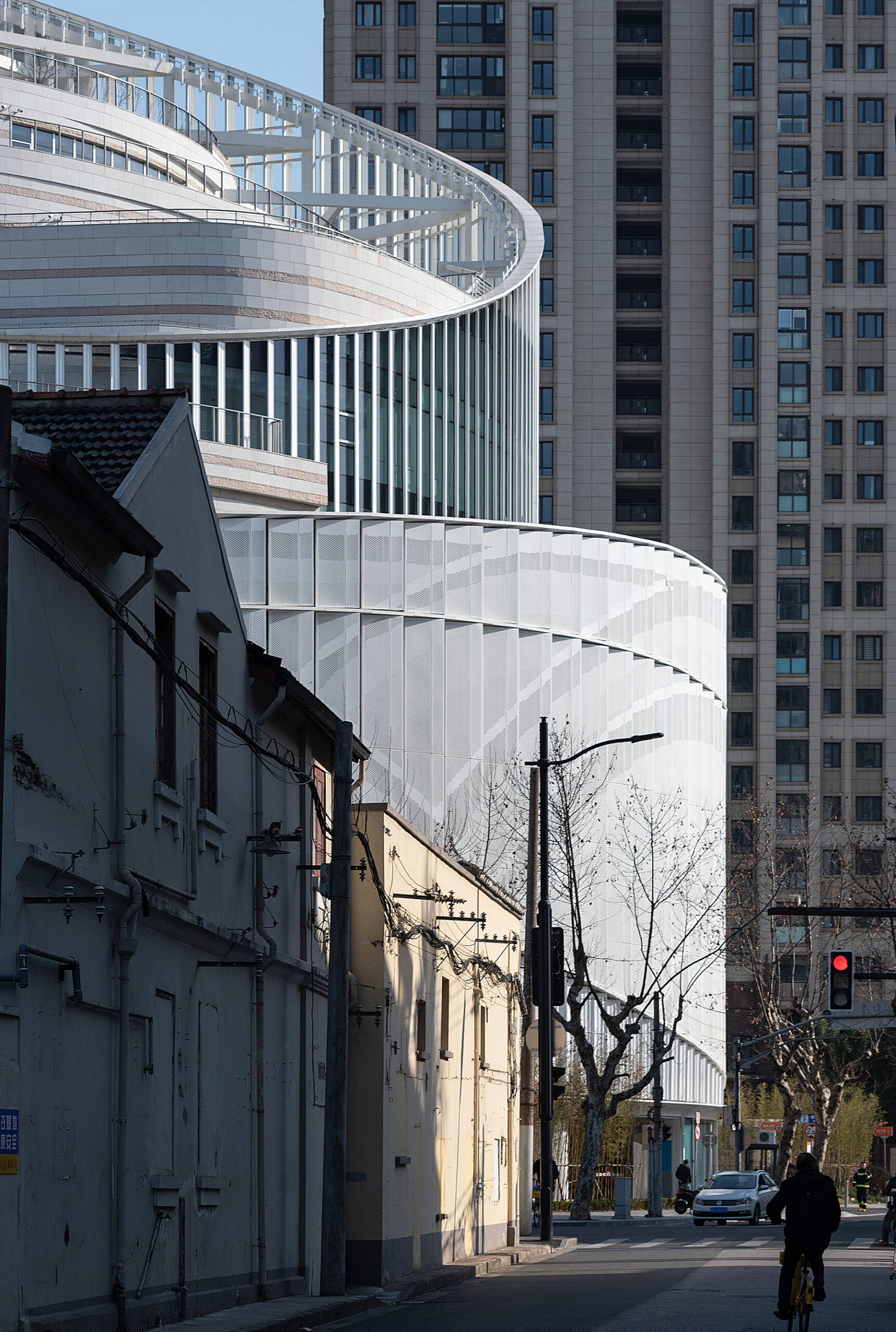
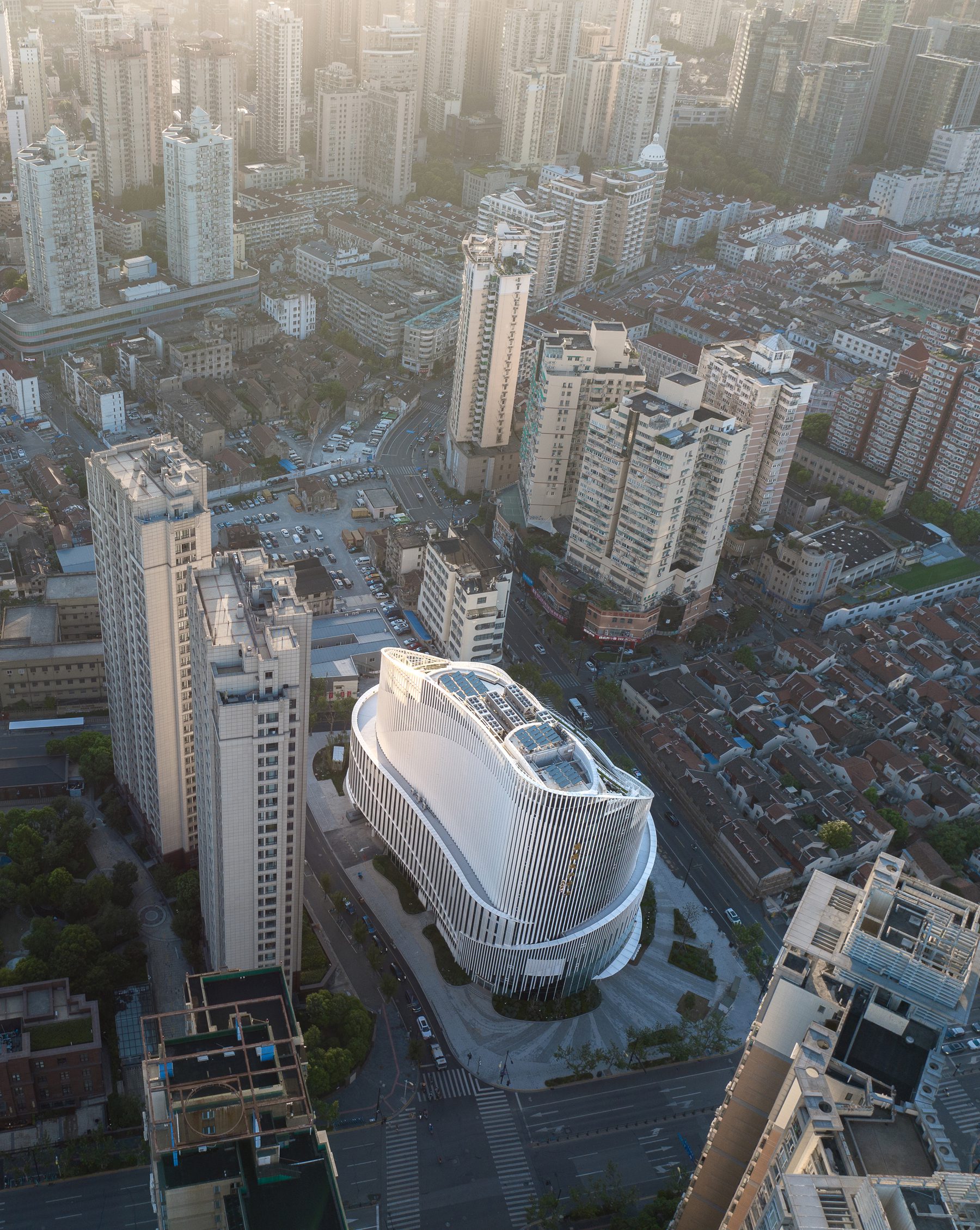
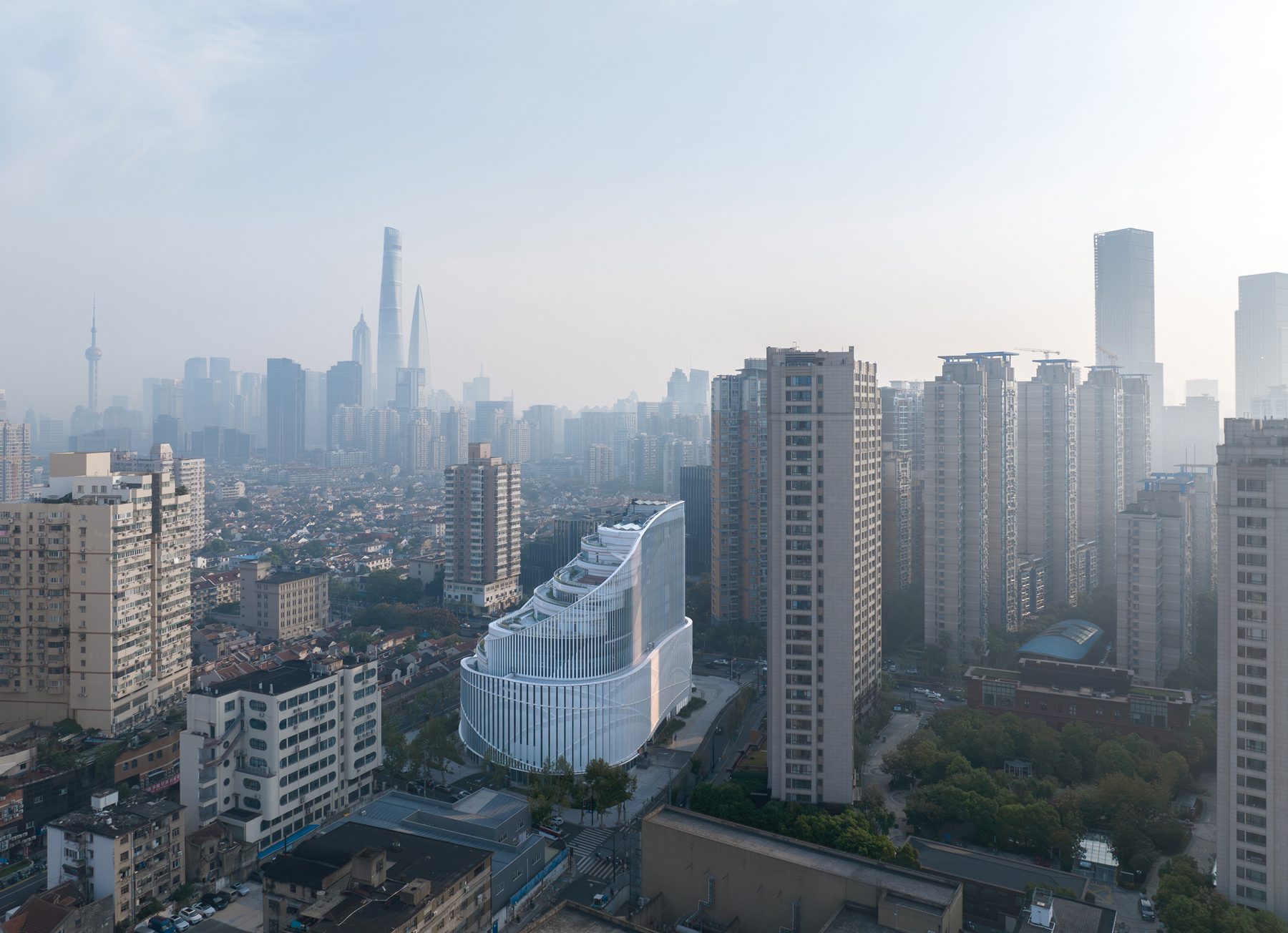
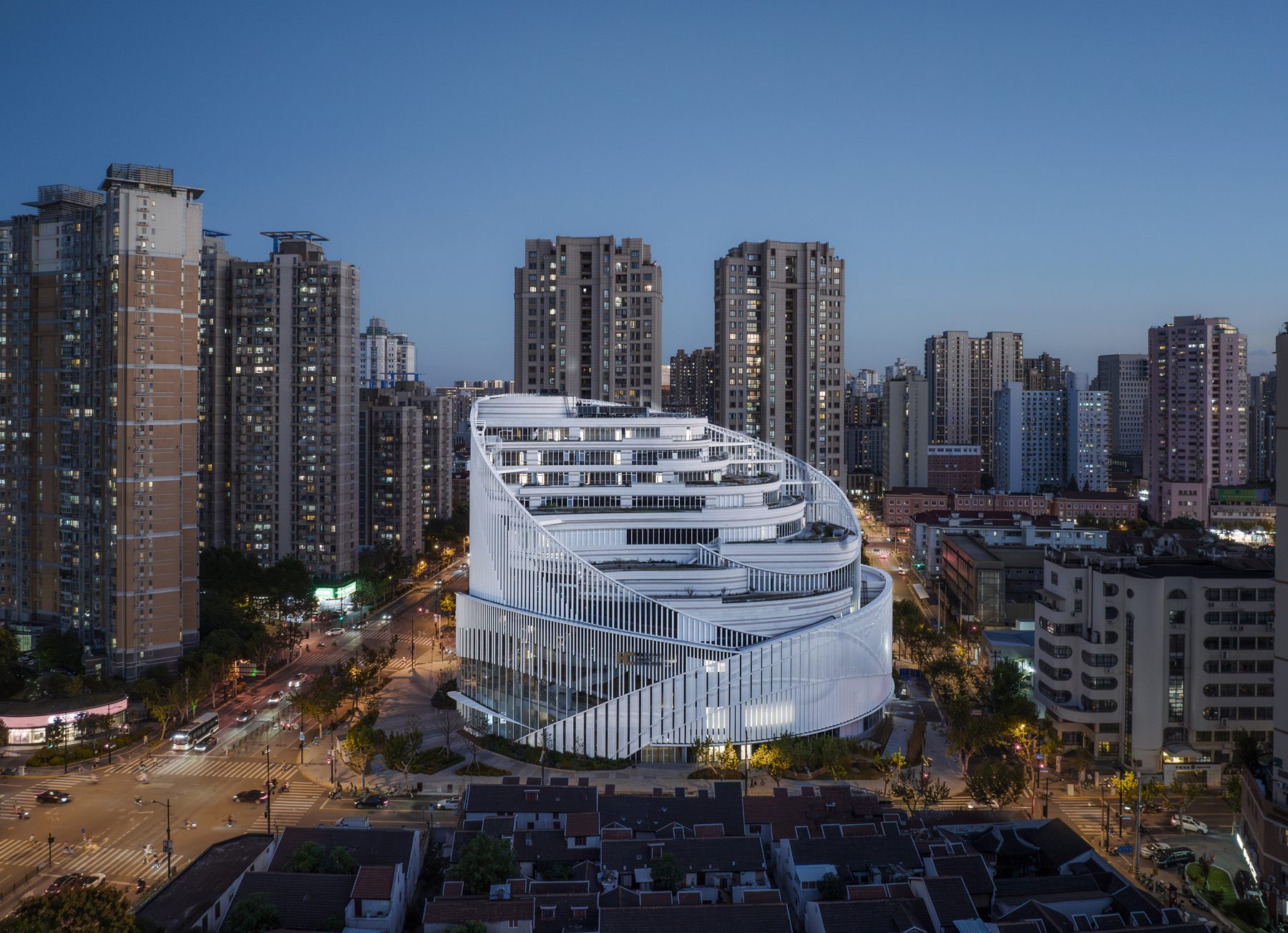
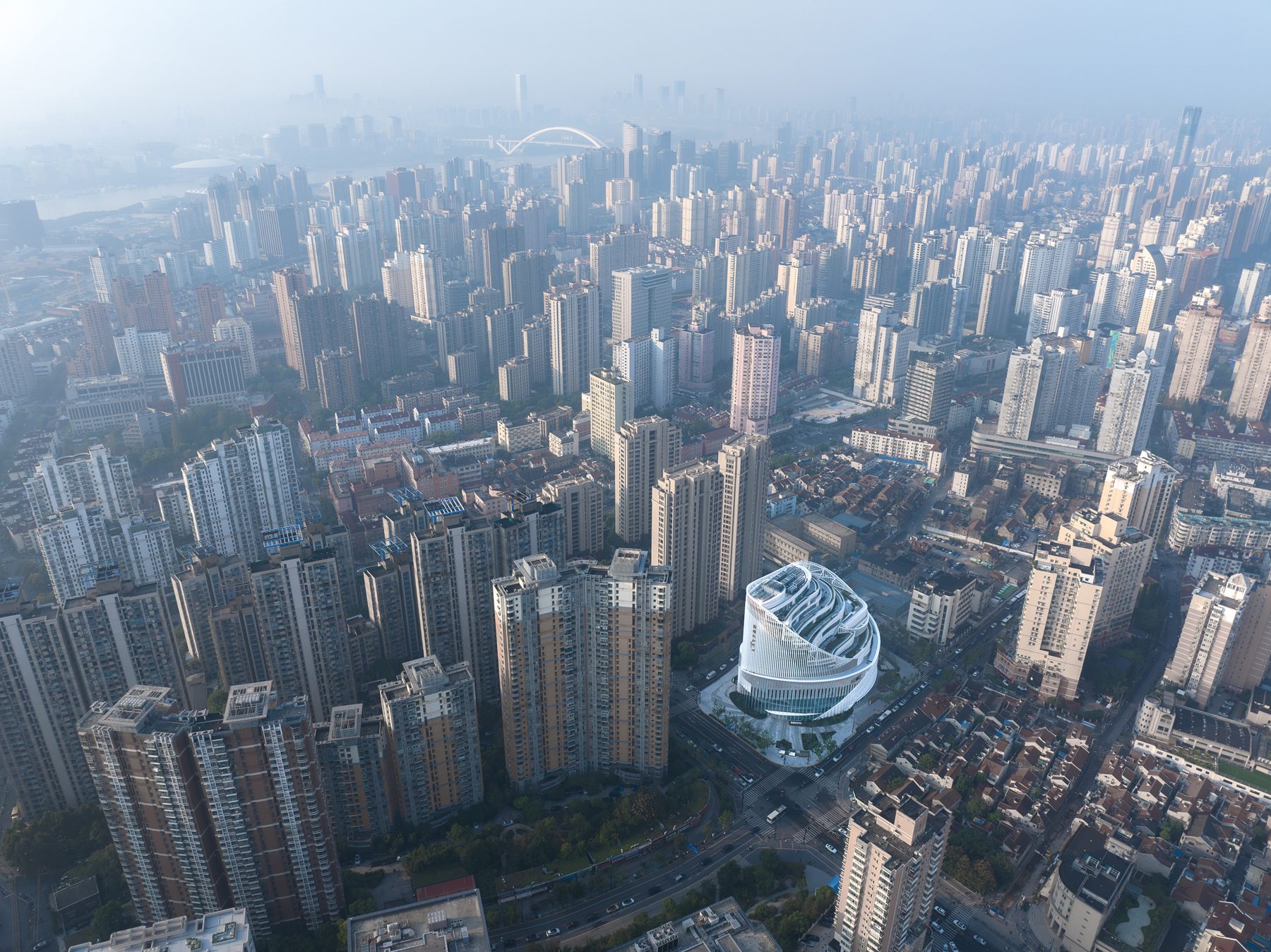
The stark contrast between the low-rise, layered Shikumen alleyways to the north and the modern high-rise residential buildings to the southeast creates a sense of fragmentation and conflict. In this highly contrasting environment, a surreal architectural form is needed to allow this cultural landmark to stand out from the surrounding chaos and disorder.
© 3000 images
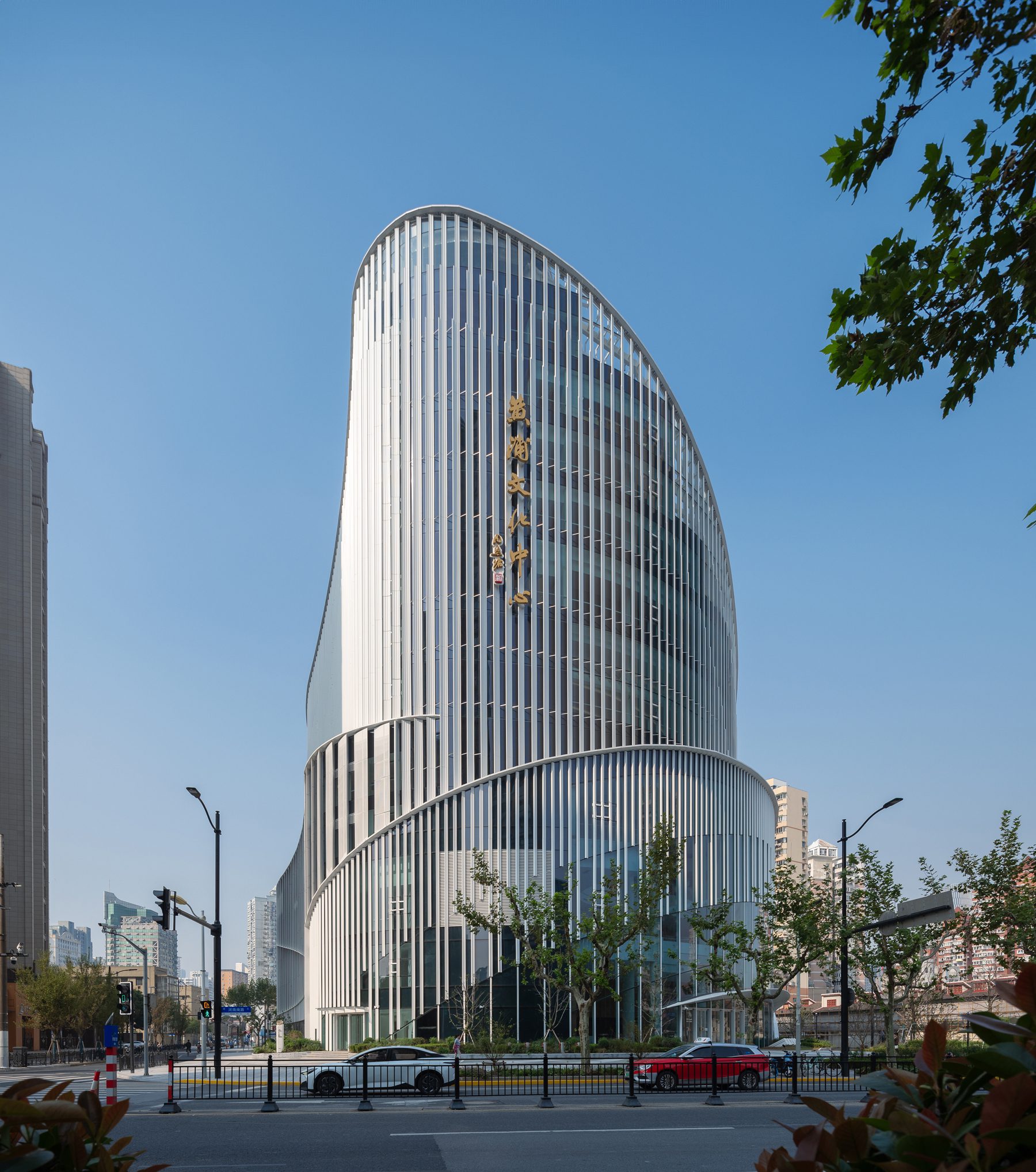
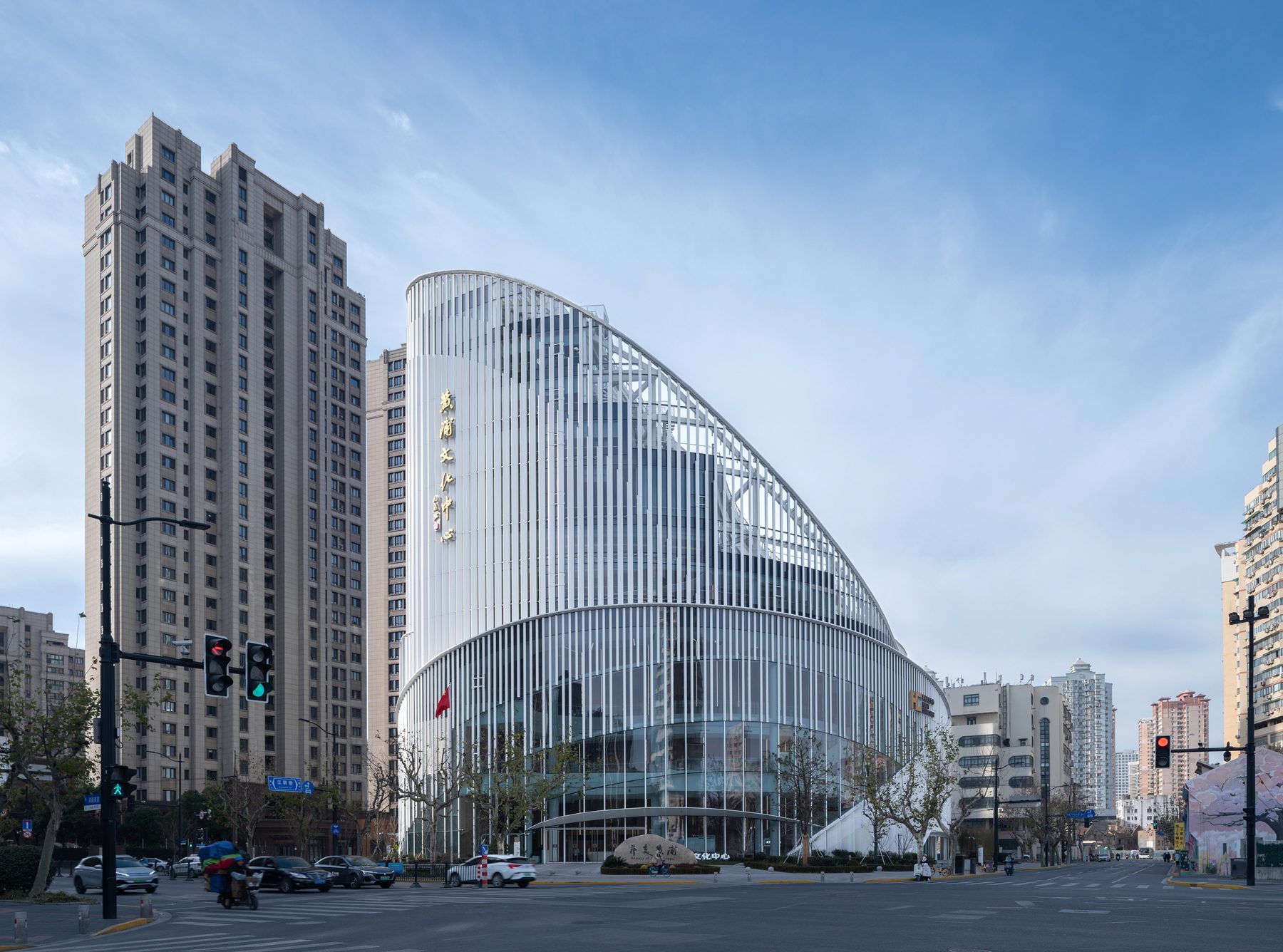
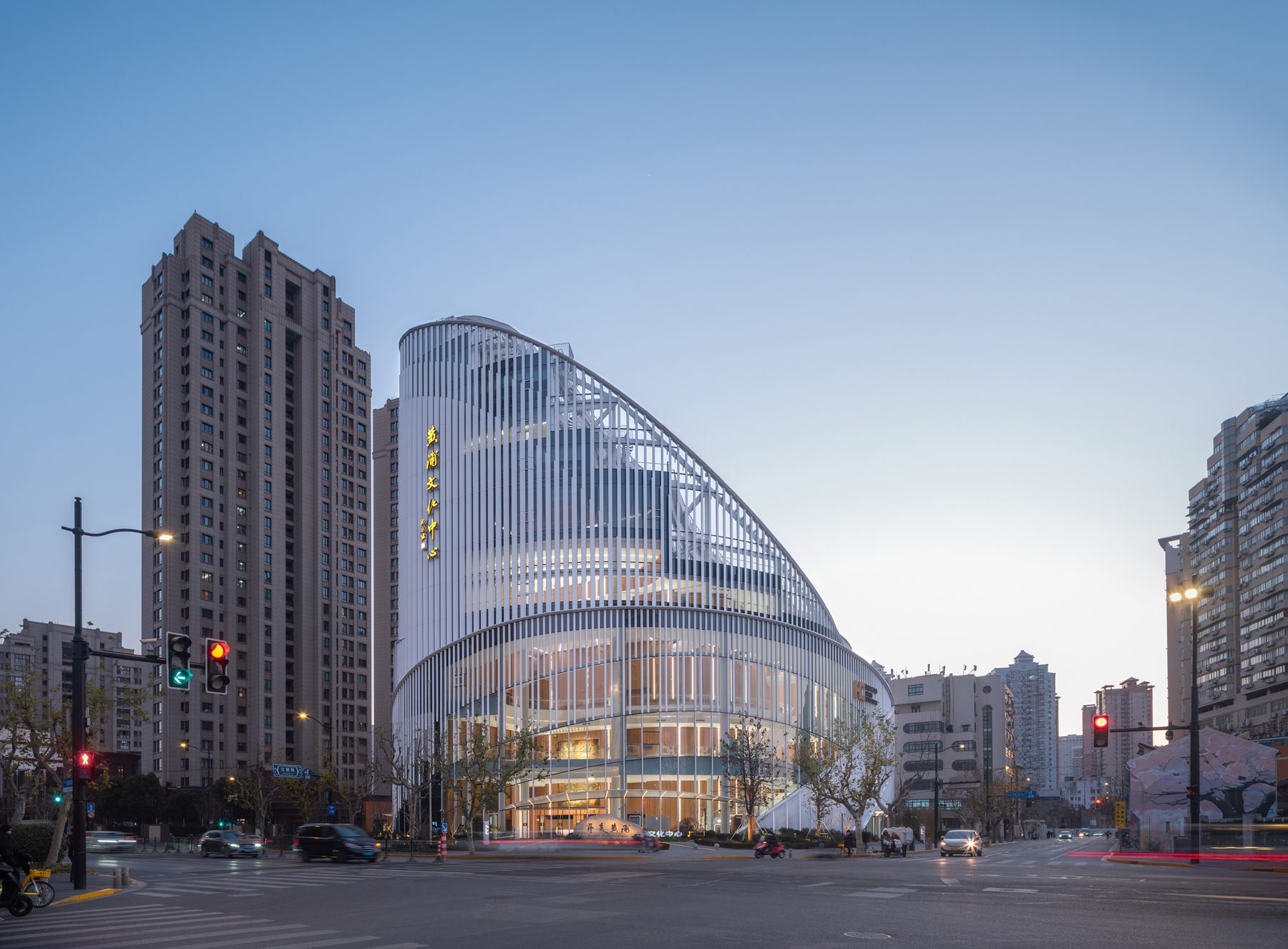
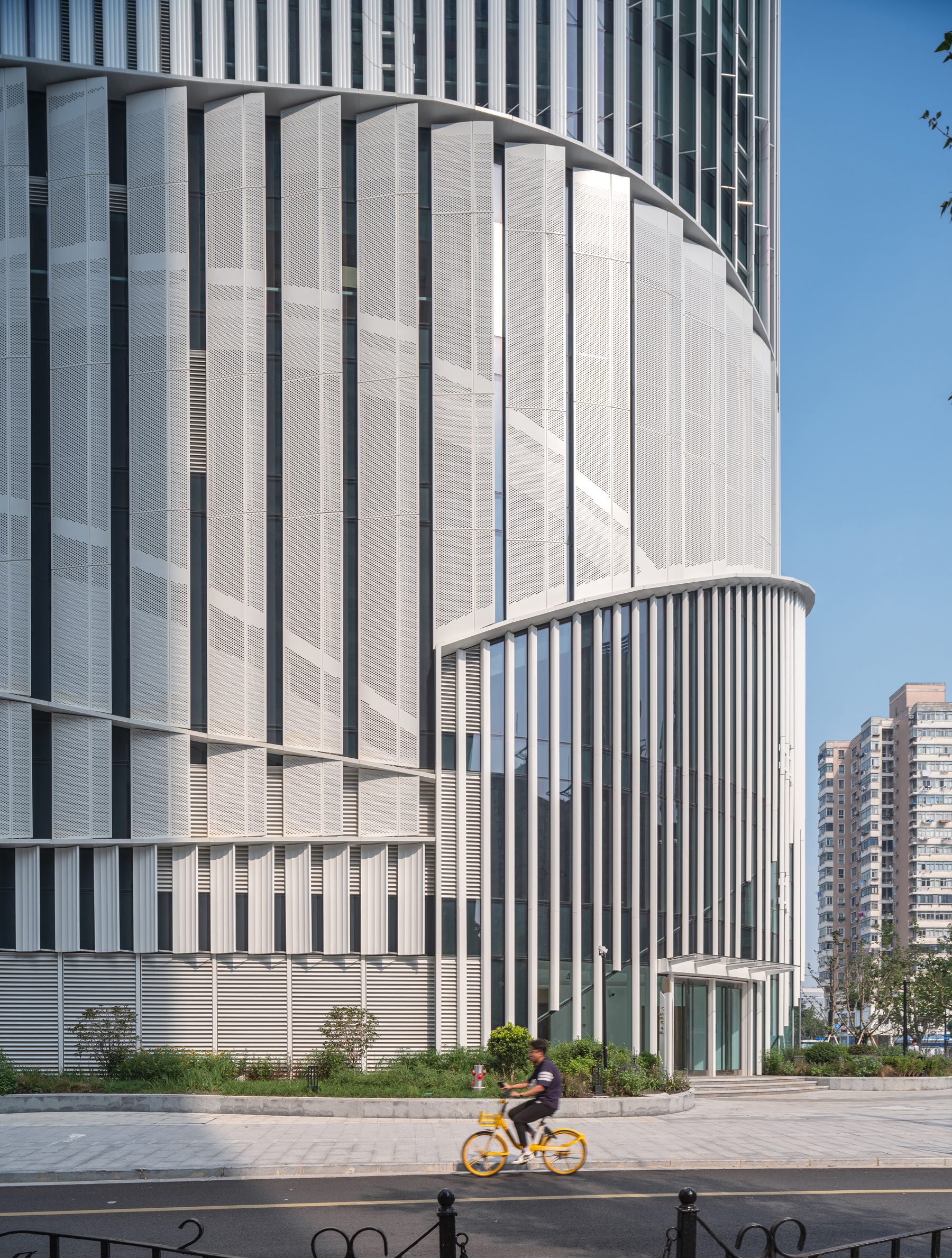
The complex and diverse internal functional requirements, combined with the relatively compact site, have led to the development of a freely upward architectural style. The expressive curves and enveloping materials imbue the building with a sense of vitality and creativity. The unique white form distinguishes itself from the surrounding forest of high-rises and the alleyway neighborhoods. The expressionist and organic style extends from the exterior landscape into the interior, further reinforced by the use of curves and free-form designs. Additionally, the overall plan adopts an elliptical shape, echoing the outline of the Ming Dynasty old city wall.
© 3000 images
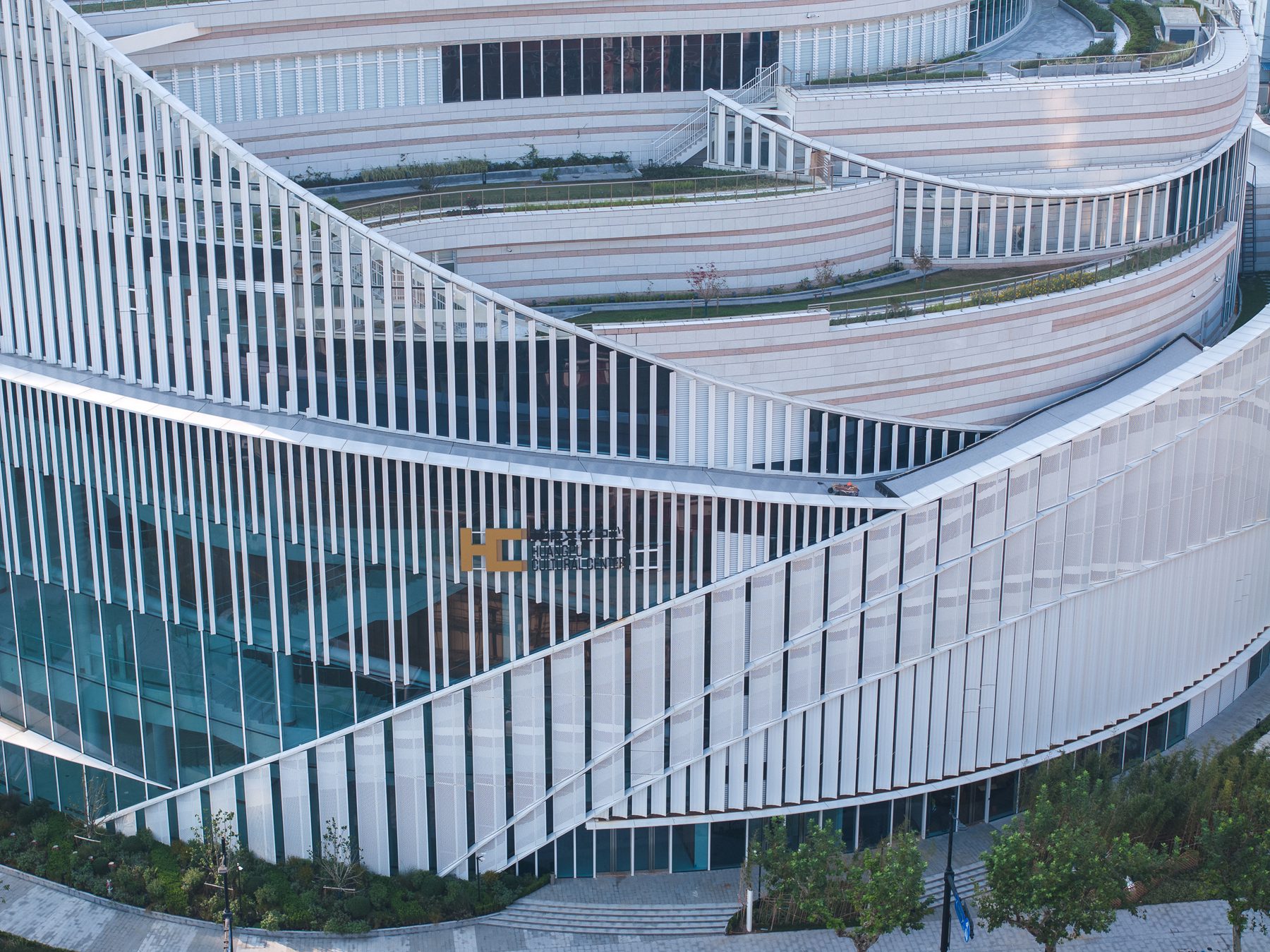
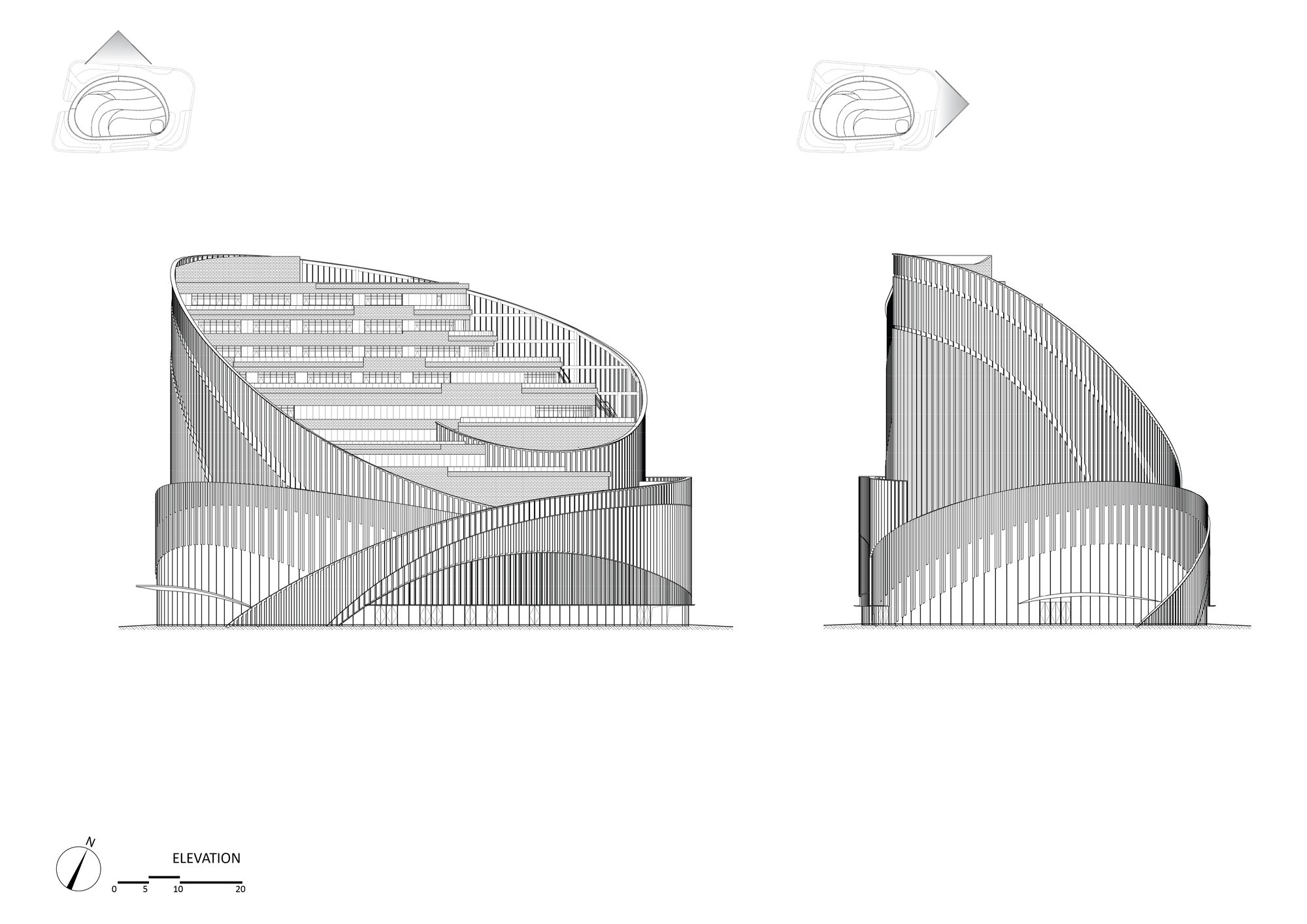
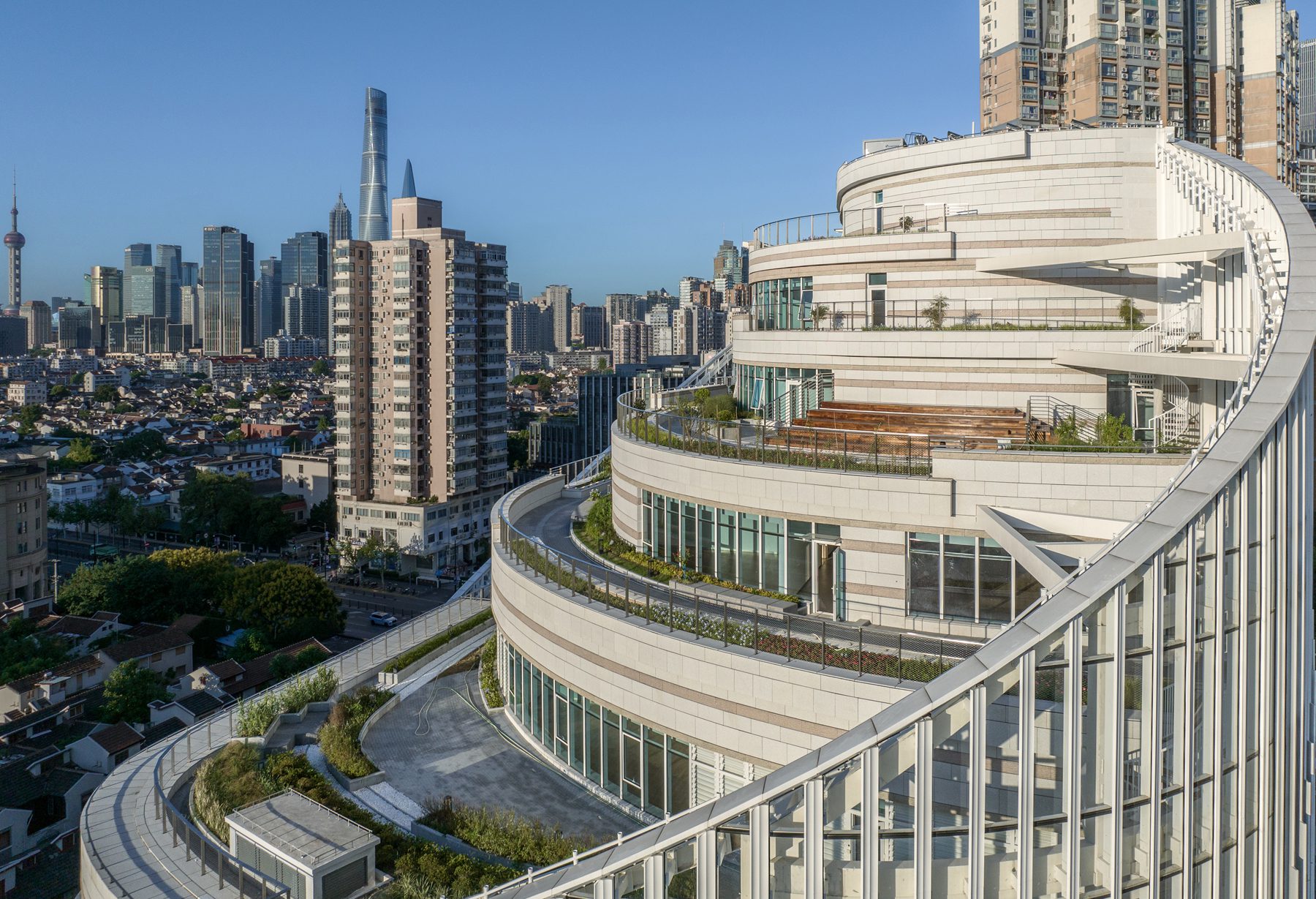
The building’s volume tapers as it rises, with a stepped terrace design that creates accessible terraces and sky gardens on each level. This design engages in a dialogue with the low-rise residential buildings of the alleyway neighborhoods, ensuring that they receive ample natural light and are not negatively impacted by the project’s scale.
© 3000 images
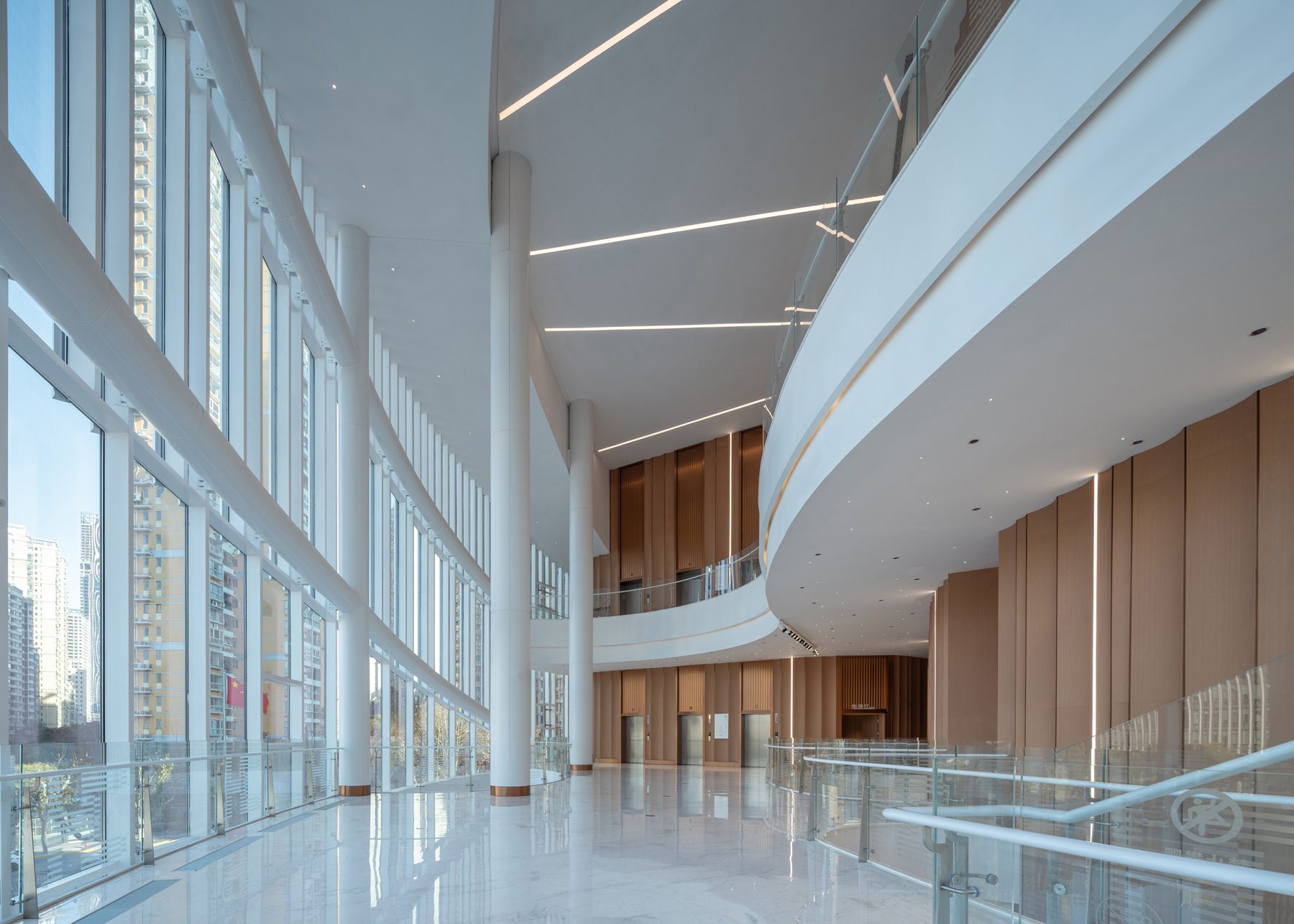
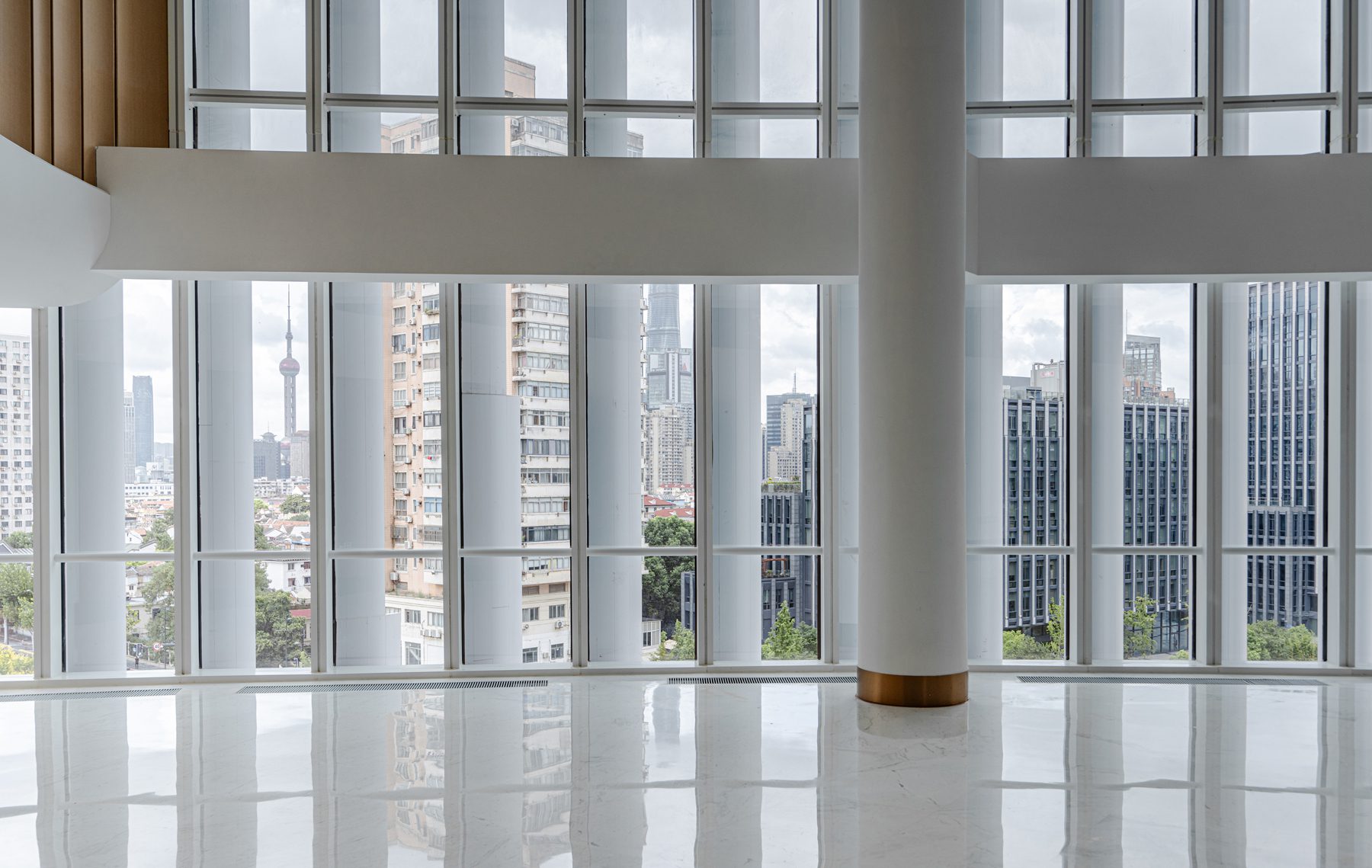
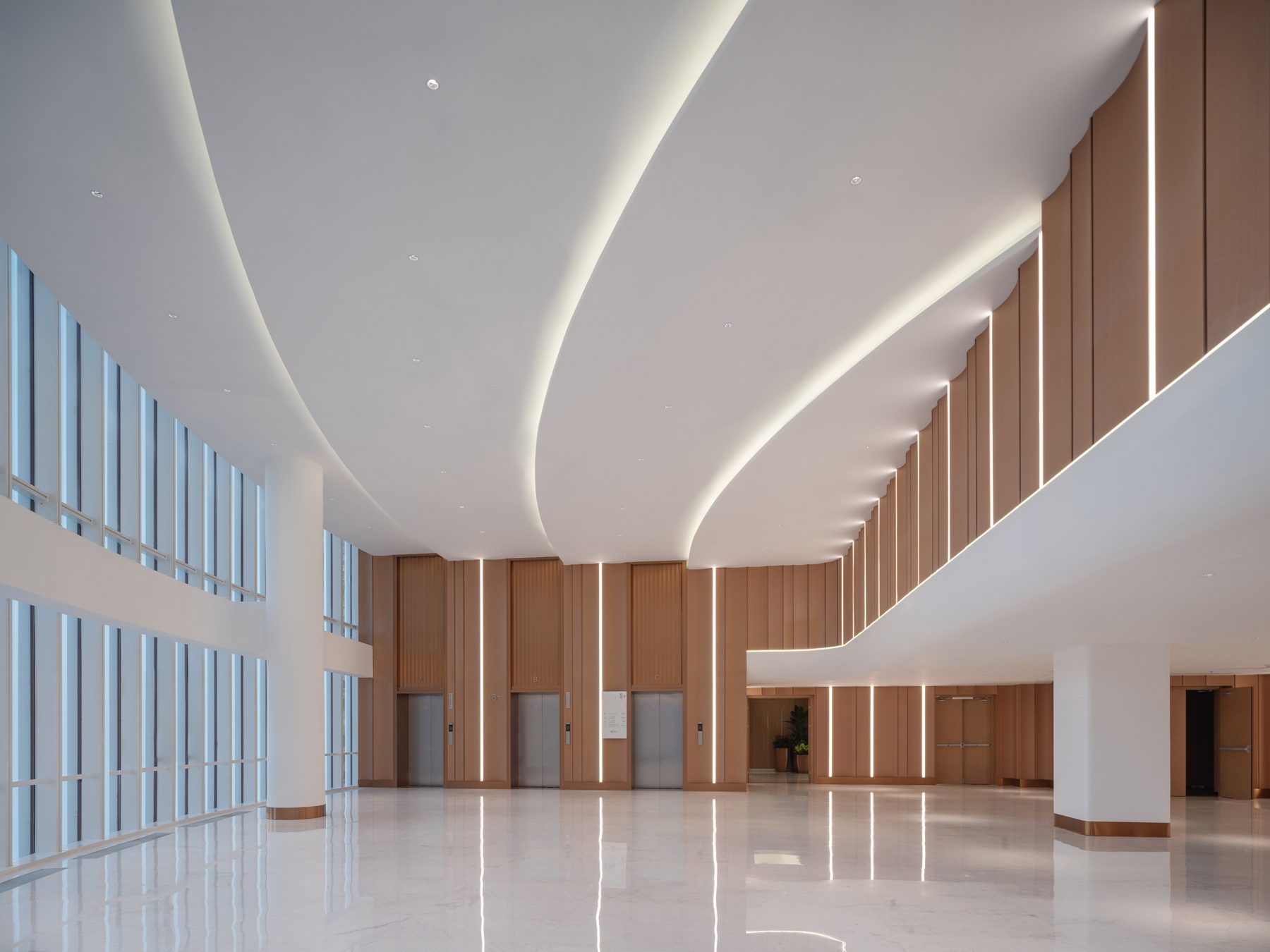
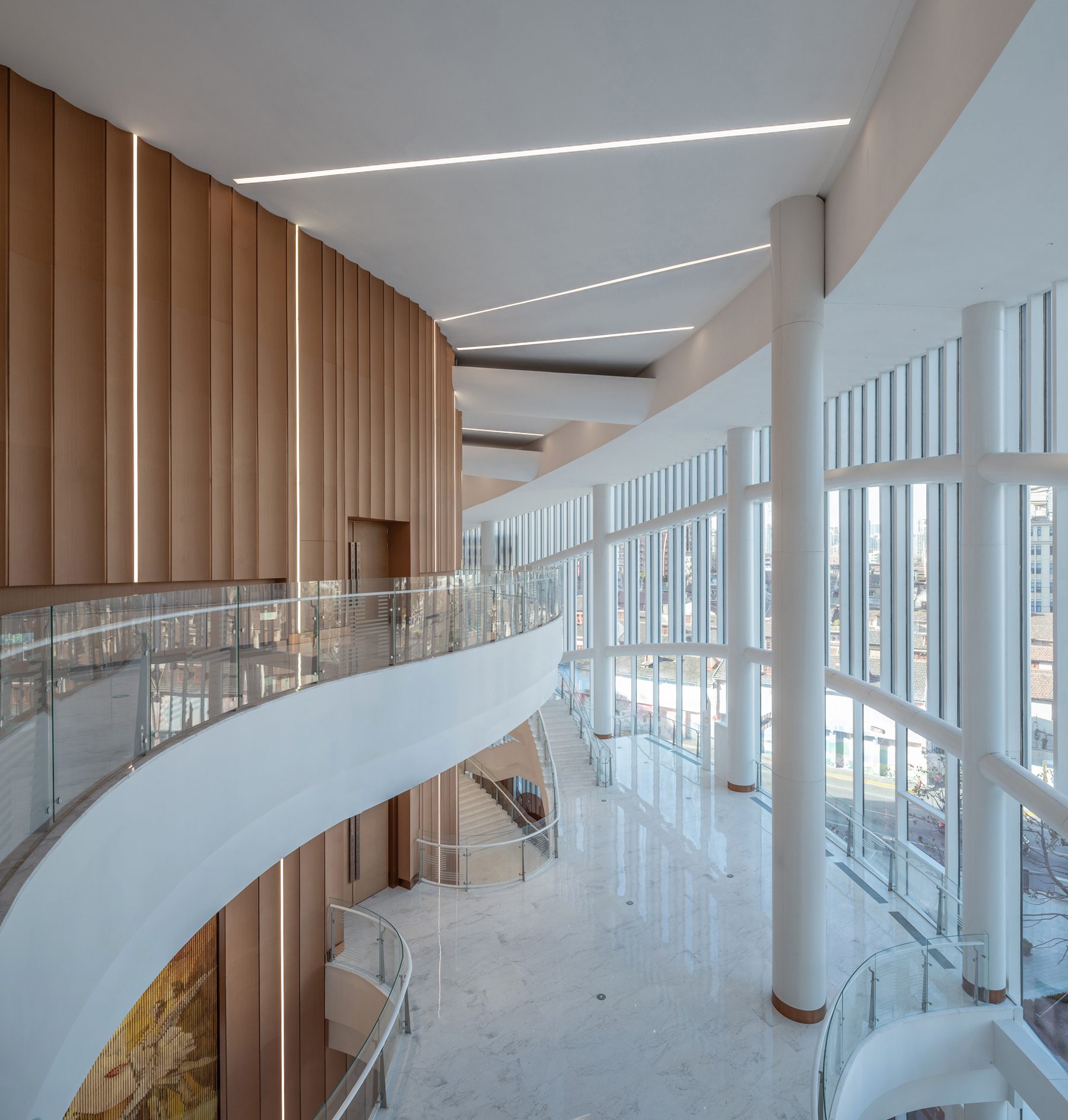
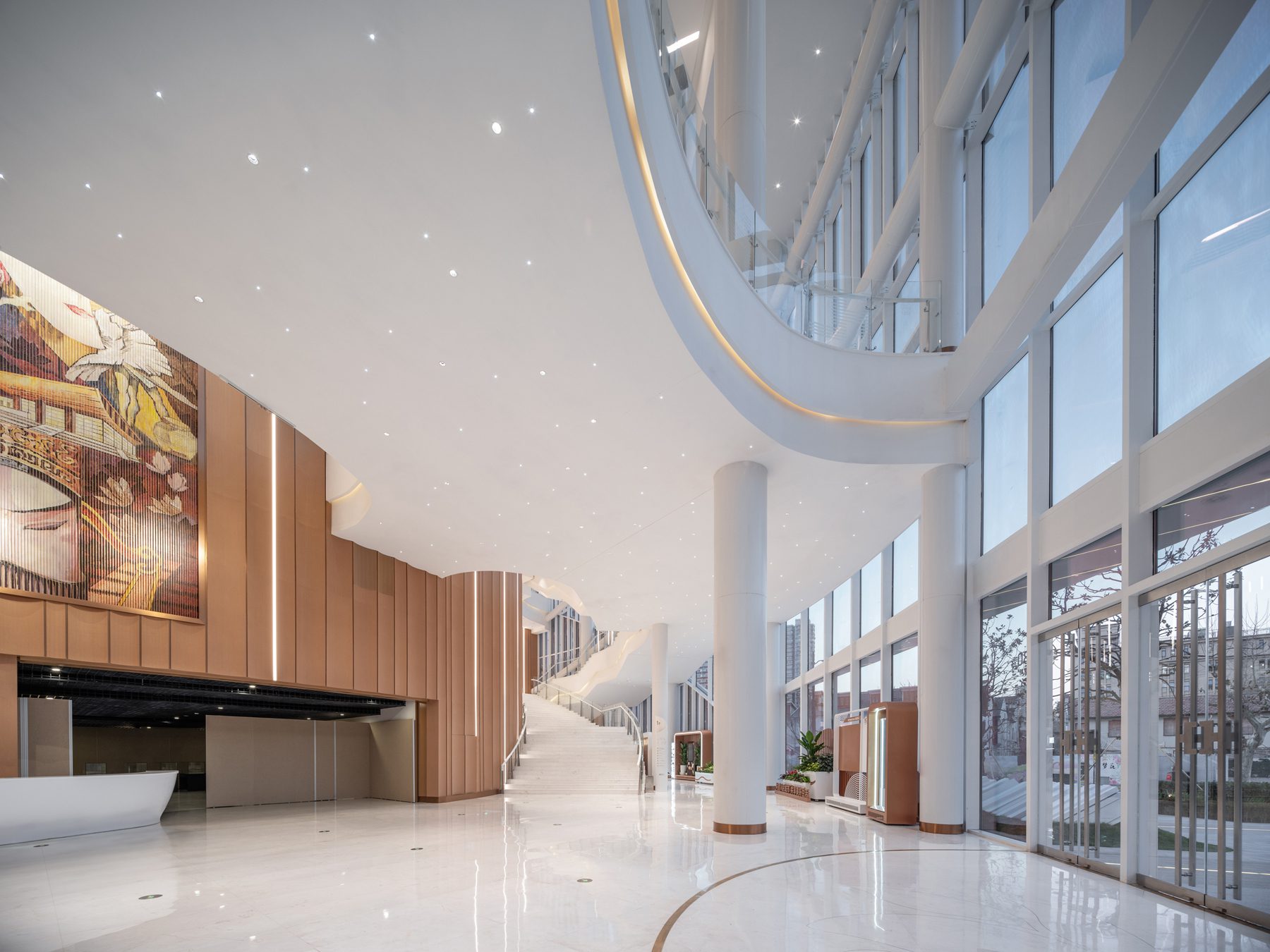
The interior lobby space is connected to the urban square and distant cityscape through a transparent facade. In the audience lounge, the gradually unfolding grand staircase and horizontal corridors along the facade dramatize the flow of audience movement during entry and exit, significantly enhancing the richness and fun of the space.
© 3000 images
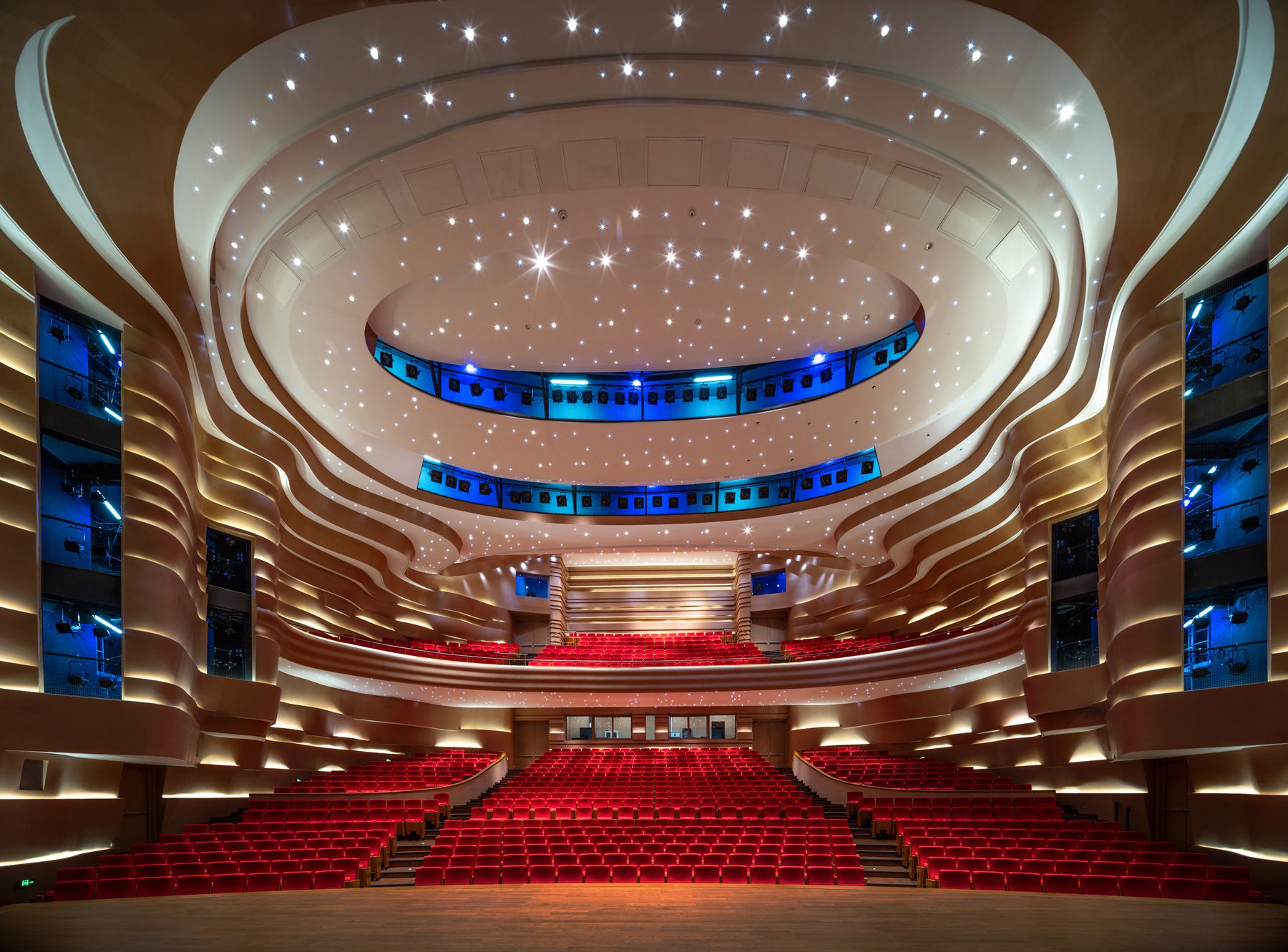
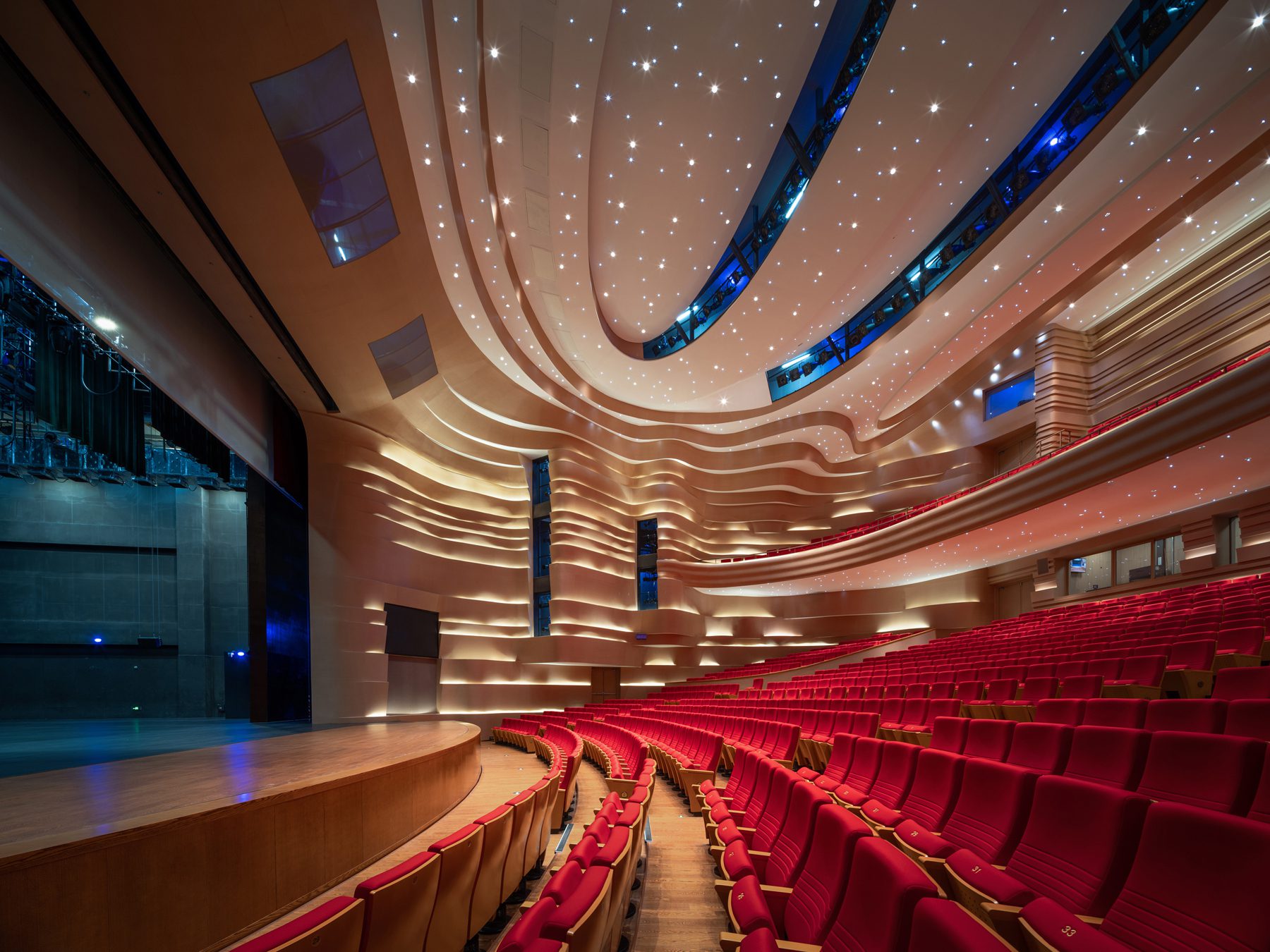
The design of the main theater’s interior features horizontal, ribbon-like lines as the primary design element. These flowing horizontal light strips extend seamlessly to the ceiling, integrating elements such as side lighting, front lighting, and balconies into a unified interior space.
© 3000 images
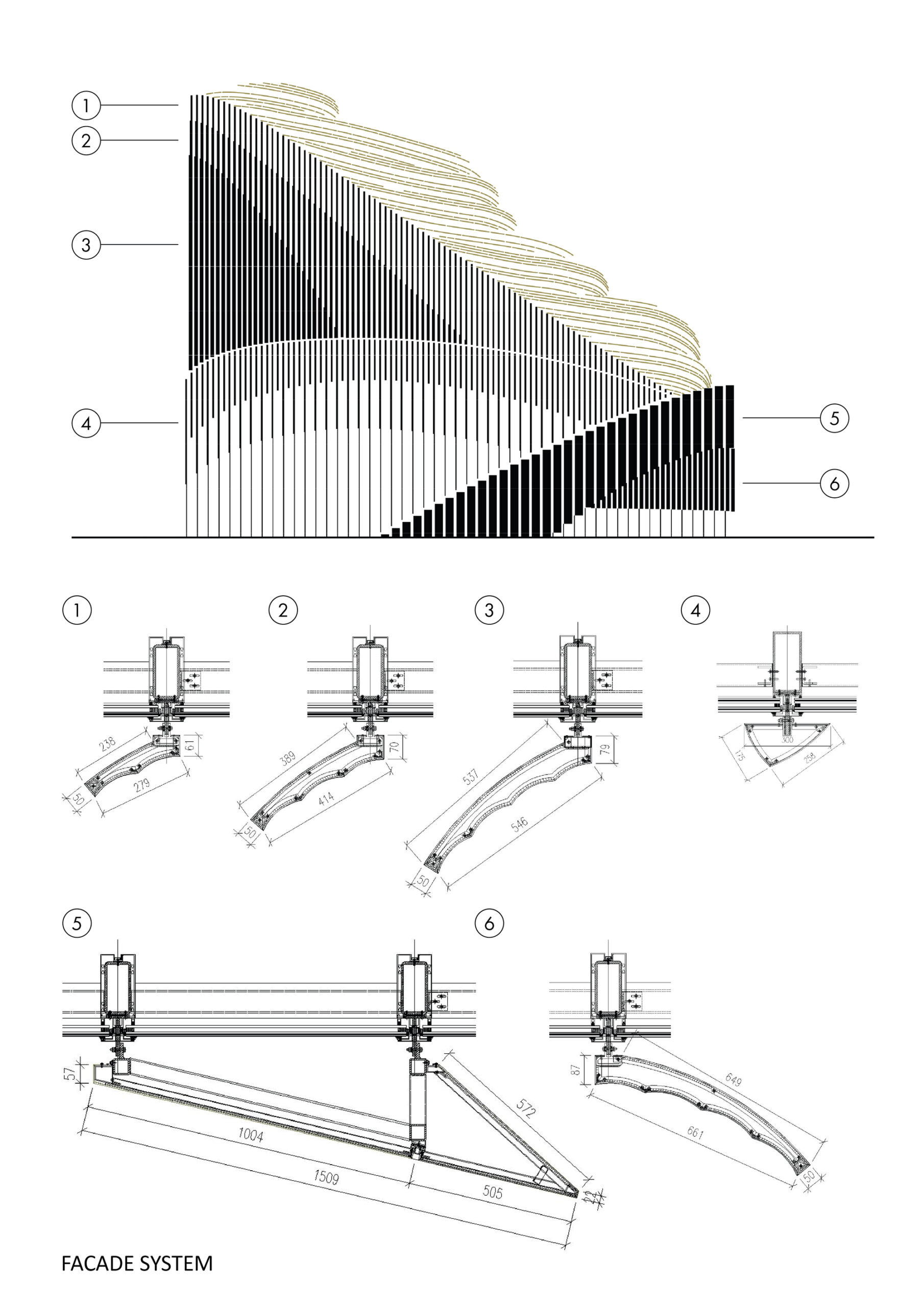
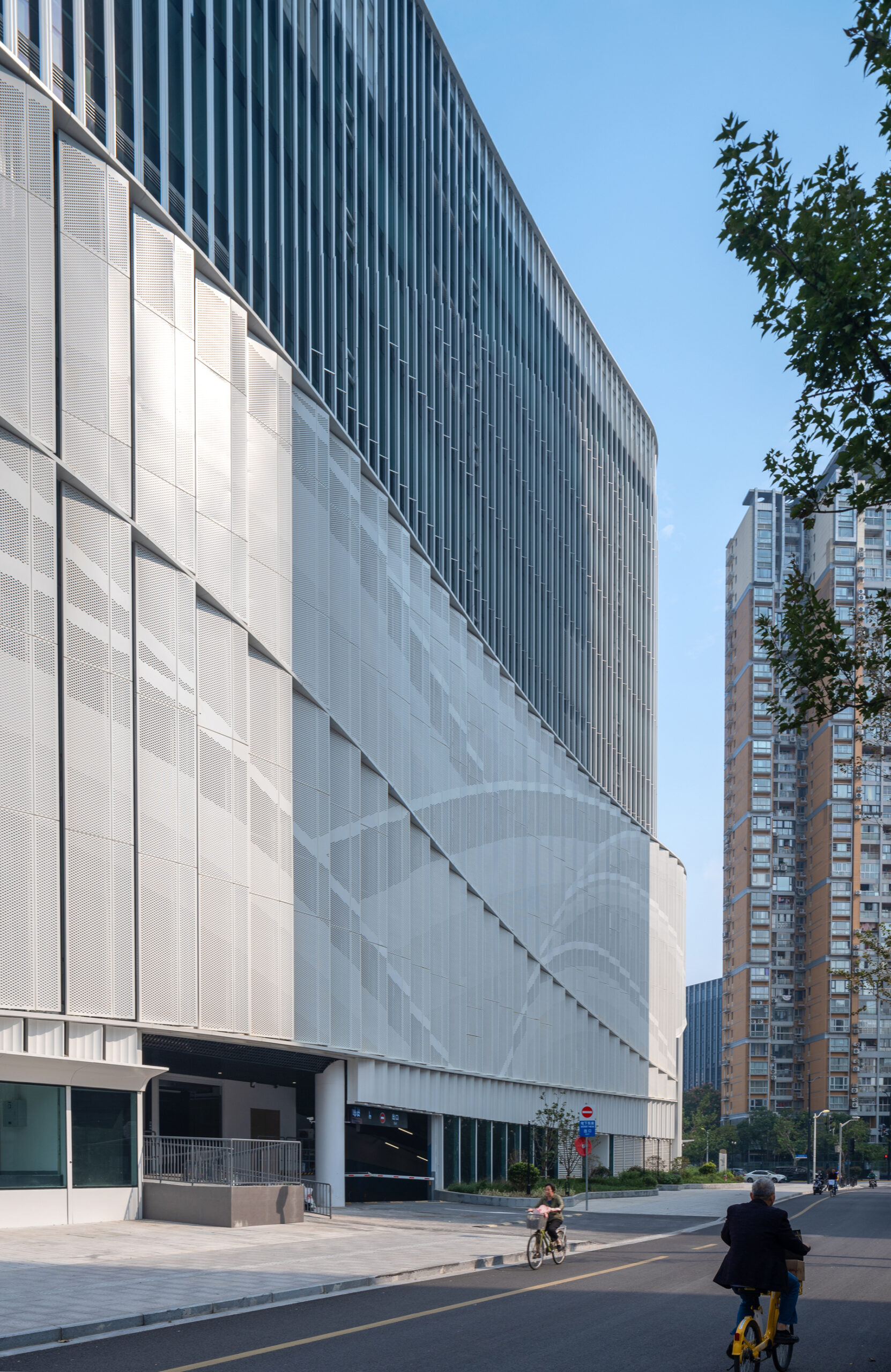
The building is enveloped in a series of segmented and textured white facades. The rhythm and gradient patterns created by the perforated and continuously curved metal cladding produce a subtle play of light and shadow. This effect allows the building to exhibit a shimmering, ever-changing appearance at different heights and angles, mirroring the dynamic, diverse and inclusive, and endlessly evolving charm of Shanghai itself.
© 3000 images
Project Info:
-
Architects: IFRA
- Country: China
- Area: 45436 m²
- Year: 2024
-
Photographs: 3000 images
-
Lead Architects: Frederic Rolland
-
Design Team: Frédéric ROLLAND, Polly ROLLAND, Yin Chang ZHOU, Jiong JIA, Lei Min QI, Fu Qiang XU, Zhi Yao LIU,Hang Lu WANG, Sybren BOOMSMA, Jia Wei CHEN, Ze Yu LI, Min LI, Pei Yi WANG Etc..
-
Collaborators: East China Architectural Design & Research Institute Co., Ltd.
-
Structural Engineer: East China Architectural Design & Research Institute Co., Ltd.
-
Landscape: INTERNATIONAL FREDERIC ROLLAND ARCHITECTURE
-
Construction: Shanghai Construction No. 4 (Group) Co., Ltd.
-
Acoustic Consultant: East China Architectural Design & Research Institute Co., Ltd.
-
Stage Design Consultant: Kunke Theatre Engineering Consulting (Beijing) Co., Ltd.
-
Clients: Shanghai Huangpu District Municipal Administration of Culture and Tourism