


Kitchens are lively spaces where countless daily tasks take place, which is why every detail of your kitchen design matters. But one question often goes overlooked: Are you giving enough attention to your kitchen lighting design?
Lighting doesn’t just illuminate your kitchen—it shapes the mood, improves functionality, enhances aesthetics, and makes everyday tasks easier and more enjoyable.
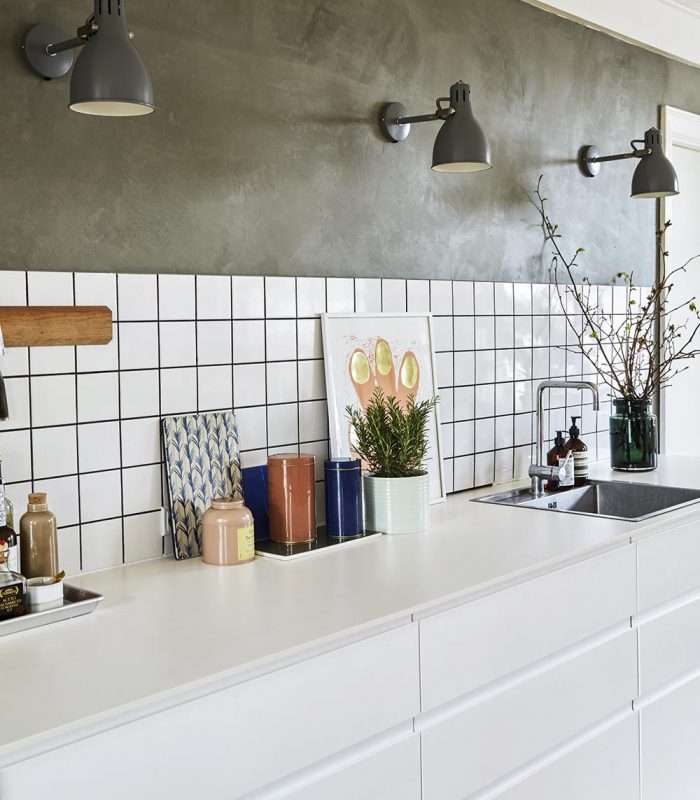
Courtesy of Anitta Behrendt
Because kitchens contain varied surfaces and activity zones—countertops, islands, sinks, cabinets—each requires its own lighting treatment. This is where layered lighting transforms interior spaces.
What Are the Different Layers of Kitchen Lighting?
Understanding lighting layers is the foundation of good kitchen lighting design.
1. Ambient Lighting
Provides general illumination for the whole room.
2. Task Lighting
Brightens work surfaces such as countertops, kitchen islands, or open shelves.
3. Accent Lighting
Highlights specific design elements, materials, or architectural details.
4. Decorative Lighting
Adds personality, visual interest, and sometimes acts as a centerpiece.
Thanks to energy-efficient options like LED lighting, these layers can be combined creatively without increasing energy consumption.
There are plenty of design choices for your kitchen lighting, including energy-efficient ones–you can incorporate different LED lights in your kitchen.
What Is Trending in Kitchen Lighting?
In recent years, designers have focused on lighting each task zone individually. As of 2024, the most popular kitchen lighting fixtures include:
-
Pendant lights
-
Under-cabinet lights
-
Above-cabinet strip lighting
-
Track lighting
-
Chandeliers
-
Wall sconces
These fixtures help enhance both function and style, giving you greater control over each space.
How to Choose Your Kitchen Lighting
Now that you understand lighting layers, here’s how to choose the right fixtures for each area of your kitchen.
1. Install a Main Ambient Lighting Fixture
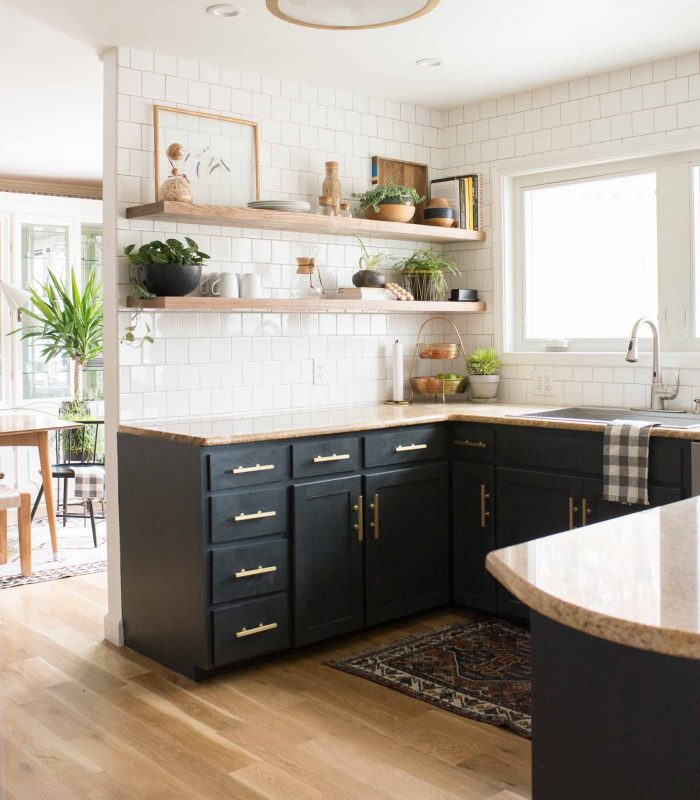
Courtesy of Design Sponge
Every kitchen needs an overhead ambient light. It softens shadows, provides general illumination, and complements daylight when natural light is insufficient. Ambient lighting can be provided through:
-
Pendant lights
-
Flush or semi-flush fixtures
-
Linear lights
-
Large diffused LED panels
You can position these centrally in the kitchen or above the island.
2. Illuminate Work Surfaces Effectively
These fixtures will make your kitchen more functional and task-friendly:
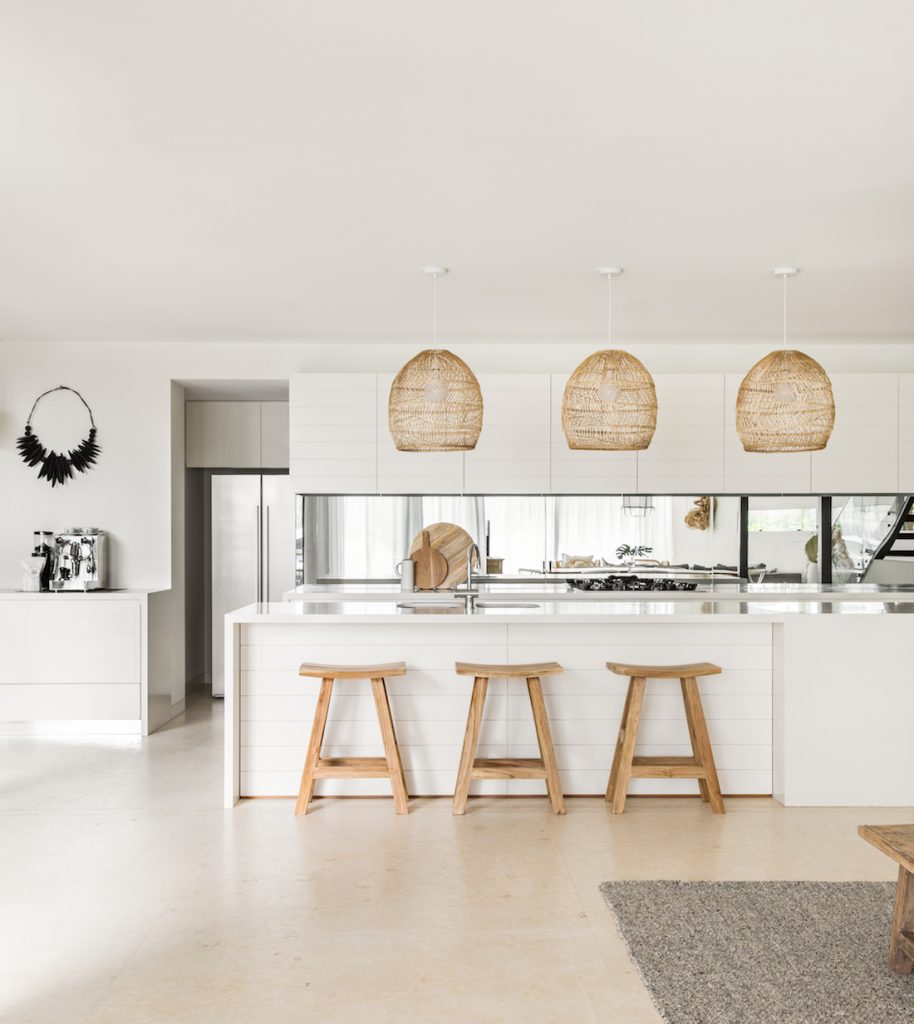
Over the Island
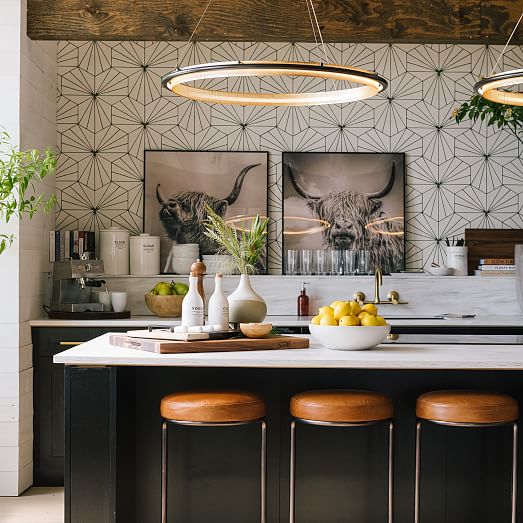
The island is one of the most used surfaces in a kitchen—meal prep, serving, and even socializing happen here. Pendants or directional spotlights work best.
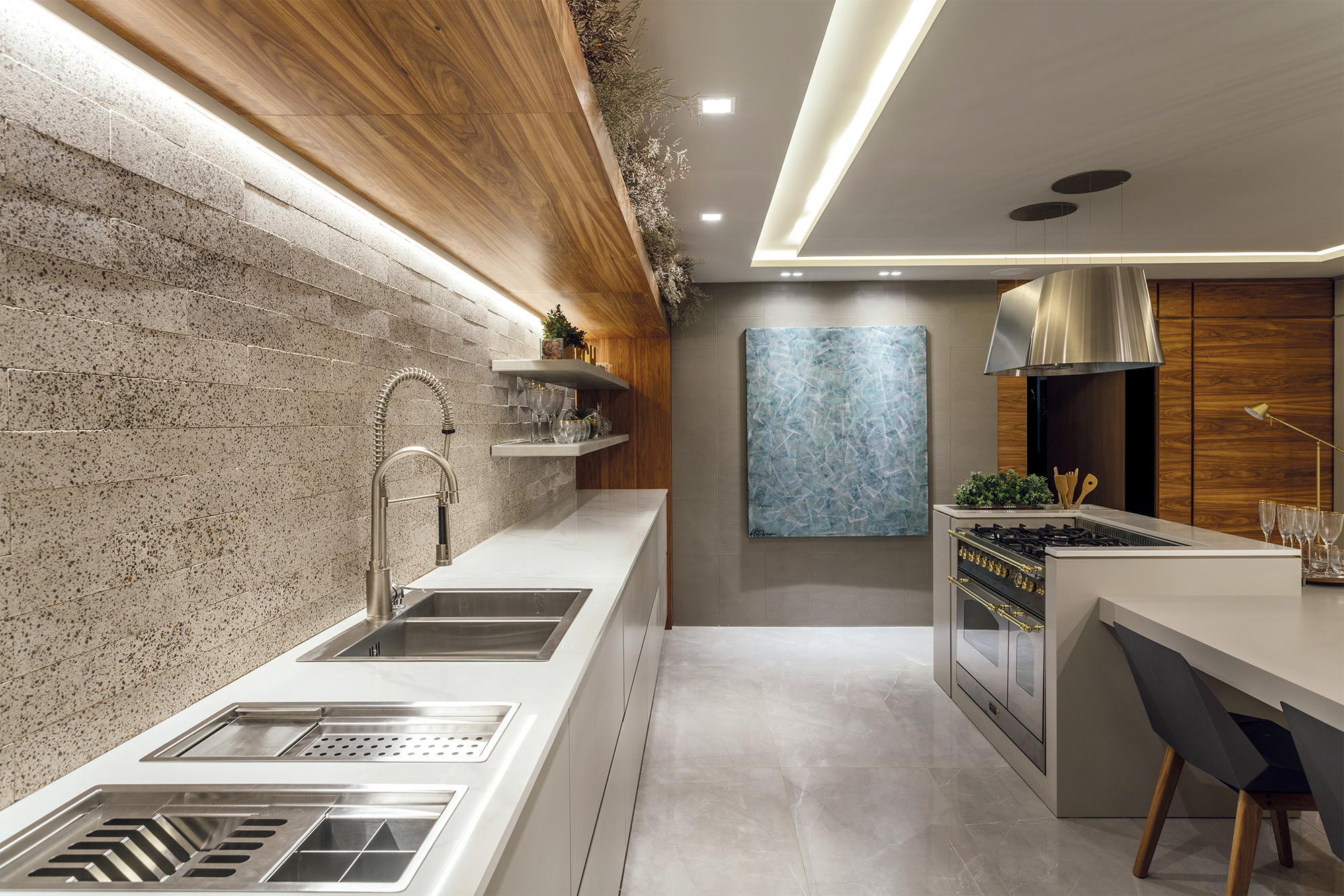
Above the Sink
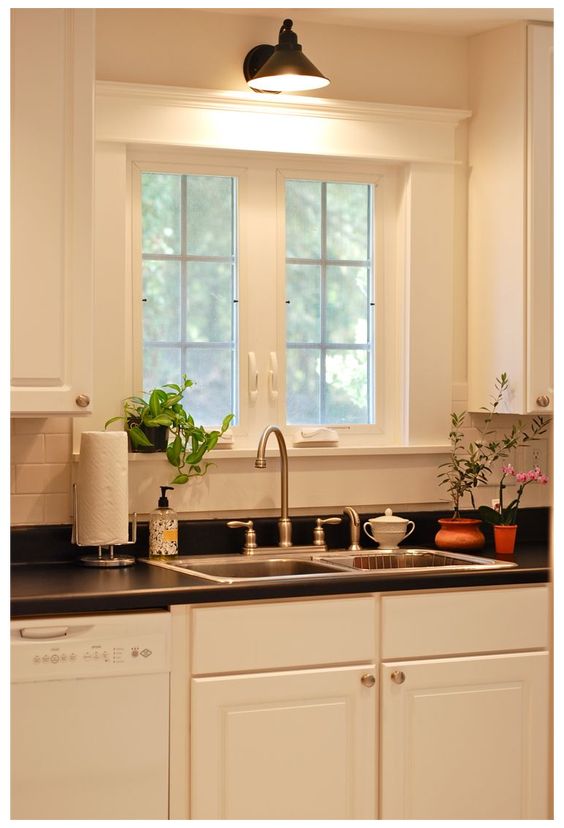
Tasks like washing dishes or produce require extra visibility, especially if the sink is under a cabinet. Spotlights are ideal here.
Above the Dining Table
A chandelier or elegant pendant adds warmth and highlights this gathering space.
Over Countertops
Spotlights or LED strips brighten countertops typically shadowed by upper cabinets.
3. Accentuate the Cabinets
Cabinets occupy much of the visual space in a kitchen, so lighting them well enhances the room significantly.
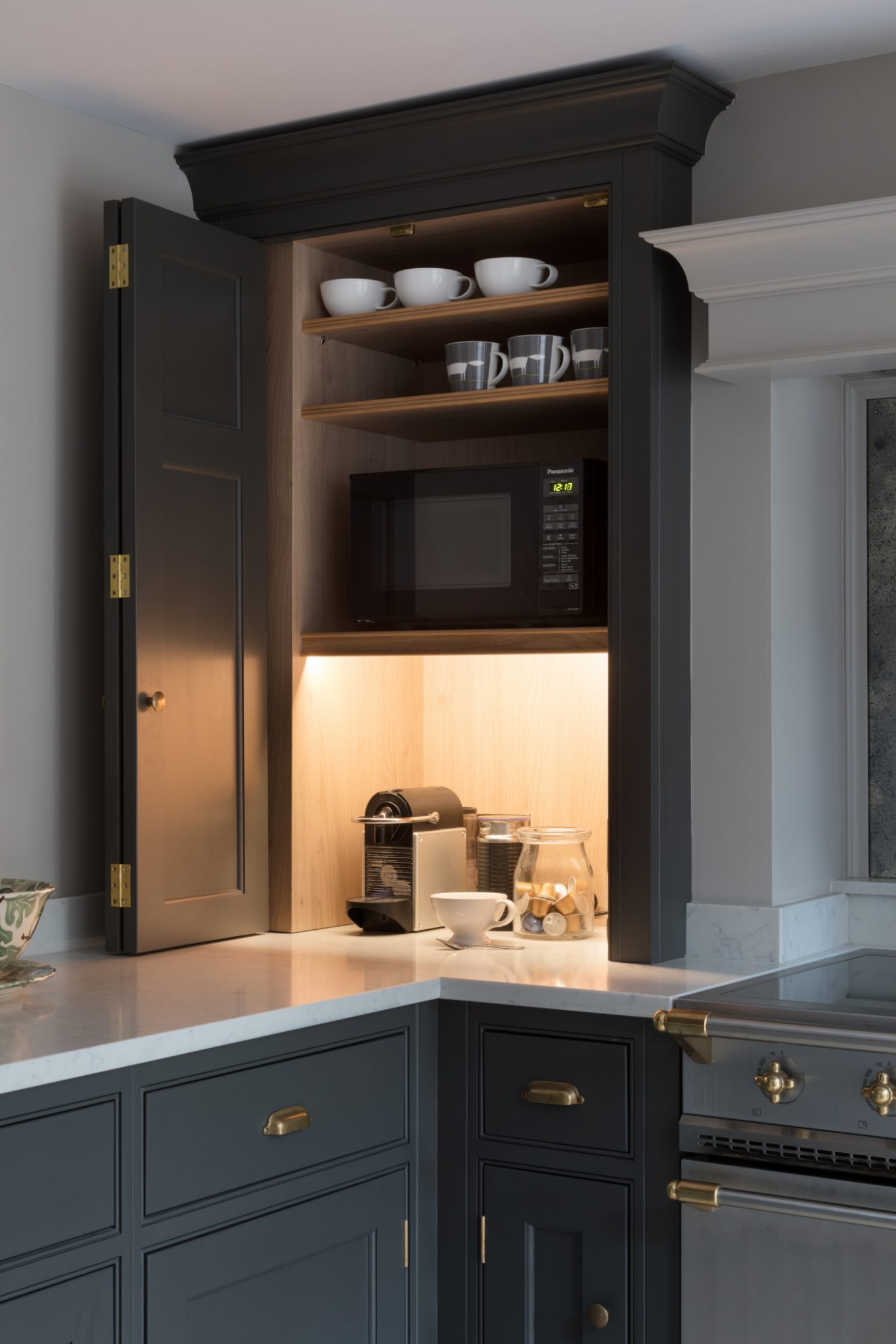
Inside Cabinets
If you have open shelving or glass-front cabinets, add LED strips to highlight your pottery, dishware, or collectibles.
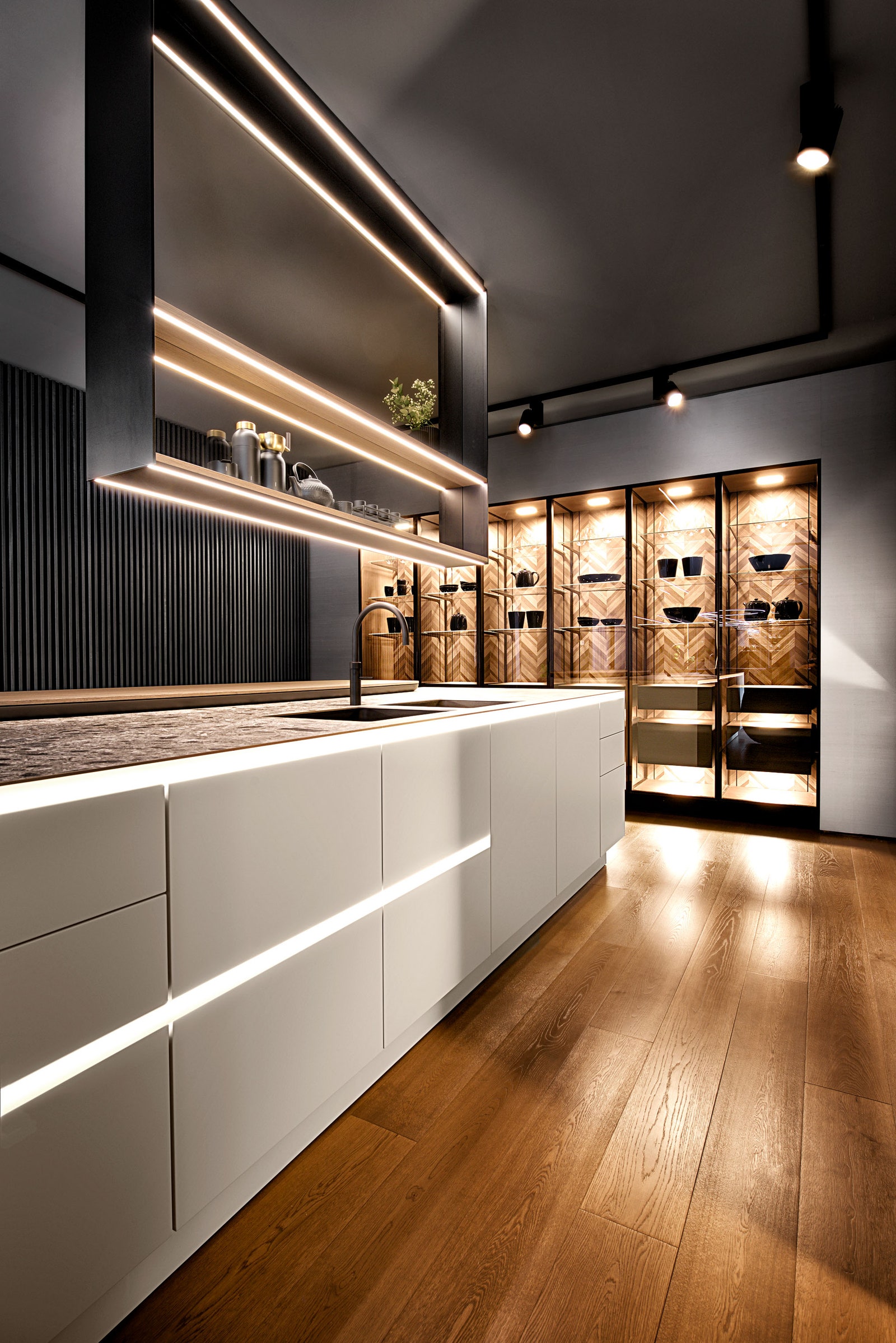
Cabinet Outlines
A strip light under the cabinet surface illuminates drawers and adds soft ambient glow.
Another strip at the base of lower cabinets acts as a cozy night light.
4. Choose the Right Material Finishes
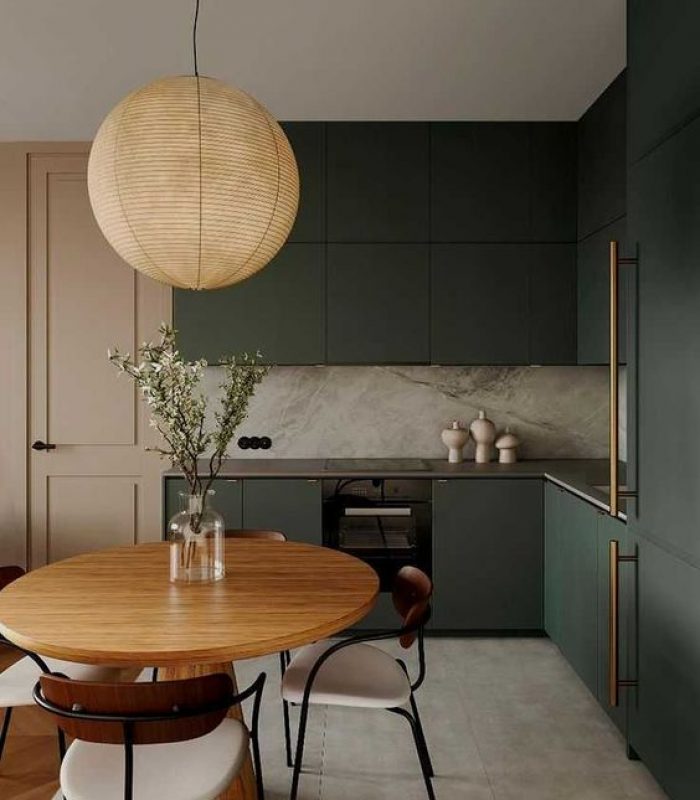
Courtesy of Etsy
Lighting isn’t just functional—materials contribute heavily to the kitchen’s visual harmony. Choose finishes that complement your color palette and overall style. Using one finish for all fixtures ensures unity.
-
Glass fixtures are great for ambient lighting.
-
Metal fixtures work well for directional task lighting.
-
Fabric fixtures soften dining or seating areas and can withstand moisture in well-ventilated spaces.
Consider the dimensions of your kitchen
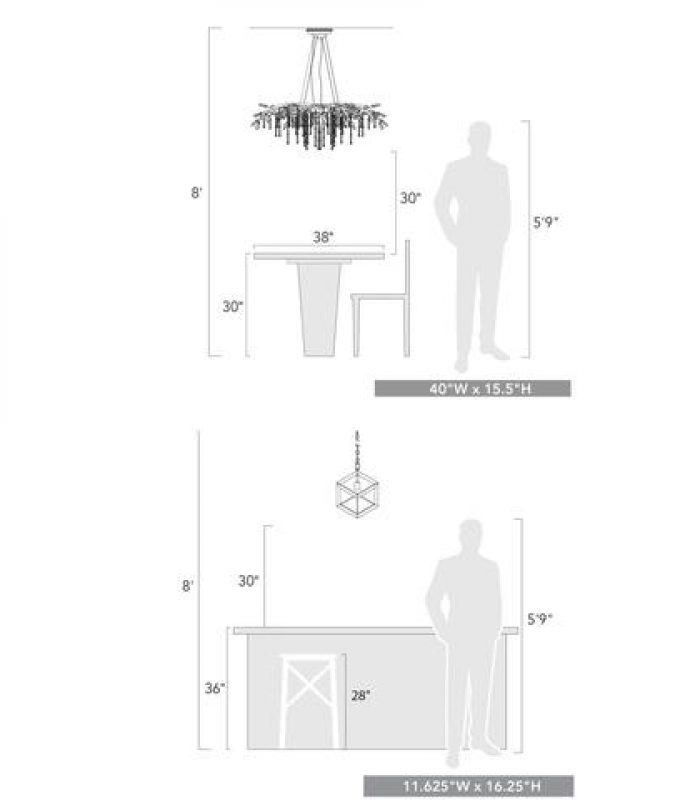
You should measure your kitchen accurately before deciding on the kitchen lighting fixtures. Be extra careful with pendants or chandeliers as hang low from the ceiling and hence grab more attention.
- Leave about 30 inches between the surface and a pendant or a chandelier.
- Allow about 24 inches of horizontal space between pendants. One more tip: an odd number of pendants will create more visual balance.
- Use pendants or chandeliers that are at least 12 inches narrower than a table or a countertop.
4. Choose the Right Material Finishes
Lighting isn’t just functional—materials contribute heavily to the kitchen’s visual harmony. Choose finishes that complement your color palette and overall style. Using one finish for all fixtures ensures unity.
-
Glass fixtures are great for ambient lighting.
-
Metal fixtures work well for directional task lighting.
-
Fabric fixtures soften dining or seating areas and can withstand moisture in well-ventilated spaces.
5. Consider the Dimensions of Your Kitchen
Measure your kitchen carefully before selecting fixtures. Pendants and chandeliers, in particular, need correct proportions.
Here are quick guidelines:
-
Leave about 30 inches between a pendant/chandelier and the surface beneath it.
-
Allow 24 inches of horizontal spacing between pendants.
-
Odd numbers of pendants create better visual balance.
-
Choose fixtures at least 12 inches narrower than the table or countertop below.
6. Choose the Right Color Temperature
Lighting color is crucial to comfort and function:
-
3000K–4000K (cool white): Best for tasks needing focus, ideal for ambient or task lighting.
-
2000K–3000K (warm white): Creates a cozy, inviting atmosphere; perfect above dining tables.
-
5000K (daylight): Suitable for kitchens with little natural light and cool-toned interiors.
7. Choose Energy-Efficient Fixtures
Energy-efficient lighting saves money, reduces your carbon footprint, and lasts significantly longer.
LED fixtures:
-
Use 75% less energy than traditional lighting
-
Last dramatically longer
-
Are available in thousands of styles
You can also choose ENERGY STAR–certified fixtures, which meet strict EPA energy-efficiency standards.
What type of lighting is best for kitchen work areas?
Cool white task lighting (3000–4000K) placed directly above work surfaces offers clarity and minimizes shadows.
How do I make my small kitchen look brighter?
Use bright ambient lighting, reflective surfaces, under-cabinet LED strips, and warm accent lights to open up the space.
Should kitchen lights be warm or cool?
Task areas require cooler light for focus, while dining and seating zones benefit from warm, cozy temperatures.
How many pendant lights should go over a kitchen island?
Three is the most visually balanced number for most islands, but it depends on the island size and pendant diameter.
Are LED lights good for kitchens?
Yes—LEDs are energy-efficient, long-lasting, and available in color temperatures that suit both task and ambient lighting.

Emily Reyes is a Brooklyn-based architecture writer and Article Curator at Arch2O, known for her sharp eye for experimental design and critical theory. A graduate of the Southern California Institute of Architecture (SCI-Arc), Emily’s early work explored speculative urbanism and the boundaries between digital form and physical space. After a few years in Los Angeles working with boutique studios on concept-driven installations, she pivoted toward editorial work, drawn by the need to contextualize and critique the fast-evolving architectural discourse. At Arch2O, she curates articles that dissect emerging technologies, post-anthropocentric design, and contemporary spatial politics. Emily also lectures occasionally and contributes essays to independent design journals across North America.