Of all the housing units built by Infonavit in Mexico City during the second half of the 20th century, the largest is Culhuacán, located in the southeast of the city, within the Coyoacán borough and close to the boundaries with Iztapalapa. This unit has approximately 15,000 homes. Its full name—Confederación de Trabajadores de México (CTM) Culhuacán—incorporates, on one hand, a reference to Culhuacán, one of the indigenous towns in the area, and on the other, a direct allusion to the welfare state project, which at that time was expressed through support for the working class. The construction of CTM Culhuacán began in 1974, with the goal of providing housing for more than one hundred thousand people, mostly from the expanding middle and working classes.
© Zaickz Moz, Andres Cedillo, Gerardo Reyes Bustamante
Currently, the unit faces a common problem among many housing units in Mexico City: lack of maintenance, especially in common areas. This situation stems from the legal and administrative ambiguity surrounding the jurisdiction of shared spaces and the entities responsible for their upkeep. Neighborhood organization, necessary for collective care, is often difficult to articulate, which hinders decision-making in favor of the common good.
© Zaickz Moz, Andres Cedillo, Gerardo Reyes Bustamante
In this web of administrations and shared responsibilities between the Social Prosecutor’s Office (PROSOC) and the corresponding borough, the uncertainty over “who takes care of what” directly affects both the functioning and appearance of community spaces. This uncertainty has led to multiple phenomena: from the irregular appropriation of common areas to their abandonment and deterioration, visible manifestations of a fracture in the community fabric.
© Zaickz Moz, Andres Cedillo, Gerardo Reyes Bustamante
One of these critical points was located near the tenth and last section of CTM Culhuacán: a square in a state of clear deterioration. On June 22, 2023, the National Workers’ Housing Fund Institute (Infonavit) published the bases for a bidding process to contract, under a “turnkey” scheme, the design, management, and execution of four intervention projects in housing units in Mexico City: Iztacalco, Culhuacán, Santa Fe, and Ignacio Chávez.
© Zaickz Moz, Andres Cedillo, Gerardo Reyes Bustamante
It was in this context that Andrea López and Agustín Pereyra, from AMASA Estudio, developed a conceptual proposal to rehabilitate this space, resulting in them winning the bidding process.
© Zaickz Moz, Andres Cedillo, Gerardo Reyes Bustamante
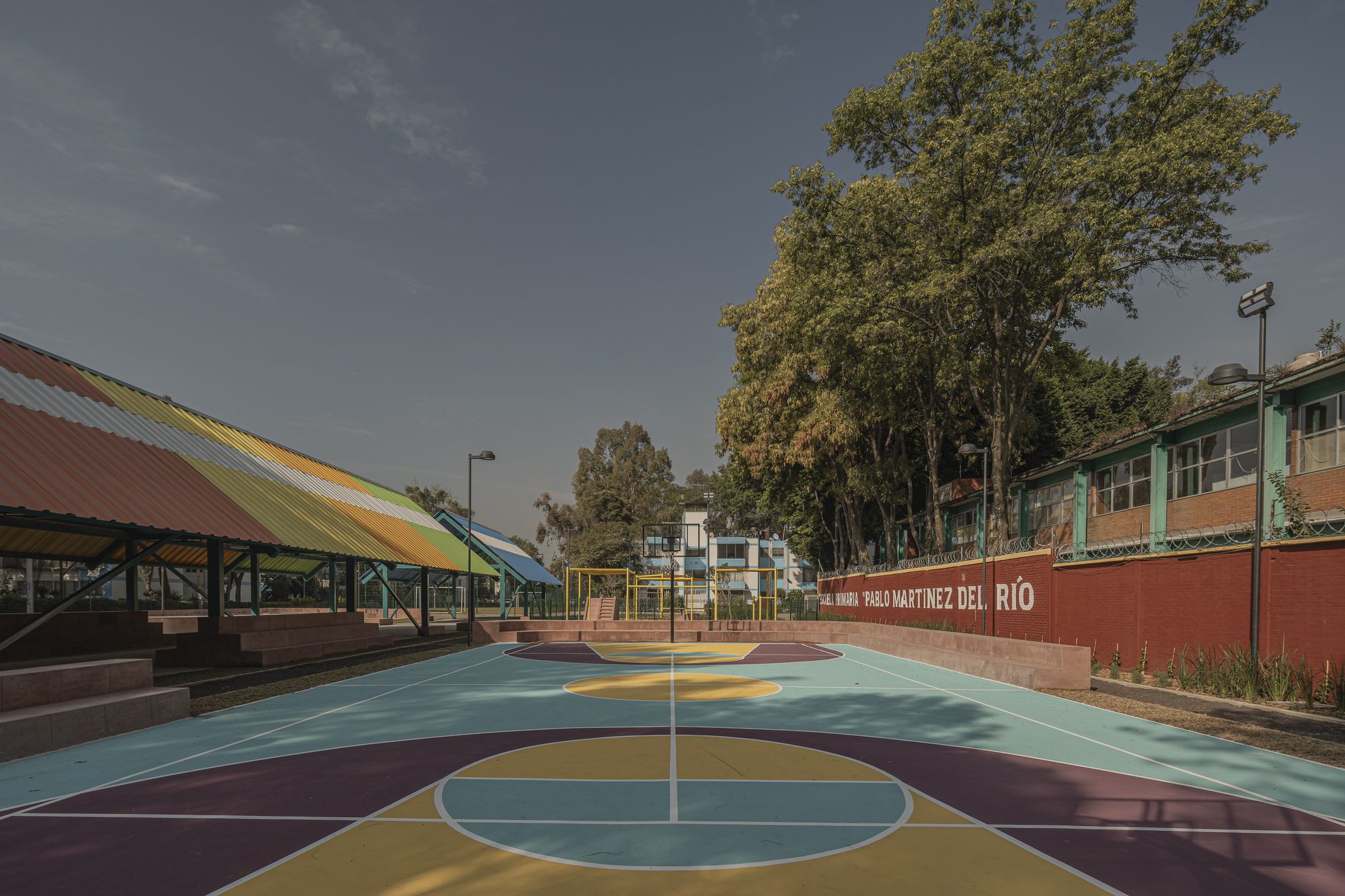
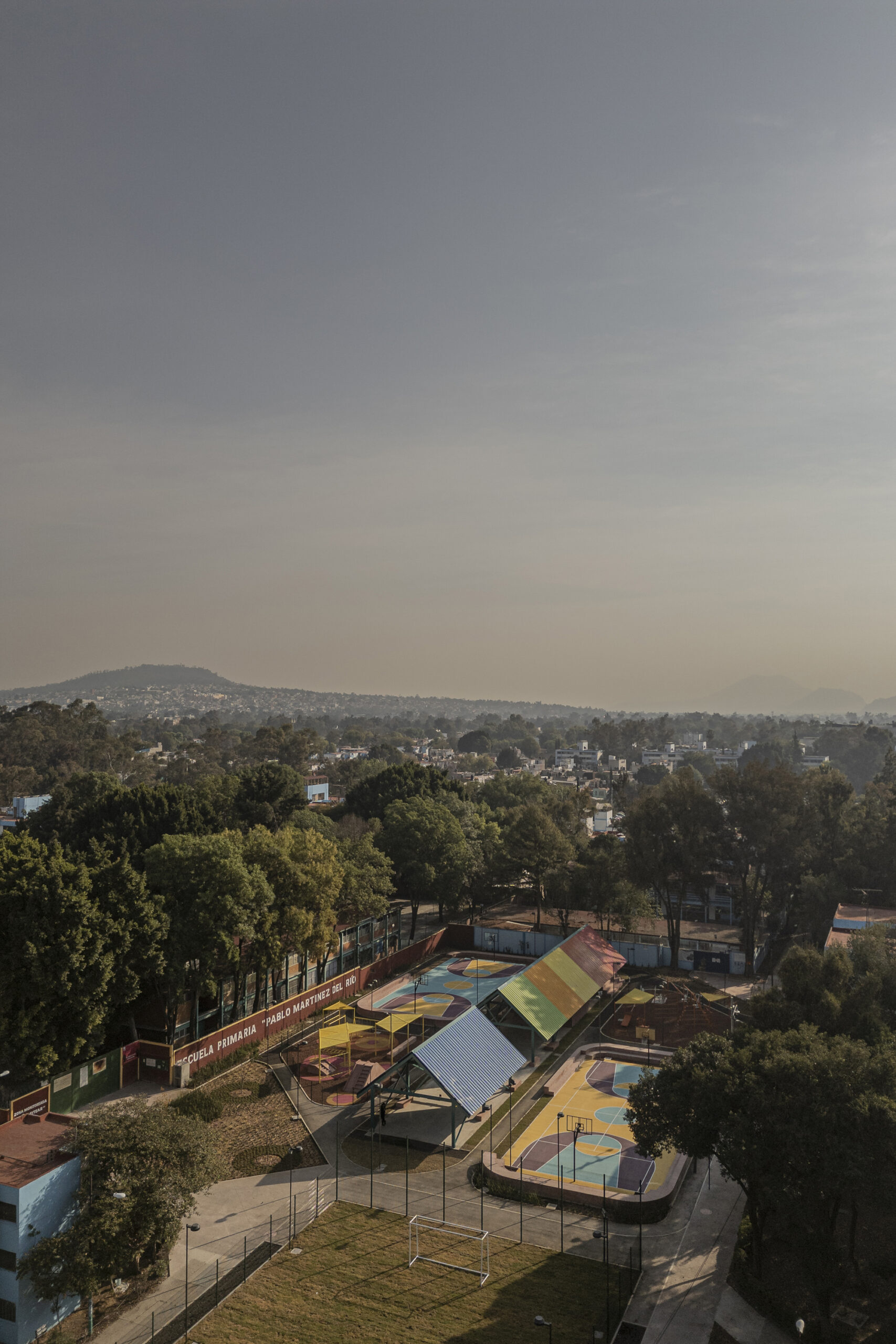
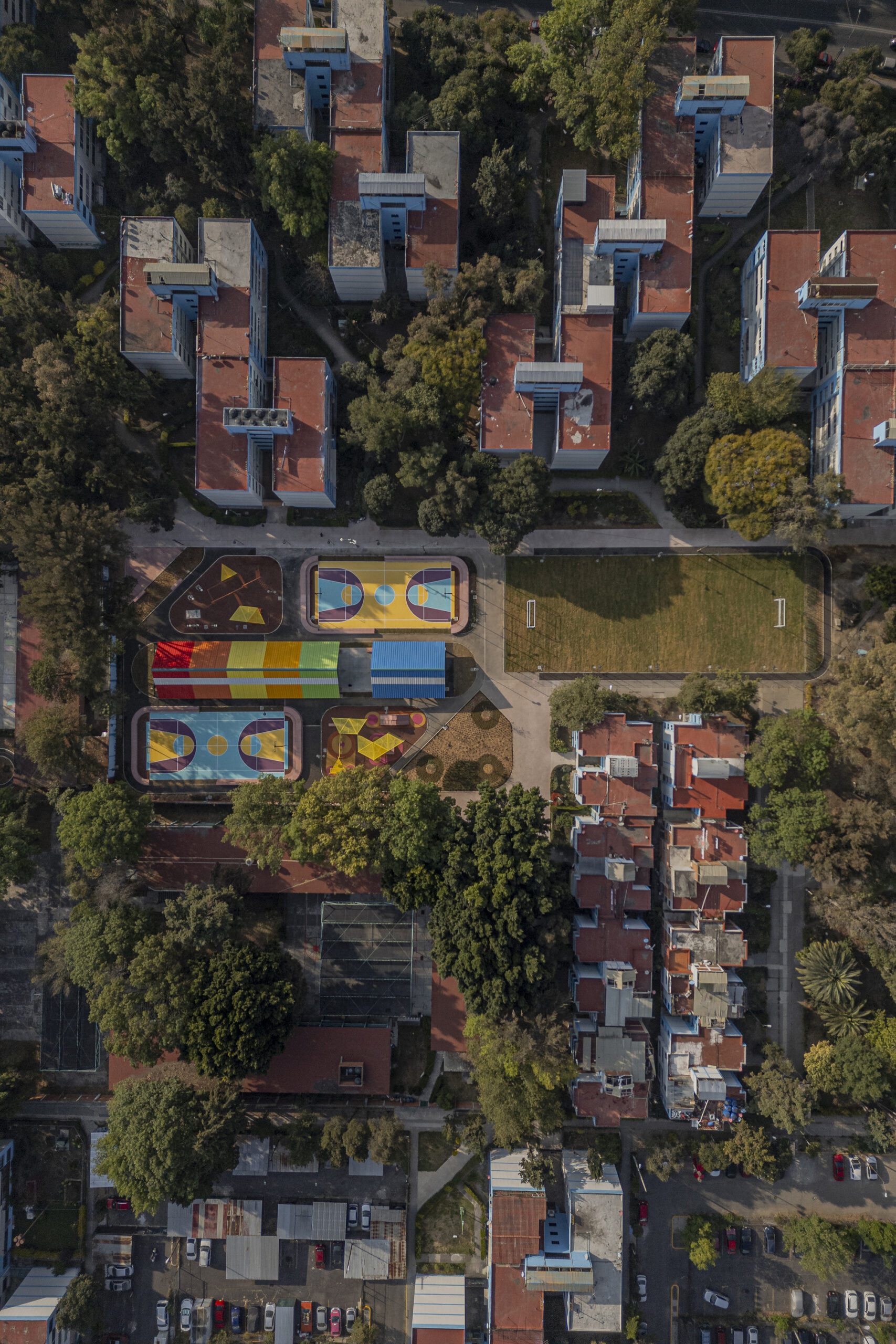
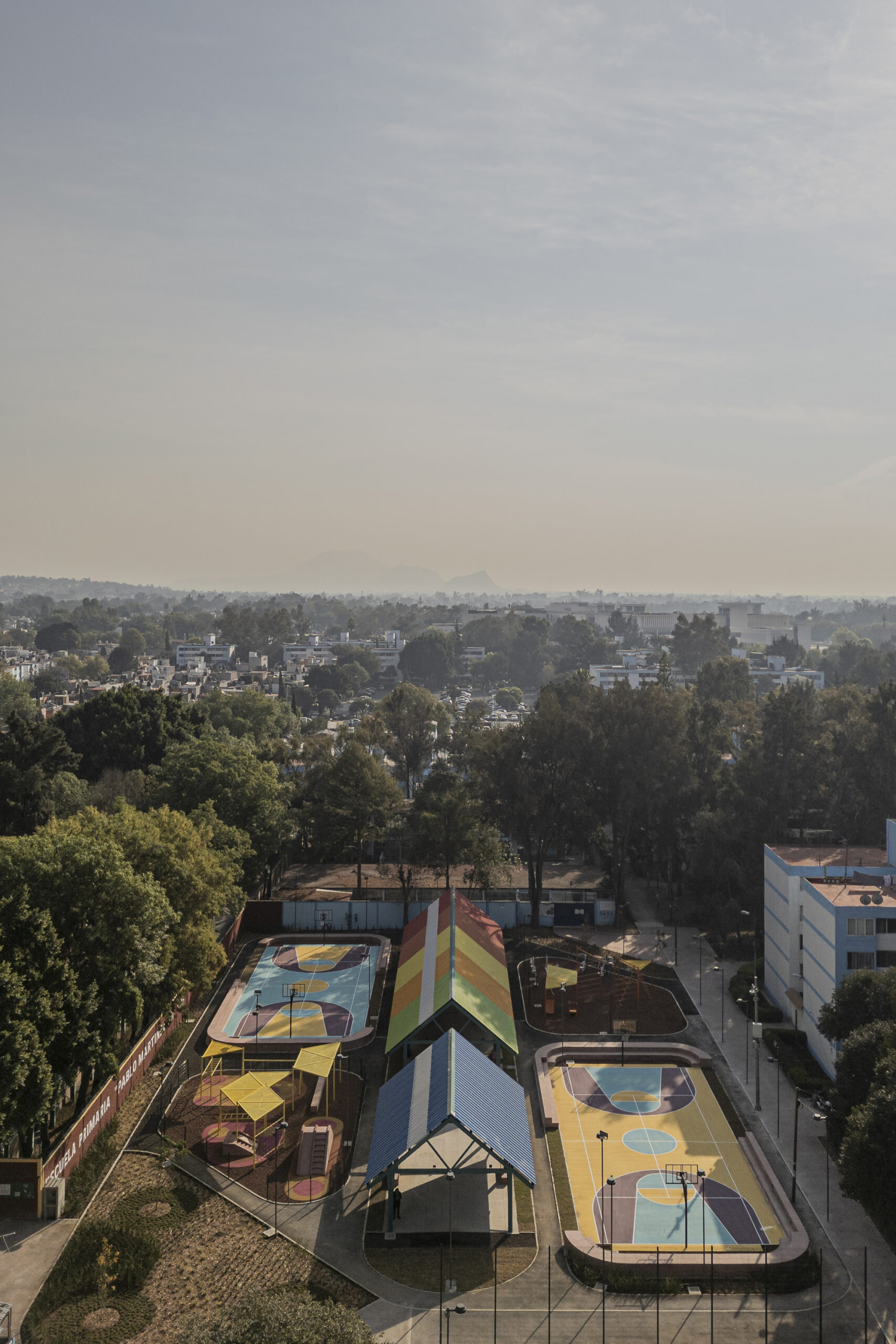
Before the intervention, the square housed worn-out courts, an exercise area, deteriorated children’s play equipment, and leftover spaces with no defined use. The site is confined between the perimeter walls of the “Pablo Martínez del Río” primary school and the “Héroes de 1810” children’s garden. This condition generated residual spaces and nooks conducive to informal appropriation, garbage accumulation, and the development of antisocial behaviors, such as alcohol or substance consumption.
© Zaickz Moz, Andres Cedillo, Gerardo Reyes Bustamante
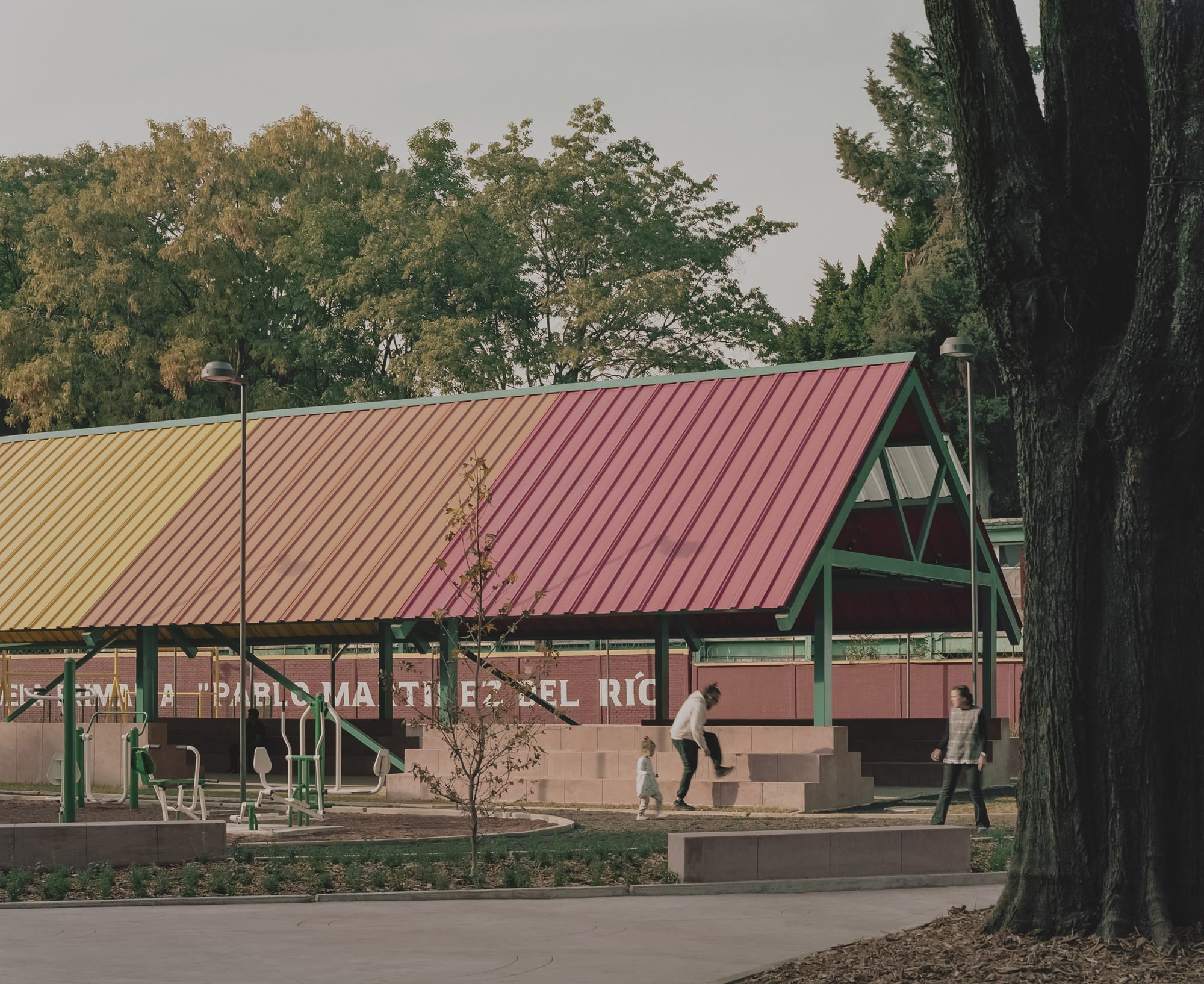
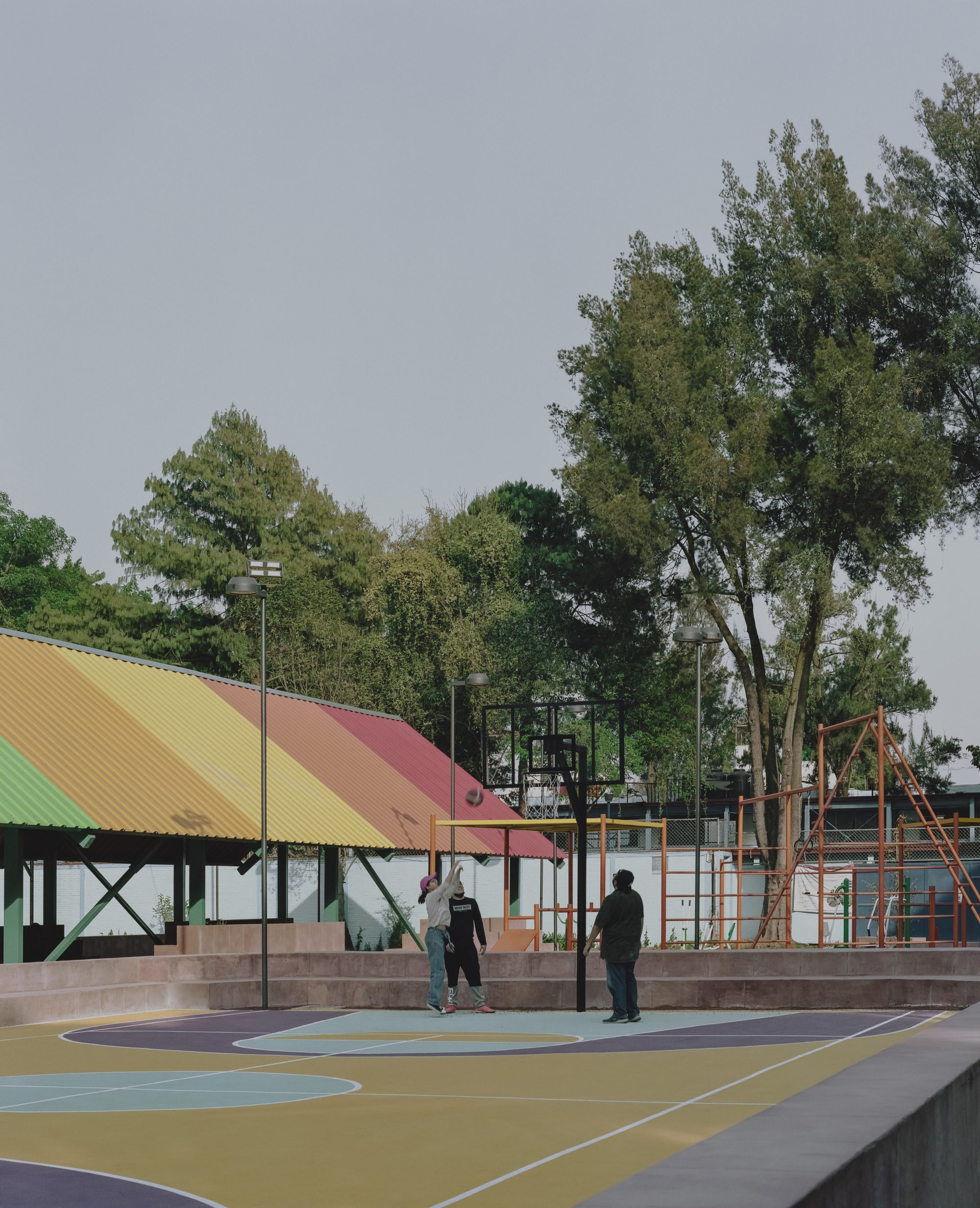
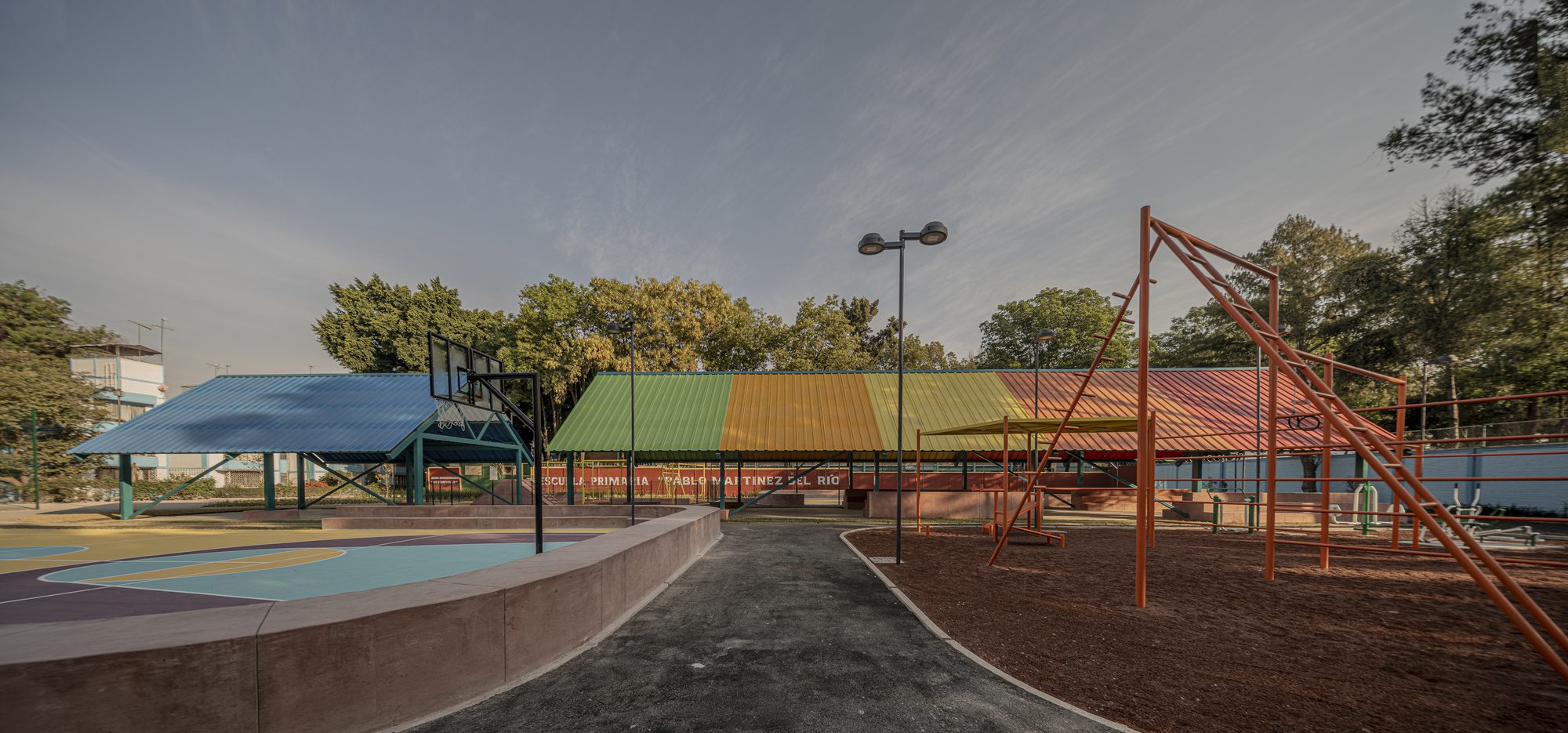
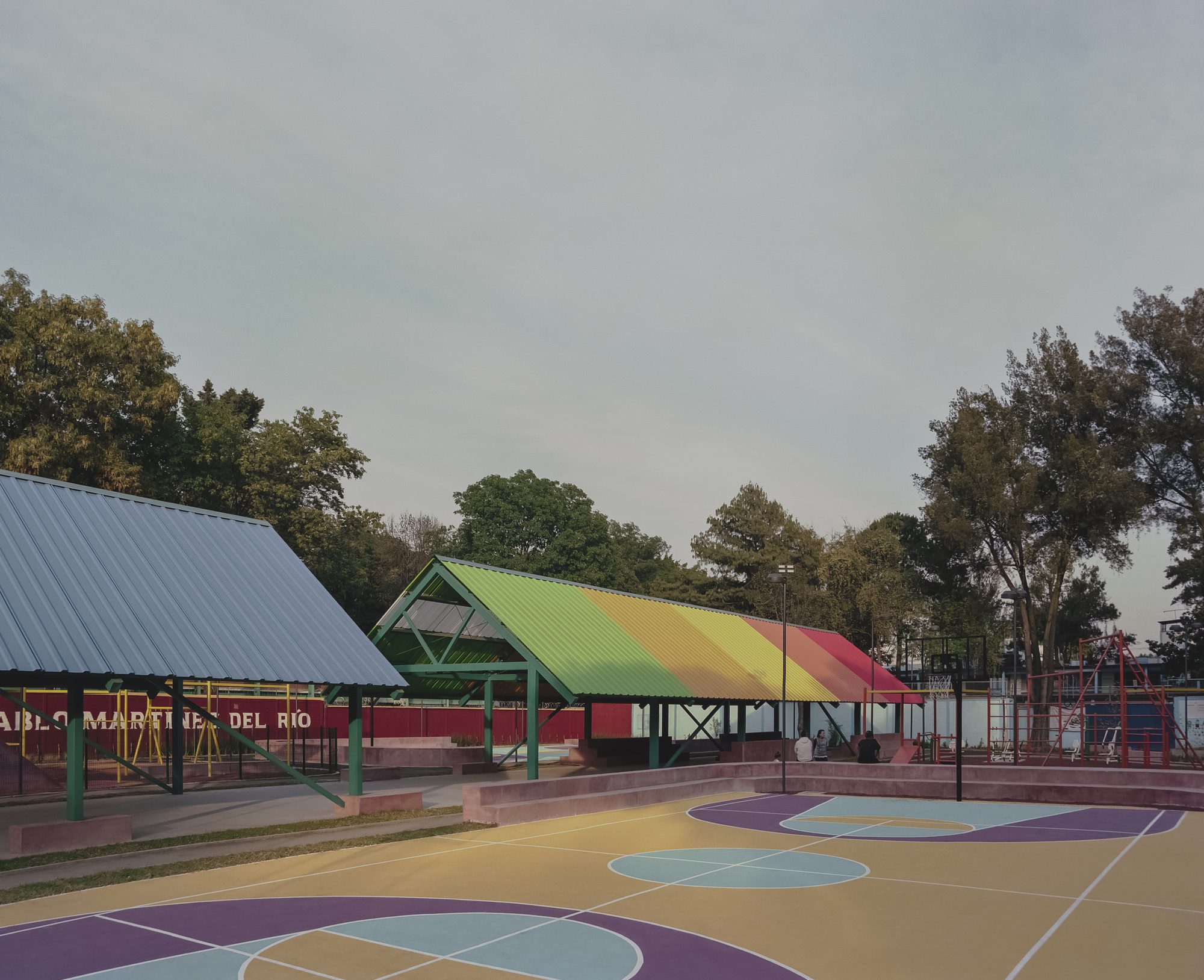
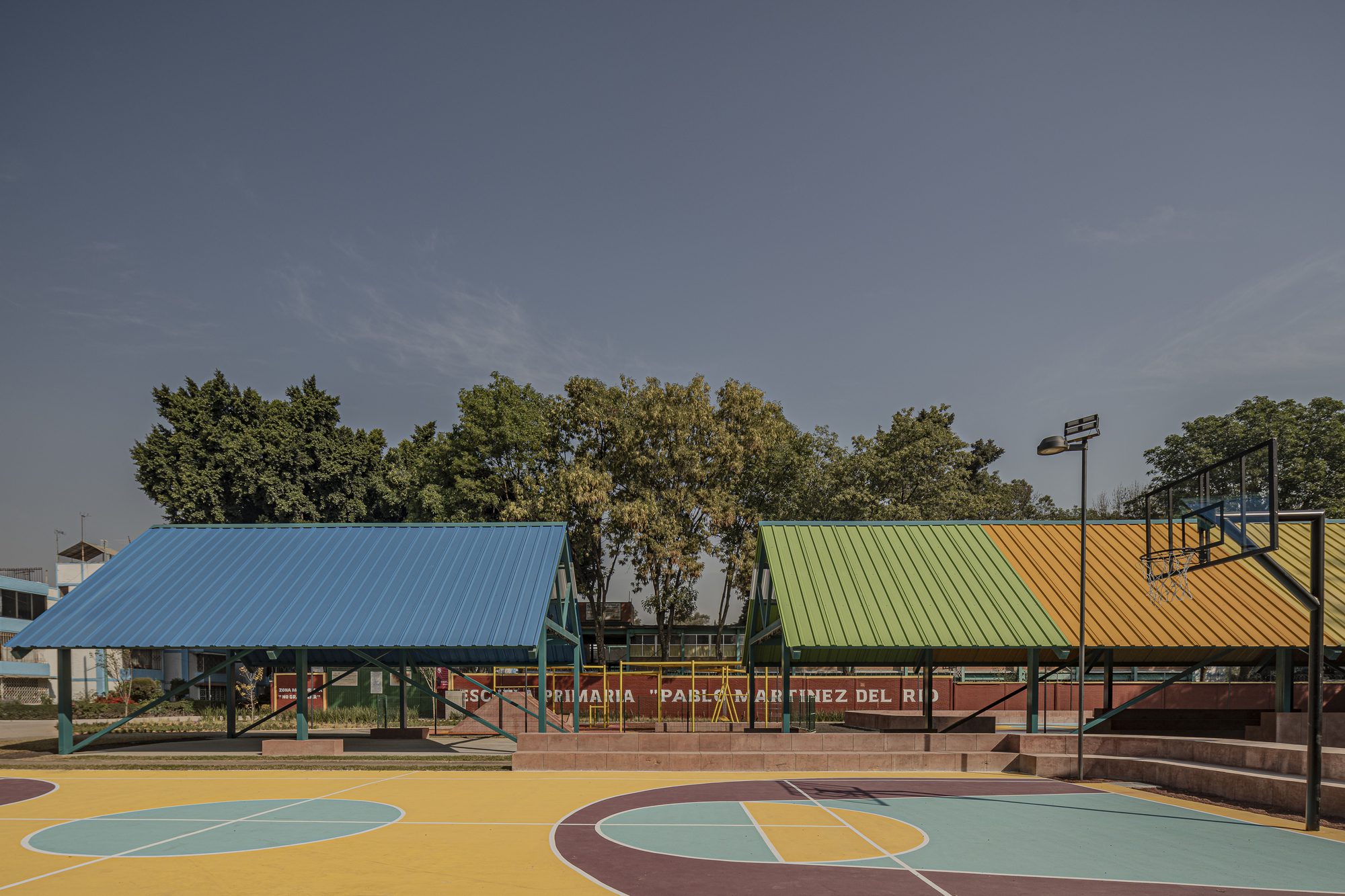
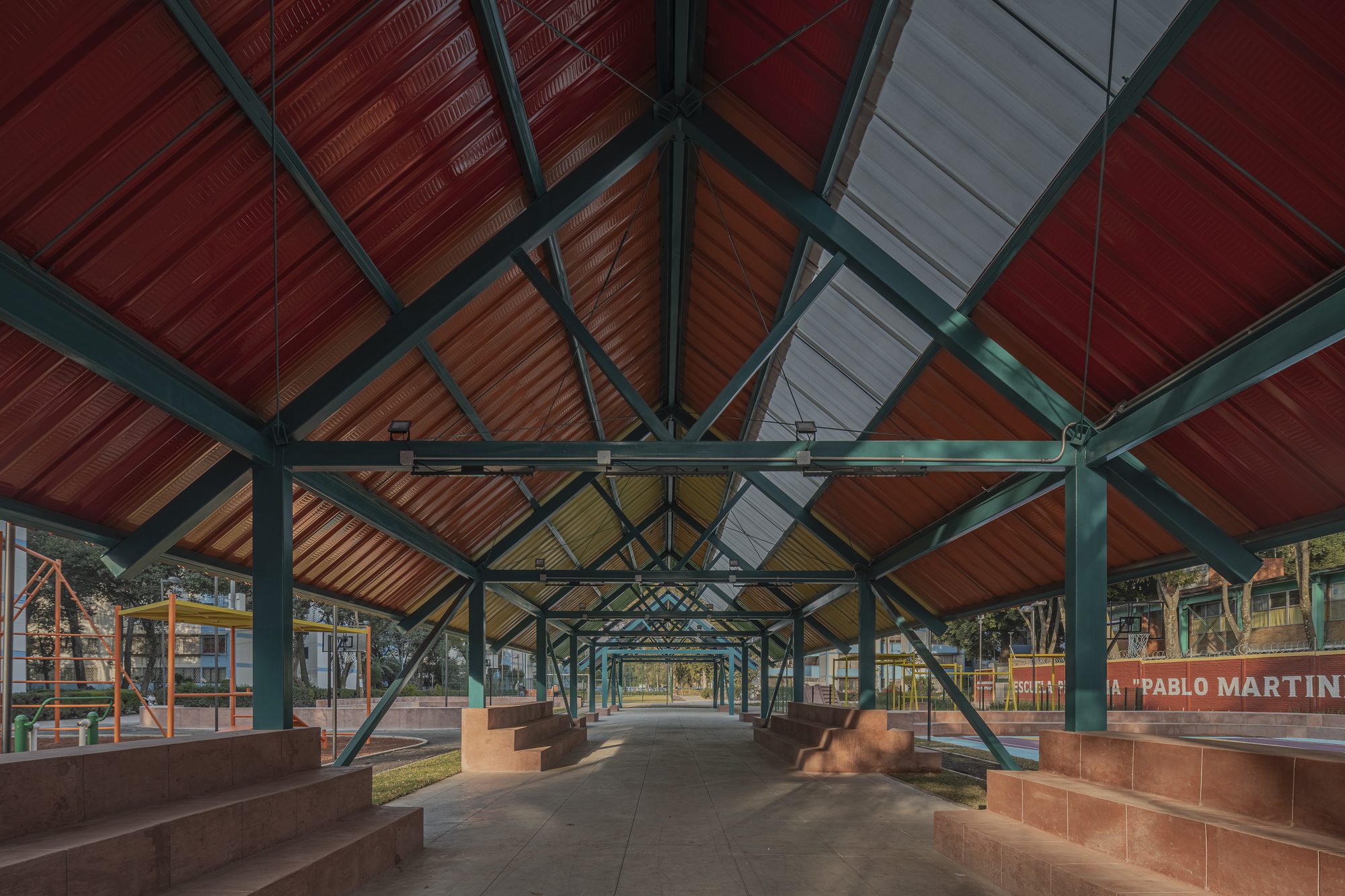
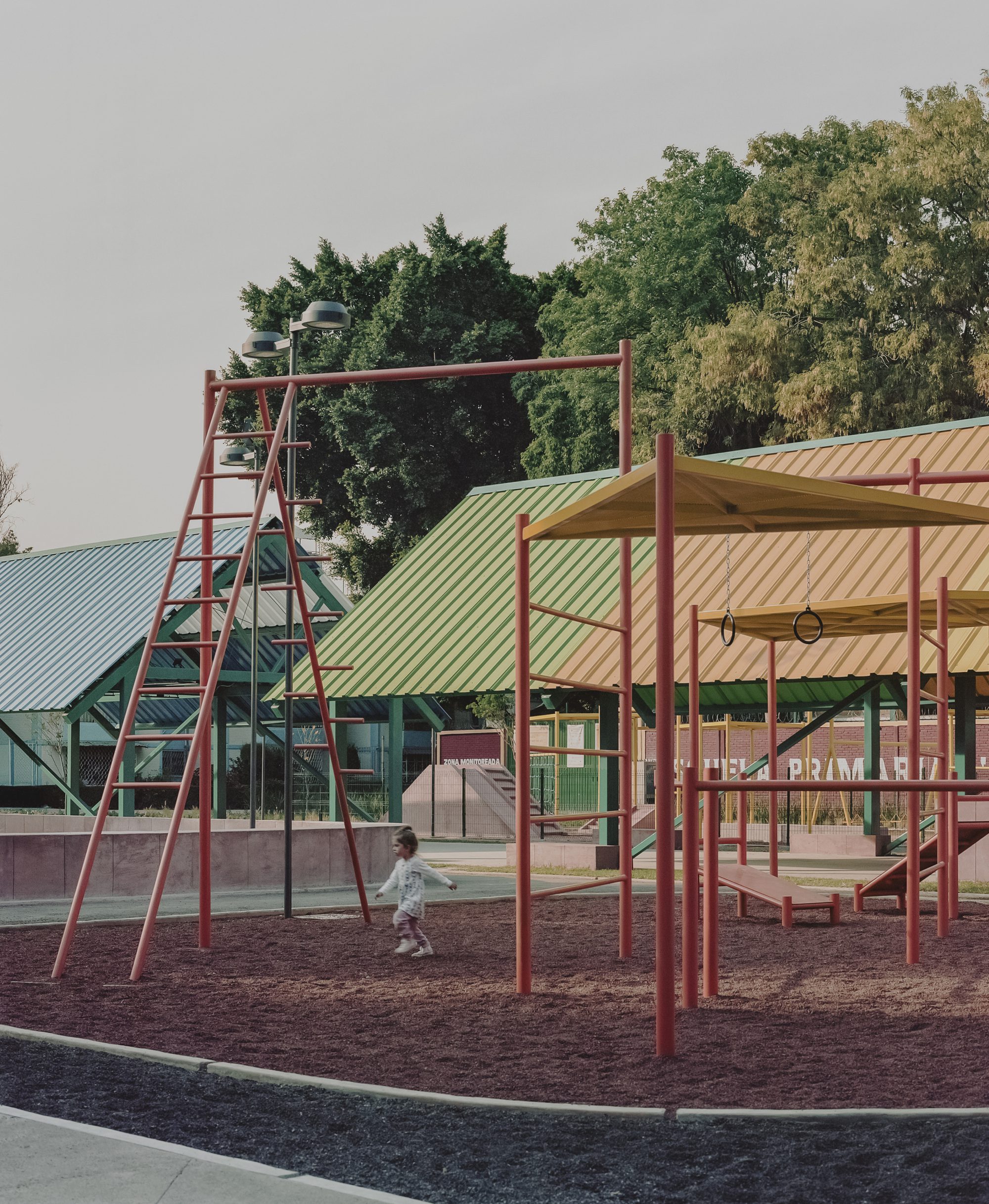
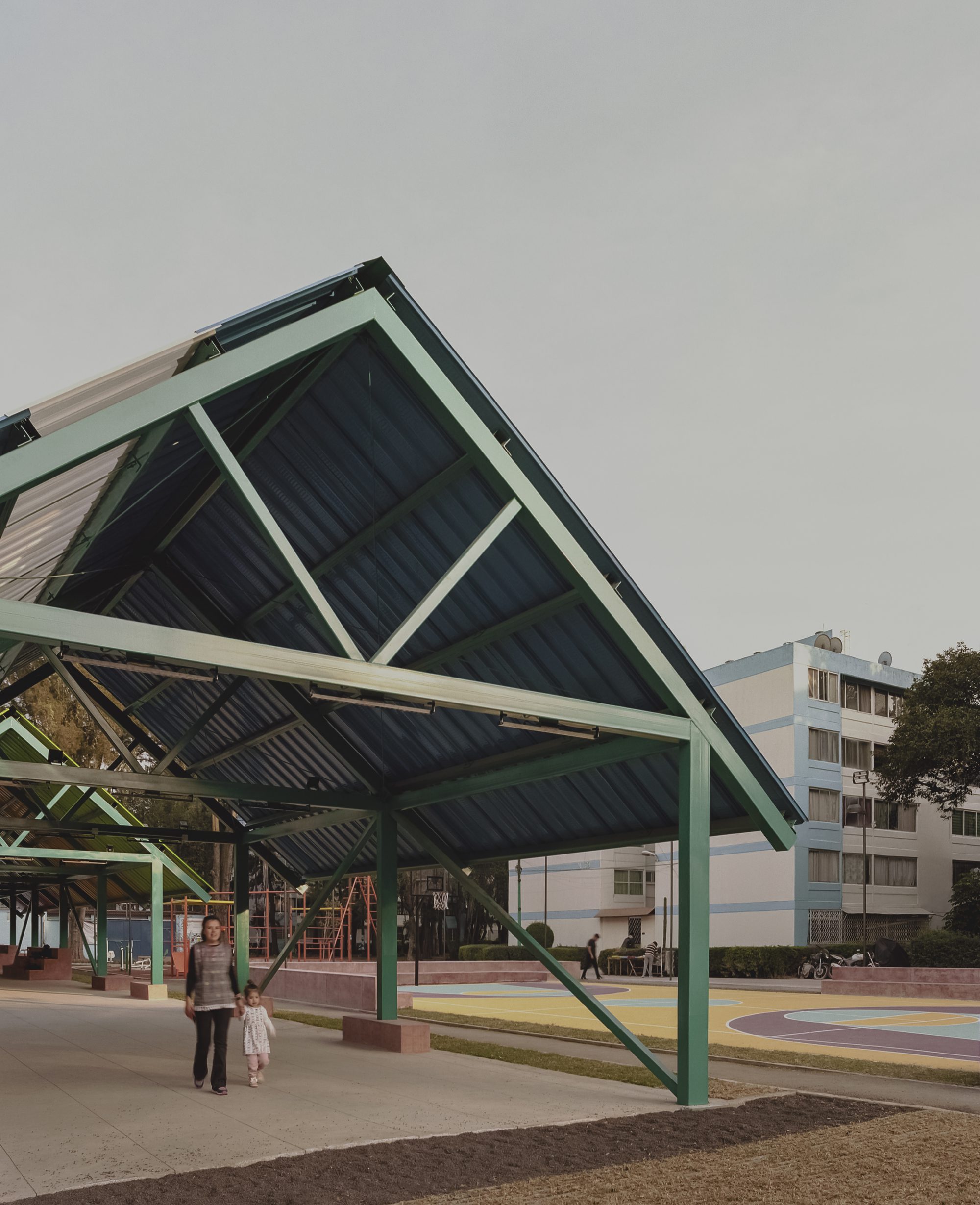
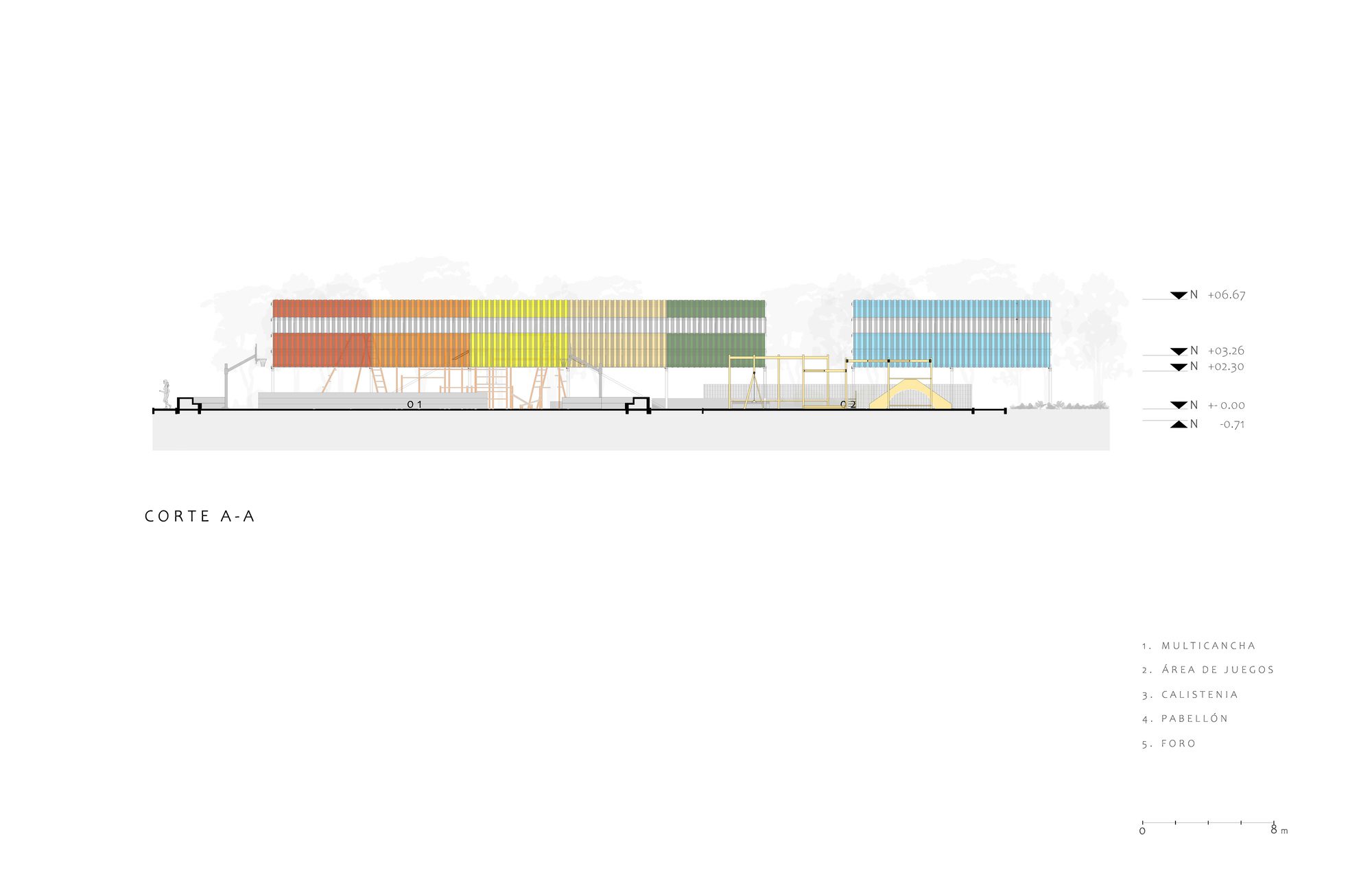
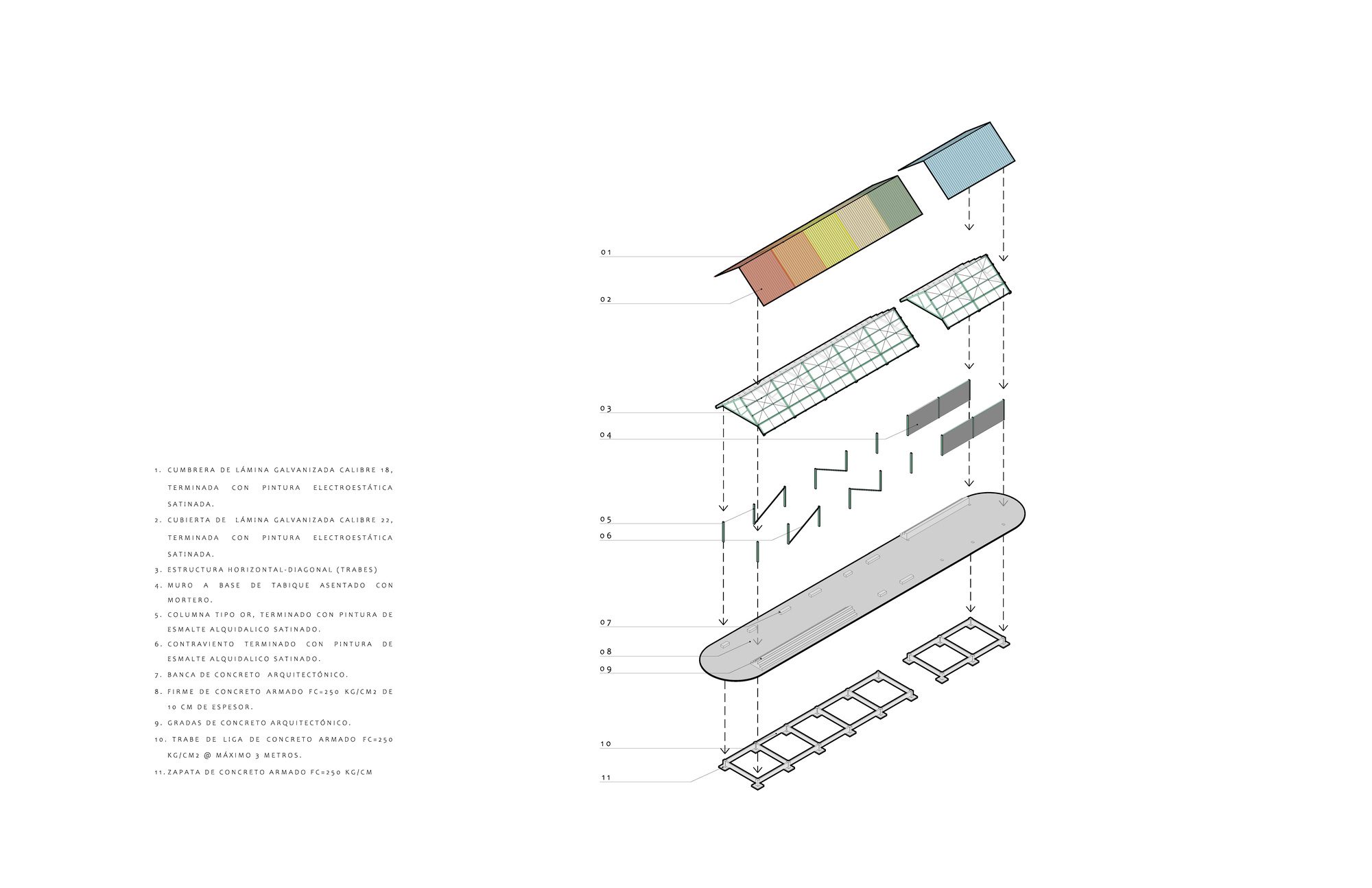
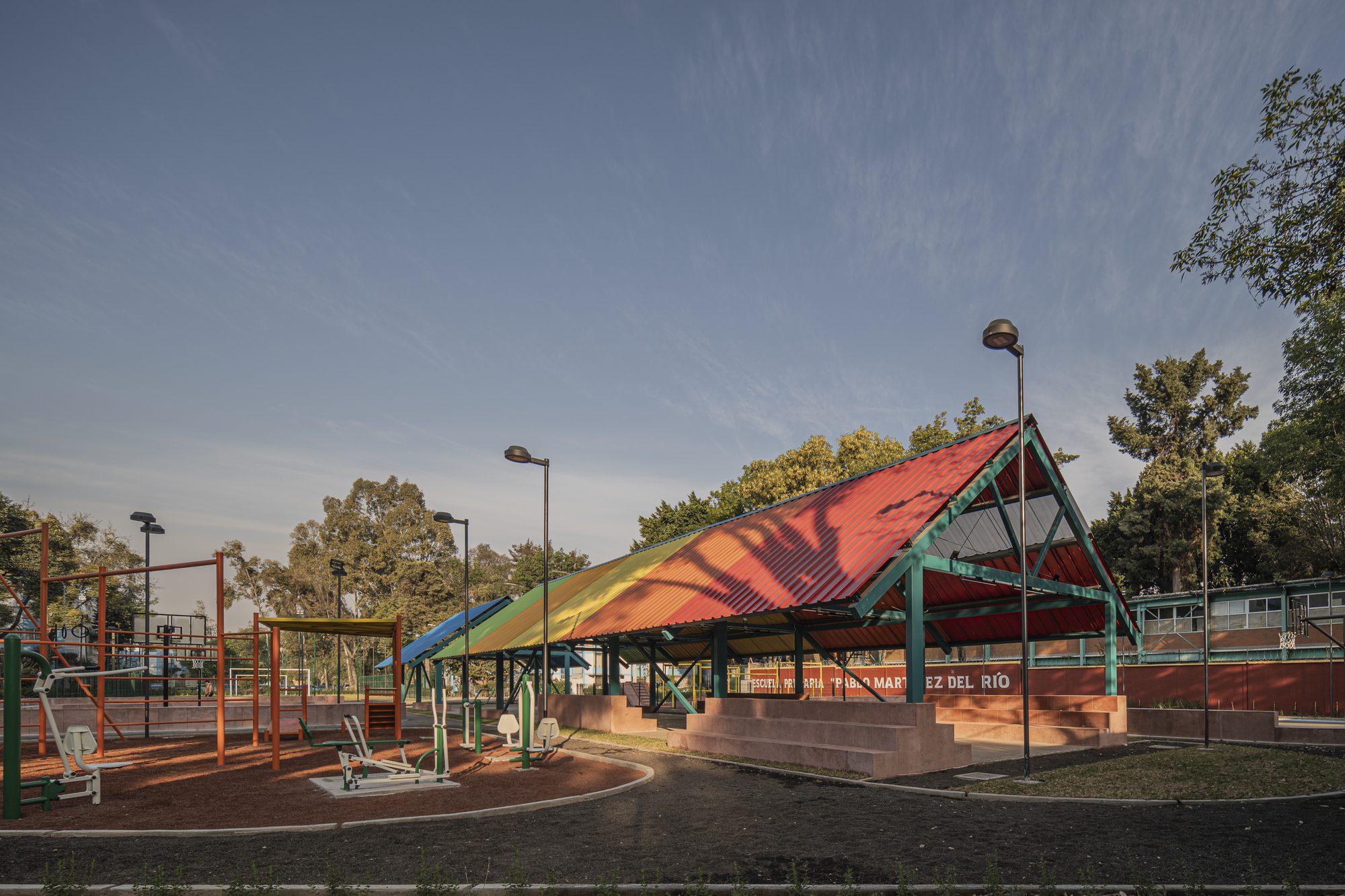
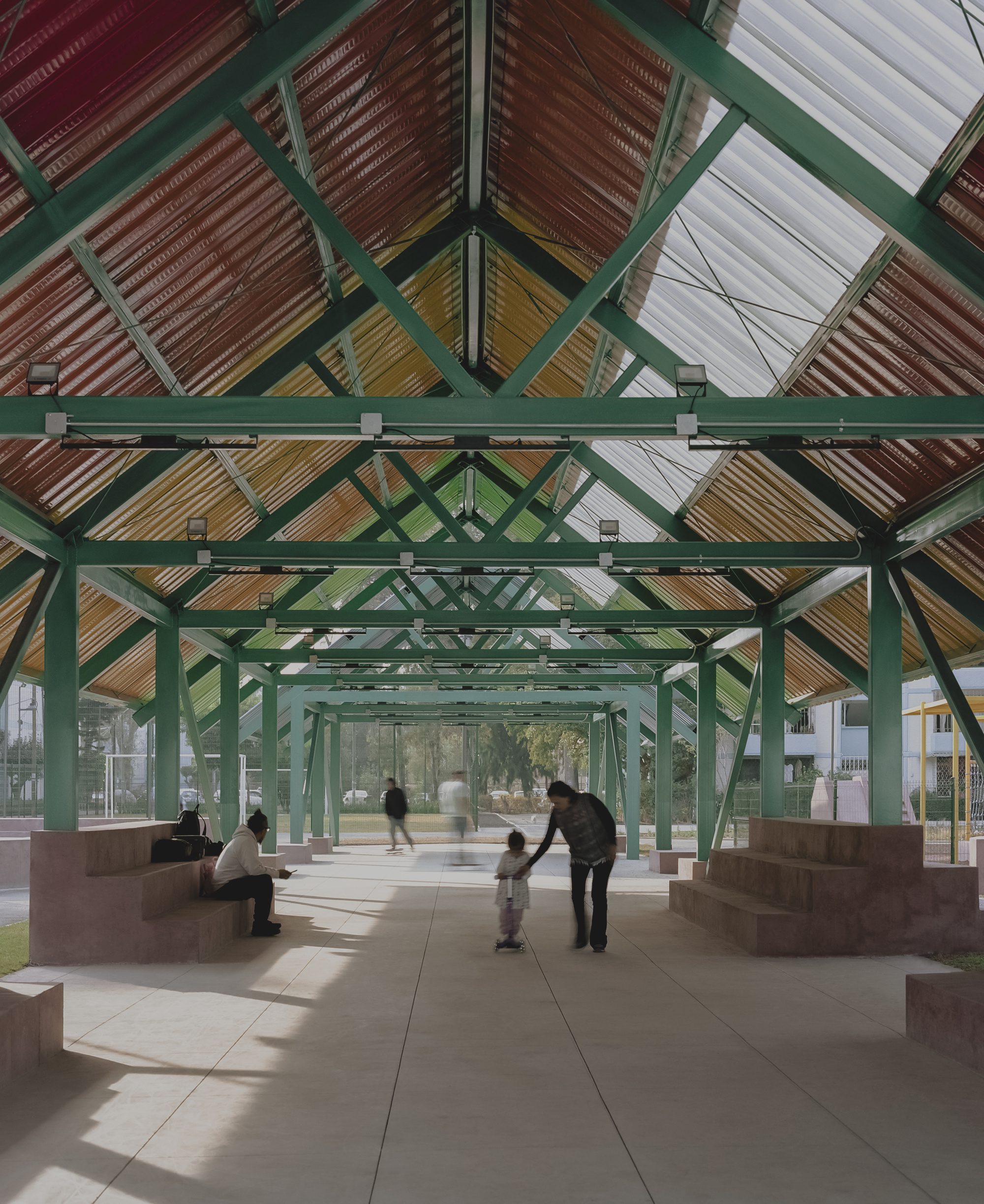
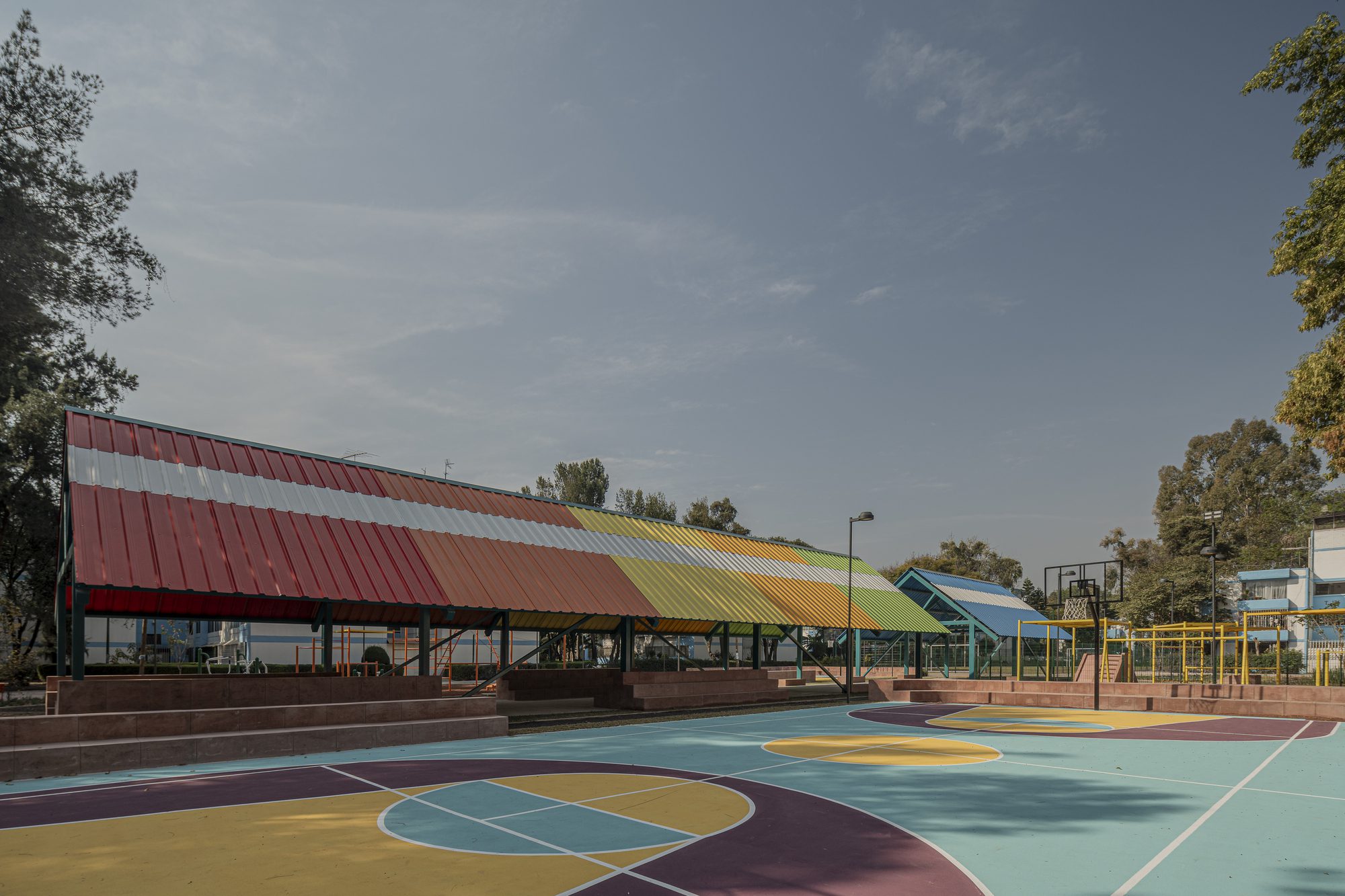
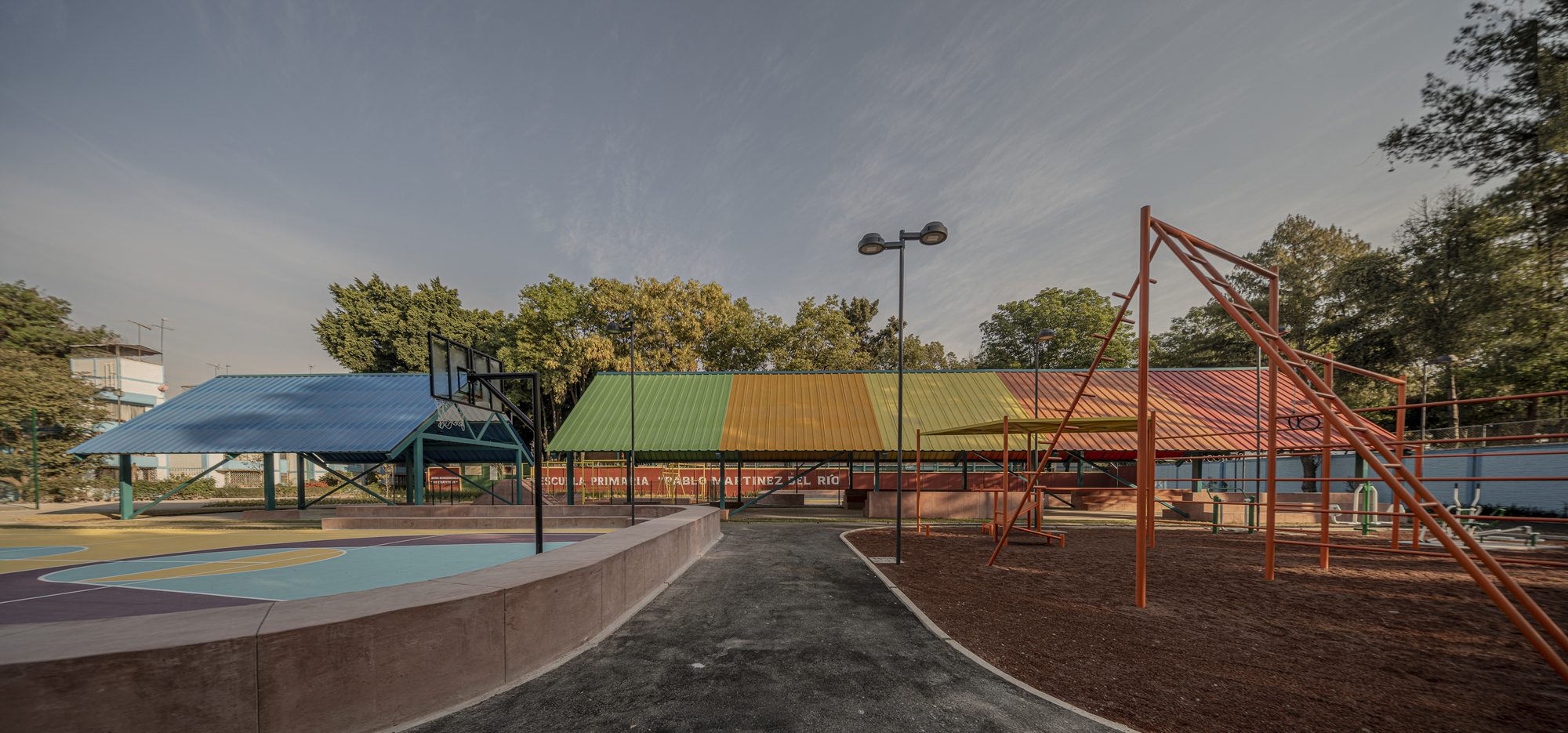
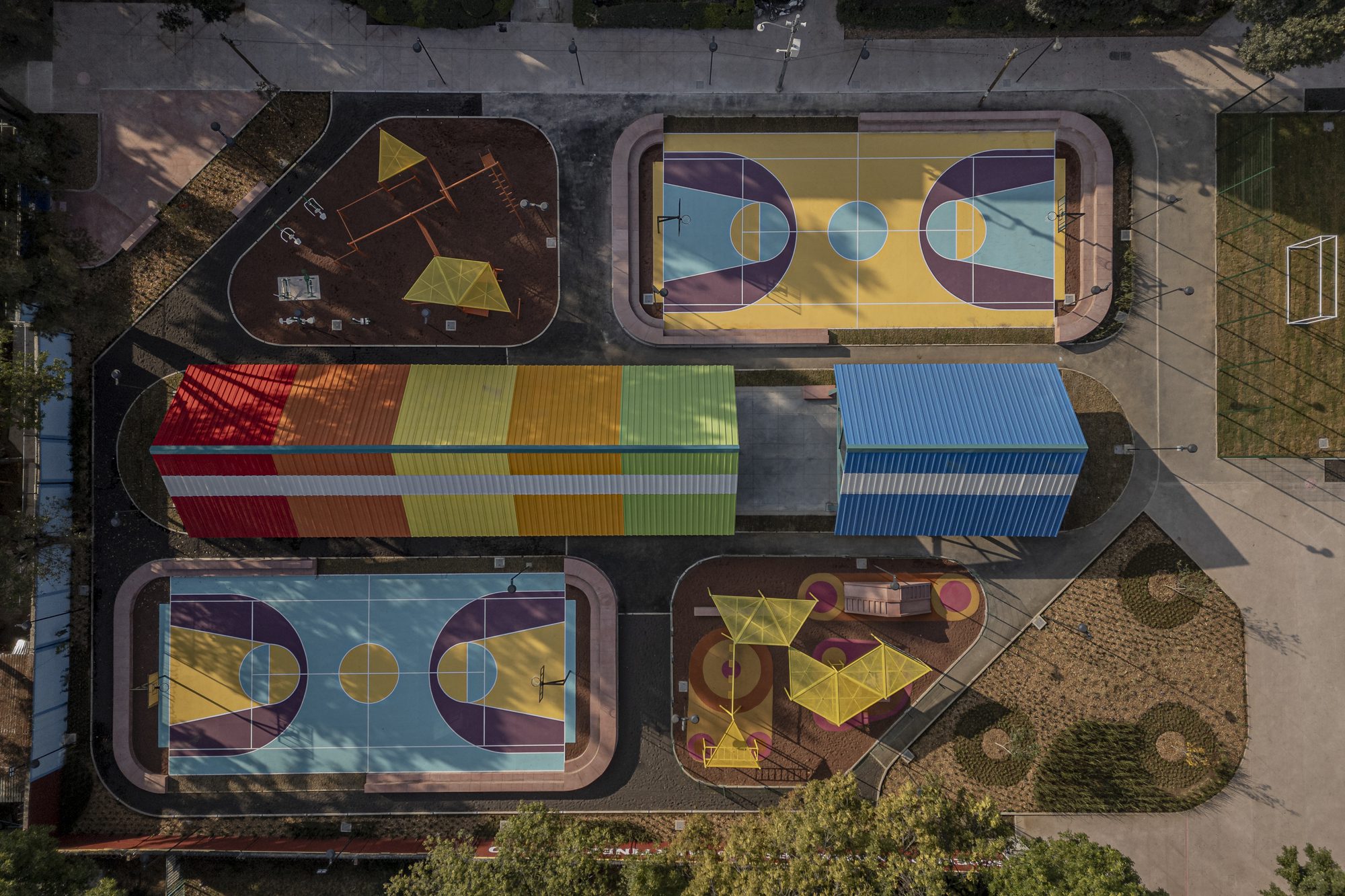
Today, with the project completed, the place has been transformed into a new social nucleus. At dismissal time, children gather around the central element of the intervention: a chromatic arch that adds scale, containment, and character to what were once gray courts exposed to the sun. The decision to place this structure in the heart of the space responds to a clear strategy: to prevent future irregular appropriations, preserving the cleared edges and ensuring continuous visibility and natural surveillance.
© Zaickz Moz, Andres Cedillo, Gerardo Reyes Bustamante
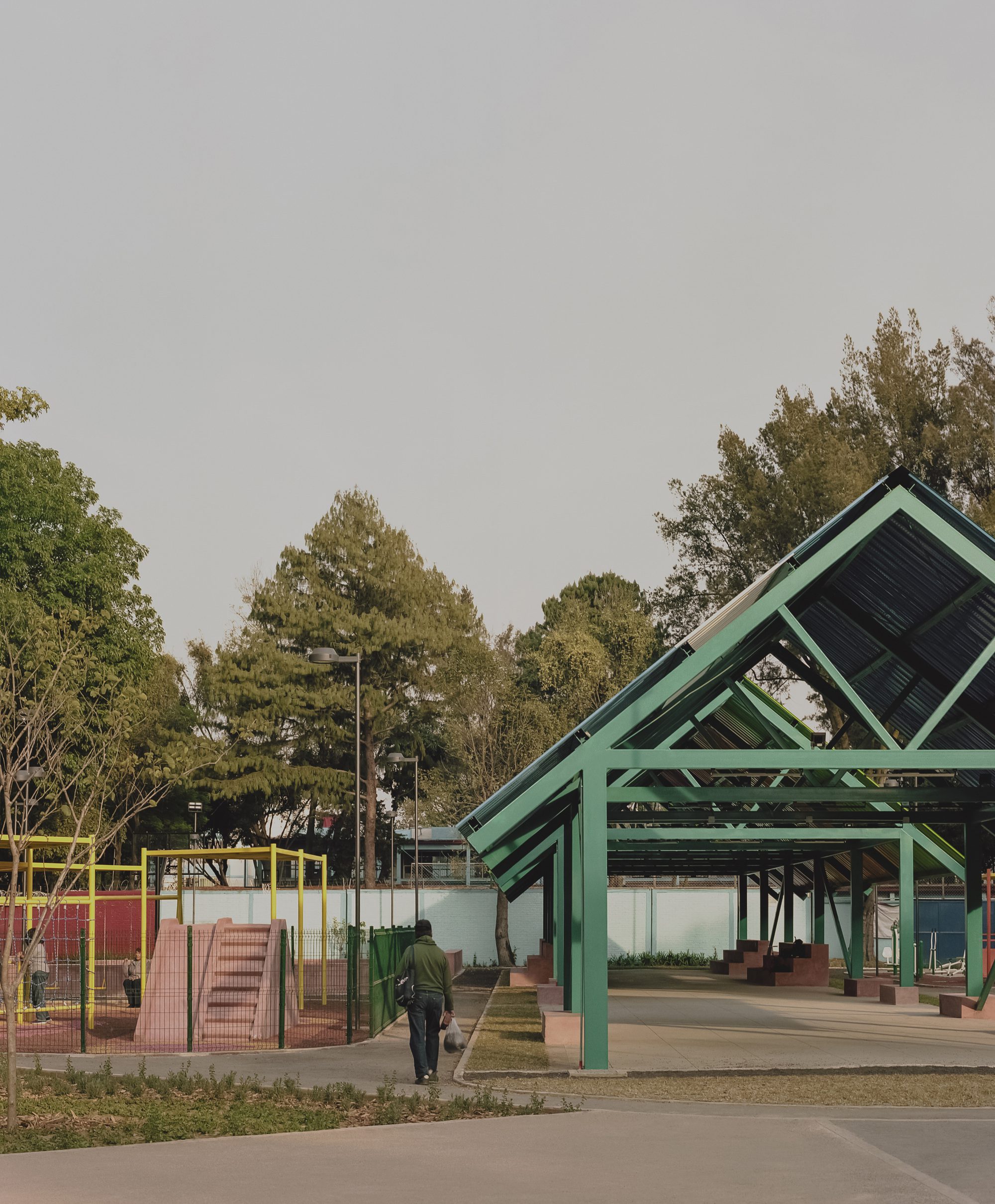
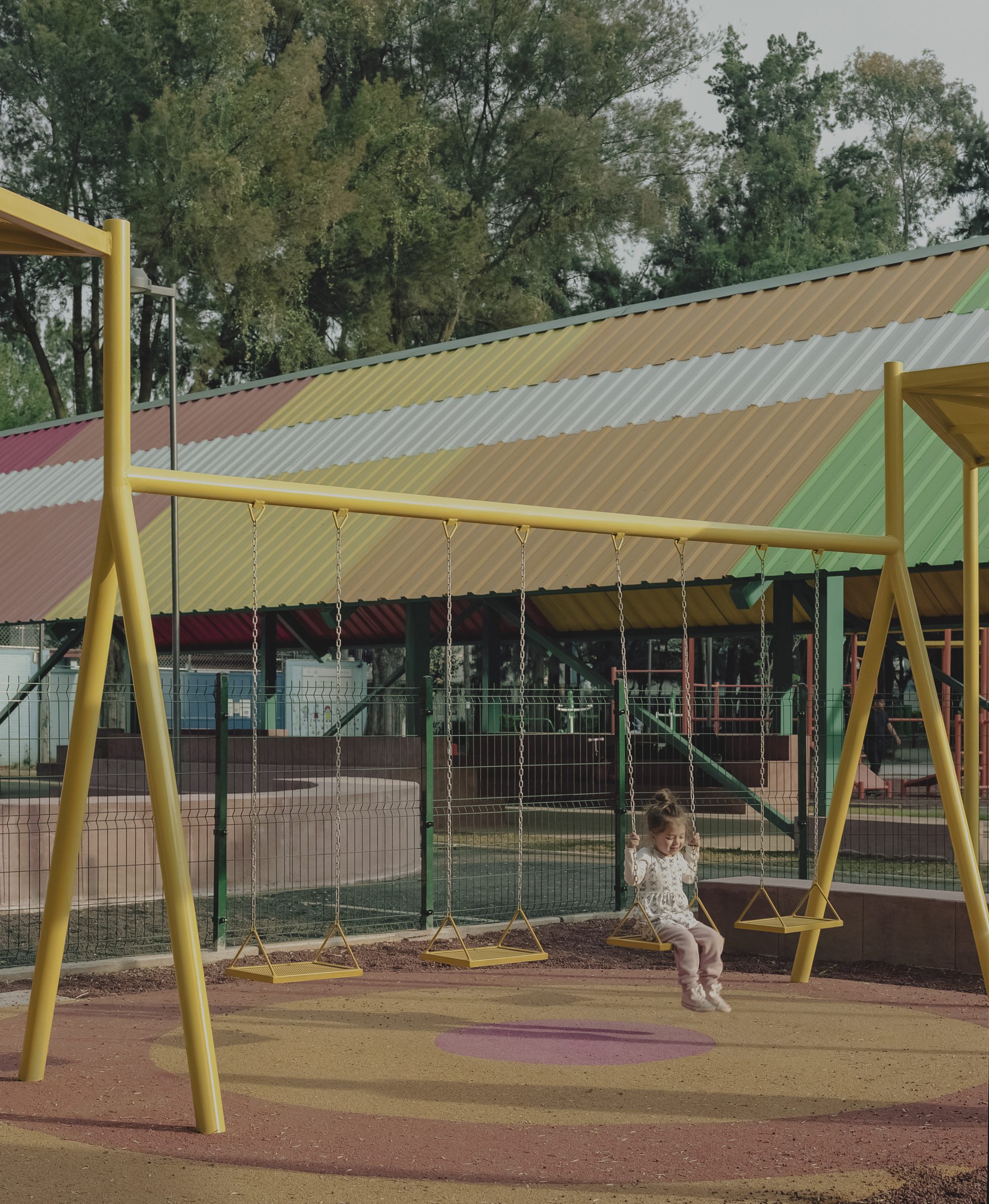
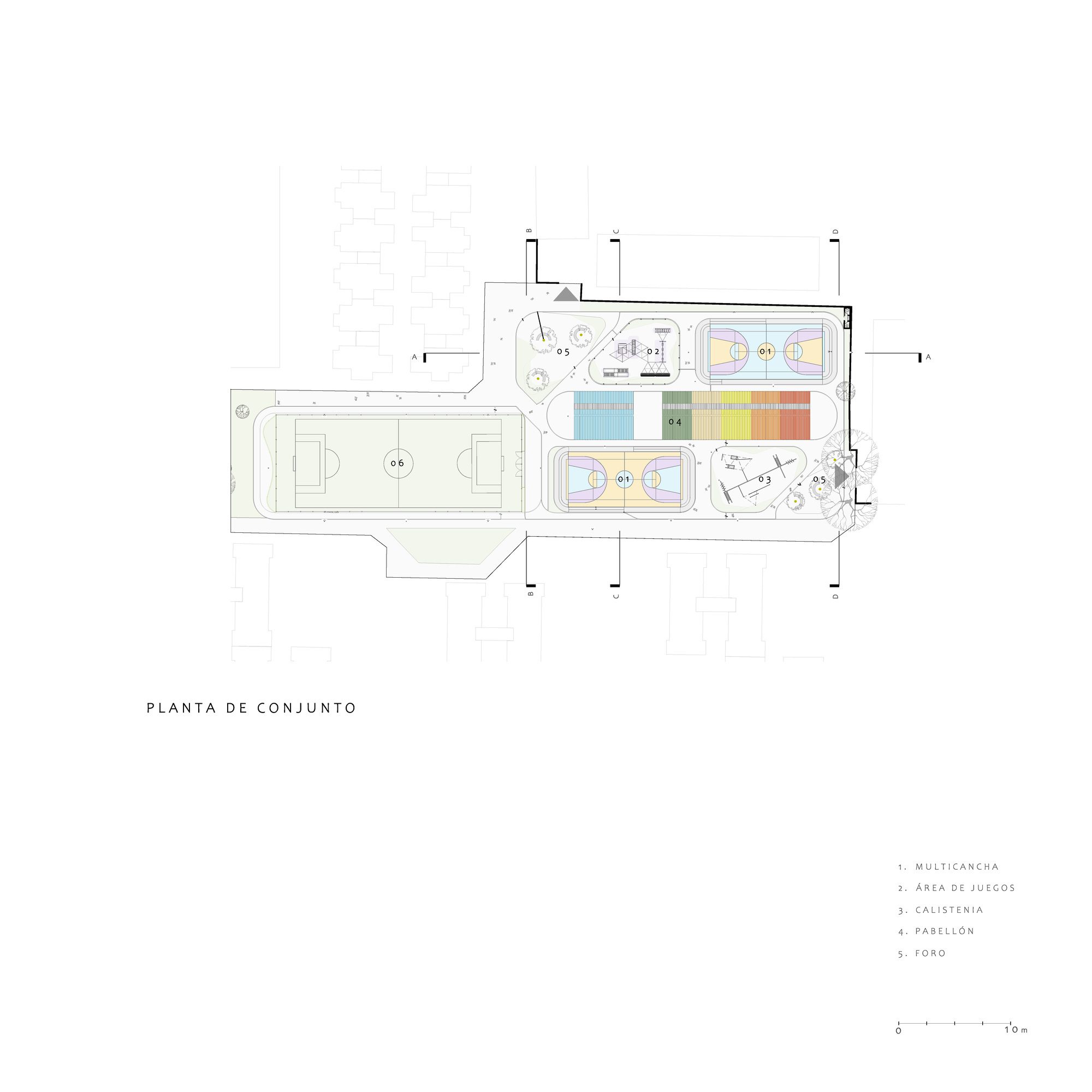
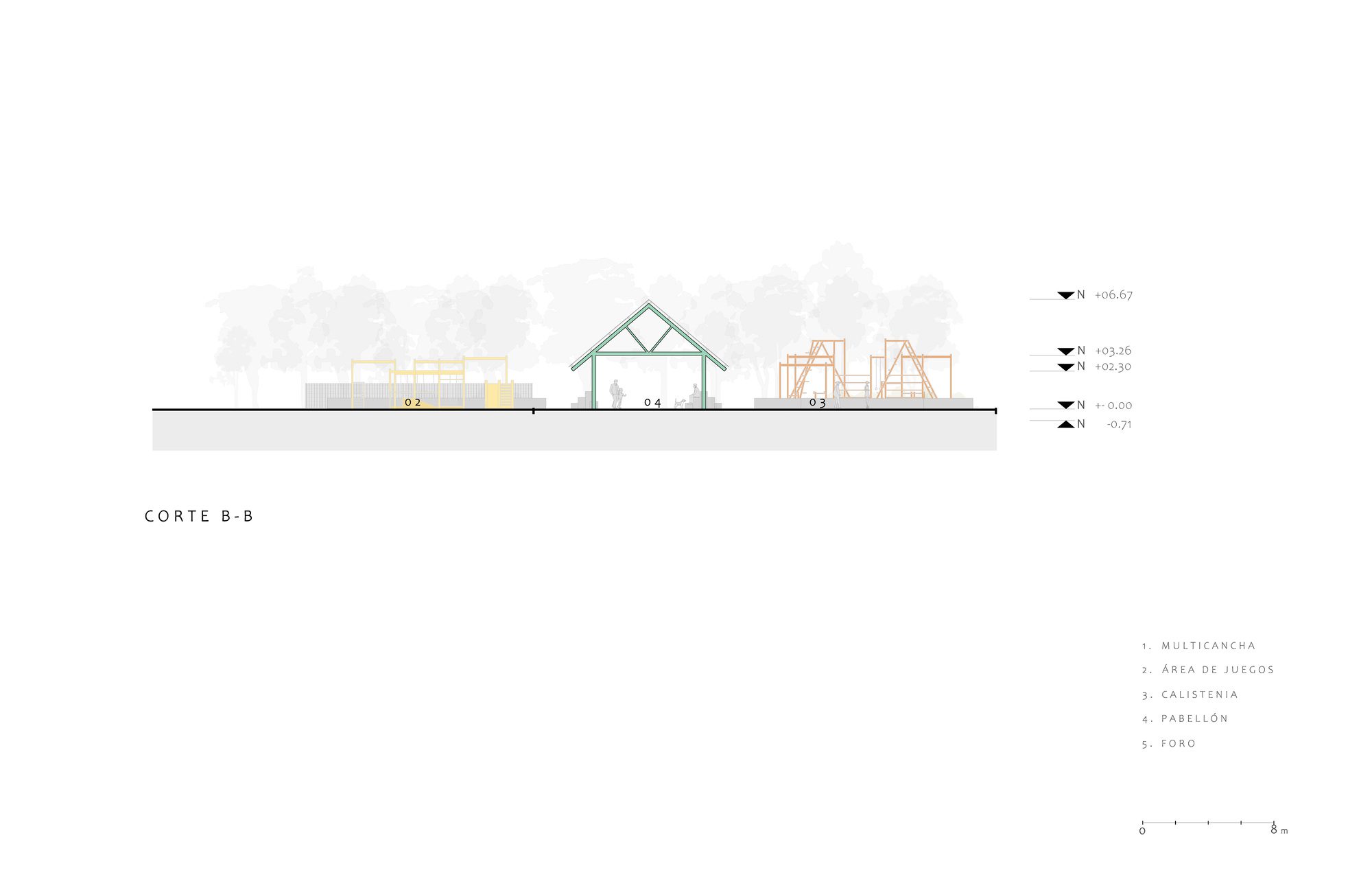
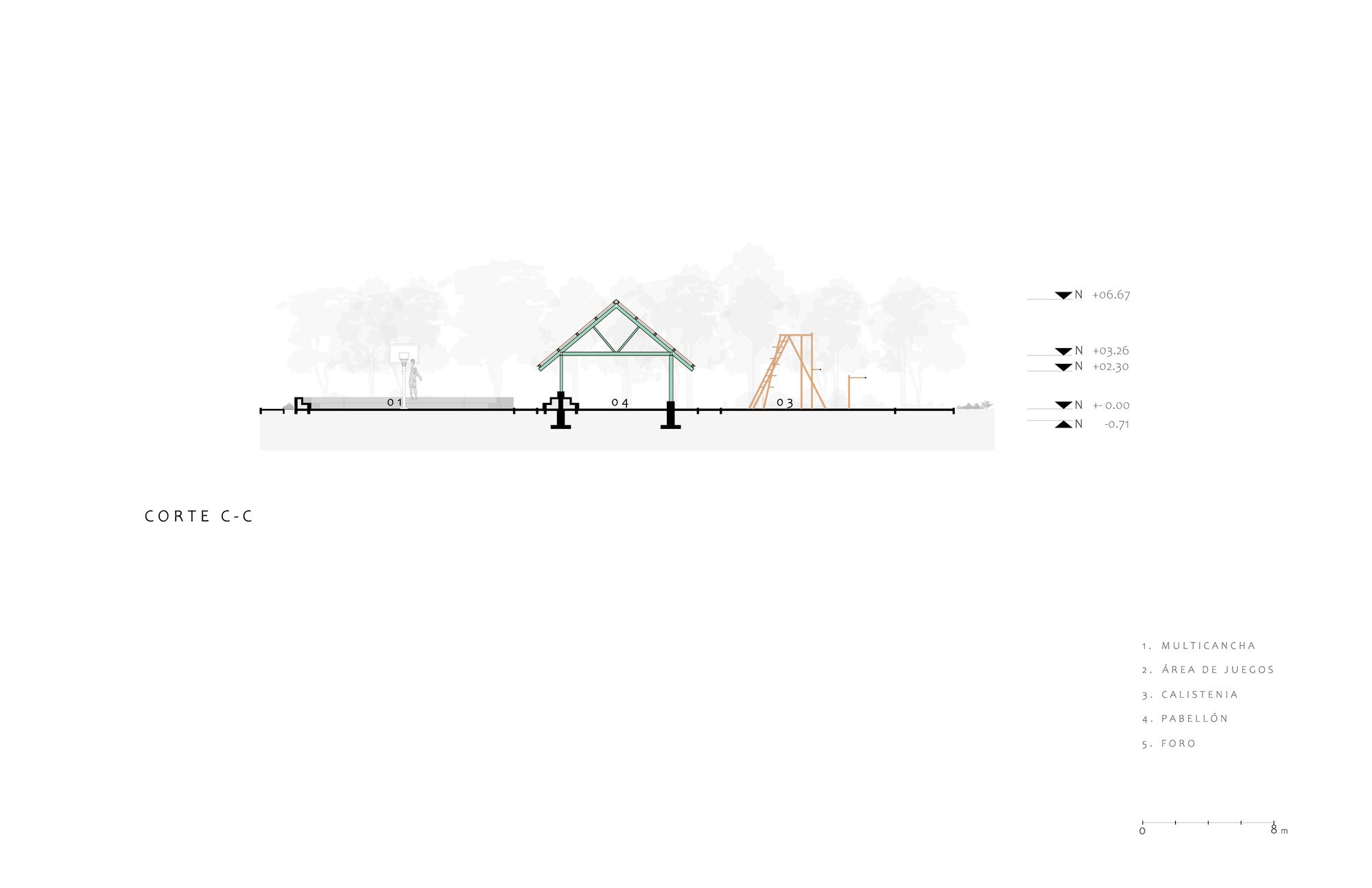
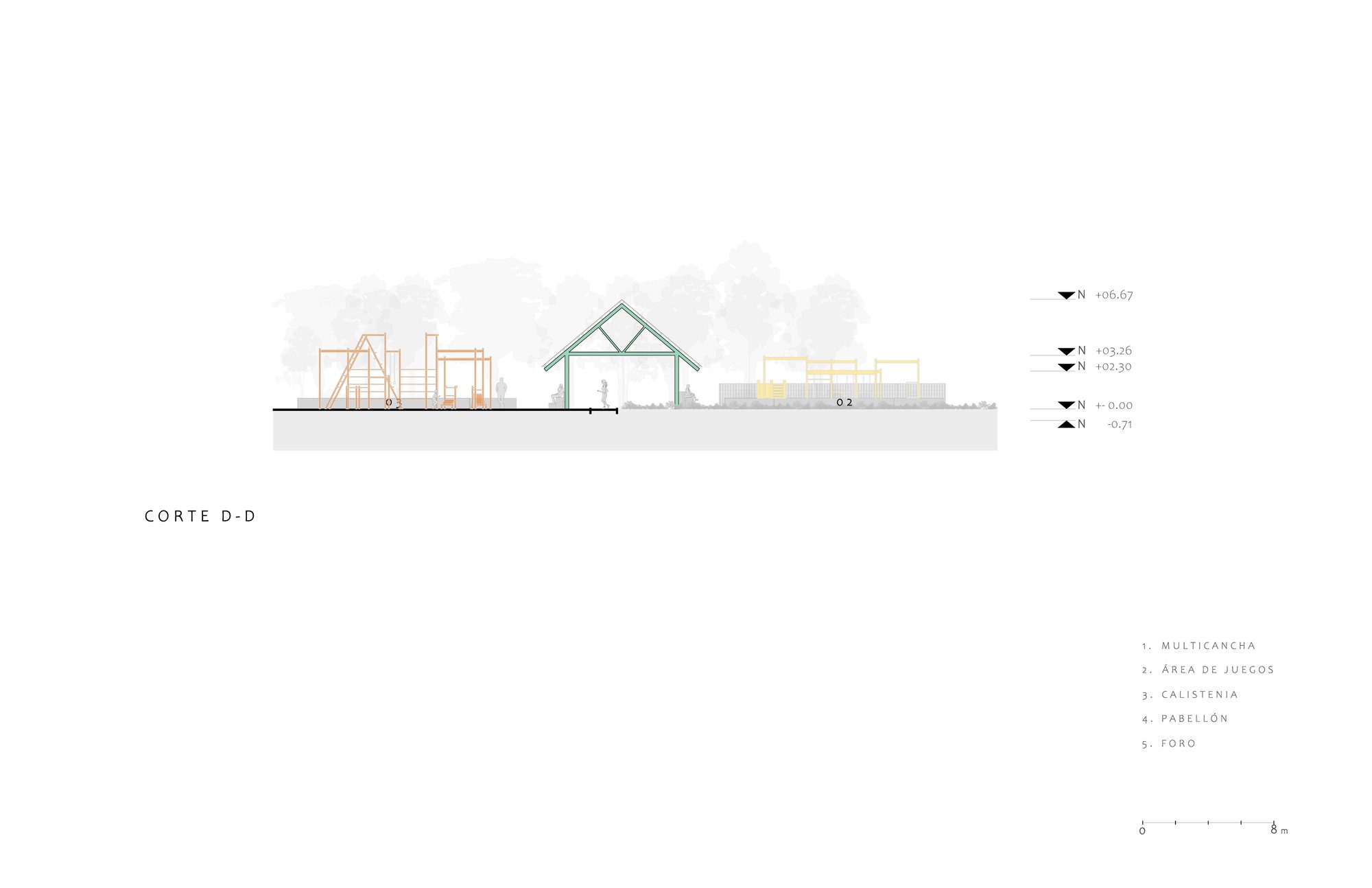
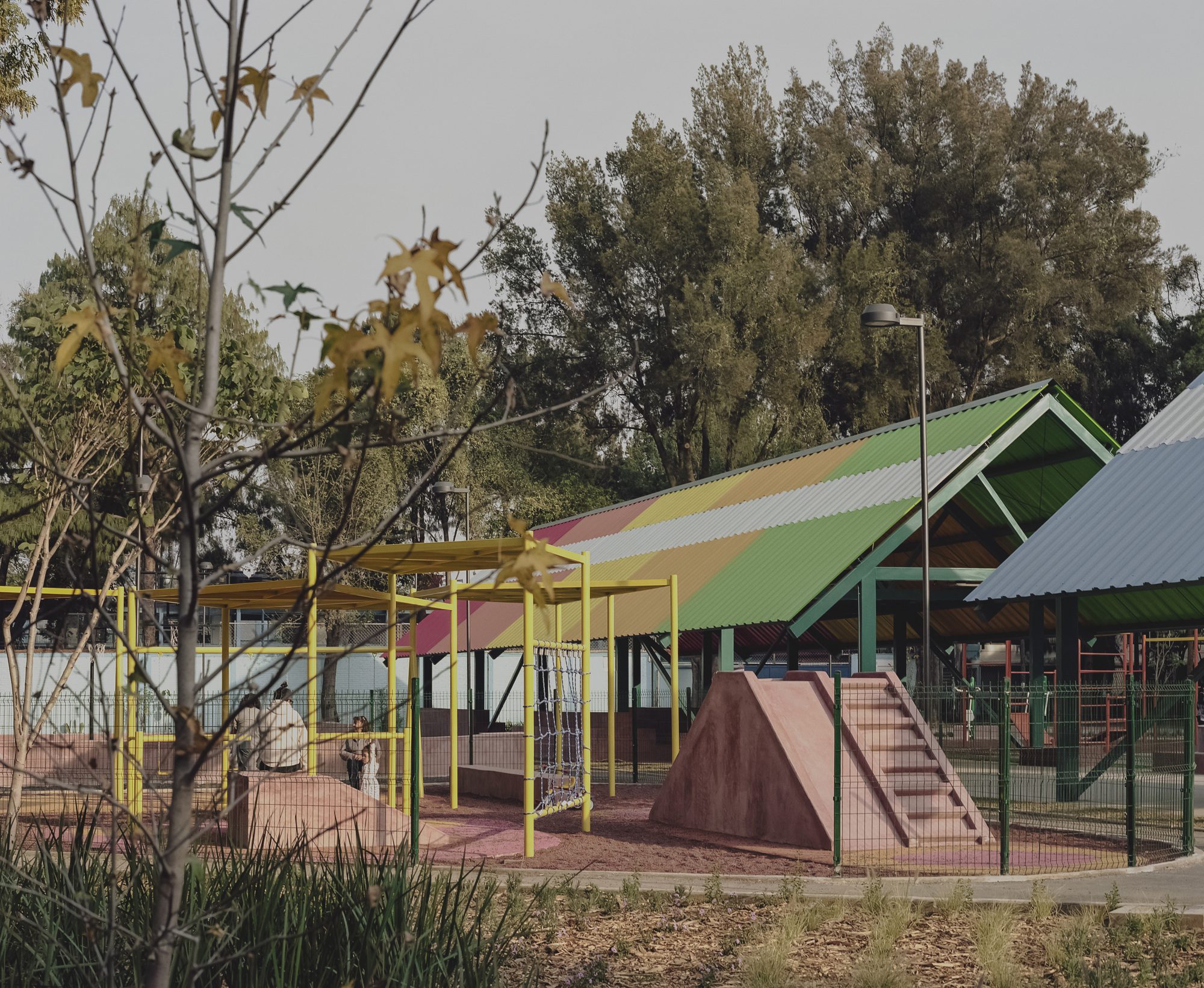
Surrounding this arch—now the backbone of a democratized space—are the different components of the program, defined during the bidding process and refined through participatory sessions with neighbors: two basketball courts, a calisthenics area, a covered forum with lateral rest areas, children’s play equipment, and a 600-meter track, creatively integrated into pedestrian circulation to optimize the available space, budget, and meet technical requirements.
© Zaickz Moz, Andres Cedillo, Gerardo Reyes Bustamante
This achievement was made possible through close collaboration with Desarrolladora de Ideas y Espacios (Alberto Cejudo), with whom they worked from the conceptual proposal to achieve a comprehensive solution that did not compromise the quality of the result in light of the budget adjustments proposed by the bidding process. Additionally, it was essential to understand the common characteristics among the four awarded projects, which allowed for maximizing resource efficiency through shared use of materials and constructive solutions between public space interventions and those of greater architectural complexity.
© Zaickz Moz, Andres Cedillo, Gerardo Reyes Bustamante
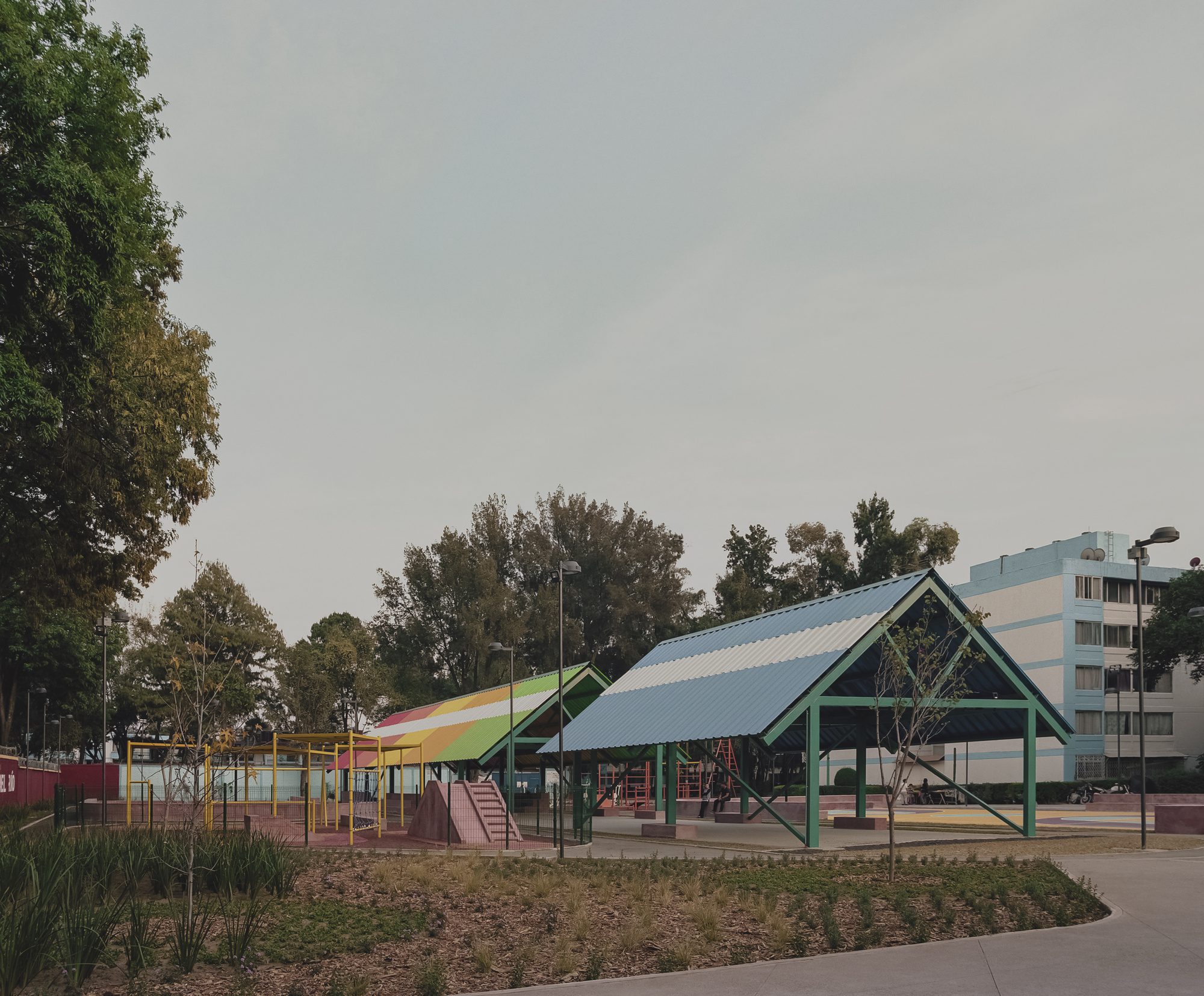
The intervention included a landscape improvement project, with rainwater infiltration areas and a design that prioritizes universal accessibility, taking into account existing pedestrian flows: previously, pathways for passage; today, routes for gathering. Elements such as color, modulation of curbs, pavement design, and texture changes articulate the different components into a coherent, legible, and harmonious composition.
© Zaickz Moz, Andres Cedillo, Gerardo Reyes Bustamante
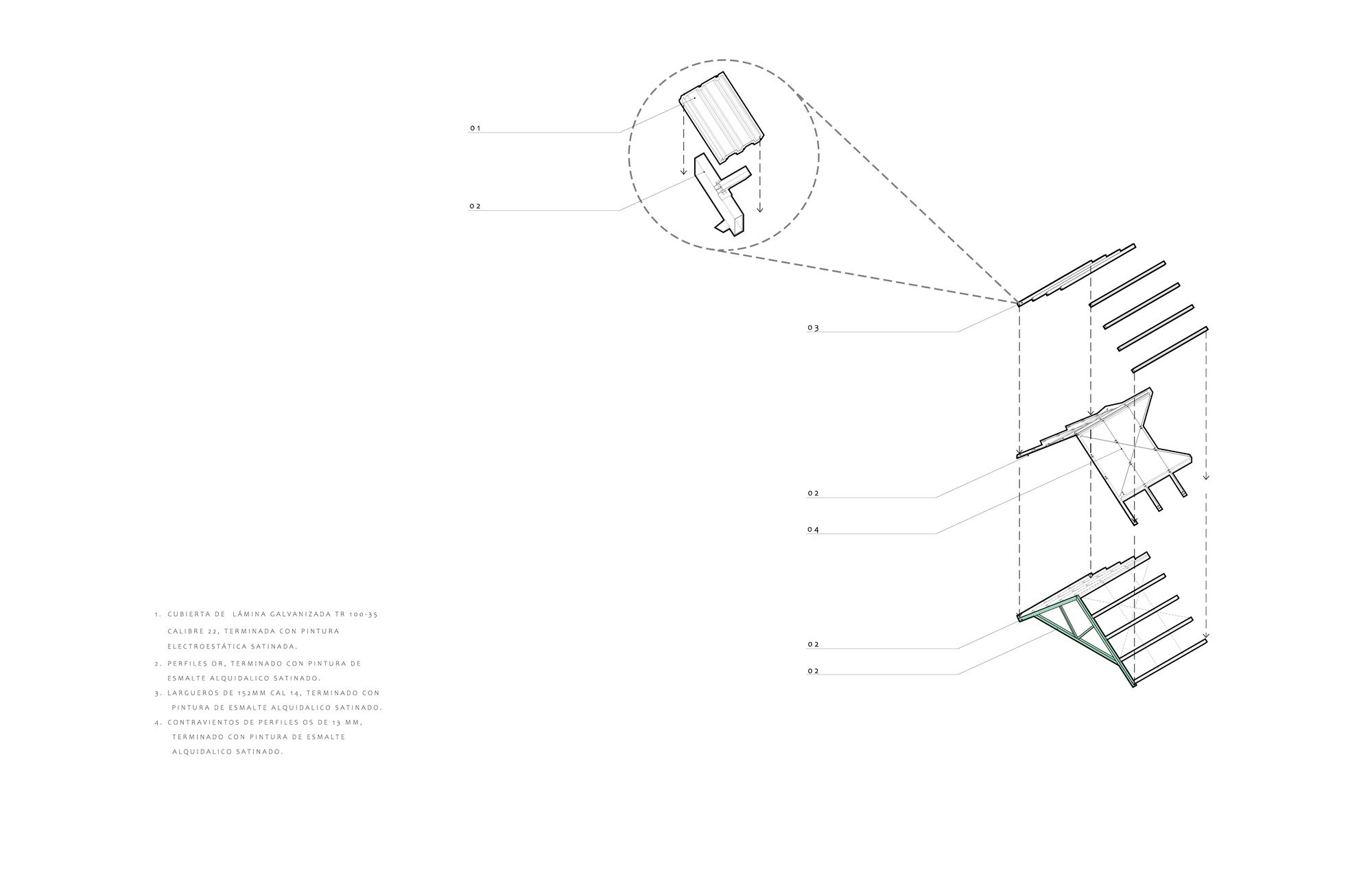
Almost five decades after the construction of the largest housing unit in Mexico City, this intervention represents an exemplary collaboration between the residents of Culhuacán, Infonavit, and the design team of AMASA Estudio, who, using a series of seemingly simple architectural elements—structural steel profiles, pigmented concrete, corrugated sheets—managed to restore the social value of public space. A place once forgotten by institutions has today transformed into a shared courtyard, proudly cared for by its community.
Project Info
Architects: Andrea López, Agustín Pereyra
Area: 4180 m²
Year: 2024
Country: Ciudad de México, Mexico
Photographs: Zaickz Moz, Andres Cedillo, Gerardo Reyes Bustamante
Team: Luis Flores, Gerardo Reyes, Roxana León, César Huerta, Yanahi Flaviel
Constructor: Desarrolladora de Ideas y espacios, Alberto Cejudo
Structure: Juan Felipe Heredia
Engineering: Germán Muñoz
Lighting: Gabriel Briseño
Landscape Design: Maritza Hernandez
Client: Infonavit