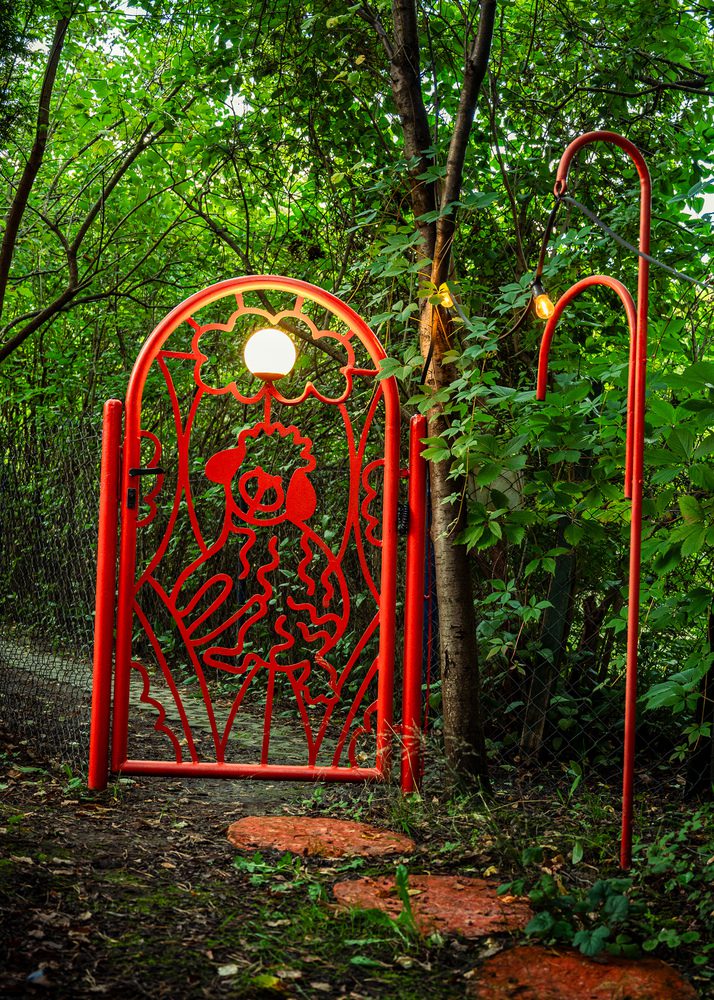
House of Color Downtown Oasis, Trends and individuality – Magda and Grzegorz chose the garden based on personal reasons, but they also tapped into a broader trend. Just a few years ago, allotment gardens (ROD) in Poland were not in high regard, which was accompanied by increasing pressure from developers to build on Warsaw’s green spaces. Not far from here, in Berlin, the frenzy for allotments has been going on for a decade. After all, it’s the simplest way to have your own garden, green space, silence, and grow your own flowers, vegetables, or fruits. And all of this is close to home, not somewhere at the edges of civilization – emphasizes Karol Pasternak from NOKE Architects, one of the project’s authors. In recent years, allotment gardens in Poland have been doing quite well. They flourish and bear fruit, and produce a specific and noteworthy culture. It’s become customary that the gates to individual gardens are also their pride and distinctive feature. With original forms, they reflect the personalities of individual owners, and the members of the gardening community – explains Piotr Maciaszek from NOKE Architects, the second designer. It’s no different in this garden. The original red gate with a round lamp was created according to Magda’s drawing, with an image of their beloved dog, Lusia, in the central part. The gate is all the more significant because it’s the only element of the layout visible from the alley. The house, deliberately hidden, gradually emerges from the greenery only after entering the garden.
© Piotr Maciaszek
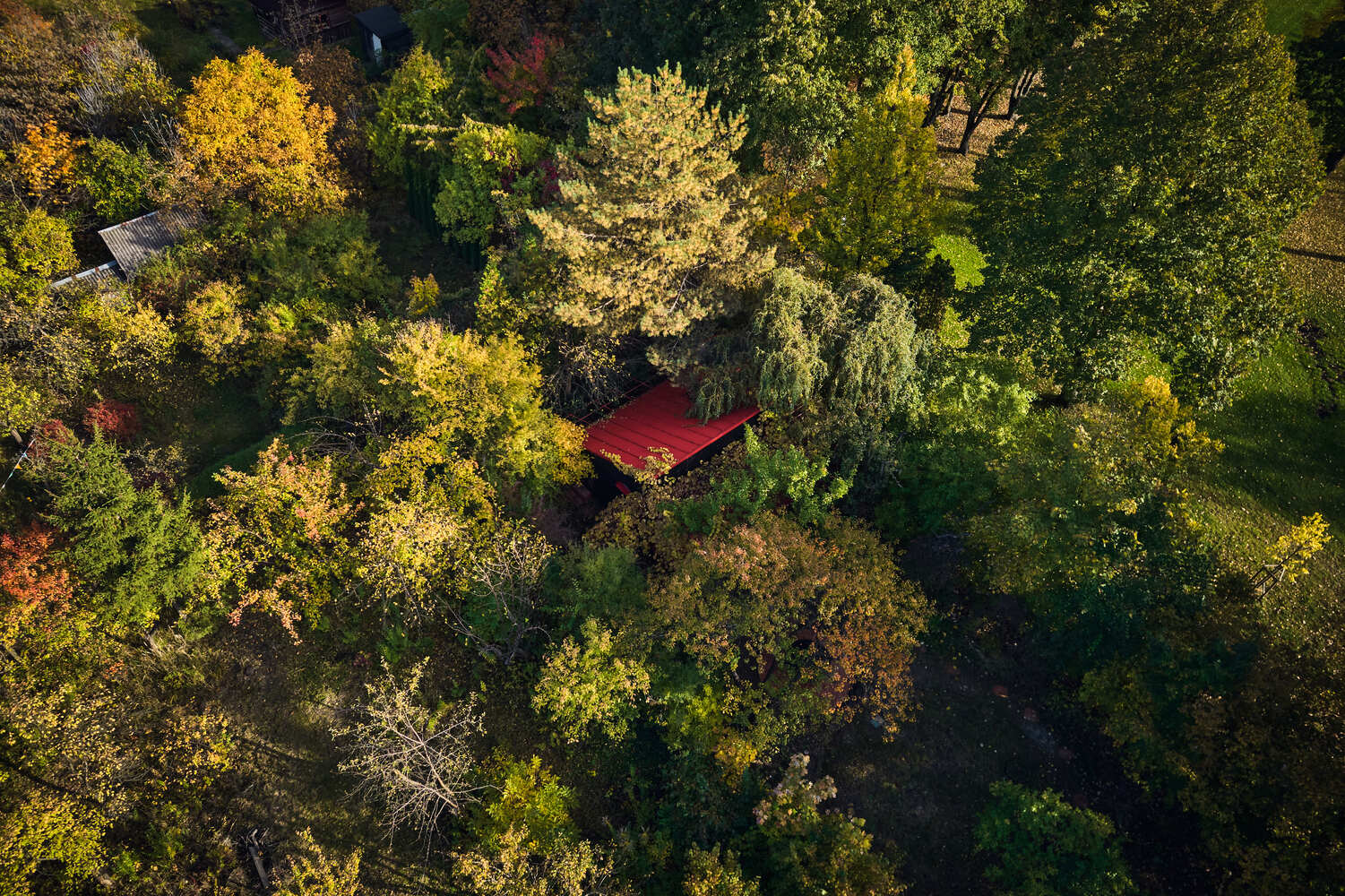
Trapezoid potential – We’ve known Magda and Grzegorz for a long time, and we’ve had the opportunity to collaborate before. A few years ago, we designed a very bold, outrageously colorful office for them, Animoon, on Chmielna Street – recalls Karol Pasternak. This time again, we were most inspired by their expressive personalities and aesthetically daring attitude – he emphasizes. The architects endeavored to translate the visual maximalism of the couple into the form of the cottage. The clients loved the concept from the very start. However, the location itself imposed important project constraints. The plot is slightly larger than standard, but it has the shape of a slim trapezoid – almost a triangle. Furthermore, according to the regulations, permanent structures cannot be built in the gardens, nor can they exceed 35 m2. The architects cleverly incorporated these limitations into the design of the new cottage.
© Piotr Maciaszek
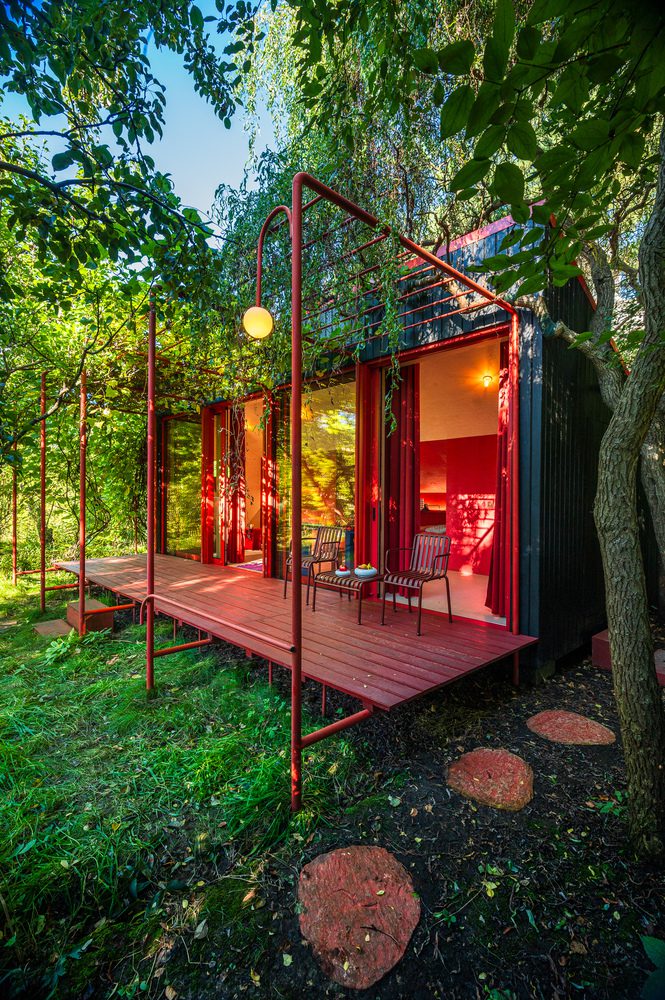
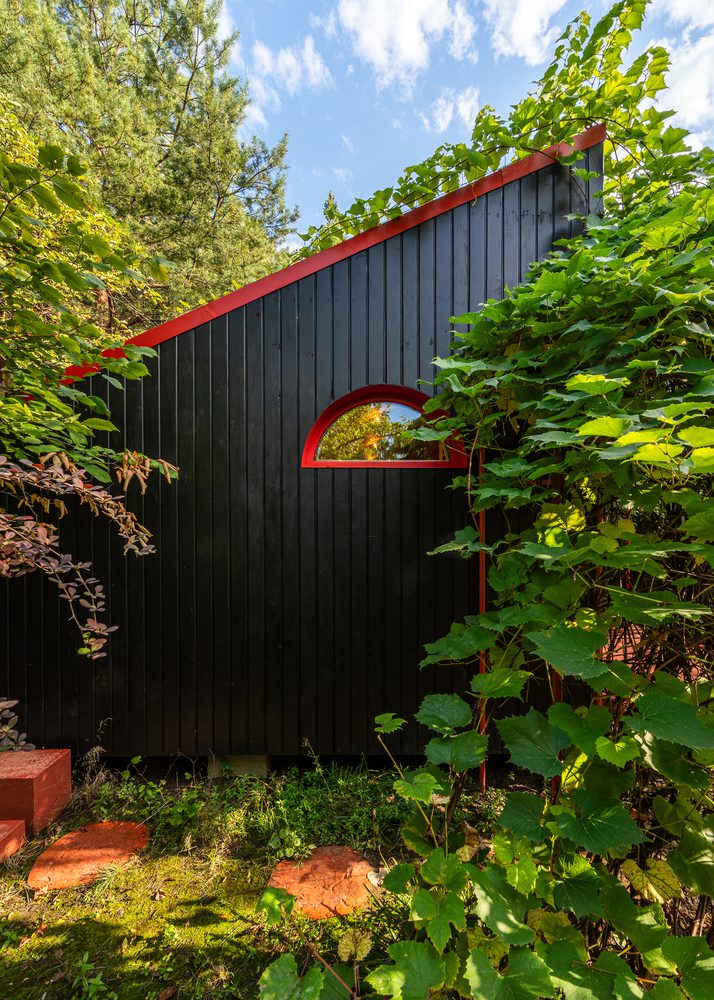
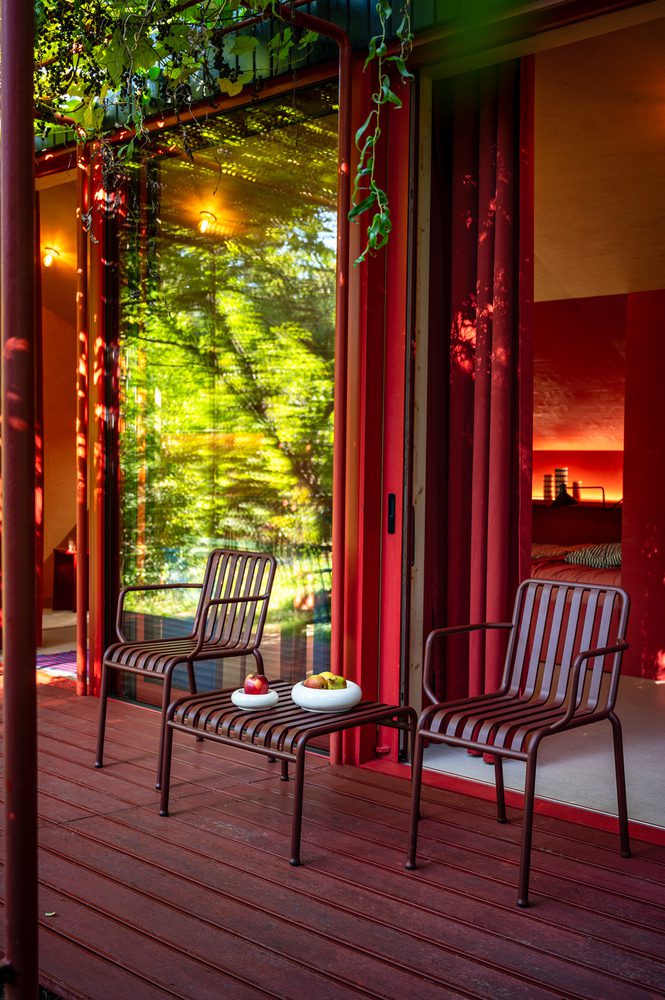
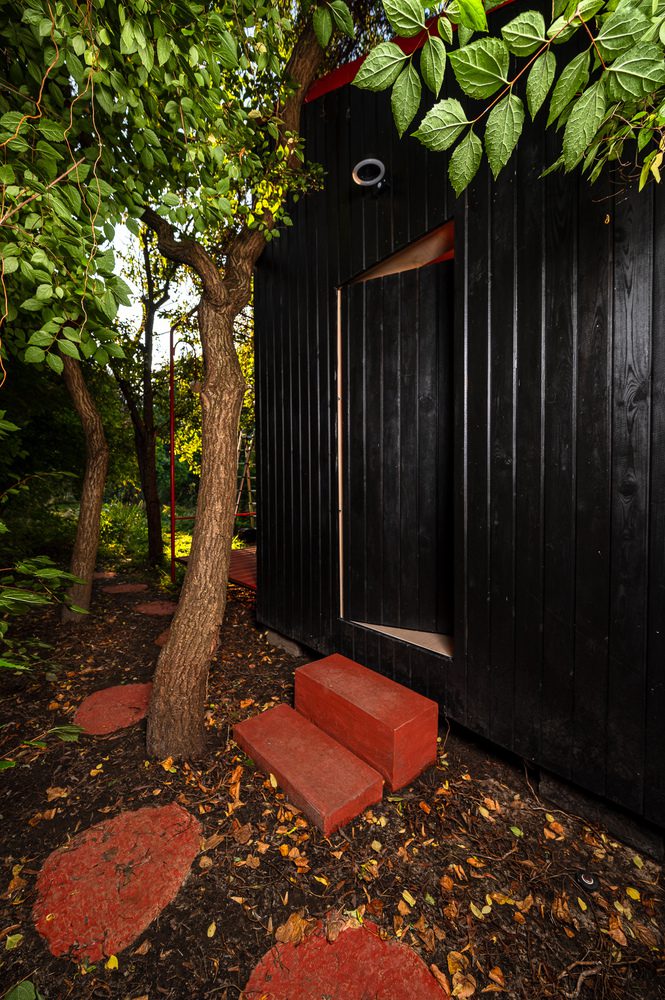
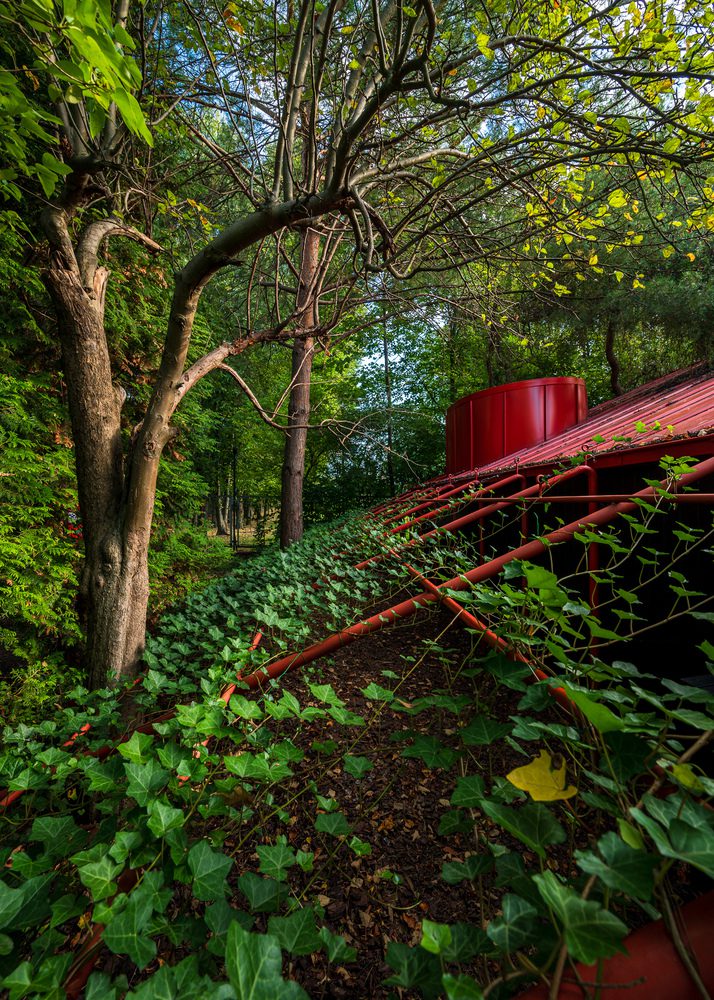
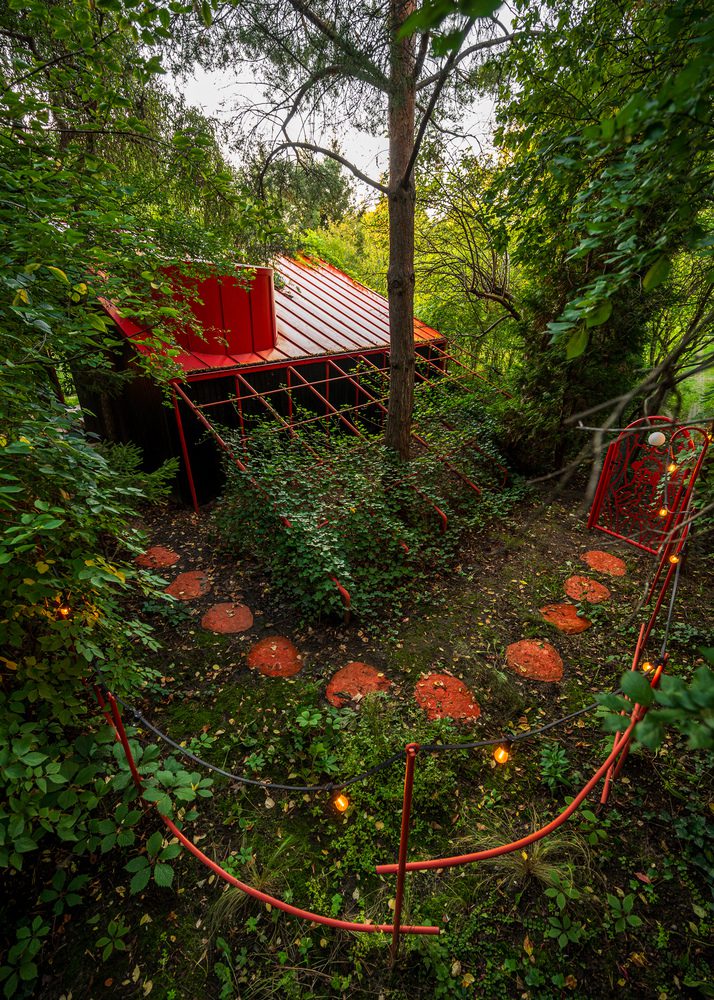
Walking on stones – From the pink gate, a winding path of red stones leads deep into the garden. It is accompanied by a luminous art installation that illuminates the path hidden among lush trees and bushes. The cottage itself turns its back to the entrance. Over time, it will disappear into a tangle of vines – only the red “chimney” of the bathroom will remain visible. The entrance doors are also well-hidden. The only hint as to where to find the secret entrance is three cast concrete steps, which look like an abstract garden sculpture – smiles Piotr Maciaszek. A step further reveals that the cottage opens up to the surroundings with large glass panels and a spacious terrace with a pergola. The grapevine covering it is 80 years old. We tried to preserve all the greenery we found on the plot. We didn’t cut down any trees, and we consider saving this old grapevine our biggest success. It was untangled from the old trellis and moved to a new one – says Karol Pasternak. In this way, amidst the relics of the old garden, the current one was created, suitable for contemporary expectations. Its important element is the concrete table submerged in greenery – a monumental garden furniture piece designed together with the flooring. Here, in the shade of the old cherry tree, Magda and Grzegorz like to sit for breakfasts and lunches with their friends.
© Piotr Maciaszek
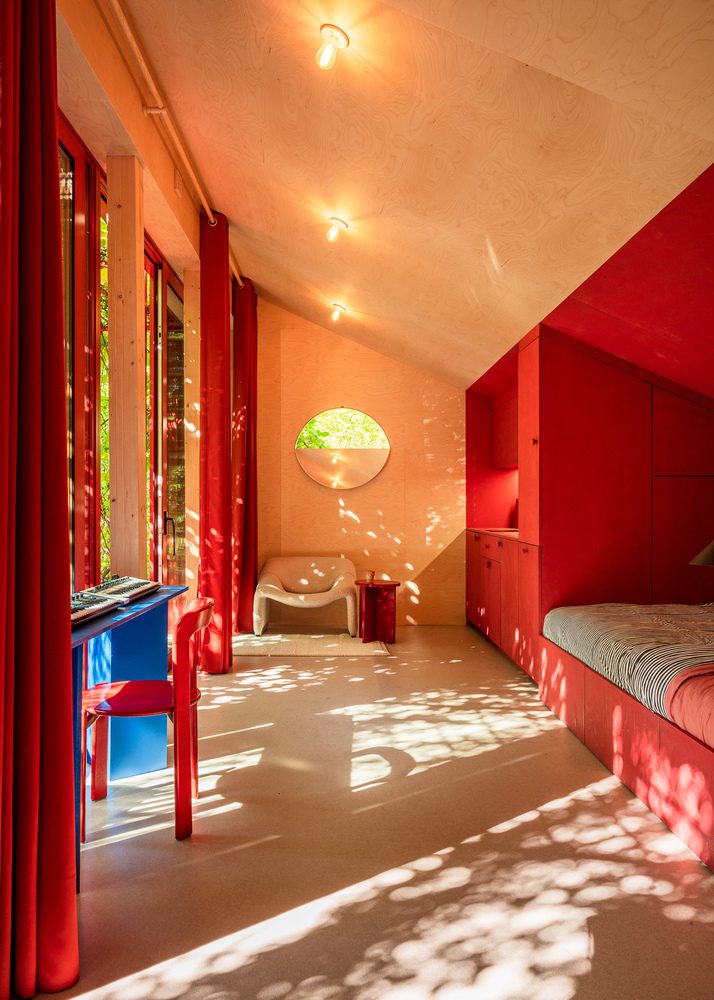
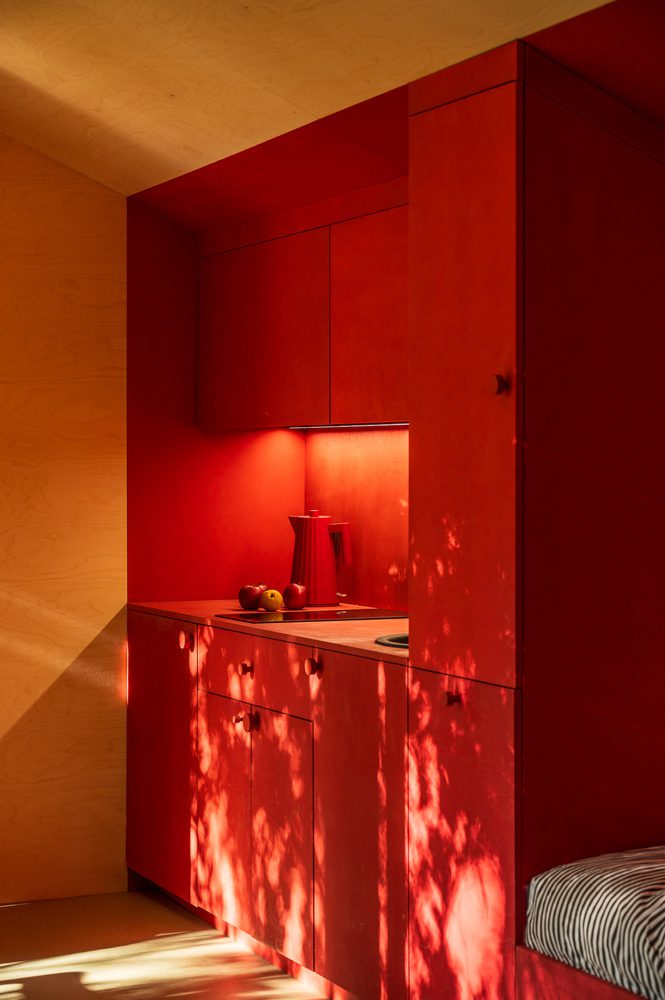
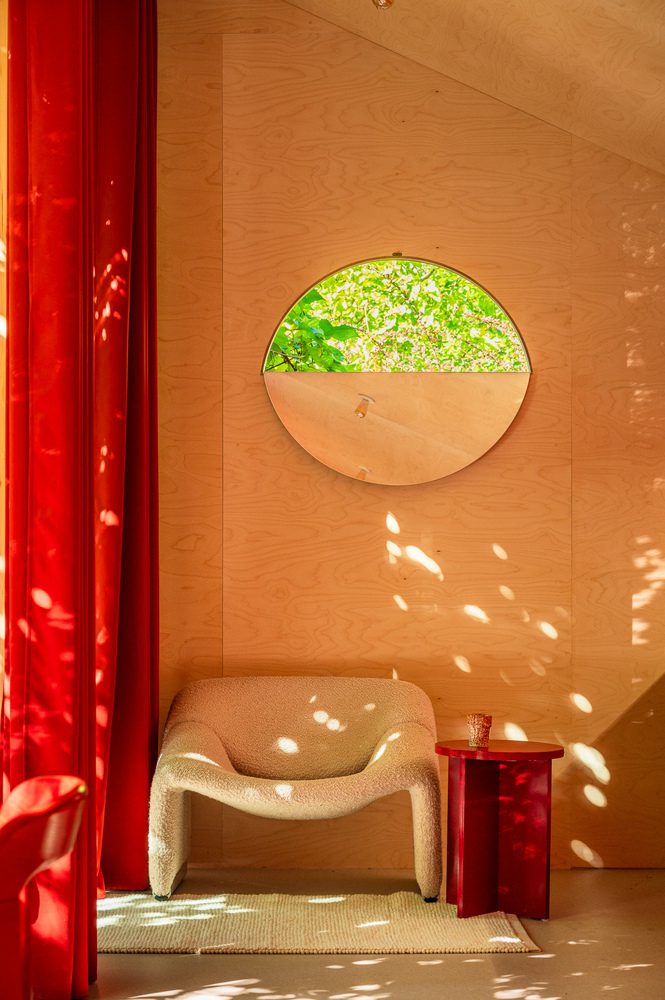
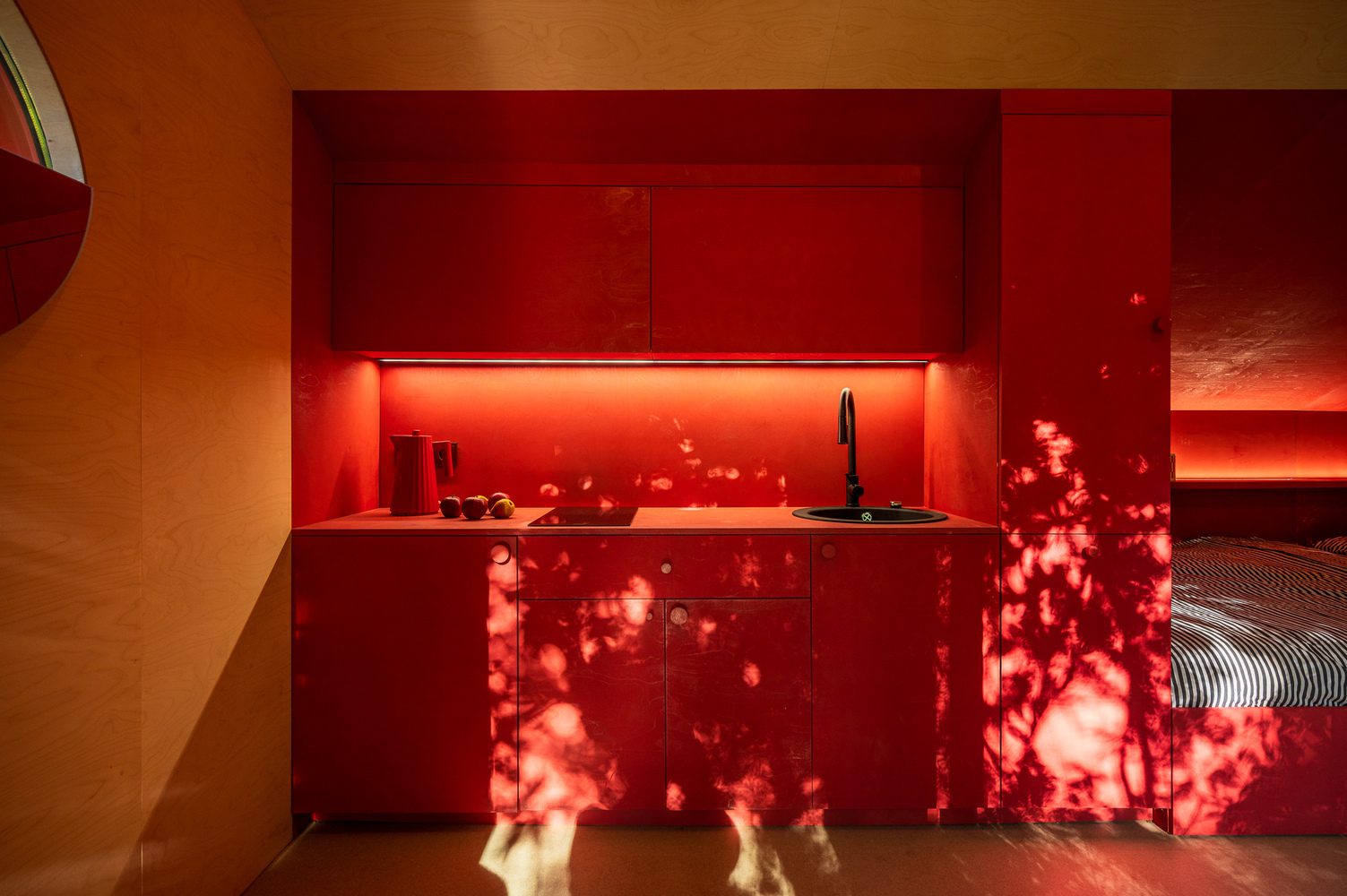
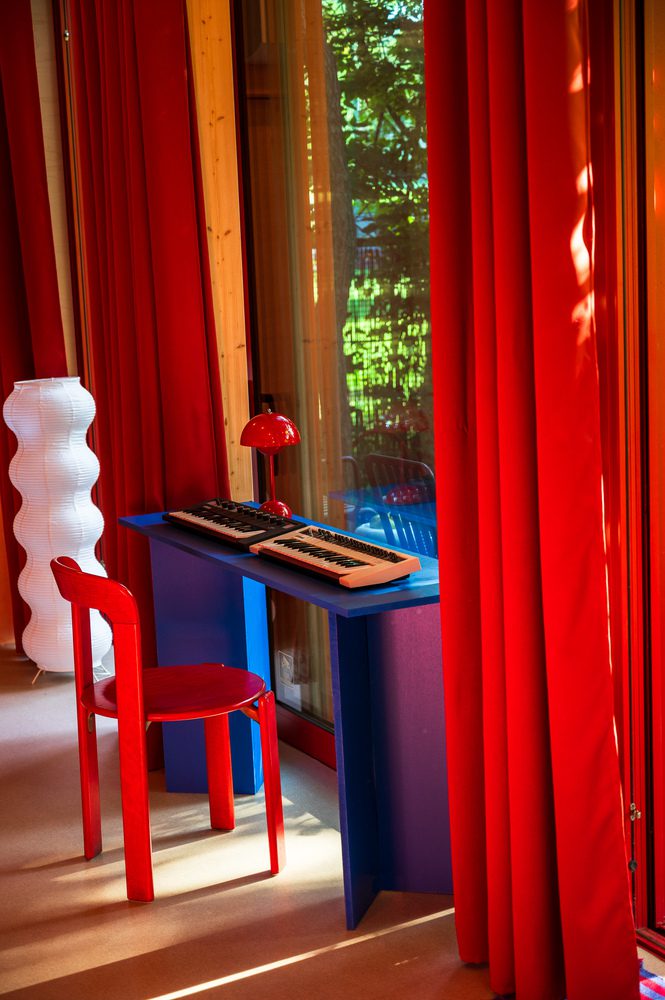
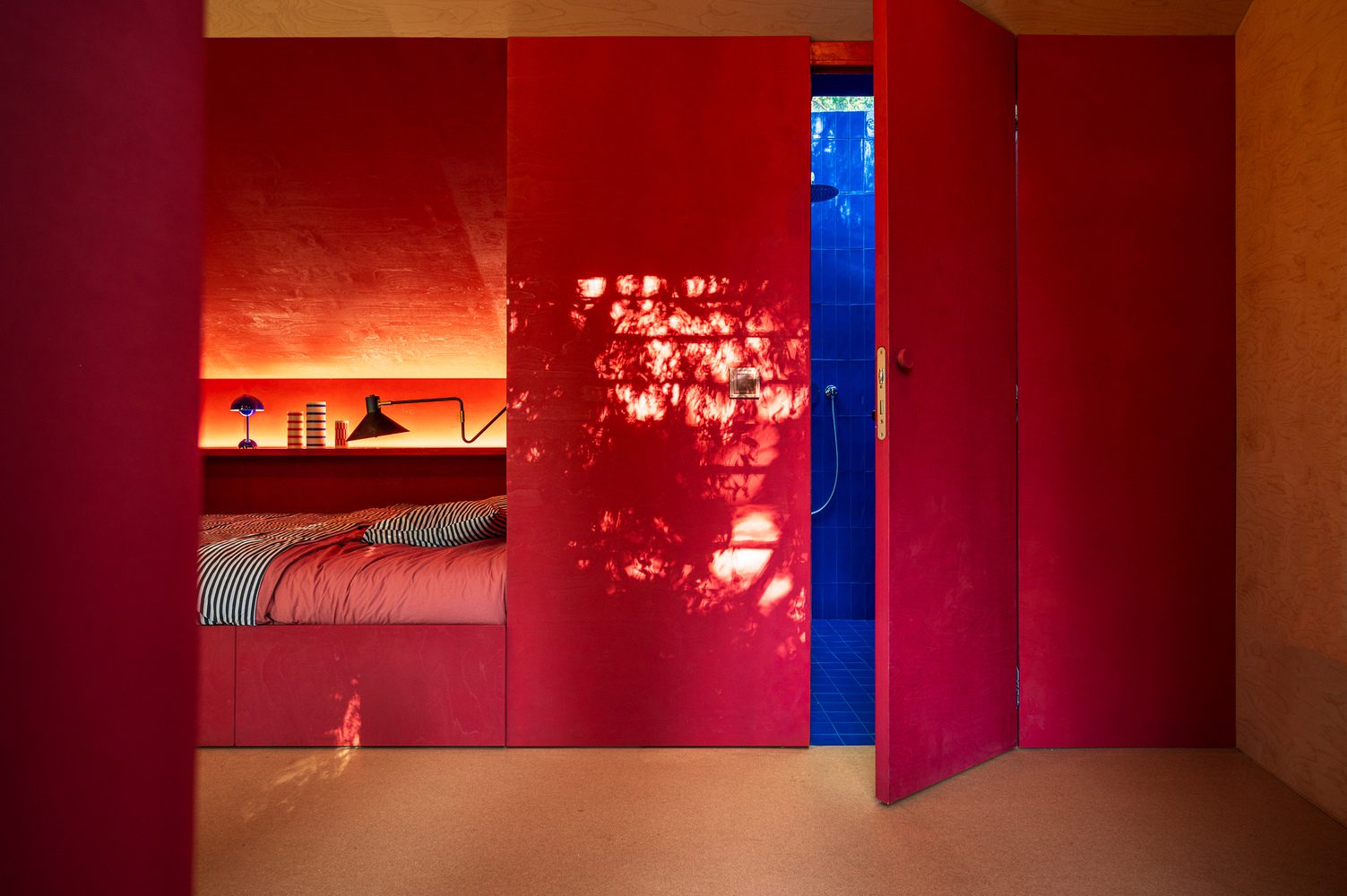
Color, naturally – The lush, free greenery contrasts with the cherry-raspberry hues of the gate, path, trellises, or table – and above all, the colors of the interiors. Here you’ll find a living space with a kitchen and workspace for Magda and Grzegorz, a sleeping nook, and a bathroom. Compact spaces blend with the garden through large-format glazing which can be opened up on sunny days. Then both work and leisure move to the terrace. The walls and ceilings of the cottage are covered with plywood stained with natural, eco-friendly oils. The wall parallel to the glass has a raspberry shade. The same color in many variations appears on window frames, curtains, kitchen fittings, and many pieces of furniture and accessories. They are balanced by delicate tones of wood, transitioning into gentle beige fabrics or muted gray flooring. They harmonize with the organic forms of the furnishings.
© Piotr Maciaszek
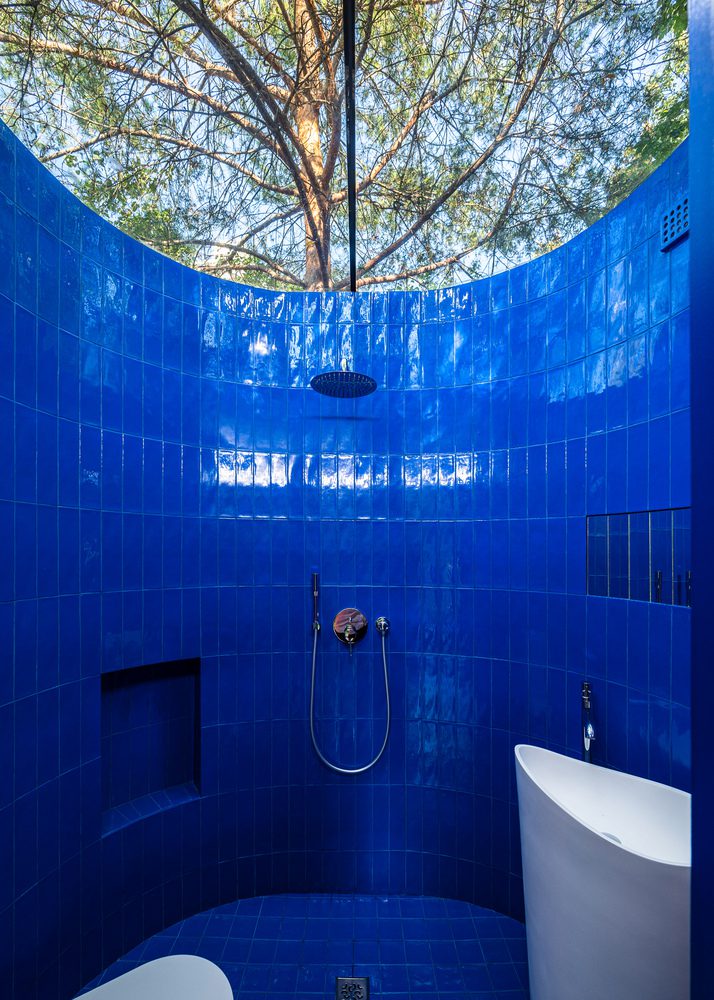
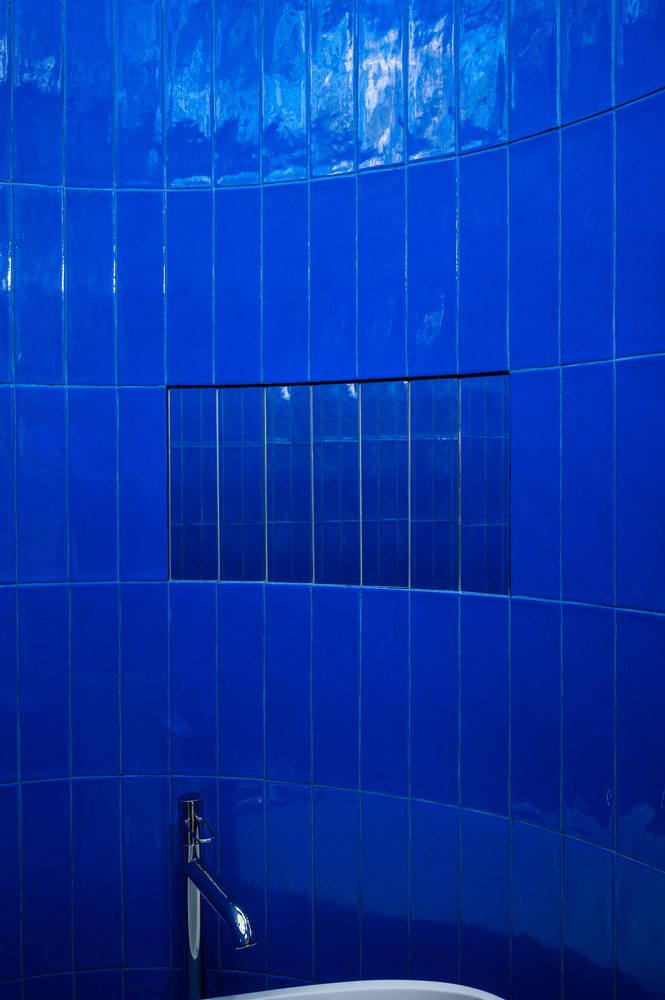
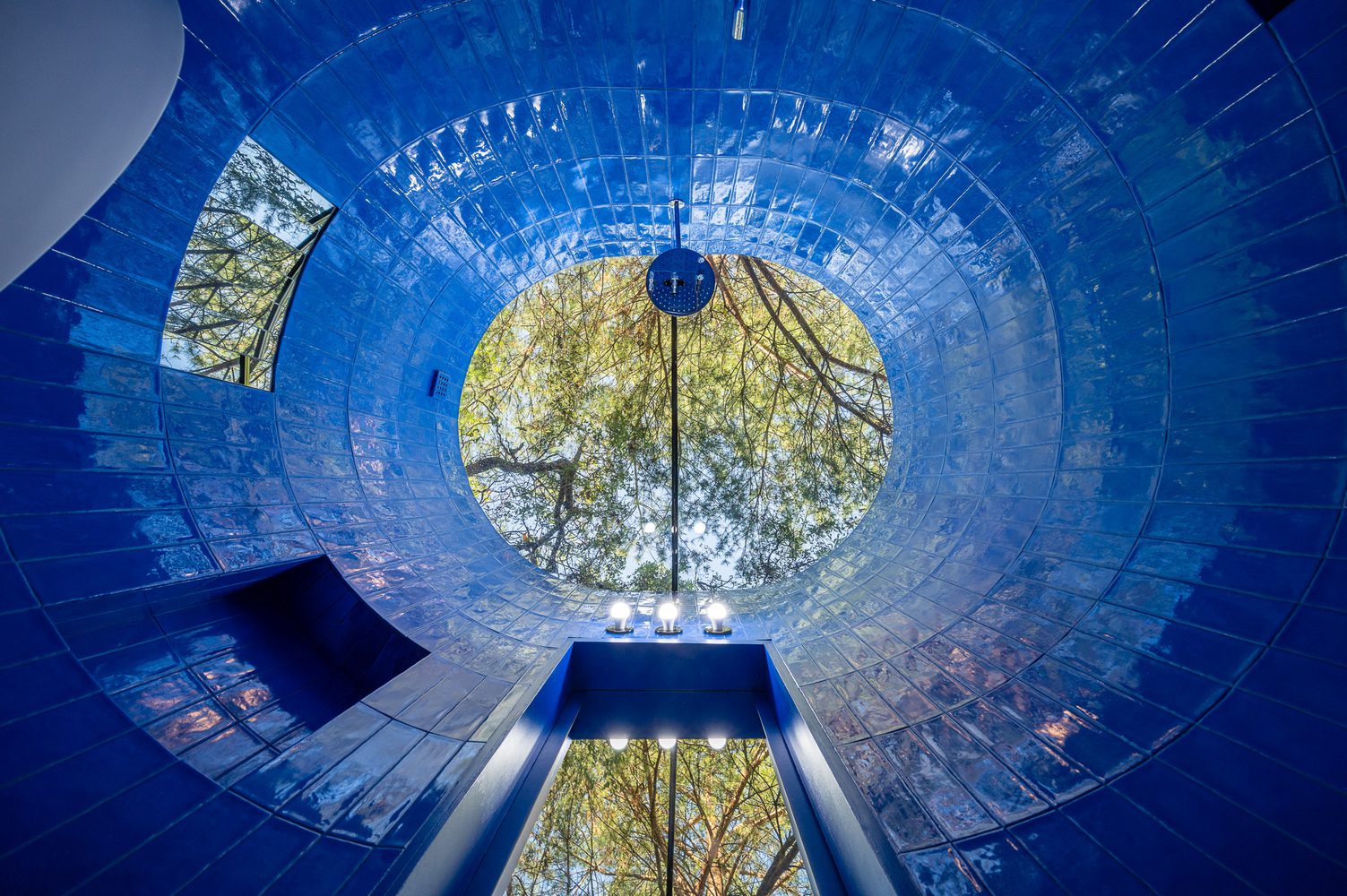
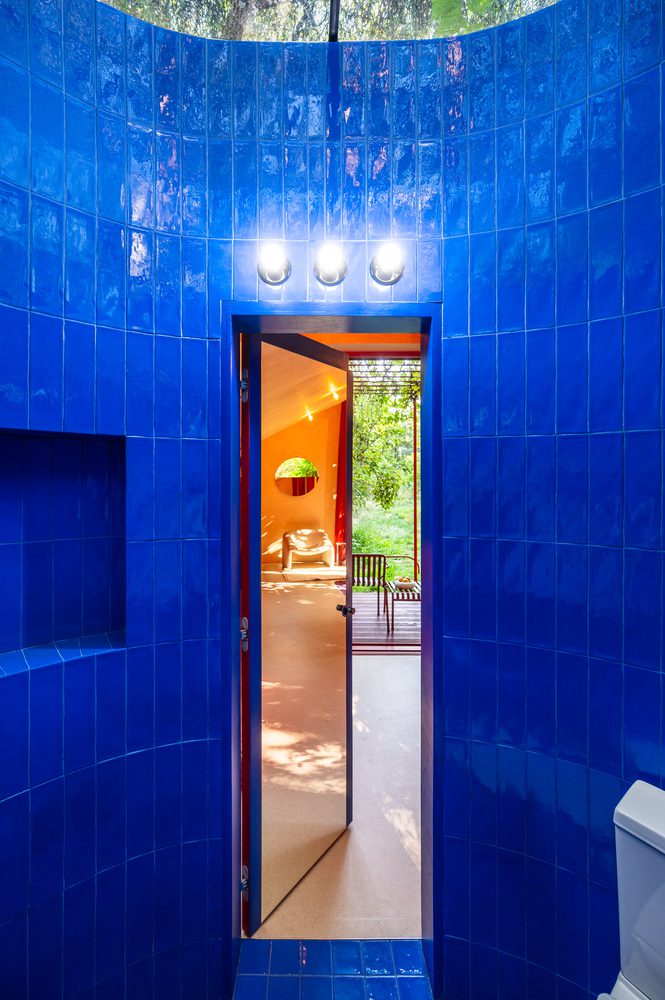
Next to the kitchen, attention is drawn to a semicircular window. In every project, we try to wink at the viewer – winks Karol Pasternak. Here, all you need to do is open the shutter to gain an additional view of the garden. It’s both functional and artistic. Art integrated into the wall. An even bigger surprise awaits in the bathroom. The red chimney, protruding from the green mass of the house, turns out to be an oval capsule with a shower, sink, and toilet. After dark, this extraordinary room is illuminated by small spherical lamps, and their light reflects off the glossy cobalt tiles and mirror panels. Late at night, it’s great to turn off the lamps and bath, enjoying the view of the Warsaw sky through the glass roof.
Project Info:
-
Architects: NOKE Architects
- Country: Warszawa, Poland
- Year: 2023
-
Photographs: Piotr Maciaszek
-
Client/Owner: Magda Grabowska-Wacławek aka Bovska, Grzegorz Wacławek
-
Design Team: Piotr Maciaszek, Karol Pasternak, Mateusz Jaworski
-
Set Design: Ania Witko