


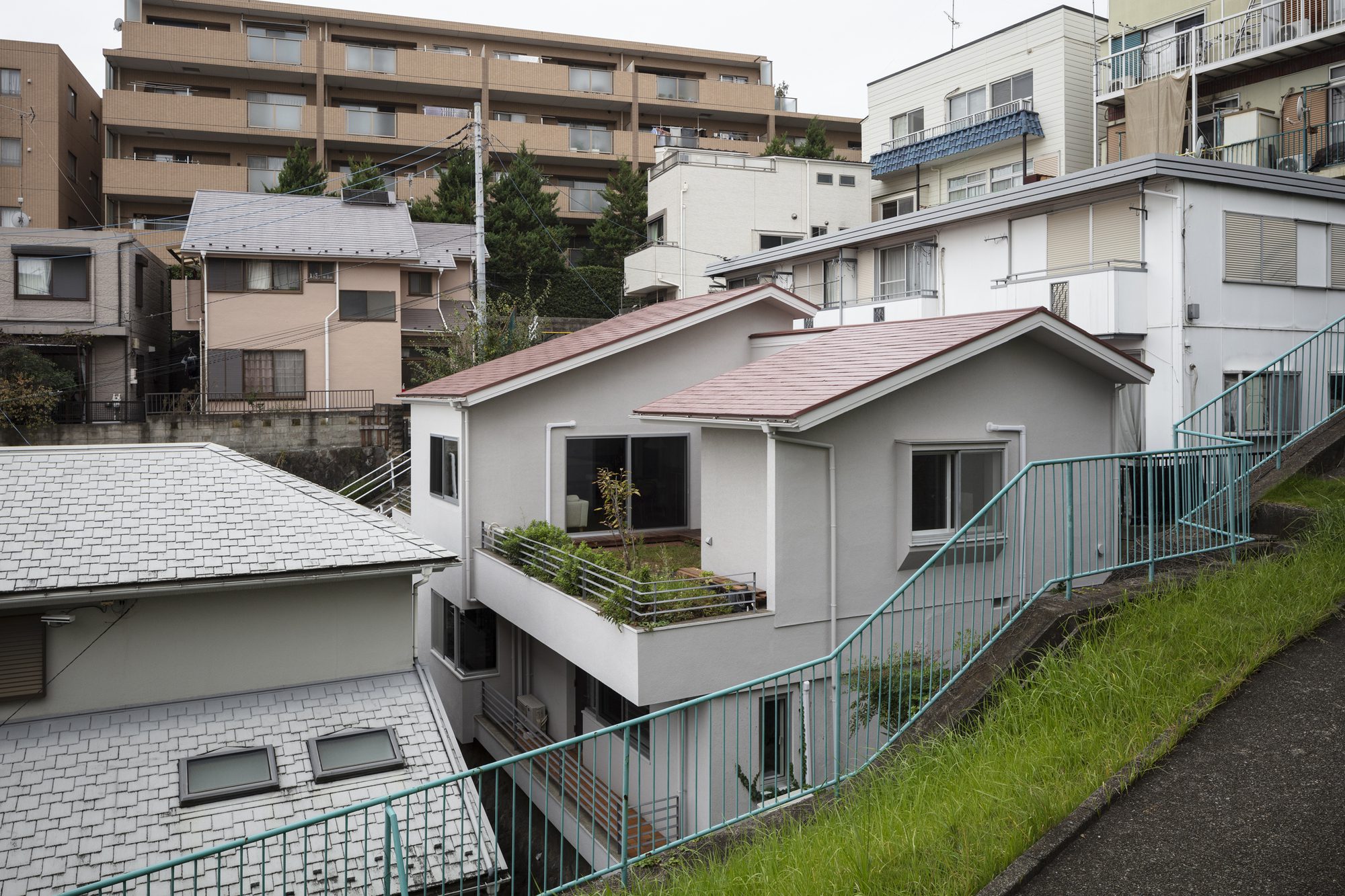
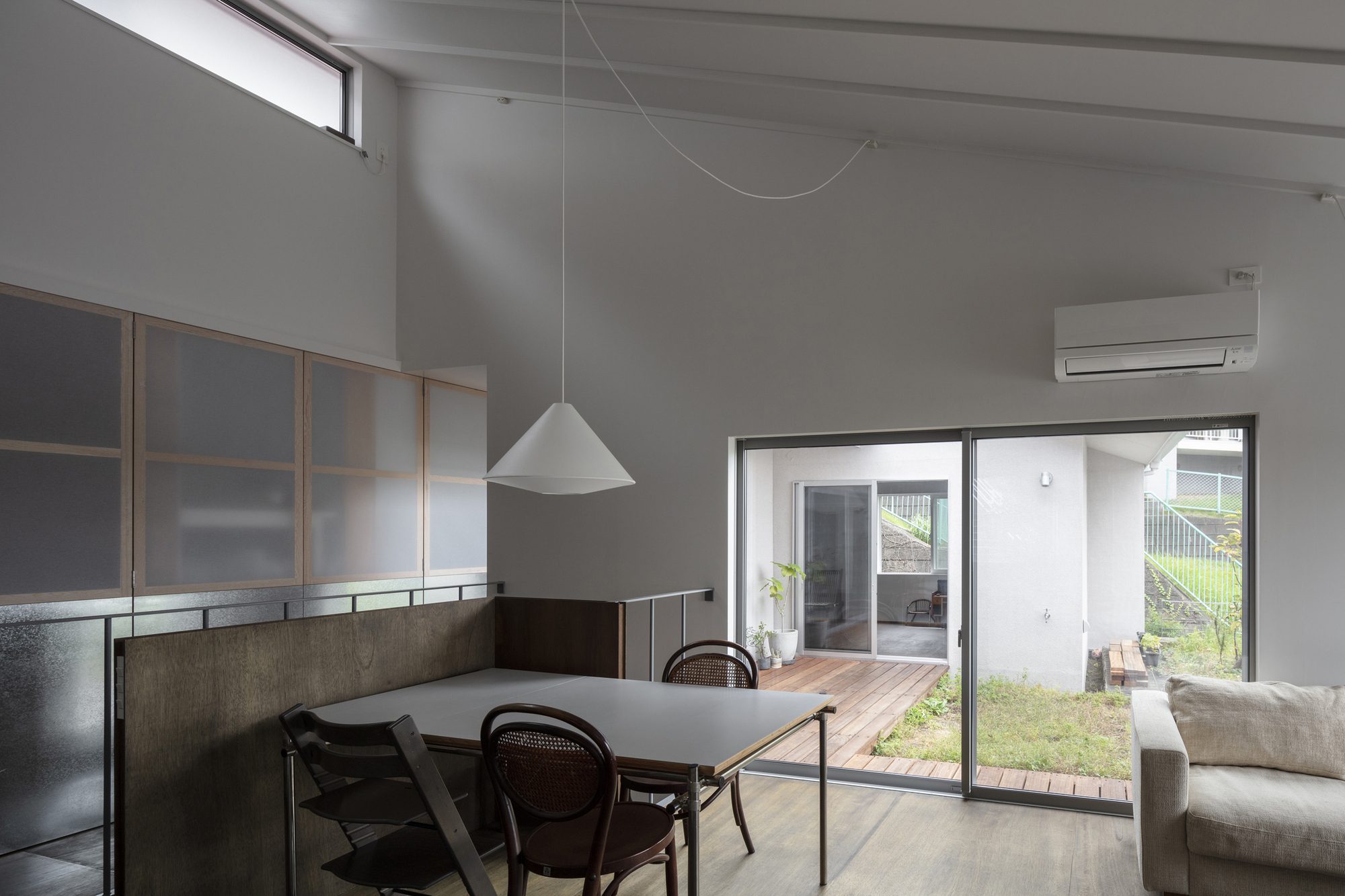
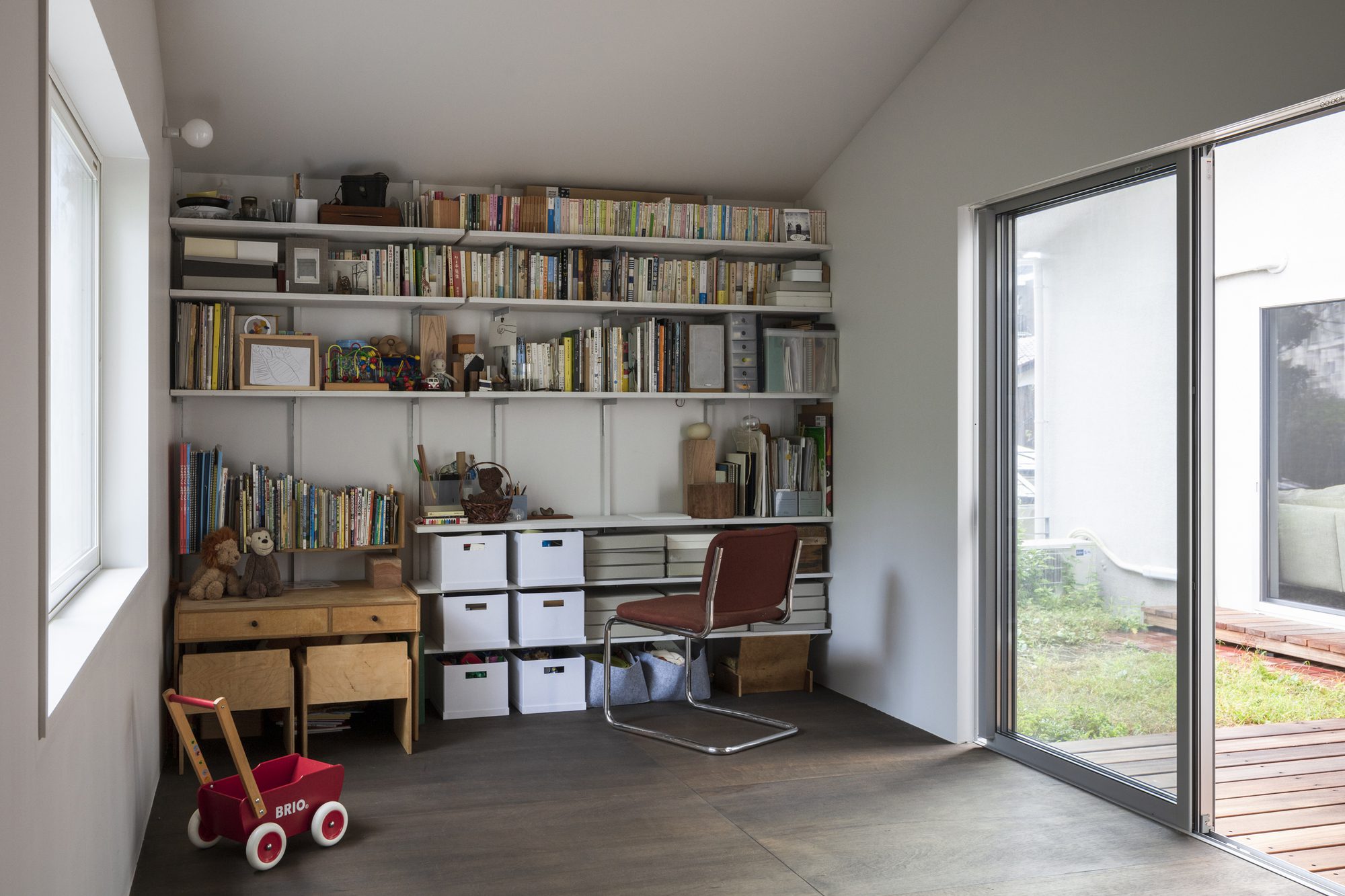
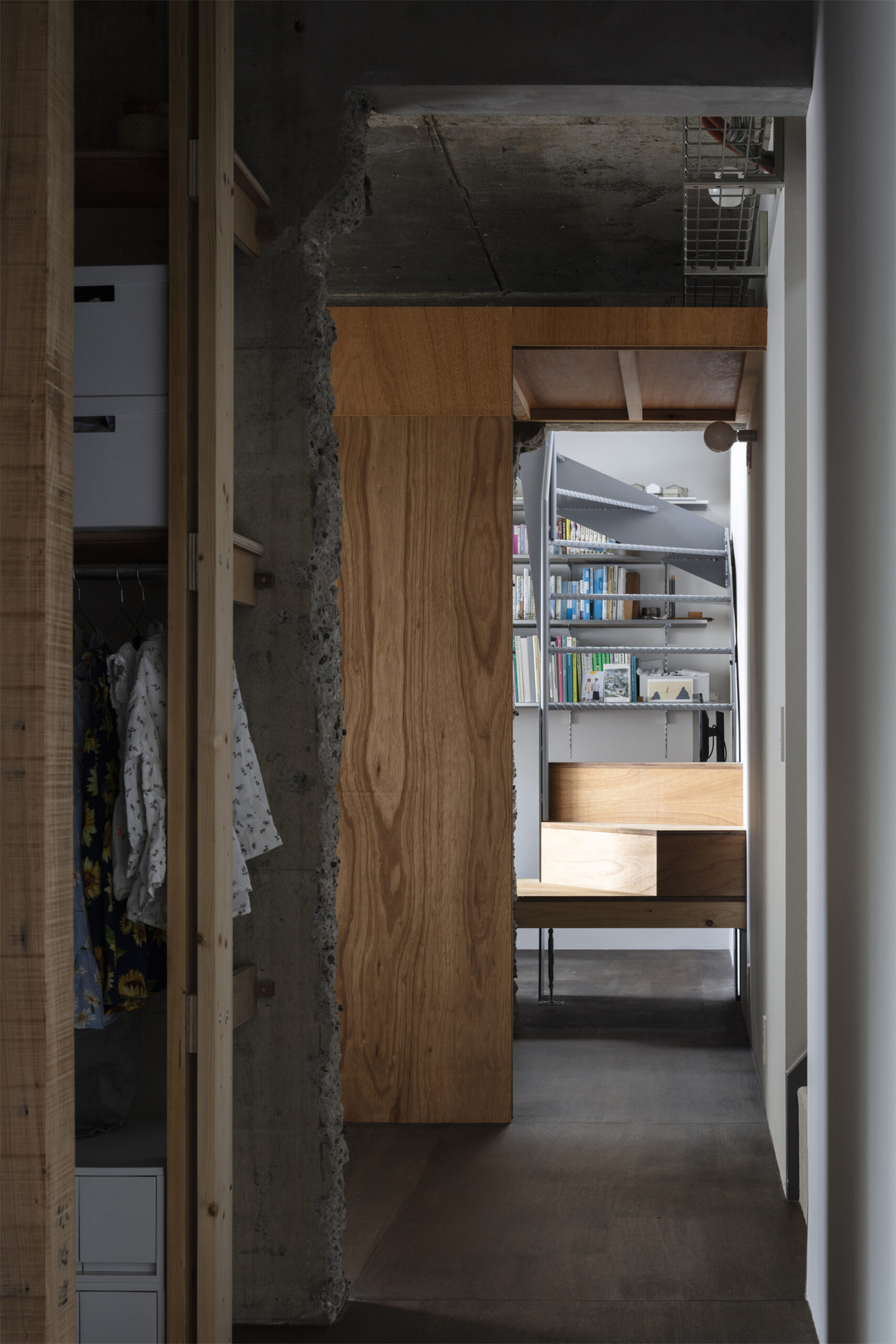
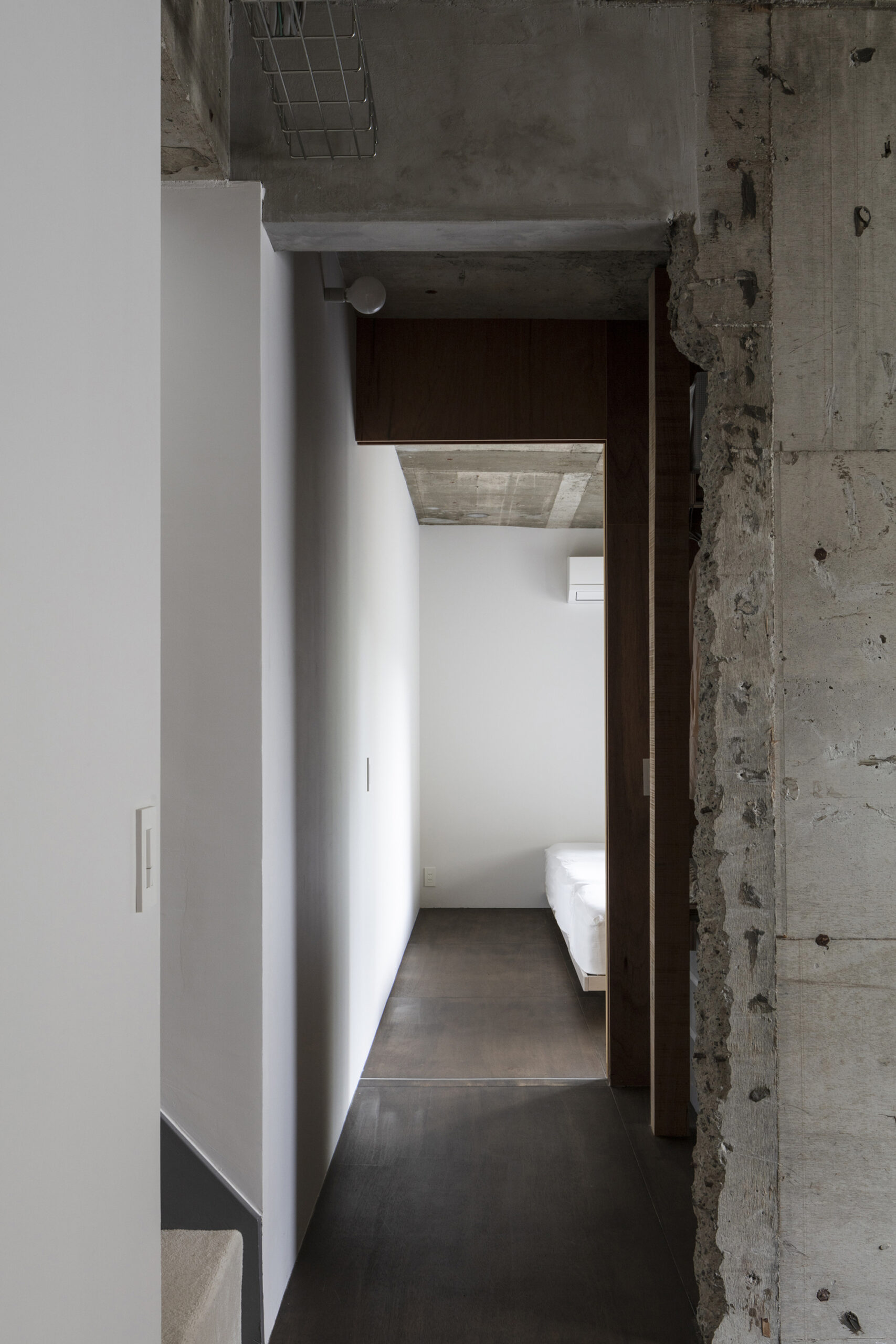
House K|T, This is a renovation project of a 45-year-old detached house on a sloping site in the Tama Hills. This renovation will maximize the spatial appeal of the existing building without changing the overall form and layout of the building. The building will be developed to provide living space for a family of four and the designer’s own studio. Most boundaries that divide spaces are defined by partitions that separate rooms and connect them with openings and fixtures.
© Norihito Yamauchi
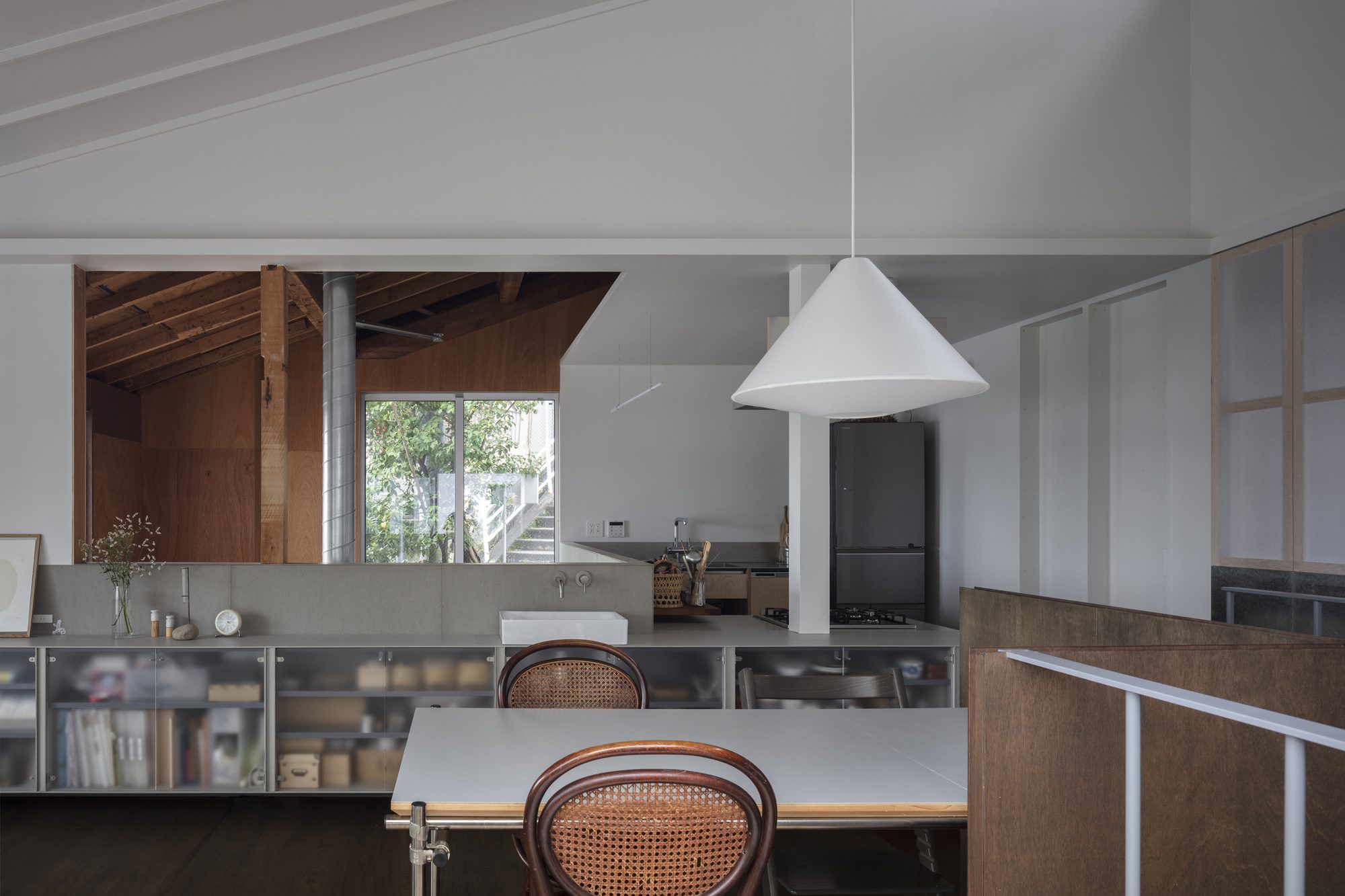
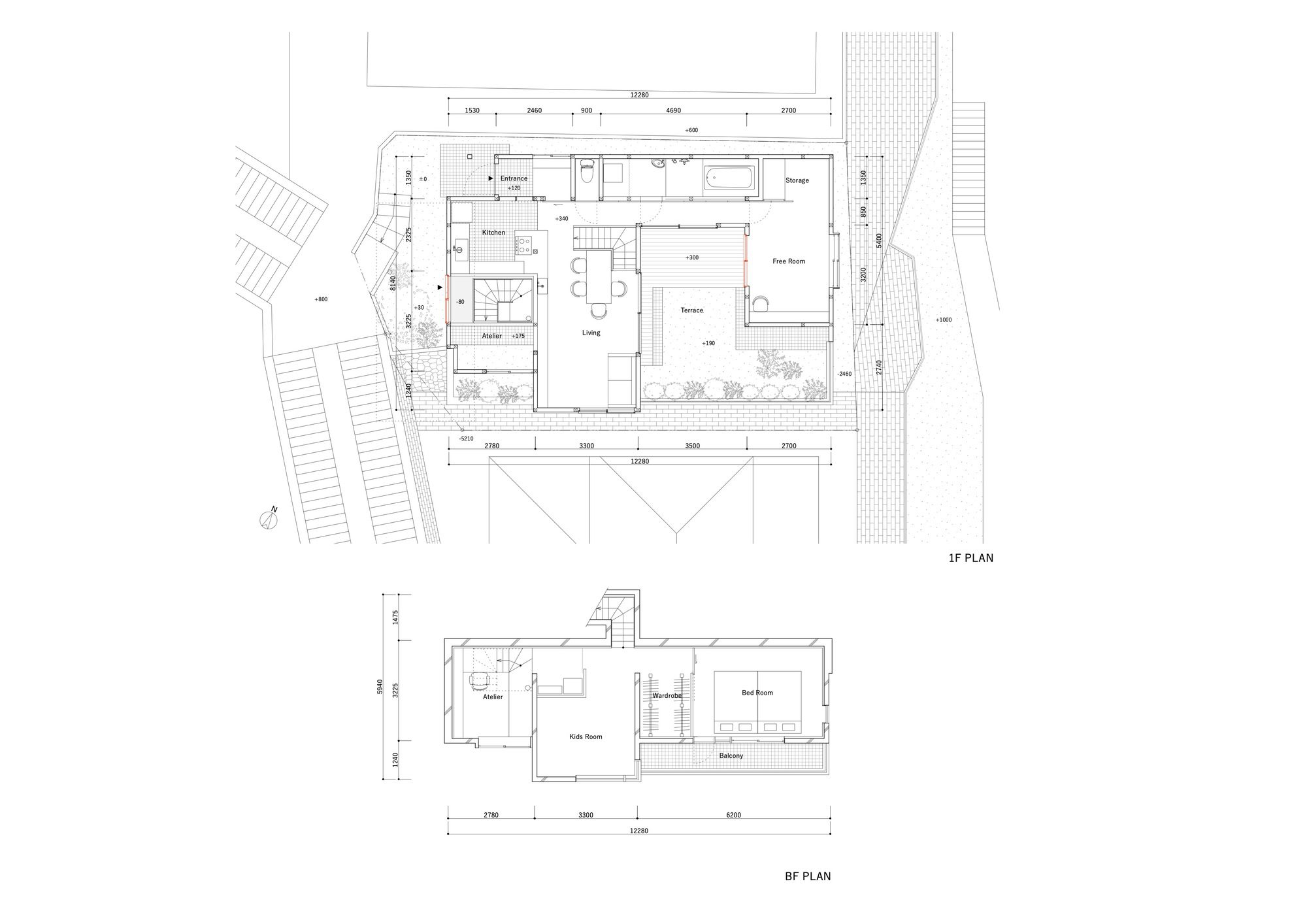
Before the renovation, the plan of this building was similarly solved, with each room having a one-to-one relationship with the south-facing view and the courtyard terrace. Therefore, the idea was to edit the boundaries of the space and redefine the entire house, while keeping the arrangement and shape of the rooms as they were.
© Norihito Yamauchi
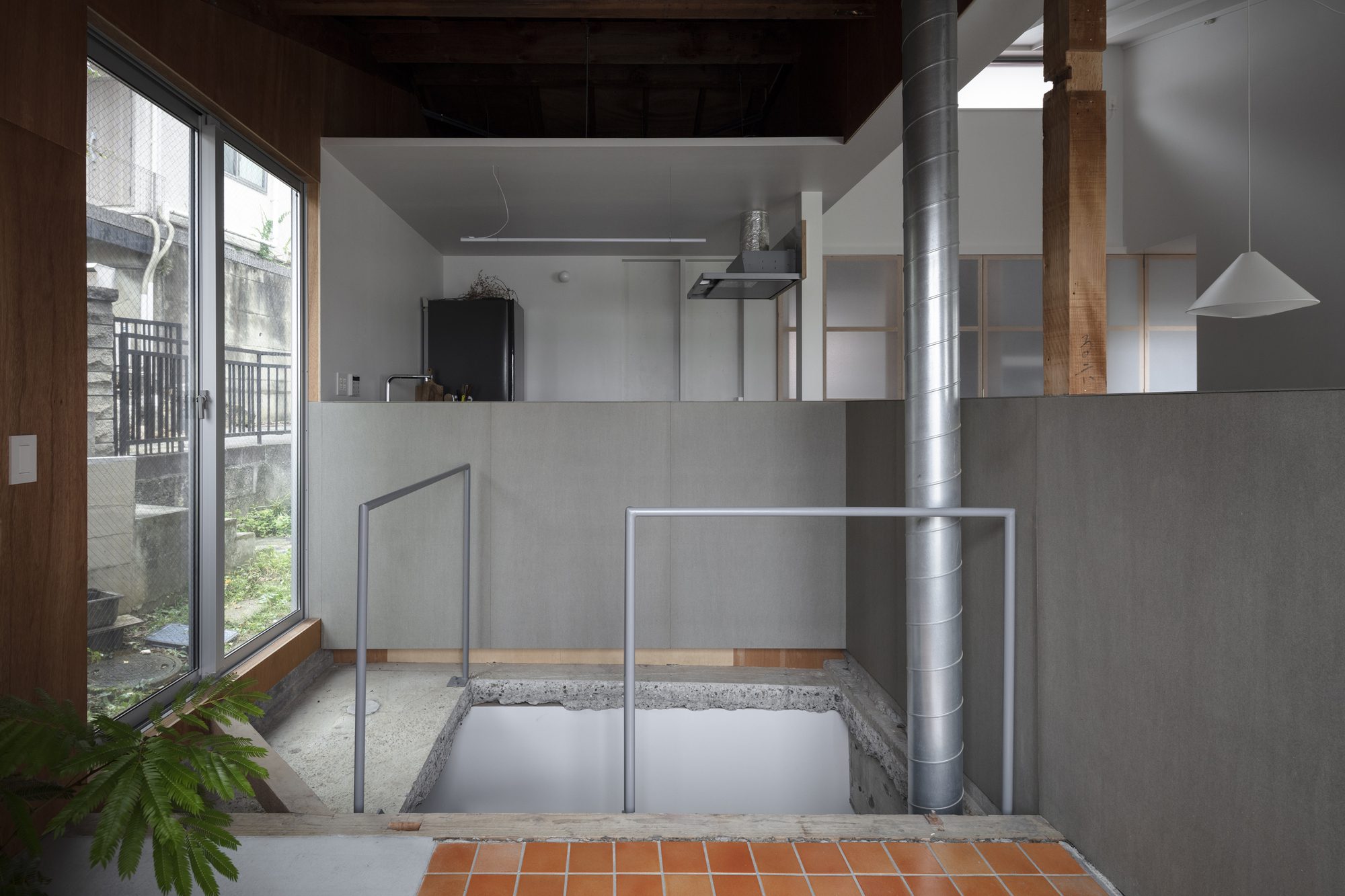
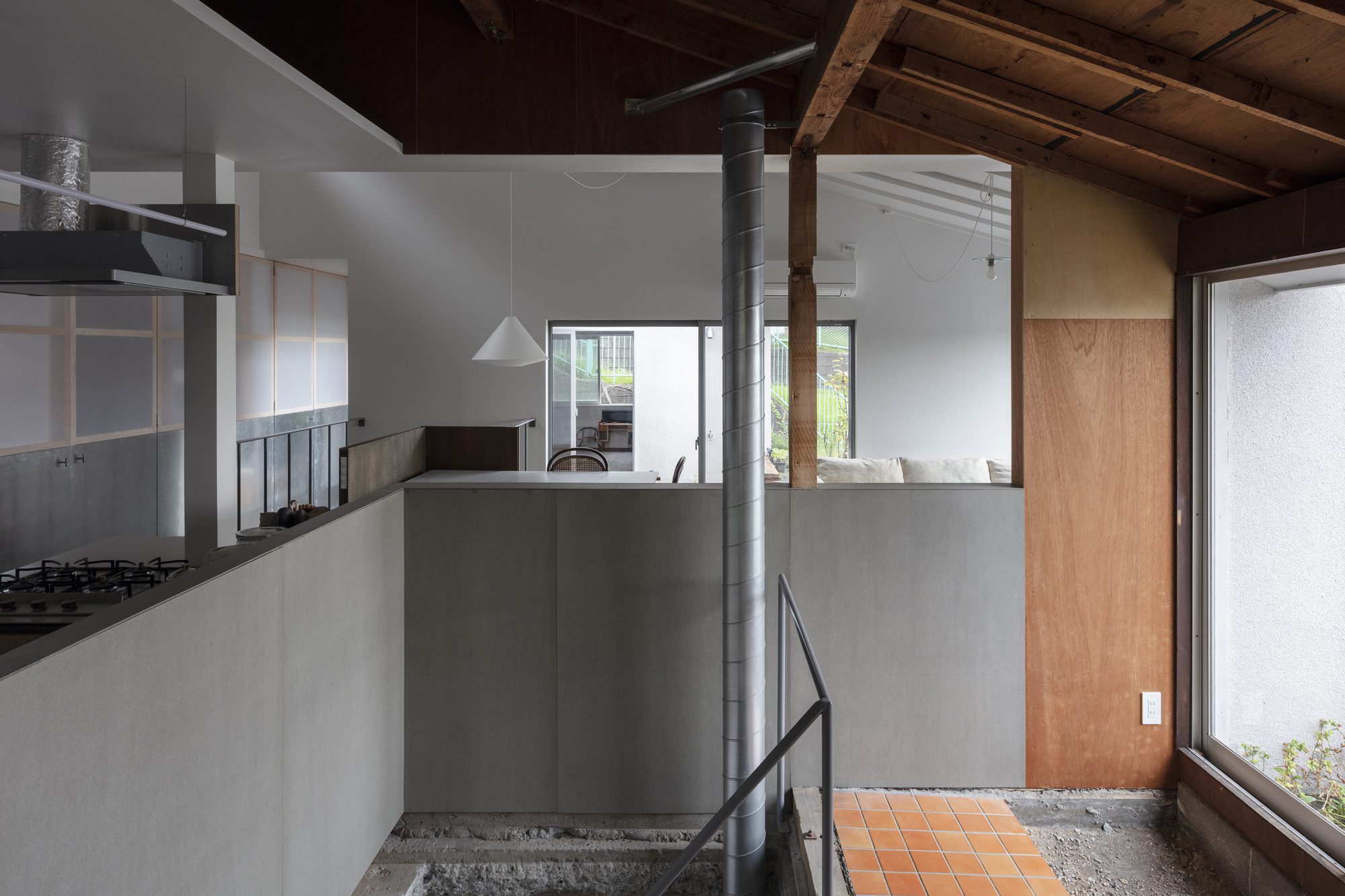
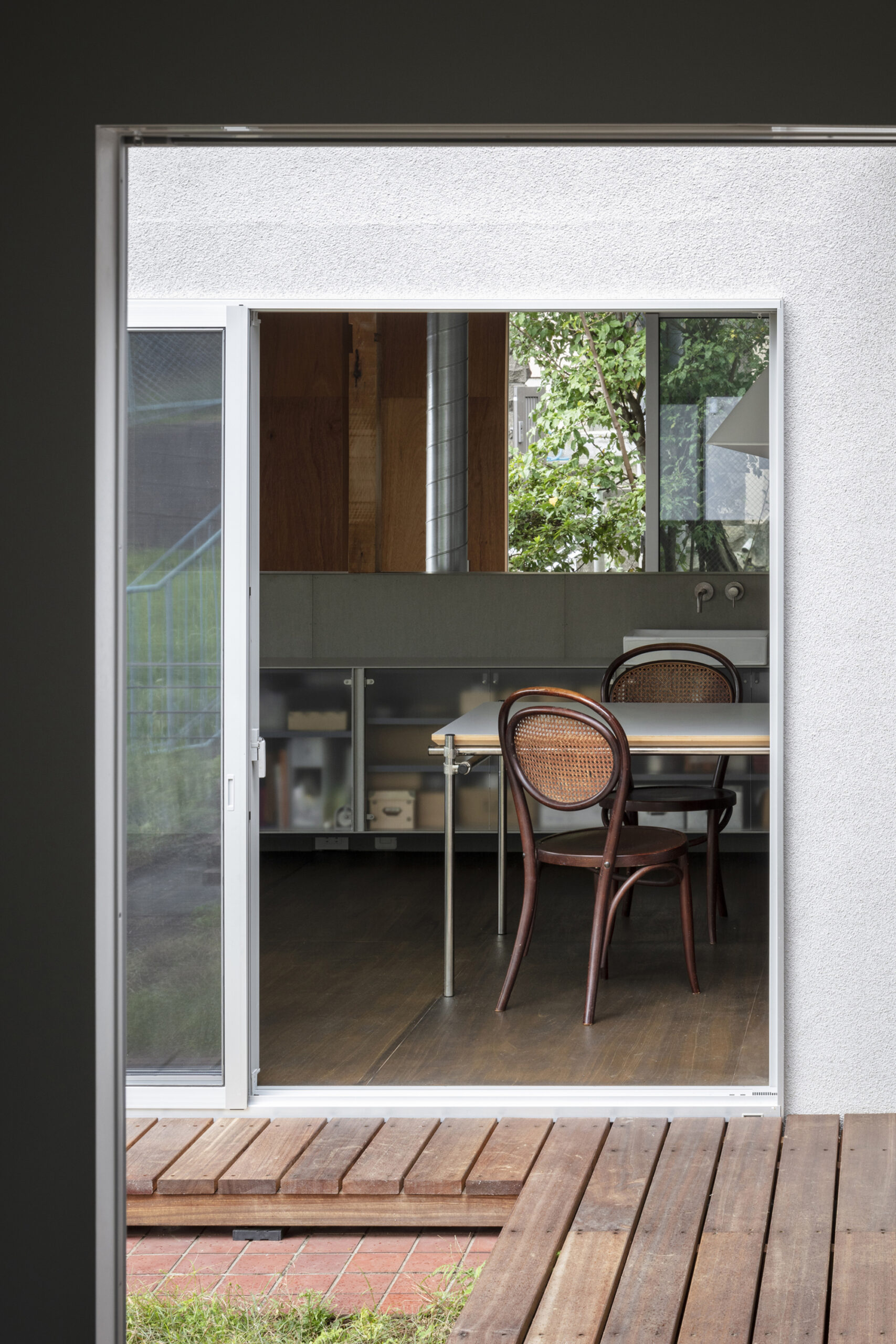
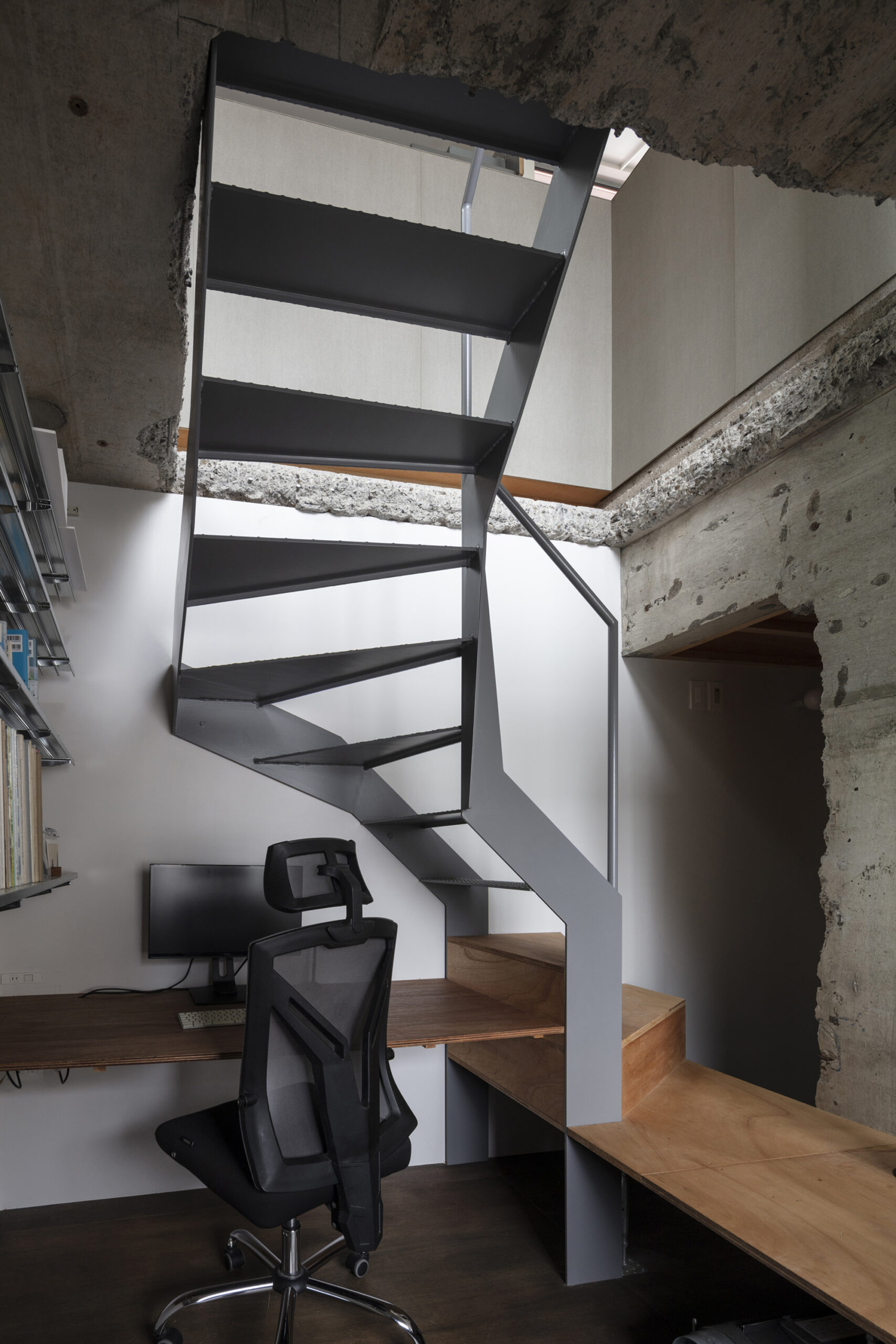
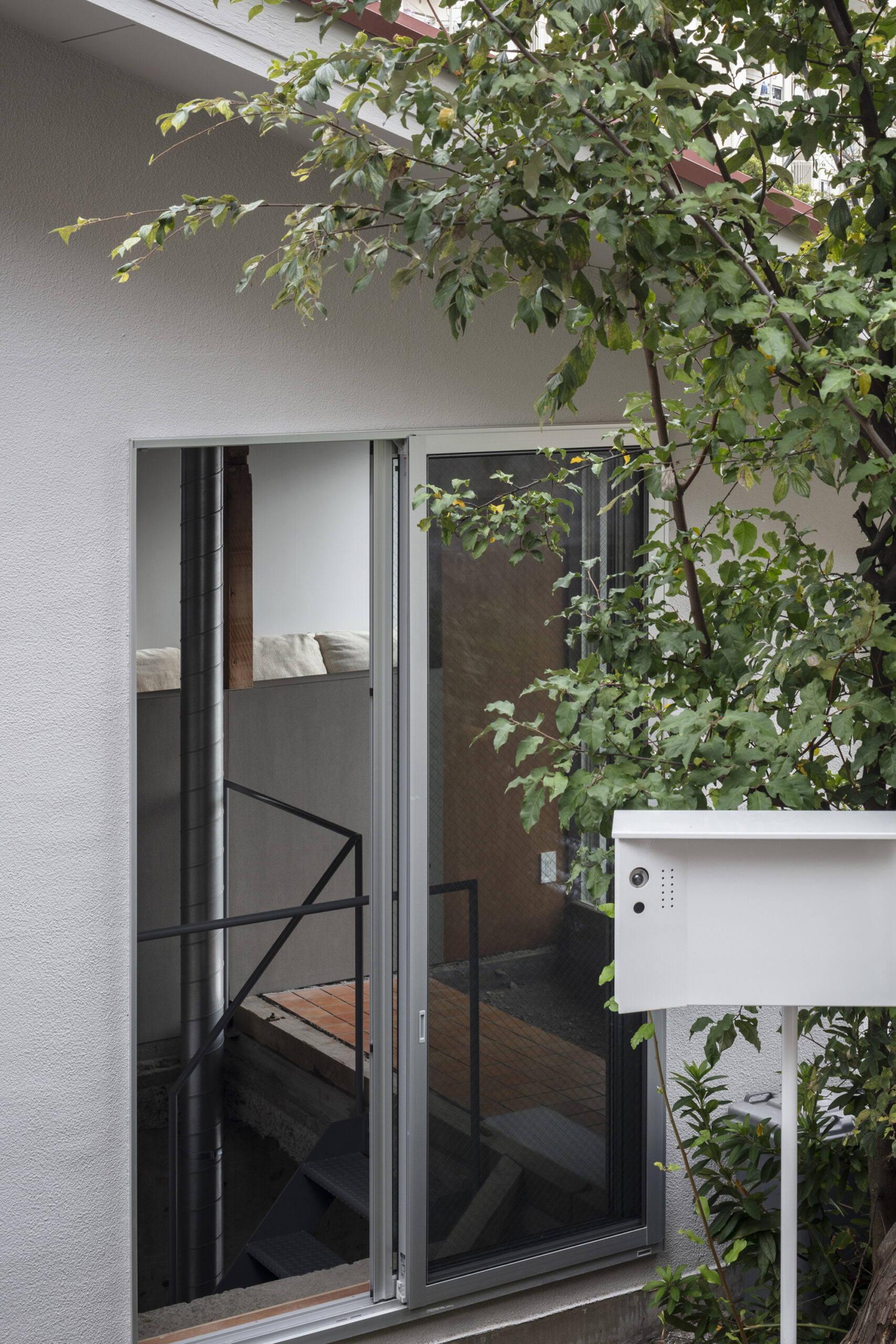
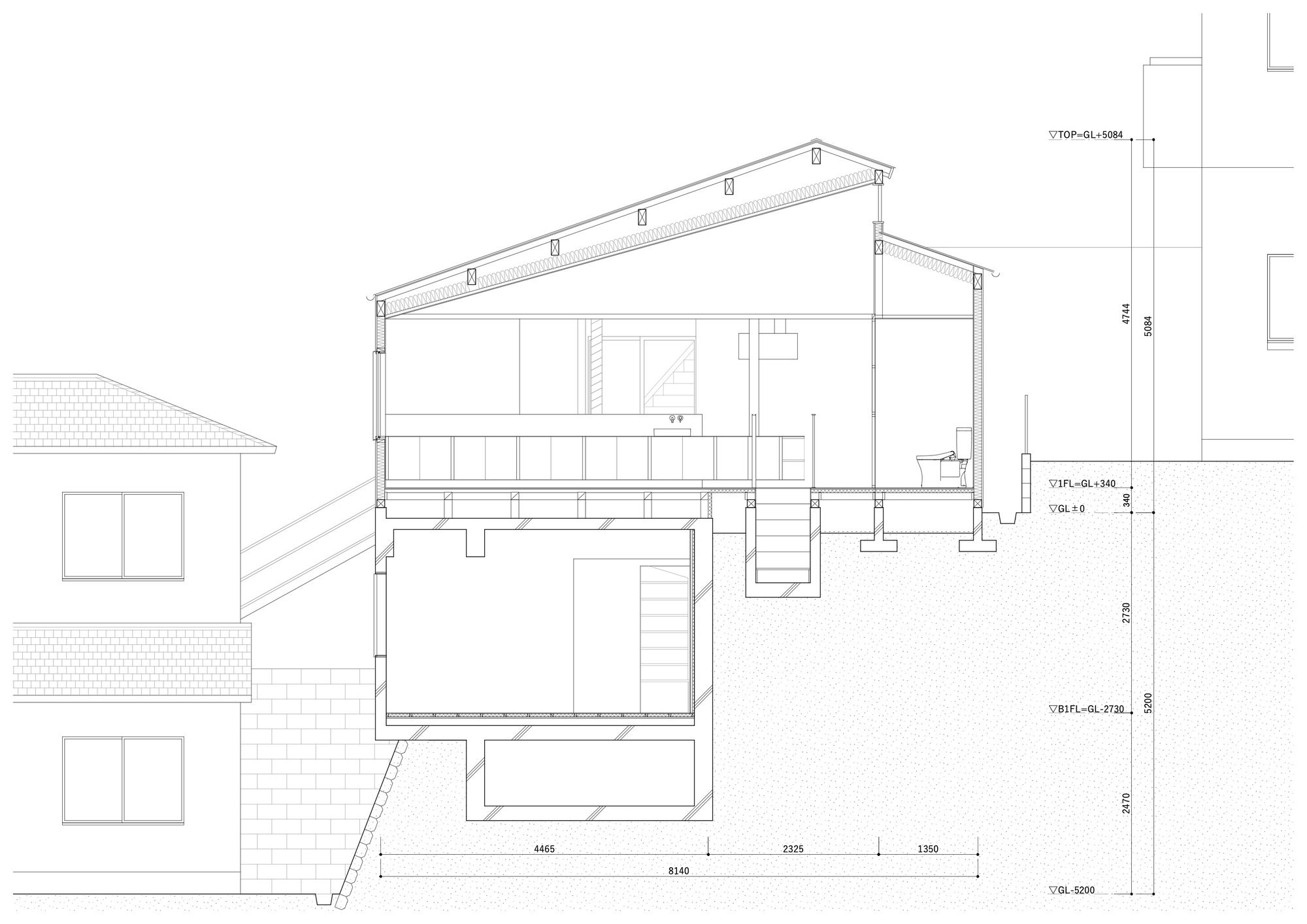
First, to make the most of the existing building’s U-shape, the partitions between the living room, dining room, and hallway were repositioned to allow views, light, and air to flow around the courtyard. Next, a new entrance to the studio and exit to the courtyard were built on the first floor, and a stairwell was built in the basement to serve as a flow line to the studio. A visual connection from the outside to the inside was created.
© Norihito Yamauchi
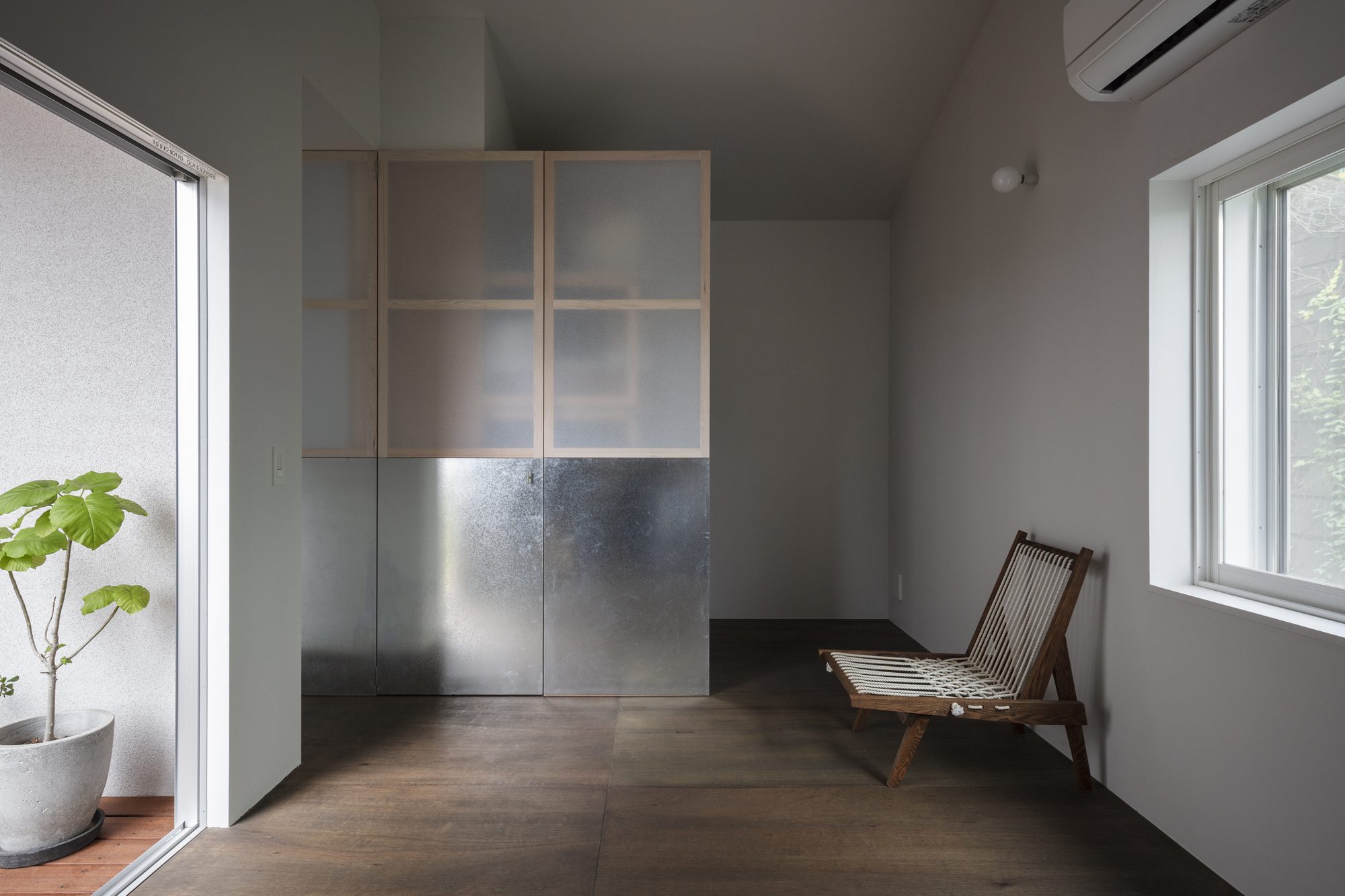
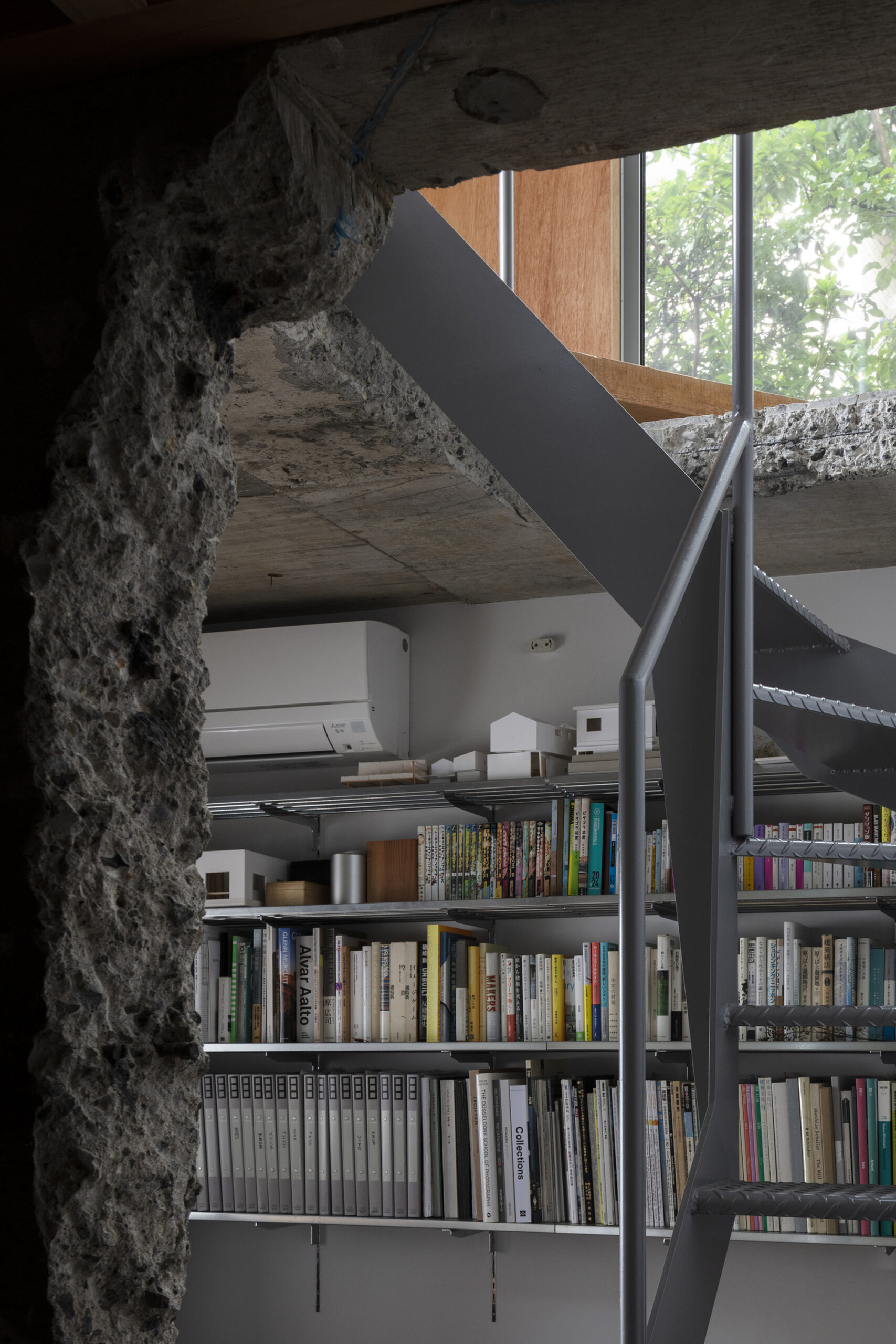
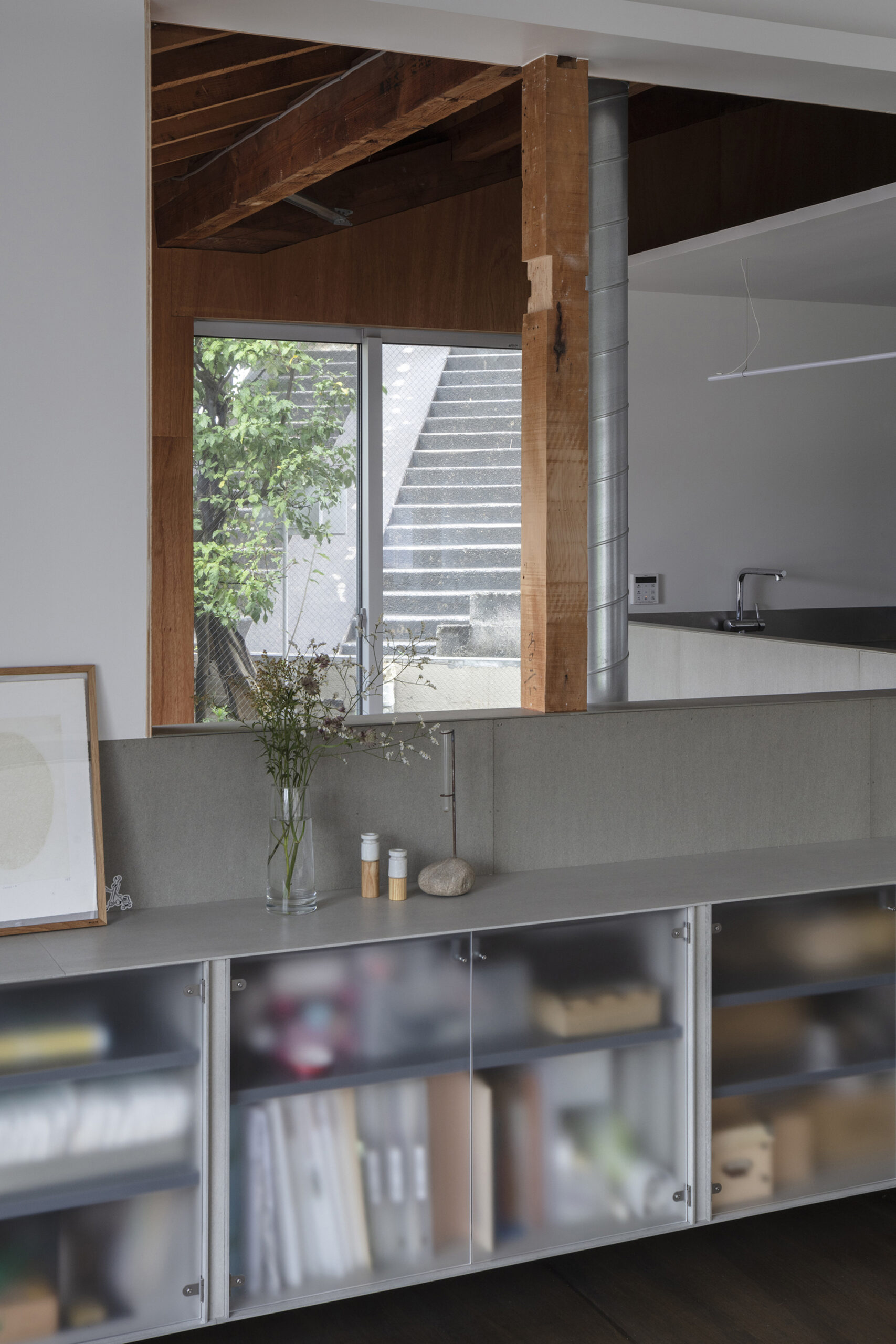
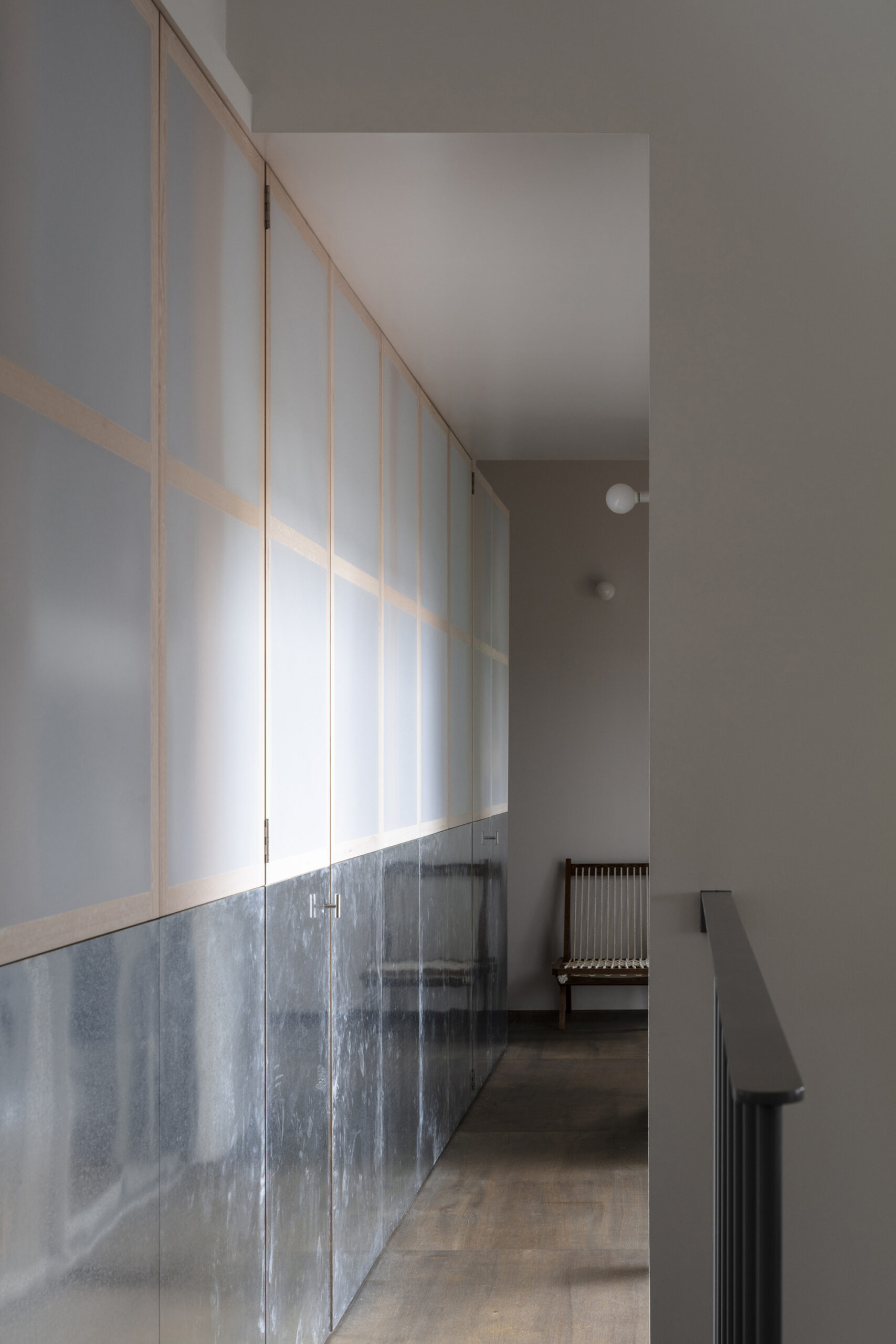
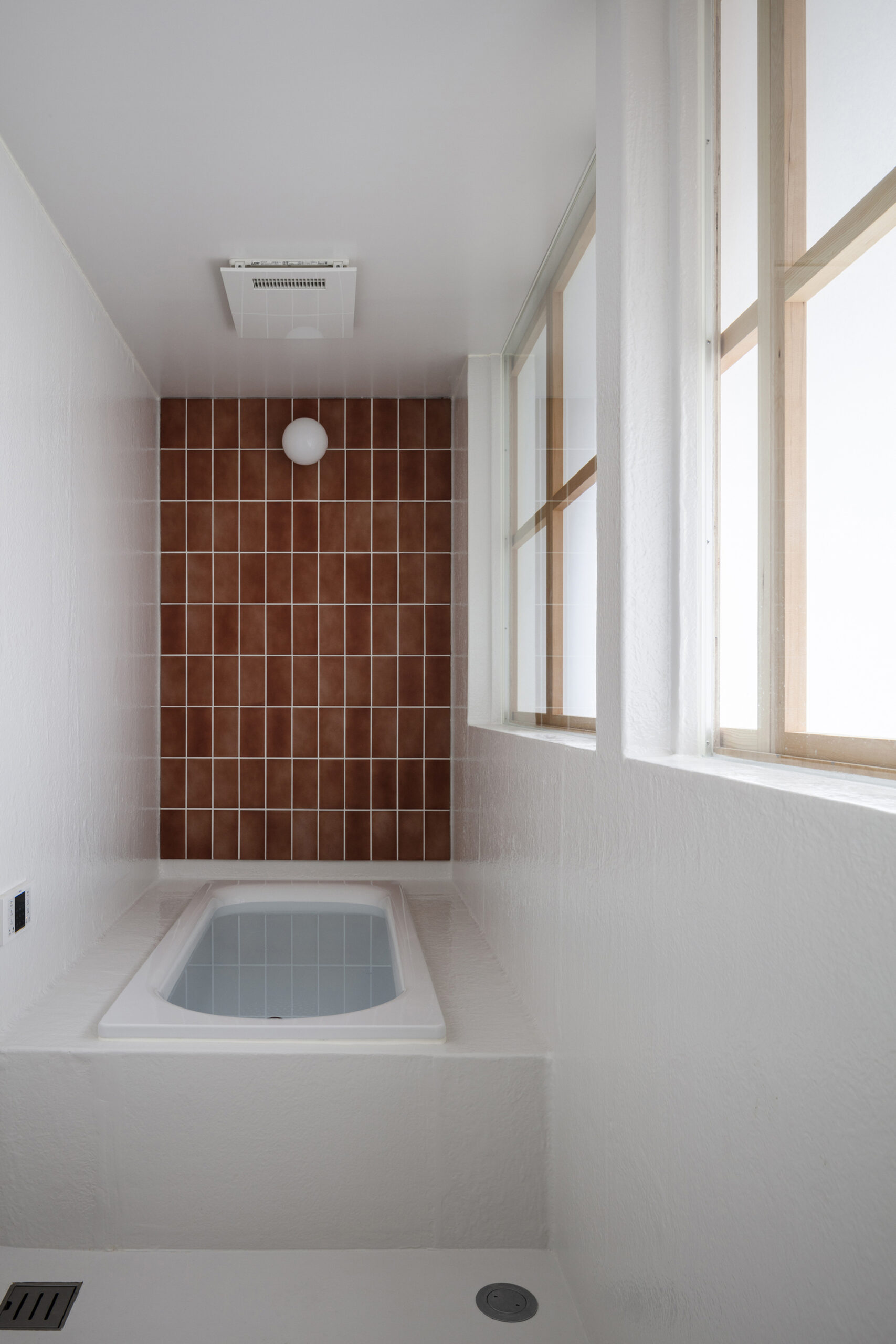
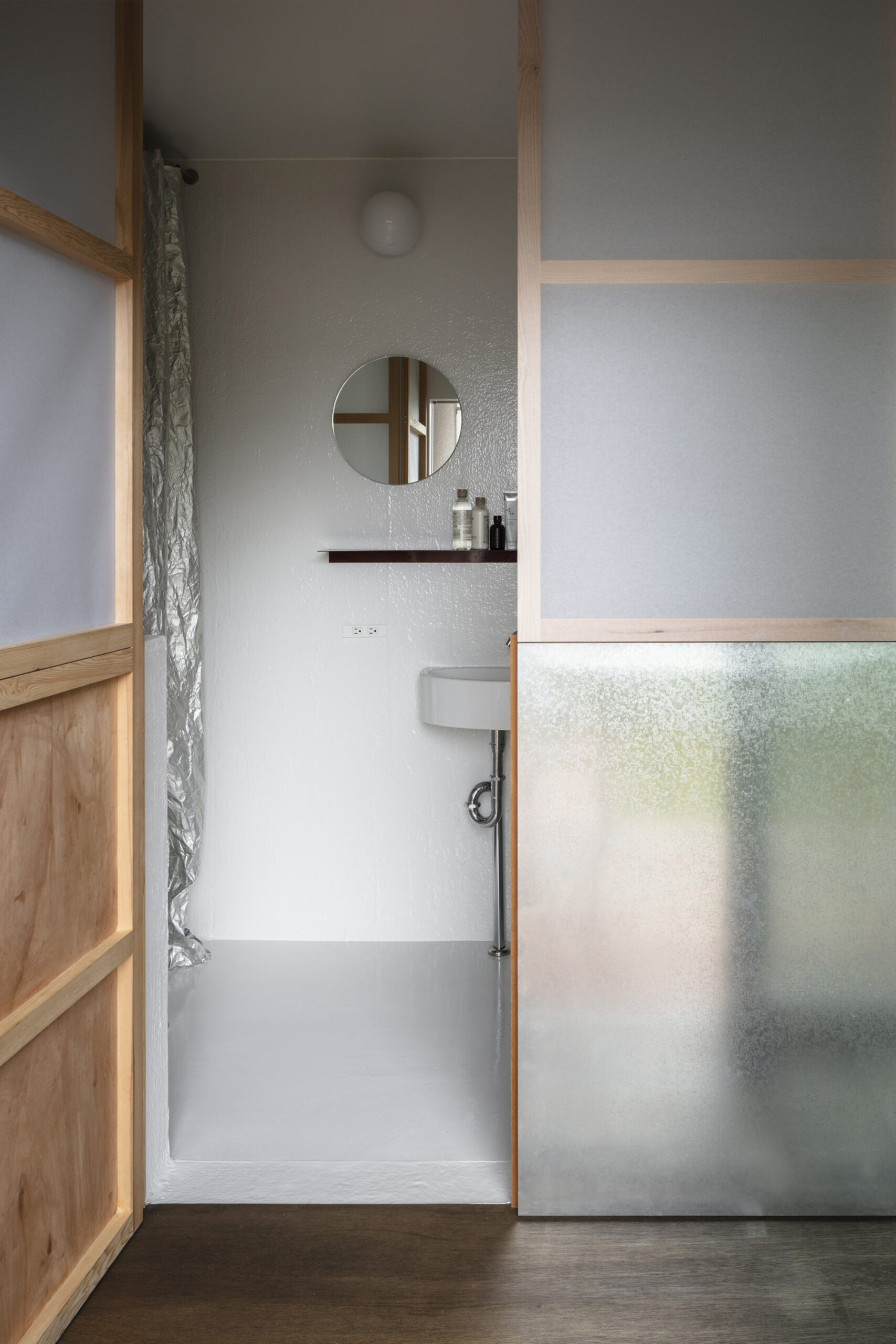
When editing the boundary surfaces, the focus is not only on walls and openings, but also on fixtures, furniture, stairs, materials, structural members, and other elements related to the boundary surfaces. All these elements are treated equally and reconstructed regardless of their size or whether they are old or new boundaries. The overlapping of objects on the site gives a greater sense of relationship to the surroundings, transforming the entire house into a space that seems to be an integral part of the sloping terrain.
© Norihito Yamauchi
We expect that this architecture, which is connected to the outside world without stopping the time that the building has passed through, will continue to change in the future, using the newly acquired boundary surface as a clue.
Project Info
Architects: tombow architects
Country: Japan
Area: 109 m²
Year: 2024
Photographs: Norihito Yamauchi
Engineering & Consulting > Structural: oha
General Constructing: Yamauchi Construction Firm

Anastasia Andreieva is an accomplished Architectural Projects Editor at Arch2O, bringing a unique blend of linguistic expertise and design enthusiasm to the team. Born and raised in Ukraine, she holds a Master’s degree in Languages from Taras Shevchenko National University of Kyiv. Her deep passion for architecture and visual storytelling led her to transition from translation and editorial roles into the world of design media. With a keen eye for conceptual clarity and narrative structure, Anastasia curates and presents global architectural projects with precision and flair. She is particularly drawn to parametric and digital design, cultural context, and emerging voices in architecture. When I’m not analyzing the latest architectural trends, you’ll probably find me searching for hidden gems in cityscapes or appreciating the beauty of well-crafted spaces. After all, great design—like great connections—can be found in the most unexpected places. Speaking of connections, because architecture isn’t the only thing that brings people together.