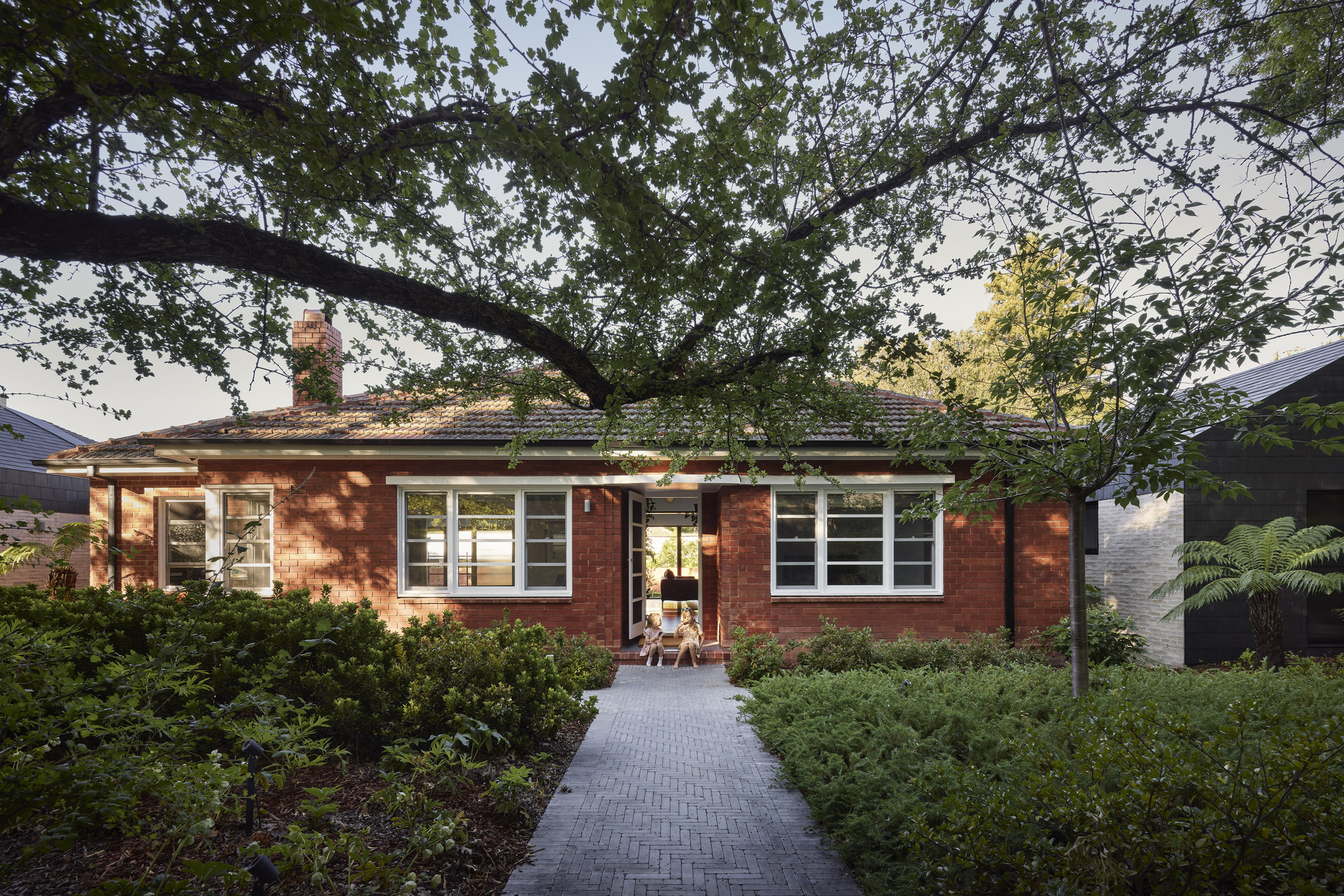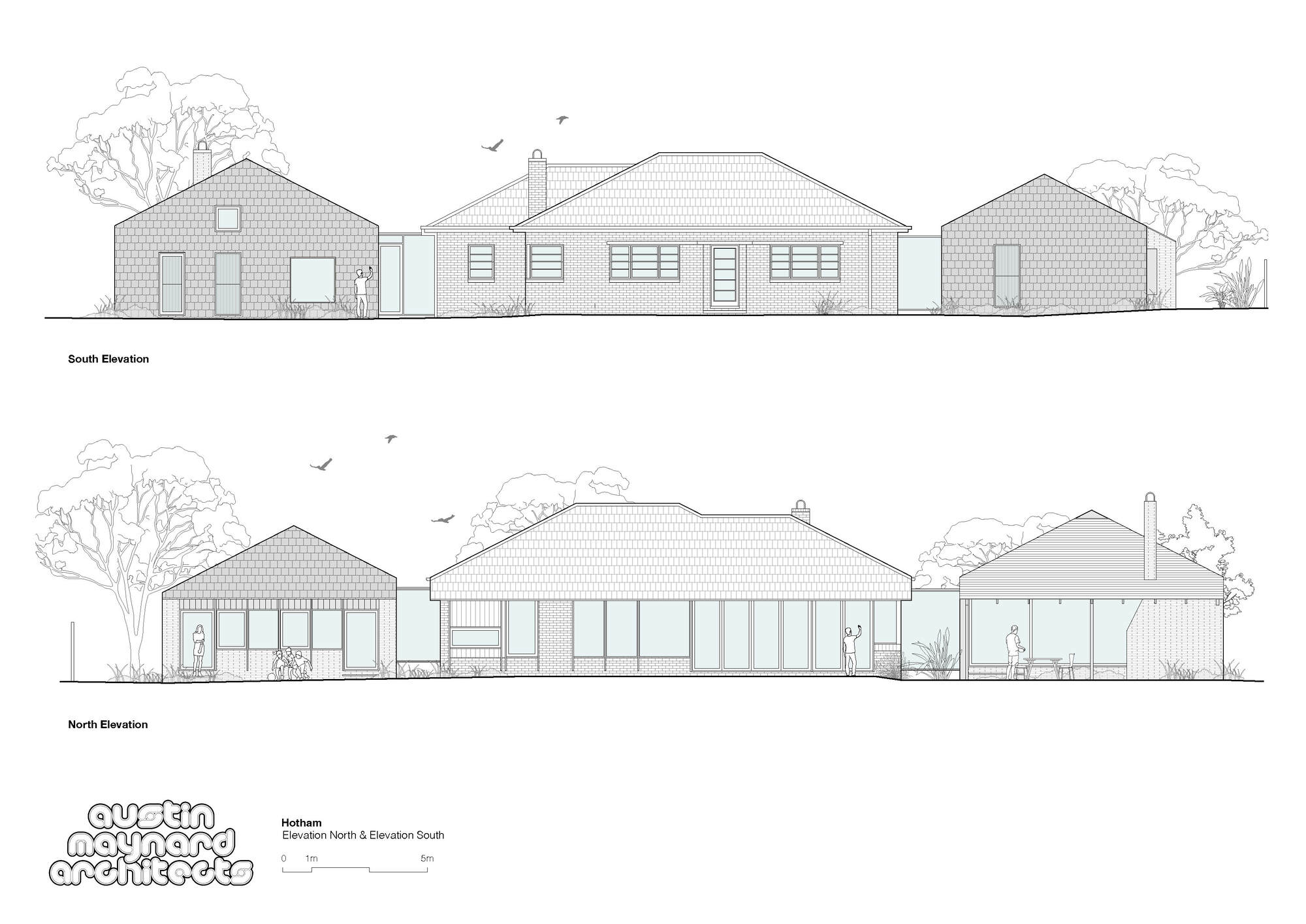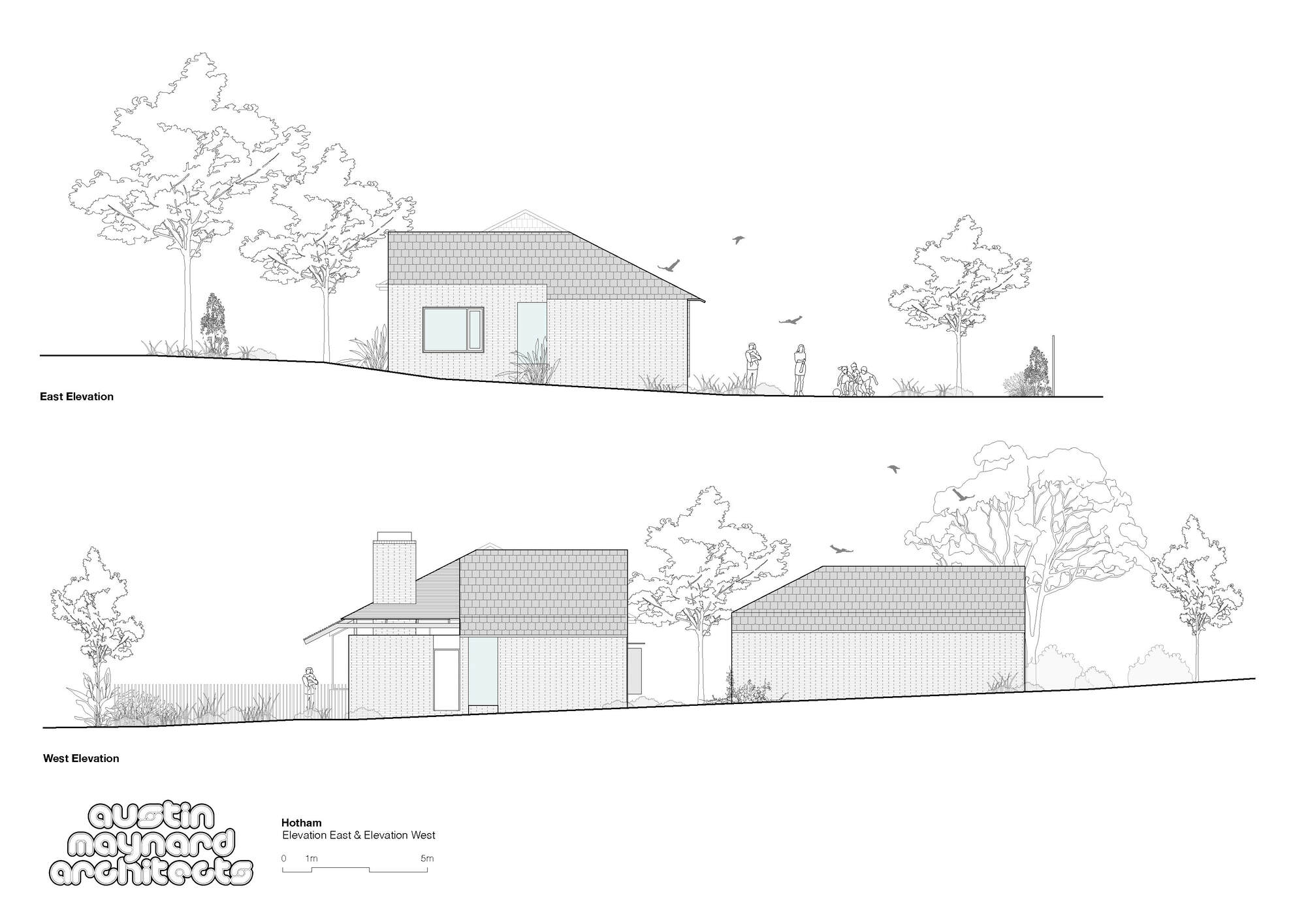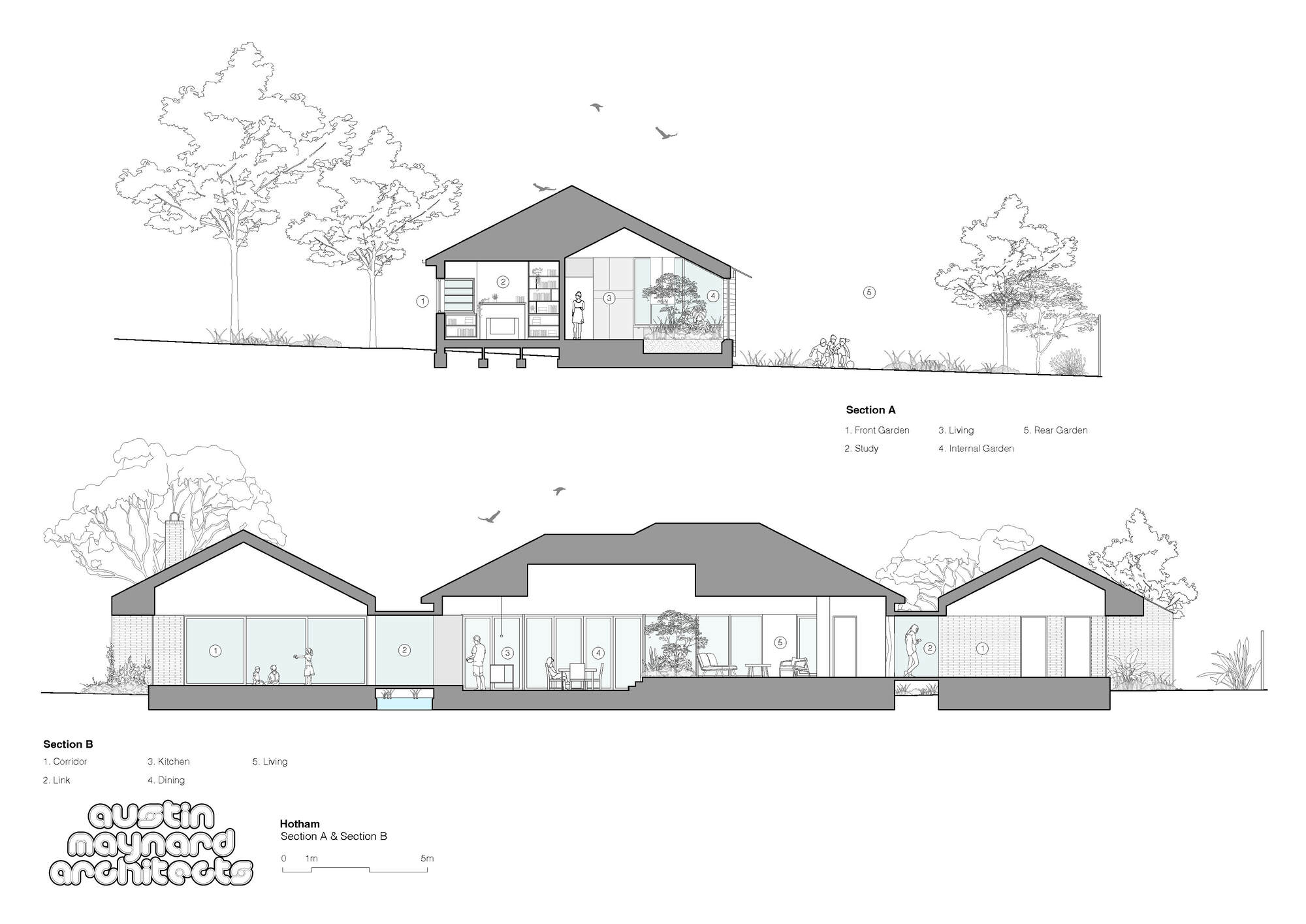


Hotham House, Embedded within lush foliage on an established suburban street just off the National Circuit, with a direct view of the flag over Parliament House, Hotham seeks to slow down and consider Canberra’s past, present, and future built environment. Working to demonstrate the importance of responding to, rather than erasing the cultural and architectural fabric of Australia’s Capital city – a city which ’embodies the Australian spirit and symbolises Australian life and achievement.’
© Tess Kelly
THE WHAT – The Empire strikes back. Hotham is Austin Maynard Architects’ second completed project in Canberra, following on from Empire, winner of the prestigious Canberra Medallion. Seeking again to preserve and enrich the City’s important built heritage in the midst of rapid development, Hotham is the considered re-working of an original Inter-War bungalow that respects and celebrates the historic character of both house and location. Protecting the past and procuring a long-lasting future, Hotham is a robust and responsive family home that fulfils the owner’s desire for a “unique and interesting” house that positively contributes to the local area. Aligning with our commitment to true sustainability, radical sufficiency, and the integral design consideration of embodied carbon, Hotham works to showcase the value of alternatives to low-cost redevelopment.
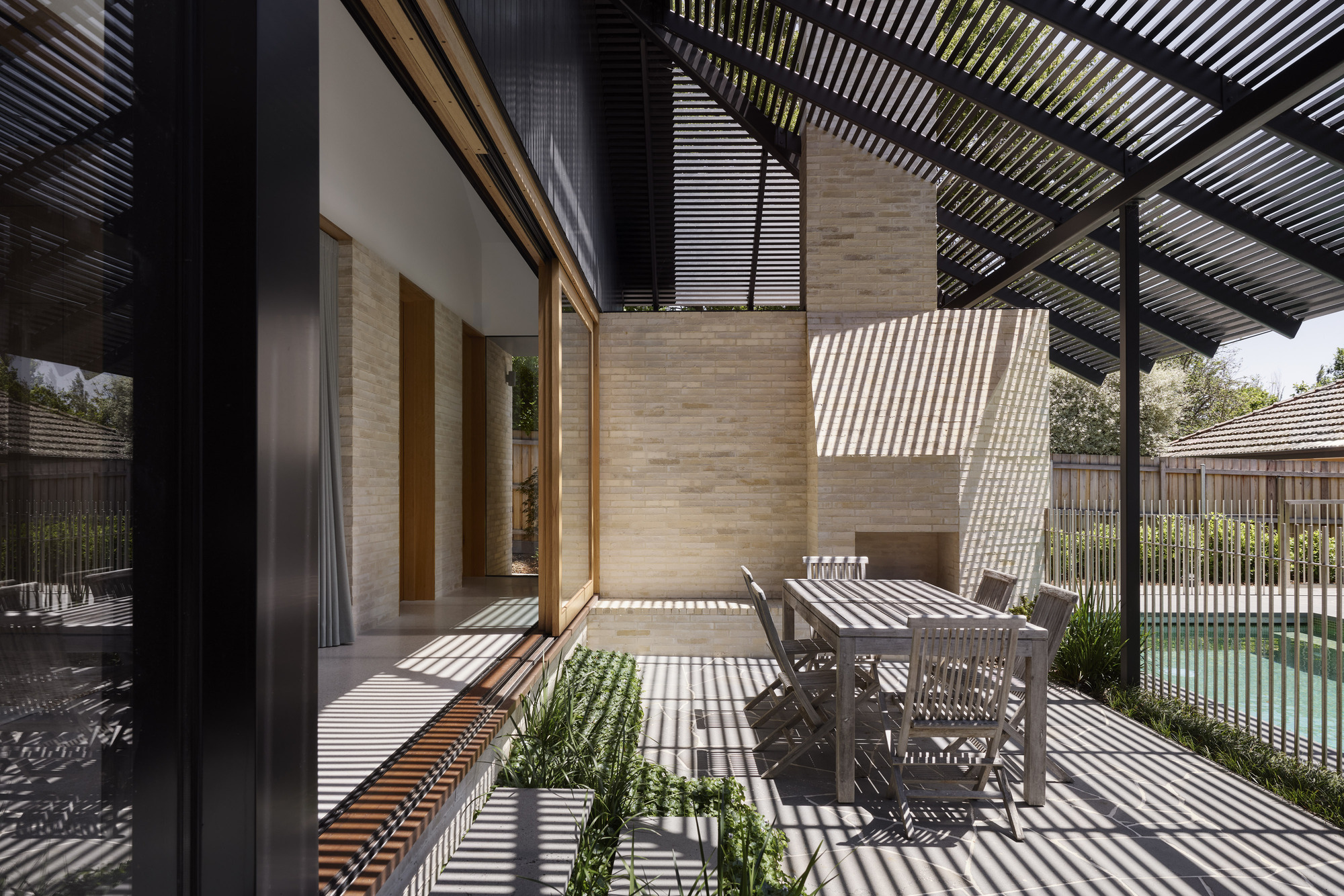
© Tess Kelly
THE WHERE – Hotham is located in (Old) Deakin, a leafy inner-suburb of Canberra, within the Parliamentary Triangle at the heart of Walter Burley Griffin and Marion Mahony Griffin’s visionary masterplan: To create a “picturesque and liveable” urban environment following the natural contours of the land, with concentric circles (Circuits) and radiating tree-lined avenues (Crescents) that would foster close community. In the 1920s and 1930s, the residents of Deakin were predominantly senior public servants, diplomats, scientists, academics, and philosophers, living in homes that showcased early examples of Inter-War Functionalist style – brick architecture, asymmetrical massing, and simple geometric shapes. In the decades that followed, some of the most celebrated architects of their time, Harry Siedler, James Burrell, and Gilford Bell, all designed homes here. Directly across from Hotham is a home designed by important 70s/80s architect Bert Reid, whose work represents another moment in Deakin’s seminal architectural timeline. Fighting to safeguard the future of these significant buildings is The Deakin Residents Association (DRA), a local community group that formed over a decade ago, united into action by the surge in inappropriate development. The members are ardent and active advocates for Deakin to remain a garden suburb, with a key focus on environmental issues and protecting Deakin’s streetscapes.
© Tess Kelly
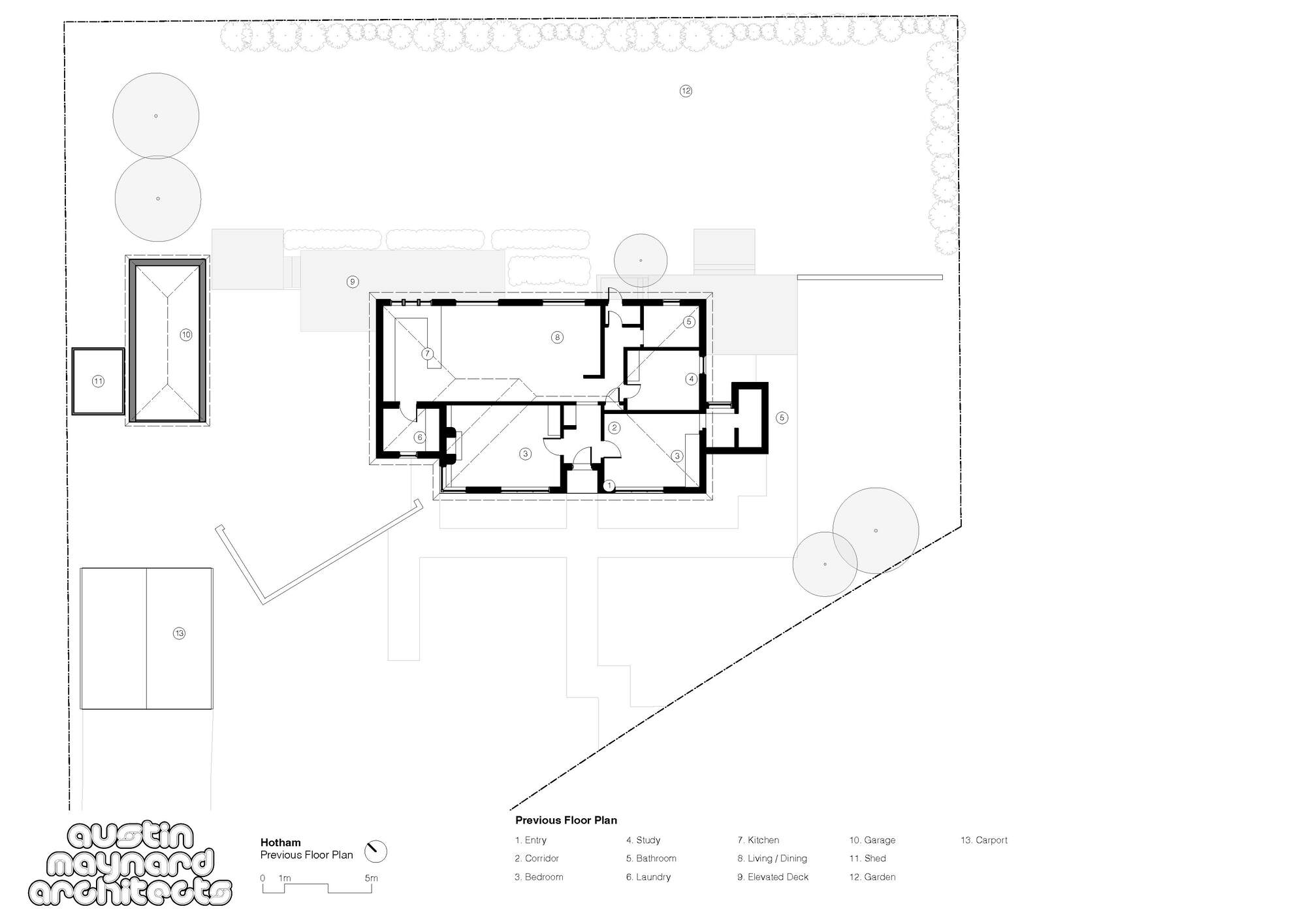
THE BRIEF – The owners of Hotham – a professional couple (doctor and lawyer) with two young children, had a compact and cosy brick bungalow on a sizeable block in a wonderful location, but needed more living space for their daughters to grow and for their interstate family to comfortably stay. After visiting Empire house at The Canberra Design Festival Open Homes and finding it “beautifully detailed and thoughtful,” they contacted Austin Maynard Architects. The owners asked us to design them a house that was interesting and not stock-standard, that would allow their children to live and develop “in a healthy, happy and inspiring environment.” Somewhere “unique, creative, playful, functional, and with some surprises.”
© Tess Kelly
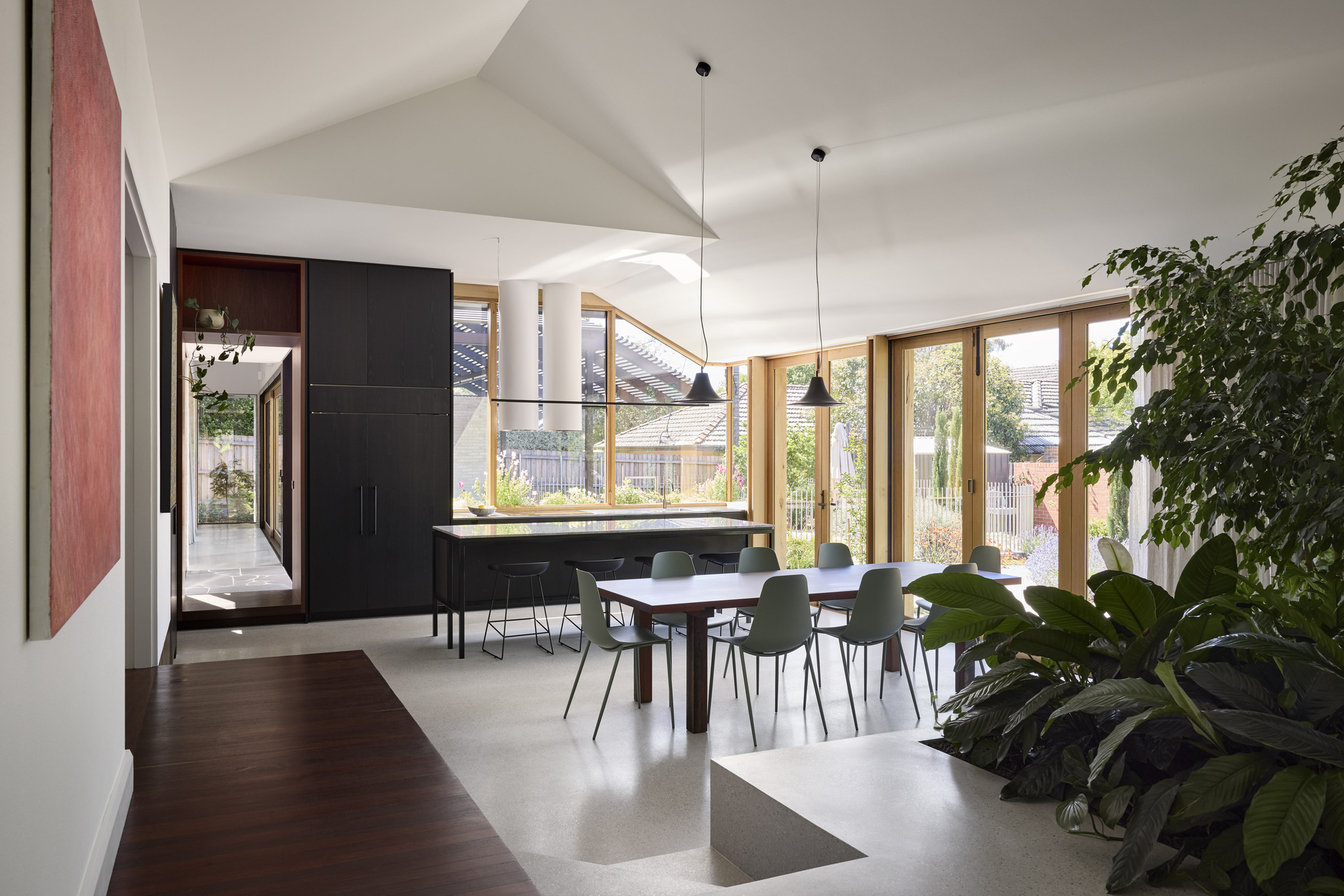
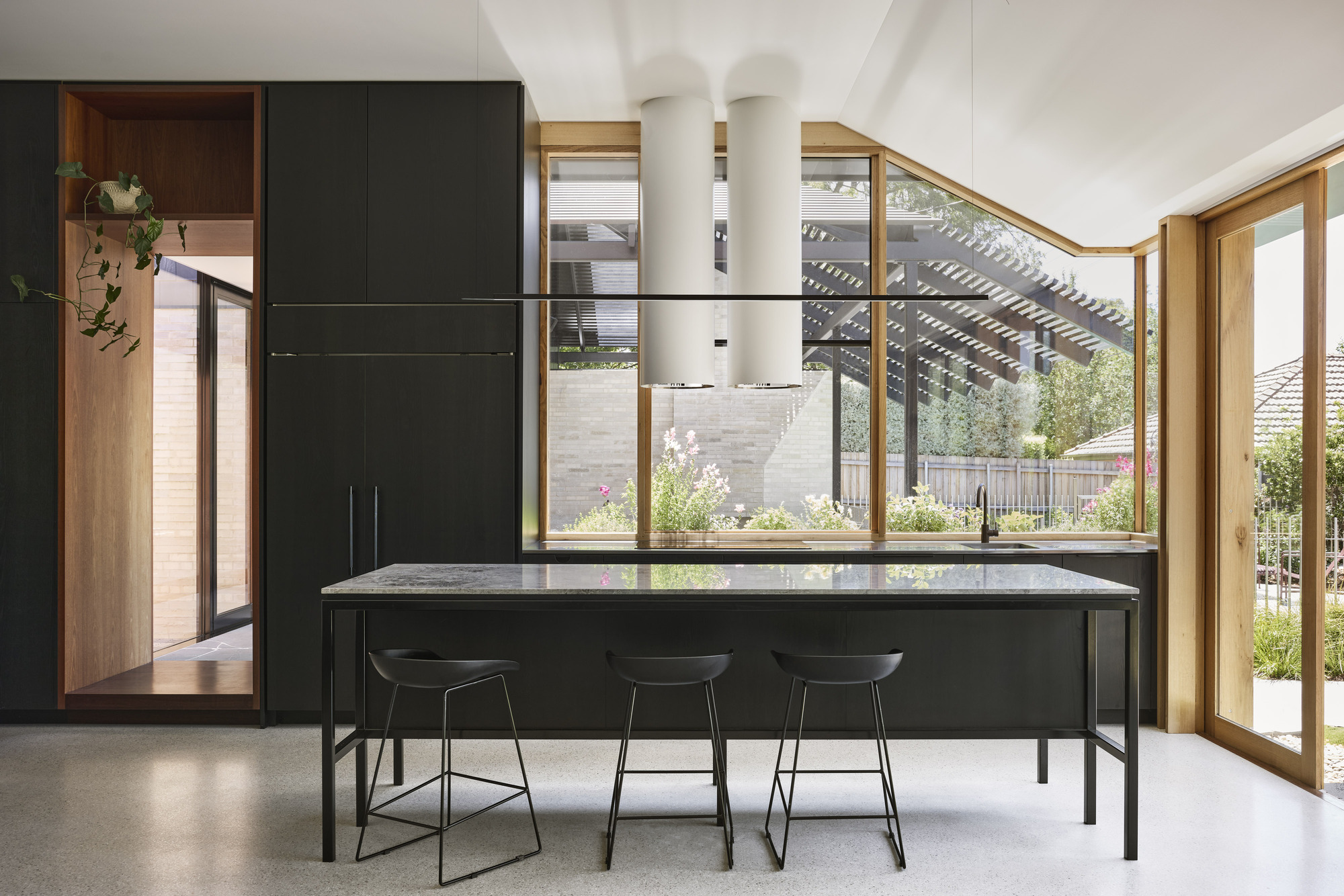
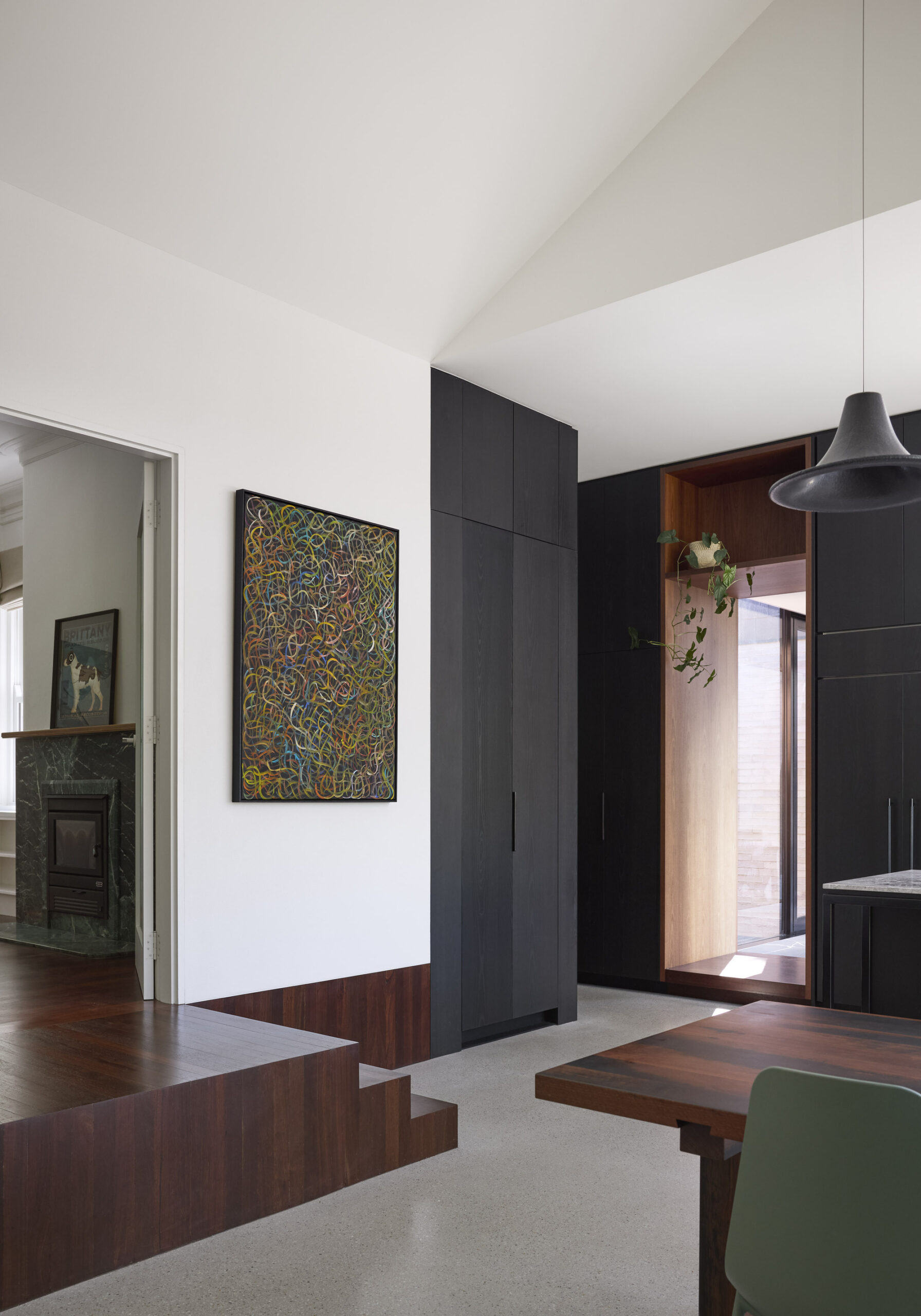
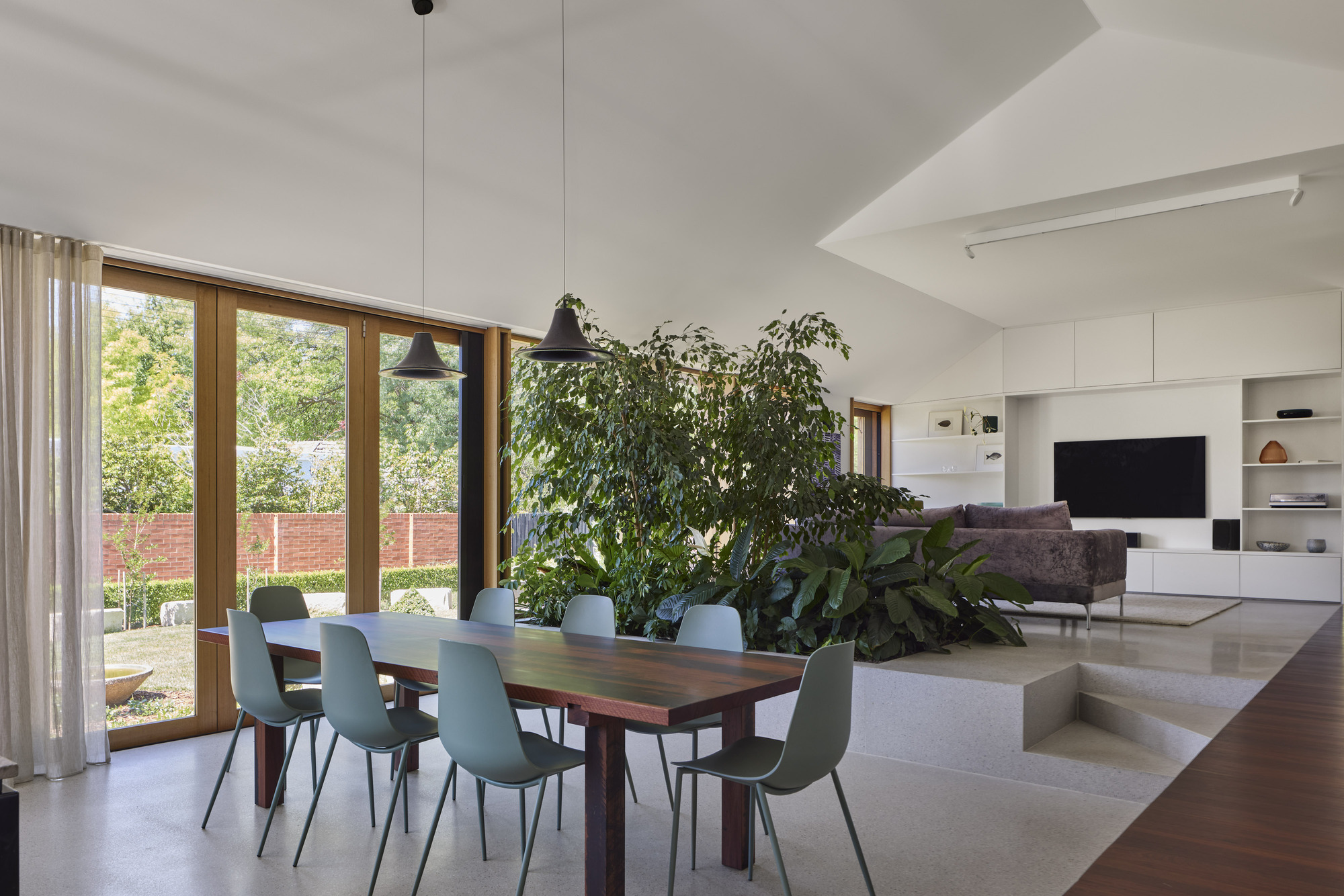
With one a keen cook and one an avid gardener, they asked for the kitchen to be the heart of the home – generous and highly functional, with direct connection to the garden and views out to greenery. The house had to be Canberra weather-proof, built using solid, robust, and low-maintenance materials and, where possible, recycled or re-purposed. The owners did not want a massive house but hoped the space would feel generous, open, and light. Importantly, there would be no space that wouldn’t get used. Although the original old brick cottage was not heritage-listed and had no overlay protection, the owners felt a sense of attachment, responsibility, and pride. Despite the difficulties and potential for being more financially costly, they chose not to simply demolish and rebuild but instead chose a sensitive architectural response. Ultimately, the owners of Hotham wanted to make a positive contribution to the character of the neighbourhood.
© Tess Kelly
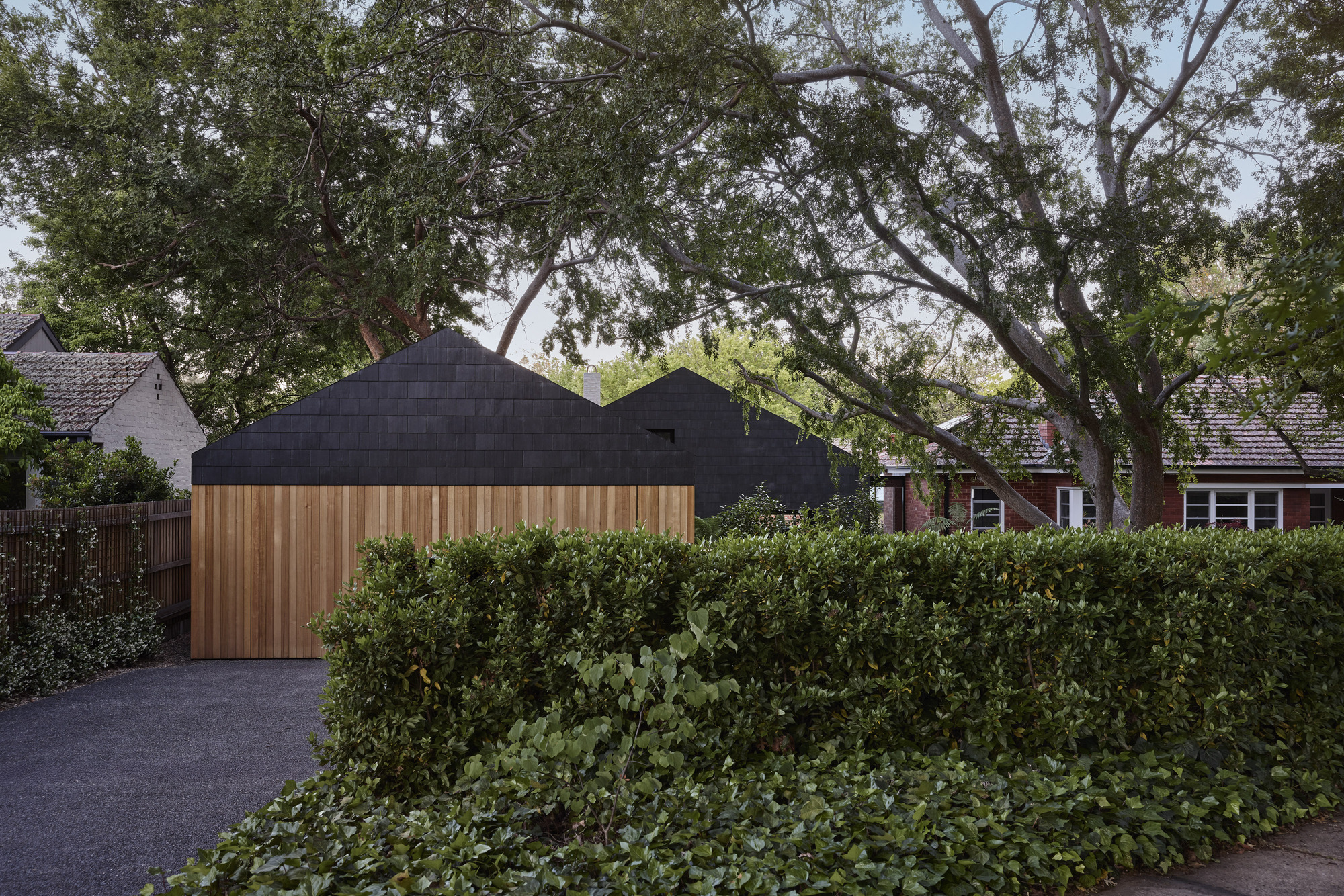
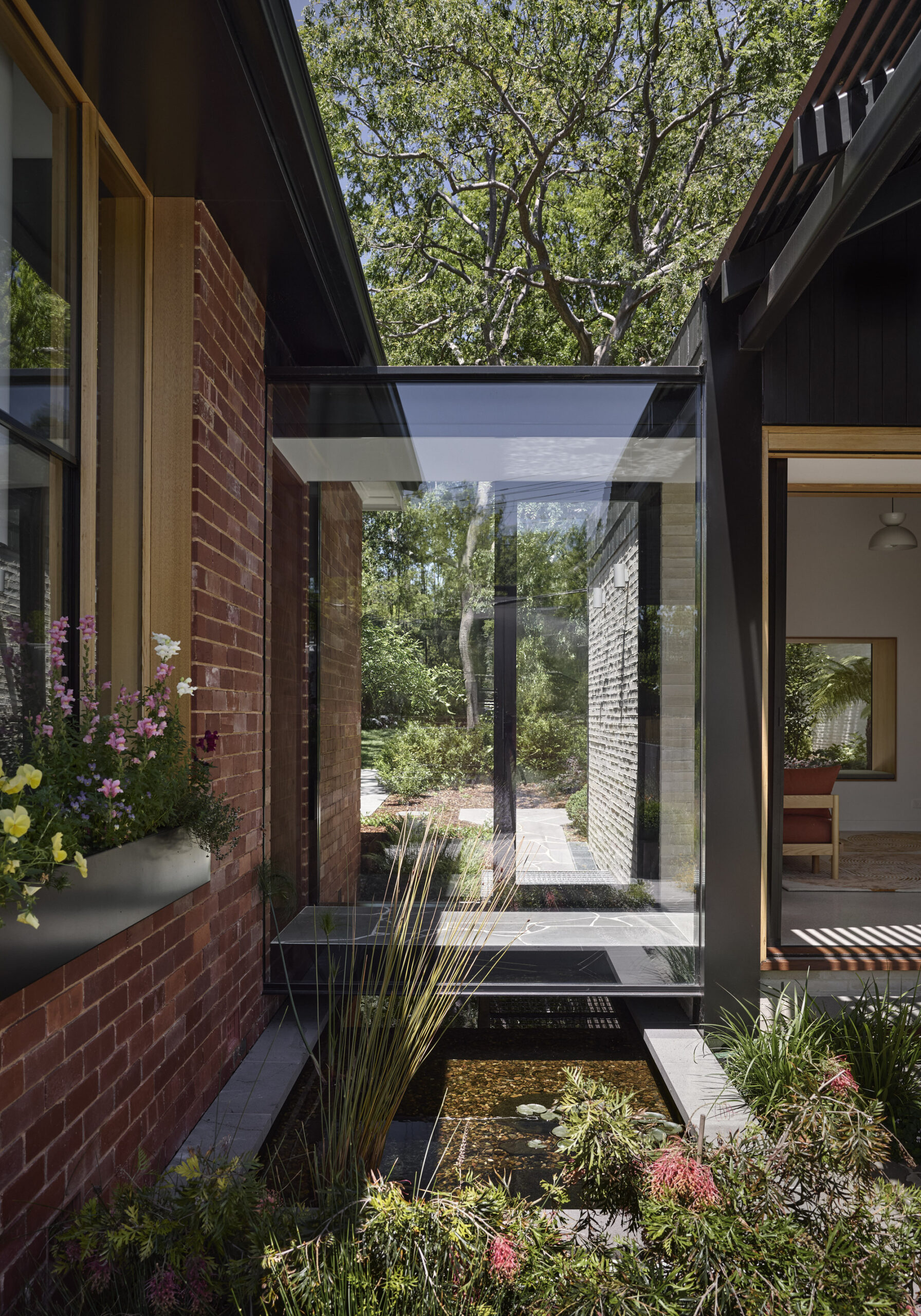
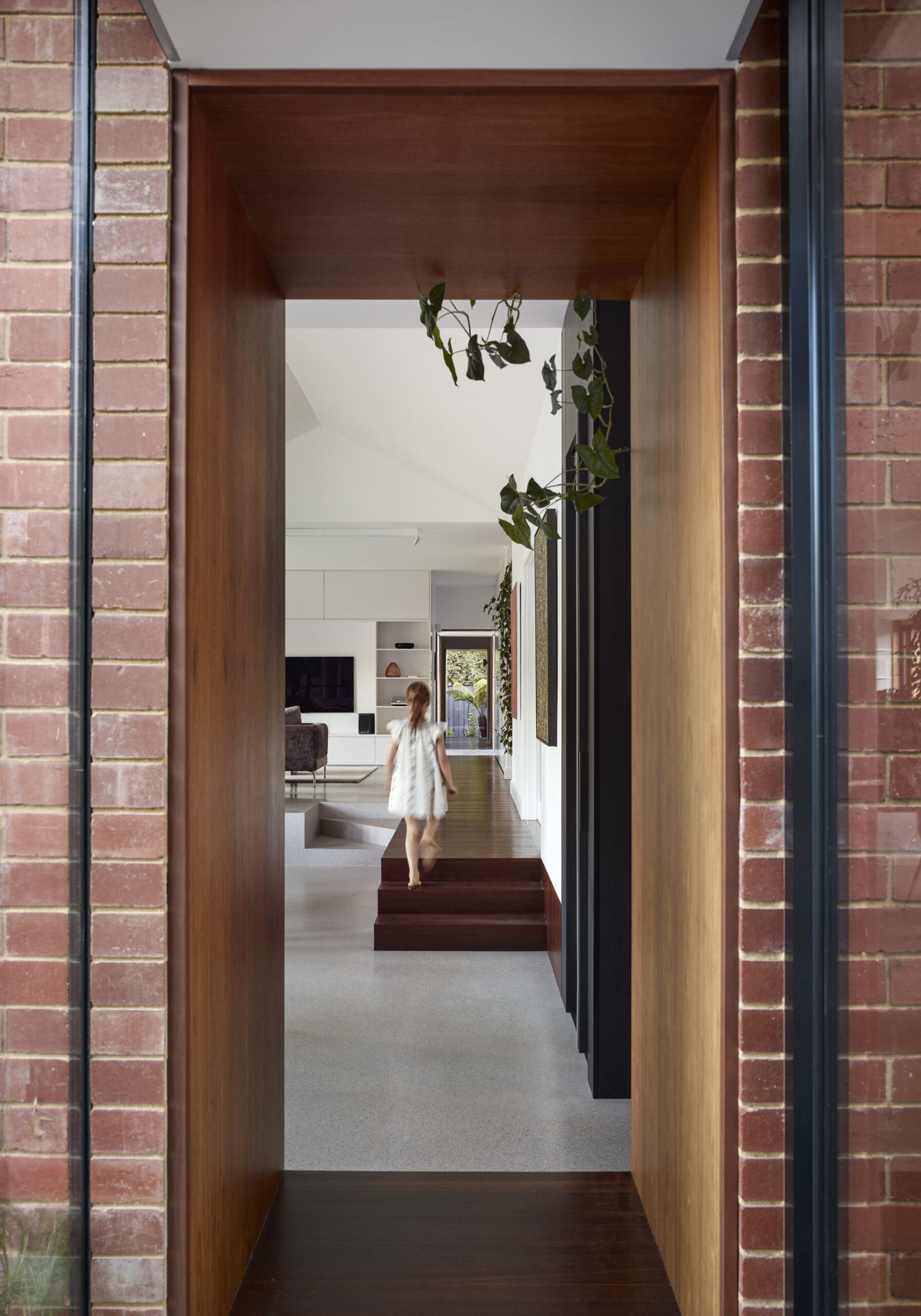
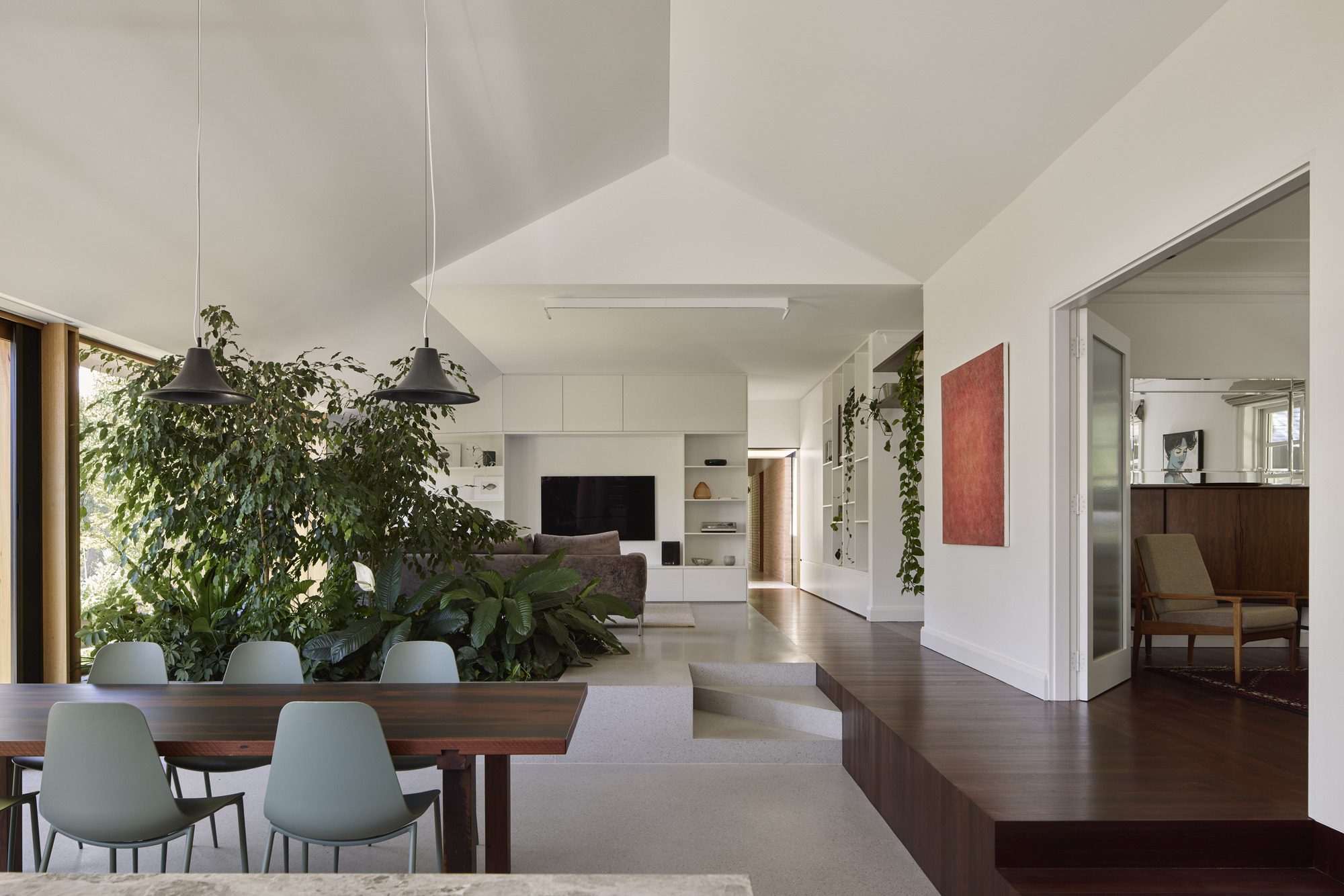
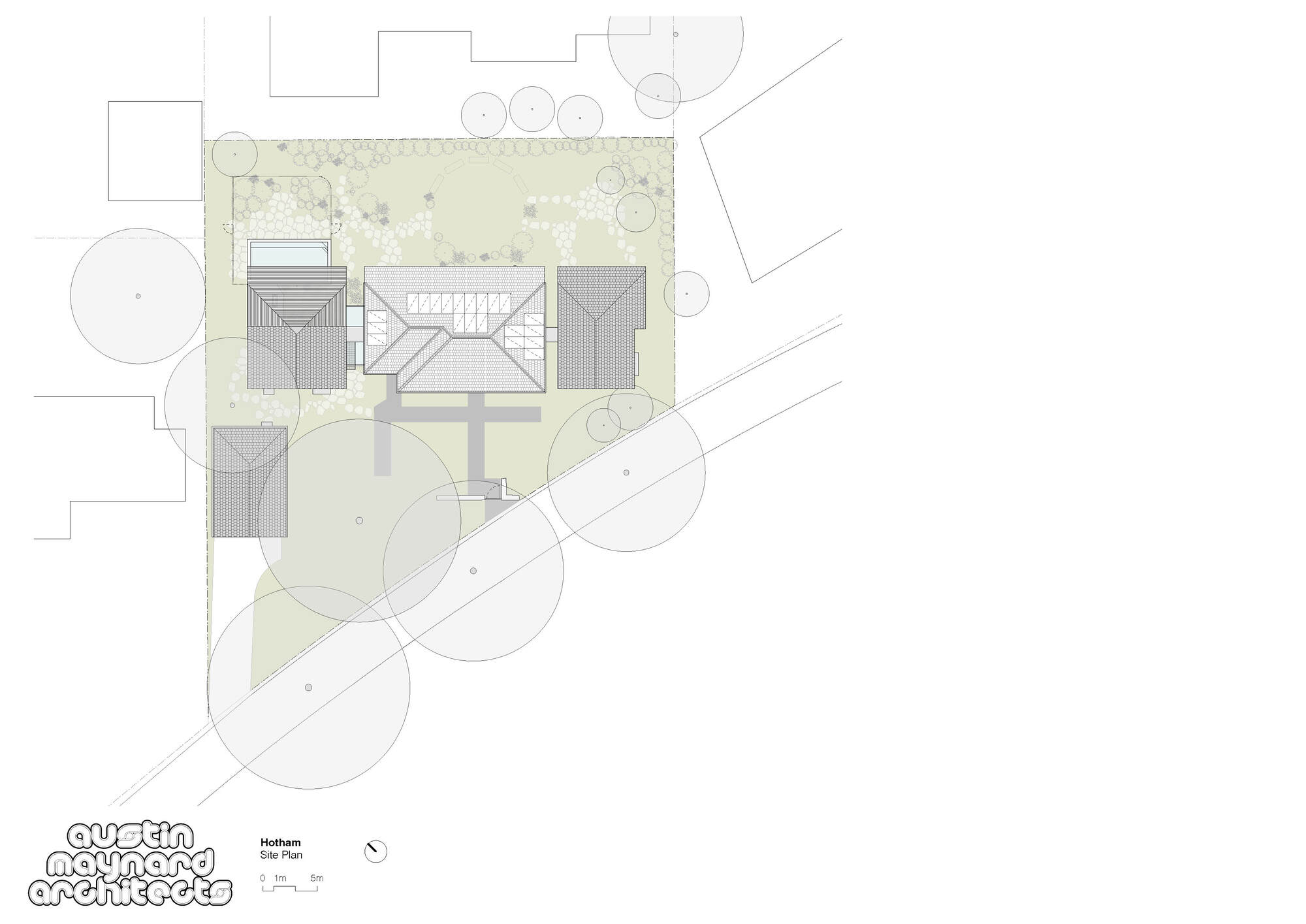
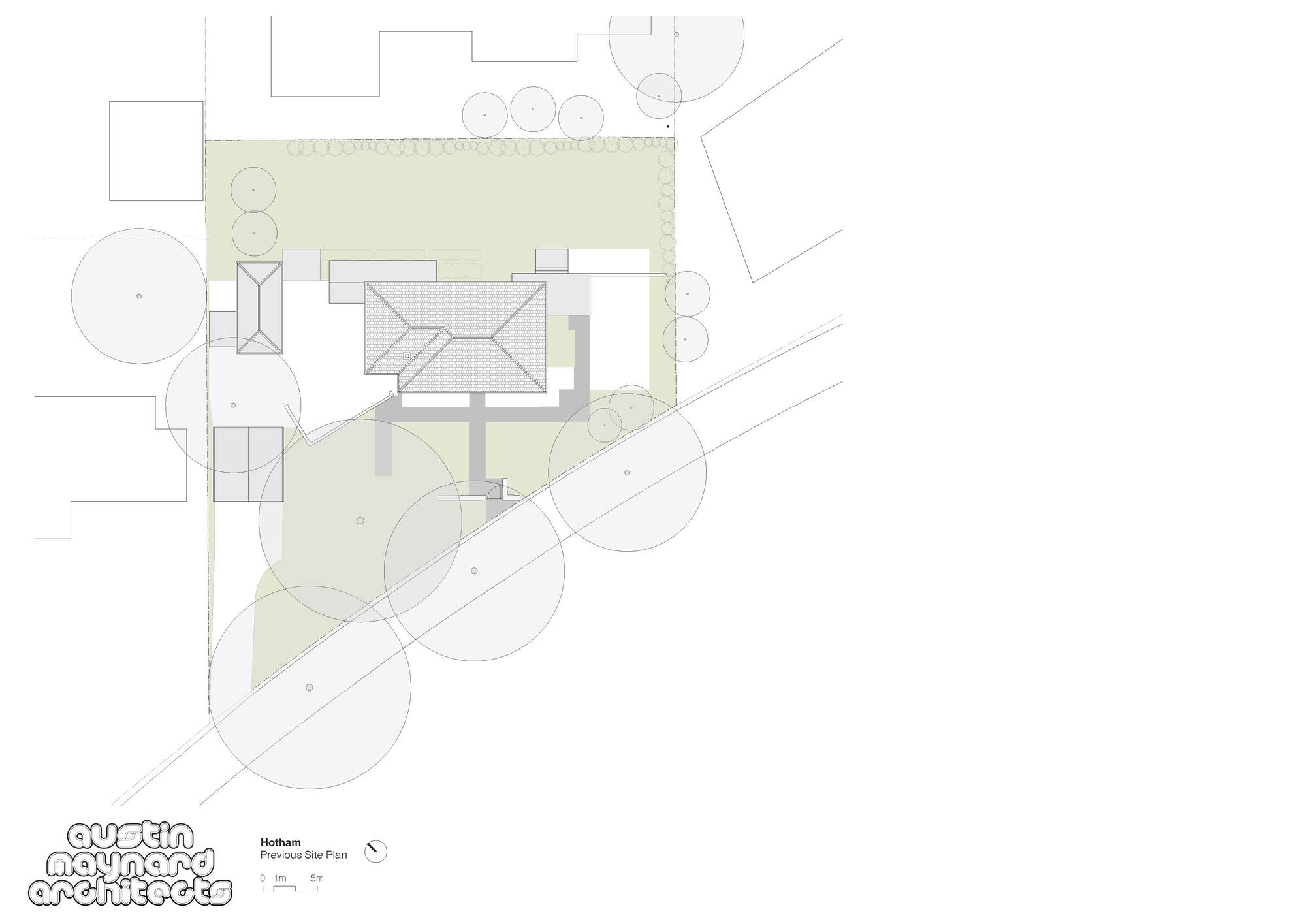
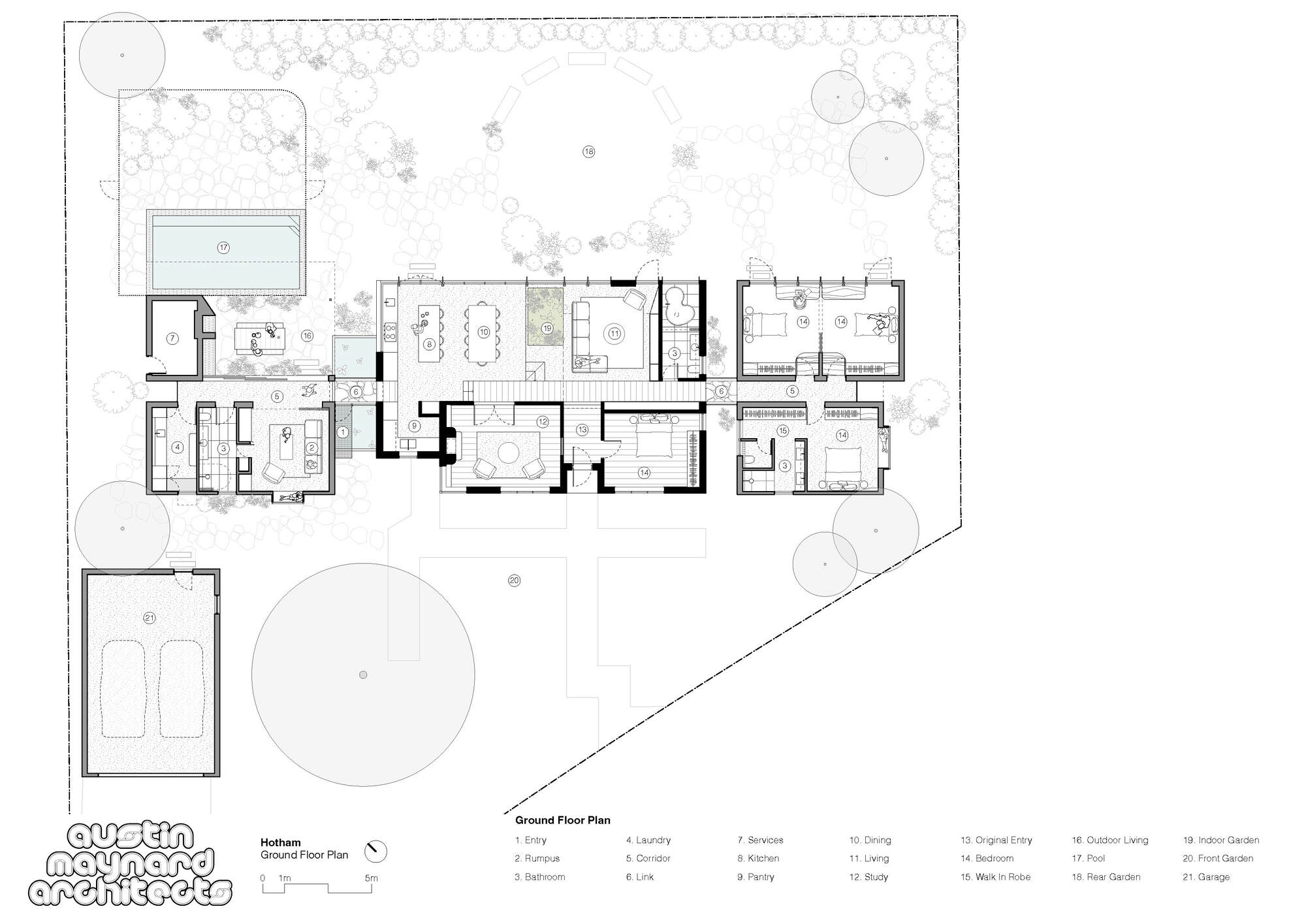
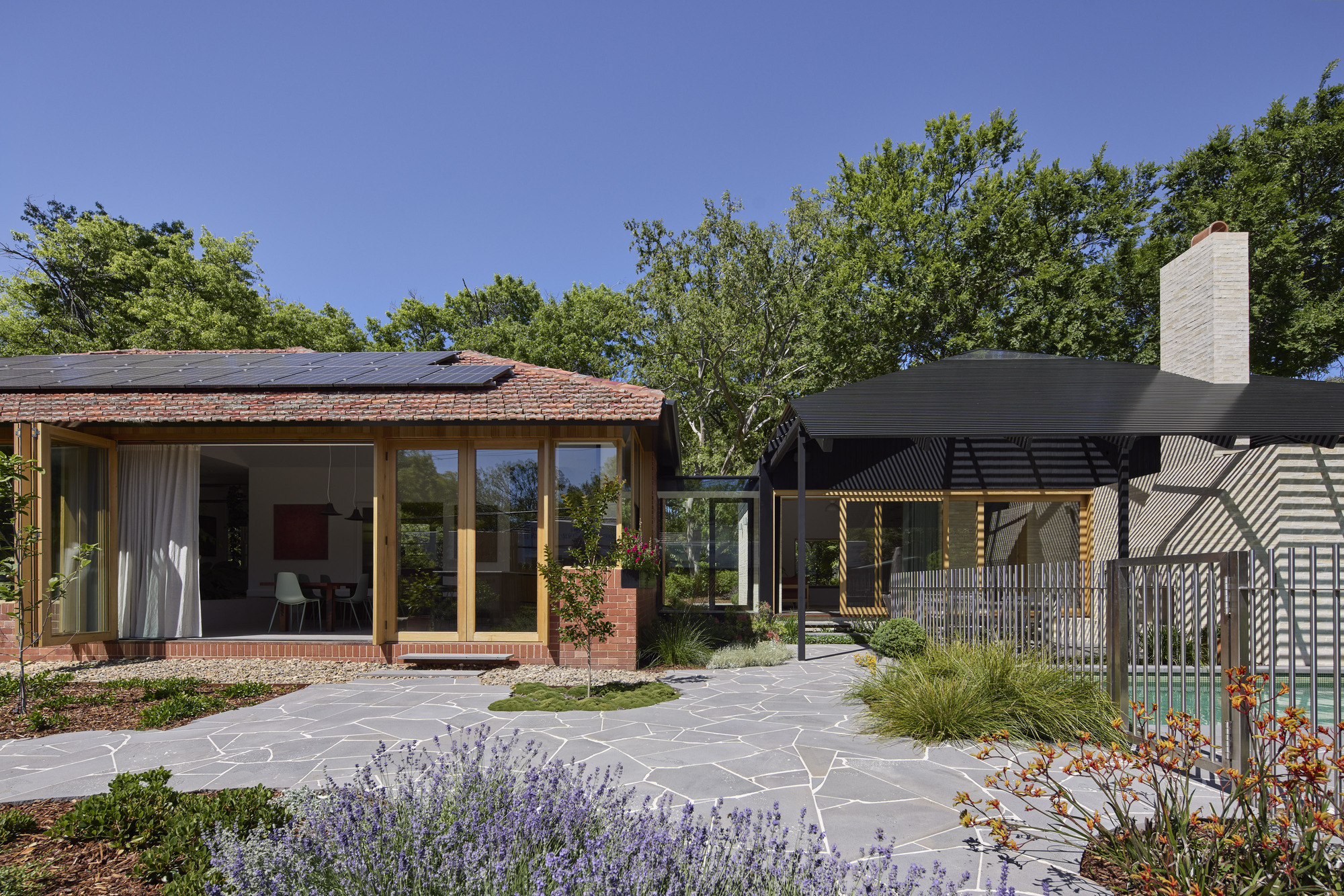
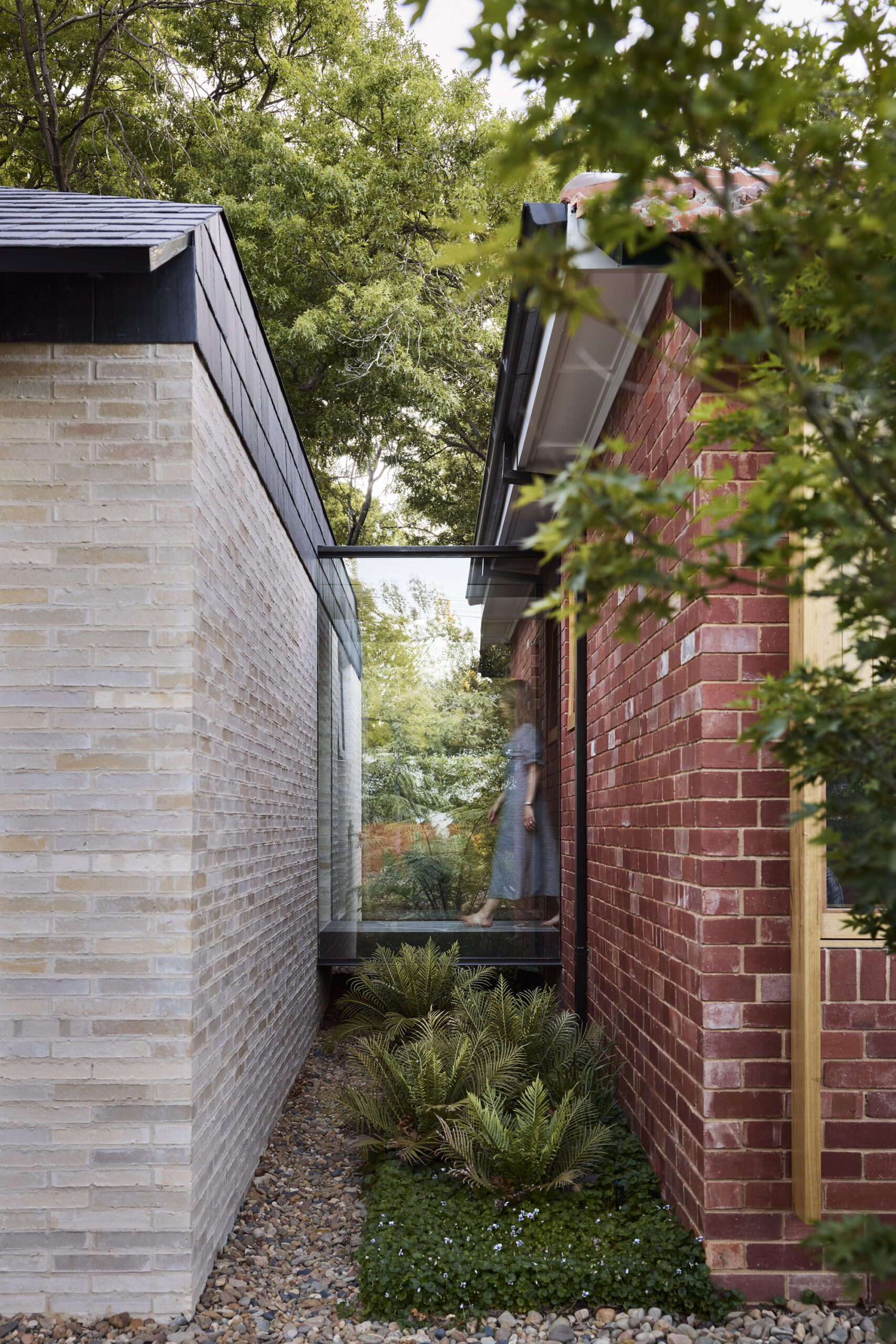
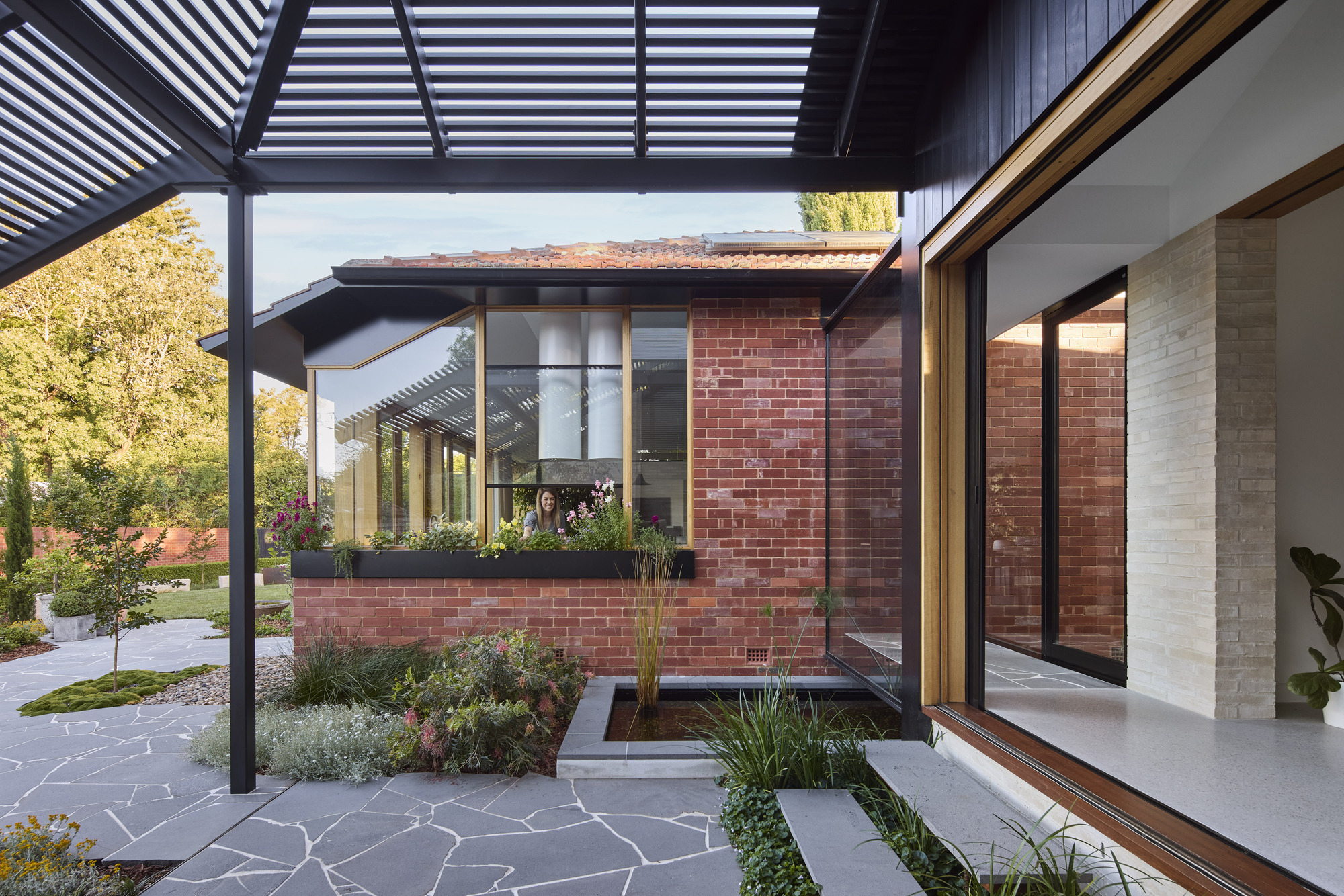
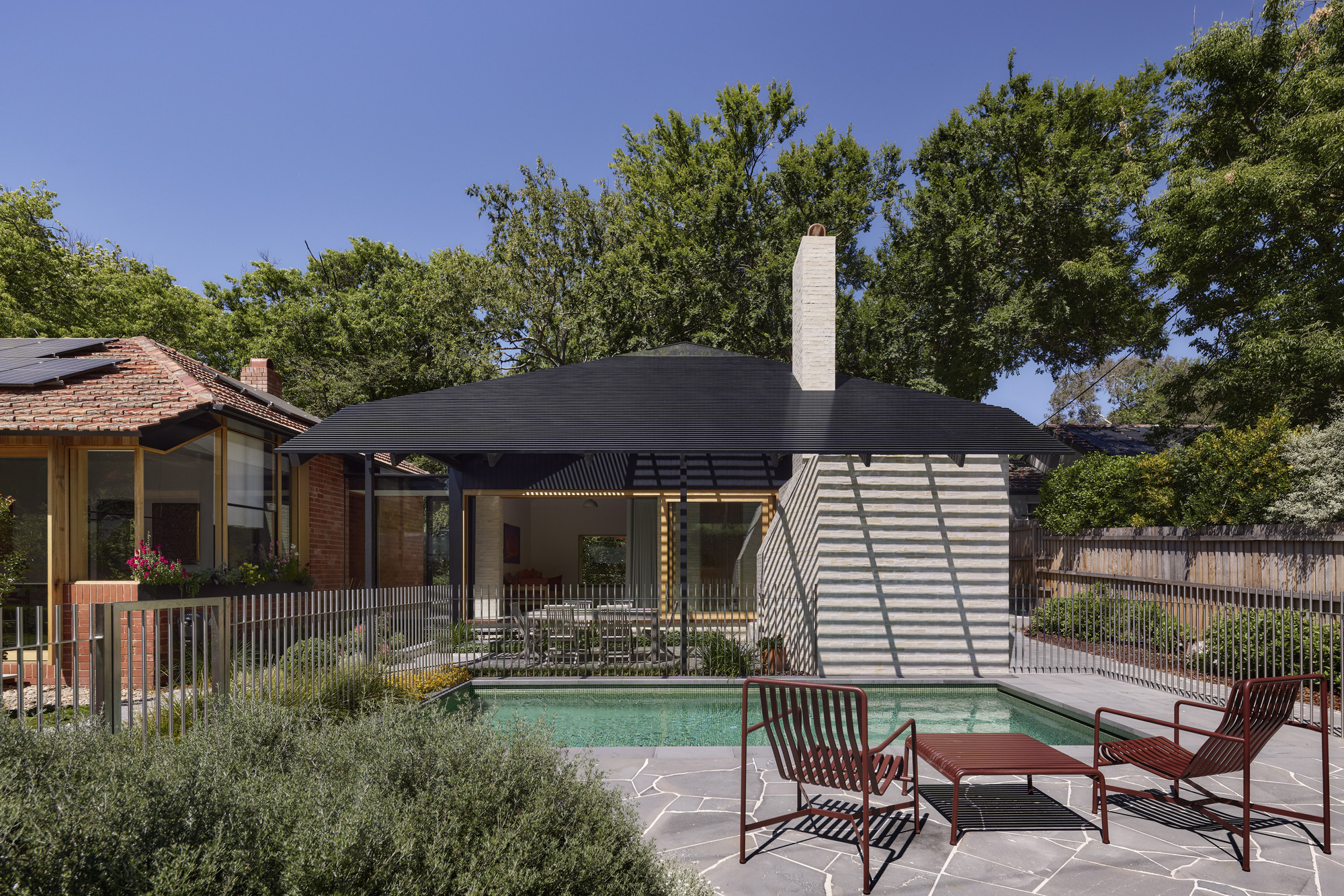
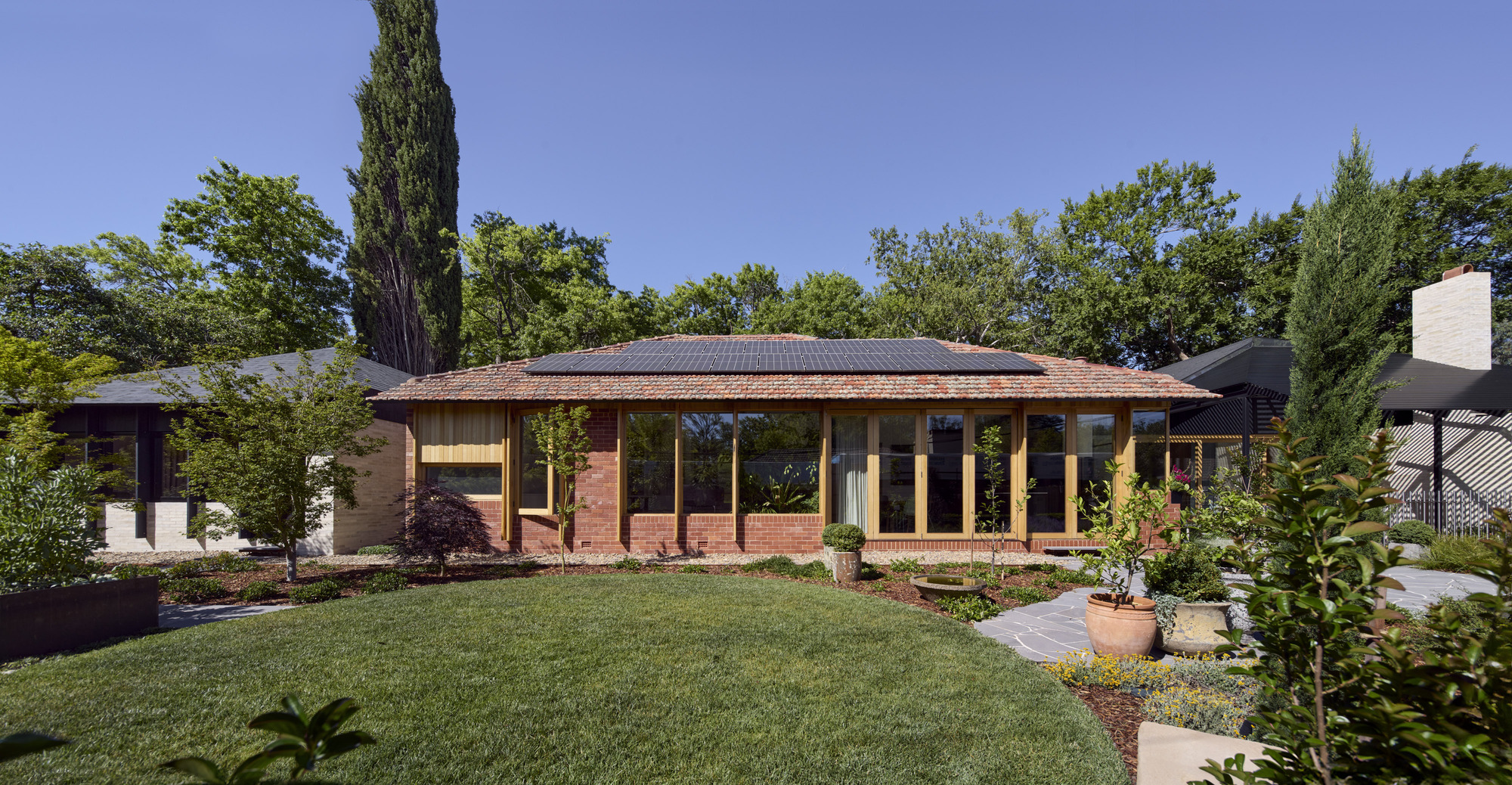
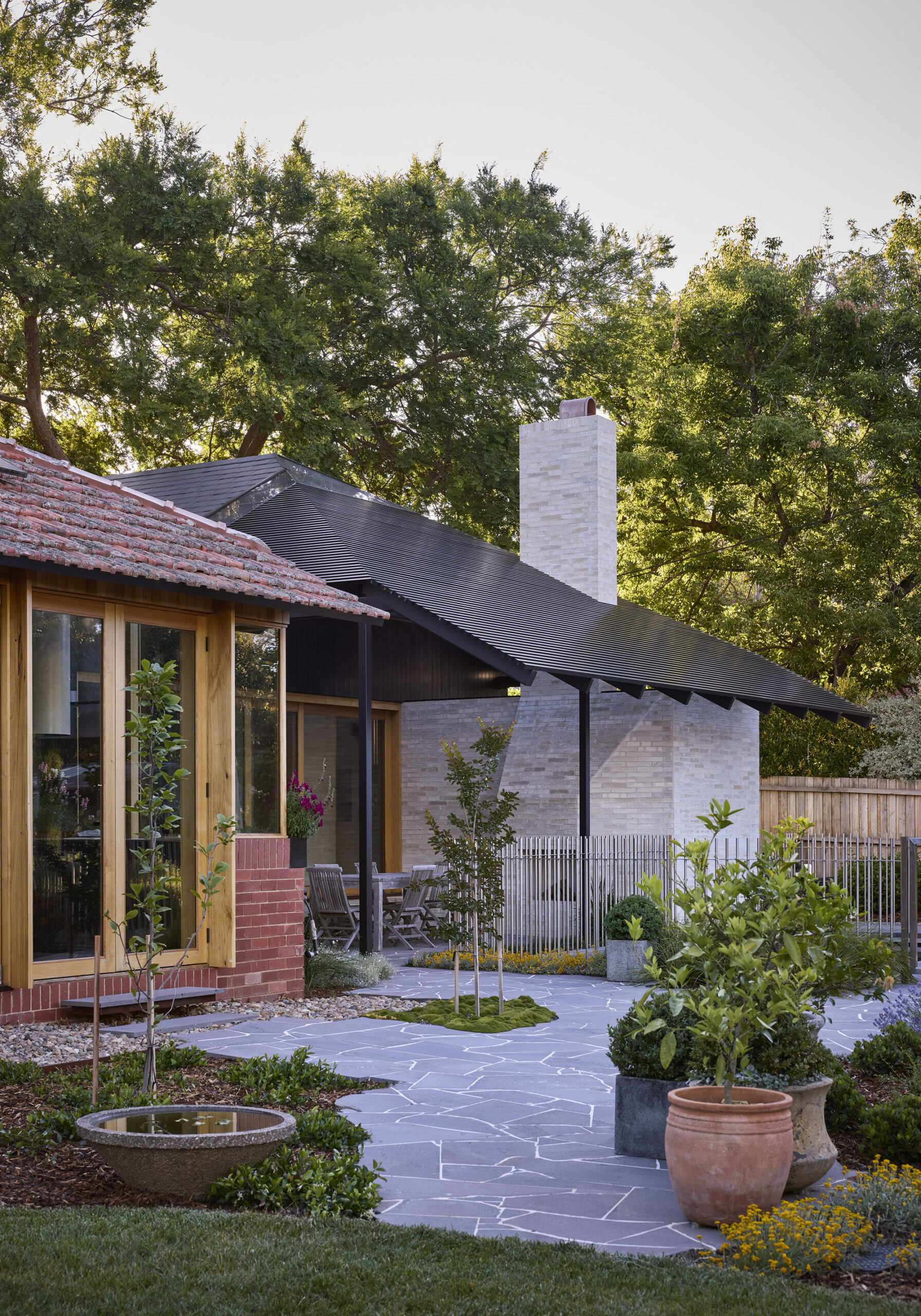
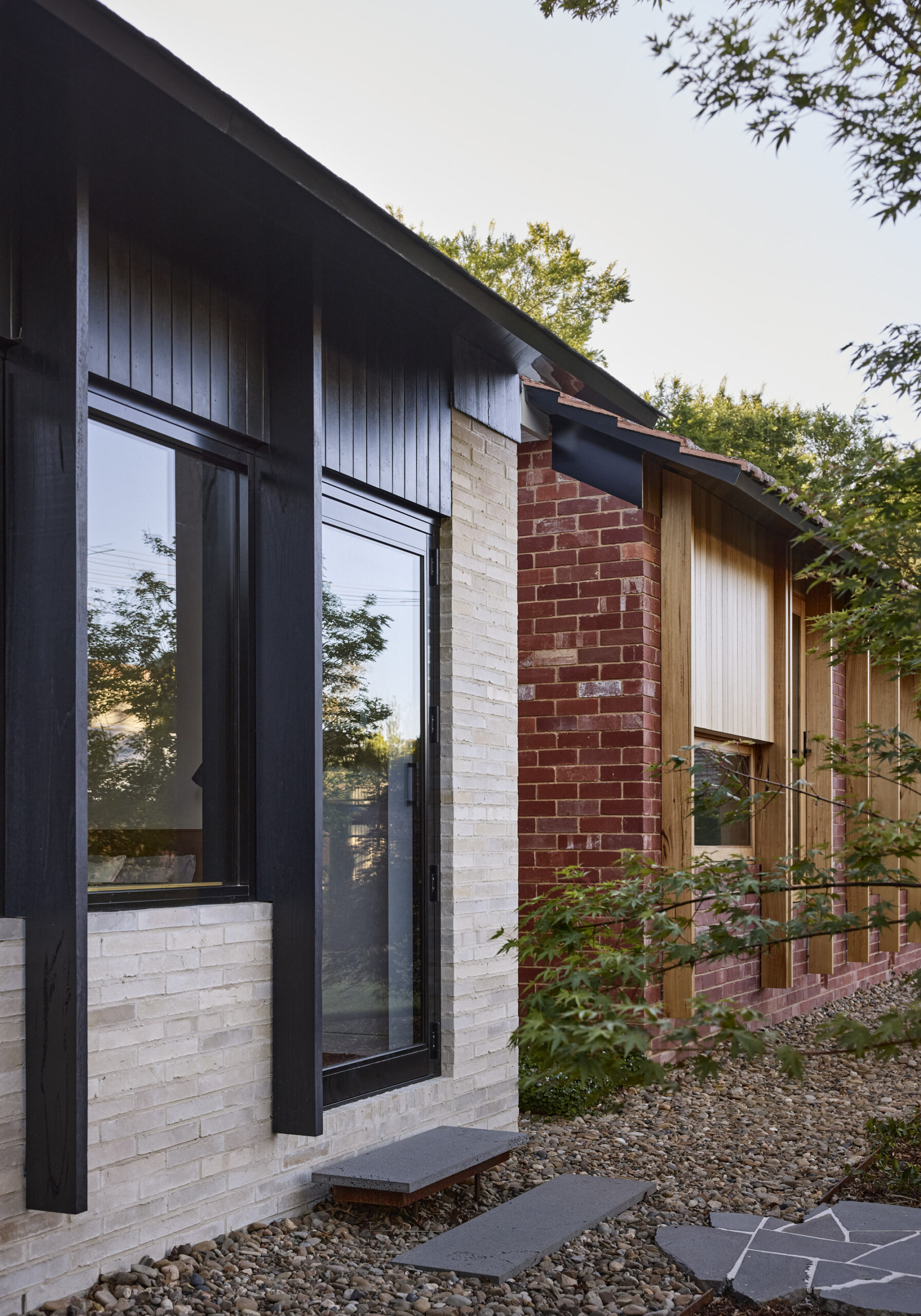
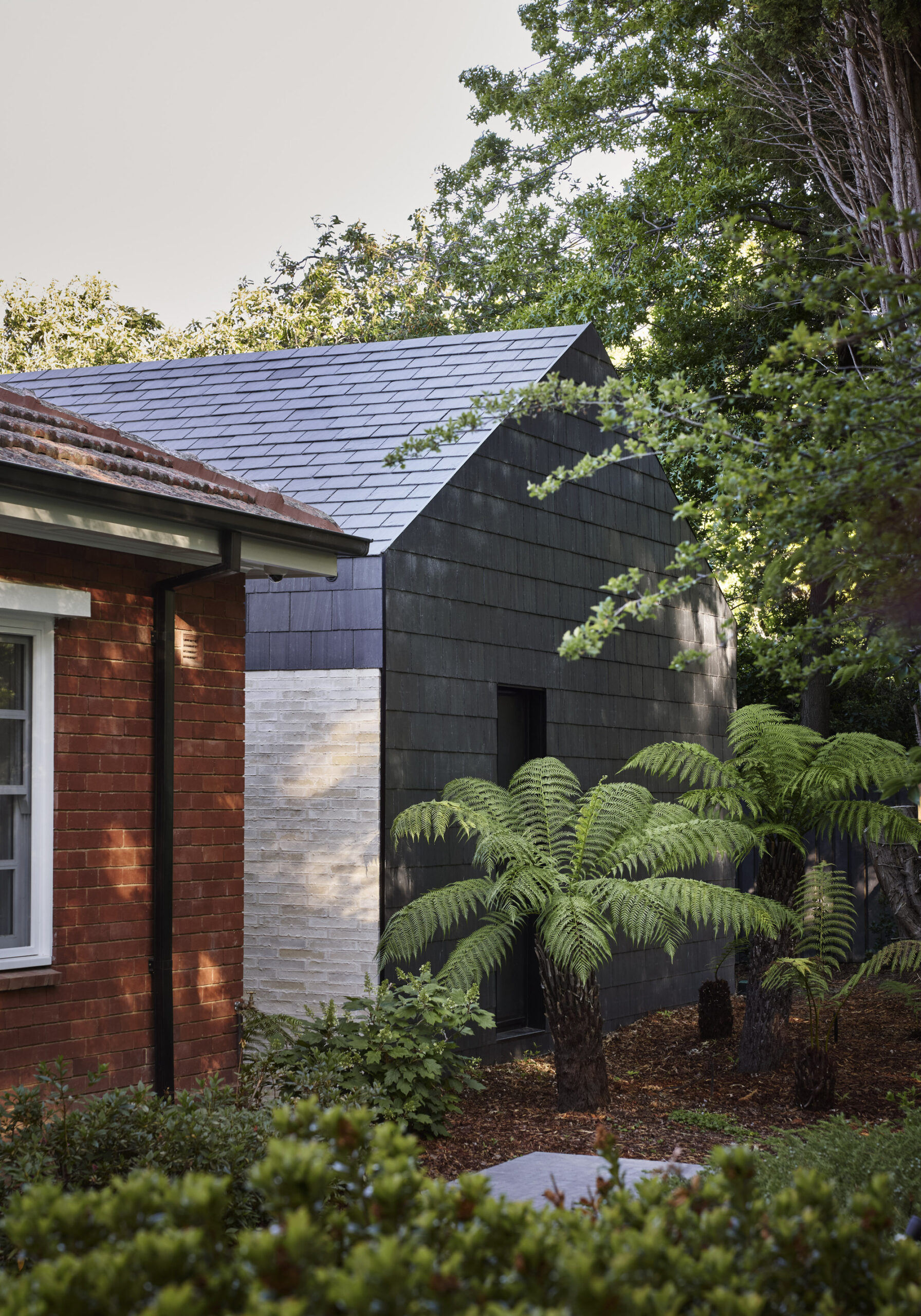
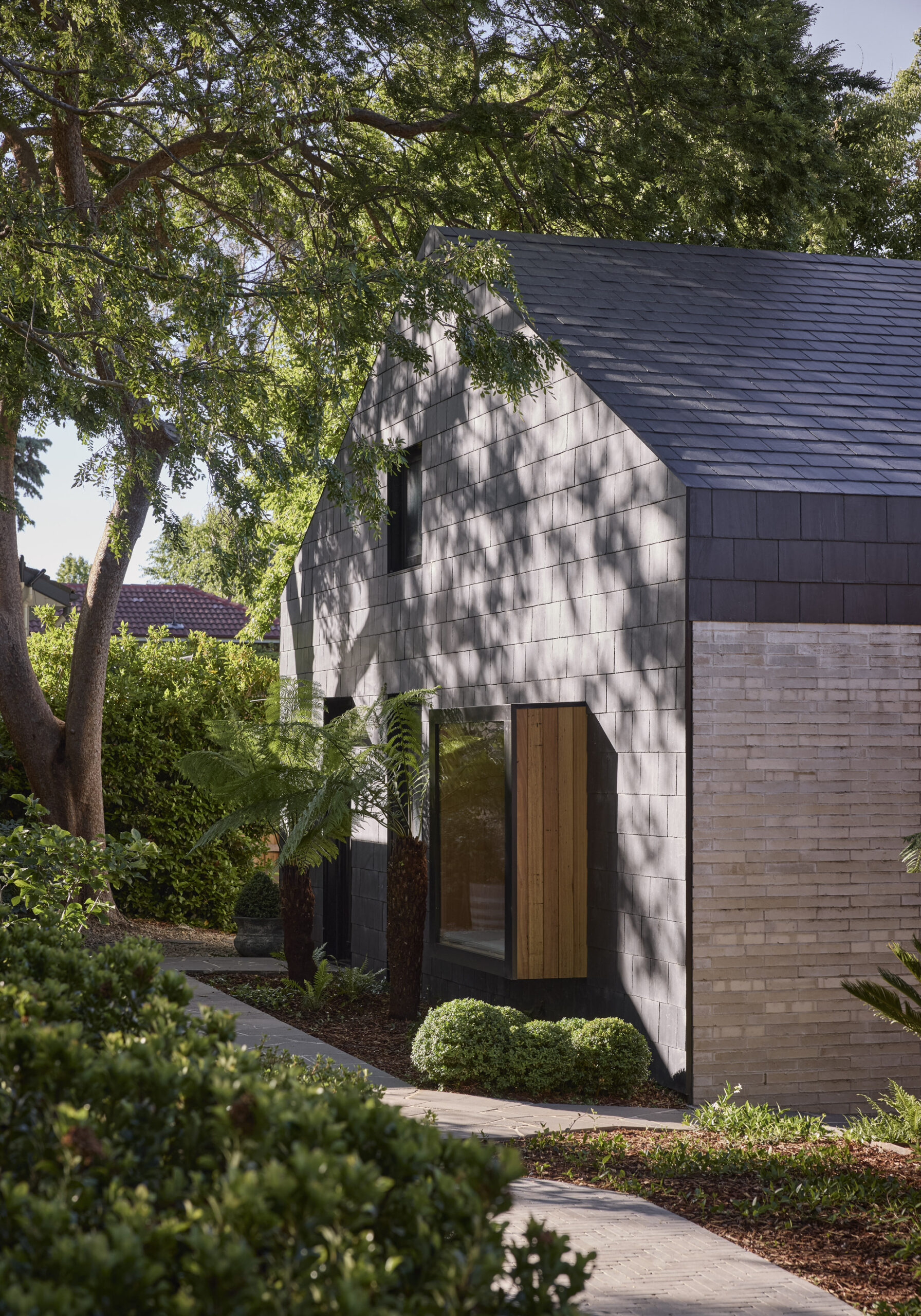
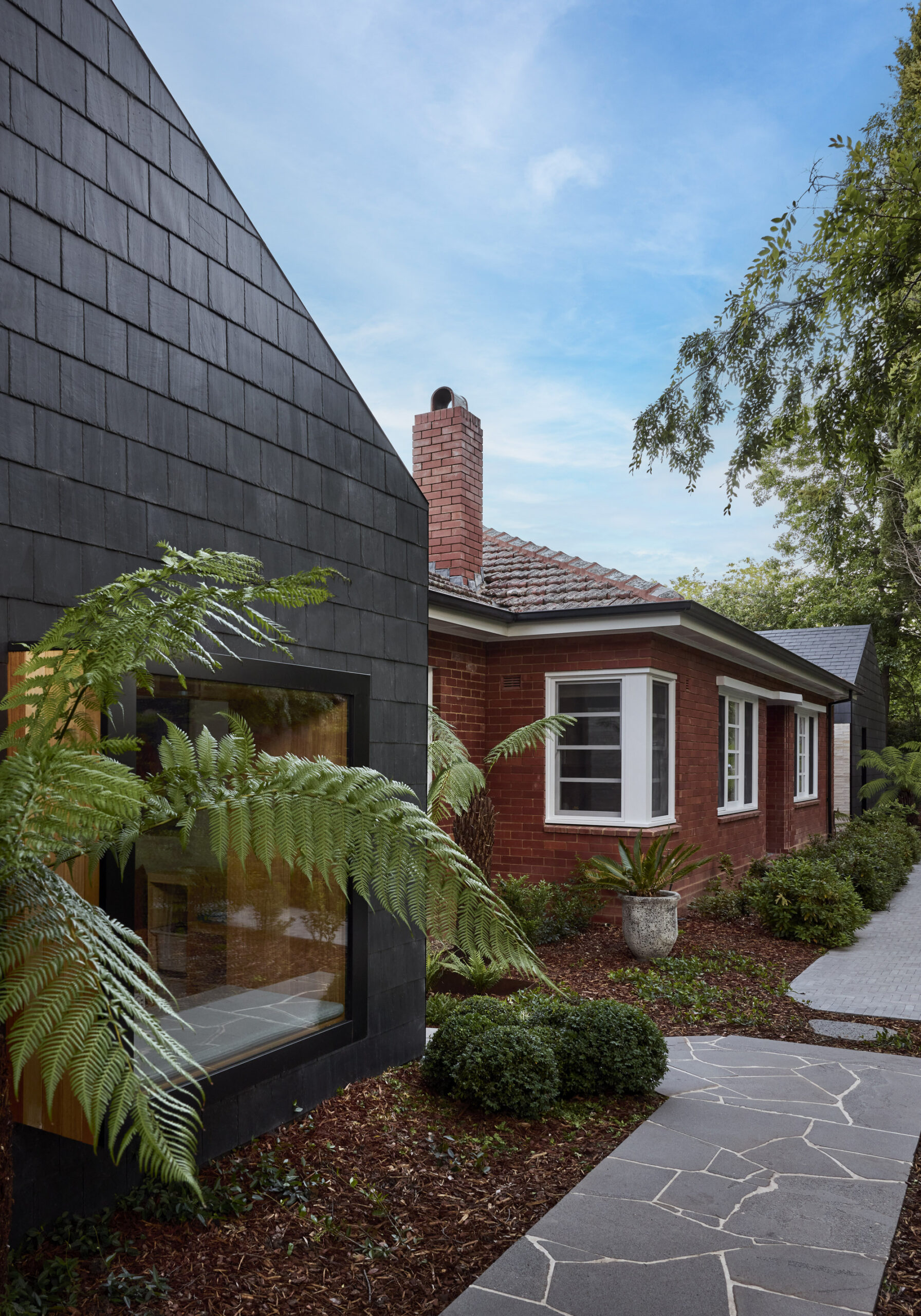
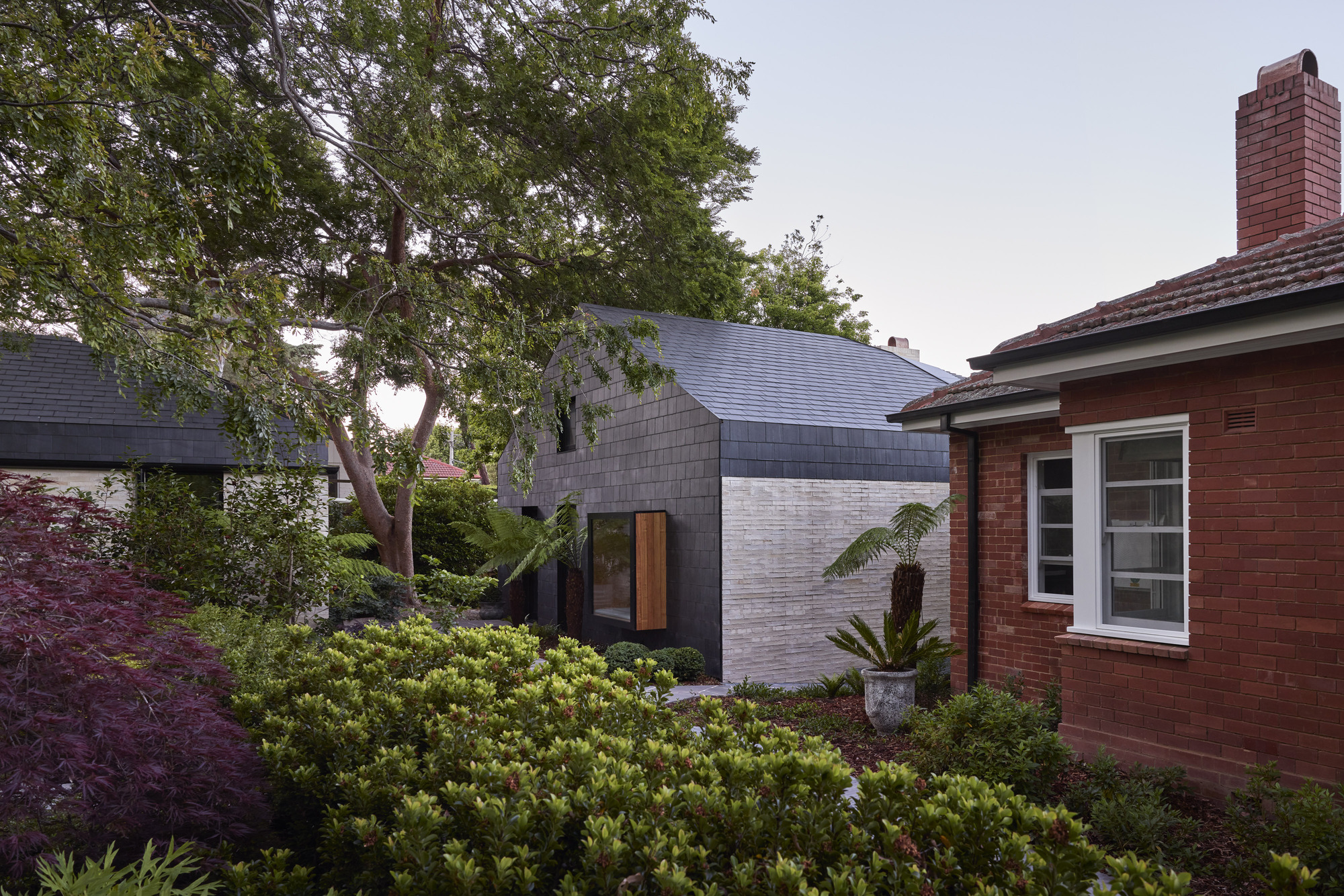
THE RESPONSE – Hotham is a sustainable and sympathetic alteration and addition, built from resilient, textural, natural materials and some carefully recycled (reusing the old red brick and re-instating the original old roof tiles). At the home’s core is the original brick cottage, with two pavilion ‘wings’ extending on either side, connected by glass links. Similar in size and scale but different in purpose, one pavilion houses the bedrooms, cosy, internalised and comforting, the other serves as an expansion of the play and entertaining space, open and connected. The old building provides a dedicated guest bedroom and a peaceful sitting room before opening through into the new, surprising and spacious open-plan living, dining and sitting room, gently zoned by foliage and minor level changes.
© Tess Kelly
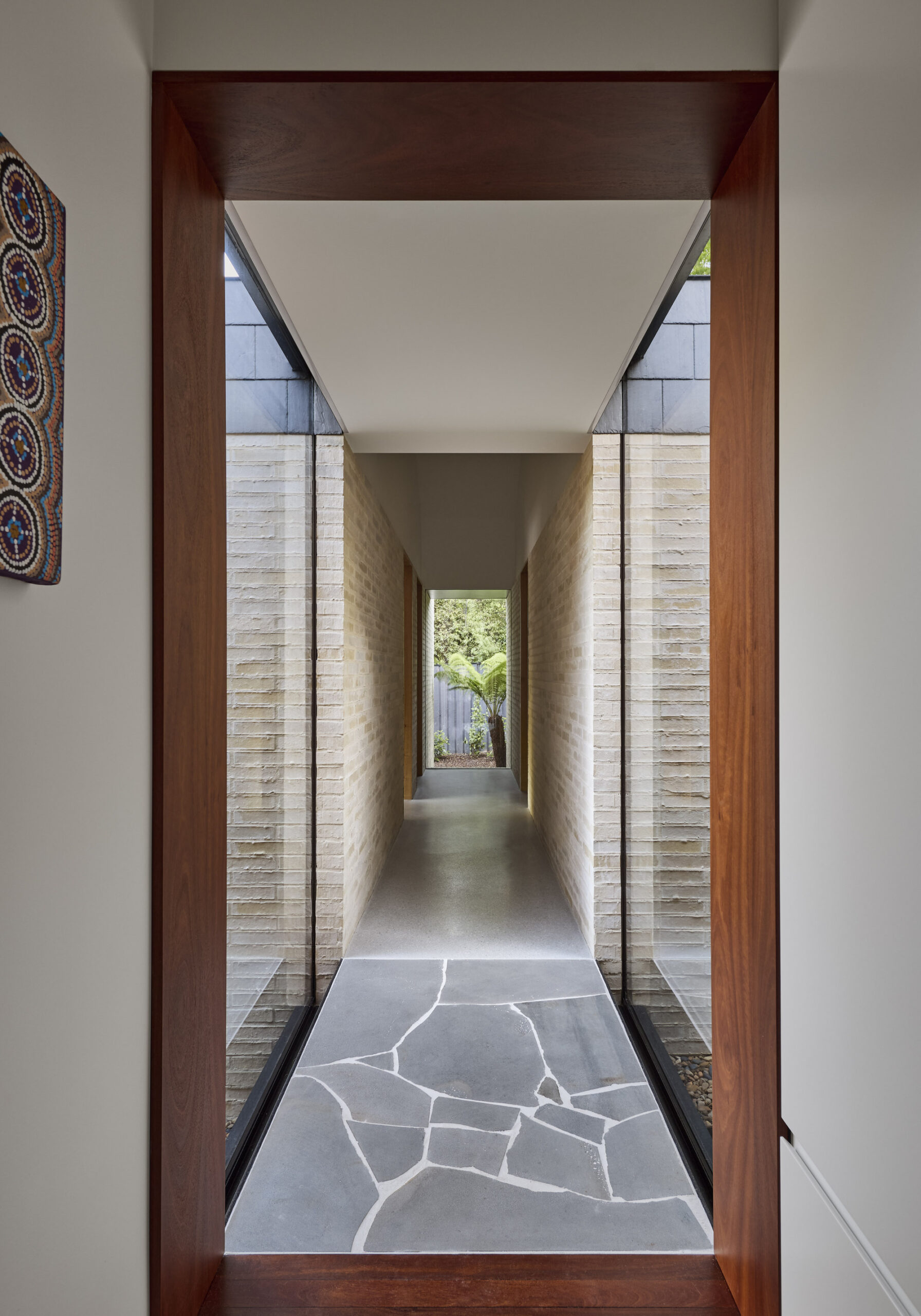
More than just merging indoor and outdoor space, the garden has been brought inside to form a lush and leafy internal oasis, with the garden visible and discoverable from every vantage point. Frameless glass at each end of the long corridor – spanning all three built elements – creates the perception of endless green space, continuing on forever.
© Tess Kelly
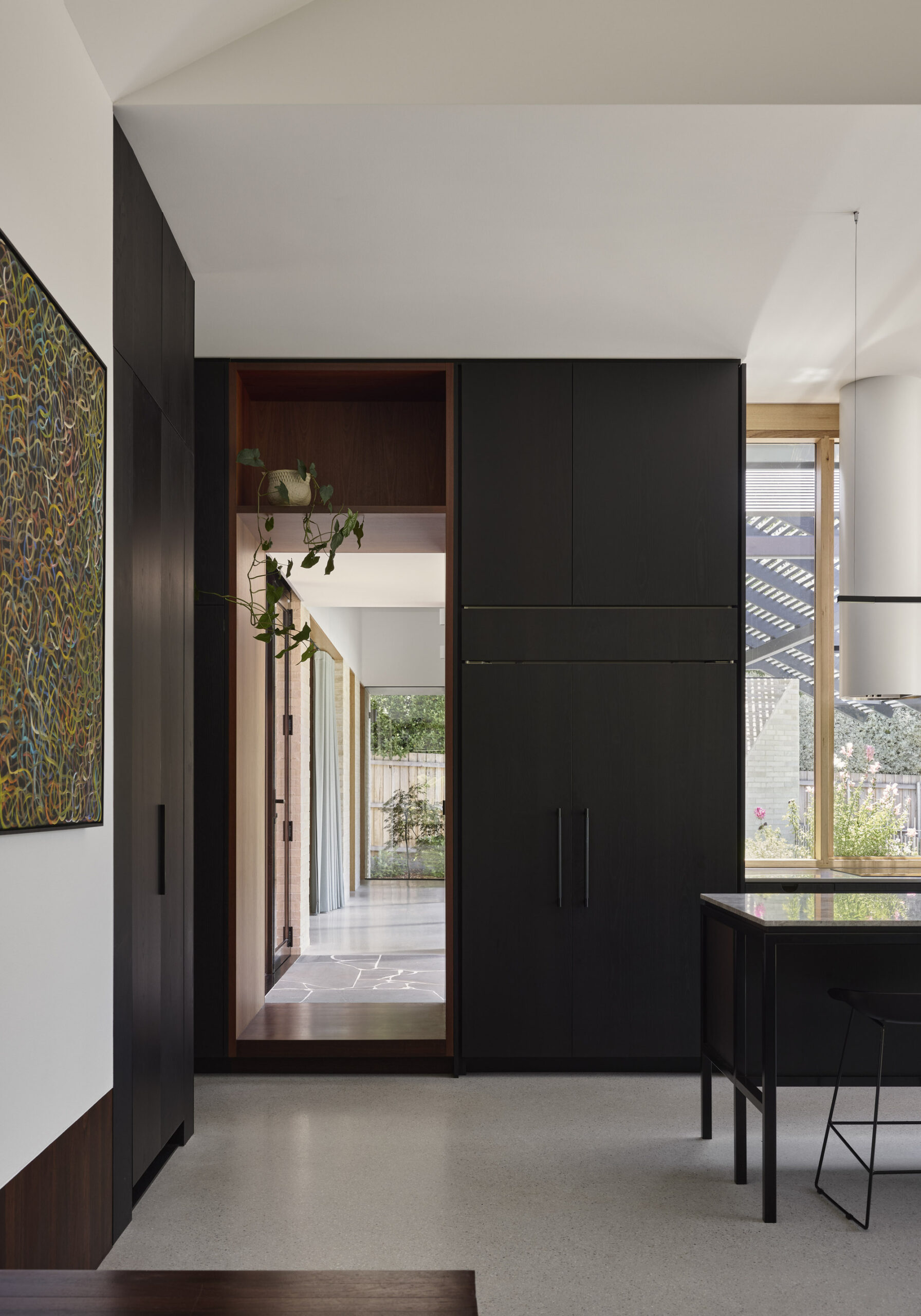
The corridor is the backbone of the house, the central spine from which spaces branch off rather than crash through. The links extending between the old and the new are formed mainly of glass, with flooring mirroring the external crazy paving. The visual separation and full view of open sky and foliage gives the sense of walking through the garden to enter a different building.
© Tess Kelly
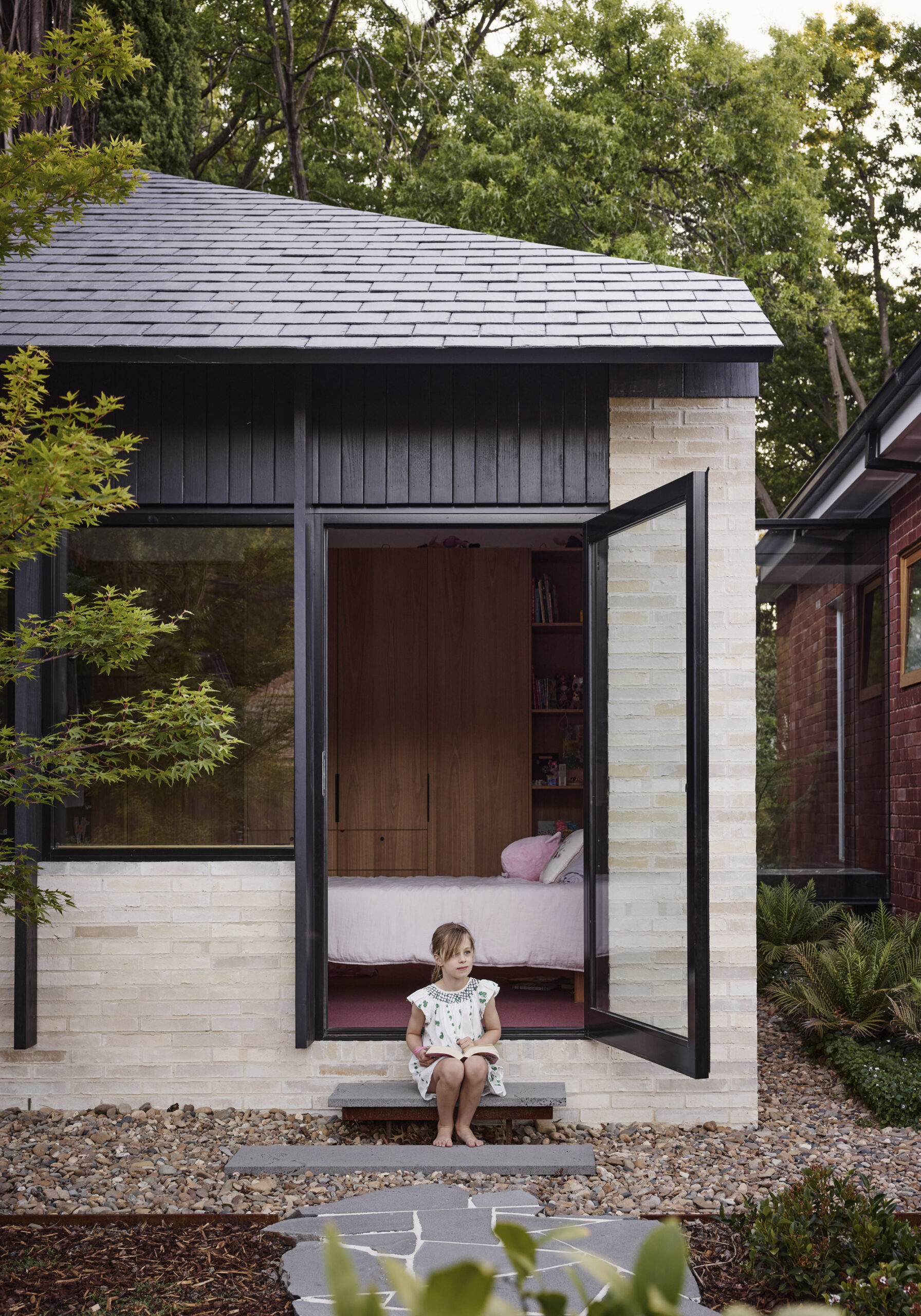
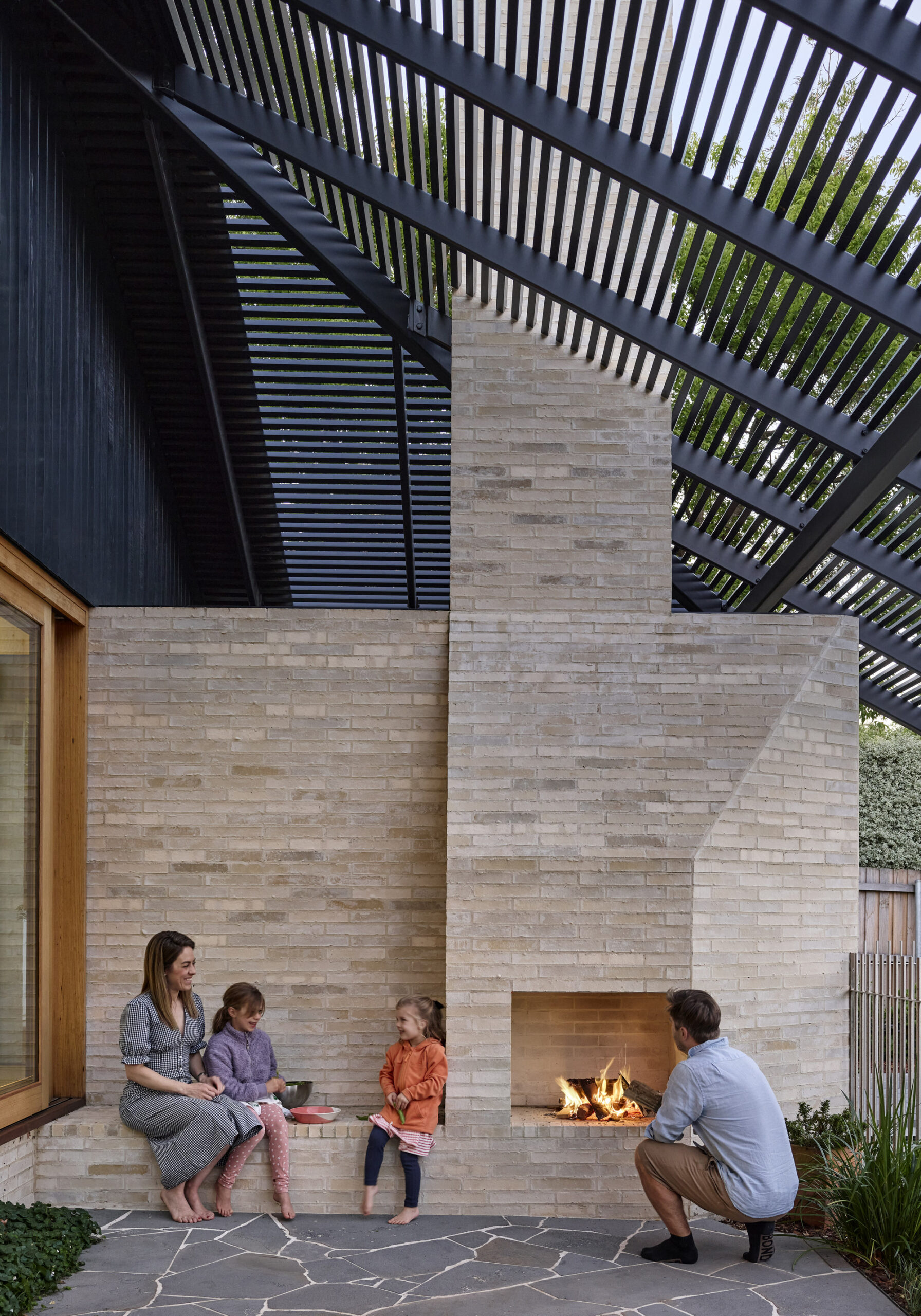
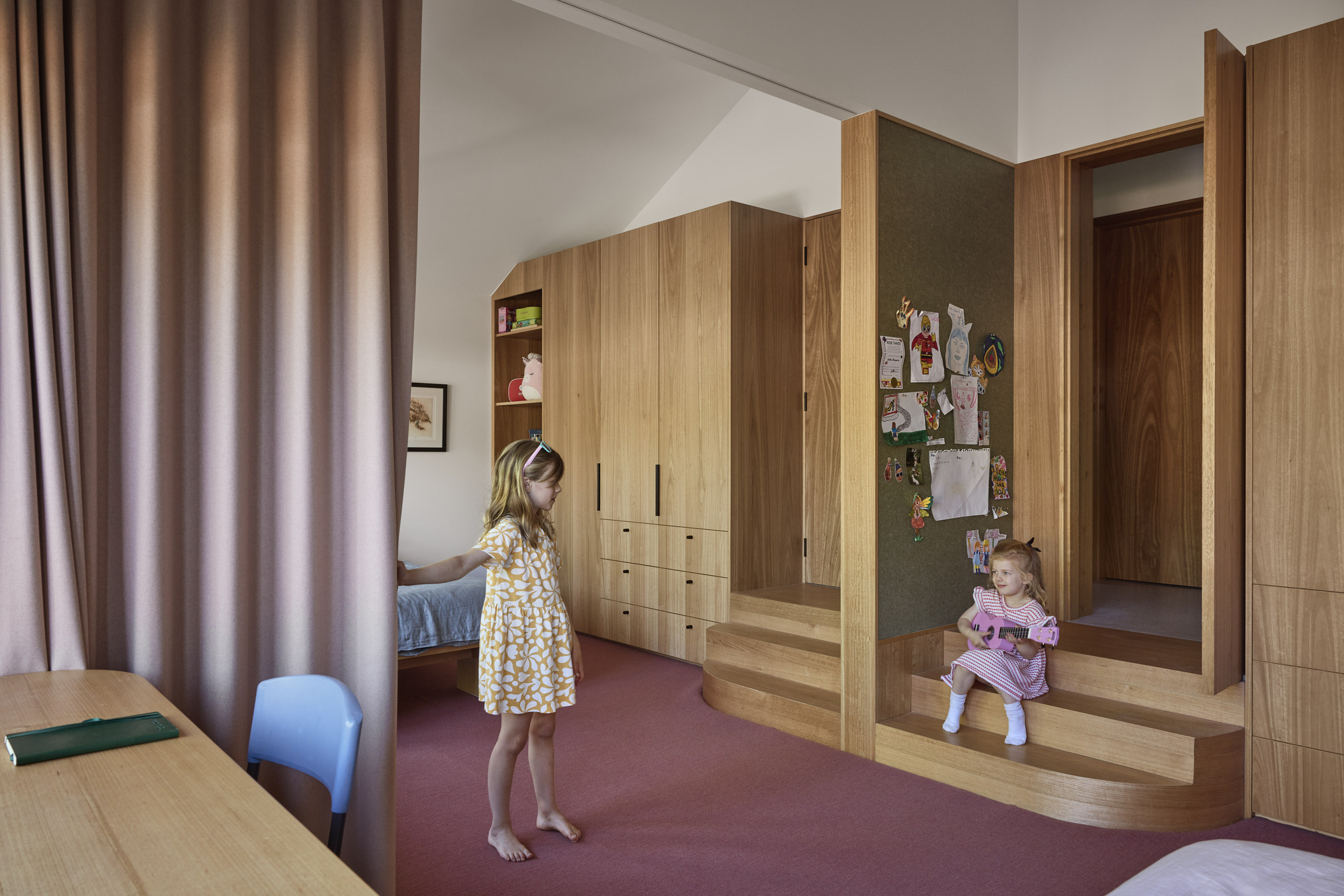
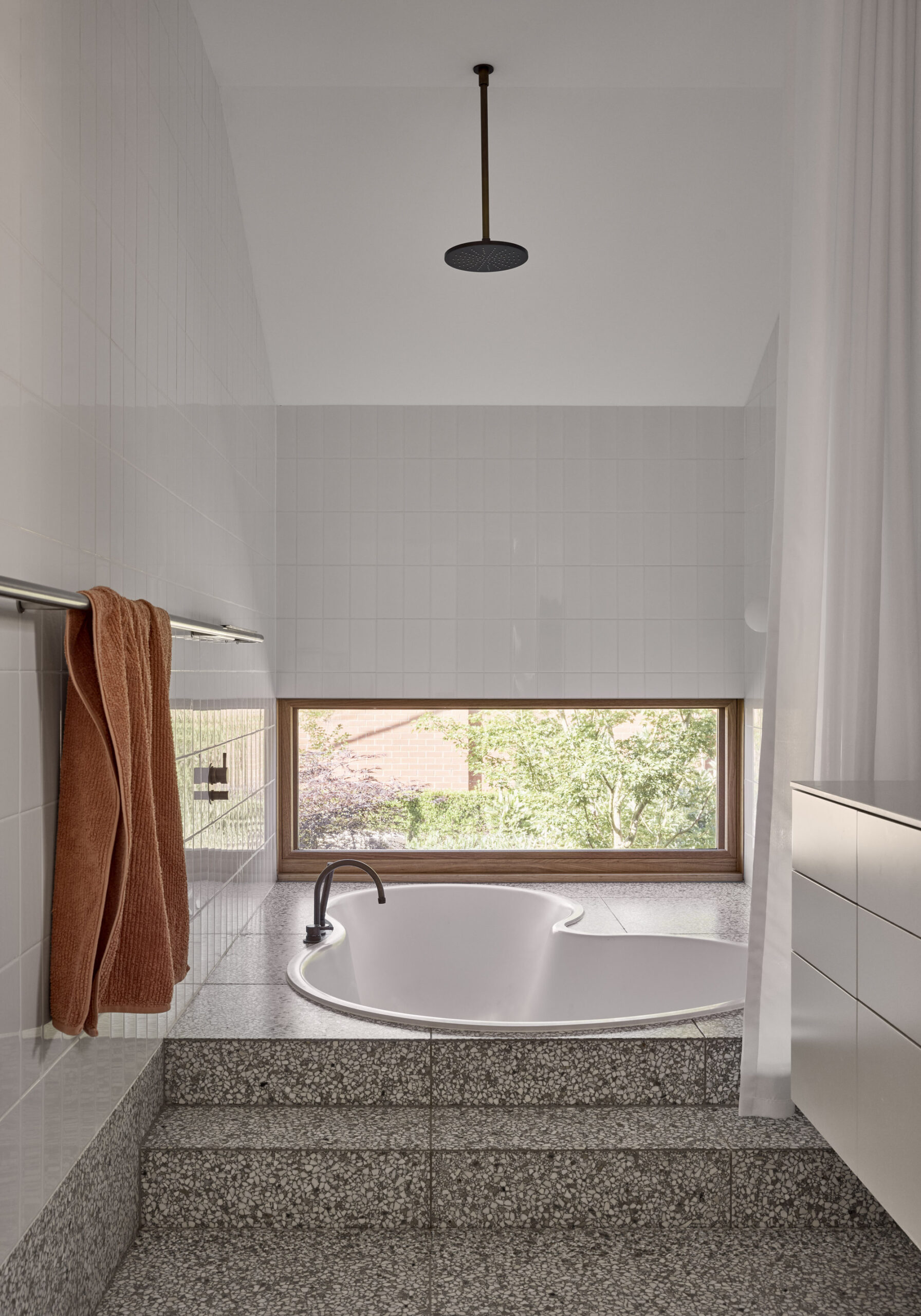
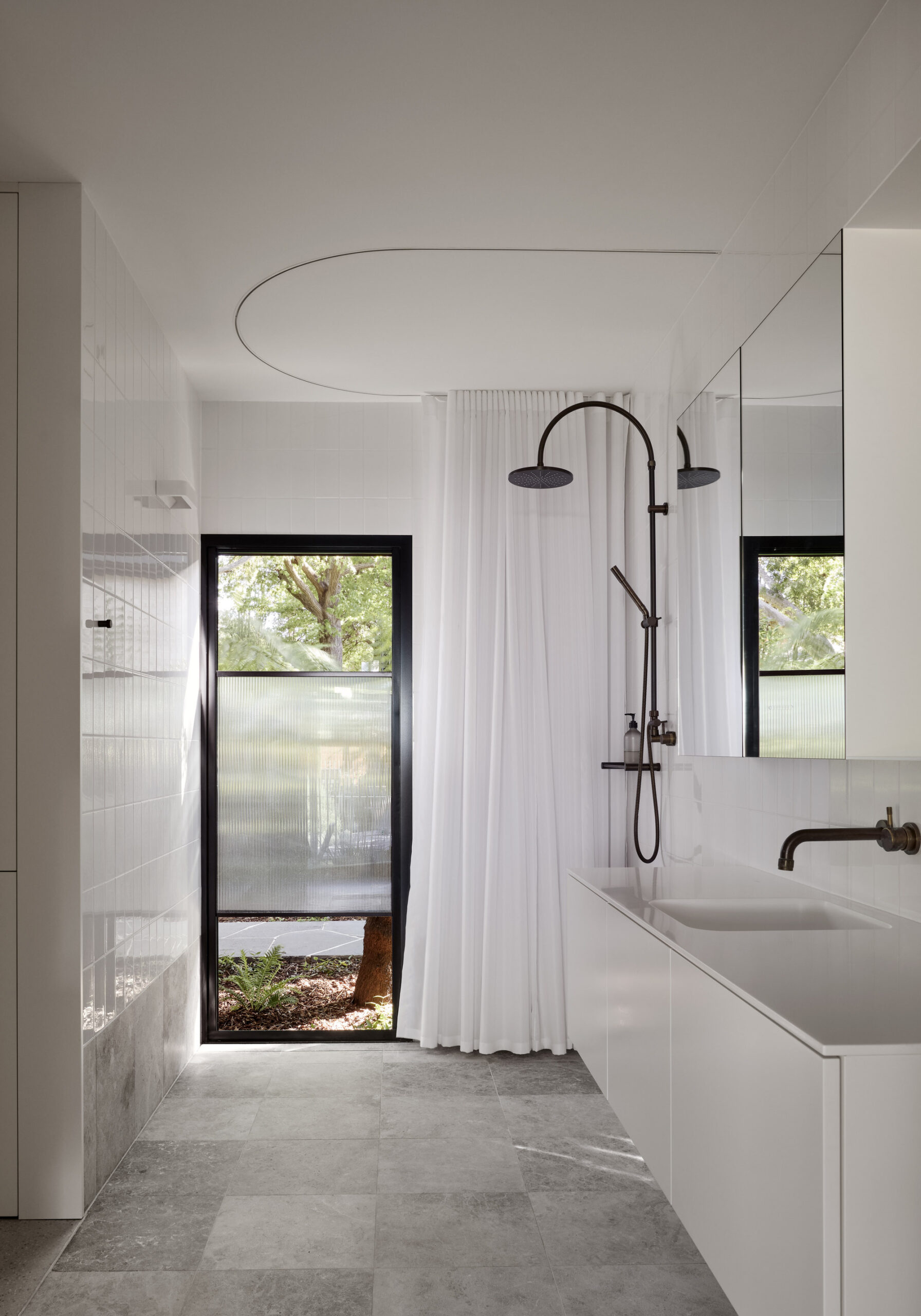
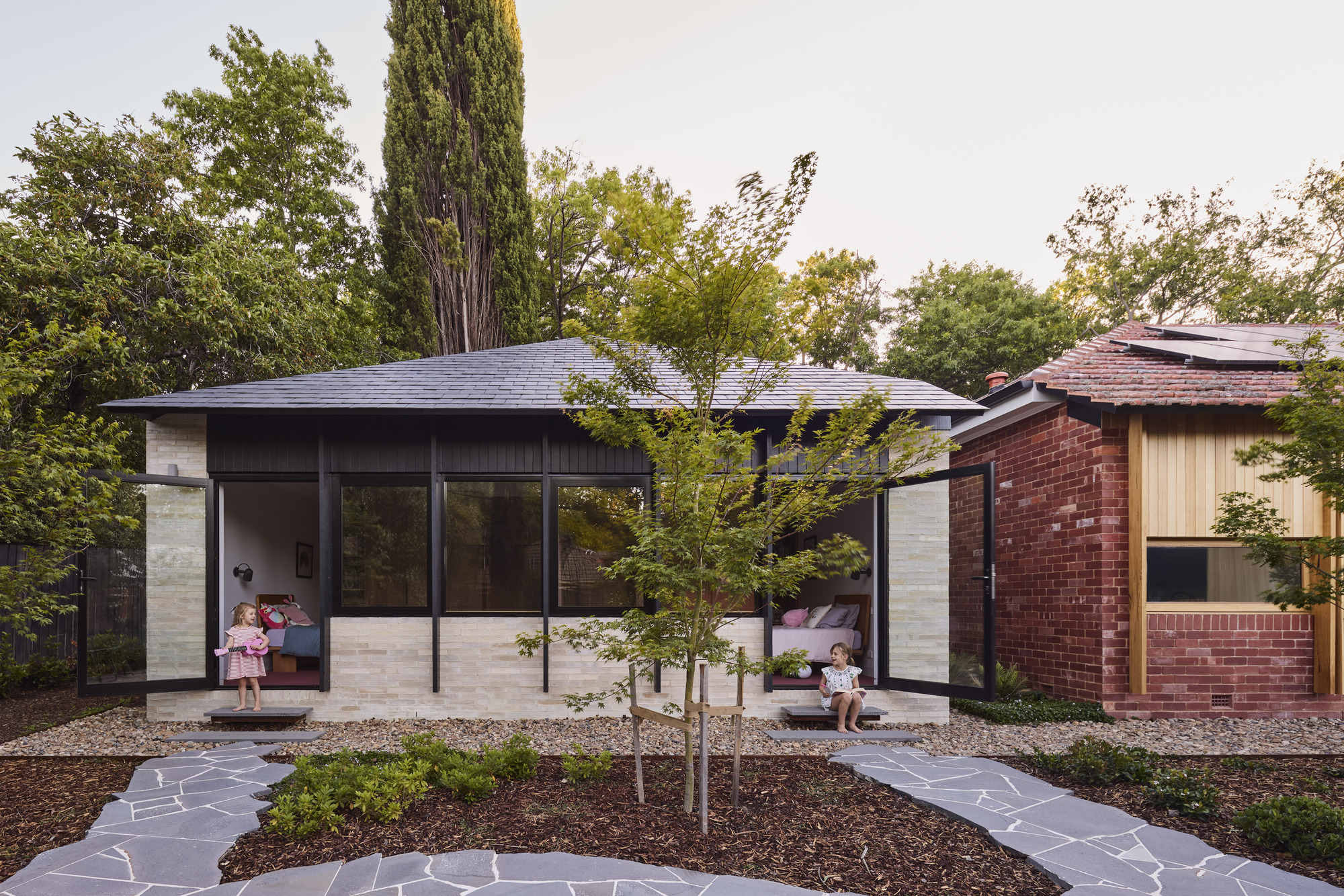
Housed in the pavilion to the right is the main bedroom, with built-in cabinetry and a beautiful ensuite bathroom, and two further bedrooms for the girls. The two bedrooms are a mirror image of each other, with identical cabinetry and built-in desk space, and each with its own door out to the garden. The dividing ‘wall’ between them is a large, heavy curtain, allowing the space to be open and shared or closed and private. The pavilion to the left has more practical and social functions with a laundry and boot room (providing plenty of storage for hats, coats, and bags) and a multipurpose rumpus room. The rumpus has a curtained fourth wall (opening the room up to the covered entertaining zone and outdoor fireplace), a secret netted play space in the ceiling, and a concealed door within the cabinetry opening to a bathroom.
© Tess Kelly
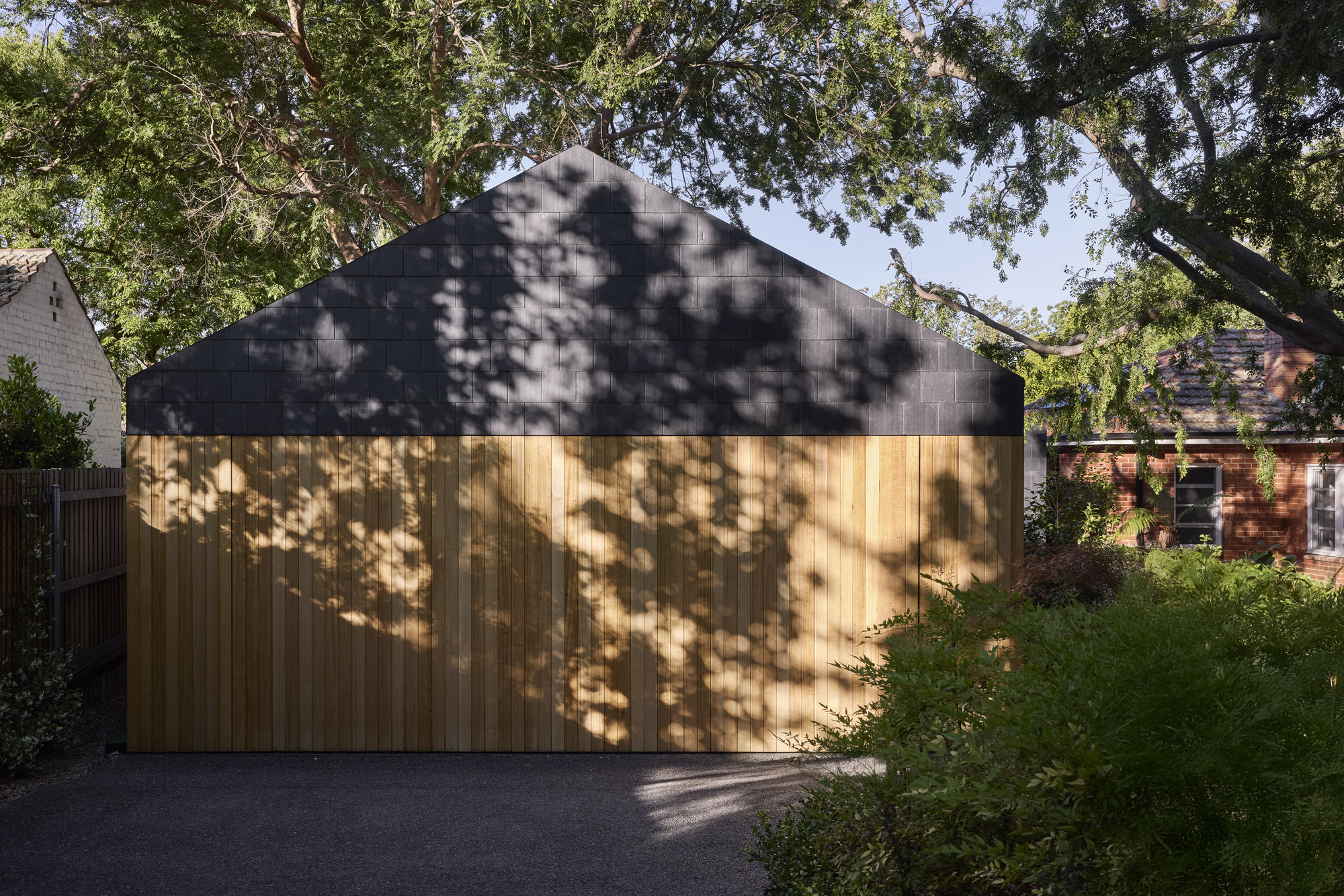
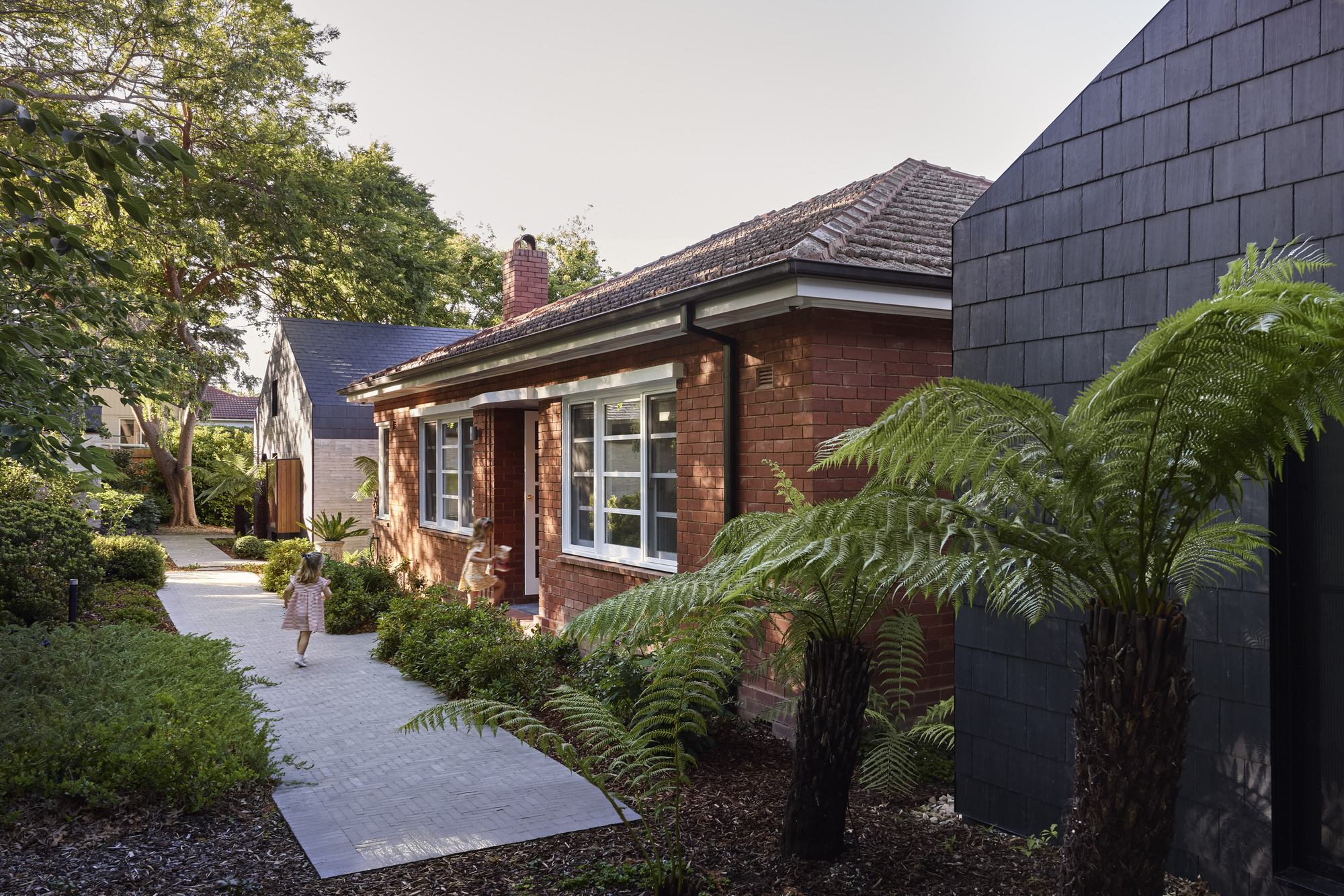
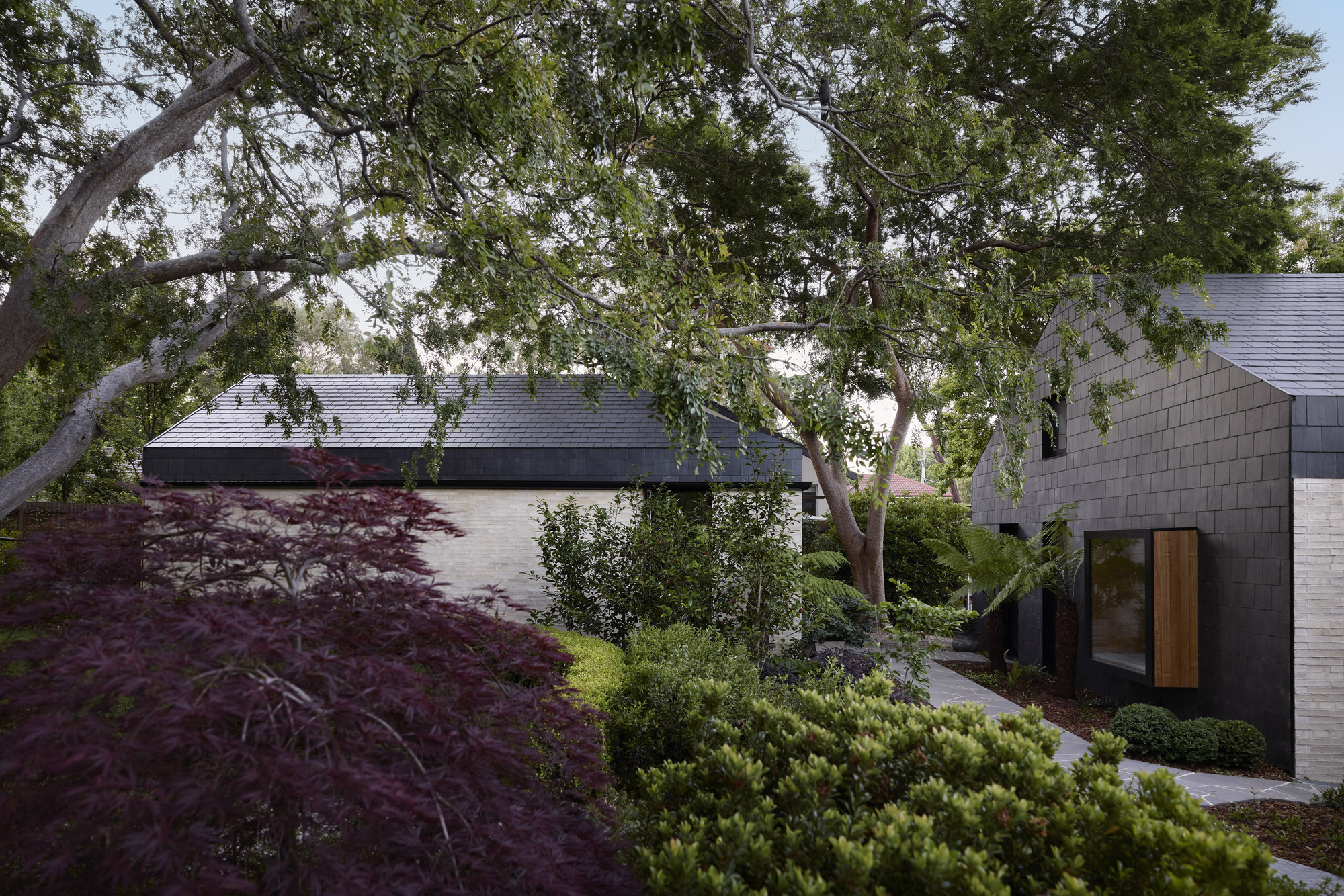
Viewed from the street, Hotham is deliberately understated. The home sits quietly beneath the canopy of large established trees, protected and retained by purposefully designing around them. The new elements were modelled on the existing form, copying and borrowing the exact roof forms and angles of the original bungalow. By sharing the same DNA and layering vistas back to the street, Hotham shares the same language and appears very much part of the chronology of the street.
© Tess Kelly
EVERYTHING ALL AT ONCE – The architecture is mature and restrained, rich in materiality, yet joyful. Providing spaces to explore, inhabit, and experience, the design promises intimacy, surprises, and discovery rather than having everything, all at once. The discipline lies in creating moments to allow the inhabitant to sit within the picture rather than just look at or through it. By orienting towards, or framing the view, a far more visceral and intimate way of interacting with the outside is created. “When we studied architecture, it was the age of deconstruction and the idea that you are basically an elaborate sculptor. I completely disagree. We are not sculptors, we are weavers, adding our bits. What’s great about Hotham is precisely that – weaving the external built fabric, then it’s all Austin Maynard Architects on the inside. We haven’t had to be ostentatious on the outside. At Hotham, there are surprises that are not instantly obvious but slowly discovered.” (Andrew Maynard)
© Tess Kelly
CAPTURED CARBON – A crucial factor in the architectural weaving over architectural re-writing is the acknowledgement and response to the real issue of captured carbon. Where once the focus was on saving energy, selling fancy new things as being super low carbon in operation, the root problem lies in the upfront, embodied carbon in anything existing, and the carbon created in making anything new. The most sustainable buildings are the ones that make the best ruins; they just don’t want to be knocked down. Hotham is a super resilient building, it will be here for a long, long time.
© Tess Kelly
MIRROR MIRROR – Research has shown that there are numerous psychological and developmental benefits to siblings sharing a room. In 2022, a study conducted by the US’s National Sleep Foundation found that more than half of those surveyed (parents, guardians, or caregivers) agreed that children who share a room are better at socialising. Experts also agreed that when sharing, it’s important to designate certain areas per child, as well as allow for common spaces. The concept of Alone Together runs through many of our projects. At Hotham, this is acutely realised in the girls’ bedrooms. Each room is a mirror image, identical in size, each with its own door in and its own door out to the garden. Here, there is the option to be alone or together, to open up the space to play, study, talk, or have a ‘sleepover’ simply by pulling open the fourth wall curtain that divides them.
© Tess Kelly
THE FIRST DOCTOR – In researching the history of the house and “wading through” the original plans and documentation, the owners discovered the cottage had been built in 1937, commissioned by the then government, for a Doctor Lodge. Already emotionally invested, discovering the original owner was also a doctor had resonance. “We felt a sense of connection to the history of the house and wanted to retain the legacy.”
© Tess Kelly
SUSTAINABILITY – Canberra is inland, with massive diagonal shifts leading to extremely dangerous UV by day (with potential for solar gain) and freezing by night. The seasonal changes are also extreme, with the most brutal of summers and the iciest of winters. Therefore, the emphasis at Hotham is on insulation, thermal mass, and thermally broken window frames.
© Tess Kelly
Hotham is a well-insulated box that has the capacity to open up to maximise fresh air and cross ventilation. All windows are fitted with the highest quality double glazing. The house is oriented to provide north and east sun, with eaves and awnings to protect the glazing from the hot summer sun. Throughout the colder months, the sun streams in to heat the concrete slab, which radiates warmth well into the night. For freezing cold periods, there is also an electric heat pump hydronic heating system within the concrete flooring. The large garden increases the permeability of the site and also radically reduces the heat sink in the area. A 5000L underground water tank is buried in the rear garden. An audit of the trees was conducted prior to the initial sketch design. To save and protect the significant tree in the front garden, the connection between the rear door of the garage and the door of the boot room is a light, open pathway designed to protect the tree’s roots.
© Tess Kelly
Hotham is 100% electric with a 7.7KW solar system with battery provision. There is an electric heat pump hot water system and electric heat pump pool heating. Passive solar principles are maximised by the design. LED light fittings are used throughout, and all timber is ethically sourced. The red bricks were recycled, and the original roof tiles were carefully removed and reused to cover the roof of the new extension. Re-using proven resilient materials responsibly factors in captured carbon and ensures the longevity of the building.
Project Info
Architects: Austin Maynard Architects
Country: Australia, Canberra
Area: 361 m²
Year: 2025
Photographs: Tess Kelly
Project Team: Andrew Maynard, Mark Austin, Claire Ward
Builder: Preferred Builders
Landscape Architect: Harris Hobbs Landscapes
Engineer: Coot Consulting Engineers
Building Surveyor: Capital Certifiers