


Creating a City-Within-a-Park for Urban Community-Building
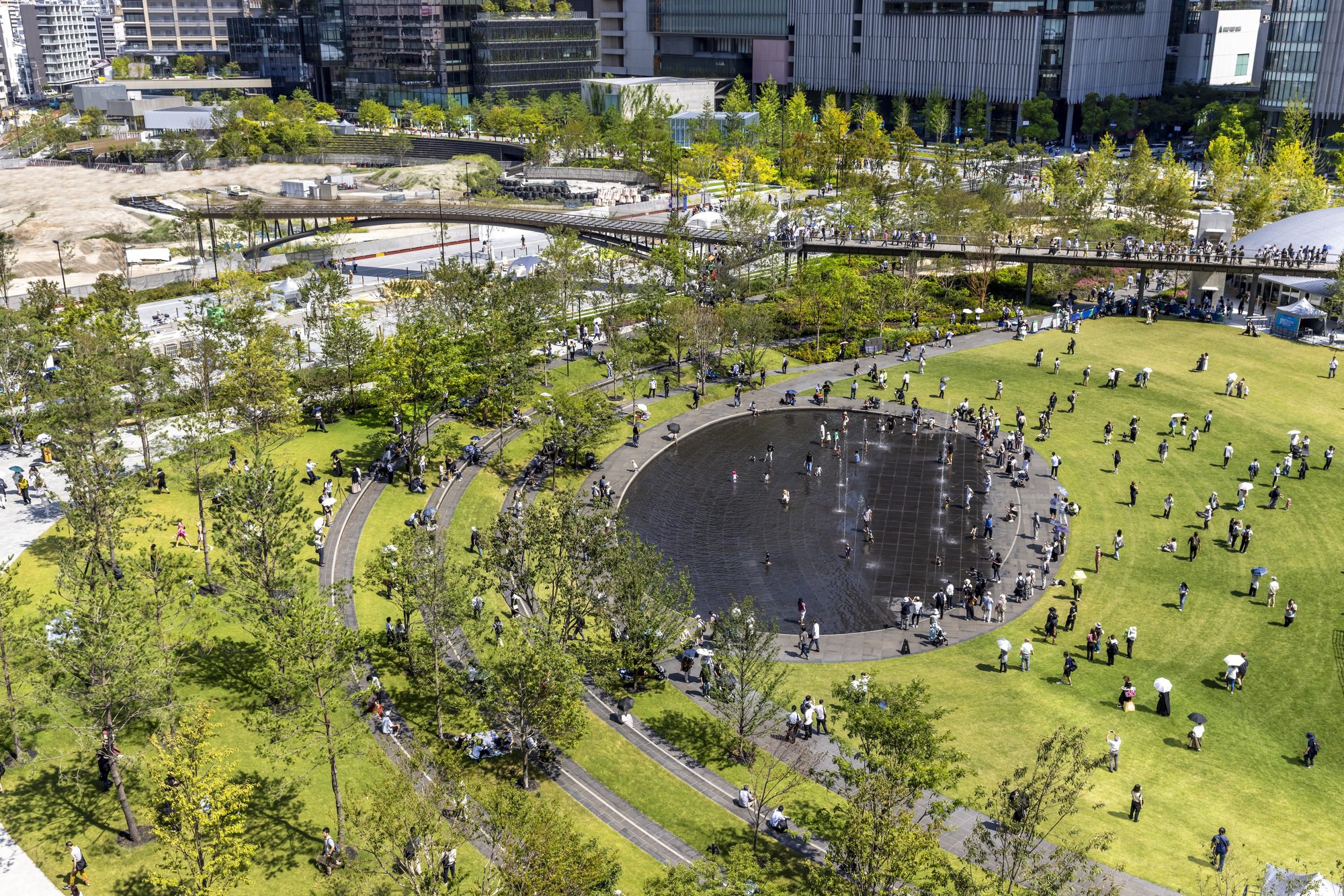
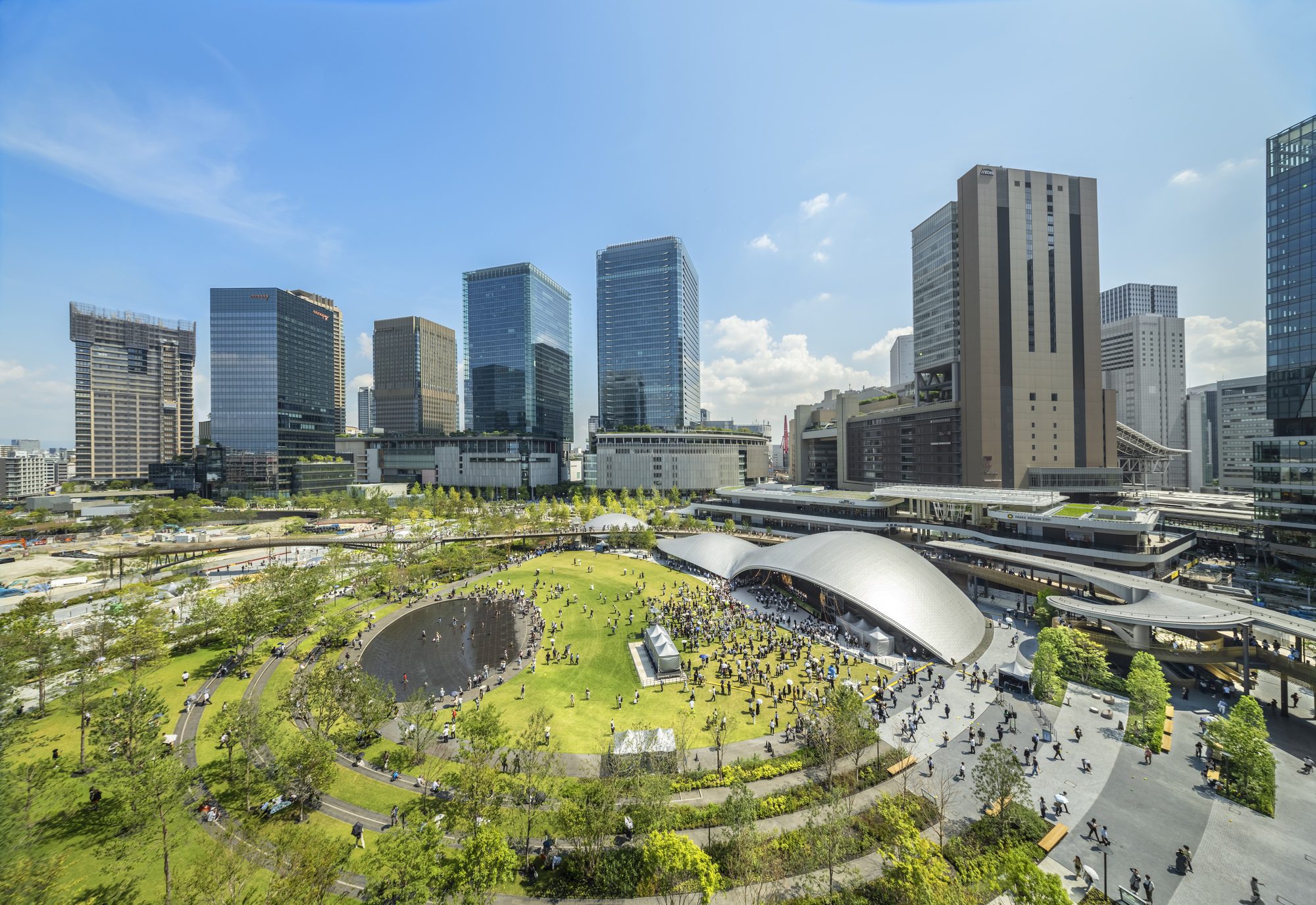
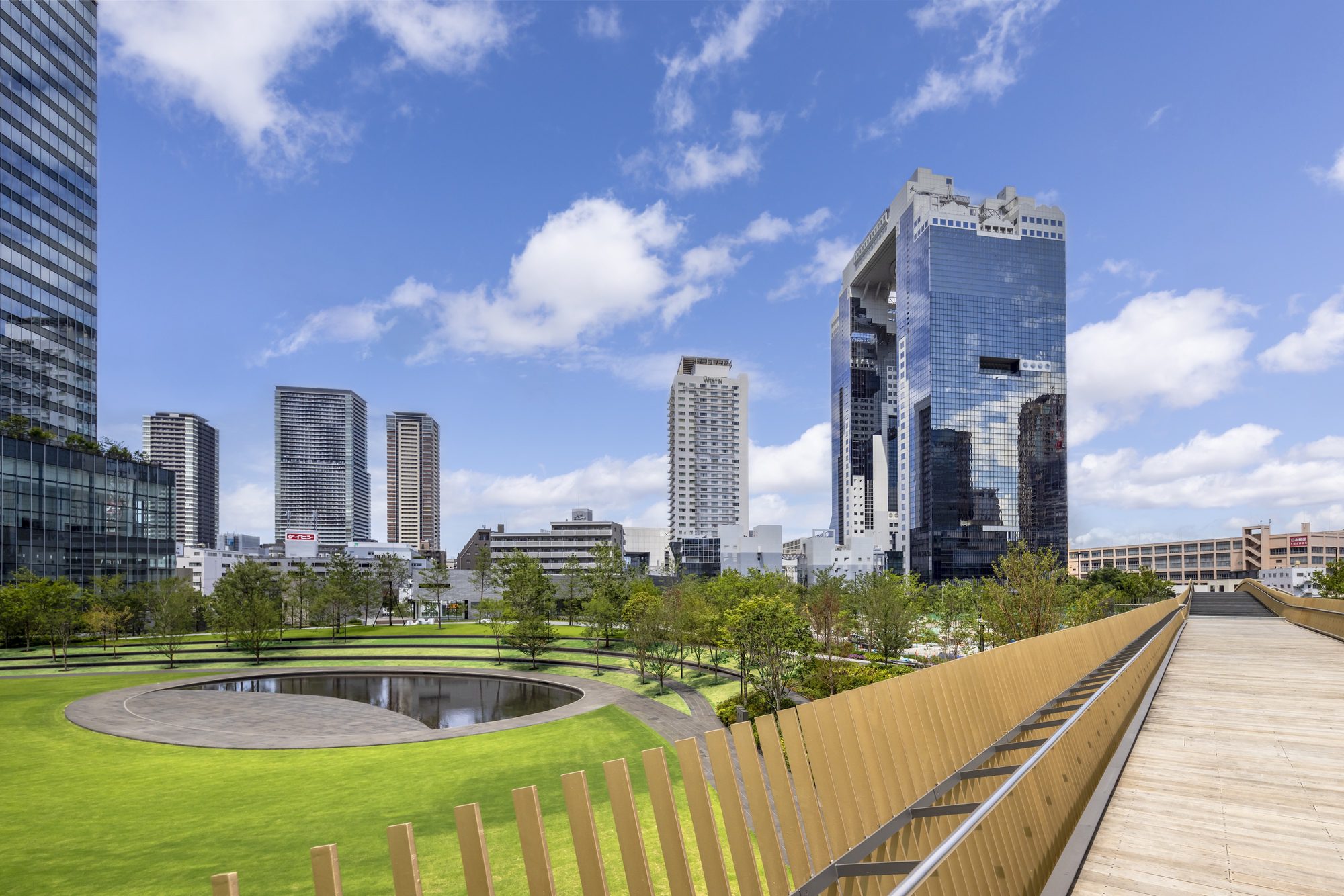
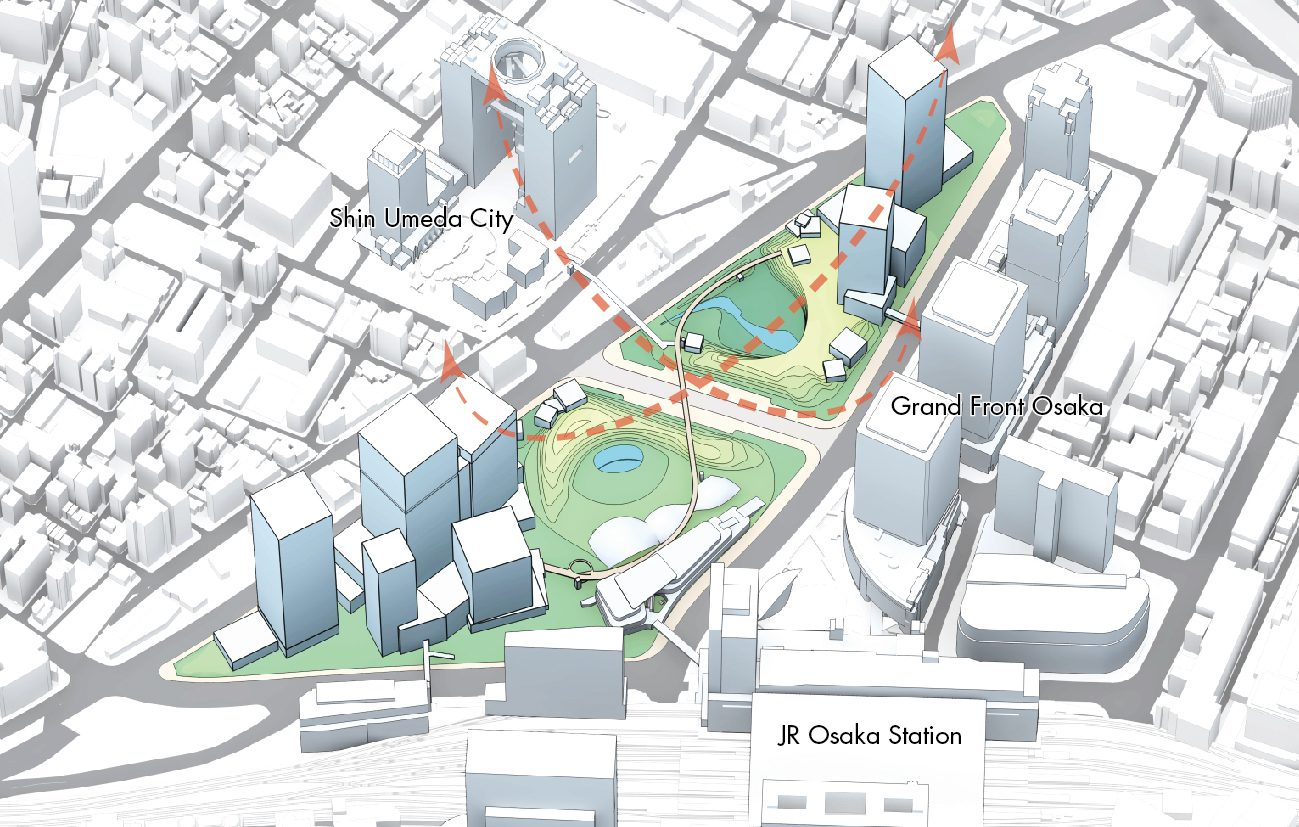
Grand Green Osaka, Umekita Phase 2, located on the former site of the Osaka Station North Area Freight Yard, said to be the last area of prime real estate in the Kansai region, is a large-scale complex development with a total floor area of over 550,000 square meters. The approximately 9-hectare site, designated for urban development mainly at local government initiative, consists of a central urban park of 4.5 hectares and 4.6 hectares of private land. Strategically located, it connects to JR Osaka Station and the surrounding city. In collaboration with landscape design firm GGN, the entire site was transformed into an integrated public park. Embankments create differences in elevation, transcending the boundaries of parkland and private property for a design to promote continuity of the area and vitality in its use.
© Nacása & Partners
The built program, ranging from densely arranged mixed-use high-rise buildings on the private land to low-rise facilities and single-story park structures, is all designed with square floor plans and arranged as a cohesive group clustered around the park. At the same time, variation in the angles and stacking of the building volumes gives rise to spaces rich in greenery and alive with activity. With its public space open to the surrounding districts and integrated with urban functions, this project will expand the concept of a public park and drive the creation of “Osaka Midori Life,” developing as a place where a diverse variety of people can freely gather and find value. We hope the urban development approach realized in Grand Green Osaka will serve as a model for the next generation of large-scale mixed-use development.
© Akira Ito[aifoto]
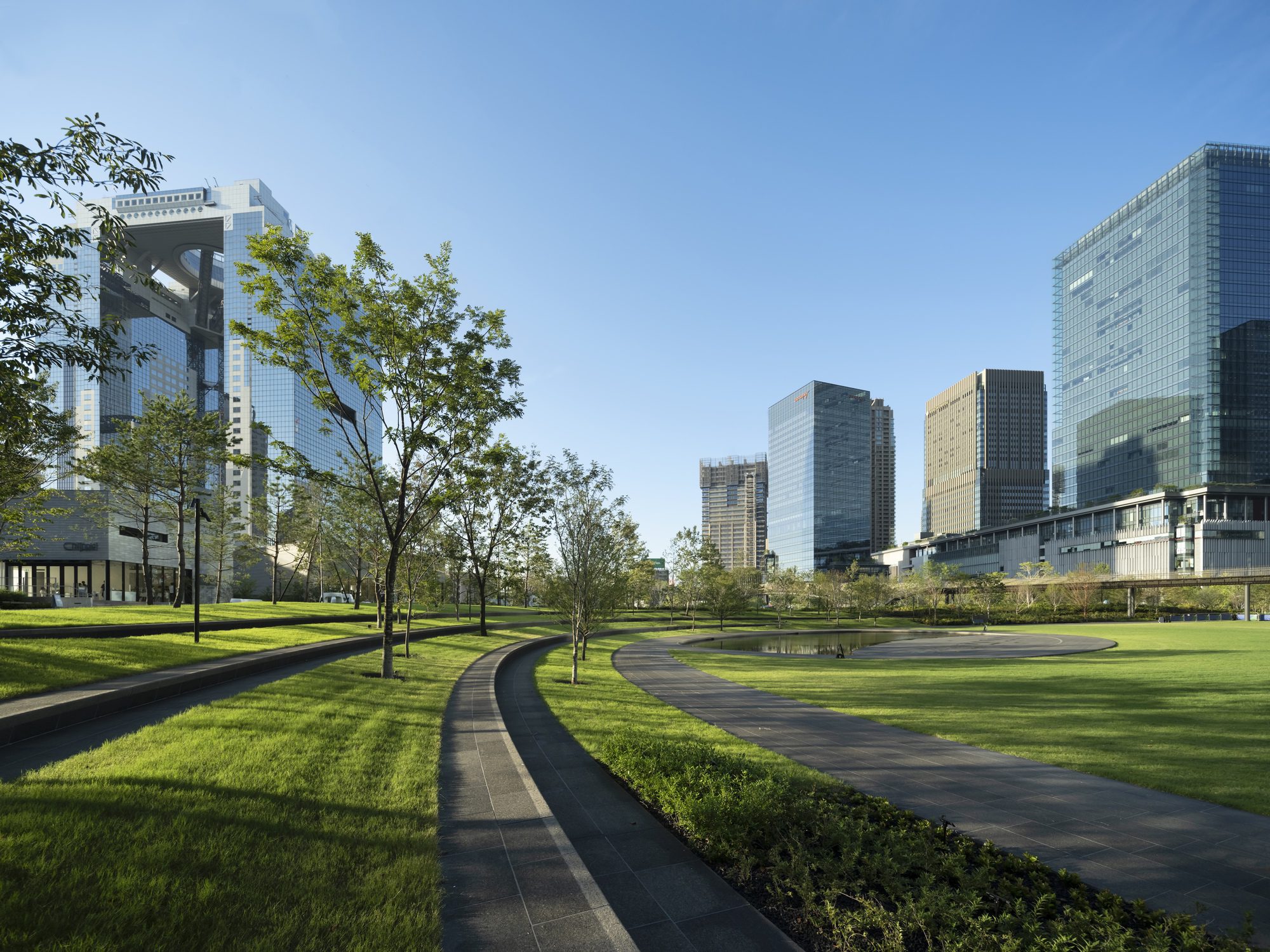
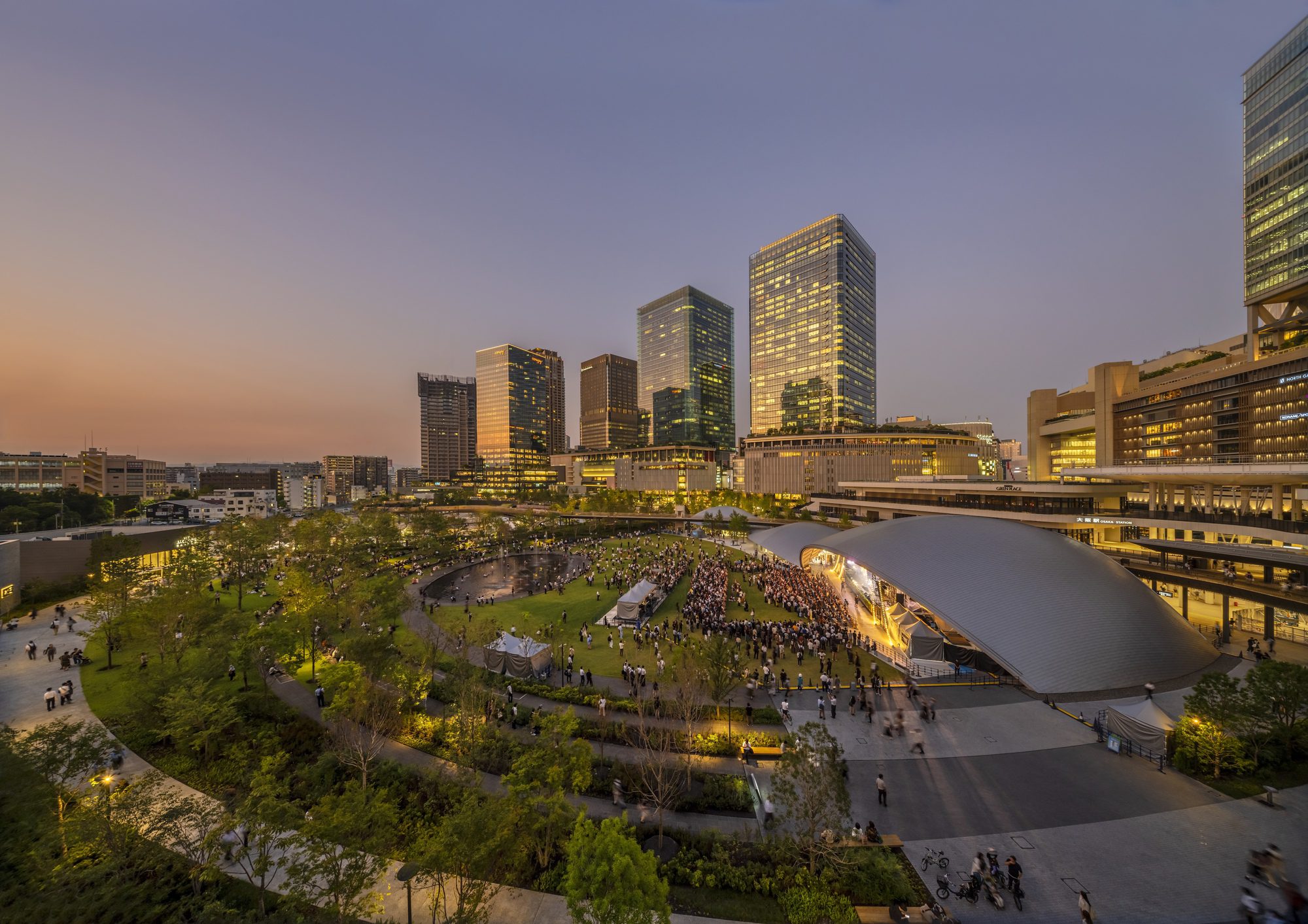
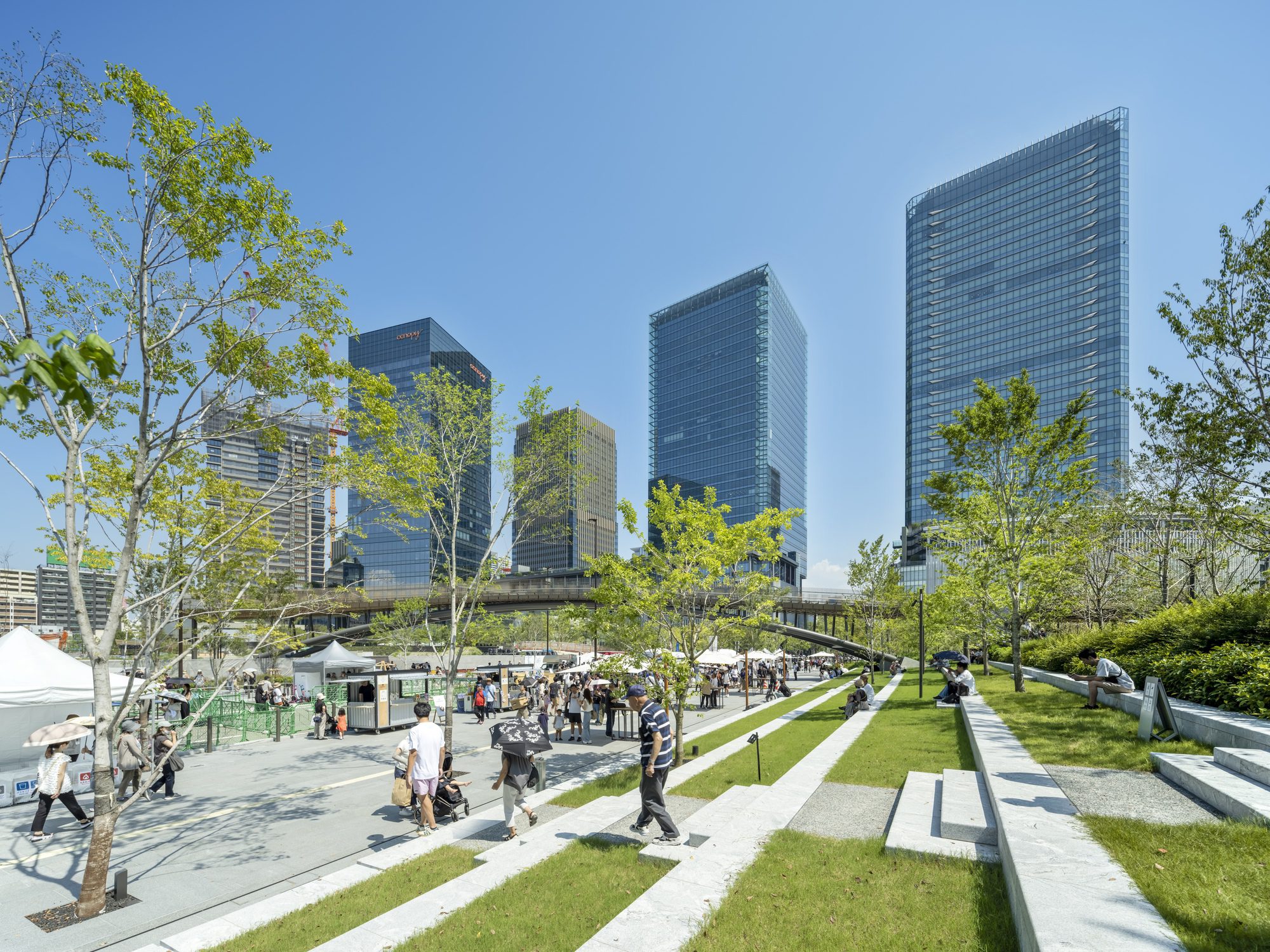
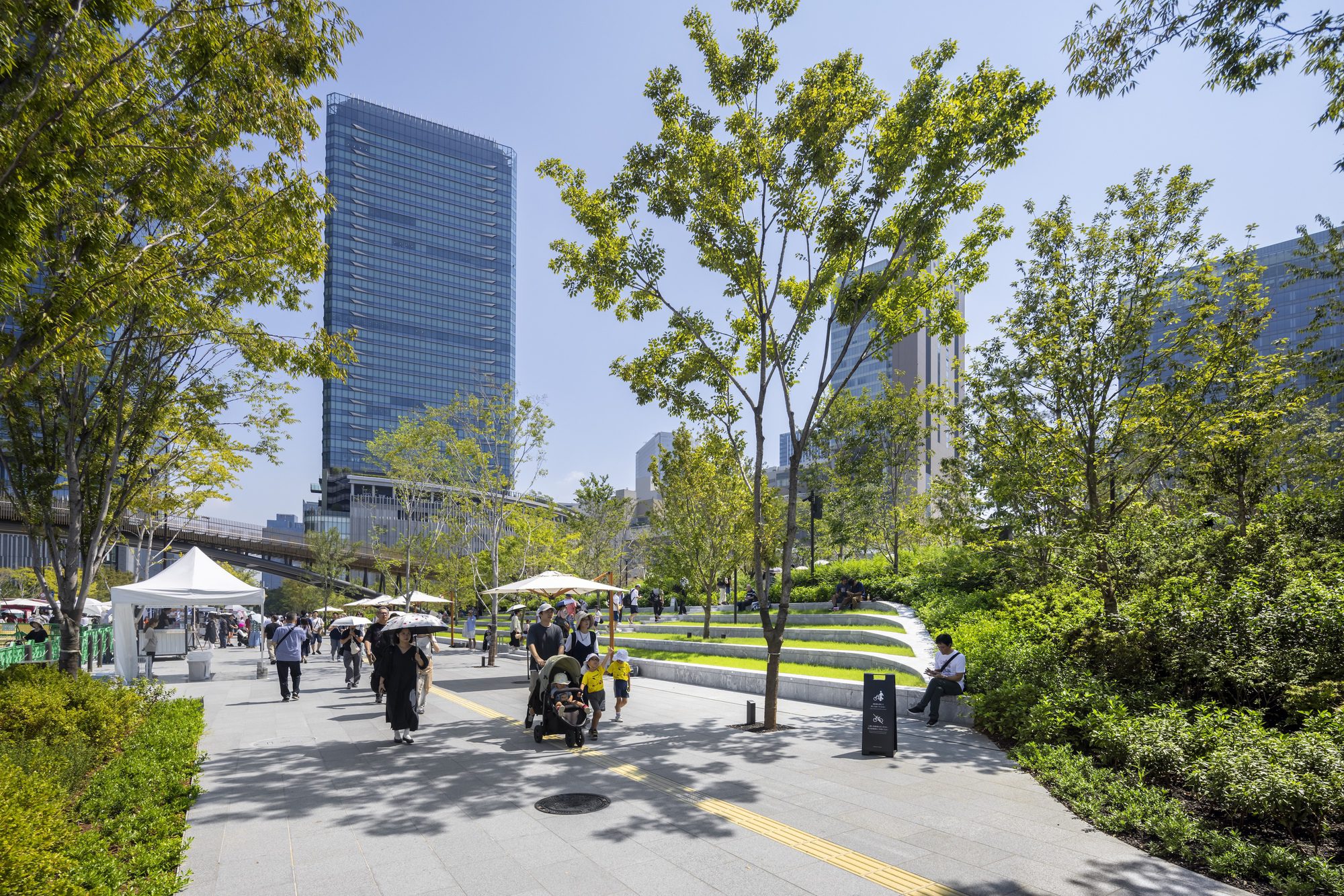
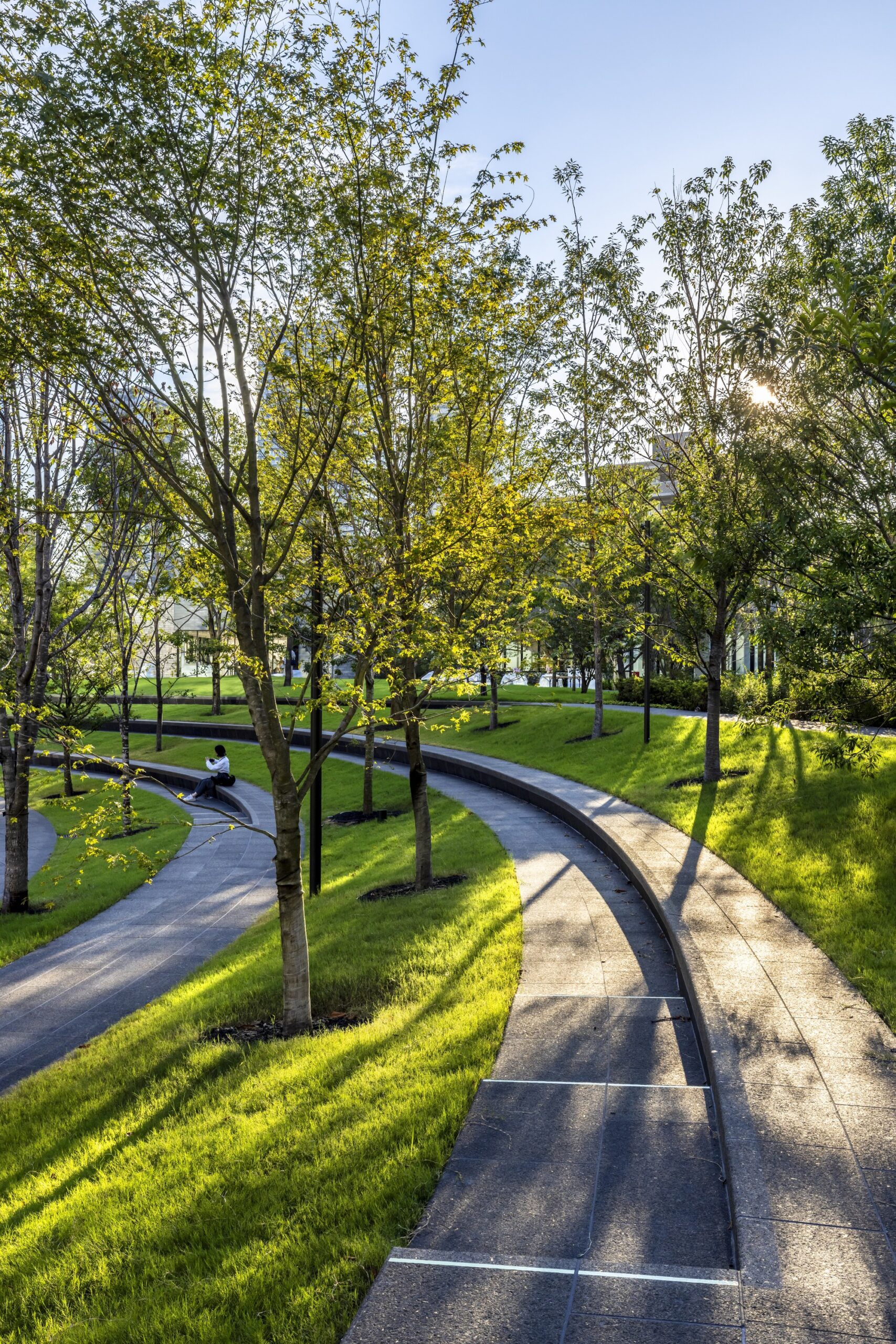
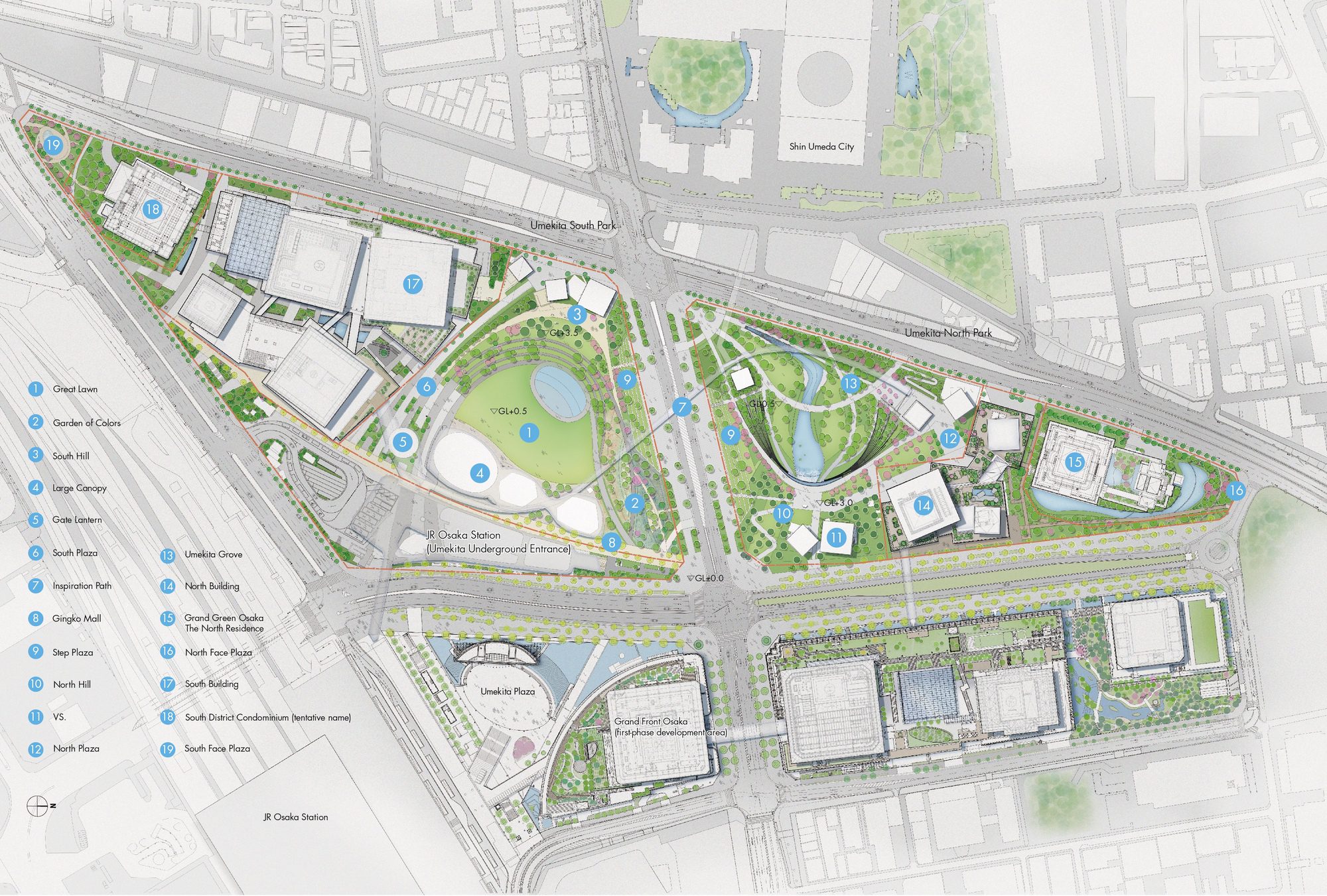
Embankments were created to gently introduce elevation changes between and within the north and south parts of the development. The variations in elevation not only integrate the site as a whole but also establish three principal “cores” in the park’s layout. These include the Great Lawn, which is the South Park’s multipurpose space facing onto JR Osaka Station; the Step Plaza, which merges with the street that accommodates both pedestrian and vehicle traffic crossing between the north and south areas; and the North Park’s multifunctional natural space, Umekita Grove, which connects to the Shin Satoyama green area and Naka Shizen-no-Mori Park at Shin Umeda City. These “cores” are designed to transcend the boundaries separating roads, parkland, private land, and the surrounding neighborhoods, thereby enhancing the allure of the entire area, including that beyond the site itself.
© Akira Ito[aifoto]
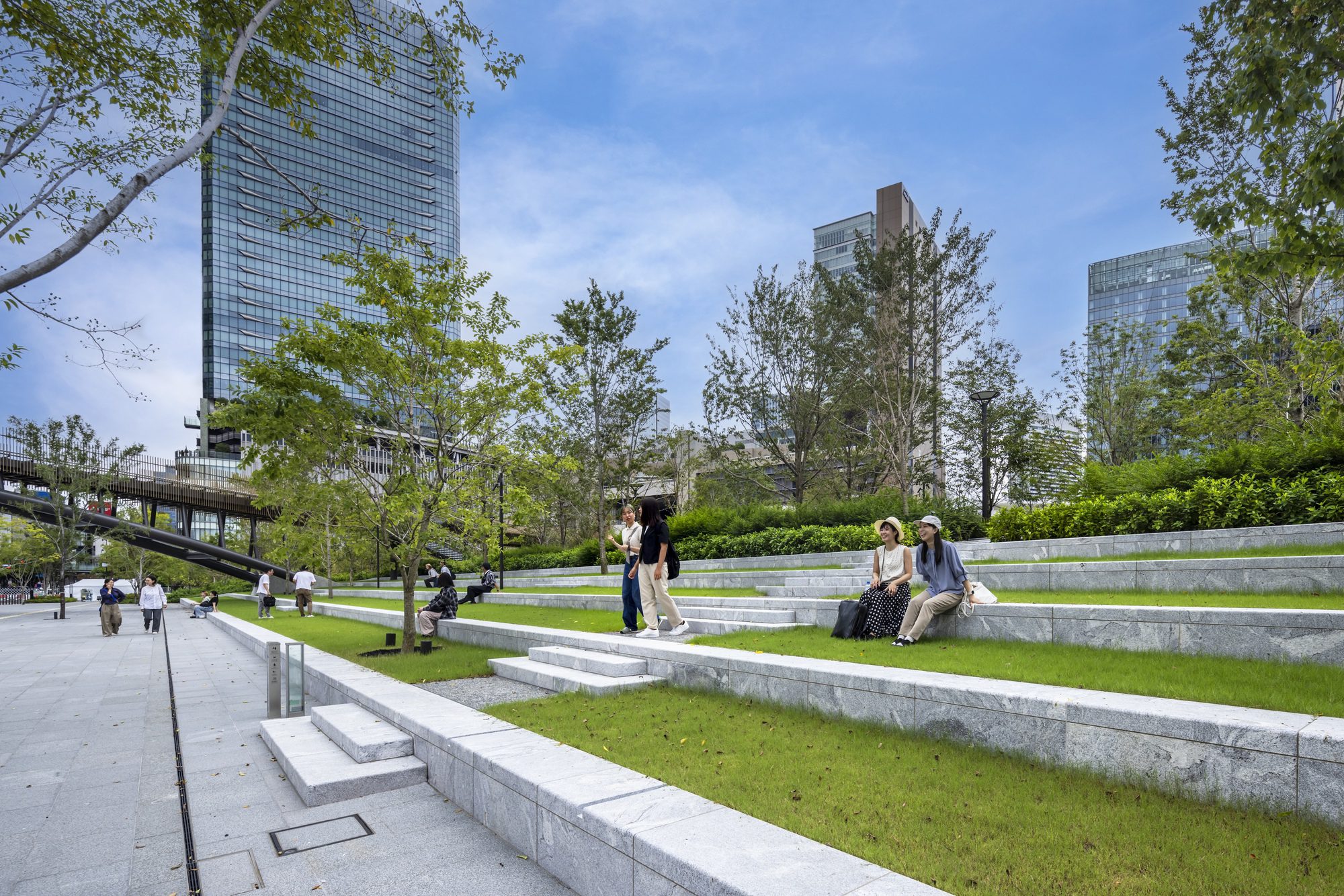
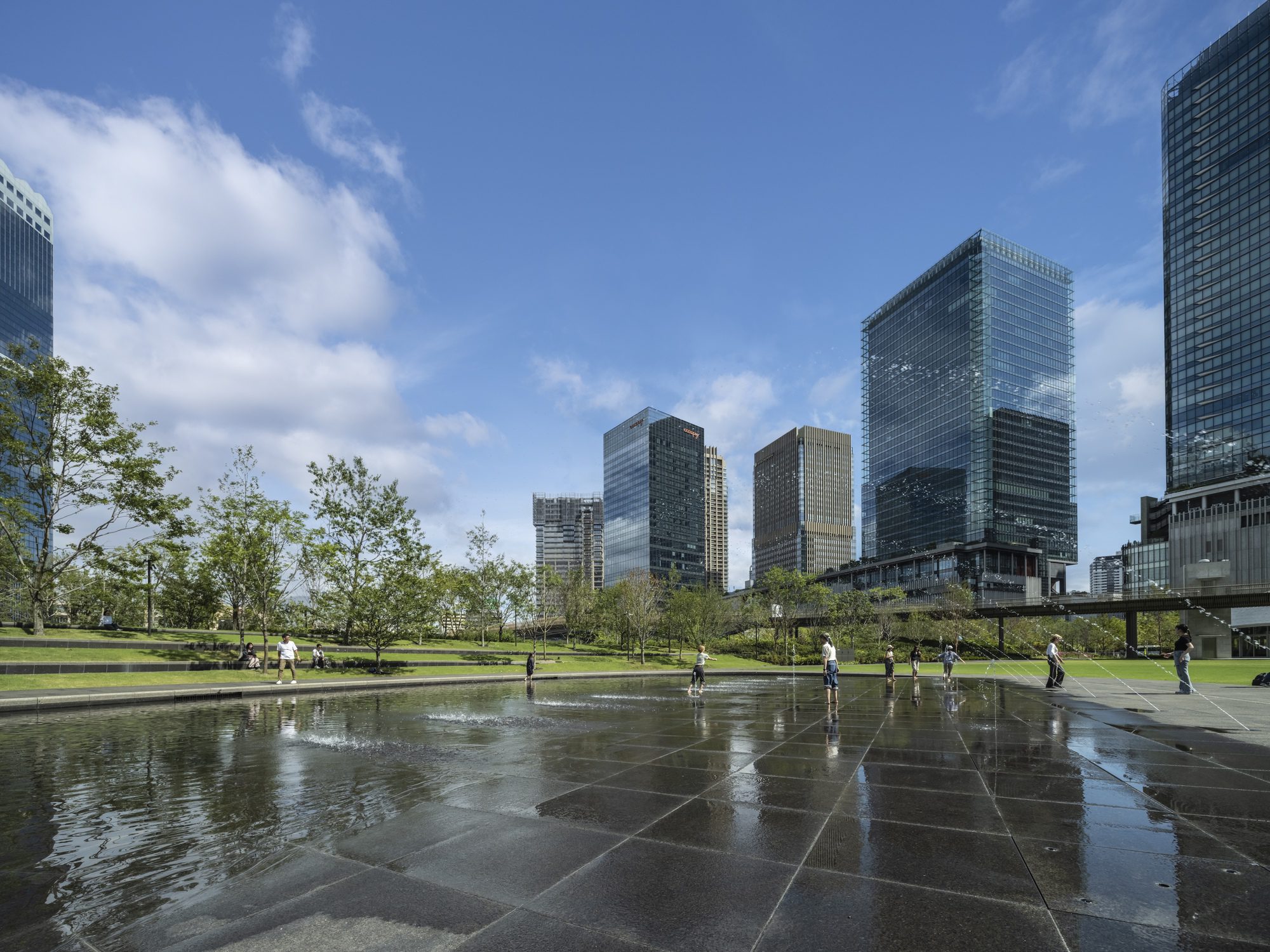
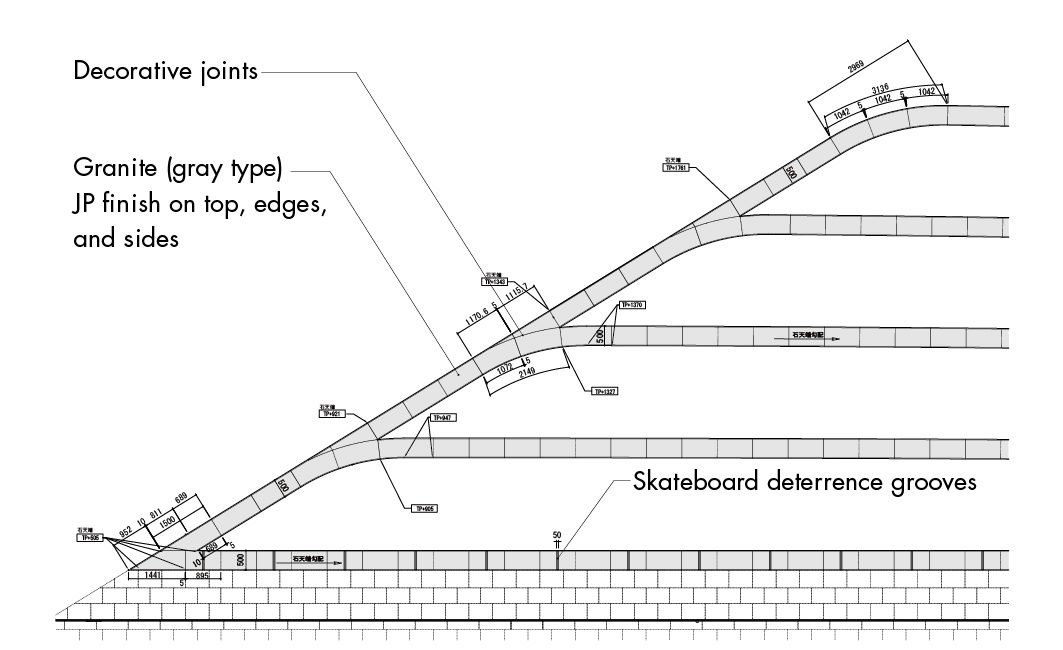
The defining feature of South Park, which opens out onto JR Osaka Station, is its urban-environment-oriented layout. Its amenities are all connected and integrated within a skillfully landscaped topography. The Great Lawn teems with activity, alive with the sounds of children playing and the splashing of the water jets in the water plaza. When the flow of water stops, the water surface transforms into a mirror reflecting the sky and the surrounding landscape. The amphitheaterlike stepped seating along the embankment invites people of all ages to find a cozy spot to sit and linger, day or night. As people relax on the Great Lawn and by the fountains, a lively interplay emerges, where visitors can take in the scene while also being part of it, creating a vibrant, communal atmosphere and adding to the richness of the park’s various social spaces. The stepped terrain is sloped for more comfortable sitting, and the stairs are seamlessly connected vertically, with design elements that create an atmosphere of both sophistication and comfort. During both small and large events, the lawn and steps can be flexibly integrated to create a space that has been a favorite of visitors since the site opened to the public.
© Akira Ito[aifoto]
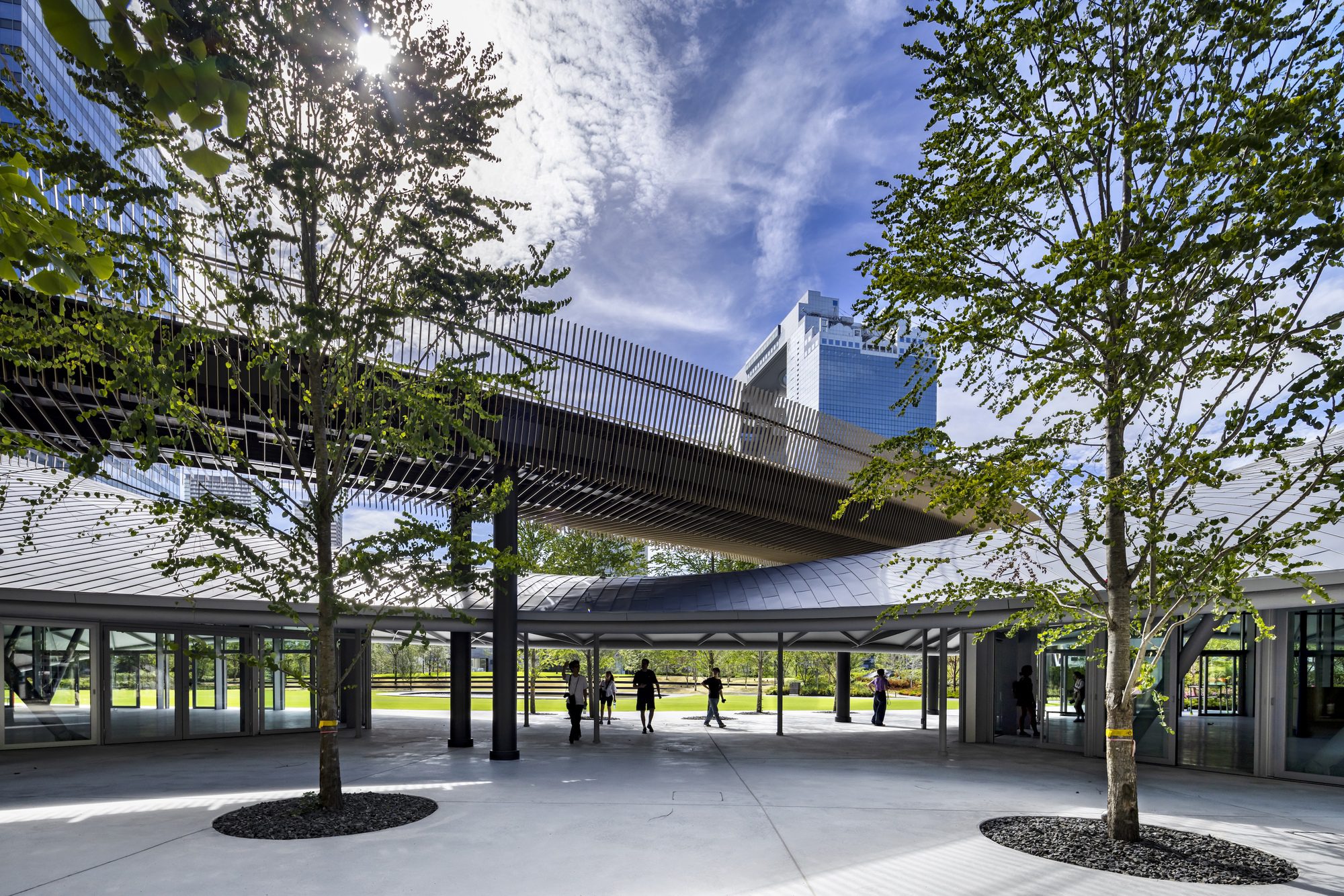
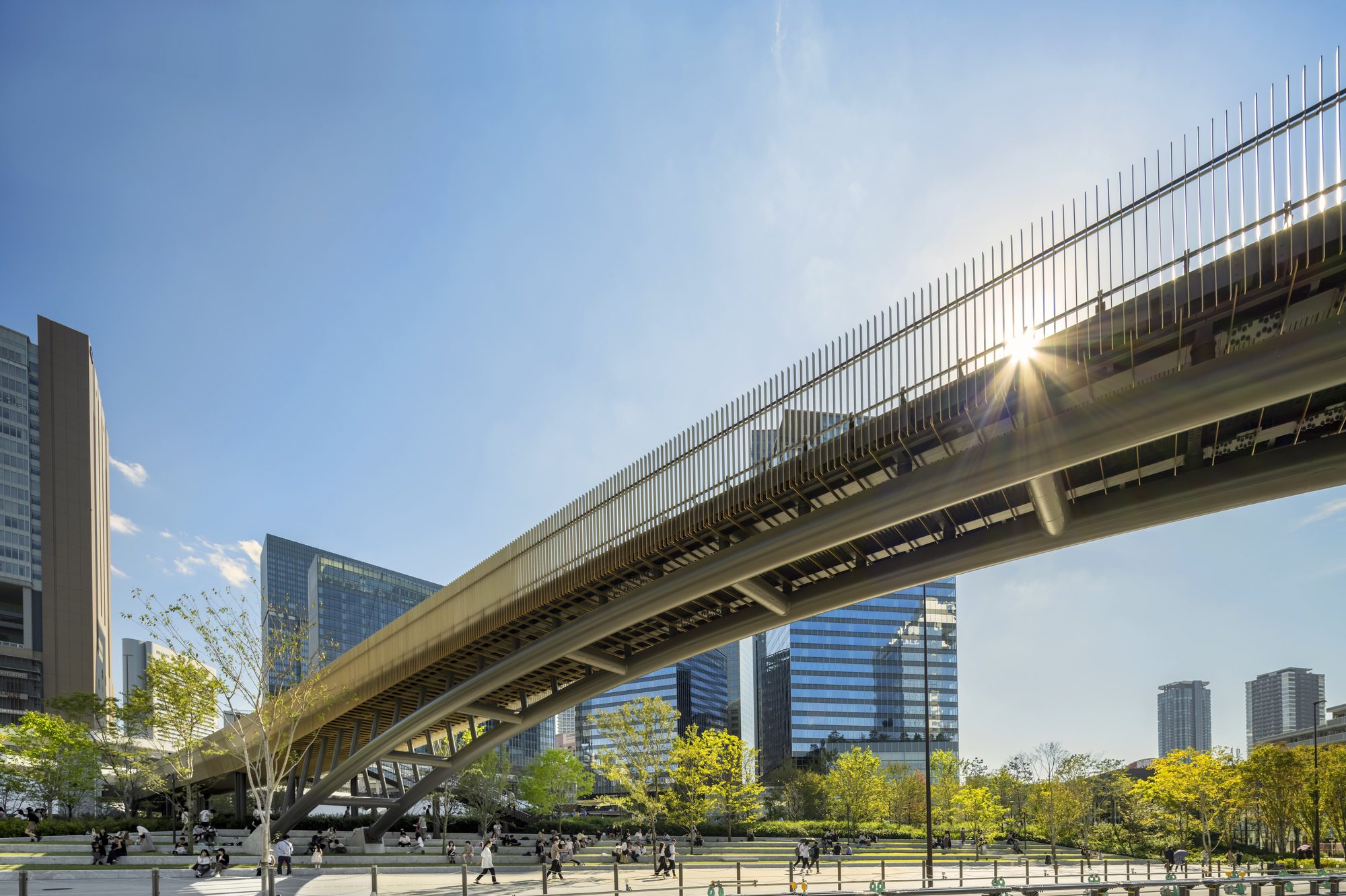
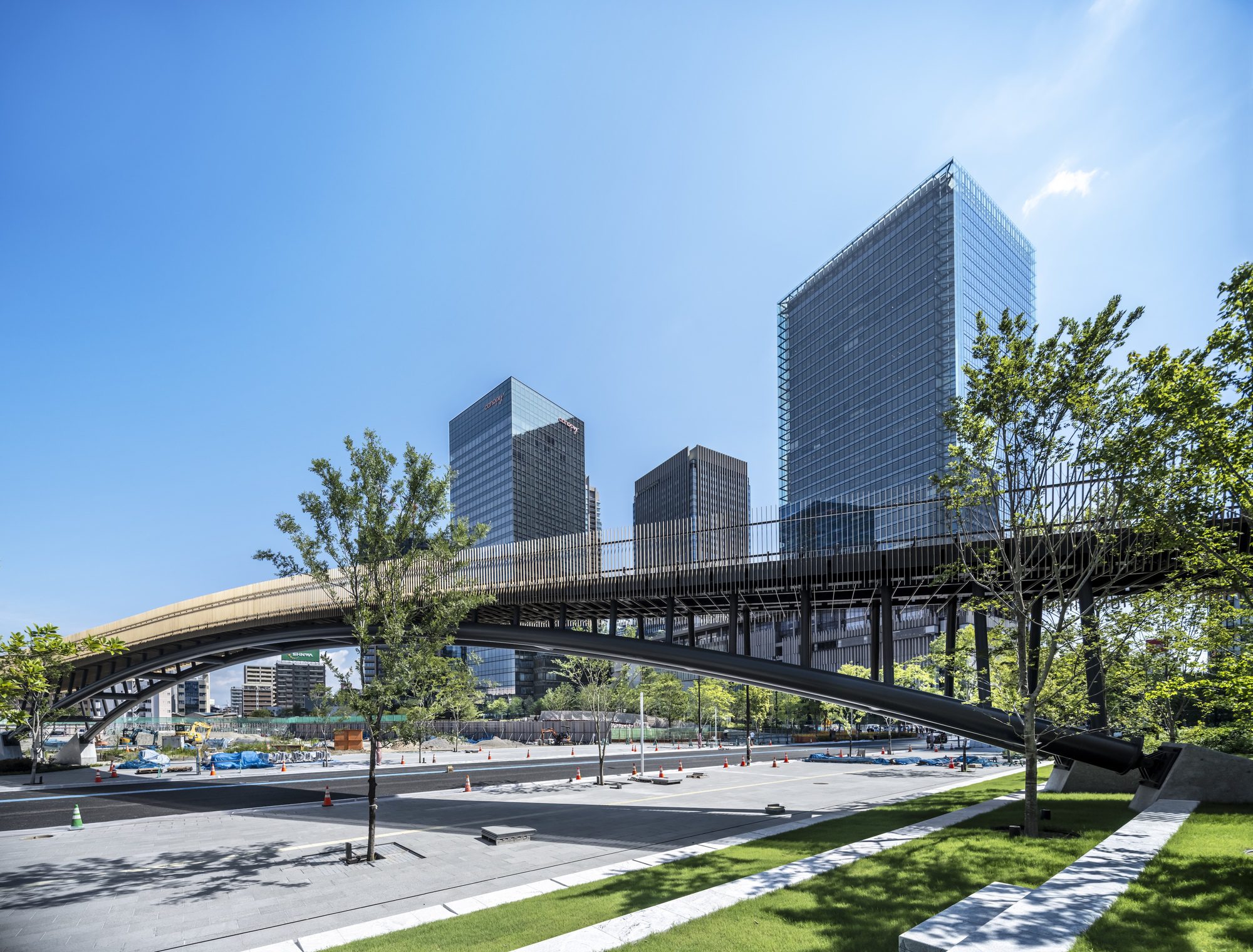
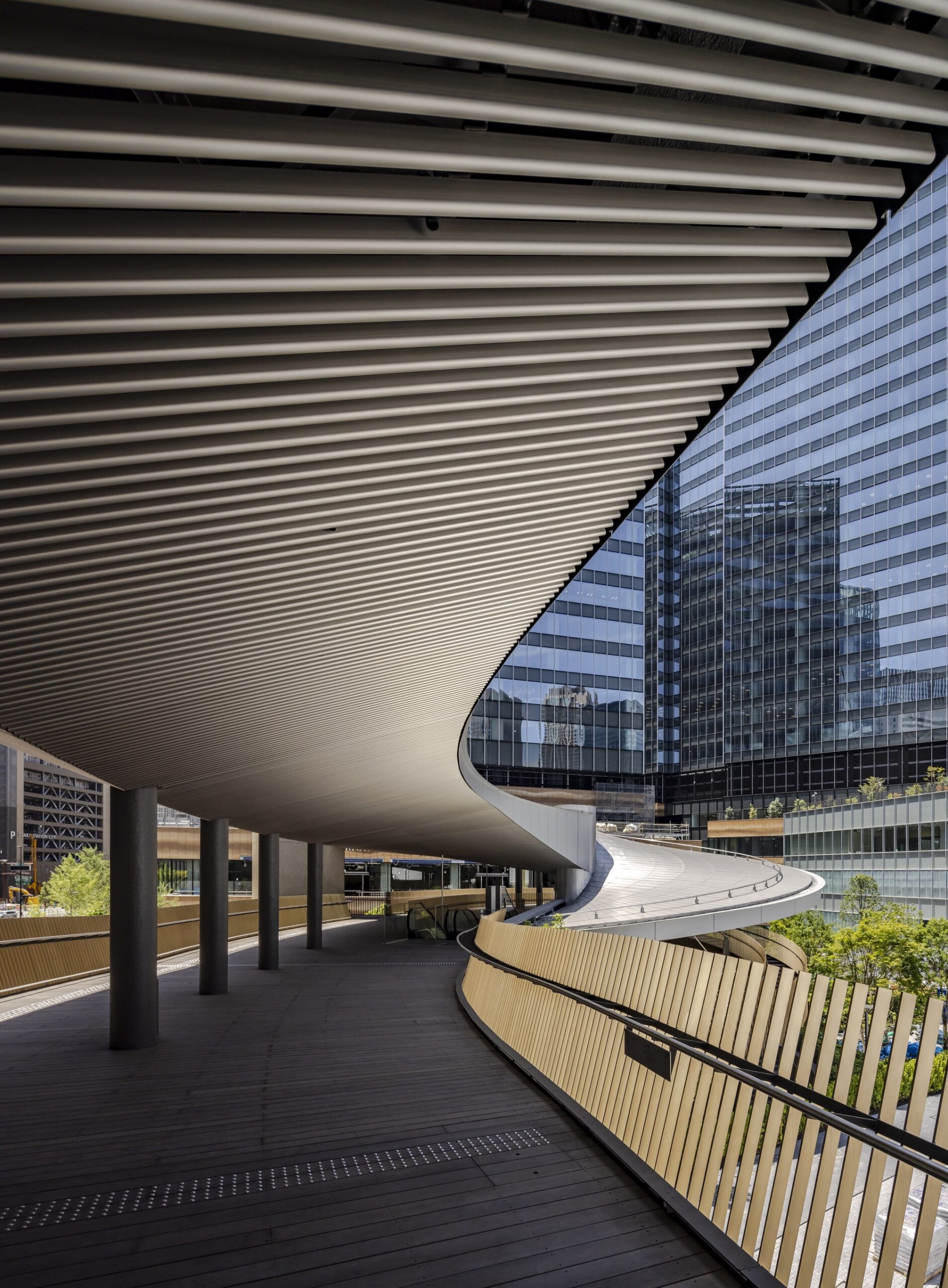
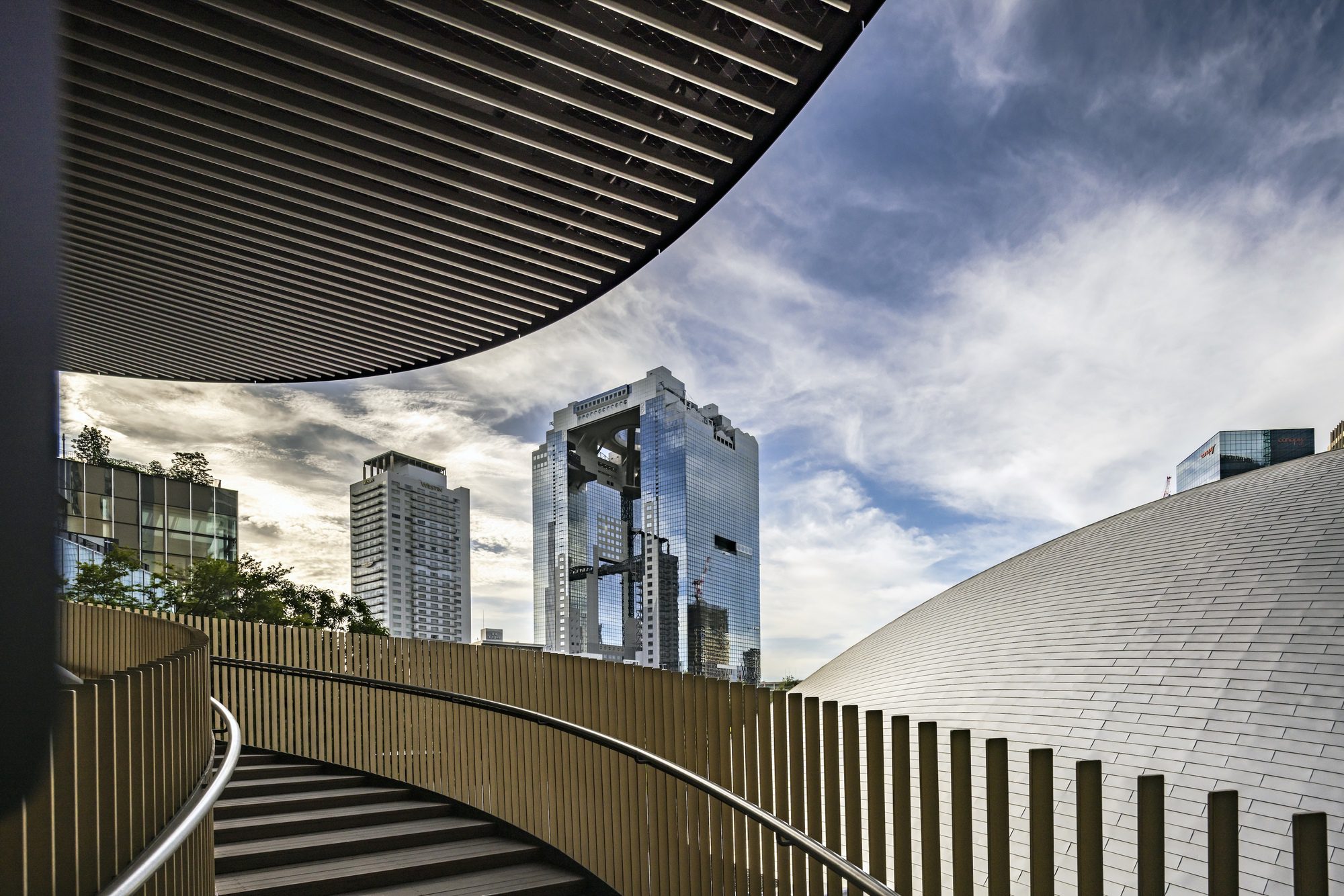
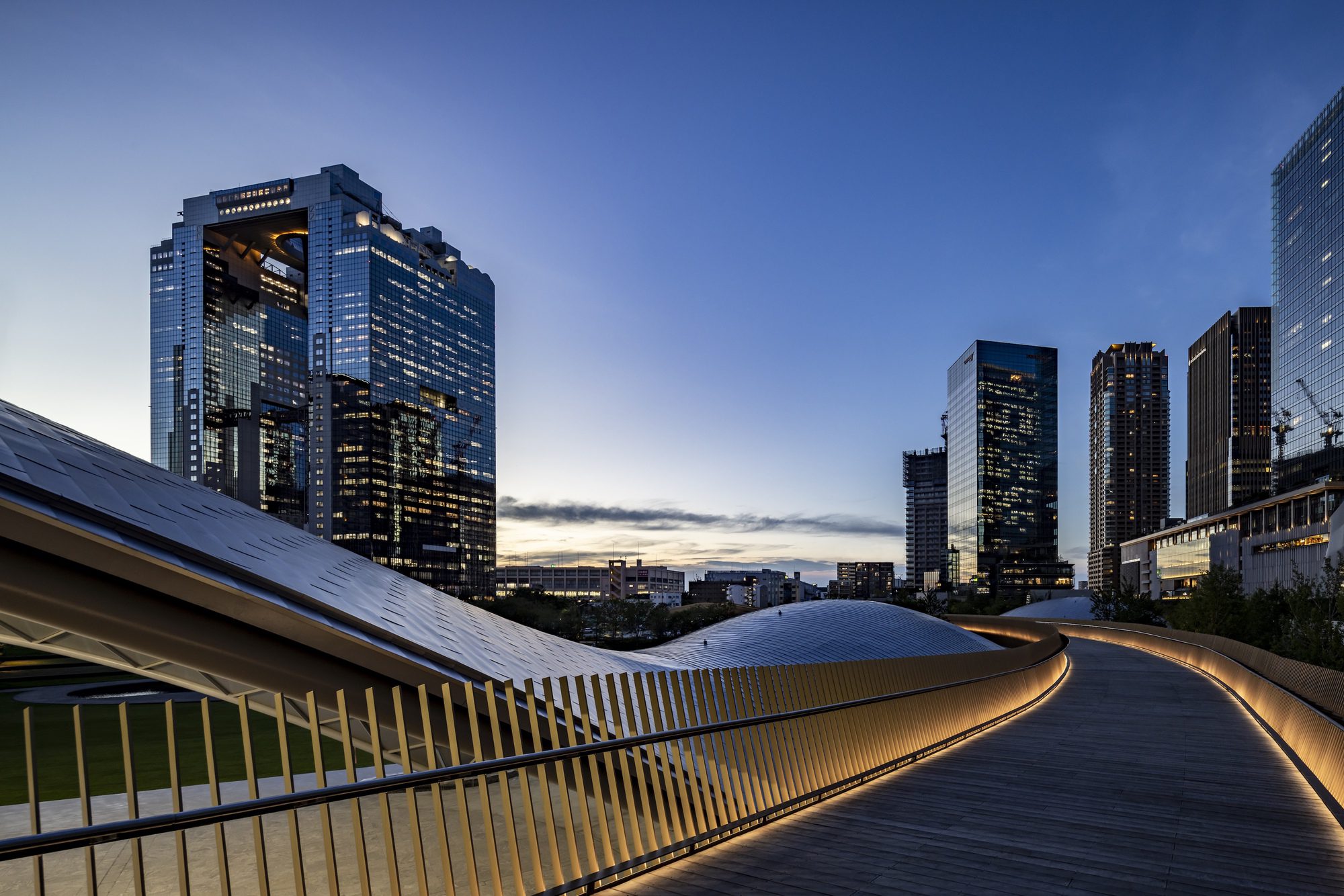
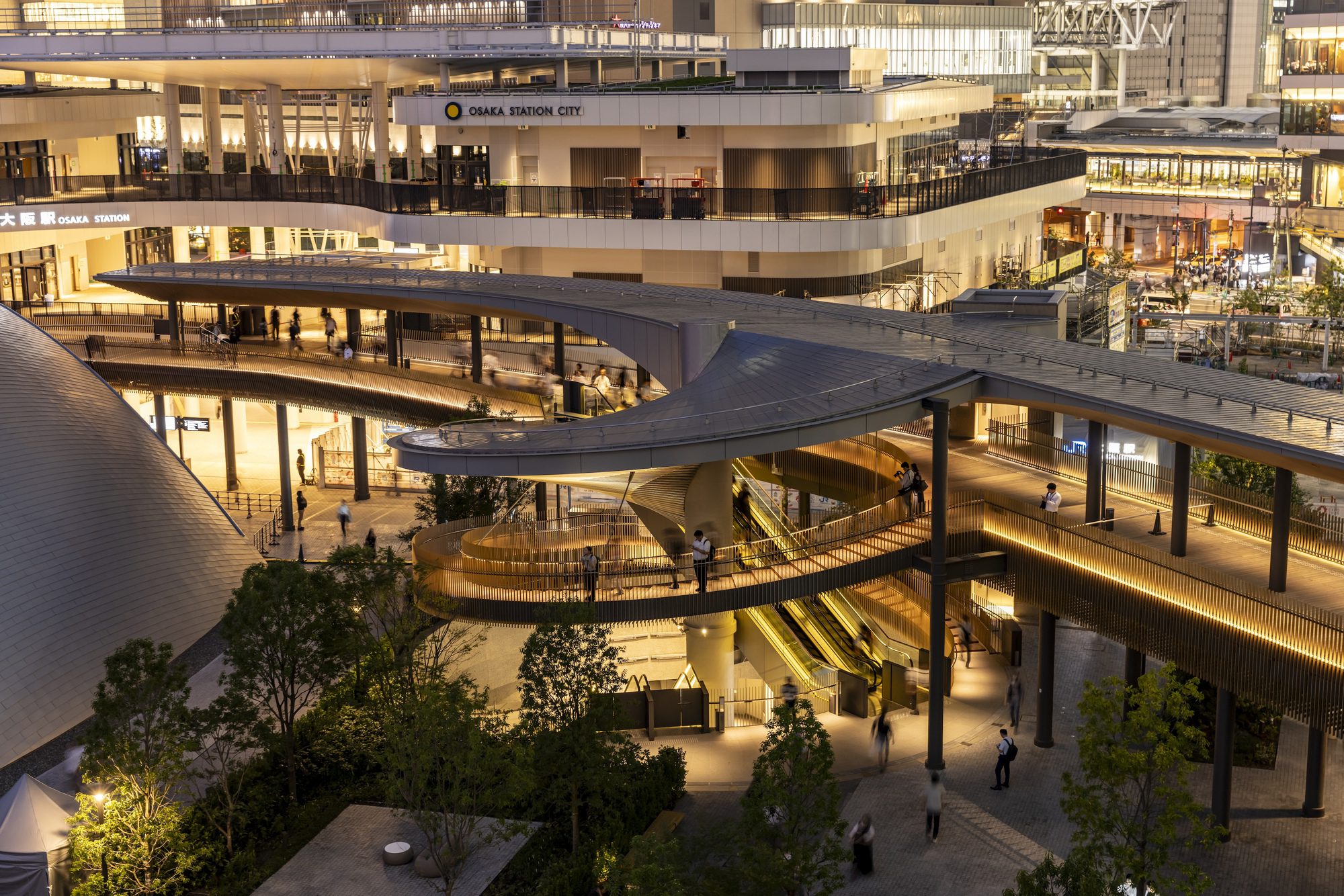
“Inspiration Path” is an elevated promenade 4 meters wide and 350 meters long that winds through the site, connecting the South Park to the North Park and straddling the east-west axis road and the embankments. It curves over the top of the large canopy and passes through stands of trees, giving pedestrians a bird’s-eye view of the whole park and a chance to experience the diverse scenes of the city in sequence. The gold-colored railings, tilted 15 degrees outward and open to the sky, take on varied qualities, dappled in light filtering through the trees, sparkling in the sunshine, and reflecting the shadows of the buildings.
© Akira Ito[aifoto]
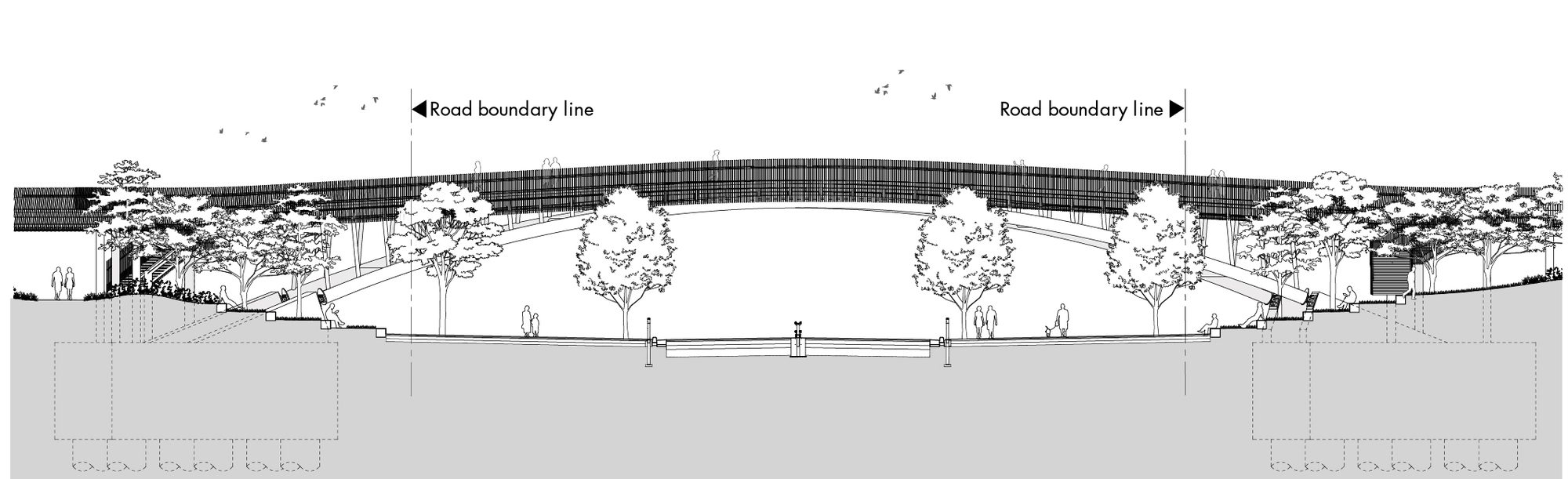
Embankments were built adjacent to the road that runs east-west through the development. Stone benches stretching approximately 90 meters were arranged to create a continuous open space that integrates the road—which would otherwise divide the development’s north and south areas— with the two parks. As people sit on the benches and observe passersby on the sidewalk, a lively dynamic of “seeing and being seen” is established between the parks and the road, as well as between the two parks themselves. The vibrant atmosphere of the park spills out onto the street, resulting in a seamless public space where the landscape is inseparable from the activity it inspires. Above the road, the elevated “Inspiration Path” cuts across the space, dynamically connecting the North Park and the South Park. The choice of paving materials and street furnishings that reflect the integration with the two parks also helps to create a dynamic atmosphere and foster a “borderless” landscape.
© Akira Ito[aifoto]
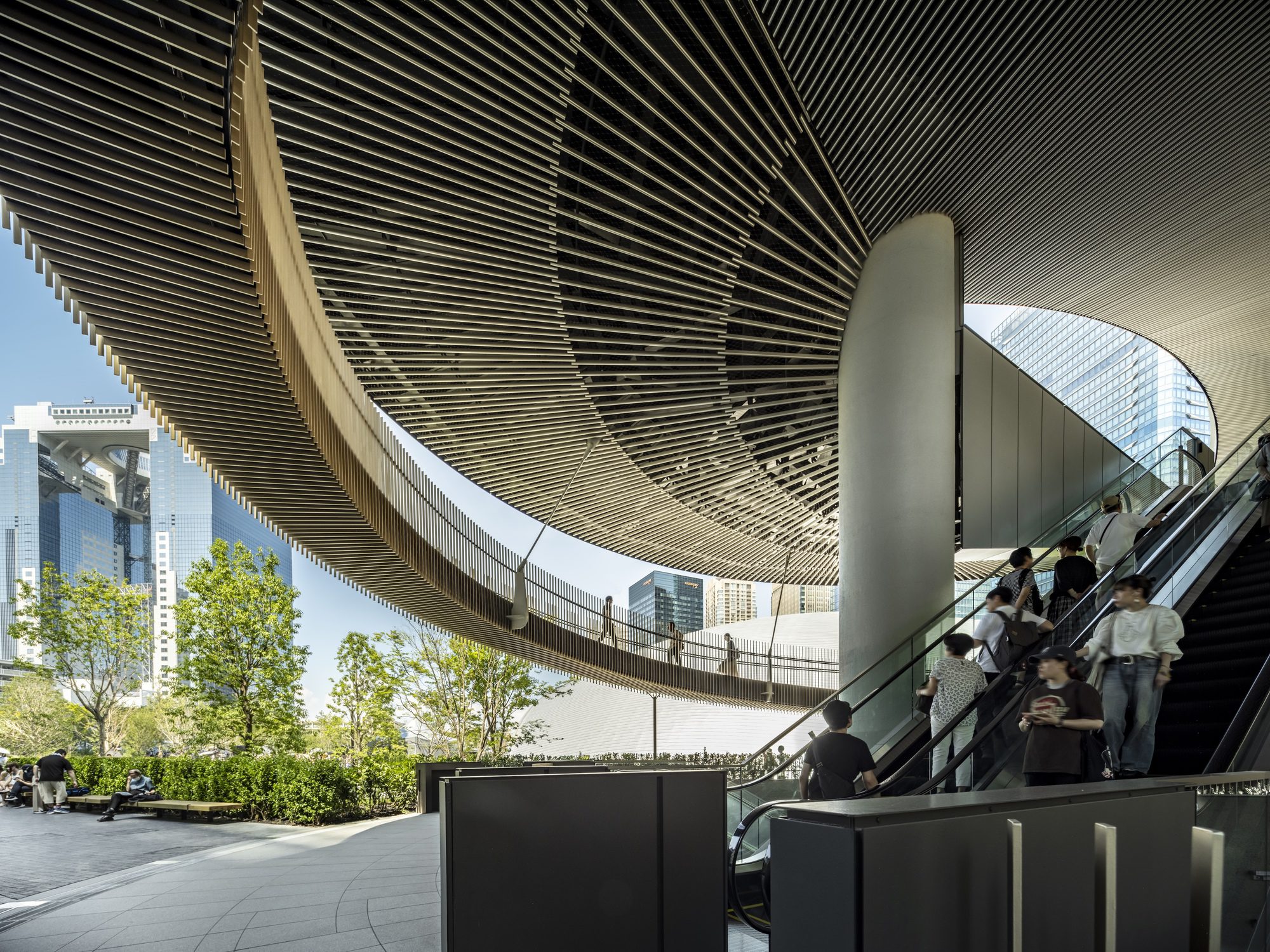
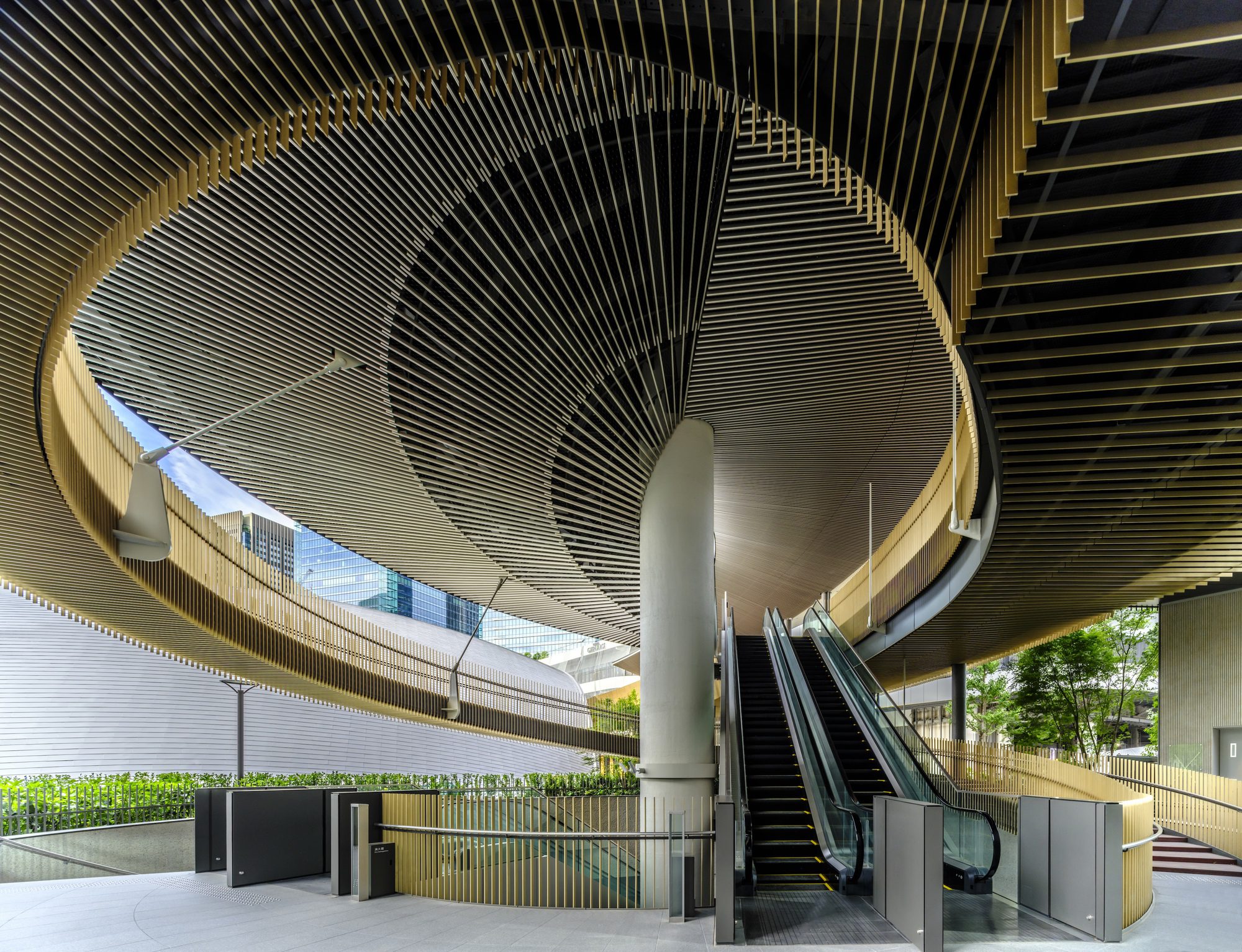
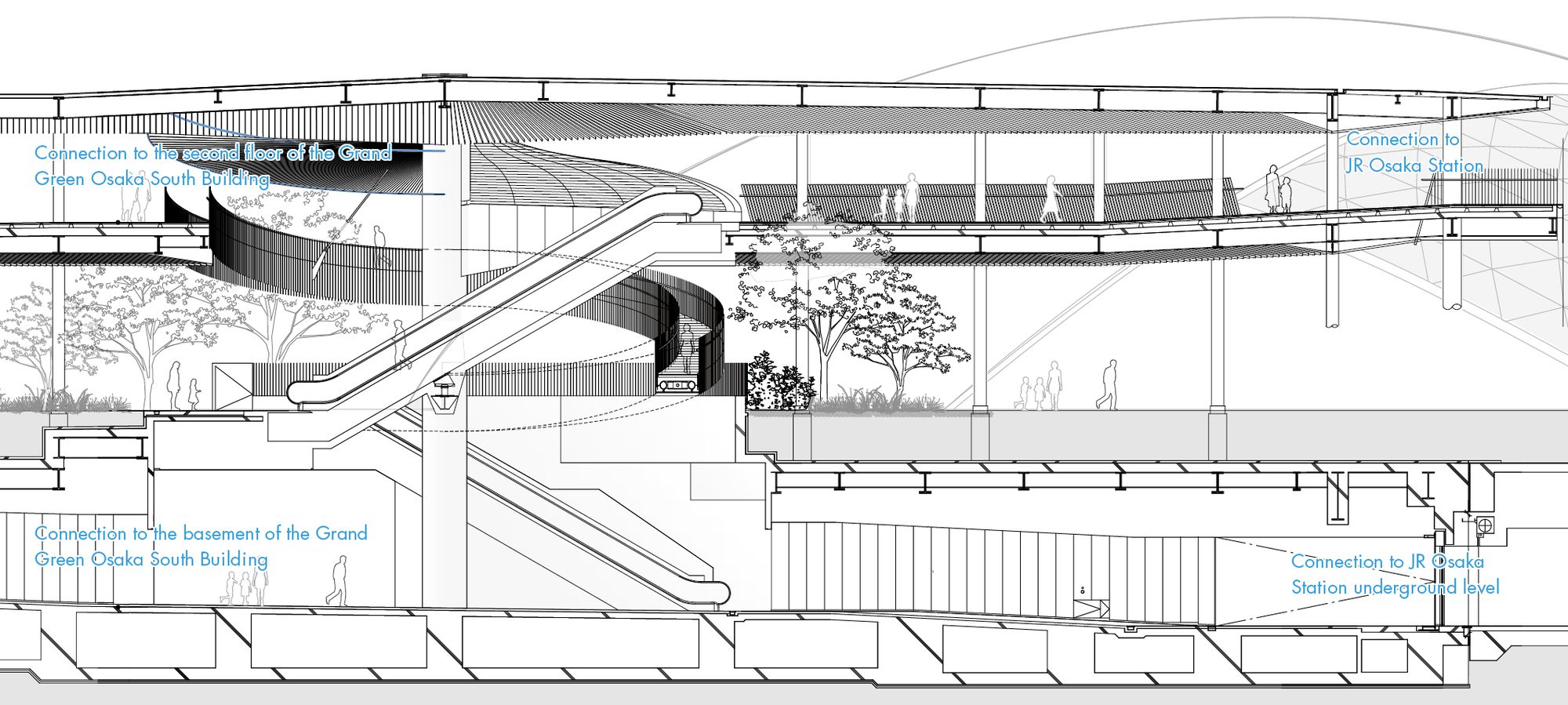
The Gate Lantern serves as an entrance to the southern end of Umekita Park. The facility is a hub connecting various locations within Grand Green Osaka, both above and below ground; it is also the southern end of Inspiration Path. The structure includes a suspended spiral staircase 20 meters in diameter, covered by a sloping roof, elements designed to enhance visitors’ experience as they approach the park. Together with Inspiration Path, this landmark structure offers an immersive, spatially rich walking experience within Umekita Park.
© Akira Ito[aifoto]
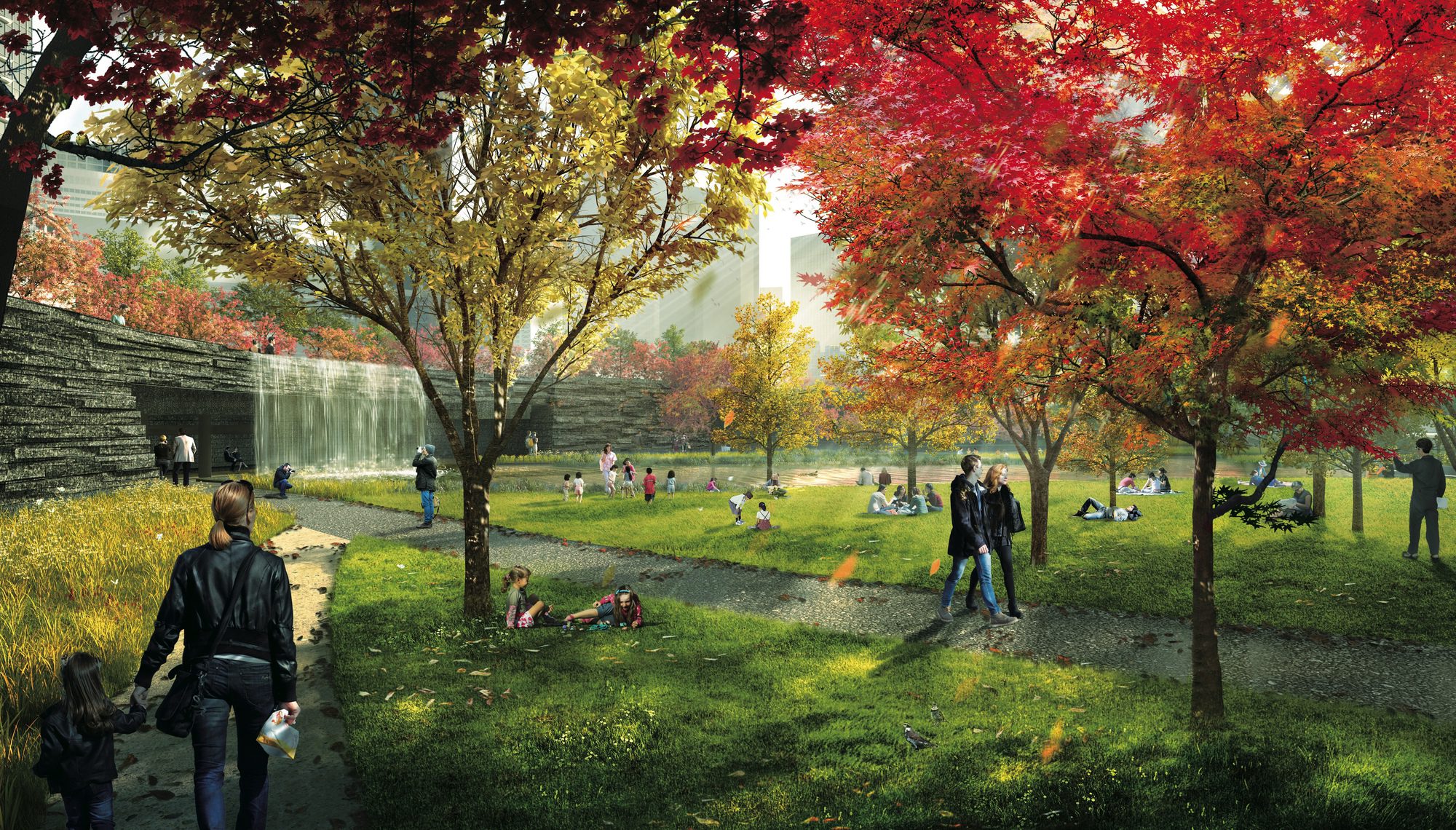
Set to open in 2027, North Park features a natural, multidimensional space called Umekita Grove, which connects to the Shin Satoyama green area at Shin Umeda City. This design integrates nature and architecture seamlessly. Dynamic stone walls are built into the site’s topography, transcending the boundaries between architecture and engineering with crafted details to create a striking landscape. A waterfall cascades from the top of the embankment into a pond that stretches across the area from east to west, while gentle, sculptural water features adorn the area around the southwestern entrance. The varied expressions of these waterscapes throughout the North Park create an inviting atmosphere of beauty and tranquility. The landscaping, mainly consisting of deciduous trees, is designed to generate a healthy natural environment in the heart of the city. Varied expressions unfold across the seasons; the park is particularly impressive in autumn, when striking hues of red and yellow brighten the scene.
© Akira Ito[aifoto]
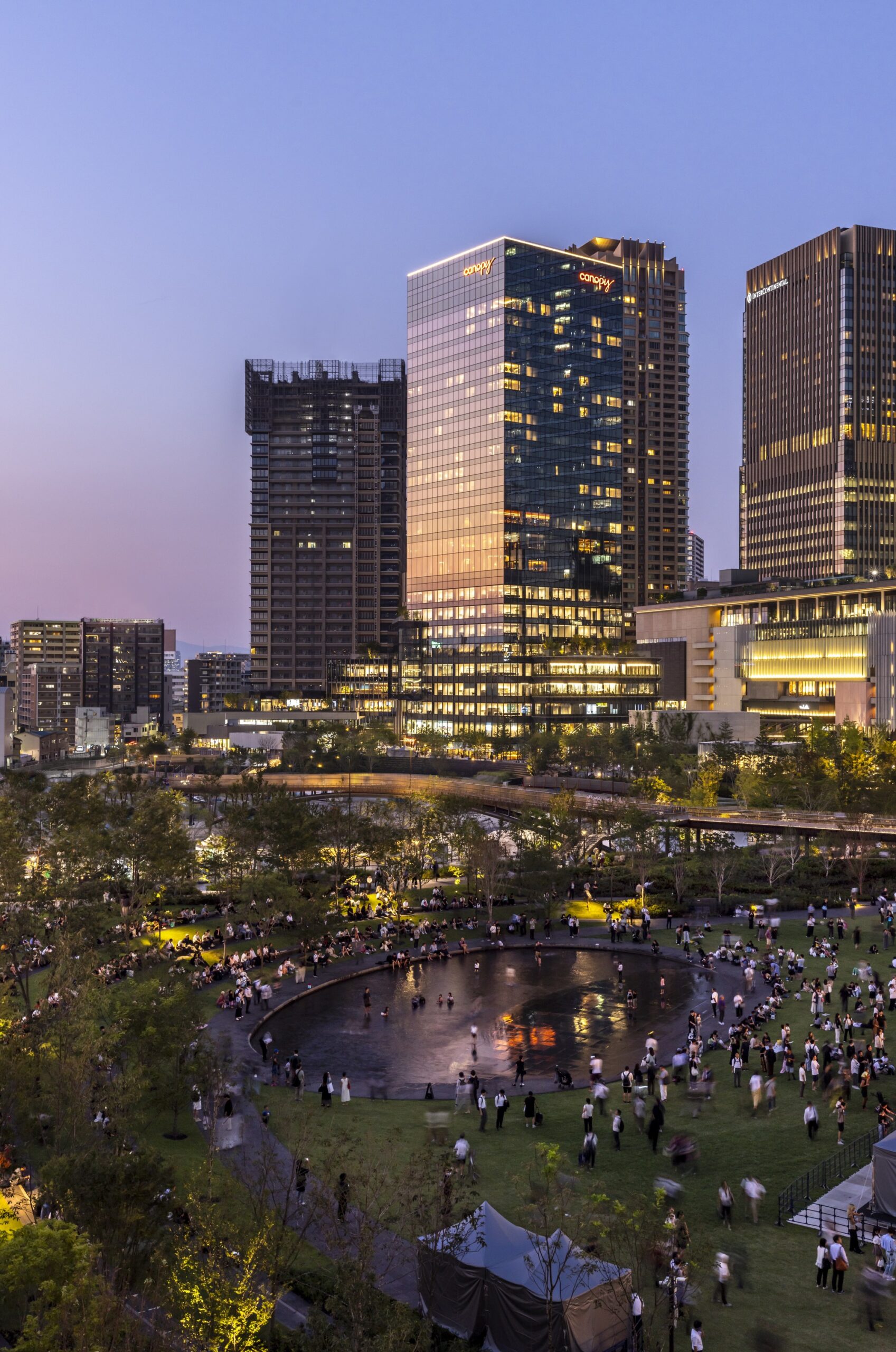
From the development’s super-high-rise towers to its single-story park structures, the architectural volumes are uniformly designed with square ground plans that open in all directions and have no rear side. Designed for the fan-shaped site of the former National Railways freight station, these volumes fit seamlessly into the landscape. The buildings are arranged to allow for variation in their orientation, scales, and exteriors, rather than being laid out systematically. Additionally, stacking the volumes toward the deeper parts of the park allowed the buildings to be arranged in such a way that they, along with the neighboring Grand Front Osaka and Shin Umeda City complexes, surround the space of the park, forming a cohesive urban landscape. Through the shifting of building orientations and stacking methods, green areas and places for gathering or relaxing emerge between the volumes. The intention was to foster public space that blurs the boundaries between architecture and urban park—a space full of greenery, vitality, and lively interaction, both indoors and outdoors.
© Akira Ito[aifoto]
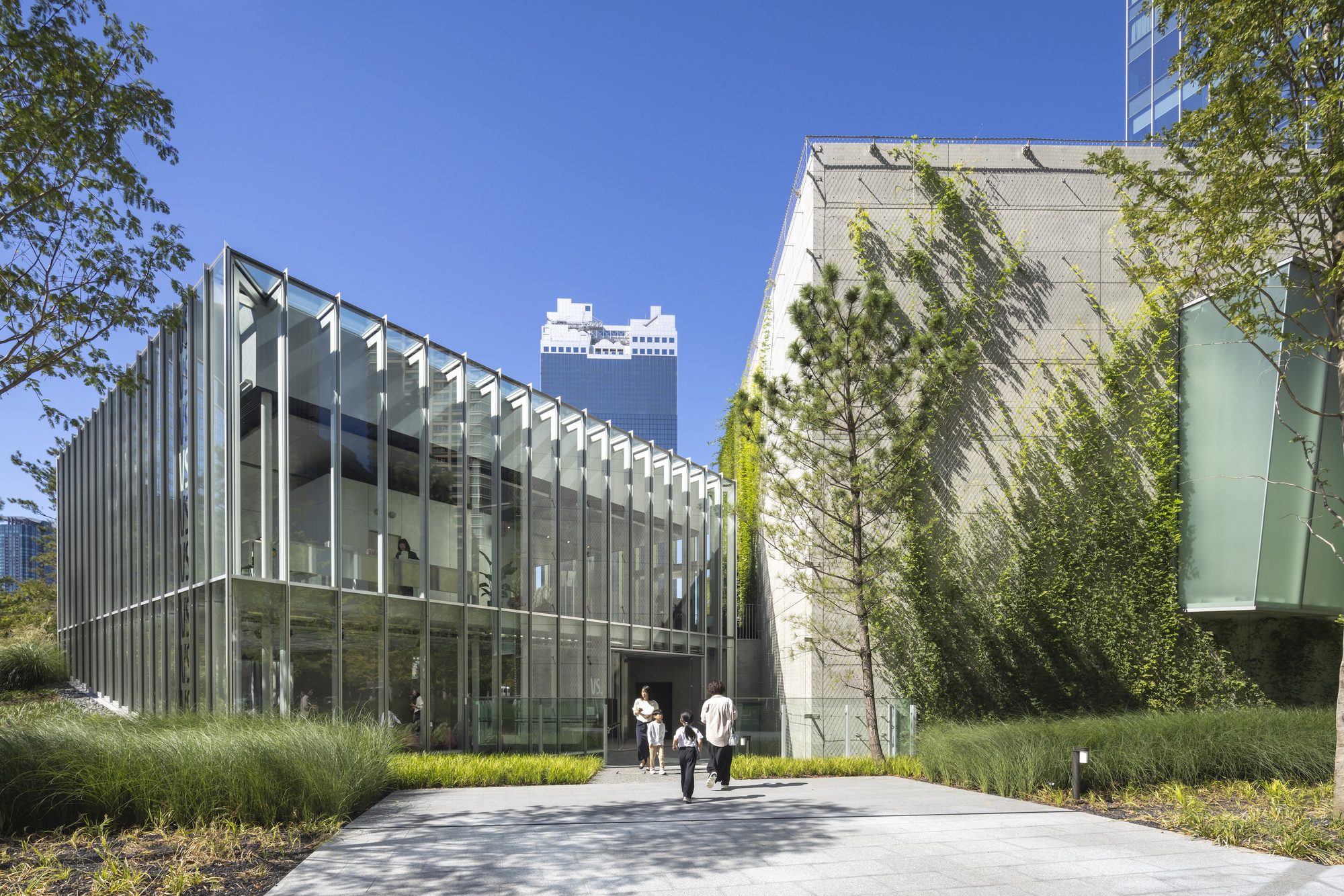
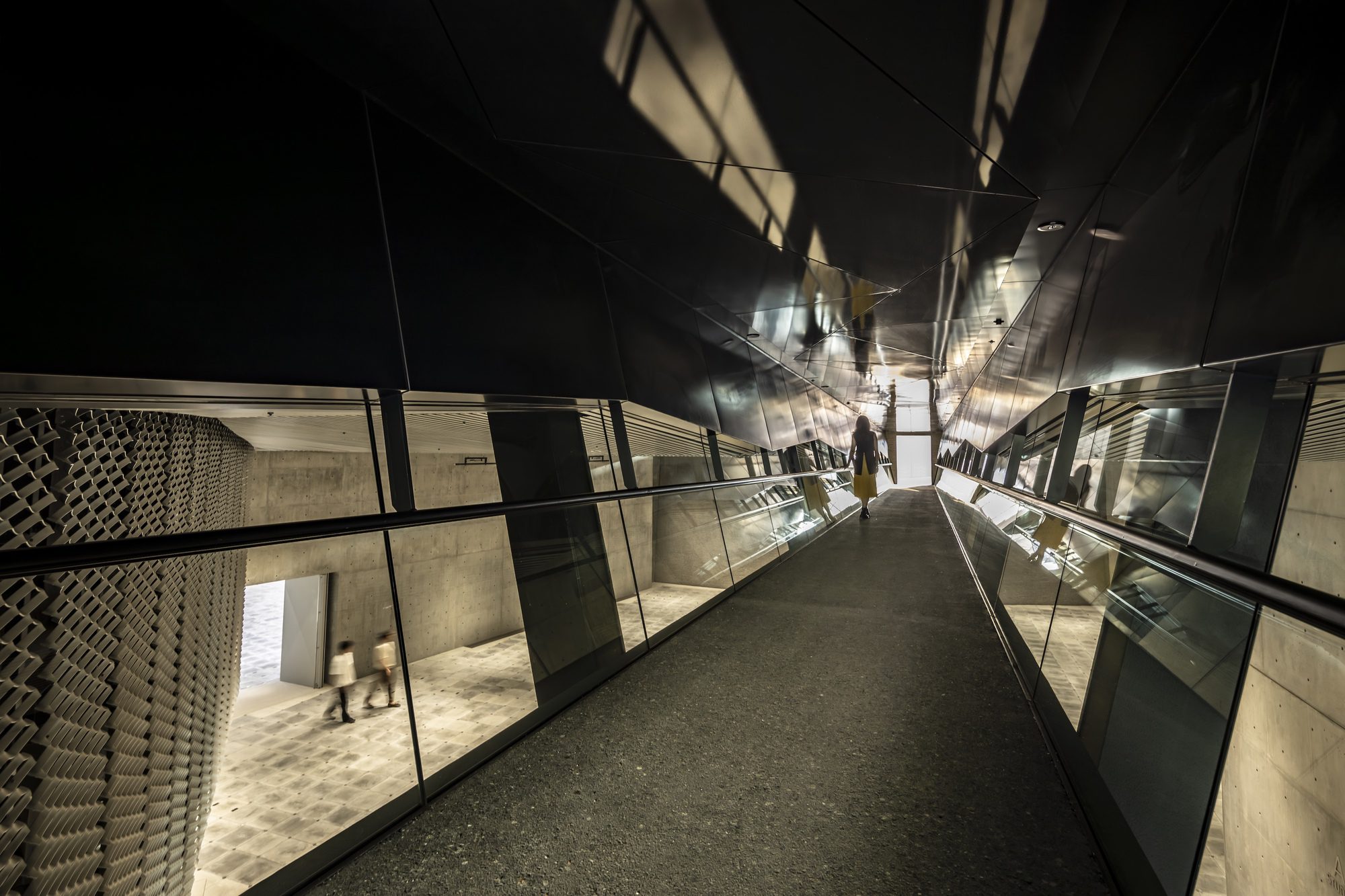
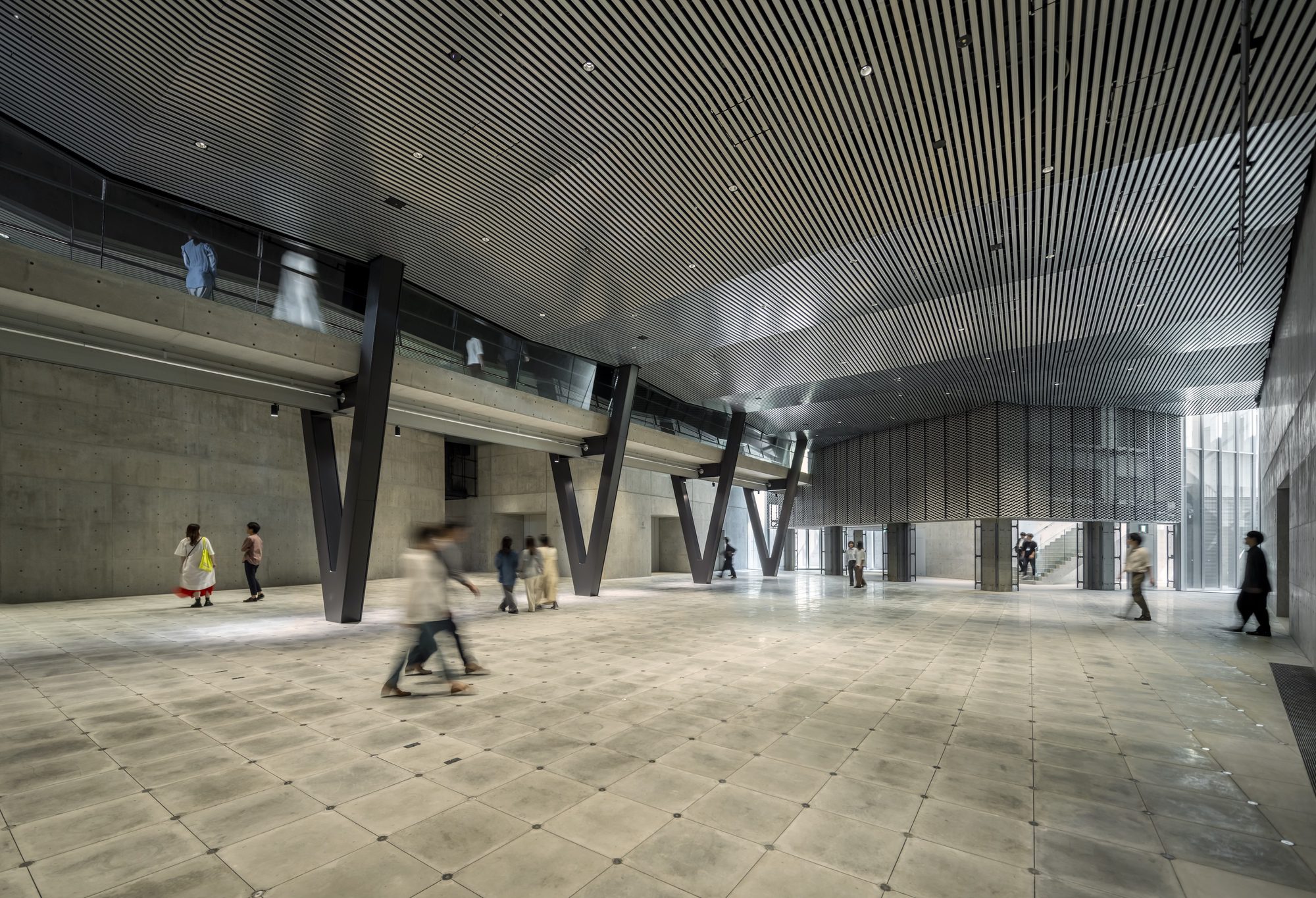
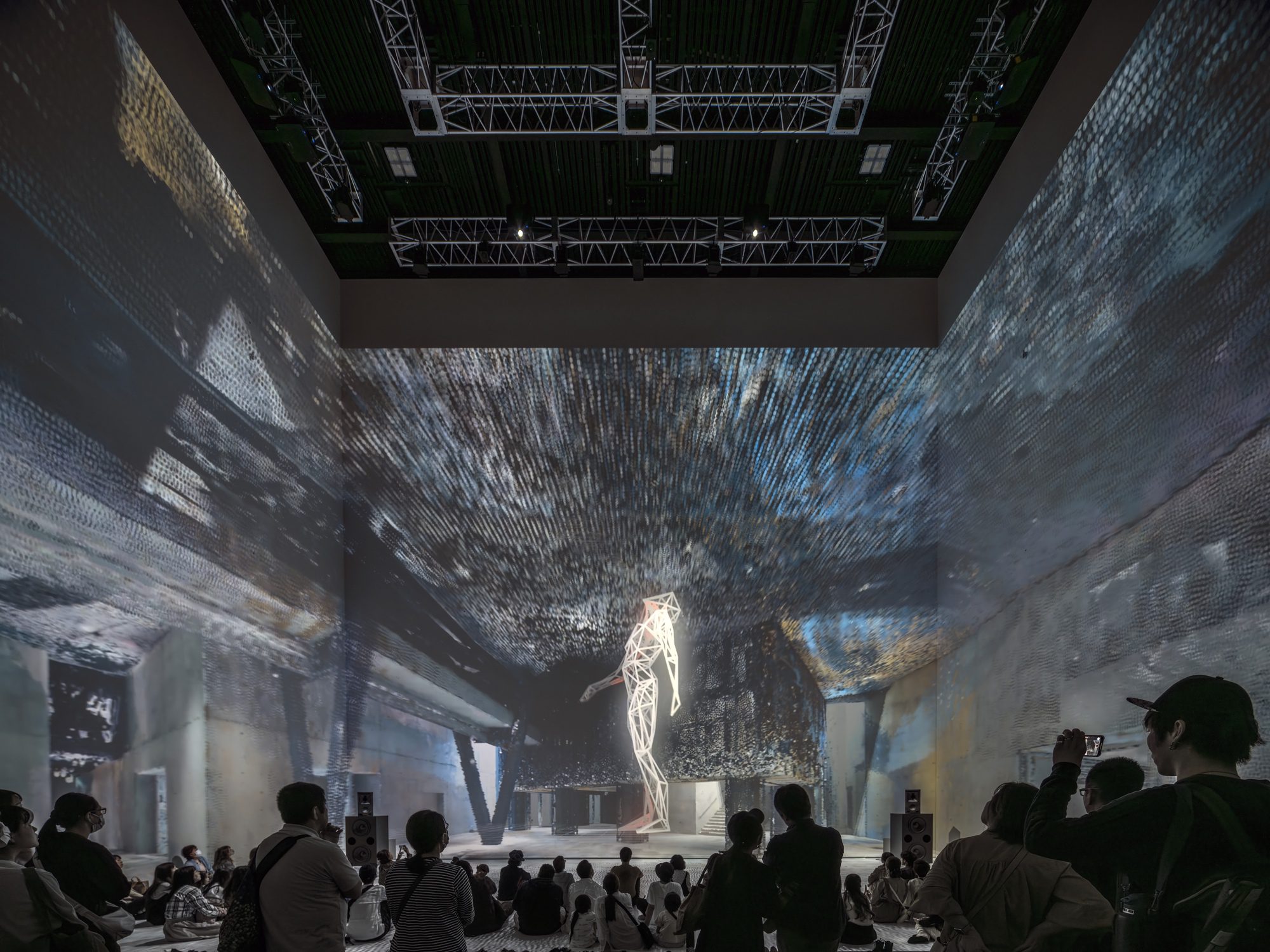
VS is a museum with a total area of 3,500 square meters, of which approximately 3,000 square meters is underground, beneath the park. Two volumes—one made of glass, the other of concrete—represent the facility aboveground, while three more volumes are beneath ground level, leaving room aboveground to take maximum advantage of the site for the park. To ensure a soil depth of around 1.5 meters for plant growth, care was taken to align the height of the underground buildings with the park’s topography. The underground foyer, created by the spaces between the five volumes, is illuminated not only by the natural light that enters the exhibition rooms but also from the light that filters down from the North Park waterfall (scheduled for completion in 2027). The result is a dynamic interplay of nuanced light and shadow both exciting and inspiring, despite the underground location. Additionally, the bridge that runs through the underground foyer serves as a direct link between the park, the exhibition space, and the main road, facilitating serendipitous encounters as visitors explore the area. The design of VS. represents an innovative approach to integrating a museum within a park setting.
© Akira Ito[aifoto]
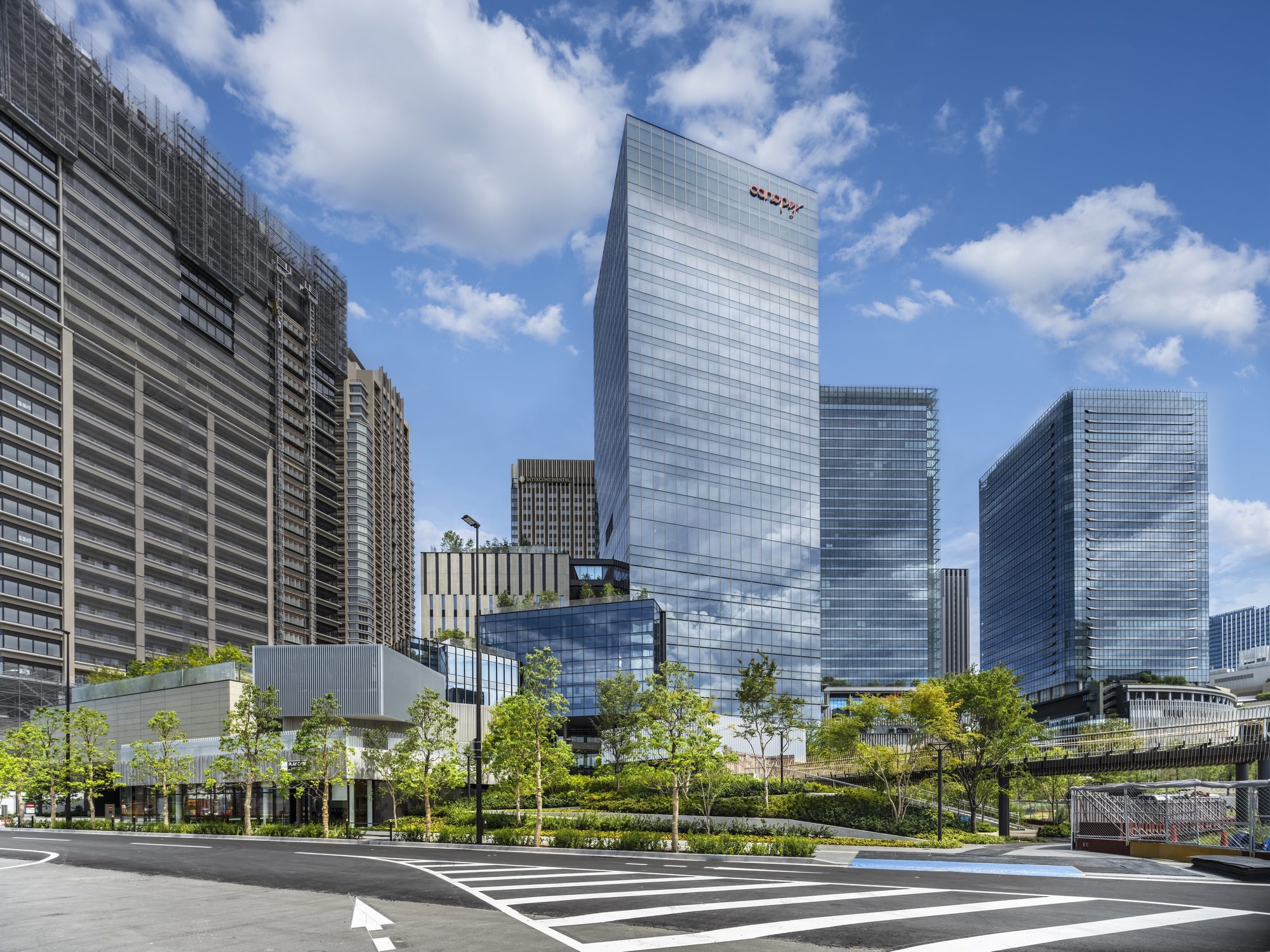
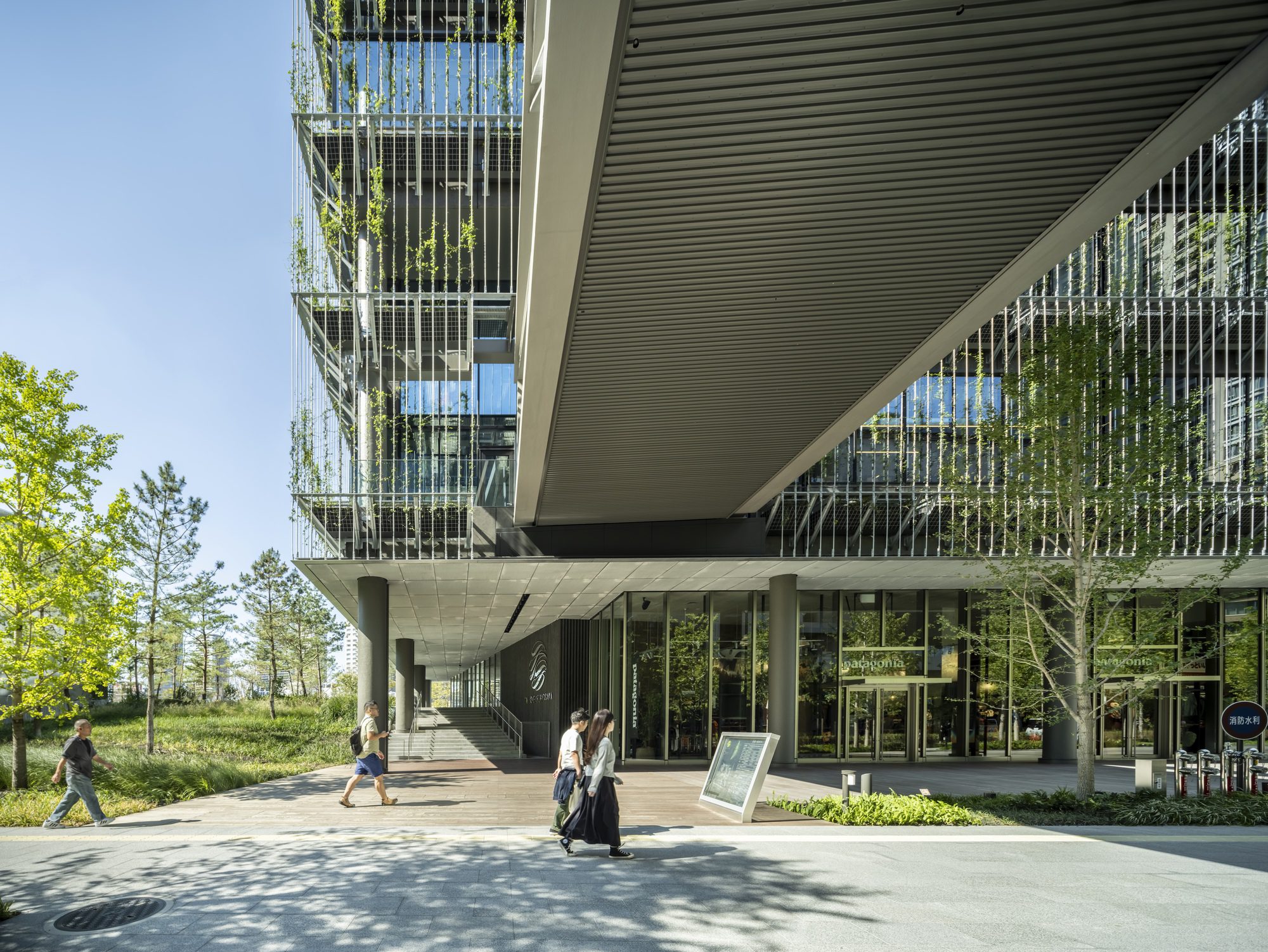
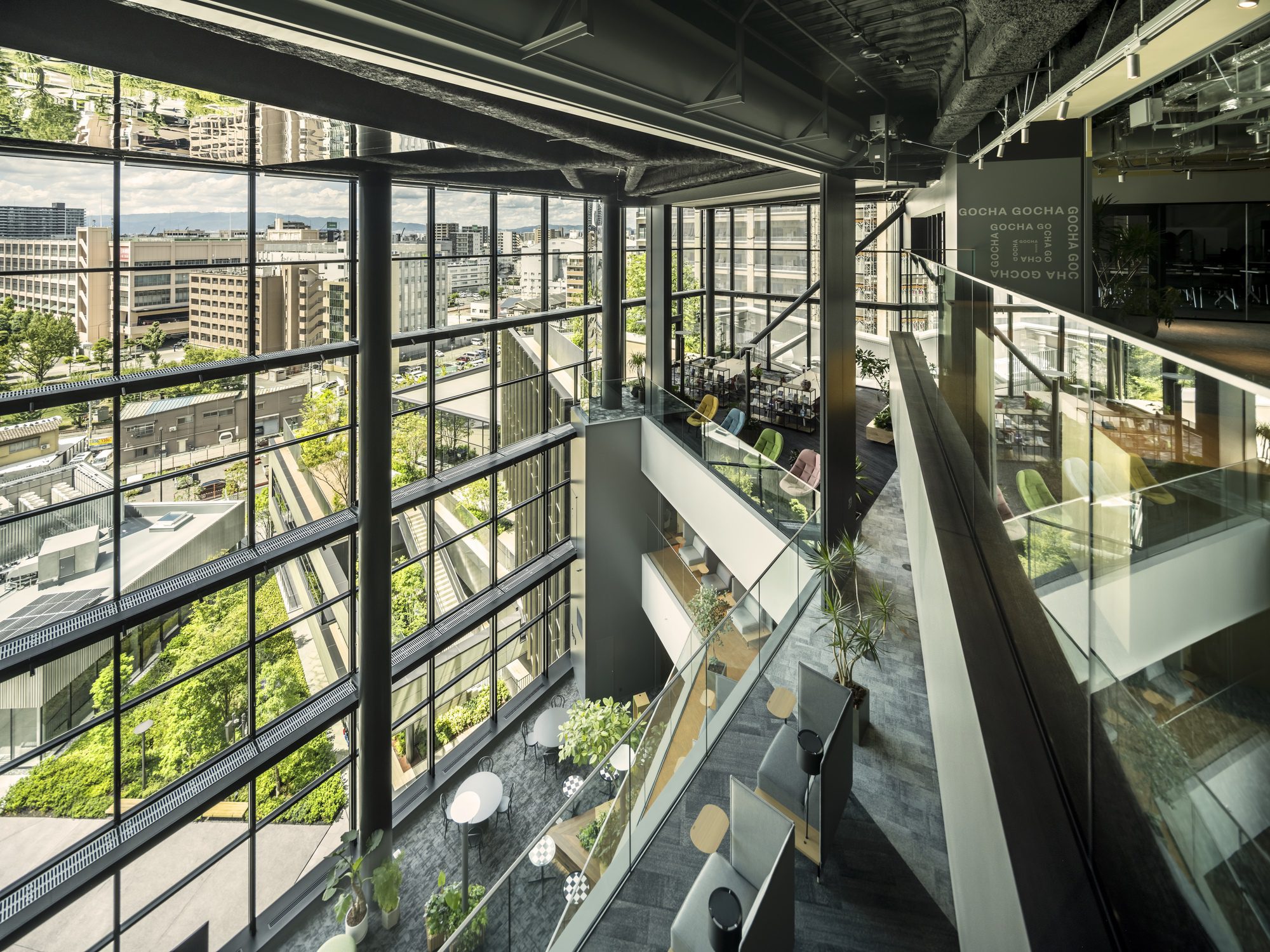
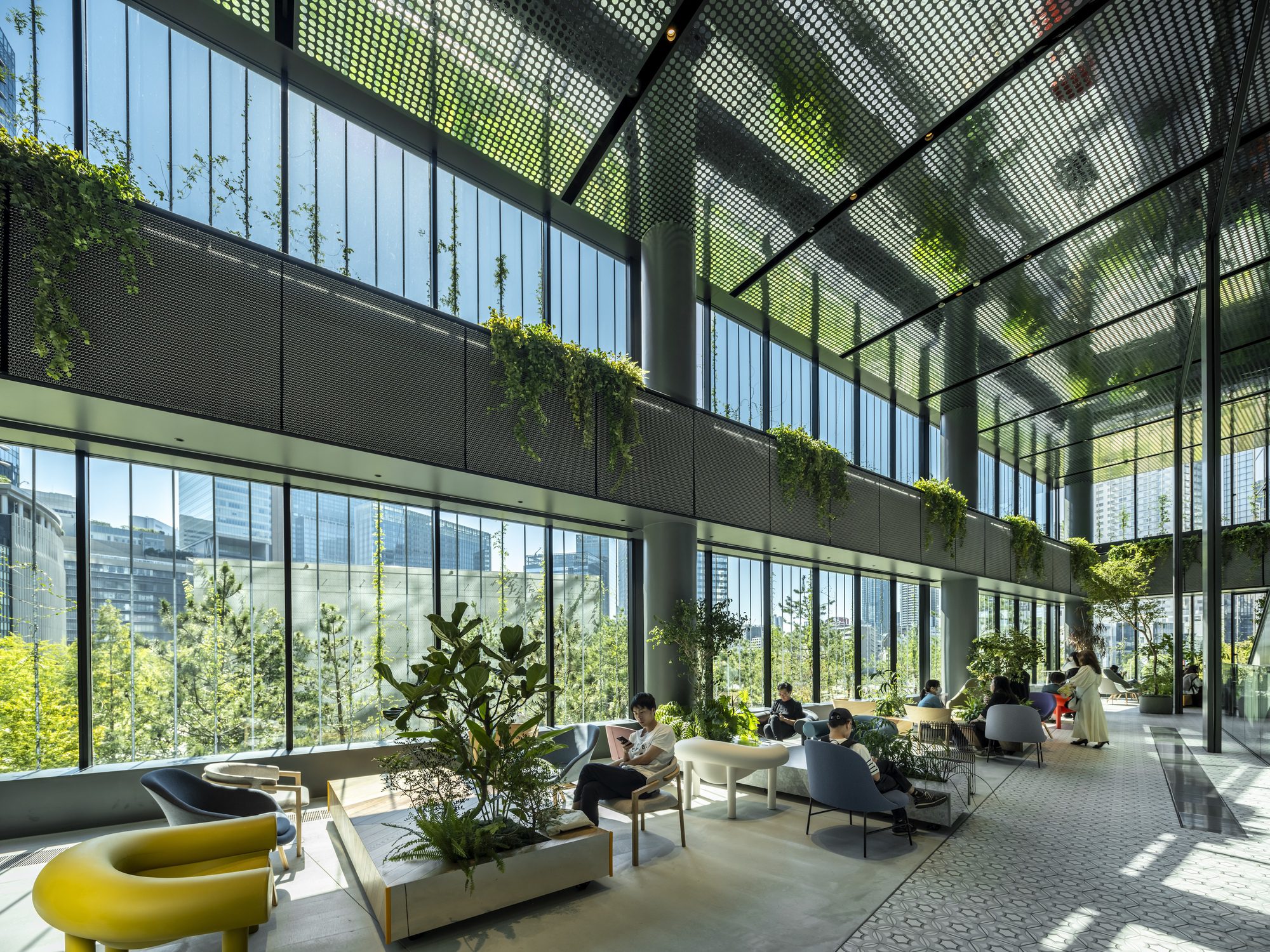
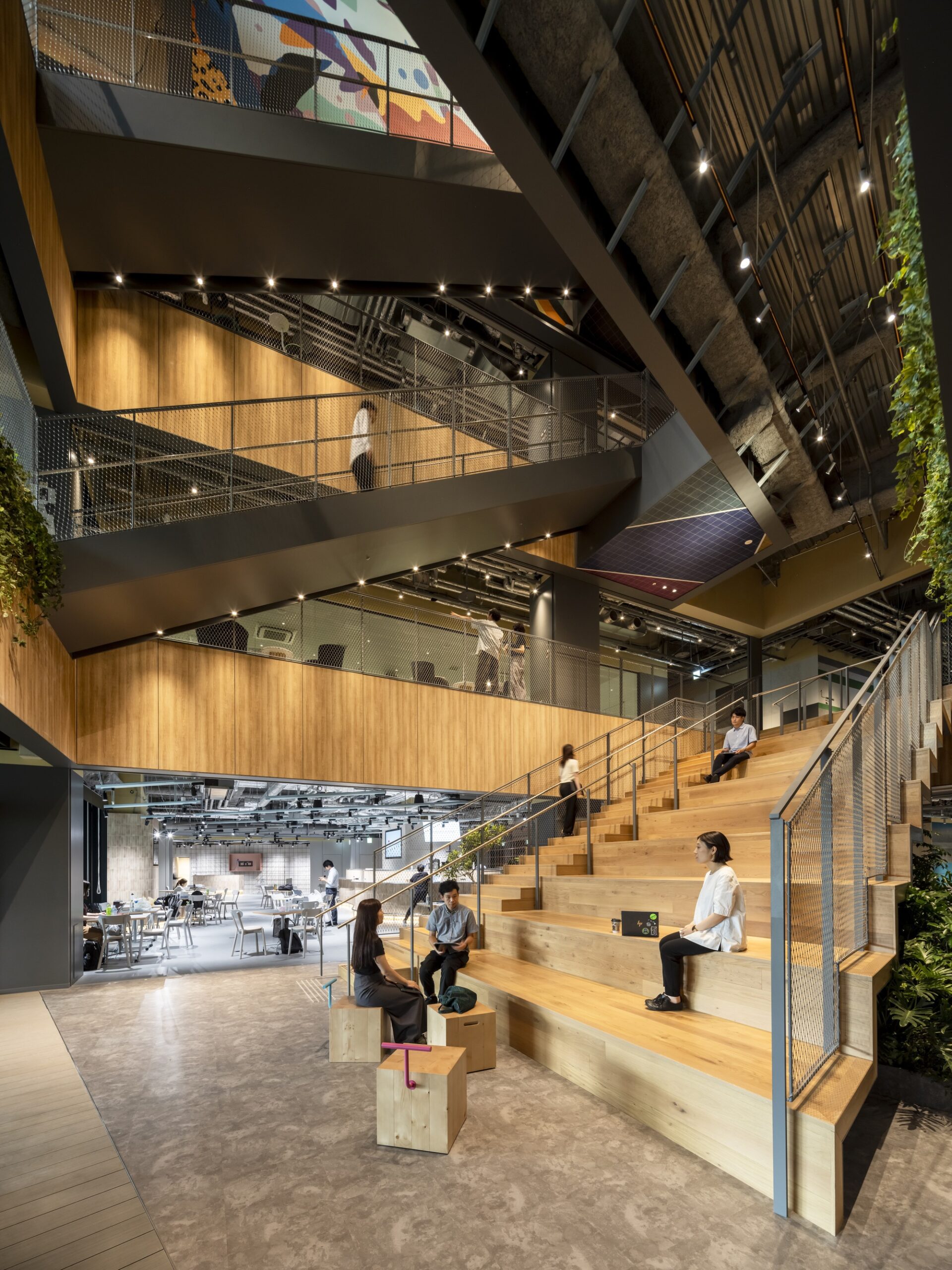
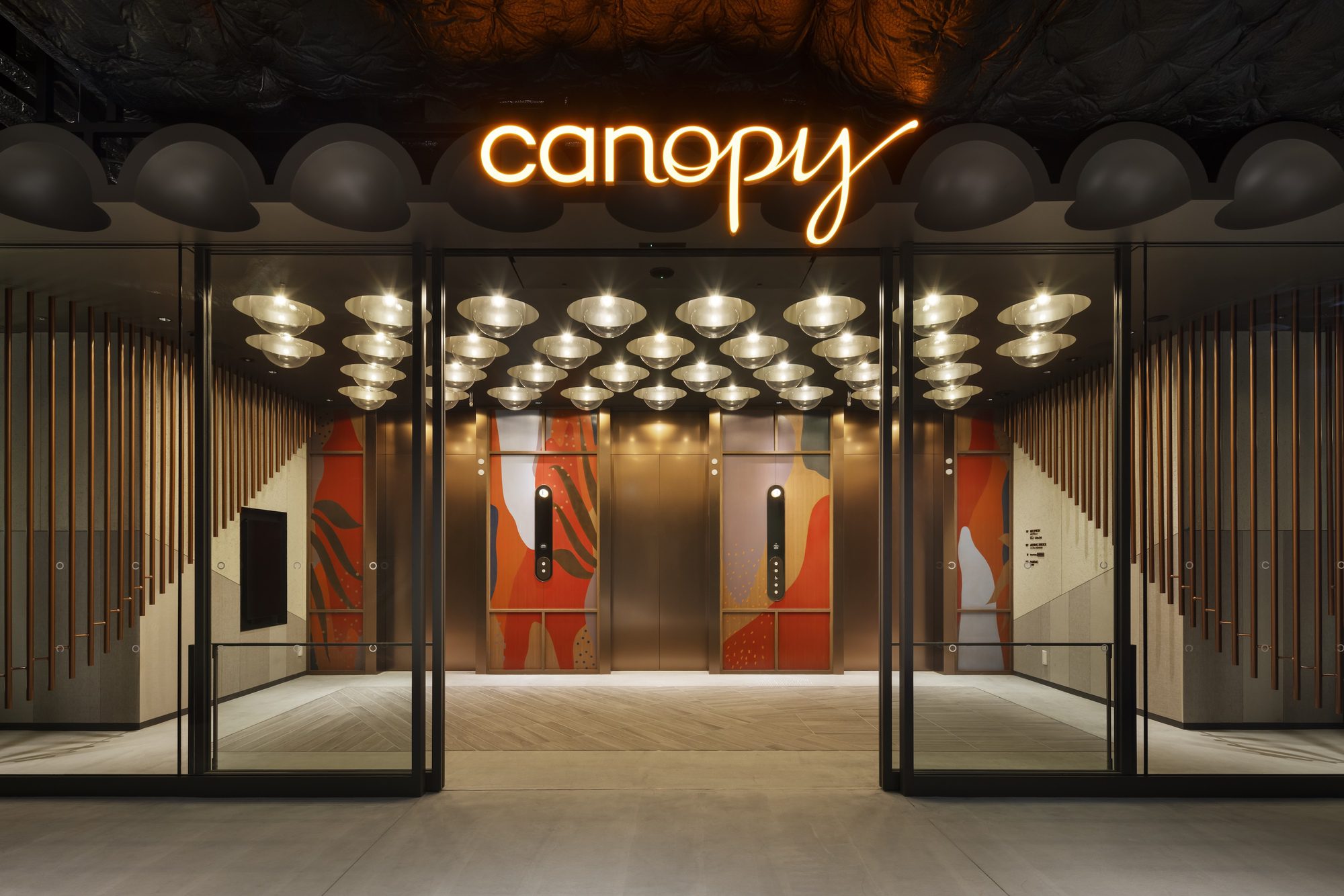
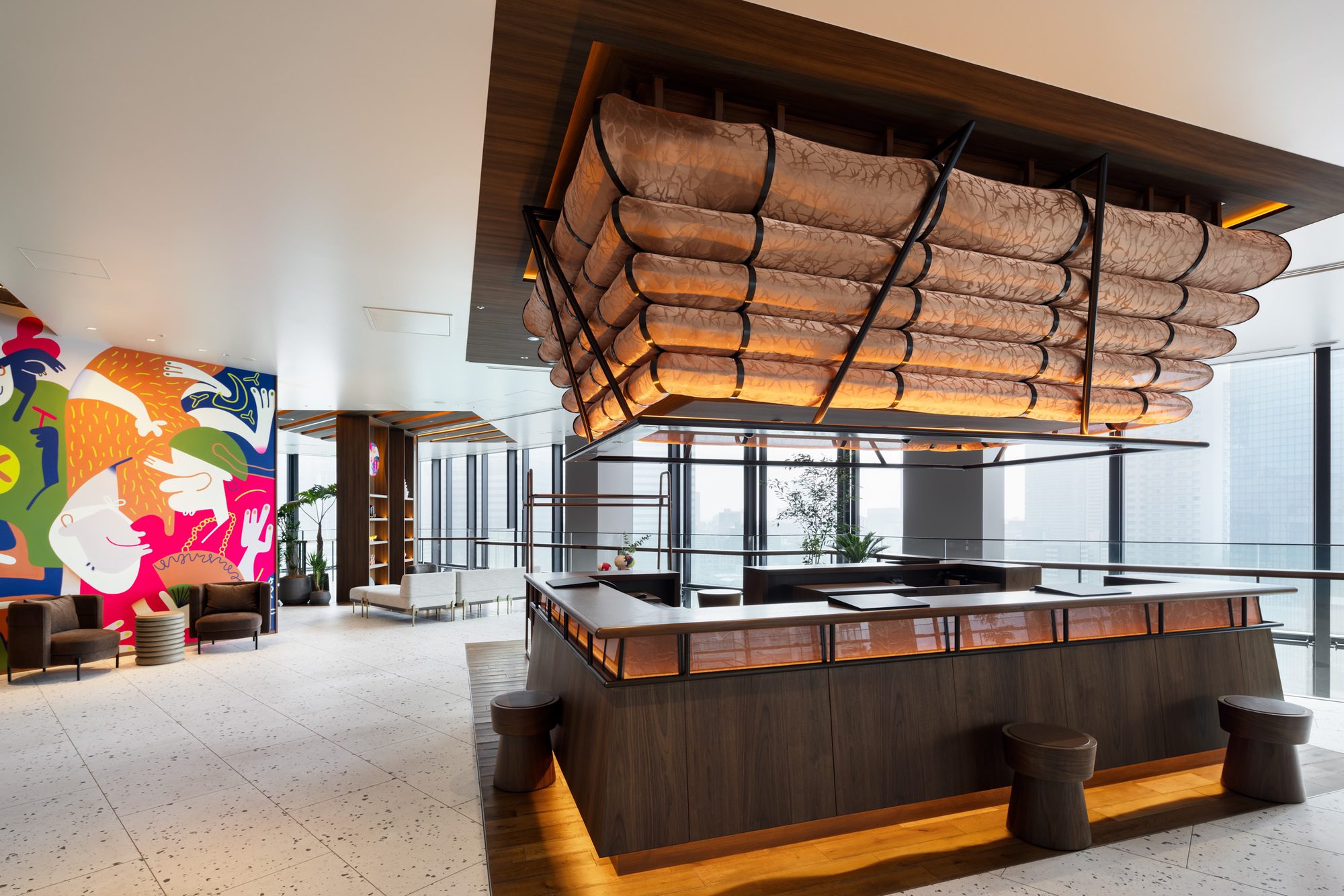
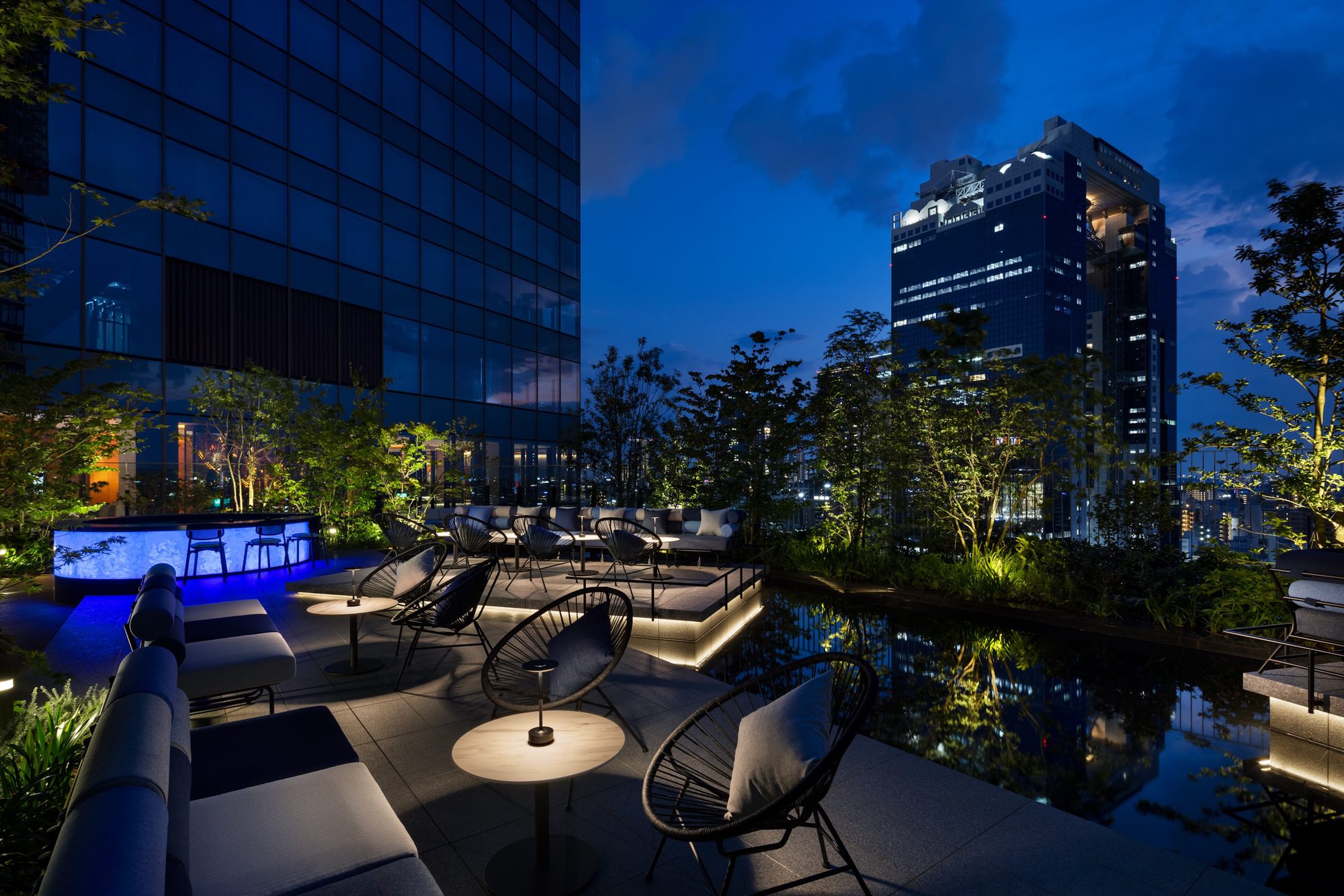
The lower floors of the North Building are the site of Jam Base, the focal point of the innovation-driven vision for Phase 2 of the Umekita Project; the upper floors house a lifestyle hotel. The atrium incorporates the greenery of the park and the rooftop plantings into the interior space. The mixed-use building’s layered urban functions are stacked as a collective volume rising out of the adjacent North Park, creating an integrated public space. The volumes are stacked in a terraced arrangement, and piloti spaces, staircases, and rooftop gardens are situated among the volumes. This greenery is intended to blur the lines between interior and exterior, encouraging activity and interaction.
Courtesy of Canopy by Hilton Osaka Umeda
Canopy by Hilton Osaka Umeda: “Hacking” Osaka to Design a New Space
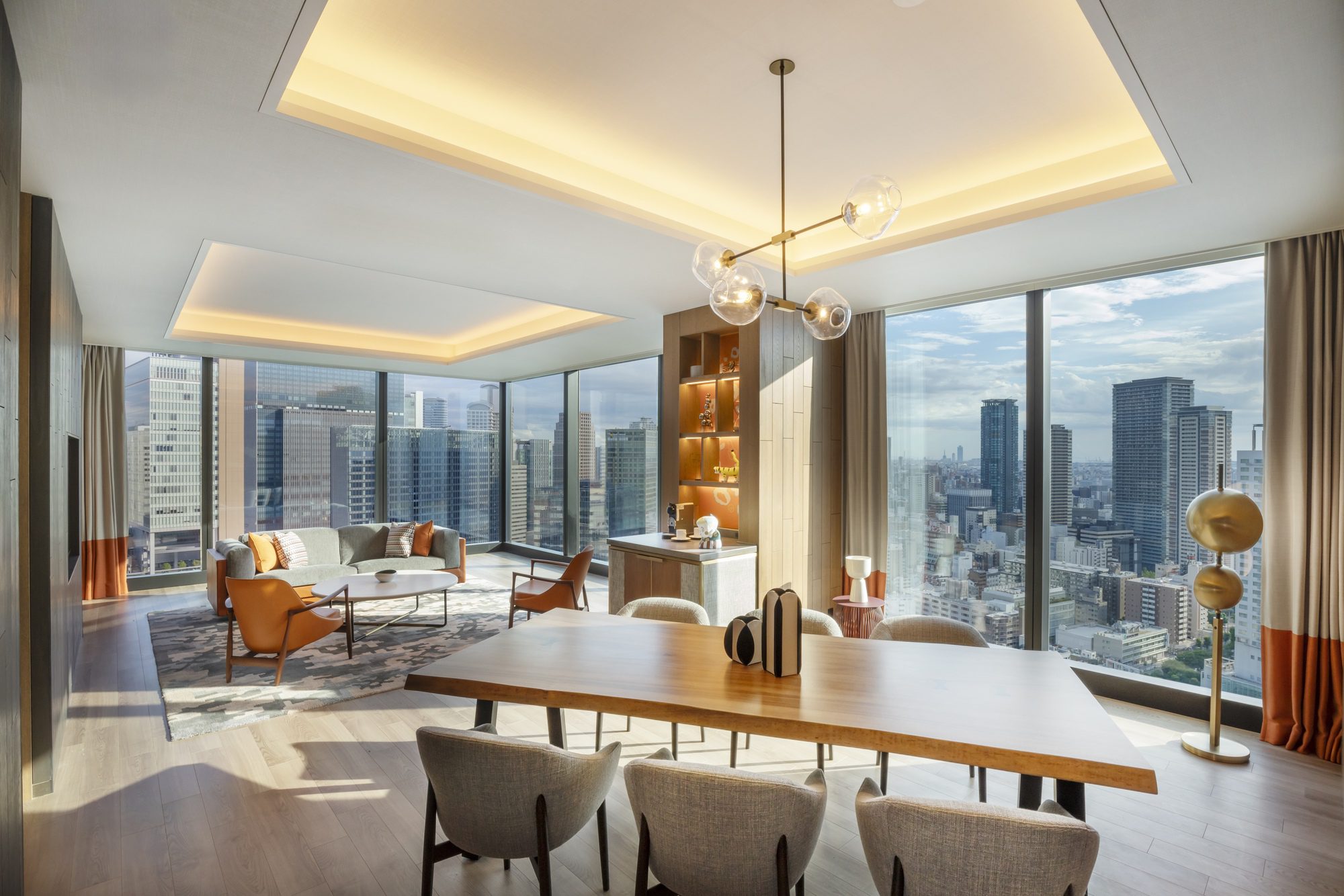
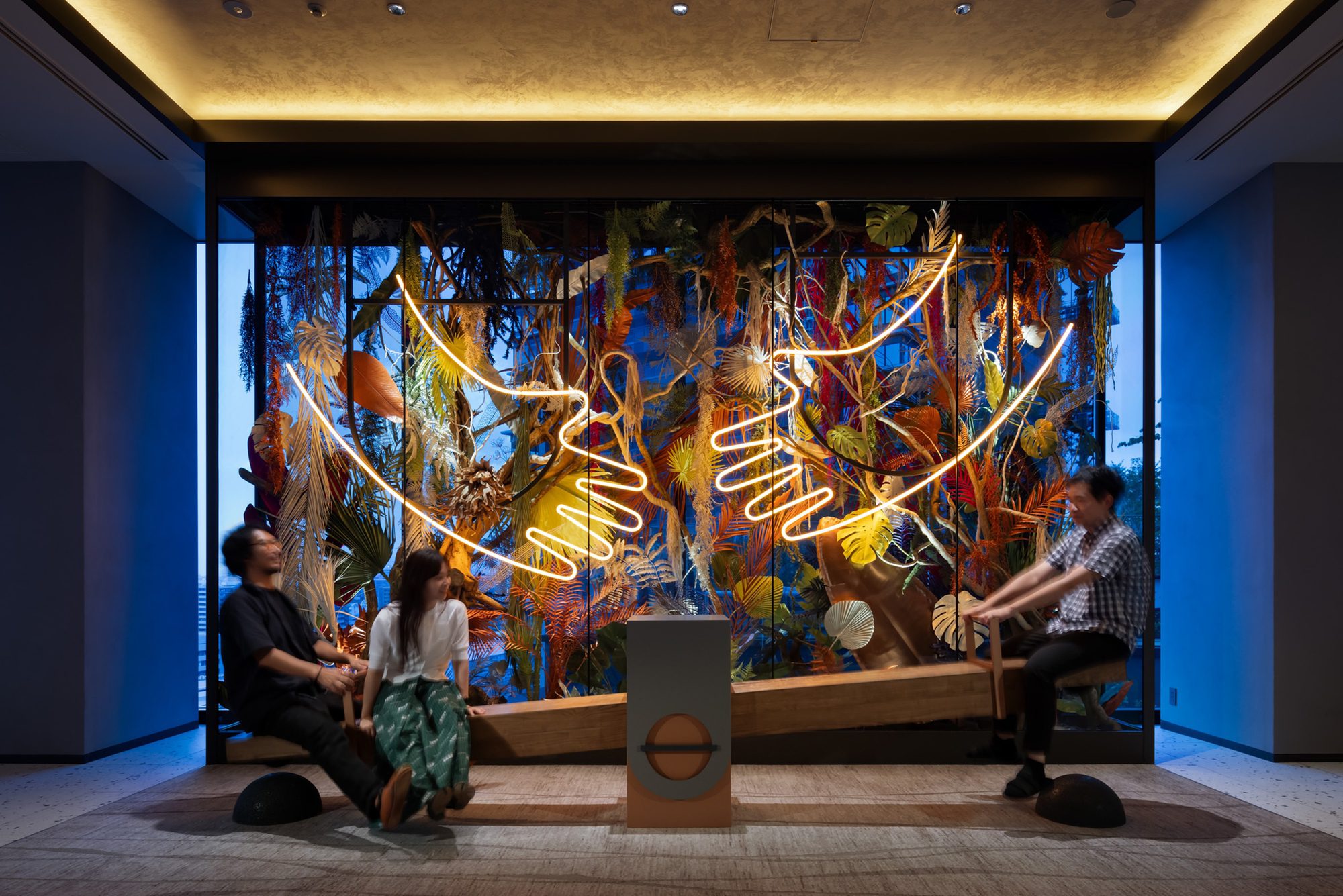
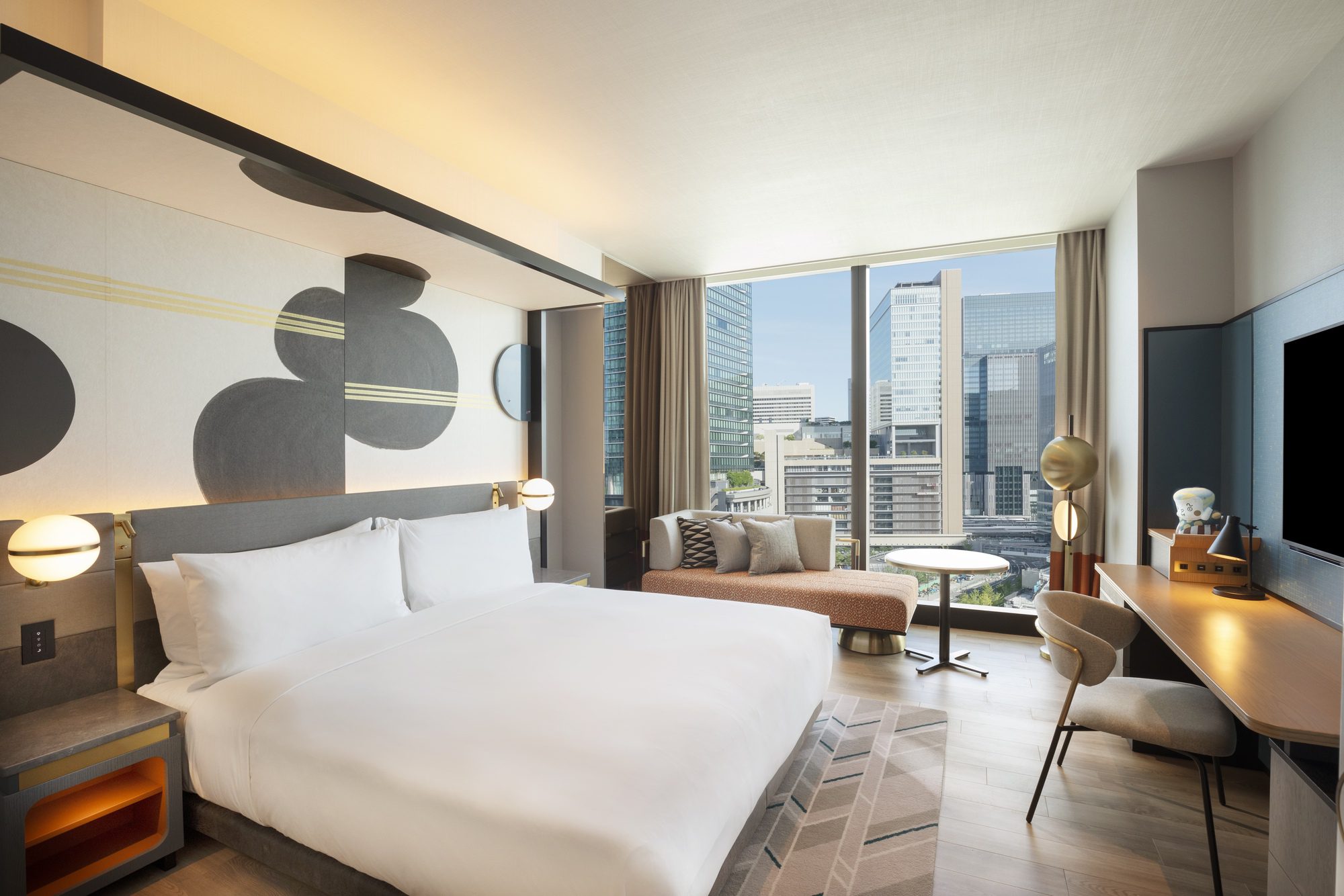
Canopy by Hilton, a lifestyle brand based on the concept of “neighborhood,” is a boutique hotel rooted in the local environment, with a design and services that embrace the unique character of its surroundings. The design concept for the upper floors of the North Building is “hacking Osaka.” Through the lens of the Canopy brand, the space was designed by playfully “hacking” the regional identity and culture of Osaka, with the aim of creating a hotel that expresses a new side of this city known for its residents’ love of humor.
© Akira Ito[aifoto]
Pioneering Decarbonization Development: Maximizing an Area’s Energy Potential
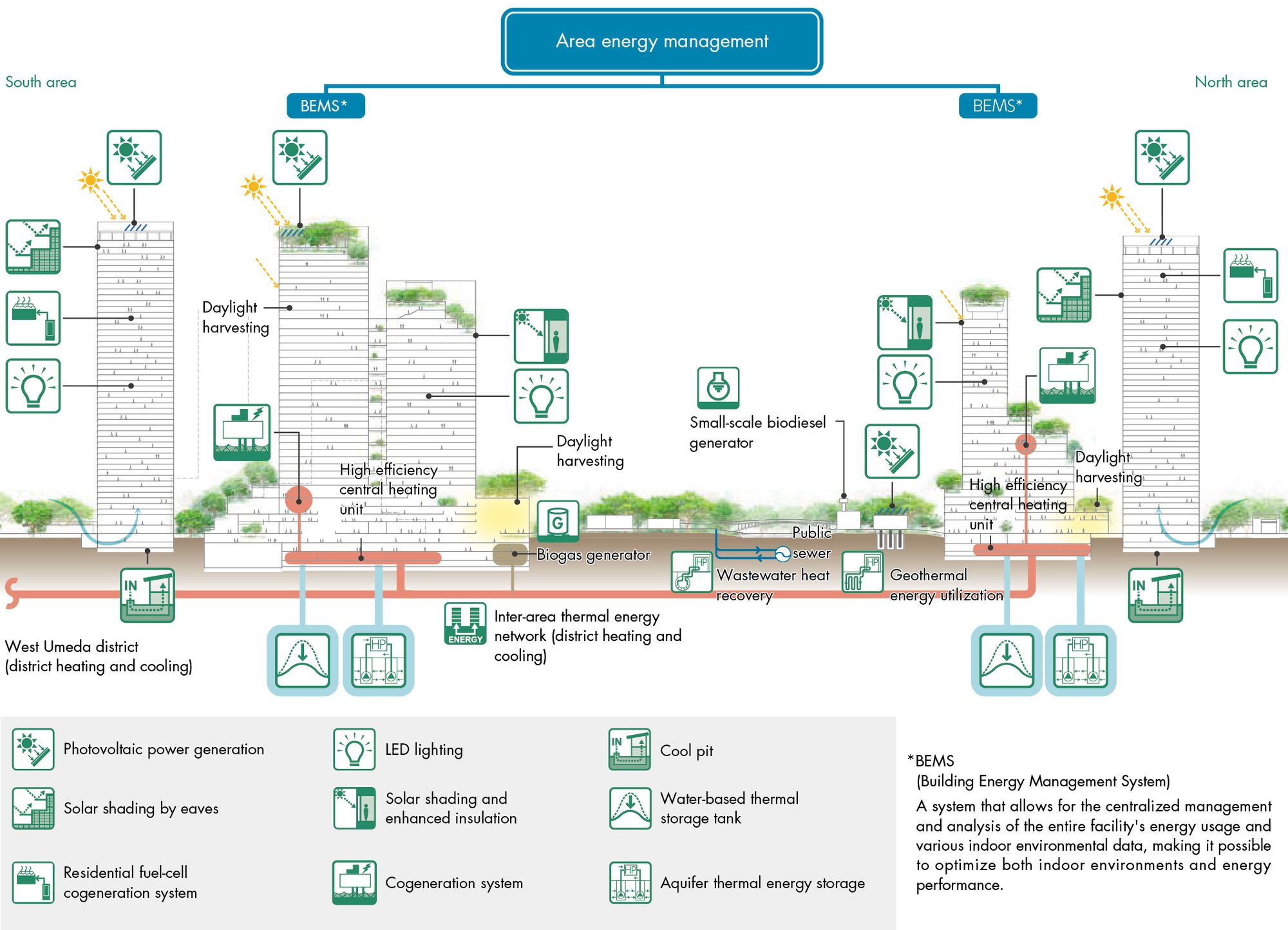
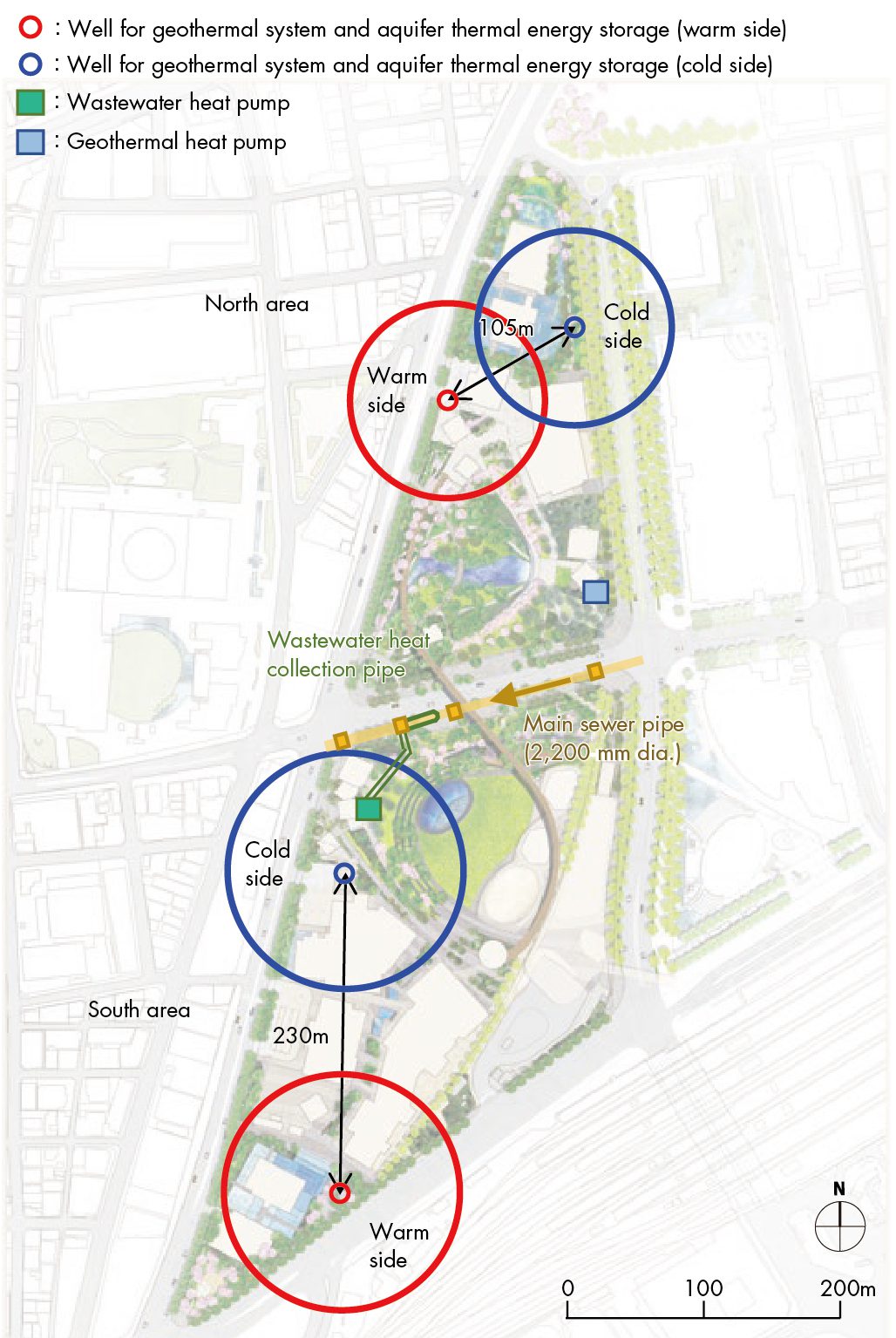
Taking advantage of the relaxation of underground water extraction regulations on buildings through the National Strategic Special Zone system, we have implemented Japan’s first large-scale aquifer thermal energy storage system. This system stores waste heat from cooling equipment in the summer within a gravel layer 45–55 meters below ground; this is then used for heating in the winter. Conversely, waste heat generated in winter is repurposed for summer cooling. This approach makes full use of the area’s geology, with high groundwater levels and thick gravel layers, to optimize energy efficiency. By reusing waste heat, the system not only reduces energy consumption but also mitigates heat island effects by limiting the amount of heat radiation released into the atmosphere. Additionally, a sewer heat utilization system, which uses the underground infrastructure running east and west underneath the sidewalk between South Park and North Park, has been integrated as a heat source for hot water in the park’s facilities.
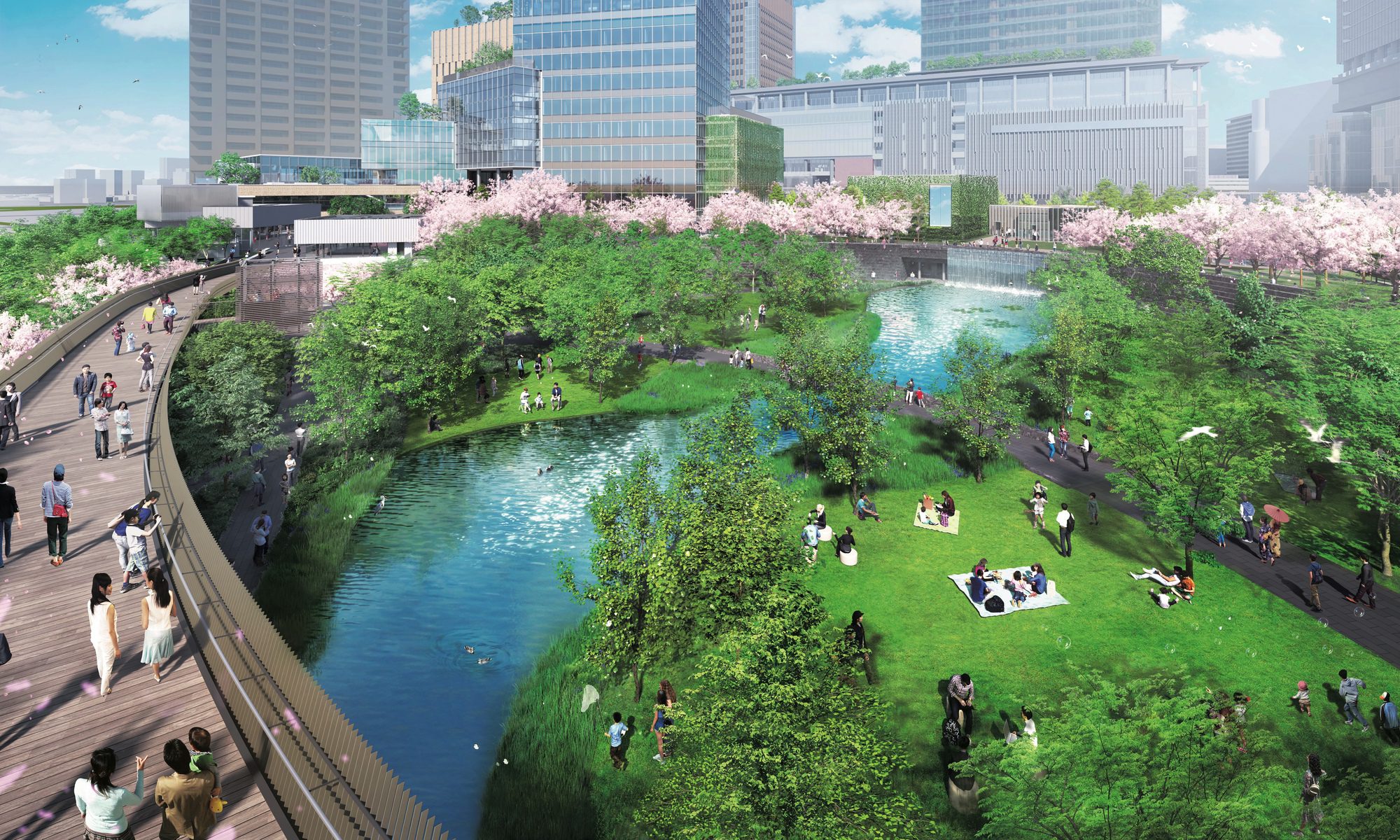
Perspective North Park in Spring
Through the combined management of cogeneration systems and district heating and cooling in both the north and south areas of the park, it is possible to link with external energy sources and maintain energy independence during emergencies. The overall goal for Grand Green Osaka is to achieve a 35-percent reduction in CO2 emissions, which is equivalent to the carbon absorption of 9,700 hectares of forest (about 2,100 times the area of Umekita Park). This is the first mixed-use development in Japan, including urban parks, to achieve LEED for Neighborhood Development (LEED ND) Gold certification (plan certification) and SITES (Landscape) Gold certification (pre-certification).
Project Info
Architects: Nikken Sekkei
Area: 553046 m²
Year: 2024
Country: Osaka, Japan
Photographs: Akira Ito[aifoto], Nacása & Partners
Client: Mitsubishi Estate Co., Ltd., Osaka Gas Urban Development Co., Ltd., ORIX Real Estate Corporation, Kanden Realty & Development Co., Ltd., Sekisui House, Ltd., Takenaka Corporation, Hankyu Corporation, Mitsubishi Estate Residence Co., Ltd., and Umekita Development Specific Purpose Company (joint venture of nine companies)
Supervising Architects: Nikken Sekkei and Mitsubishi Jisho Design Inc.
Landscape Design Lead: GGN
Landscape Architects: Nikken Sekkei (South Building: Mitsubishi Jisho Design Inc. and Nikken Sekkei)
Umekita Park Development Implementing Body: Osaka City Government and Urban Renaissance Agency, and JV9
Umekita Park Base Grade (Public) Schematic Design: Nikken Sekkei and Mitsubishi Jisho Design Inc.
Umekita Park Base Grade (Public) Detailed Design: Nikken Sekkei
Umekita Park Upgrades Design Proposals: JV9
Umekita Park Upgrades Design Lead: GGN
Umekita Park Upgrades Architects: Nikken Sekkei
Umekita Park Facilities Development Implementing Body: JV9
Umekita Park Facilities Design And Supervision: Nikken Sekkei (excluding the Large Canopy Facilities)
Umekita Park Facilities Vs Design Supervision: Tadao Ando Architect & Associates
Umekita Park Facilities Large Canopy Facilities Design And Supervision: Sejima and Nishizawa and Associates
Private Land North Building Design: Nikken Sekkei and Takenaka Corporation
Private Land North Building Supervision: Nikken Sekkei
Private Land North Building Landscape Design Lead: GGN
Private Land North Building Landscape Architects: Nikken Sekkei
Private Land South Building Design: Mitsubishi Jisho Design Inc., Nikken Sekkei, Obayashi Corporation, and Takenaka Corporation
Private Land South Building Supervision: Mitsubishi Jisho Design Inc., and Nikken Sekkei
Private Land South Building Landscape Design Lead: GGN
Private Land South Building Landscape Architects: Mitsubishi Jisho Design Inc., Nikken Sekkei
Grand Green Osaka The North Residence, South District Condominium (Tentative Name) Design: Takenaka Corporation and Nikken Sekkei
Grand Green Osaka The North Residence, South District Condominium (Tentative Name) Supervision: Nikken Housing System
Grand Green Osaka The North Residence, South District Condominium (Tentative Name) Landscape Design Lead: GGN
Grand Green Osaka The North Residence, South District Condominium (Tentative Name) Landscape Architects: Nikken Sekkei
Umekita Park And Private Land Lighting Design: Uchihara Creative Lighting Design Inc.
Umekita Park And Private Land Sign Design: Rian Ihara Design Office Limited
Sign Umekita Park And Private Land Project Management: MEC Design International Corporation
Umekita Park Construction Contractor: Obayashi Corporation, Takenaka Corporation, and Takenaka Civil Engineering and Construction Co., Ltd. Joint Venture
Facilities In South Park & The Large Canopy Construction Contractor: Umekita Phase 2 Joint Venture (Obayashi Corporation and Takenaka Corporation)
Facilities In North Park & North Building Construction Contractor: Umekita Phase 2 Joint Venture (Takenaka Corporation and Obayashi Corporation)
Use: Park, Office, Retail Stores, Food & Beverage, Hotel, Residence, Hospital, Parking


Madeline Brooks is a Projects Editor at Arch2O, where she has been shaping and refining architectural content since March 2024. With over a decade of experience in editorial work, she has curated, revised, and published an array of projects covering architecture, urbanism, and public space design. A graduate of the Harvard University Graduate School of Design, Madeline brings a strong academic foundation and a discerning editorial eye to each piece she oversees. Since joining Arch2O, she has played a pivotal role in shaping the platform’s editorial direction, with a focus on sustainability, social relevance, and cutting-edge design. Madeline excels at translating complex architectural ideas into clear, engaging stories that resonate with both industry professionals and general readers. She works closely with architects, designers, and global contributors to ensure every project is presented with clarity, depth, and compelling visual narrative. Her editorial leadership continues to elevate Arch2O’s role in global architectural dialogue.