

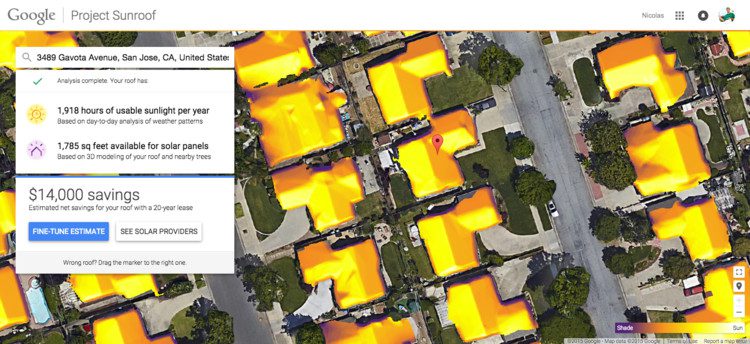
Project Sunroof (launched 17 August 2015) is a new, more convenient tool which enables a number of citizens of North America to calculate the viability of utilizing solar panels on their homes with just the click of a button. This will allow the people in specified locations (where the program is available for a trial period) to capitalise on the abundant energy the sun has to offer, as well as reduce their cost of living by selling surplus energy back into the main grid.
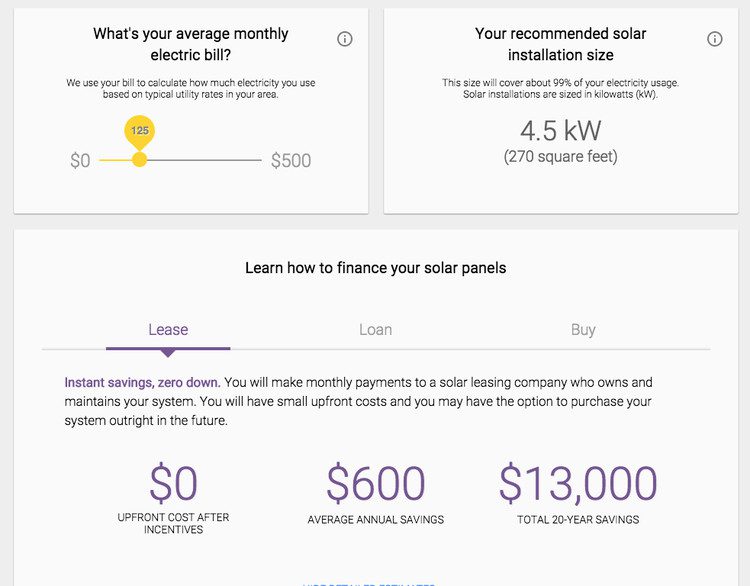
© Google | Project Sunroof
Renewable energy is a fast growing industry across the world, solar power being one of the least used sources.Why is this so? Usually, the general public isn’t aware of the technological advances that have been made in order to harvest solar energy, and may still harbour misconceptions such as high cost of installation or efficiency. Well, thanks to Google‘s new services, if you live in Boston, San Diego, and Fresno, you can now calculate the viability of having solar panels on your roof – as well as estimated savings – based on your location and roof size. The program uses Google Earth databases in order to trace the surface area of the roof and the amount of (usable) sunlight hours that a certain household is exposed to, and also provides suggestions on nearby installers, as well as financial plans.
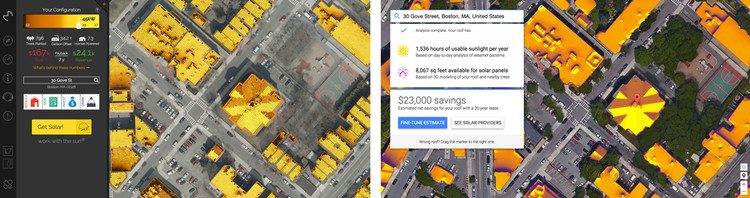
Boston, Massachusetts. Left: Mapdwell. Right: Google Sunroof
The other bright side of this program is that it also provides a quicker way for architects and professionals in the built environment to apply environmentally-conscious interventions to existing structures, instead of demolishing and rebuilding (not to mention quick solar studies for students and professionals alike).
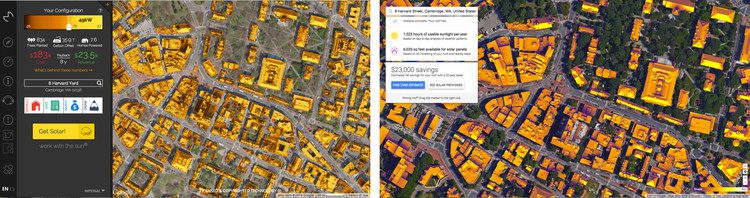
Cambridge, Massachusetts. Left: Mapdwell. Right: Google Sunroof
One looming drawback is the legislations that may arise because of homeowners generating their own energy and selling it back to the grid, where a lack of consumers will impact the economy more radically than the continued use of non-renewable energy, explained further in this case study of the state of Nevada. The growing popularity of renewable resources is a welcomed one, and similarly to most interventions, sound management and feasible implementation will be needed.

Thelma Ndebele is an editor at Arch2O and a part-time lecturer at the University of Johannesburg. With a background in architecture and critical spatial research, Thelma’s academic work explores the intersections of urbanism, cultural identity, and public space. Their editorial contributions reflect a commitment to unpacking the socio-political dimensions of architecture, especially within African urban contexts. Through both teaching and writing, Thelma engages with emerging discourse on inclusive design, making them a thoughtful and vital voice in Arch2O’s academic and editorial landscape.