

The profession has lost one of its most influential voices. Frank Gehry, the visionary architect who transformed our understanding of what buildings could be, passed away at his Santa Monica home on December 5, 2025, at the age of 96, following a brief respiratory illness.
For those of us in architecture, Gehry’s passing marks the end of an era. He wasn’t just an architect—he was a revolutionary who fundamentally challenged the conventions of our field and proved that buildings could be both sculptural art and functional spaces. His death reminds us that we’ve been privileged to practice alongside someone who genuinely changed the language of architecture.
The Making of a Revolutionary
Born Frank Goldberg in Toronto in 1929, he later adopted the surname Gehry to navigate the antisemitism of his time—a personal detail that speaks to the resilience that would later characterize his professional career. After a brief stint in the army, he found his calling at the University of Southern California, initially exploring ceramics before discovering architecture. That early interest in sculptural forms would prove prophetic.
His breakthrough came in the 1970s with perhaps his most honest project: his own Santa Monica residence. Rather than designing a pristine showcase, Gehry wrapped his modest existing house in corrugated metal and chain-link fencing, creating something raw and unapologetically unconventional. His neighbors hated it. We architects understood immediately that something significant was happening. Here was someone willing to strip away the pretense and explore materials and forms that polite architecture had long ignored.
“I was rebelling against everything,” he told The New York Times in 2012, and you could feel that rebellion in every project. He looked at the minimalist aesthetic dominating architecture at the time and found it lacking. “I thought it was snotty and effete. It just didn’t feel like it fit into life,” he said. That statement captures what made Gehry different—he wanted architecture that felt alive, that engaged with human emotion rather than abstract ideals.
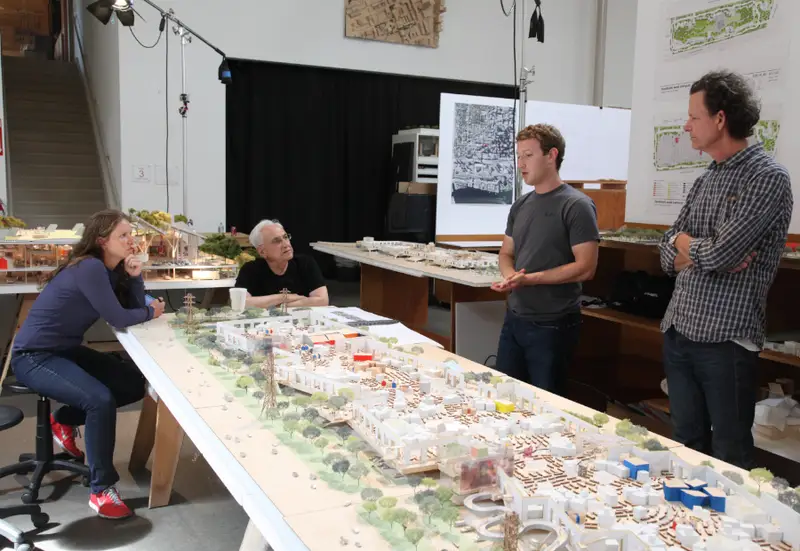 Frank Gehry and Mark Zuckerberg
The Bilbao Effect
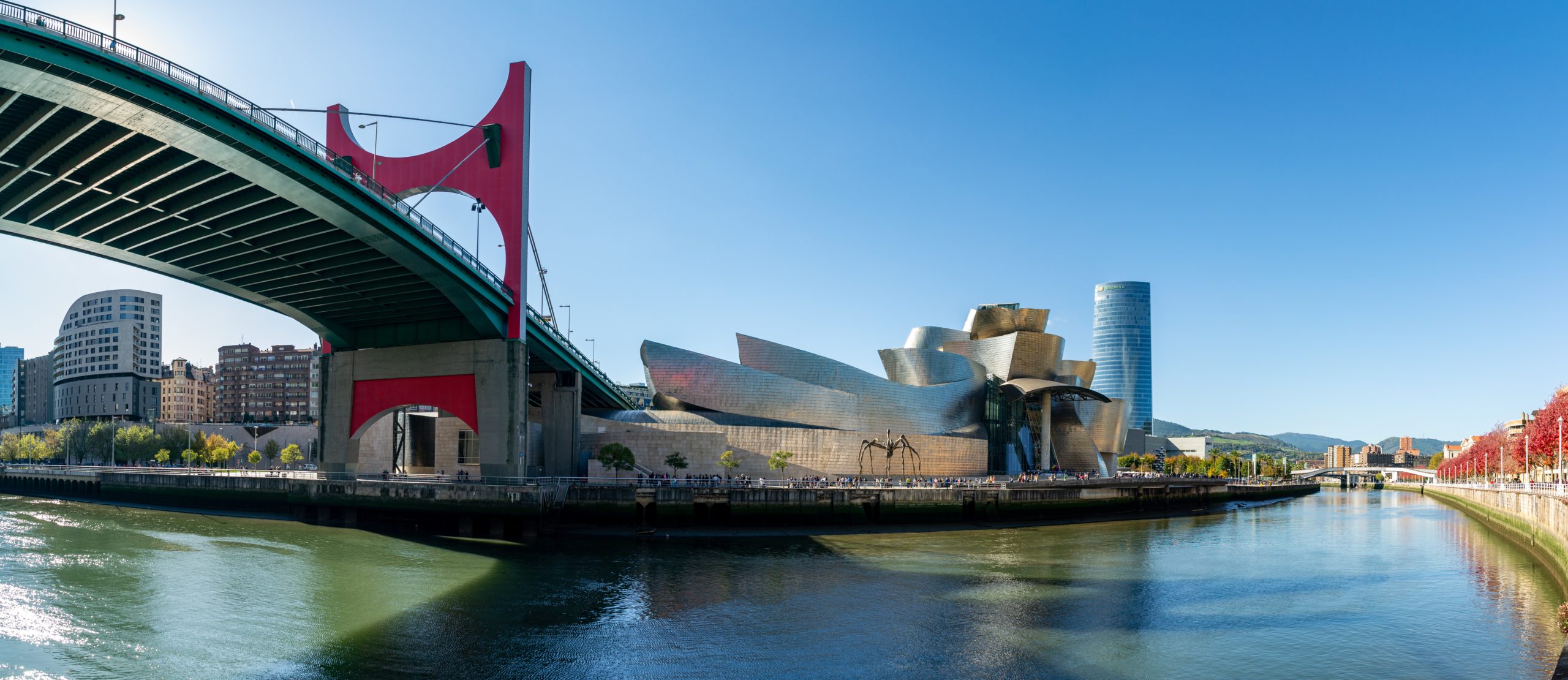
When the Guggenheim Museum Bilbao opened in 1997, it didn’t just create a building—it spawned a phenomenon. The structure’s titanium curves seemed to ripple and flow, catching light in ways that made the building appear to move. Cities around the world took notice: here was proof that a single building could transform an entire urban economy. “The Bilbao Effect” became shorthand for architecture’s potential to catalyze urban regeneration, though few subsequent projects achieved anything close to Gehry’s original vision.
For fellow architects, Bilbao represented both inspiration and a challenge. How do you follow something that revolutionary? How do you create buildings that provoke wonder without descending into gimmickry? These questions have defined much of the discourse in our profession for the past three decades.
© David Vives
A Portfolio of Ingenuity
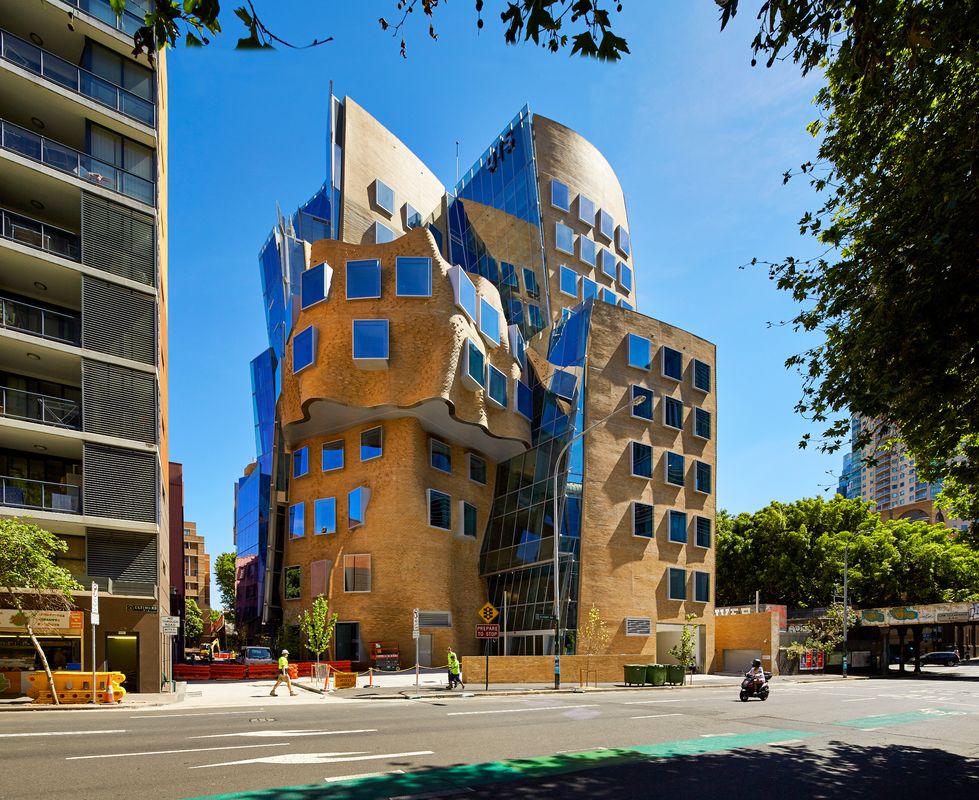
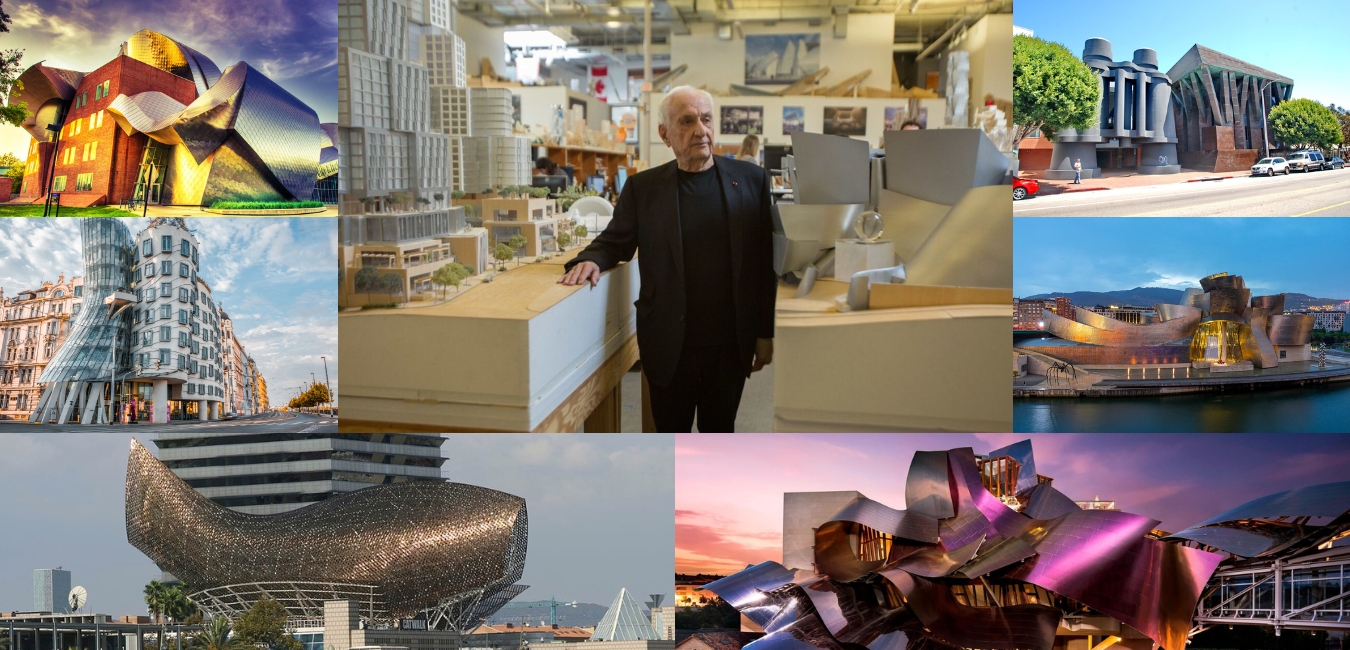
Gehry’s body of work reads like a catalog of architectural ambition realized. The Walt Disney Concert Hall in Los Angeles, with its billowing stainless steel forms, created acoustic perfection wrapped in sculptural magnificence. The Jay Pritzker Pavilion in Chicago’s Millennium Park brought his signature aesthetic to public space, proving that his approach could work at civic scale. The Dancing House in Prague showed his playful side, while the Louis Vuitton Foundation in Paris demonstrated that his late-career work remained as innovative as his early breakthroughs.
You can explore his remarkable range of projects in depth through this comprehensive overview of 20 Frank Gehry buildings that showcase his ingenuity across decades and continents.
The Starchitect Question
Gehry became one of the first architects labeled a “starchitect”—a term that carries both admiration and criticism within our profession. Yes, his fame transcended architecture. Yes, his projects commanded attention and budgets that most of us could only dream of. But reducing Gehry to celebrity misses what mattered: he used that platform to push boundaries and take risks that benefited all of us working in his wake.
He won the Pritzker Prize in 1989, architecture’s highest honor, and by 2010, Vanity Fair was calling him “the most important architect of our age.” Such accolades can feel hyperbolic, but spend time studying his work—really studying it, as we architects do—and the case becomes compelling. He expanded the vocabulary of our profession. He showed clients and the public what was possible. He made our jobs both harder and more exciting.
©Peter Bennetts
The Human Behind the Forms
Beyond the titanium and the spectacle, Gehry lived a full life. He married Anita Snyder and welcomed two daughters, Brina and Leslie (who predeceased him in 2008). After divorcing in the 1960s, he married Berta Aguilera in 1975, and they had two sons, Sam and Alejandro. He is survived by Berta, his sons, and daughter Brina.
Those who worked with him describe someone who remained deeply engaged with the craft of architecture even as his fame grew. He never stopped sketching, never stopped pushing his teams to explore new possibilities, never lost the curiosity that had drawn him to architecture in the first place.
Legacy and Lessons
What does Gehry’s work teach us as practicing architects? First, that courage matters. He pursued his vision even when it made clients uncomfortable, when it challenged budgets, when critics dismissed it as excessive. Second, that technology serves design, not the other way around. His use of CATIA software (borrowed from aerospace) wasn’t about showing off computational prowess—it was about realizing forms that couldn’t be built any other way. Third, that architecture can and should provoke emotional responses. We spend too much time in our profession worrying about being taken seriously and not enough time creating buildings that make people feel something.
For those wanting to explore more of Gehry’s influence and projects, this collection of articles on Frank Gehry provides valuable insight into his methodologies and impact on contemporary architecture.
Moving Forward
As we process this loss, we’re left with buildings that will outlive all of us—structures that will continue teaching future generations of architects what’s possible when you combine vision, courage, and technical mastery. Gehry showed us that architecture doesn’t have to choose between art and function, between bold expression and practical reality.
The profession will miss his voice, his drawings, his willingness to challenge us all to think bigger. But we’re fortunate that his work remains, scattered across continents, each building a reminder that architecture at its best can transform not just cities, but our understanding of what built form can achieve.
Frank Gehry didn’t just design buildings. He reimagined what architecture could be. That’s a legacy that will resonate for generations of architects yet to come.

Ibrahim Abdelhady is an architect, academic, and media entrepreneur with over two decades of experience in architecture and digital publishing. He is the Founder and CEO of Arch2O.com, a leading platform in architectural media, renowned for showcasing innovative projects, student work, and critical discourse in design. Holding dual PhDs in Architecture, Dr. Abdelhady combines academic rigor with industry insight, shaping both future architects and architectural thought. He actively teaches, conducts research, and contributes to the global architecture community through his writing, lectures, and media ventures. His work bridges the gap between practice and academia, pushing the boundaries of how architecture is communicated in the digital age.