

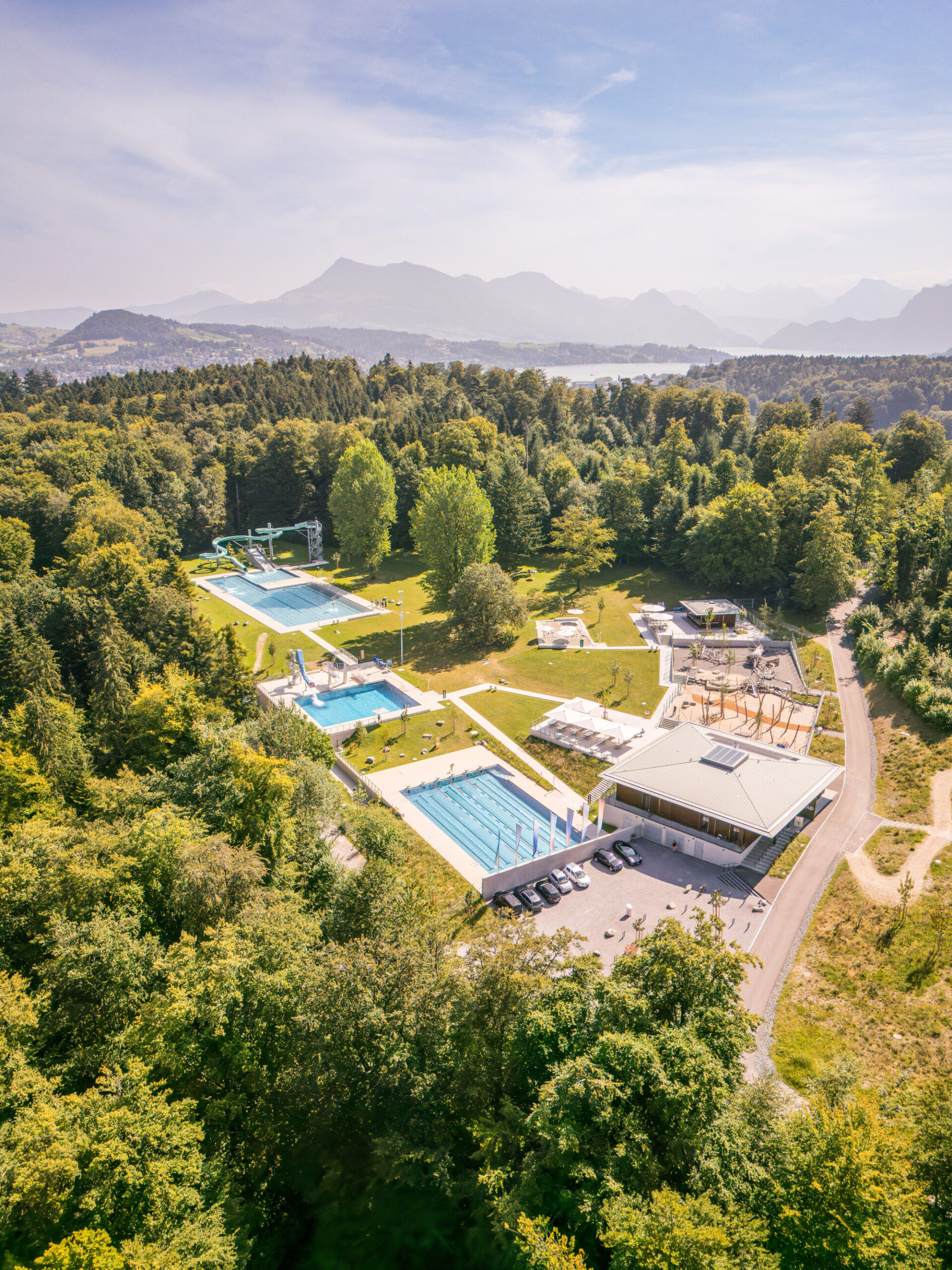
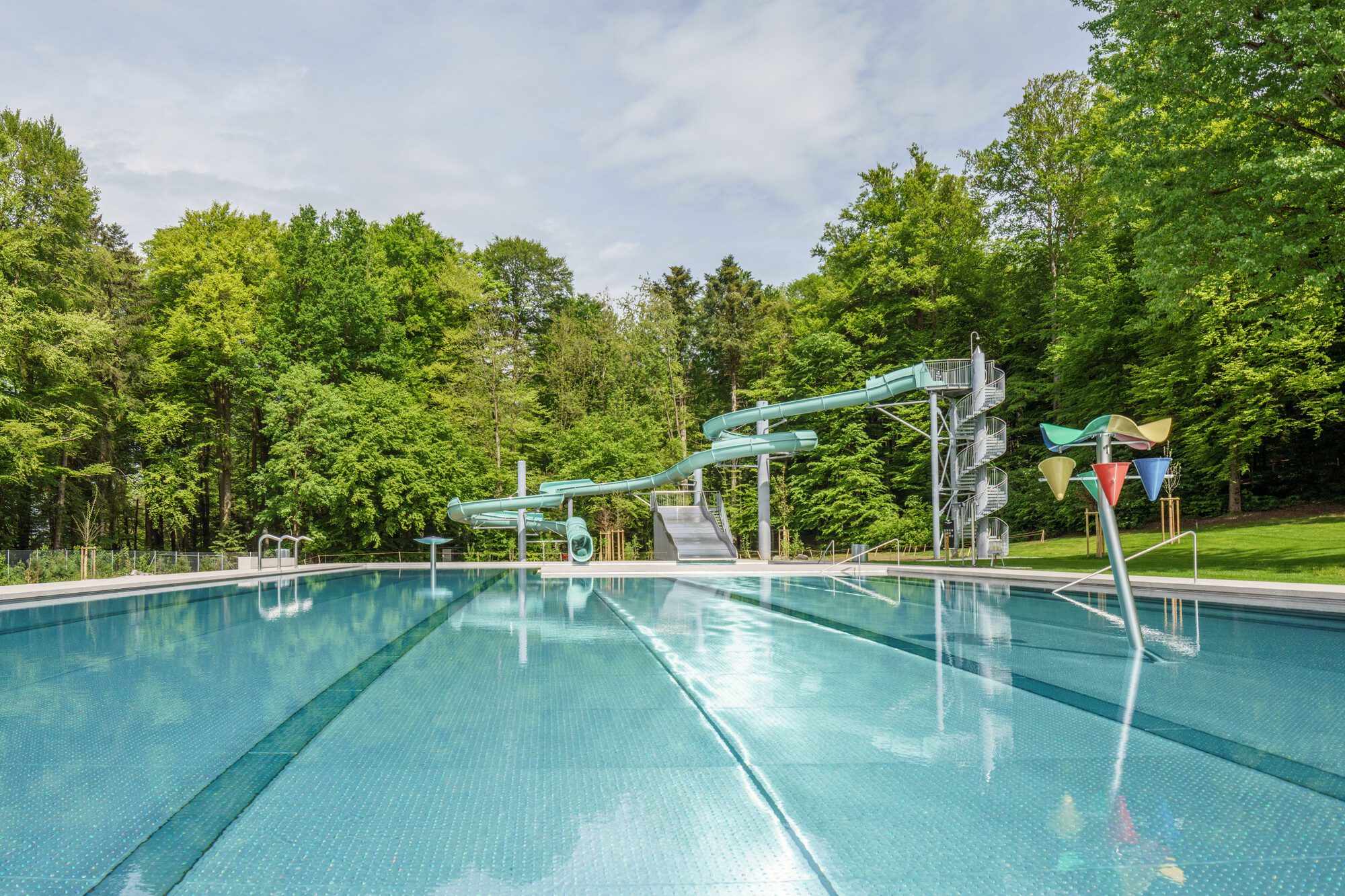
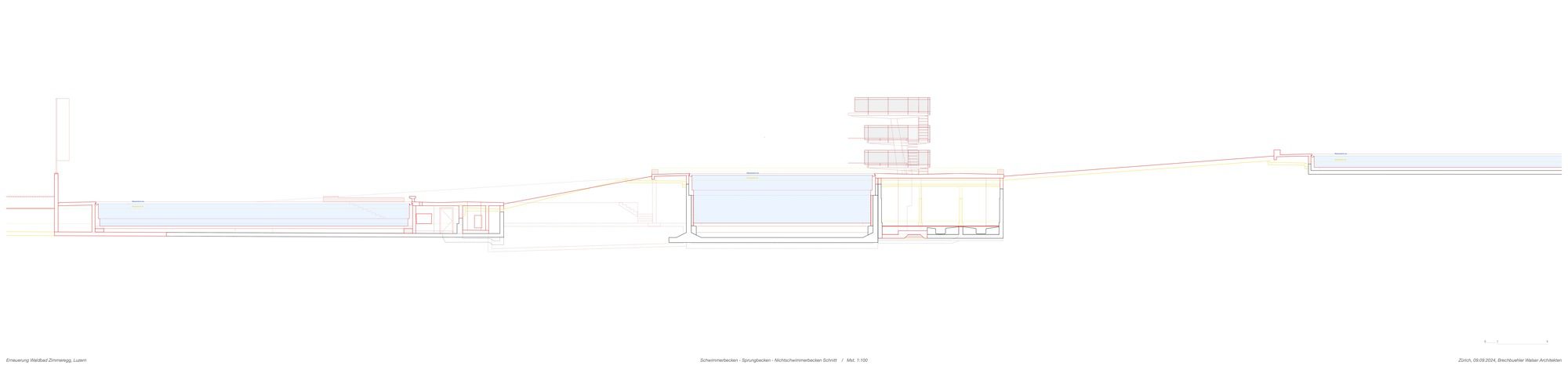
The original forest pools were built in 1967 in an idyllic forest clearing high above Lucerne. In the meantime, defects in the gradually remodeled and expanded facility became increasingly noticeable. Especially the pools needed to be repaired and the outdated pool technology had to be replaced.
© Andreas Buschmann
To preserve the forest pools for future generations, to make them attractive, and to reduce the high operating costs the citizens of the city of Lucerne decided on a complete renovation.
© Andreas Buschmann
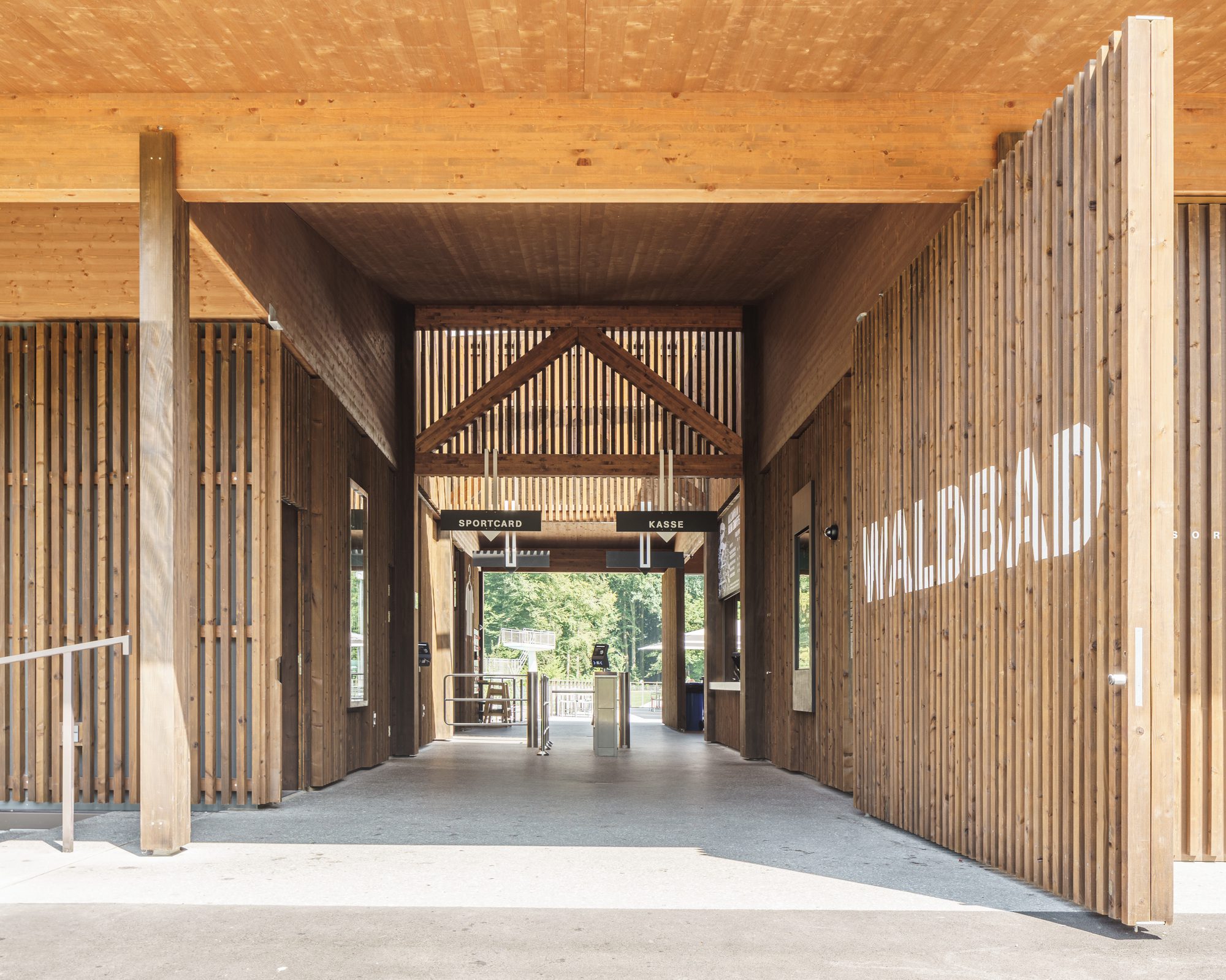
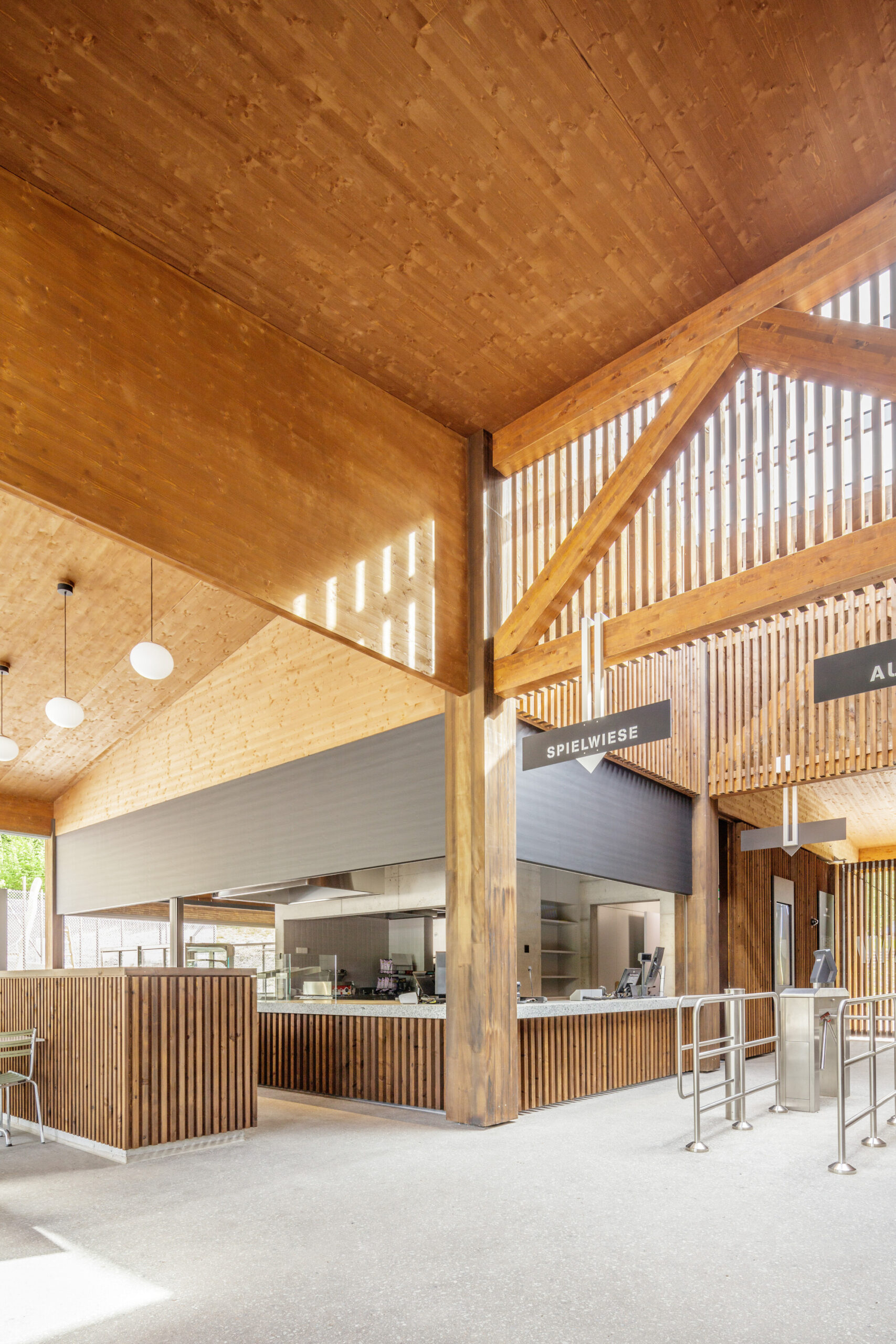
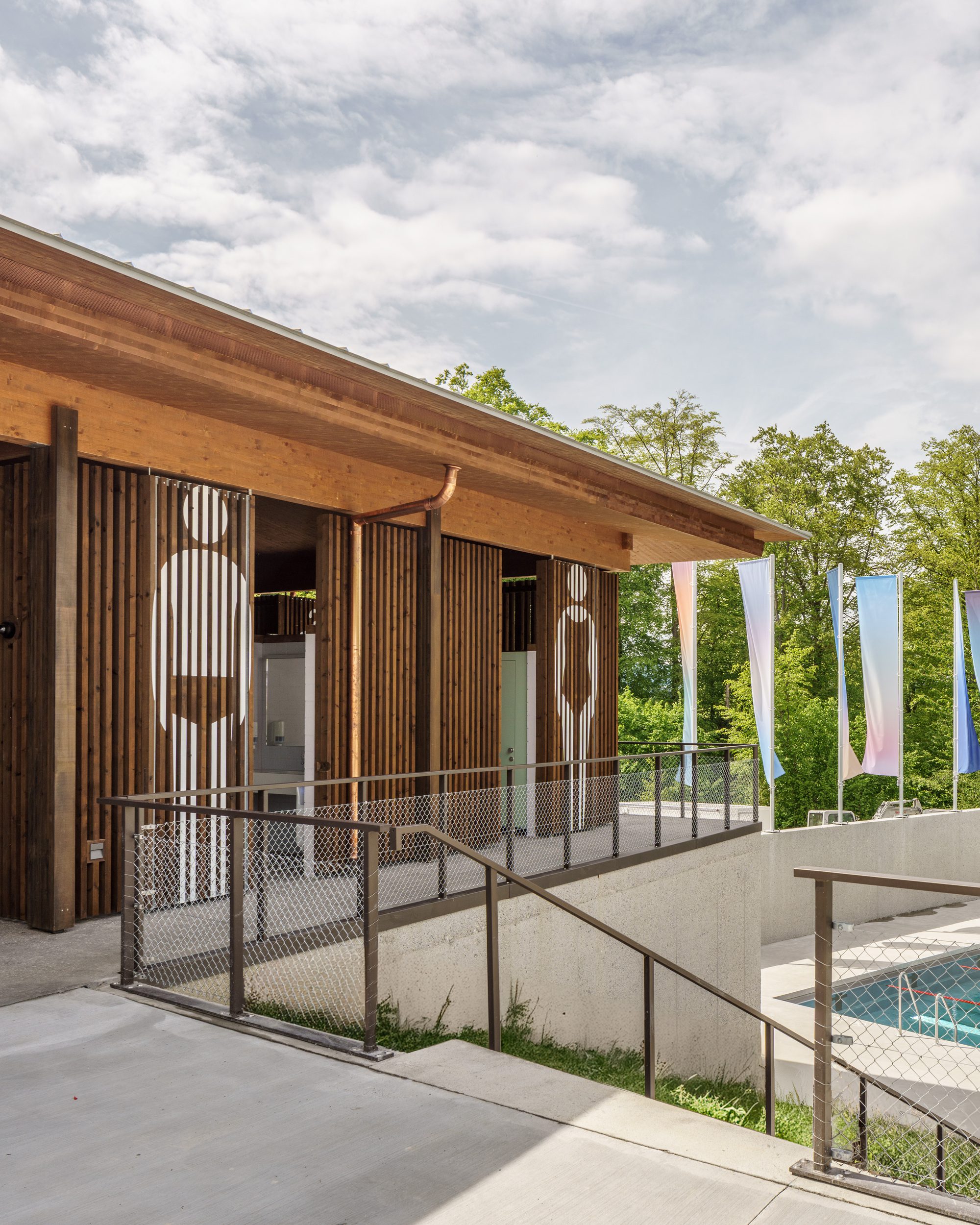
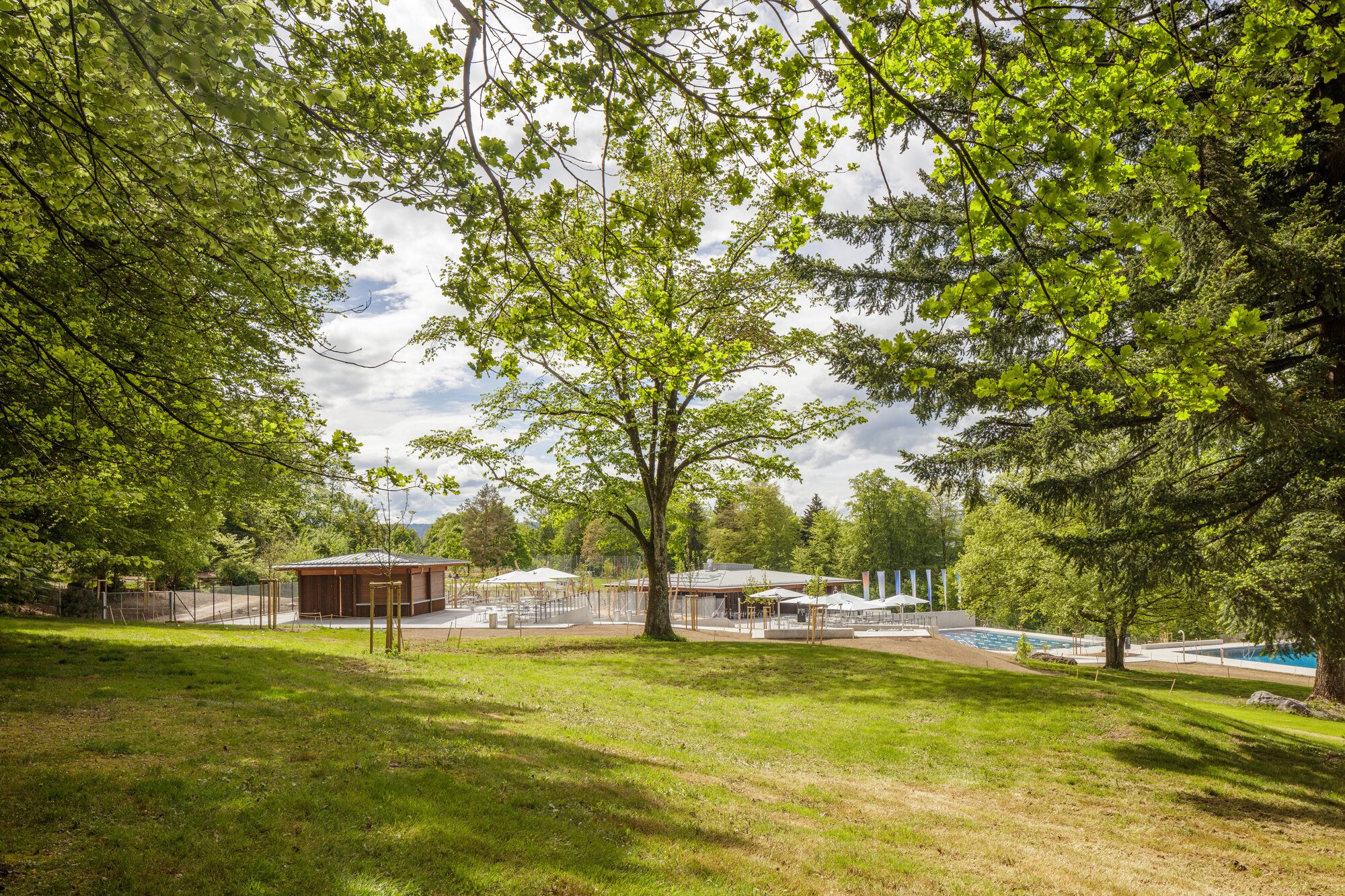
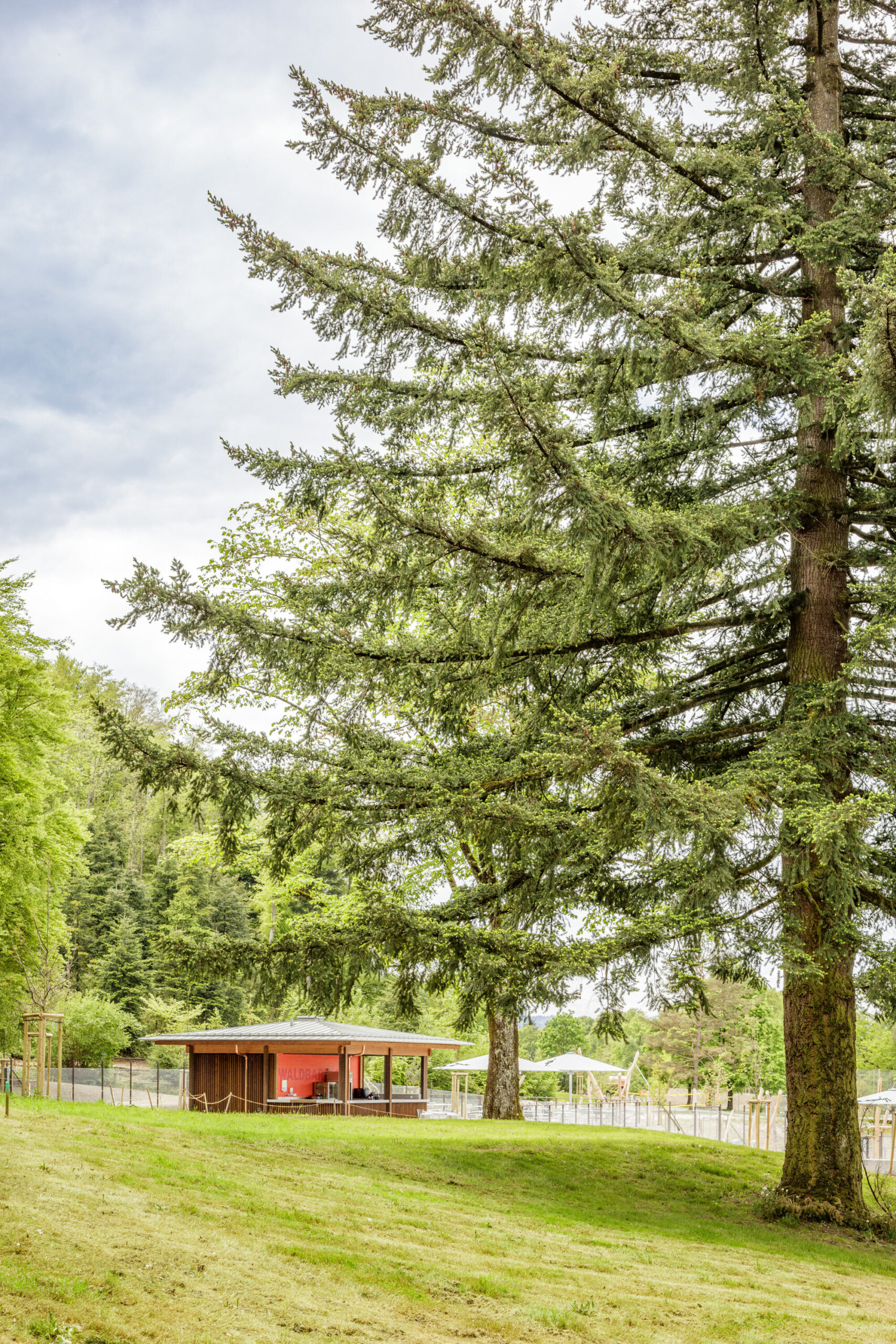
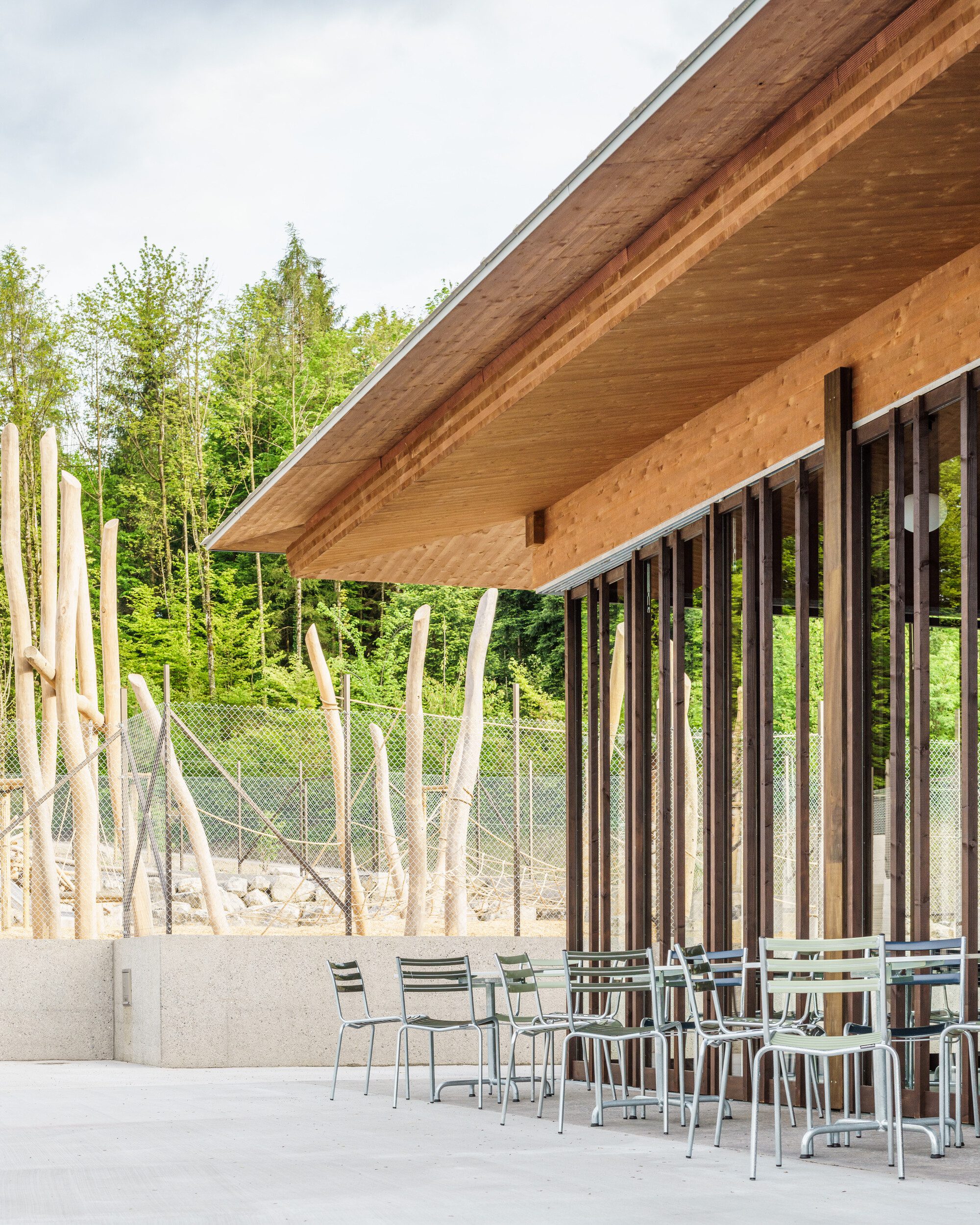
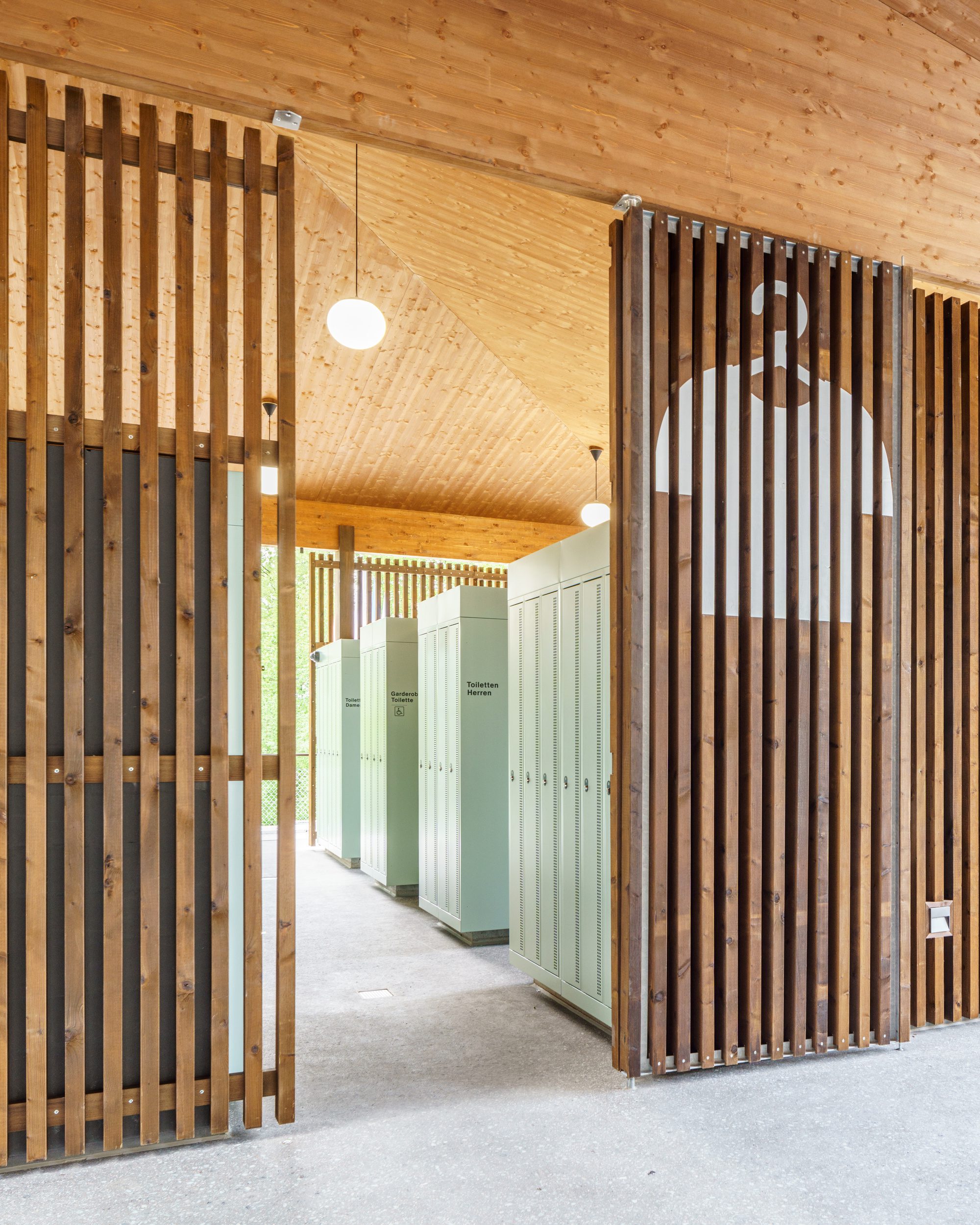
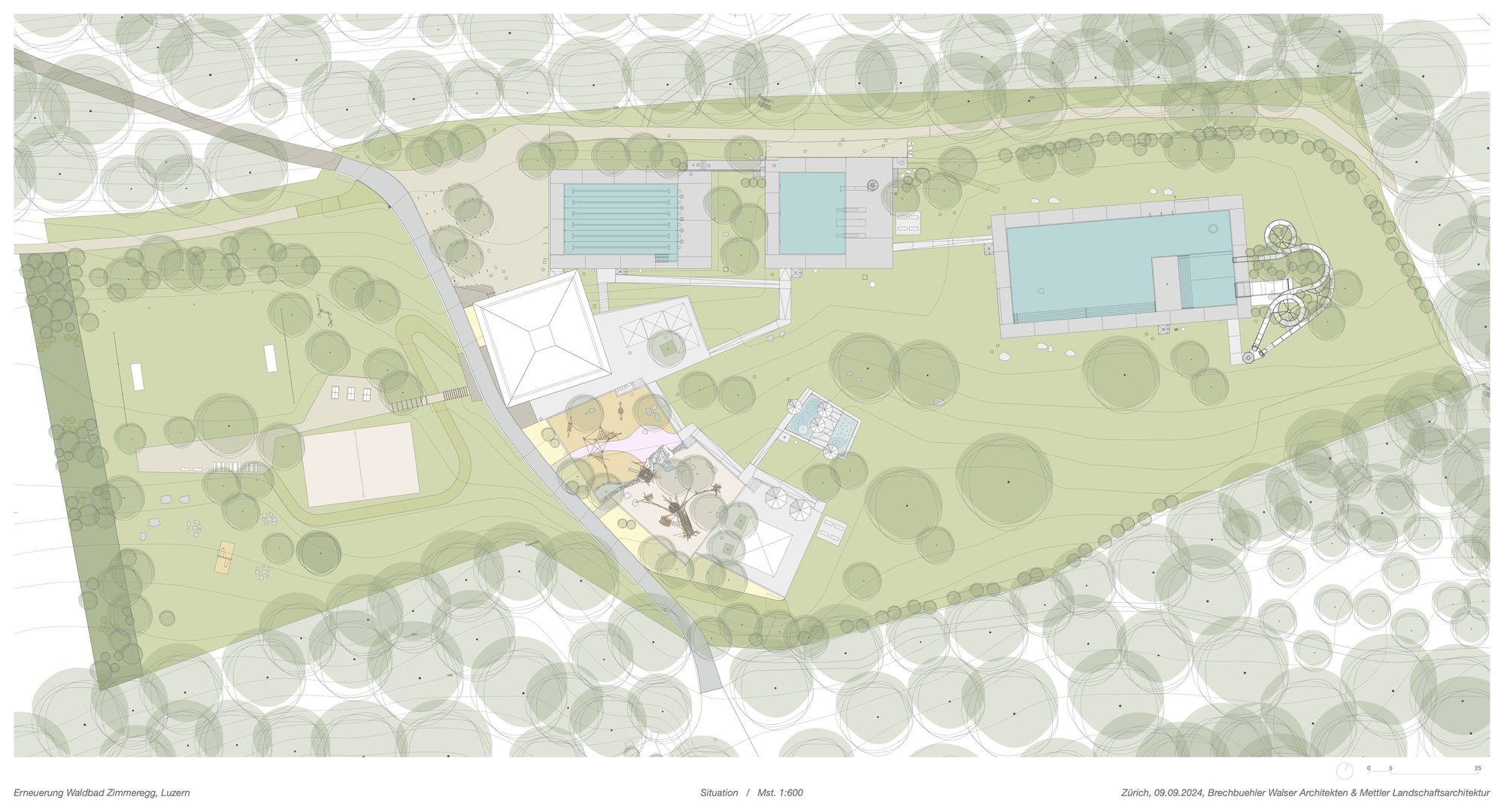
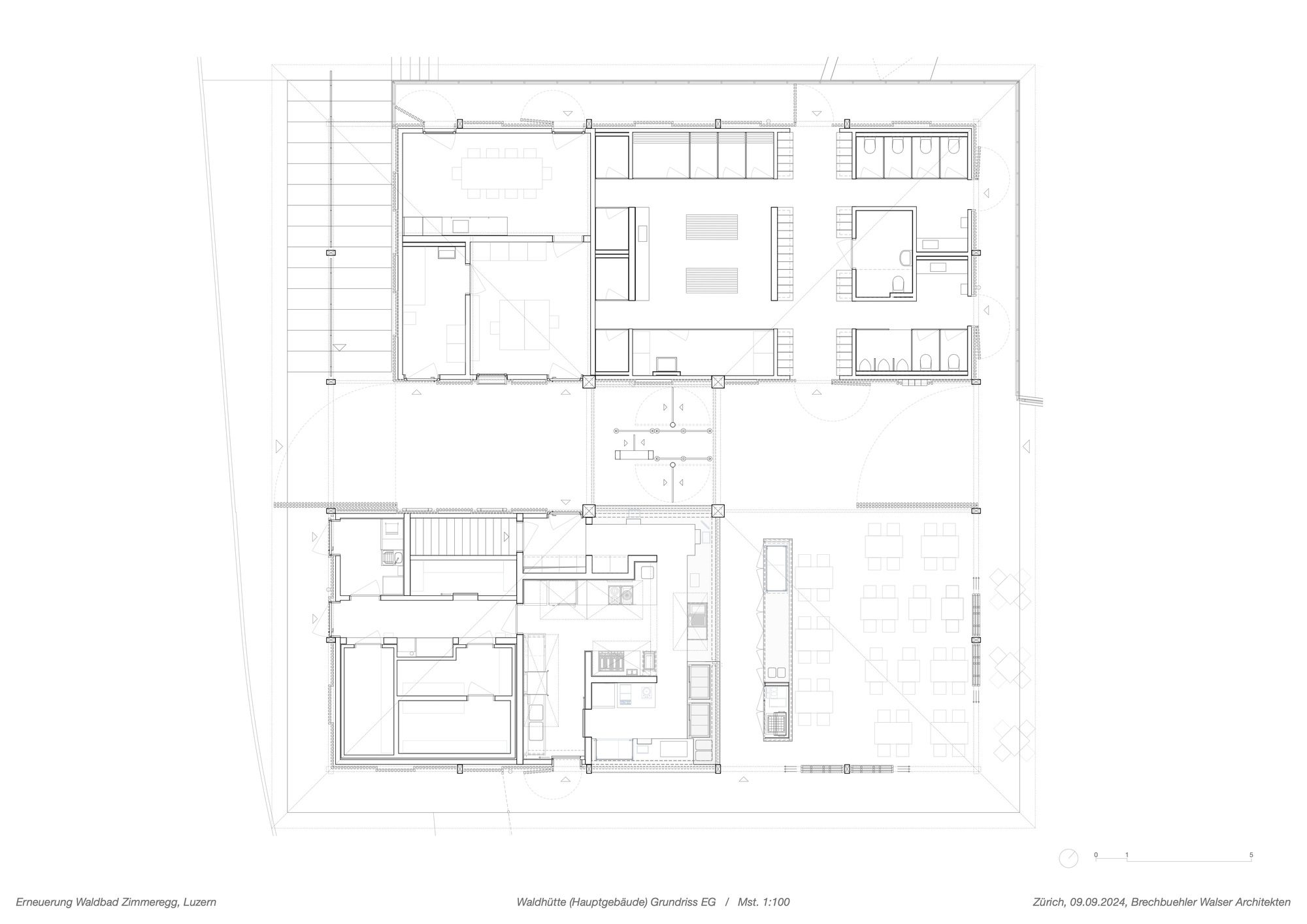
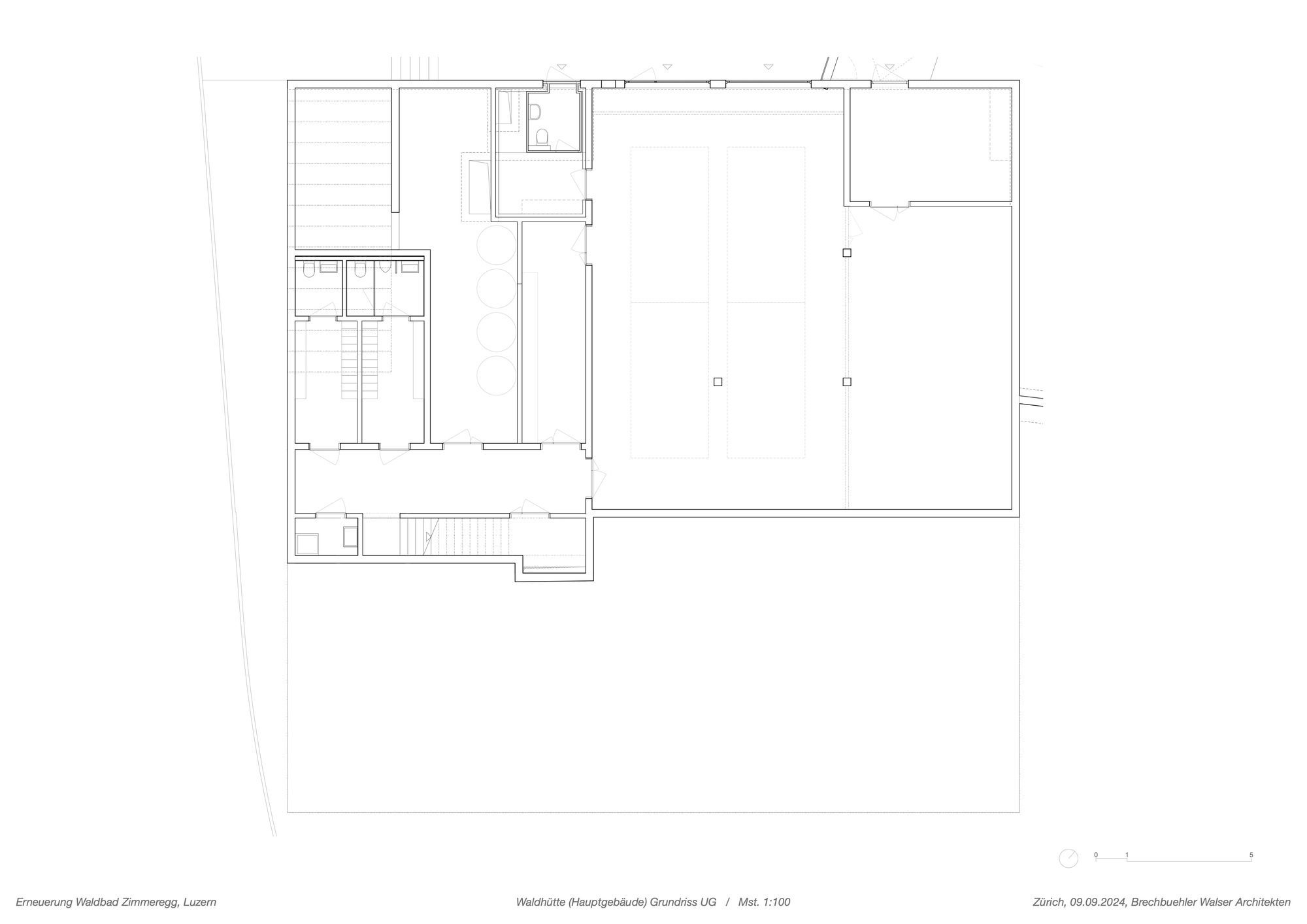
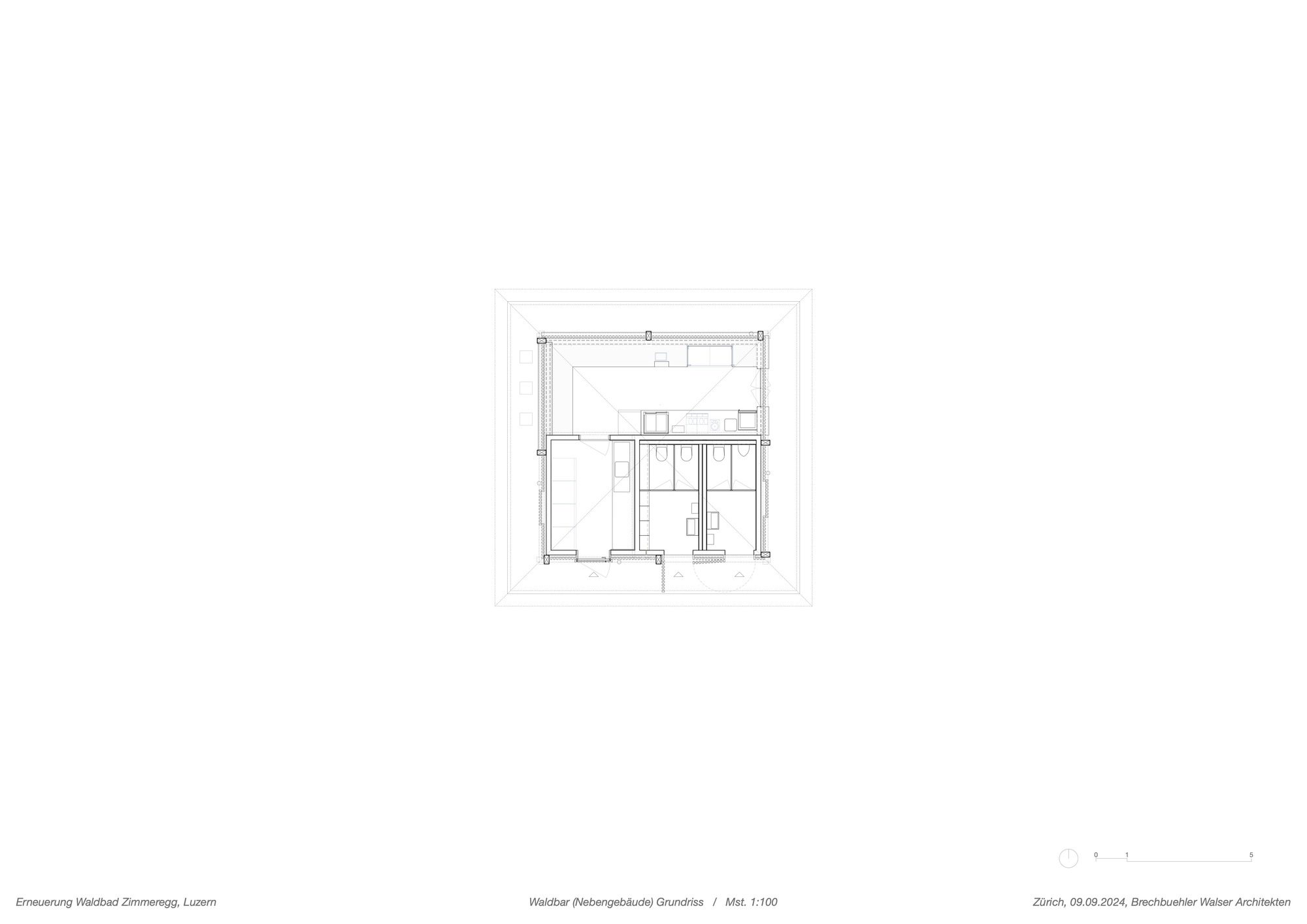
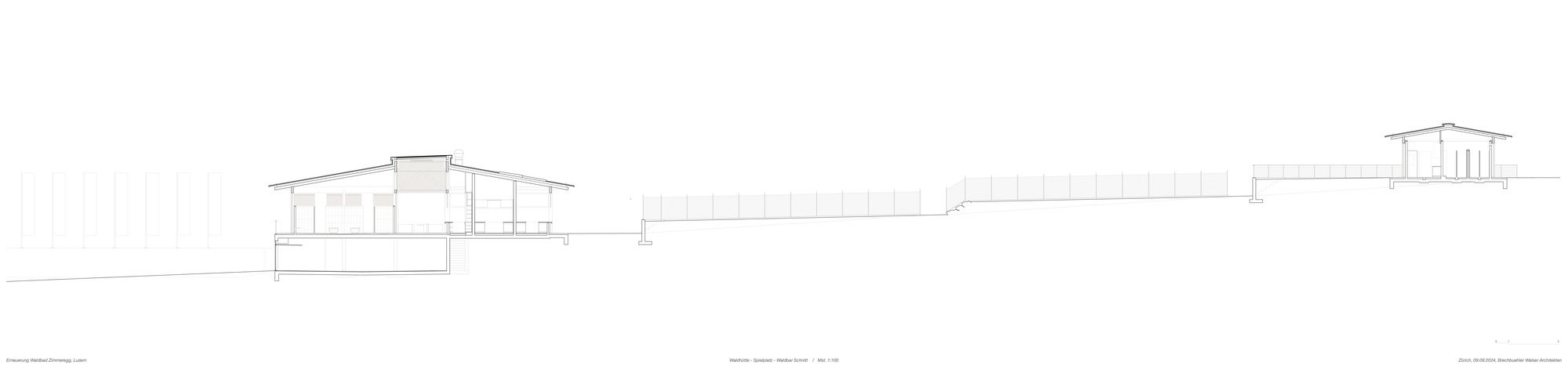
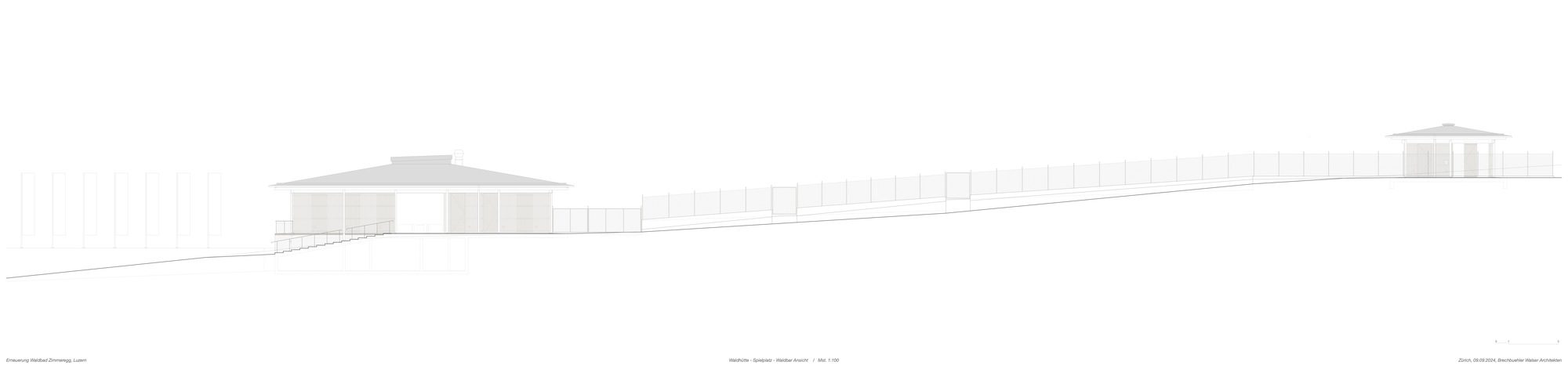
In order to strengthen the unique character, the forest clearing was tidied and the different areas were gently reorganized. The existing attractions were refreshed where possible, relocated, and supplemented where necessary. By setting up a wooden building in a new location, the forest cabin, the inefficient operating building was replaced and at the same time, the long and steep access to the pools was shortened. An additional smaller wooden pavilion, the forest bar, supplements the offer at an elevated location in the park.
© Andreas Buschmann
Furthermore, the previously fenced-in playground was completely opened to the public. This makes the forest clearing an attractive destination for sports, playing, and barbecuing all year round, even when the area with the pools is closed.
© Andreas Buschmann
© Andreas Buschmann
Project Info
Architects: Brechbuehler Walser Architekten
Area: 639 m²
Year: 2024
Photographs: Andreas Buschmann
Category: Sports Architecture, Swimming Pool
Lead Team: Patrick Walser, Barbara Brechbuehler
Technical Team: Judith Rauber
Project Management: Waber Architekturrealisation
Landscape Architecture: Mettler Landschaftsarchitektur
Engineering & Consulting > Structural: blesshess
Engineering & Consulting > Electrical: Scherler
Engineering & Consulting > Mep: JOP Joser Ottiger + Partner
Engineering & Consulting > Other: Gottschalk+Ash Int’l, GaPlan
City: Luzern
Country: Switzerland

Nora is an architect and editor with a degree from Pratt Institute. She bridges design practice and architectural criticism, documenting contemporary urban transformations through compelling visual narratives.