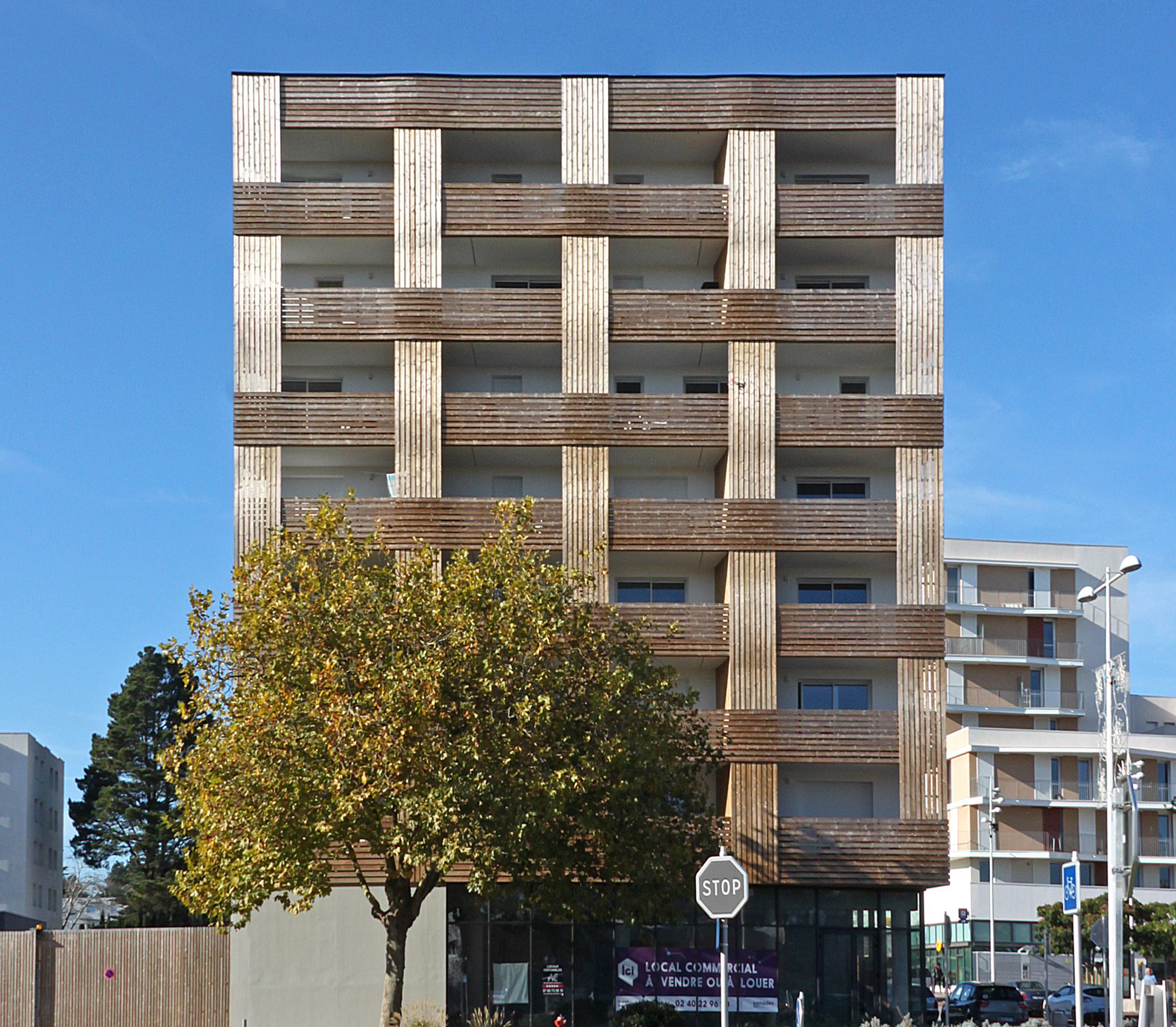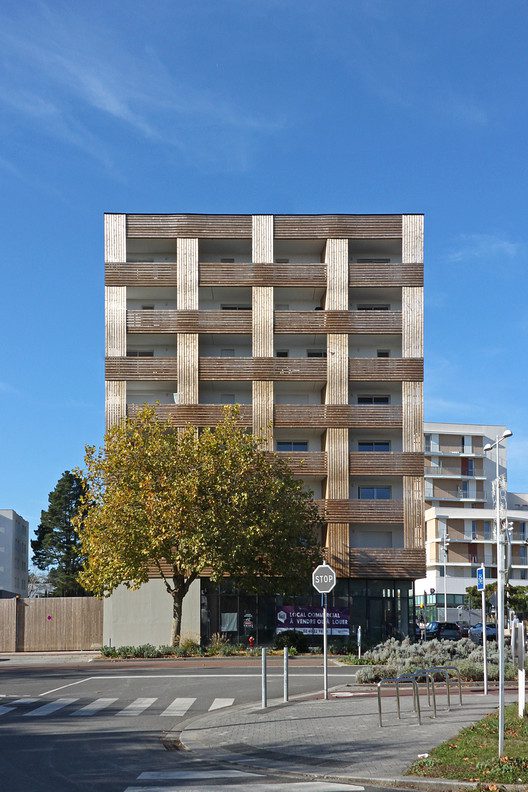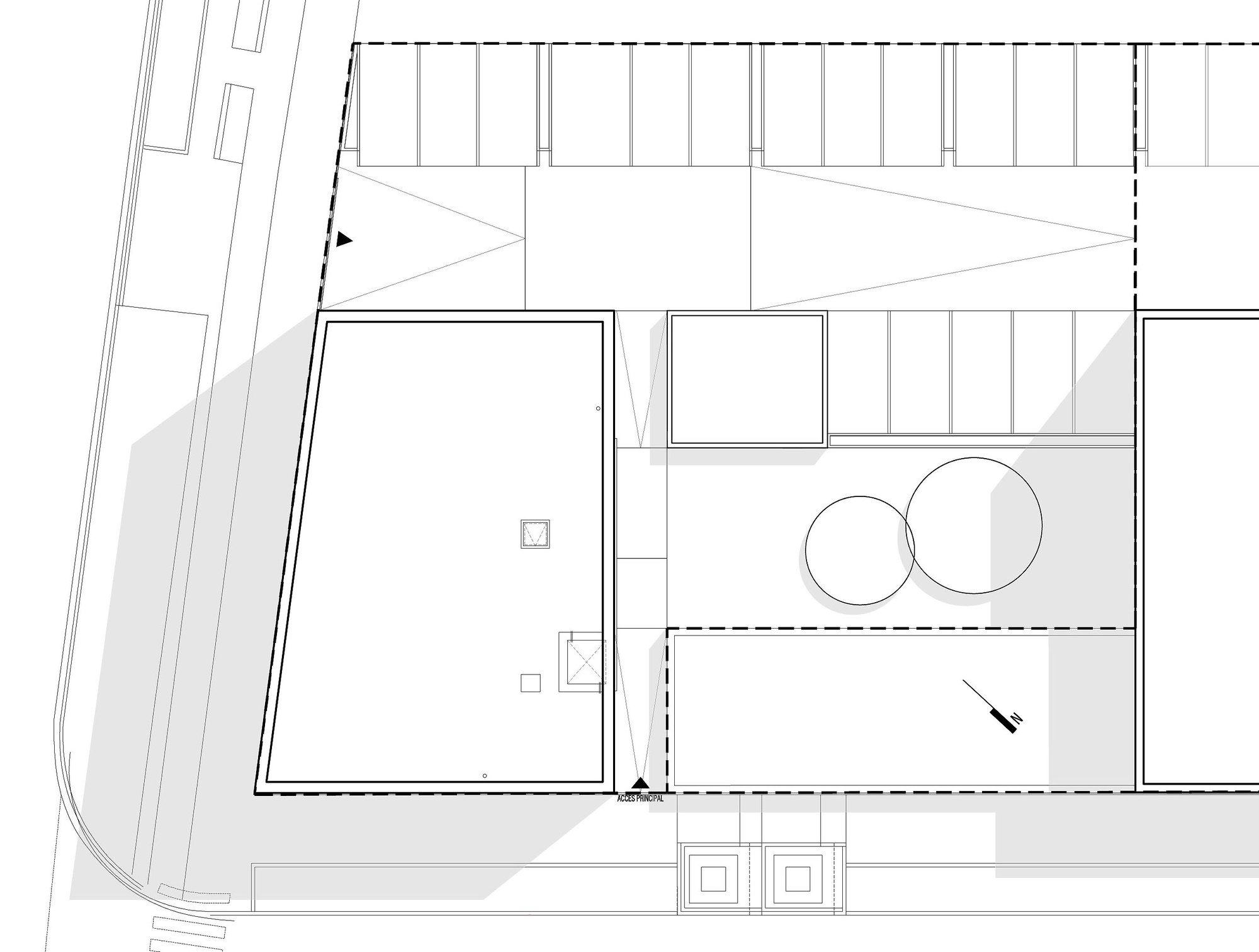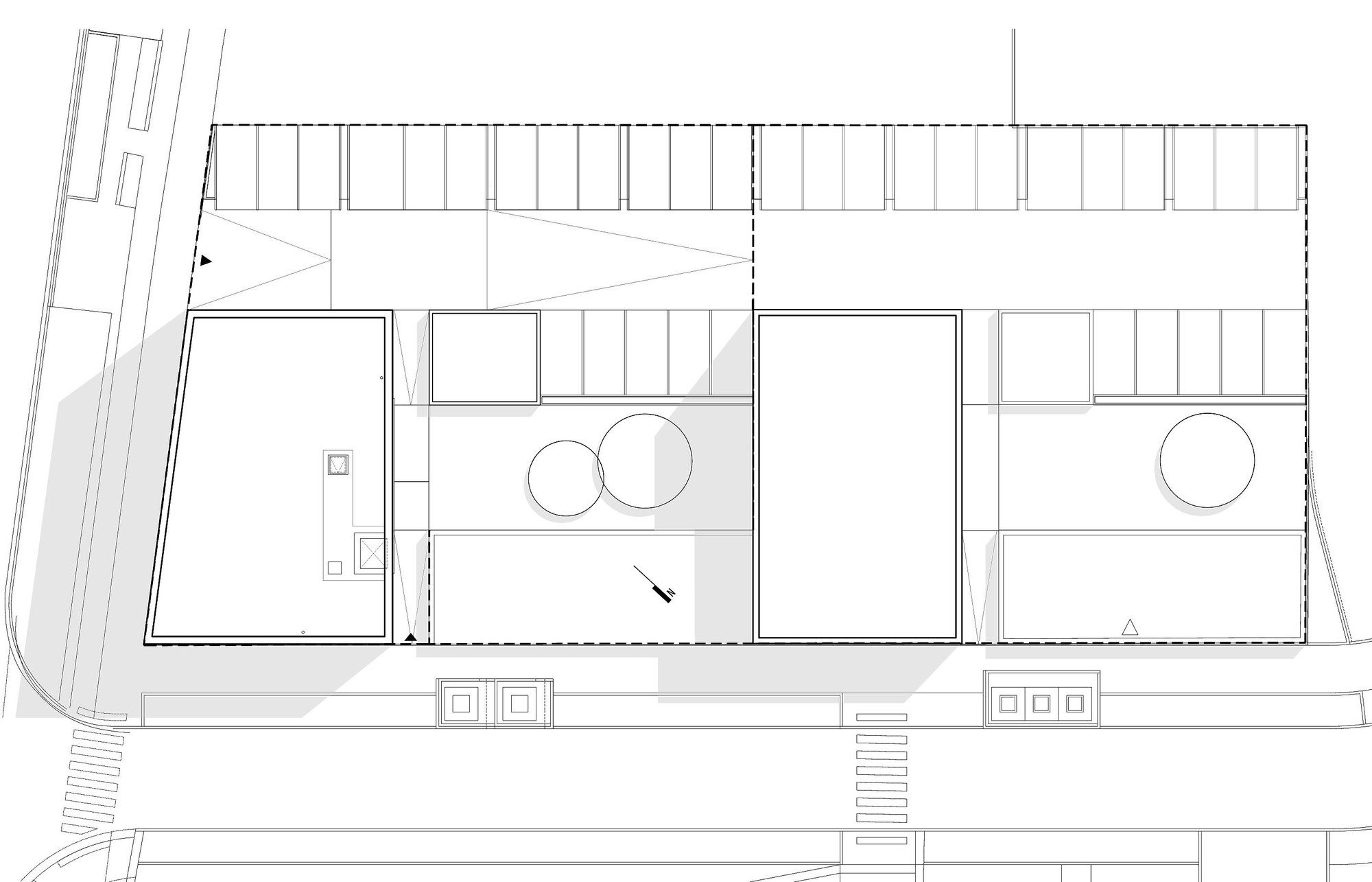


Floreal Apartments, The site hosting the project is located in St Nazaire (France). The plot is rectangular in shape, its small side aspecting the S. Bernhardt Lane and the large side aligned on the Broodcoorens boulevard. The north-west dividing line separates the land from the second part of block, which will later be urbanized, and also intended to accommodate a housing program.
© Xavier Brunet
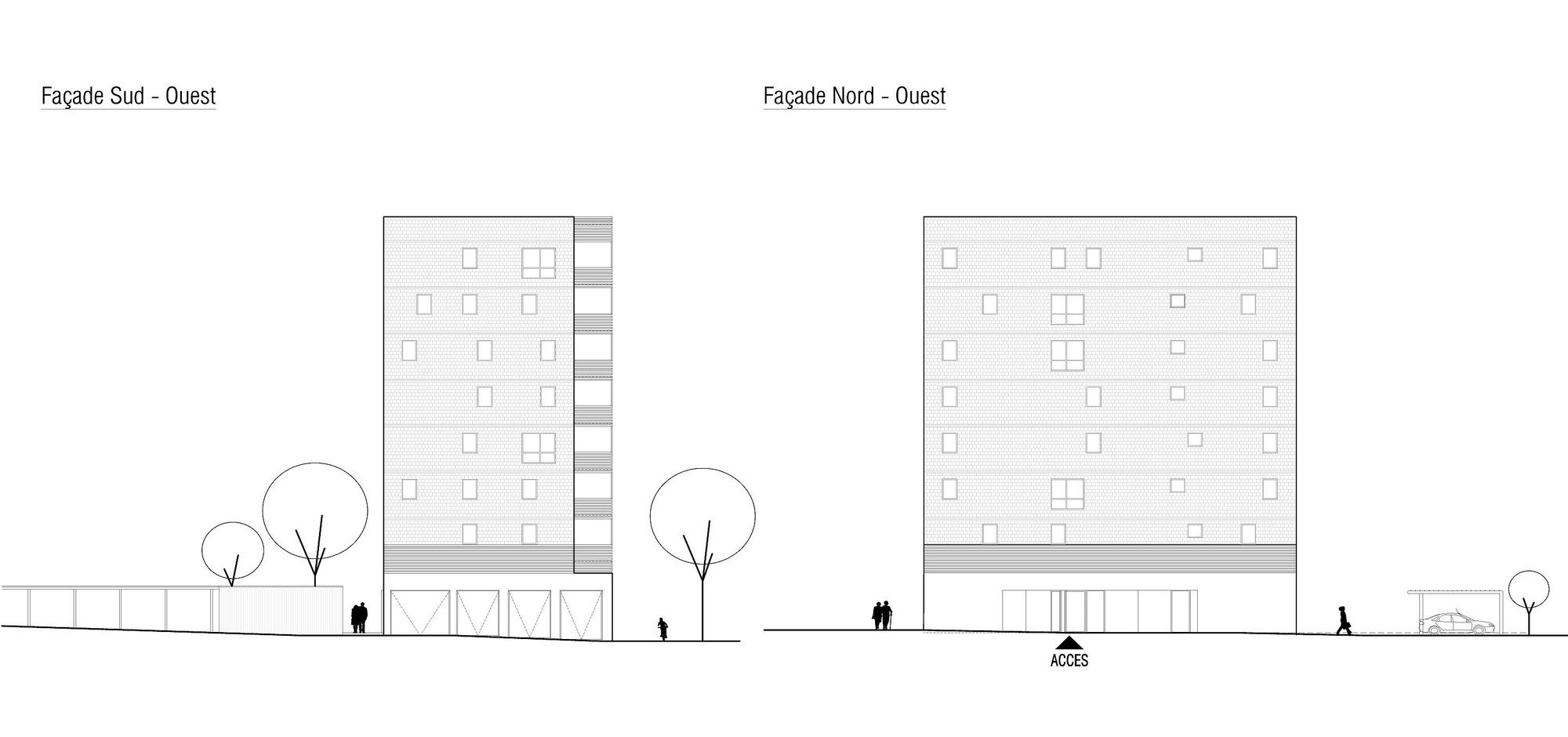
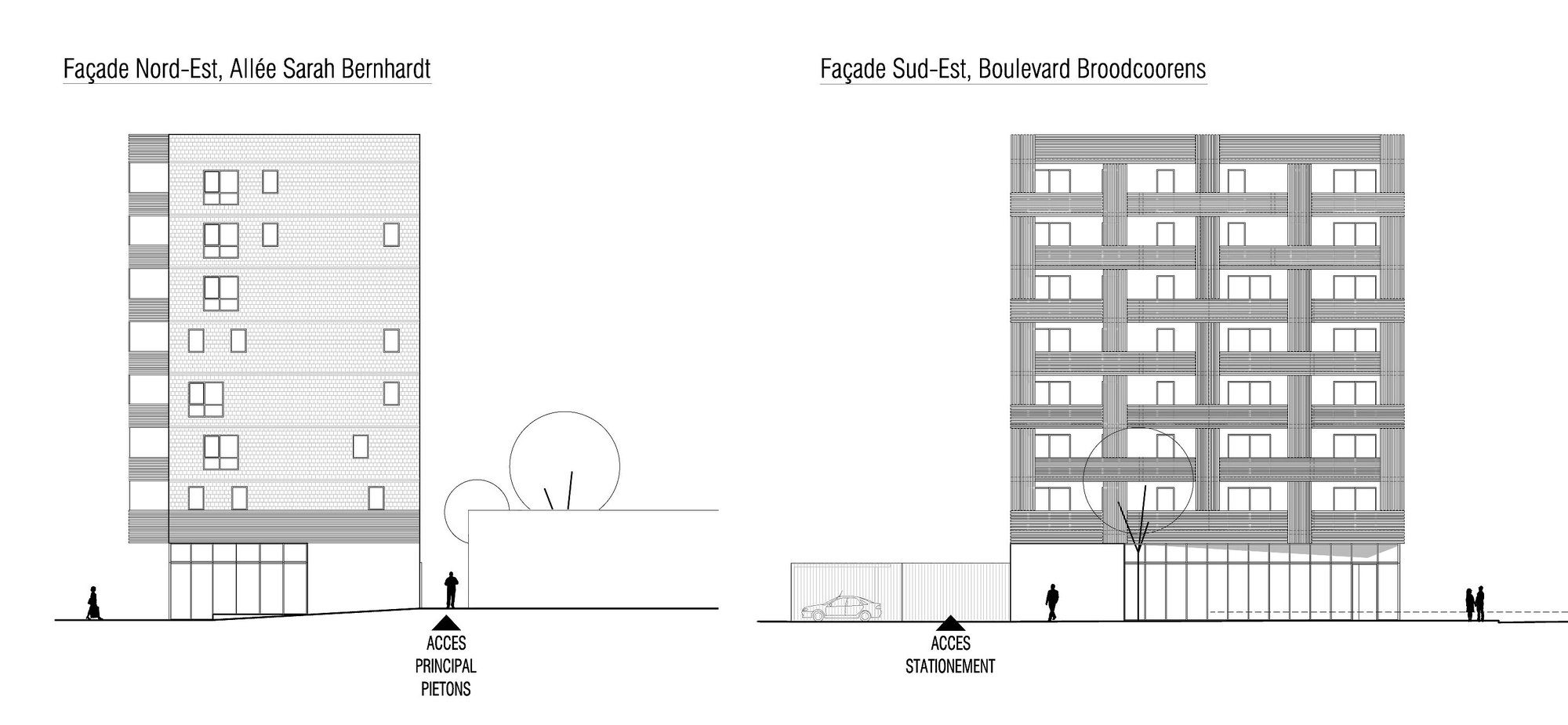
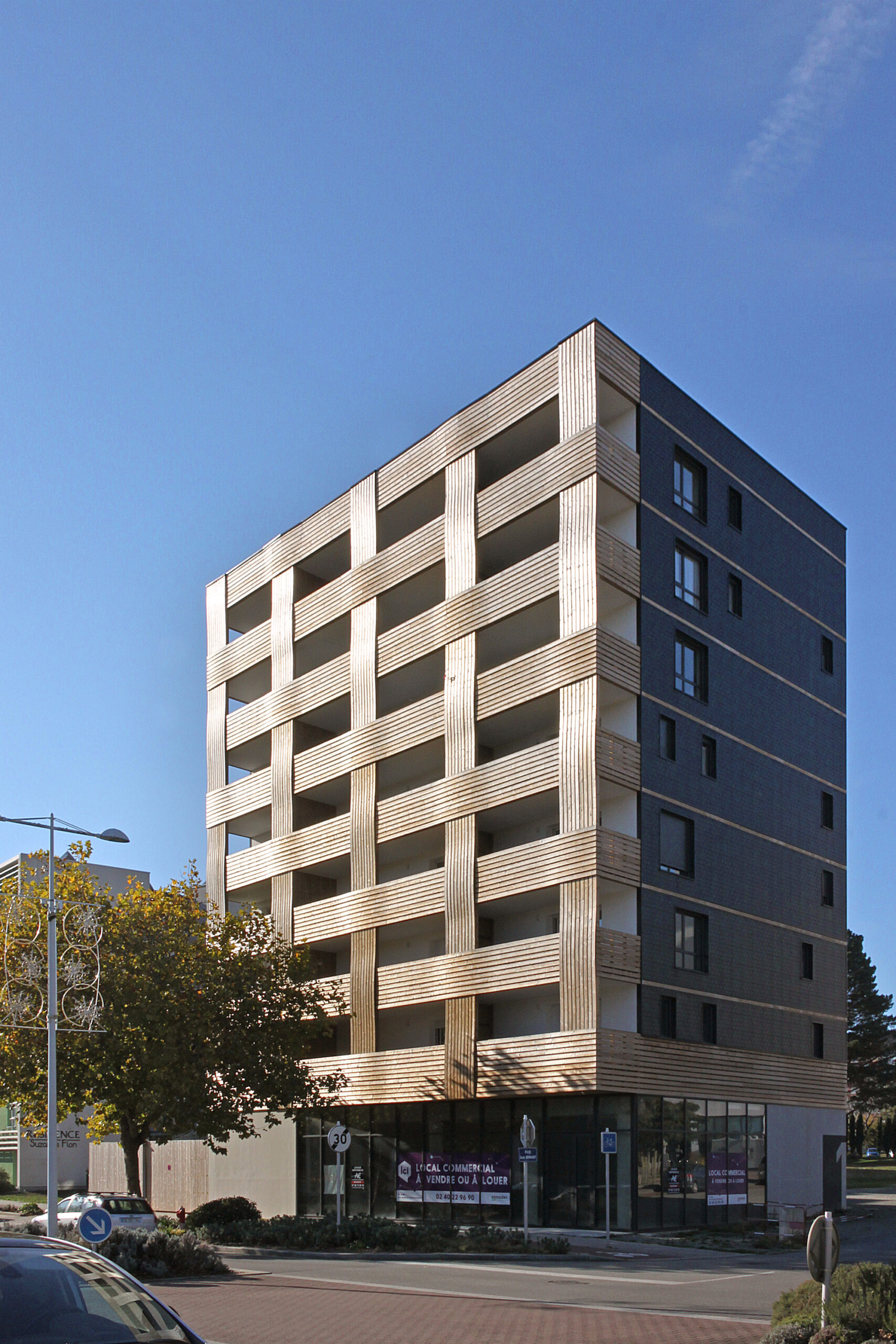
The prime quality of the site lies in this positioning angle which gives it a potential role of urban signal and, also, completion of building up frontage of the market place. The built surface is concentrated in the first two thirds of the linear on the boulevard with a first third southwestern side reserved for access by cars and two wheels. Pedestrian access, that is to say the main access of the residential part is organized on the north-east side, in S Bernhardt lane.The ground floor hosting a commercial area, it is located at the corner of the building.
© Xavier Brunet
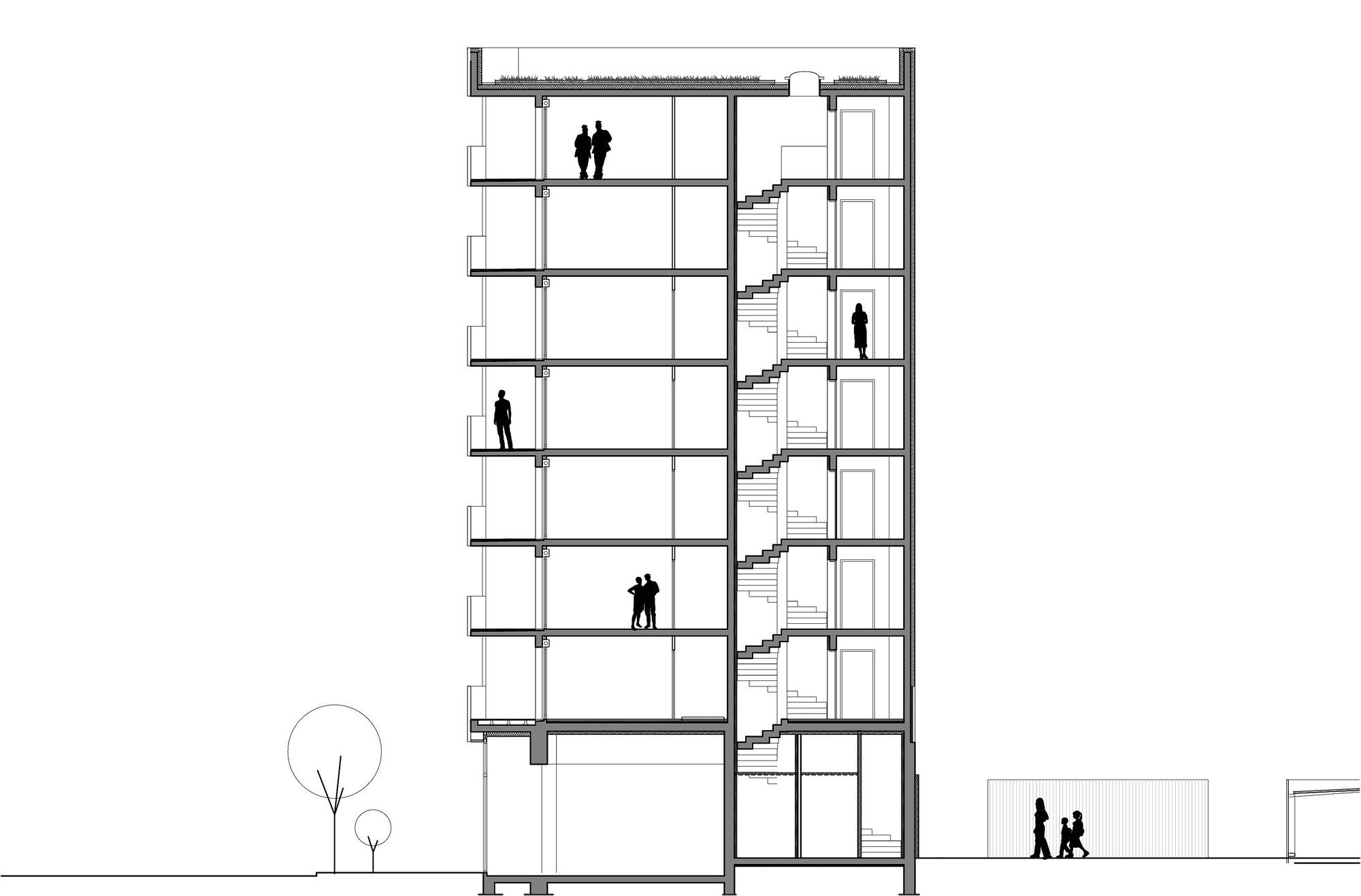
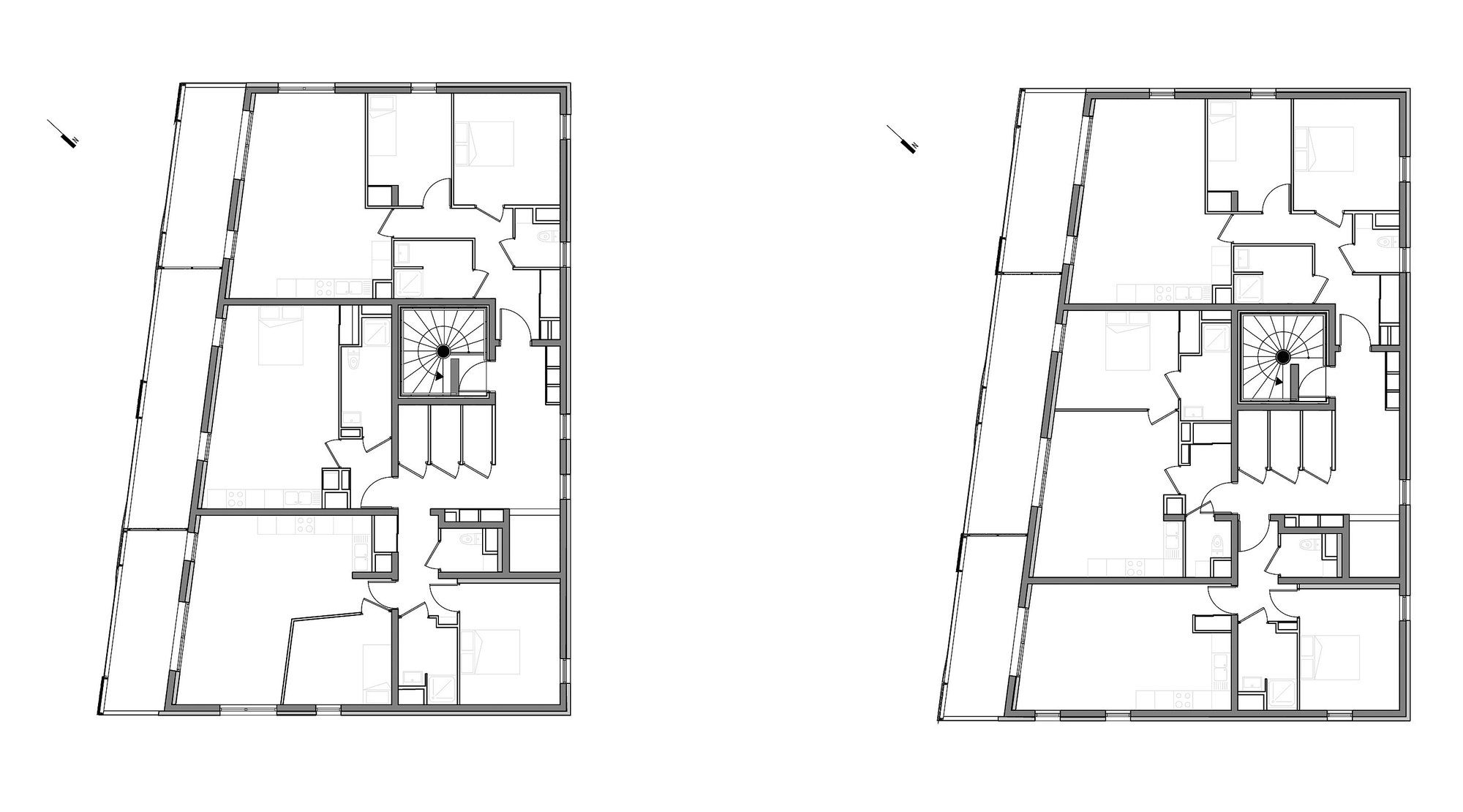
The project proposes a slender form to R + 7 on the basis of a commercial ground floor.It is a simple form that proposes to simply extrude the footprint of the land, slightly trapezoidal at this angle. The volume is compact but has the particularity of being hollowed out throughout its south-east facade. Its relatively high height compared to the direct neighbors makes it possible to mark the angle of the urban composition to a place where the public space expands to accommodate the market and other events.
© Xavier Brunet
The hollow work on the Broodcoorens facade fulfills two concomitant goals of sun protection and intimacy. The writing of the project implements 3 complementary registers. First, the ground floor level of the main building is composed of walls of rough concrete and glass.The second register consists of a wooden work “canage” which comes to create “the face” of the project. This is an oversized frame composed of wooden strips that intersect at each level both vertically and horizontally to simply evoke a job of caning, braiding.This work of the material aims to recall the lightness and the domesticity.
© Xavier Brunet
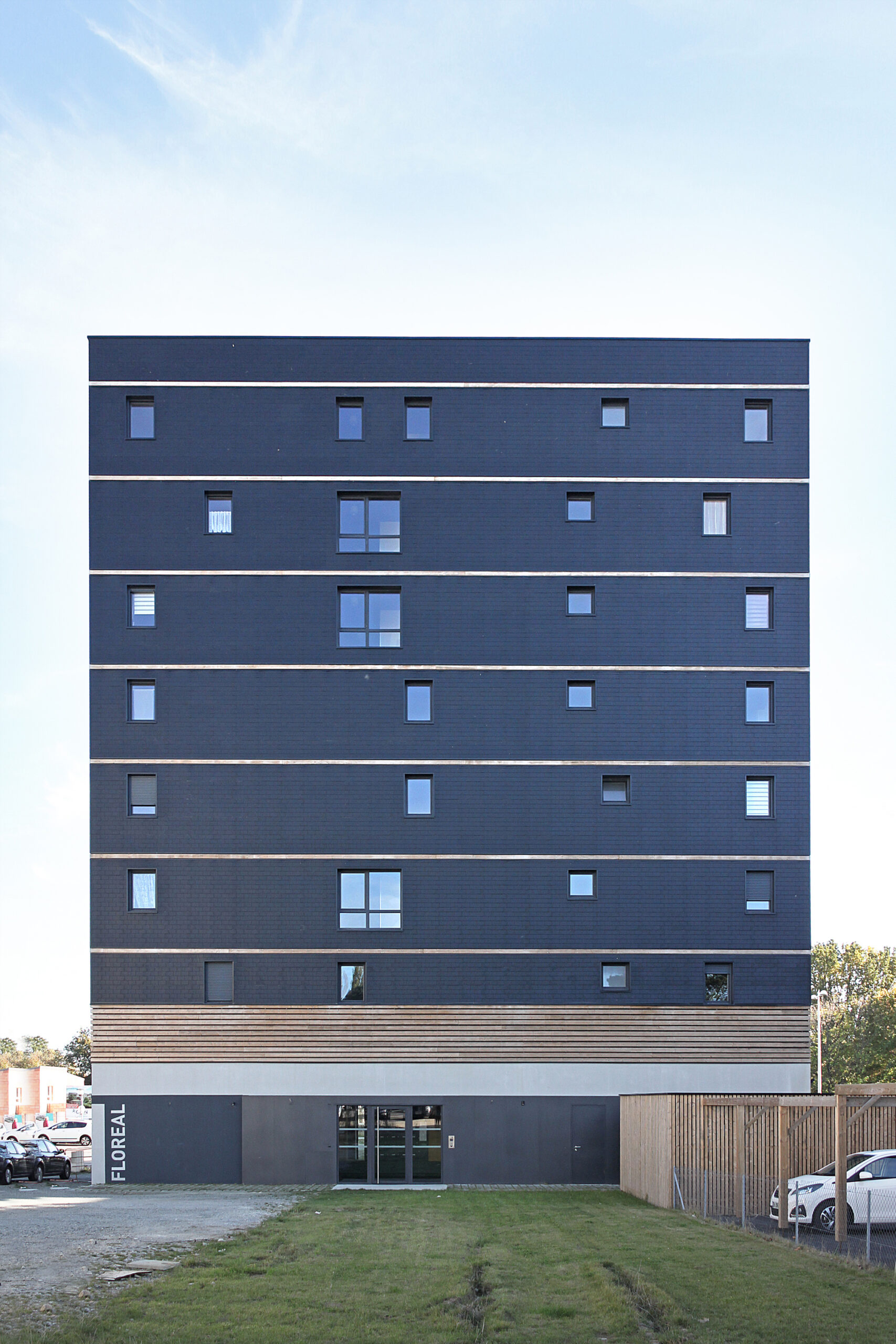
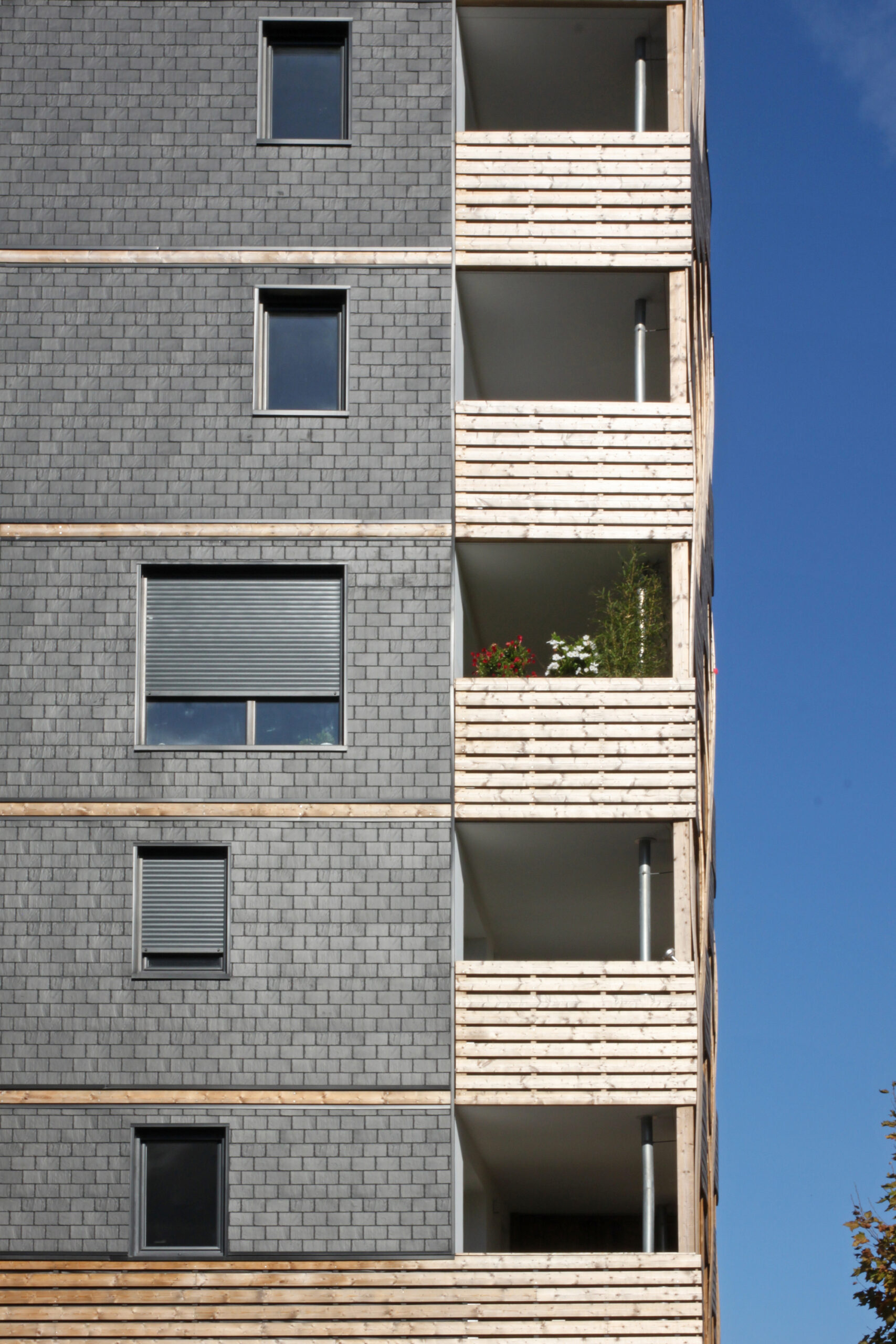
Finally, it is proposed to treat the other facades with a coating, a skin in some sort, which is shaded and rough so it marks a strong contrast with the flexibility and smooth appearance of the wood. The choice is on molded resin panels whose relief recall the traditional local slat. The junctions between panels are invisible and all details are studied in tone-on-tone metal profiles.
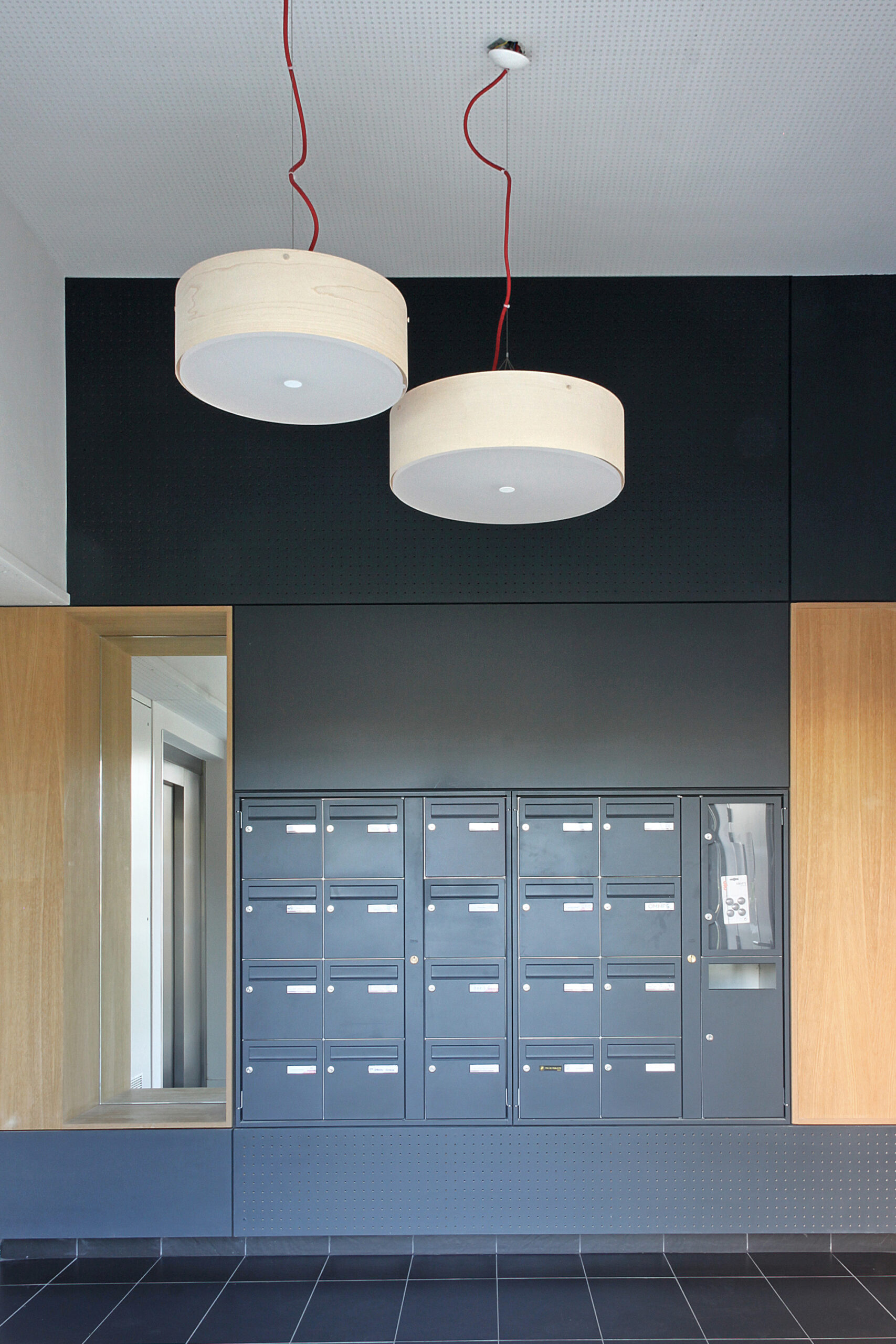
© Xavier Brunet
Between the two previous registers, a dialogue opens through wooden spars that surround the building on three sides. First, the wide cane band that covers the glass strip of the trade is invited around the building, then, in the upper levels, one of the wooden boards composing the south balconies is continued on the three facades and marks the level all by lightening the overall mase of the building. The panels will be charcoal gray, the wood will be left in the natural state (Spruce).
Project Info
Architects: jba
Country: France, Saint-Nazaire
Area: 2240 m²
Year: 2017
Photographs: Xavier Brunet
Manufacturers AutoDesk, Carea mineral composite: AutoDesk
Clients: CISN
Lead Architects: Jacques Boucheton, Marianne Fayolle, Raphael Picaper
Engineering: ALBDO
Structure: BETAP