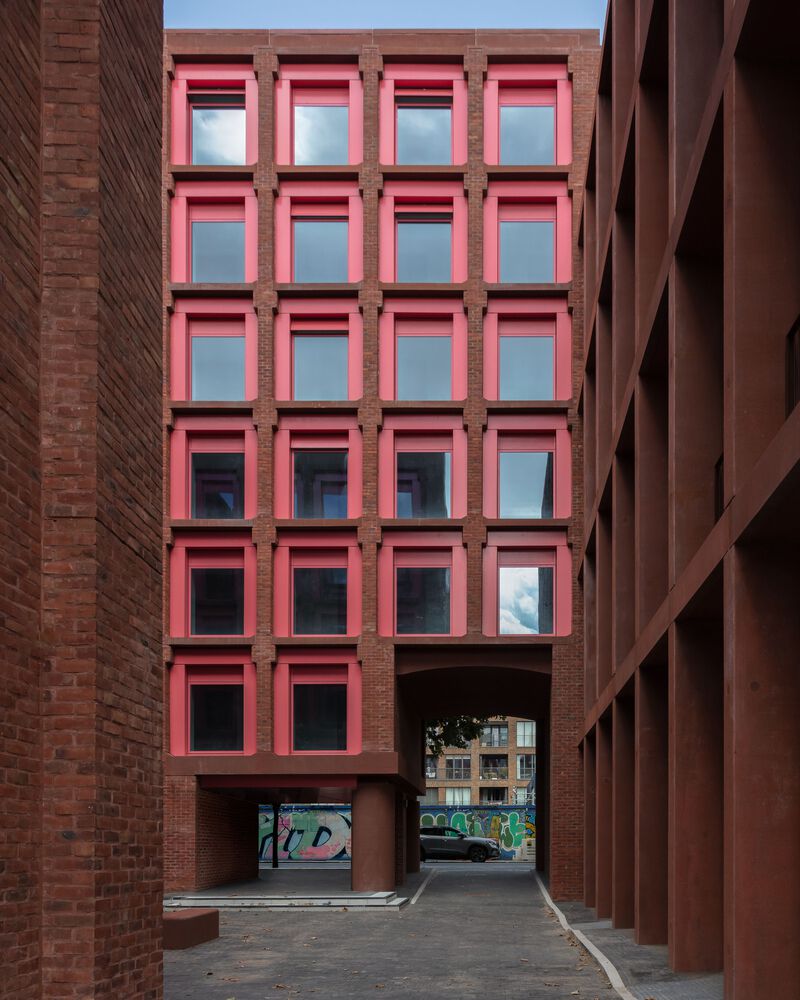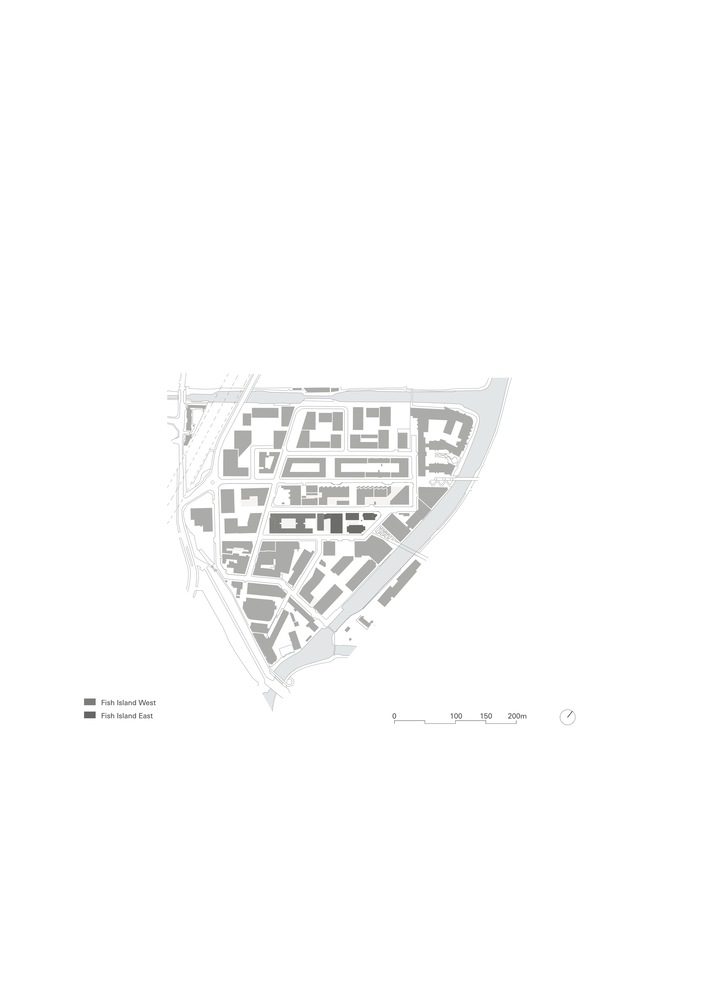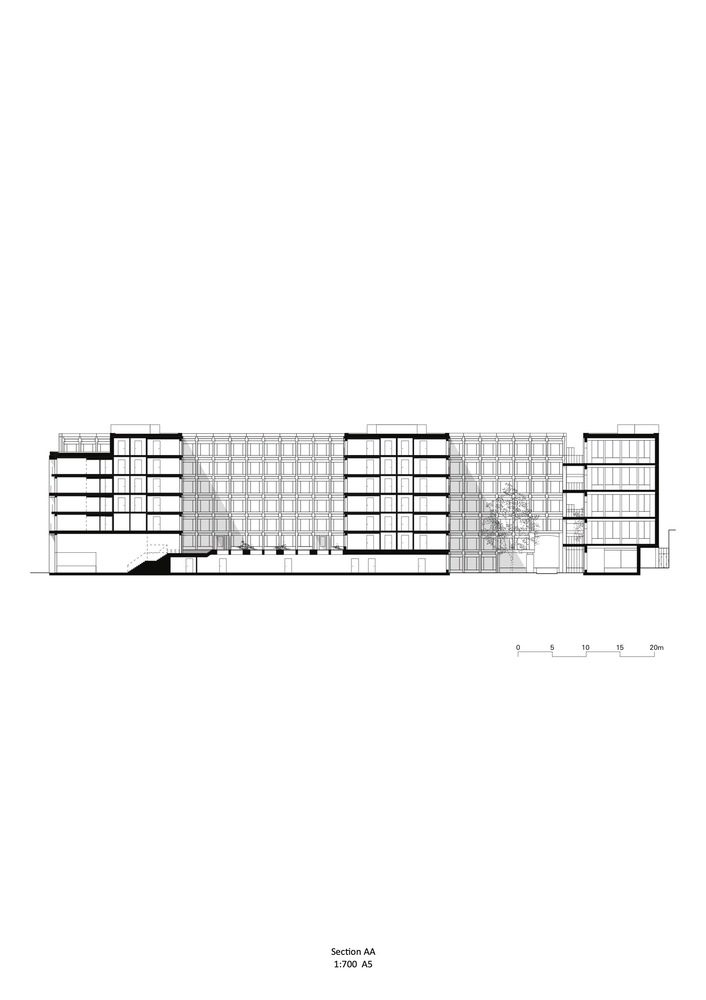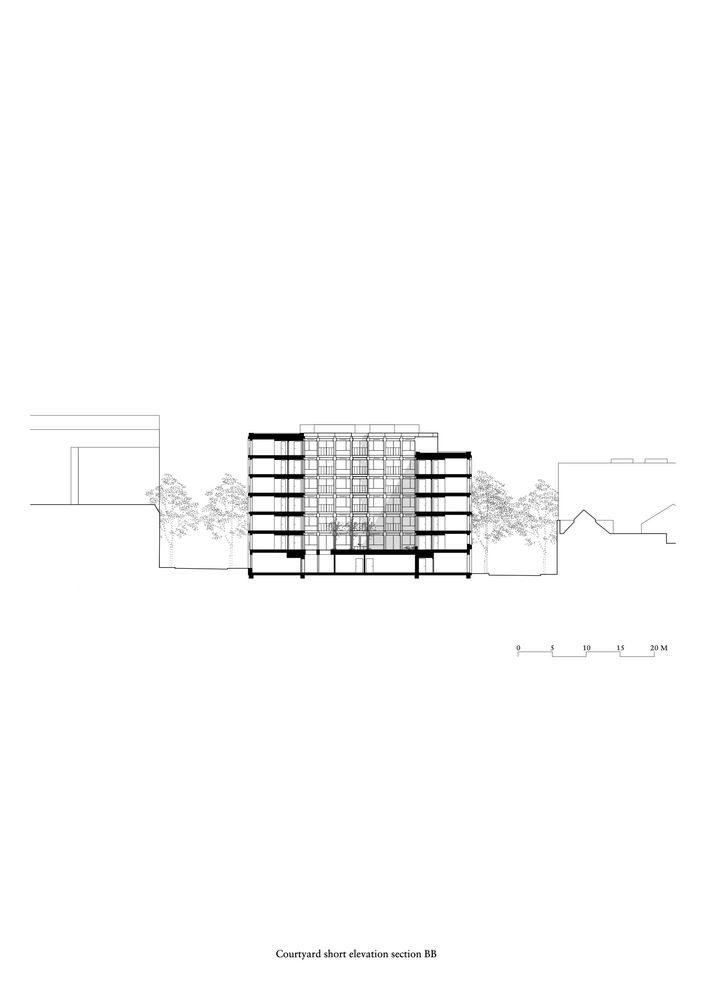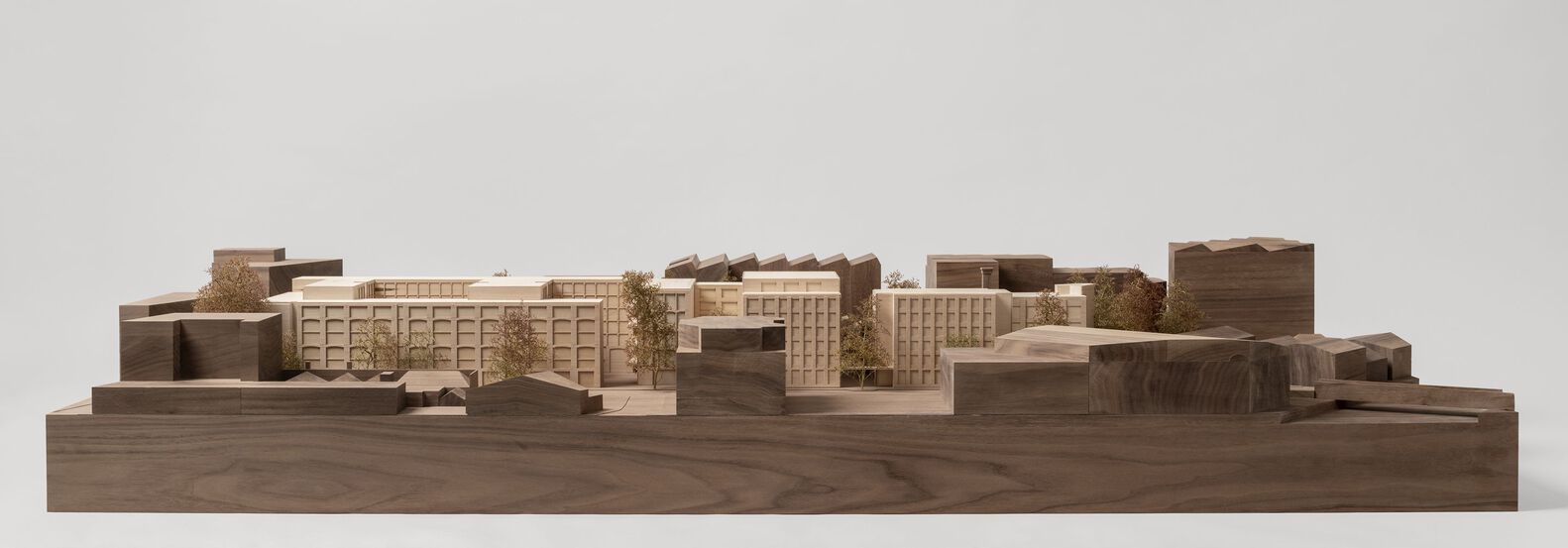

Fish Island is a mixed-use scheme combining homes, workspace, and teaching and learning space for higher education. Fish Island was commissioned as two projects, ‘West’ in 2018 and ‘East’ in 2021. The site is the former John Broadwood & Sons piano factory on Fish Island in Hackney Wick, an old industrial neighborhood bounded by infrastructure – the A12 dual carriageway to the west, Hertford Union Canal to the northwest and the River Lea Navigation to the southeast, which separates the Island from the Queen Elizabeth Olympic Park. Fish Island West includes a residential building for 330 students, an incubator workspace for graduates of the University of the Arts London (UAL), and affordable commercial space. Fish Island East combines accommodation for a further 204 students, additional incubator workspace for graduates, and a building for Stour Trust, a local community organisation that provides affordable workspace for creatives.
© David Grandorge
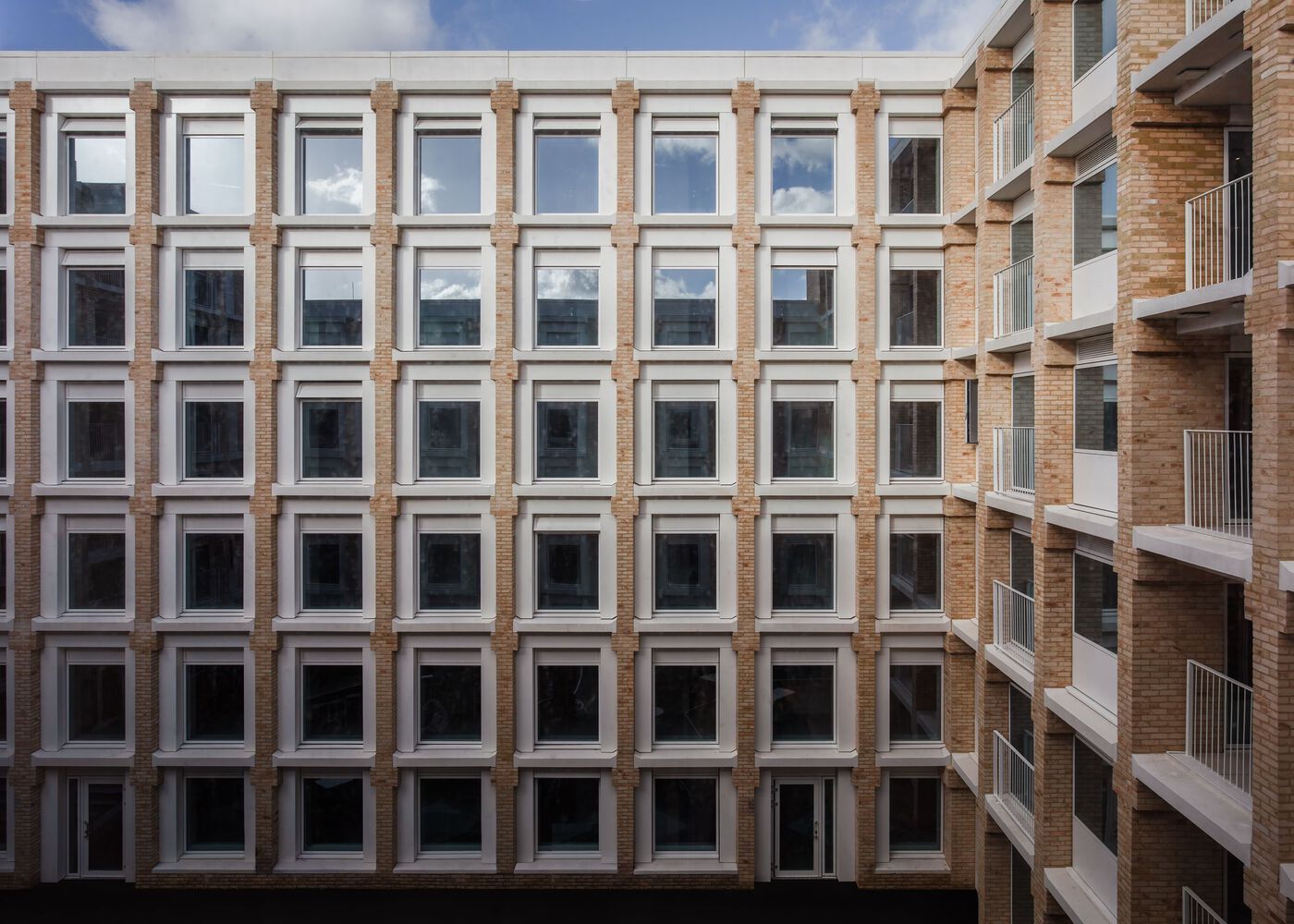
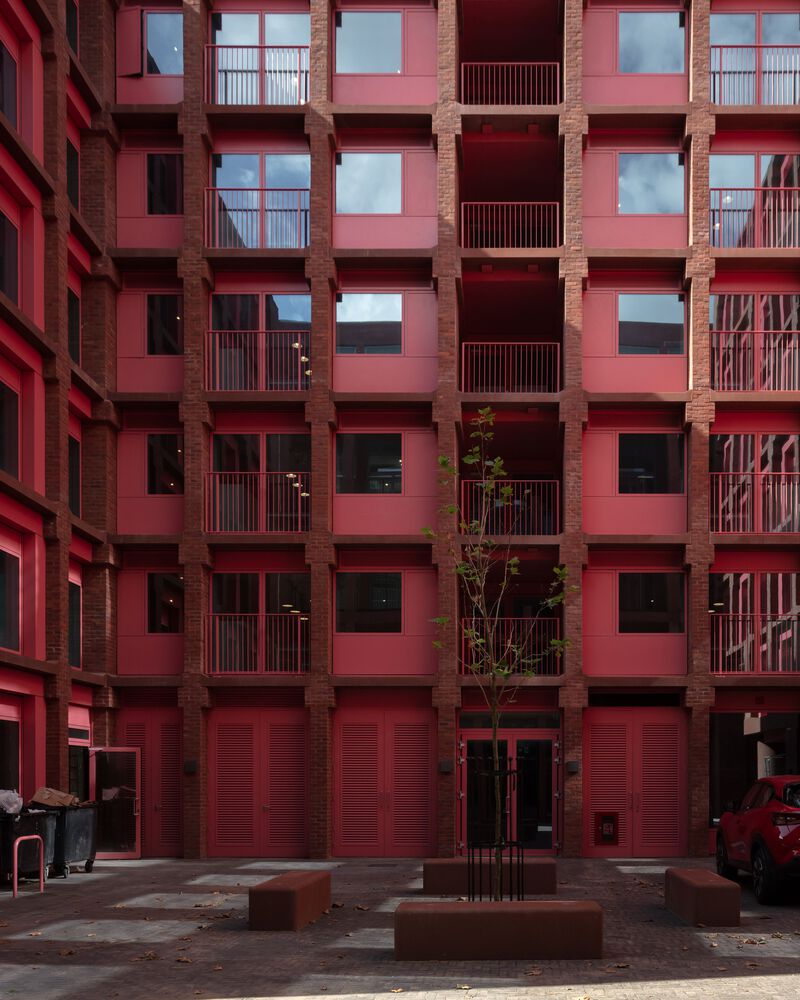
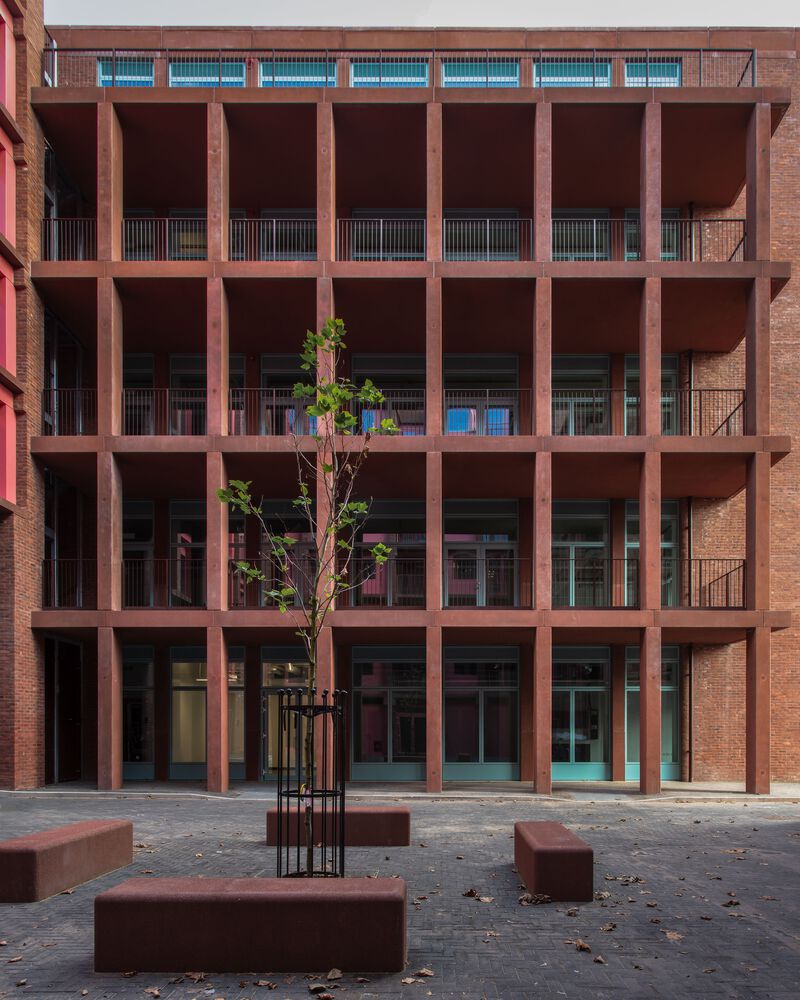
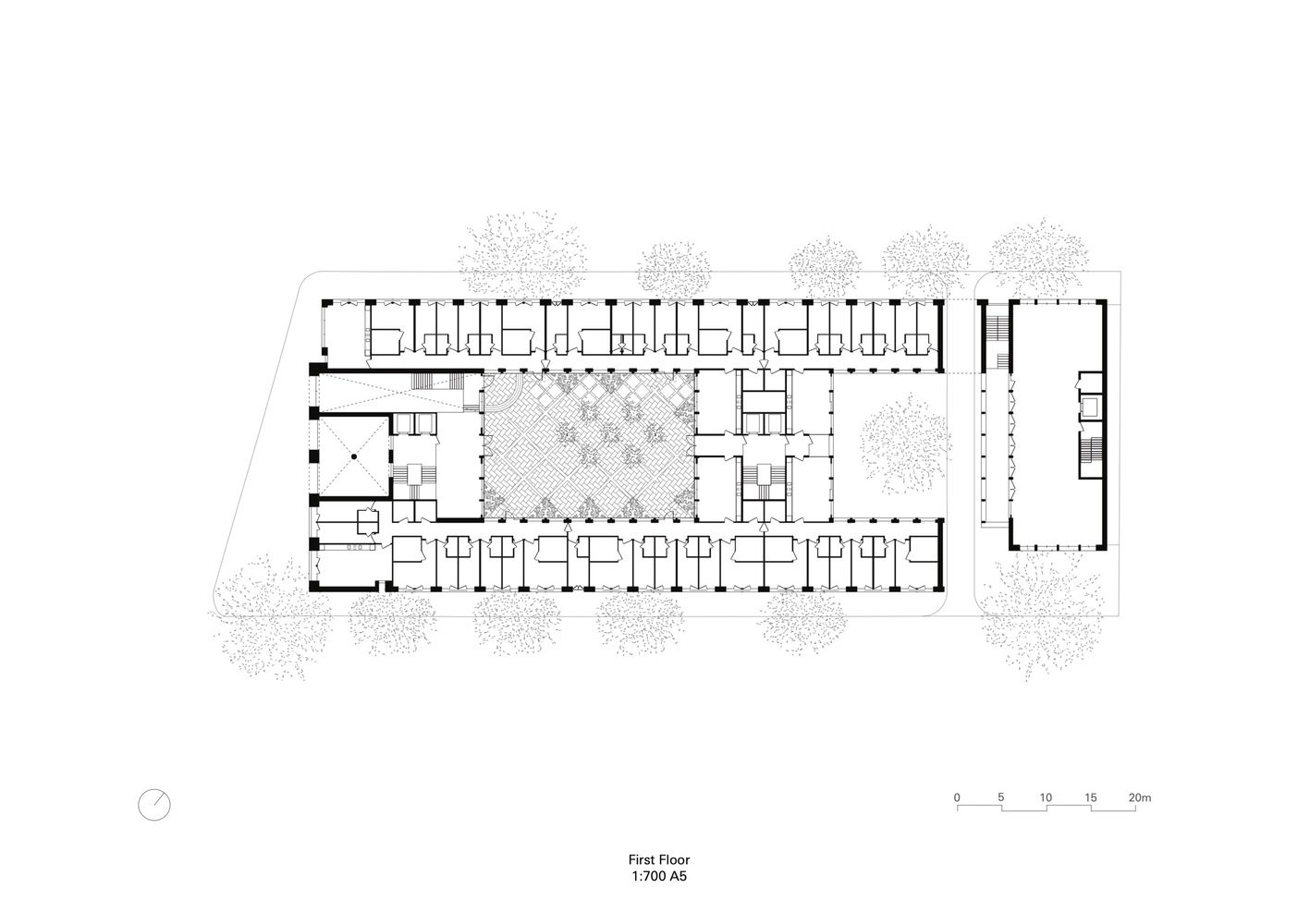
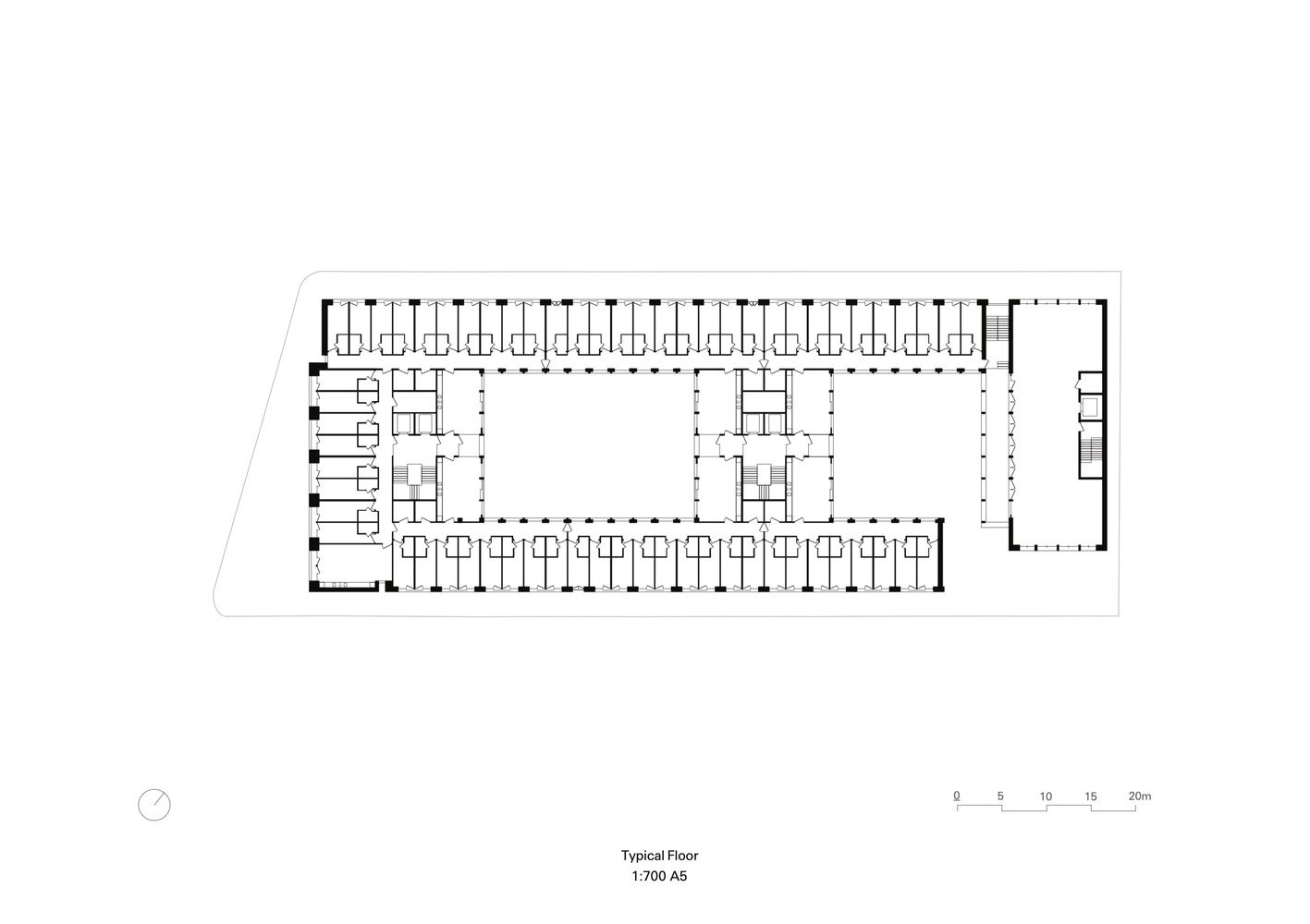
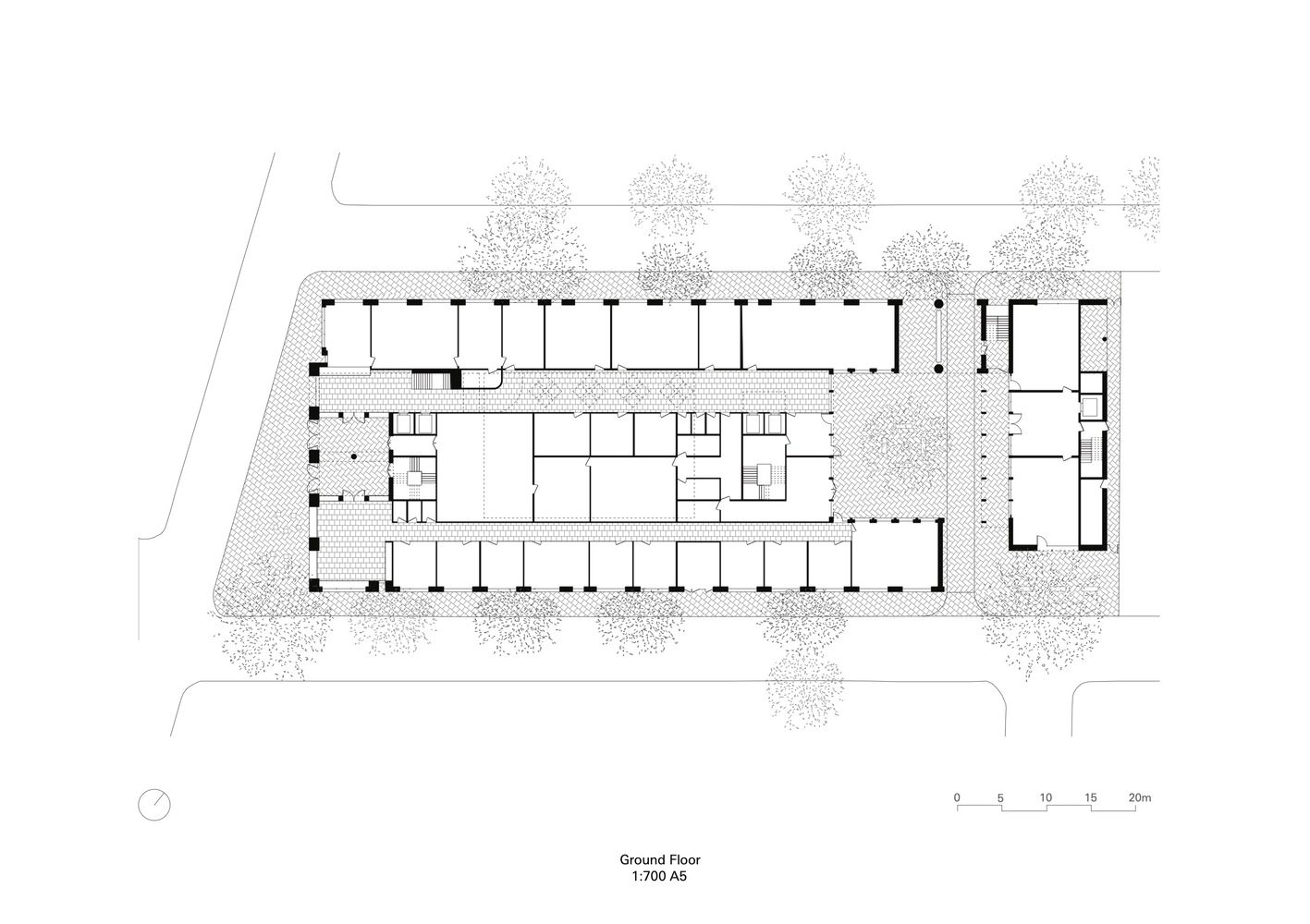
Fish Island West arranges terraces of accommodation in 37 flats around two courtyards. The first court is a private quadrangle garden for residents. The second is a public yard and a focus for the commercial studios in a separate 5-storey building flanking the east side of the space. The studios’ industrial interiors open onto working decks at each level. The yard creates the first of two public routes through the scheme. The scheme also establishes a west-facing public space in front of the main residential entrance and the adjacent historic Algha Works. Above ground, each typical floor accommodates seven flats. Bedrooms are distributed around the perimeter of the city block, giving each resident a window on the street, whereas communal kitchens and glazed circulation focus the social life on the courtyards they overlook.
© Rory Gaylor
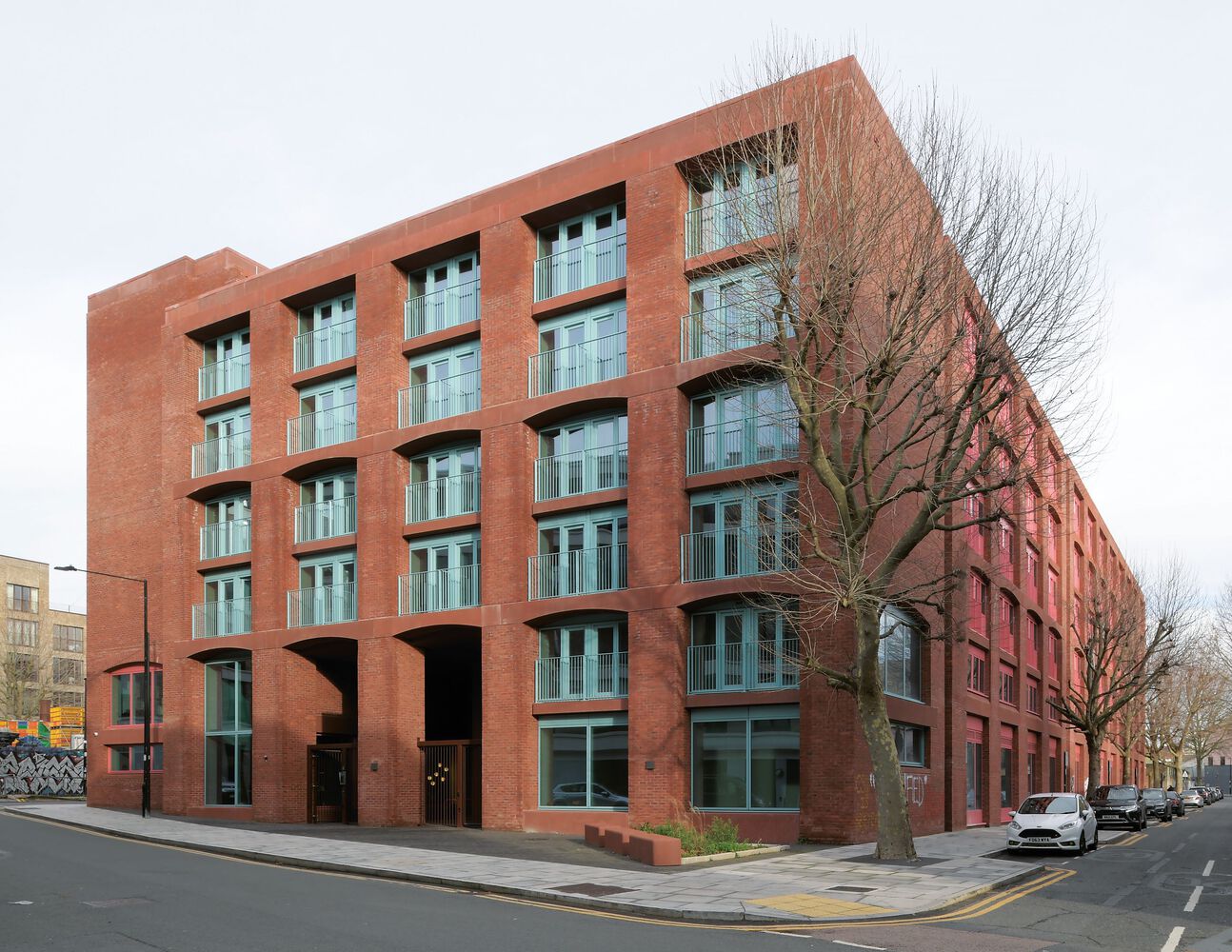
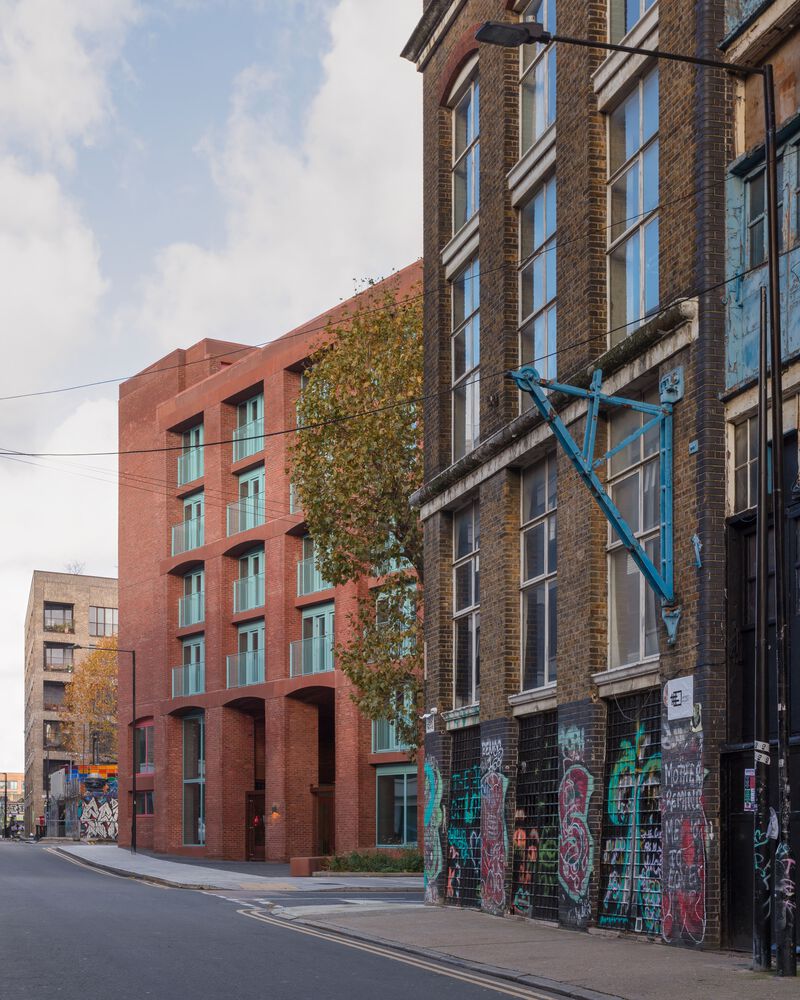
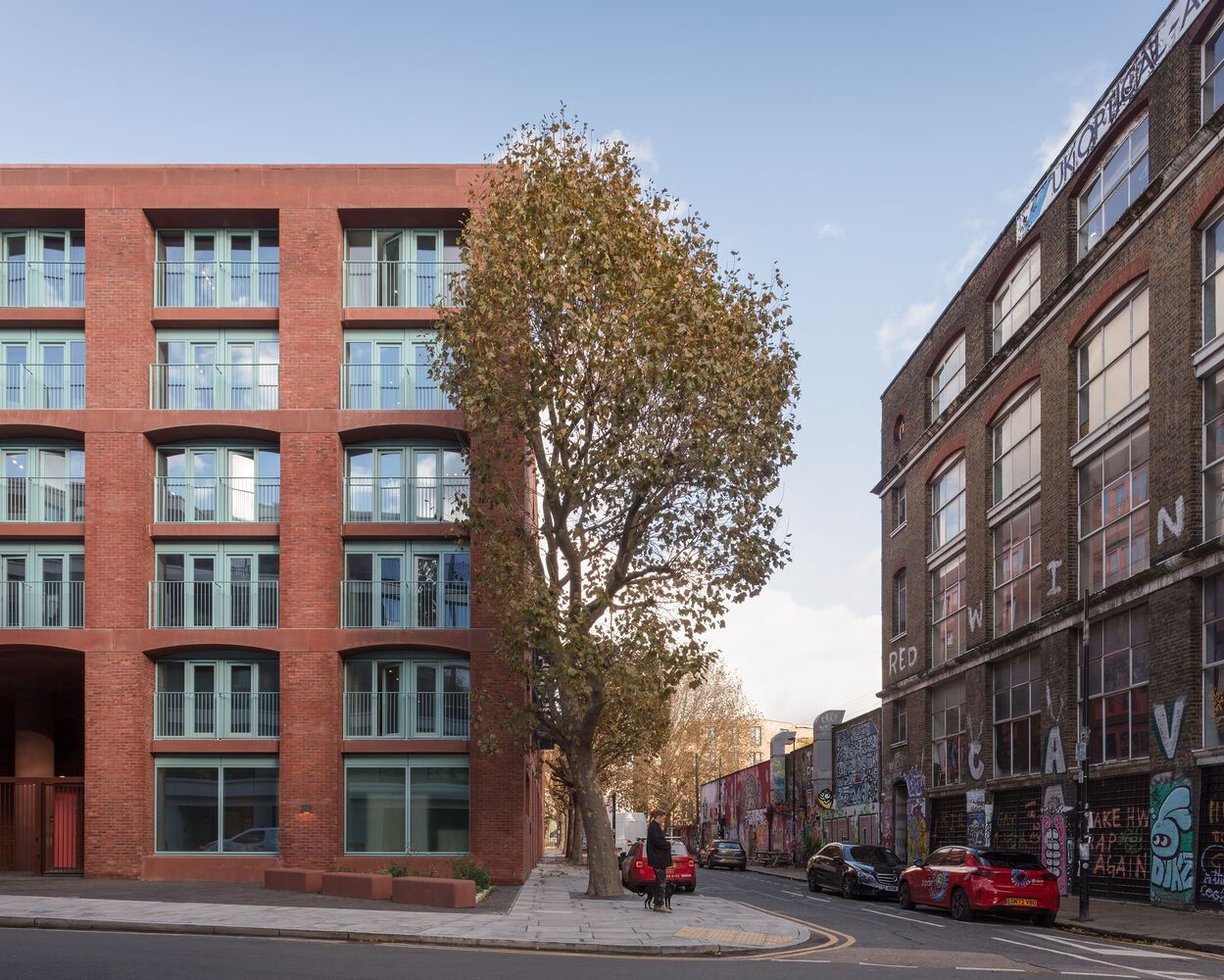
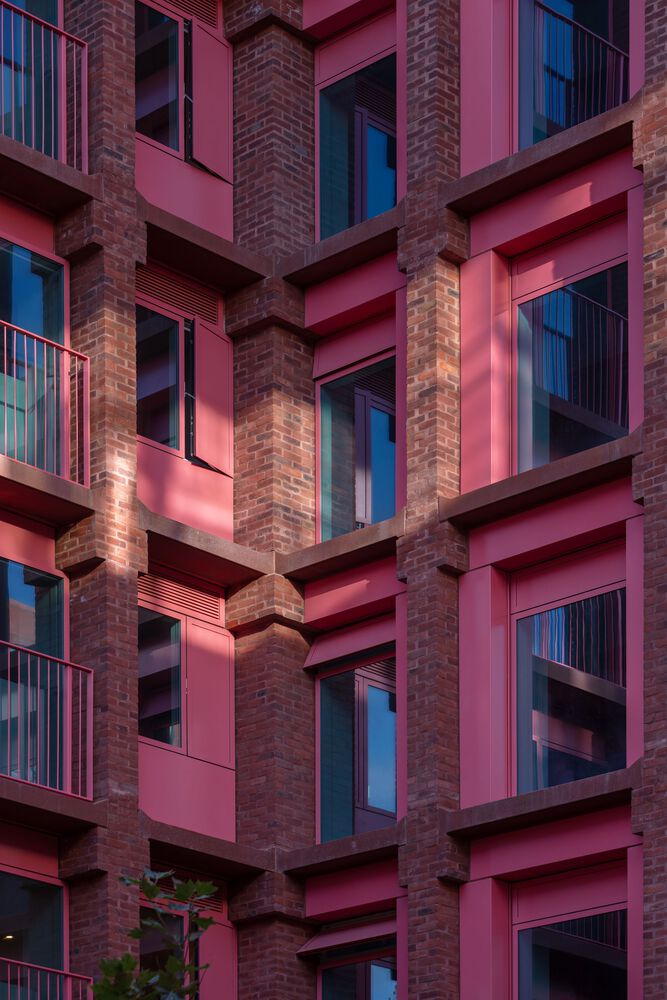
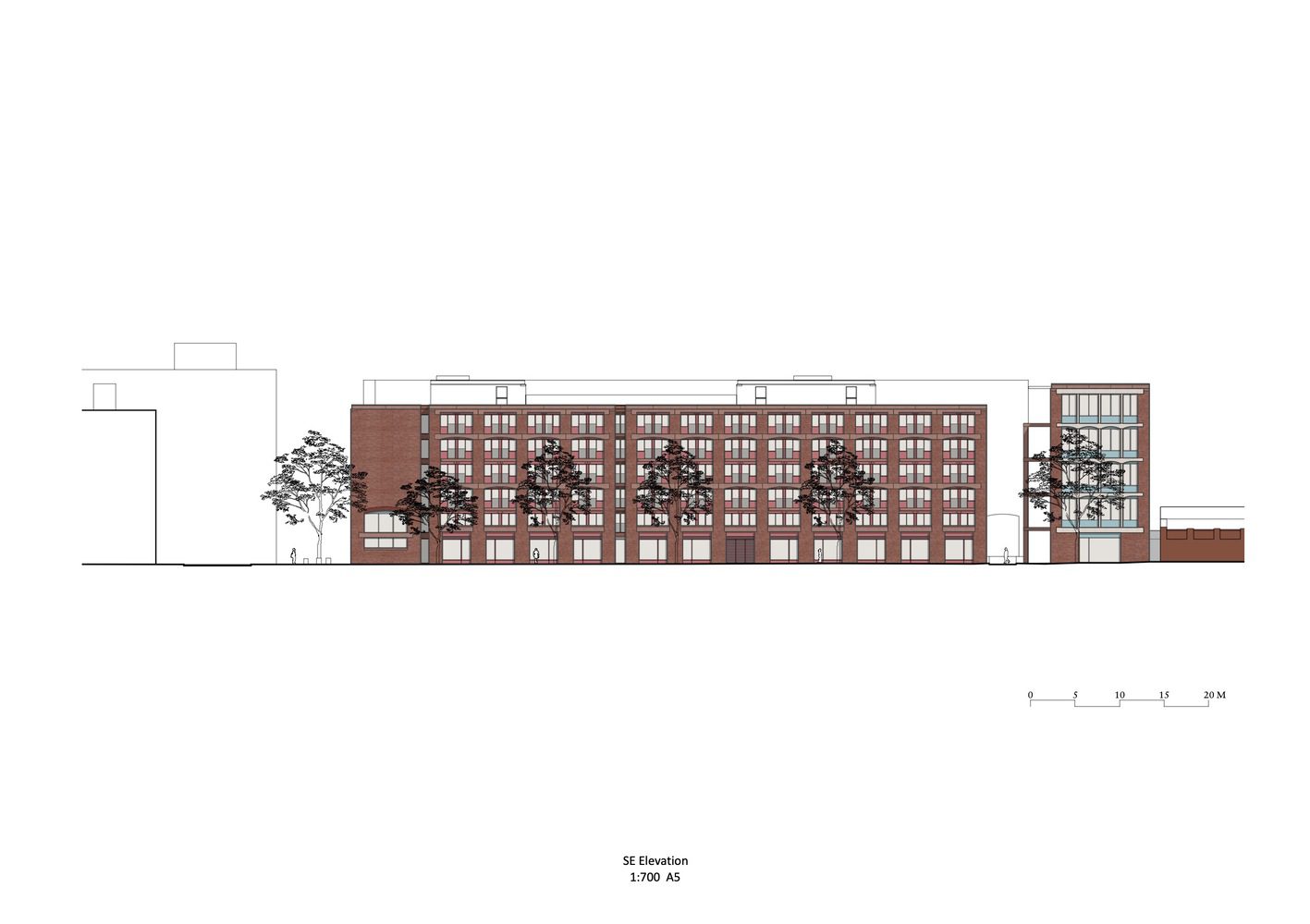
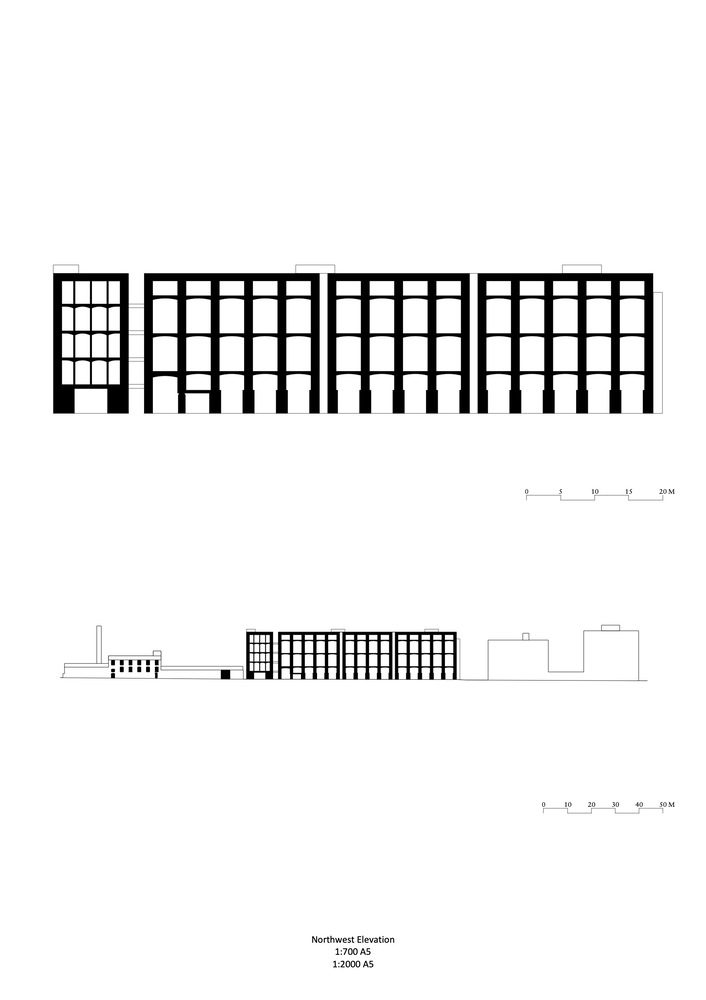
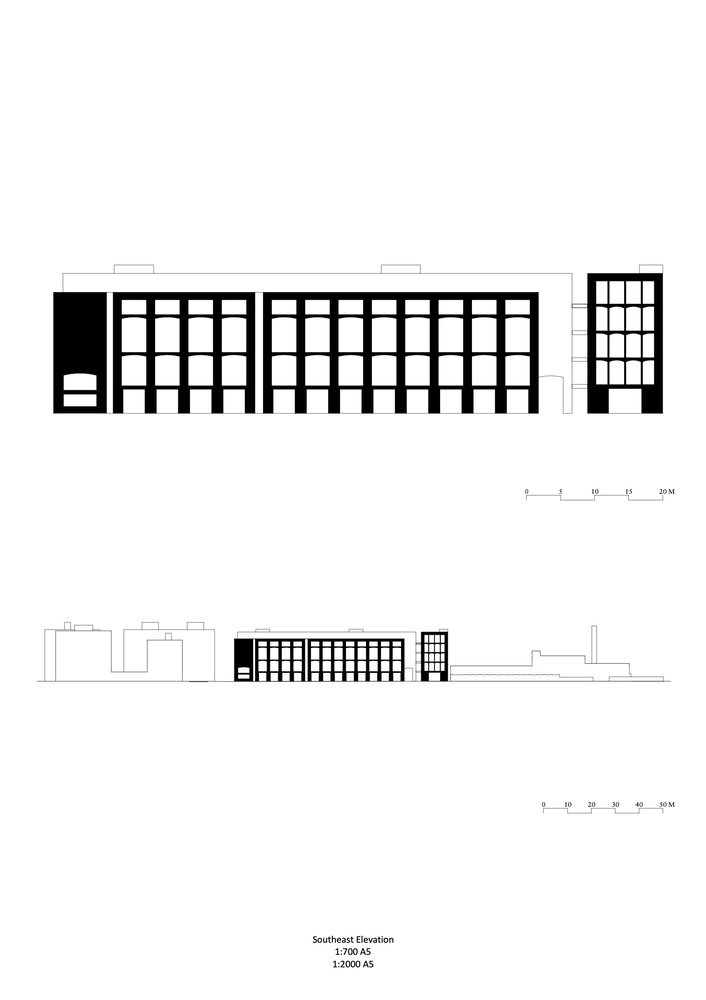
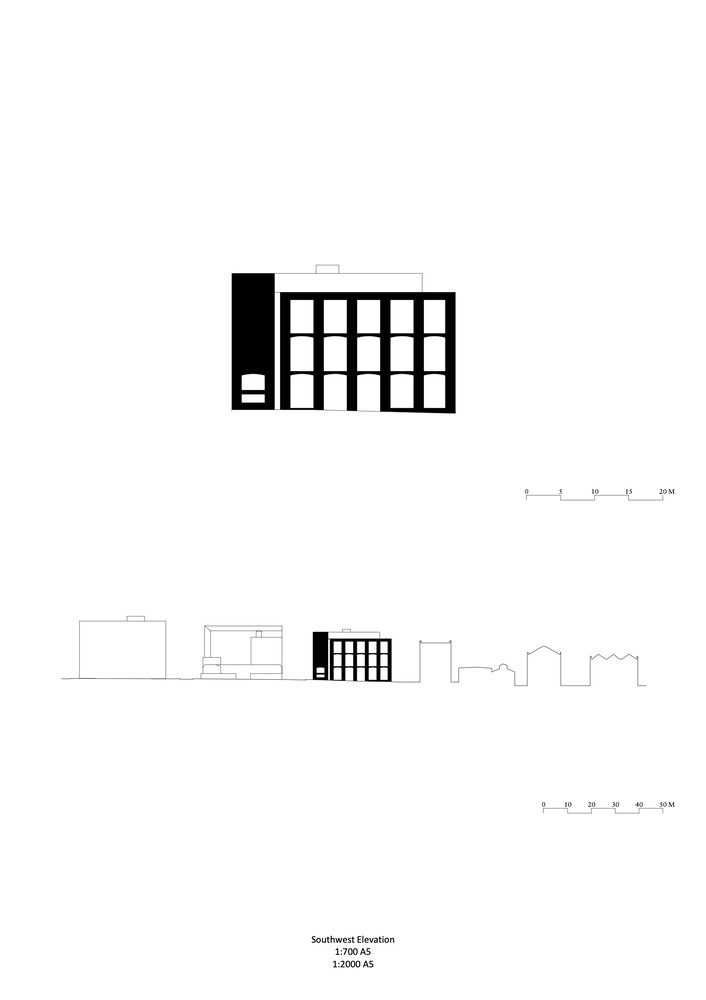
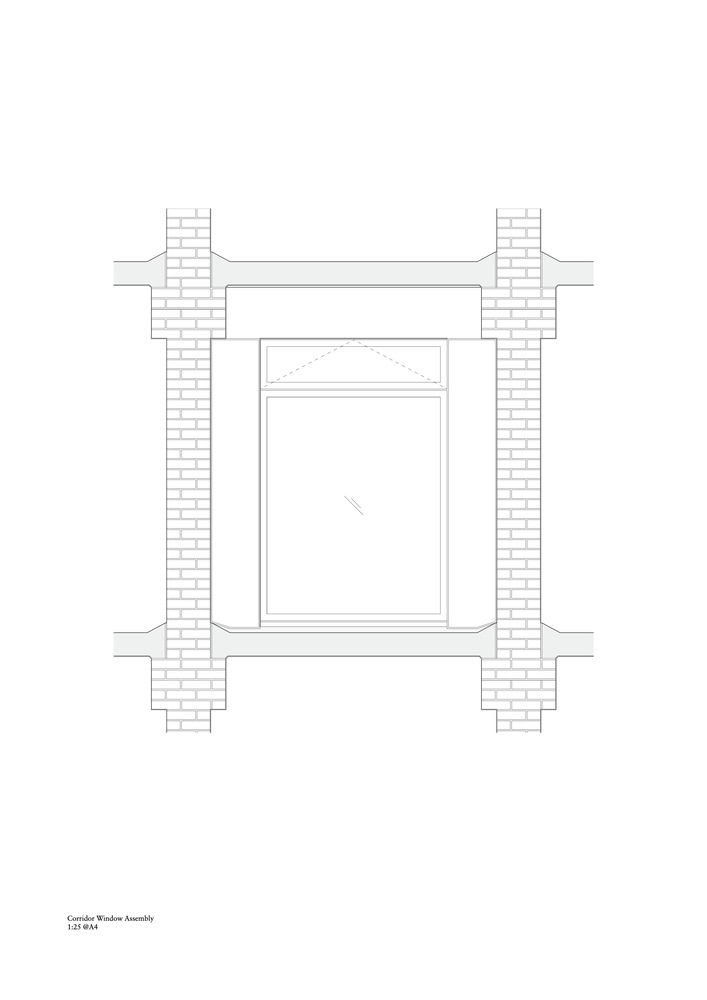
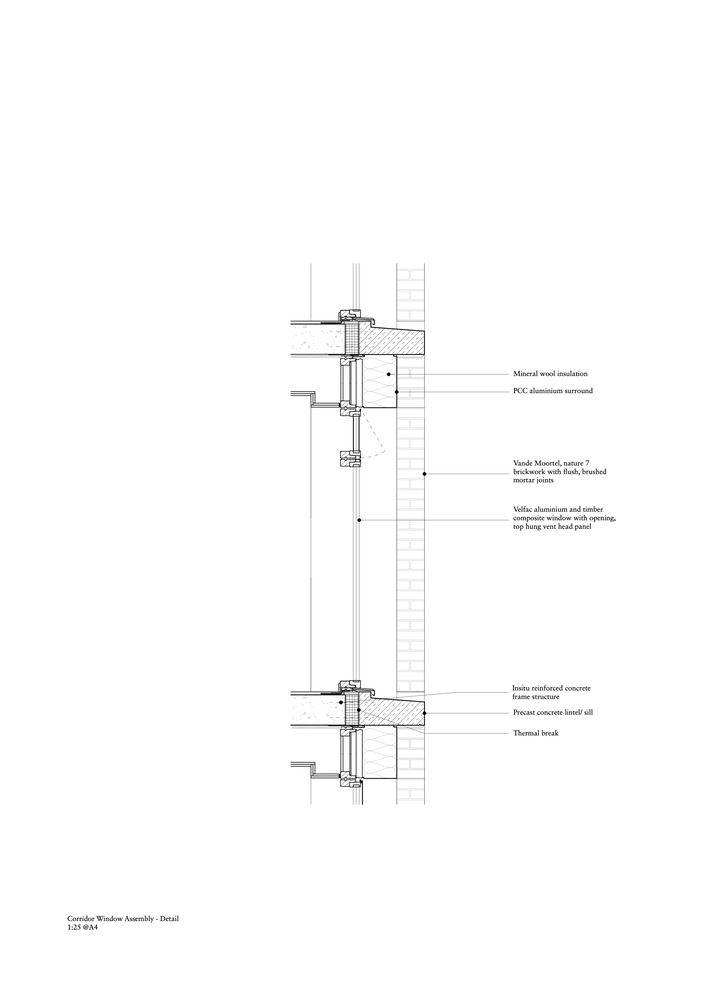
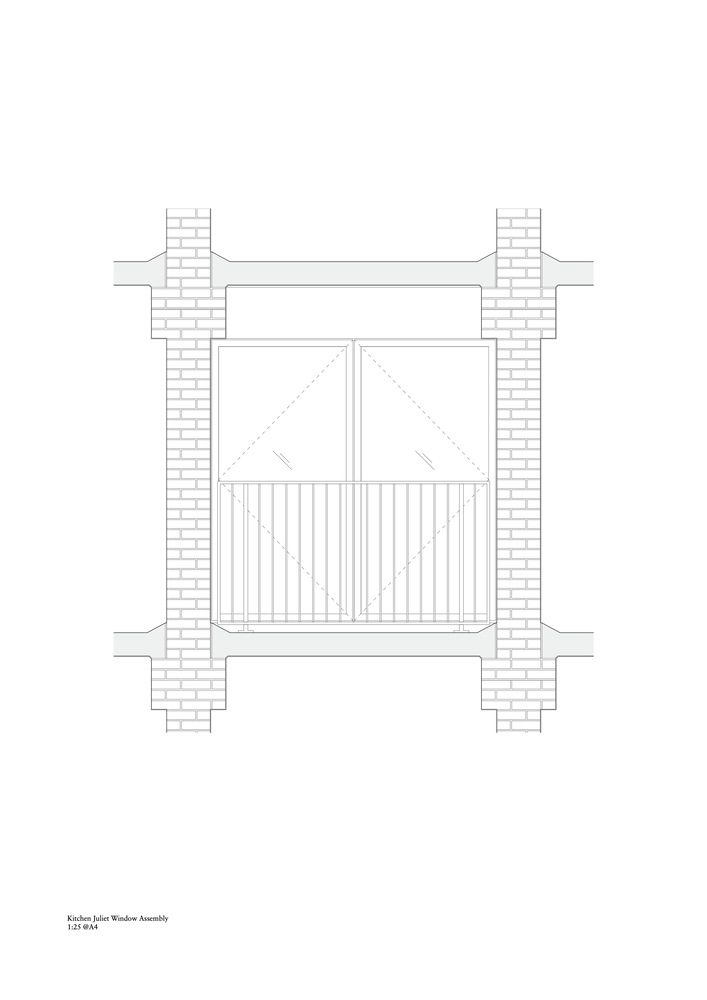
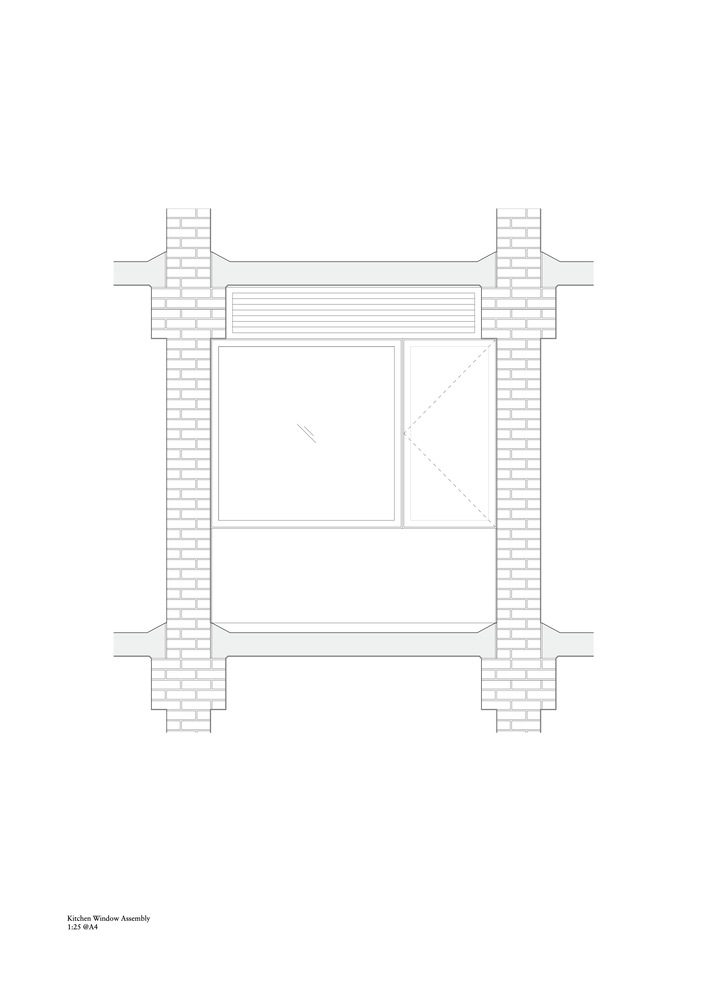
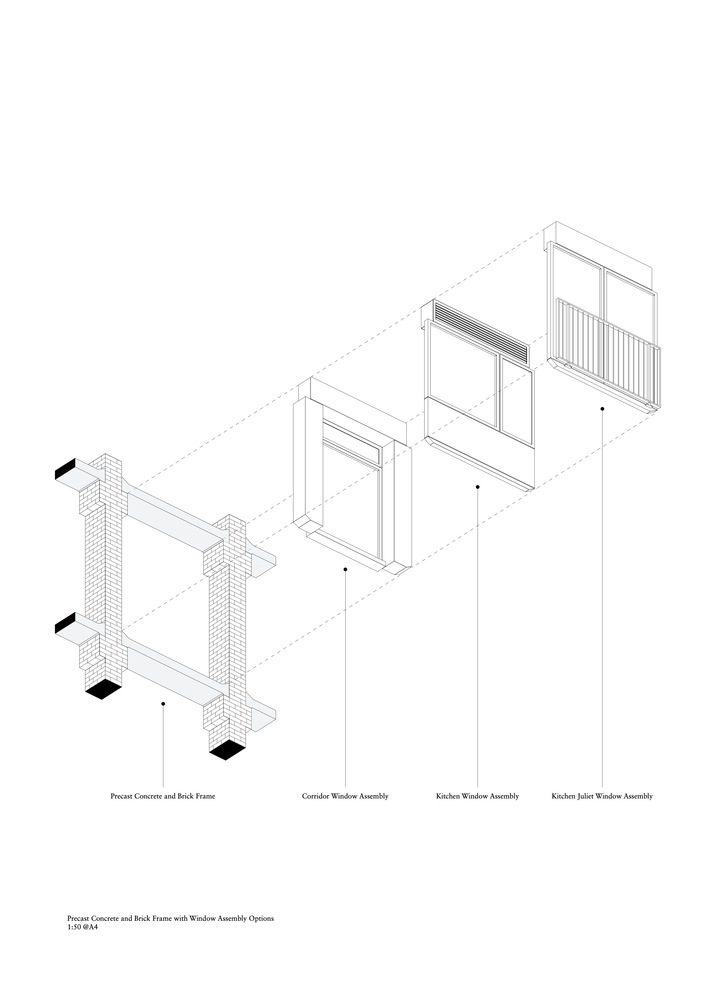
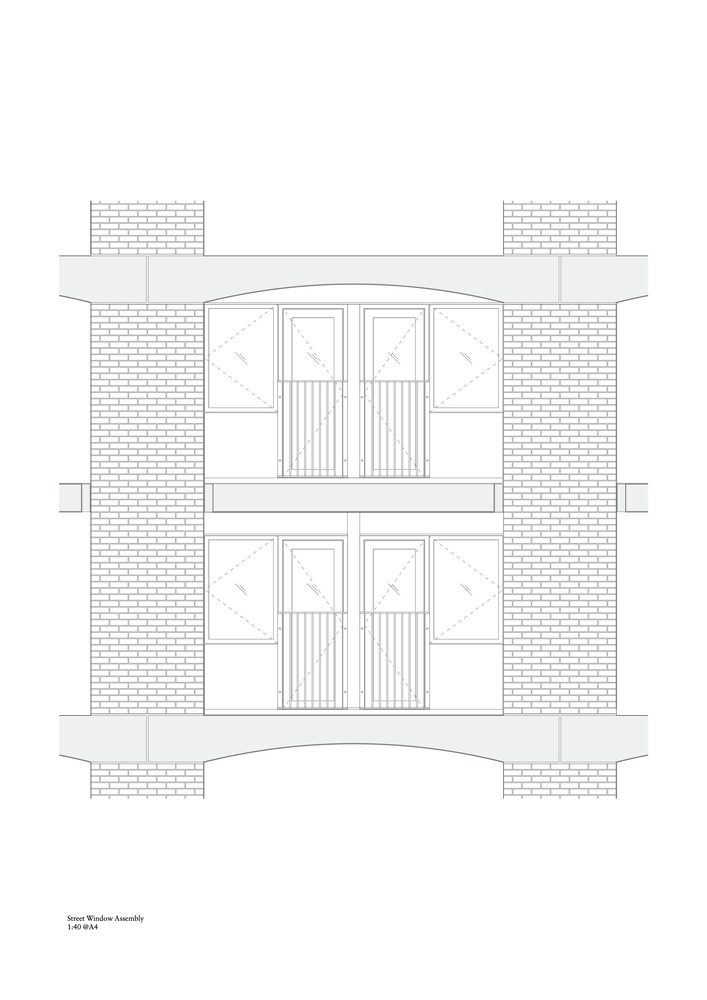
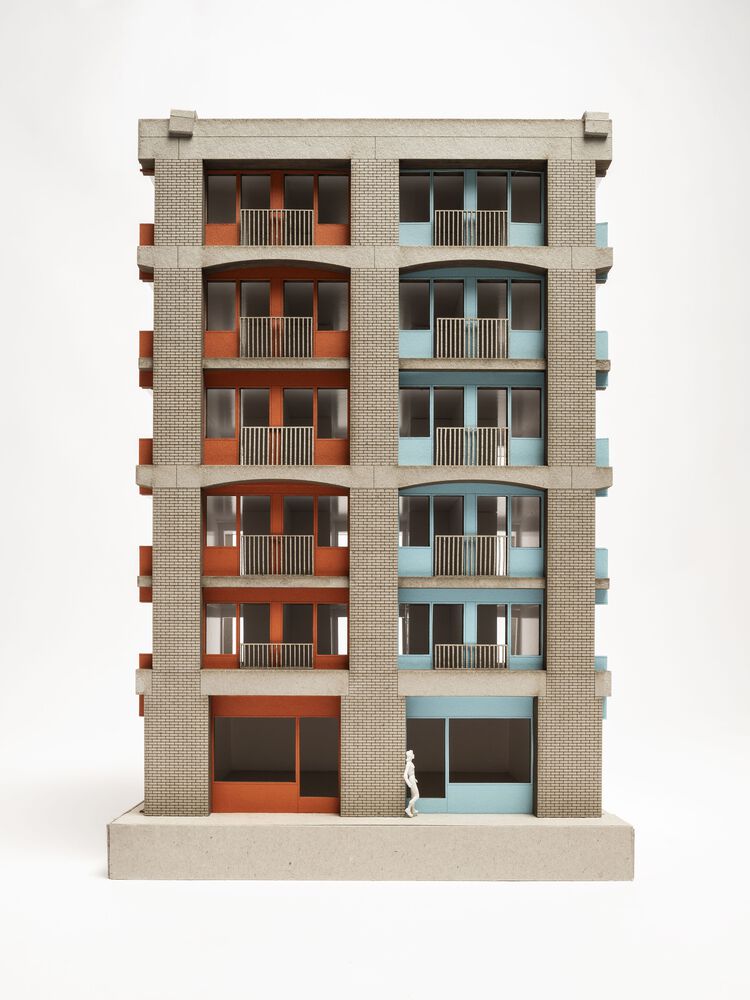
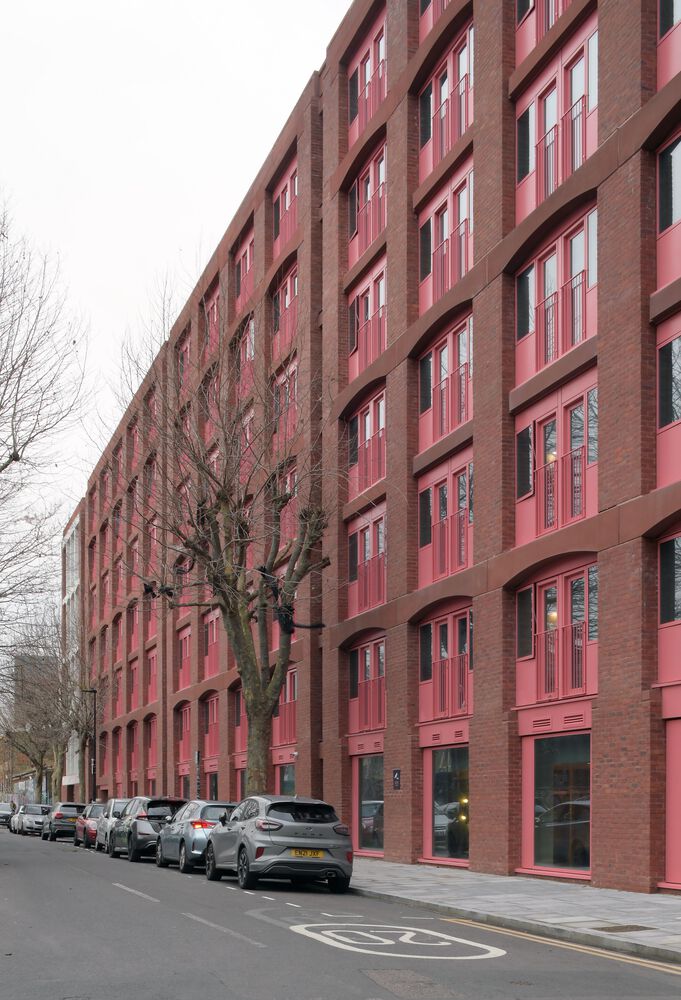
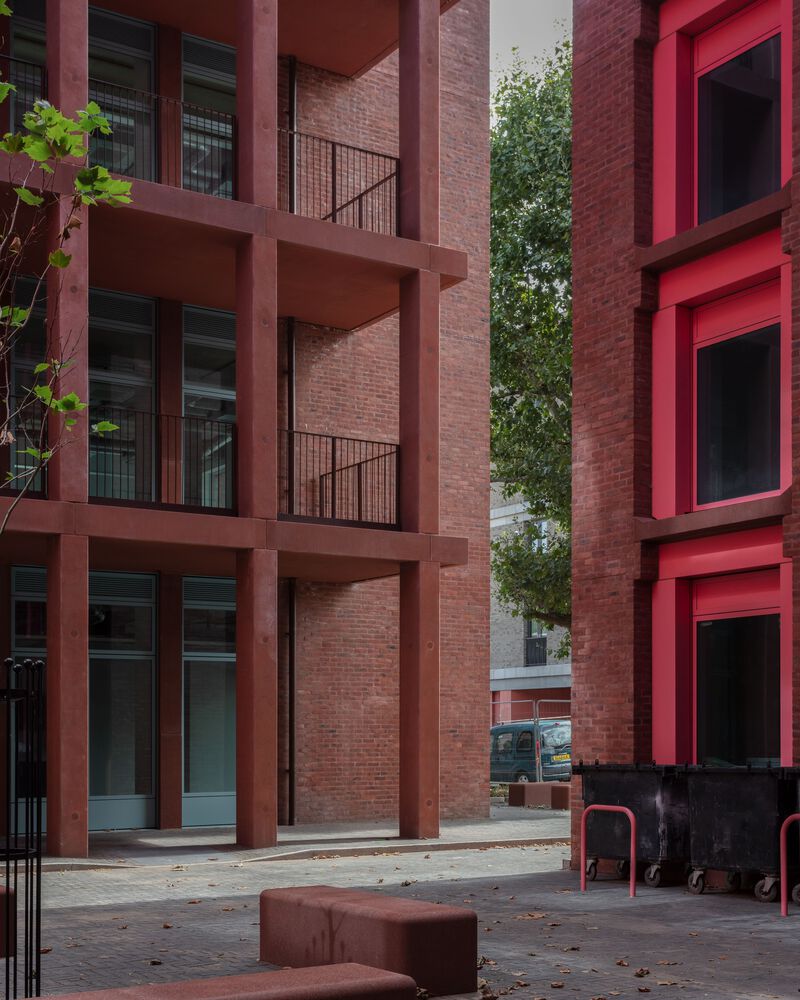
Fish Island has a rich heritage of industrial architecture, a mixture of warehouses and factories characterised by their diversity, robust and authentic construction. Fish Island West employs a grand order of brick piers and precast concrete arched beams. Within these large structural openings, windows are grouped in fours, significantly reducing the repetitive nature of the building, and brightly coloured to reflect the neighbourhood’s creative community. With Fish Island East, the considerably smaller scale street elevations are composed of a warp of brick piers and a weft of contrasting brick spandrels that frame individual windows. These, in turn, contrast with the simple brick walls that form the facades of precincts within the site.
Ground Floor Plan
Simon Henley, founder of Henley Halebrown, says, “Fish Island West has a 71m long elevation to the street, with groups of four windows set within larger structural openings serving to significantly reduce the building’s repetitive nature. The colour also diffuses the scale of the building, as does the decision to build in masonry.” It is hoped that the mix of uses for students and graduates, commercial studios, and Stour Trust will strengthen the creative community on Fish Island. Construction of Fish Island West was completed as ‘Wick Park’ in 2024. Fish Island East received planning permission in 2022 and will be completed in 2027.
Project Info:
-
Architects: Henley Halebrown
- Country: Hackney Wick, United Kingdom
- Area: 13405 m²
- Year: 2022
-
Photographs: David Grandorge, Rory Gaylor
-
Interior Designer: 74 (post-planning)
-
structural Engineer: Whitby Wood, Meinhardt
-
Services Engineers: Elementa Consulting, EDC
-
Landscape Architect: James Blake Associates, ACD Environmental
-
Project Manager: KS4
-
Planning consultant: Future Generation, Rolfe Judd
-
Transport Consultant: Motion, TPP
-
Acoustic Consultant: MLM, Sound Advice Acoustics
-
Daylight & Sunlight Consultant: eb7
-
Arboricultural consultant: Treavor Heaps Consultancy
-
Main Contractor: HG Construction
-
Category: Mixed Use Architecture, University, Dorms
-
Architect: Henley Halebrown
-
Project Architects: Craig Linnell, Stephanie Thum-Bonanno (Henley Halebrown)
-
Project Team: Gavin Hale-Brown, Simon Henley, Neil Rodgers, Benedetta Rogers, Jieun Jun, Bianca Soccetti (Henley Halebrown)
-
Client: Future Generation (pre-planning) / CA Ventures (post-planning)
-
Operator: Novel Student
-
University: University of the Arts London
-
Cost Consultant: K2 Consultancy, KS4
-
Agent: KS4
-
Principal Designer: Collaton Safety, Simply CDM
-
Approved Building Inspector: Clarke Banks Group
-
Fire Consultant: AESG, Orion Fire Engineering
-
Archaeological Consultant: Archaeology Collective
-
Community Engagement: Connect Consulting
-
Student Accommodation: Knight Frank