


Filament Mind
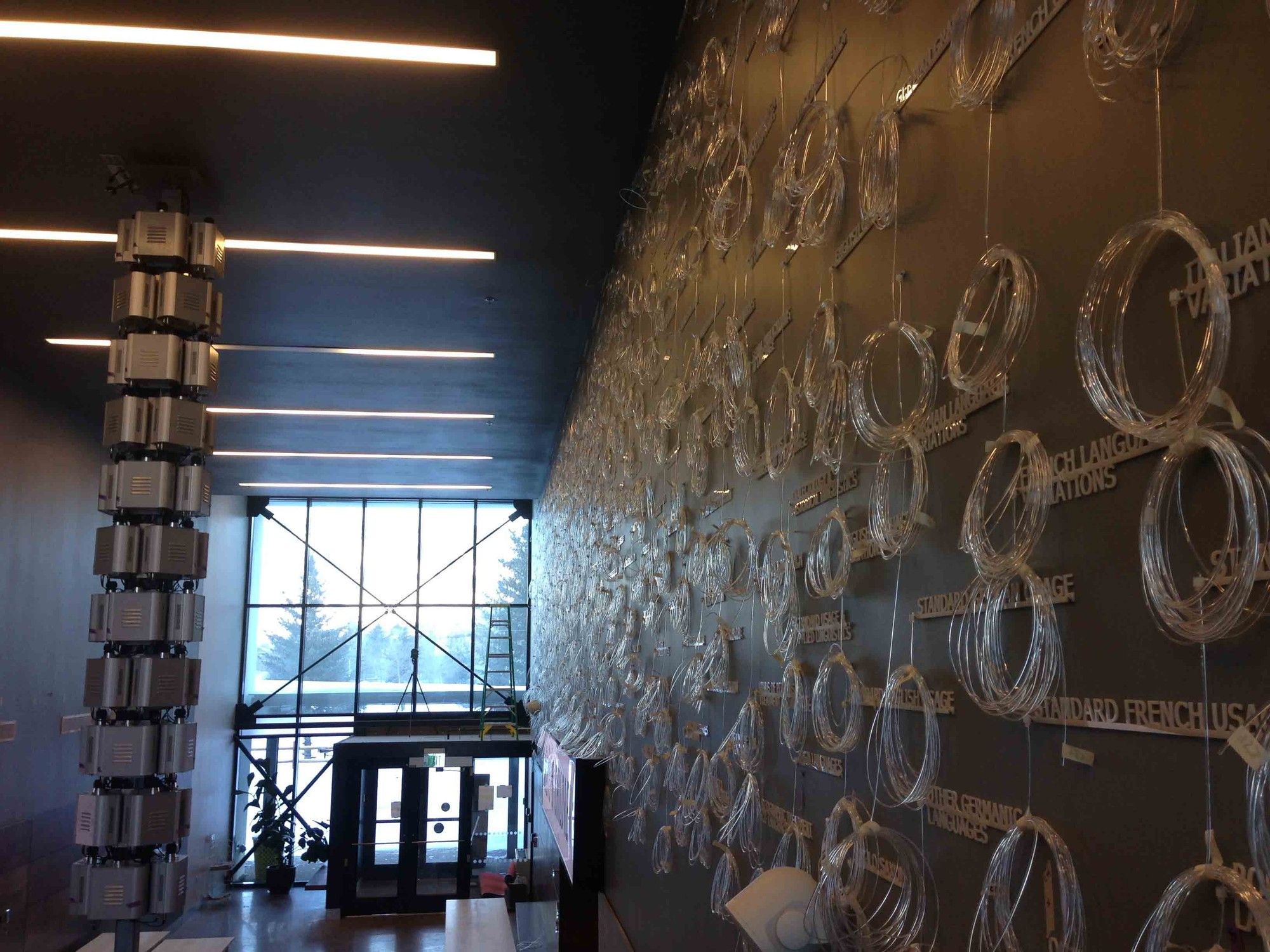
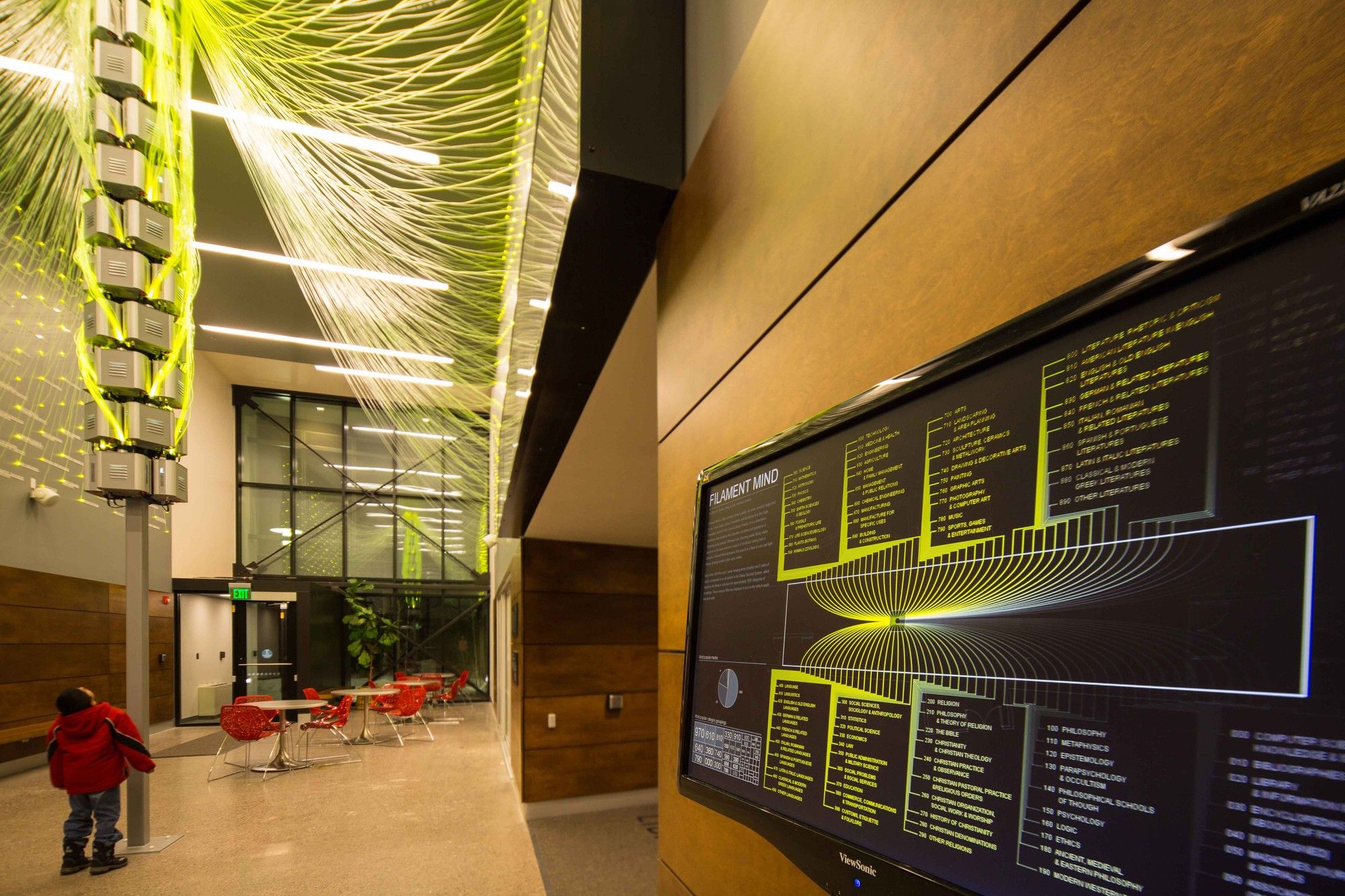
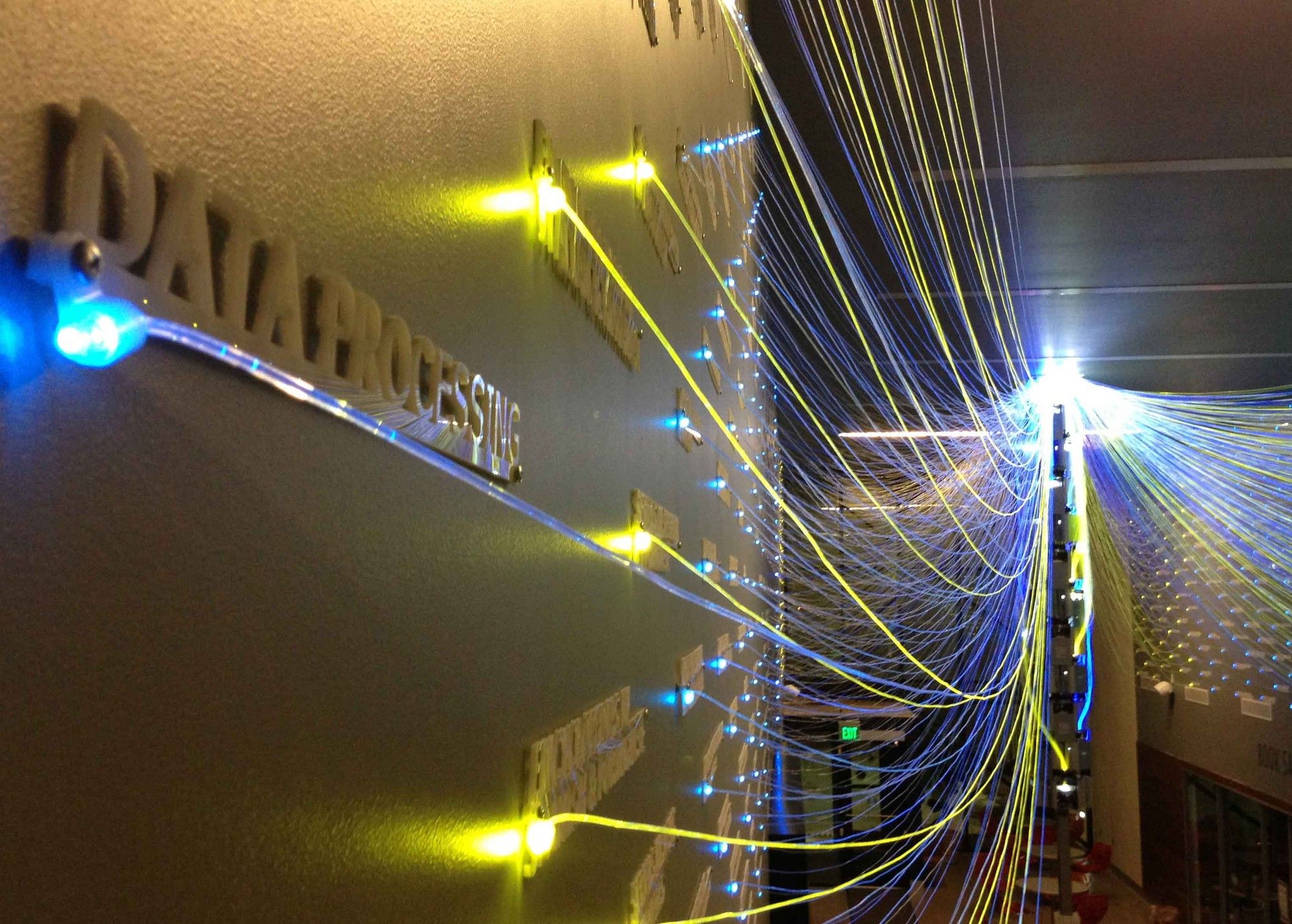
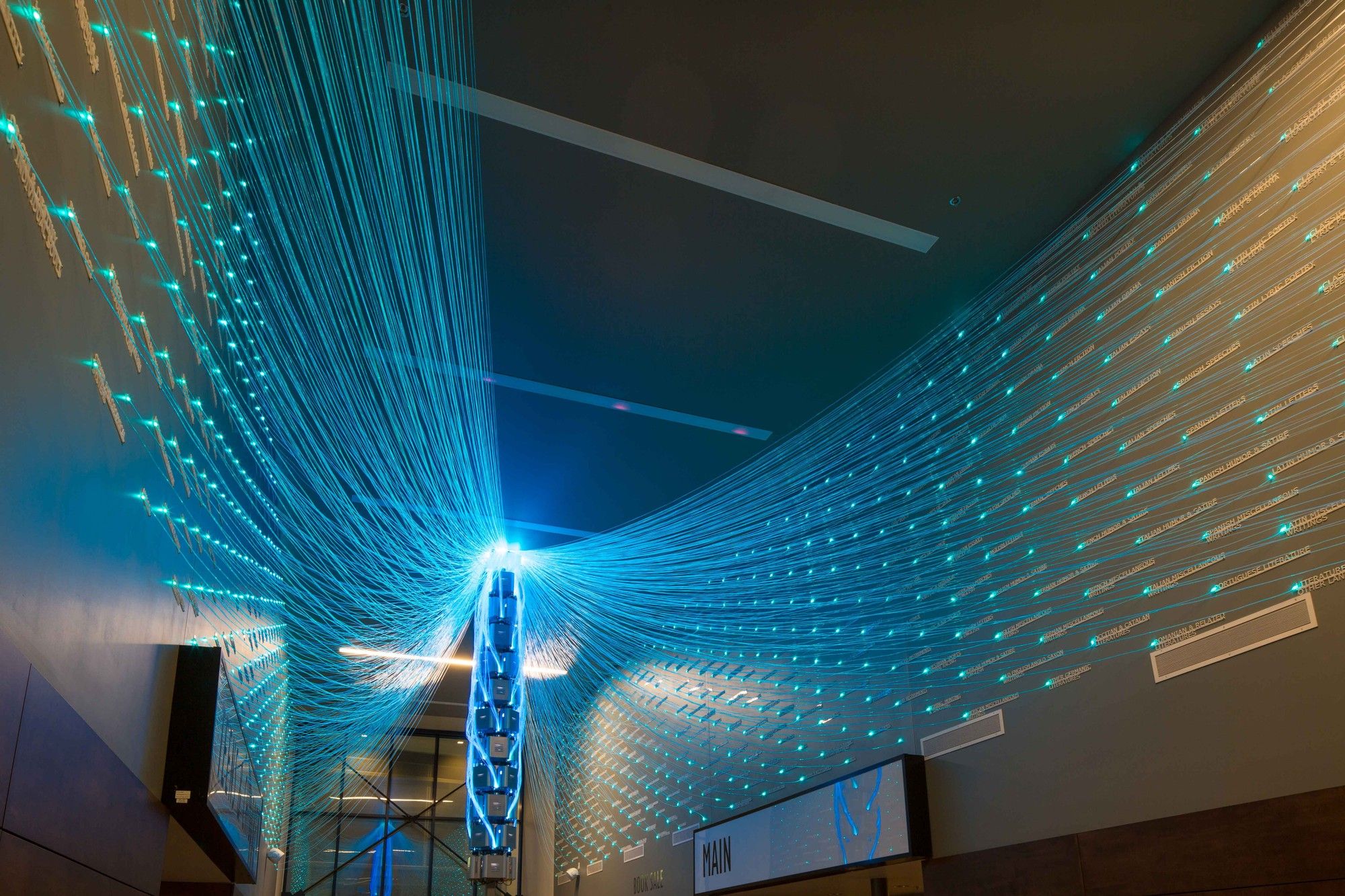
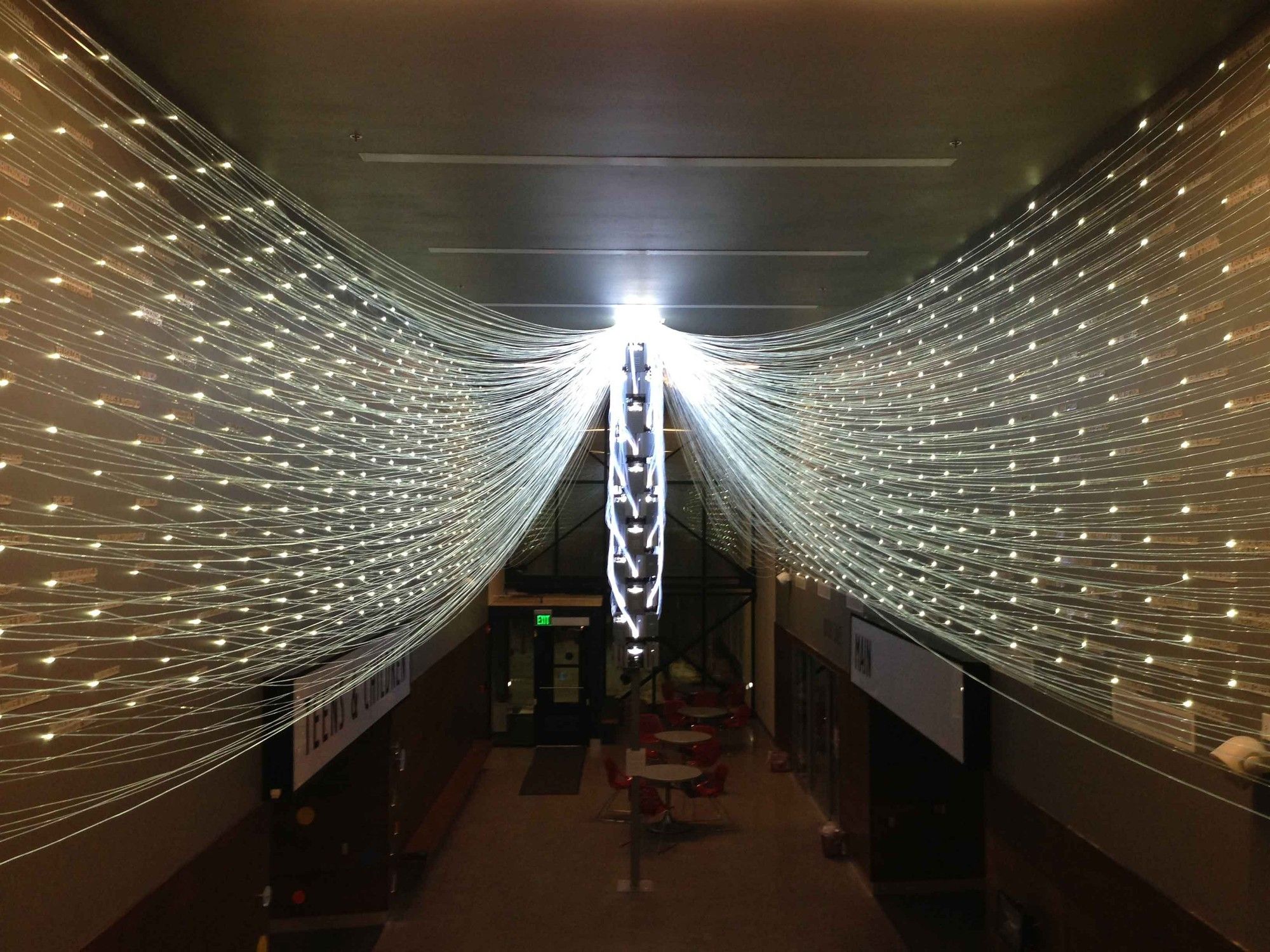
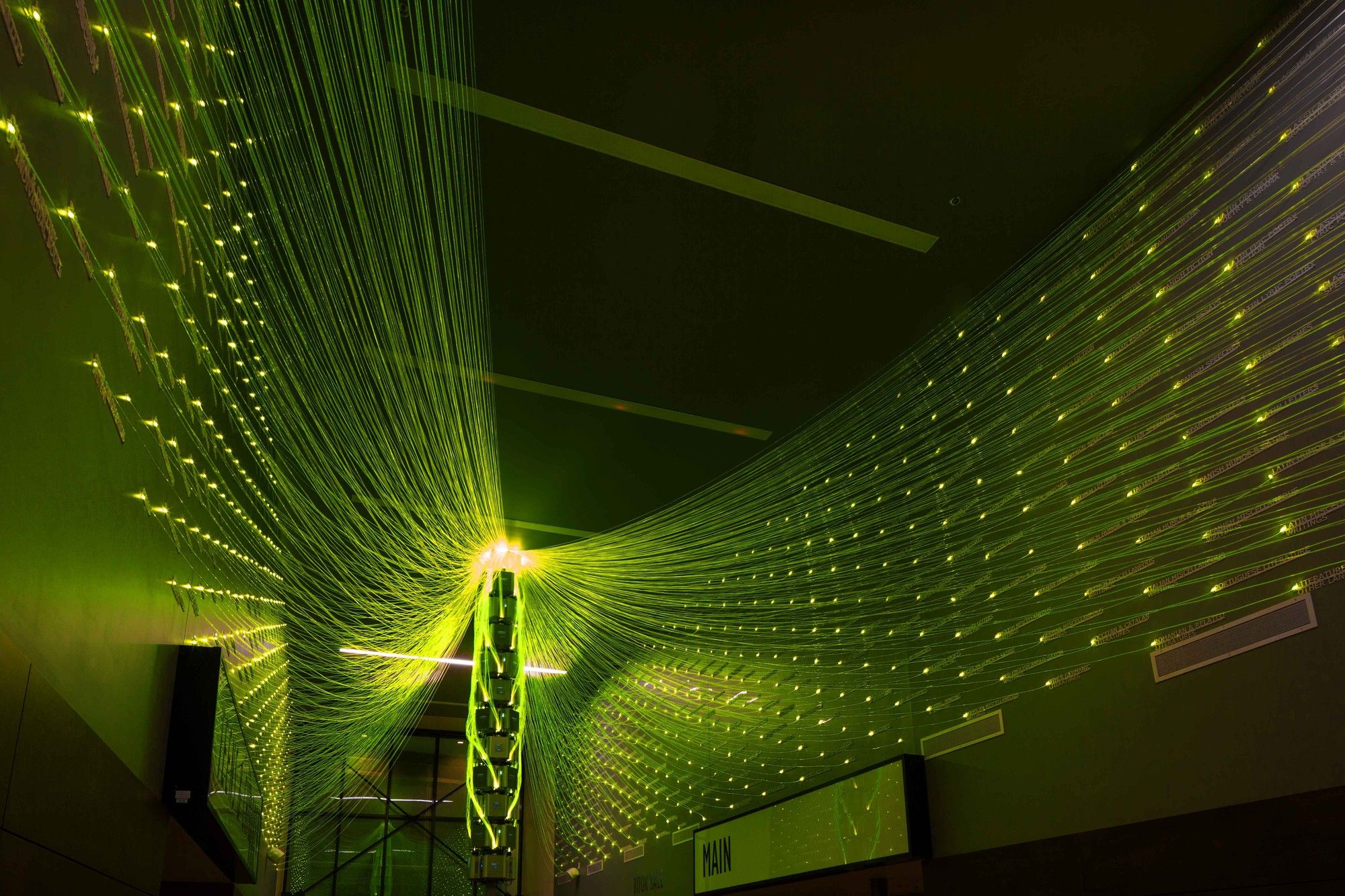
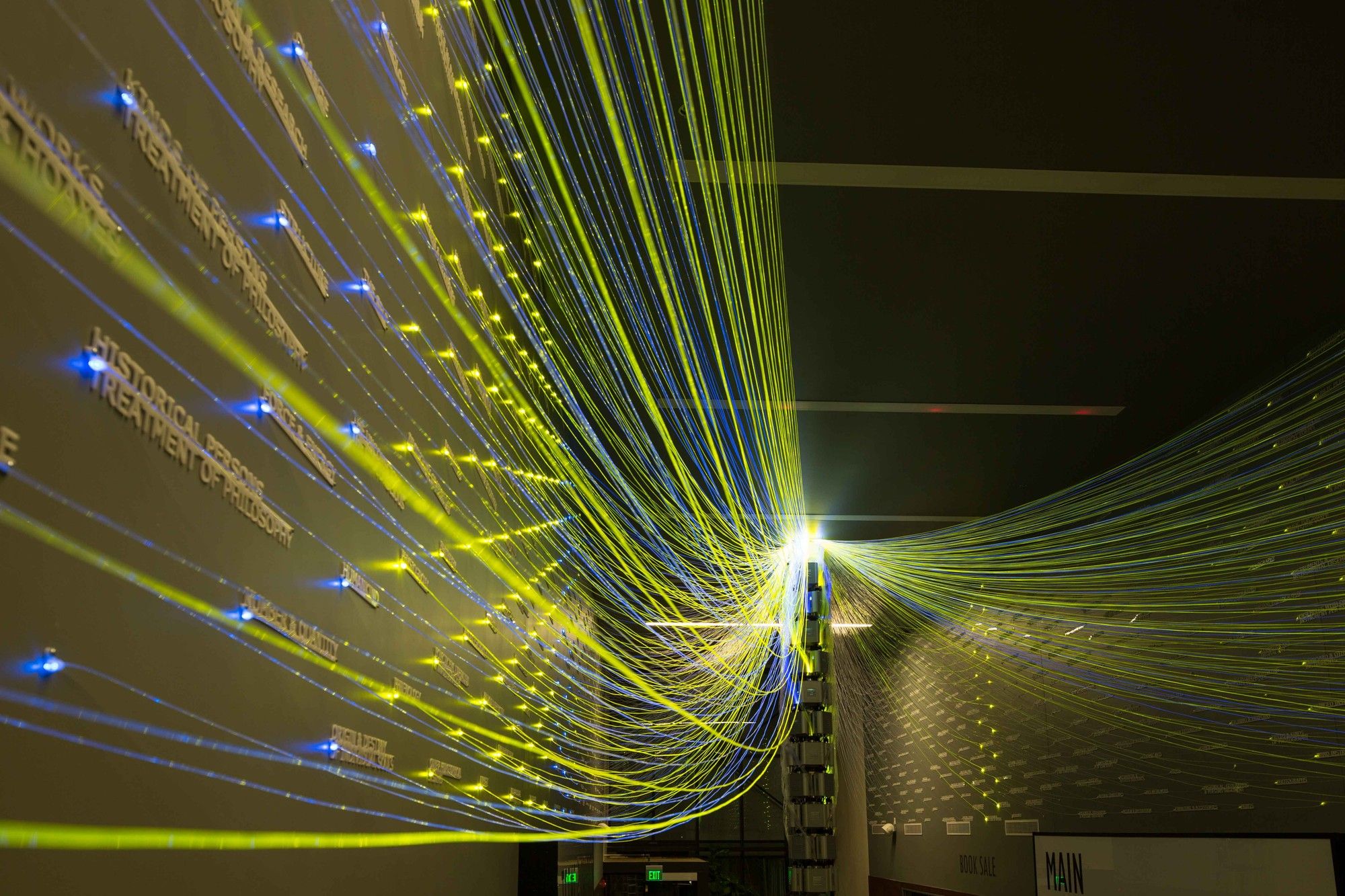
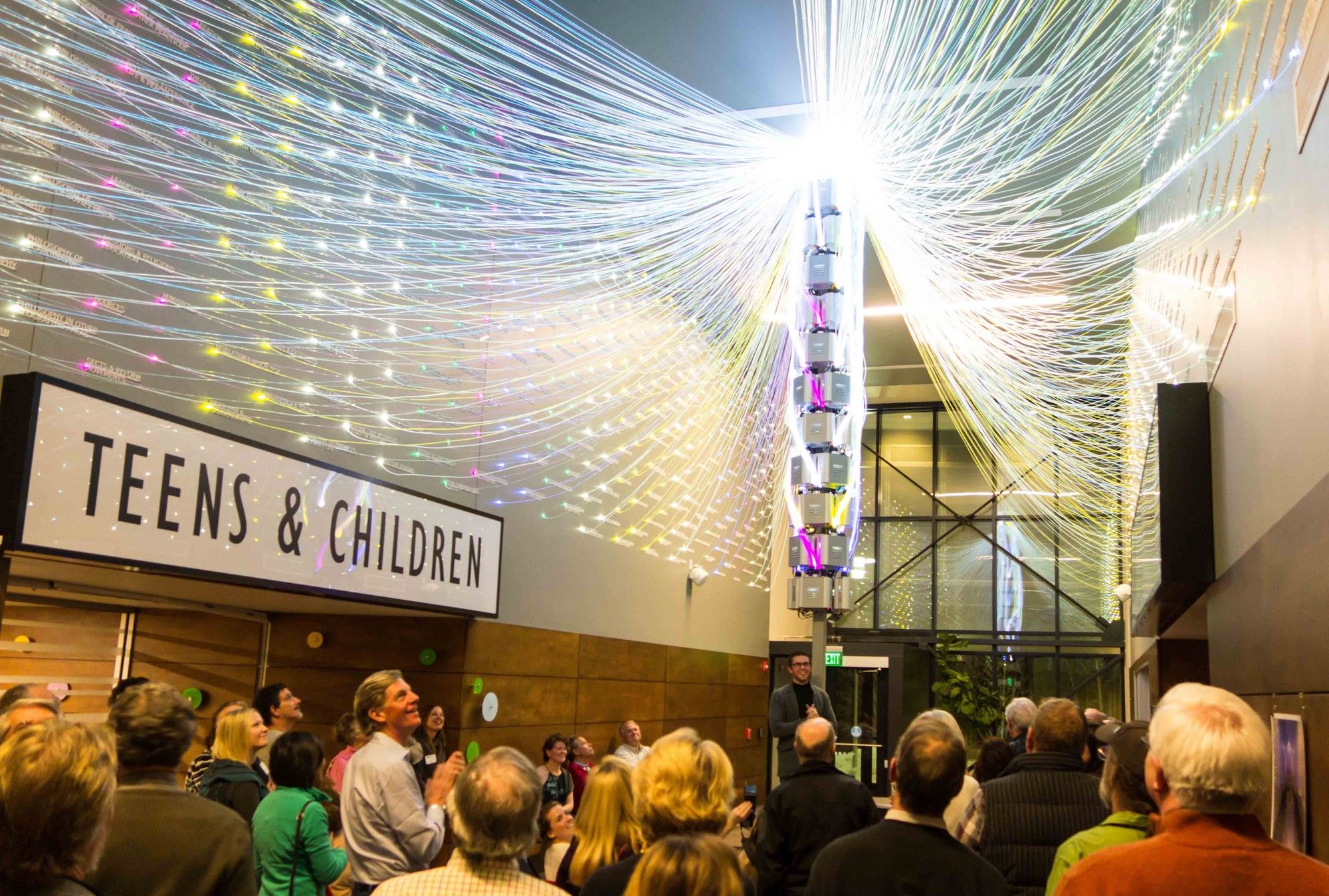
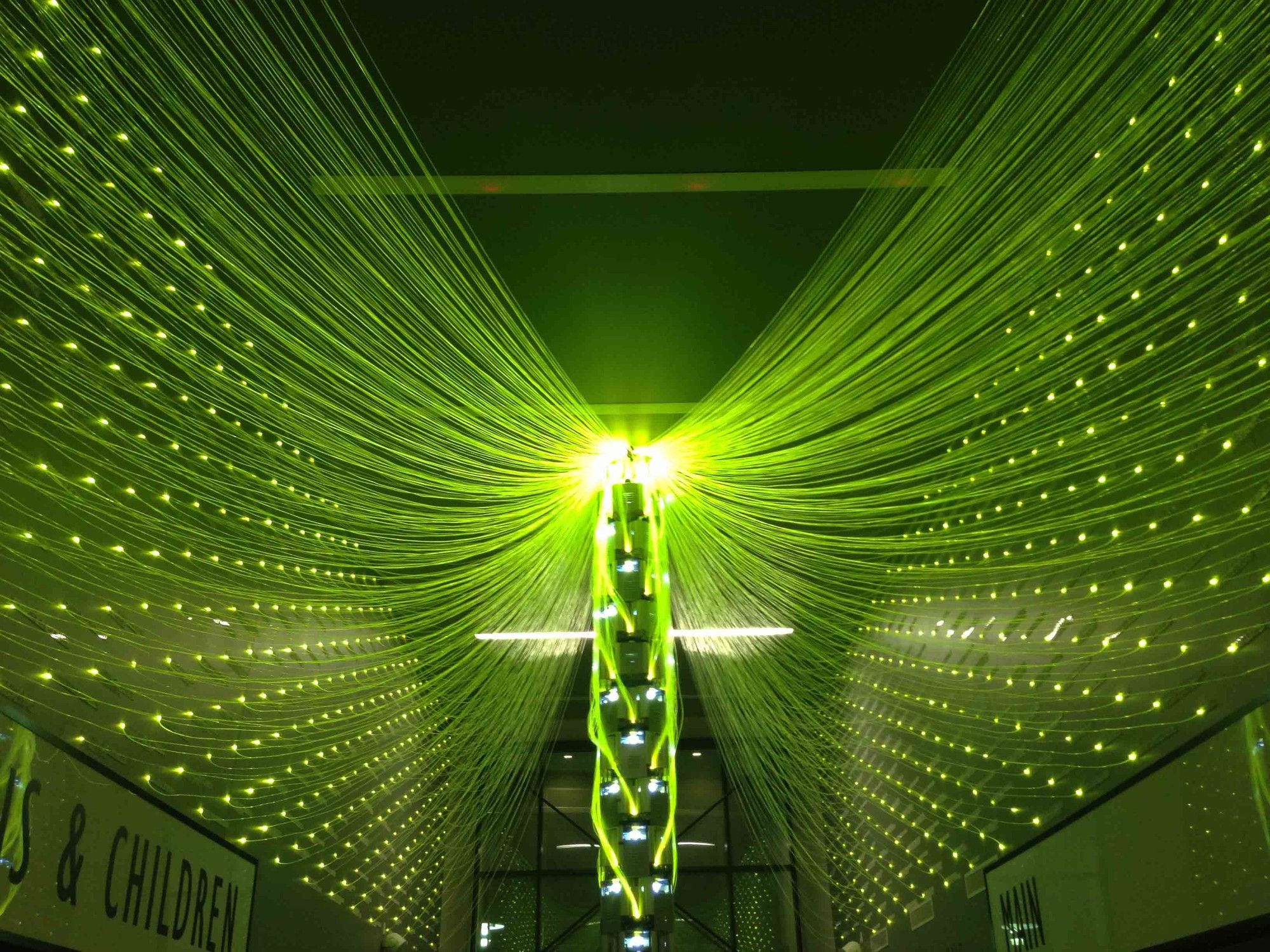
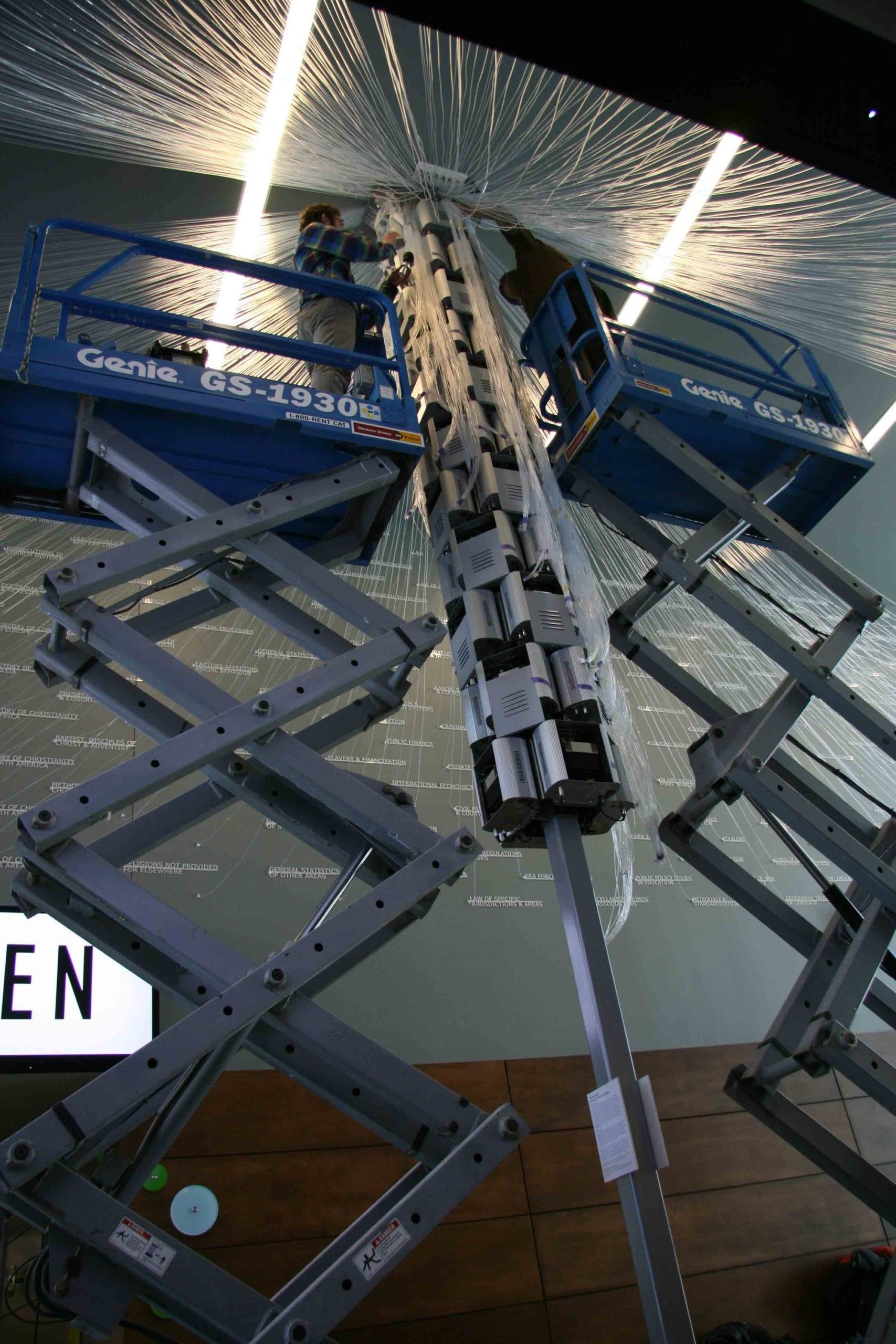
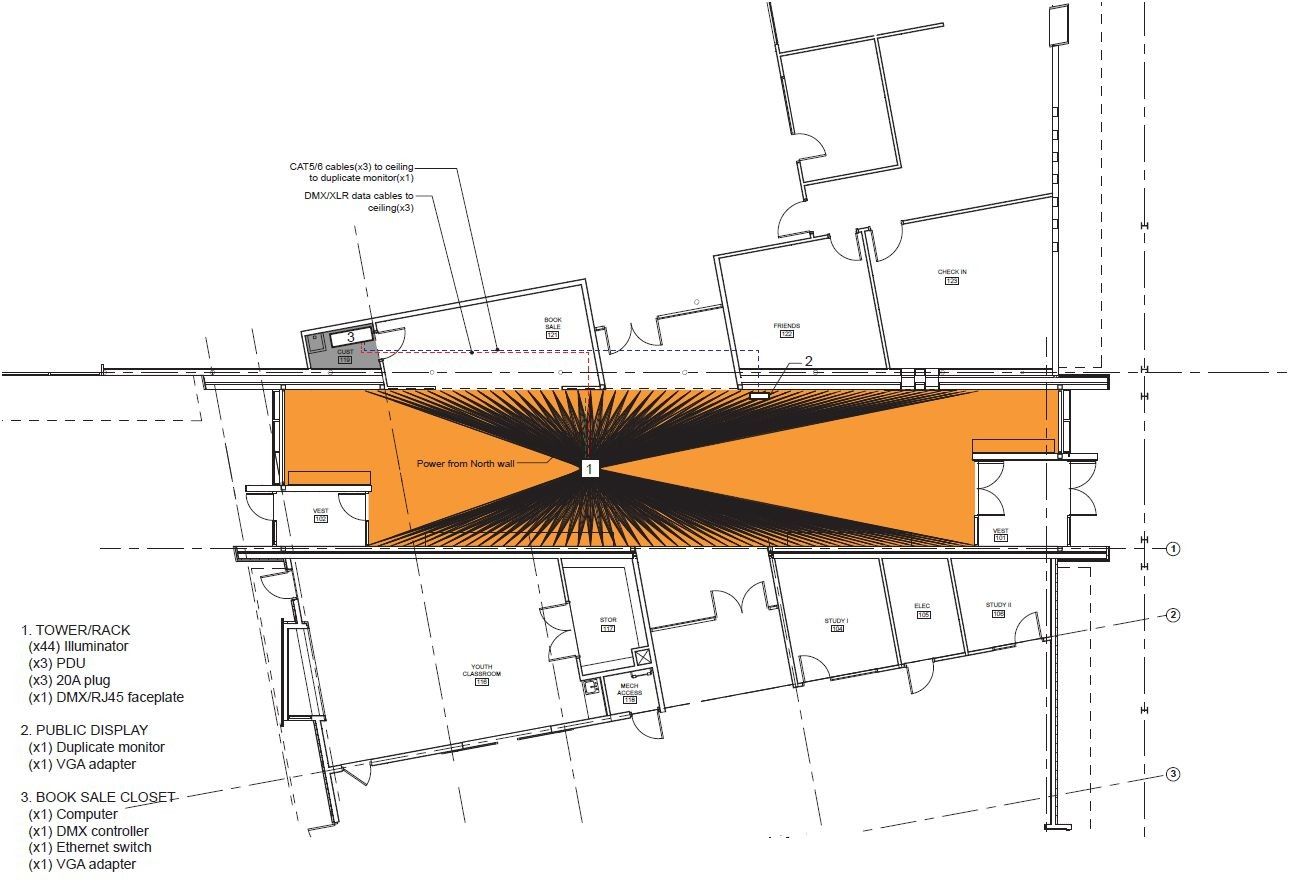
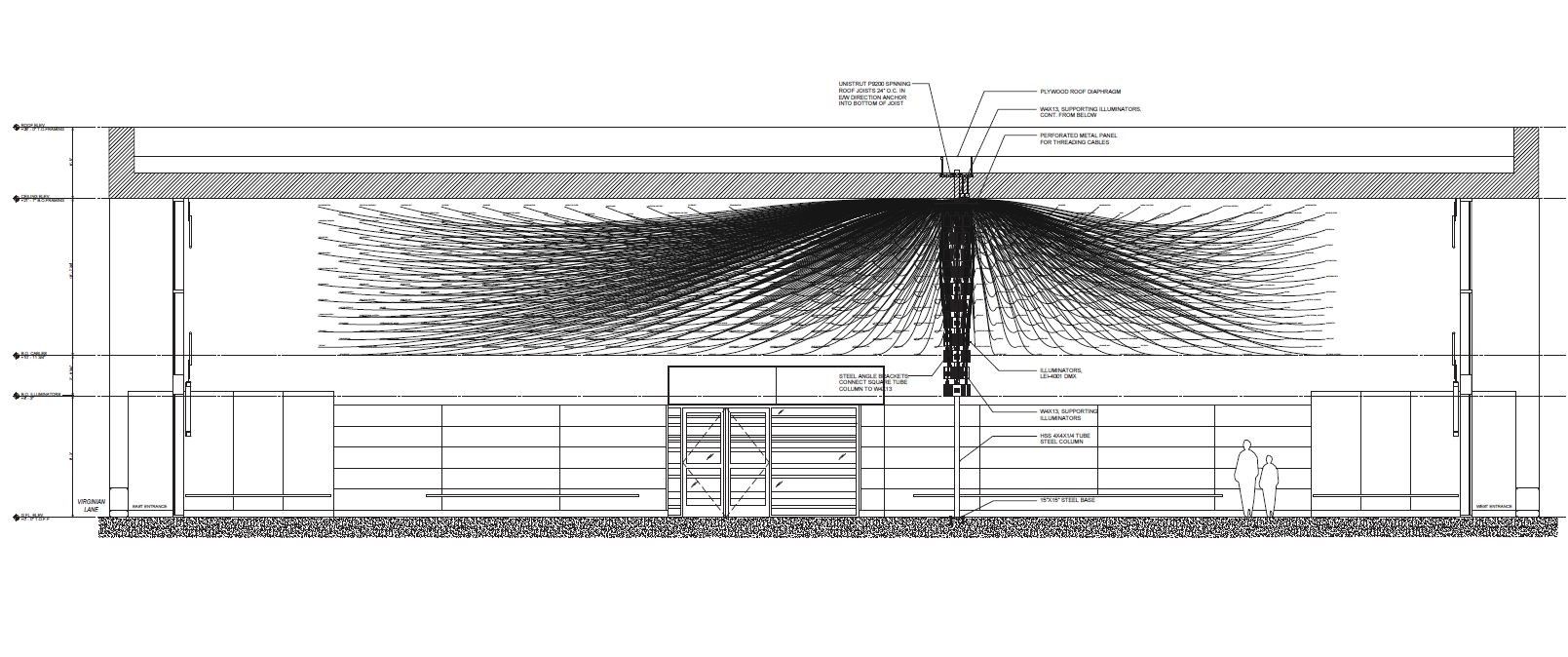
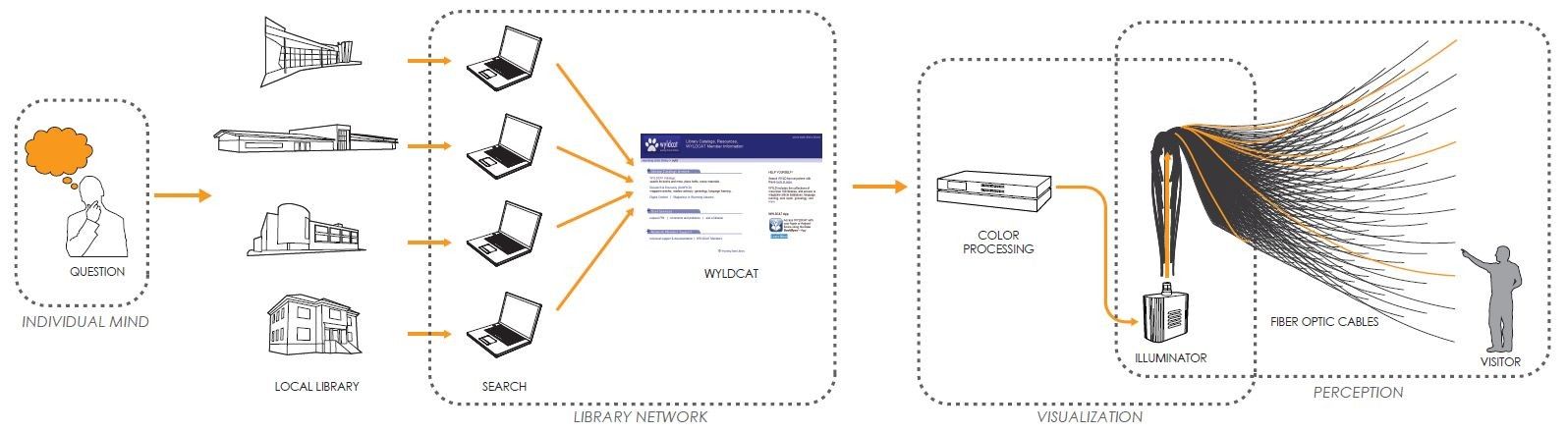
Ever wondered what might a library’s brain look like? Well E/B’s approach of rendering the process using computer algorithms, around 5 miles of optic fiber, and a thousand categories of knowledge, might be the closest visualization you will ever see. Located in Teton County Library, Idaho, the installation entitled ‘Filament Mind‘ is a true manifestation of the significance of the educational public spaces in the most unconventional way possible.
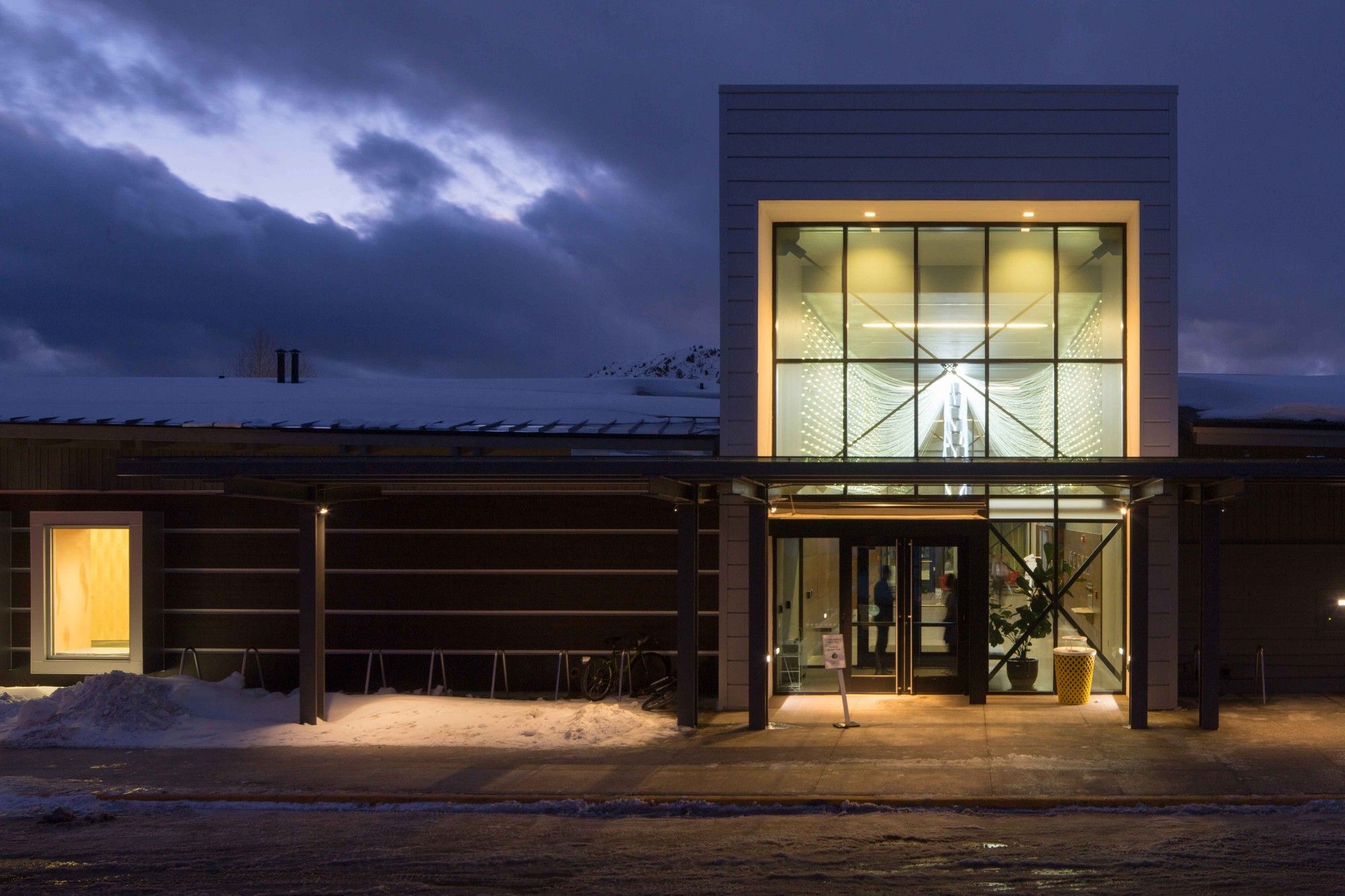
Photography by © David Agnello Photography
Filament Mind aims for a more interactive library space, one that combines both art and knowledge in a unique blend that results with simply beautiful signs and interpretations, speaking directly with the imagination of the receiver. The firm also tries to pose philosophical questions throughout the embodiment of the process of knowledge itself, and the diversity of opinions regarding the efficiency of that posing was all that was needed to make this installation a success.
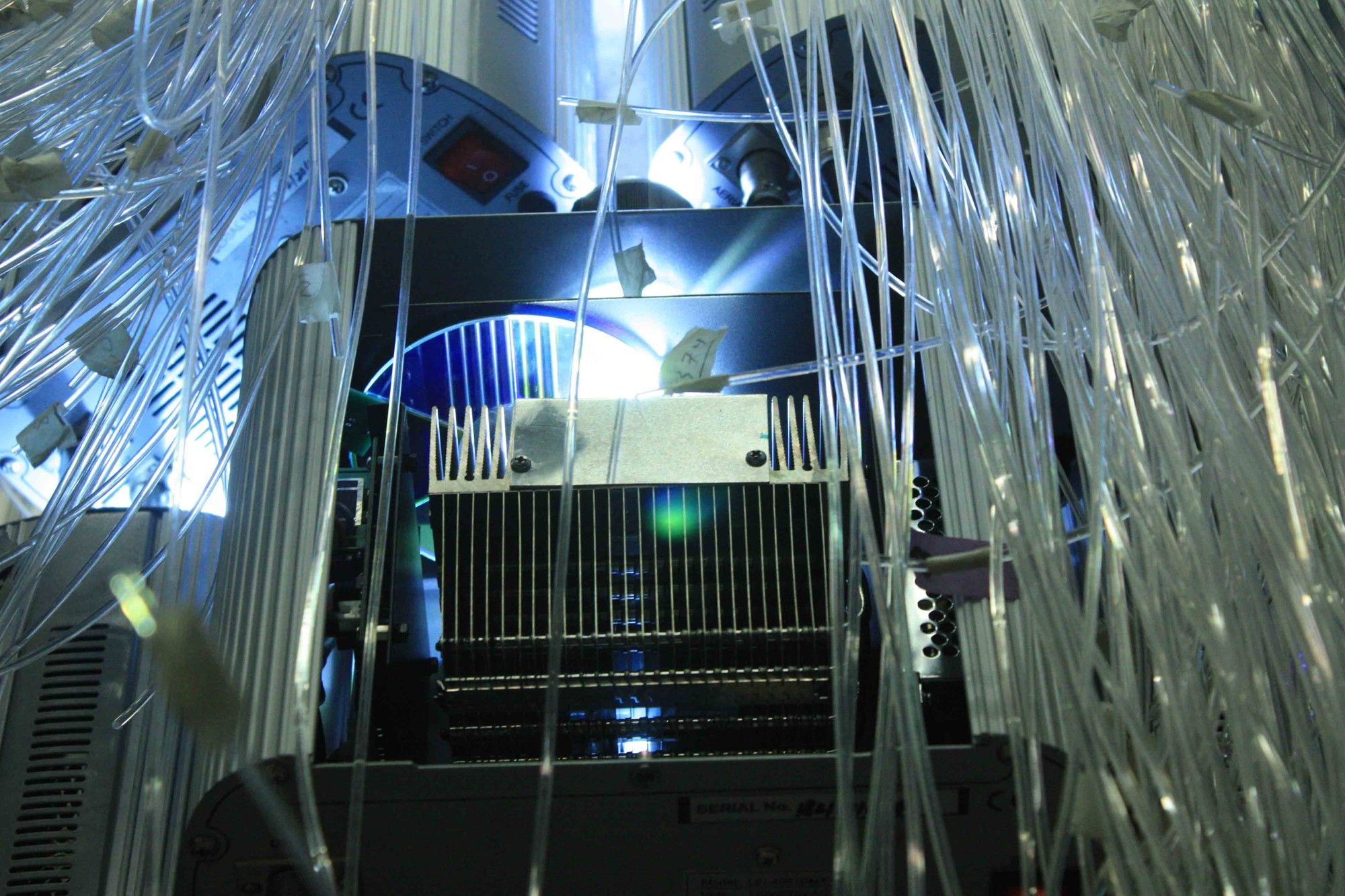
Photography by © David Agnello Photography
The firm explains the concept behind the installation with this elite statement: “The installation aspires to illustrate how community is cultivated through the delicate weaving of our thoughts, desires, and questions exchanged and imparted on each other and our environments. And it’s the library that is at the very heart of this cultivation. Filament Mind is based on the notion that art, which is truly for the public, should manifest the ideas of the artist only as they are transformed by what’s in the hearts and minds of the community, as a reflection of the influence of place on our thoughts.”
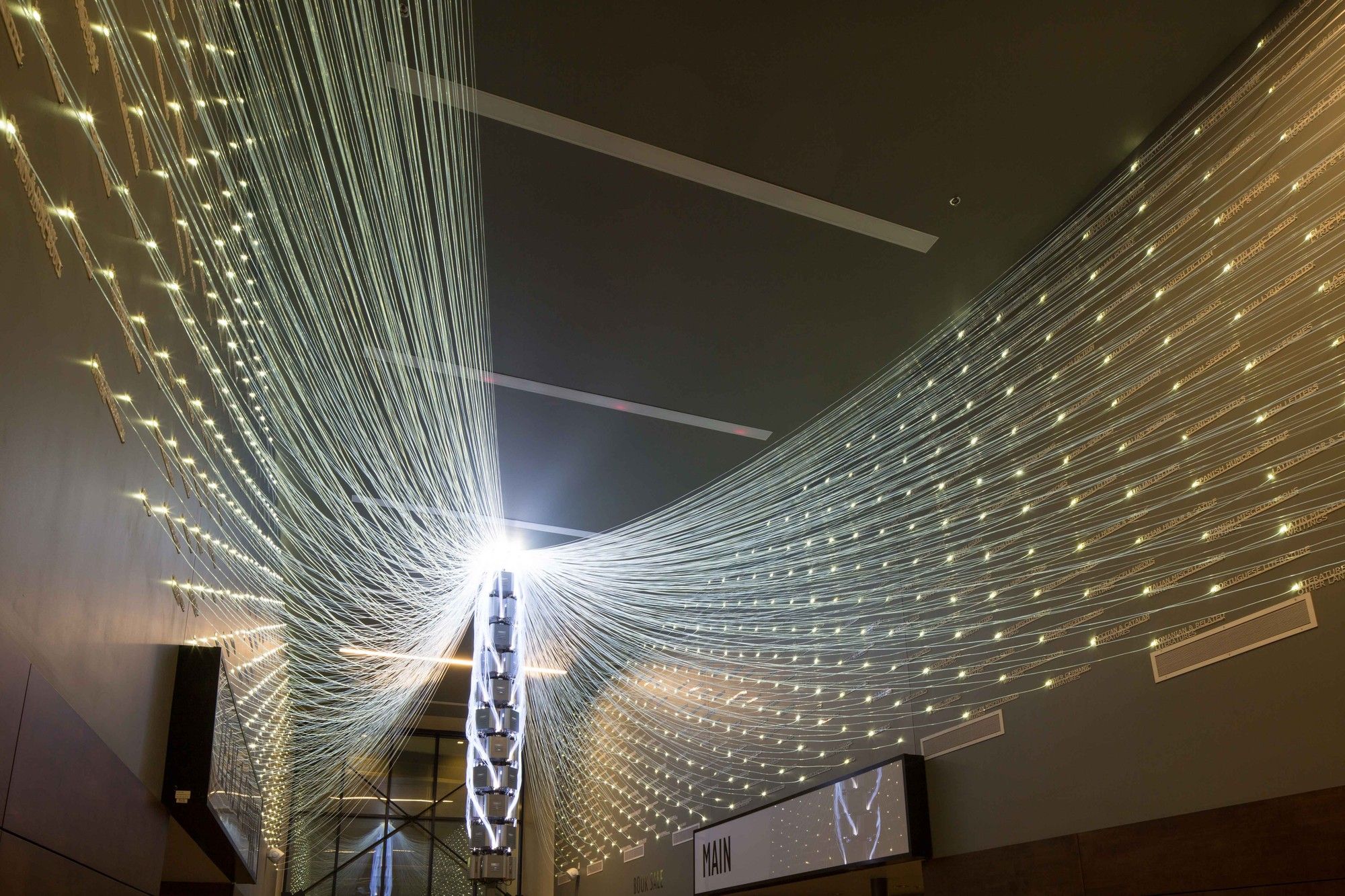
Photography by © David Agnello Photography





Hazem Raad is an editor at Arch2O with a keen interest in the intersection of urban planning, politics, and technology in the Middle East. Holding a Master of Science in Urban Planning from The Bartlett's Development Planning Unit at University College London, his editorial lens is shaped by critical inquiry into contestation, border-making practices, and the role of big data in urban governance. Hazem’s writing explores how spatial dynamics and digital infrastructures intersect with socio-political realities, bringing analytical depth and regional nuance to Arch2O’s urban discourse.