

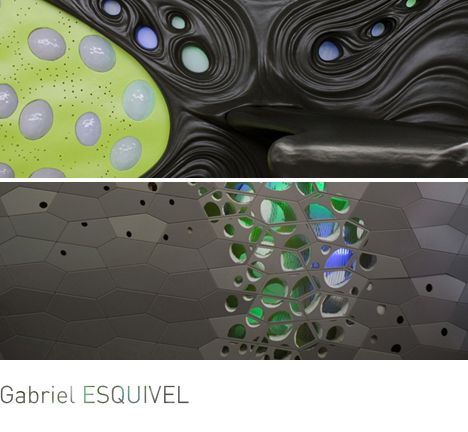
Faces is an installation designed by the students of Texas A&M University College of Architecture. The Faces installation is a metaphor for how facades in today’s society are changing loosing their historical significance. A lot of what we see, have their similarities and differences but overall it is the lack of similarities that sticks out. This shows how culture is being lost in the design process and things now start to become more generic when trying to be different.
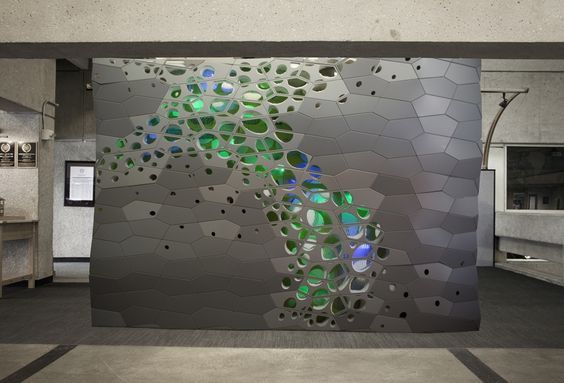
Photography by © Emau VEGA
The name Bi-Polar given to the installation, is the name that depicts the way designers are today. Due to this need of trying to break away from the past they become confused and generic in what they design. This is the reason architects look into research and development to help push the gap with the past, saying they are advancing.
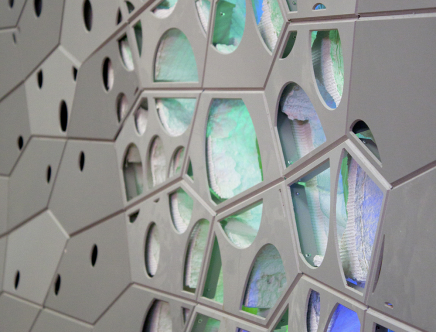
Photography by © Emau VEGA
The piece was inspired by Peter Sloterdijk, a philosopher and the 1968 film Faces. Peter looks at the idea of a face and how it’s it might use these differences and similarities to create something unique. From the piece, facades suppose to make a building unique while holding onto its historical reference.
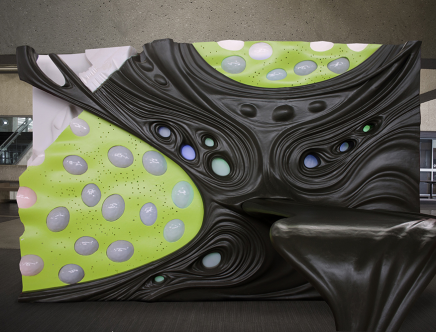
Photography by © Emau VEGA
Images courtesy of : Adrian CORTEZ, Aubrie DAMRON, Dale FENTON, Matt MILLER, & Emau VEGA, “Bi-Polar.” Texas A&M University College of Architecture. Gabriel ESQUIVEL, instructor. Photos: Emau VEGA.


Anastasia Andreieva is an accomplished Architectural Projects Editor at Arch2O, bringing a unique blend of linguistic expertise and design enthusiasm to the team. Born and raised in Ukraine, she holds a Master’s degree in Languages from Taras Shevchenko National University of Kyiv. Her deep passion for architecture and visual storytelling led her to transition from translation and editorial roles into the world of design media. With a keen eye for conceptual clarity and narrative structure, Anastasia curates and presents global architectural projects with precision and flair. She is particularly drawn to parametric and digital design, cultural context, and emerging voices in architecture. When I’m not analyzing the latest architectural trends, you’ll probably find me searching for hidden gems in cityscapes or appreciating the beauty of well-crafted spaces. After all, great design—like great connections—can be found in the most unexpected places. Speaking of connections, because architecture isn’t the only thing that brings people together.