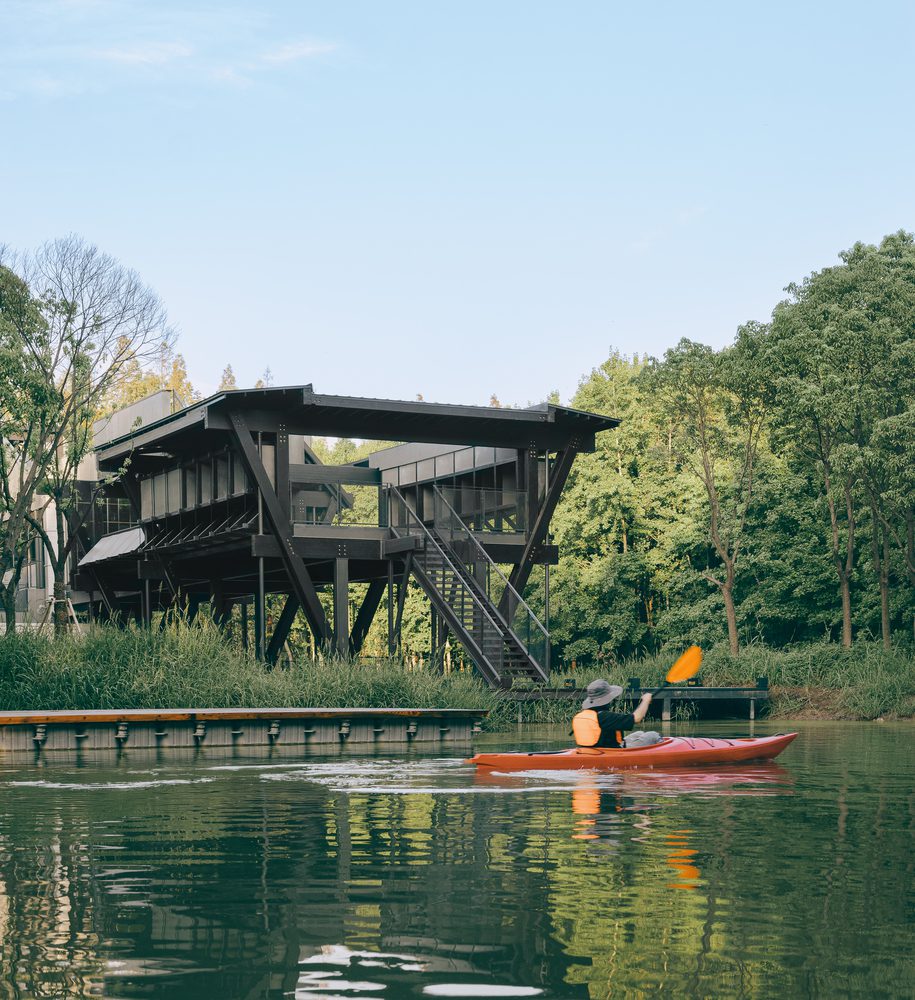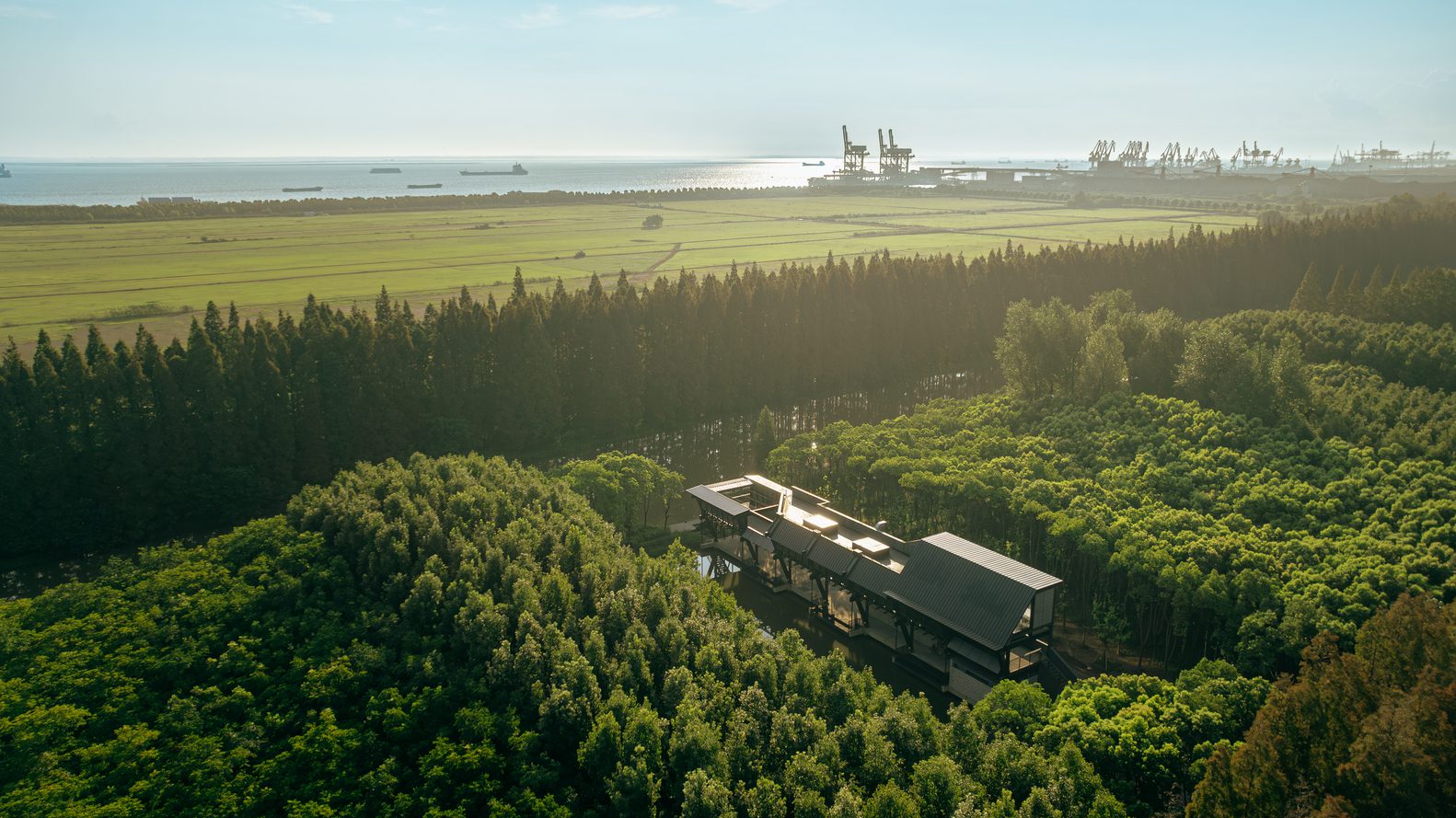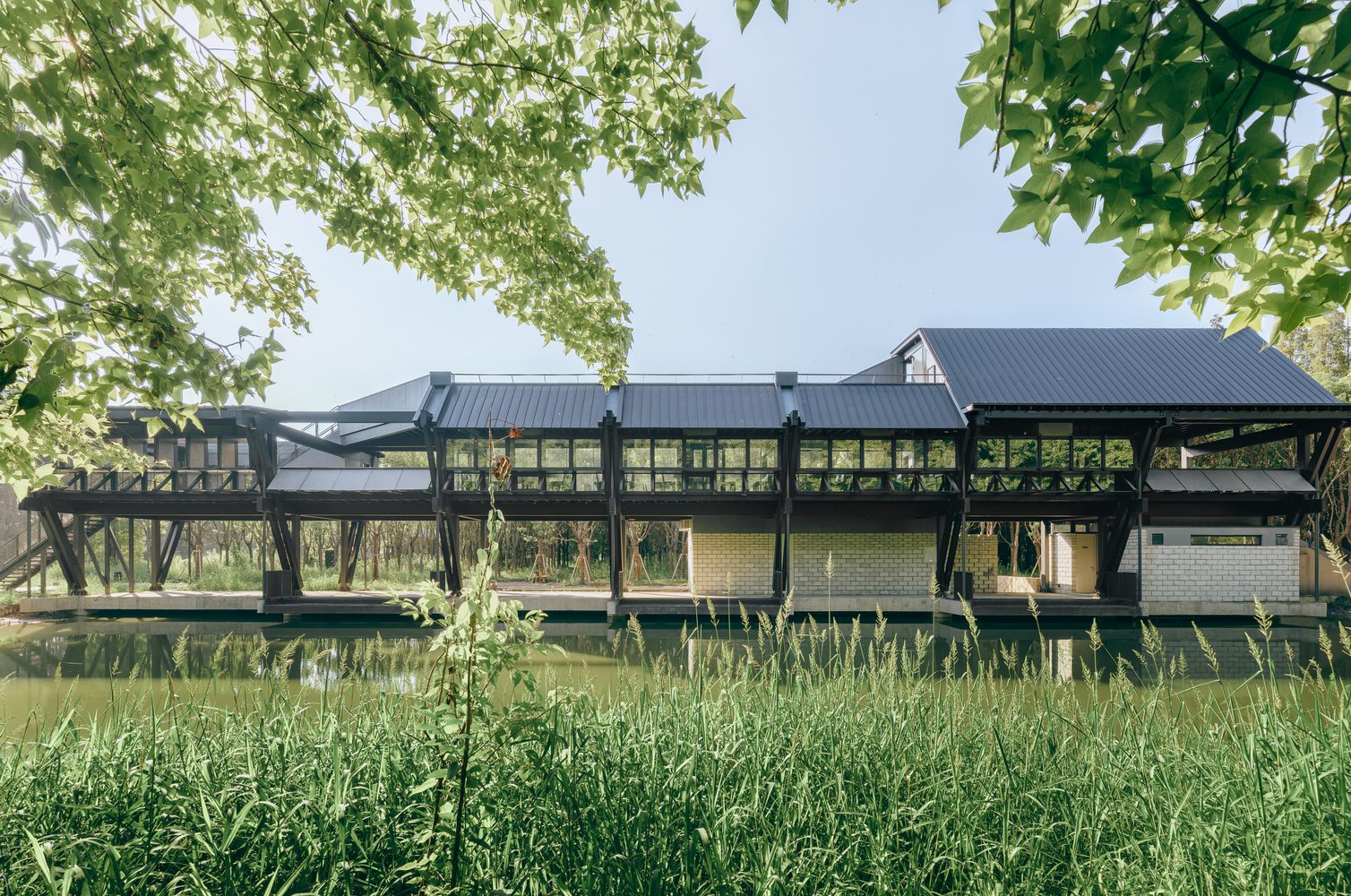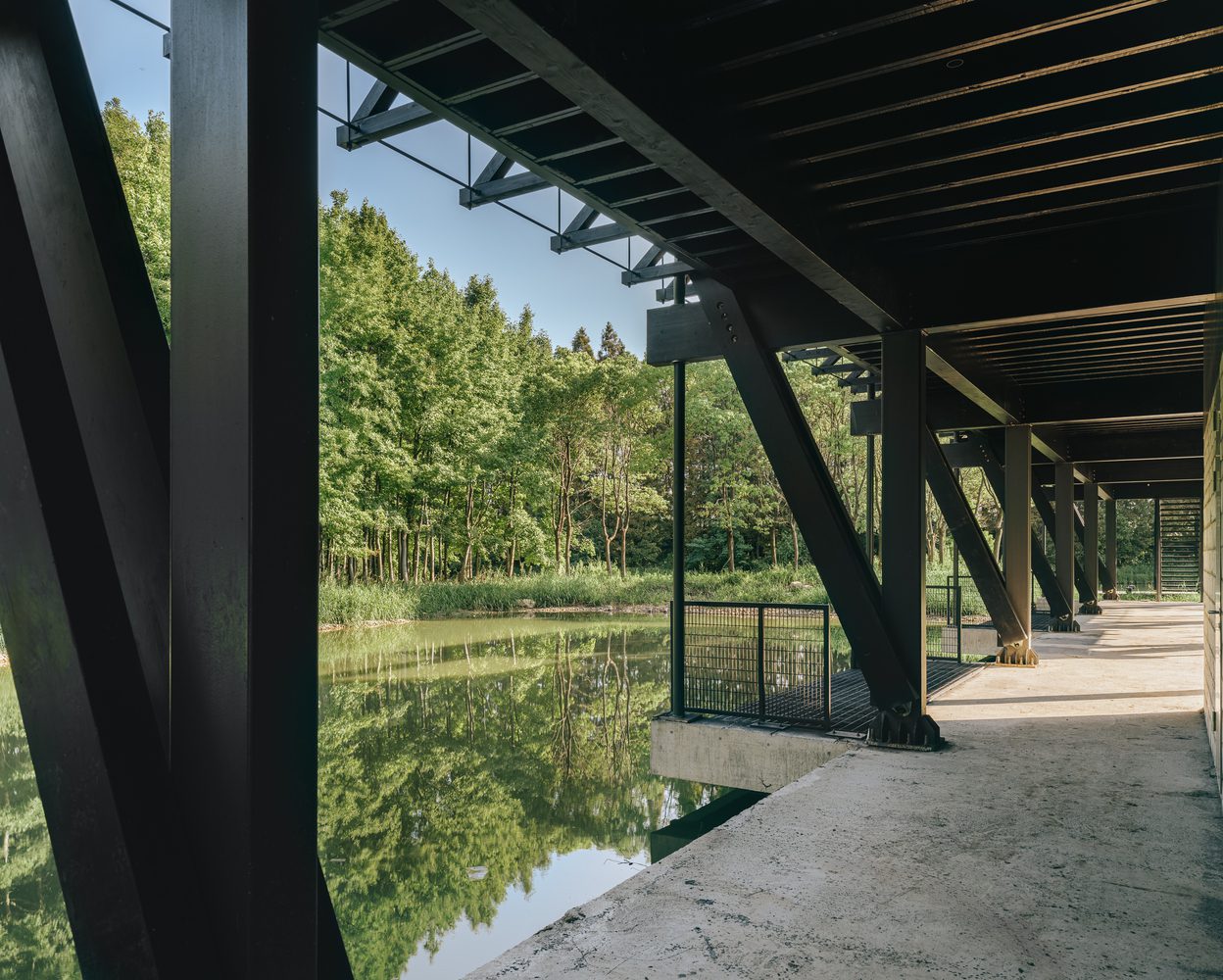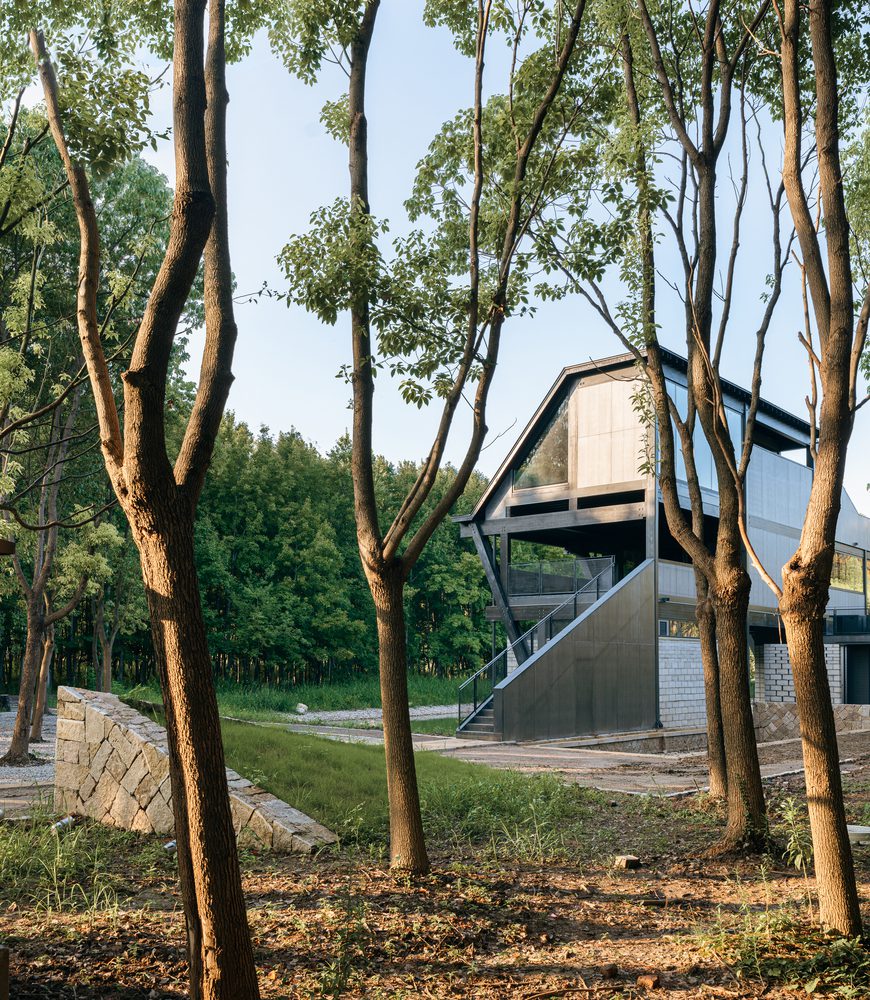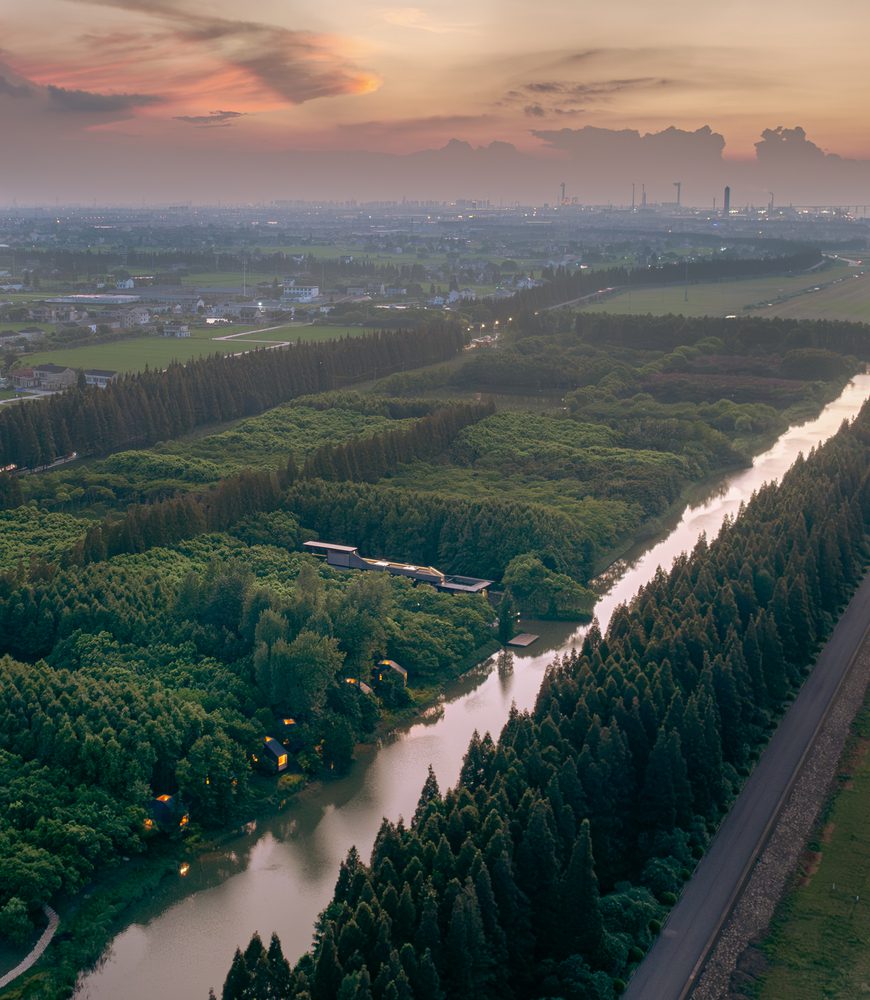


The Dongliang Xuan is located within the “Yangtze River Forest Farm” in Taicang, Suzhou. The site is defined by both stringent construction constraints and imaginative potential, making this project a particularly unique case.
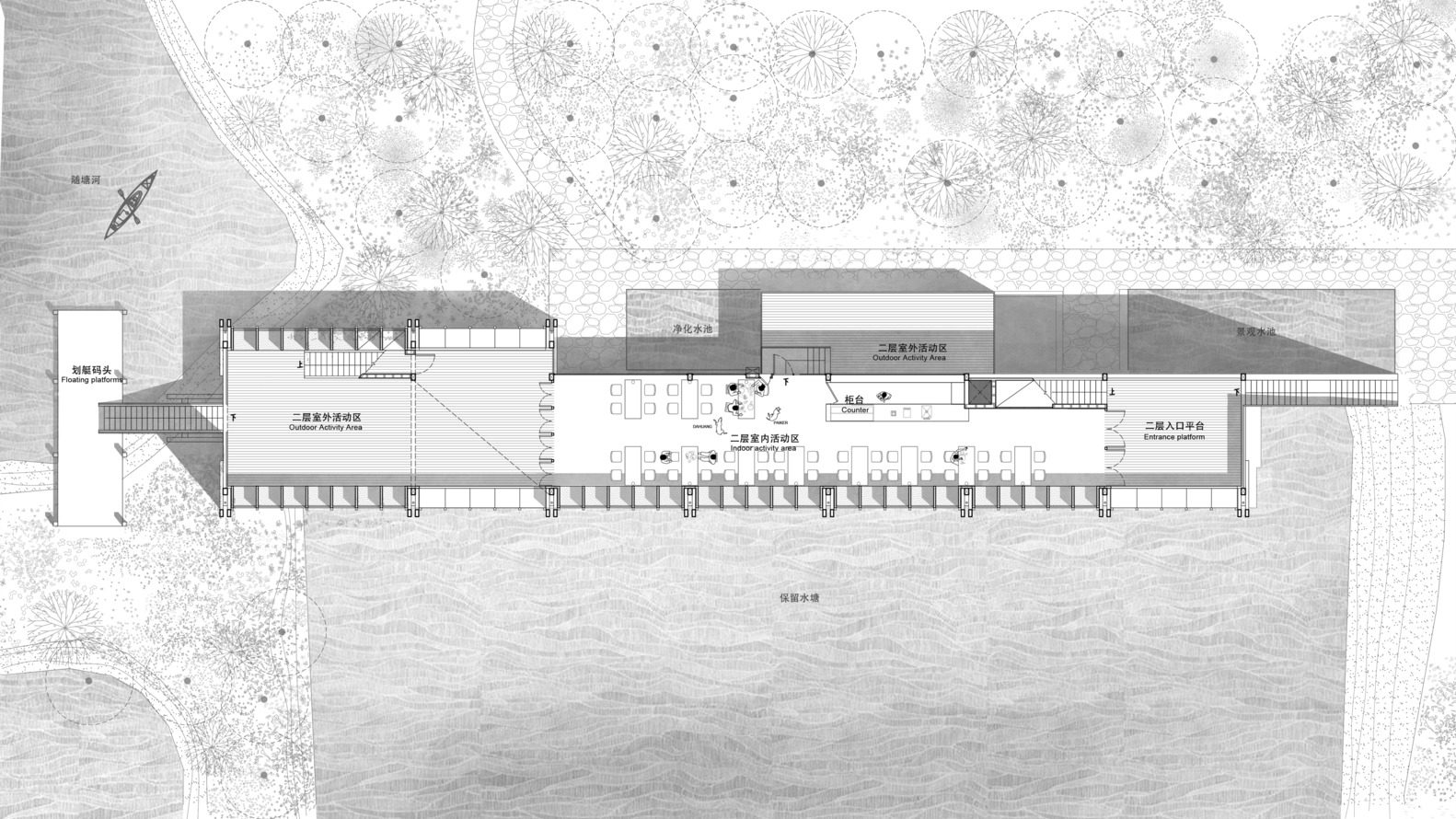
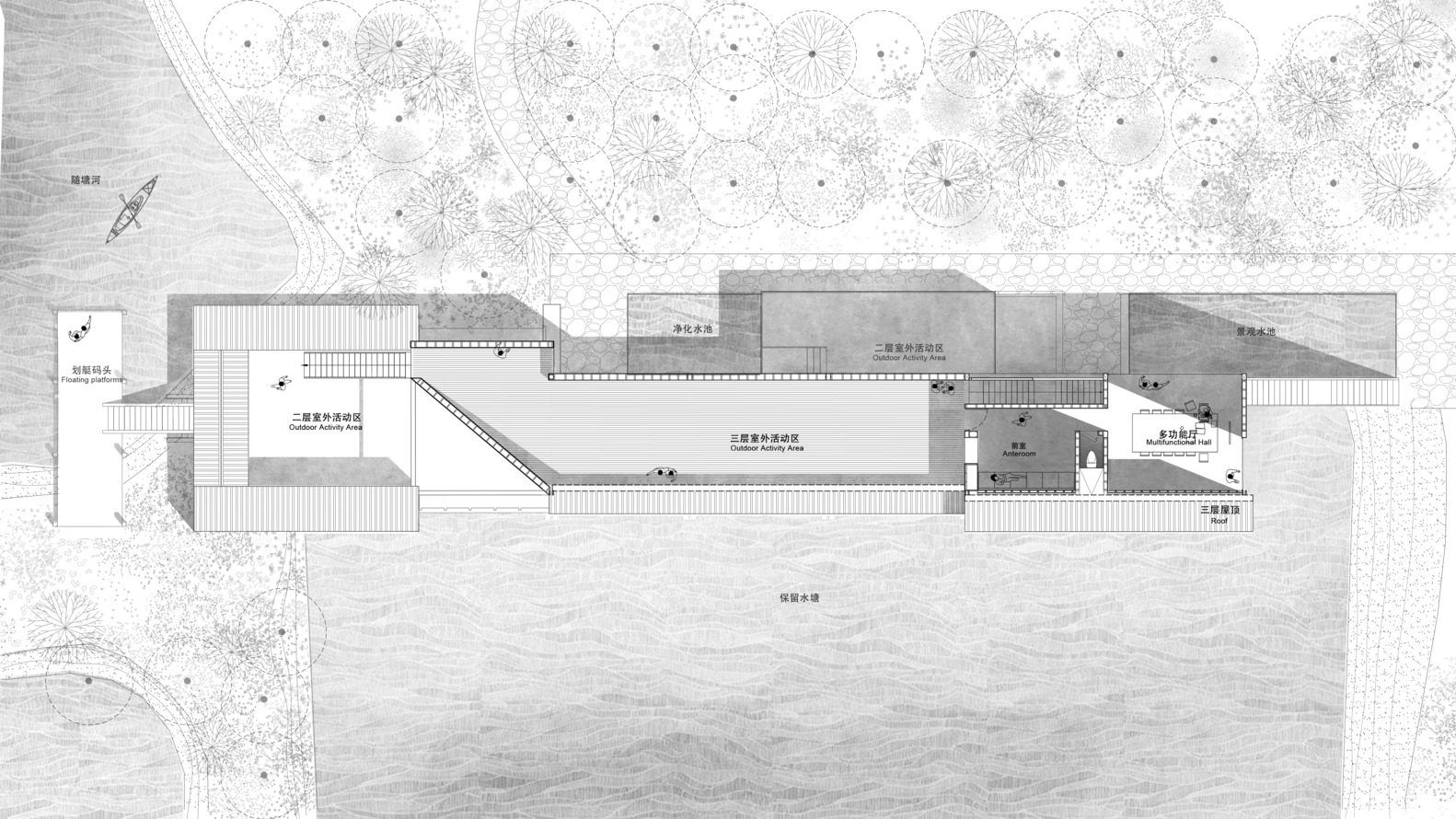
Plan – 2nd Floor
The Enigmatic Yangtze River Forest Farm
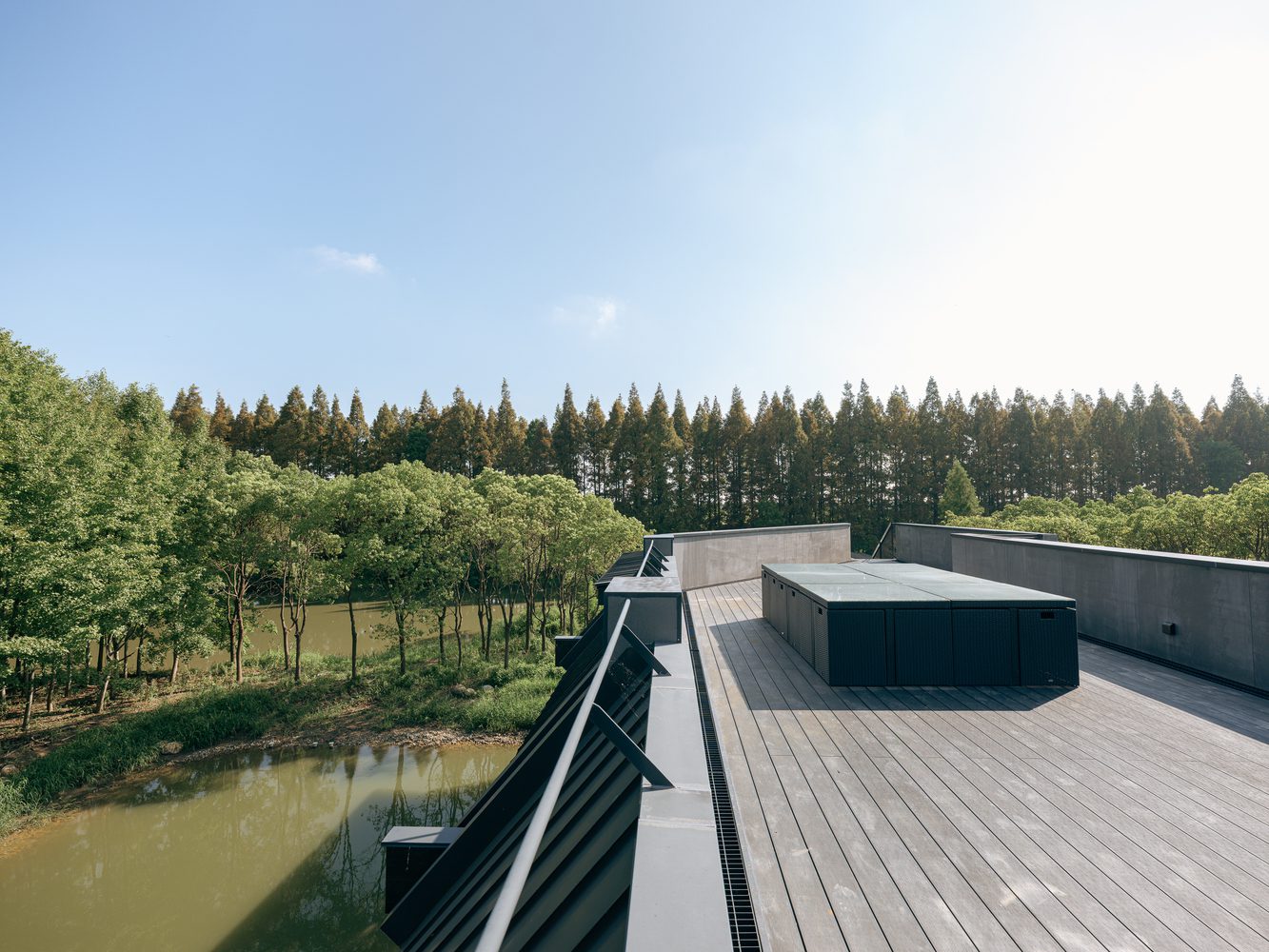
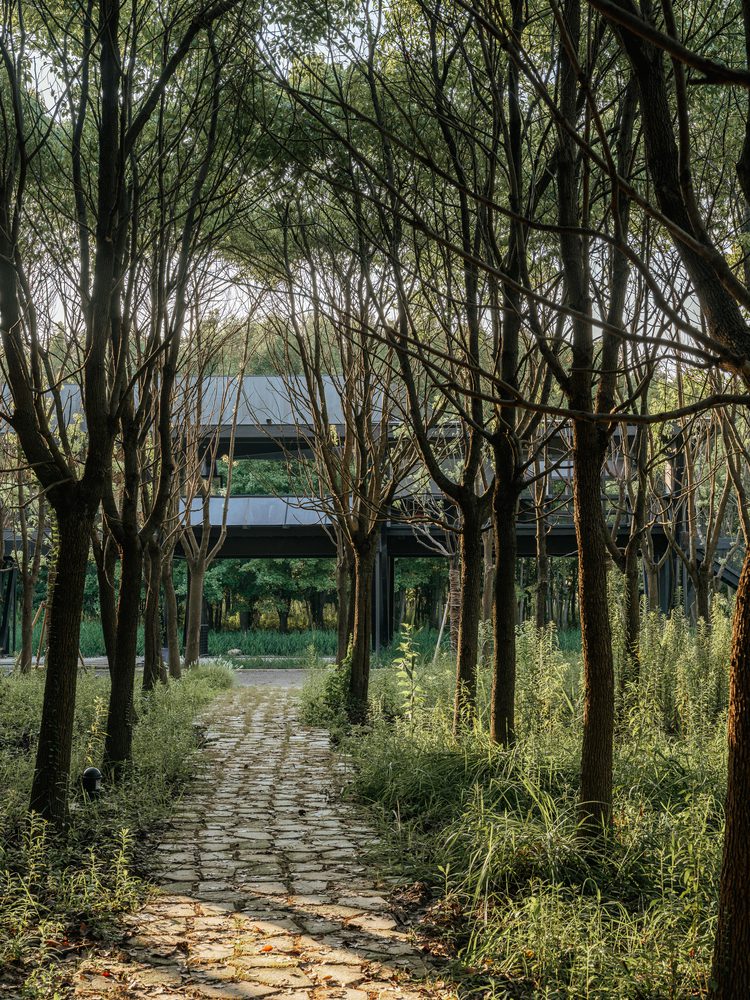
In 1974, a section of riparian wetland along the Taicang stretch of the Yangtze River was transformed into a forested area, giving birth to the Yangtze River Forest Farm. Over nearly half a century, shaped by the combined forces of nature and human intervention, this artificial forest—isolated along the riverbank—has evolved into a vital stopover for migratory birds and small wildlife. It now stands as a rare ecological spectacle in the middle and lower reaches of the Yangtze River.
© Yumeng Zhu
A Longhouse Amid Repetitive Landscapes
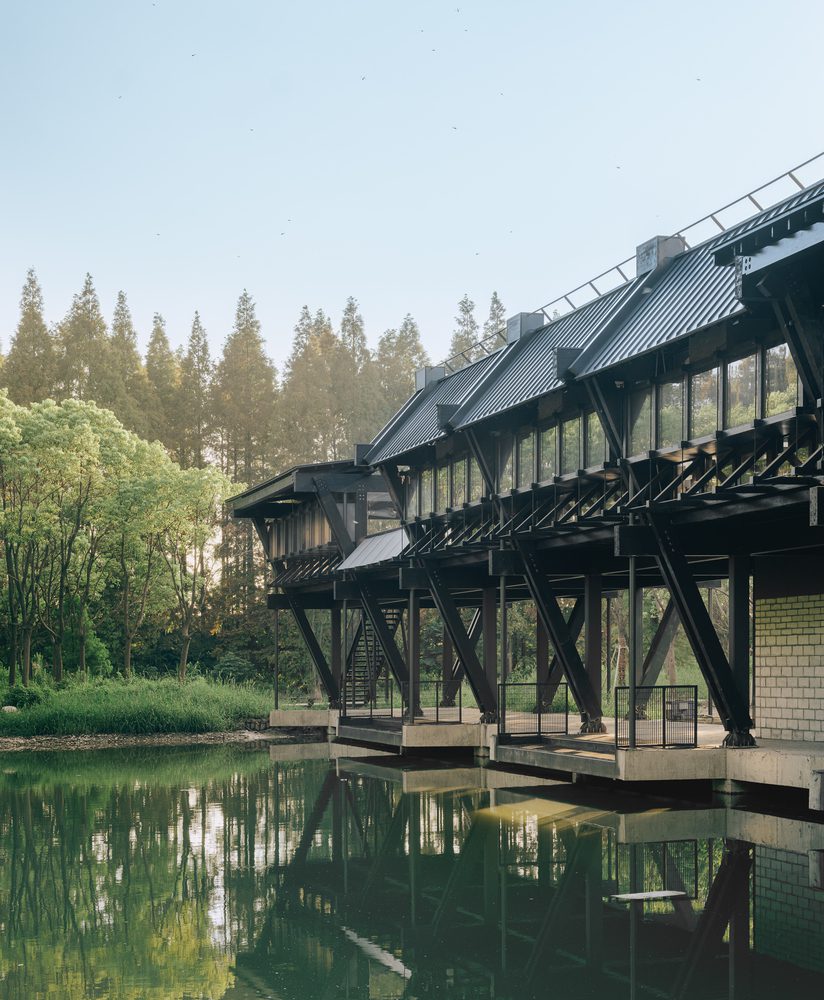
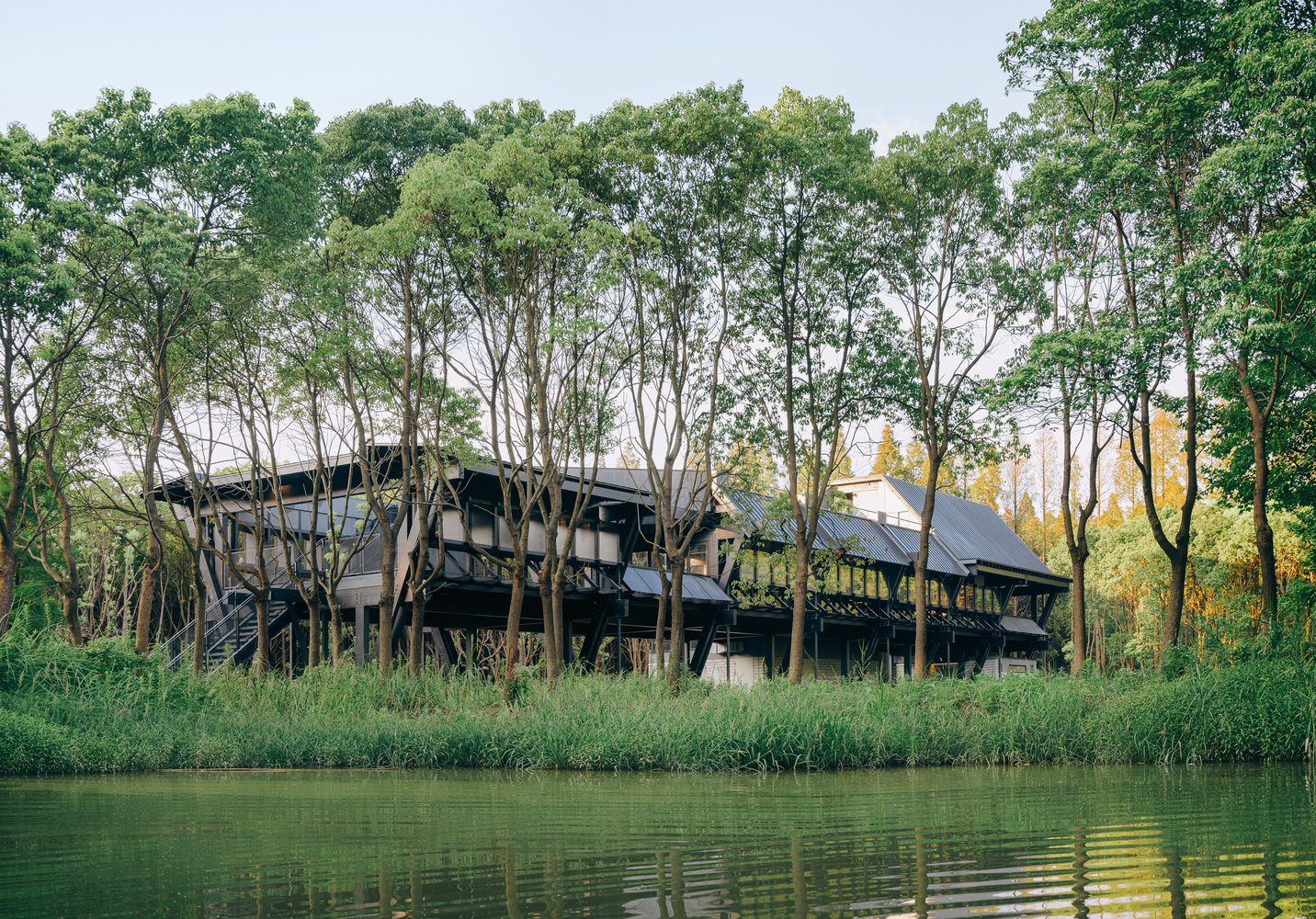
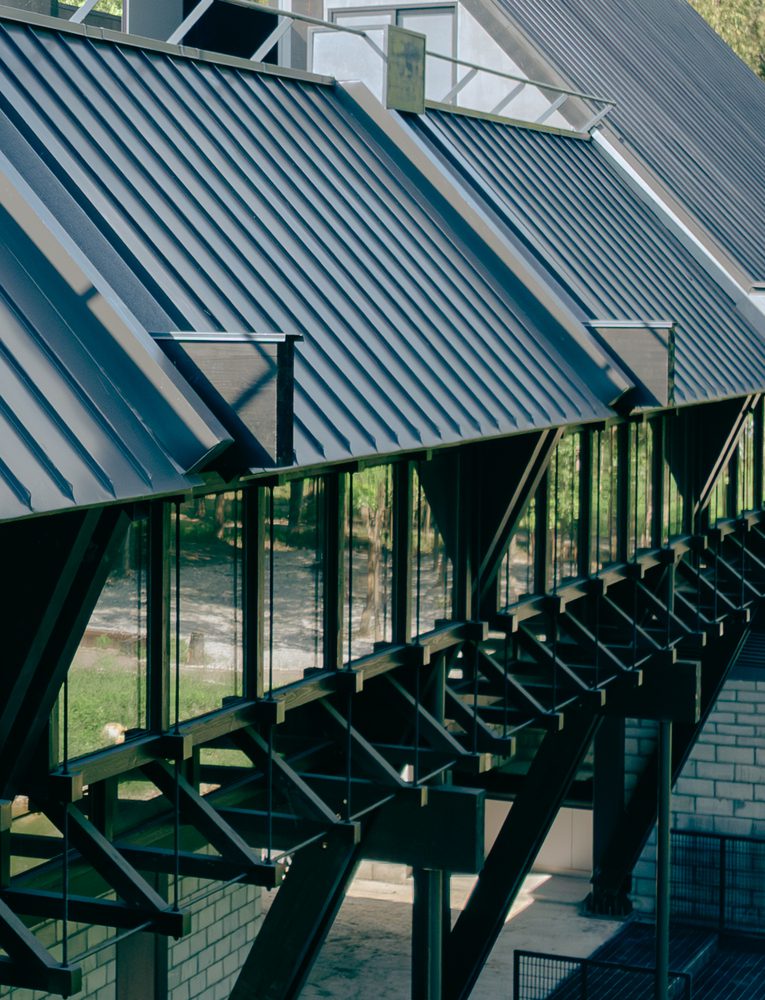
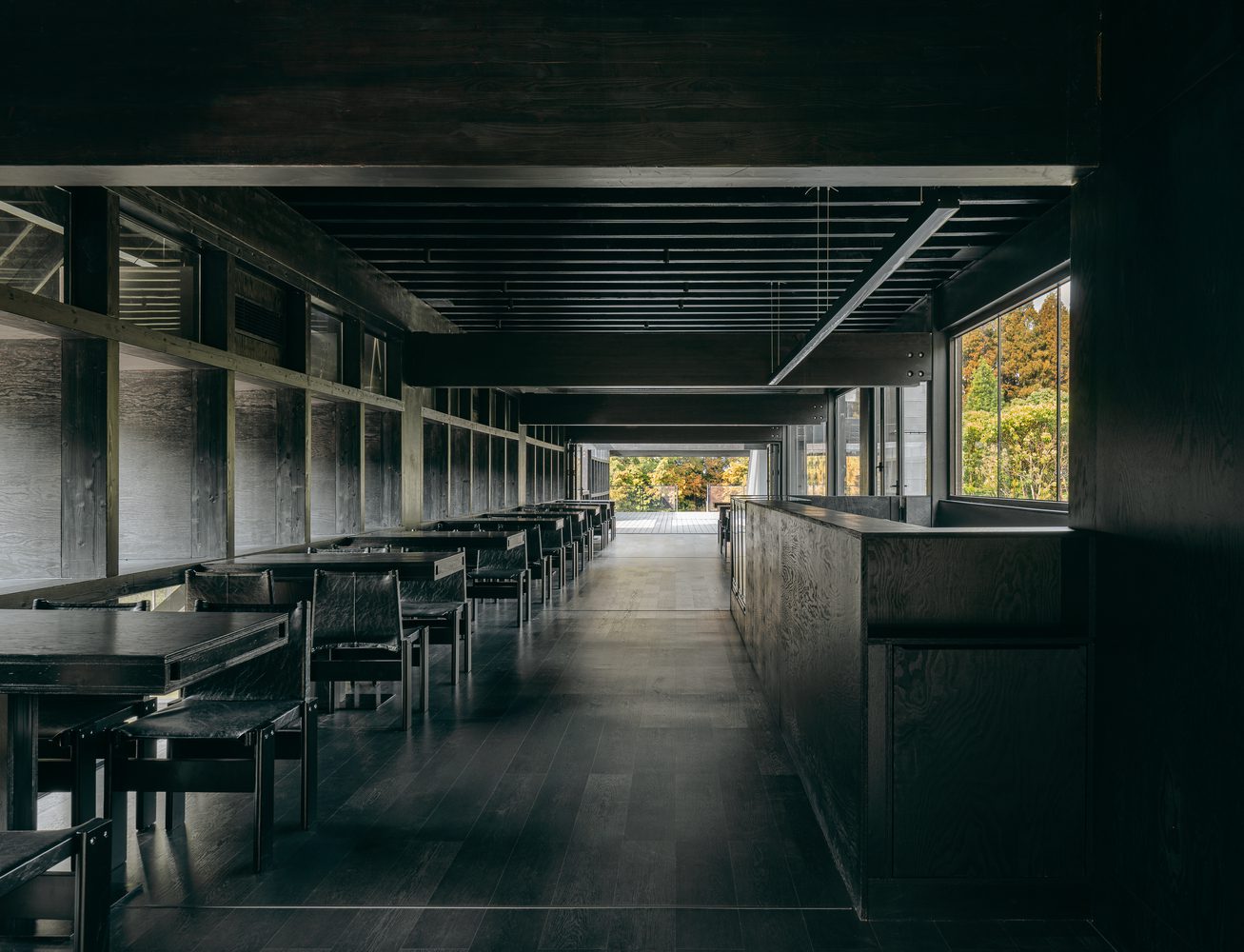
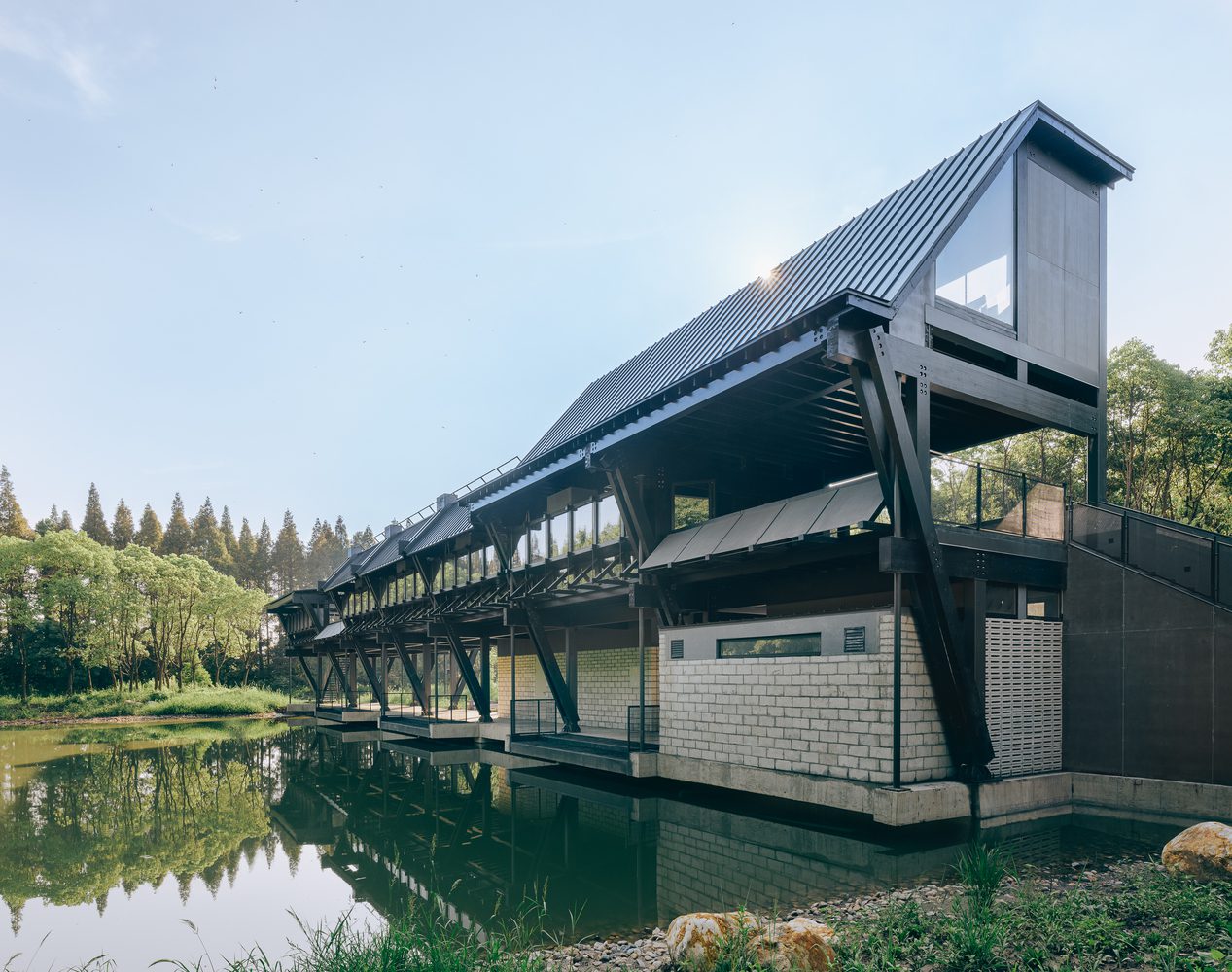
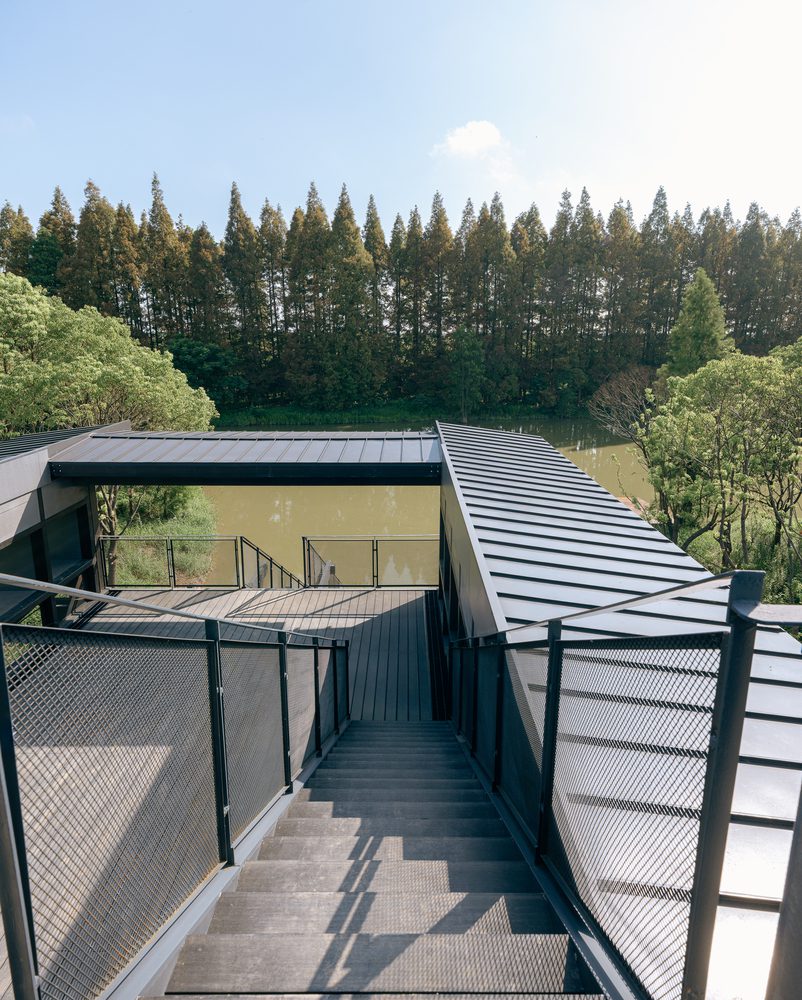
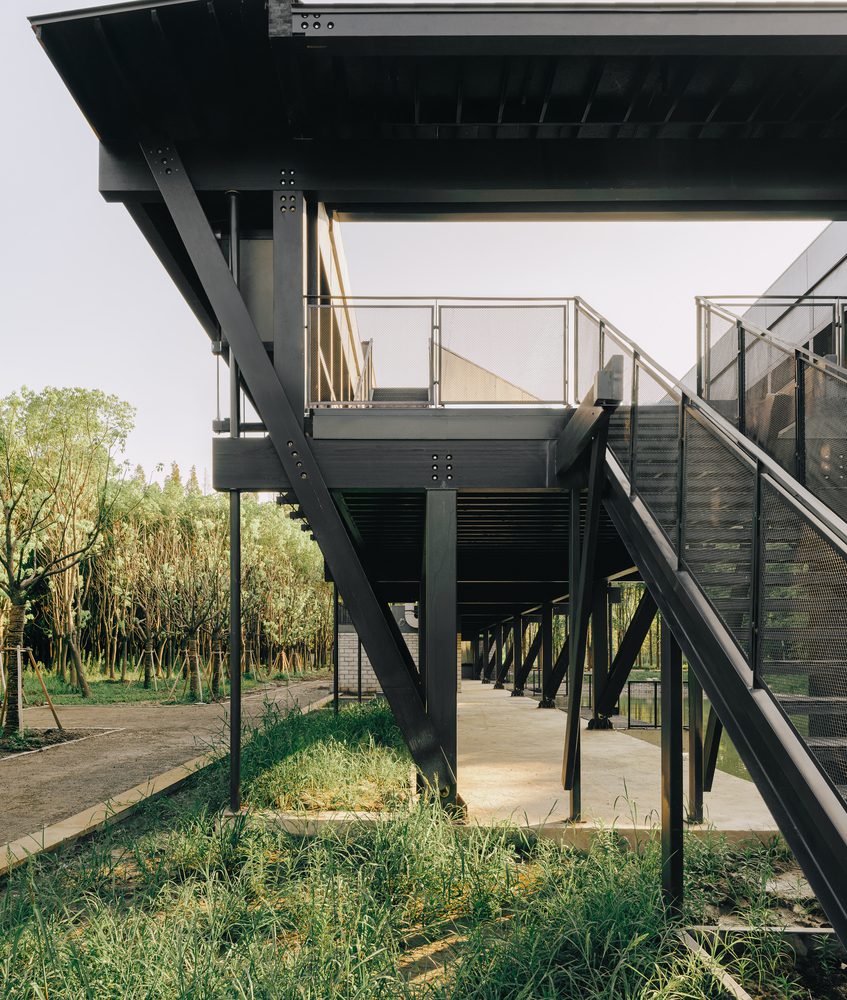
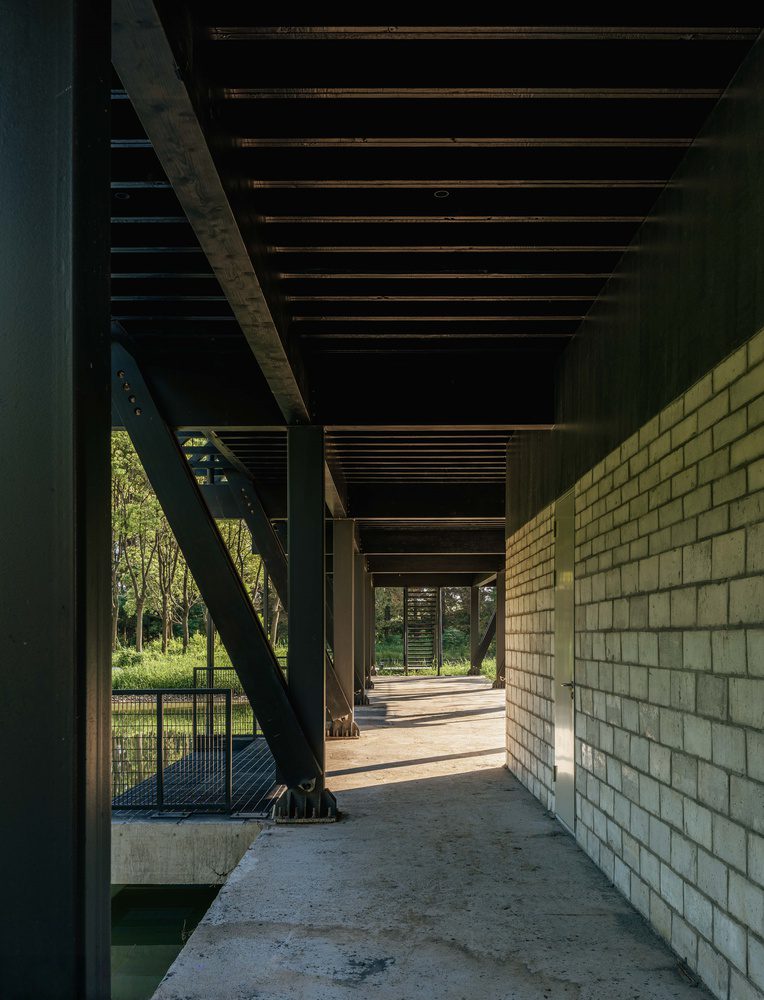
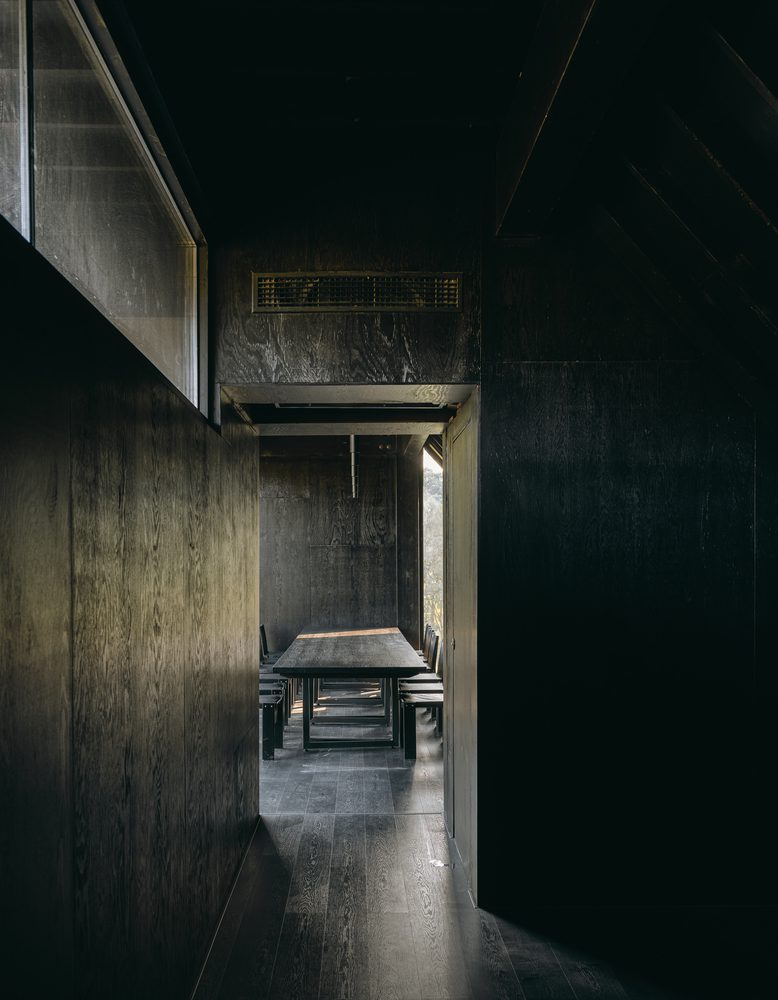
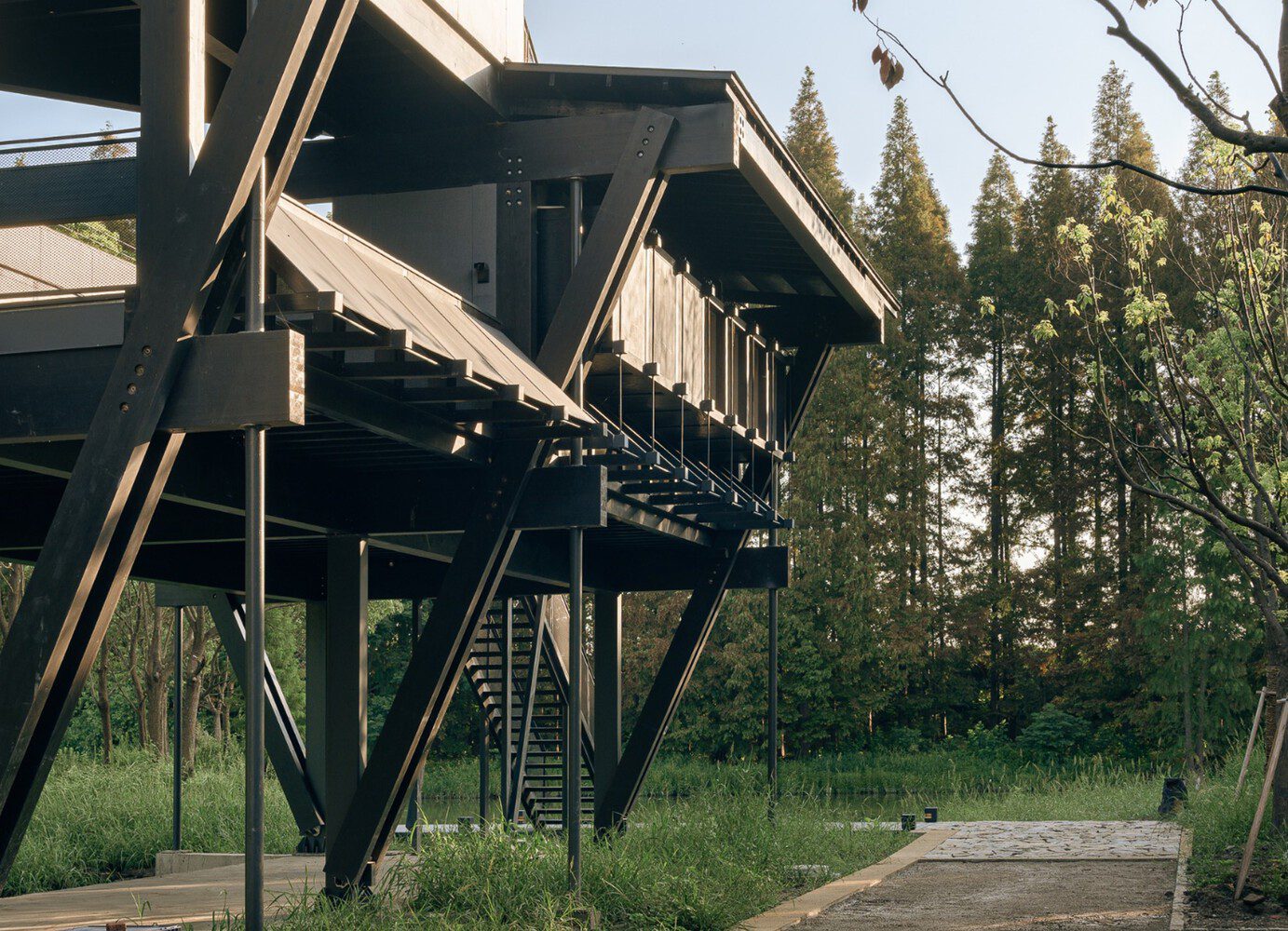
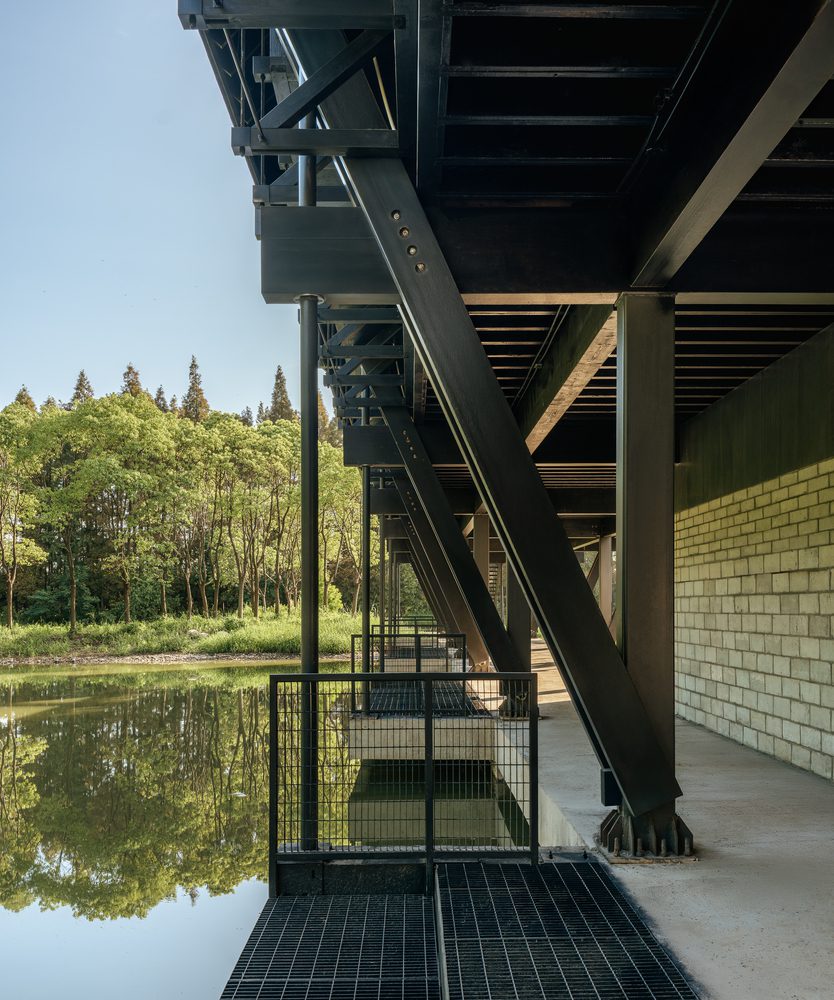
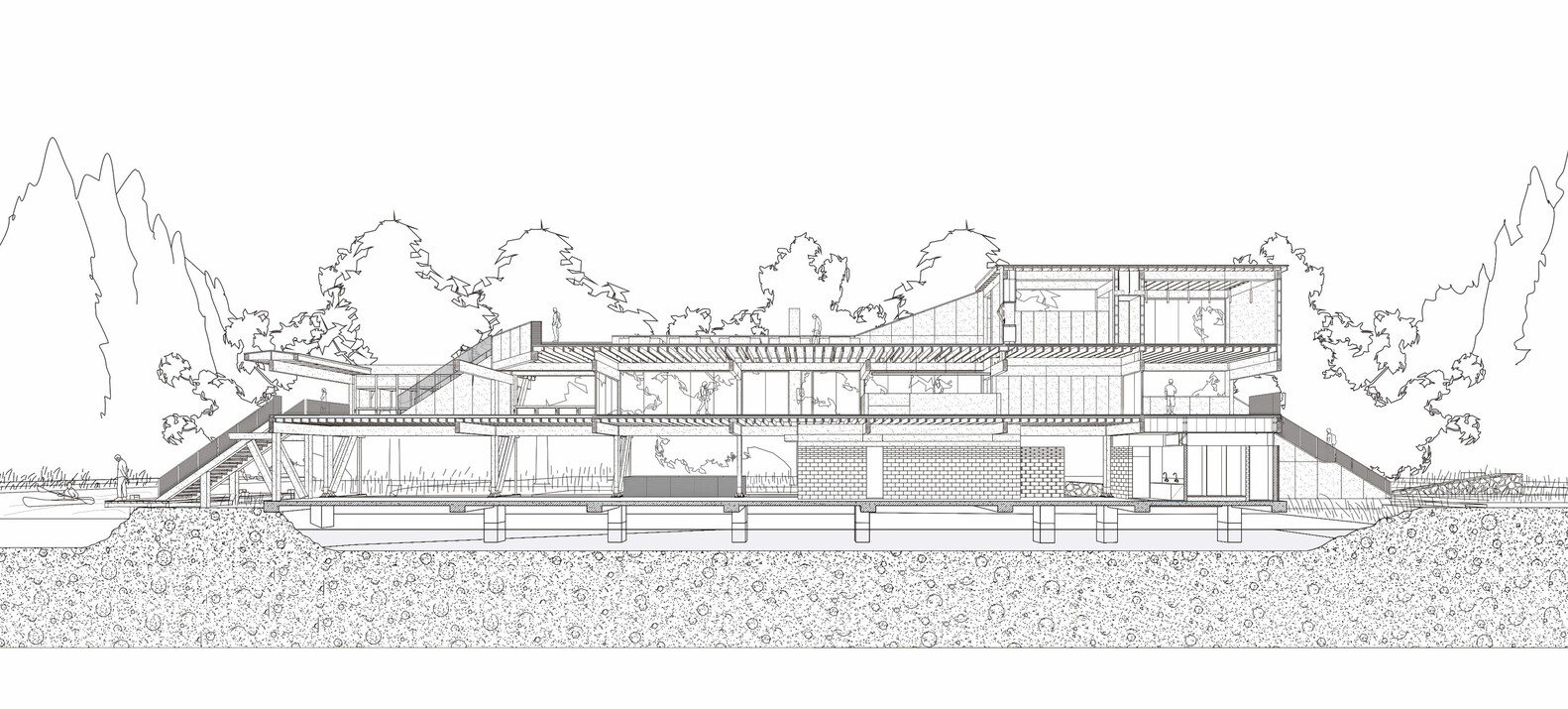
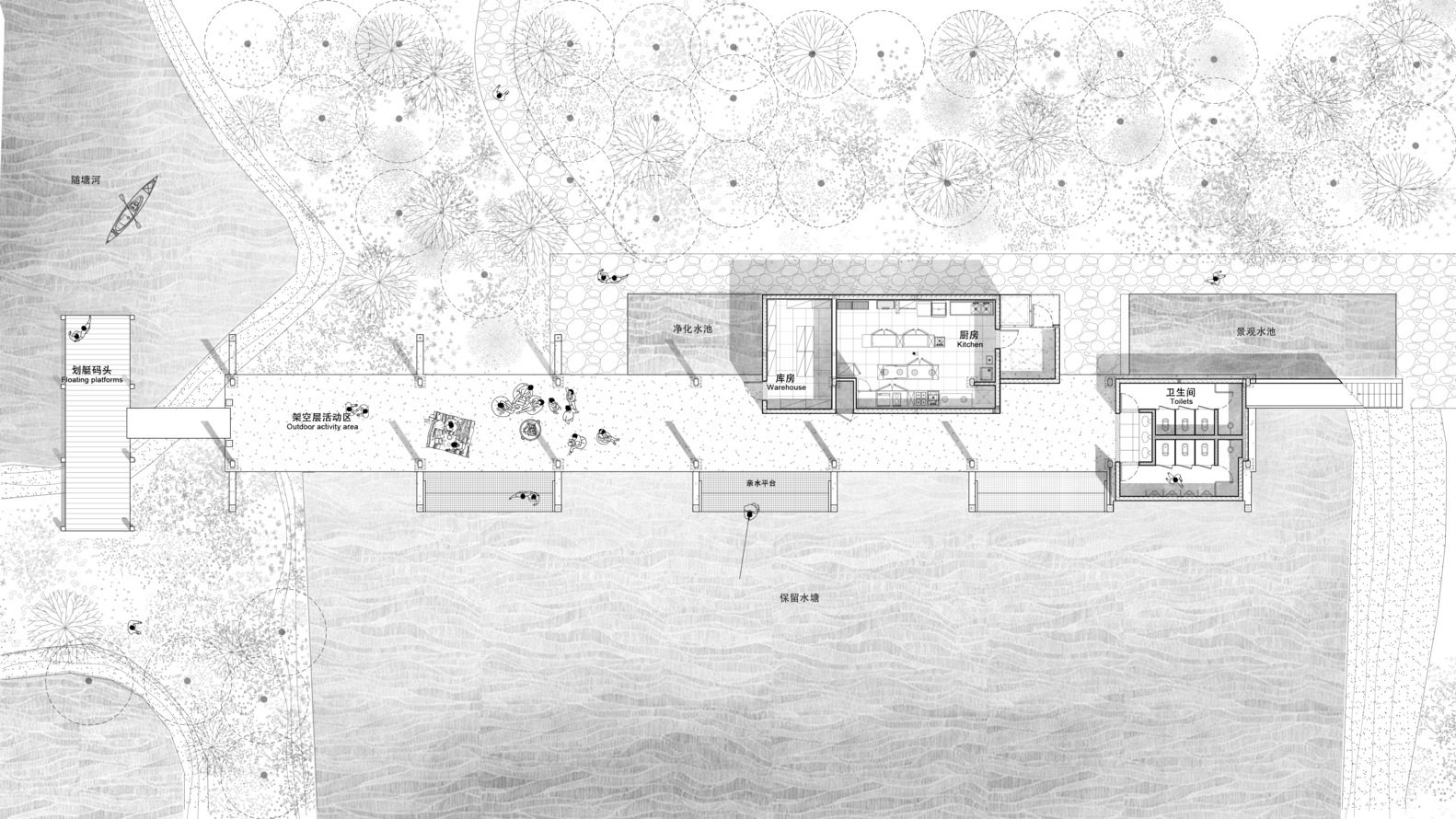
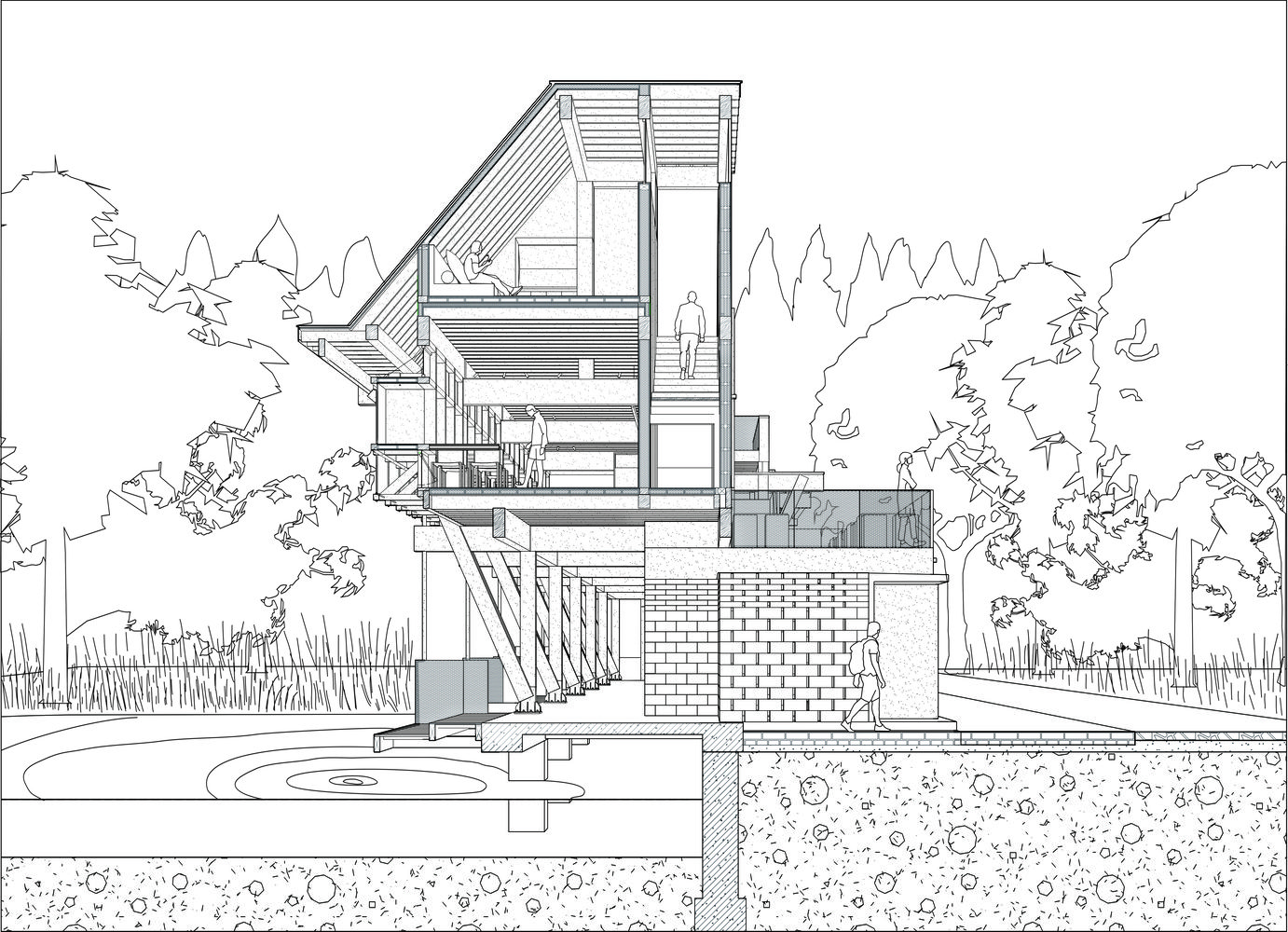
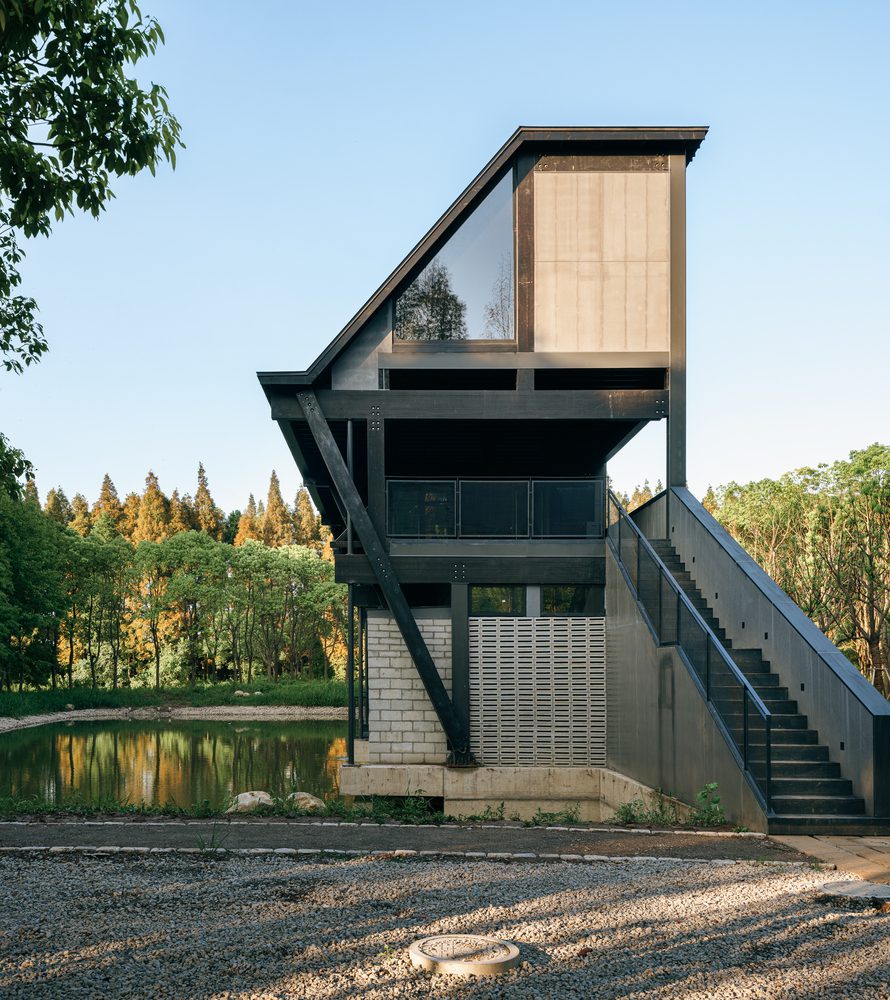
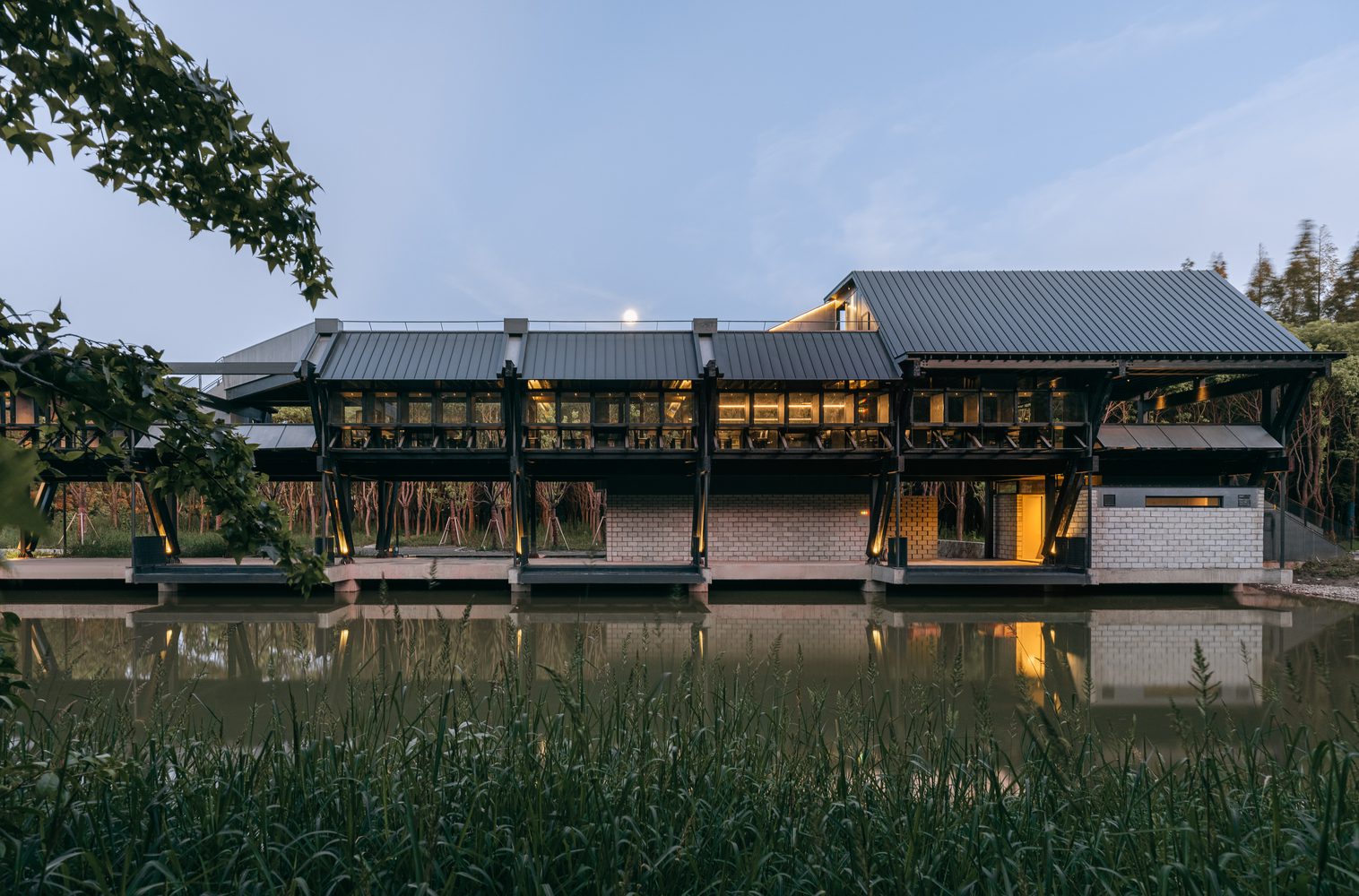
The initiative to develop the forest farm began in 2021. The architect was tasked with designing a central hub that would both frame the landscape for visitors and serve as a passageway into it. Named Dongliang Xuan, the new structure is a linear, stilted longhouse composed of seven bays, supported by hefty glulam (glued-laminated timber) beams and columns. It integrates multiple functions—including a dock, restaurant, public restrooms, multipurpose hall, and storage rooms—into a single structure that extends laterally along a shallow rectangular pool. The architecture acts as a “bridge” connecting the riverside dock with the forest’s central tree-lined path.
© Yumeng Zhu
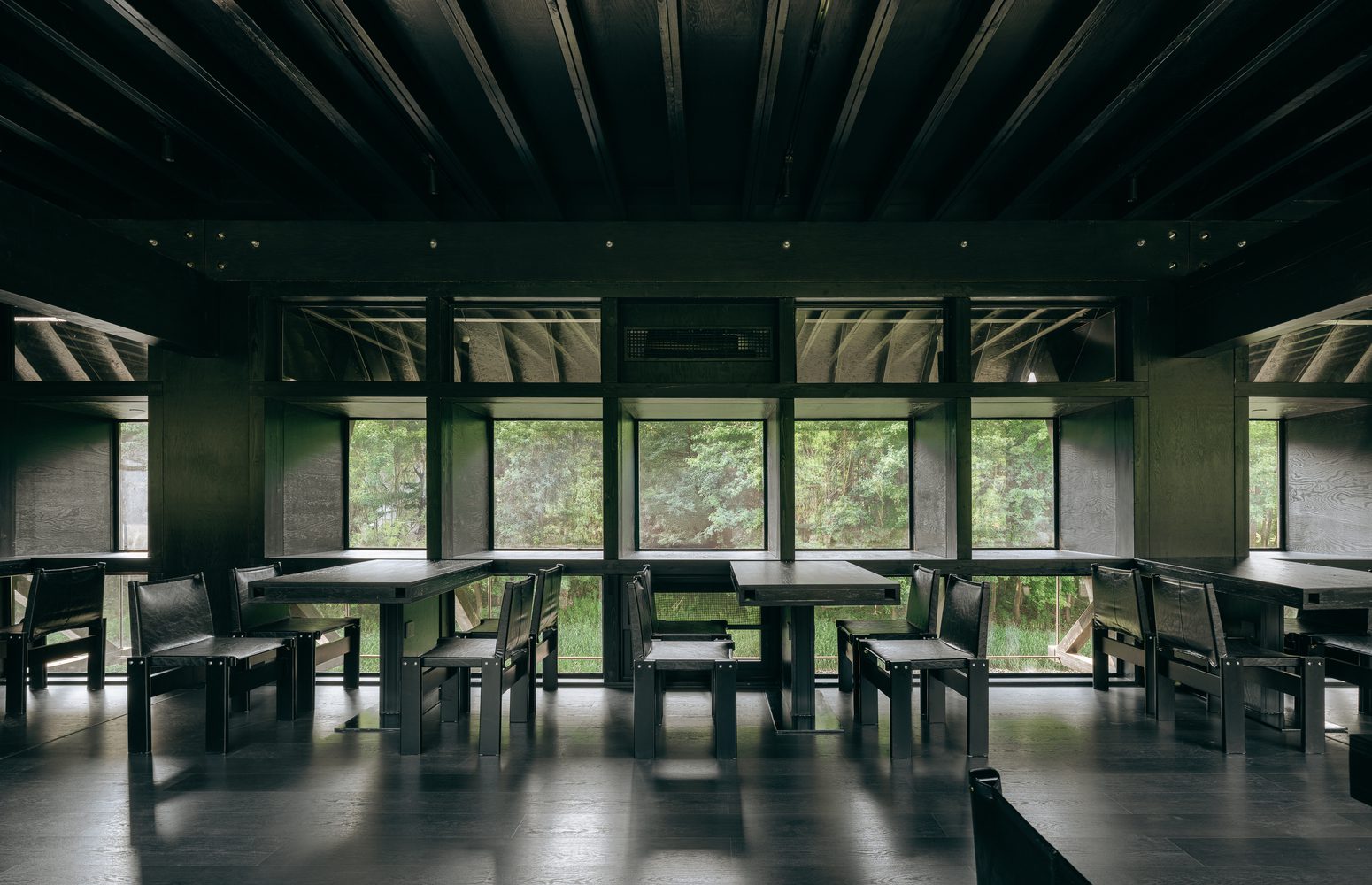
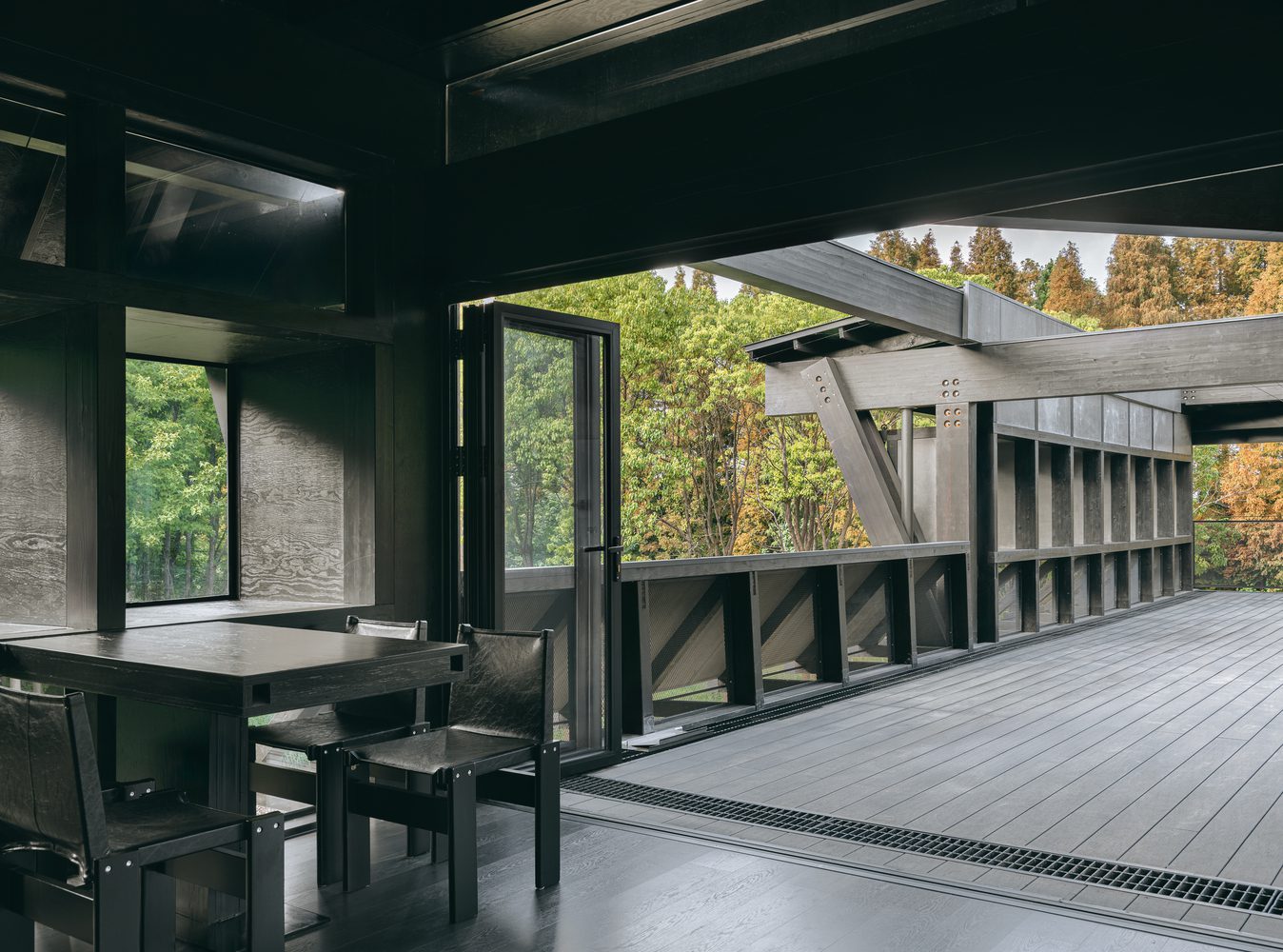
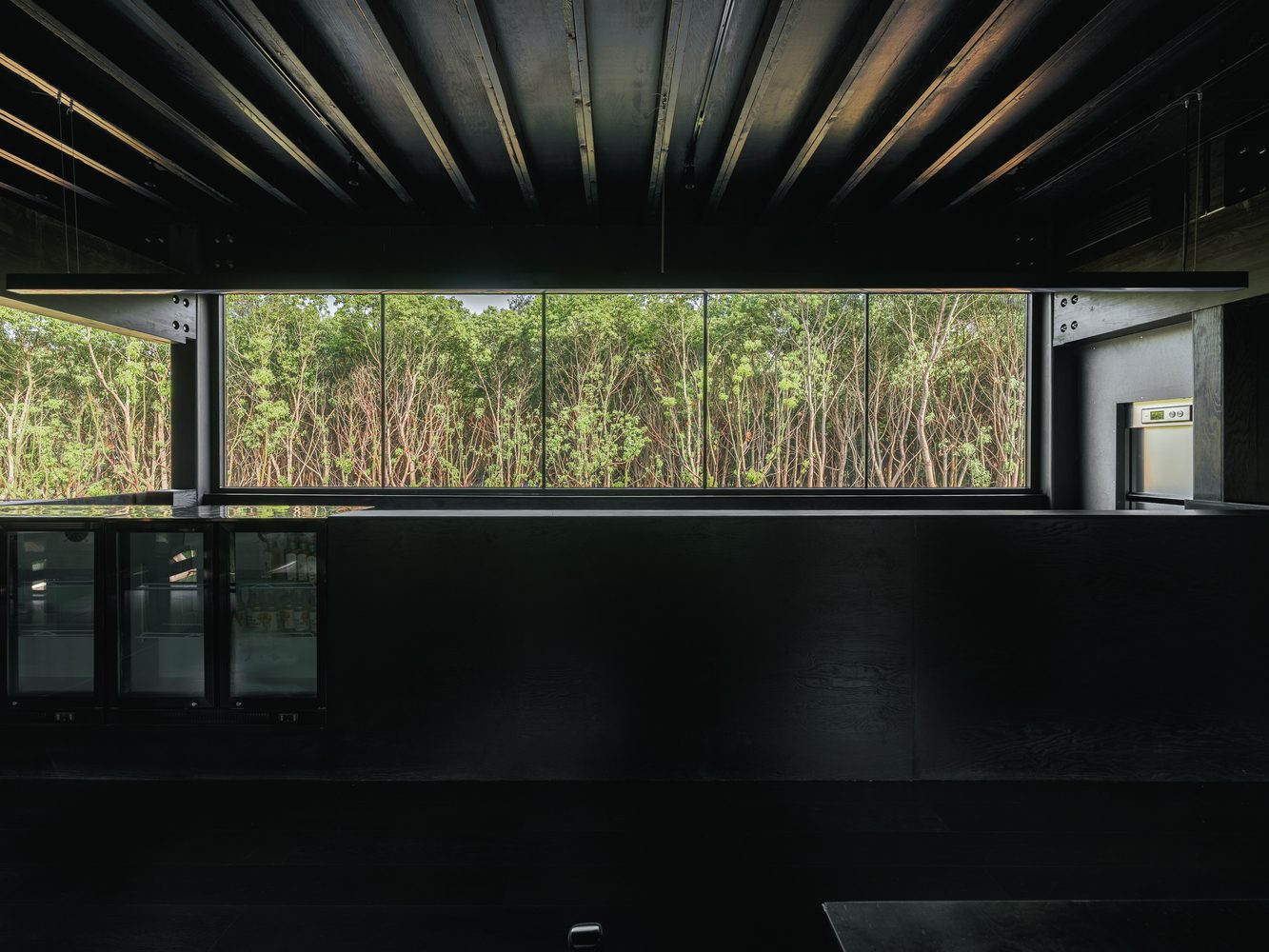
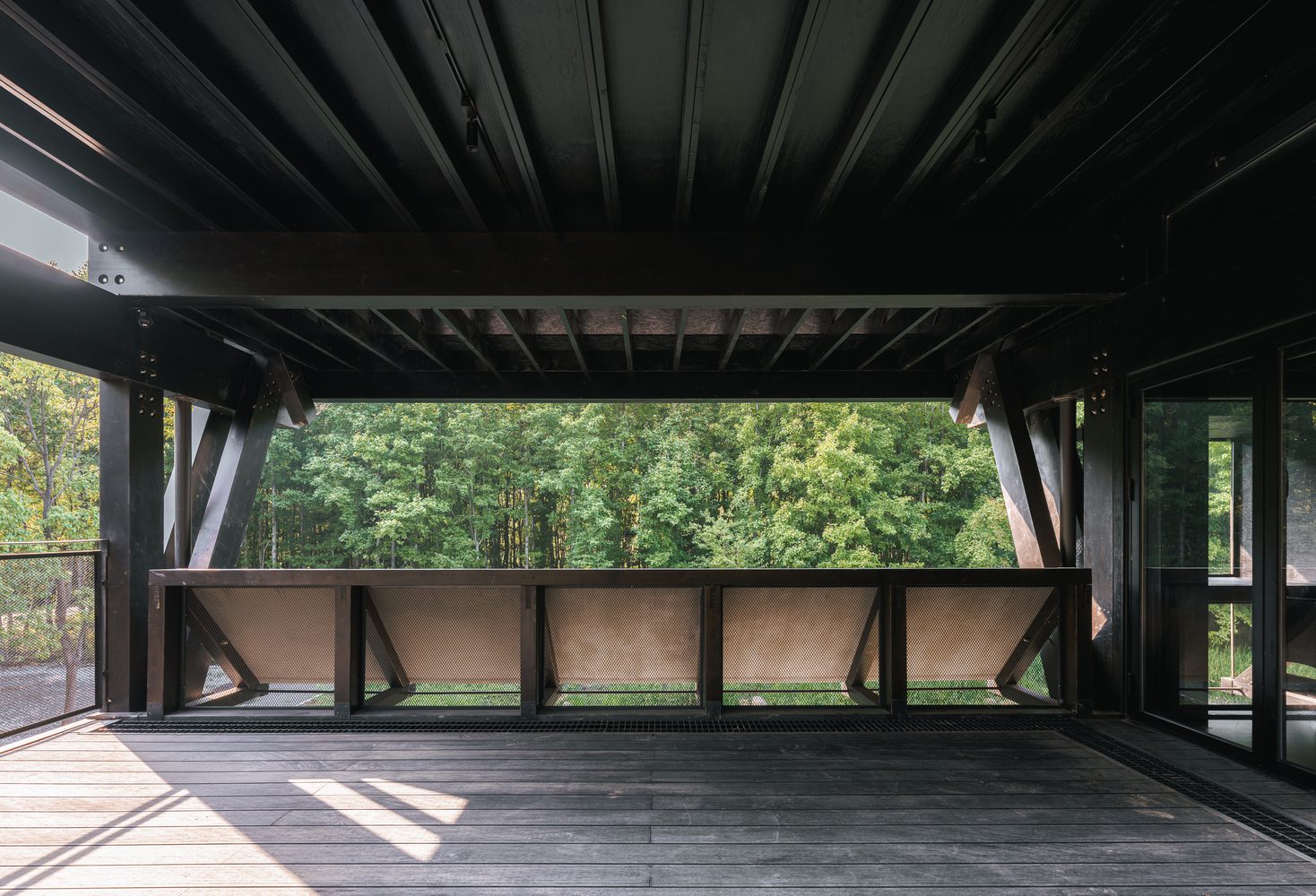
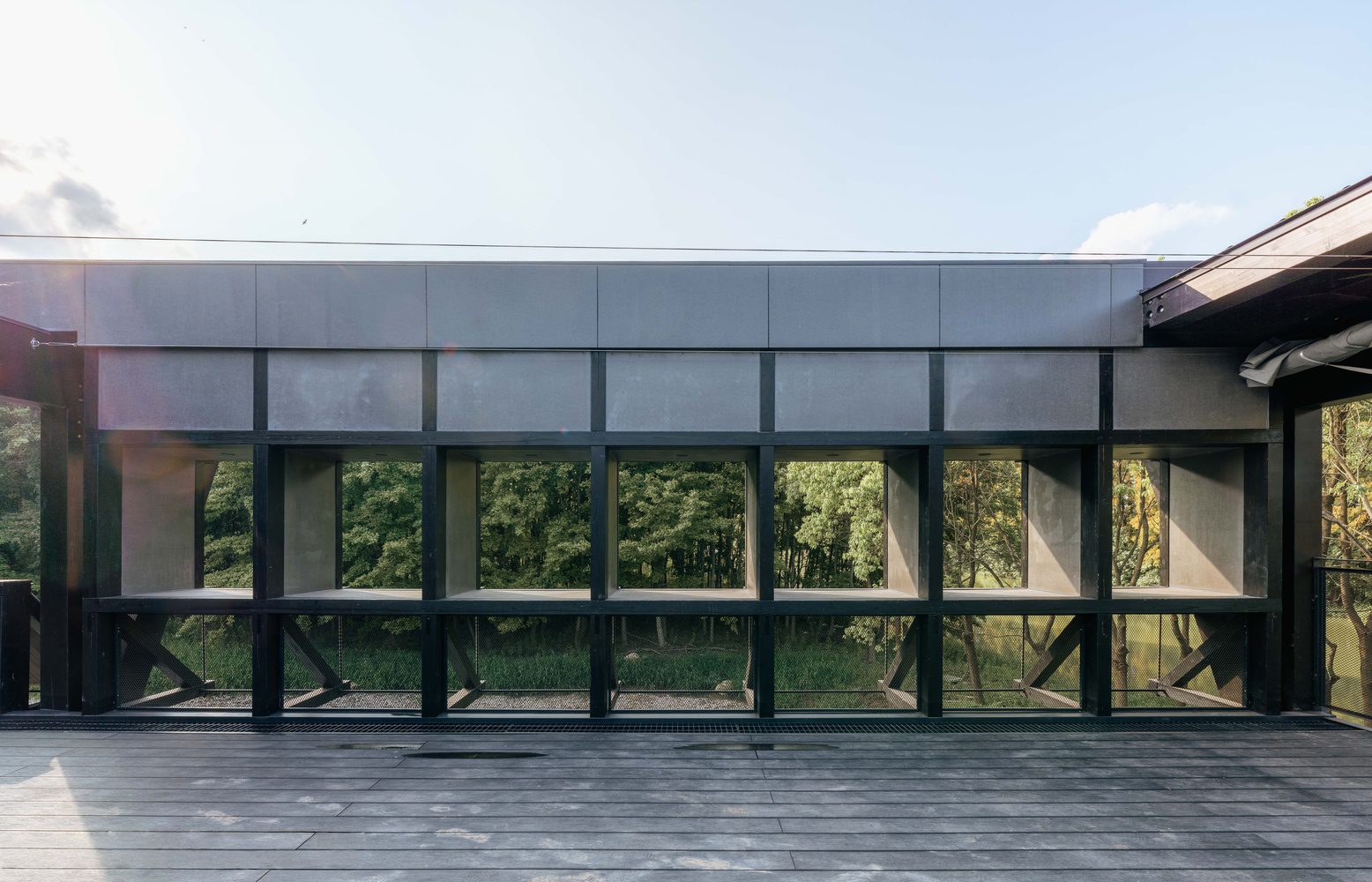
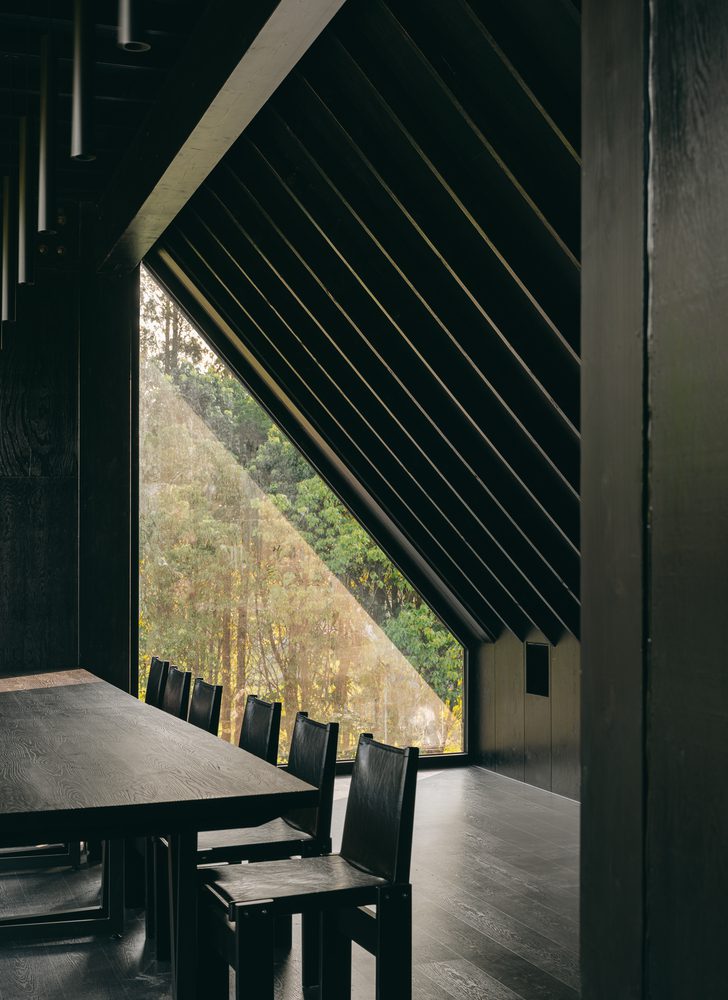
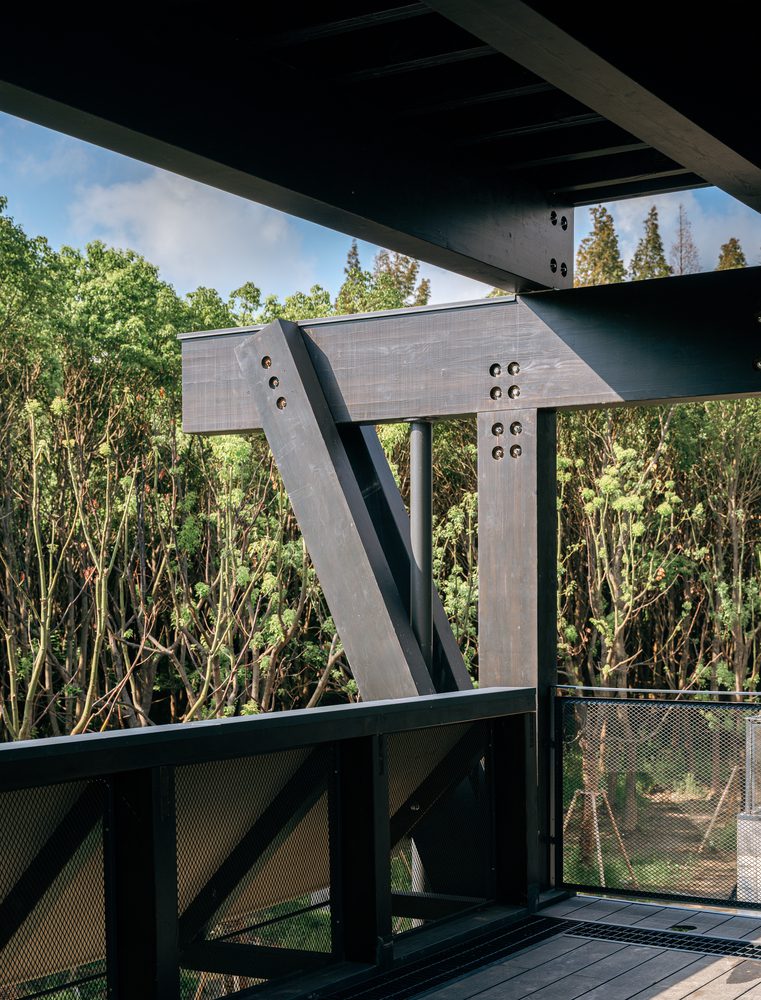
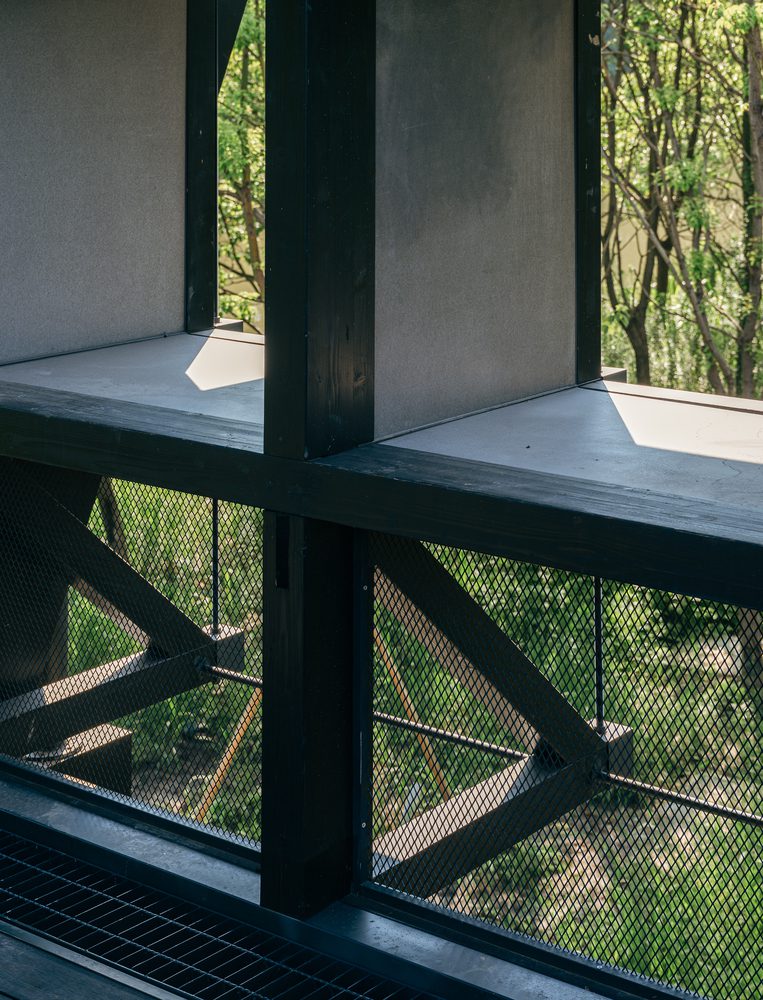
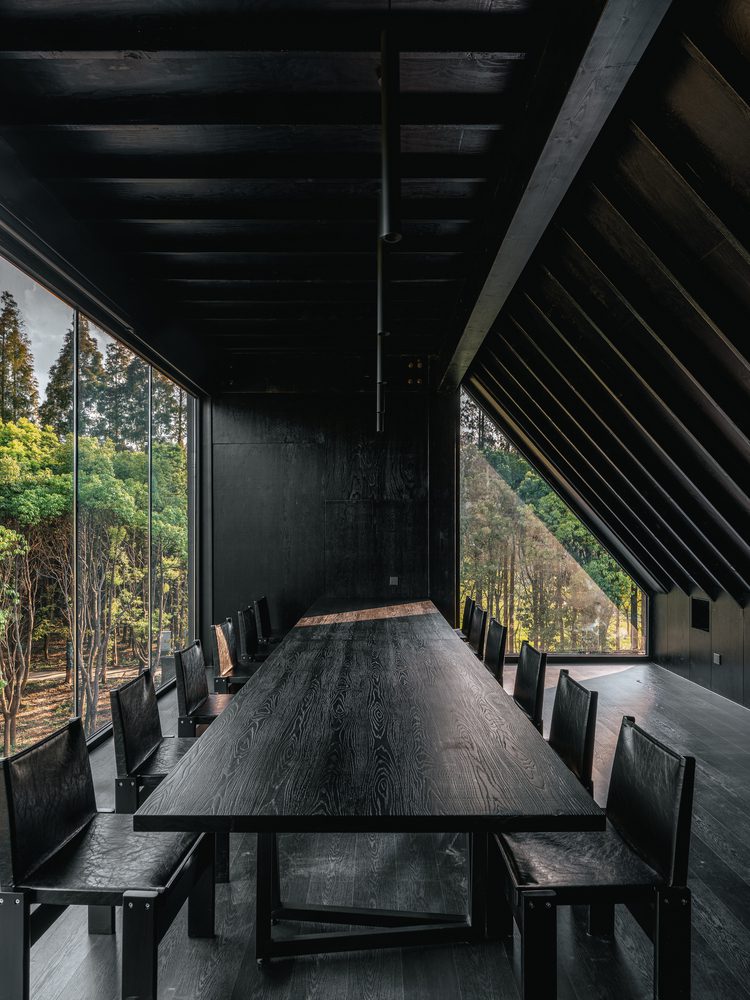
The repetitive scenery unique to the forest farm is brought into the building through a variety of framed “windows,” transforming the pavilion into a large-scale viewing apparatus set within the landscape.
A Corridor Bridge of Integrated Experiences
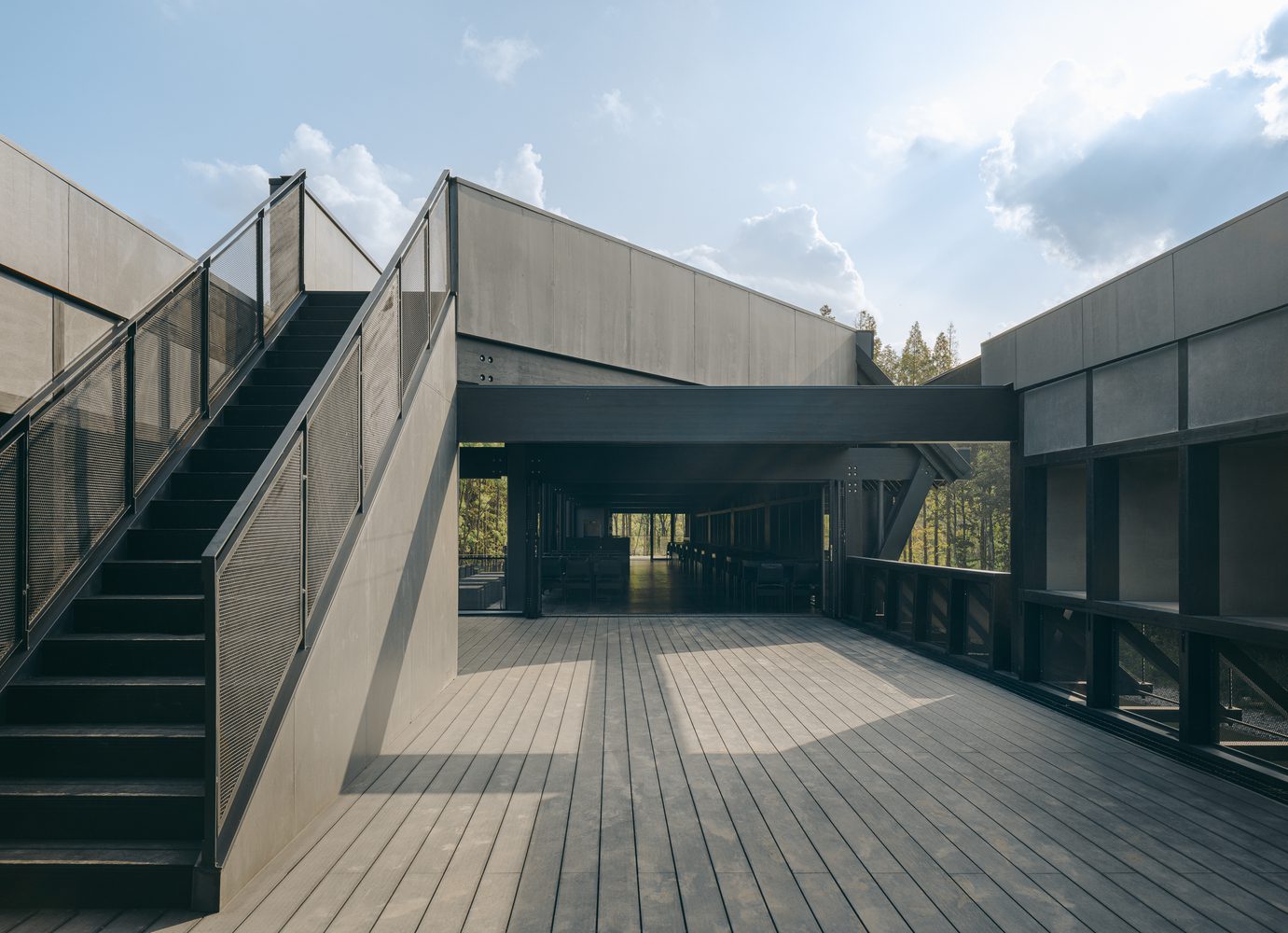
Dongliang Xuan is both a longhouse and a corridor bridge. Its array of windows acts as mediators of spatial experience, cropping the local scenery into discrete visual “fragments.” These frames offer a varied reading of an otherwise monotonous landscape. As visitors move through and around the building, their shifting perspectives create a dynamic, ever-changing engagement with the forest. The journey through the structure becomes both spatially meaningful and ceremonially evocative, offering a multiplicity of interpretations of the artificial woodland.
© Yumeng Zhu
Lightweight Construction and the New Jiangnan
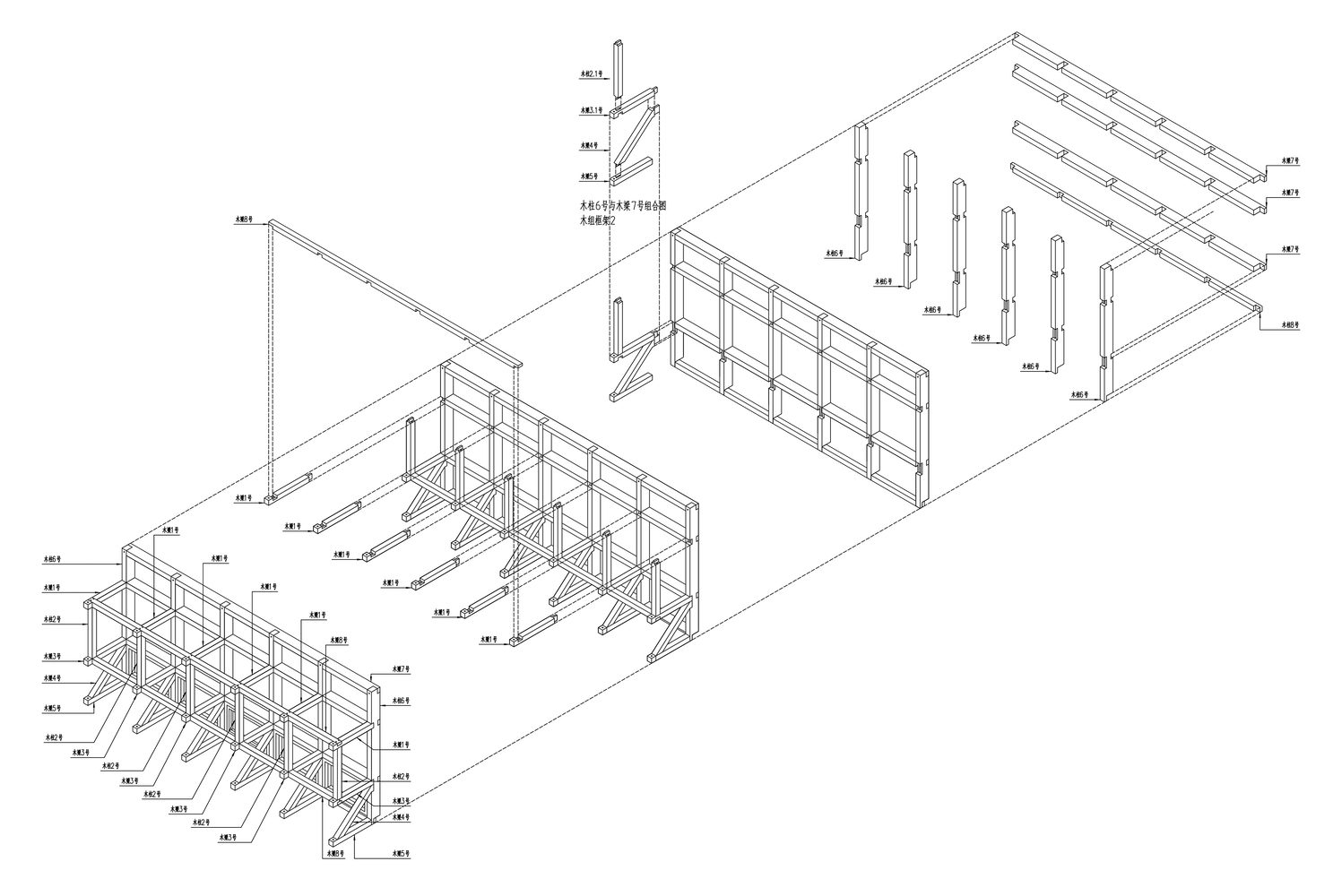
Dongliang Xuan was constructed using a large number of prefabricated glulam components, all manufacturable in nearby factories. On-site assembly relied solely on basic machinery and manual labor, making the entire process an example of “lightweight construction.”
© Yumeng Zhu
Taking into account the unique context of a man-made forest interwoven with waterways, and the socio-industrial conditions of the surrounding rural towns, the architect opted for a form and construction method tailored to the site. The project reflects both local building wisdom and a contemporary exploration of timber technology. It may well mark the emergence of a new vision for the Jiangnan region.
Project Info:
-
Architects: Wonder Architects
- Country: Suzhou, China
- Area: 400 m²
- Year: 2024
-
Photographs: Yumeng Zhu
-
Manufacturers: Canfor, FOREX, Rymor
-
Lead Architects: Zhu Qipeng
-
Landscape: Clover Hall
-
Engineering: ZTJ Building Craft, Canada Wood
-
Design Team: Zhu Qipeng, Jin Tailin, Zhang Tian’ai, Feng Chaoyue, Wang Shuxin, Fan Runting
-
Clients: People’s Government of Huangjing Town, Suzhou Limao Tourism Technology Co., Ltd.