

Coveta Residence, Situated in a privileged location on a hill near Alicante, this home becomes the dream of a young couple.
Courtesy of NOS Arquitectura
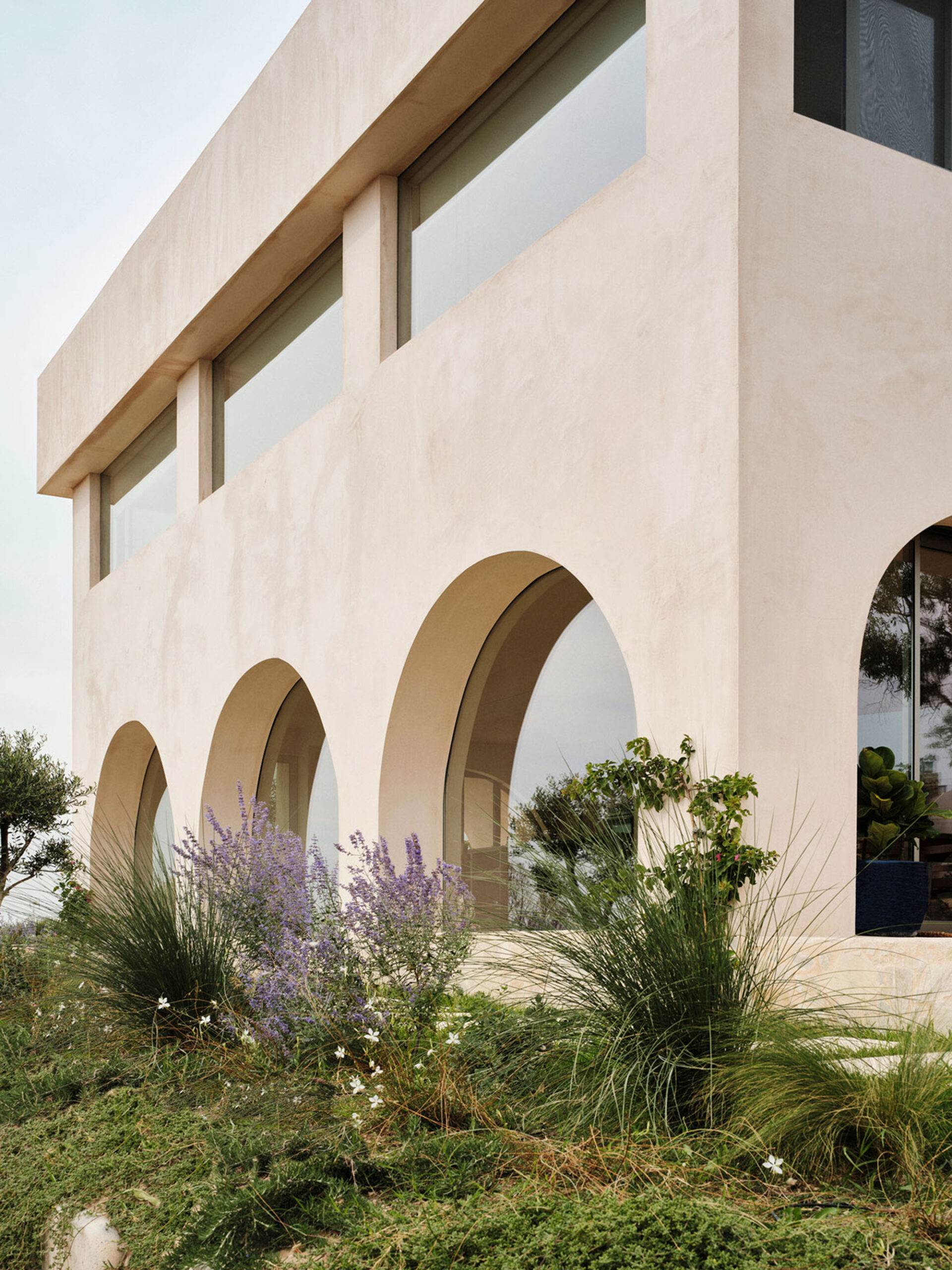
Aware of the potential before them, their approach to the project is clear: to recover the Mediterranean essence and the most characteristic architecture of the Alicante coast, while keeping in mind the contemporary lines of modern architecture.
Courtesy of NOS Arquitectura
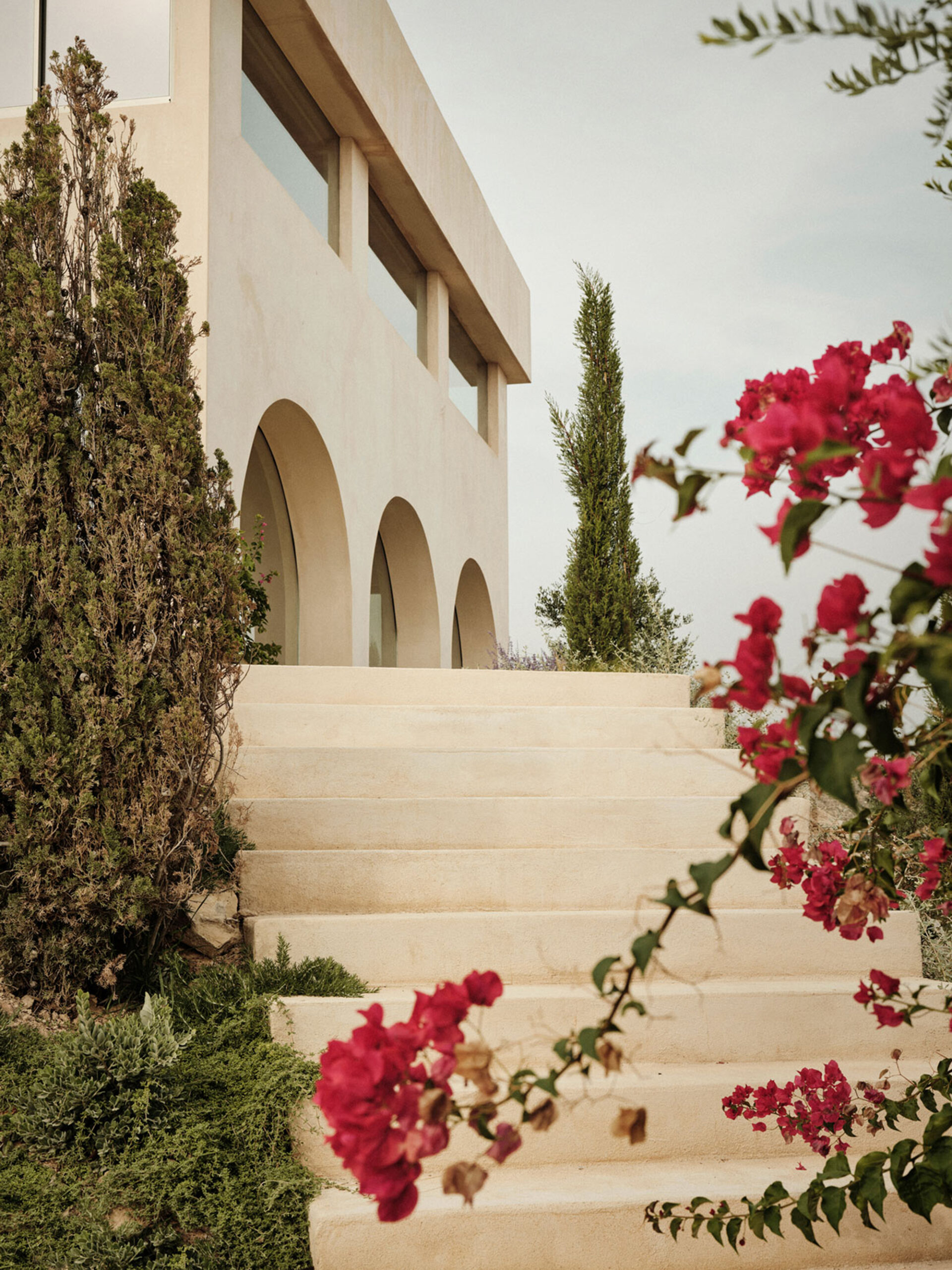
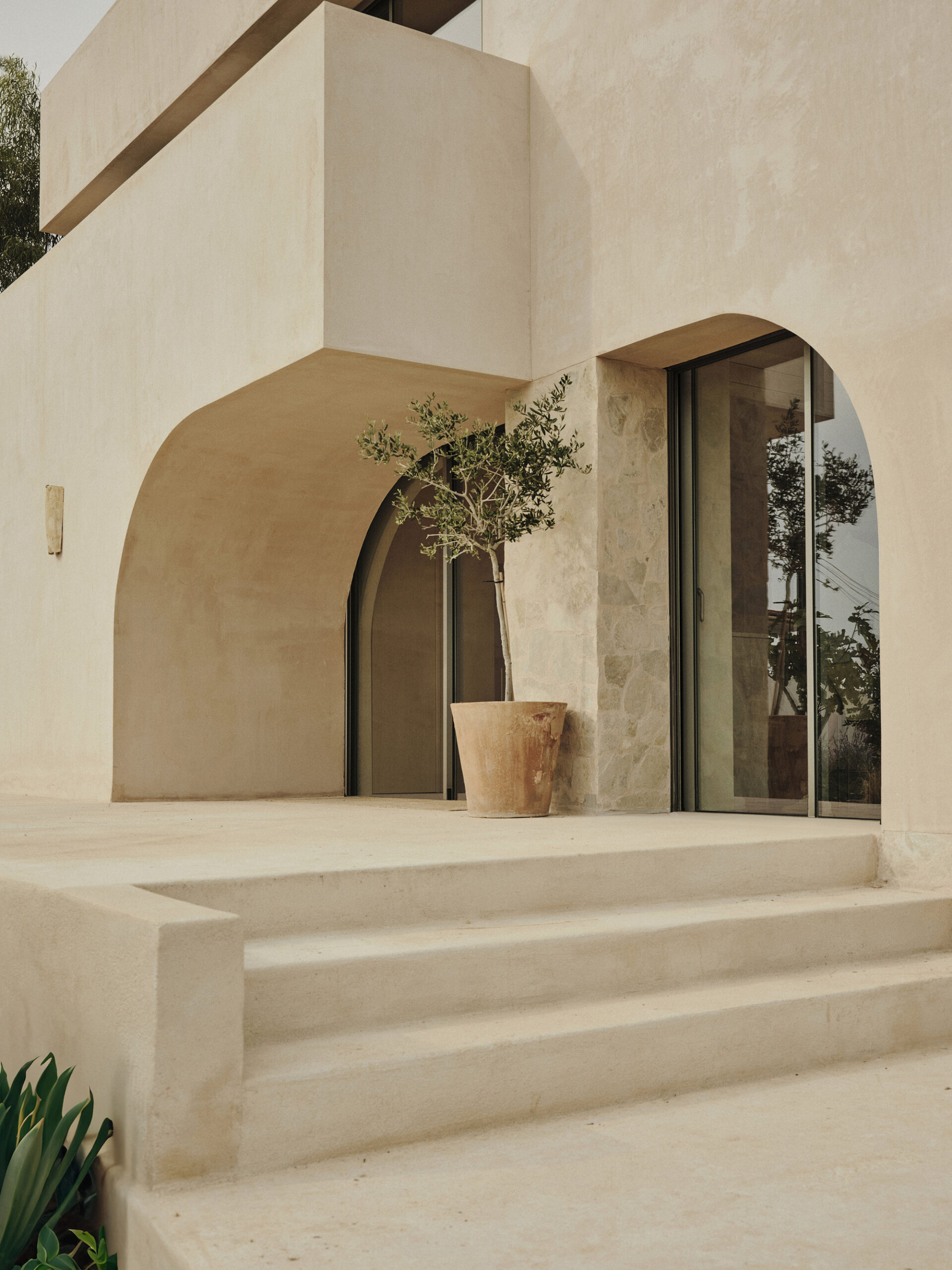
The project is developed by playing with those intrinsic aspects of native architecture. Curved geometries, lime coatings, and natural materials.
Courtesy of NOS Arquitectura
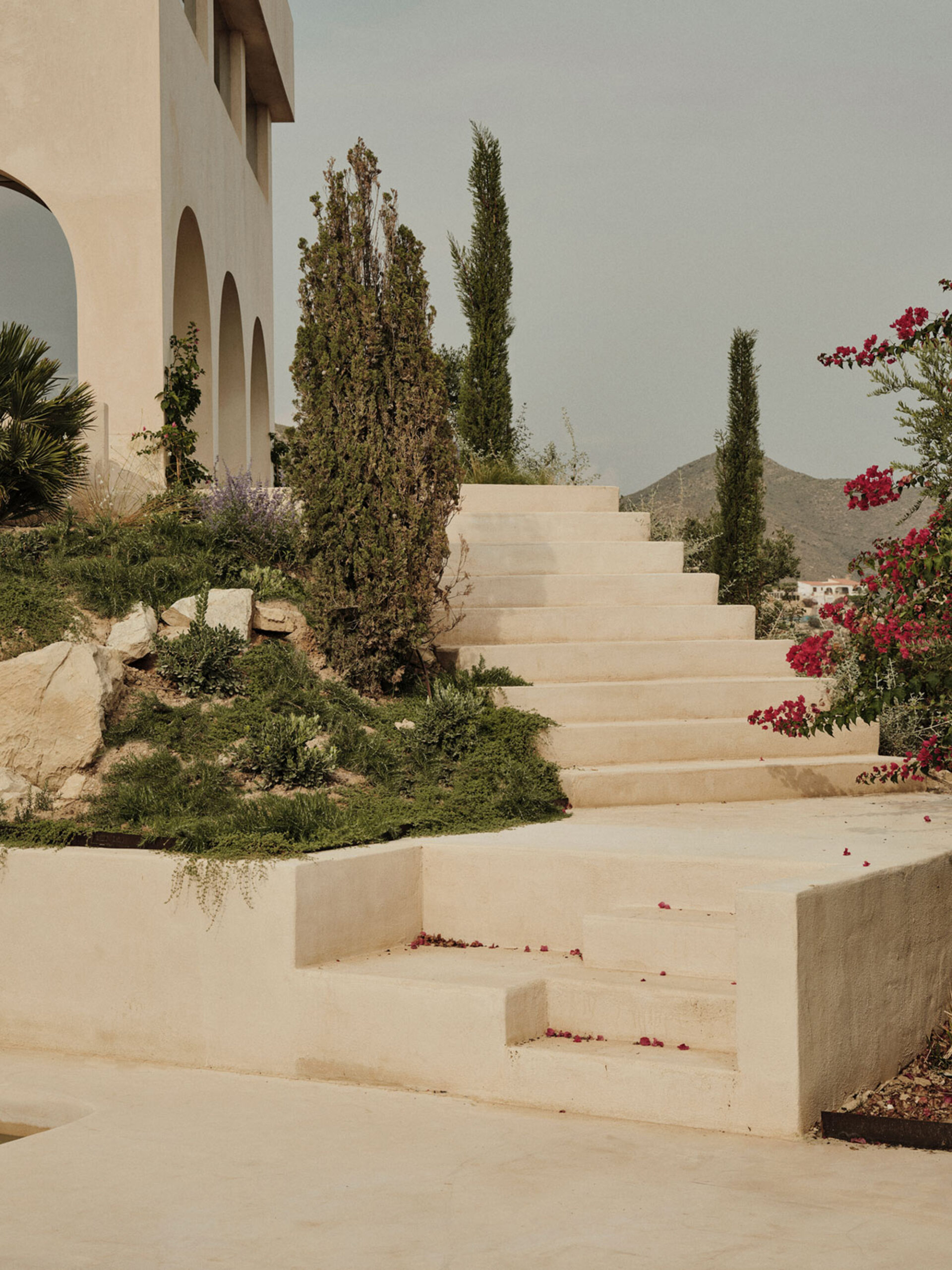
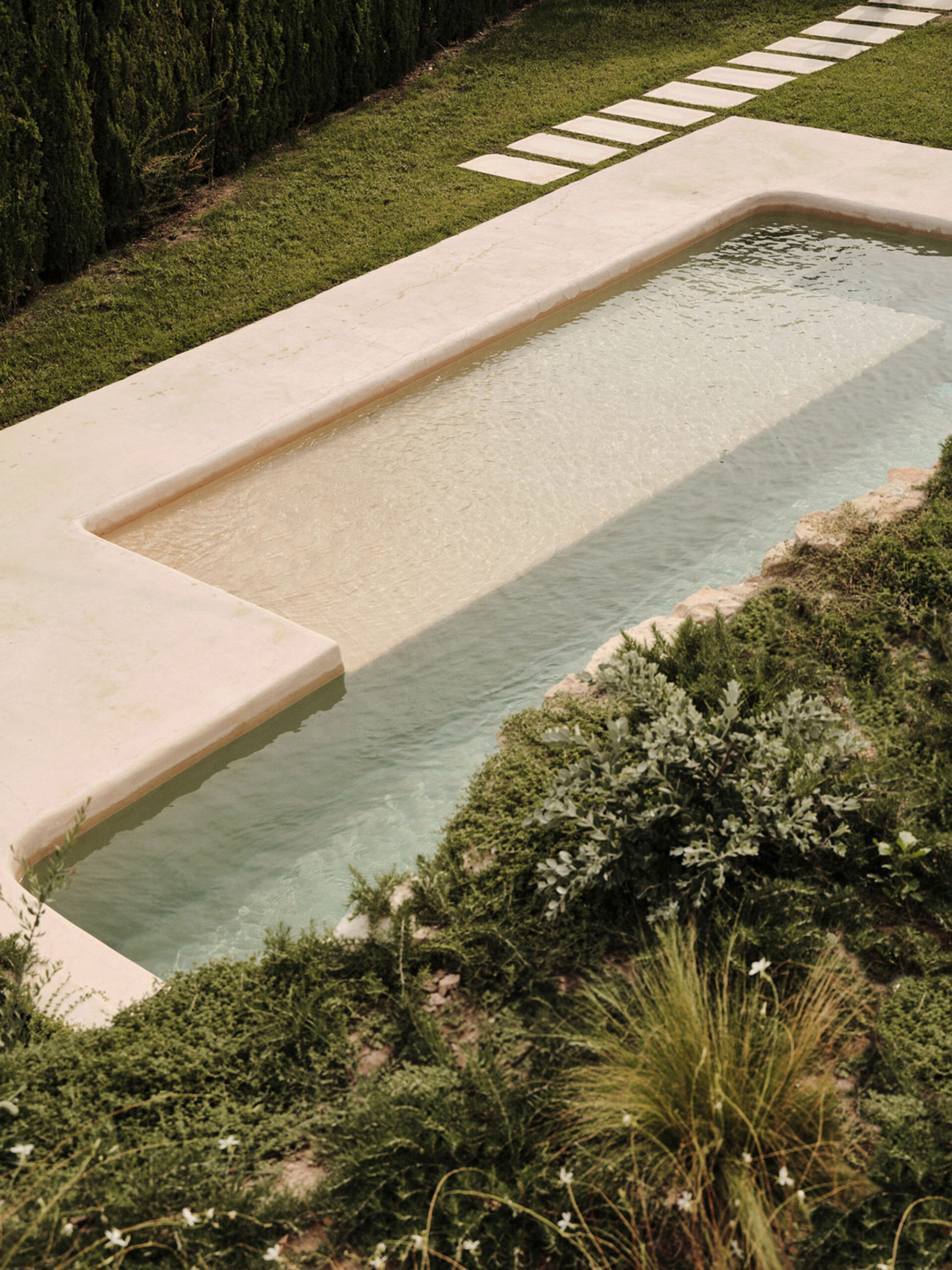
Landscaping plays an essential role in the feeling of immersion in nature that the project offers, which is designed with respect for the native landscape and incorporates fruit trees and shrub masses to compose outdoor spaces and strategically hide neighboring buildings that could alter the desired perception of isolation.
Courtesy of NOS Arquitectura
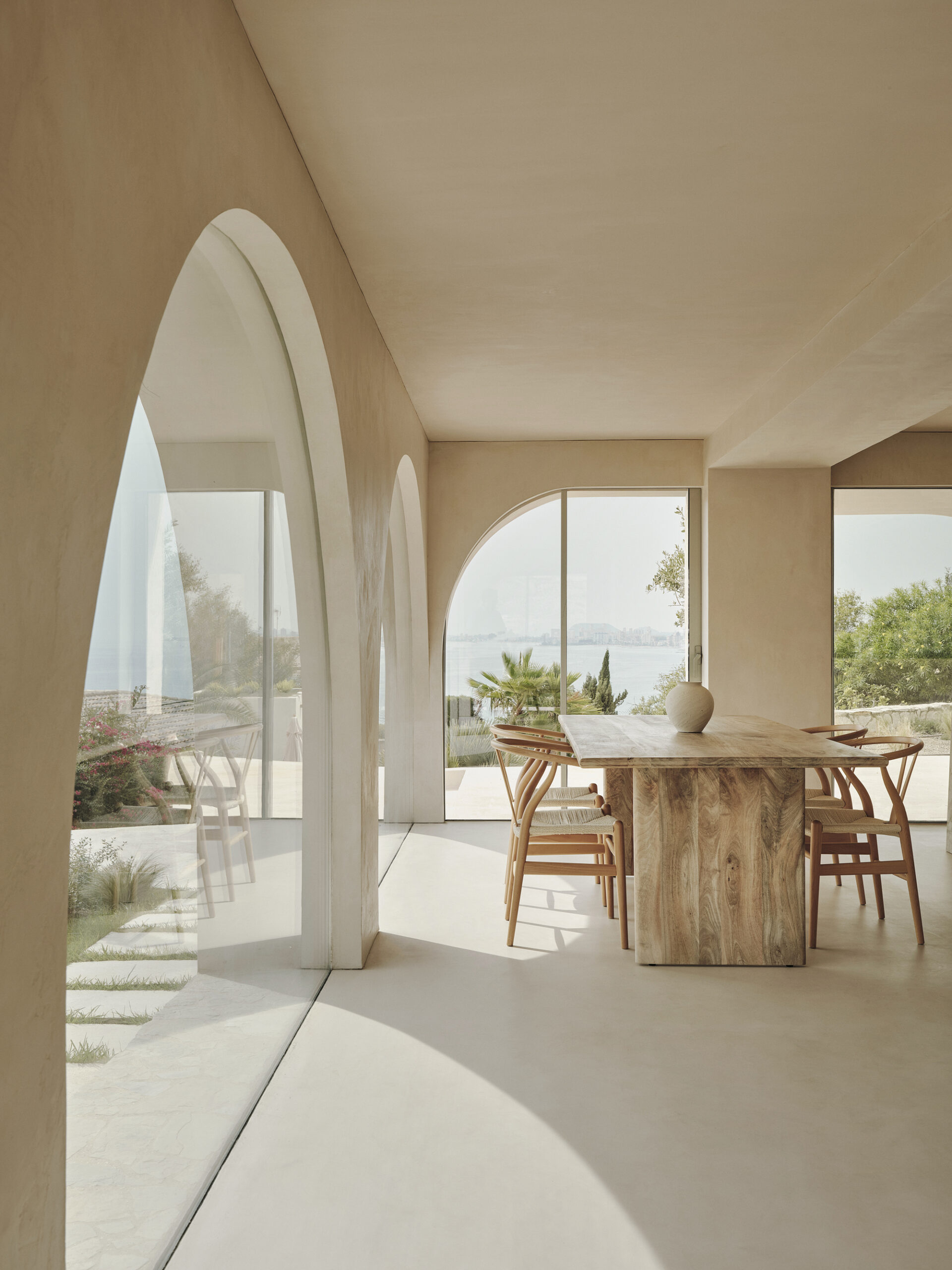
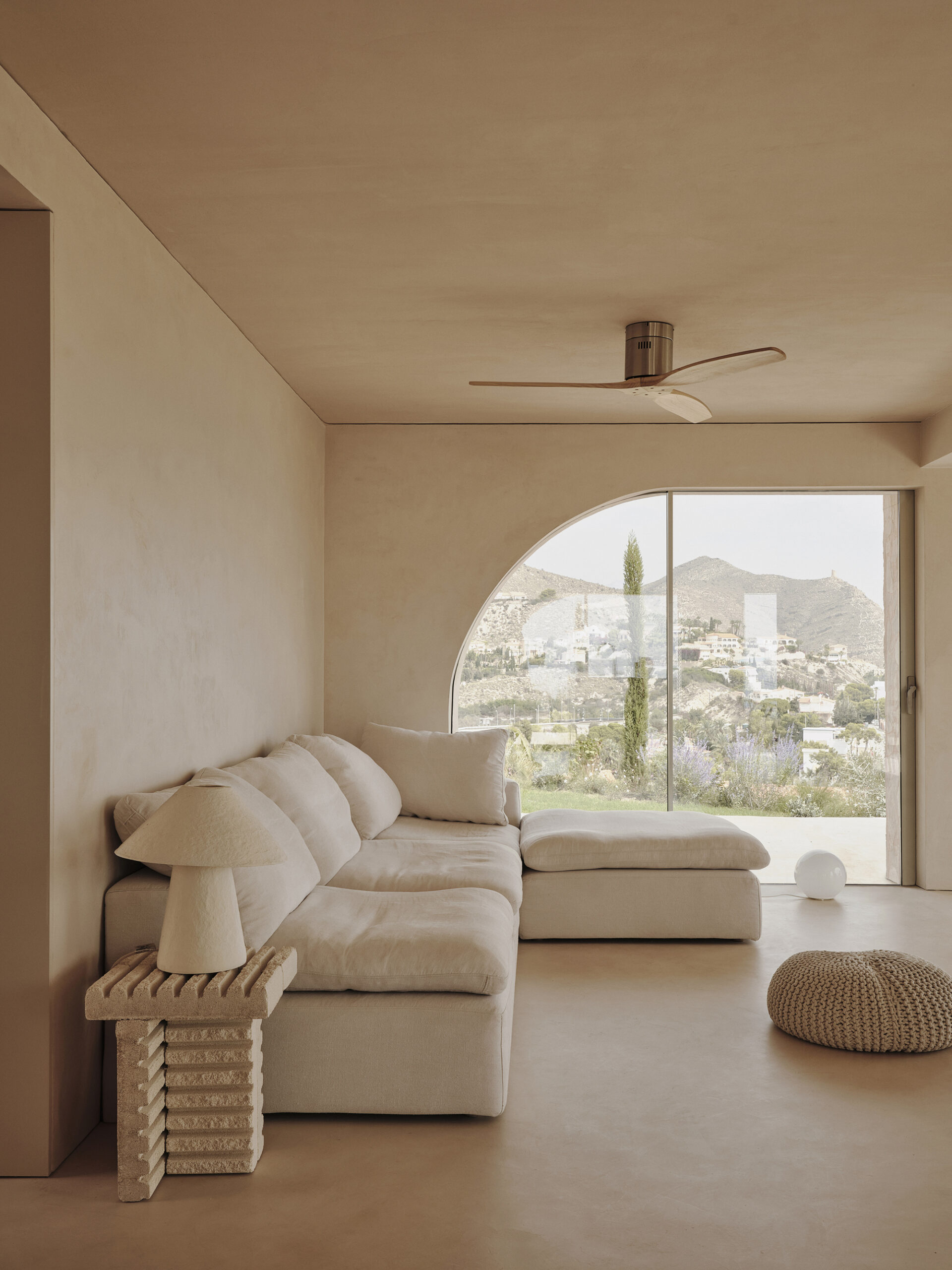
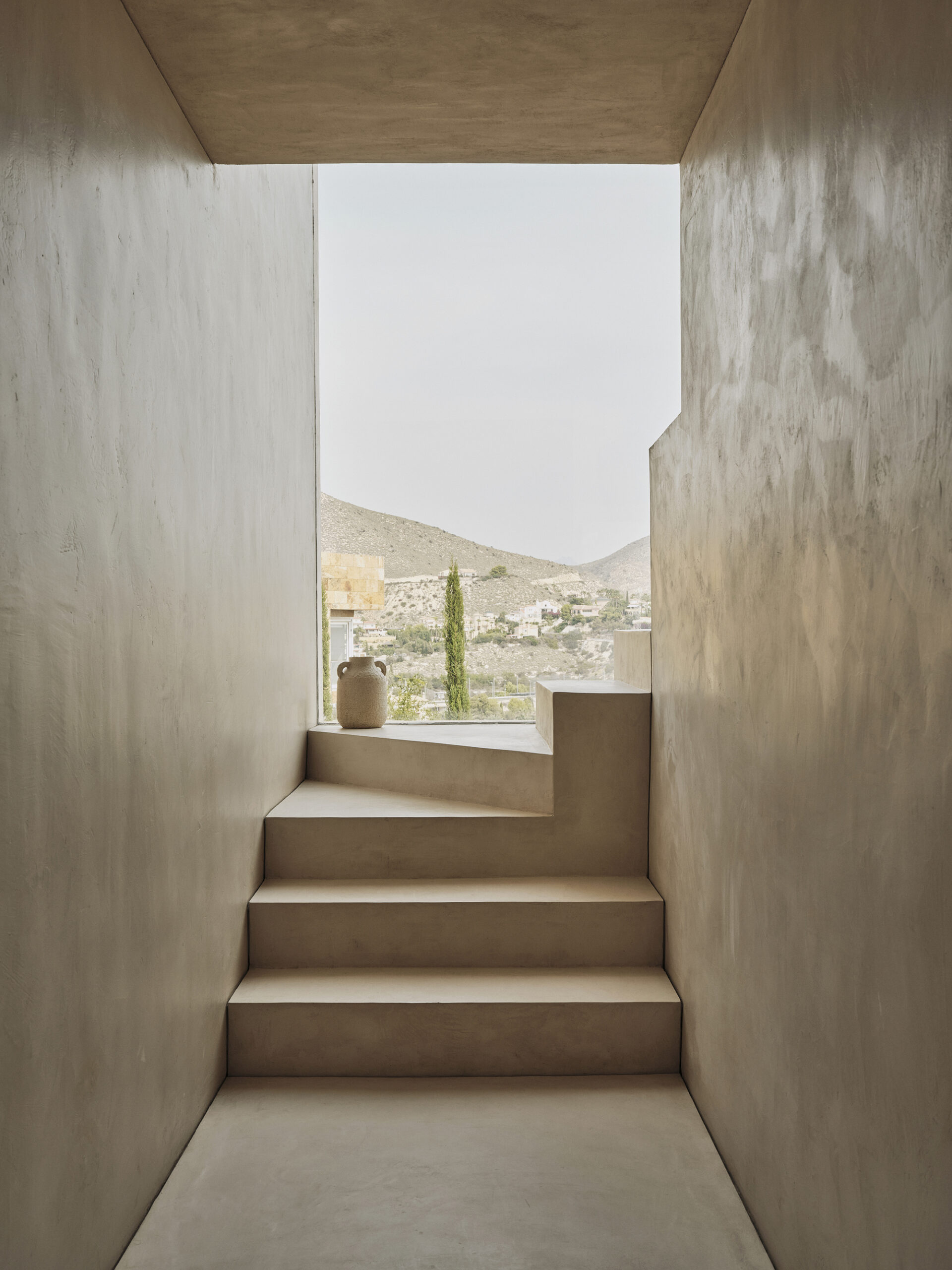
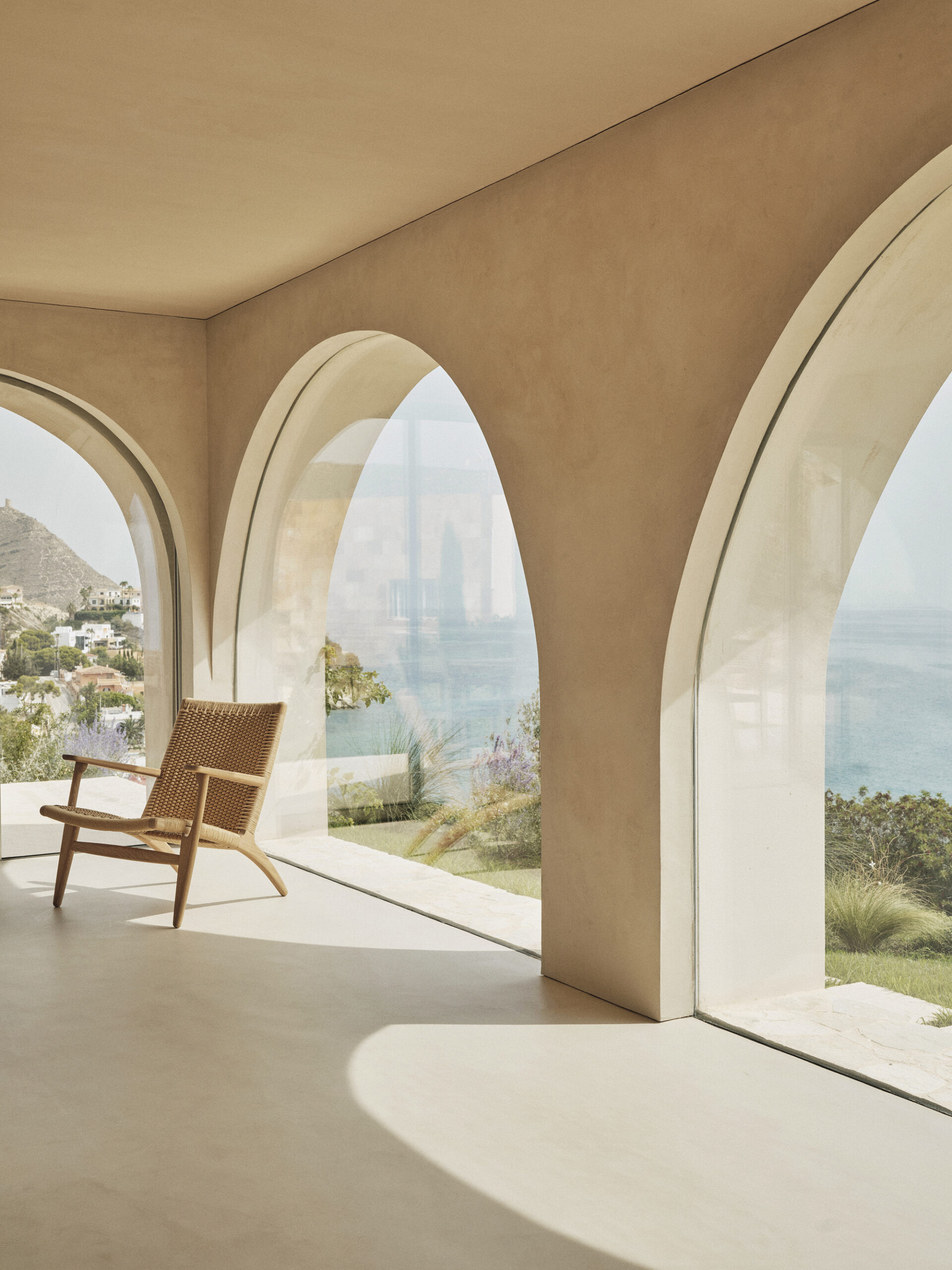
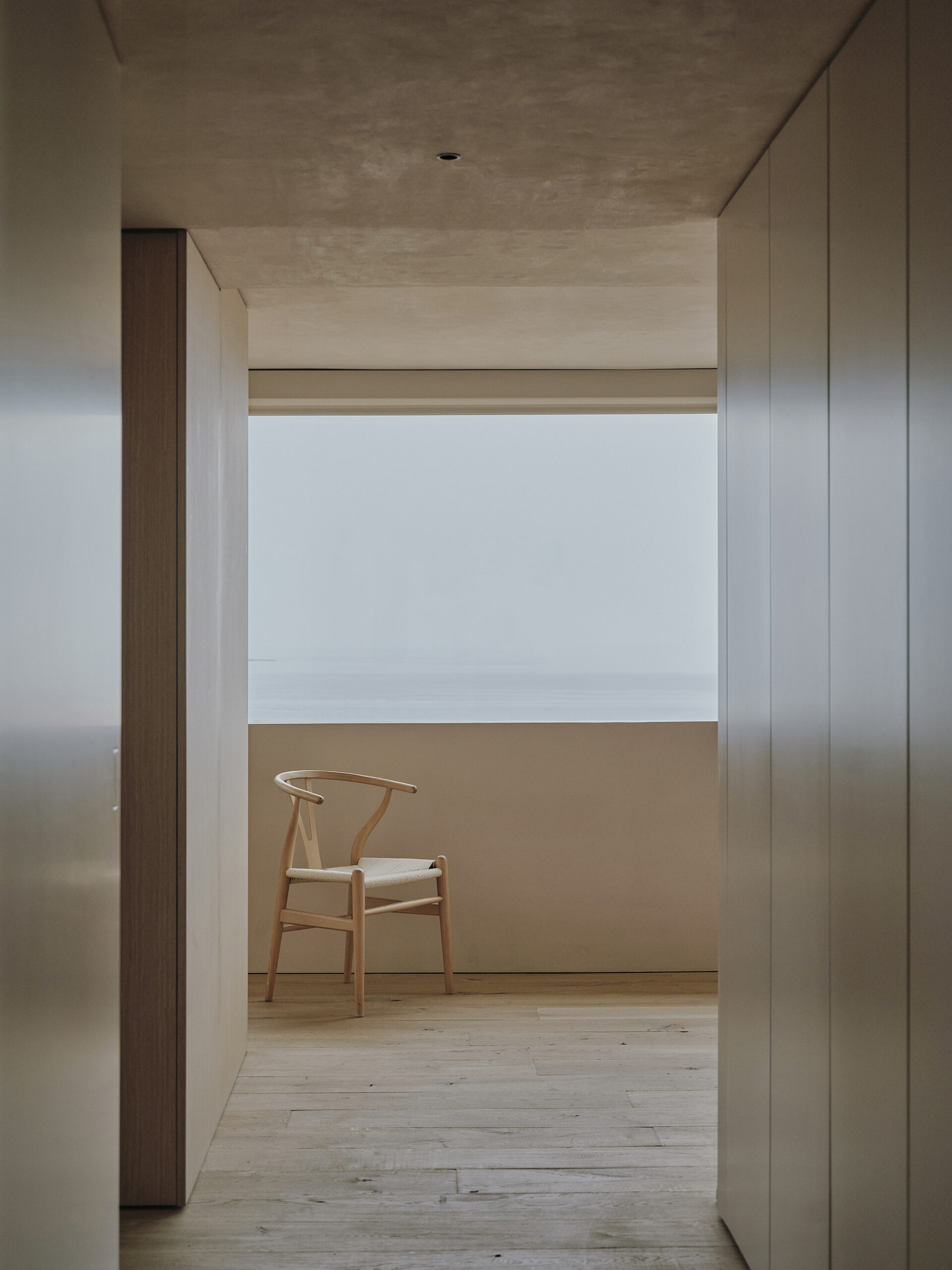
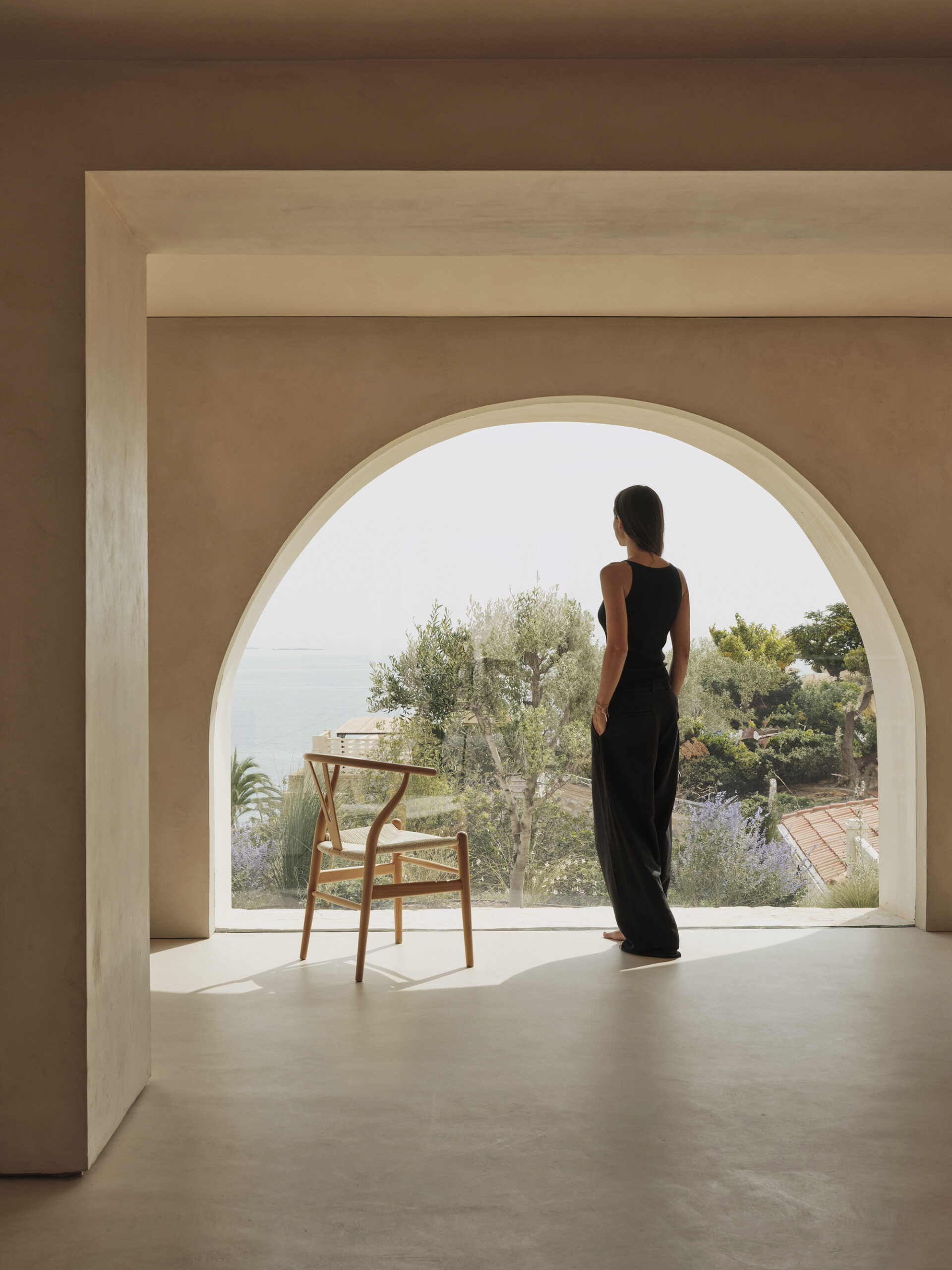
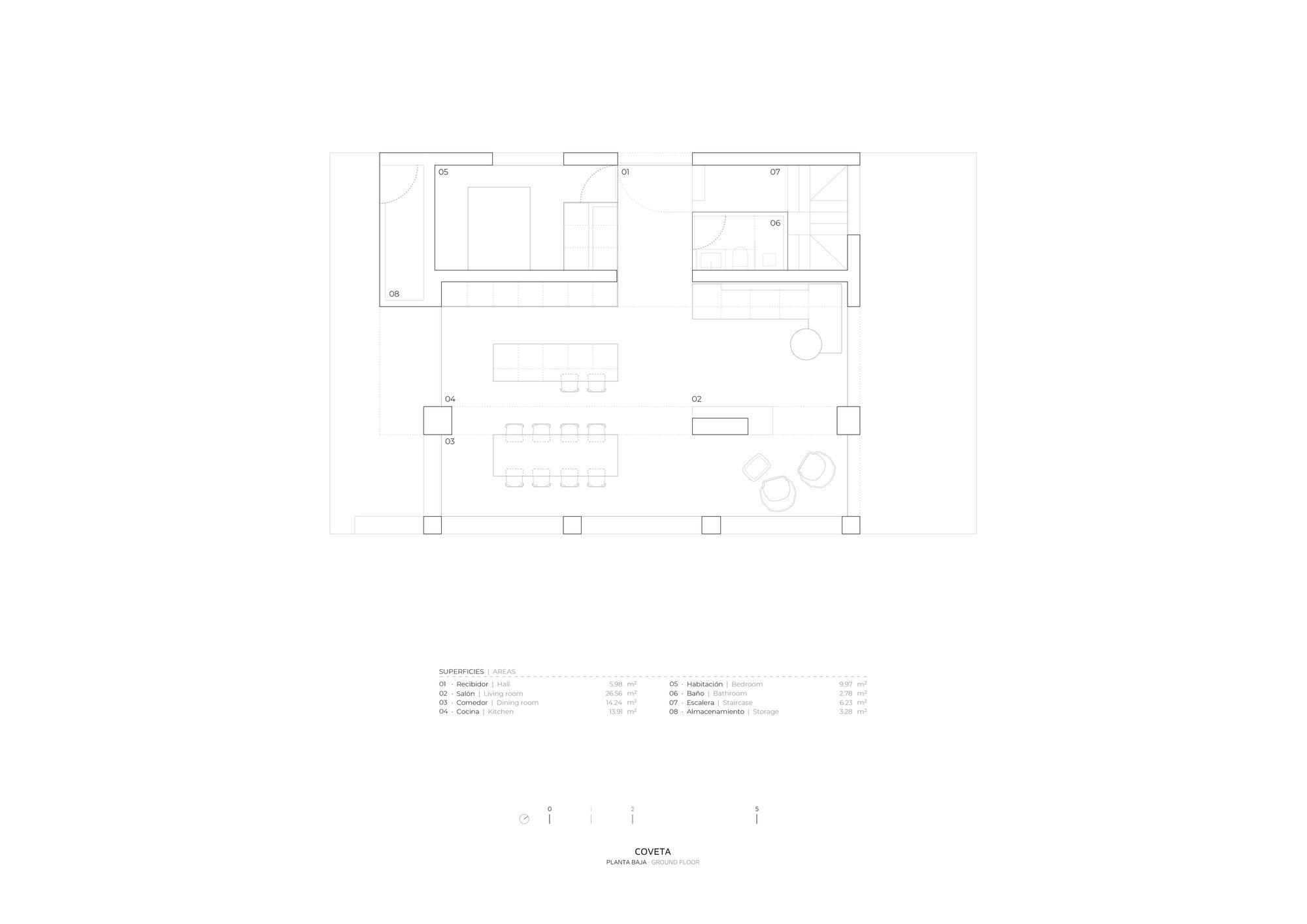
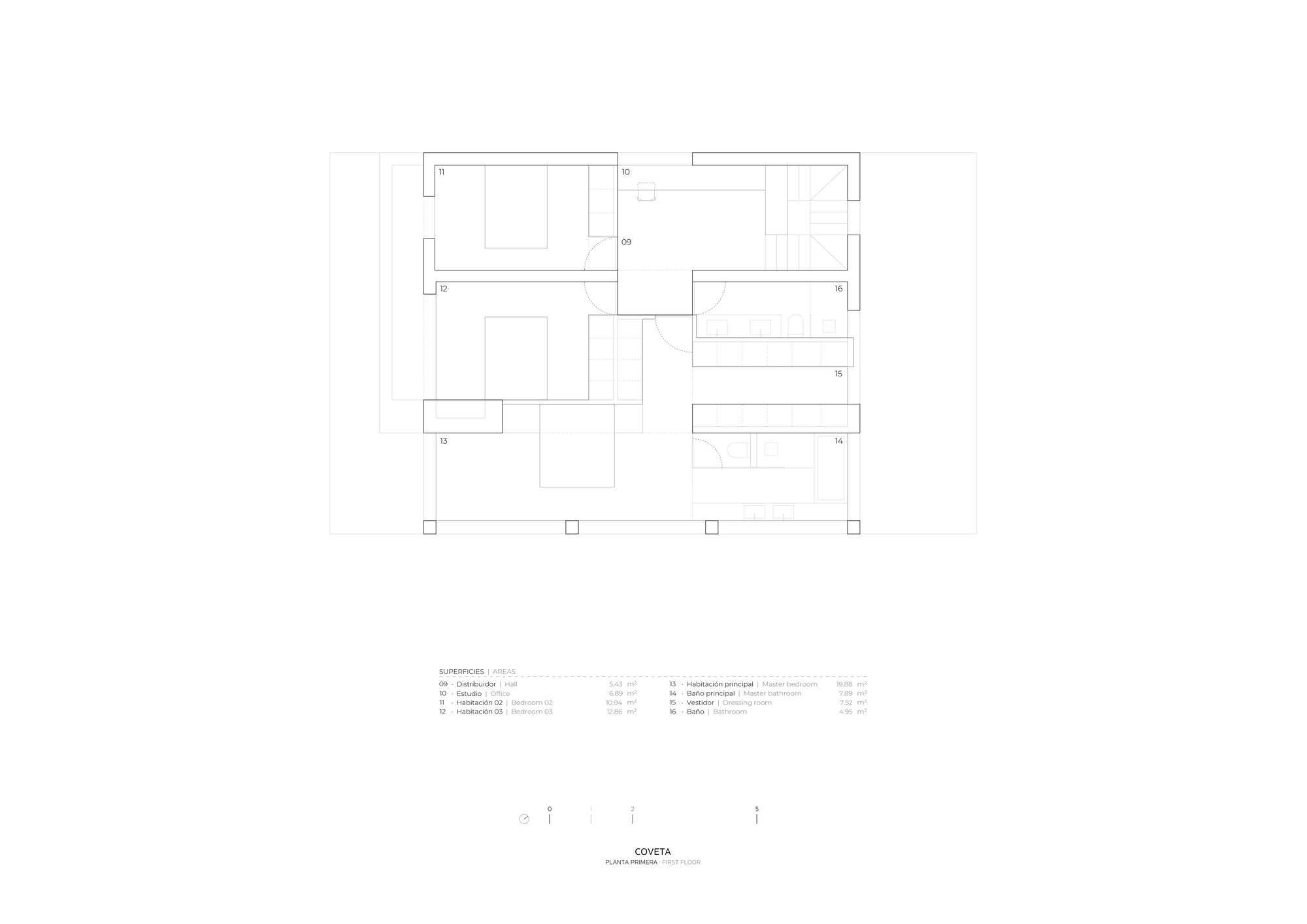
With a panoramic view of the Mediterranean, the house is restructured using a simple strategy that involves orienting the main areas of the home toward this landscape. In this way, while respecting the original geometry of the house, the project completely changes the interior layout, opening up the originally fragmented spaces and adapting them to the current needs of the owners, enhancing their connection to the outdoors.
Courtesy of NOS Arquitectura
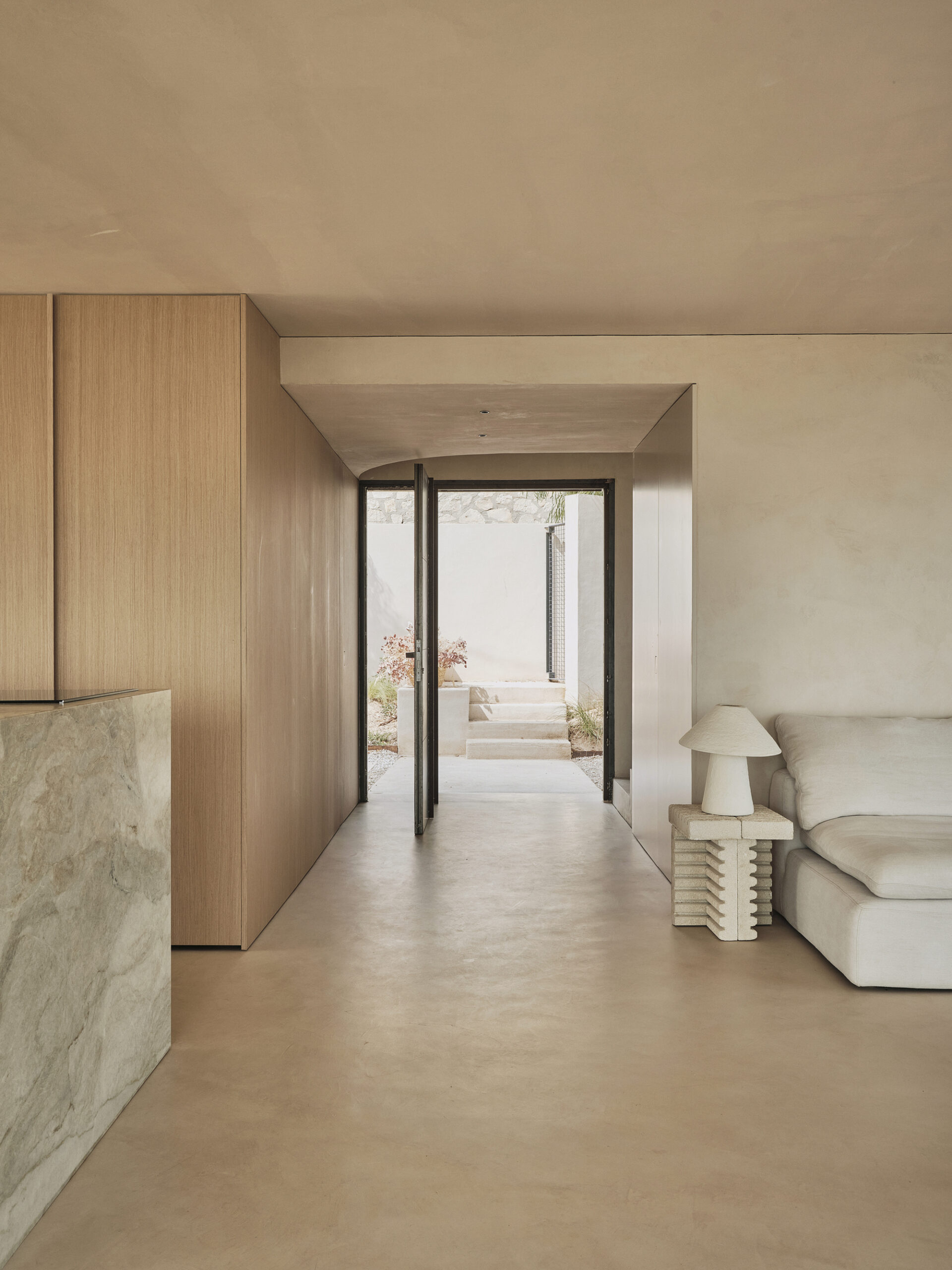
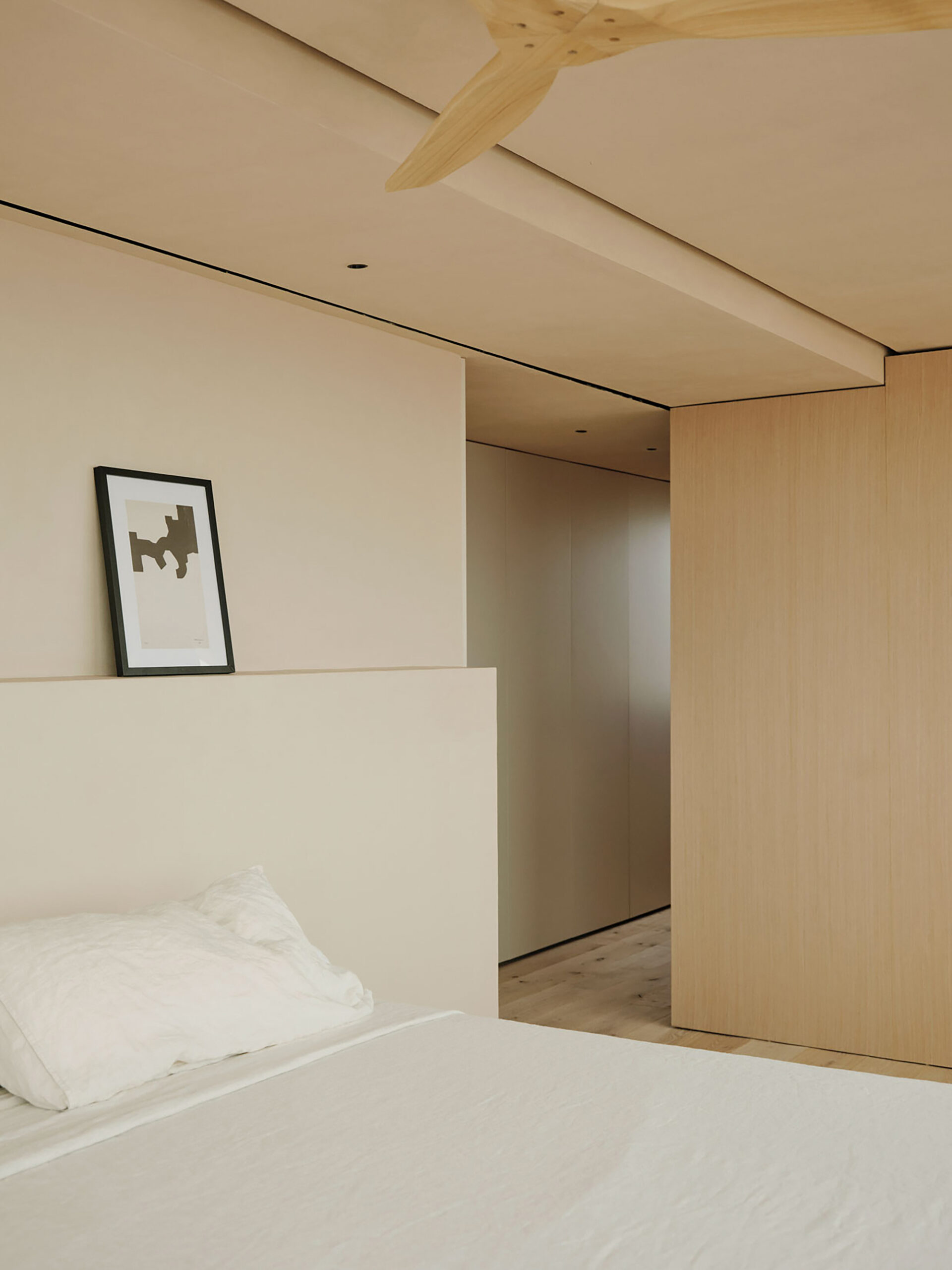
The ground floor is conceived as an open space that houses the living and kitchen areas, which are linked to several outdoor spaces that gain significance depending on the time of day. Likewise, on the first floor, the master bedroom is oriented toward the sea, developing three of its facades toward this landscape.
Courtesy of NOS Arquitectura
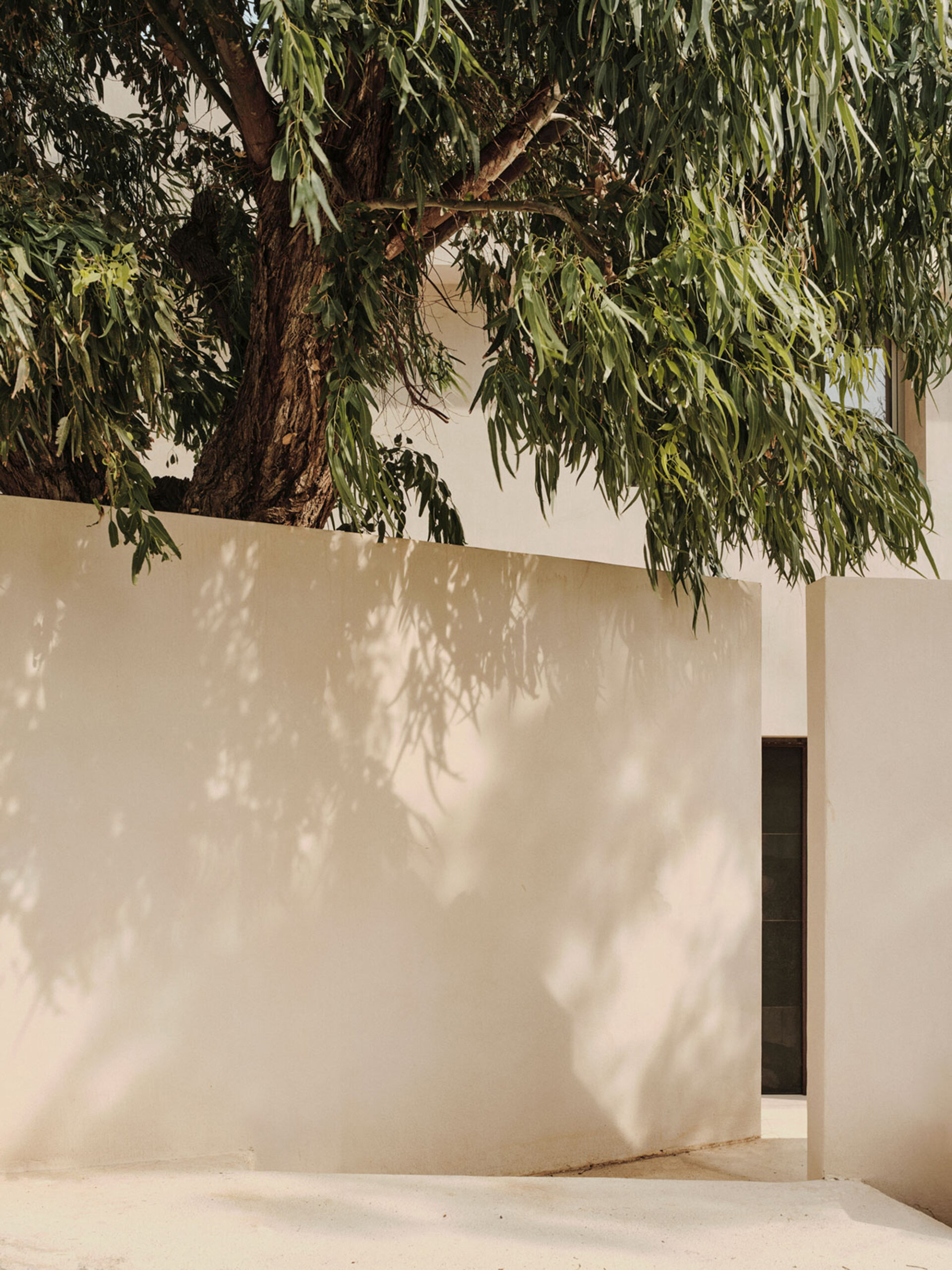
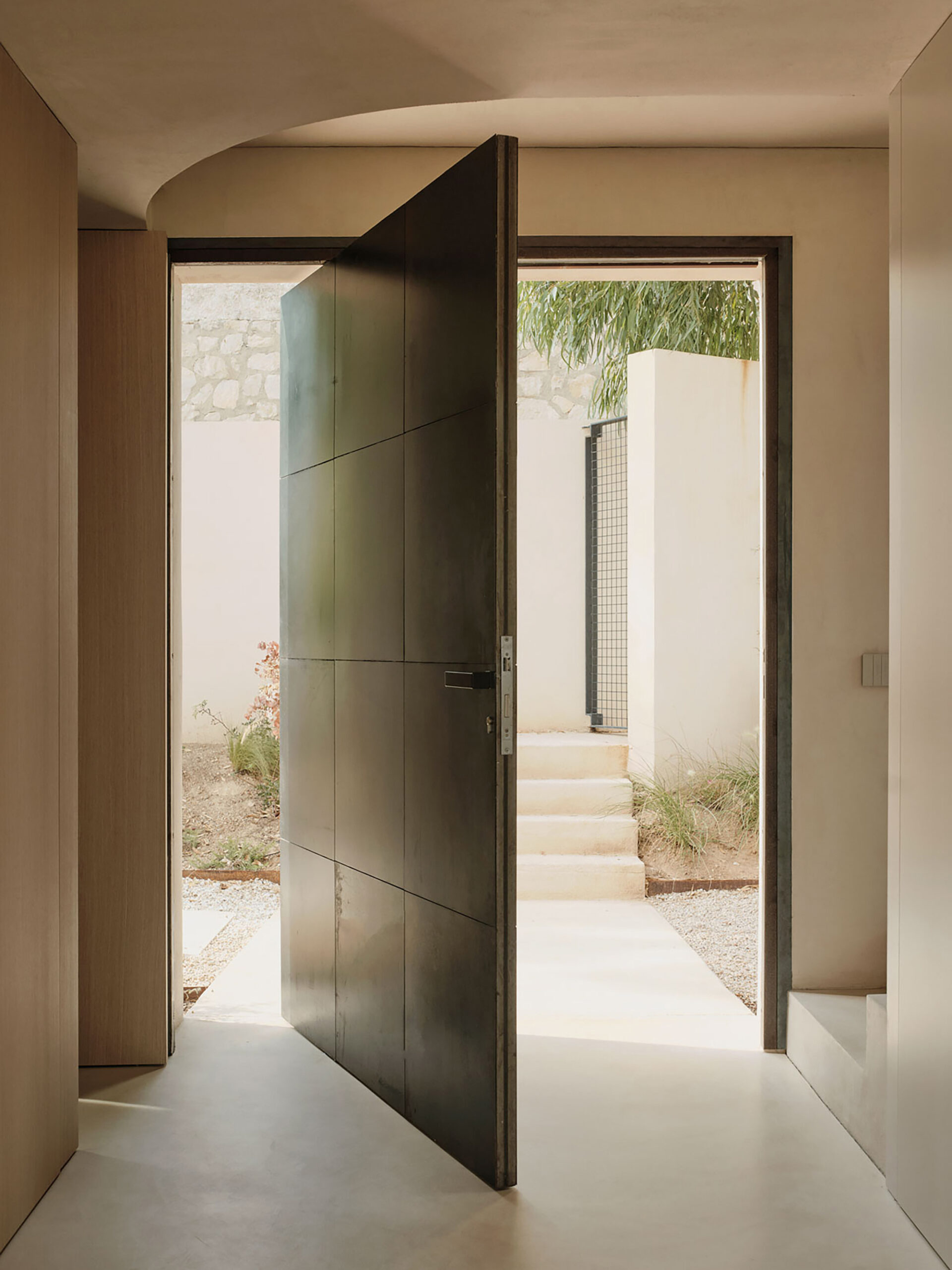
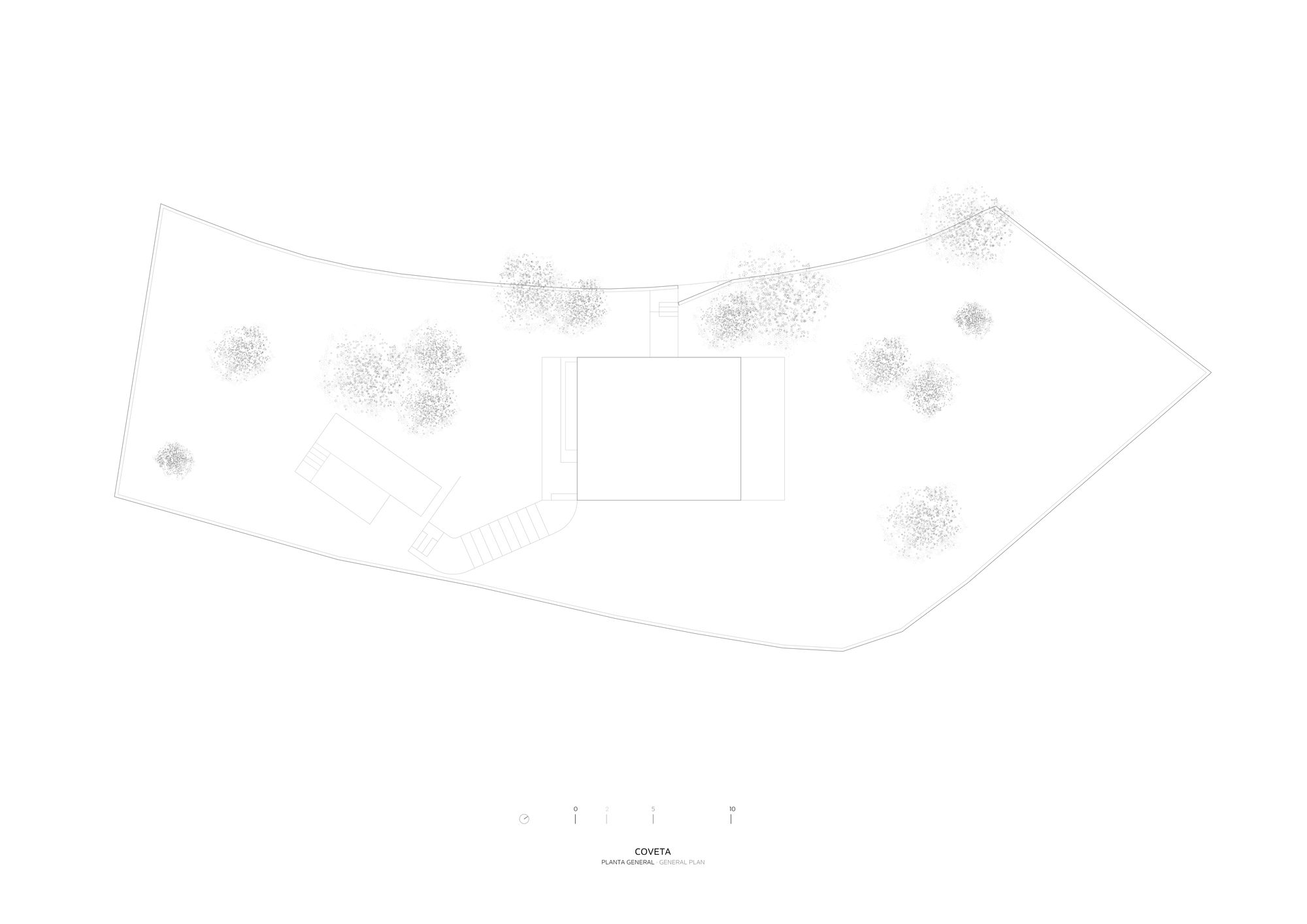
Almost accidentally, through a break in the perimeter wall, access to the garden surrounding the house is created. Upon entering the property, a large pivoting steel door is revealed at the center of the rear facade, which aims to elevate the act of entering the home, generating a central axis for the house that establishes a certain transverse symmetry. Thus, from the entrance, it is possible to discover the spectacular views of the Mediterranean that the house enjoys.
Courtesy of NOS Arquitectura
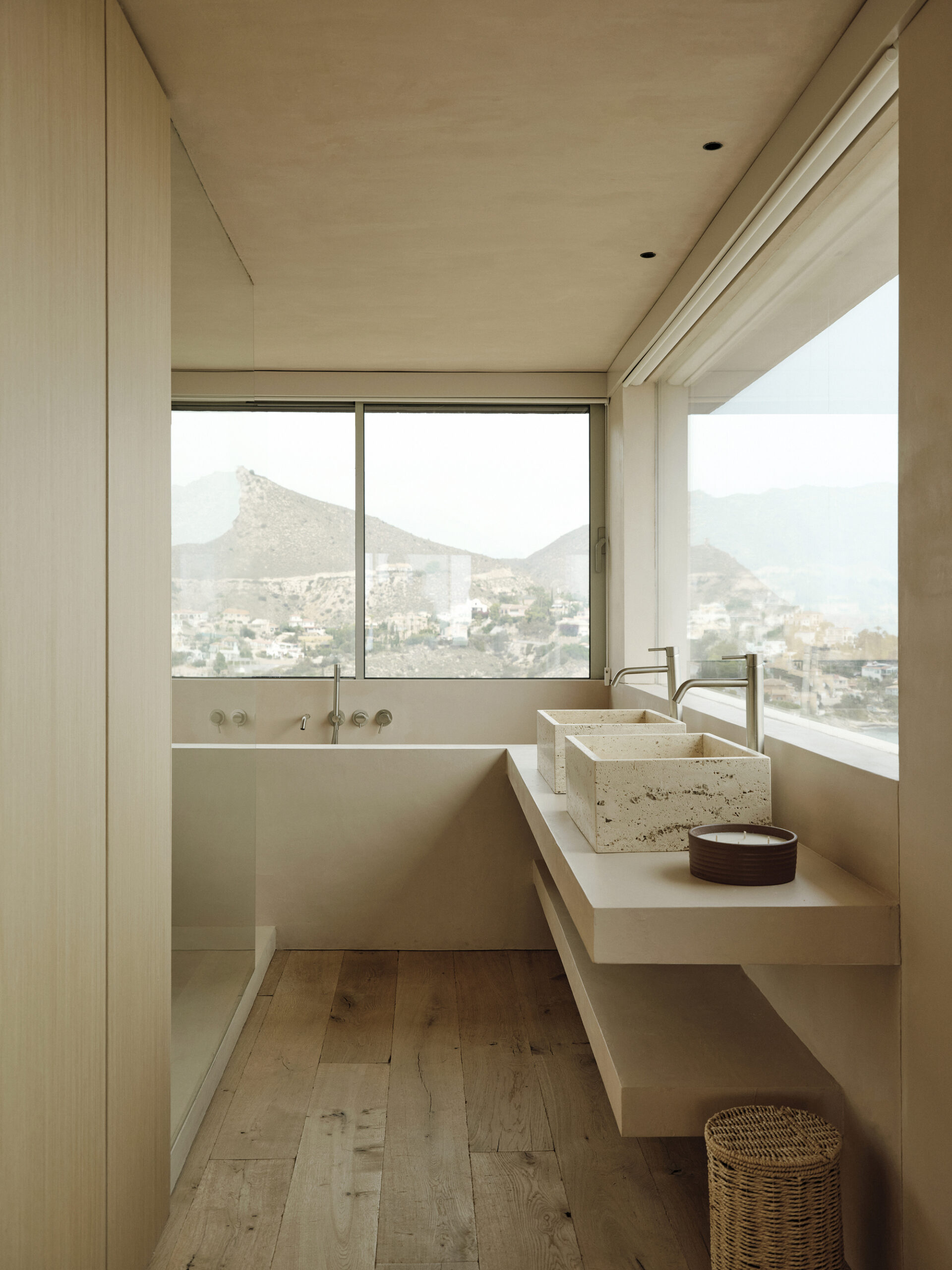
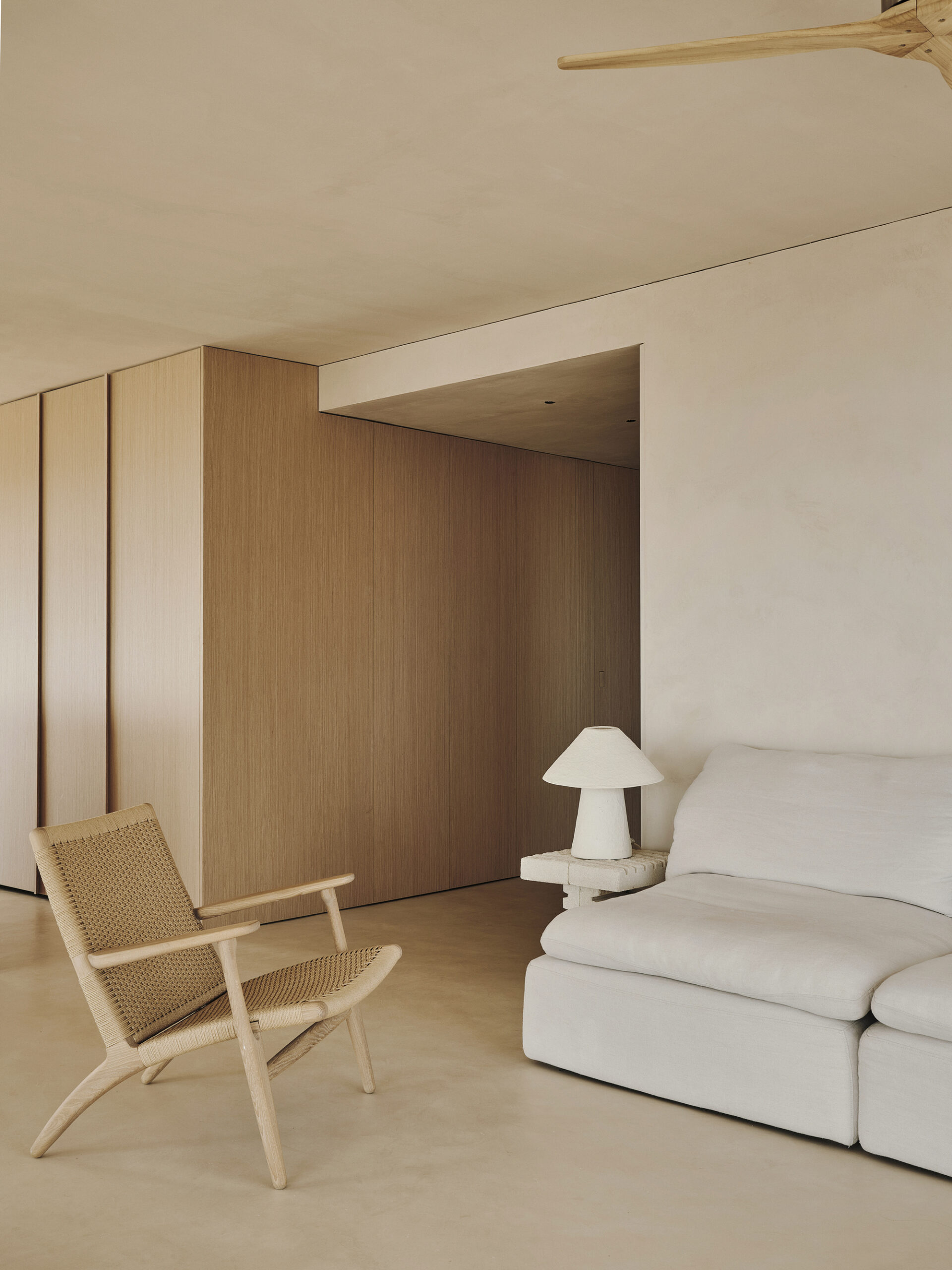
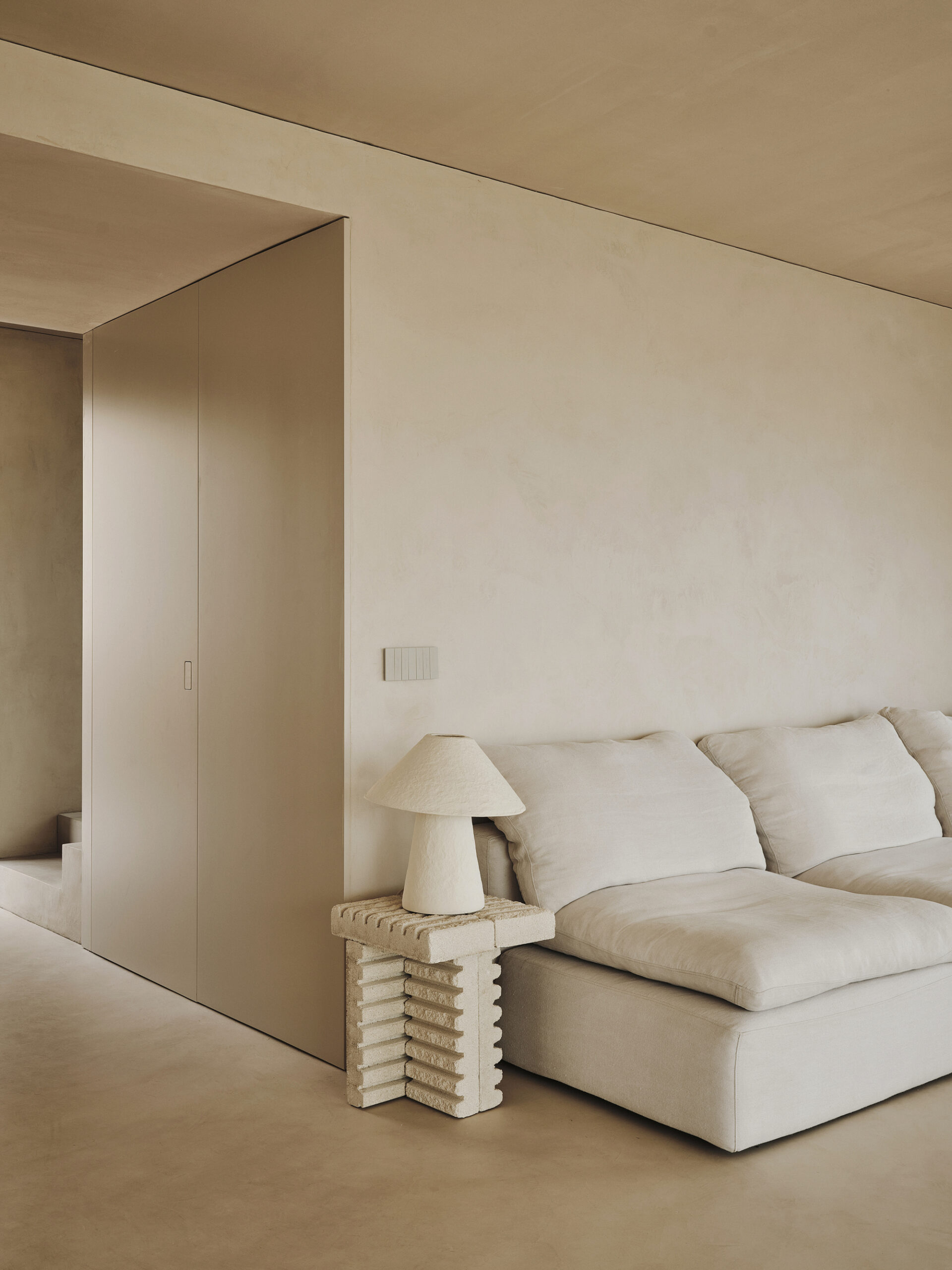
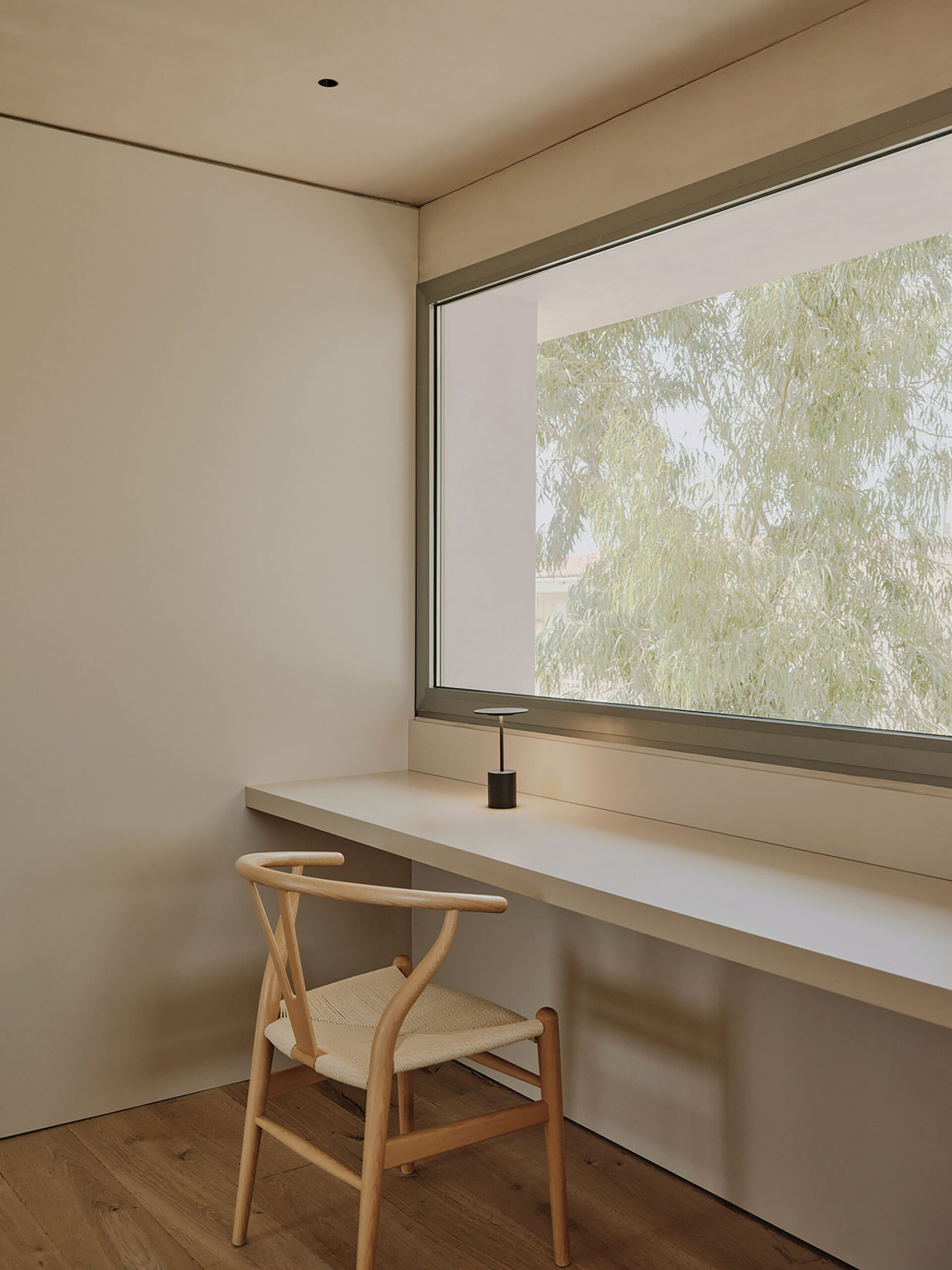
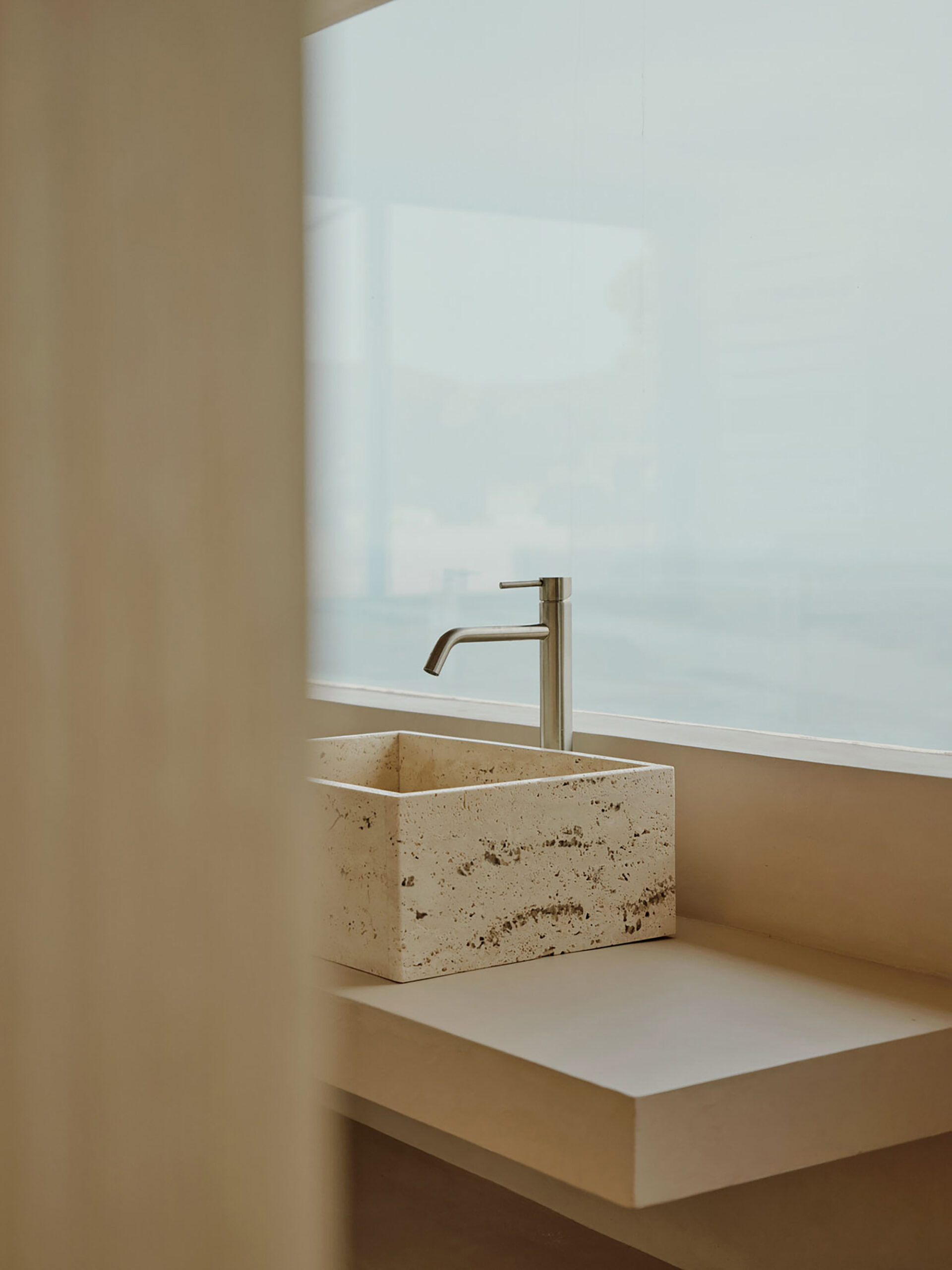
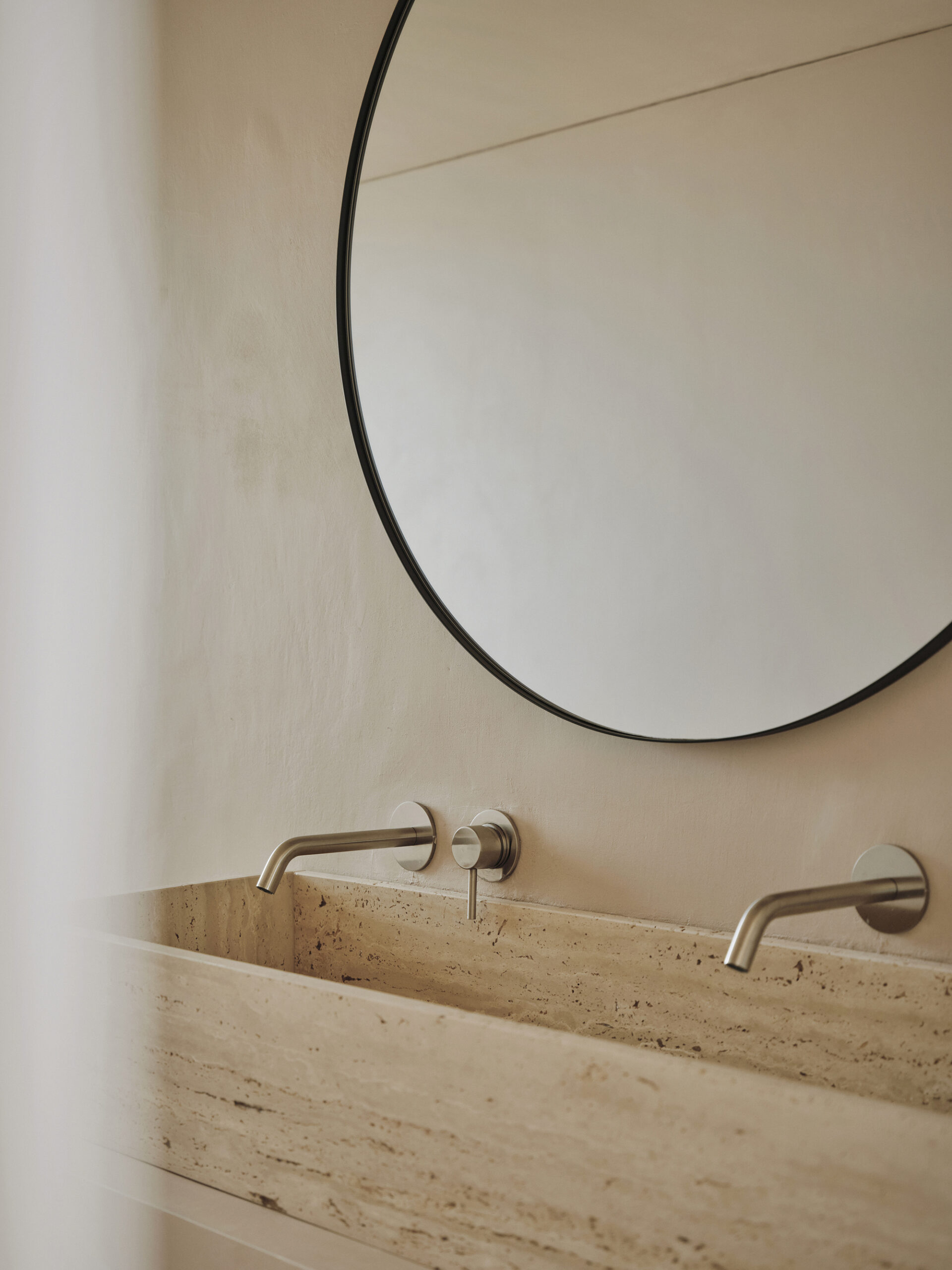
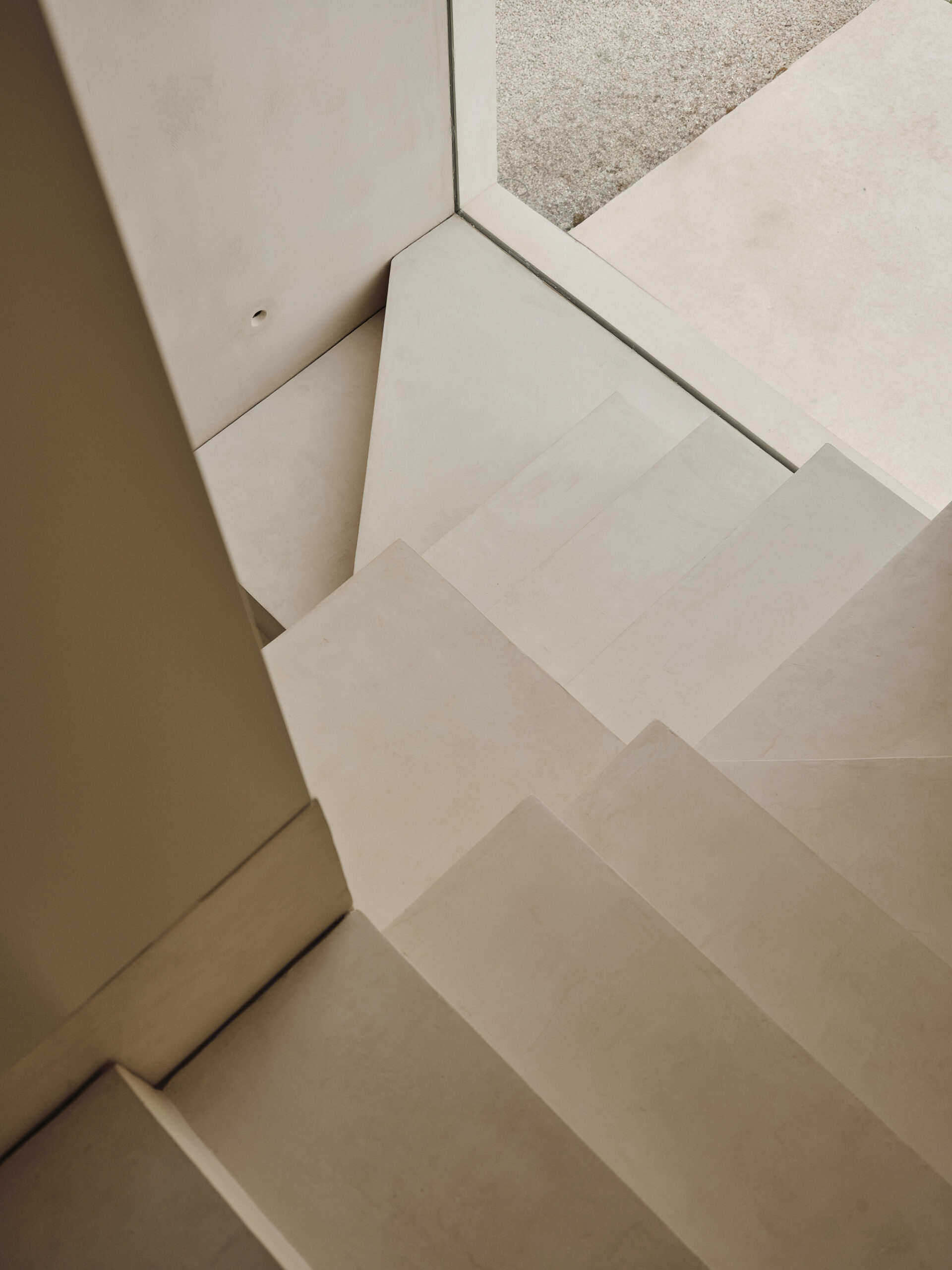
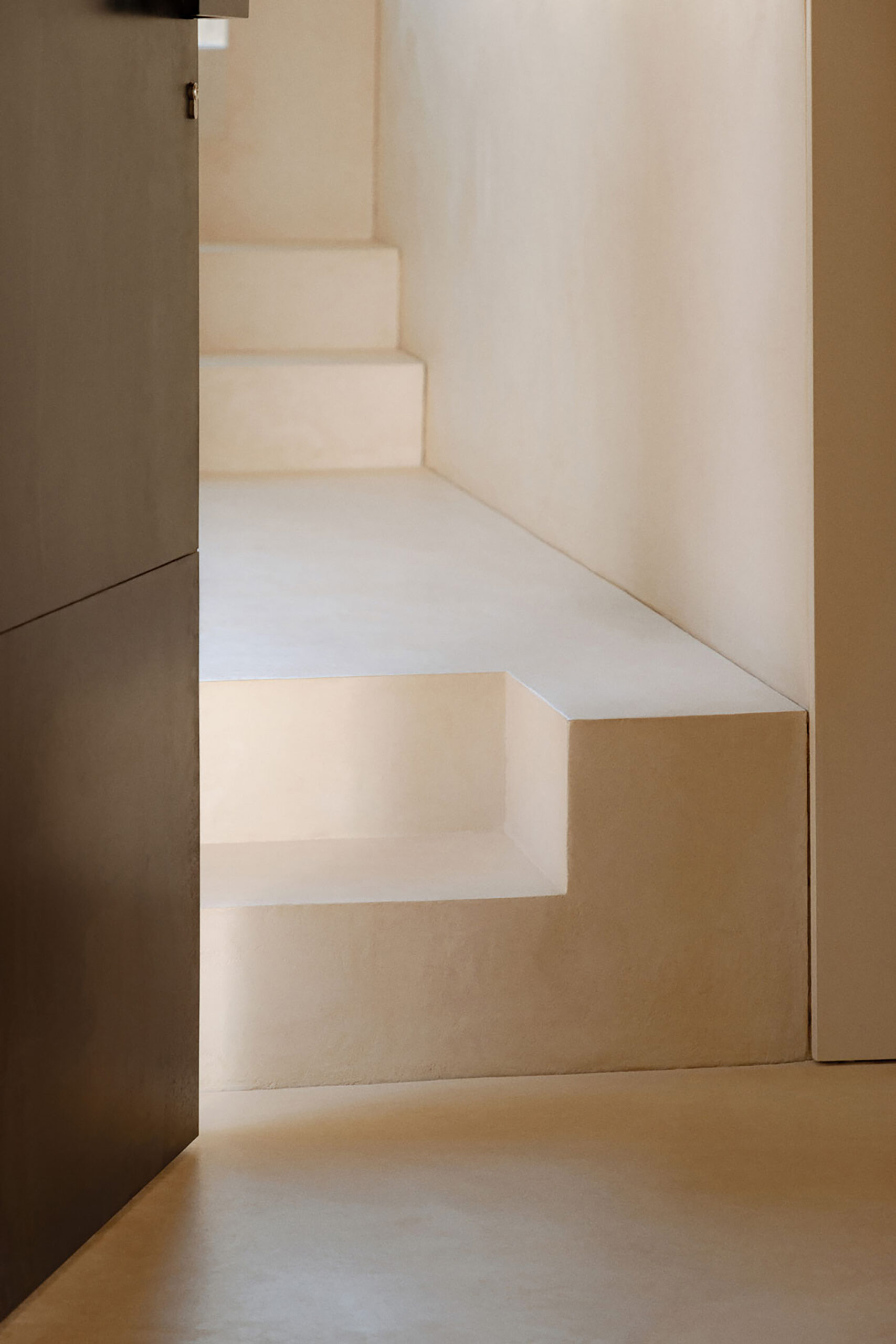
Regarding materials, neutral tones and noble materials are used. The interior microcement, which covers the walls, floor, and ceiling, blends with the lime coating of the facade, bathing all spaces and generating continuity throughout the project. Natural oak wood is used in the interior carpentry and kitchen furniture, as well as in the flooring of the first floor, where the sleeping area is located, aiming for a cozier environment. Finally, natural stone is used to emphasize the solidity of the kitchen island and sinks, which are treated almost as sculptural pieces.
Project Info
Architects: NOS Arquitectura
Country: Spain, El Campello
Area: 220 m²
Year: 2024
Photographs: Courtesy ofNOS Arquitectura
Landscape Architeture: Ferpas

Anastasia Andreieva is an accomplished Architectural Projects Editor at Arch2O, bringing a unique blend of linguistic expertise and design enthusiasm to the team. Born and raised in Ukraine, she holds a Master’s degree in Languages from Taras Shevchenko National University of Kyiv. Her deep passion for architecture and visual storytelling led her to transition from translation and editorial roles into the world of design media. With a keen eye for conceptual clarity and narrative structure, Anastasia curates and presents global architectural projects with precision and flair. She is particularly drawn to parametric and digital design, cultural context, and emerging voices in architecture. When I’m not analyzing the latest architectural trends, you’ll probably find me searching for hidden gems in cityscapes or appreciating the beauty of well-crafted spaces. After all, great design—like great connections—can be found in the most unexpected places. Speaking of connections, because architecture isn’t the only thing that brings people together.