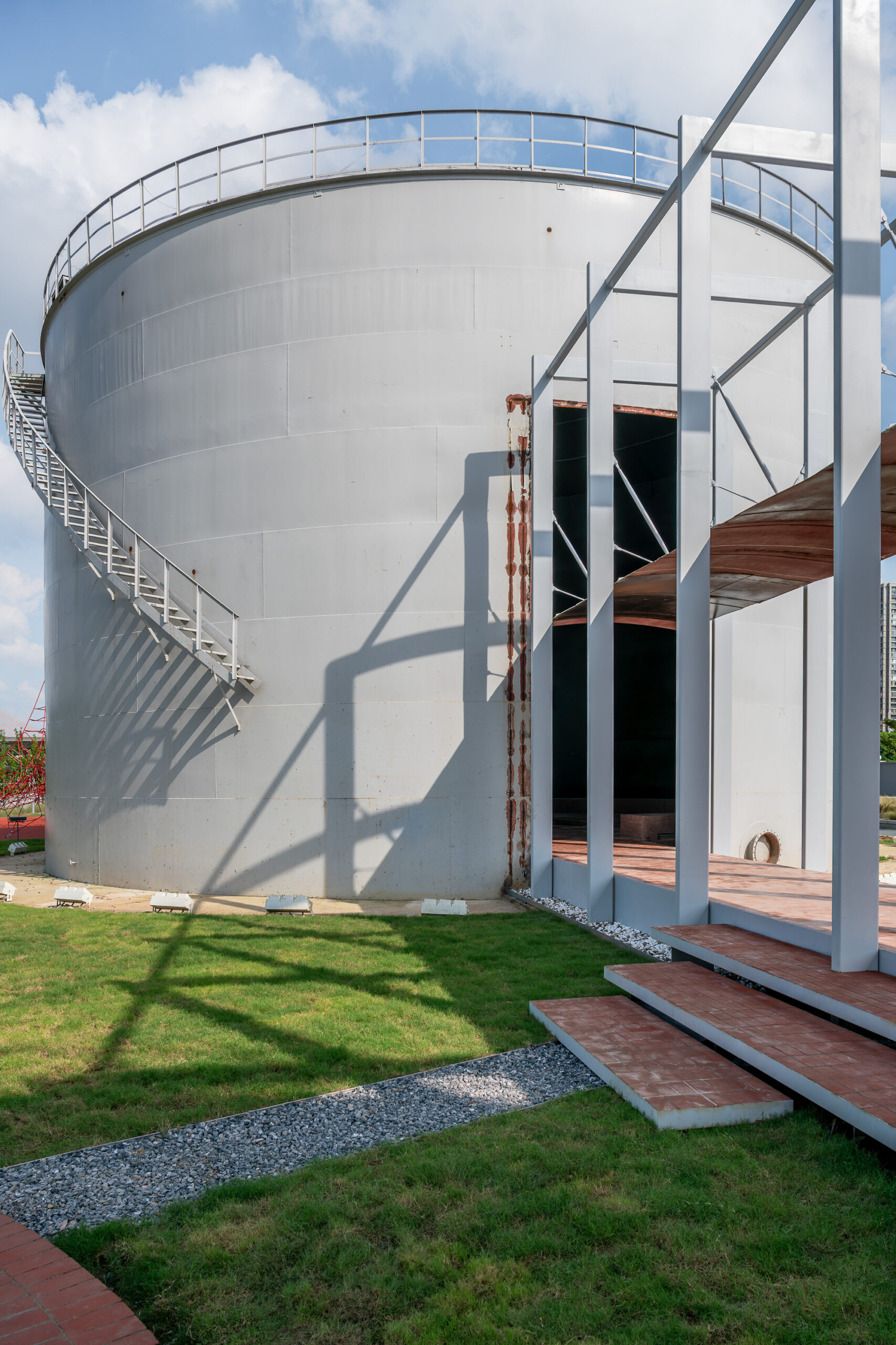
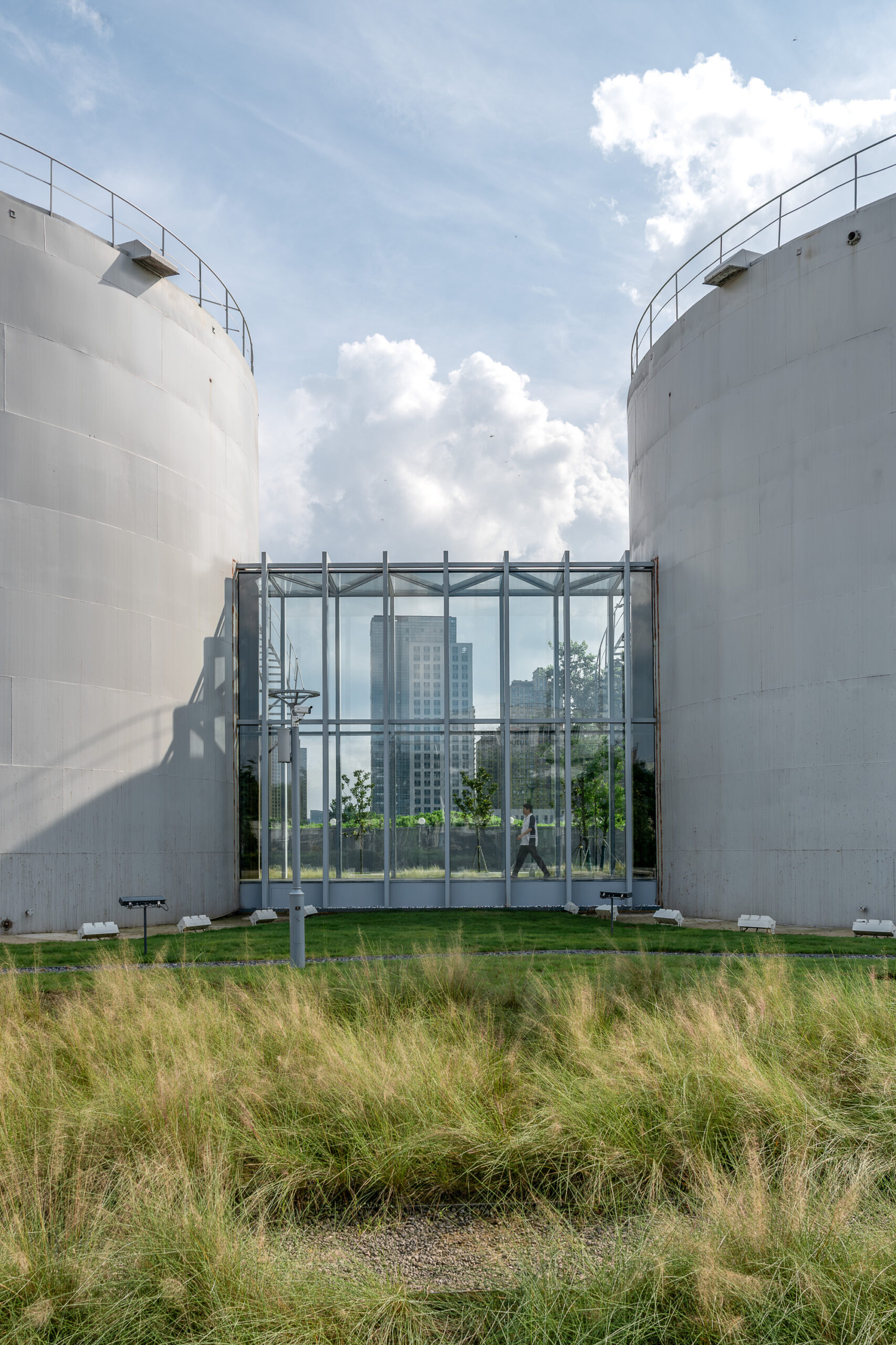
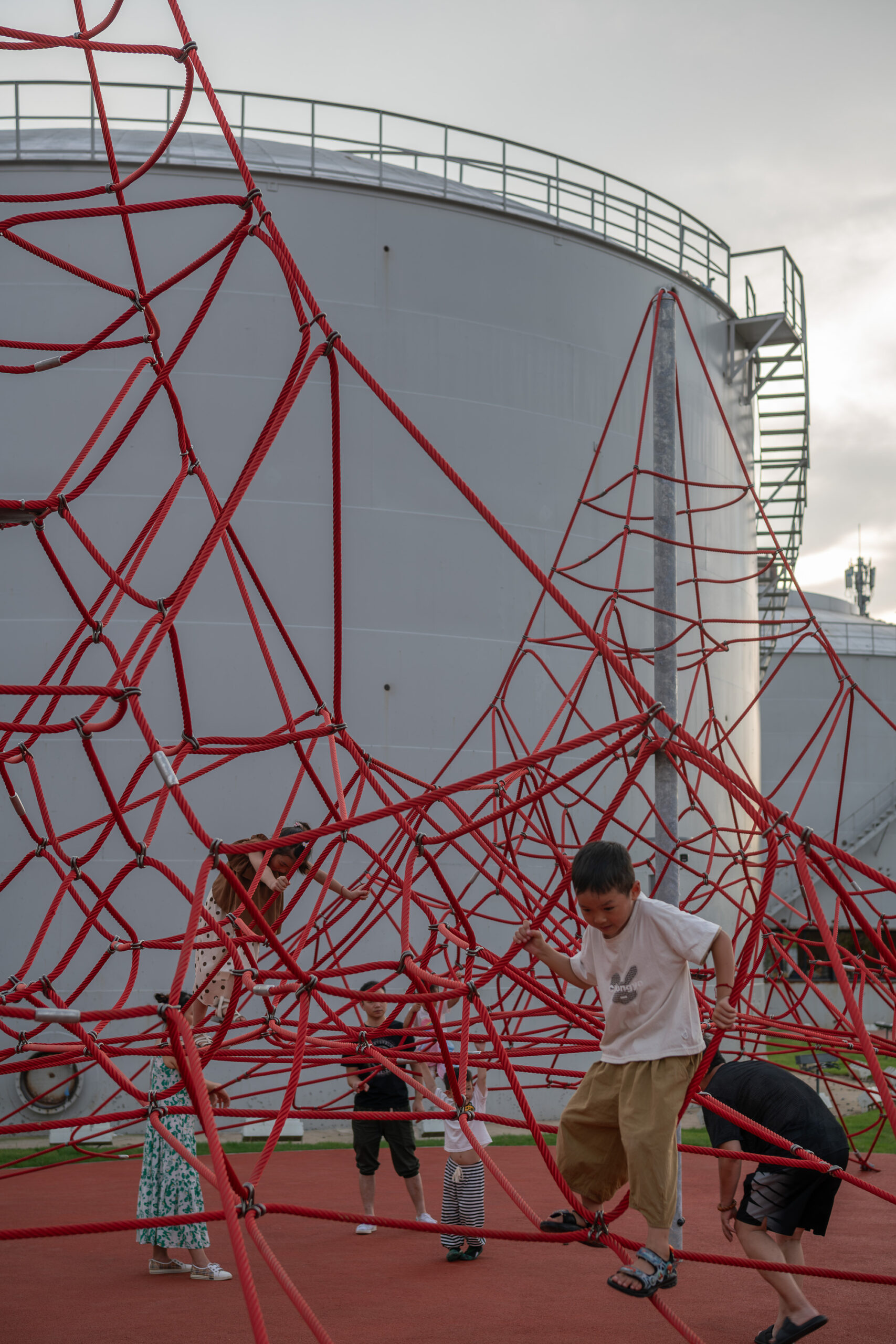
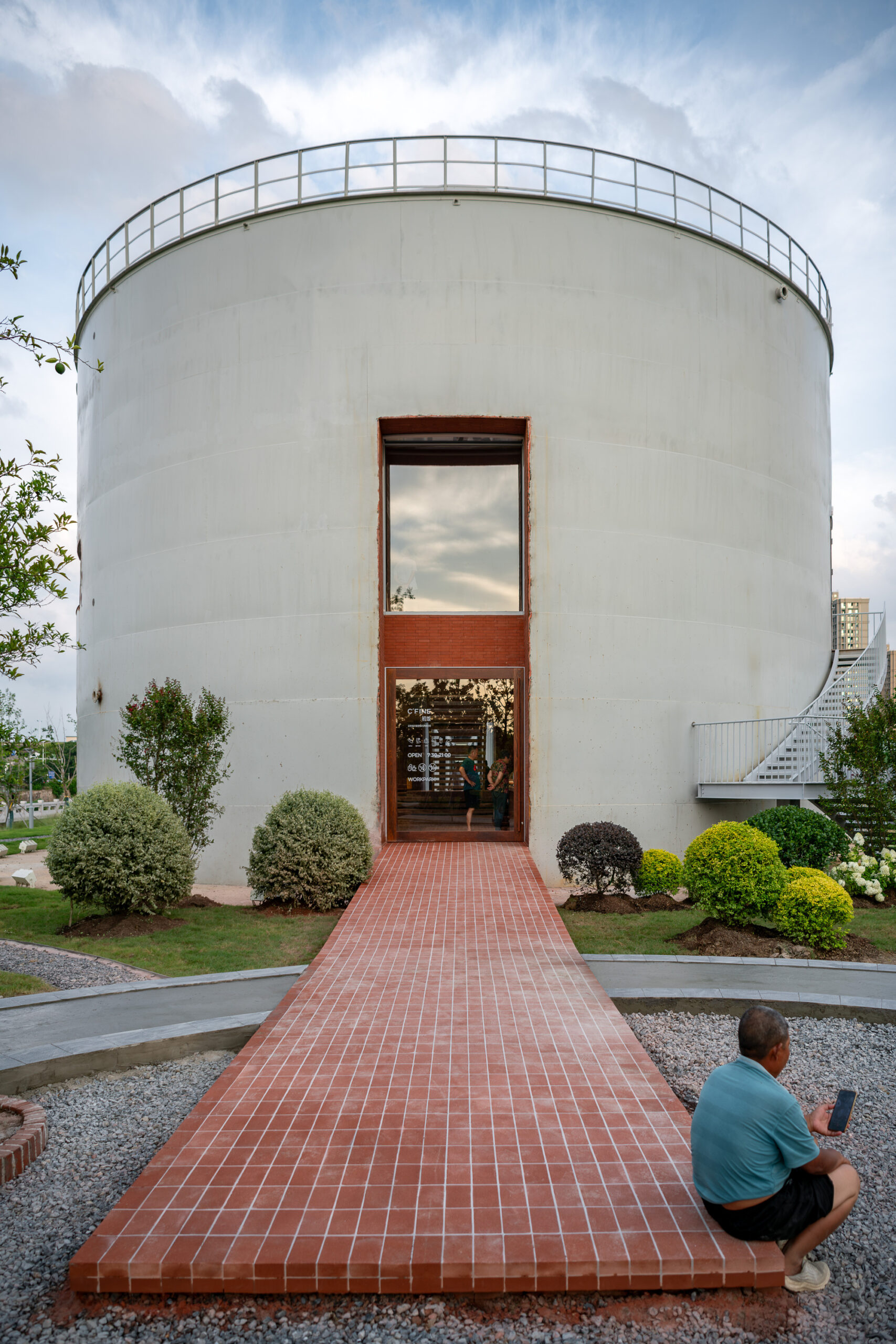
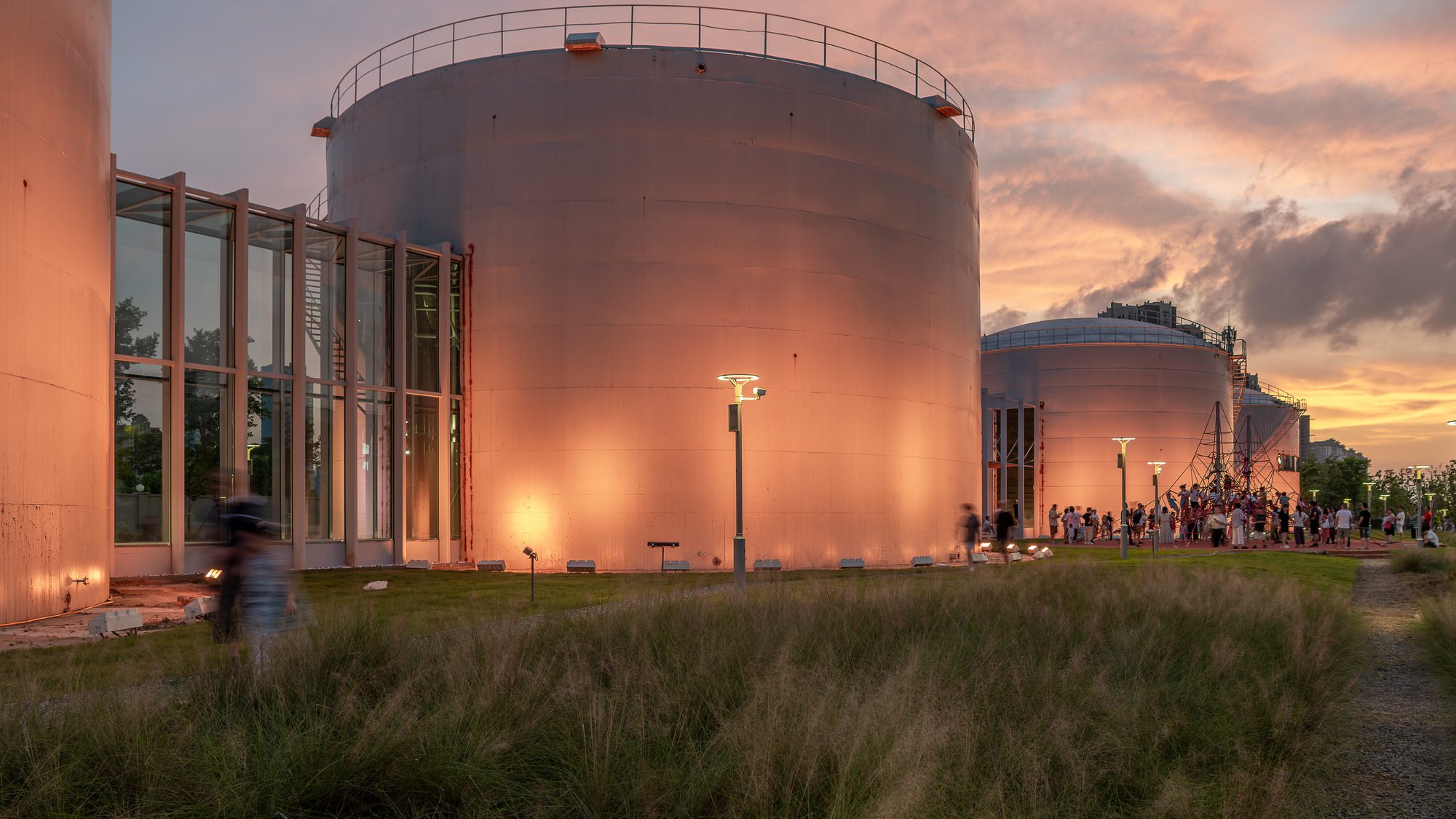
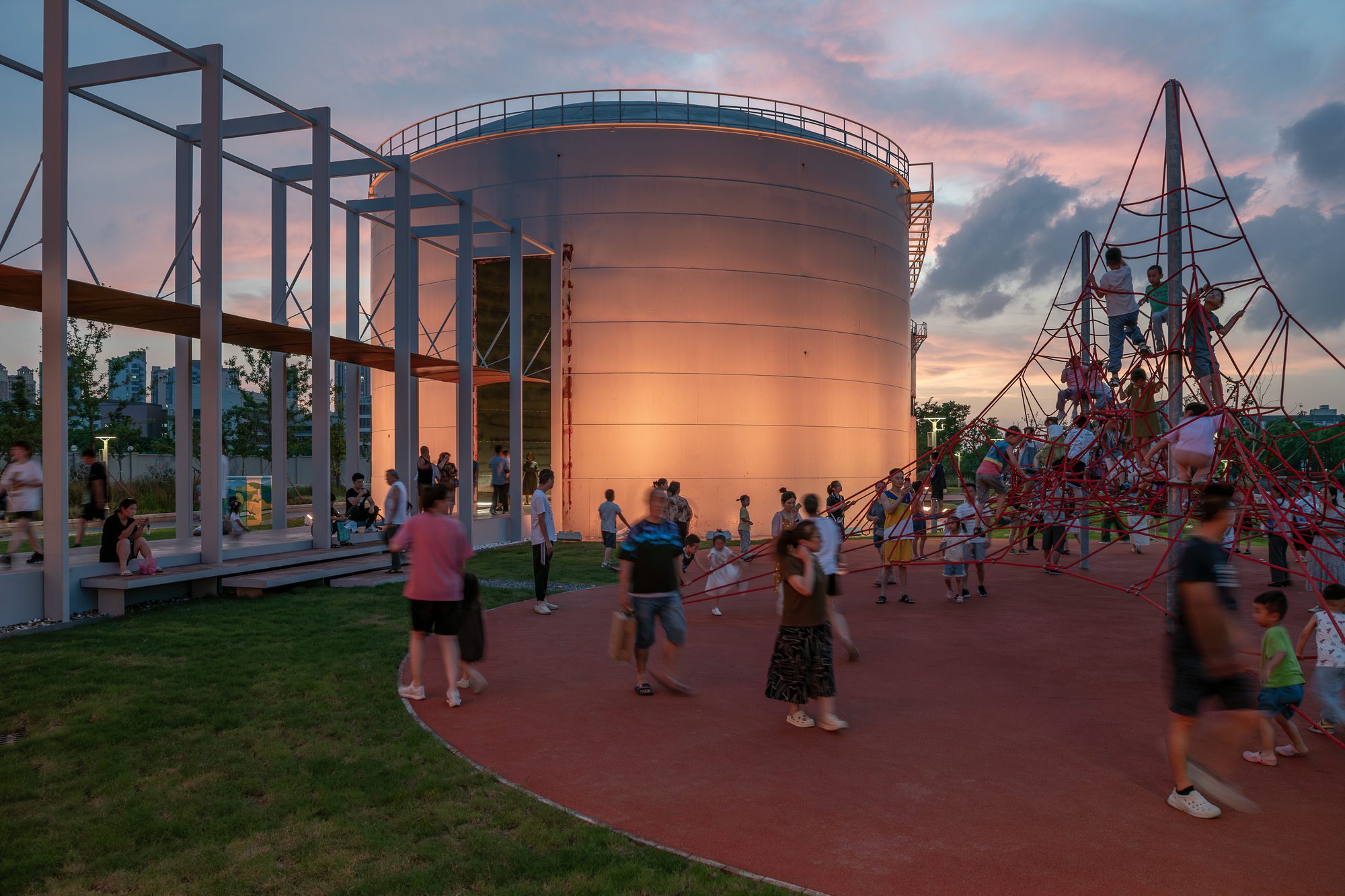
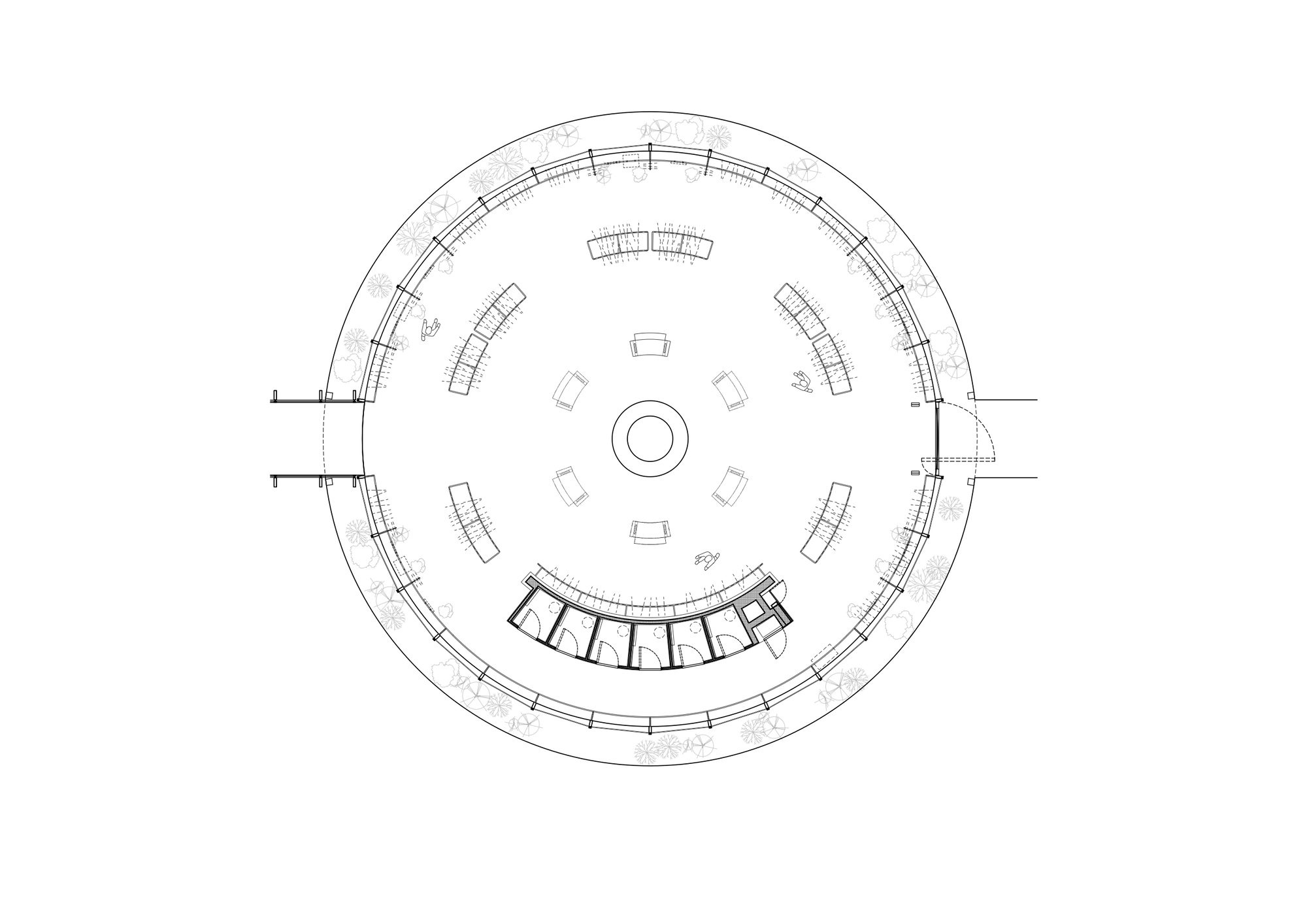
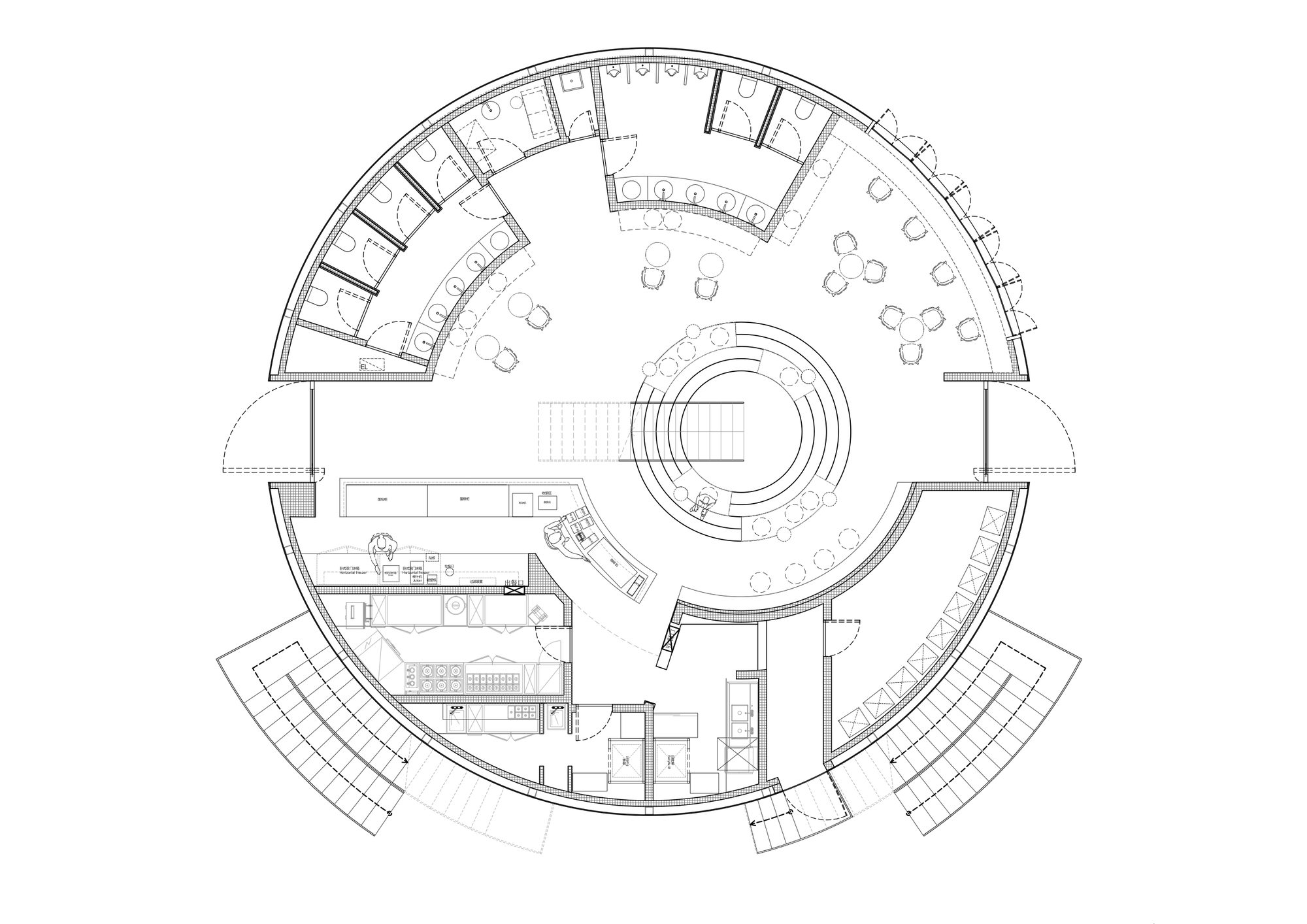
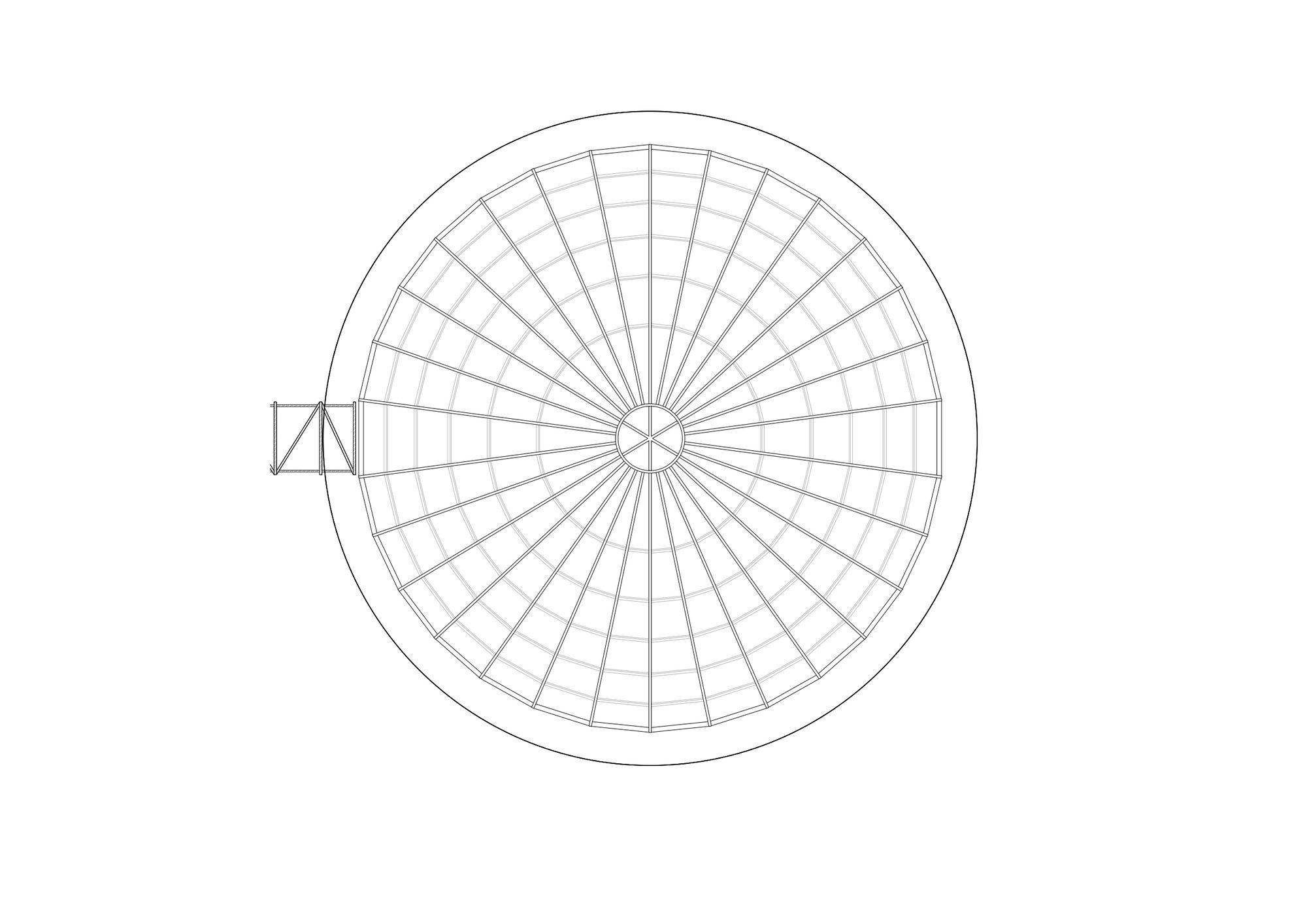
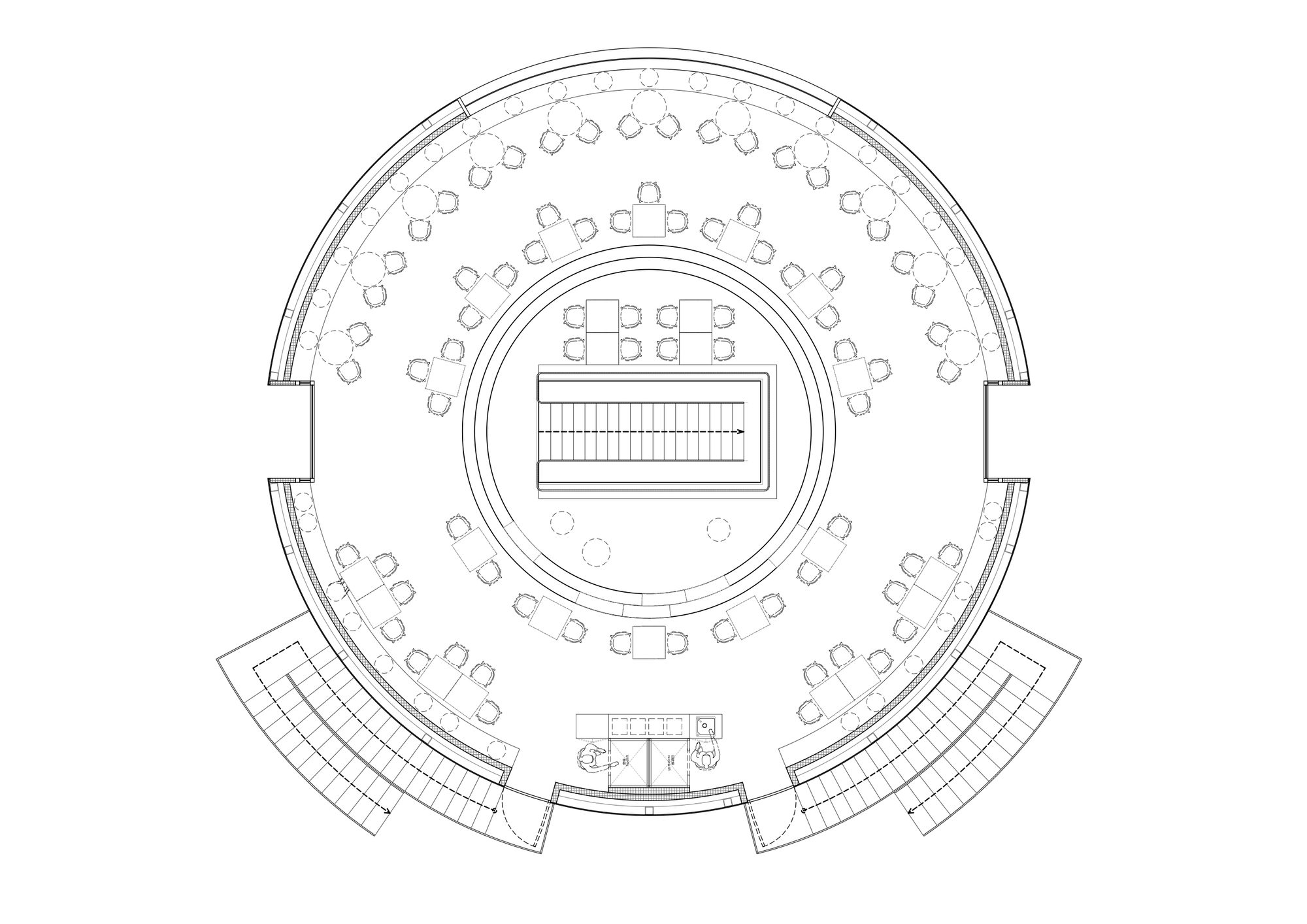
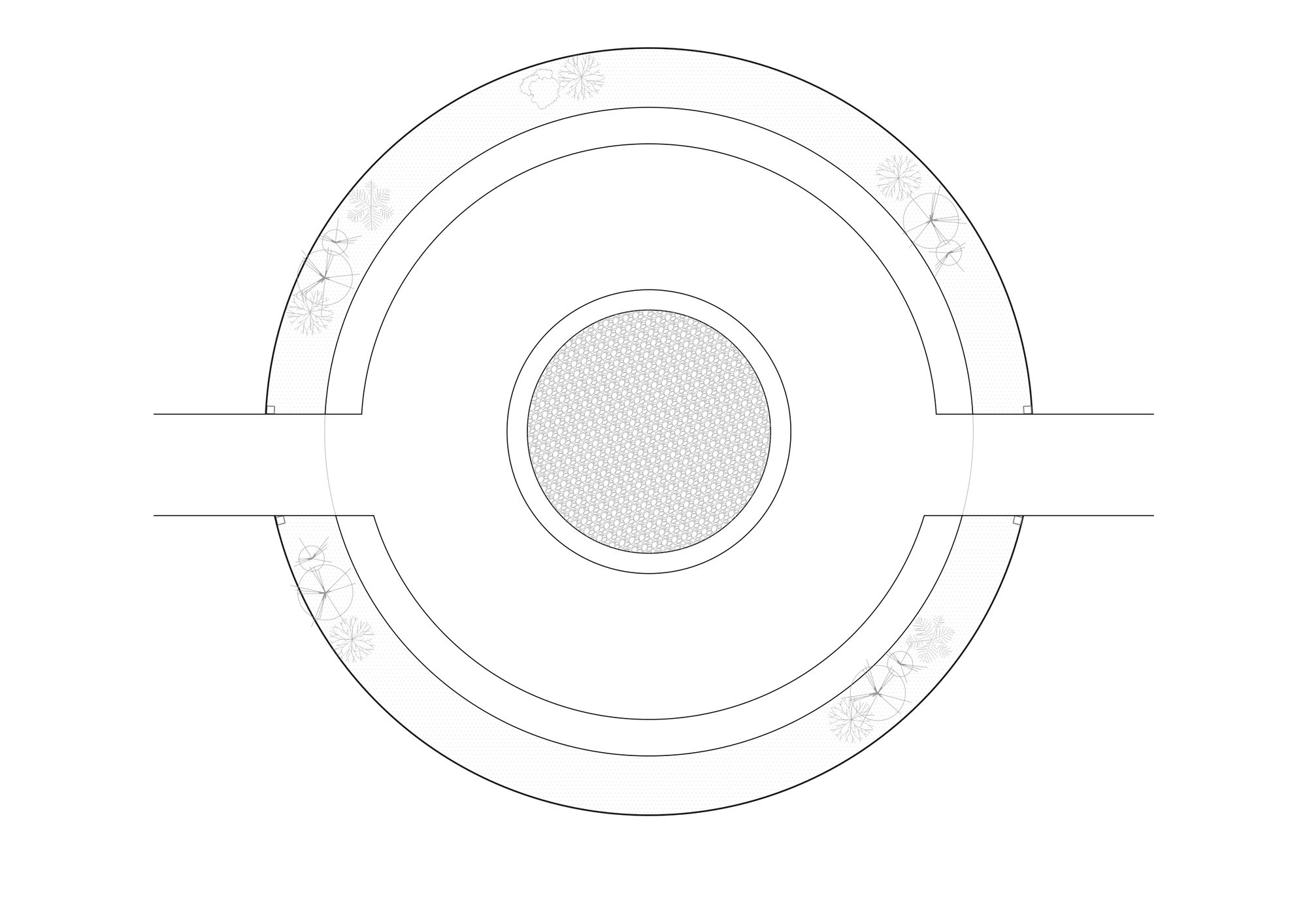
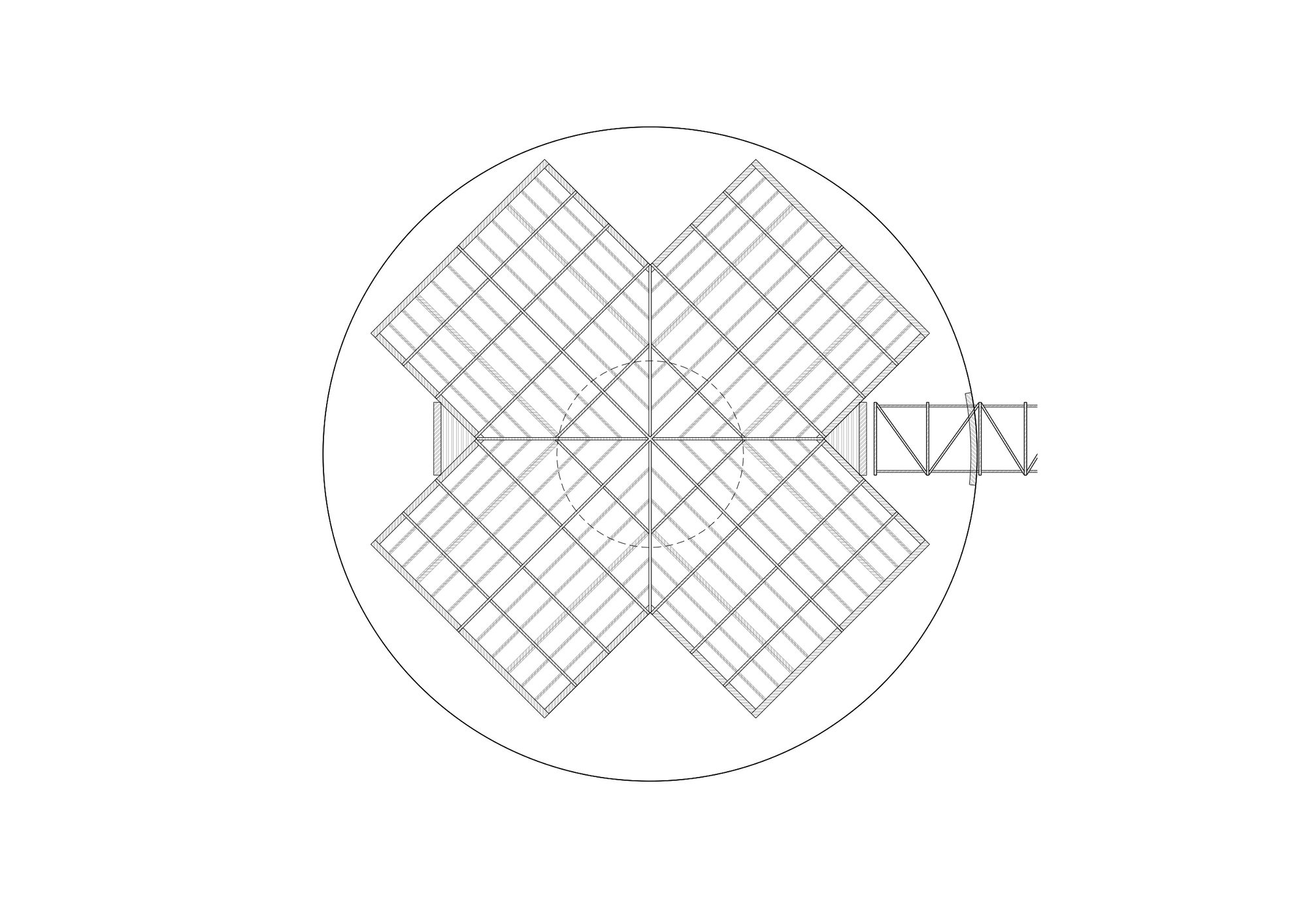
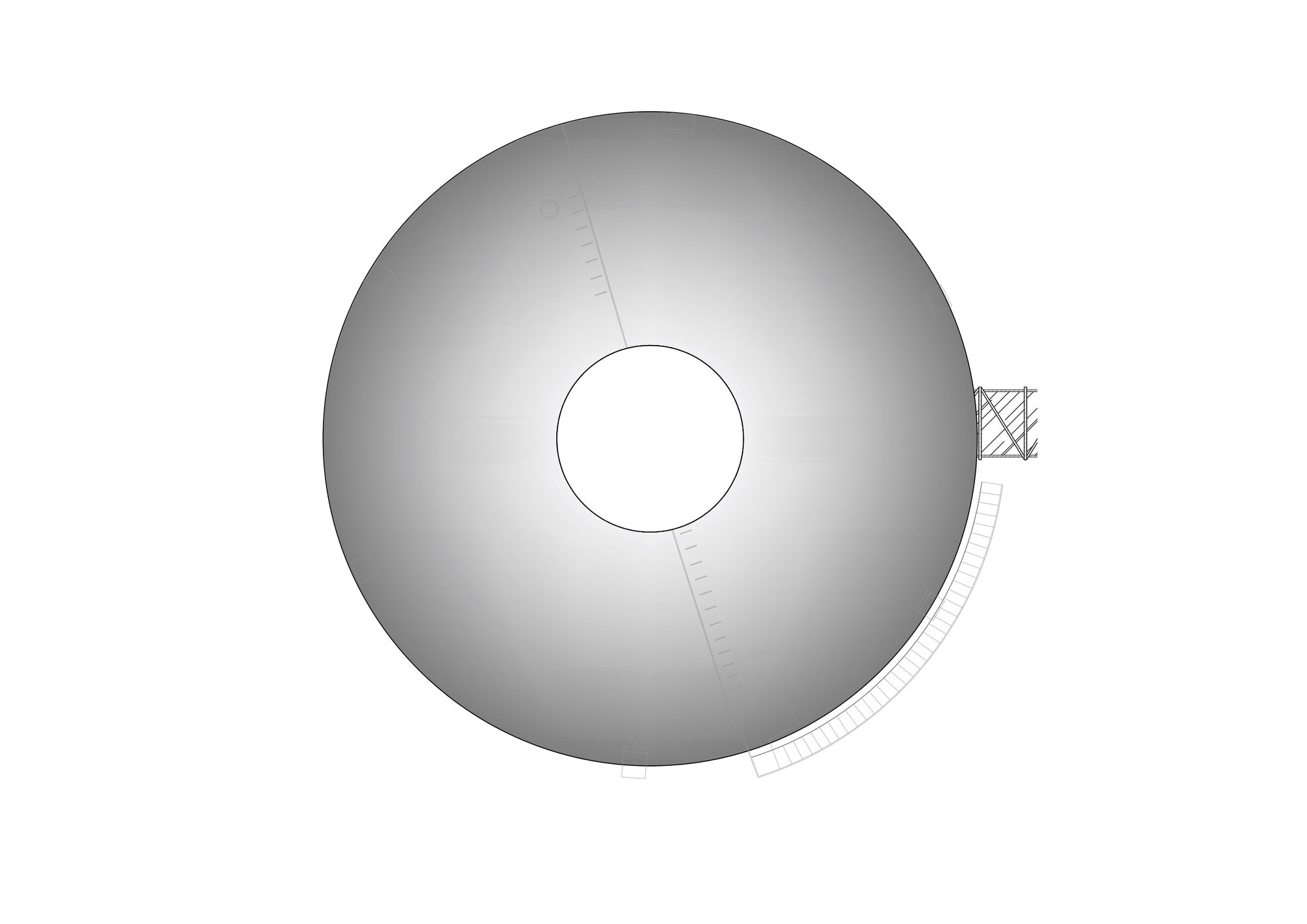
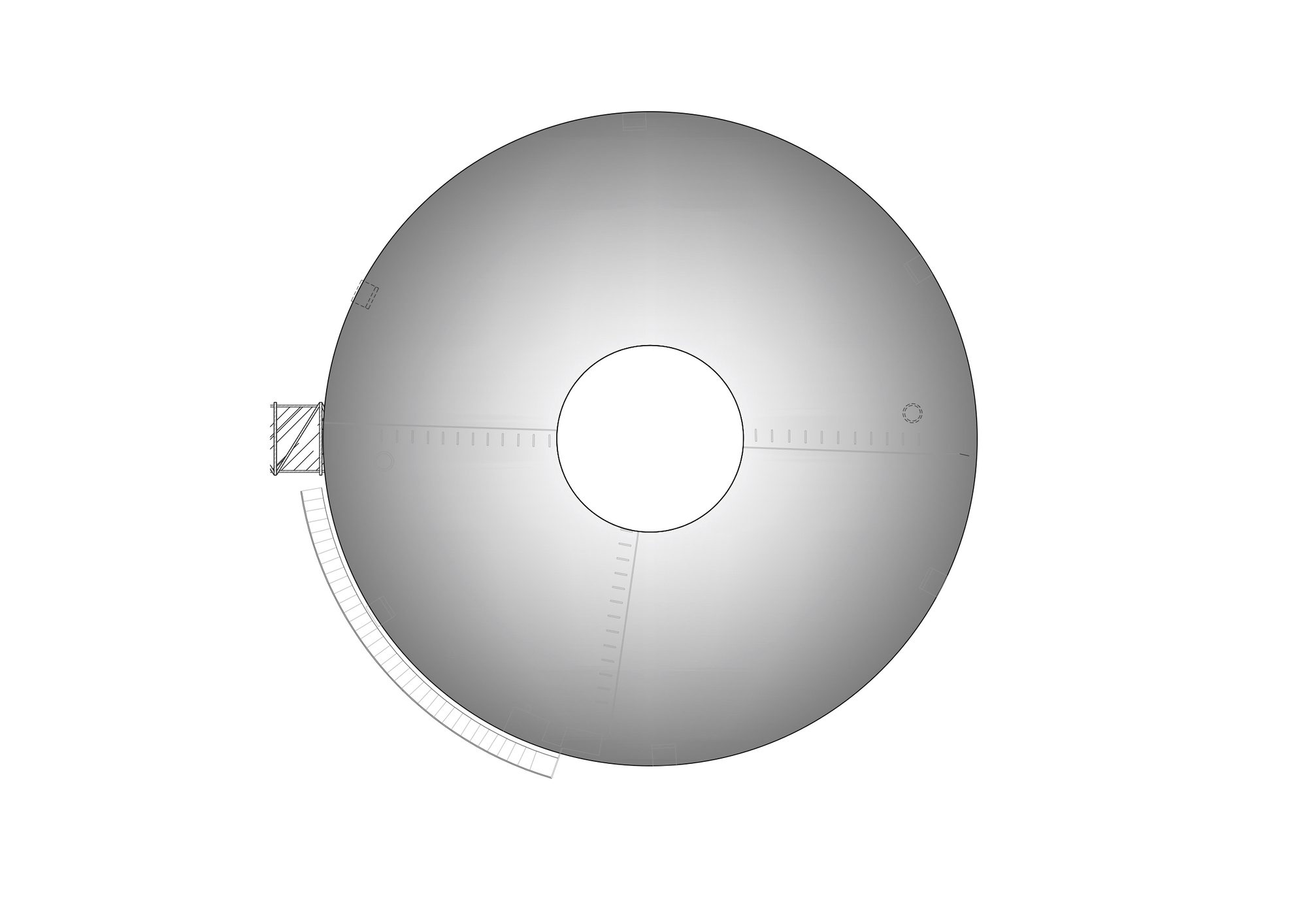
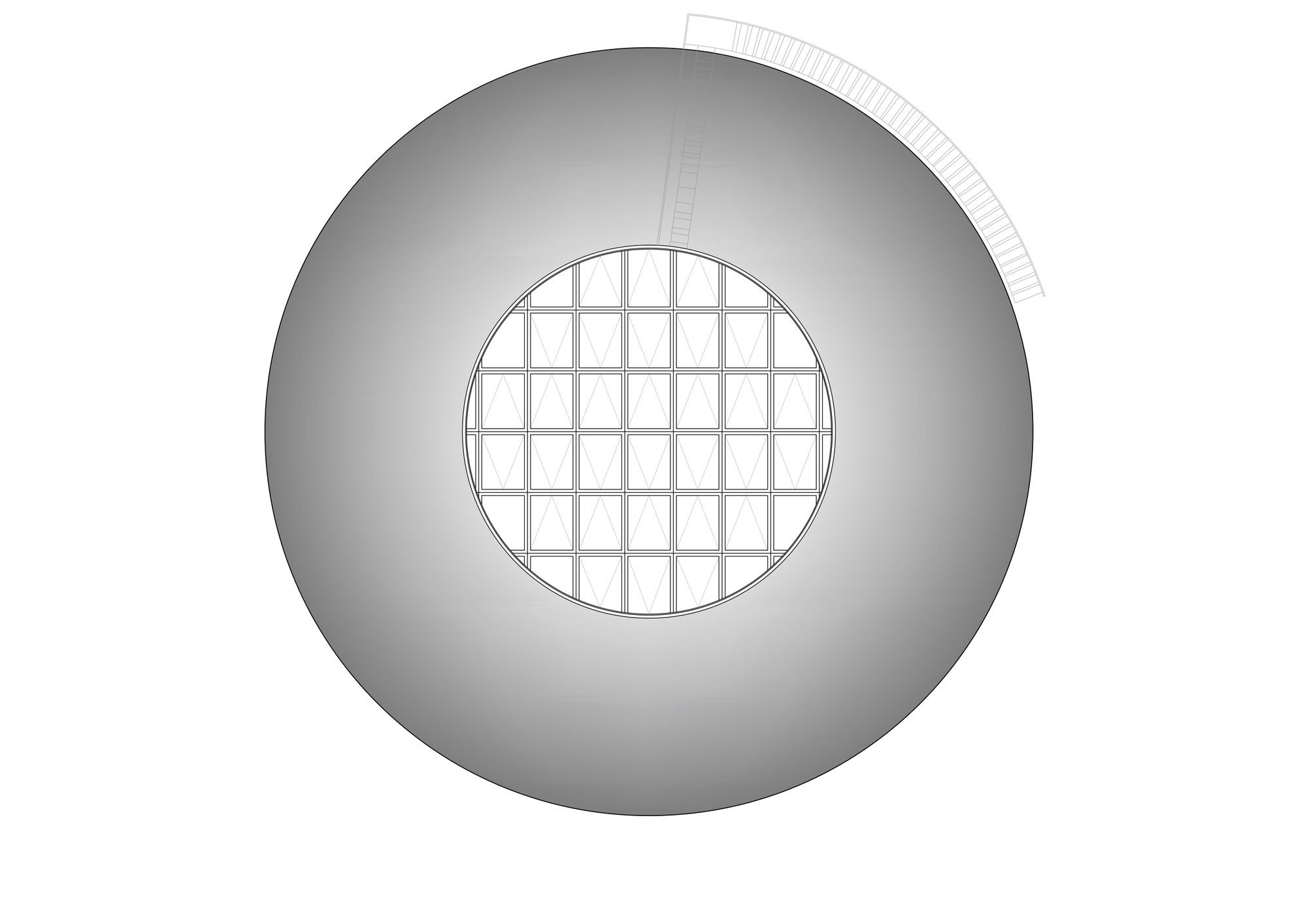
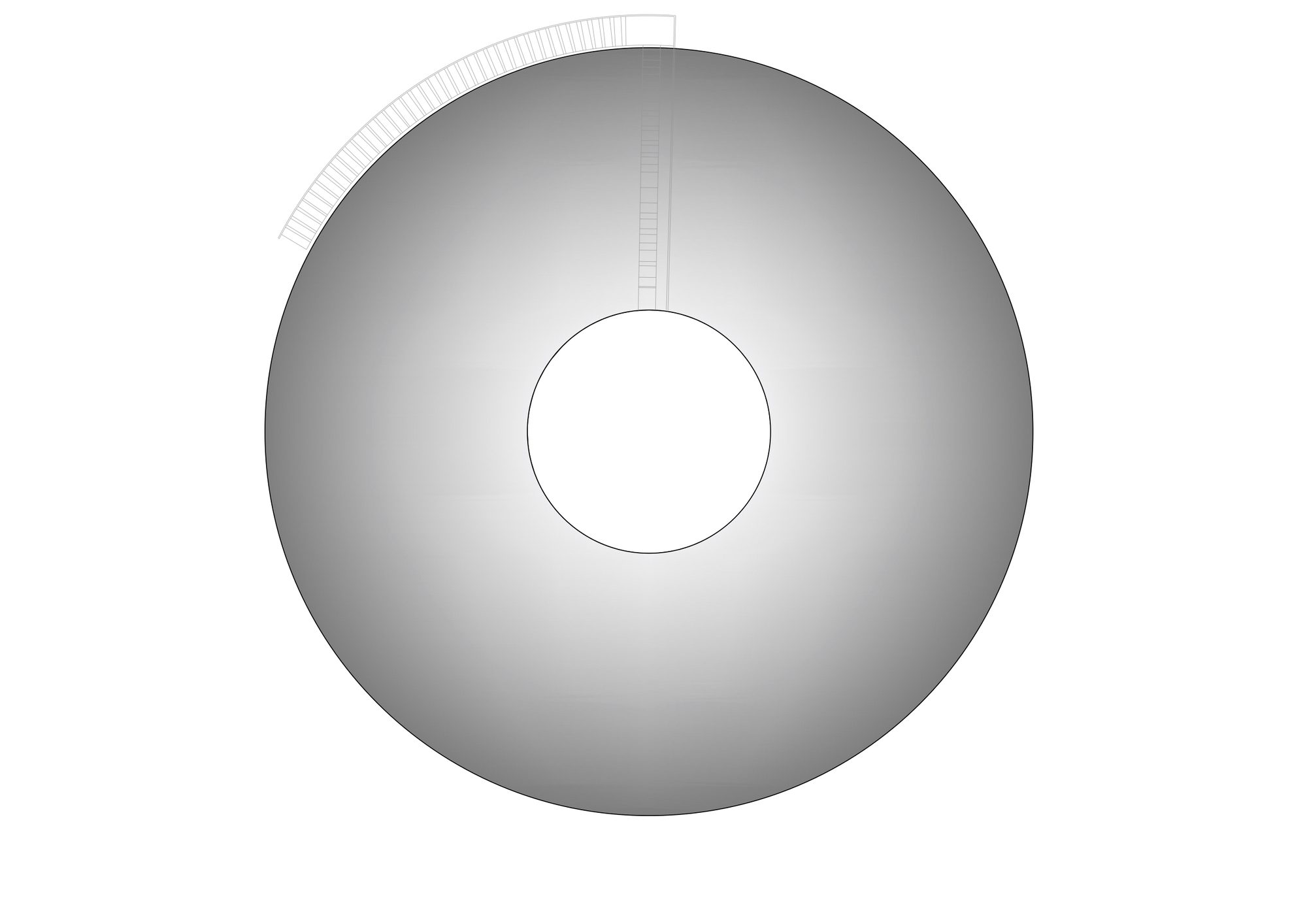
Cotton Park, Changzhou, an ancient city with a history of more than 3,000 years, has reached over One Trillion in GDP since 2023. It has transformed into a captivating destination, embracing a more intimate city experience and prioritizing quality over quantity. This community project by Cotton Park is the regeneration of 4 oil tanks – a vision that aligns with our aspiration to bring urban spaces to life.
© Dirk Weiblen
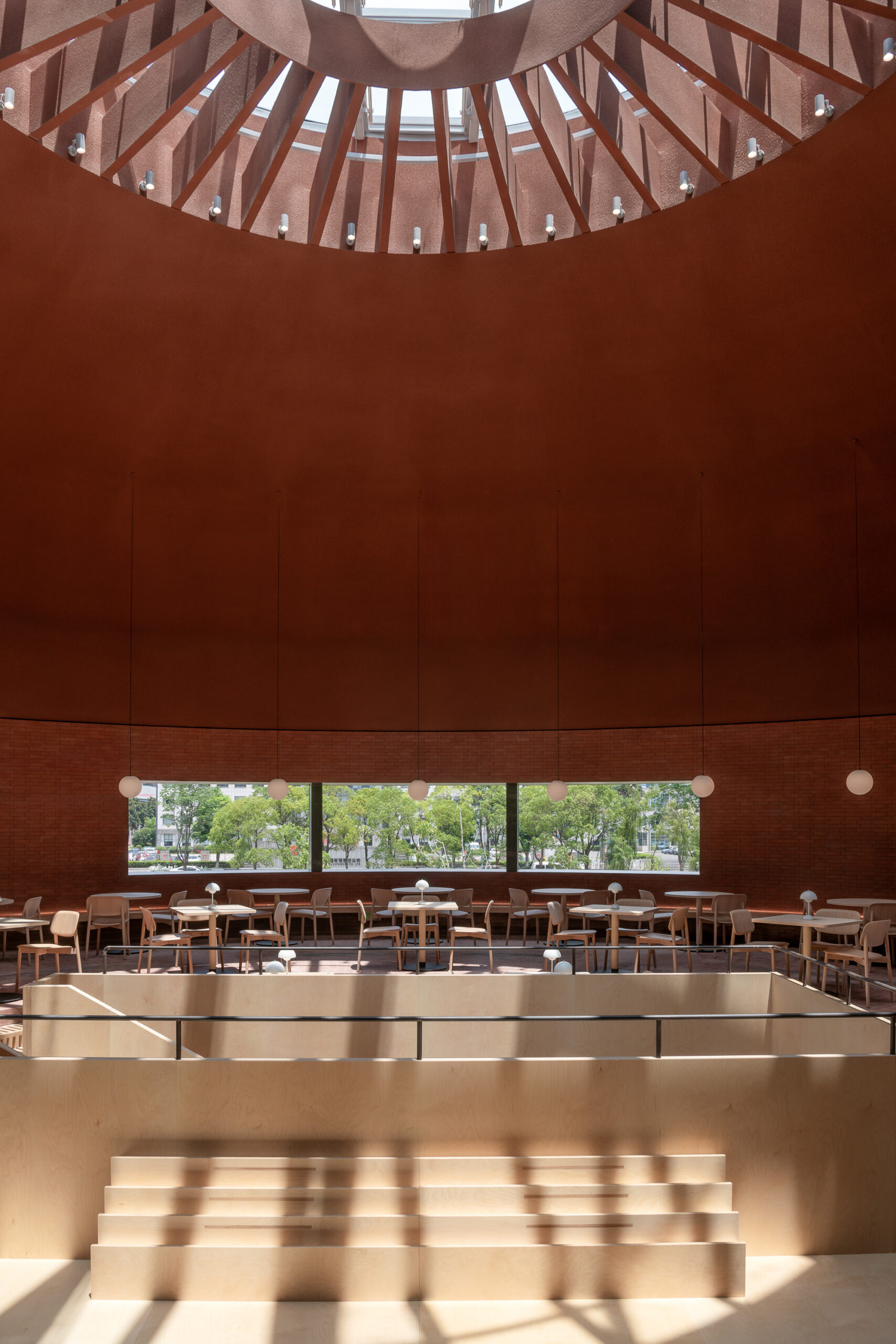
Our goal was to breathe new life into the city and foster community engagement by establishing a place where people could gather. Simultaneously, we aimed to create a versatile place capable of hosting various cultural events and gatherings, enriching the local experience. The four tanks possess a distinctive quality due to their initial purpose, primarily designed to facilitate industrial processes rather than being centered around the human scale.
© Dirk Weiblen
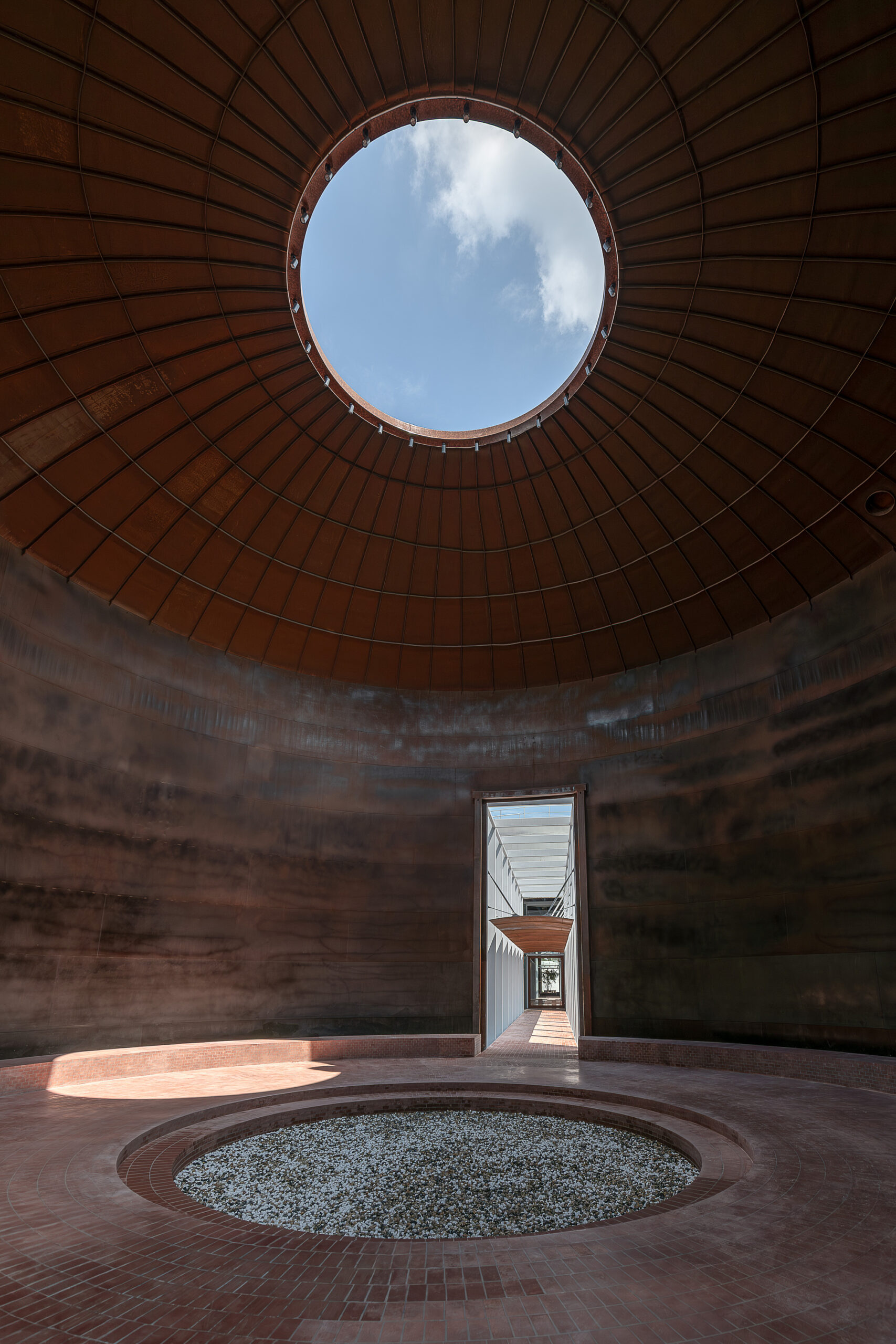
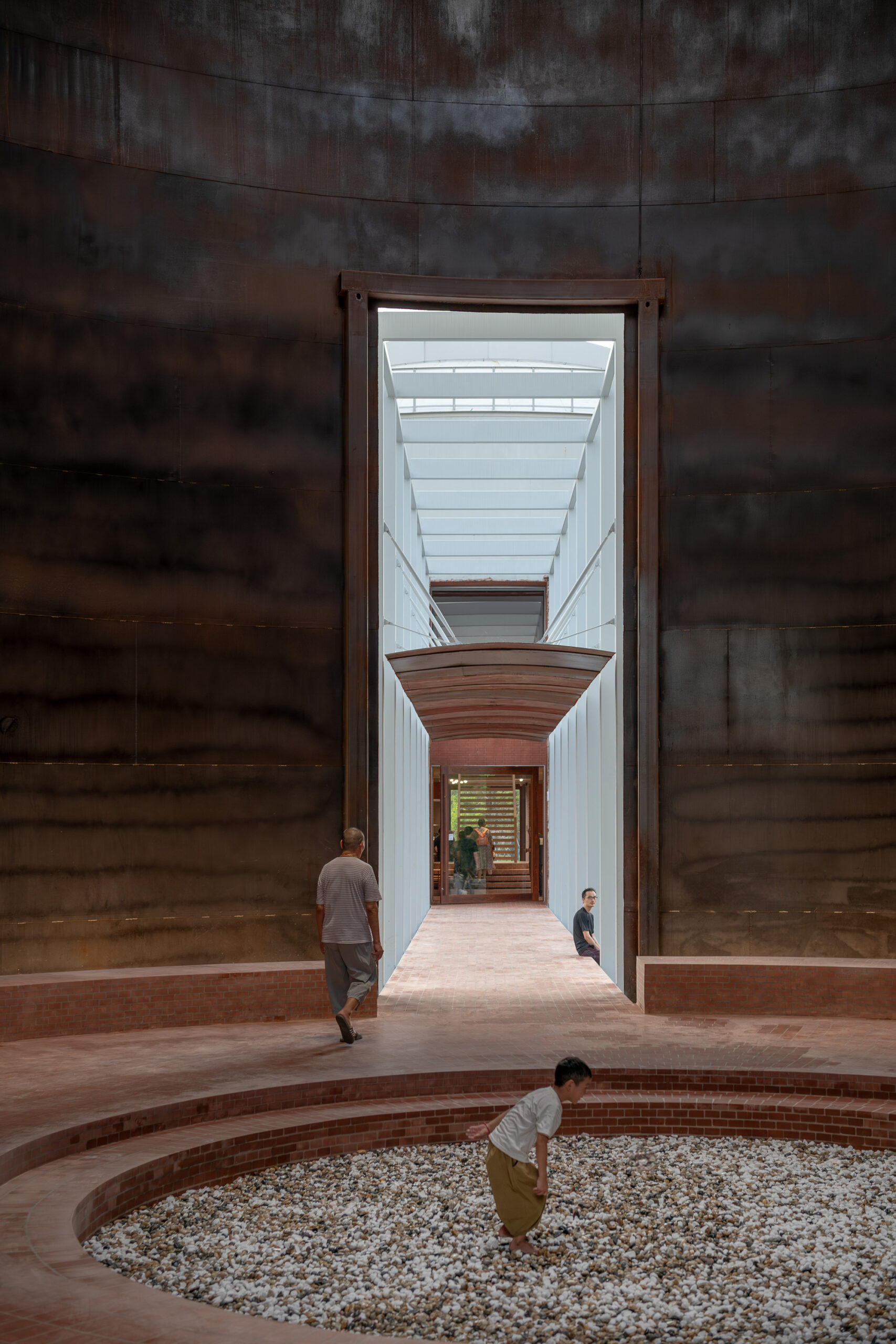
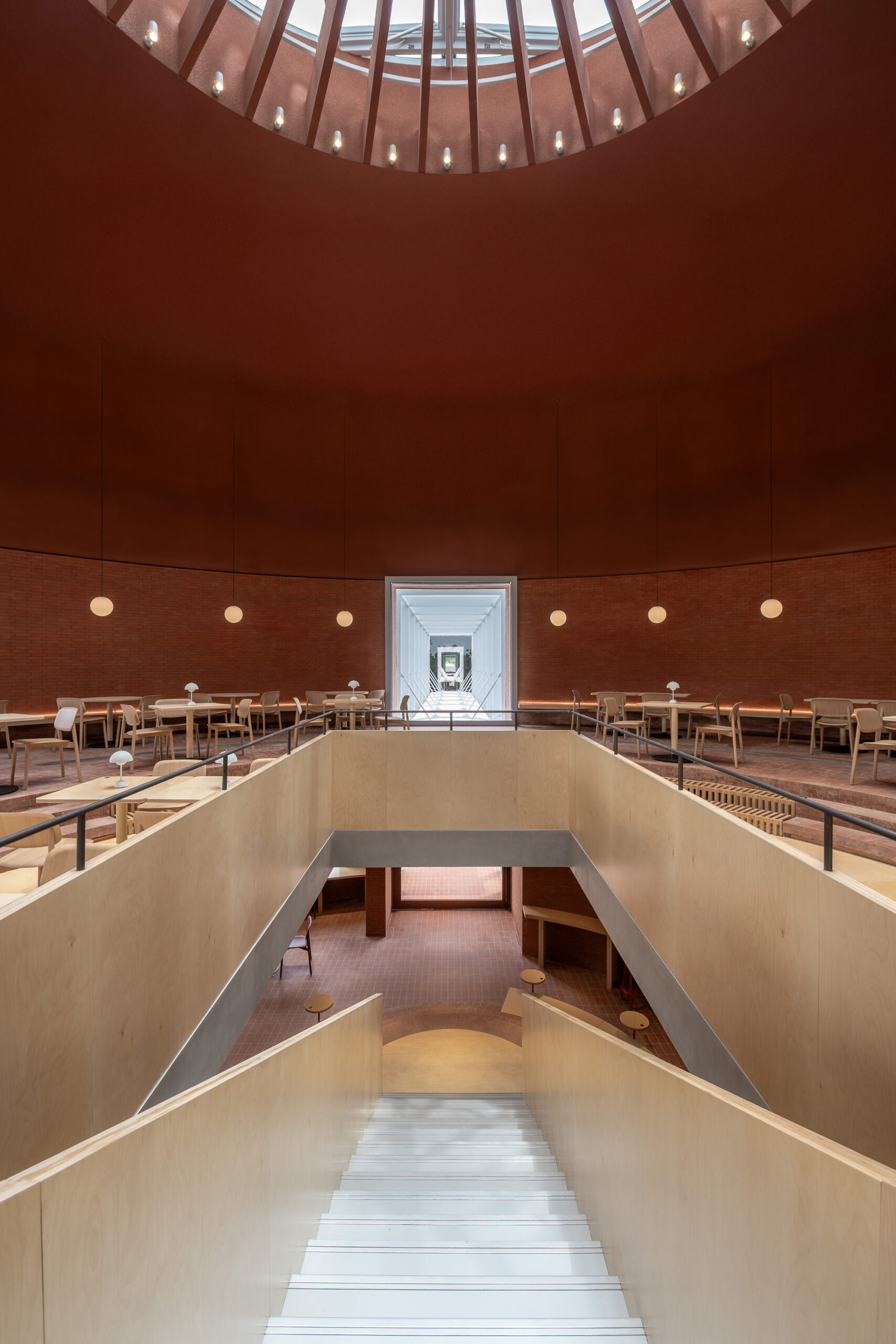
During our first site visit, a ray of sunlight gracefully descended from the top of the silos, casting a flawless ellipse of light on the stained walls. At that moment we realized that the essence of the project lies in preserving the tank walls and harnessing the ethereal lighting from above. This influenced our decision to preserve the existing architecture as much as possible, driven by both sustainability concerns and respect for the historical heritage of the local industry.
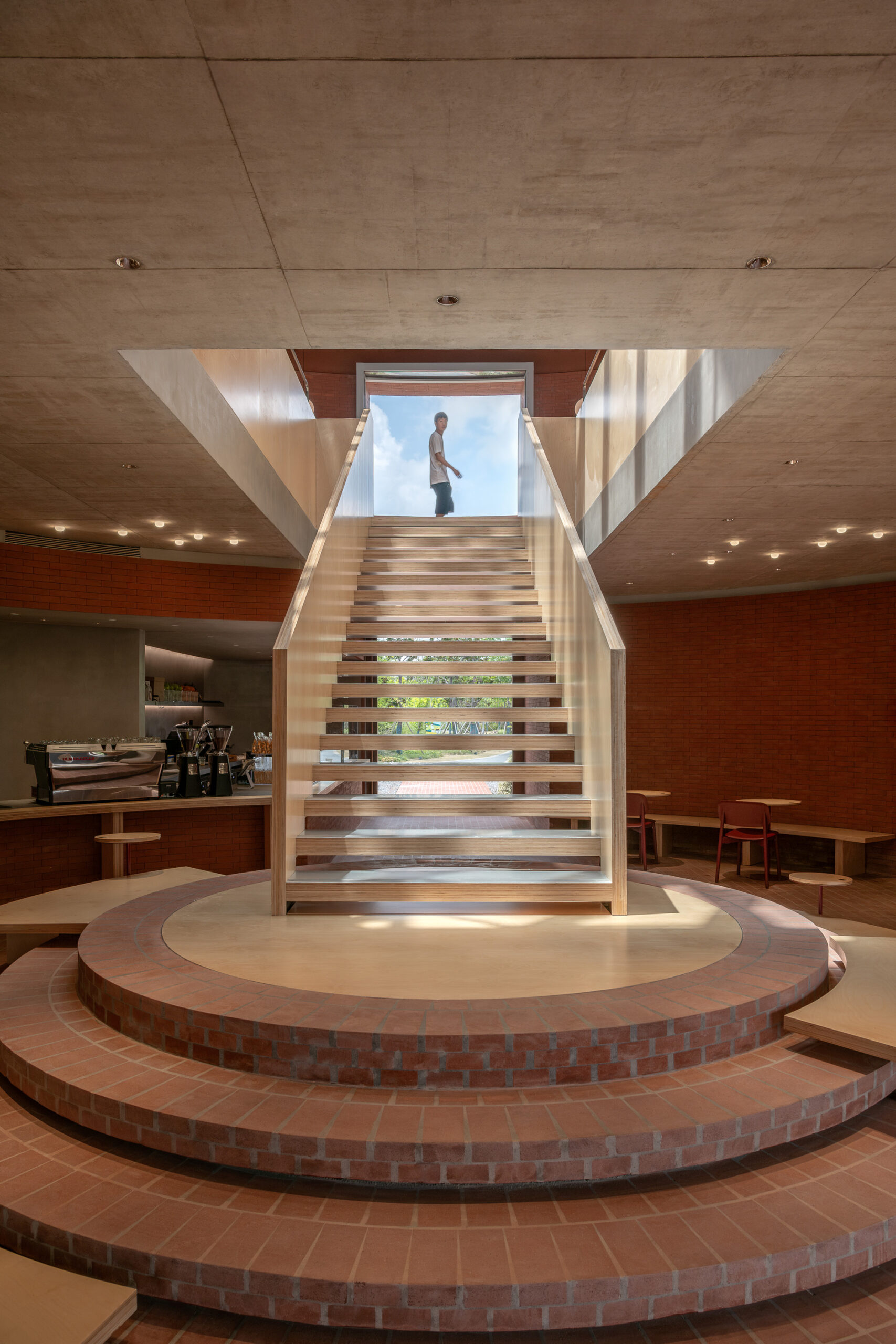
© Dirk Weiblen
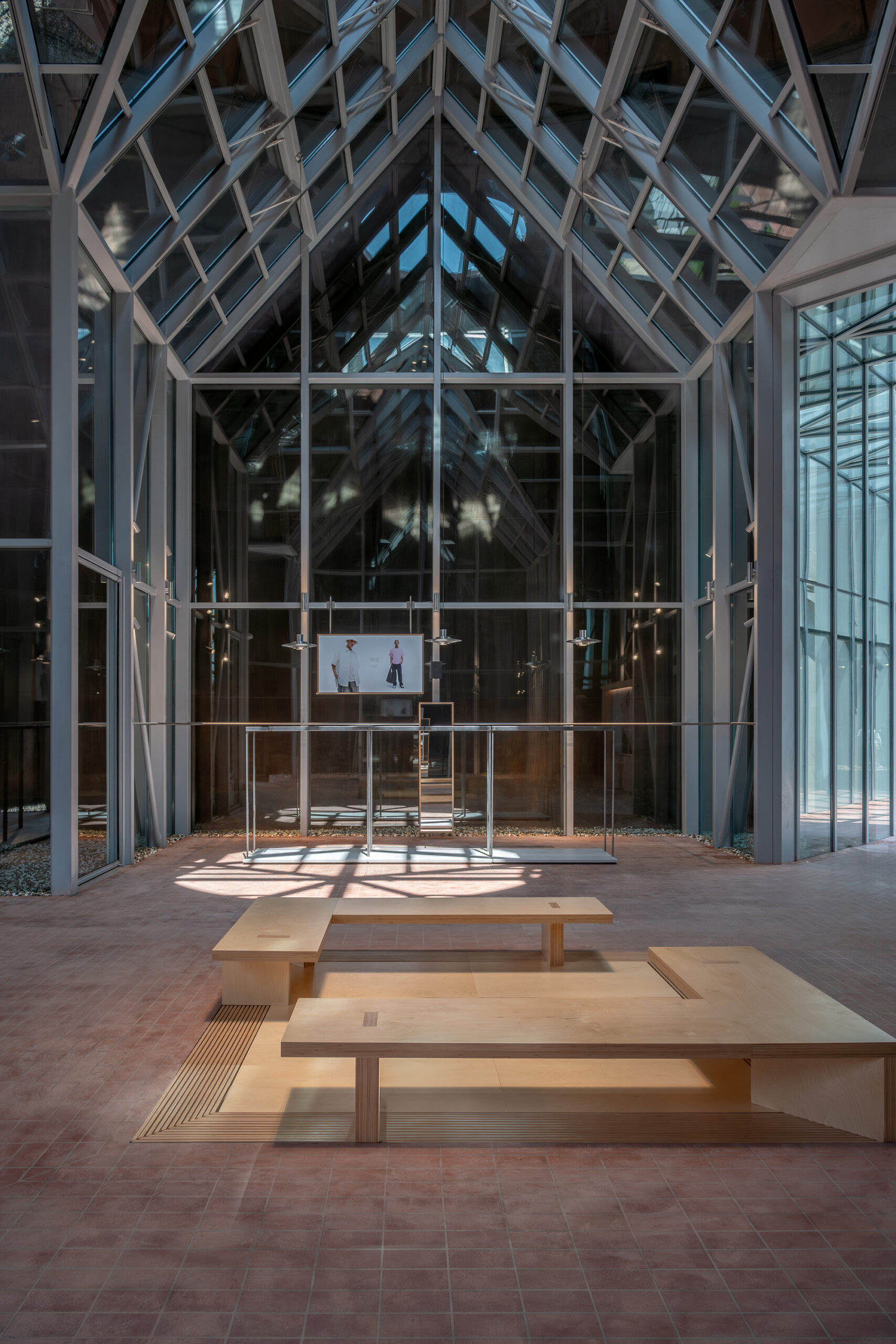
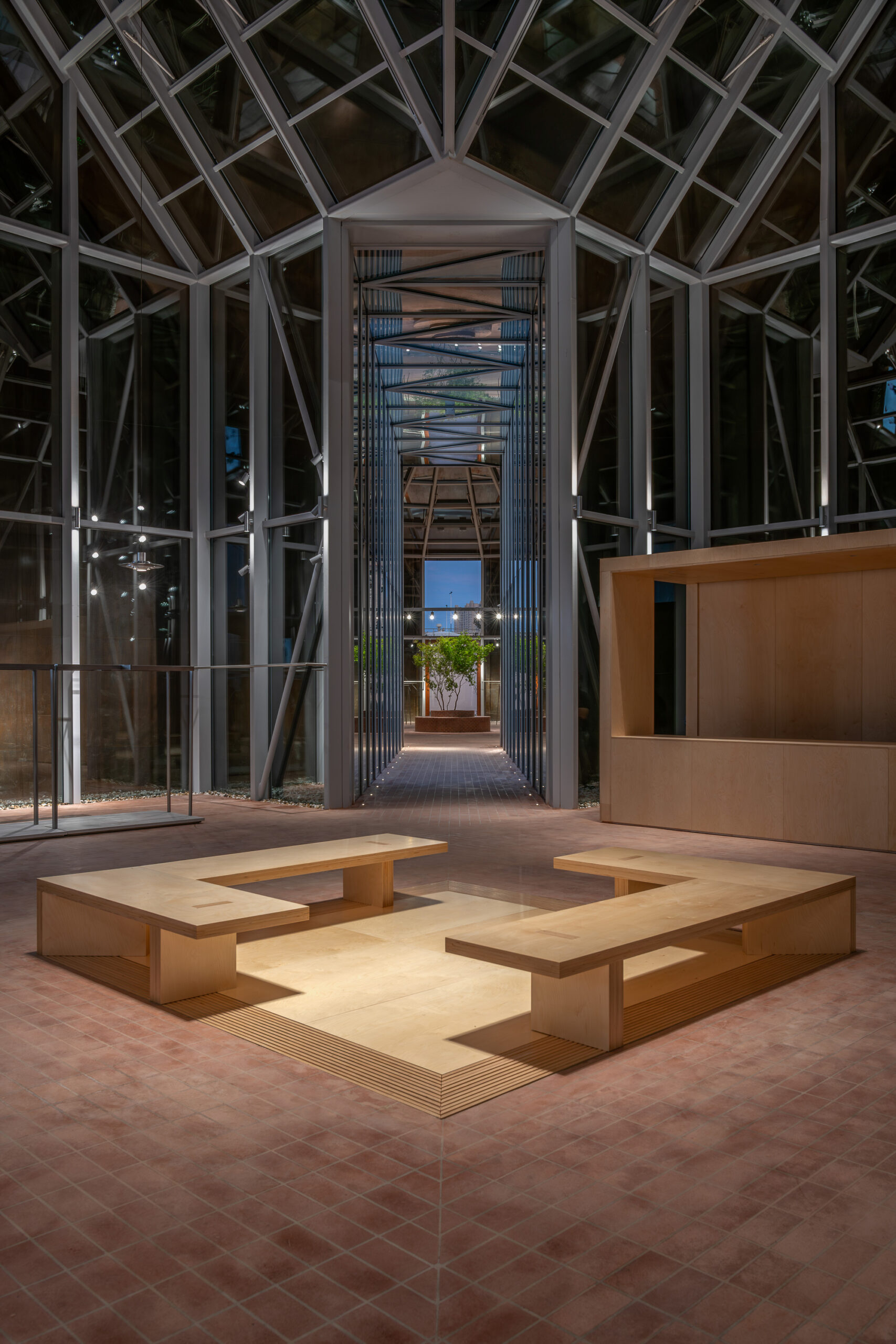
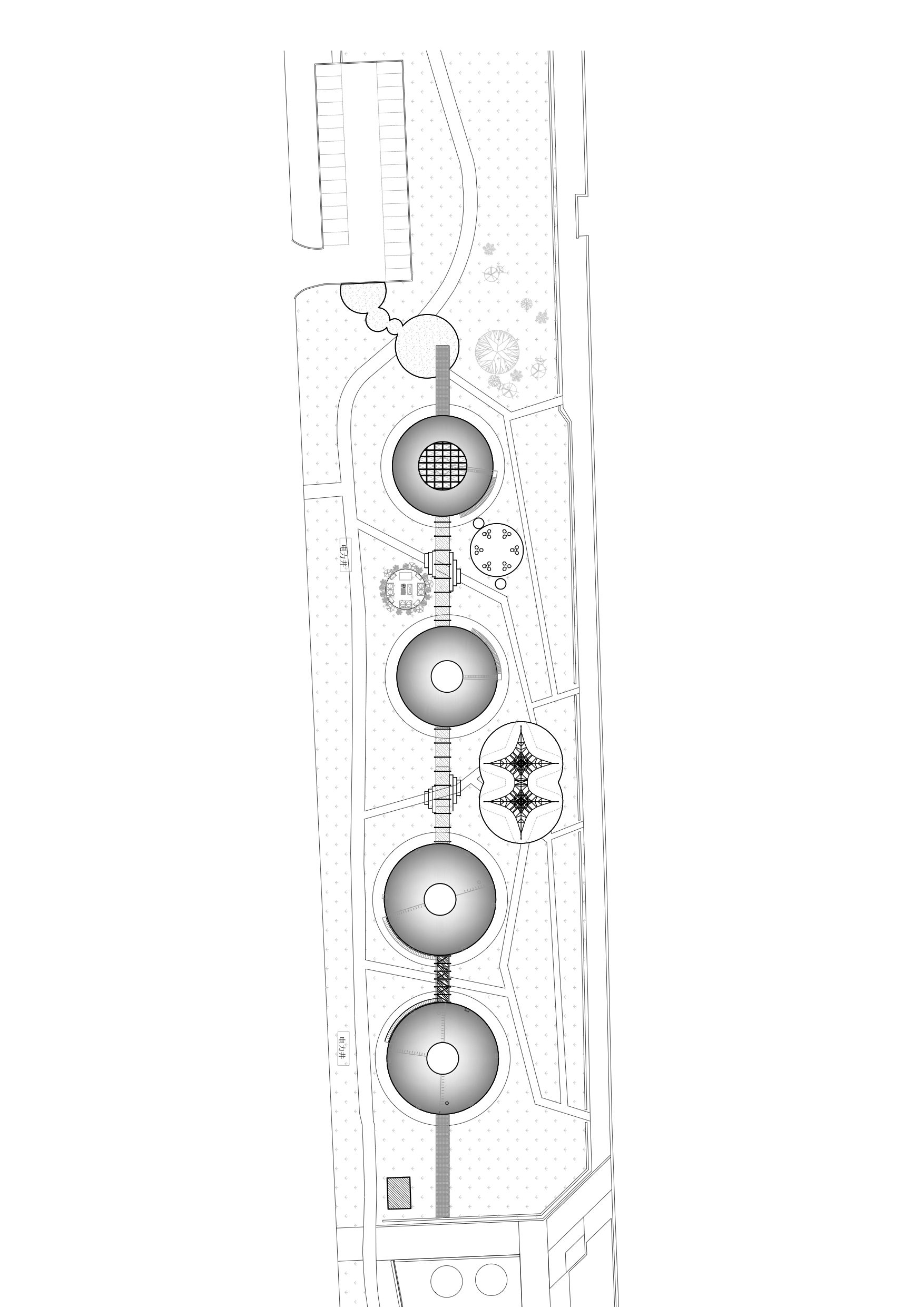
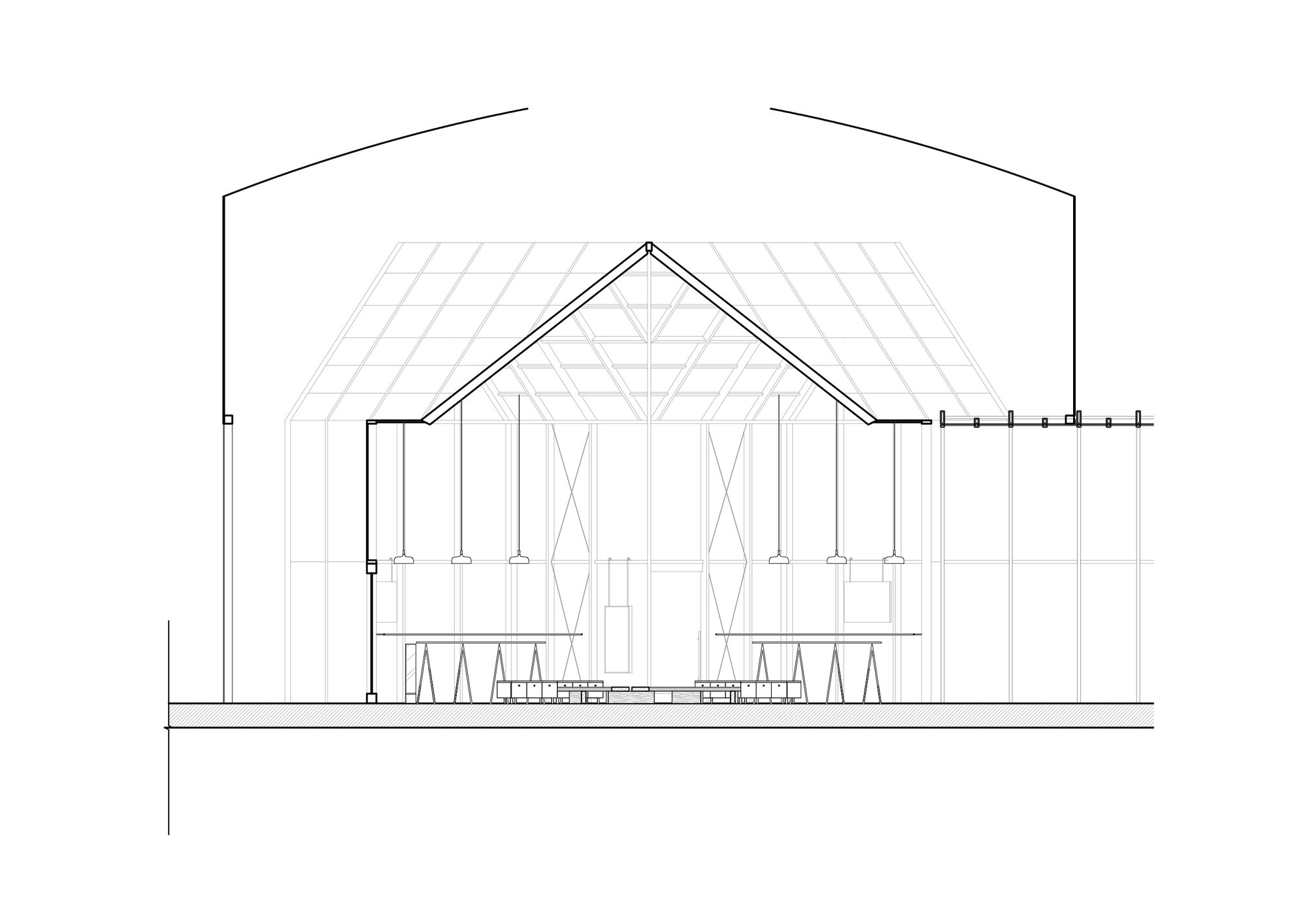
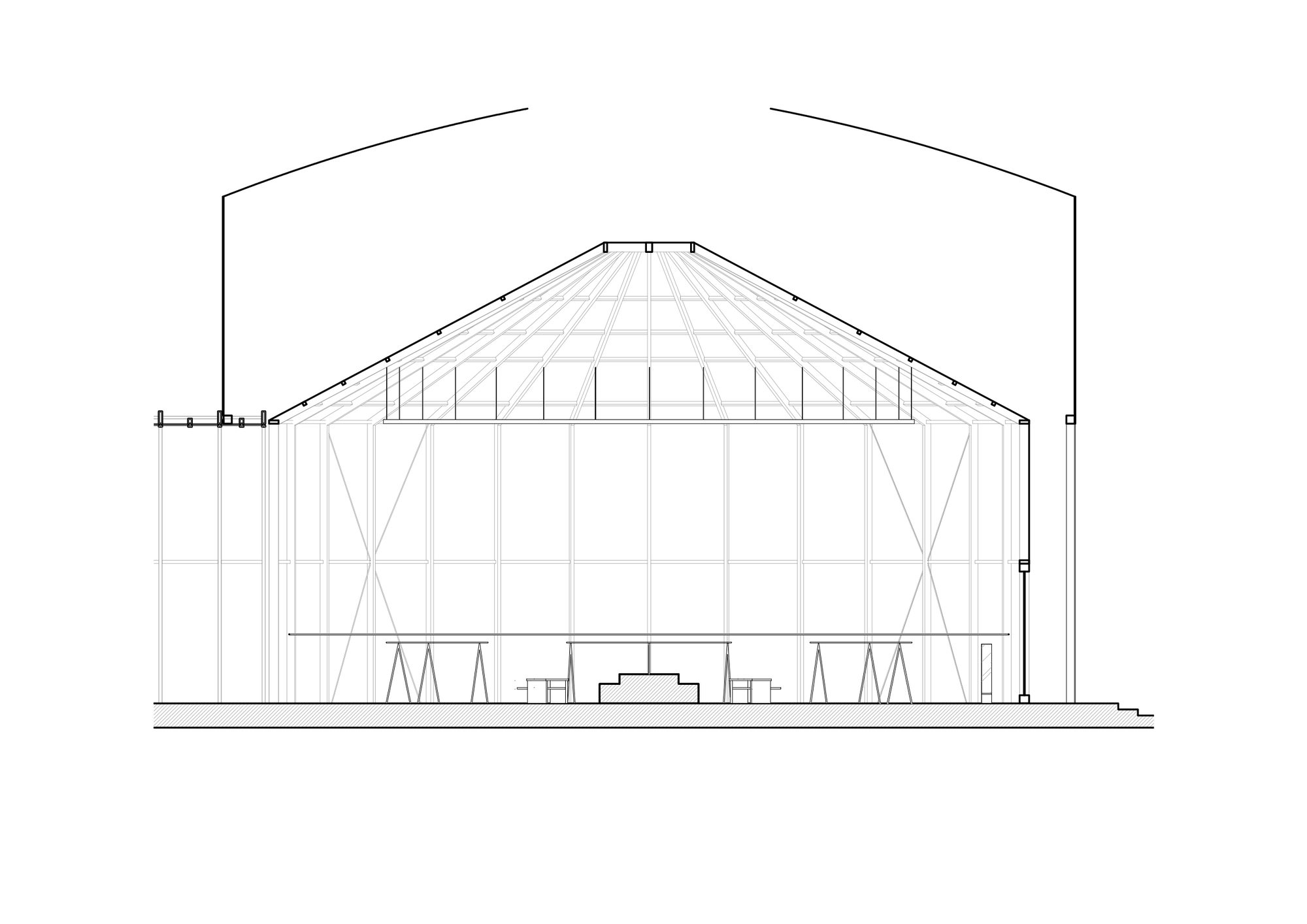
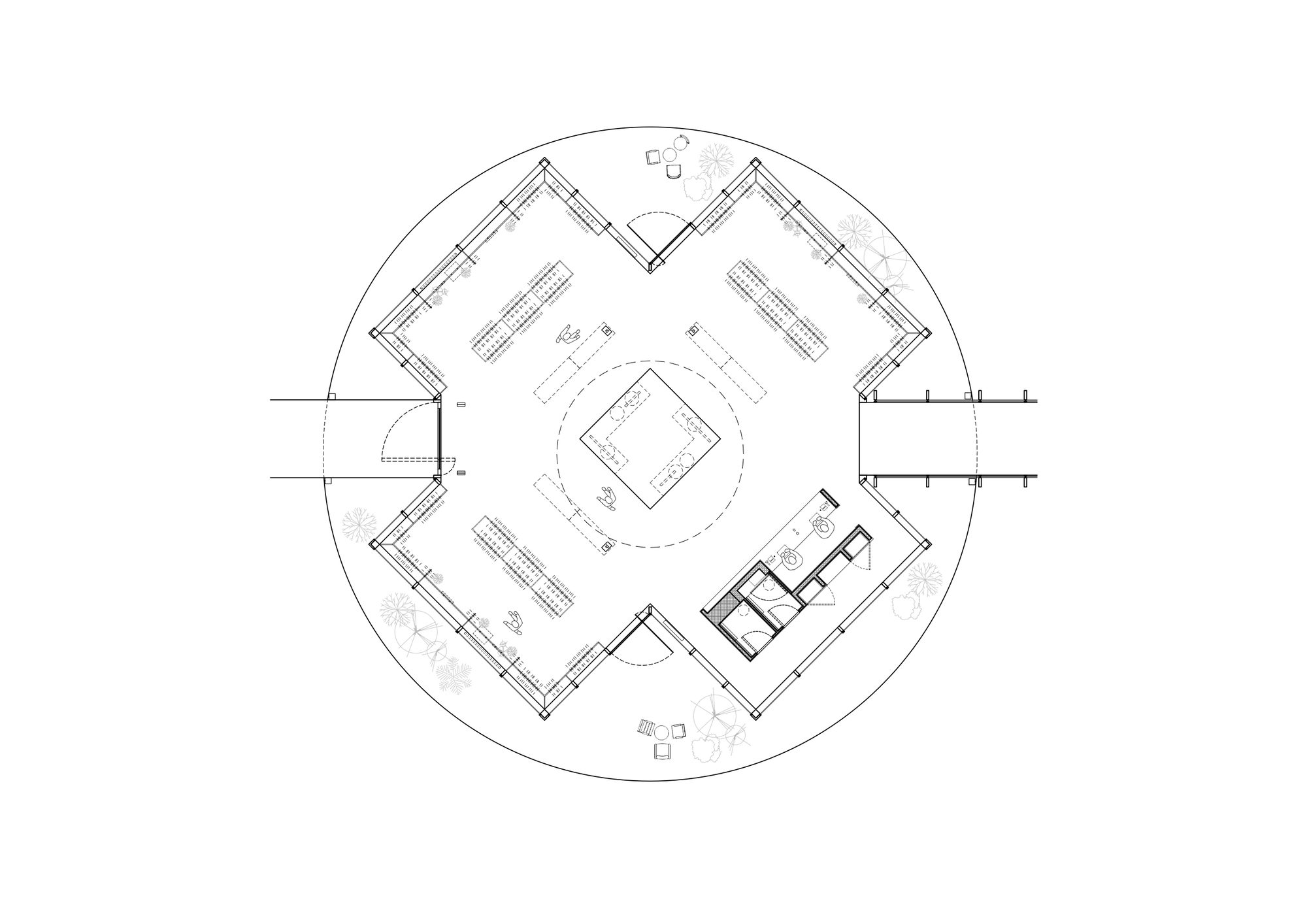
We chose to connect the four silos’ by carving a direct path through their center, curating a captivating journey, and enabling visitors to traverse all four tanks with their distinct program and along the way indulge in a diverse array of experiences. Placing a glass house in two of the silos enables visitors to experience the silo’s powerful internal character while creating a comfortable and controllable interior climate.
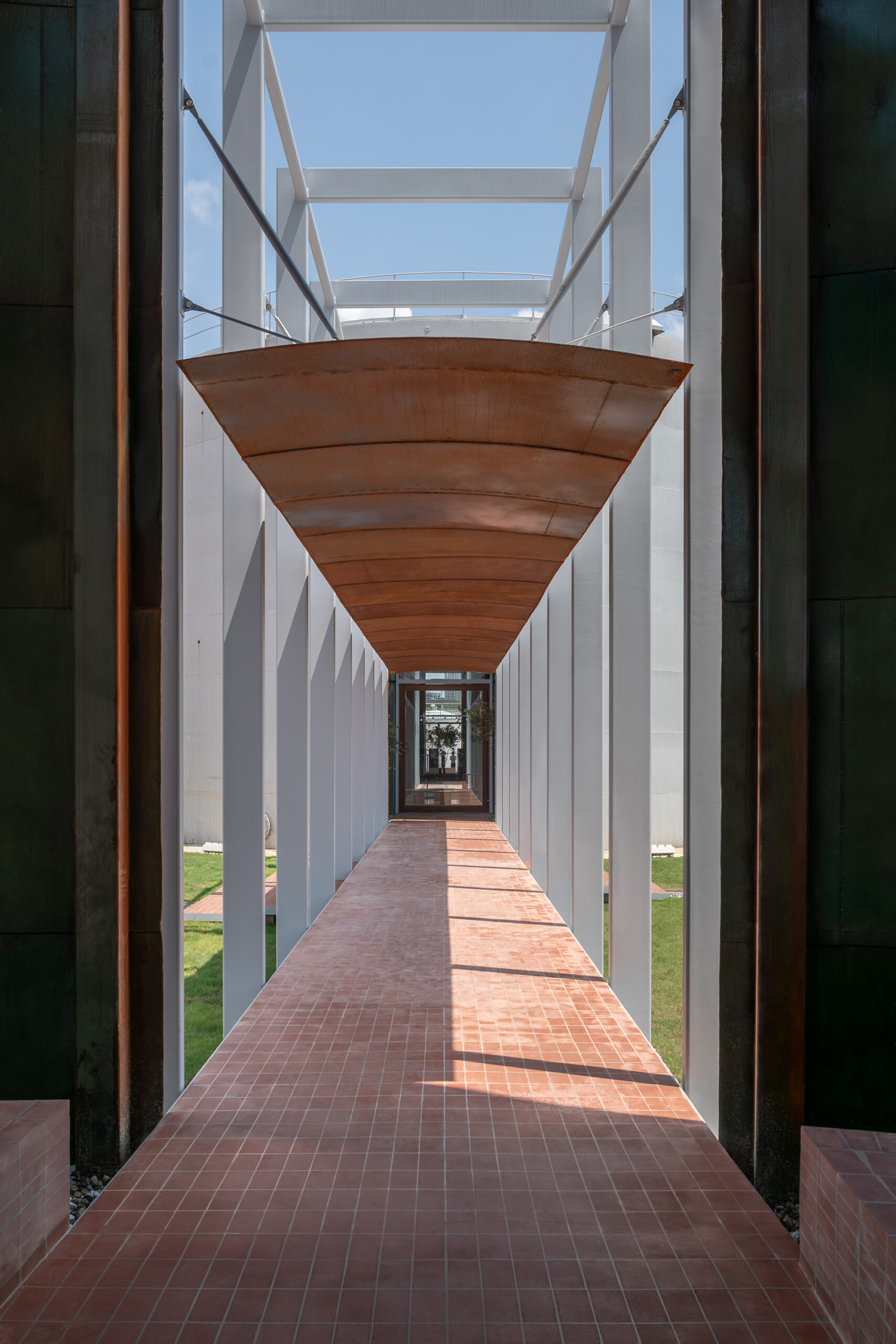
© Dirk Weiblen
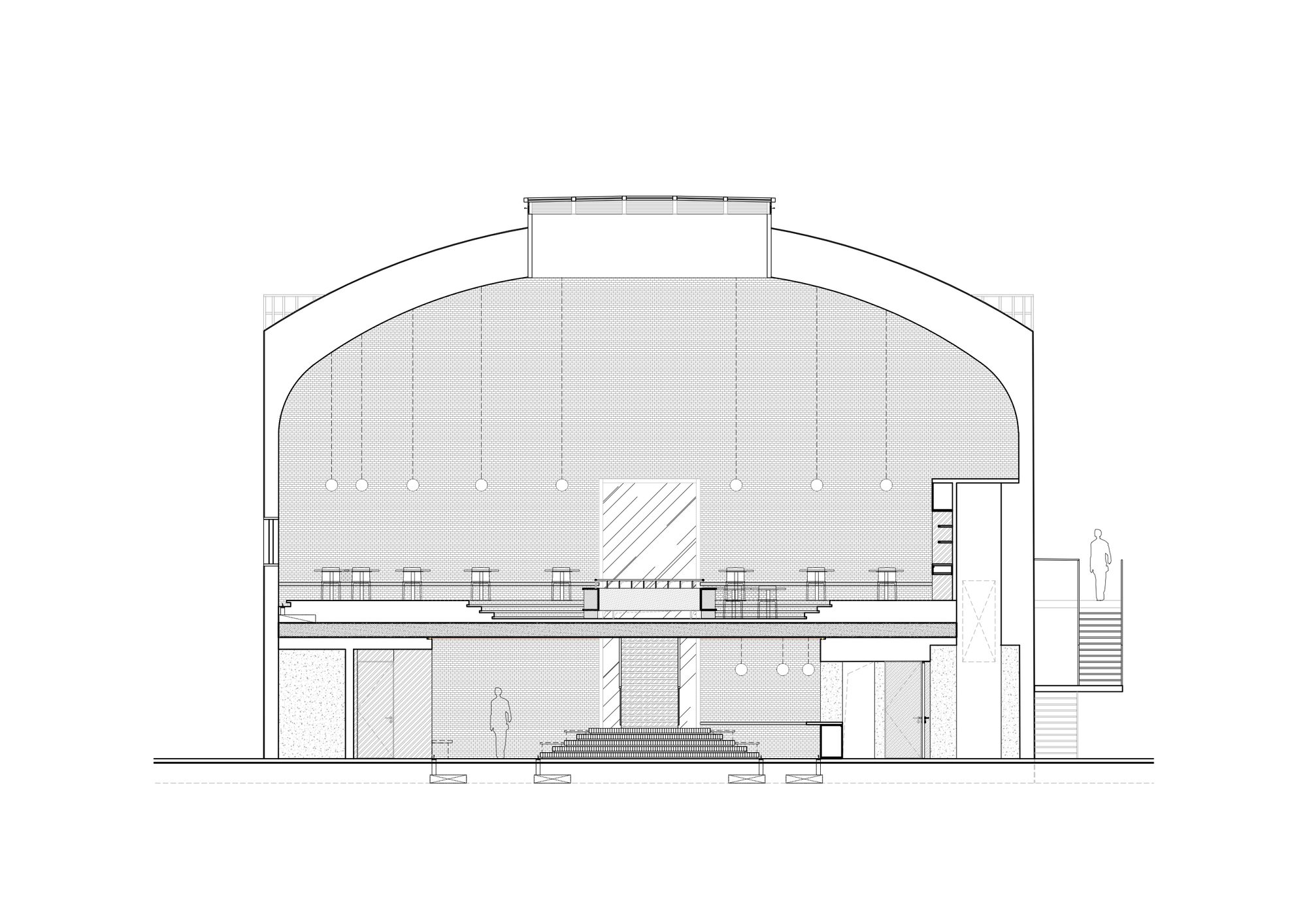
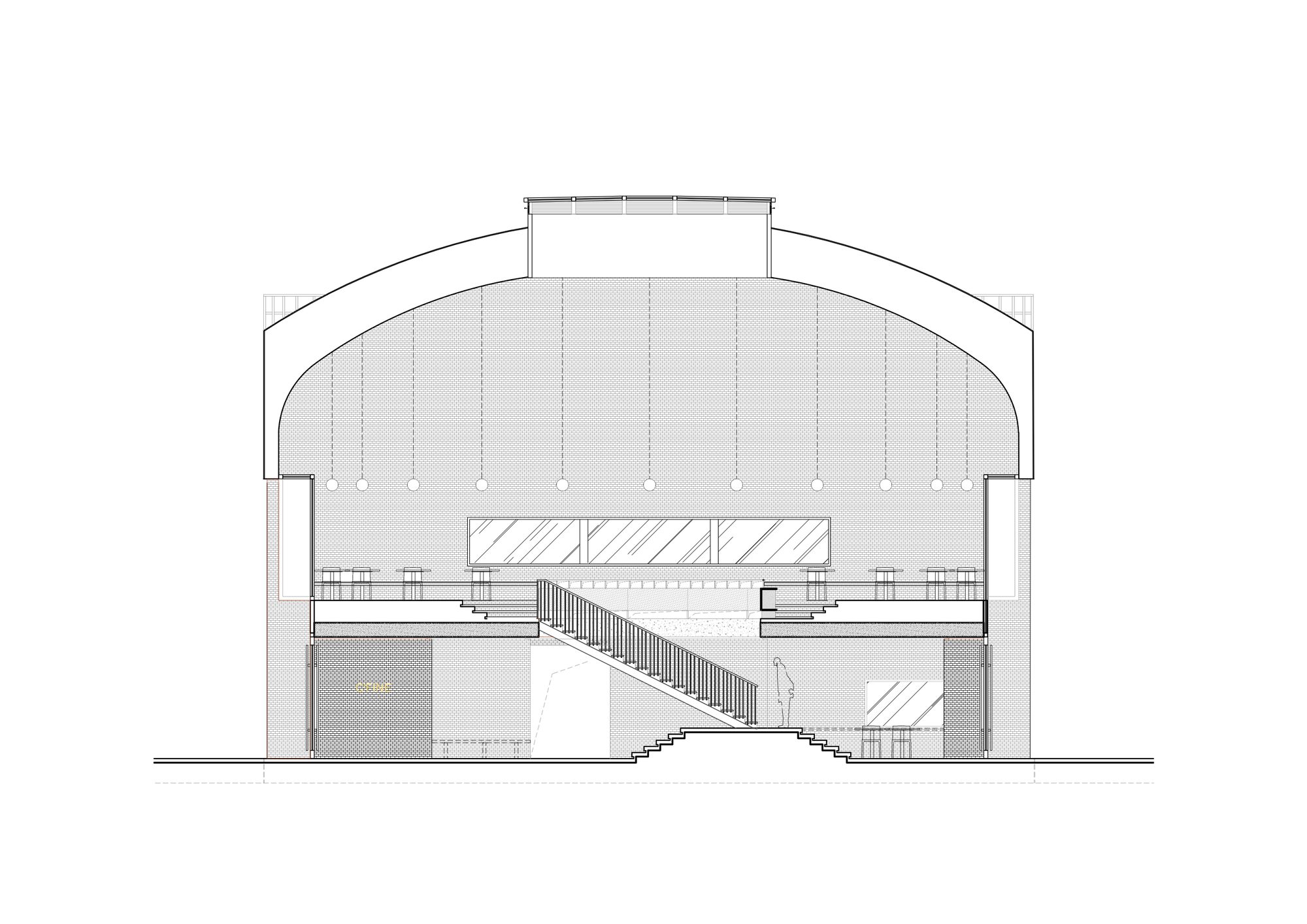
The opening on the top of the silos creates natural air convection between the silos and the glass house, avoiding internal overheating problems that occur in the summer. Strategically integrating the heating and cooling infrastructure into the floors allows us to keep these industrial “churches” free from visible technology.
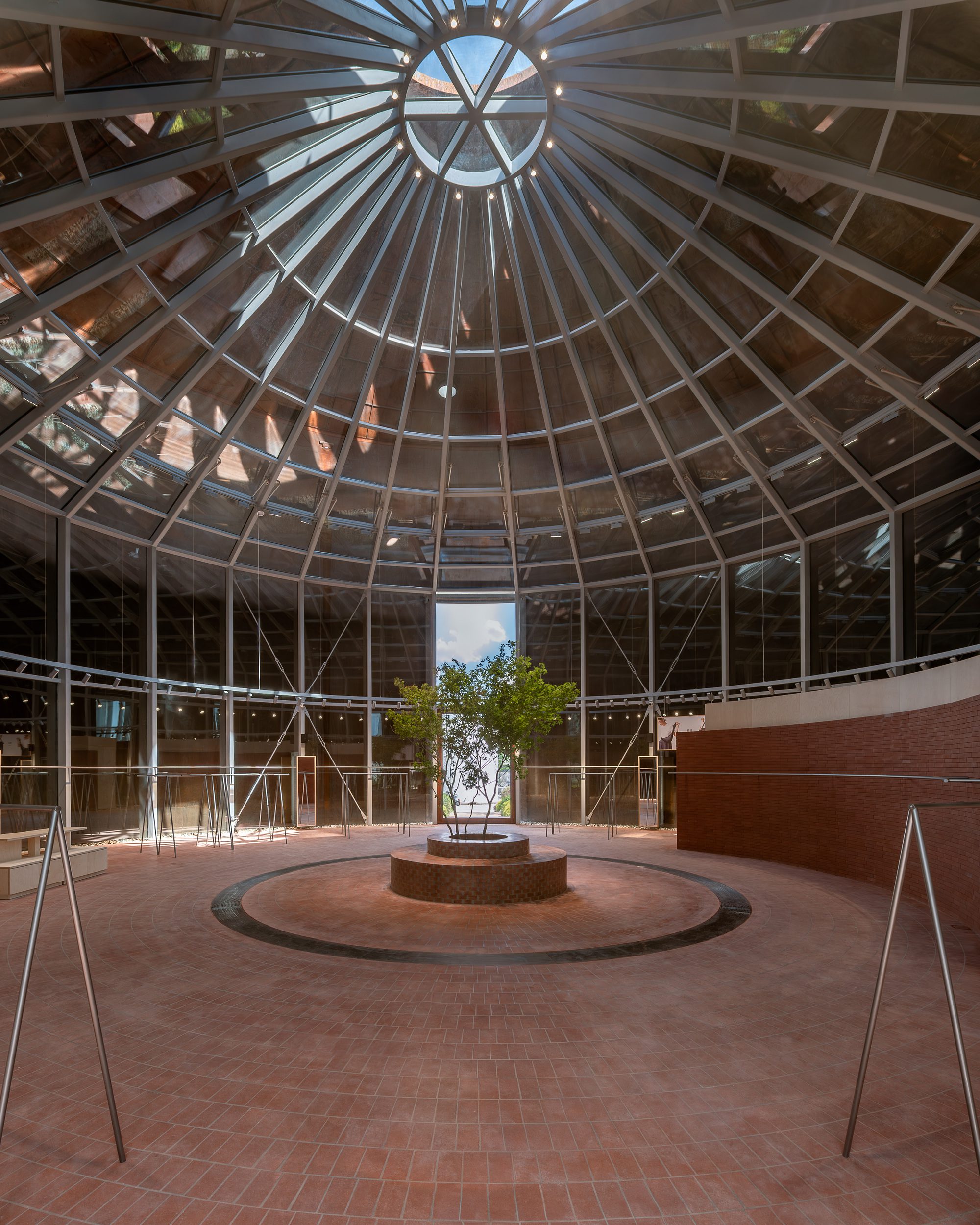
© Dirk Weiblen
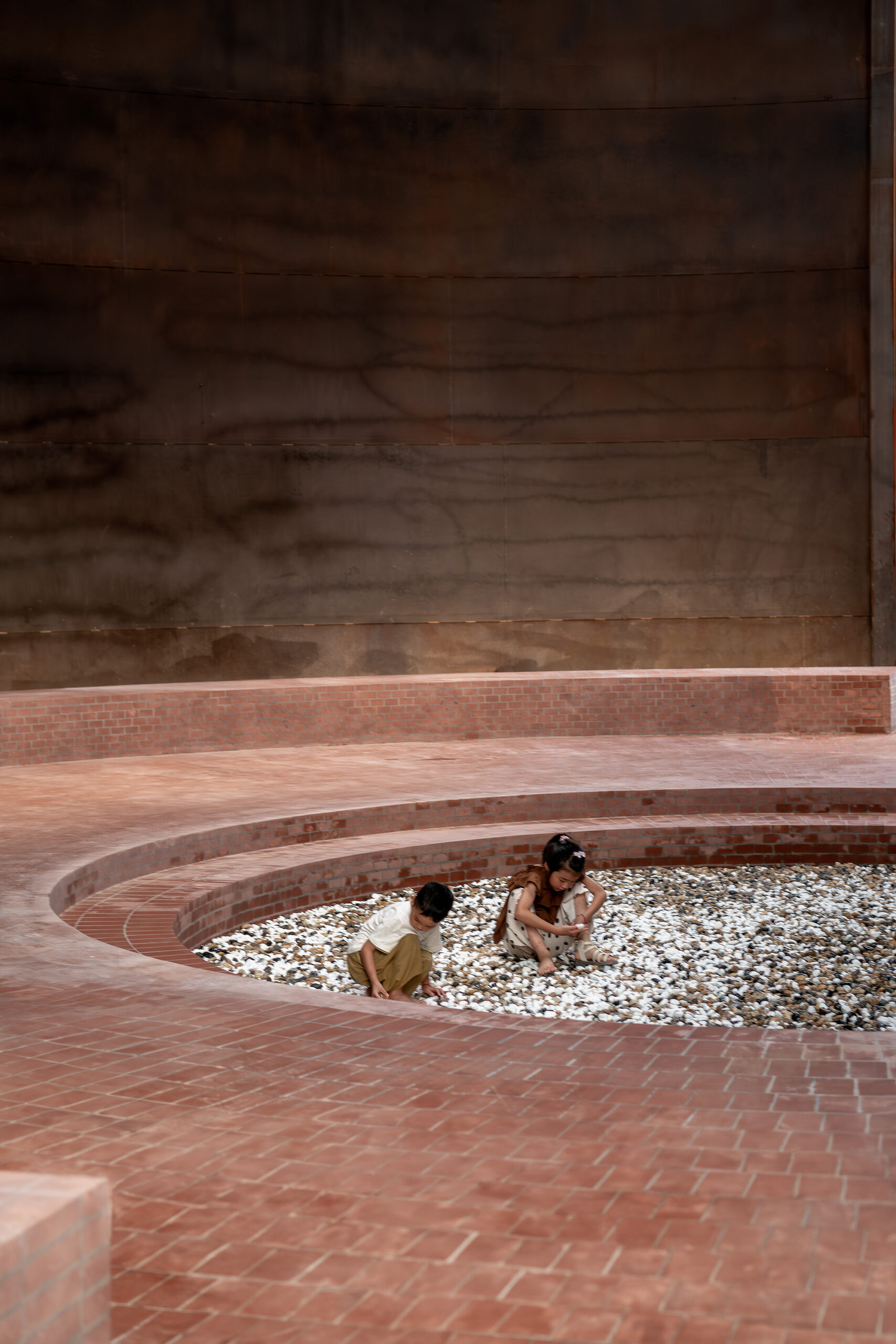
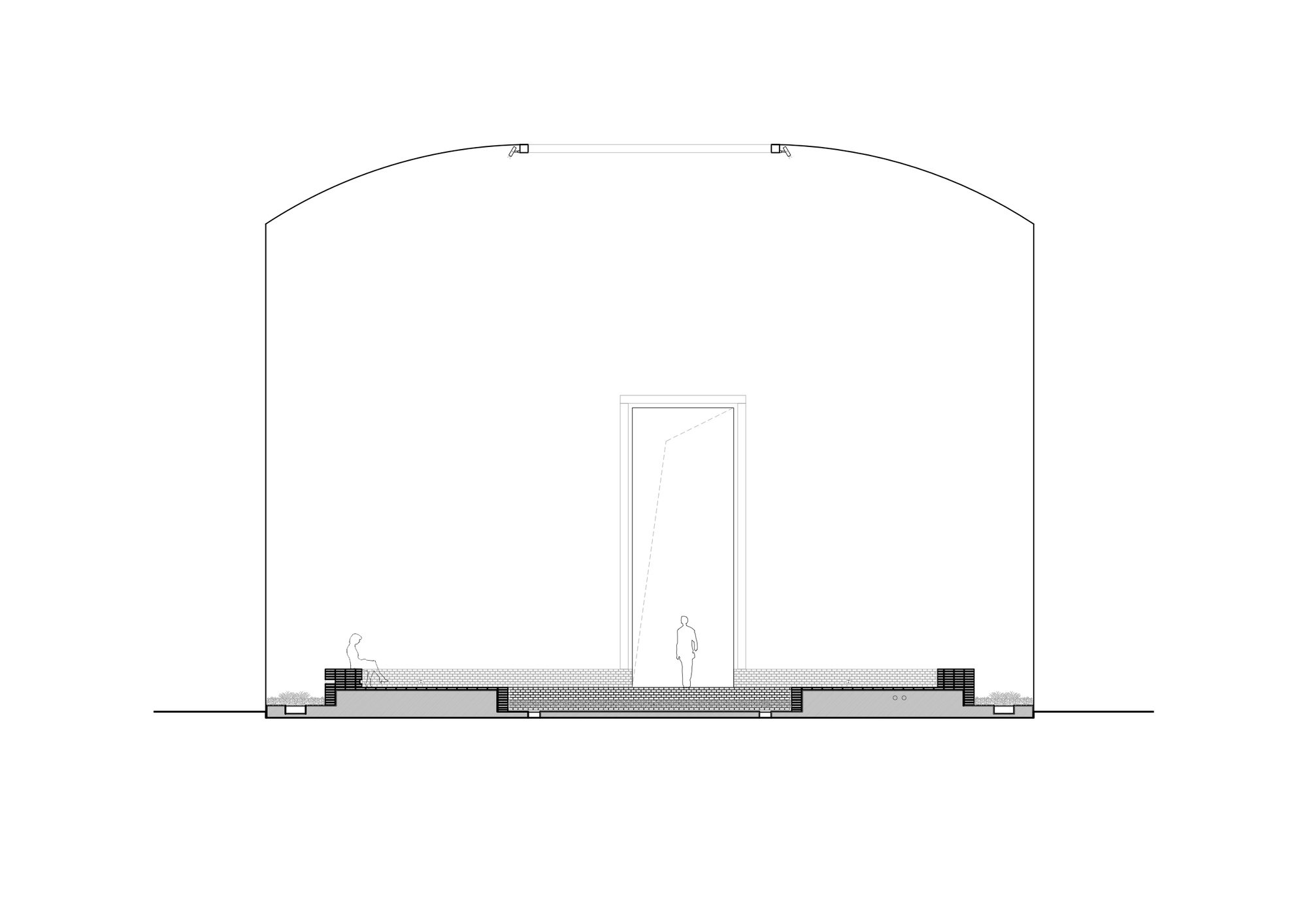
One silo is hardly touched and ‘un-programmed’. Letting the light, height, and its original power do its wonder, making it a pure extension of the park for people to enjoy.
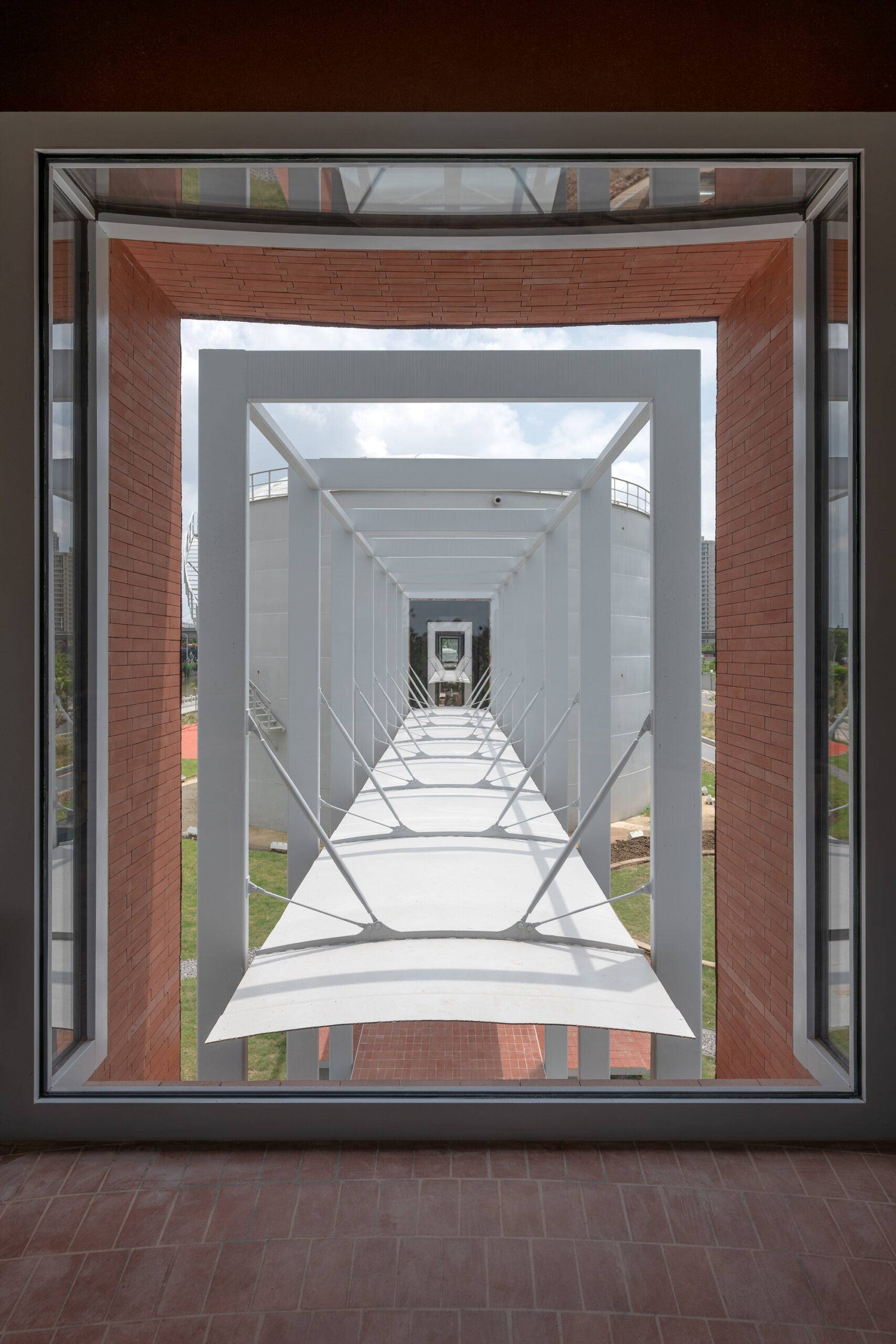
© Dirk Weiblen
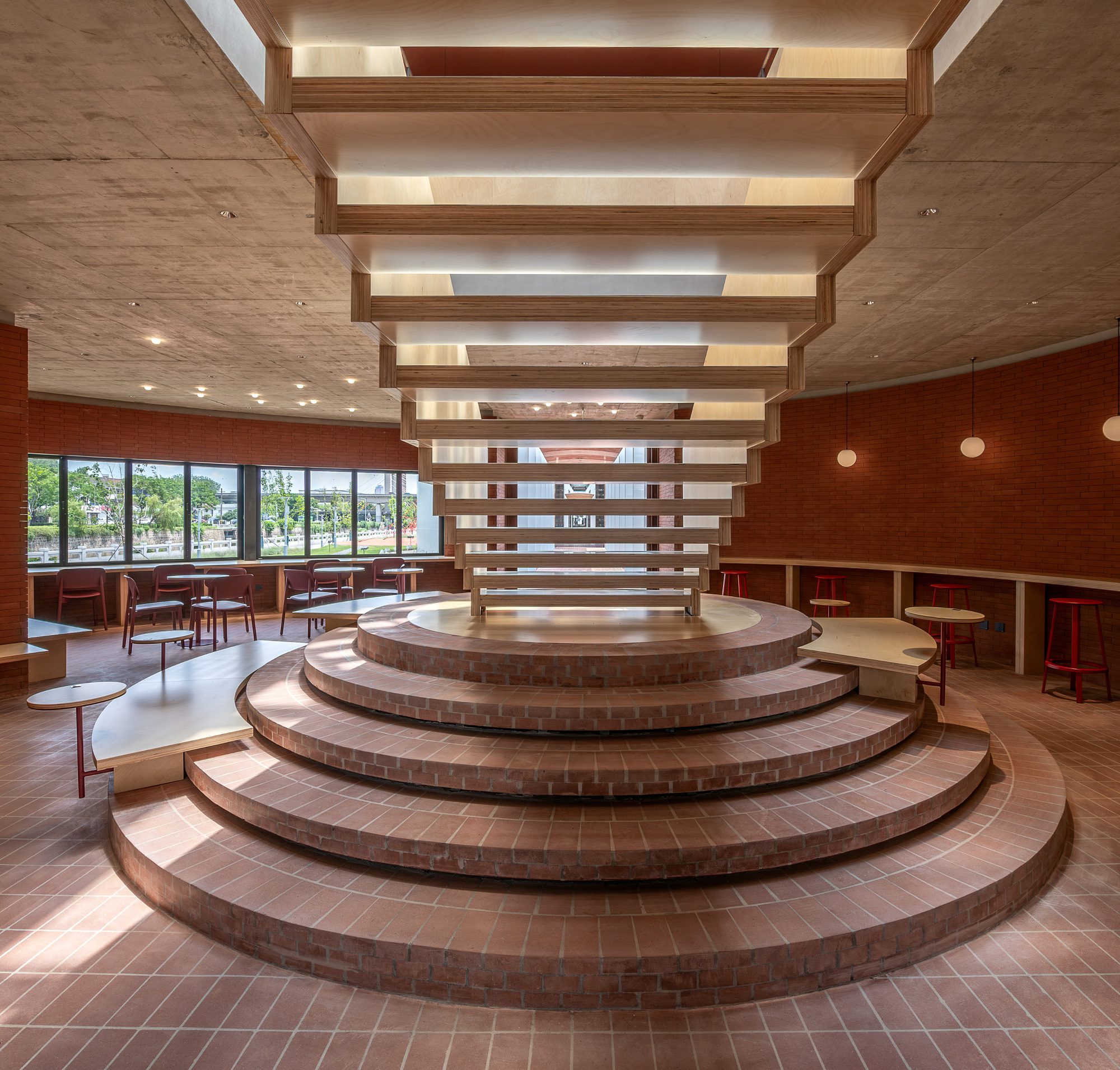
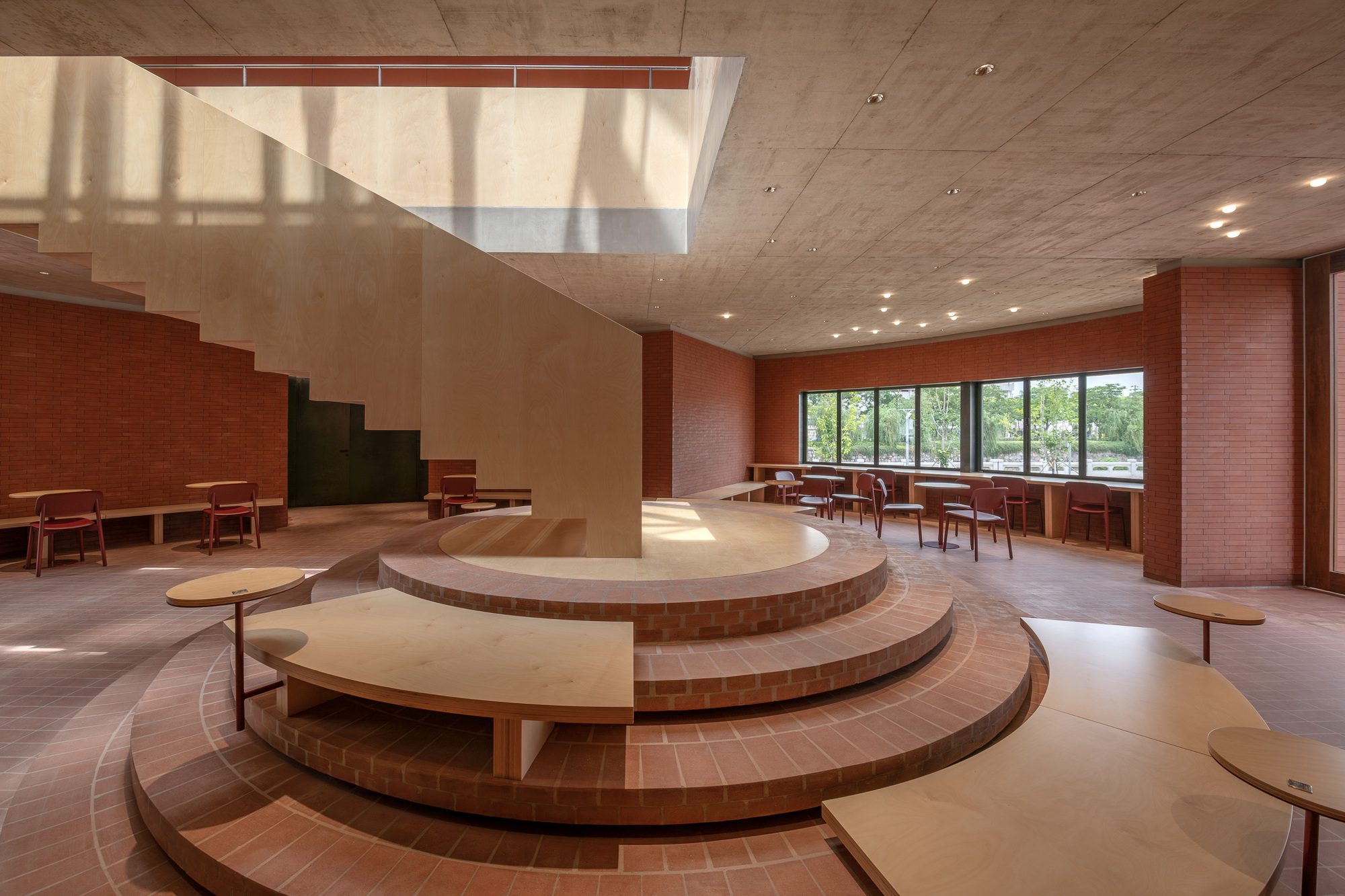
Next to the steel of the silos, we introduced one other material, inspired by the canal. This material pays homage to the steel barges that transport red bricks, supporting China’s burgeoning developments. Here, these bricks are employed in a straightforward stack, giving rise to a distinct inner realm within the restaurant silo. Adjacent to the curved inner walls, they form pathways for visitors to traverse, providing guidance and grounding the site within its surroundings.
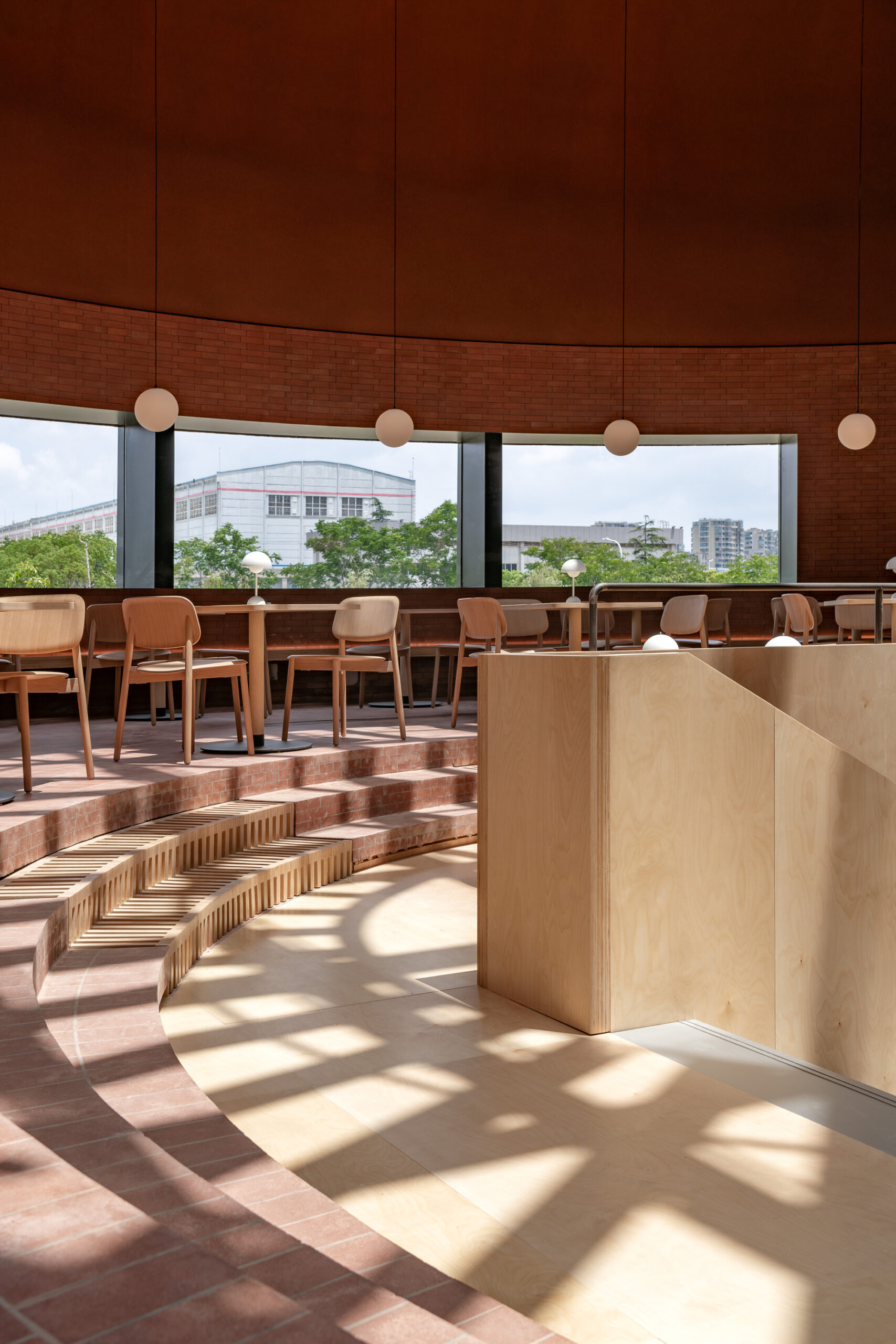
© Dirk Weiblen
Cutting the skin of the silo provided us with material to cover the walkway, reducing the need for new materials. This connection links tanks with the park, where a circular climbing structure and park-facing terraces enhance community engagement and attraction.
Project Info
Architects:AIM Architecture
Country: Changzhou, China
Area: 1500 m²
Year: 2023
Photographs: Dirk Weiblen
Design Team Leader: Chris Cheng
Design Team: Emilio Wang Chen, Jin Kang, Jo Jiao, Laile Li, Luqian Lin, Zheng Wei
Visualization: Steve Do, Yan Jiao
Ff&E Team: Lili Cheng, Weisha Dai
Translation: Zheng Wei
General Contractor: Shanghai Dong Yuan Construction & Renovation Co., Ltd.
Structure Consultant: Bespoke
Climate Consultant: Paul de Vreede
Display Supplier: Yangyu Architectural Construction Co., Ltd.
Lighting Supplier: Shanghai Lemida Lighting Design & Engineering Co., Ltd.