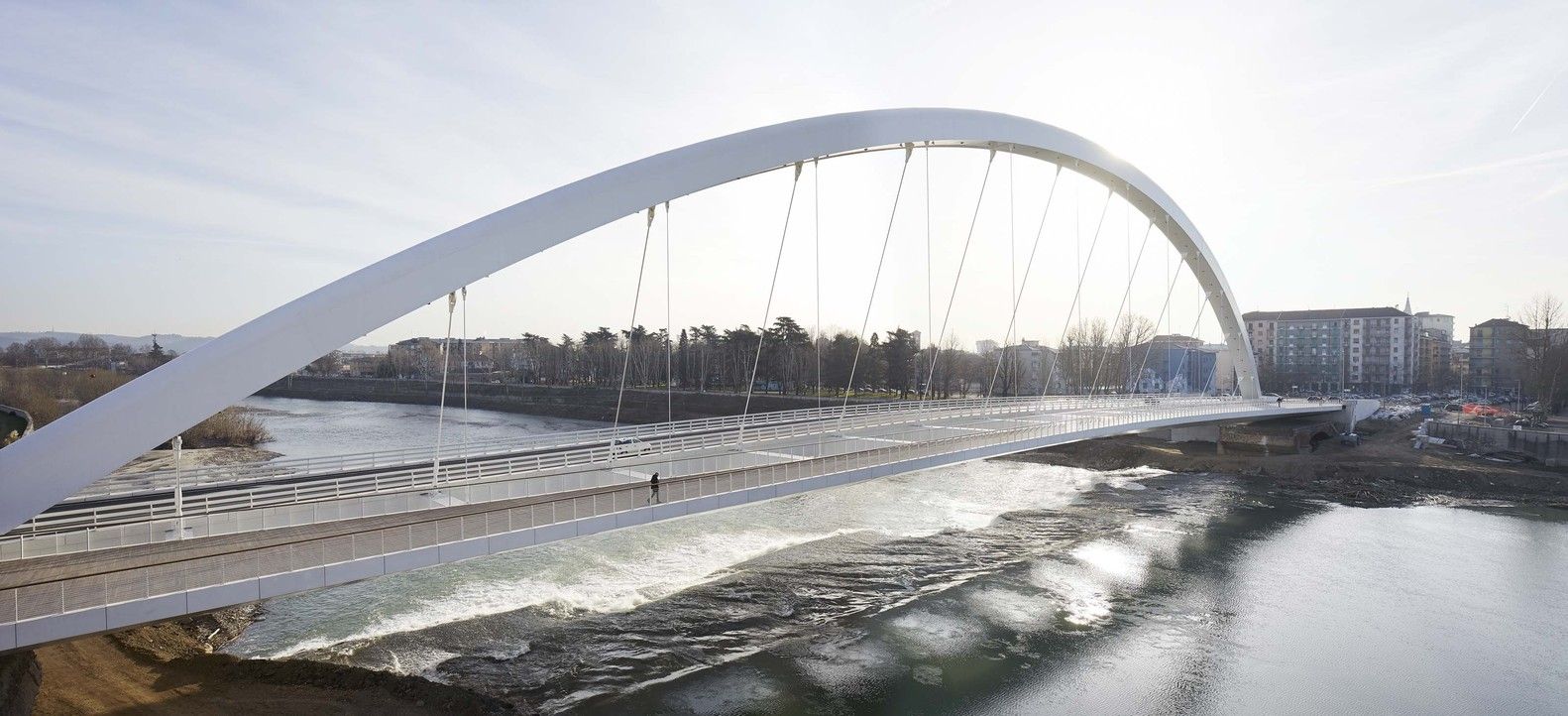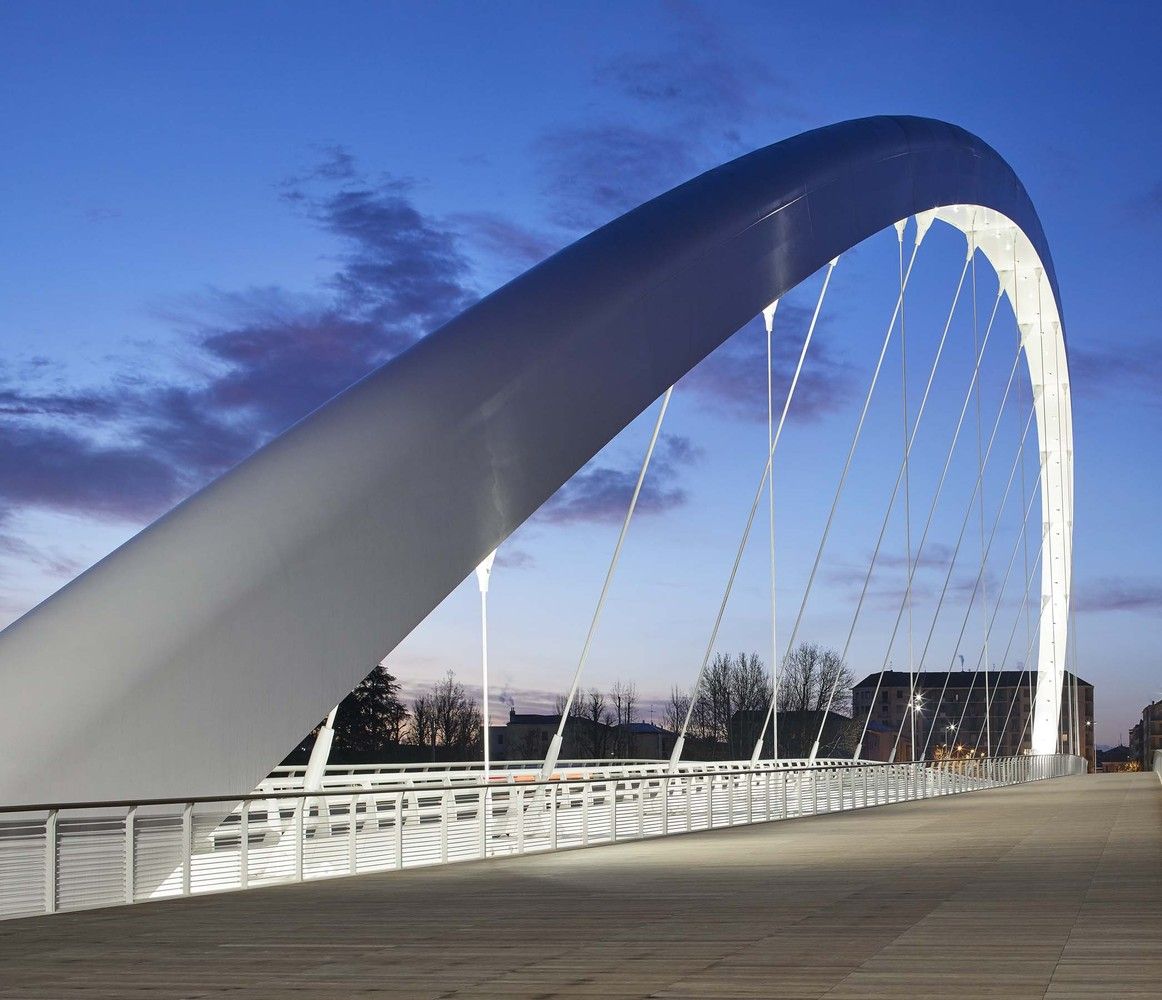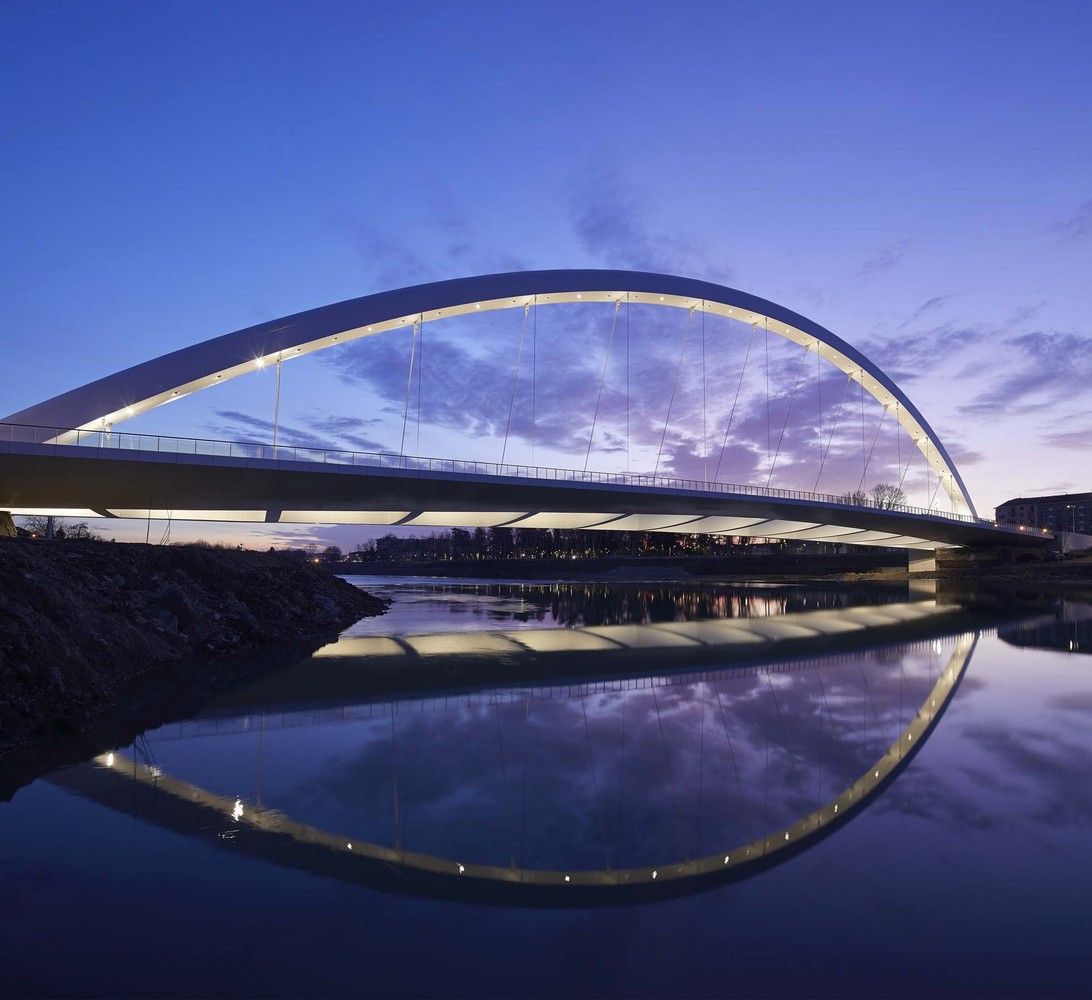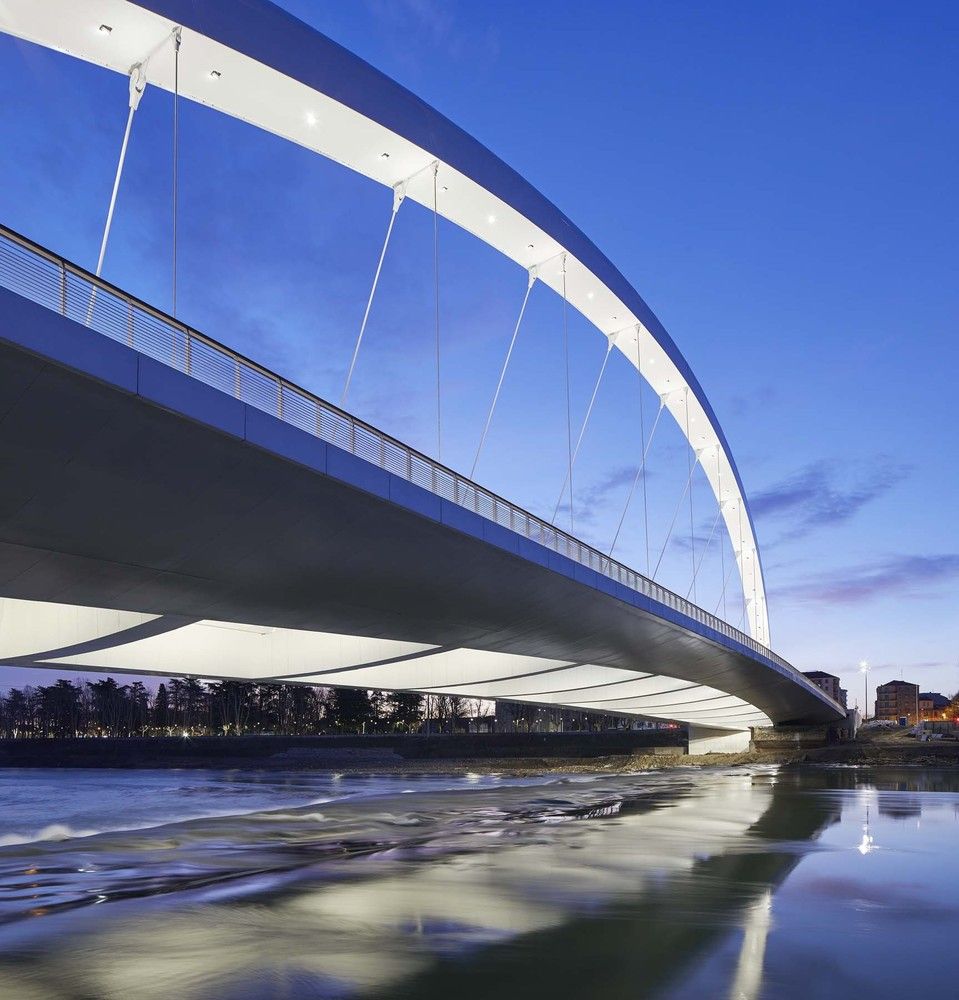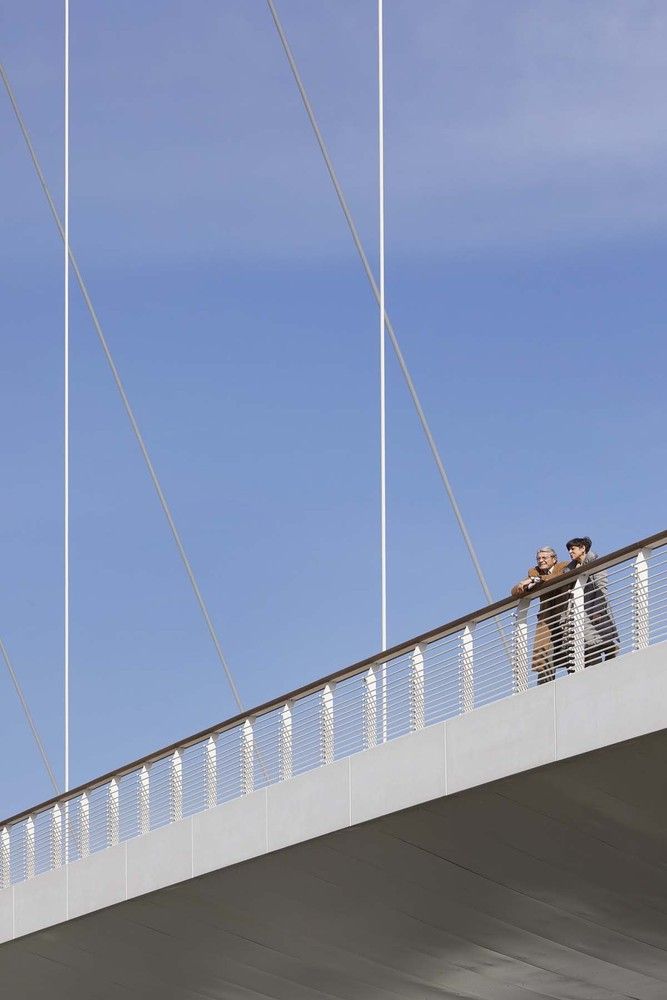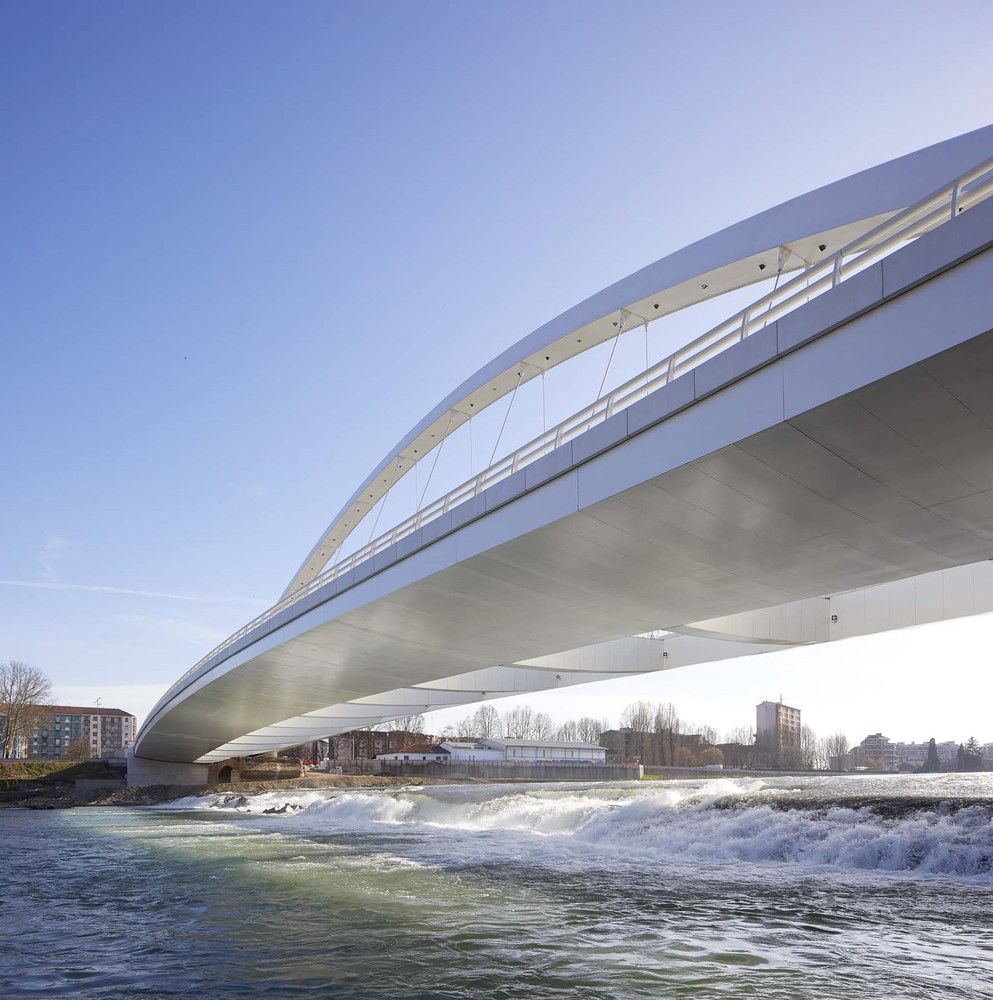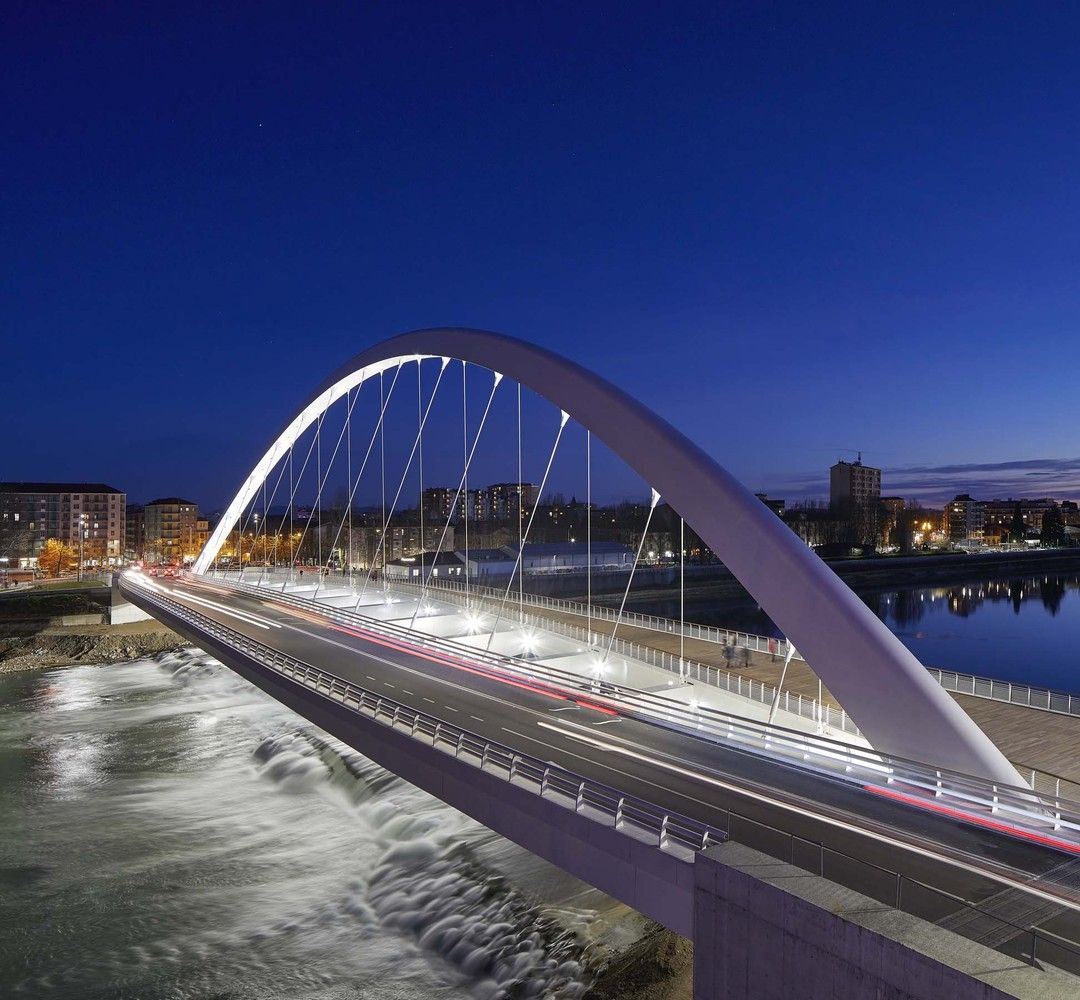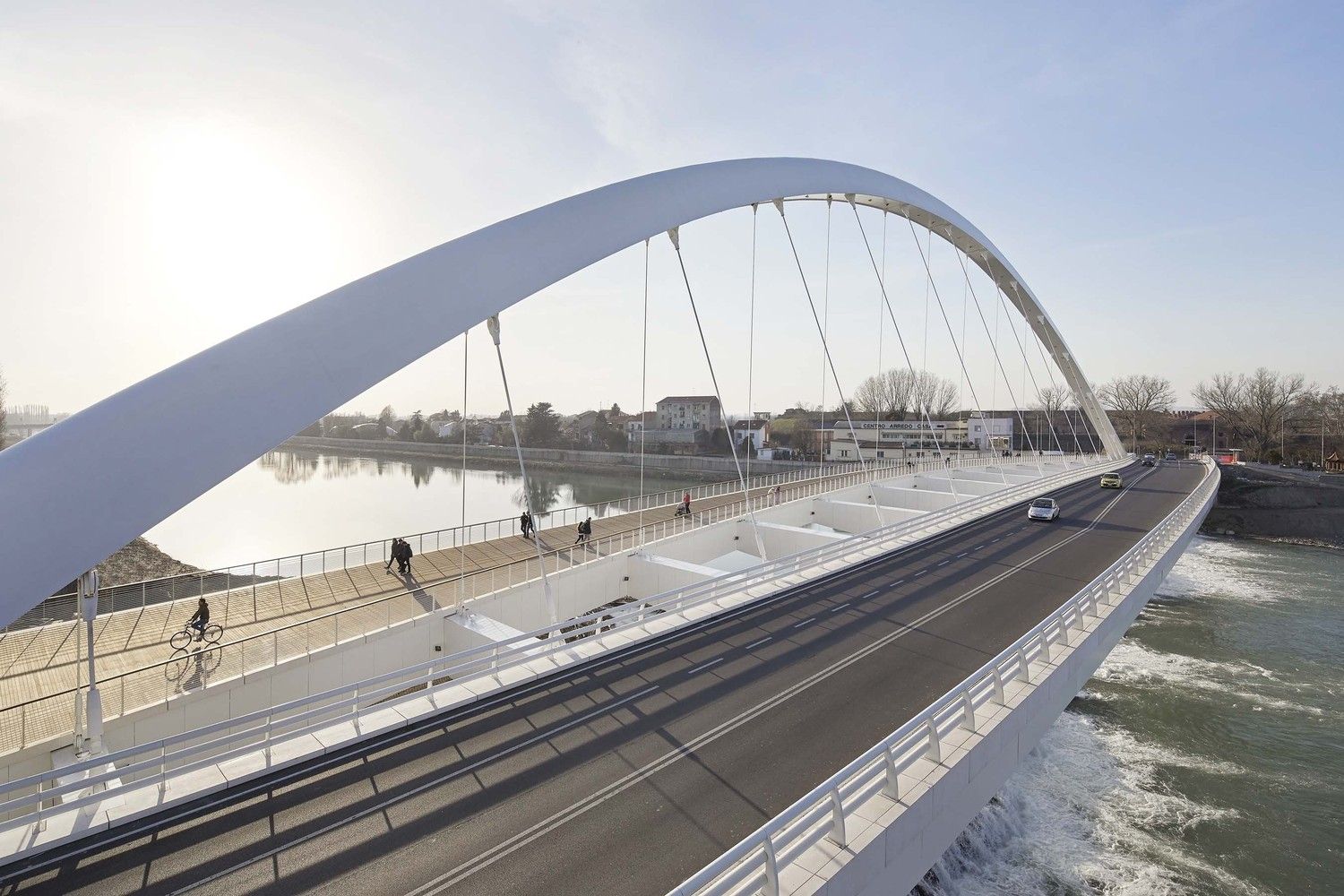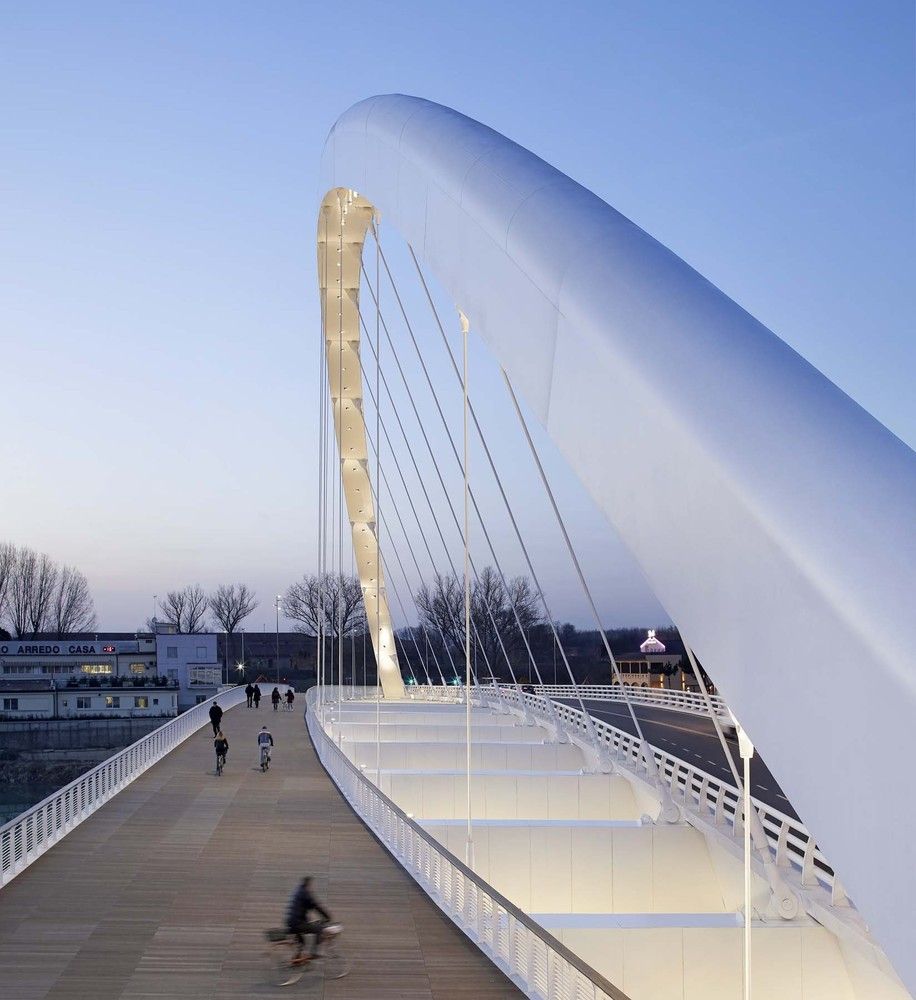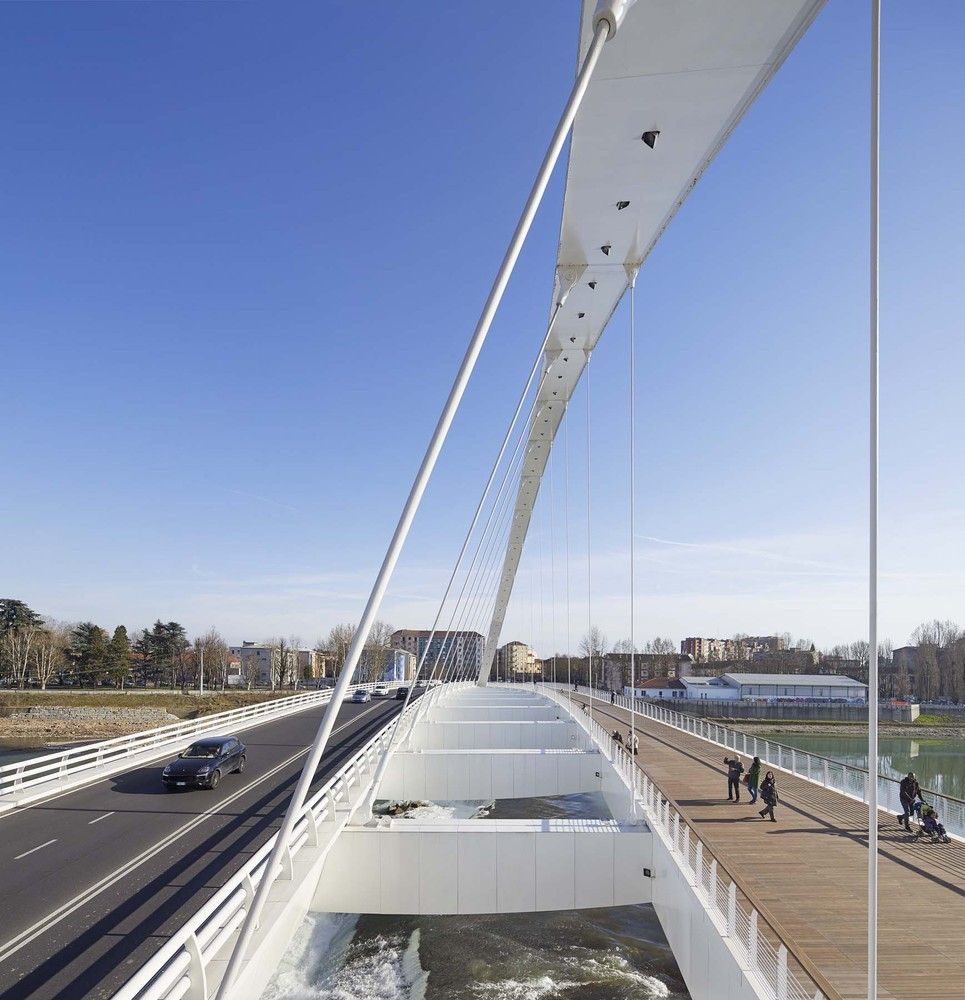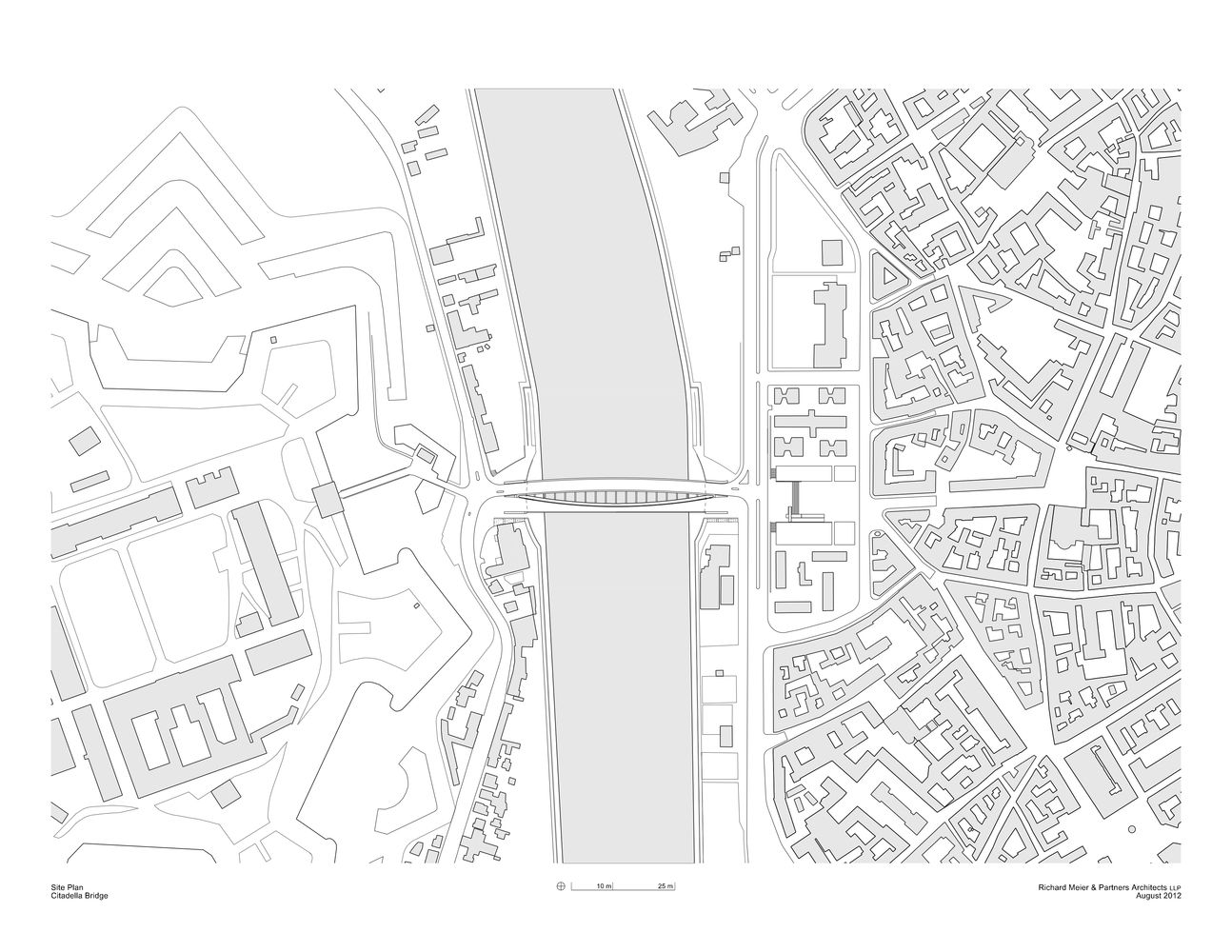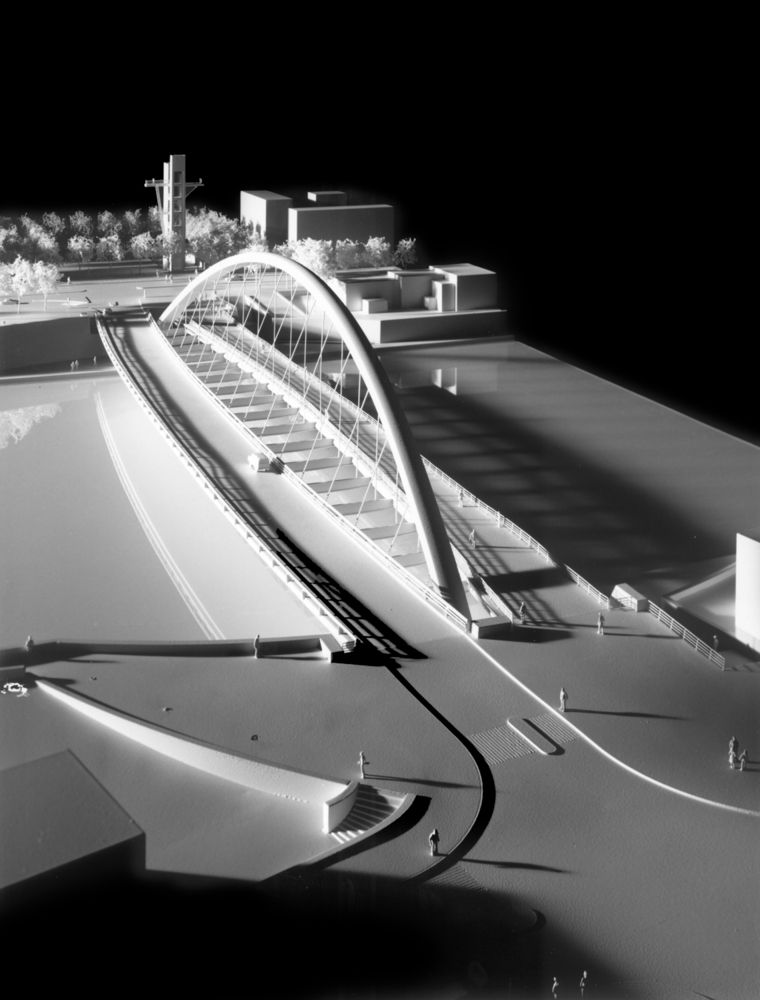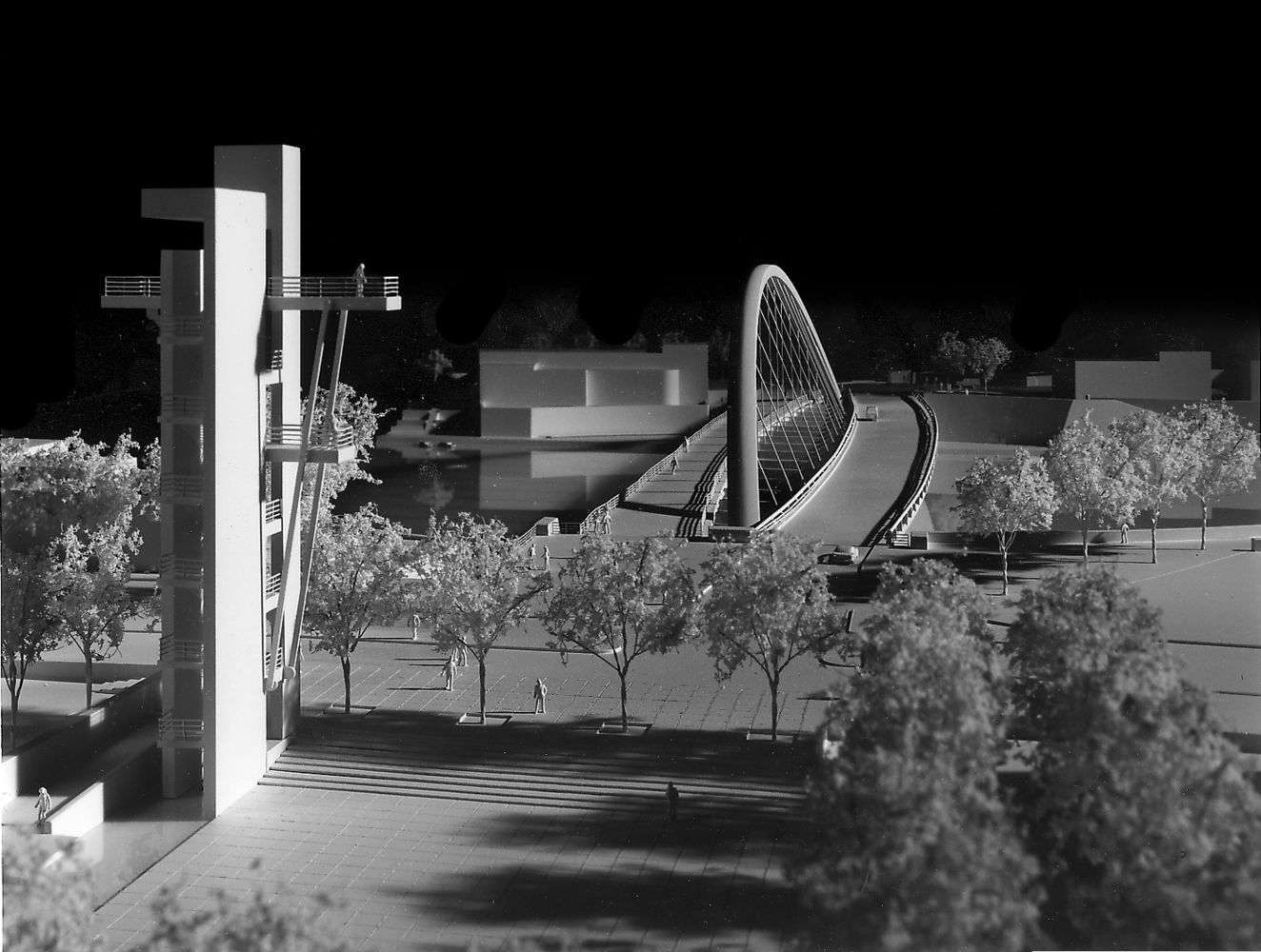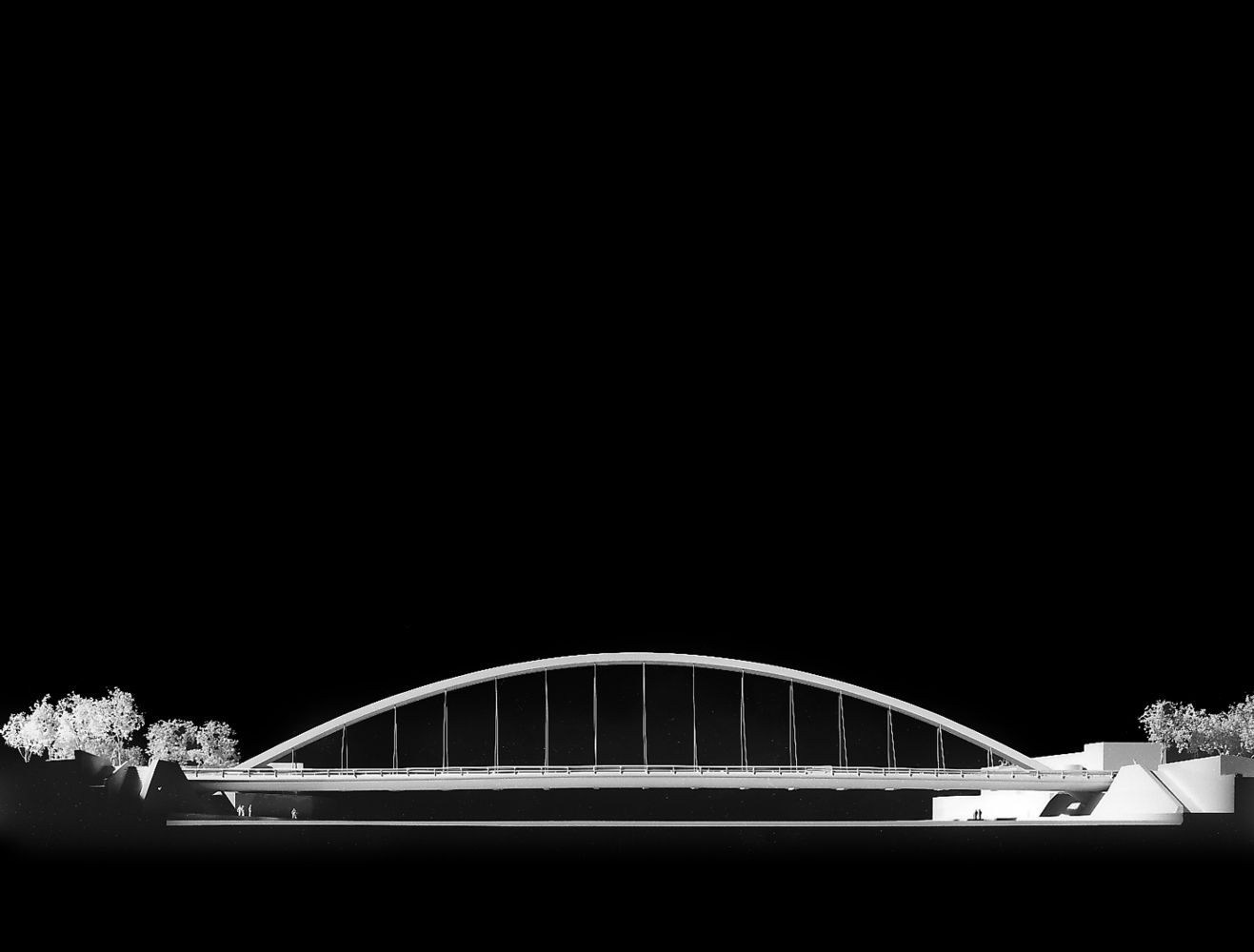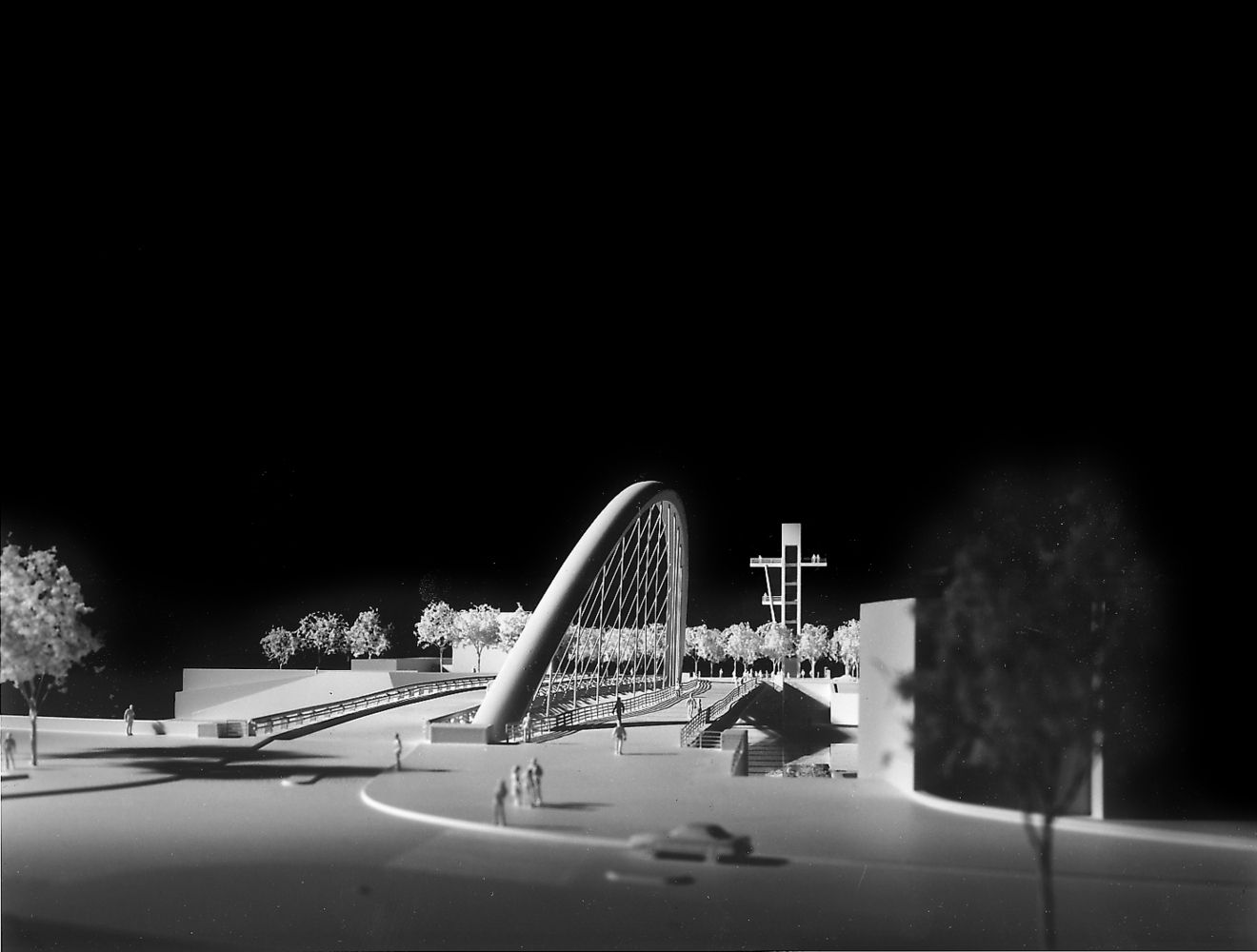


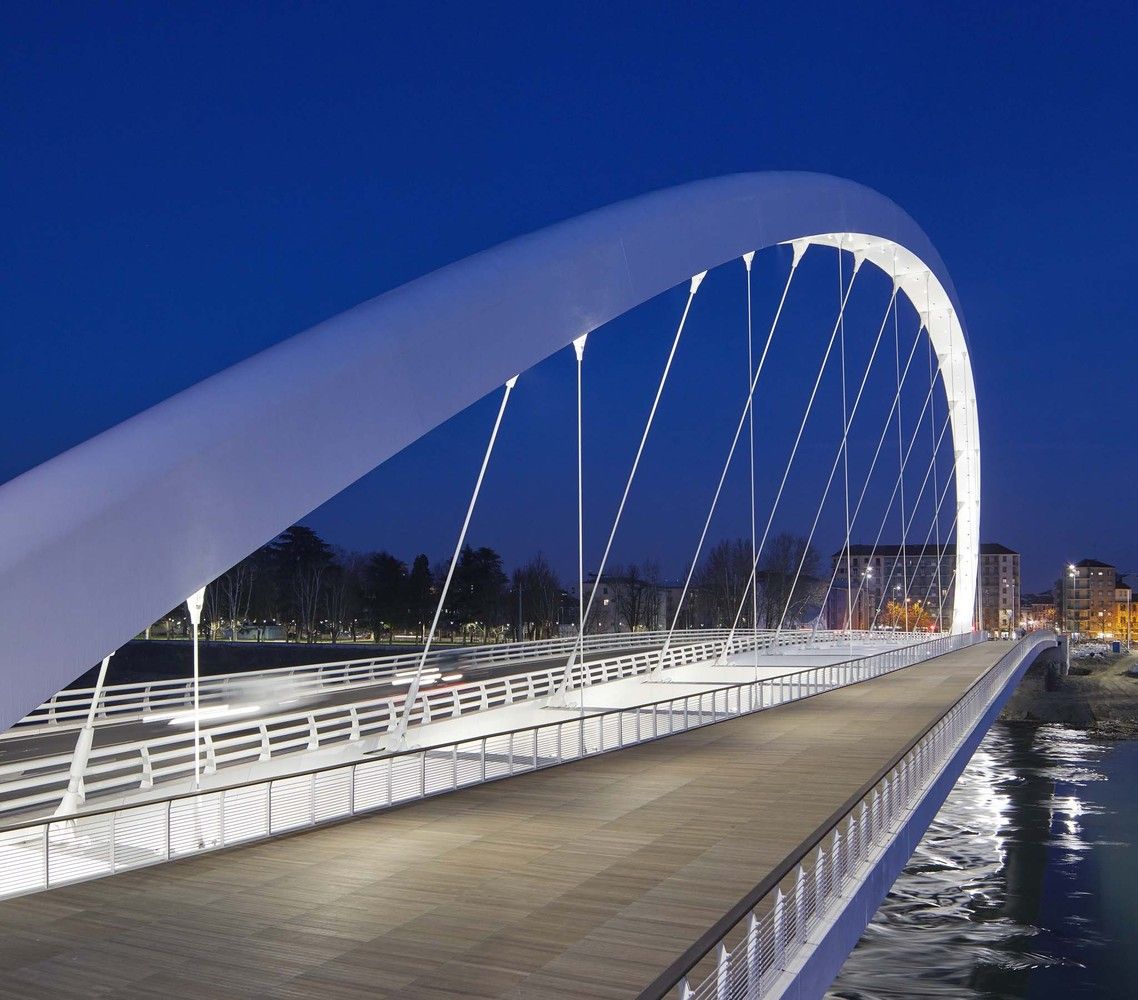
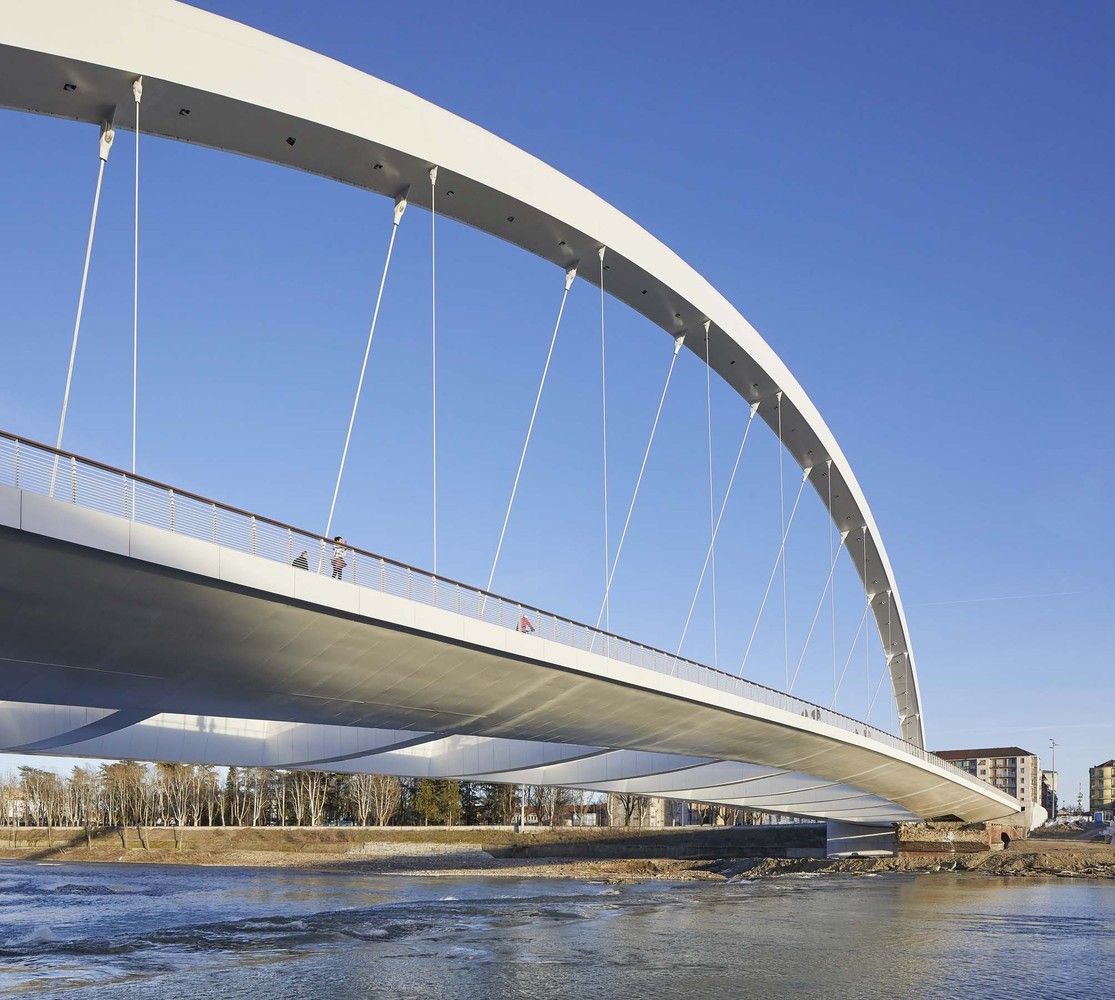
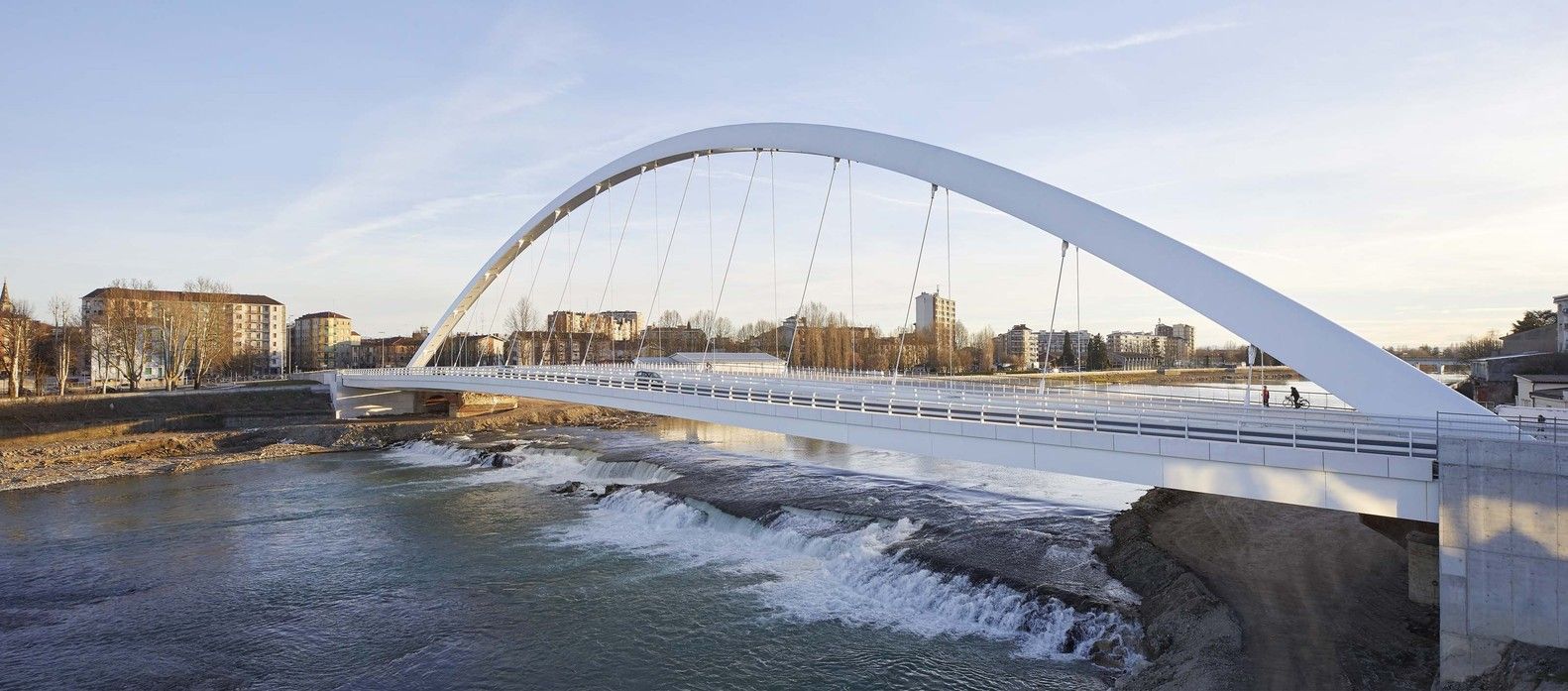
During the flooding of Alessandria in 1994, not only did the water level reach the roadway, but also the piers of the Napoleonic Cittadella Bridge caught much of the debris in the river, effectively acting as a dam. The new design, a single span raised above the flood plain, not only solves that problem, but also reconnects the fabric of the modern city with the Cittadella, an 18th century fort and tentative UNESCO World Heritage site. By relinking Piazza Gobetti to the citadel’s remarkable structures, the project hopes to catalyze their future preservation and reuse.
photography by Hufton+Crow
Richard Meier comments: “More than 20 years after the initial commission to design a new bridge between the city of Alessandria and the old citadel, I am extremely pleased to have completed this new modern link between the past and the future of the city. We hope that this new structure will contribute to the civic life of the local community and to the urban revitalization around the site, the 18th-century citadel and Piazza Gobetti.”
plan
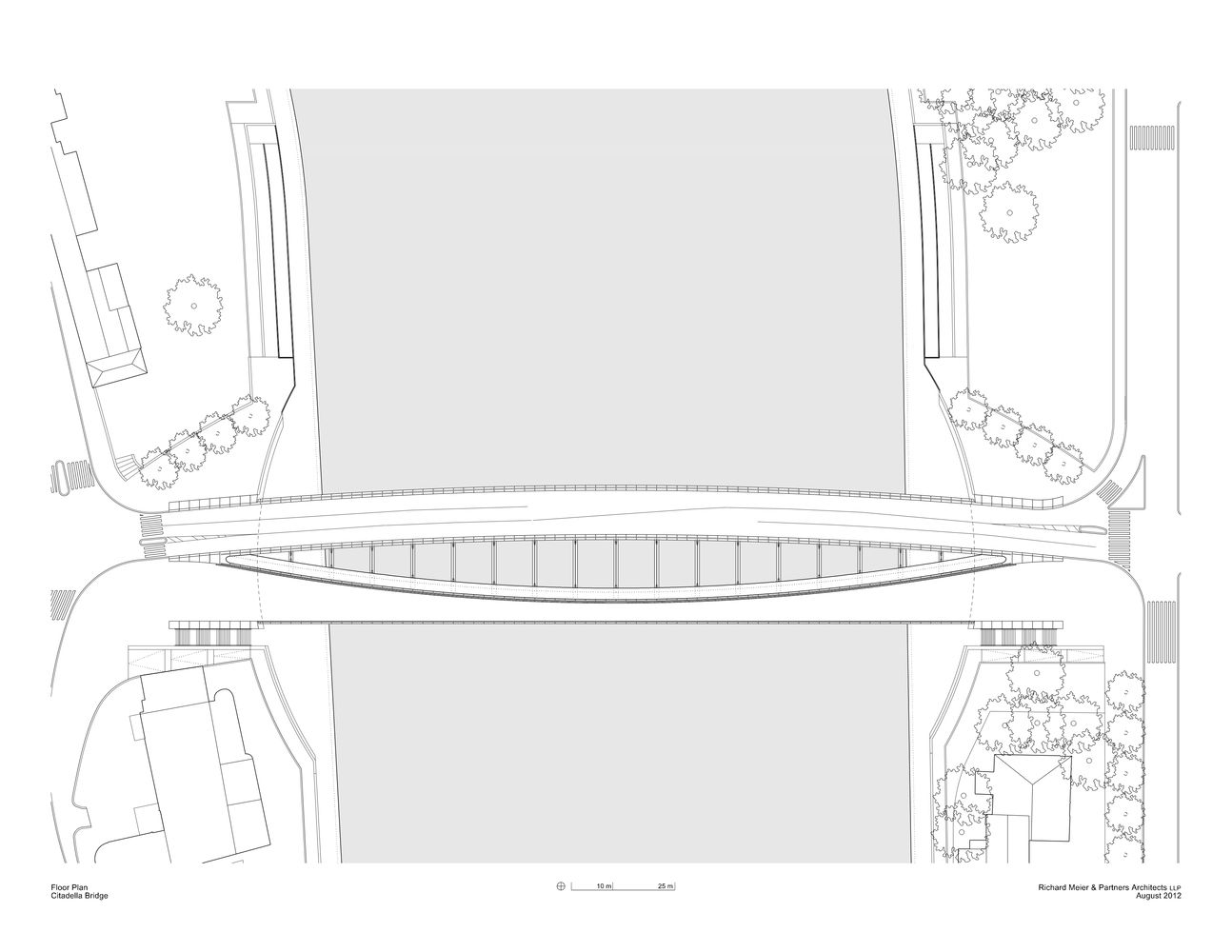
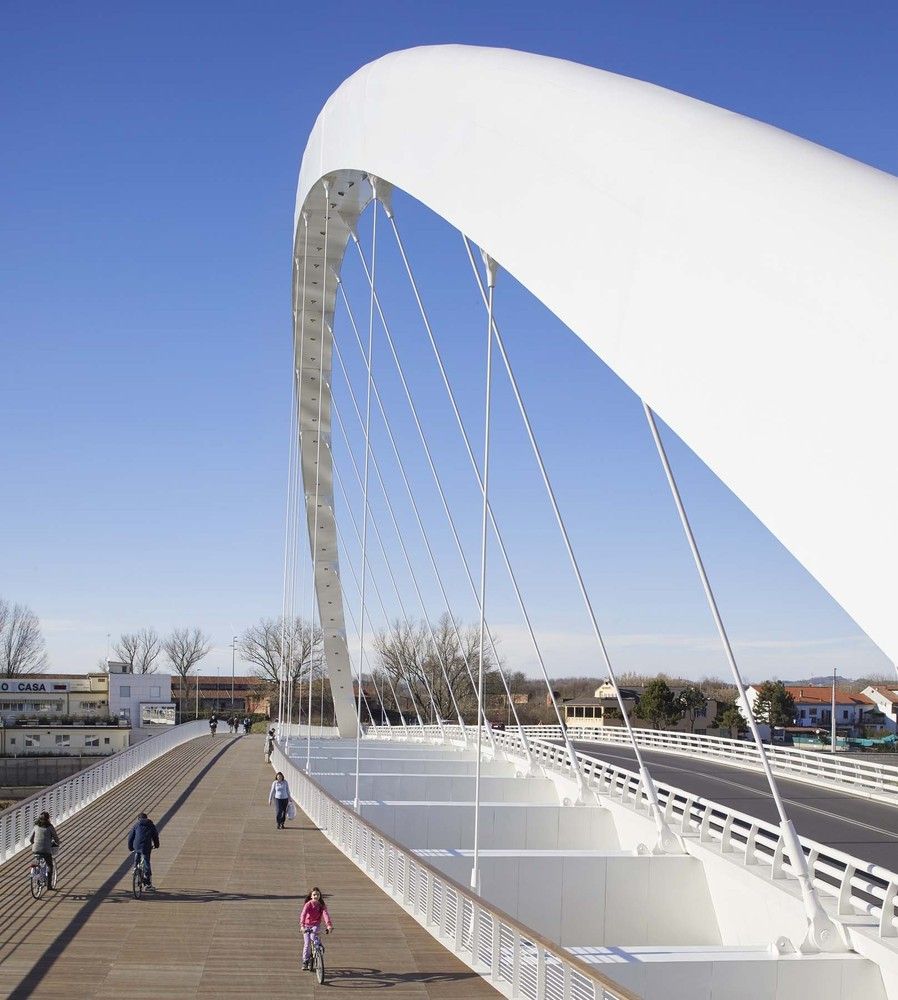
The bridge also enhances the natural flow of the river Tanaro, and aspires to become a public space for the citizens of Alessandria. While the previous structure was often heavily congested with traffic, making it unsafe and virtually an obstruction for pedestrians, the new bridge provides separate parallel routes for pedestrian and vehicular circulation. The pedestrian walkway effectively becomes a public plaza through which the public and civic life of Alessandria can find a new, positive relation to the river.
photography by Hufton+Crow
Simone Ferracina, Project Manager, comments: “While we always understood the urban and infrastructural scale of the project, and its iconic importance, it has been fantastic to witness its warm reception by the citizens of Alessandria, and to see how the bridge construction has simultaneously re-launched the identity of the city on the international stage, re-articulated the river’s relation to the city’s public space, and reconnected its fabric to the Cittadella fortress.”
photography by Hufton+Crow
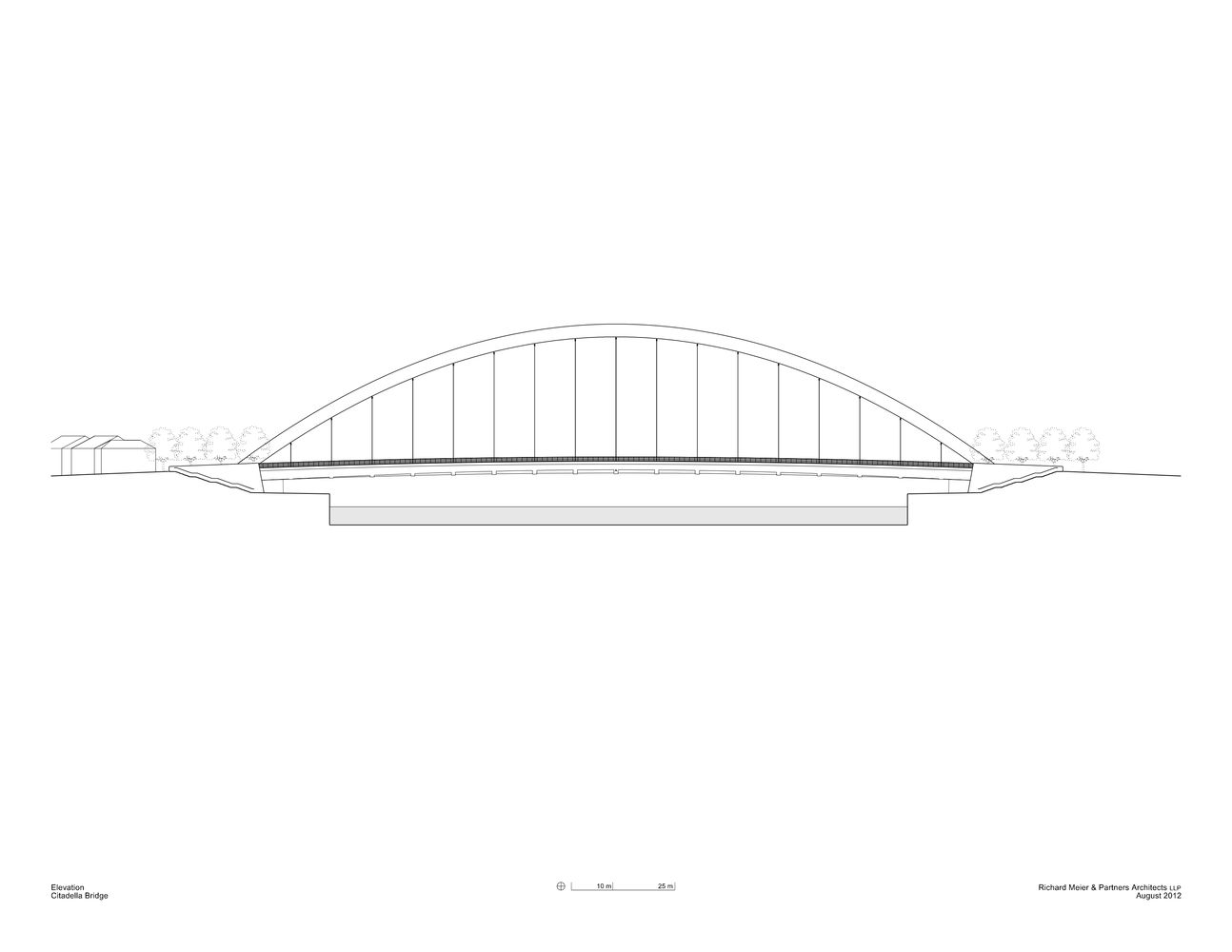
The vehicular side of the bridge bows strongly to the north, and as a counterbalance to this bow, the 32.5 meter high arch of the bridge is curved to the south. The weight of the pedestrian bridge helps to maintain the balance, and with the opposing curves, creates a dynamic arrangement.
photography by Hufton+Crow
Project Info :
Architects: Richard Meier & Partners
Year:2017
Photographs: Hufton+Crow
Country:Italy
Project Manager:Simone Ferracina