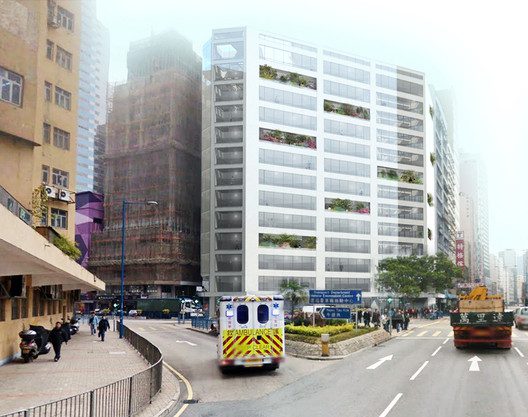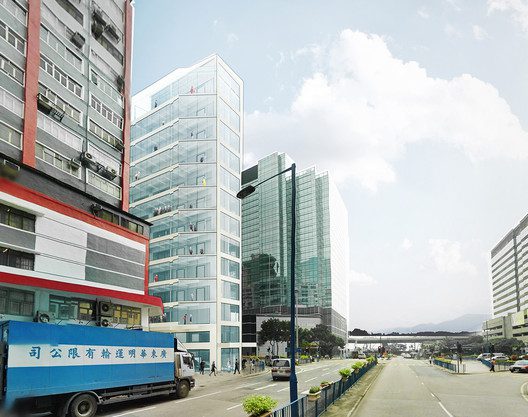

Cheung Fai building, GAW Capital and MVRDV have started construction on the Cheung Fai building in Hong Kong which transforms a former warehouse into offices for creative companies. The building with a surface of 18.000 m² is situated at Kwun Tong waterfront in Hong Kong’s new designated business area of East Kowloon.
Courtesy of MVRDV
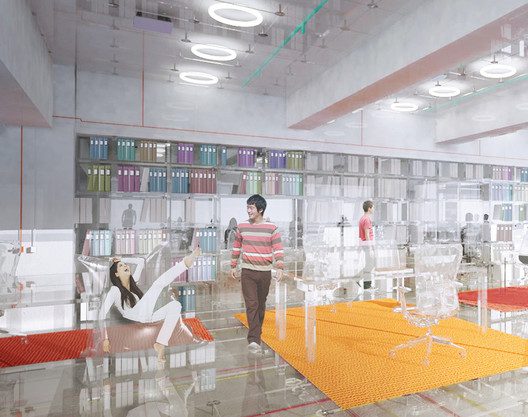
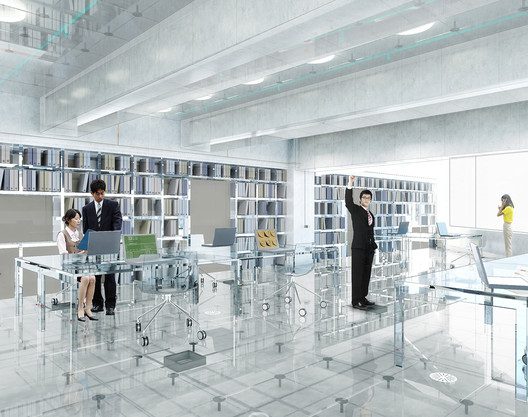
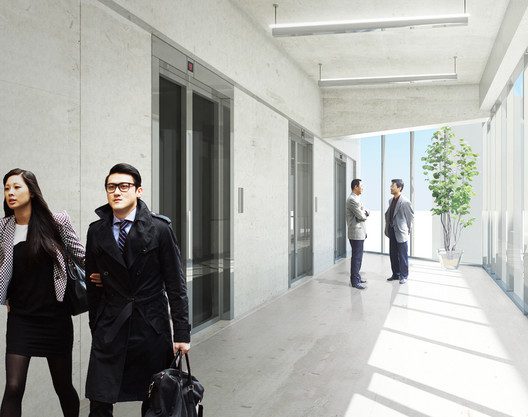
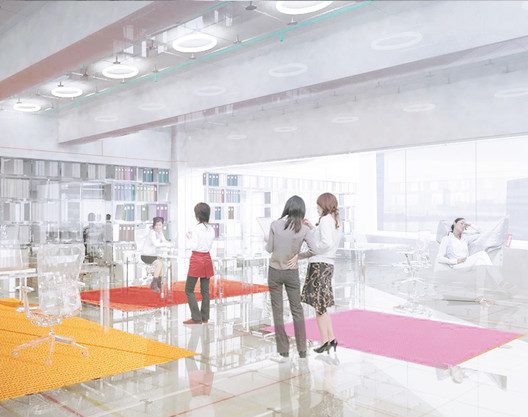
The transformation aims to create a luxurious loft style working environment by replacing everything but the primary concrete structure of the building with glass and stainless steel infill, exposing the building’s infrastructure. Completion is scheduled for September 2015.
Courtesy of MVRDV
The conversion of Cheung Fai building is one of the pioneer projects in Kwun Tong district of East Kowloon, a former industrial area which is currently being redeveloped to become one of Hong Kong’s newest business center.
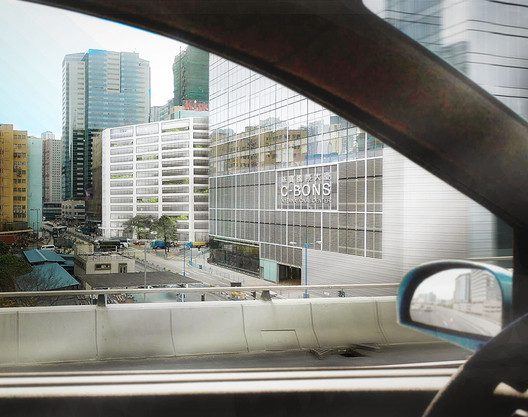
The 14-storey building occupies a corner site on Wai Yip Street offering views to Victoria Harbor and the future Kai Tak ferry terminal.
Courtesy of MVRDV
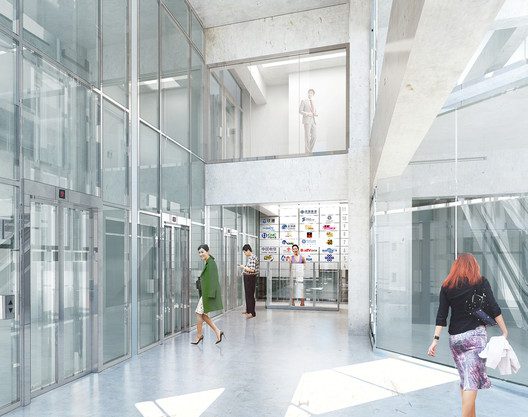
In 2013 project developer GAW Capital commissioned MVRDV to convert the former warehouse into offices for a maximum of 37 units with shops and parking on the ground floor and restaurants on the first and second floor. The conversion is restricted to the existing envelope by local building regulations. In order to create attractive, yet affordable and well lit office space within the 36.5m deep floor plan, the design opted for an open, loft style environment which exposes the raw structure complemented with glass-only finishes: the Glass Office.
Courtesy of MVRDV
The building is stripped down to its primary structure; glass is inserted between columns and beams as floor and ceiling finishes, partitions and doors, clearly distinguishing old and new, showing how the building works right down to the installations. The service core is conceived as a linear, transparent block between offices and communal space executed in 1-hour fire rated glass allowing light to enter the office space. All non-loadbearing façade elements are replaced by glass for the maximum amount of light reaching the interior; all structural façade elements are executed in white coated concrete.
Courtesy of MVRDV
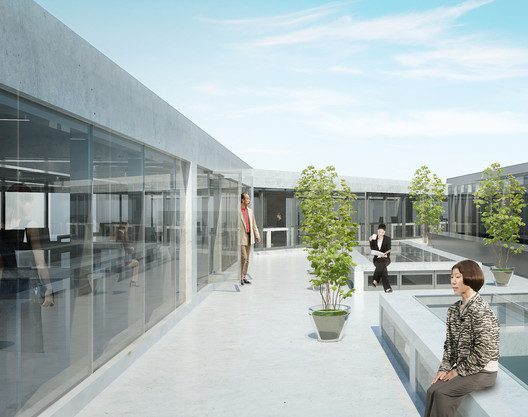
The top floor becomes a communal terrace for breaks and informal meetings with magnificent views.
The rear façade currently faces a disused service alley. By being the first to upgrade it the same way as the front façade, the objective is to eventually turn the alley into usable attractive public space, once more buildings on Wai Yip Street have been converted.
Courtesy of MVRDV
The Cheung Fai Building transformation is MVRDV’s first realization in Hong Kong. MVRDV collaborates with local architect Raymond Chan Surveyors Ltd., structural advisors AC Technik (HK) Ltd., E & M advisors VIGOR Engineering Consultants Ltd, property managers CBRE and cost advisor Rider Levett Bucknall.Read more
Architects: MVRDV
Country: China, Hong Kong
Year: 2014
Photographs: Courtesy of MVRDV
Developers: GAW Capital
Local Architects: Raymond Chan Surveyors Ltd.
Structural Advisors: AC Technik (HK) Ltd., E & M advisors VIGOR Engineering Consultants Ltd.
Property Managers: CBRE
Cost Advisor: Rider Levett Bucknall
Area: 18000.0 m2