

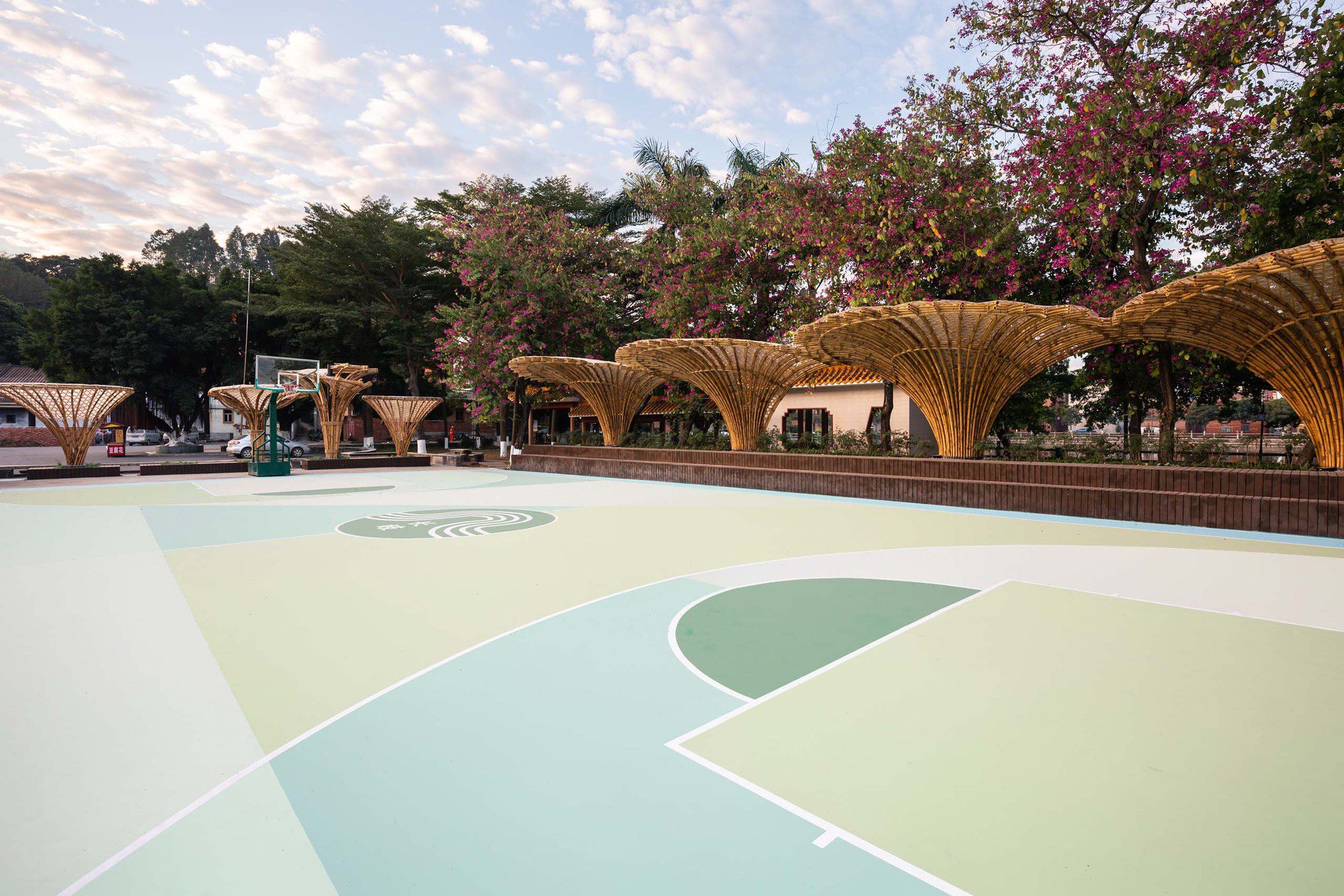
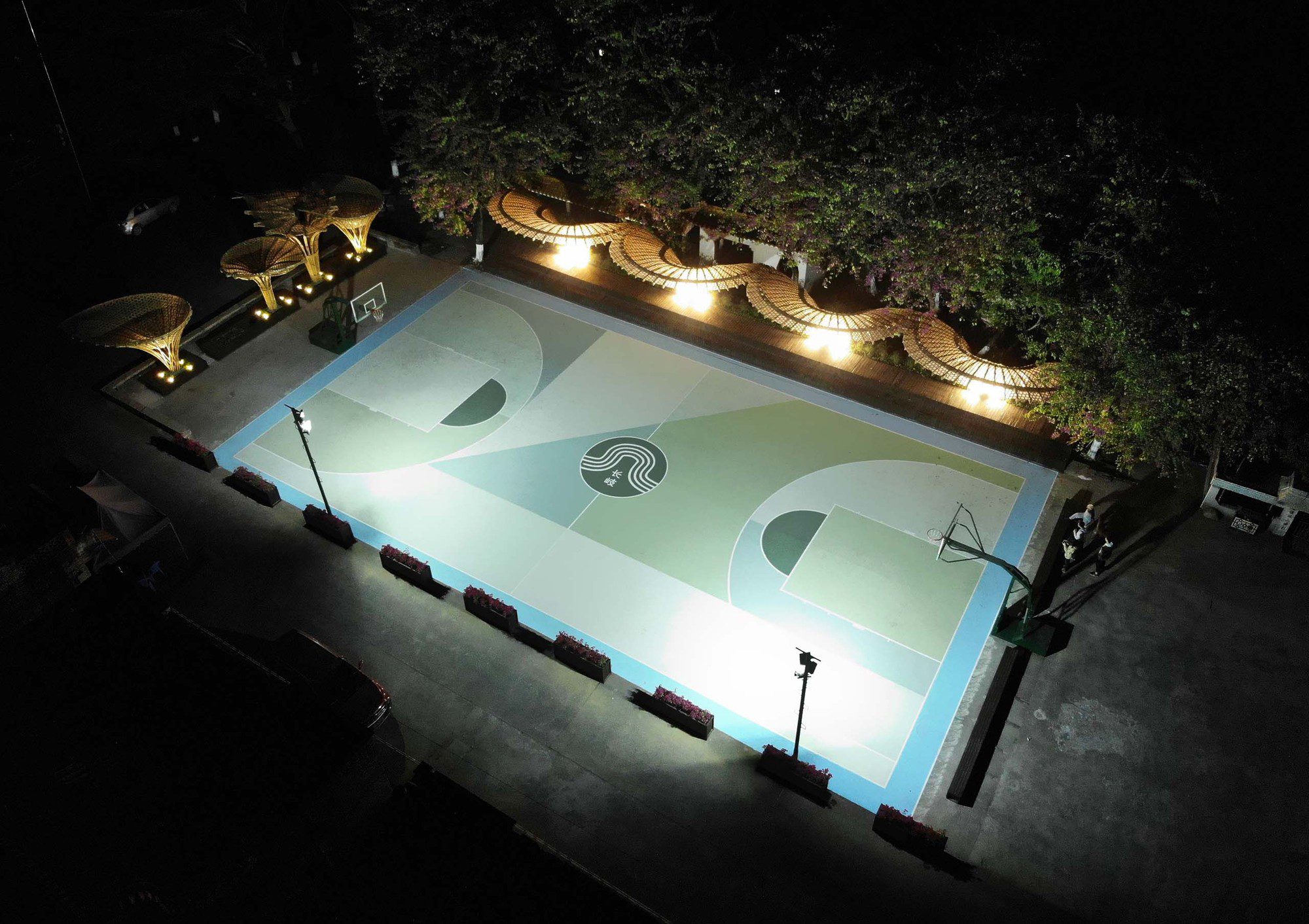
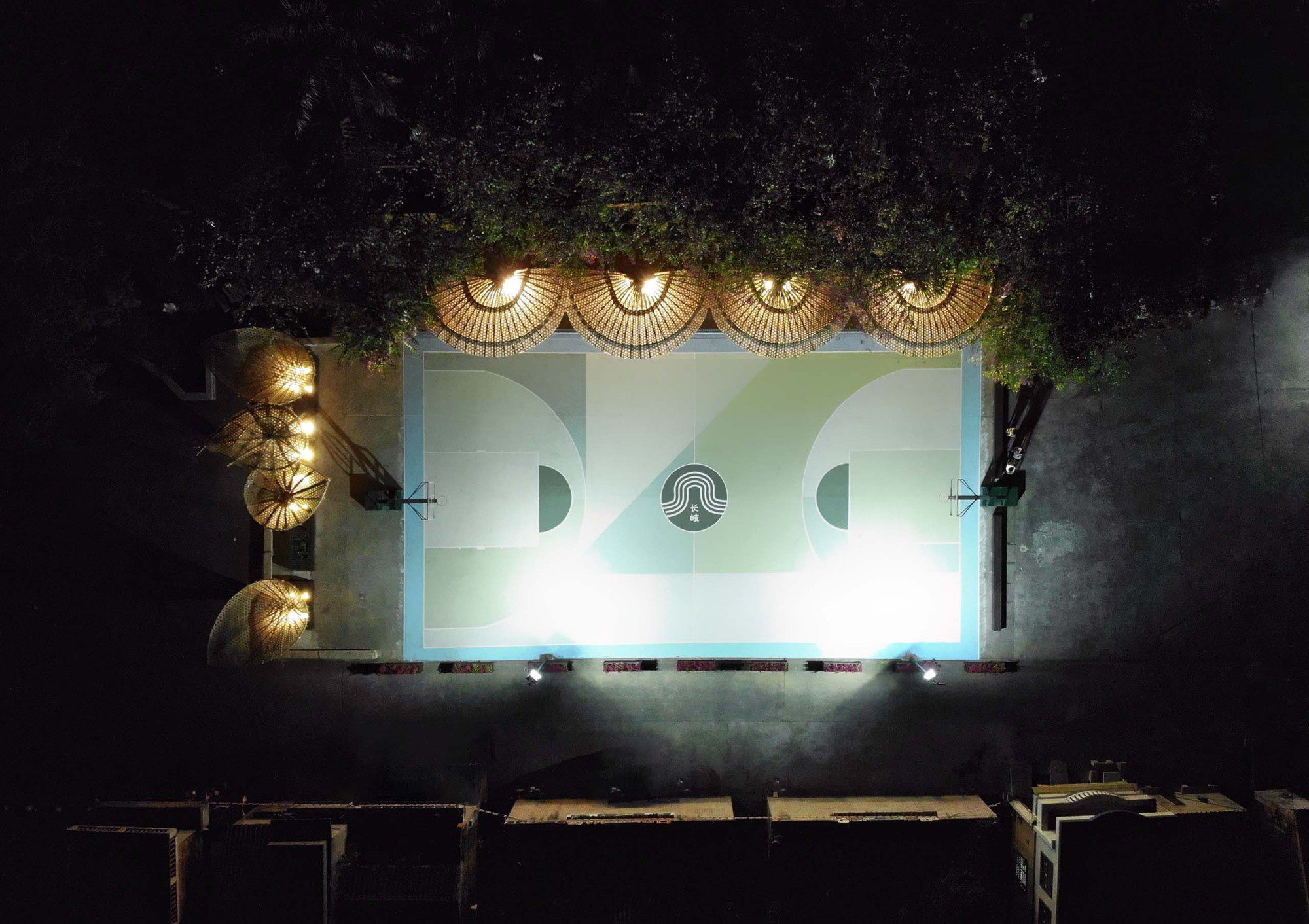
Changqi Stadium Bamboo Corridor is located in Changqi Ancient Village, Lubao, Foshan, Guangdong Province. Changqi Village is one of the first batch of ancient villages identified in Guangdong Province. It has a large-scale well-preserved Lingnan gable building; the village has not been developed on a large scale. , Still maintains the original ancient village flavor. Lubao Town has a tradition of bamboo weaving. There are traditional old craftsmen weaving bamboo living utensils, and the bamboo village on the back of the ancient village is full of Moso bamboo. Between the village’s wind pond and the village’s ancient buildings, there is an old basketball court in disrepair. When planning for the village, we hope to use local bamboo and bamboo weaving crafts to make a court facility to transform the old basketball court and radiate bamboo and bamboo weaving. , More of the ancient village rejuvenated.
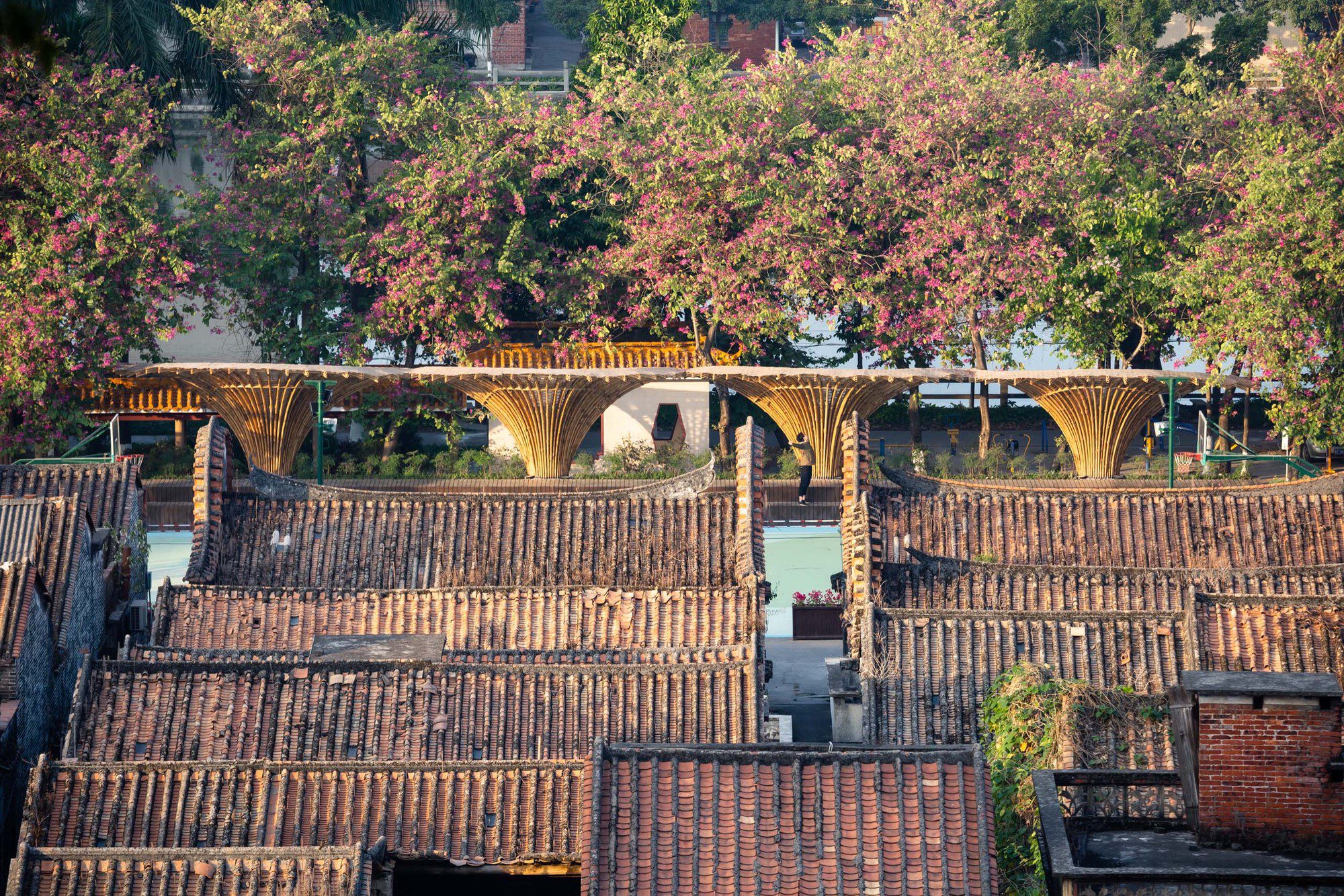
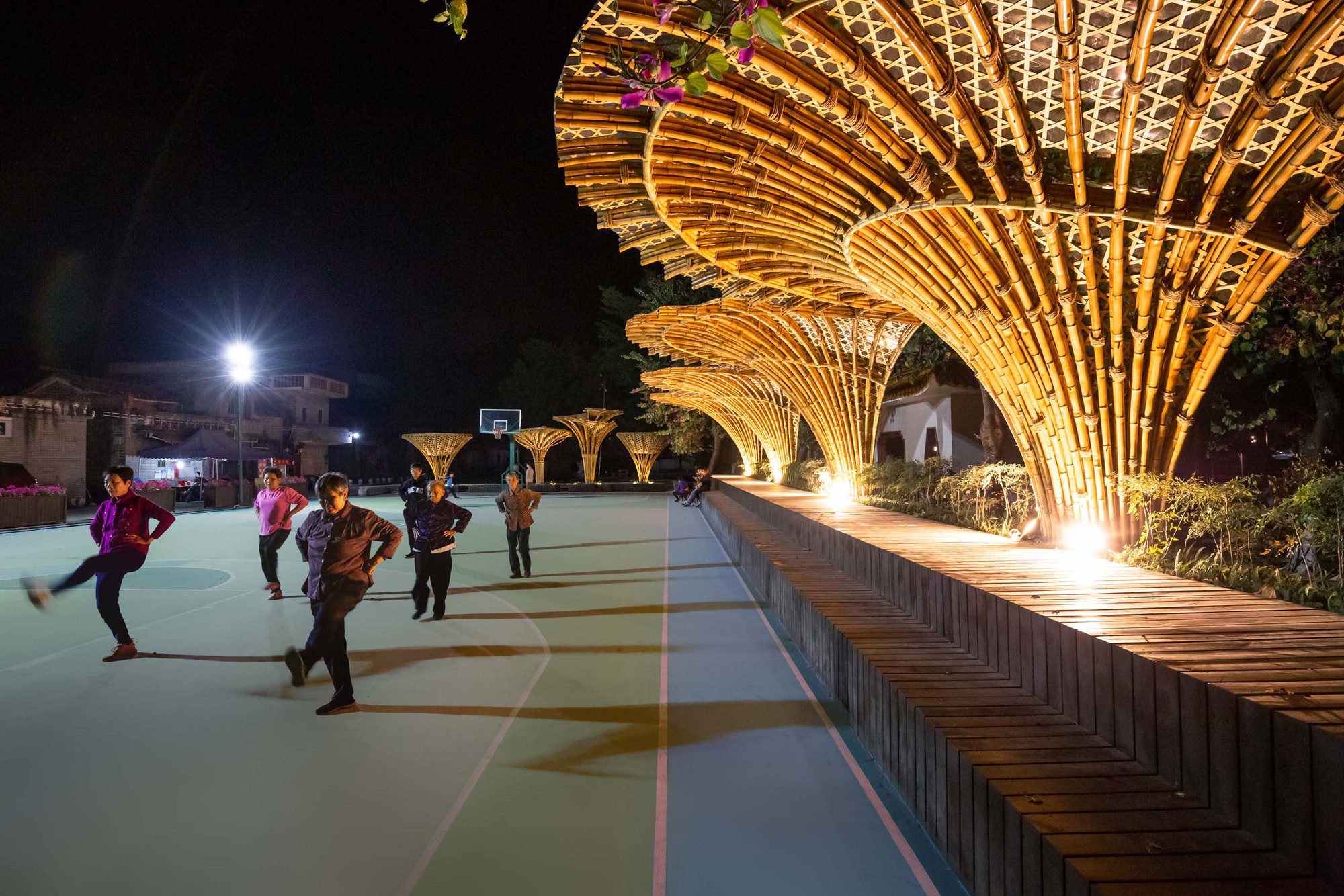
bamboo structure and village. Image © Jiancong Chen
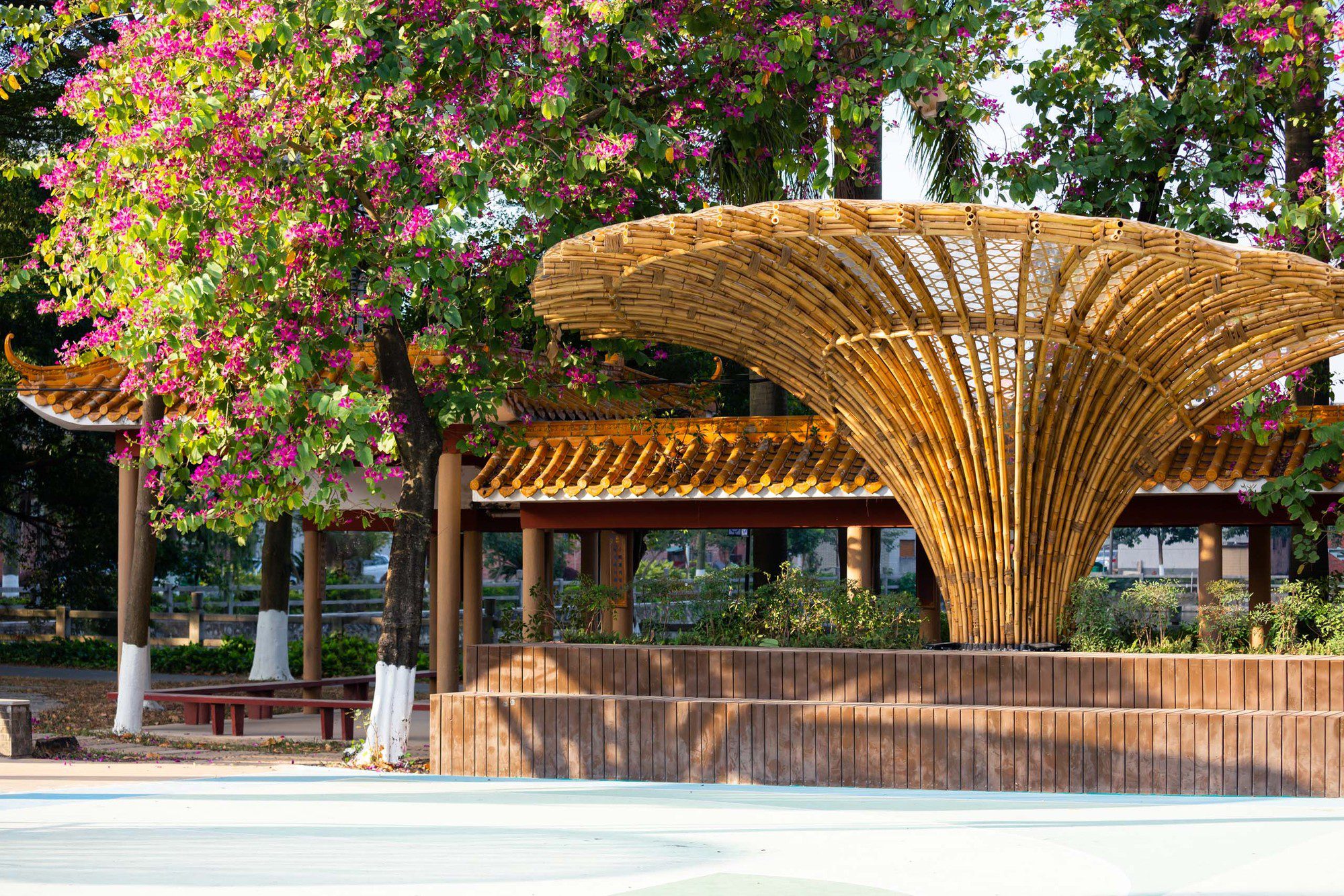
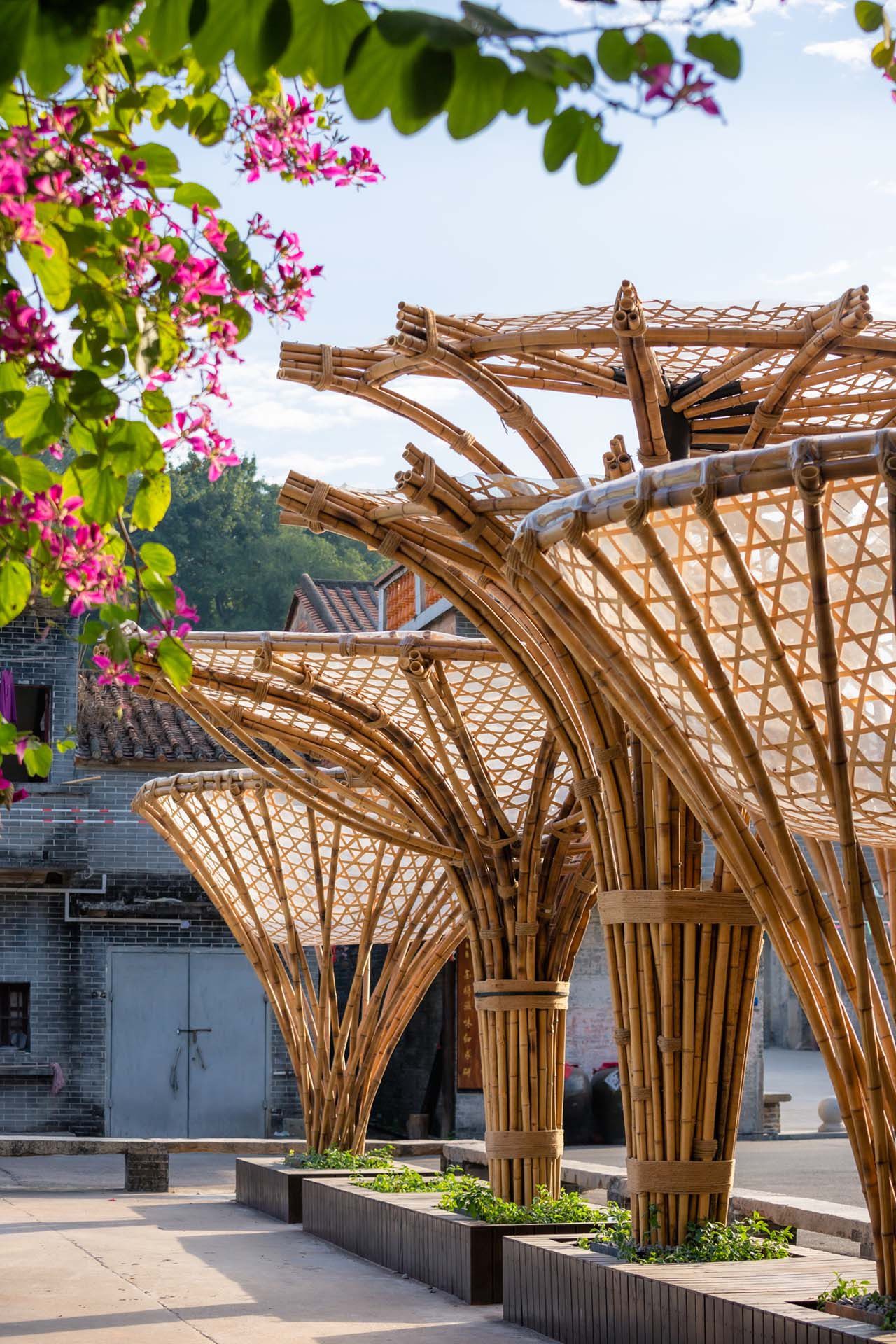
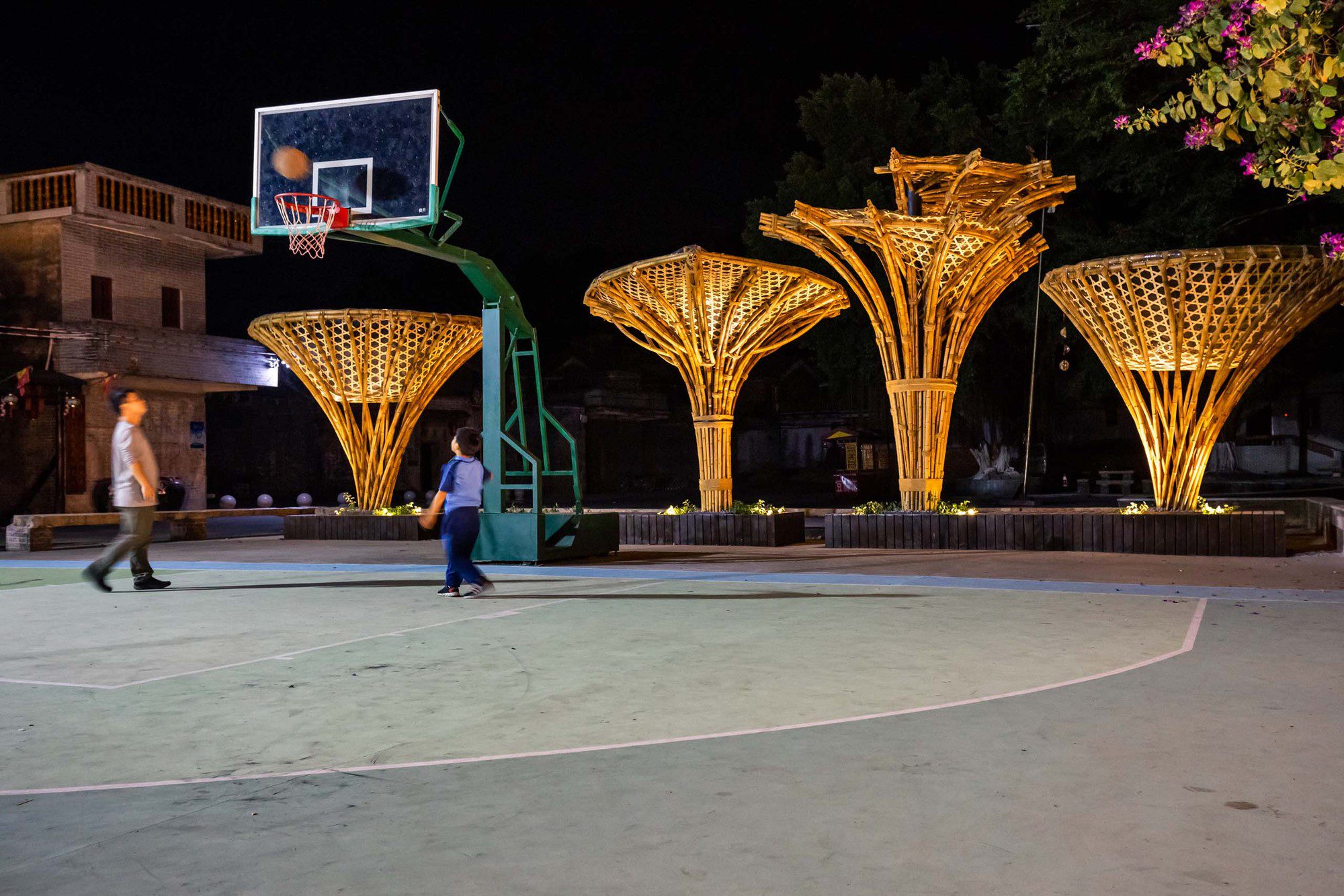
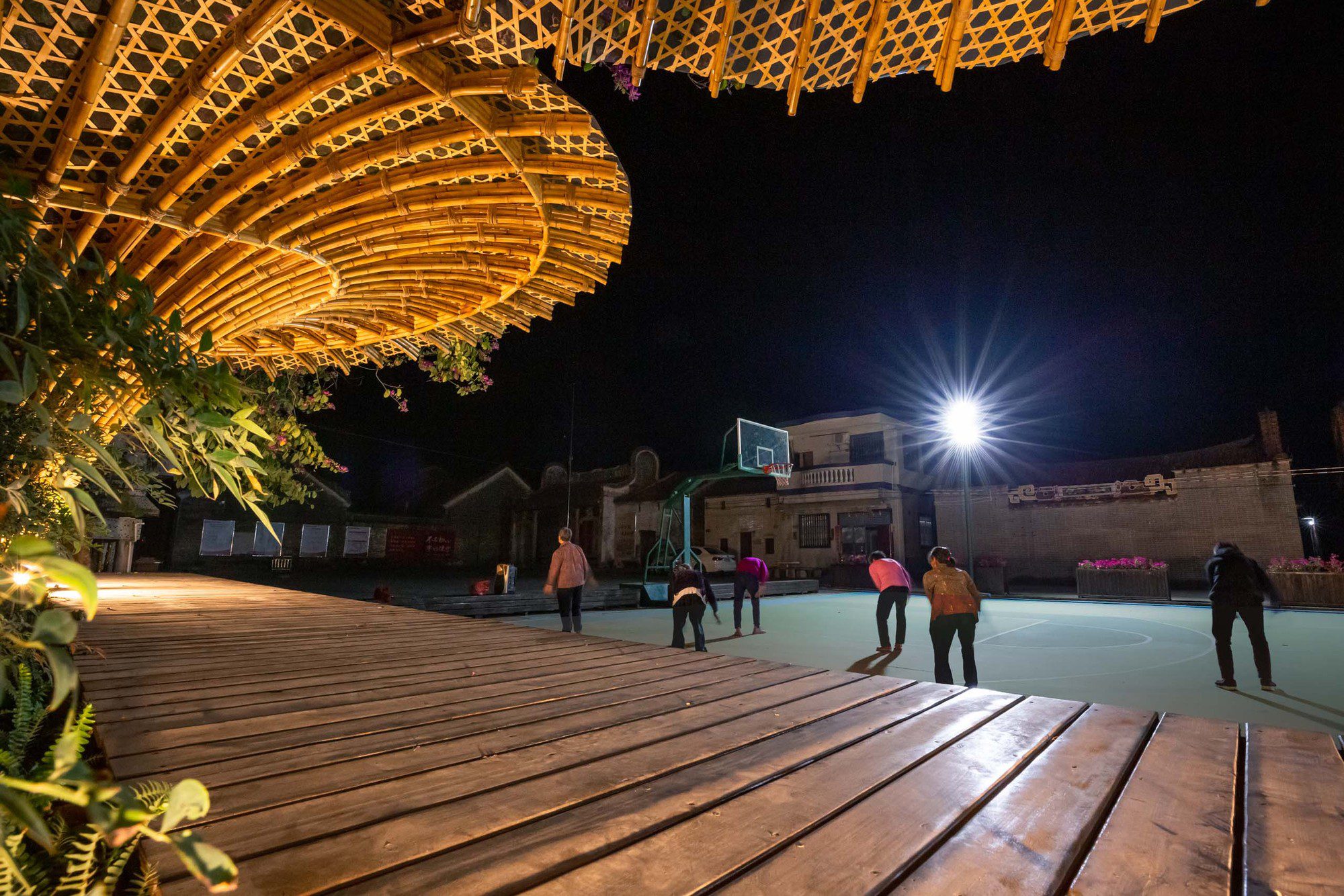
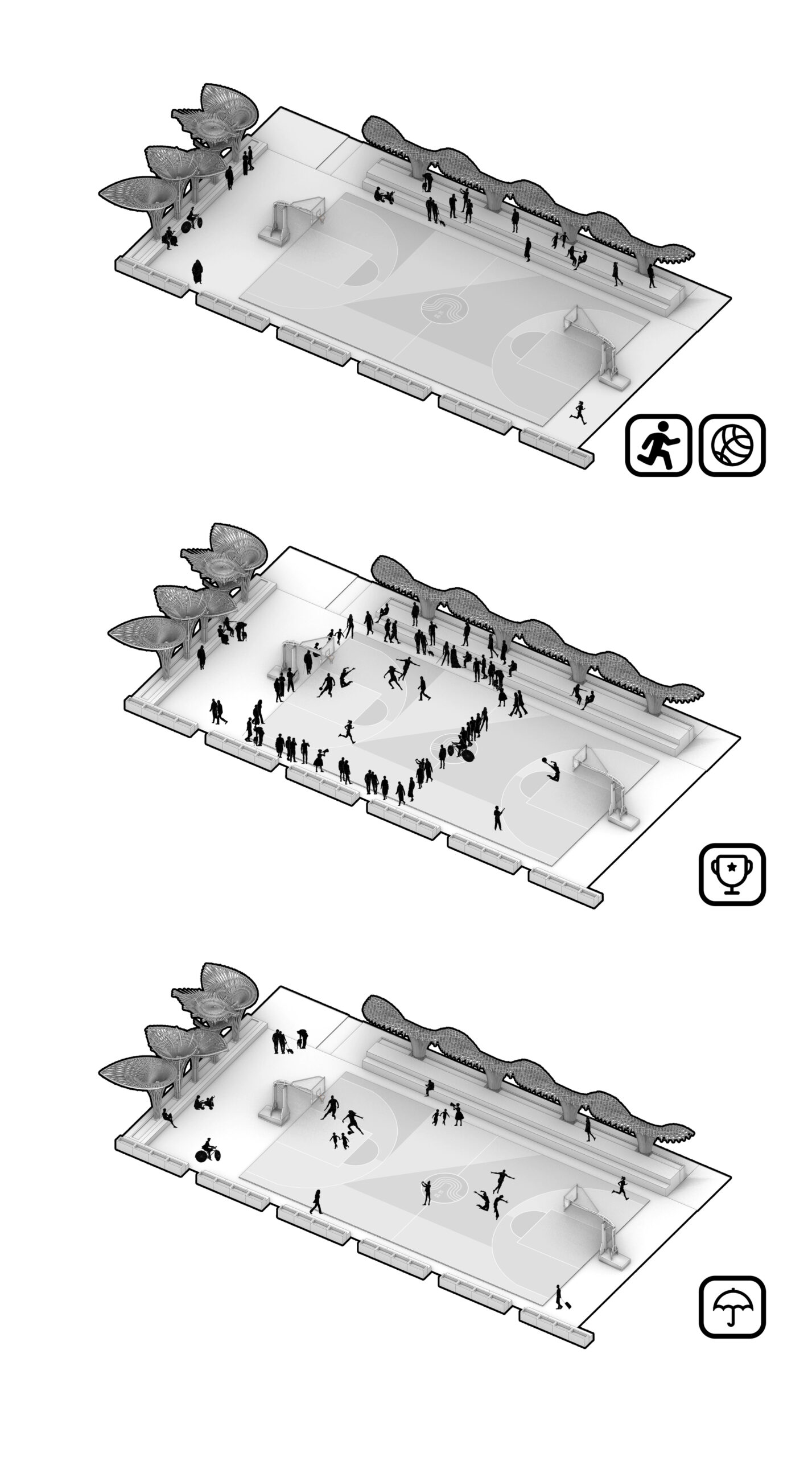
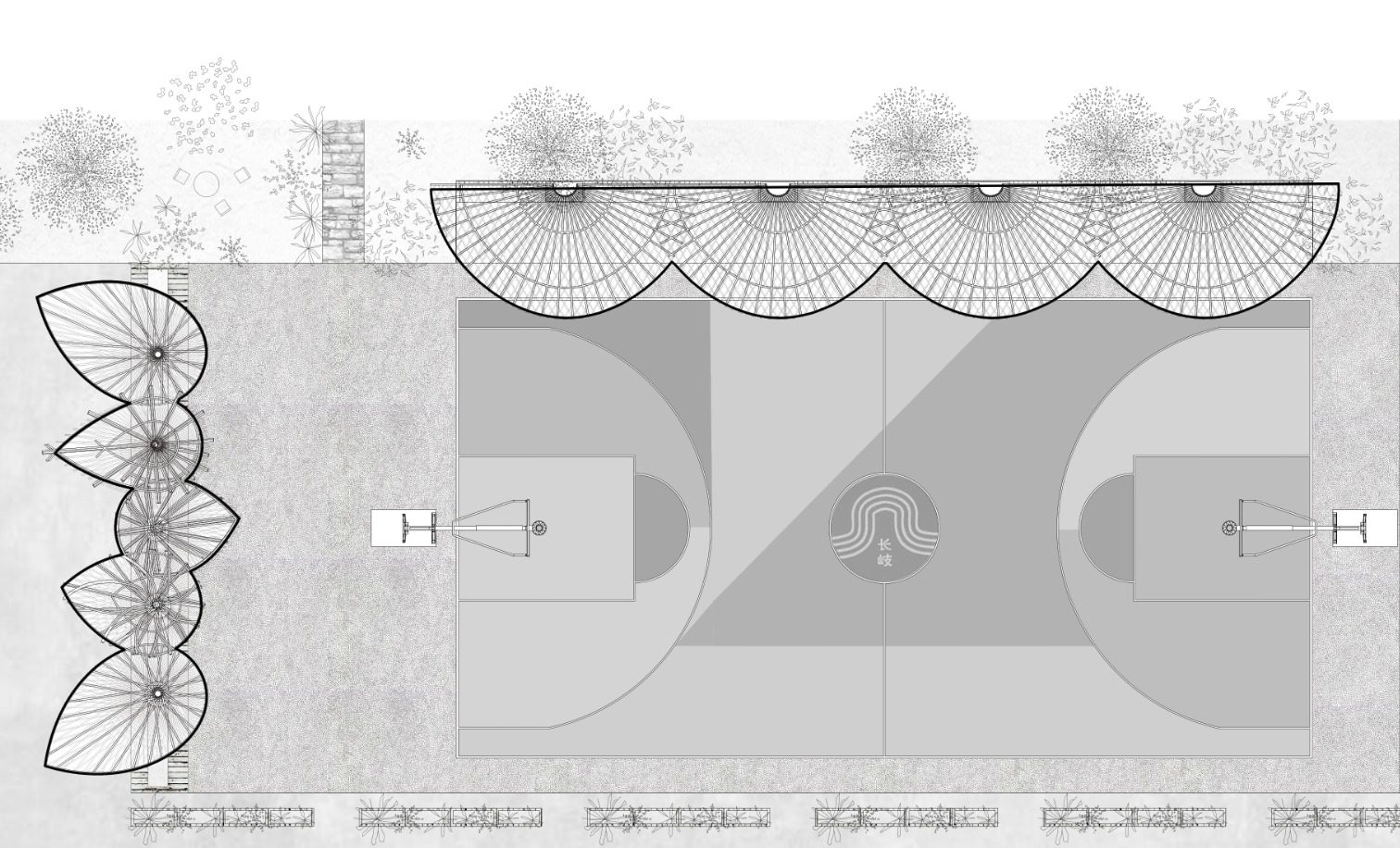
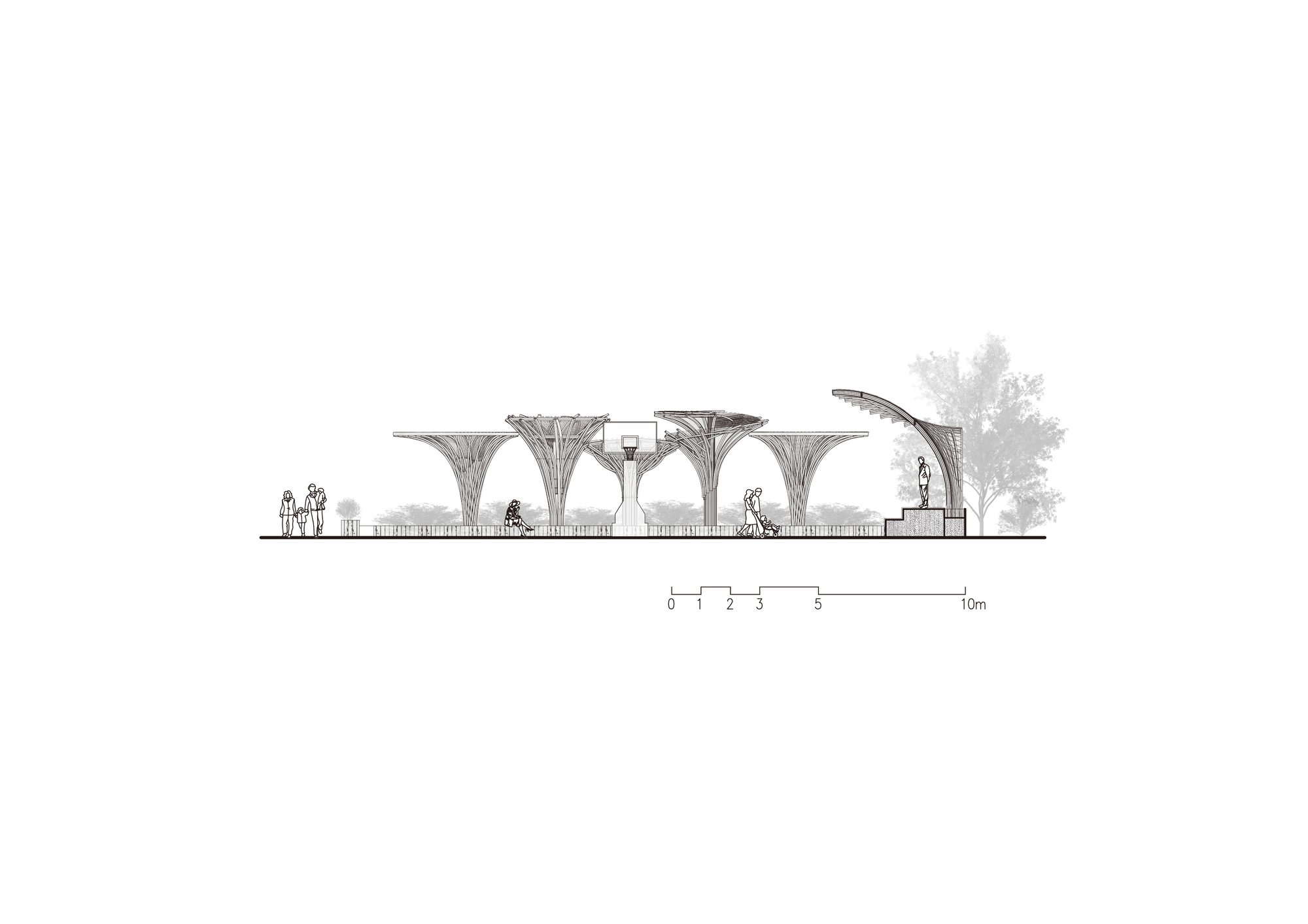
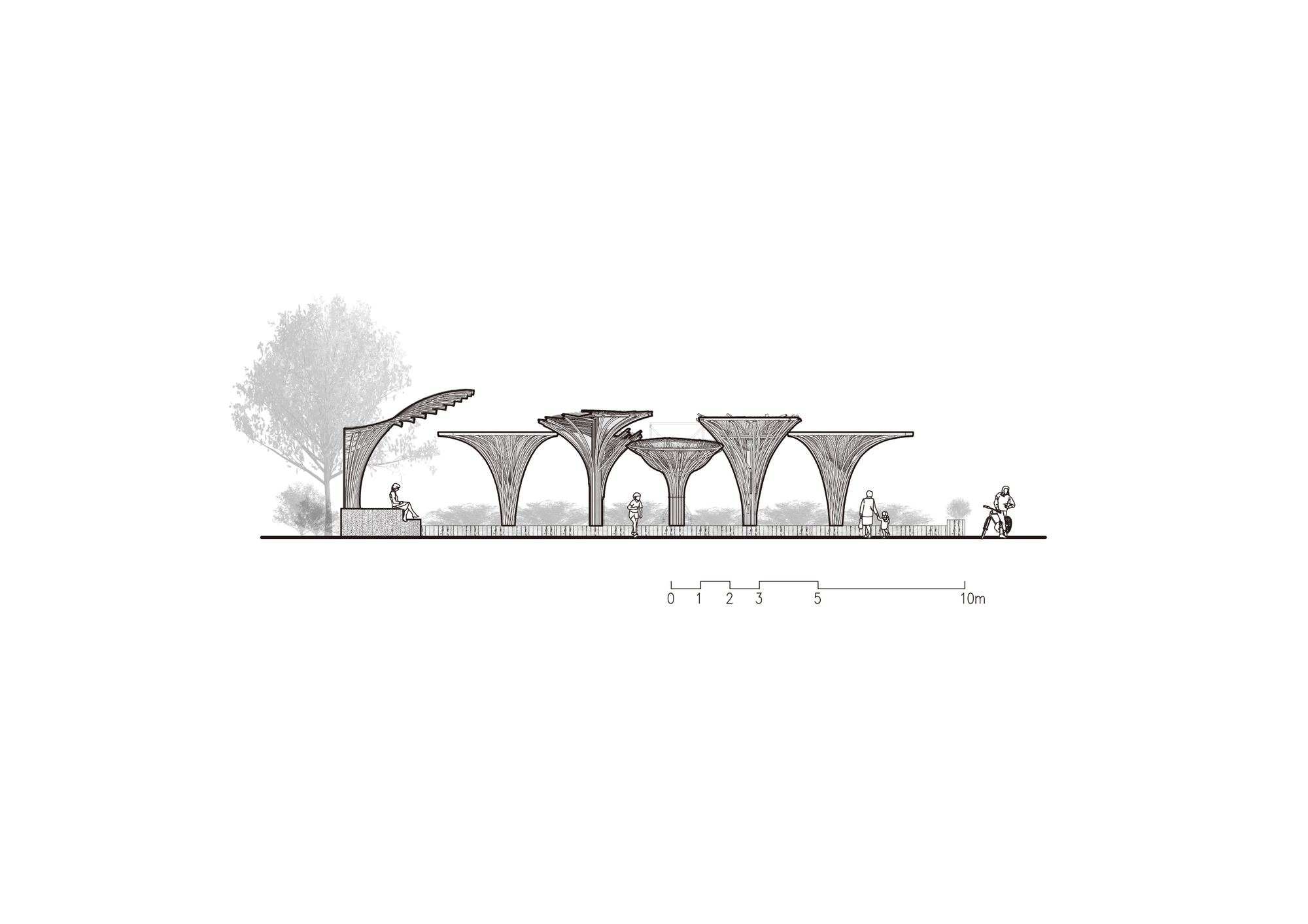
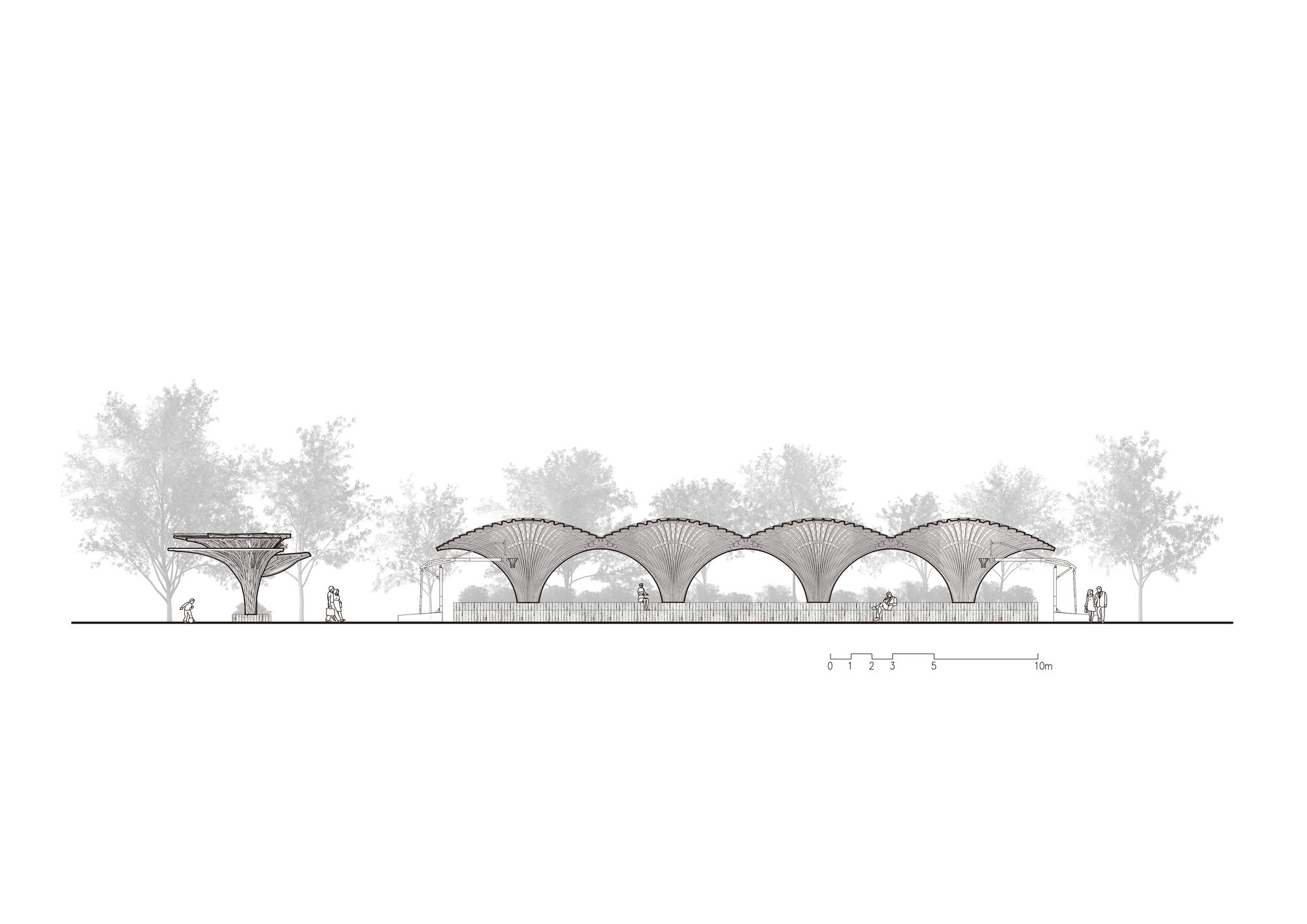
The new stadium bamboo gallery is in the place of the original stands, which provides villagers and tourists with a place to shelter from wind and rain. The design utilizes the toughness of traditional bamboo materials and combines the traditional bamboo weaving technique and beauty of Changqi Village. The overhang structure cantilever from the stand side more naturally, so that the audience ’s viewing direction does not fall behind to avoid blocking the line of sight and the impact on basketball activities. At the same time, several umbrella-shaped cantilever structures are connected together, and the gap between the “umbrellas” makes the sight more transparent, connecting the sight of the stadium and the pond. The covering of the “umbrella” is woven and can transmit light. Light and shadow show the beauty of structure and technology. At the time of design, the diameter of the umbrella surface was 7 meters, and the cantilevered three-dimensional two-dimensional curved surface realized a larger span of the bamboo umbrella and realized structural skin integration.
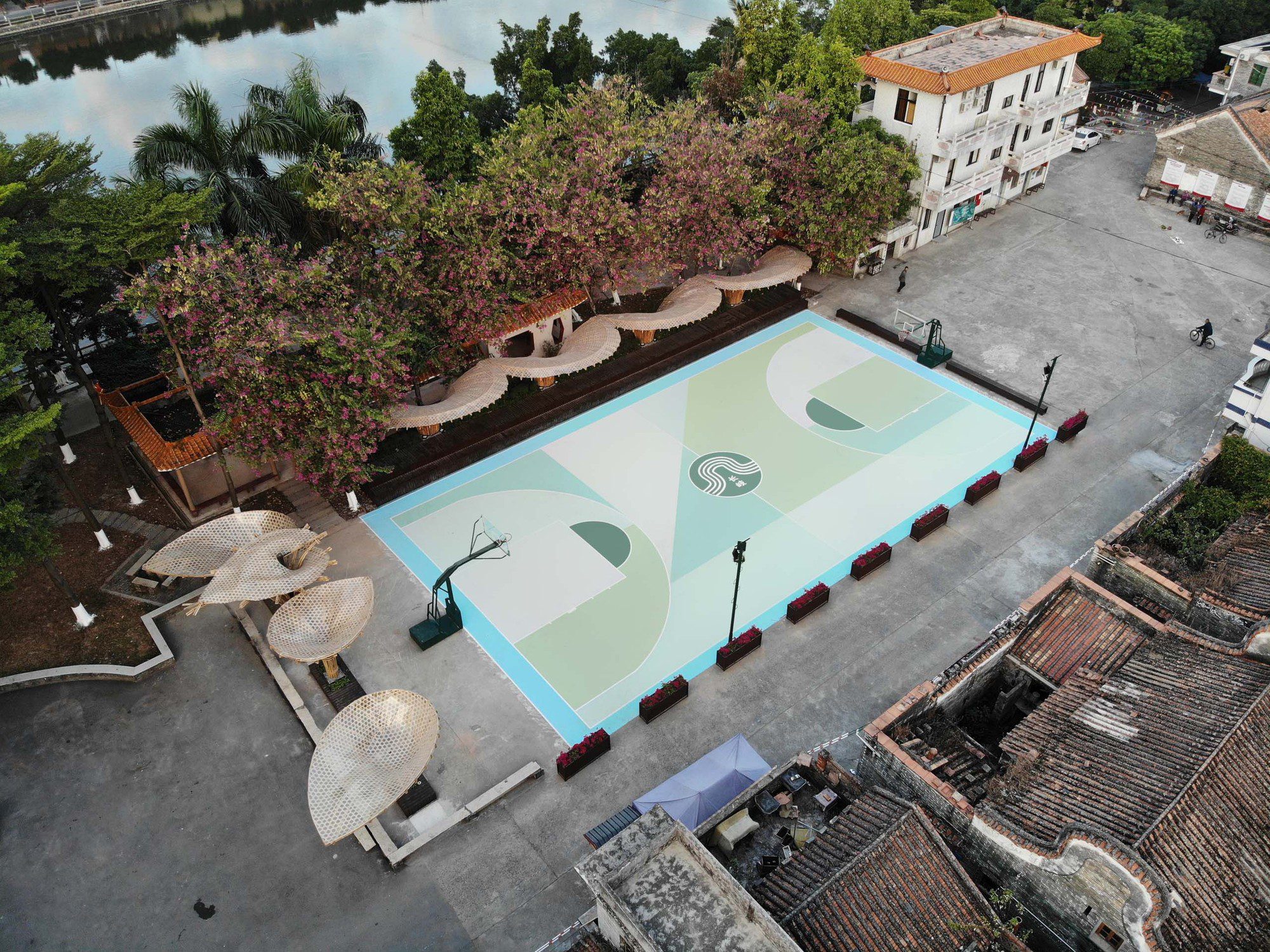
© Jiancong Chen
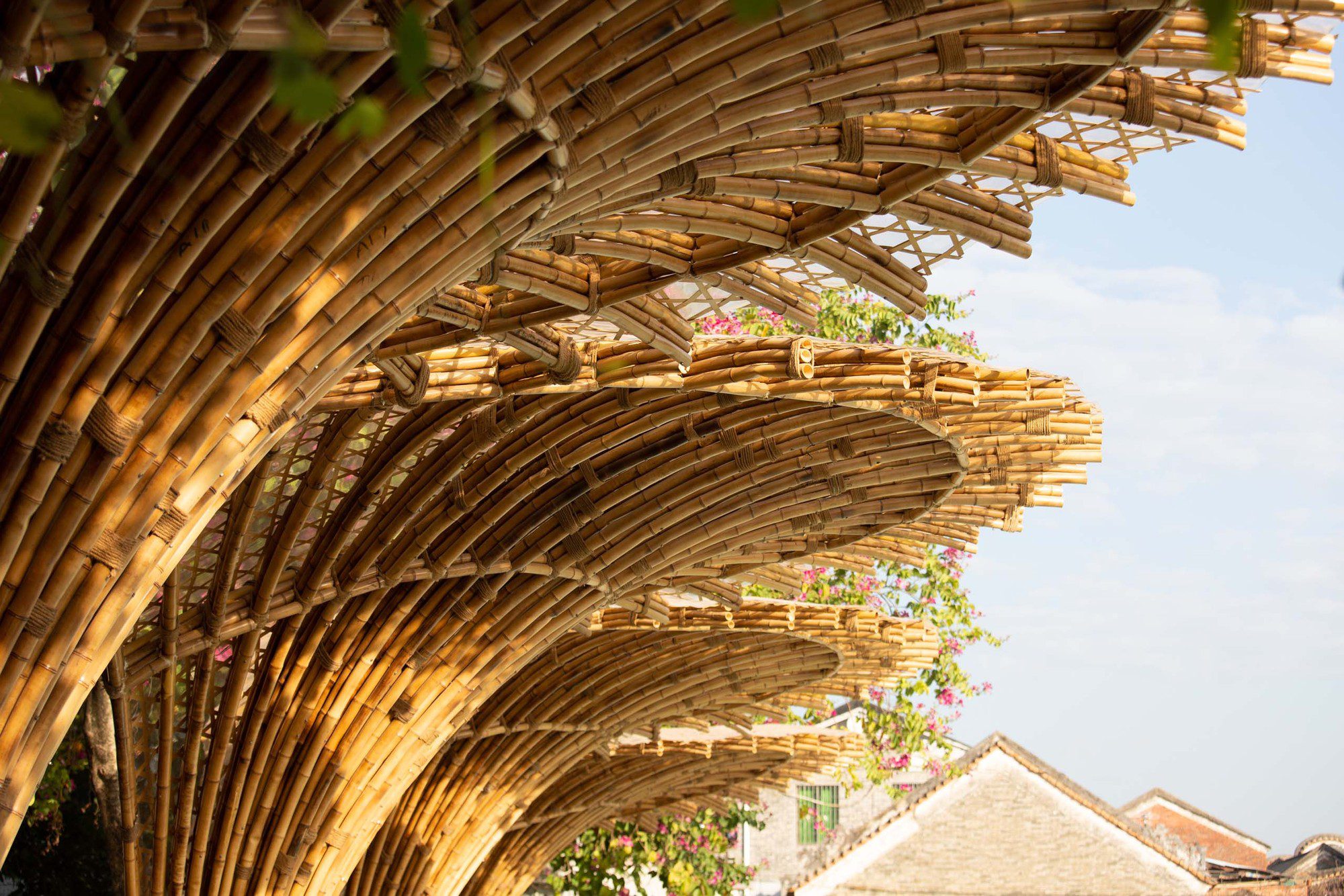
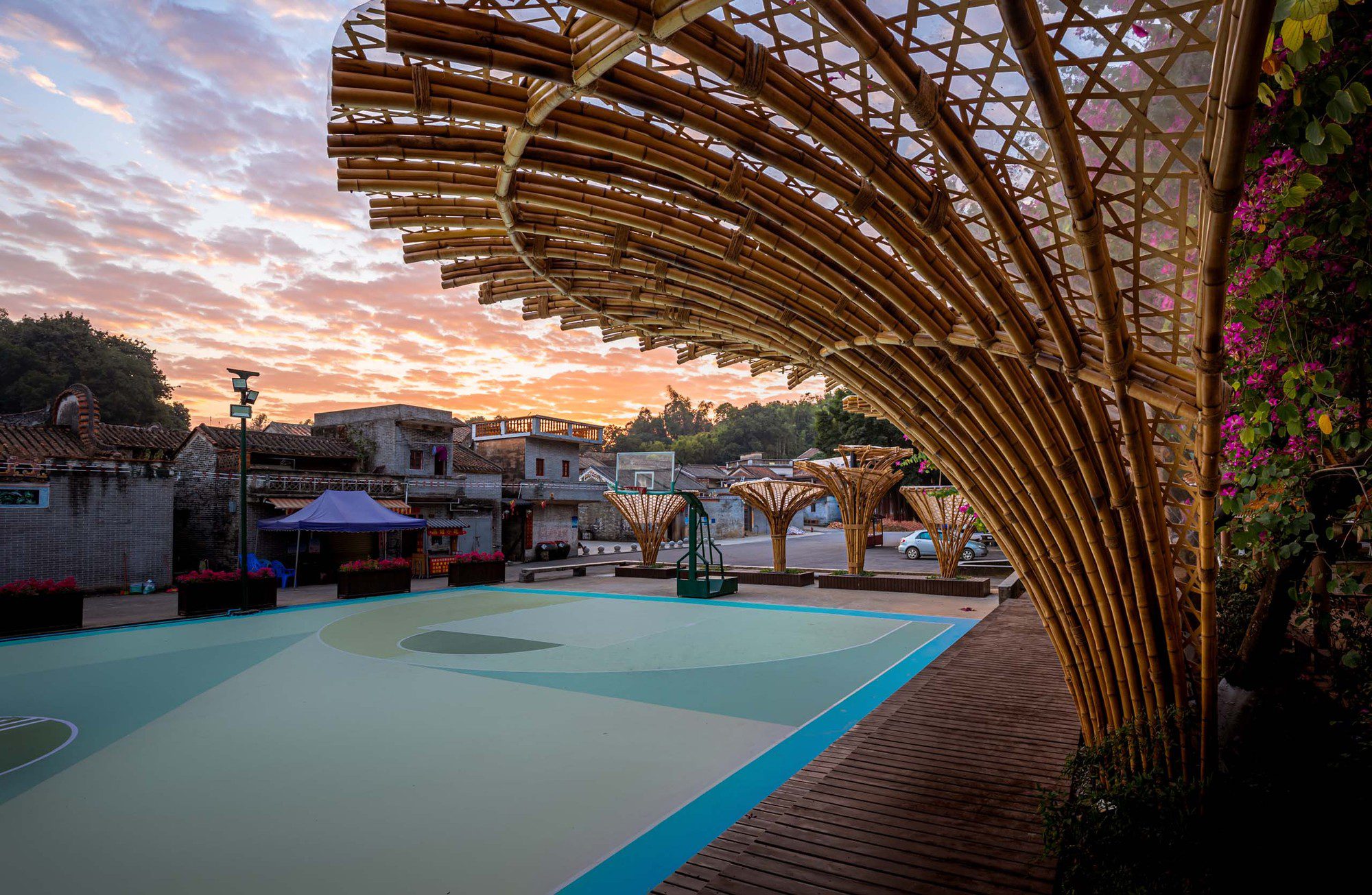
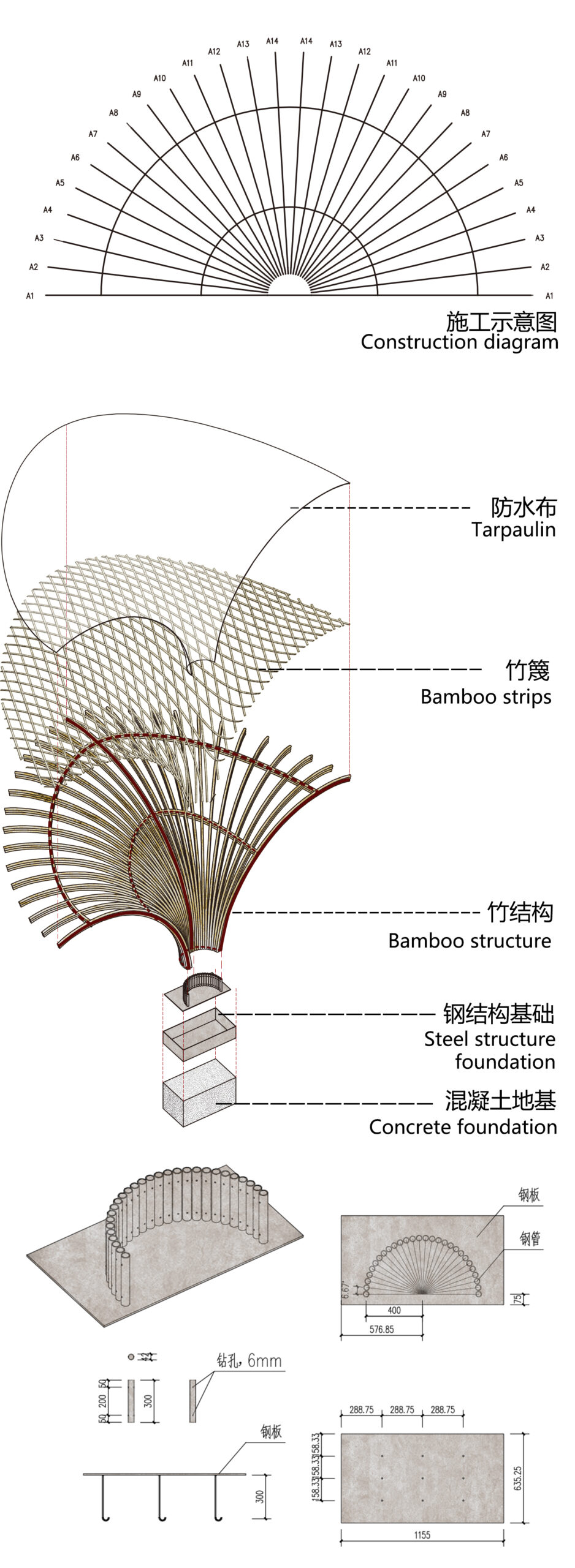
Before construction, the two-dimensional curve was used to fit the three-dimensional two-dimensional curved surface cantilever structure to achieve two-dimensional and flat construction, which is more conducive to the popularization and application of the original bamboo project. During the construction, the traditional artisans of the ancient village were mobilized to participate in the construction. The student volunteer construction team of the School of Architecture of the University of Science and Technology also participated in joint construction. What’s more, the villagers spontaneously participated in the bamboo weaving learning and co-construction, so that the process of rural revitalization and construction formed a process of multi-participation and exciting new vitality.
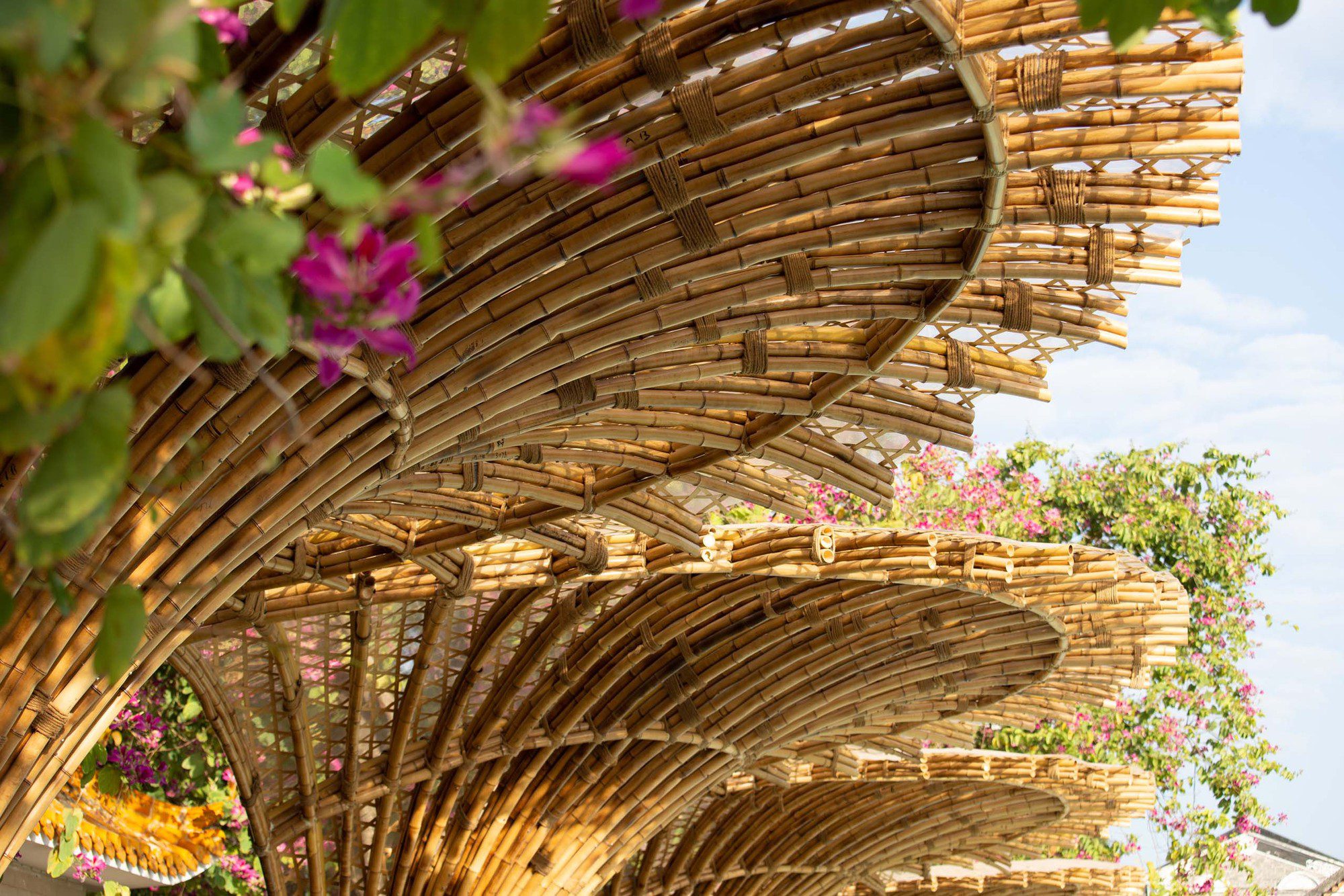
details. Image © Jiancong Chen
After its completion, it has attracted many villagers, elderly children and foreign tourists to compete in using and visiting group photos, not only activating the exploration and application of traditional sustainable environmentally friendly materials, but also renewing the new attitude of Changqi Ancient Village. Thousands of bamboos stand up, thousands of shadows are mottled, and eight curved surfaces are soft and cantilevered to show the image of an umbrella.
Project Info
Architects: Atelier cnS
Country: China, Foshan
Area: 900 m²
Year: 2019
Photographs: Jiancong Chen
Design Director: Guanqiu Zhong, Wenhao Zhang, Hailui Lin
Host Architects: Guanqiu Zhong, Gang Song, Zhiyuan Zhu
Design Team: Hairui Lam, Ruibo Li, Jiancong Chen
Construction Student Team: Yifeng Li, Zhixian Tan, Yaowen Hu, Wenchu Zhang, Yudong Lin, Yichuan Li, Ying Zou, Yuhao Huang, Yuliang Feng, Ranpeng Chen, Xinke Du, Yajing Dai, Lang Cheng, Yu Du, Hanyuan Peng, Wanyi Xie, Zhanhui Huang, Ying Zhou, Jialiang Luo, Yanzhen Chen, Pengfei Zhan, Yuqing Liu, Huabao Zhou, Yuerao Chen, Yulun Gao
Construction Supervision: Xianggang Chun
Construction Unit: Dongguan Huichun municipal landscape Engineering Co.Ltd
Design And Construction Of Bamboo Corridor: School of architecture, South China University of Technology:
Construction Team Leader: Guanqiu Zhong, Wenhao Zhang
Proprietor: Government of Lubao Town, Foshan City

Sophie Tremblay is a Montreal-based architectural editor and designer with a focus on sustainable urban development. A McGill University architecture graduate, she began her career in adaptive reuse, blending modern design with historical structures. As a Project Editor at Arch2O, she curates stories that connect traditional practice with forward-thinking design. Her writing highlights architecture's role in community engagement and social impact. Sophie has contributed to Canadian Architect and continues to collaborate with local studios on community-driven projects throughout Quebec, maintaining a hands-on approach that informs both her design sensibility and editorial perspective.