


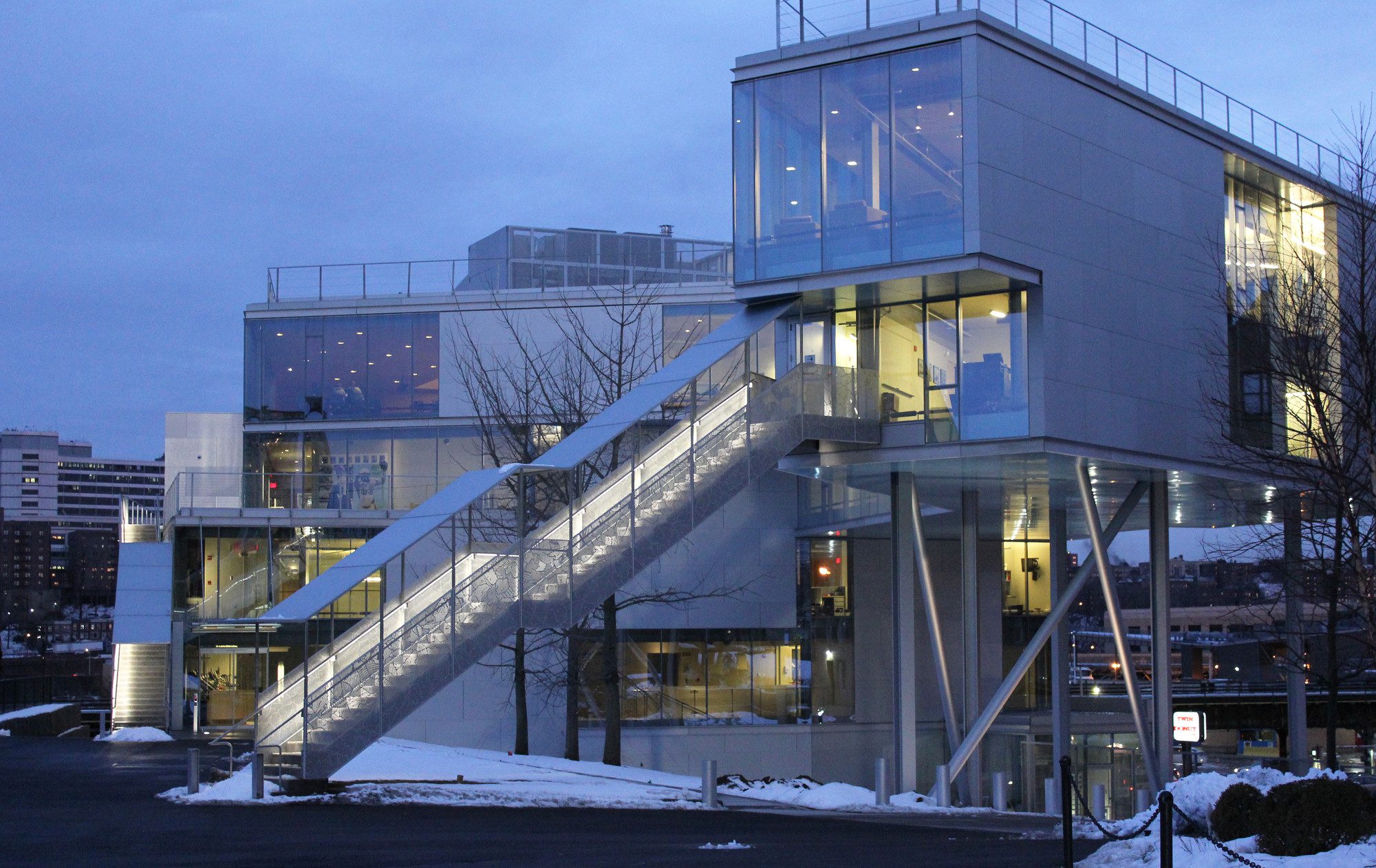
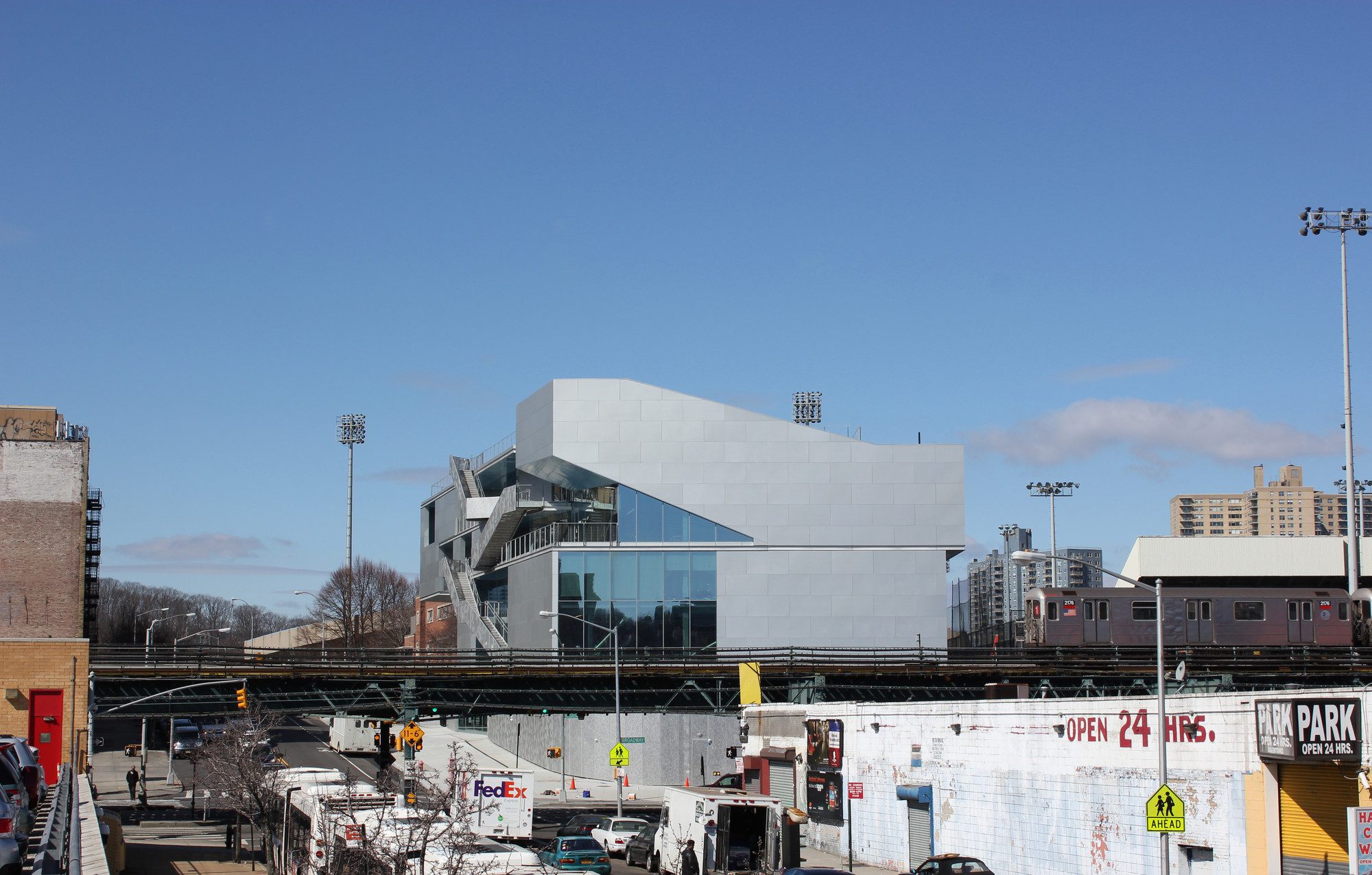
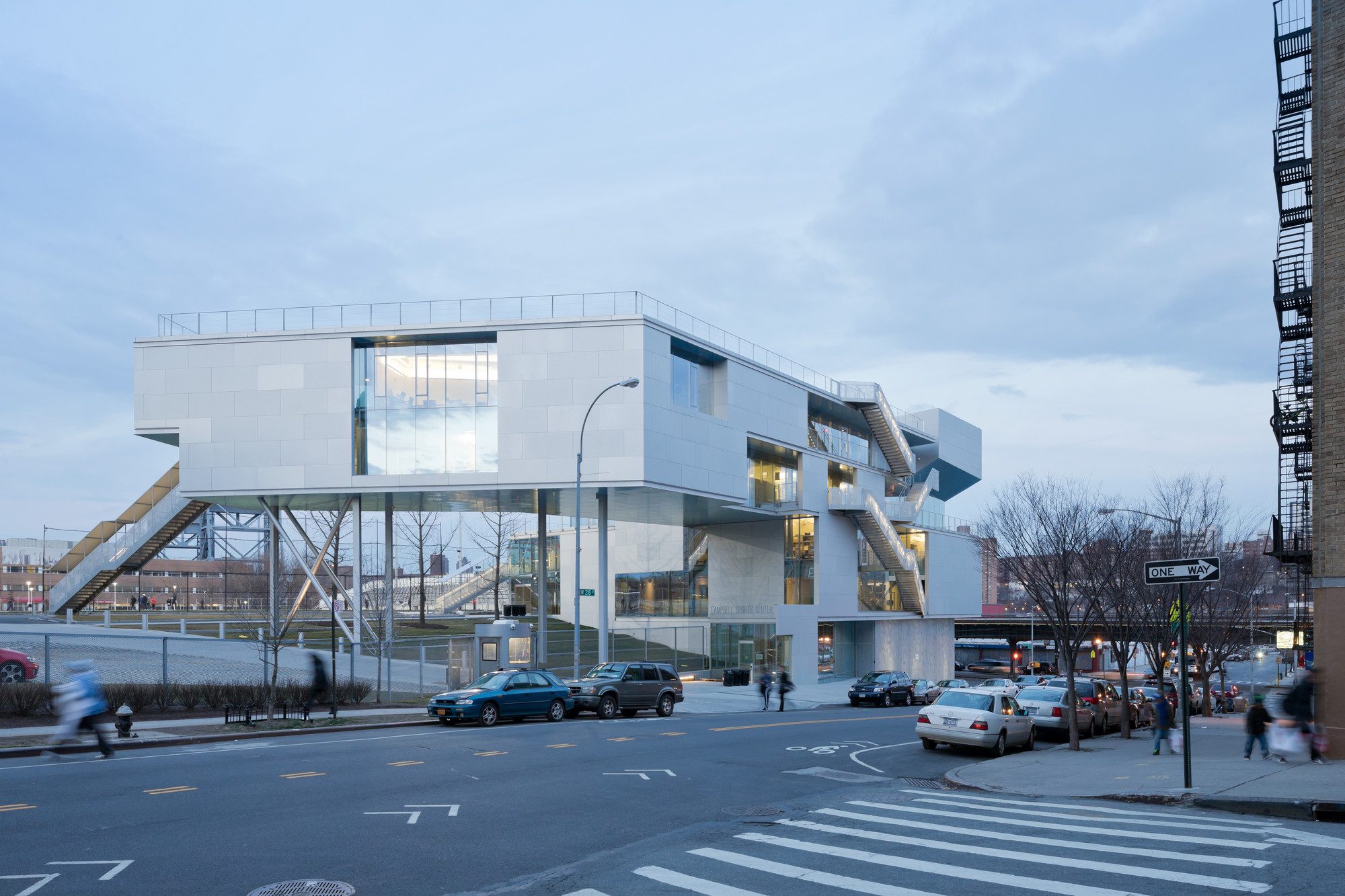
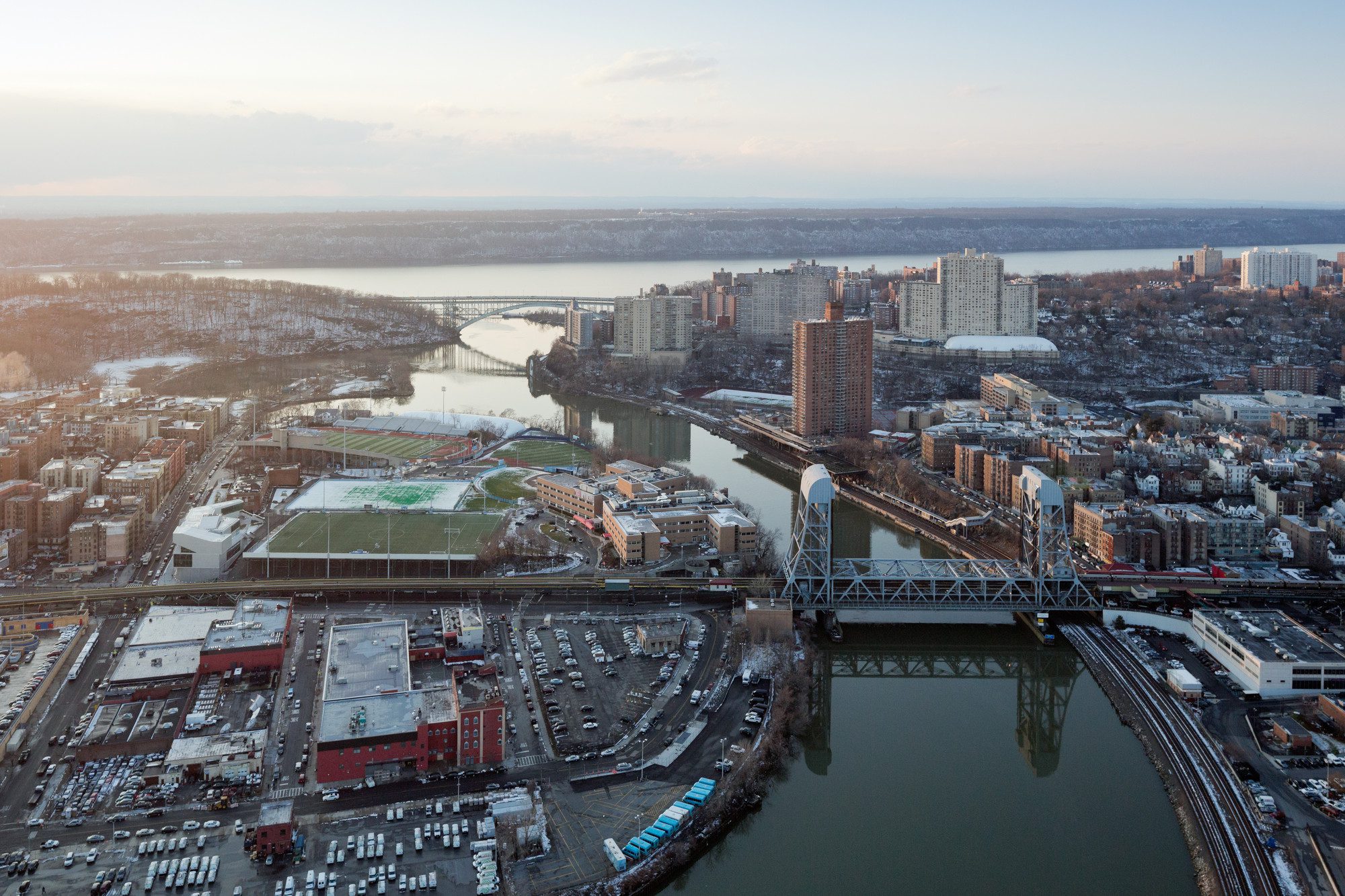
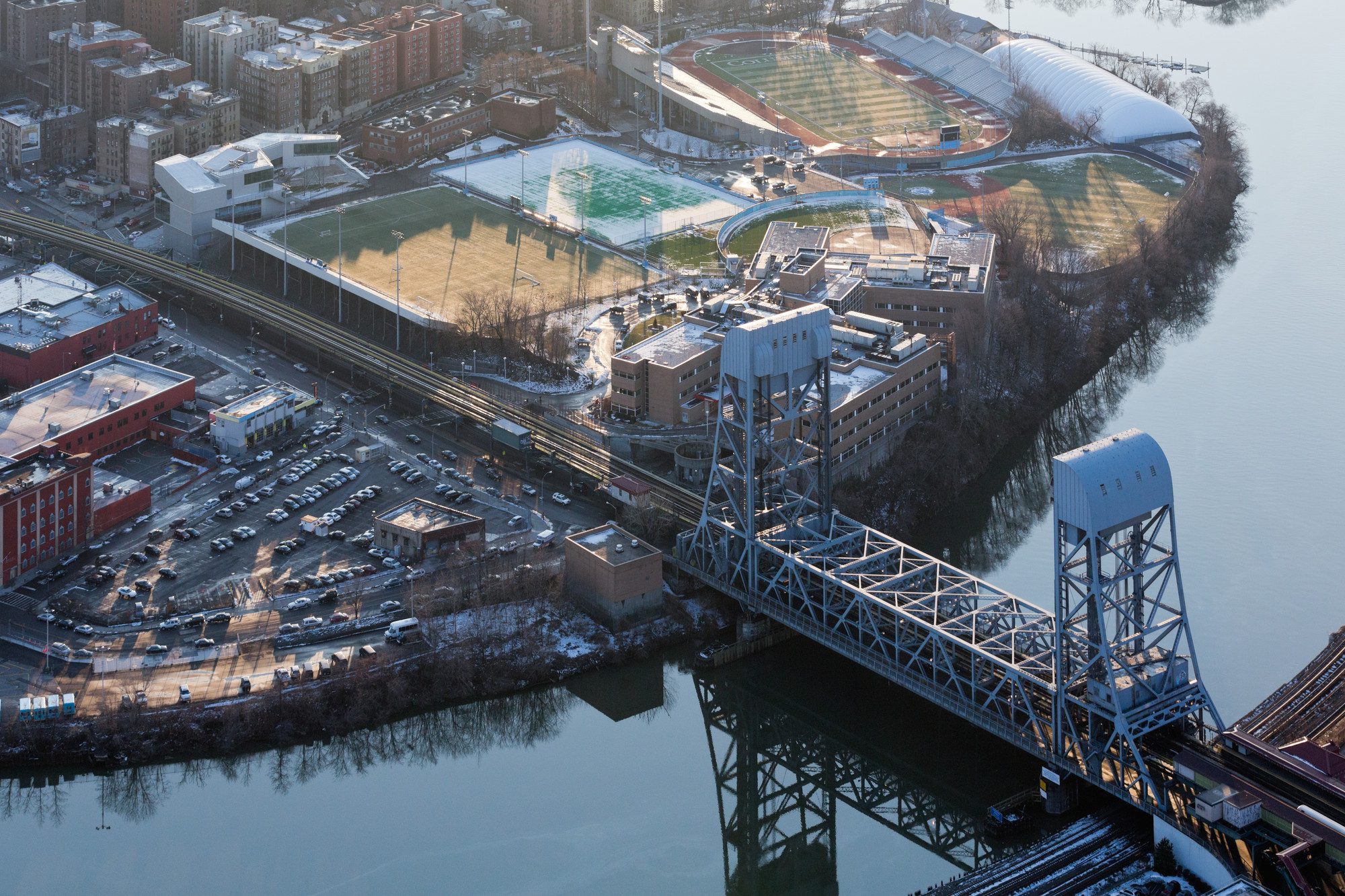
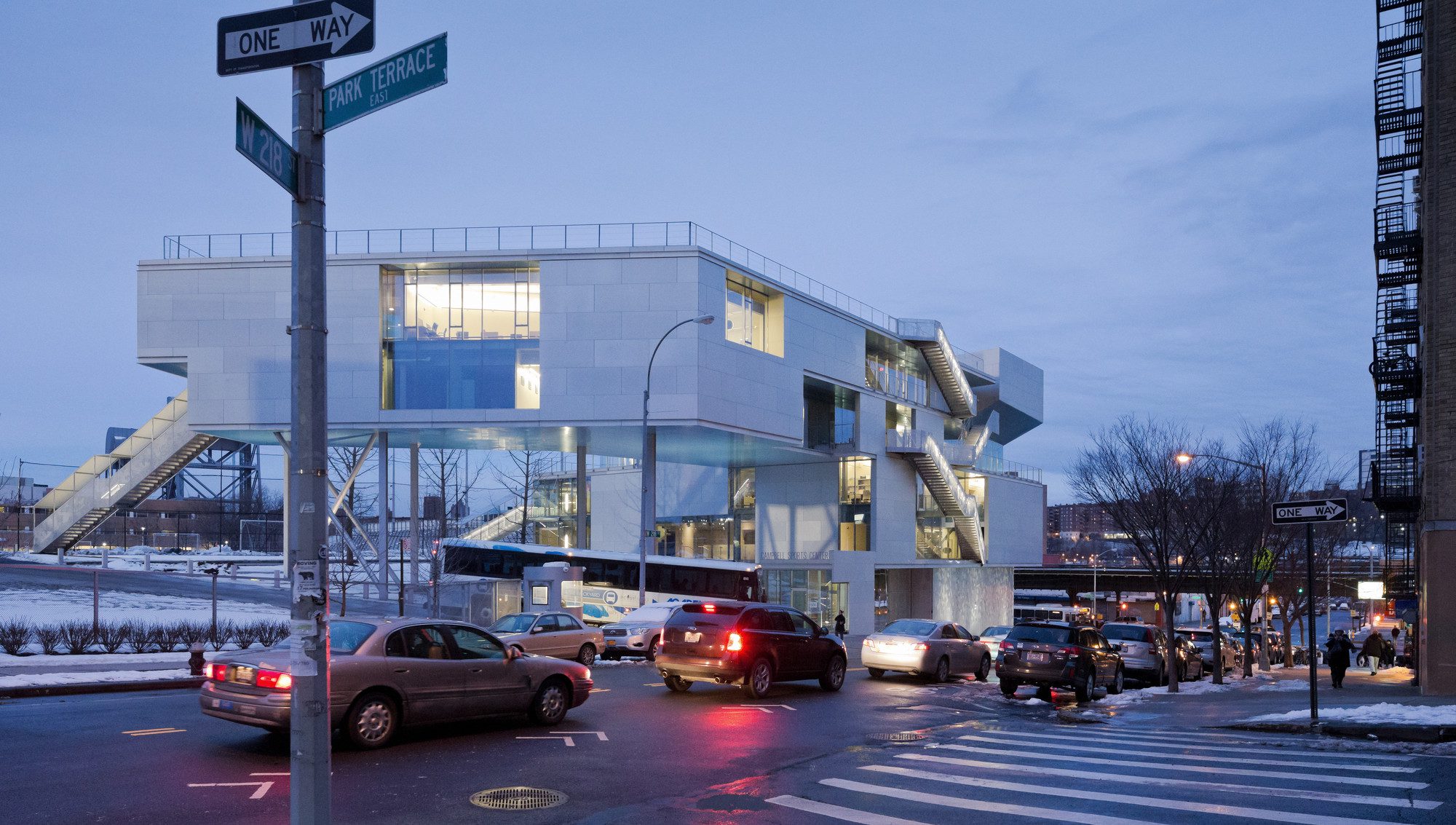
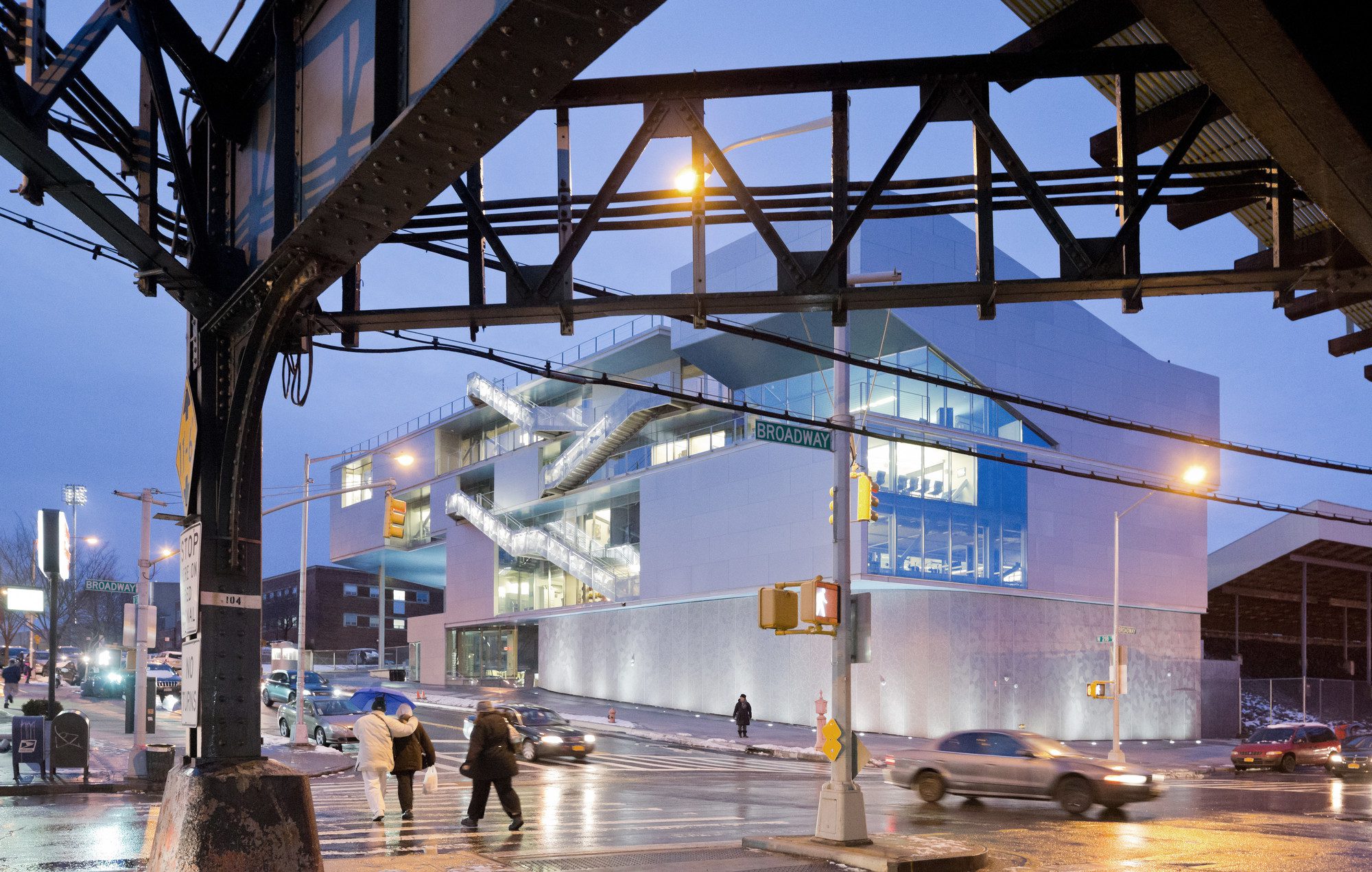
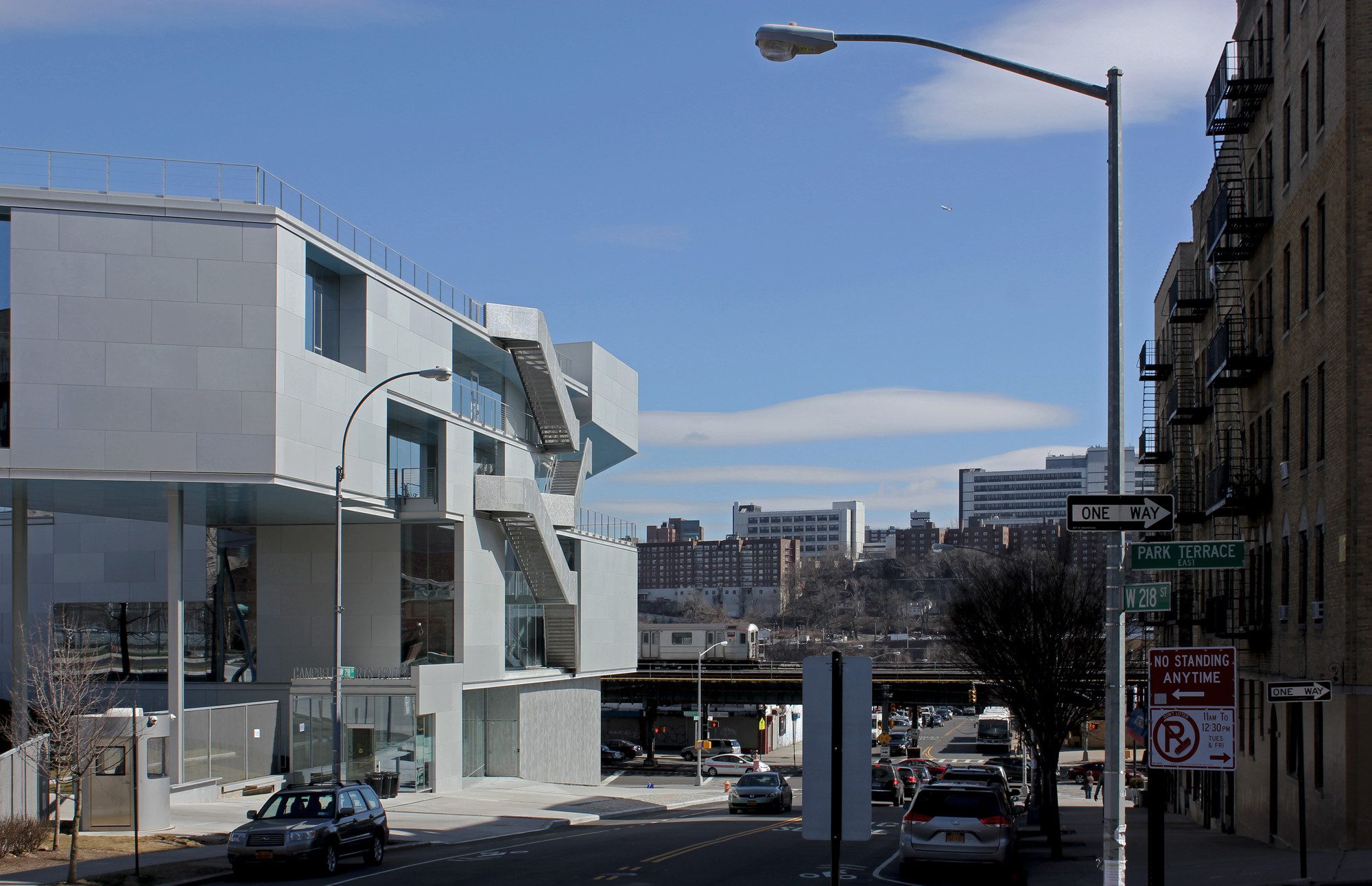
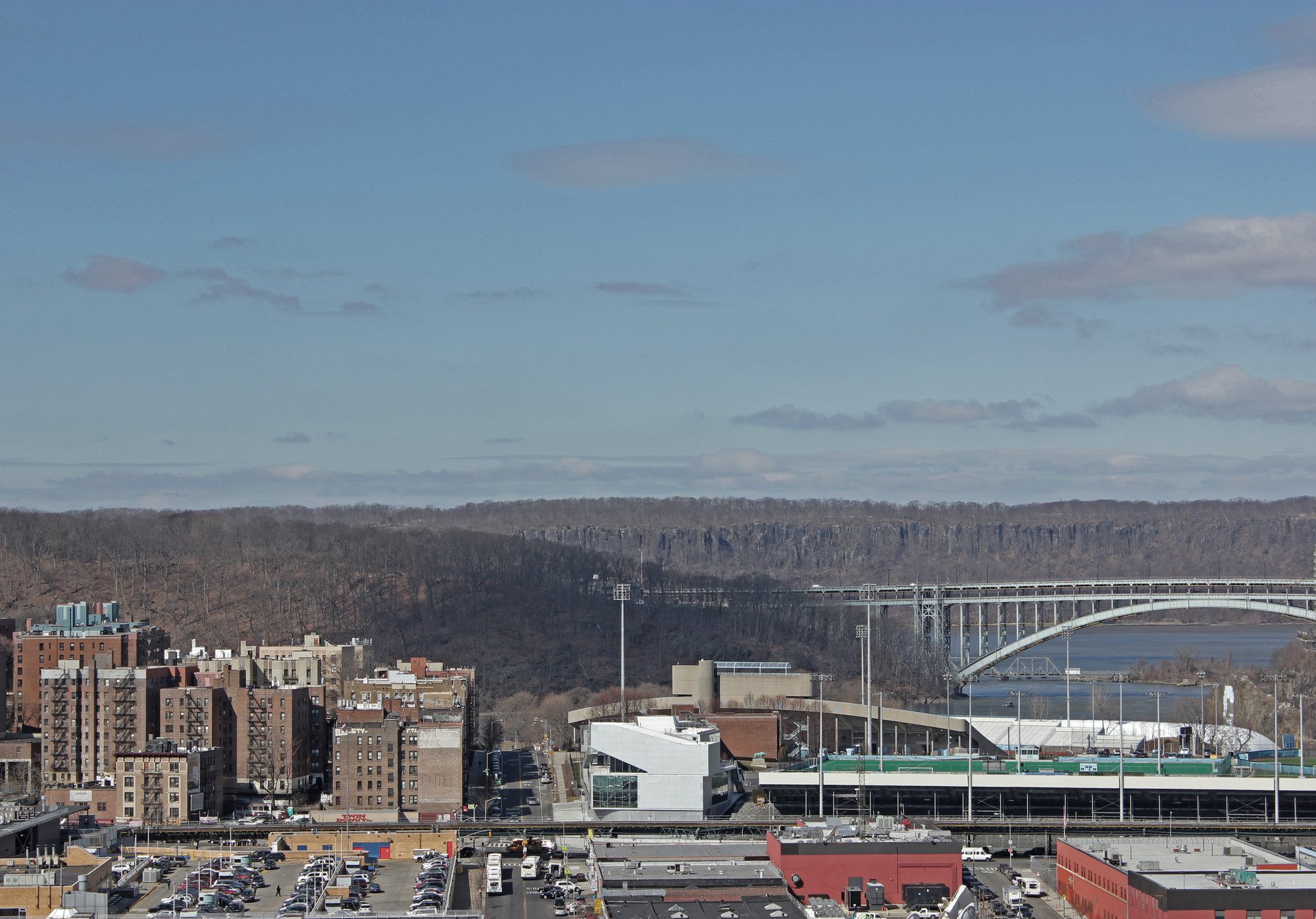
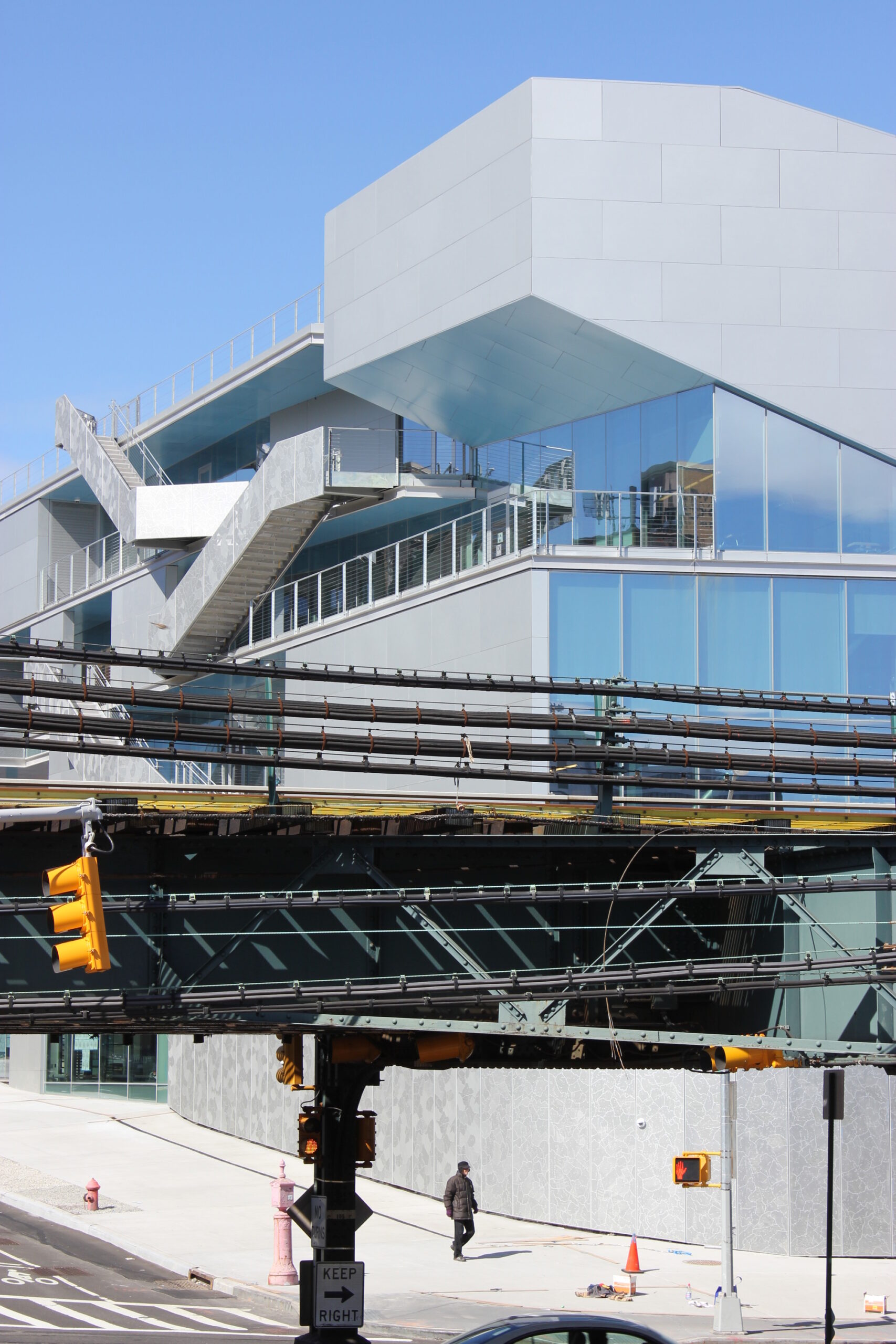
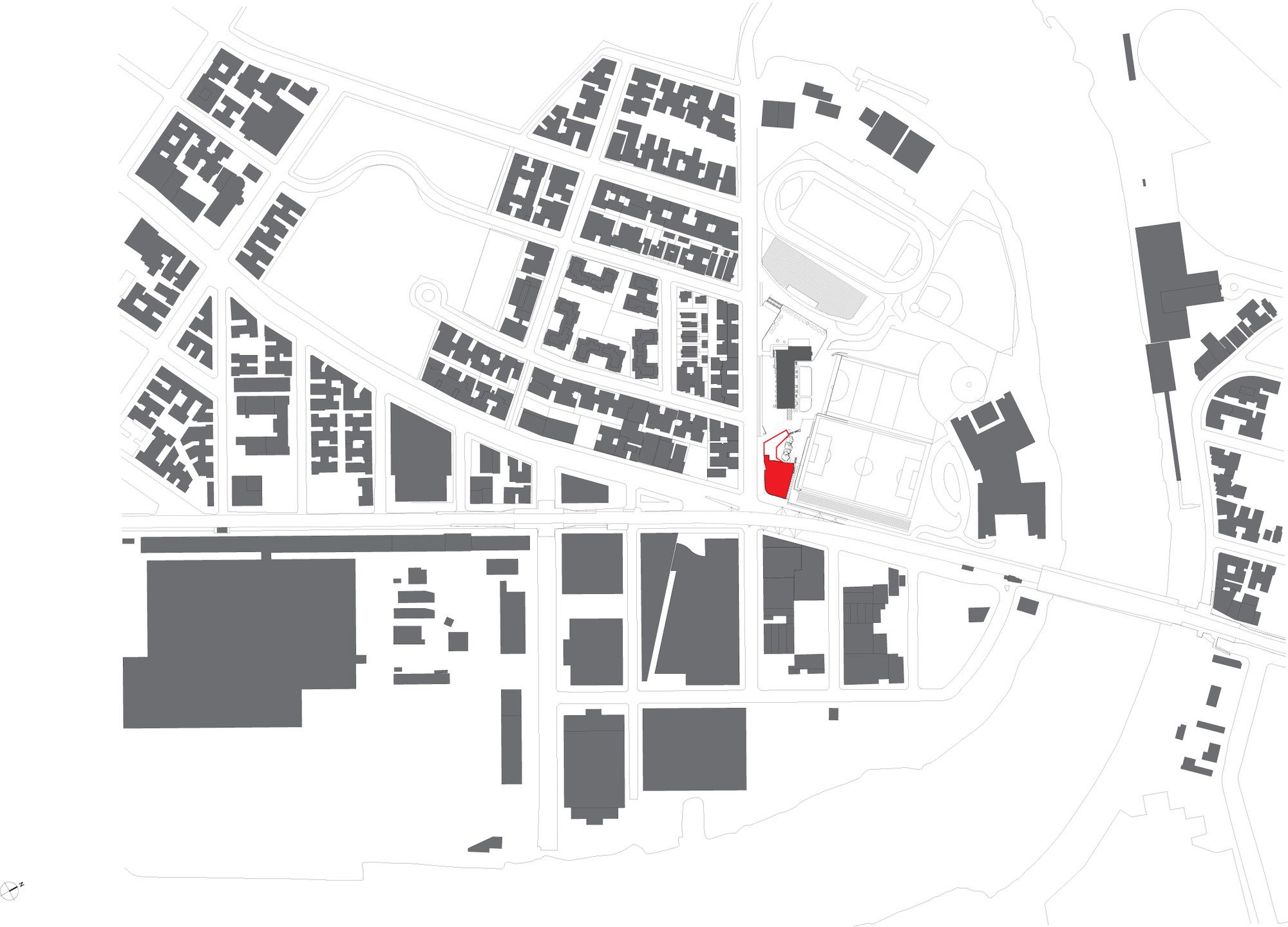
Campbell Sports Center, Located on the corner of West 218th street and Broadway—the northernmost edge of Manhattan, where Broadway crosses with Tenth Avenue and the elevated tracks of the 1 subway line—the Campbell Sports Center forms a new gateway to the Baker Athletics Complex, the primary athletics facility for the Columbia University’s outdoor sports program.
© Chris McVoy
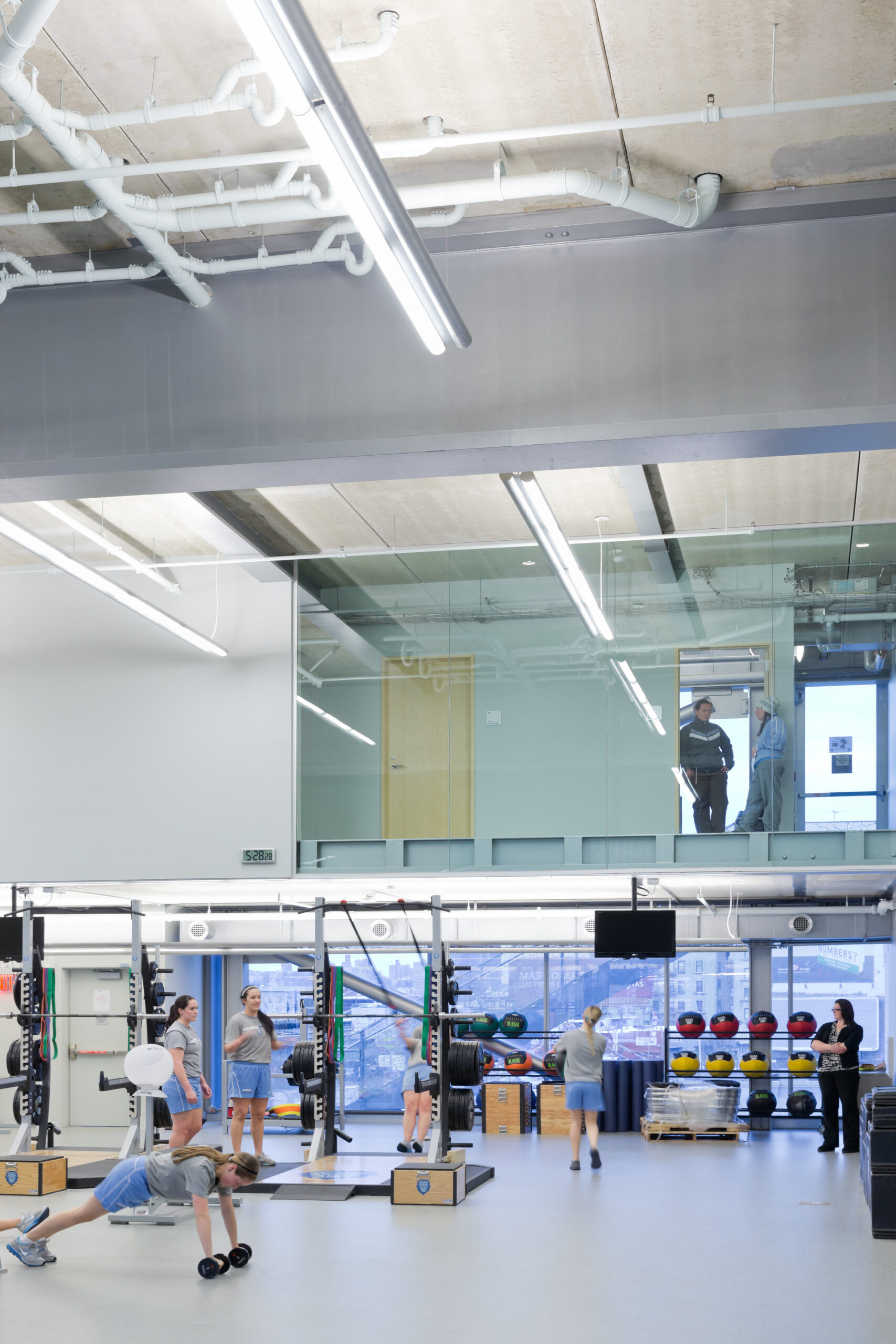
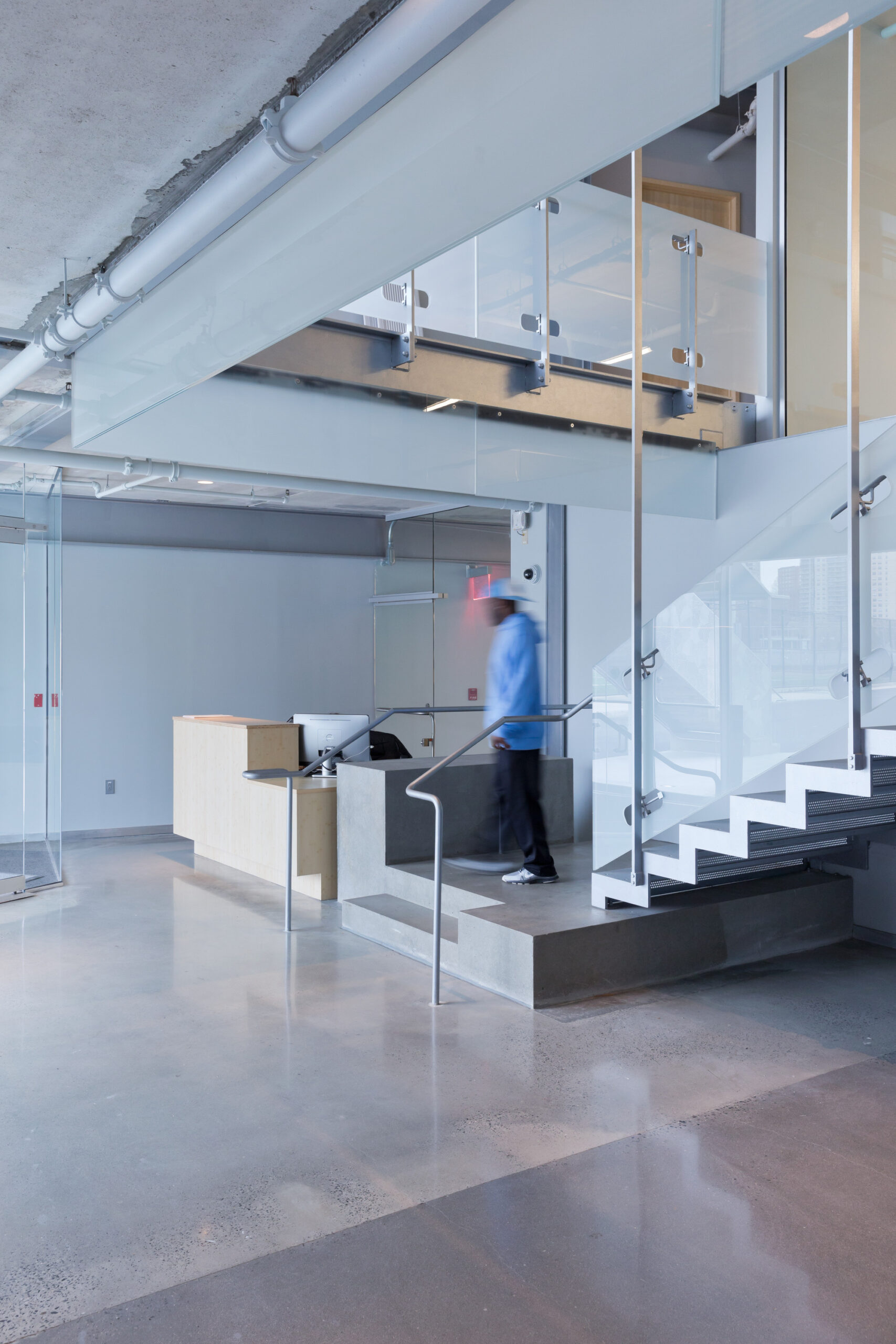
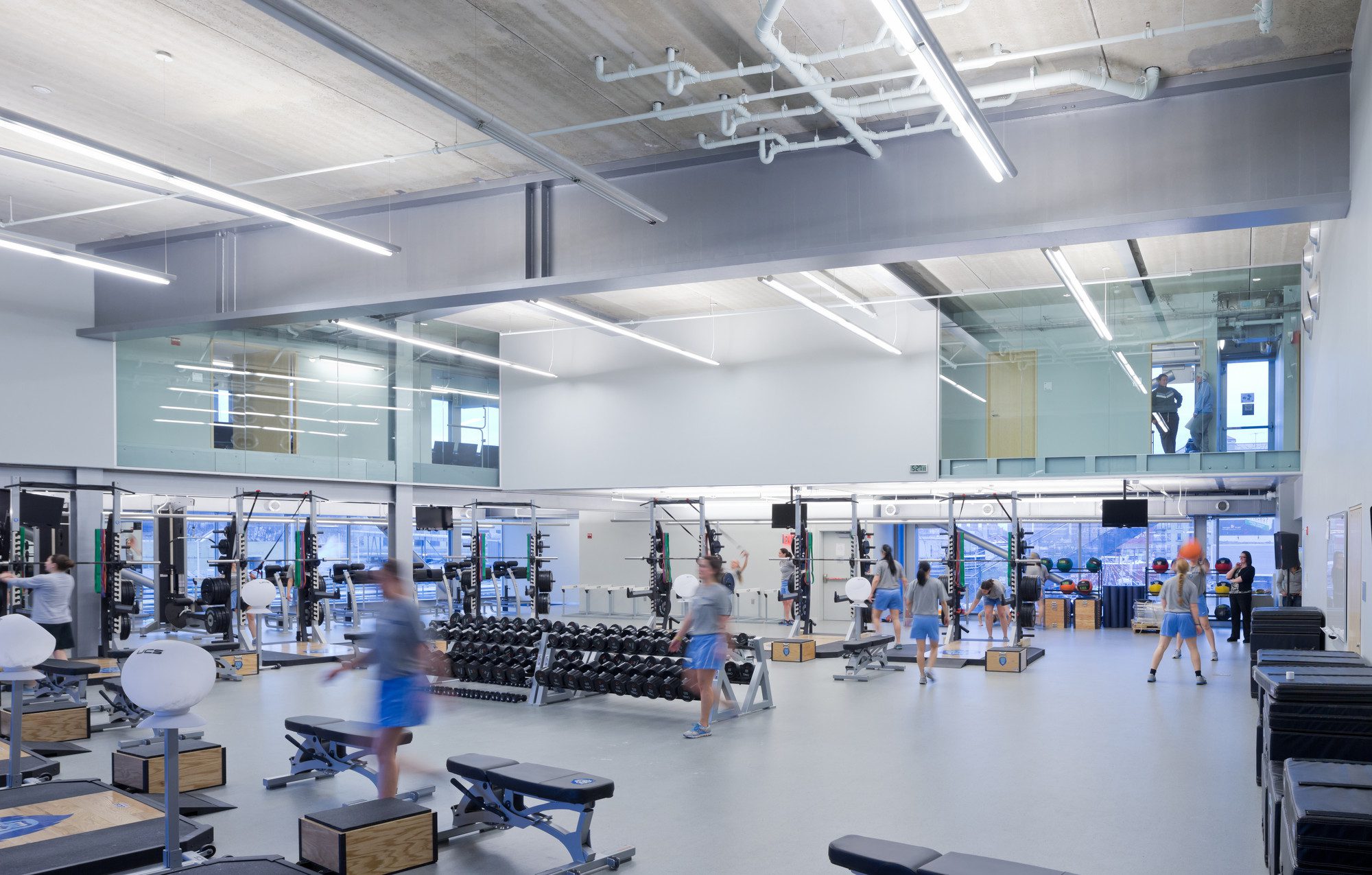
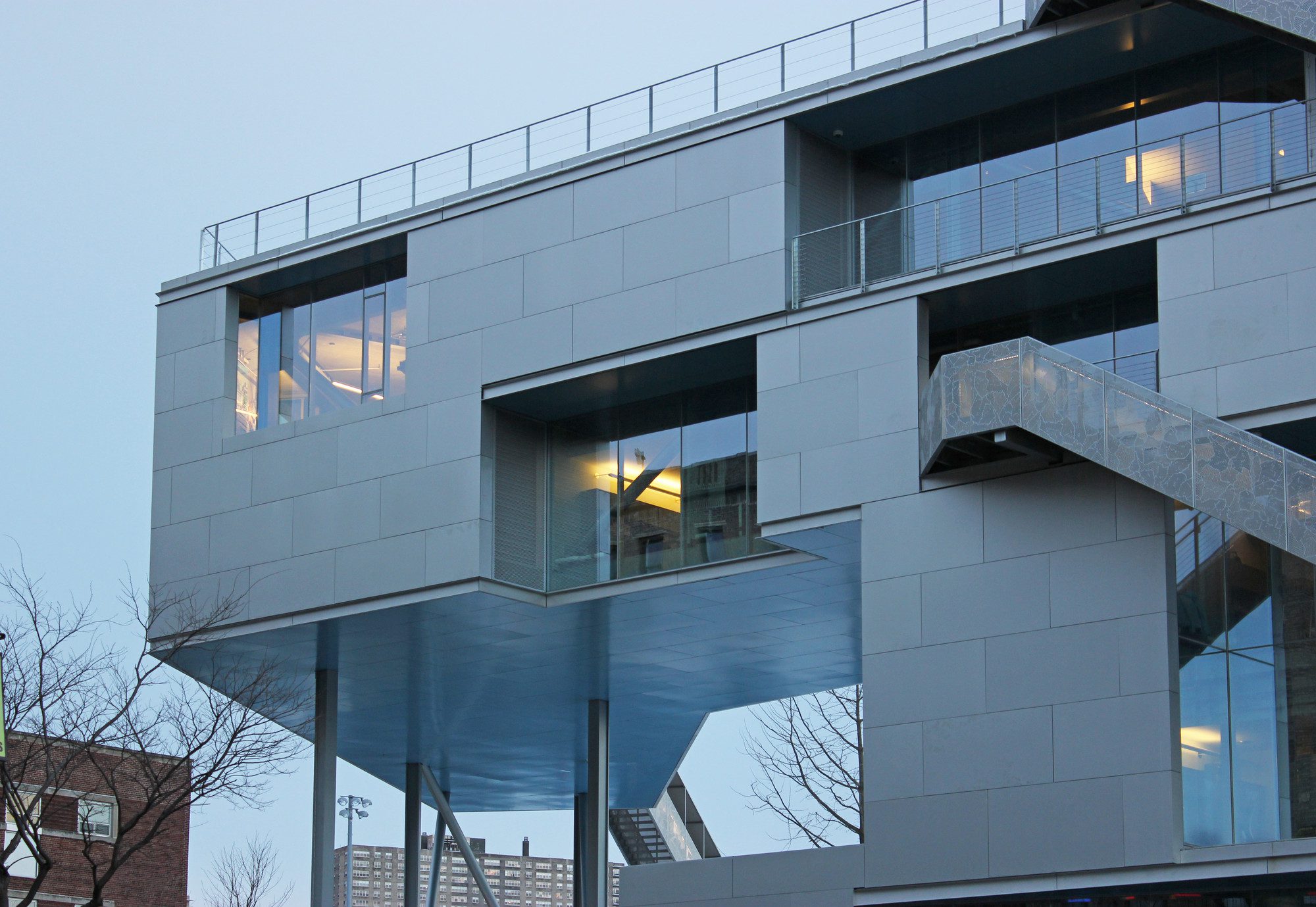
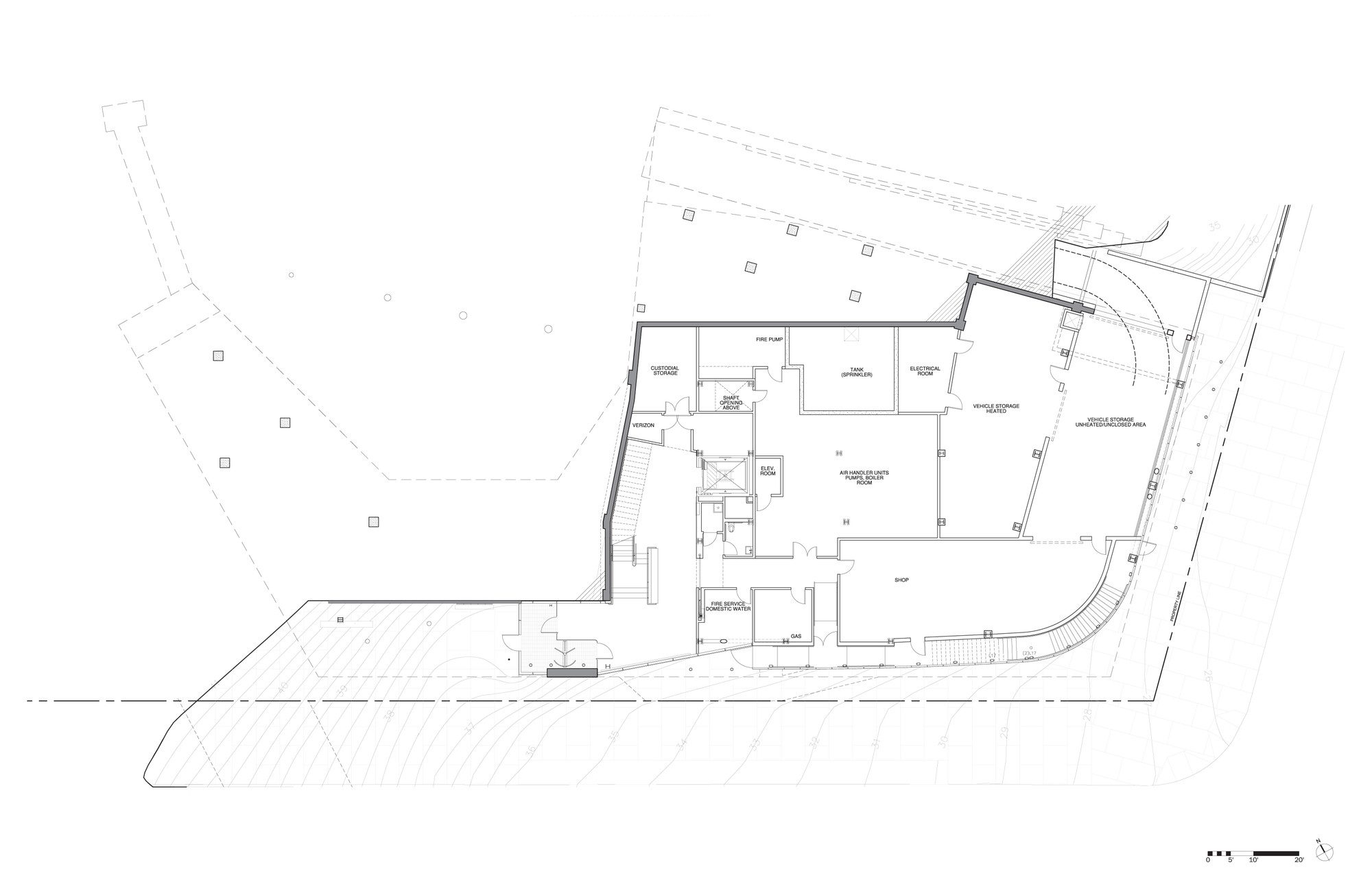
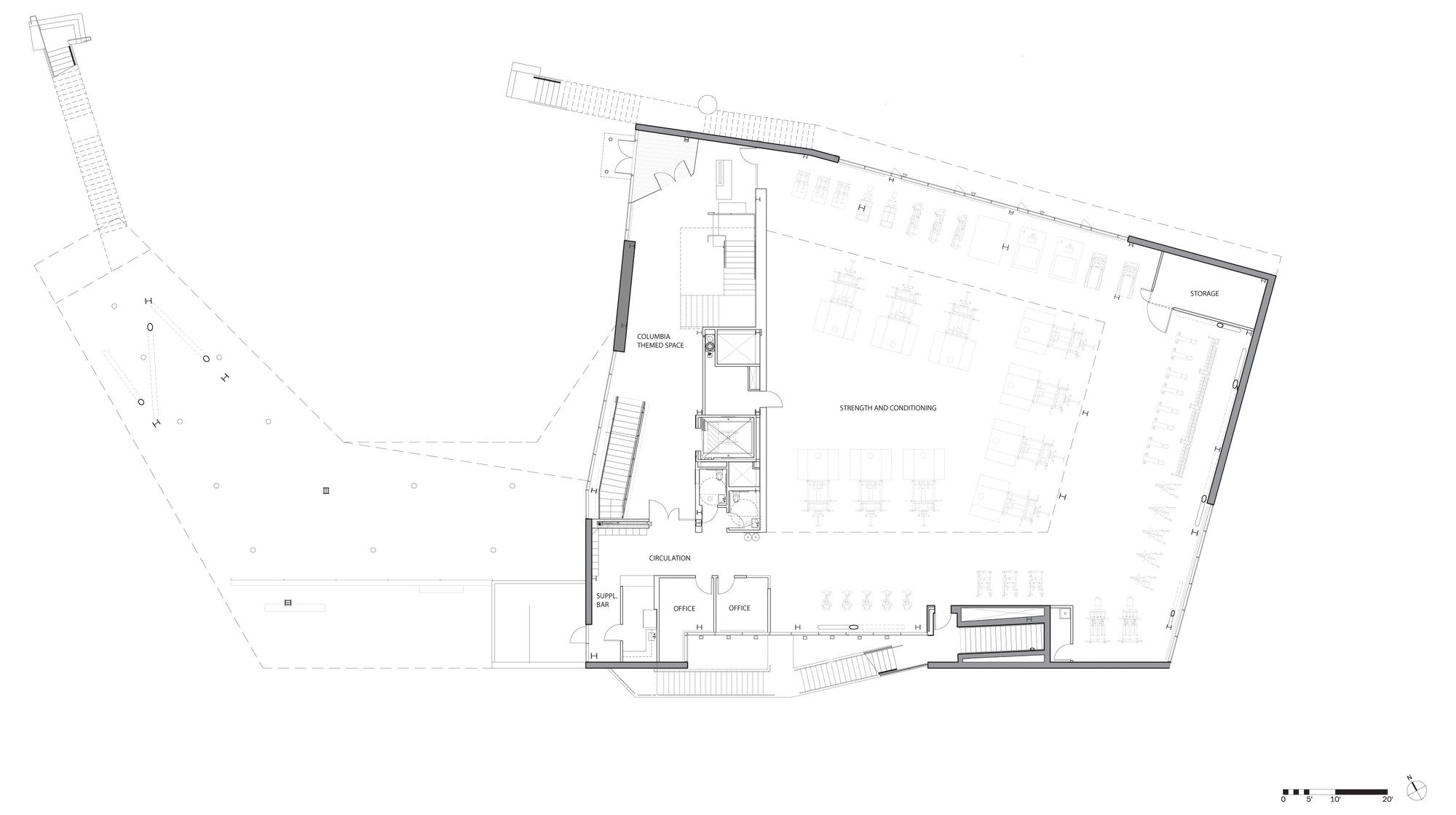
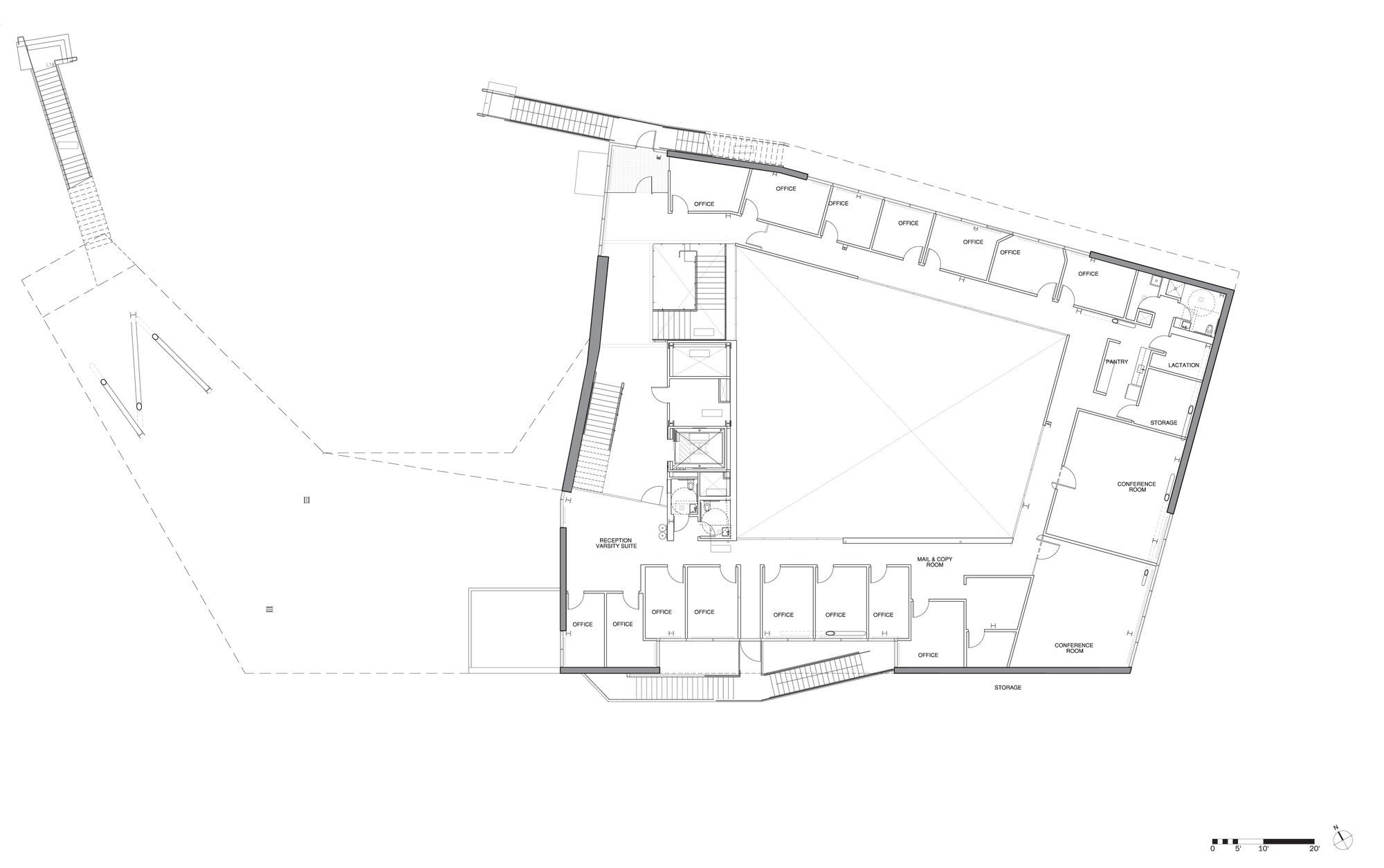
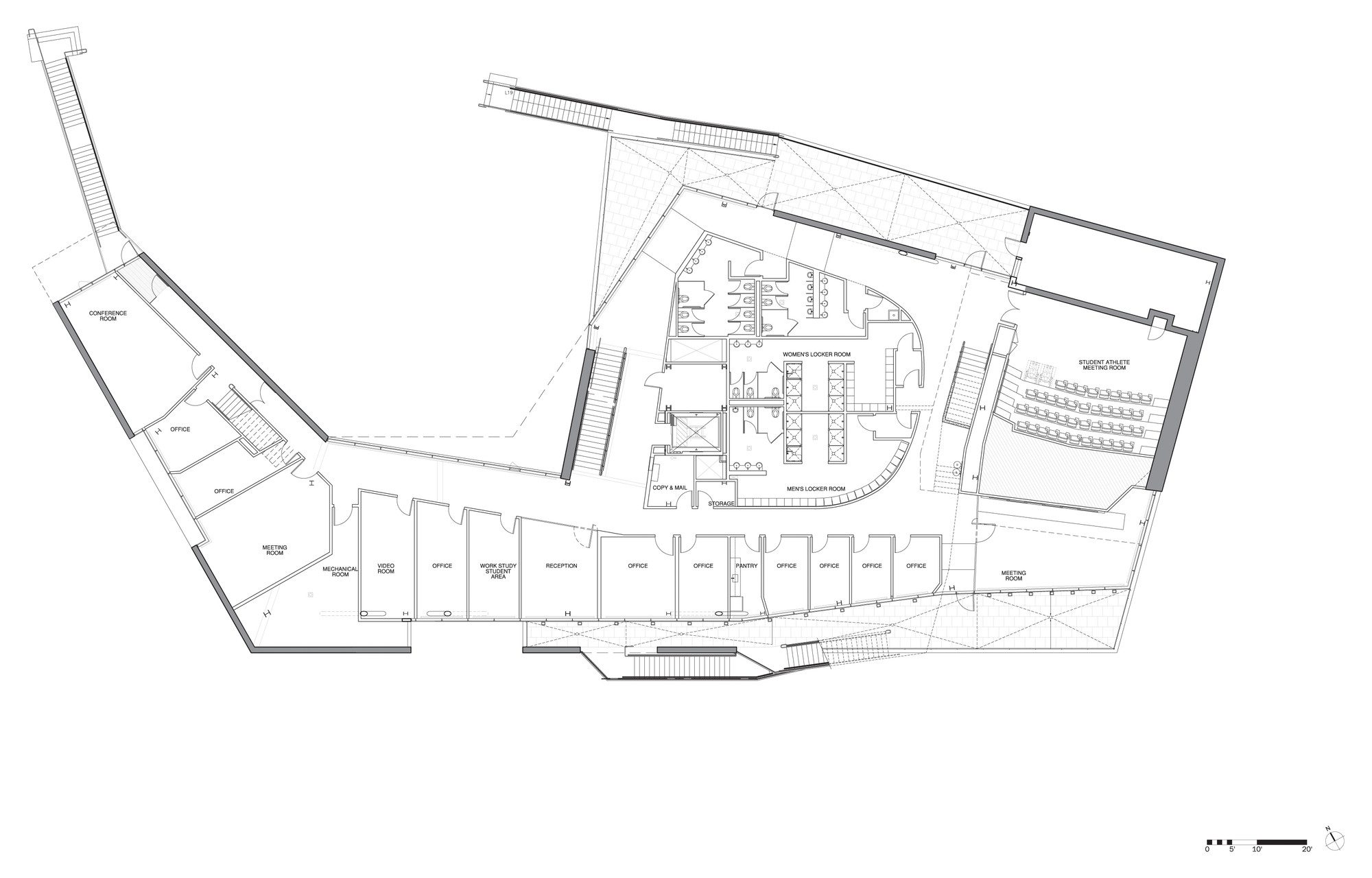
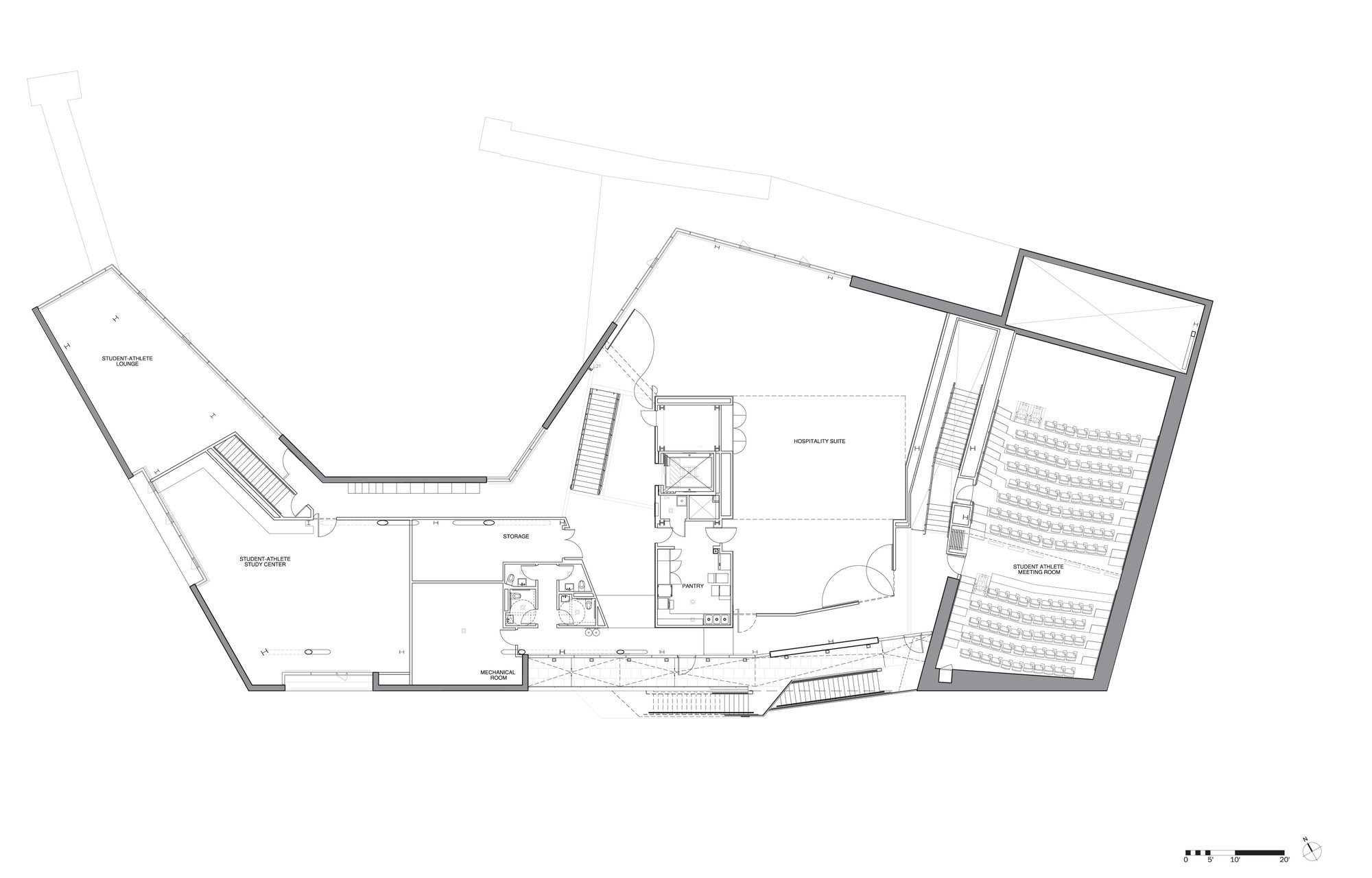
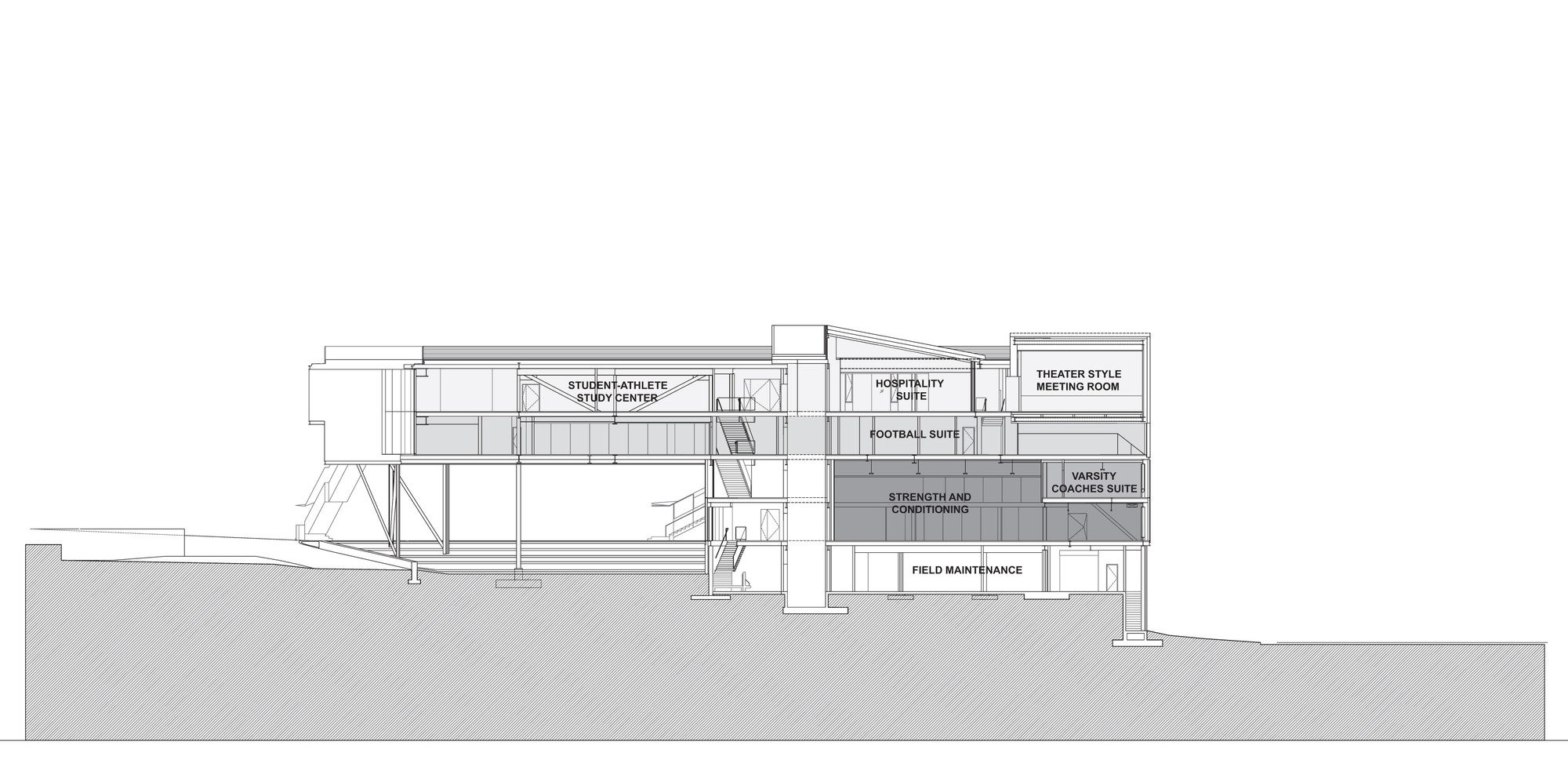
The first new athletics building to be constructed on Columbia University’s campus since the Marcellus Hartley Dodge Physical Fitness Center was built in the mid-1970s, the Campbell Sports Center will be the new cornerstone of the revitalized Baker Athletics Complex and provides increased program space for the entire intercollegiate athletics program. The facility, which adds approximately 48,000 square foot of space, houses strength and conditioning spaces, offices for varsity sports, theater-style meeting rooms, a hospitality suite and student-athlete study rooms.
© Iwan Baan
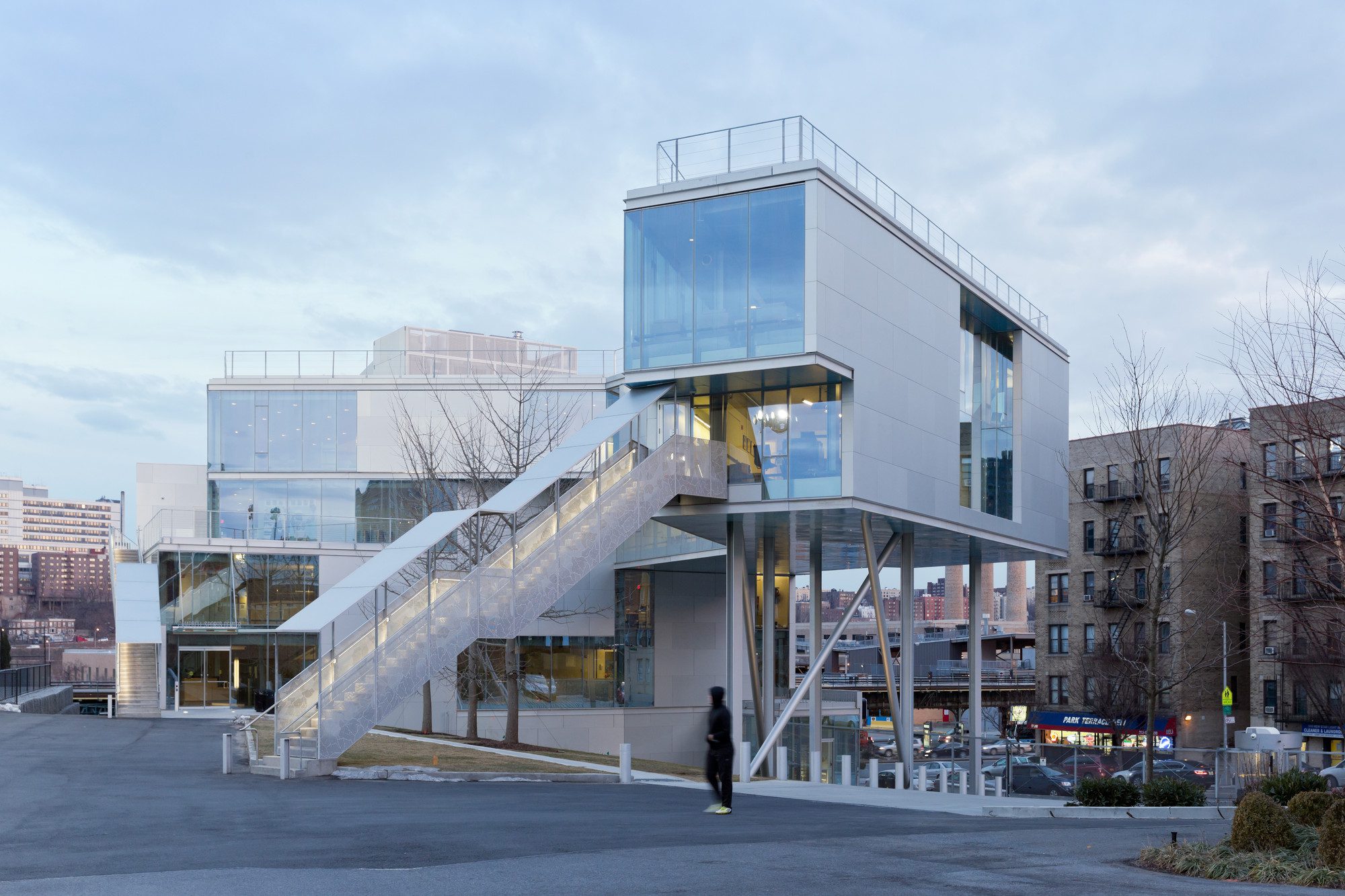
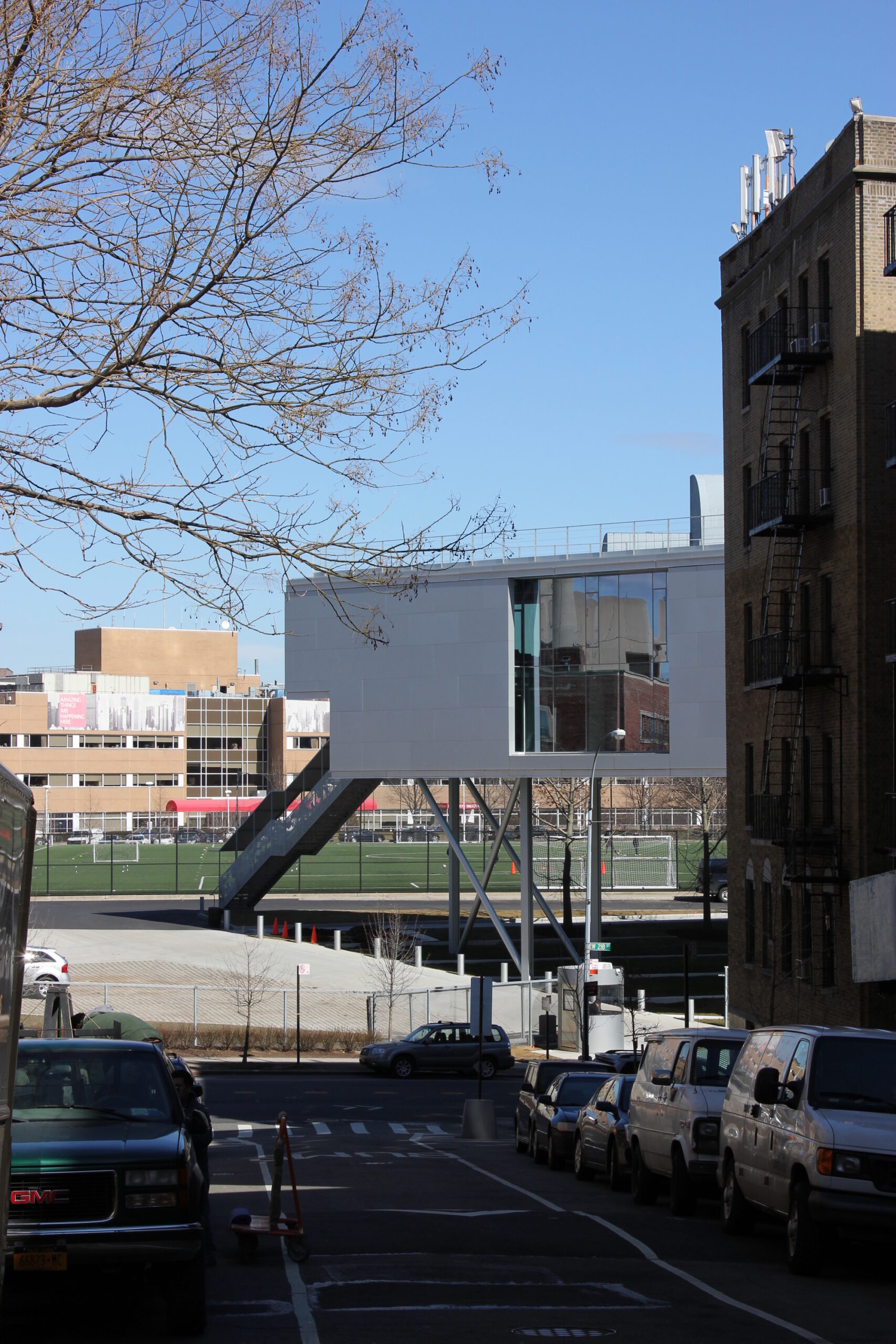
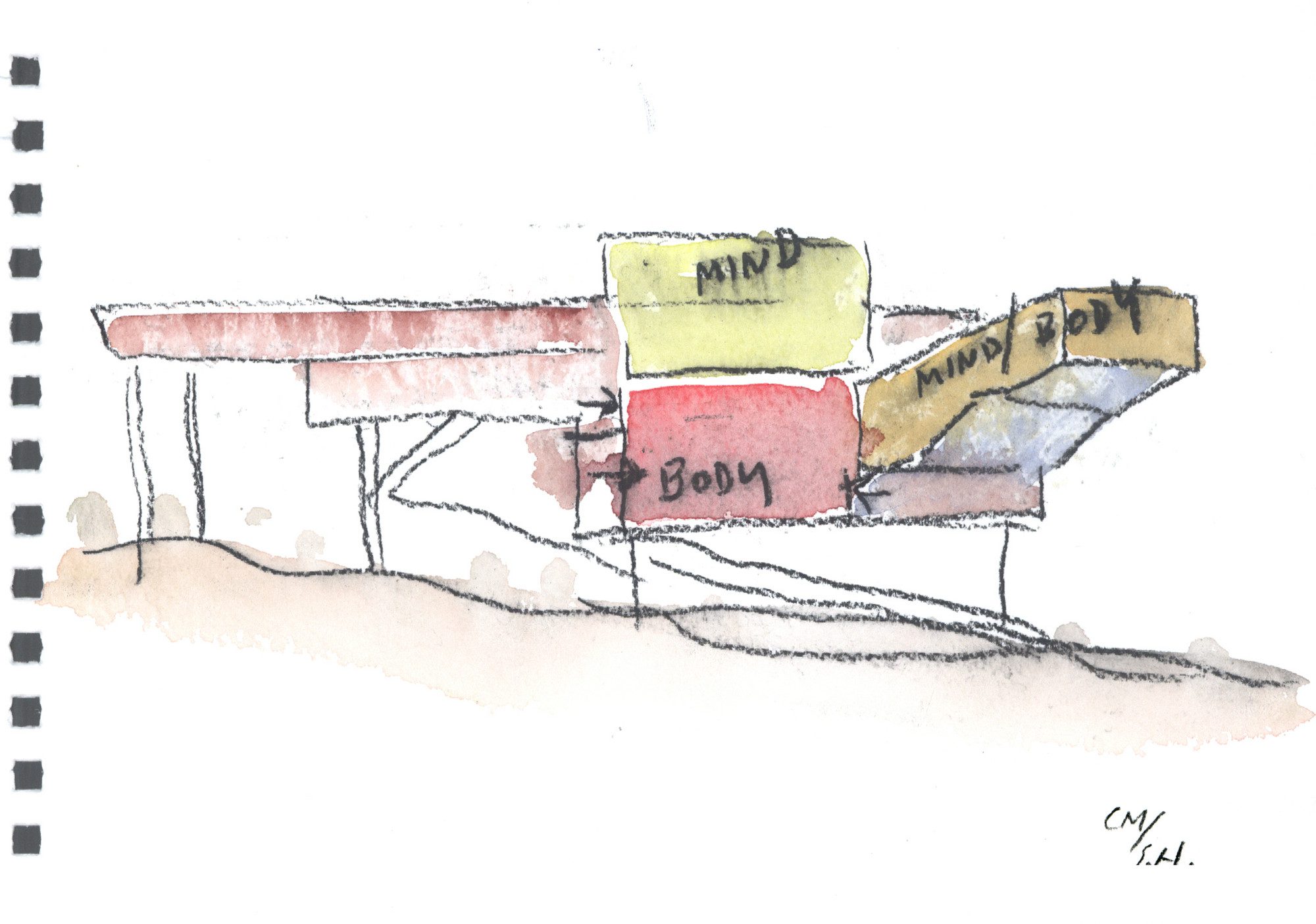
The Campbell Sports Center aims at serving the mind, the body and the mind/body for aspiring scholar-athletes. The design concept “points on the ground, lines in space”—like field play diagrams used for football, soccer, and baseball—develops from point foundations on the sloping site. Just as points and lines in diagrams yield the physical push and pull on the field, the building’s elevations push and pull in space.
© Chris McVoy
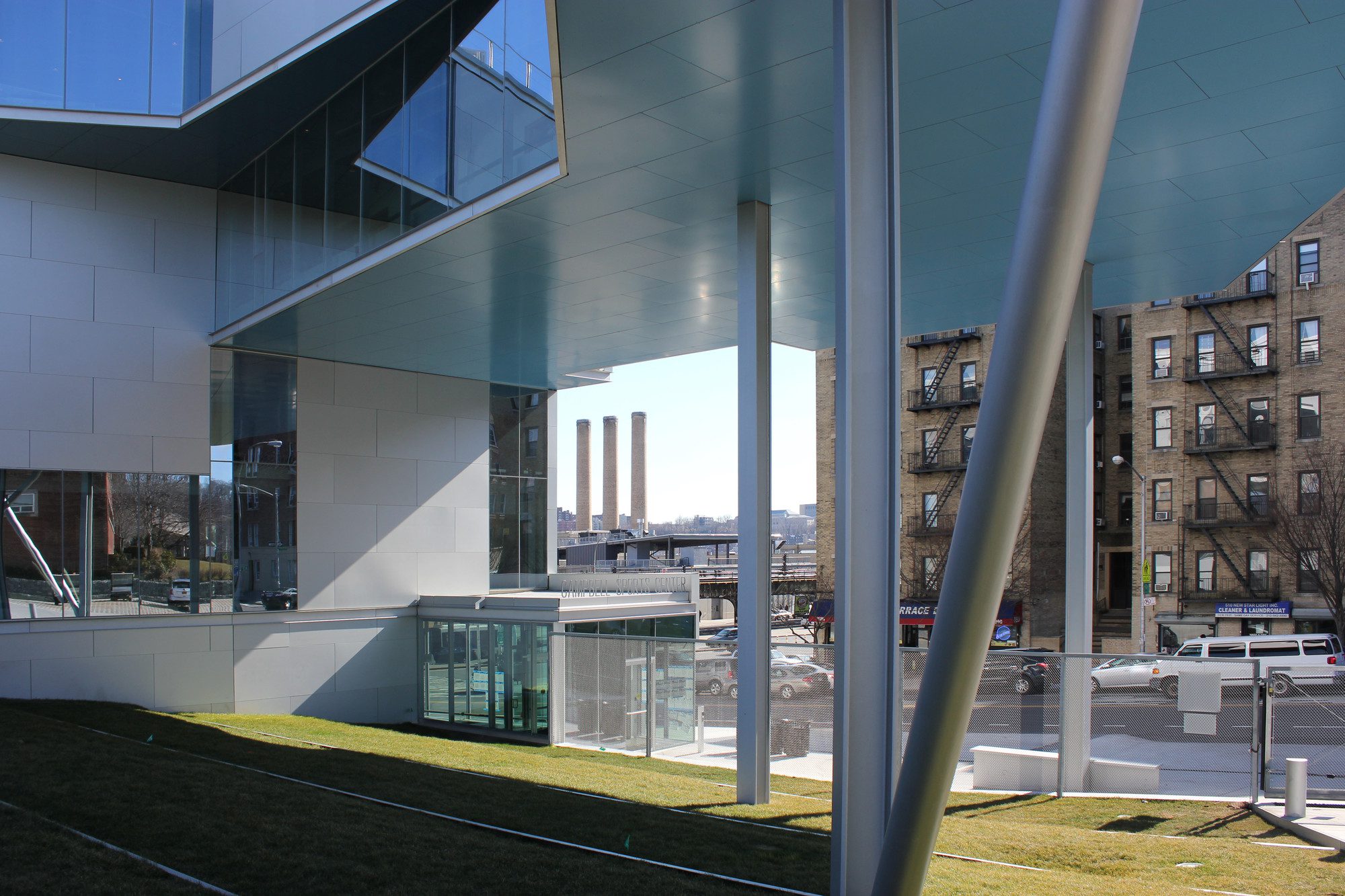
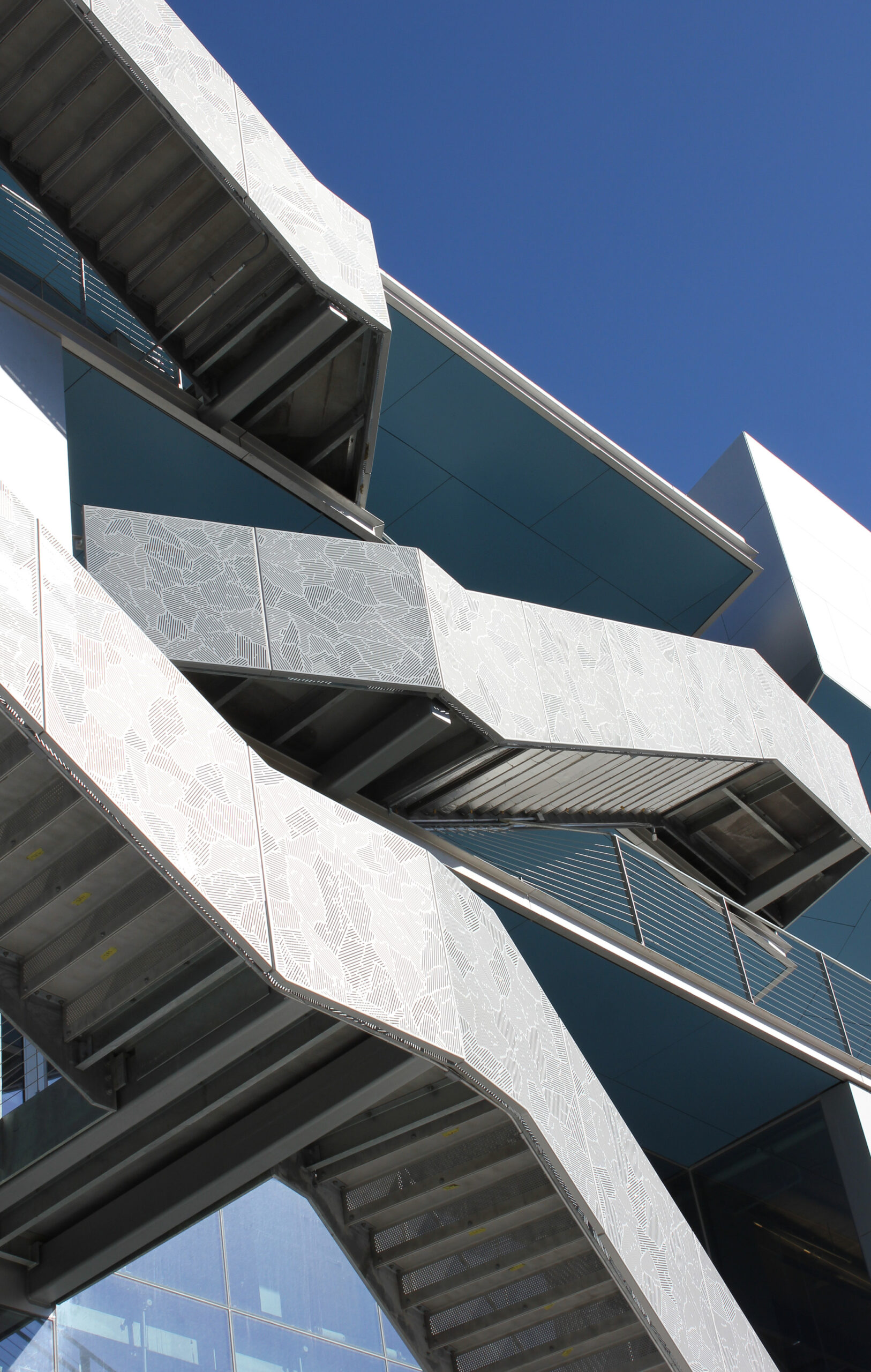
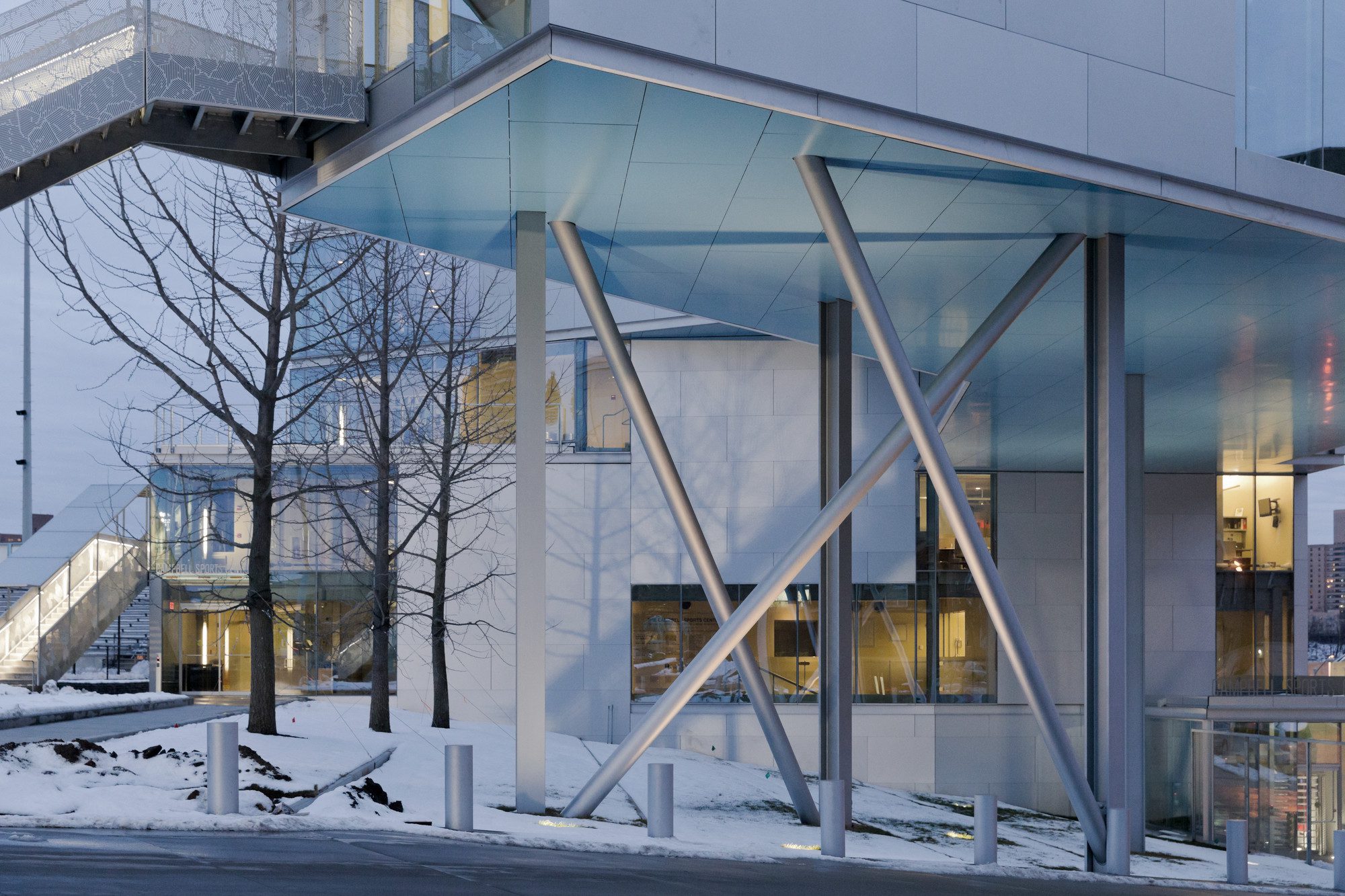
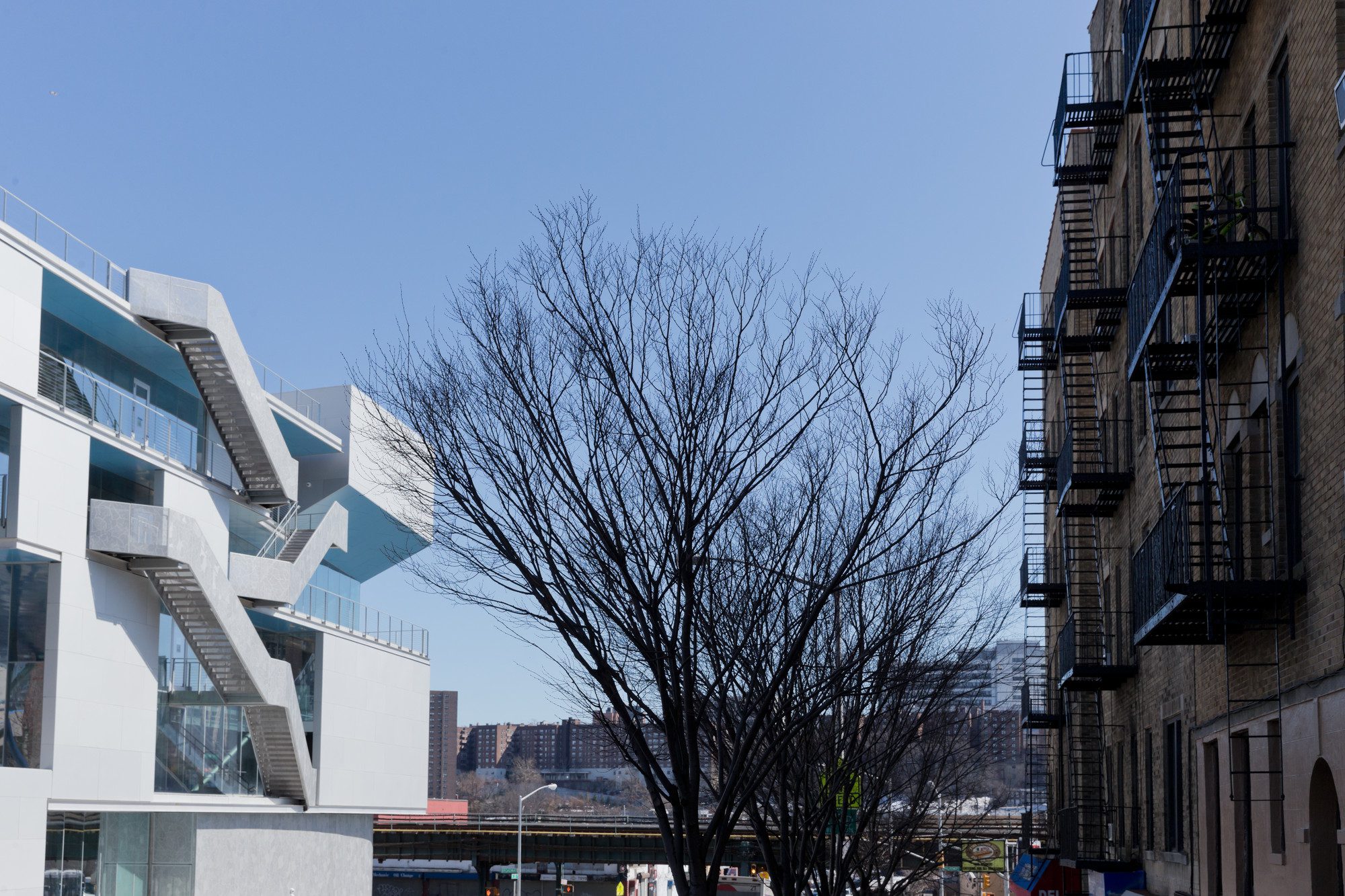
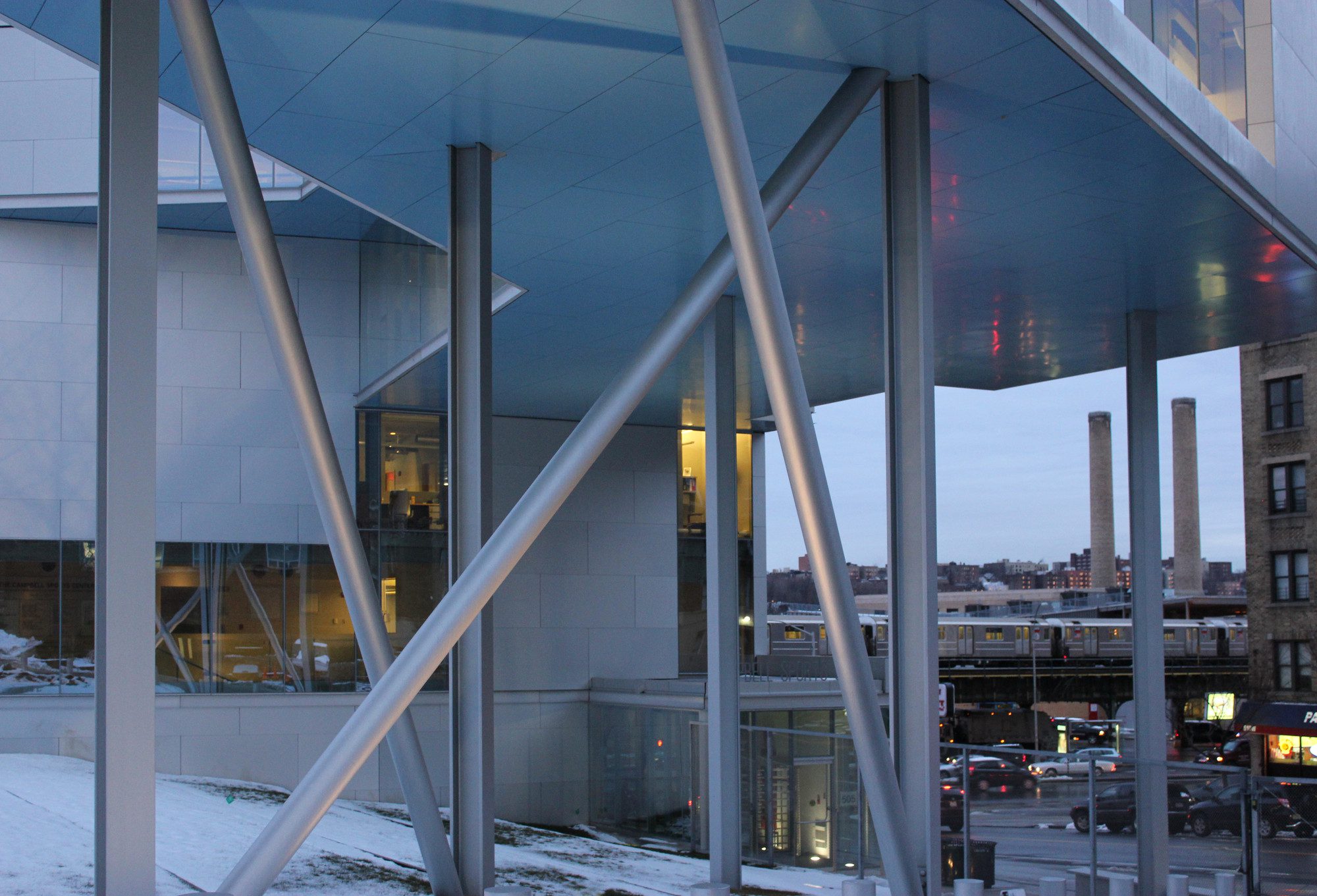
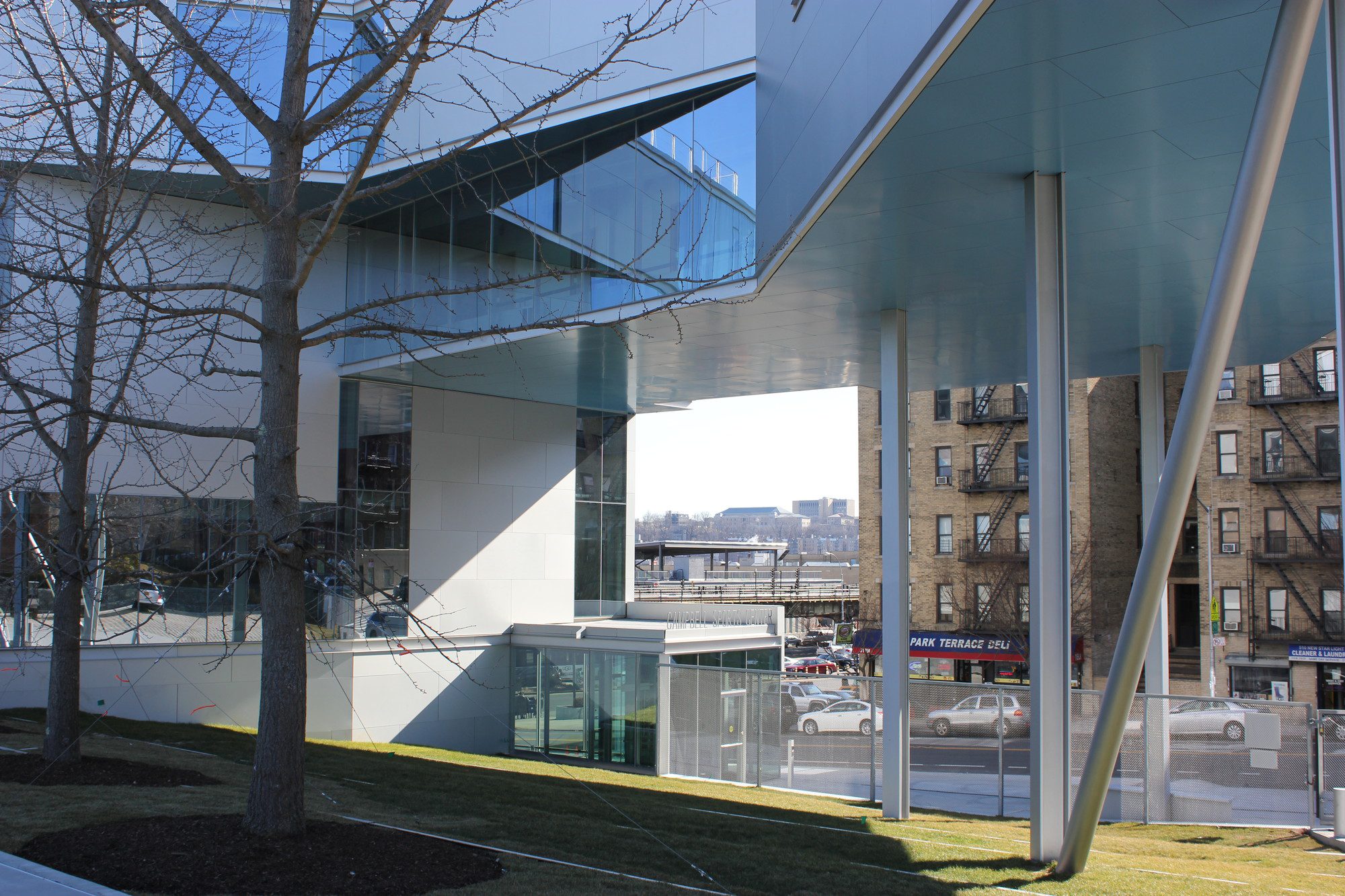
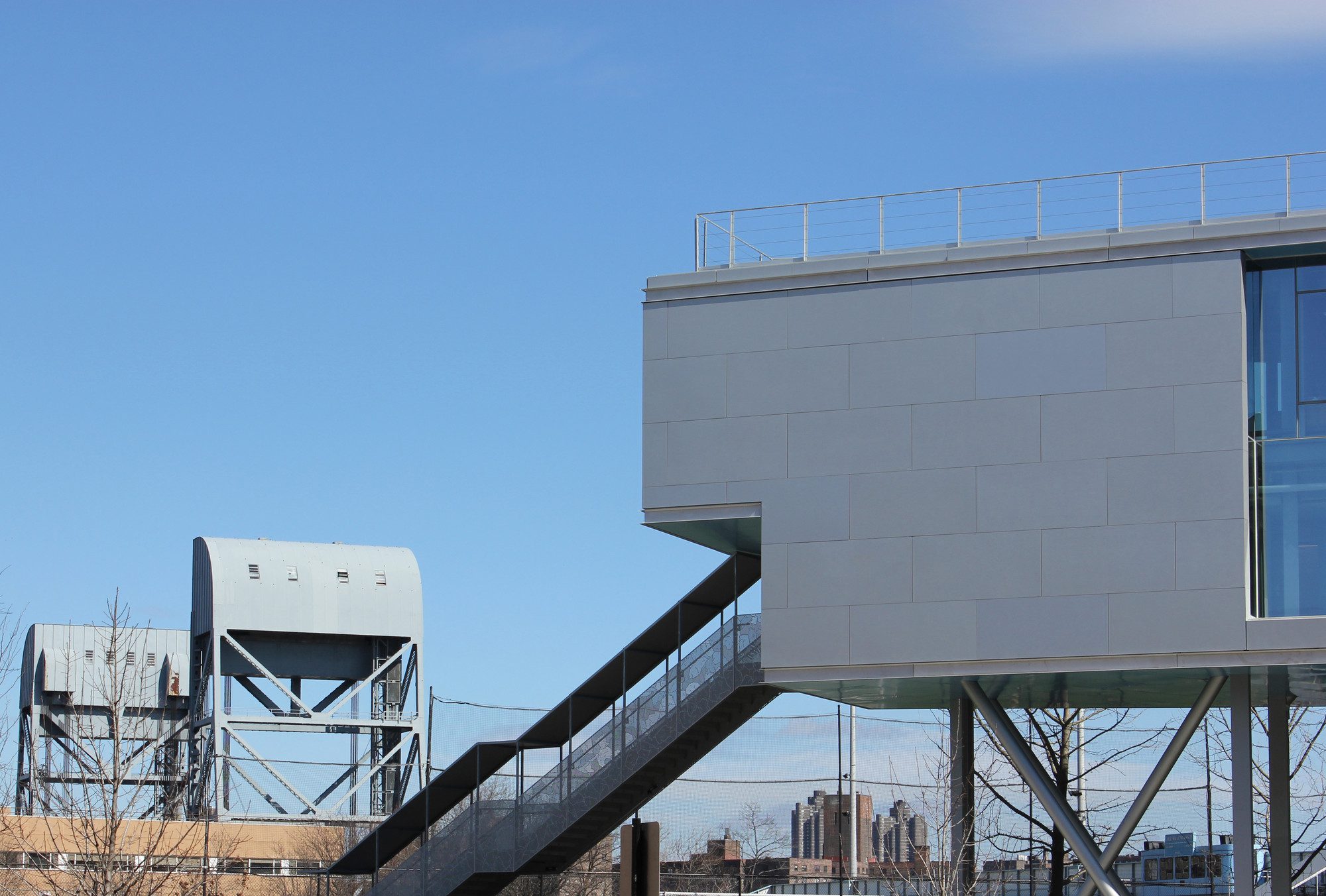
The building shapes an urban corner on Broadway and 218th street, then lifts up to form a portal, connecting the playing field with the streetscape. Extending over a stepped landscape, blue soffits heighten the openness of the urban scale portico to the Baker Athletics Complex. Terraces and external stairs, which serve as “lines in space,” draw the field play onto and into the building and give views from the upper levels over the field and Manhattan.
© Chris McVoy
With an exposed concrete and steel structure and a sanded aluminum facade, the building connects back to Baker Field’s unique history. In 1693, The Kings Bridge, which spanned the Spuyten Duyvil Creek, was the main access rout into Manhattan. The current infrastructure of the Broadway Bridge carries the elevated subway, and Broadway, with a lift capacity of hundreds of tons. Its detail and structure are reflected in the Campbell Sports Center.
Project Info
Architects: Steven Holl Architects
Country: United States, New York
Area: 4459 m²
Year: 2013
Photographs: Chris McVoy
Design Architects: Steven Holl, Chris McVoy
Partner In Charge: Chris McVoy
Associate In Charge: Olaf Schmidt
Project Team: Marcus Carter, Christiane Deptolla, Peter Englaender, Runar Halldorsson, Jackie Luk, Filipe Taboada, Dimitra Tsachrelia, Ebbie Wisecarver
Curtain Wall Consultant: W.J. Higgins
Code Consultant: Design 2147
Cost: Davis Langdon
Specifications: Construction Specifications Inc.
Precast Plank: Conewago
Steel: Weir Welding
Façade Fabrication: Architectural Wall Systems
Audio / Visual Consultant: The Clarient Group

Sophie Tremblay is a Montreal-based architectural editor and designer with a focus on sustainable urban development. A McGill University architecture graduate, she began her career in adaptive reuse, blending modern design with historical structures. As a Project Editor at Arch2O, she curates stories that connect traditional practice with forward-thinking design. Her writing highlights architecture's role in community engagement and social impact. Sophie has contributed to Canadian Architect and continues to collaborate with local studios on community-driven projects throughout Quebec, maintaining a hands-on approach that informs both her design sensibility and editorial perspective.