

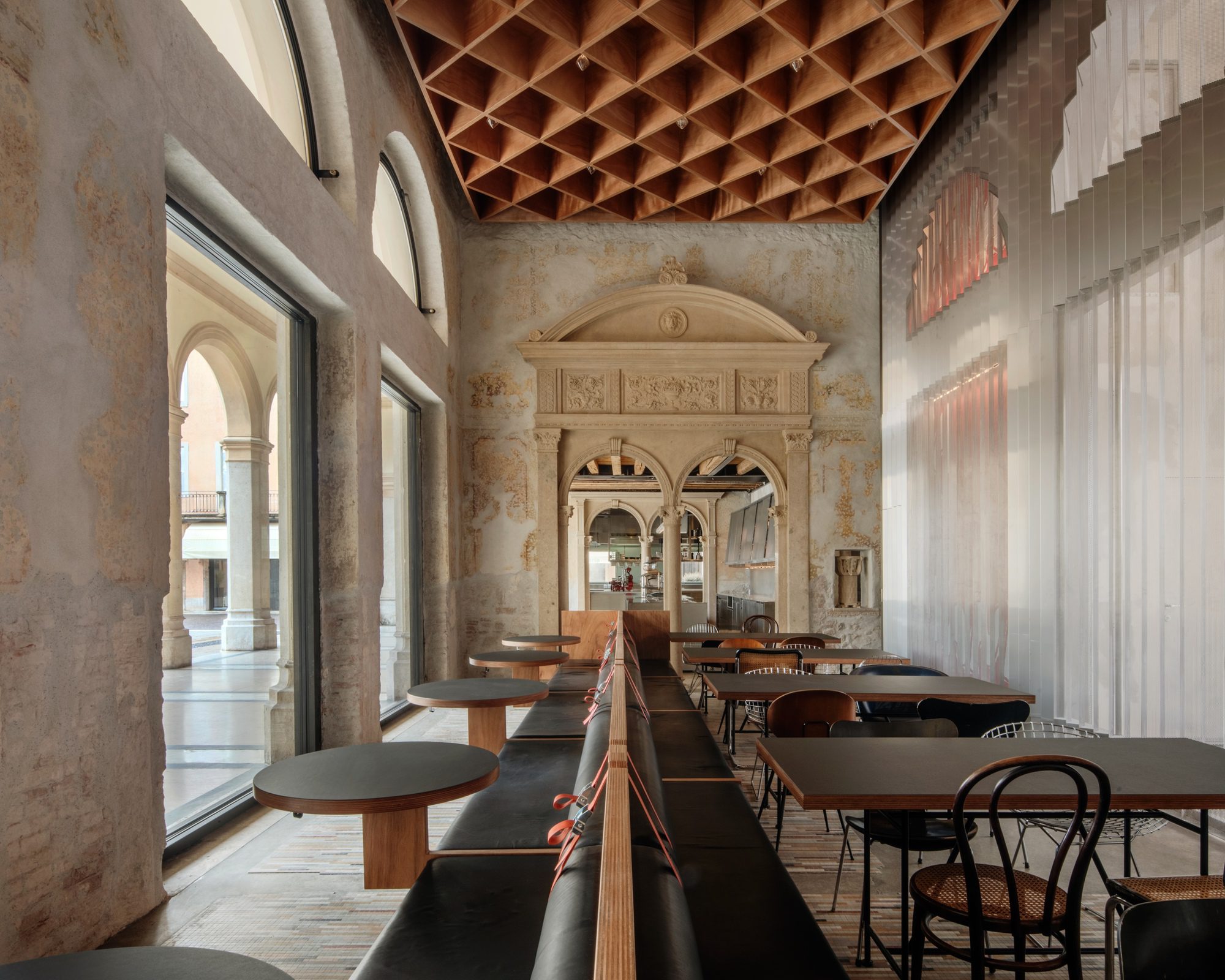
The Caffè Nazionale, designed by AMAA, embraces the city: the restoration of this historic venue in Arzignano, Northern Italy, is a multifaceted project that draws upon existing elements and memories to create a vibrant, living palimpsest. AMAA designed the Caffè Nazionale by establishing a direct relationship with the city of Arzignano, Italy, and its public spaces. The historical traces, with which the project engages in a deeply creative dialogue, generate a layered depth that AMAA has emphasized through a series of spatial elements acting as theatrical backdrops. The studio, founded by Marcello Galiotto and Alessandra Rampazzo, envisioned an intense, collaborative intervention, with artist partnerships culminating in an open and multifaceted creation.
© Mikael Olsson
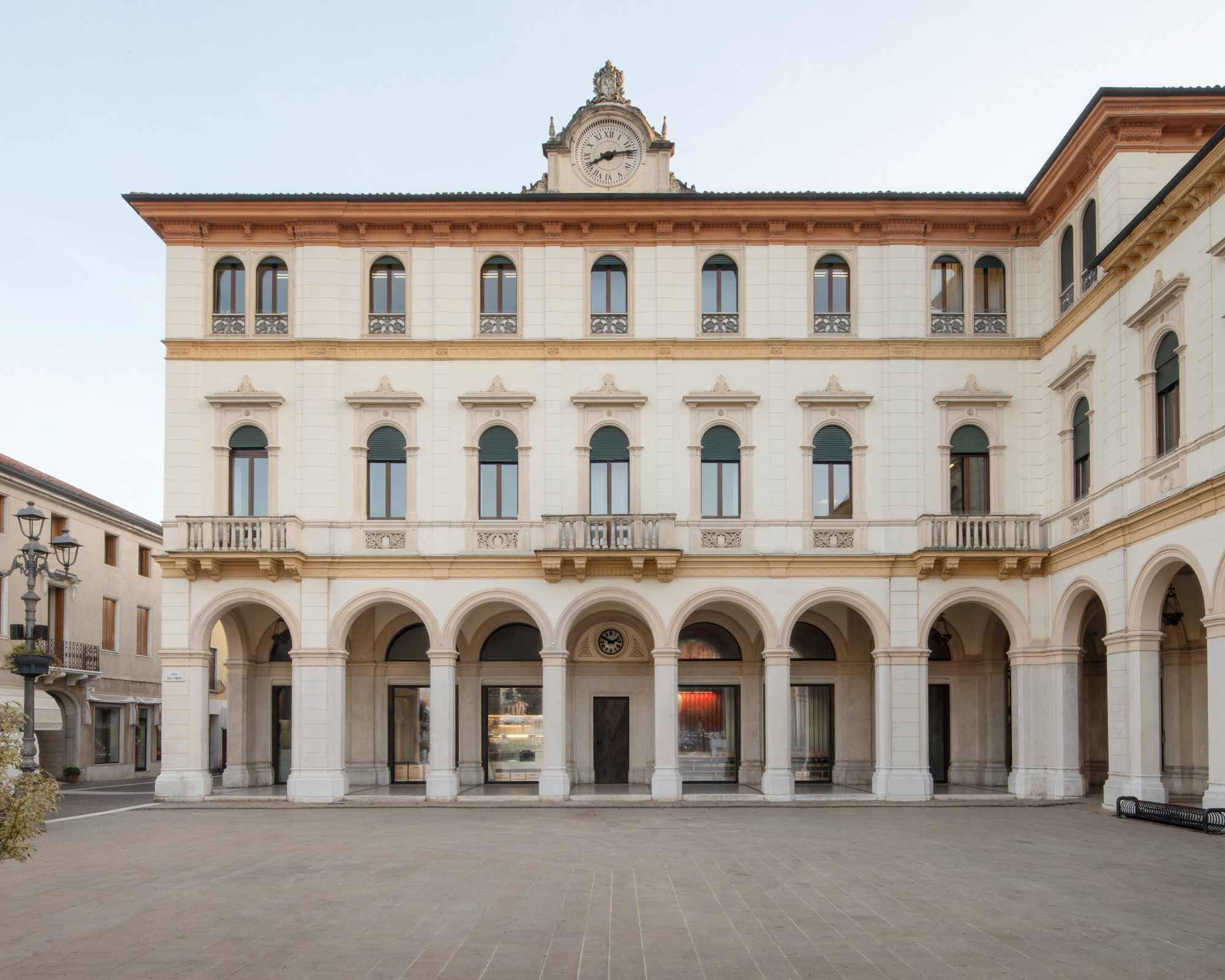
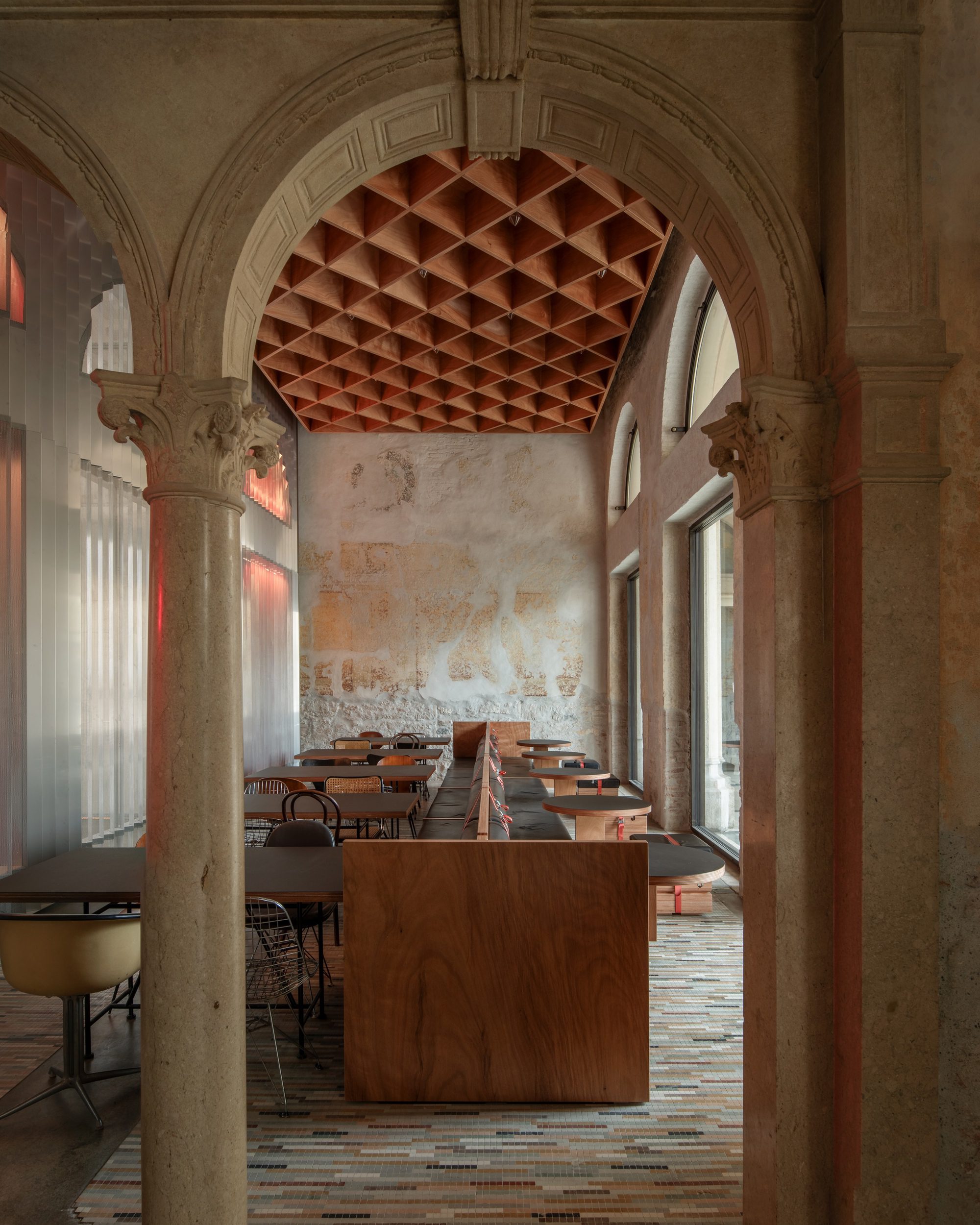
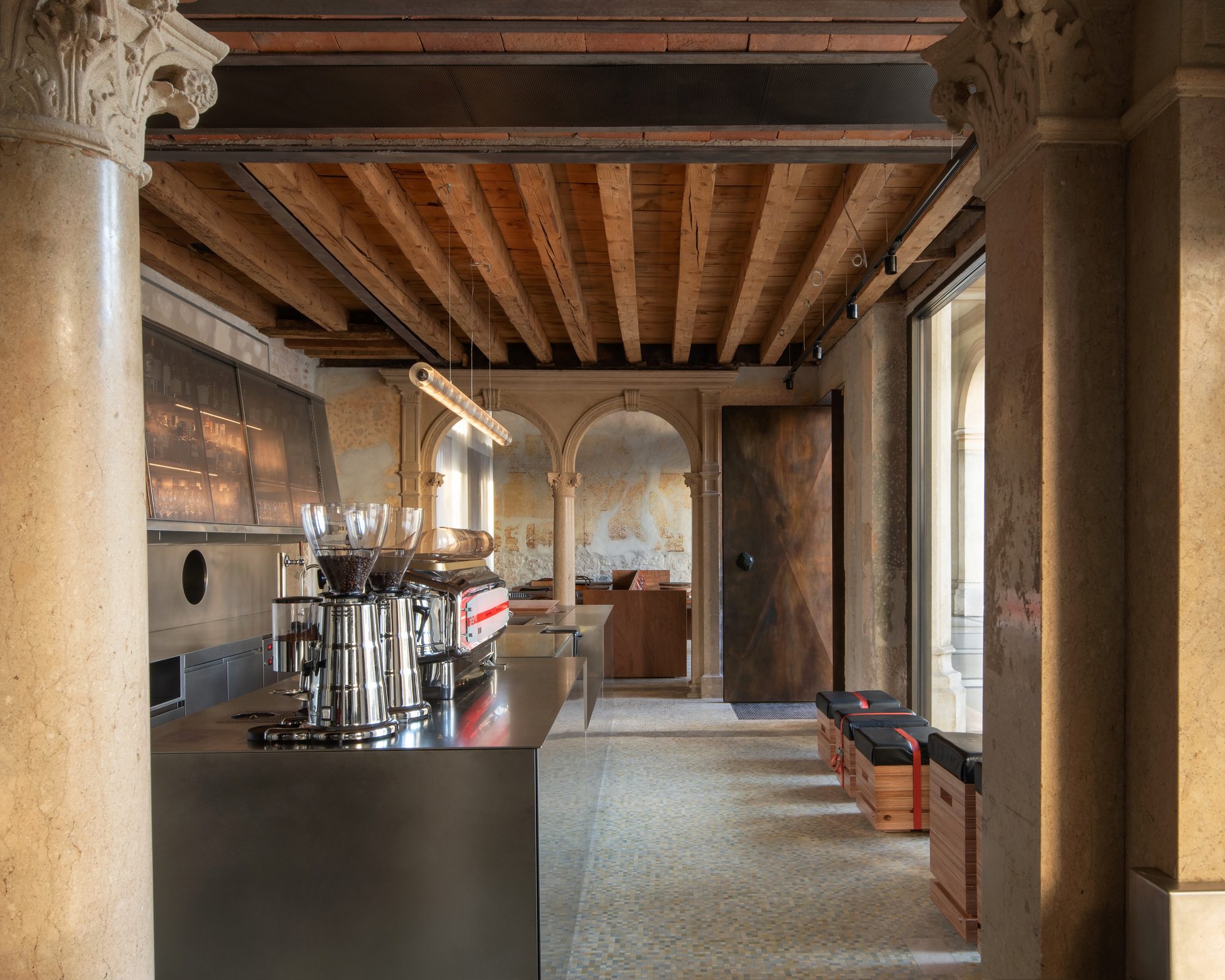
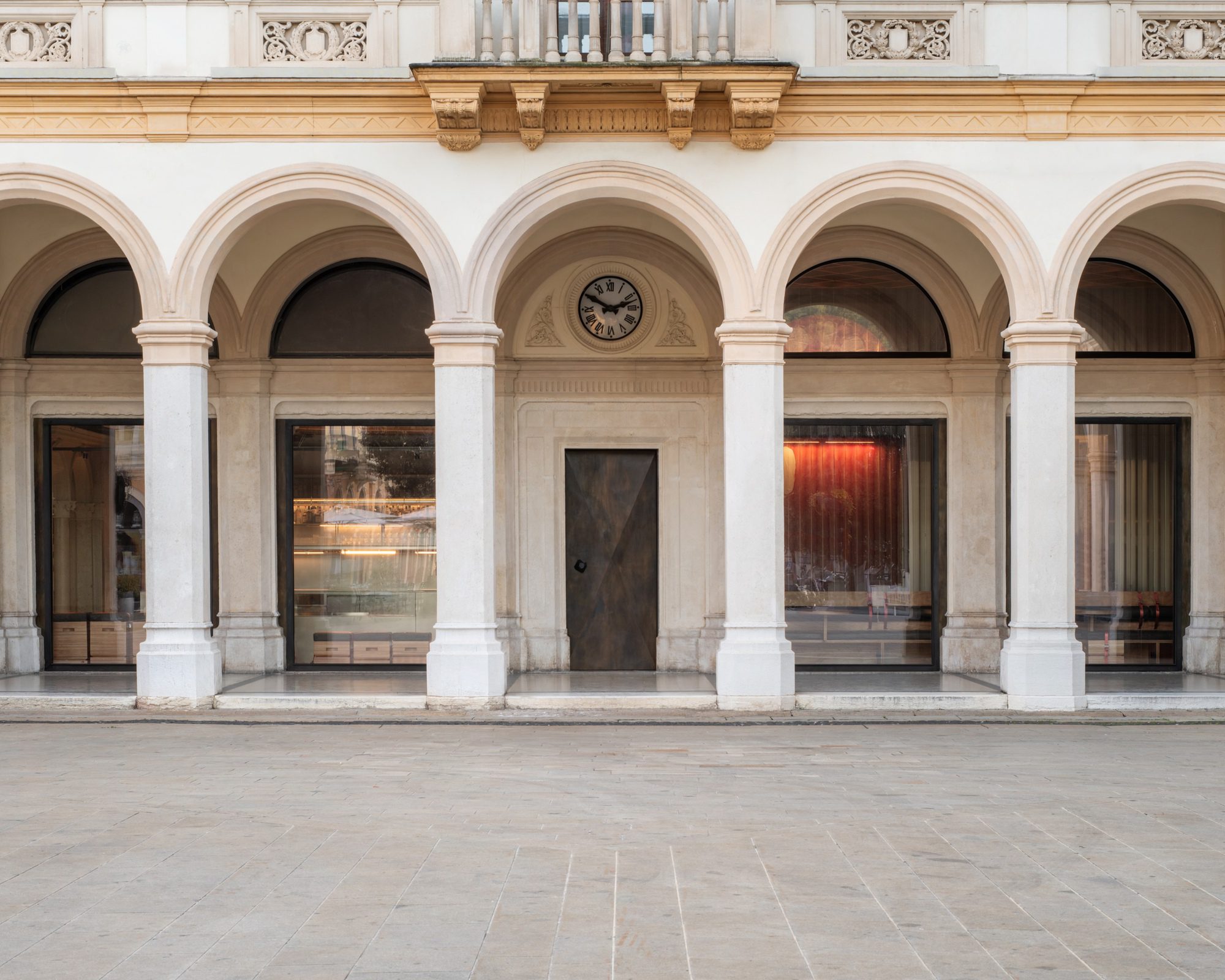
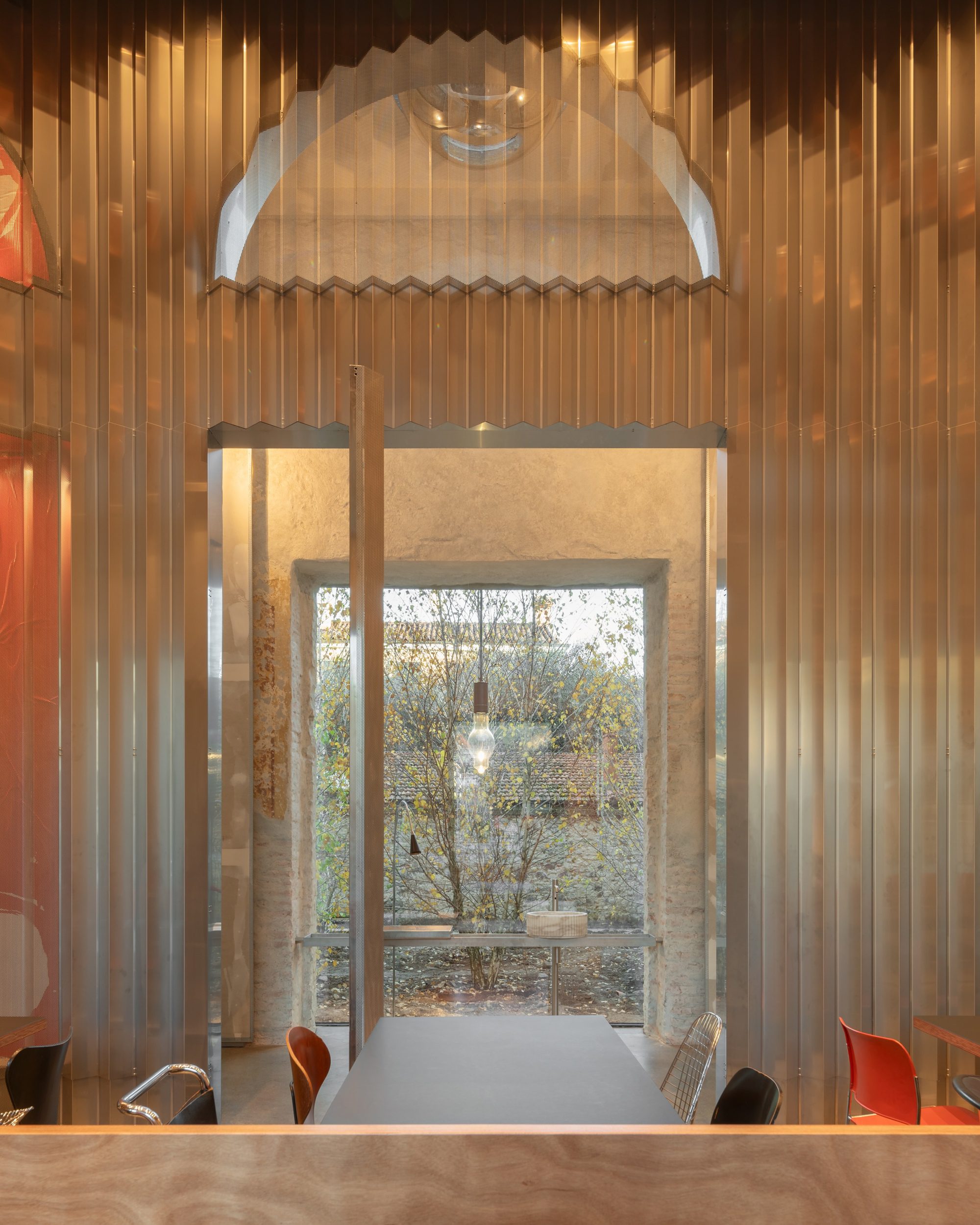
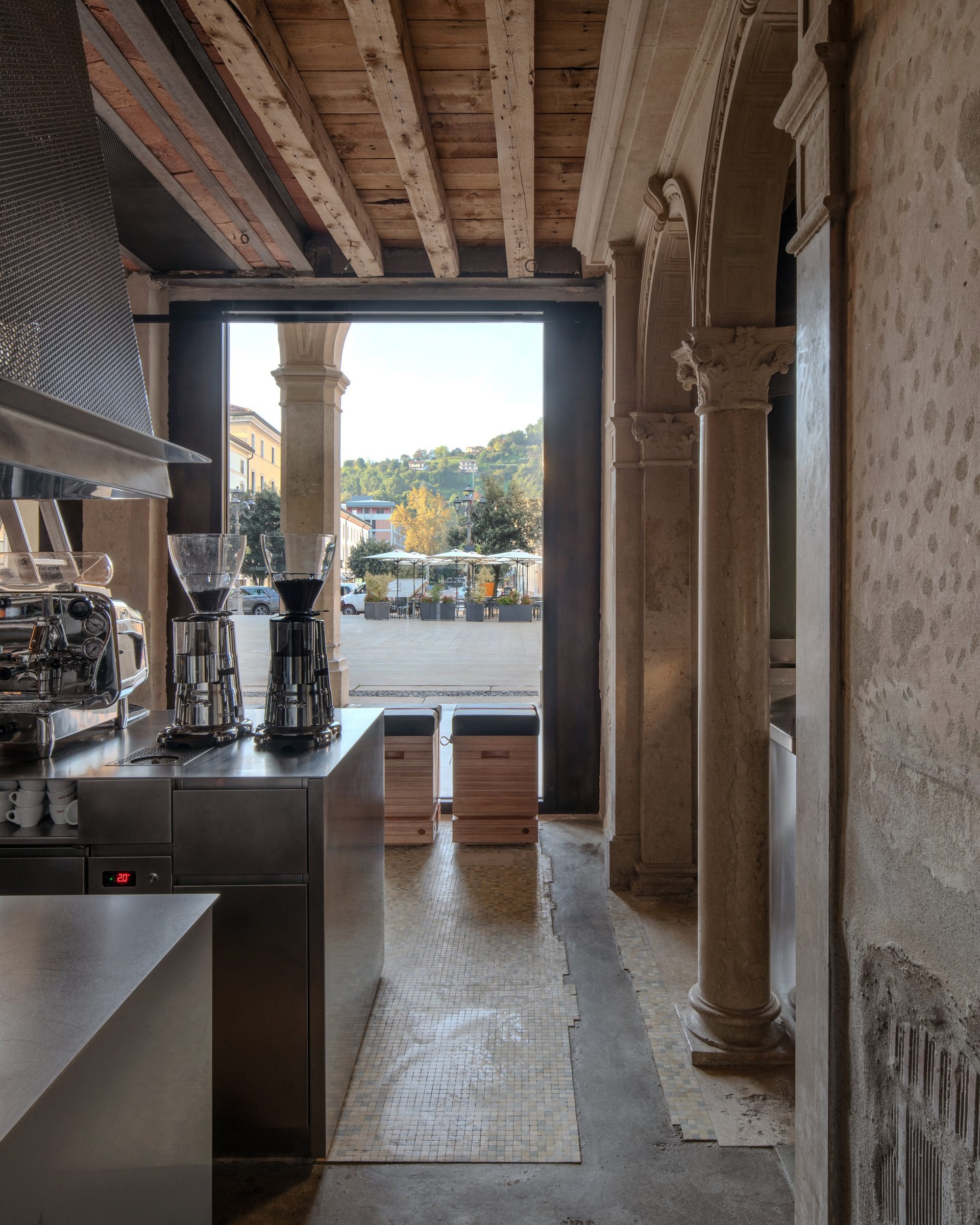
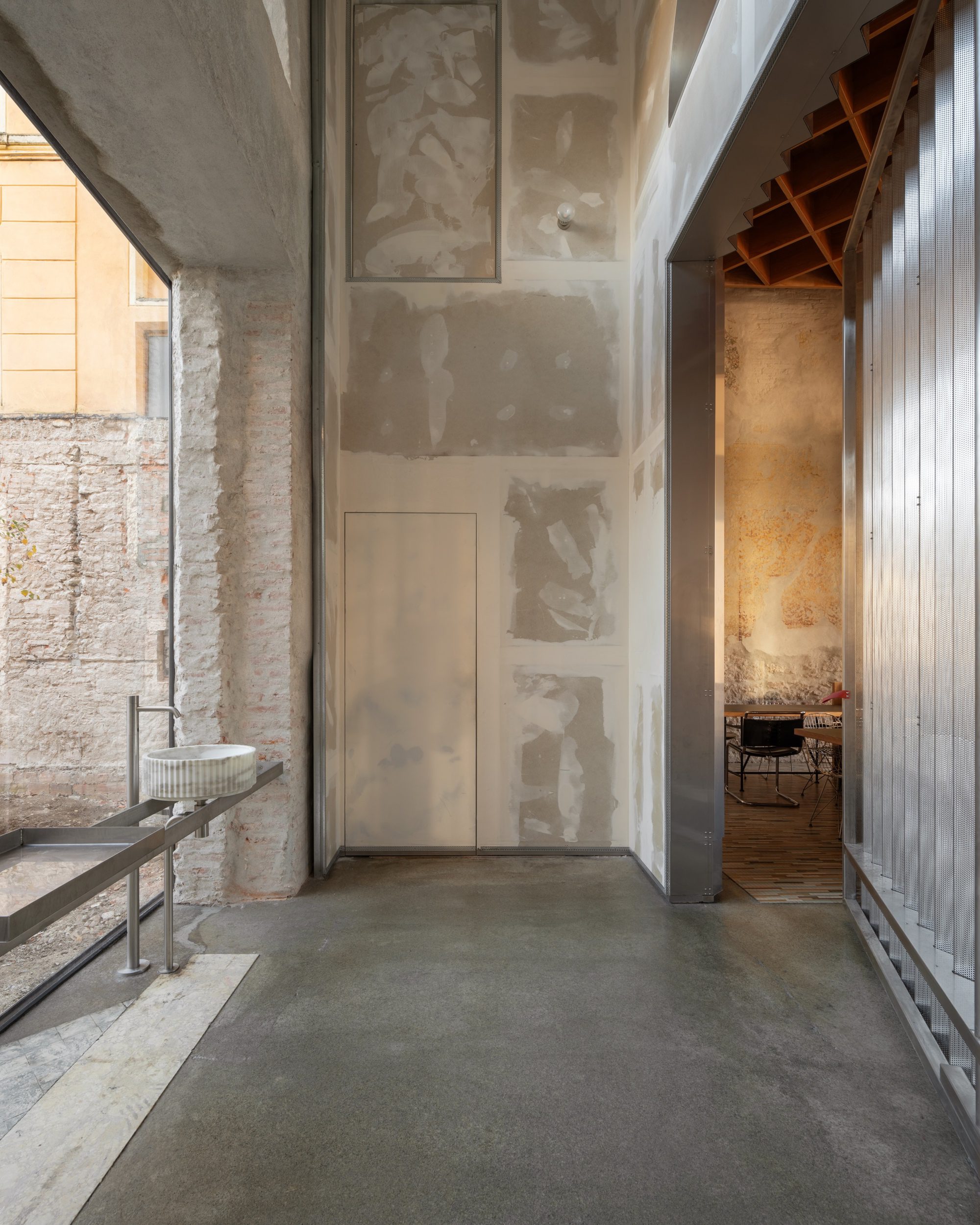
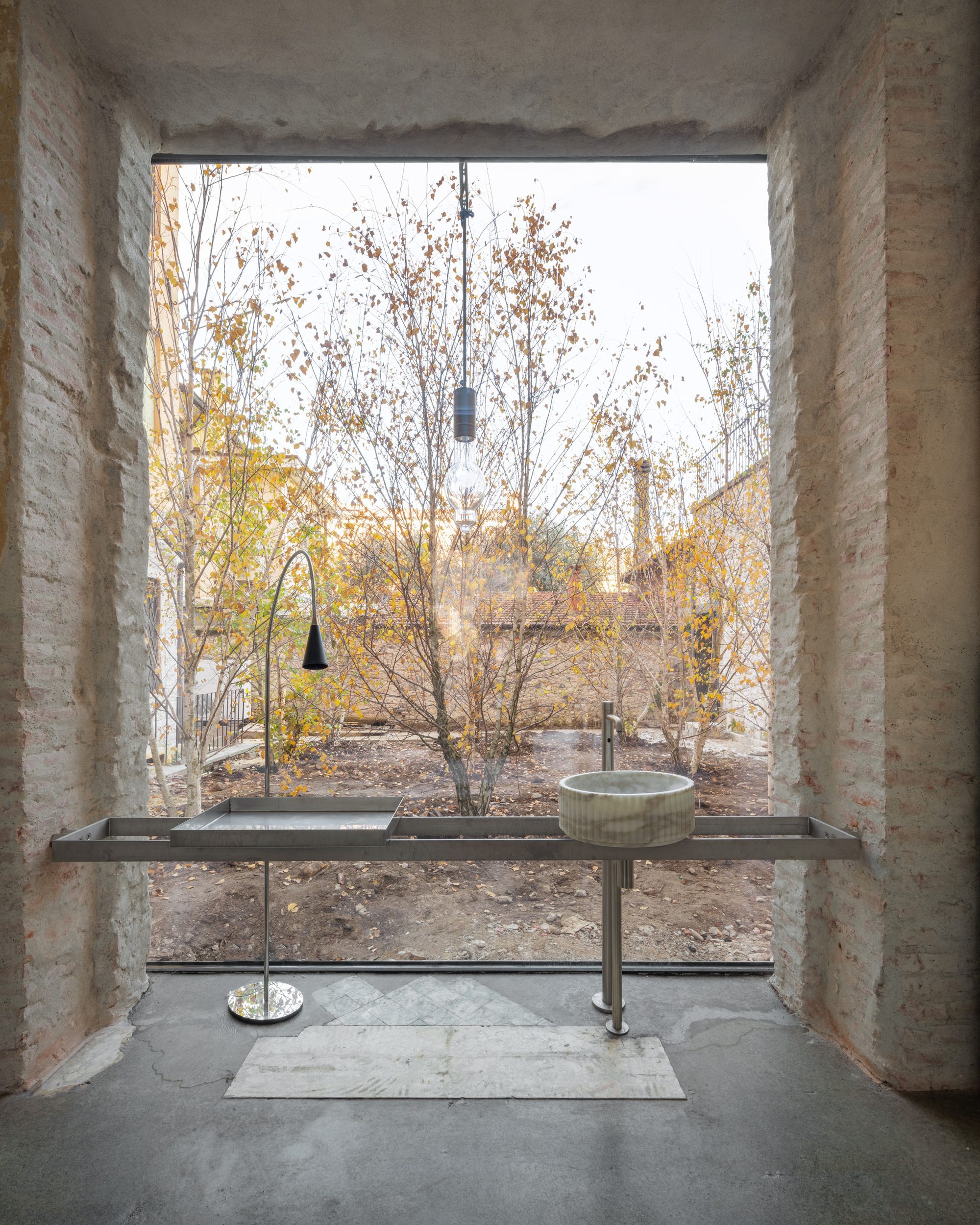
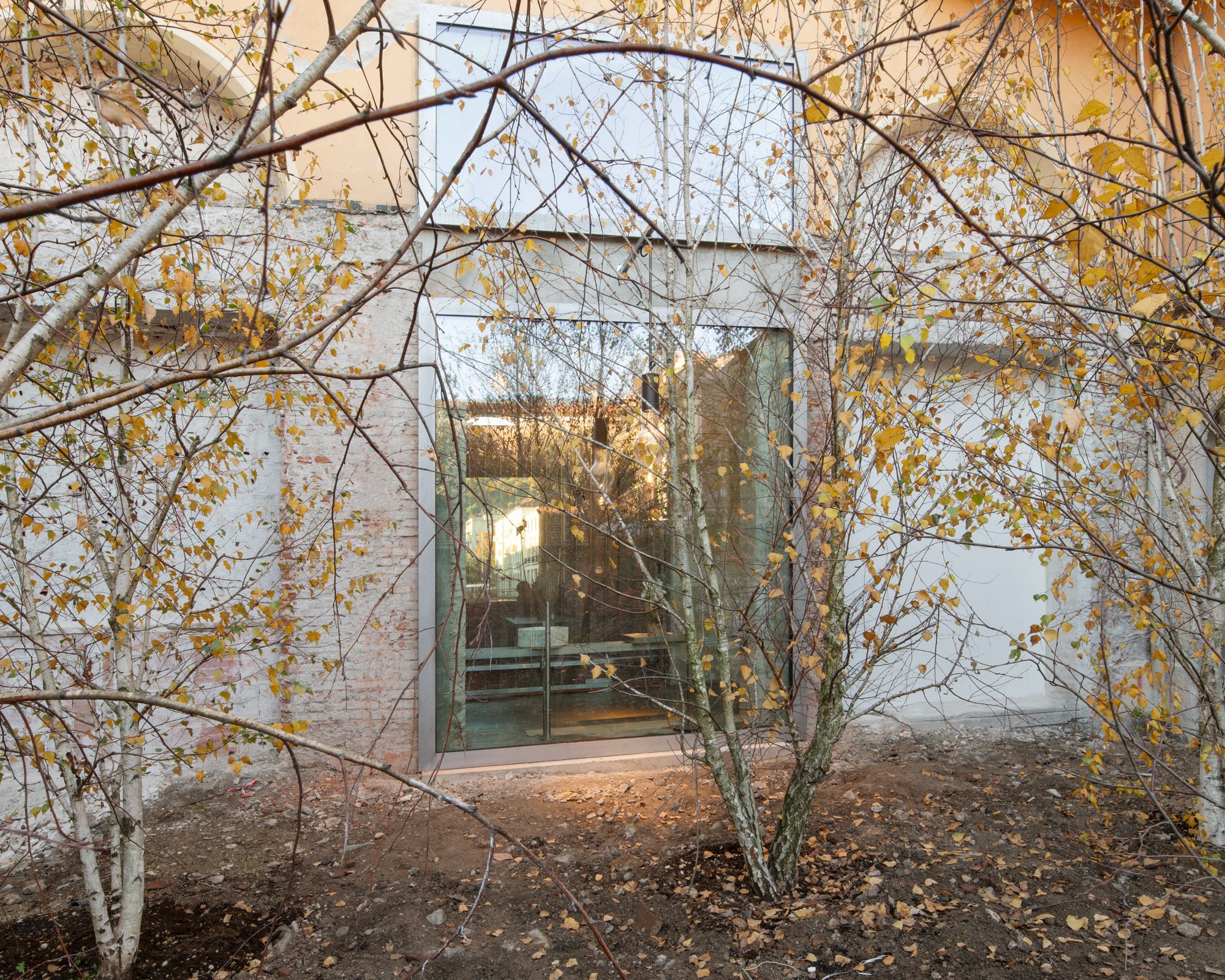
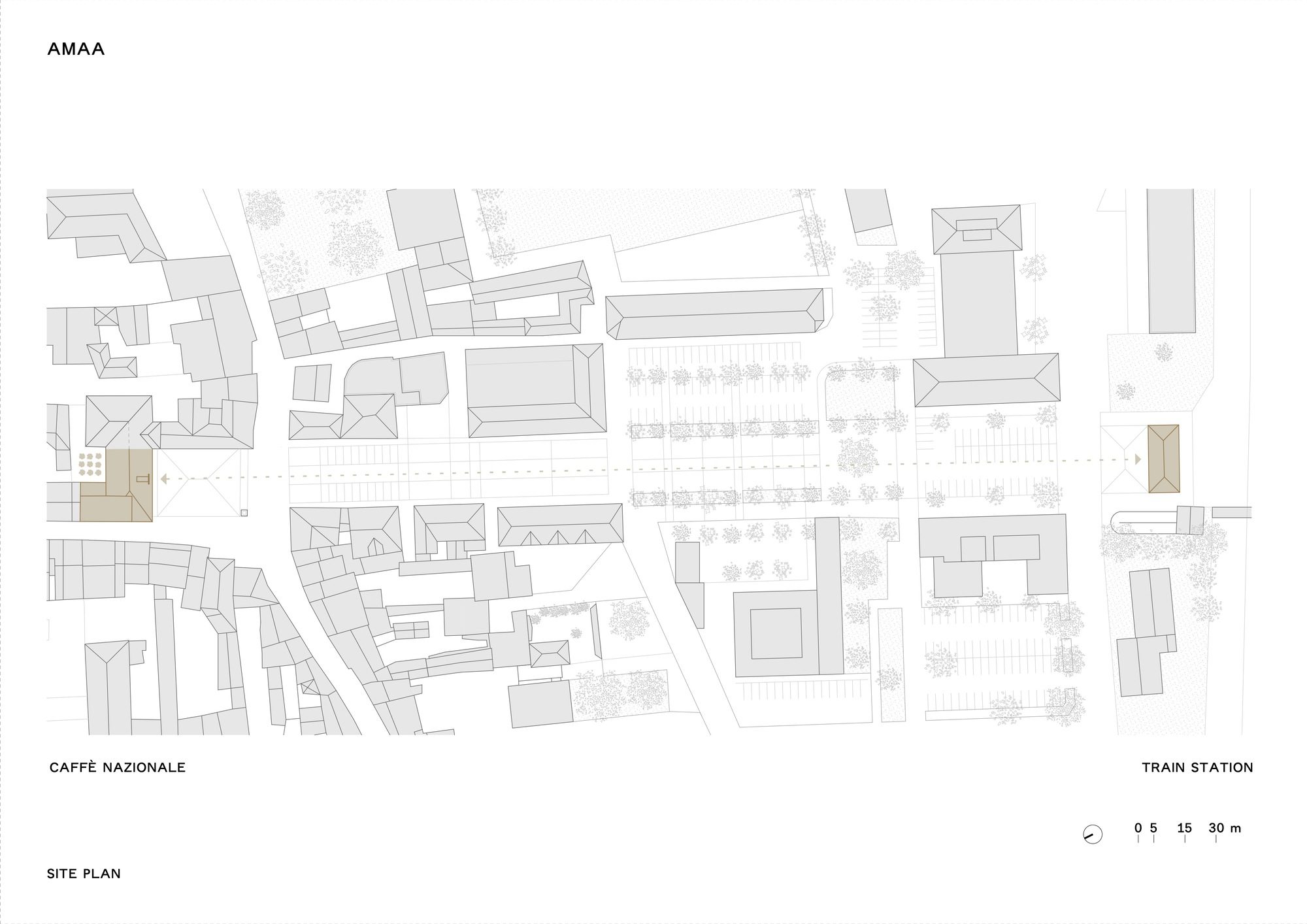
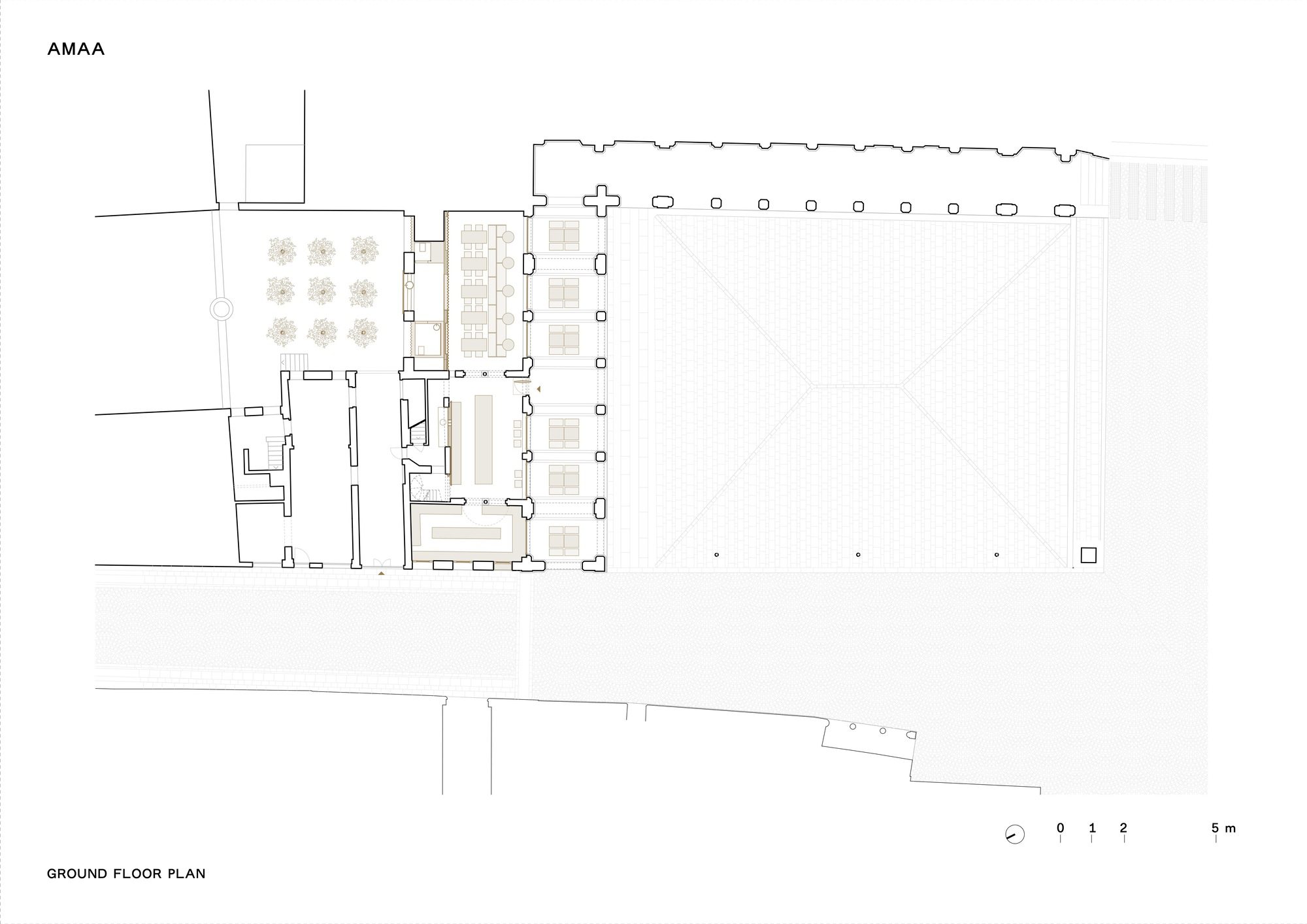
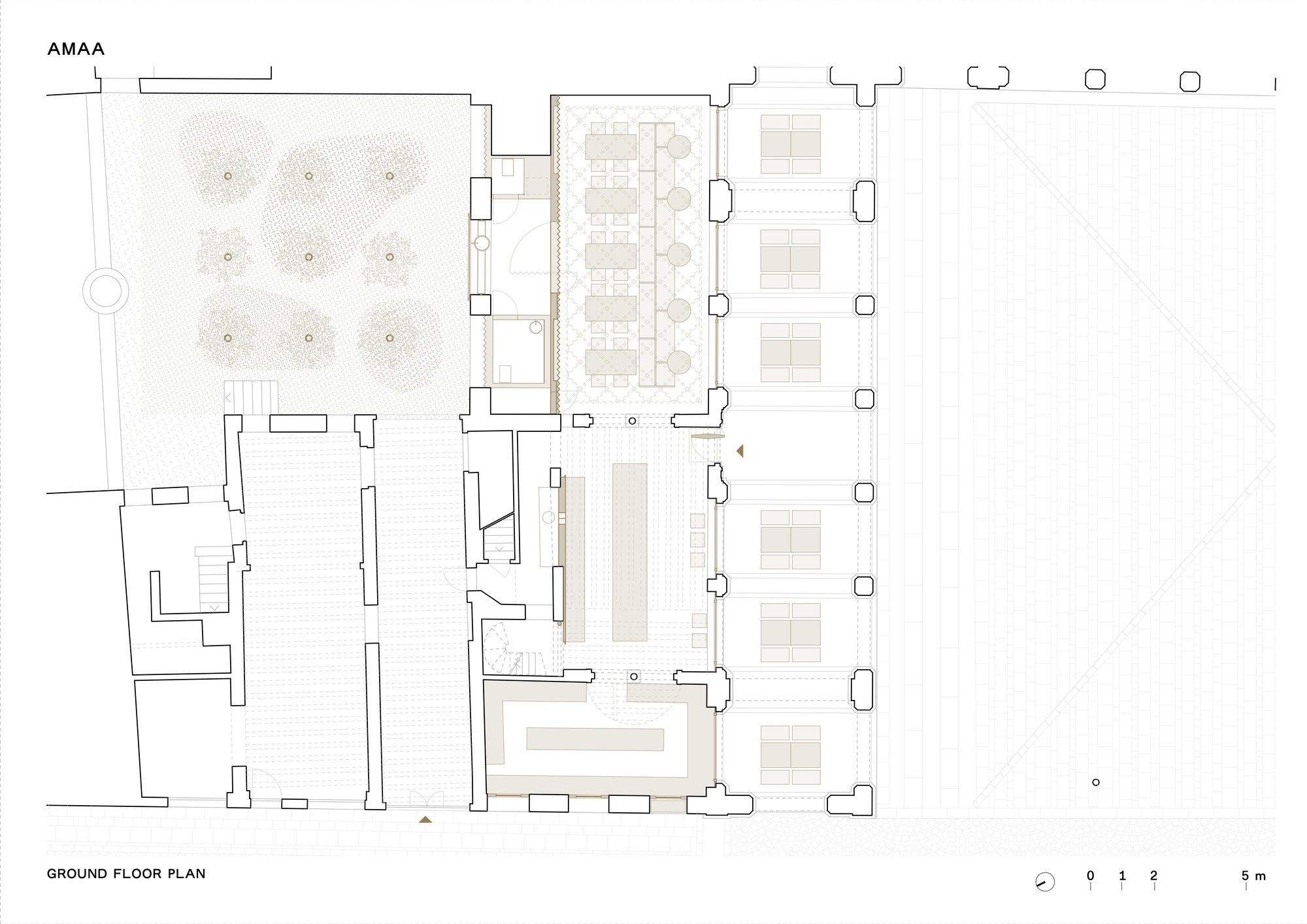
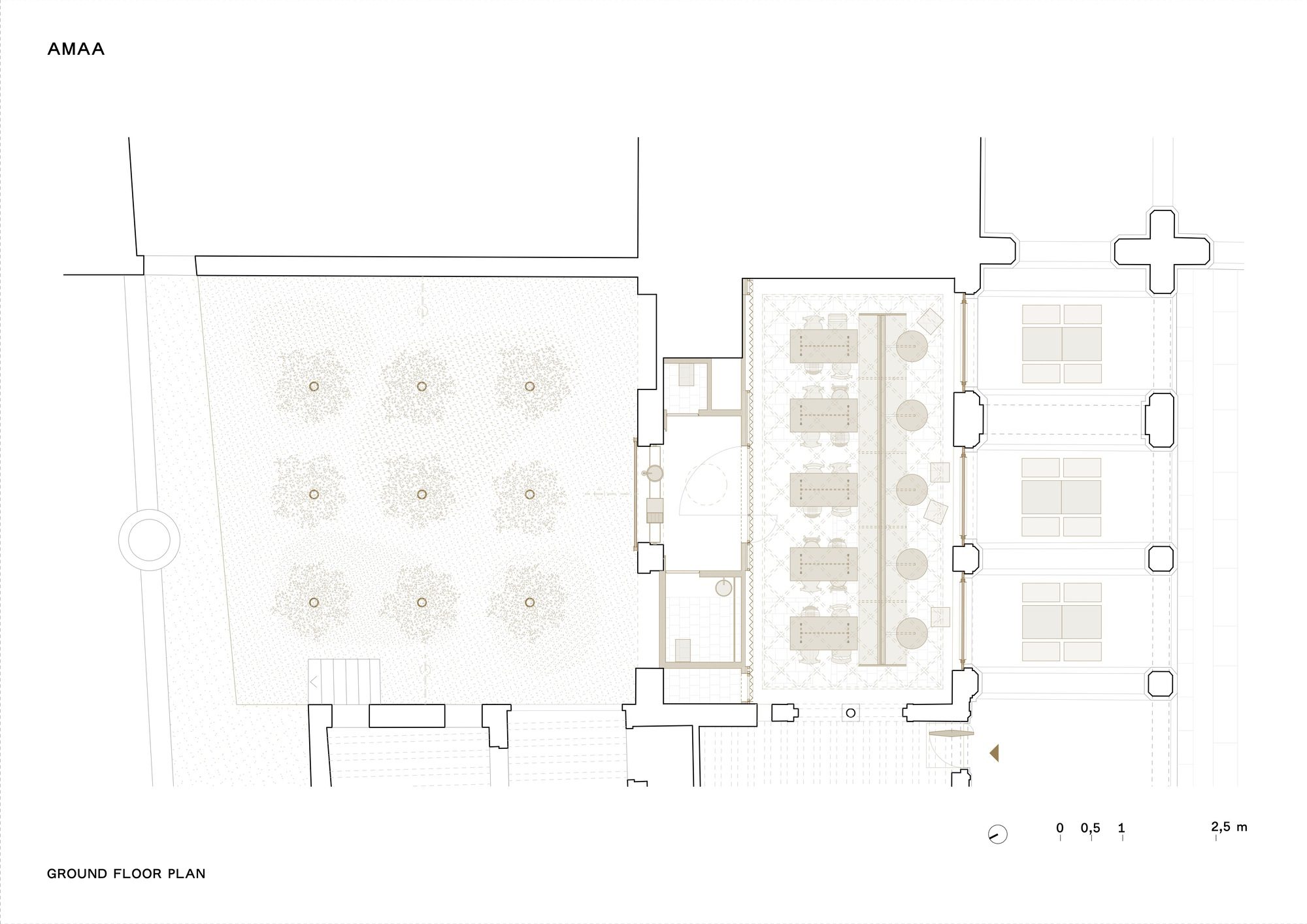
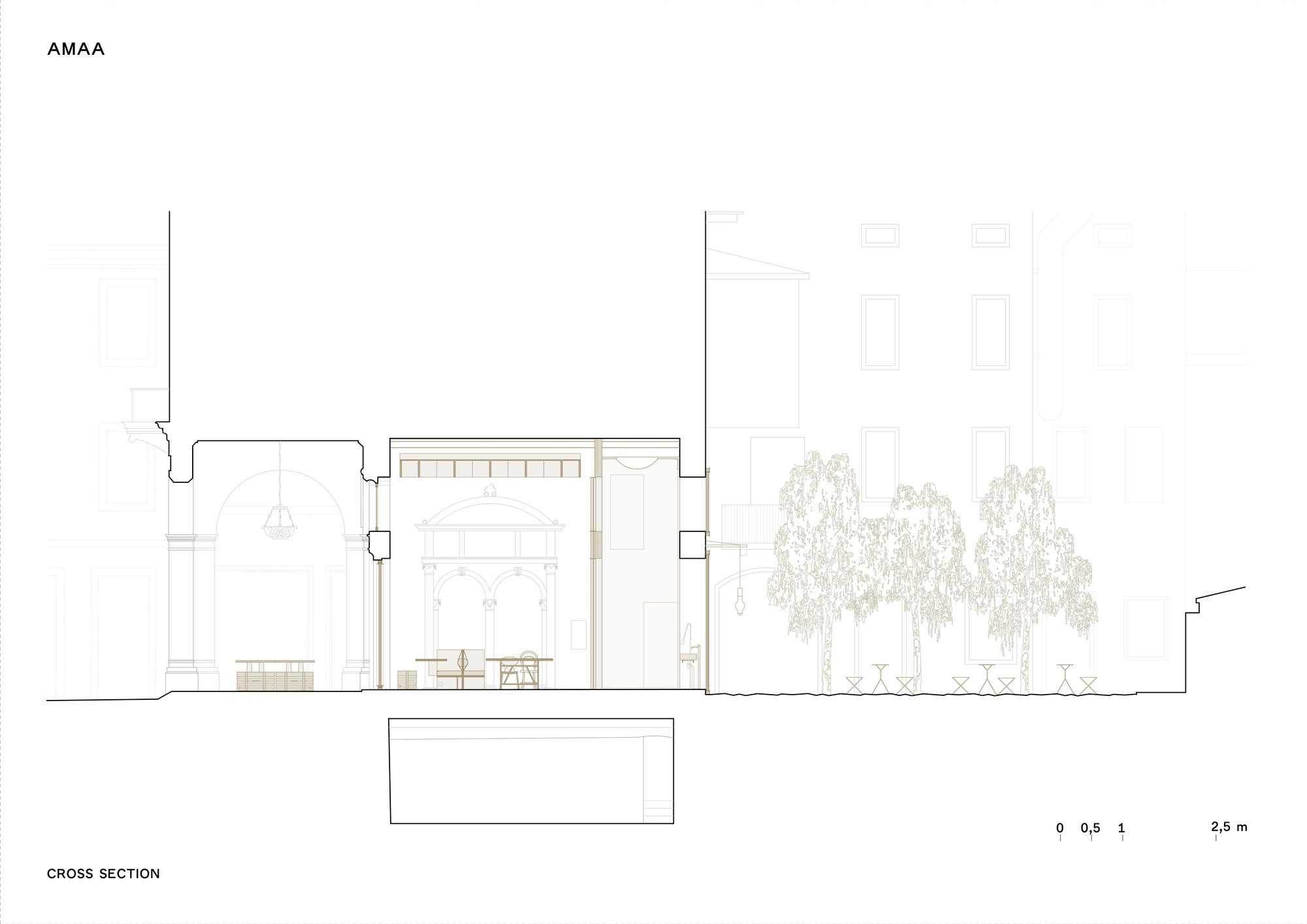
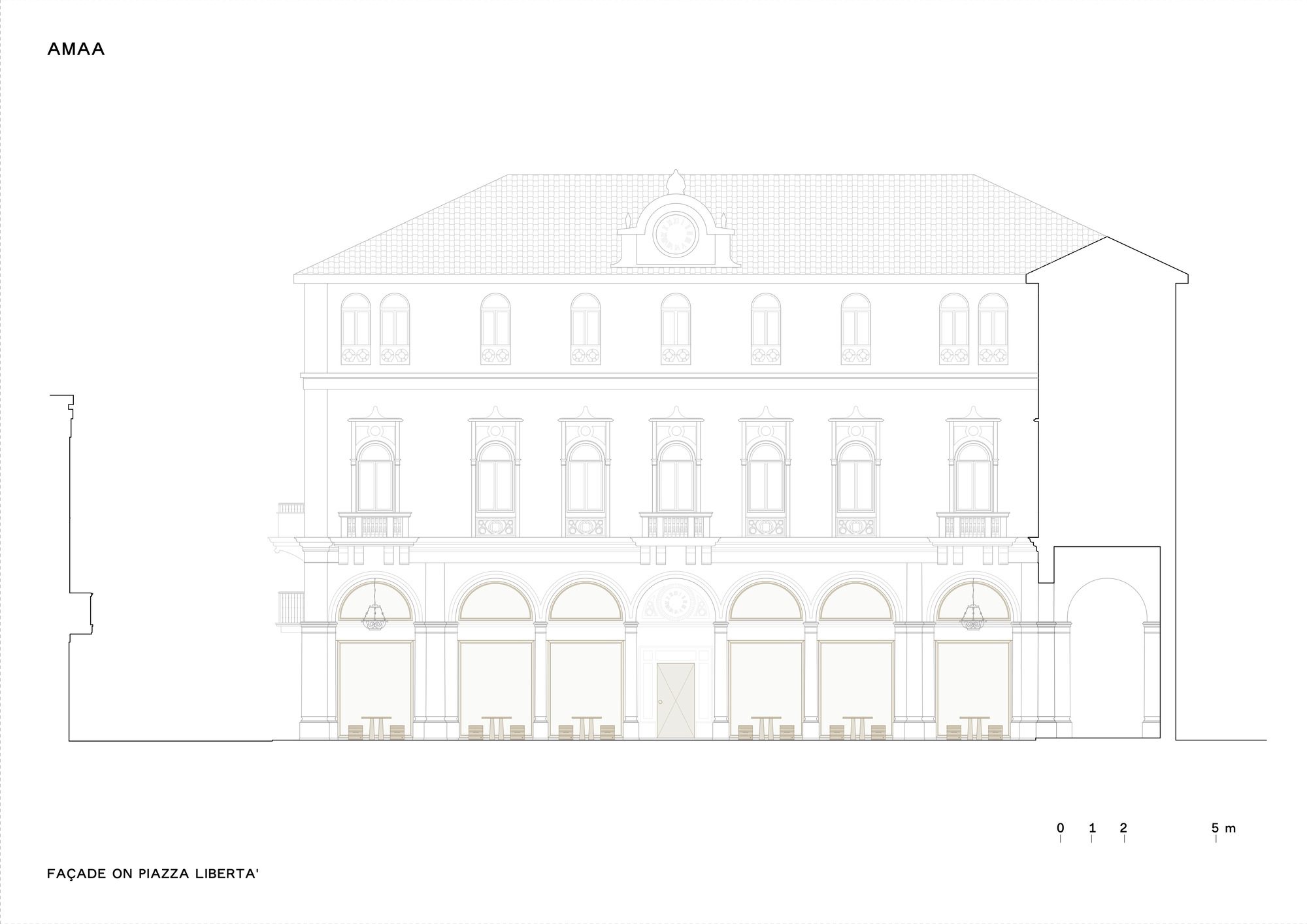
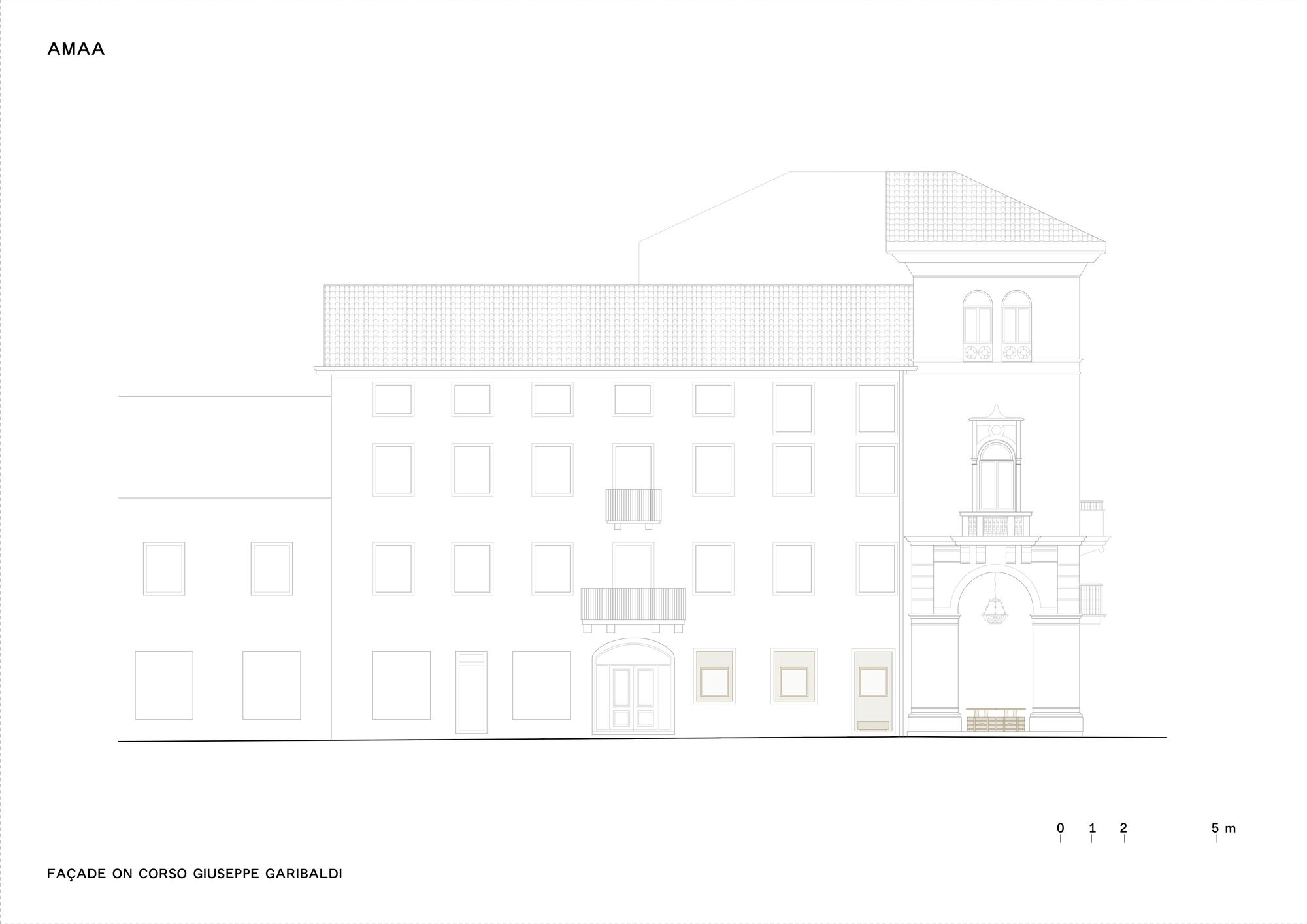
Through the colonnade of the 19th-century City Hall, the public dimension of the square flows seamlessly into that of the new Caffè Nazionale. Within this space, the main hall, a vibrant mosaic of fragments of memory and original spatial devices, offers glimpses of the serene natural setting of the small inner courtyard. This marks the first in a series of design strategies employed by AMAA in the restoration of the historic Caffè Nazionale in Arzignano, Northern Italy. A demanding and complex project, it has been carried out by the studio founded by Marcello Galiotto and Alessandra Rampazzo in a city that already hosts some of their most significant works. Along an ideal axis that traverses the entire project, the space seamlessly connects interior and exterior, highlighting the concept of layered memories, urban moments, and the interplay of ancient and contemporary materials. The design orchestrates a sequence of spaces, reminiscent of theatrical stages, establishing a visual dialogue between the square, the colonnade, and the interior hall. Here, original scenographic elements guide the eye toward the vestibule and, ultimately, the inner courtyard, envisioned as a birch garden. This courtyard provides an open, perspective view that embraces the surrounding natural landscape.
© Mikael Olsson
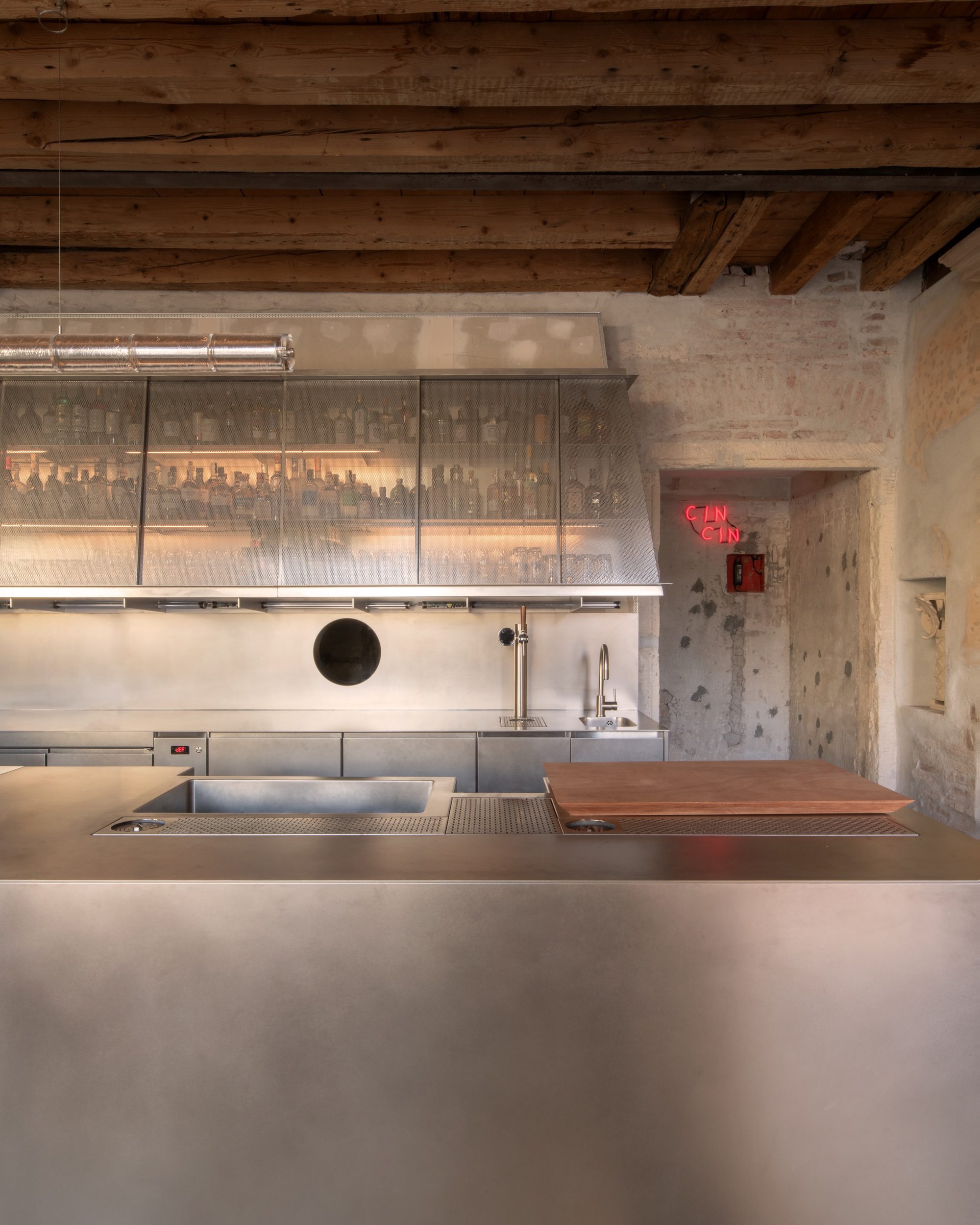
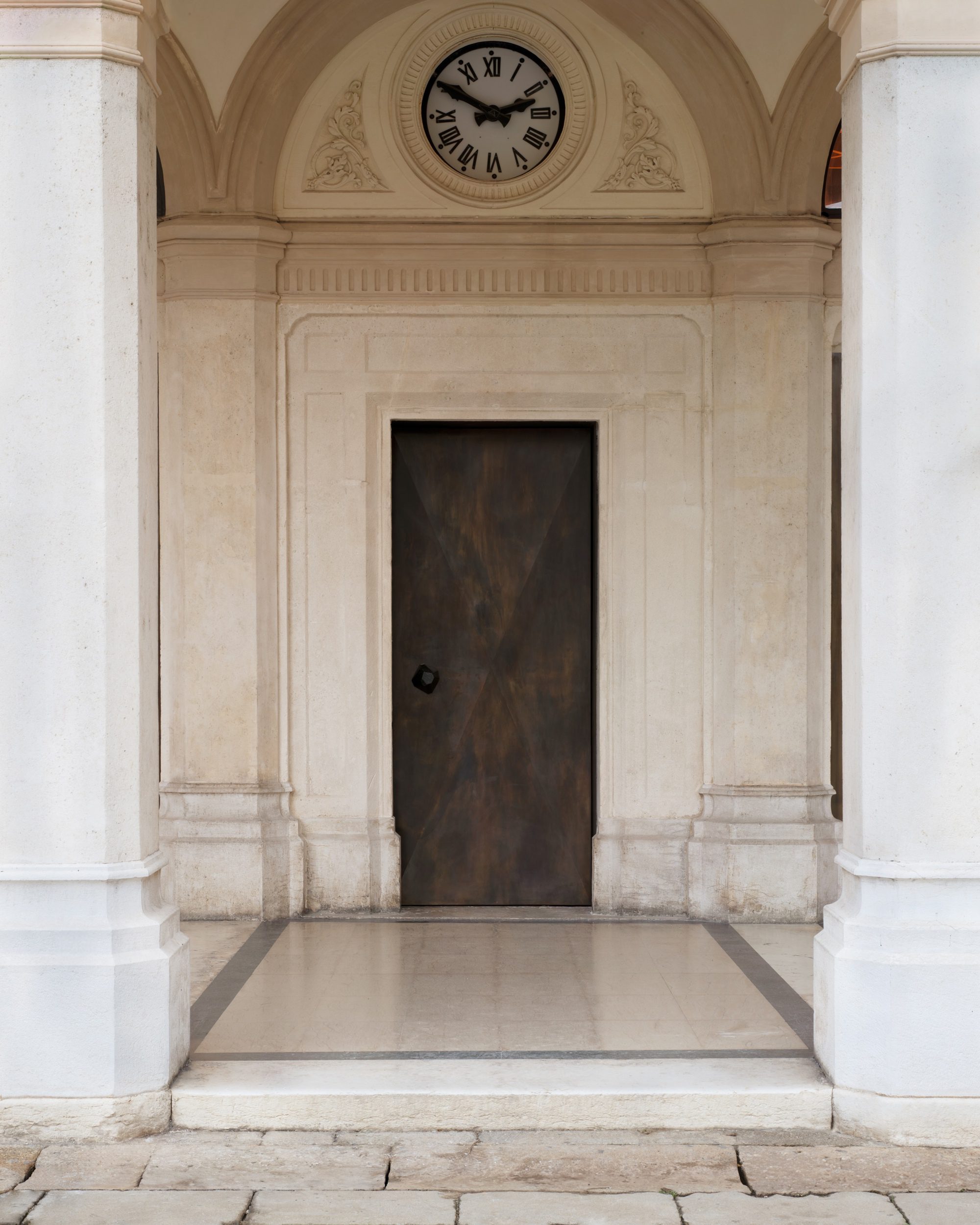
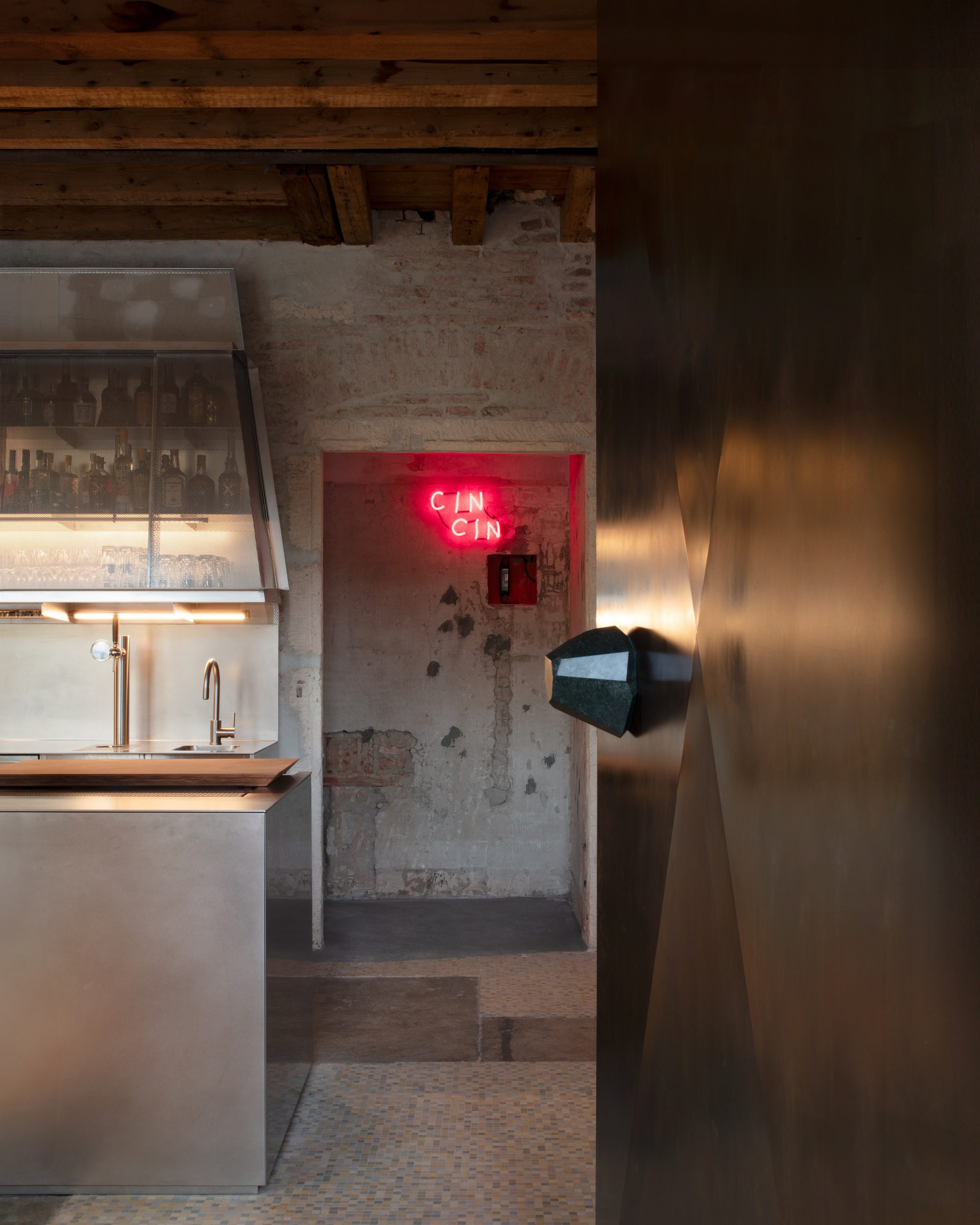
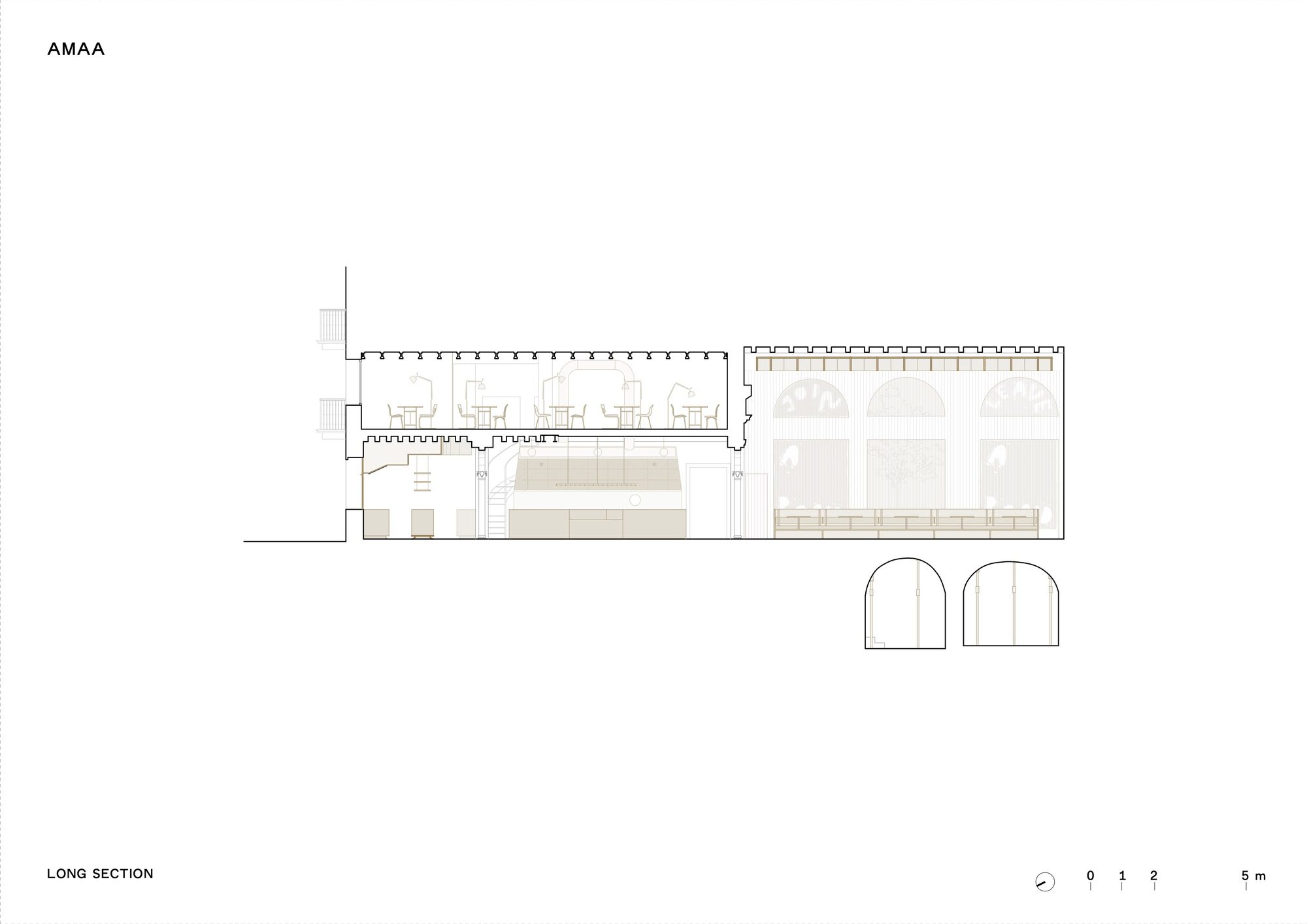
The entrance to the bar is located at the center of the colonnaded wing of the palazzo, designed by architect Antonio Caregaro Negrin and built in the late 19th century. In AMAA’s design, the entrance door is the only opaque element facing the square. Crafted from burnished iron with a pivot mechanism, the door features a distinctive diamond-shaped design, visible from both inside and outside. The handle, made of green serpentine marble from Valmalenco, was custom-designed by the artist Nero/ Alessandro Neretti. To the left of the entrance door, positioned at the corner and at the start of the colonnade, lies the open concept kitchen, fully visible to patrons. A staircase located between the bar and the kitchen leads to the upper dining room, set up as a restaurant.
© Mikael Olsson
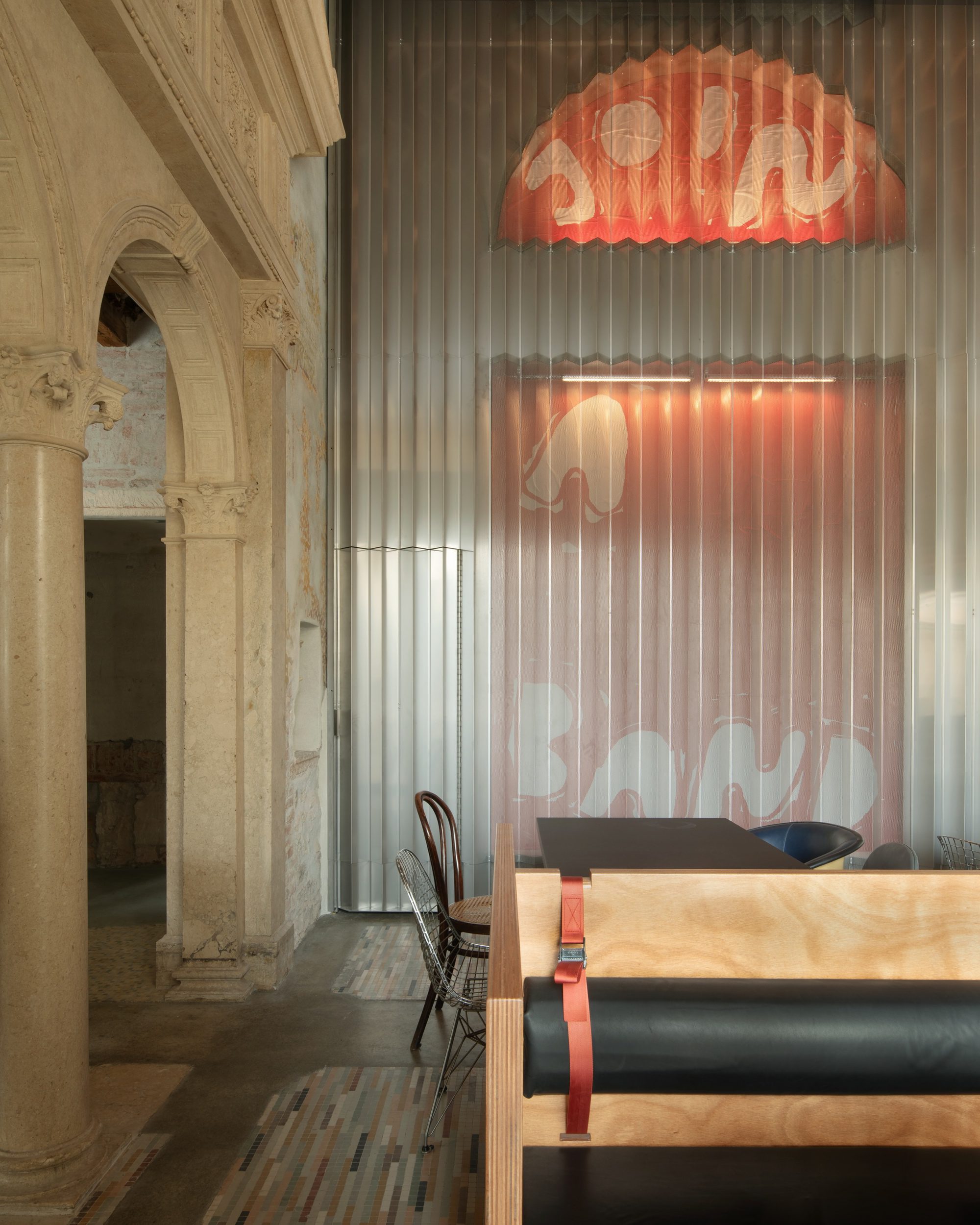
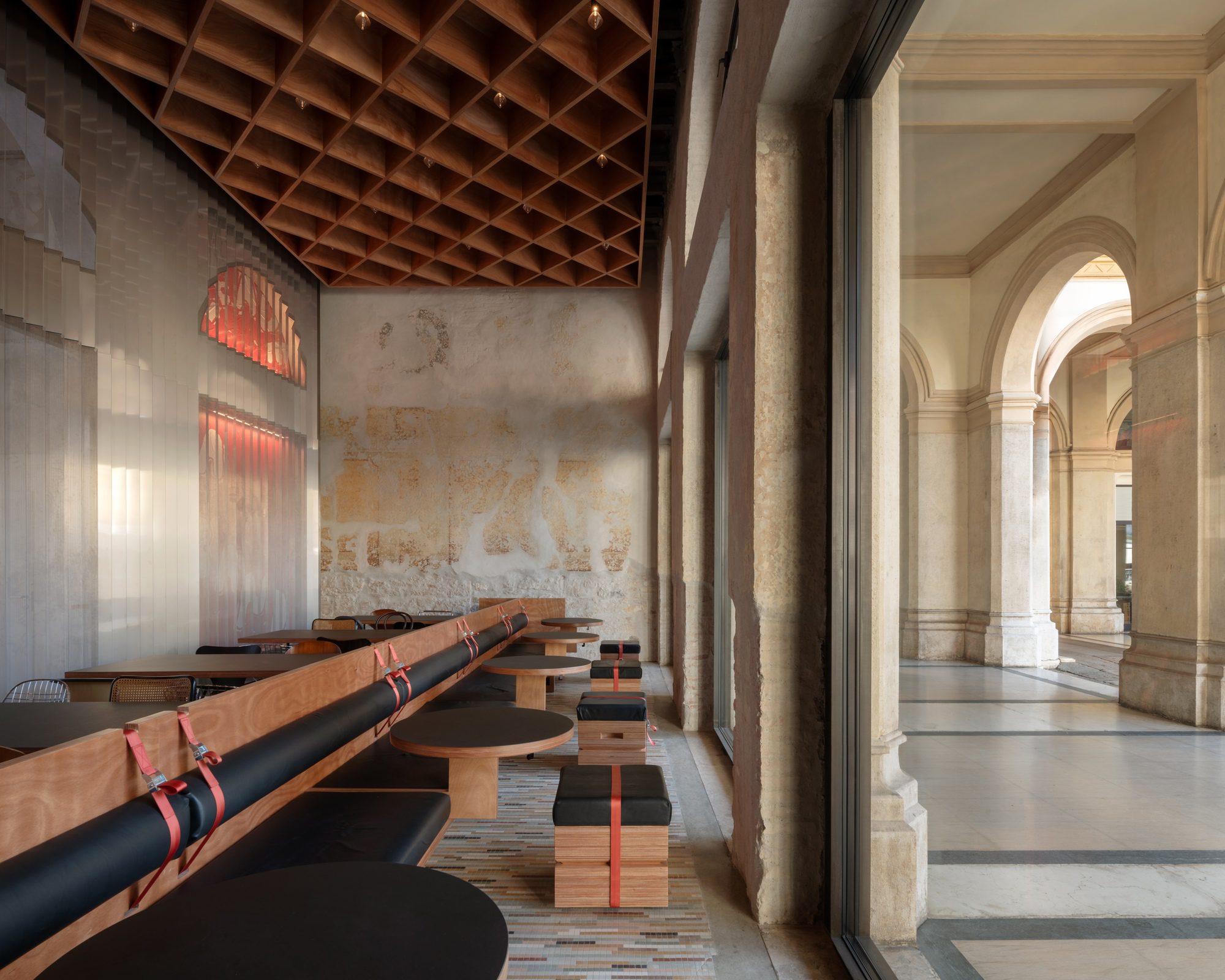
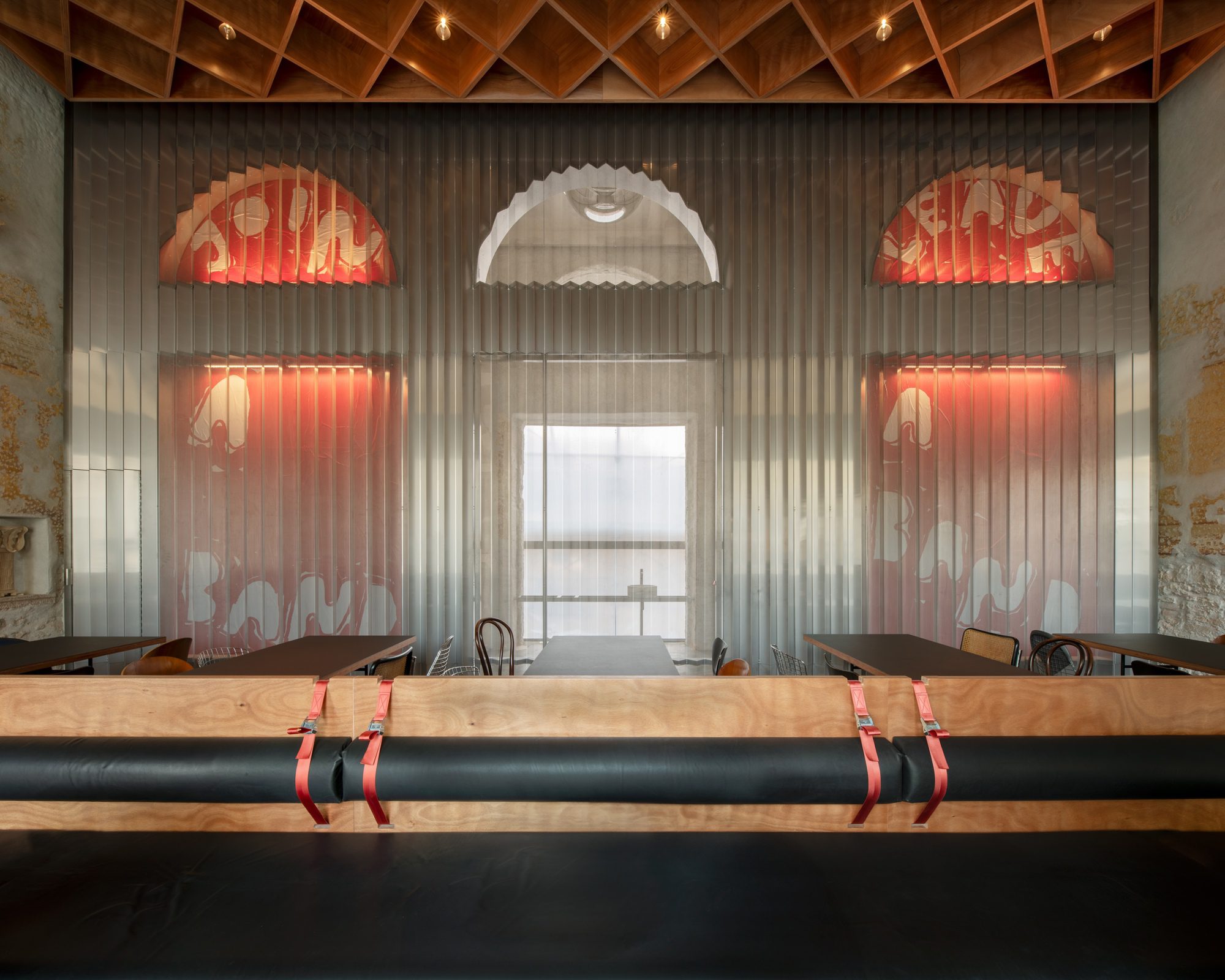
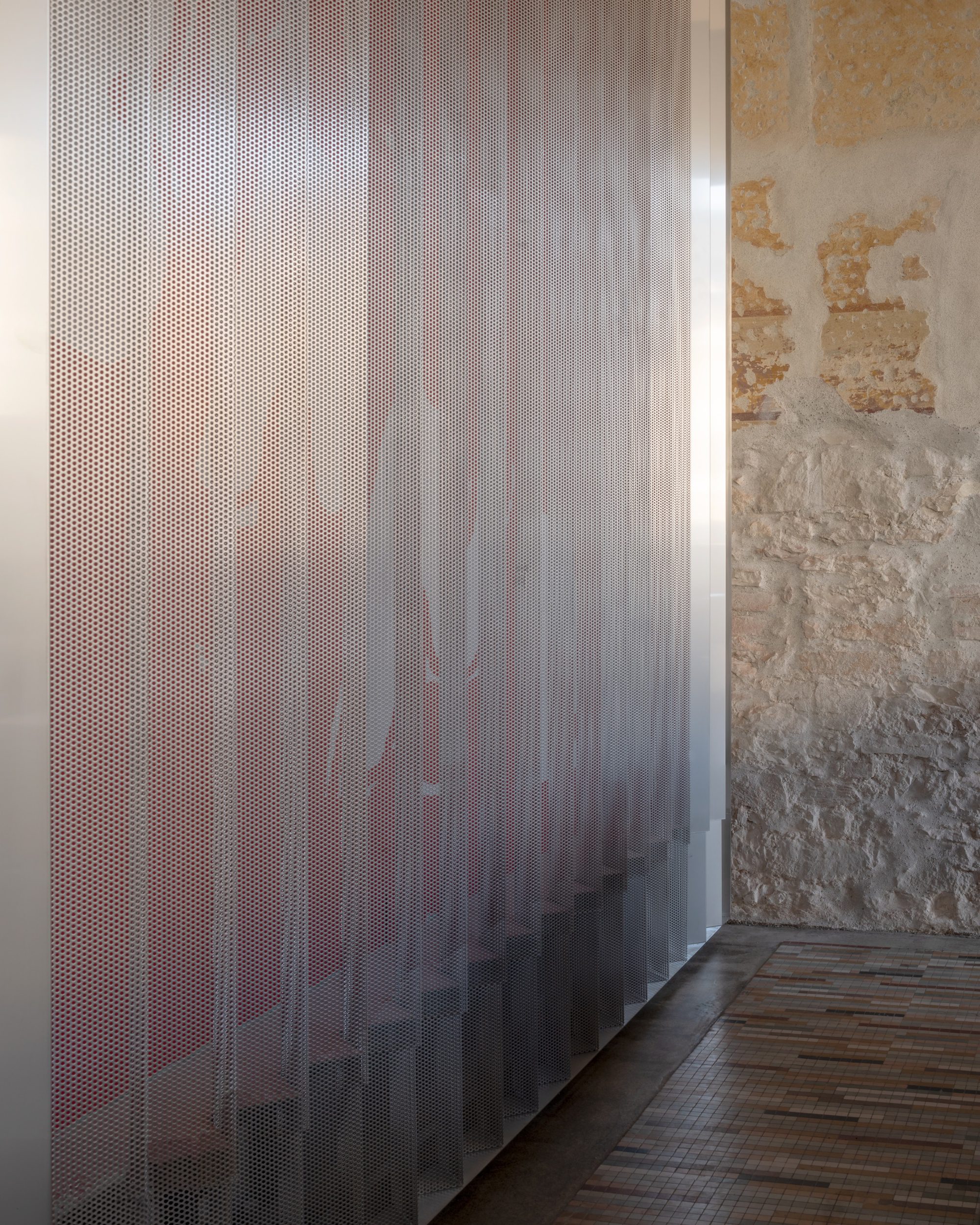
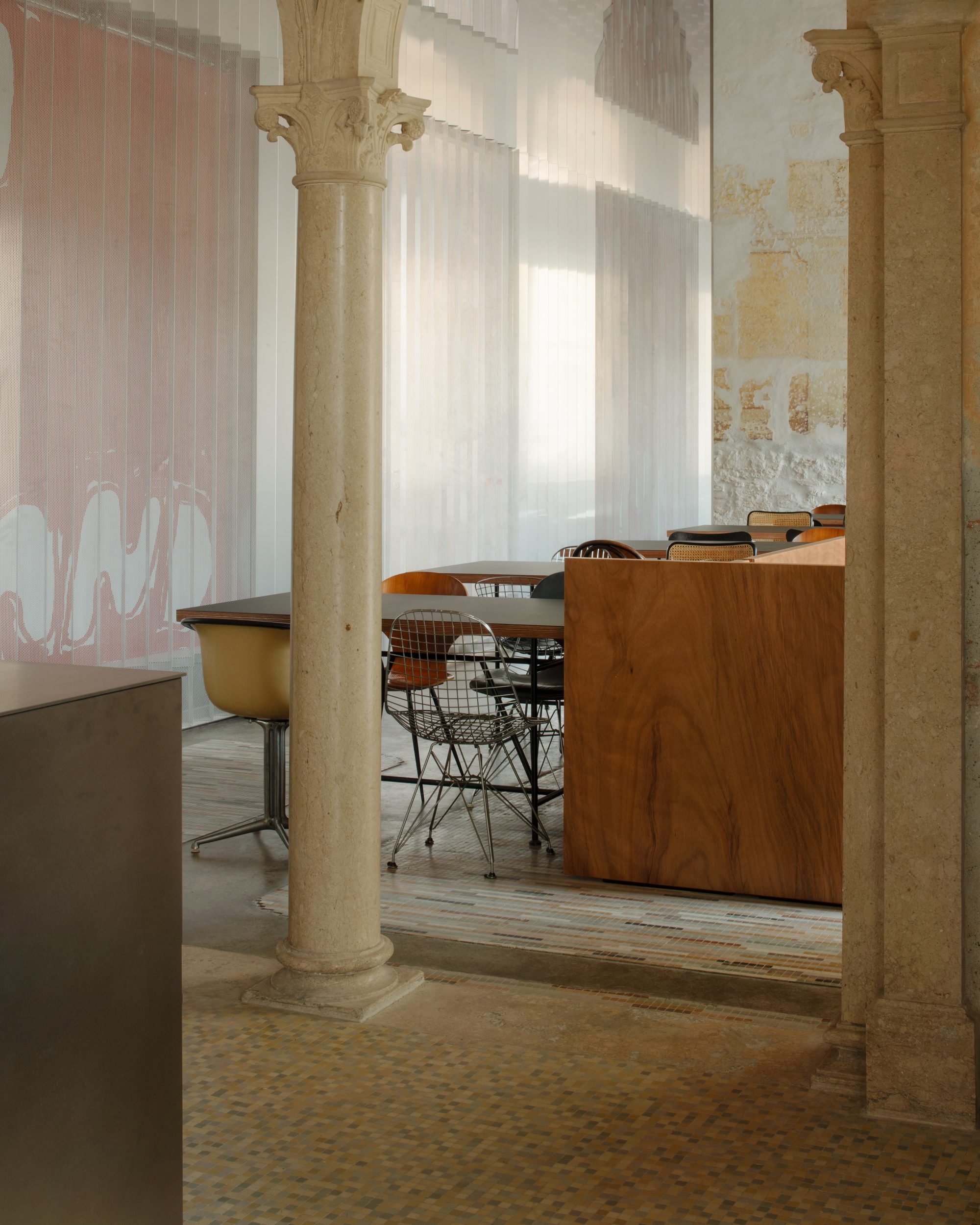
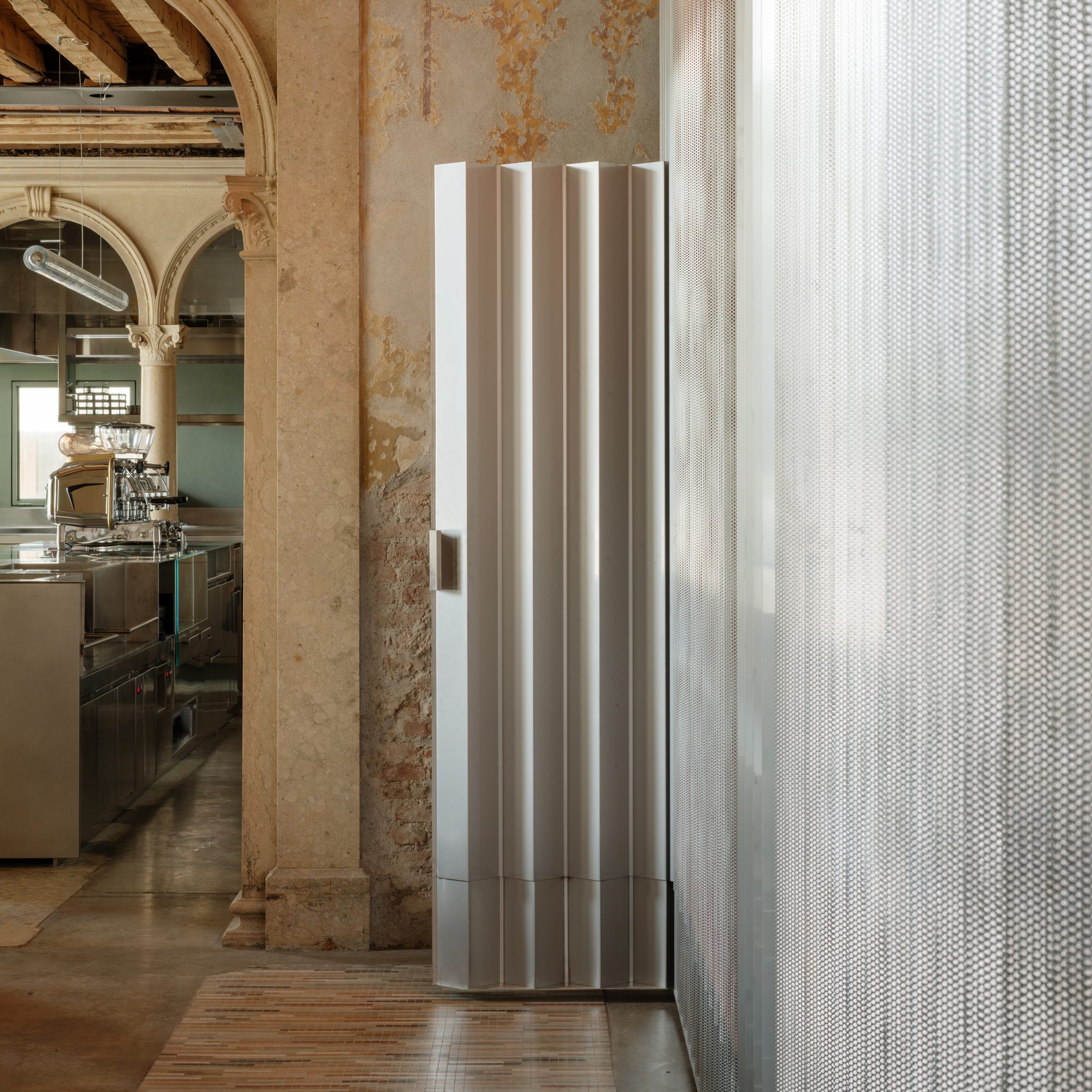
On the right, you enter the main room, where fragments of various historical interventions coexist. This space centers around the theme of theatrical backdrops, amplifying the sense of transition already suggested by the entrance. Historical traces evoke an almost boundless depth, which the design enhances through the placement of a wall conceived as a kind of curtain. This feature, crafted from folded and perforated stainless steel sheets, creates an interplay of transparency, offering an almost illusory glimpse of the grand arches facing the inner courtyard. Temporary posters by artist Stefan Marx, pasted and illuminated behind the pleated metal wall, evoke the theatrical posters of the Belle Époque and seamlessly integrate into the room’s layered narrative and scenic artifice. A refined polychrome mosaic floor is contrasted by an imposing coffered ceiling made of multilayered wood, designed to meet both lighting and acoustic needs. Adjacent to the main room, behind the perforated steel wall with its large pivot door, lies a vestibule—a space of transition and mediation. This area establishes an unexpected connection between the interior of the café and the broader, almost dreamlike world of the birch garden, a space that feels both physical and metaphysical.
© Mikael Olsson
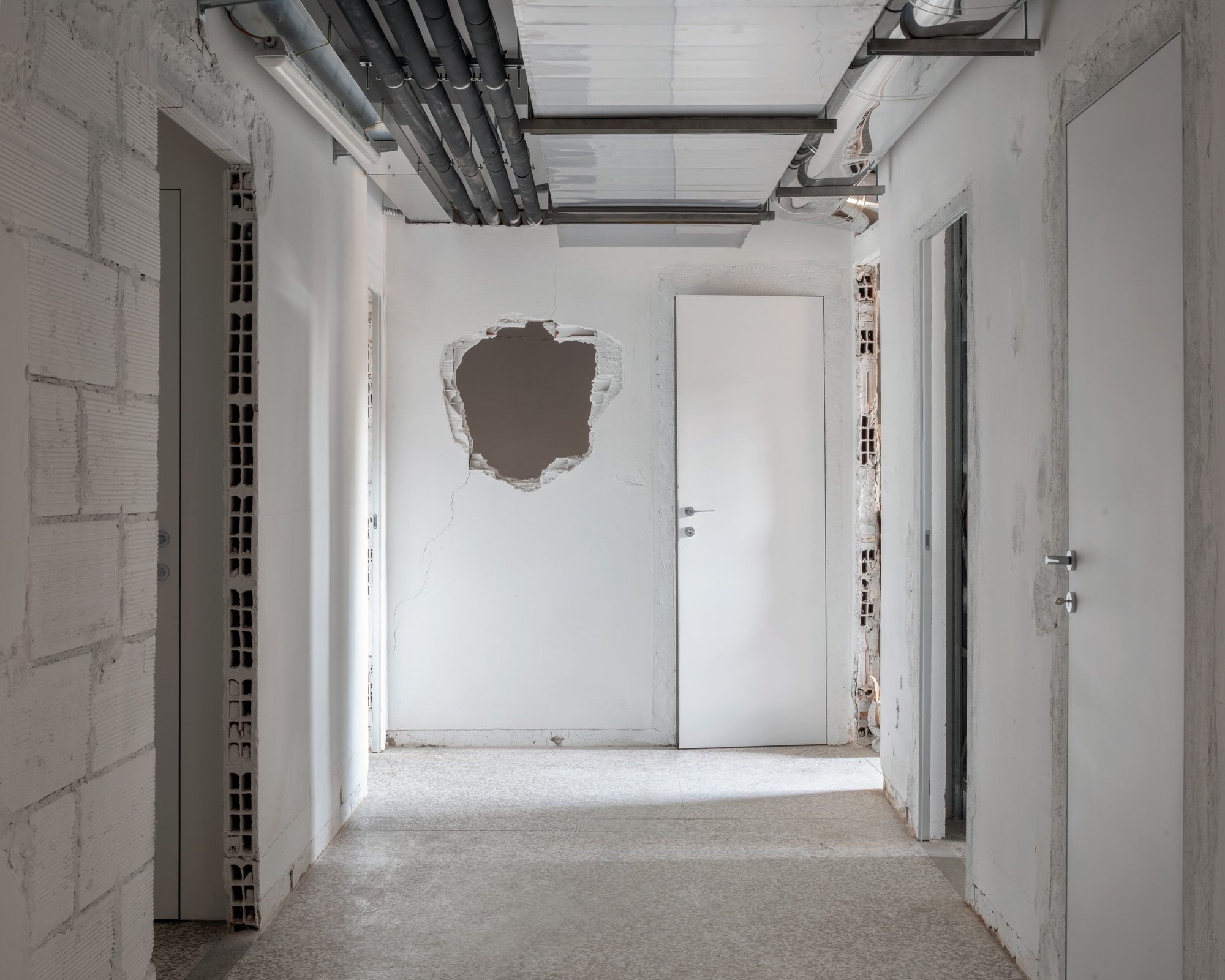
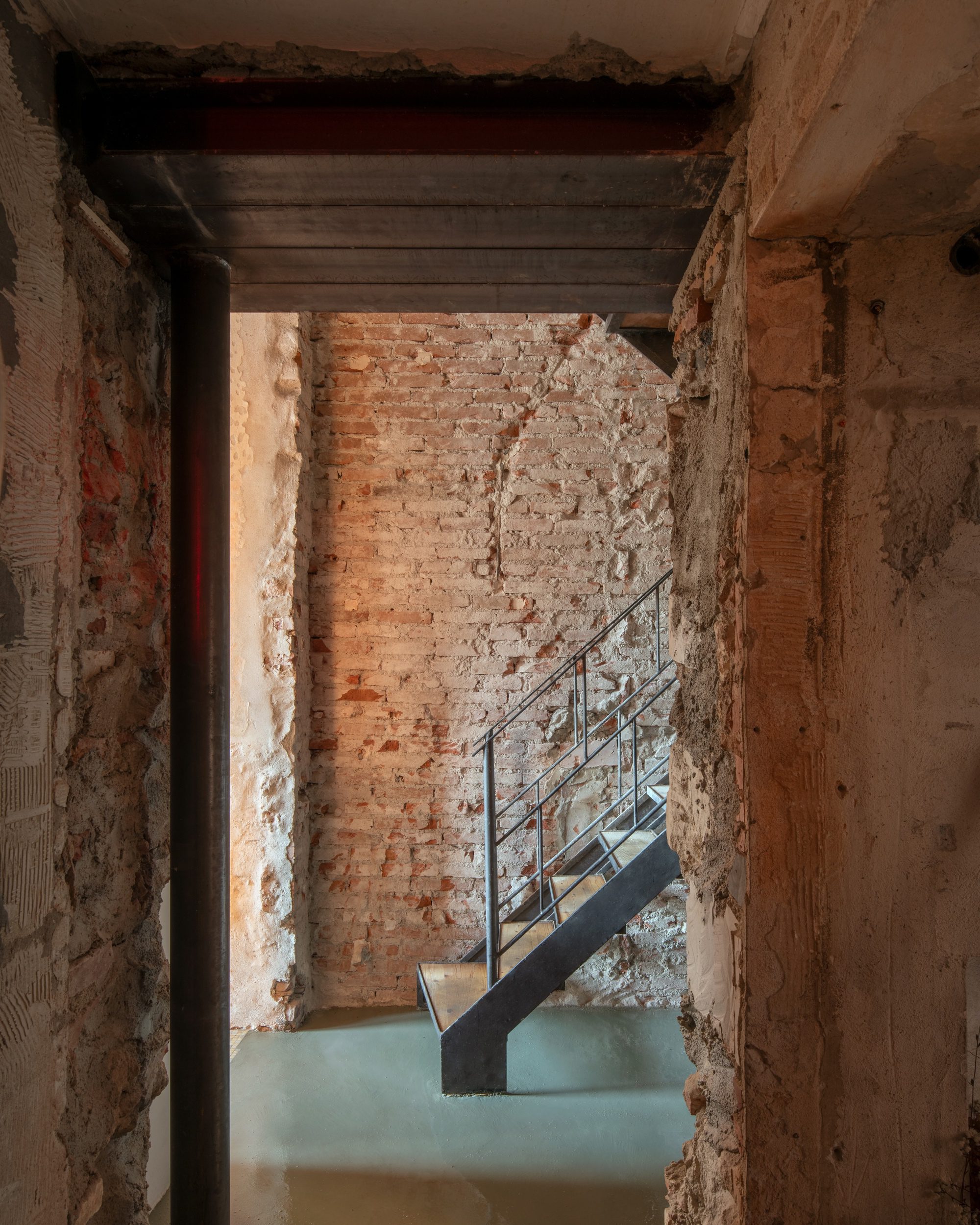
The Caffè Nazionale is furnished with an integrated system of wooden tables and benches, custom-designed by AMAA in collaboration with Nero/ Alessandro Neretti and meticulously developed through full-scale mockups. In the main room, the seating arranged in the more interior areas is paired with rectangular tables, larger and better suited for dining. In contrast, smaller round tables are positioned closer to the square and extend into the outdoor space in front of the bar. The seating design draws inspiration from the benches of the New York subway and the work of Donald Judd. The contrast between the recovered historical elements and the interventions that redesign and reorganize the space is evident throughout Caffè Nazionale, as are the deliberately unfinished segments that seem to reflect an openness in the project’s concept. In these exposed fragments, the temporality of the construction process feels almost suspended.
© Mikael Olsson
A year and a half of work resulted in the creation of a delicate and complex piece through which AMAA has breathed new life into a significant part of Arzignano’s history. The project engages with the themes that the studio has been refining in its research: a space dense with layers of meaning, as layered as the memory of the place itself. The restoration of the decorated surfaces, uncovered beneath the technical partition walls added over decades of previous activity, aligns with the intention to preserve these elements in their honest, worn, and sometimes compromised state. The consolidation acknowledges the passage of time, enriching the rooms with a raw and imperfect materiality that speaks to the idea of the unfinished and the continuous evolution of each element. Similarly, the new functional partitions for services and technical rooms adhere to the same intention: to reveal the construction technique and its components, as well as the process of realization, frozen at the point where each element remains recognizable and does not simulate another meaning.
© Mikael Olsson
Caffè Nazionale marks an important step in the development of AMAA’s research and experimentation in the design process, which includes an innovative use of imagery. These images are not seen as a final product but as a means to document the construction process as it unfolds. In this sense, they integrate the studio’s ongoing work with the physical model. It represents a further evolution of their research on the theme of the unfinished, as well as the development of an original process that the studio is advancing with Virna Rossetto on the use of imagery in the various phases of a project.
Project Info
Architects: AMAA – Collaborative Office For Research And Development
Country: Vicenza, Italy
Area: 565 m²
Year: 2024
Photographs: Mikael Olsson
Project Architect, Partner In Charge: Marcello Galiotto
Project Management: Francesca Fasiol
Design Team: Marcello Galiotto, Francesca Fasiol, Eleonora Folli, Virna Rossetto
Models: Mara Tirapelle
Client: MAM Srl (Marco Mettifogo – Andrea Poli – Marcello Galiotto) • Municipality of Arzignano
Fire Safety Engineering And Electrical Engineering: Nicola Rosa
Safety Coordinator: Simone Michelotti
Dress Code And Details: Ottavia Mettifogo
Communication Agency: BlaaUniverse
Fire Safety Engineering: Nicola Rosa
Visual Identity And Graphic Design: Studio MUT
Graphic Artists: Stefan Marx
Artist: Nero / Alessandro Neretti
Plumbing: LO.GI.T. Termoidraulica Snc
Fire Safety System: Falle Antifurti Srl
Furnitures Design: Operae Interiors

Anastasia Andreieva is an accomplished Architectural Projects Editor at Arch2O, bringing a unique blend of linguistic expertise and design enthusiasm to the team. Born and raised in Ukraine, she holds a Master’s degree in Languages from Taras Shevchenko National University of Kyiv. Her deep passion for architecture and visual storytelling led her to transition from translation and editorial roles into the world of design media. With a keen eye for conceptual clarity and narrative structure, Anastasia curates and presents global architectural projects with precision and flair. She is particularly drawn to parametric and digital design, cultural context, and emerging voices in architecture. When I’m not analyzing the latest architectural trends, you’ll probably find me searching for hidden gems in cityscapes or appreciating the beauty of well-crafted spaces. After all, great design—like great connections—can be found in the most unexpected places. Speaking of connections, because architecture isn’t the only thing that brings people together.