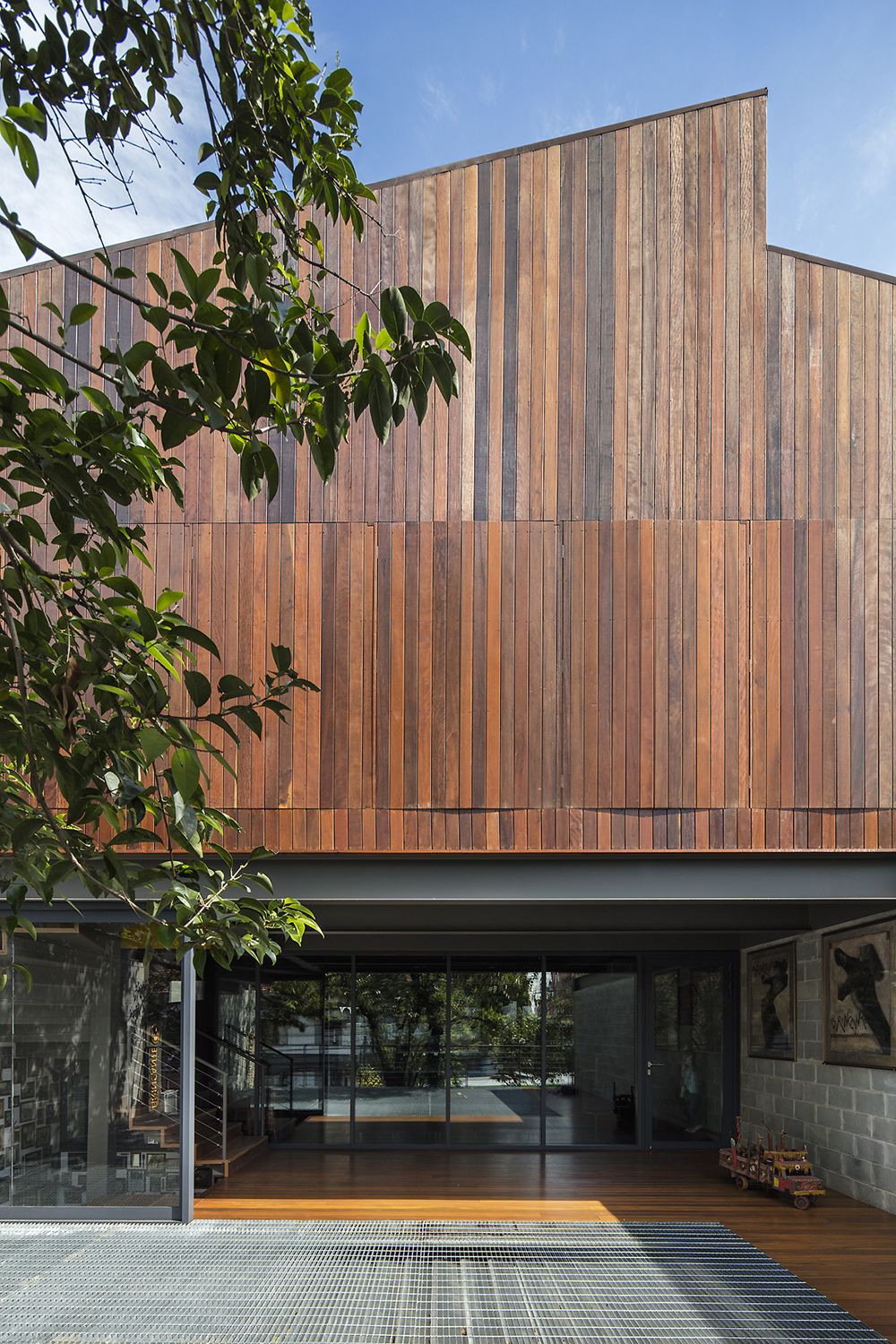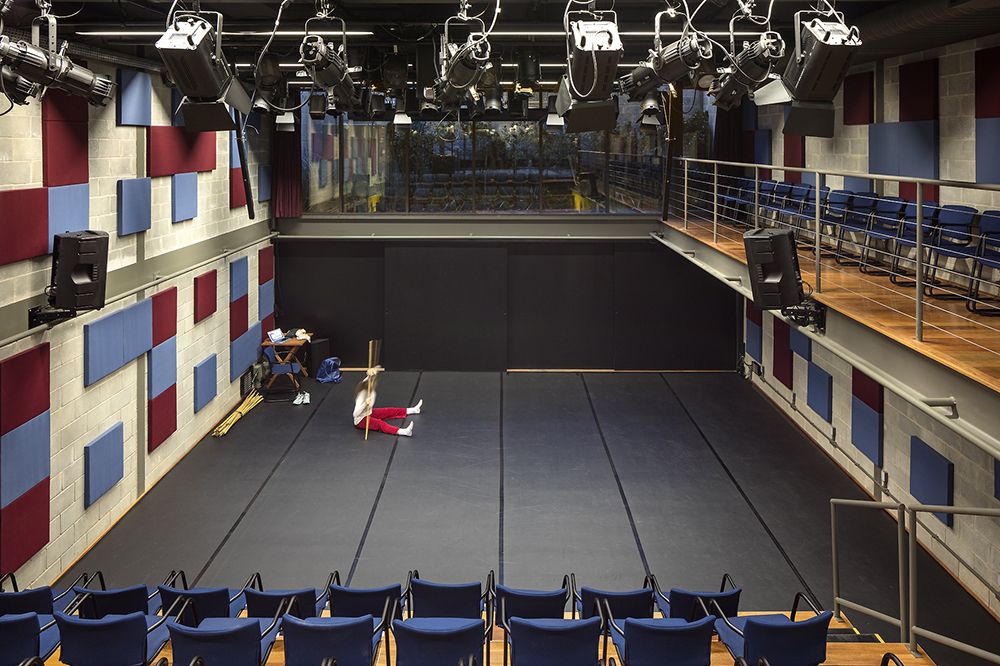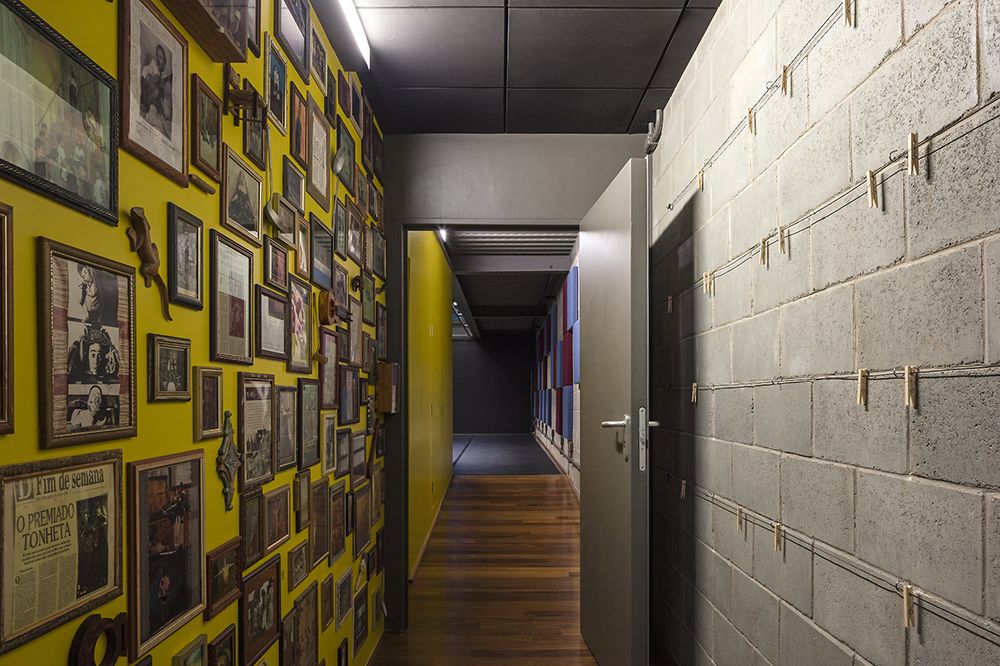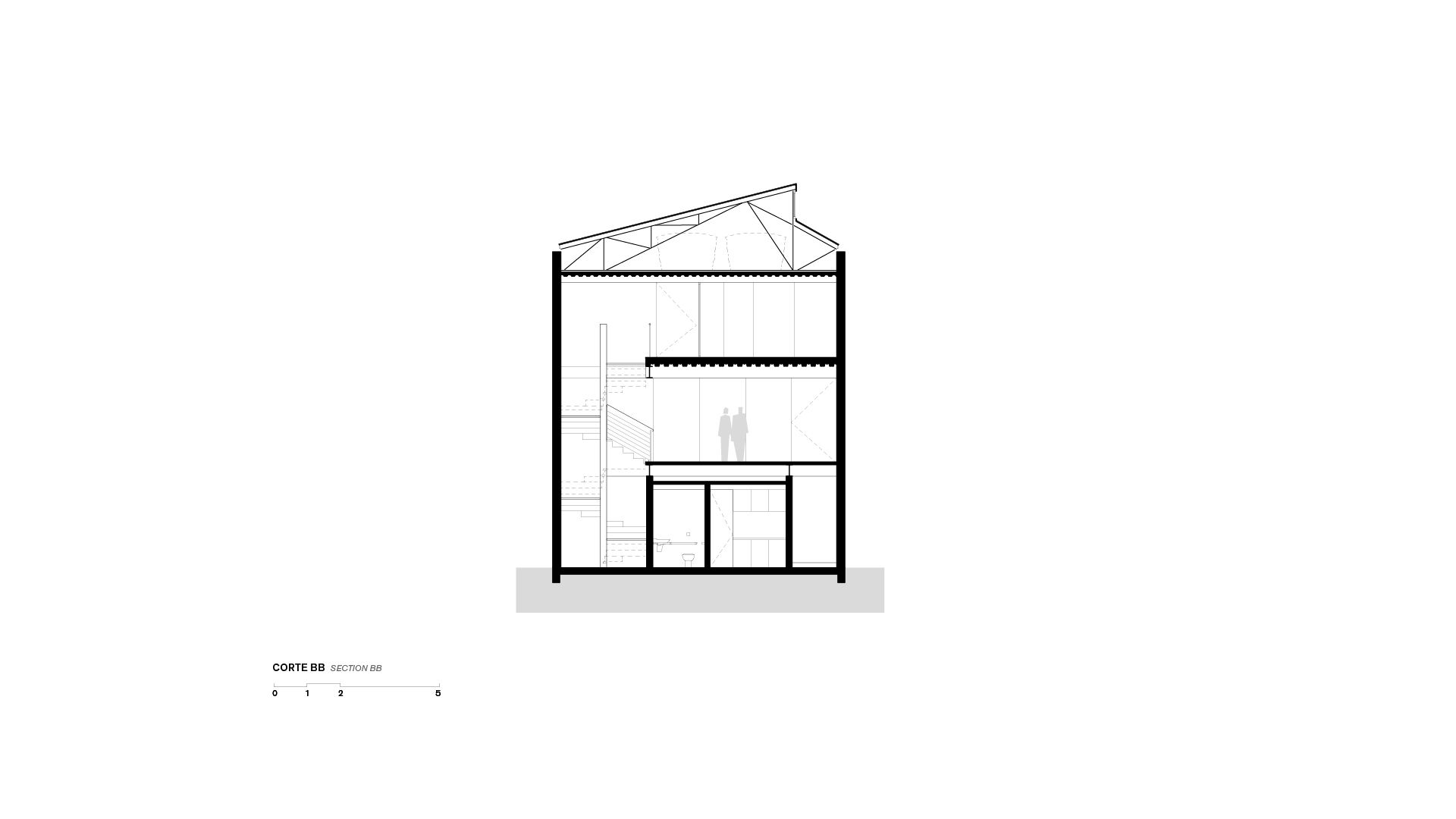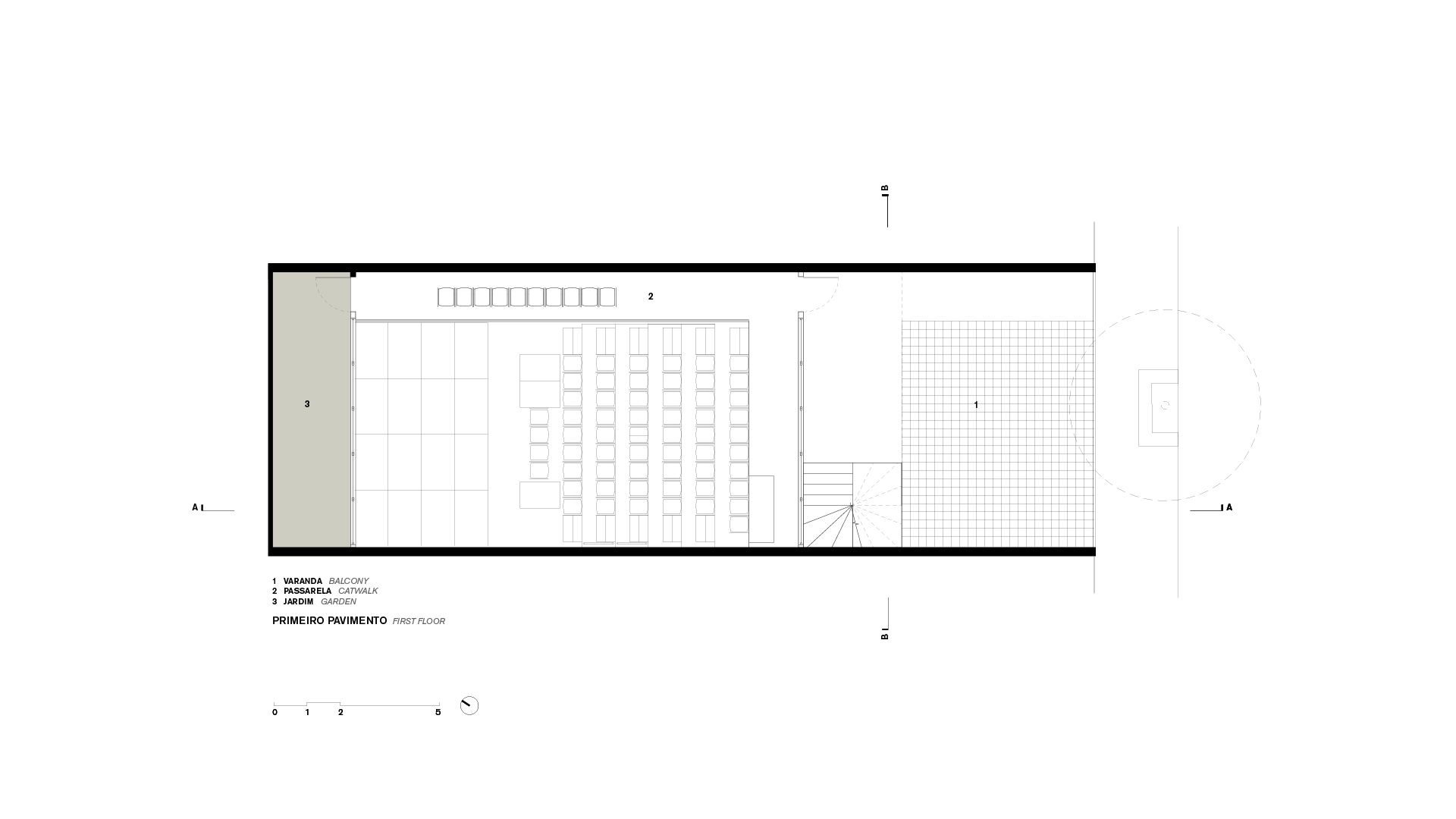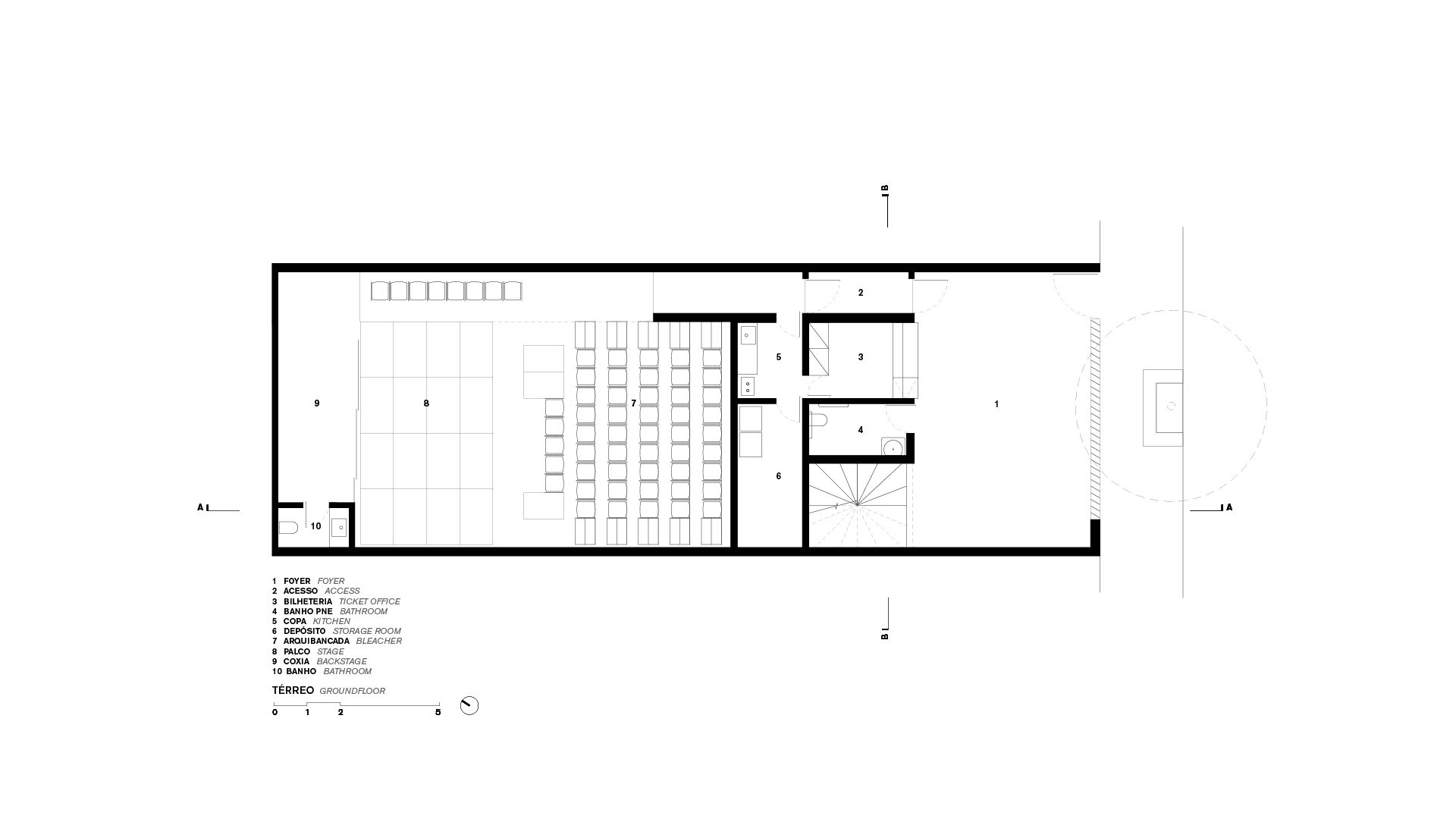


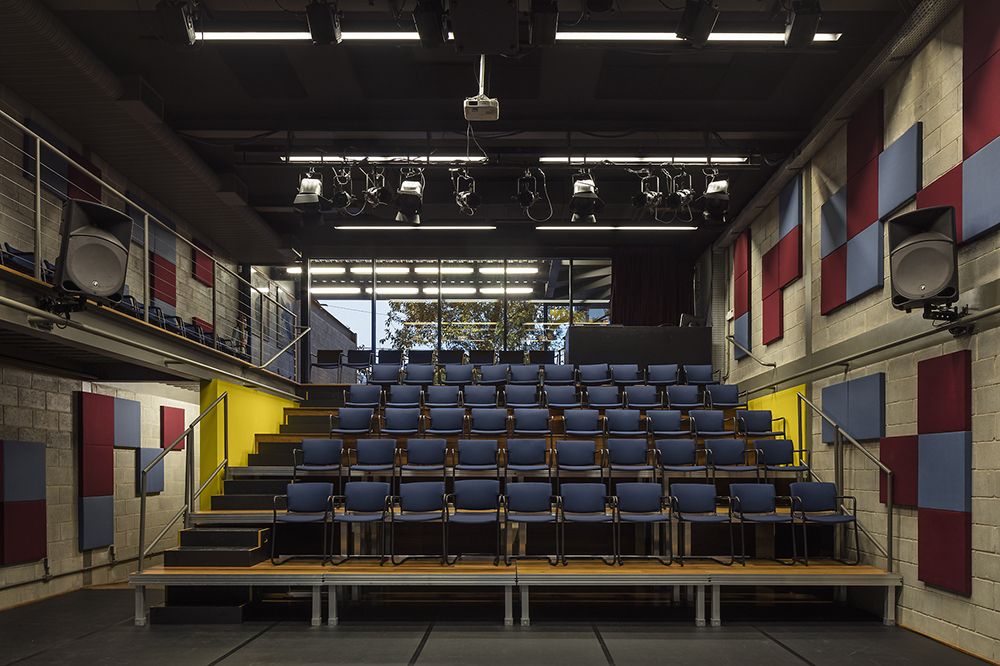
The program of the new headquarters of the Brincante Institute includes an auditorium for approximately 80 people, a rehearsal room, an administrative area, and enough storage room for musical instruments, costumes, and props.
© Leonardo Finotti
The architectural concept emphasizes direct communication between the building and the street, strengthening its relationship to the
neighborhood, Vila Madalena, where the Institute has been located for decades.
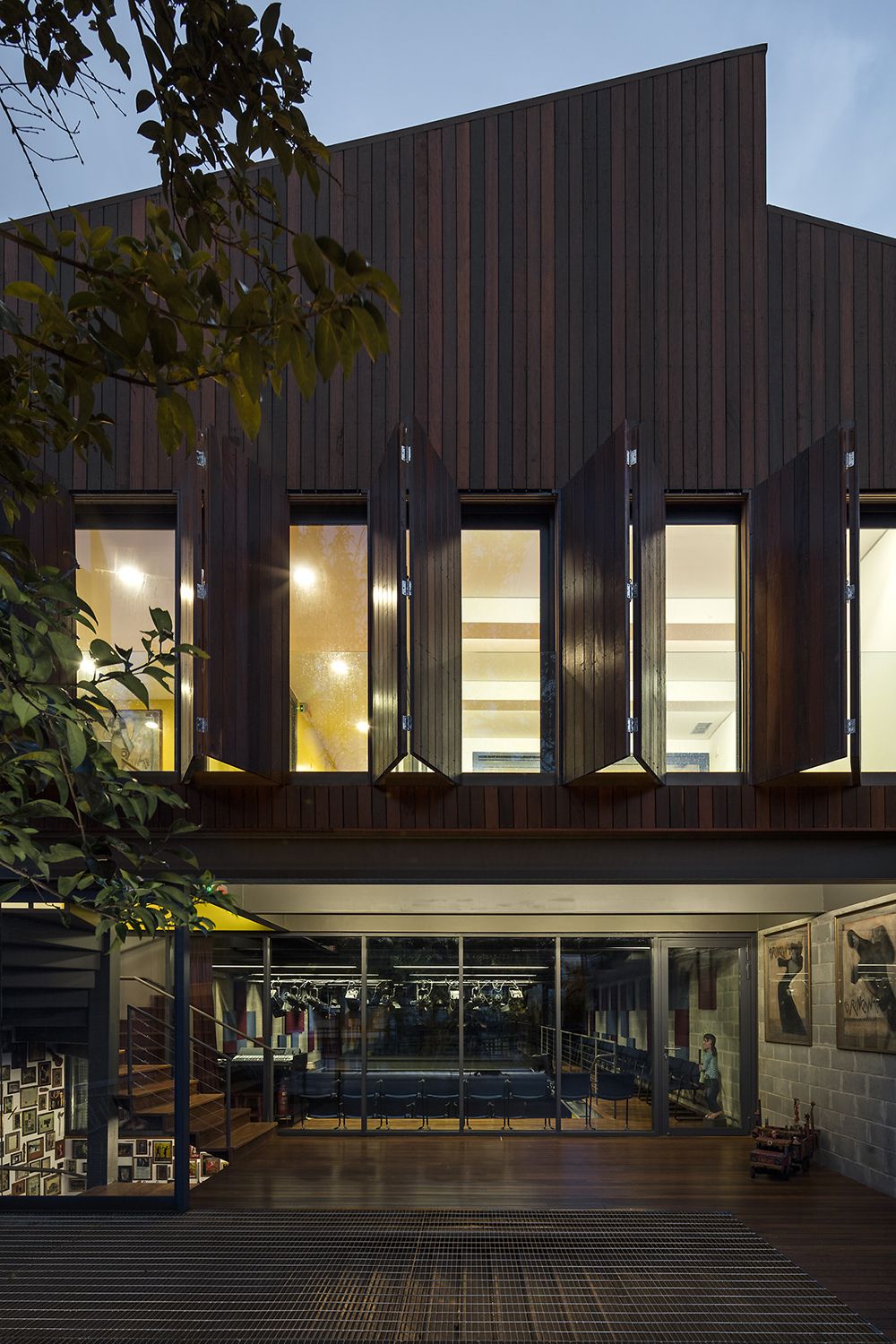
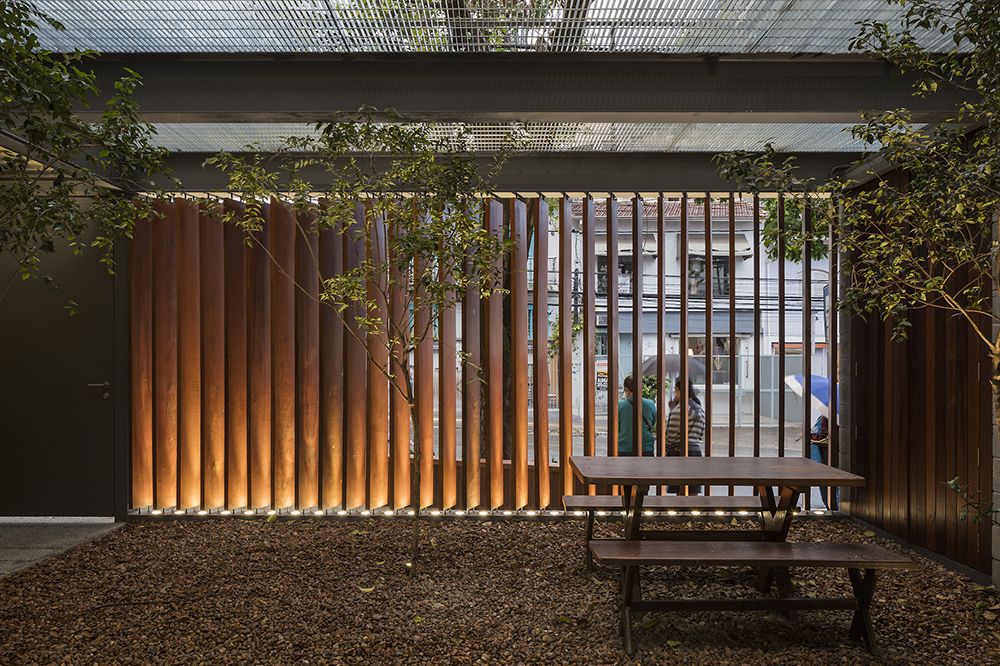
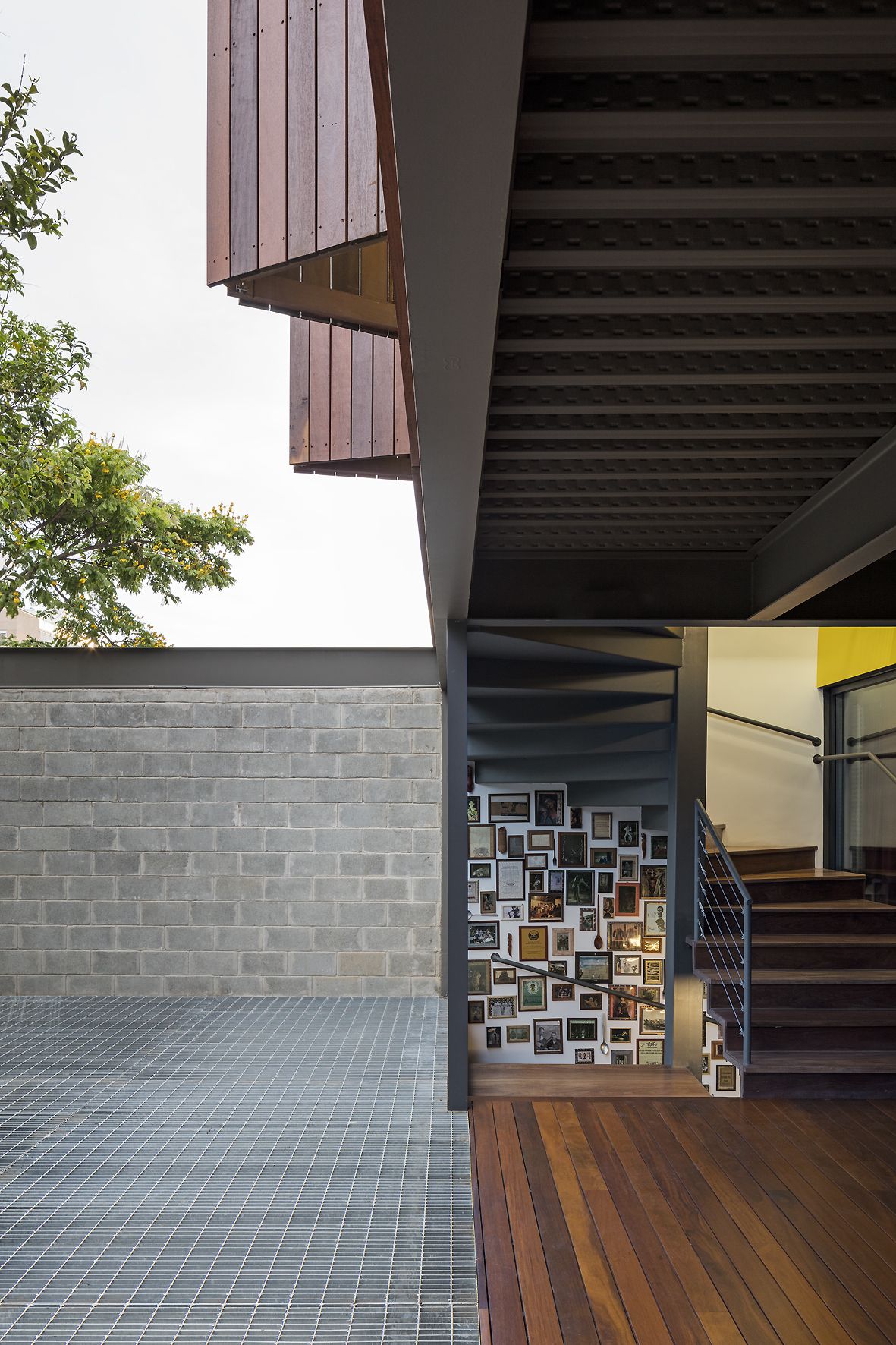
At the street level, the transition between public and private spaces occurs through vertical wooden brise-soleils that aim at exposing pedestrians to the cultural environment within the Institute.
© Leonardo Finotti
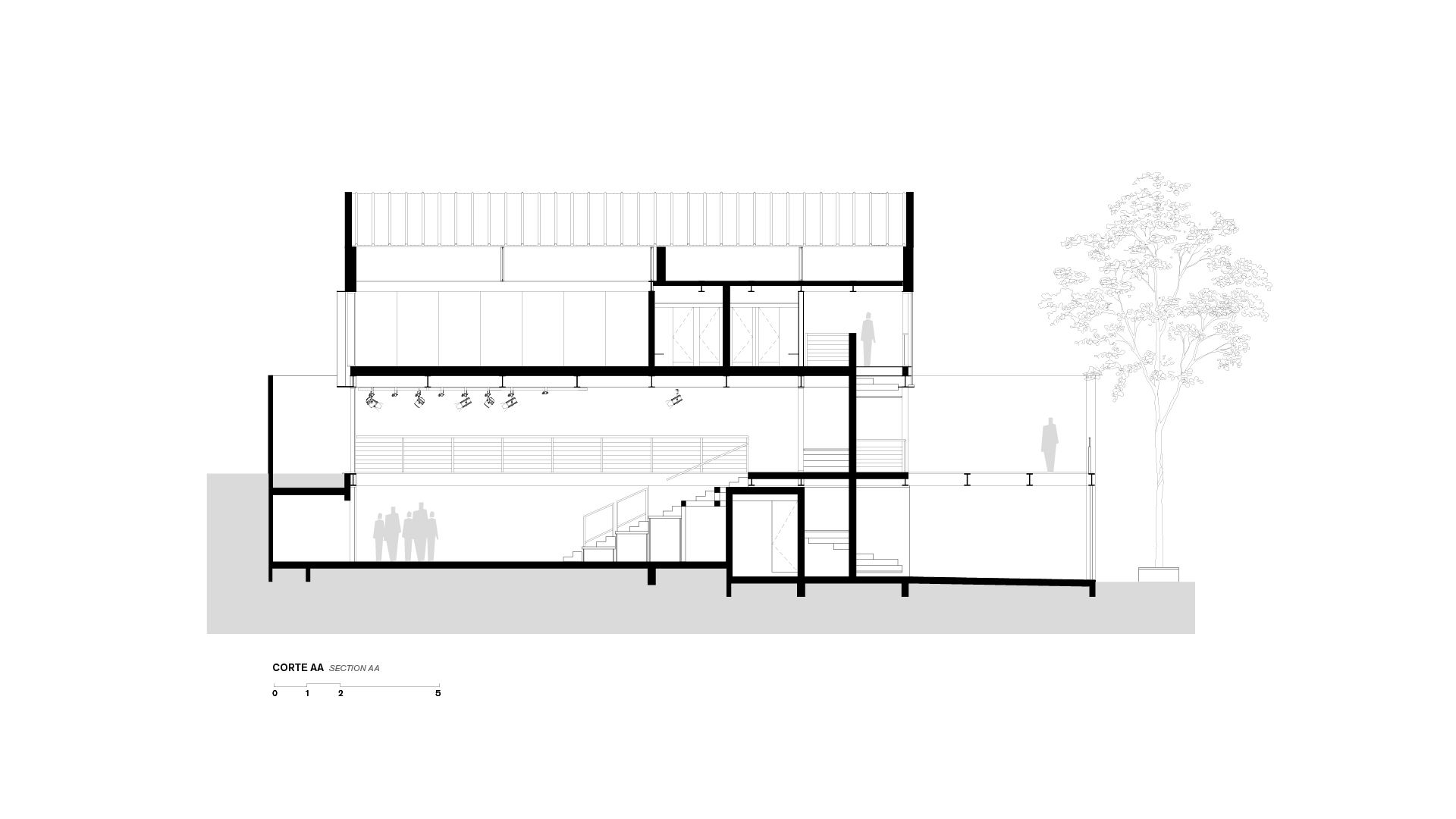
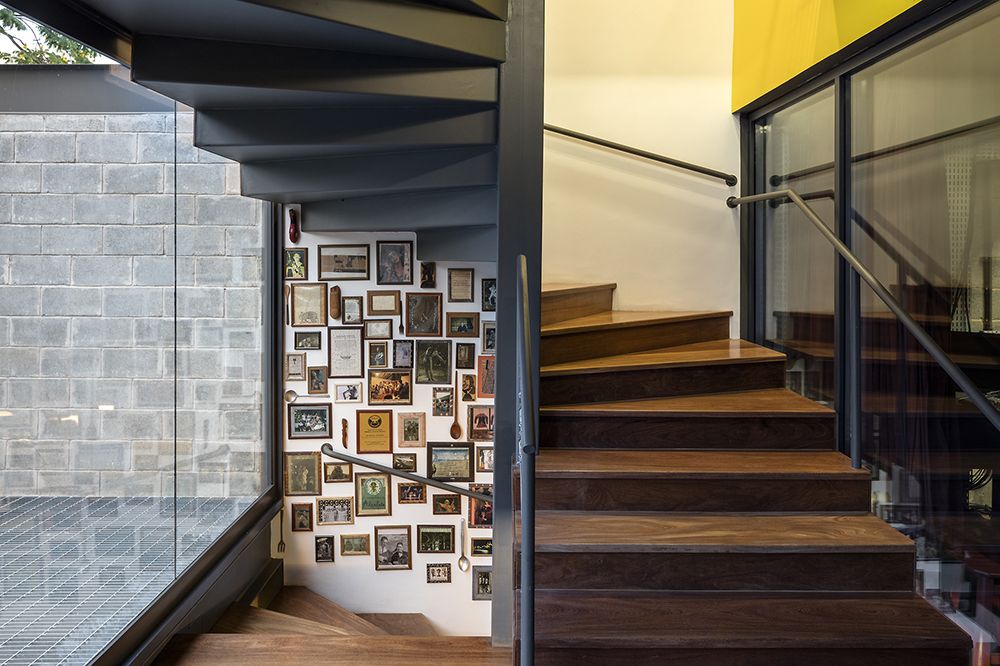
The main entrance creates a flexible open space where the box office and an access tunnel to the auditorium are located. The helical staircase on the left side connects three levels: ground floor, mezzanine, and upper deck.
Section AA
The mezzanine serves as a transition and gathering space connected to the auditorium. It also serves as an extension of the ground floor foyer, allowing direct access to the seats located on the upper level and to a bridge created over the stage area. This bridge expands the capacity of the auditorium and enables artistic interventions in two levels while giving access to a garden on the back of the stage.
© Leonardo Finotti
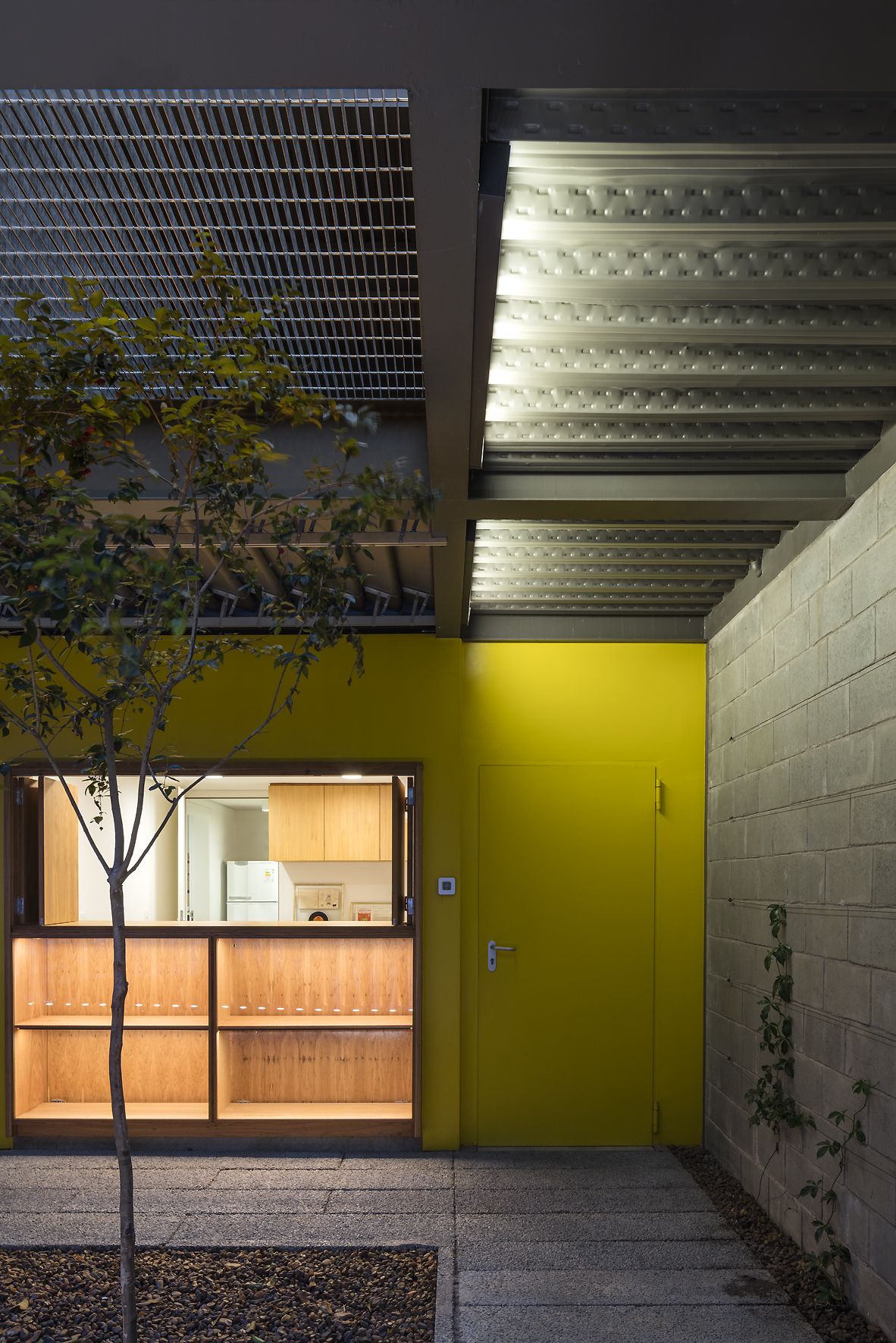
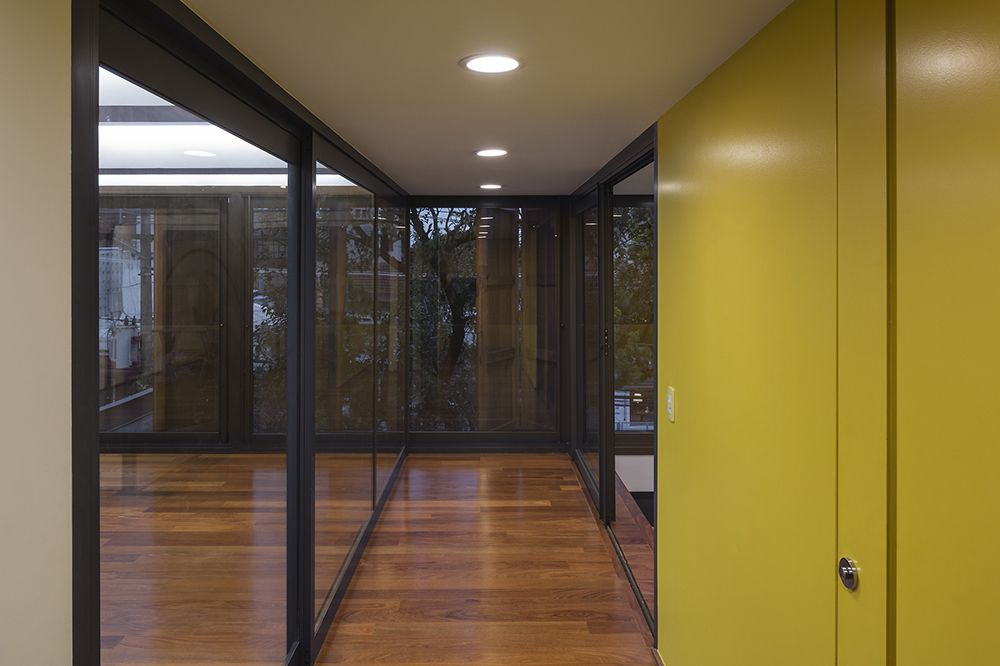
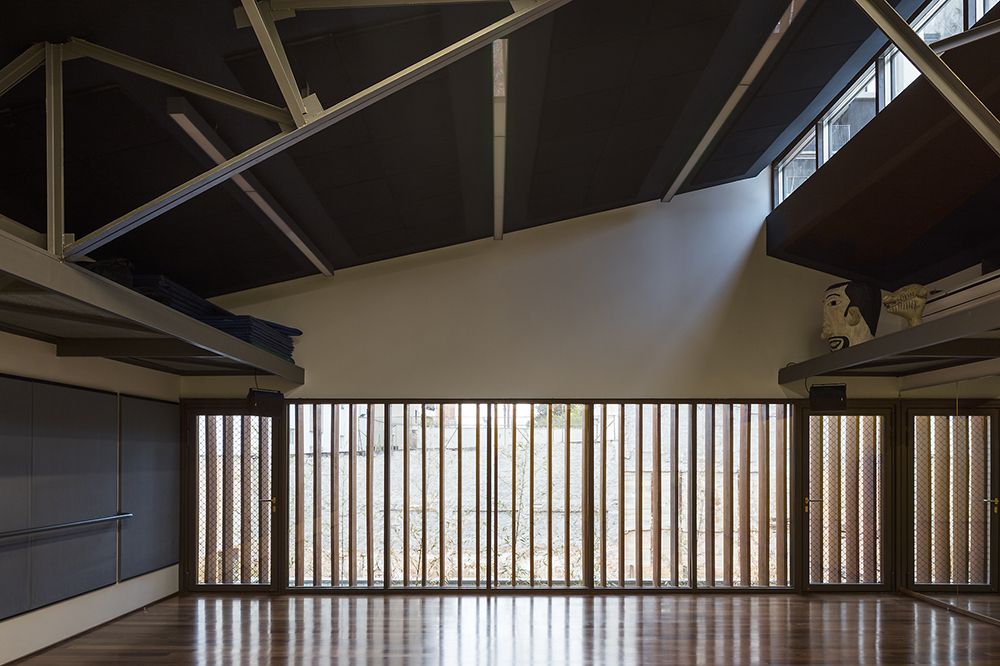
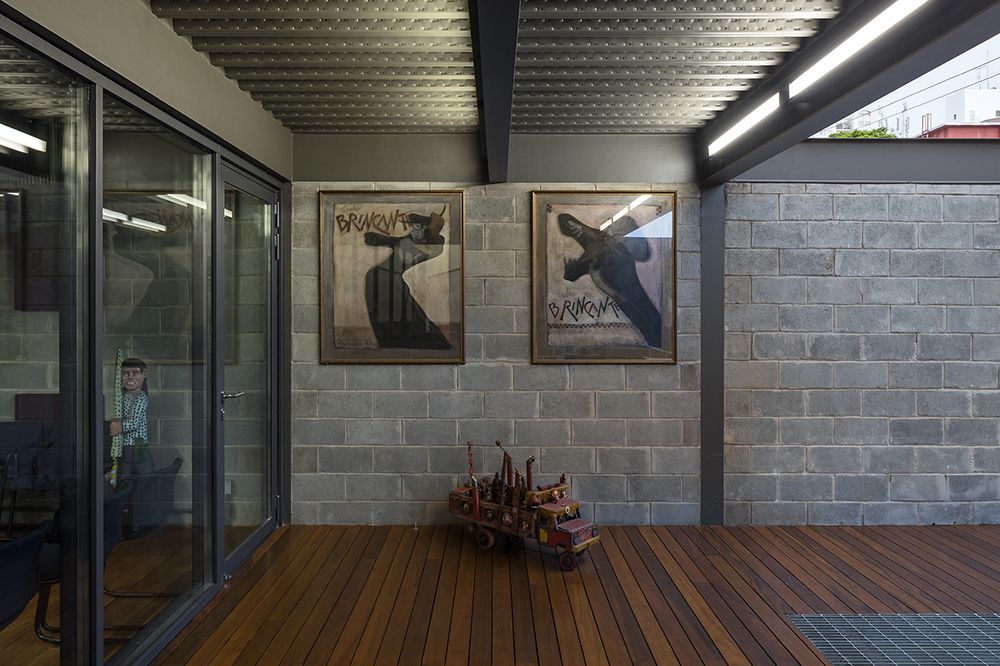
The upper deck is composed of meeting and dressing rooms, an office and small kitchen, and a multipurpose room, which opens up to a large glass window that is partially shaded by the wooden skin of the building and by the slanted roof.
© Leonardo Finotti
Project Info:Architects: Bernardes Arquitetura
Location: São Paulo, Brazil
Area: 342 m²
Project Year: 2016
Photographs: Leonardo Finotti