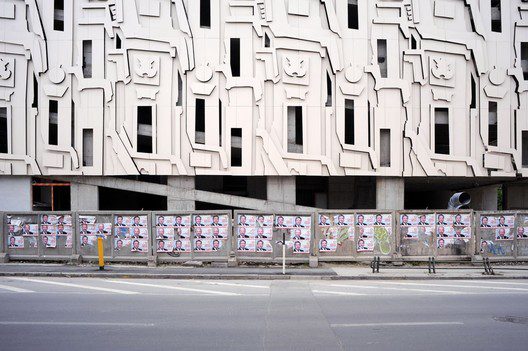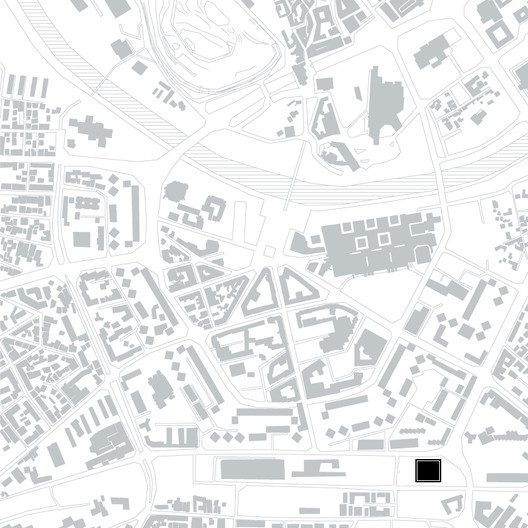


Baroque Garage, in 2010, nine years after the break up of Yugoslavia, the country of Macedonia started a revitalization project focusing on redefining a lost culture through implementation of design and architecture. The newly formed province and its inhabitants felt the need to distance themselves from their socialist past when they were a part of Yugoslavia.
© Darko Hristov
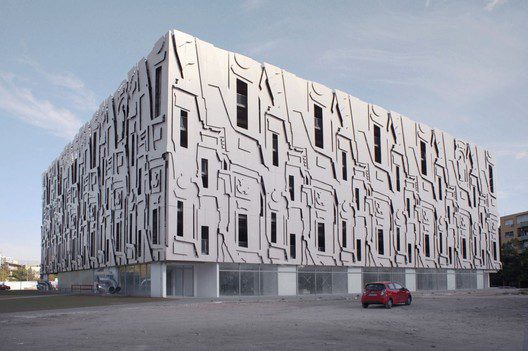
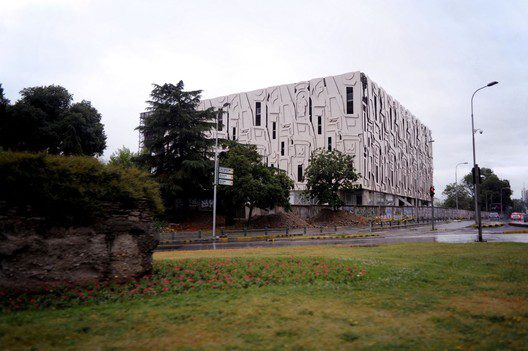
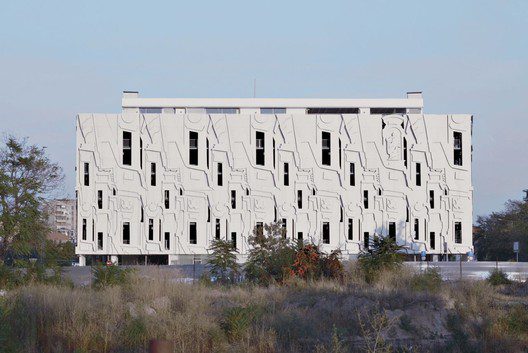
This new national identity created would show a rising power and nationalism. In 2010, Skopje 2014 project held a competition for a new parking garage in the “baroque, classic, neo-classic, romantic, and neo-romantic style”. Milan Mijalkovic + PPAG Architects entered and won with a new baroque parking garage design that would help the country project image of their developing culture.
© Darko Hristov
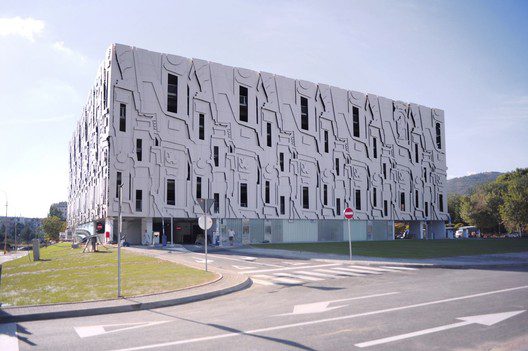
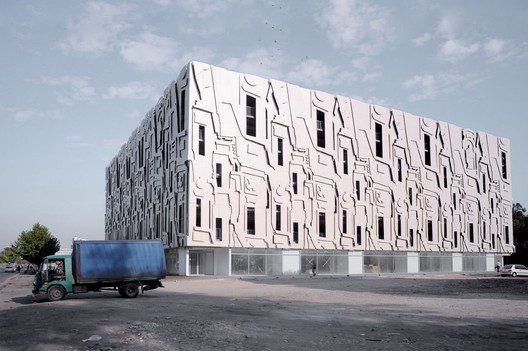
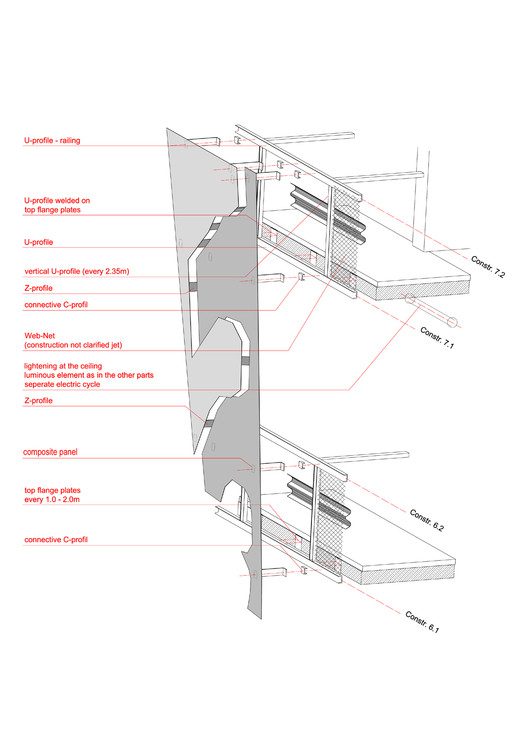
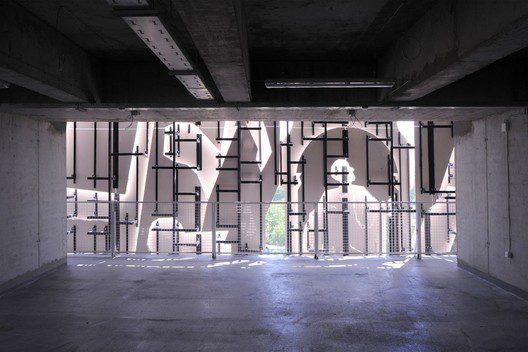
The infatuation with tne neo-Baroque spurs from the style’s association with power; its ability to leave an impression on the viewer was important for Macedonia in asserting its new cultural presence in Skopje. The patterned façade is extruded from the surface to create a shallow relief.
© Darko Hristov
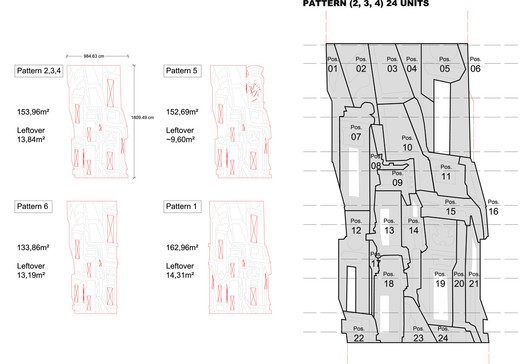
The pattern gives the illusion of depth to the flat surface. The concept for the design was derived from a photograph of a residential area in Vienna. By taking the photo, distorting it, and multiplying it over the surface, the architects create an outline that appears familiar to the viewer but is still distorted enough so that it is unrecognizable.
Project info:
Architects: Milan Mijalkovic, PPAG architects
Country: North Macedonia, Skopje
Area: 3550 m²
Year: 2013
Photographs: Darko Hristov
Manufacturers: Fundermax, Tejas de Chena