

The Material Intelligence of the 2026 Interior
Tile has always been one of the most honest materials in architecture. It does not fake texture or simulate depth — it either works within a space or it doesn’t. In 2026, that accountability is precisely what makes tile one of the defining conversations in interior design: as the industry moves away from the clinical neutrality of the past decade and toward surfaces with character, weight, and material truth, the tile you specify has become a statement about how you practice design. The question is no longer simply which color or format to choose. It’s about sourcing from brands that understand the design moment well enough to anticipate it, and that have the logistics to support professionals working at speed and scale. Apollo Tile has positioned itself as exactly that kind of resource.
About Apollo Tile
Apollo Tile is a US-based, design-focused tile brand operating primarily online, with a catalog of over 2,000 products spanning porcelain, ceramic, glass, and natural stone. The brand was built with a specific audience in mind: architects, interior designers, contractors, developers, and homeowners who need access to quality materials without the friction typically associated with traditional tile sourcing. The result is a platform that feels less like a trade supplier and more like a curated design library — one where the selection reflects contemporary aesthetic priorities rather than simply stocking standard industry offerings. Across all four material categories, Apollo Tile maintains a consistent design sensibility: modern without being cold, expressive without being arbitrary. That coherence is rare at this catalog depth, and it’s one of the main reasons the brand has earned a loyal professional following.
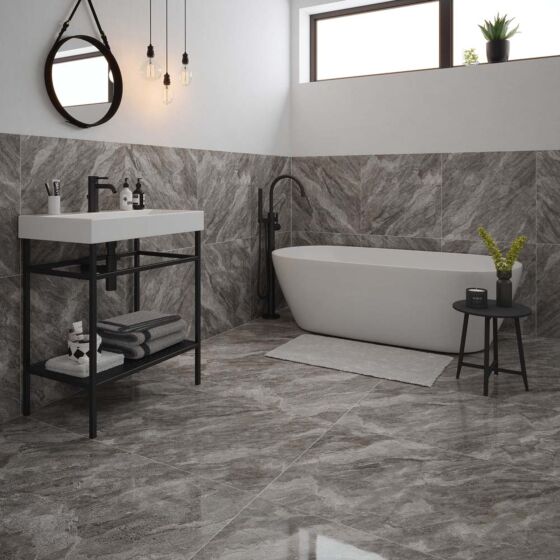
Apollo Grey Glazed Porcelain
A Catalog That Works Across the Full Range of Design
Apollo Tile’s product range rewards close attention. The breadth is genuinely unusual for an online-first brand, and the selections within each category demonstrate real design intelligence.
Sage Green 2.5×8 Glossy Ceramic Subway Tile
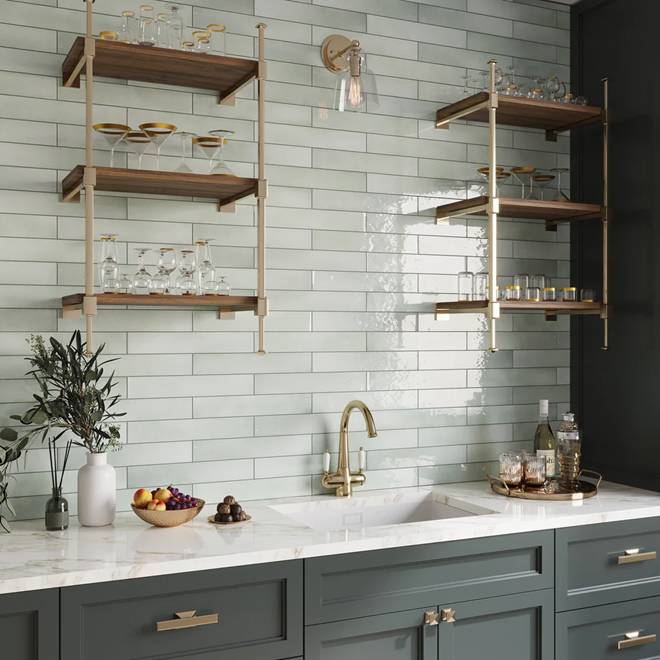
Consider the green-toned ceramic offerings. The Sage Green 2.5×8 Glossy Ceramic Subway Tile takes a familiar format and elevates it through color. The soft, desaturated sage reads beautifully against natural wood cabinetry and unlacquered brass hardware, making it a versatile choice for kitchen backsplashes or boutique bathroom walls where warmth matters.

Sage Green 2.5×8 Glossy Ceramic Subway Tile
Tea Green 2×10 Matte Picket Ceramic Tile
For a more directional approach, the Tea Green 2×10 Matte Picket Ceramic Tile offers an elongated picket geometry that introduces movement and rhythm to a surface, with the matte finish grounding the material in the tactile, anti-gloss sensibility defining the current moment in residential interiors.
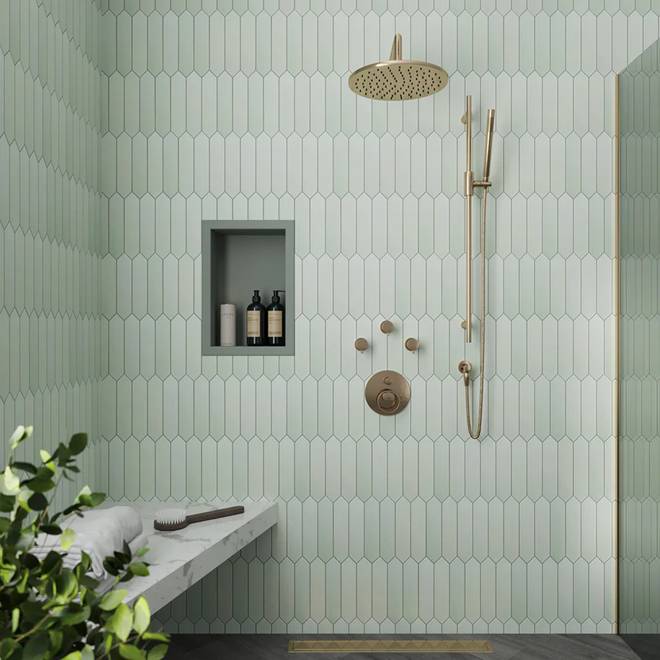
Tea Green 2×10 Matte Picket Ceramic Tile
Tea Green 3×16 Glossy Ceramic Subway Tile
Tea Green 2×10 Matte Picket Ceramic Tile
Green 24×48 Lappato Porcelain Large Format Tile
Large-format porcelain is where the catalog demonstrates its commercial credentials. The Green & Black 24×48 Lappato Porcelain Large Format Tiles suit open-plan residential floors and commercial wall cladding equally well. The lappato finish — semi-polished — captures ambient light without the harsh reflectivity of a full gloss.
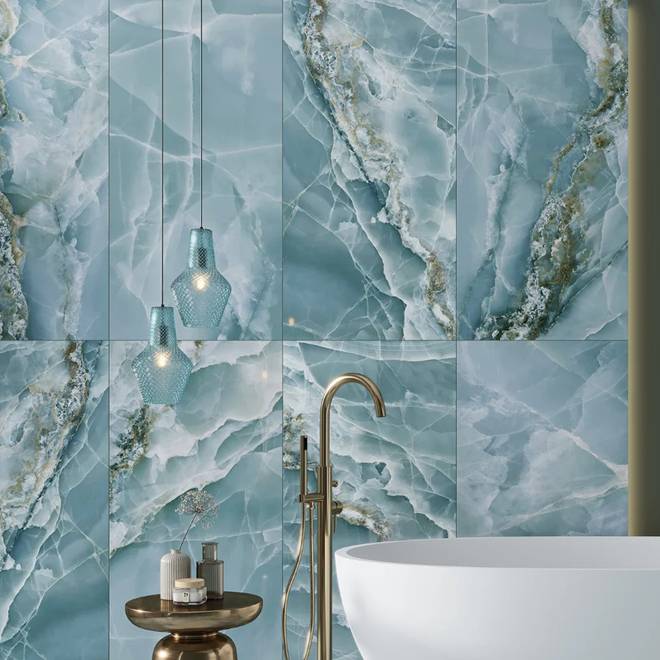
Green 24×48 Lappato Porcelain Large Format Tile
Black 24×48 Lappato Porcelain Large Format Tile
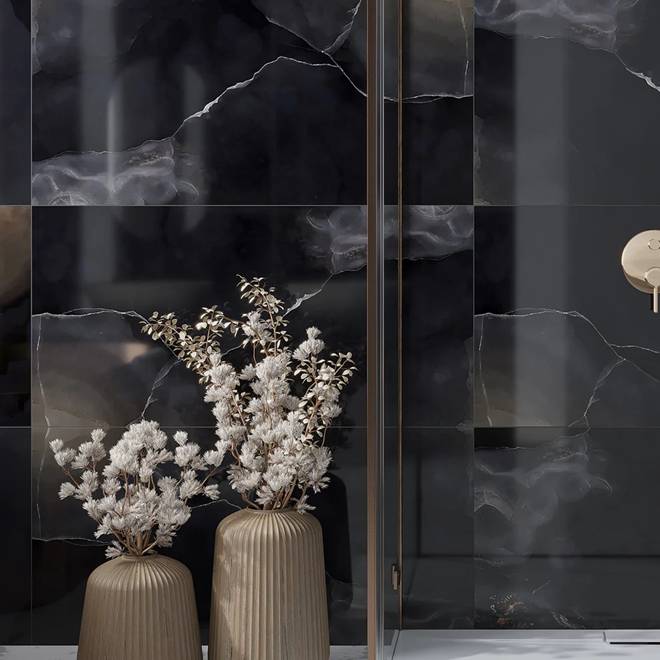
Black 24×48 Lappato Porcelain Large Format Tile
Air Superiority Blue 24×48 Polished Porcelain Large Format Tile
The Air Superiority Blue 24×48 Polished Porcelain Large Format Tile operates in a bolder register: a color-forward slab that functions as a design decision rather than a background surface.
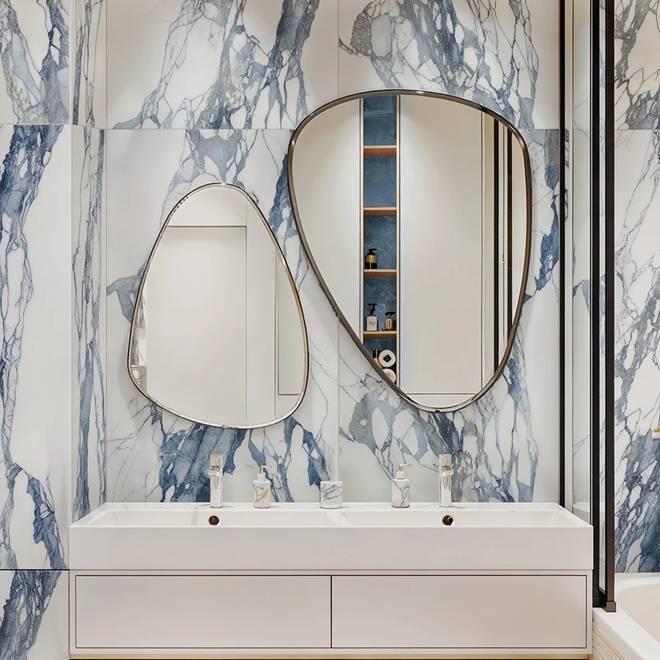
Air Superiority Blue 24×48 Polished Porcelain Large Format Tile
Natural 24×48 Matte Porcelain Deco Tile
The Natural 24×48 Matte Porcelain Deco Tile brings architectural patterning to a large-format surface with understated confidence.

Natural 24×48 Matte Porcelain Deco Tile
3×12 Antique Mirror Glossy & Beveled Glass Subway Tile
For accent applications, the 3×12 Antique Mirror Glossy & Beveled Glass Subway Tile brings period elegance to contemporary layouts — the beveled edge fragmenting light in ways that work well in hospitality interiors and powder rooms.
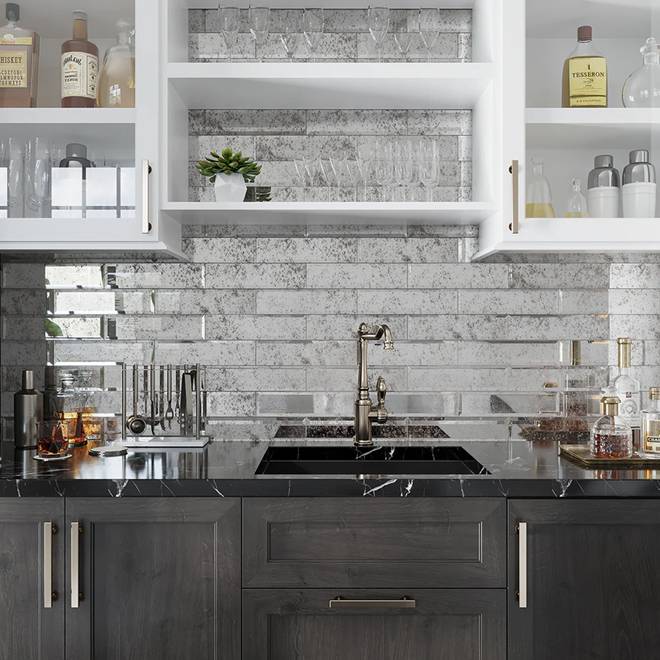
3×12 Antique Mirror Glossy & Beveled Glass Subway Tile
Gold 12×12 Glossy Penny Round Porcelain Mosaic Tile
The Gold 12×12 Glossy Penny Round Porcelain Mosaic Tile handles metallic accents with restraint, dispersing the gold tone across a surface rather than concentrating it.
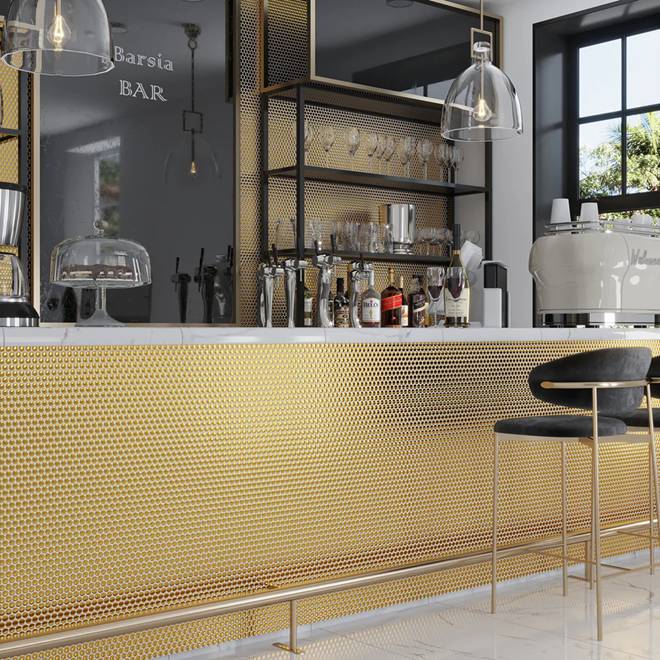
Gold 12×12 Glossy Penny Round Porcelain Mosaic Tile
White Beige 12×12 Thassos Crema Marfil Marble Mosaic Tile
The White Beige 12×12 Thassos Crema Marfil Marble Mosaic completes the natural stone offering with classical authenticity — the kind of material expression that printed alternatives have never quite replicated.
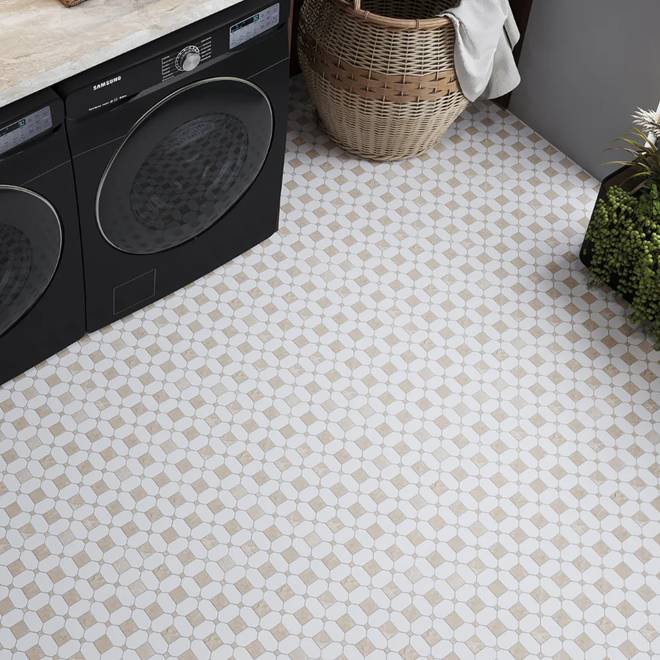
White Beige 12×12 Thassos Crema Marfil Marble Mosaic Tile
Design Alignment in 2026
Interior design in 2026 is characterized by a convergence of several distinct material trends, and Apollo Tile’s catalog intersects with nearly all of them. The green palette — running from the soft pastel of sage to the richer depths of tea and forest — has moved from early-adopter territory into mainstream specification, appearing across residential, hospitality, and retail interiors. The trend reflects a broader shift toward biophilic sensibility: surfaces that suggest the natural world without literally reproducing it.
Large-format porcelain continues to gain ground, driven by both its clean aesthetic and the practical advantage of fewer grout lines in wet areas. The appetite for authentic natural stone signals a correction from the hyper-realistic printed porcelain moment of the previous decade. Architects and designers are once again specifying genuine marble and stone — not as a luxury statement, but as an expression of material honesty consistent with the broader cultural turn toward the real and the handmade. Metallic tile accents have re-entered specification in a more considered form: less the mirrored excess of earlier decades, and more the warm integration of gold and bronze into restrained palettes. Apollo Tile’s product range maps onto each of these directions with a specificity that suggests genuine market attentiveness.
The Trade Program: Built for How Professionals Actually Work
For design professionals, the operational dimension of a tile supplier matters almost as much as the product. A brand with a strong catalog but poor logistics creates friction at exactly the wrong moment in a project — when material decisions are being finalized under deadline pressure and a single delayed delivery can affect multiple downstream trades.
Apollo Tile’s response to this reality is a trade program designed around the rhythms of professional practice. The Apollo Tile trade program offers a flat ten percent discount on all orders, which applies consistently across the catalog without category exclusions or order minimums. Orders placed before 11 AM Pacific Standard Time qualify for same-day dispatch — a commitment that makes a practical difference when a project requires fast turnaround on materials. Expedited shipping options are available at checkout, giving professionals direct control over delivery timelines when a project demands it.
For larger-scale projects, pallet orders of 50 cases or more are eligible for custom pricing, enabling architects and contractors working on commercial or multi-unit residential developments to negotiate cost structures that reflect the volume and continuity of their work. The program also includes five free tile samples per month — a seemingly small detail that carries real value in practice. Testing actual tiles under the specific lighting conditions of a space, and alongside the real finishes of a given project, remains the most reliable way to make final material decisions. Five samples per month keeps that process financially accessible for firms managing ongoing project pipelines.
The referral component — a $100 gift voucher for each successful referral — acknowledges something that professionals already know: the best suppliers spread through recommendation within the design community. The sign-up process itself is designed for simplicity, with benefits activating immediately rather than following an extended approval window. For firms already managing complex project schedules, removing procurement friction at the supplier level is a genuine operational advantage.
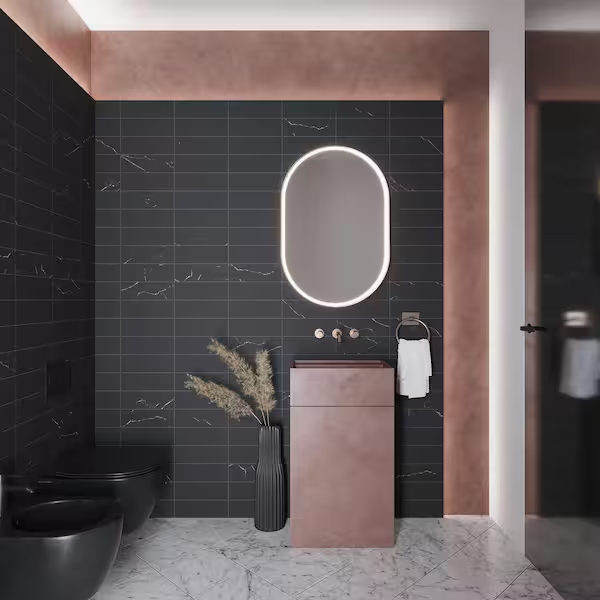
Apollo Tile Black 4 in. x 12 in. Honed Marble Subway Floor and Wall Tile
A Long-Term Resource for Serious Practice
The relationship between a design practice and its material suppliers develops slowly and is difficult to rebuild once it breaks down. Consistency — of product quality, of delivery performance, of catalog coherence — is what converts a one-off supplier into a long-term resource. Apollo Tile has built, across its catalog and trade infrastructure, a proposition that makes sense for practices wanting to consolidate supplier relationships without compromising material range. Porcelain, ceramic, glass, and natural stone under one trade account, with a program that actually functions as described, is a meaningful offer. In a design landscape that rewards material intelligence and punishes procurement inefficiency, knowing where your tiles come from — and trusting that they will arrive when they need to — is not a minor consideration. It is, increasingly, part of the practice itself.

Sophie Tremblay is a Montreal-based architectural editor and designer with a focus on sustainable urban development. A McGill University architecture graduate, she began her career in adaptive reuse, blending modern design with historical structures. As a Project Editor at Arch2O, she curates stories that connect traditional practice with forward-thinking design. Her writing highlights architecture's role in community engagement and social impact. Sophie has contributed to Canadian Architect and continues to collaborate with local studios on community-driven projects throughout Quebec, maintaining a hands-on approach that informs both her design sensibility and editorial perspective.