


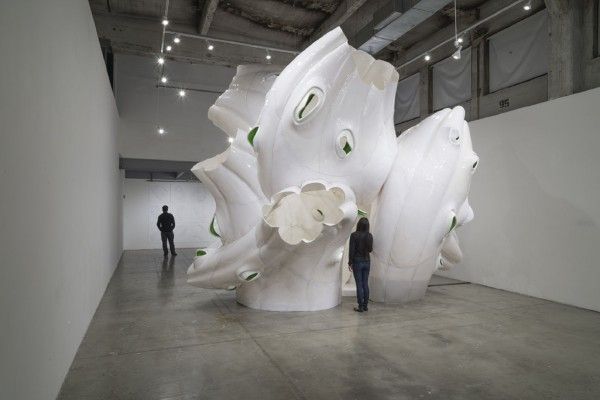
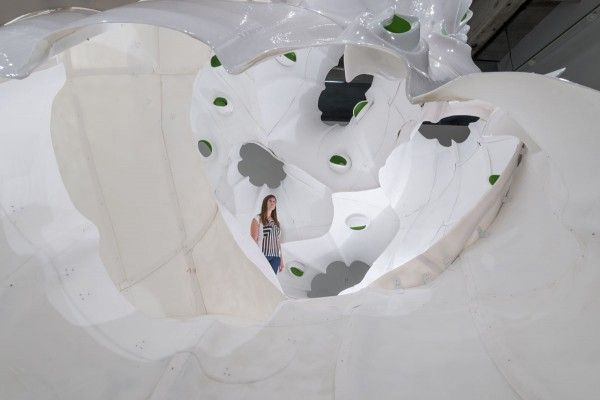
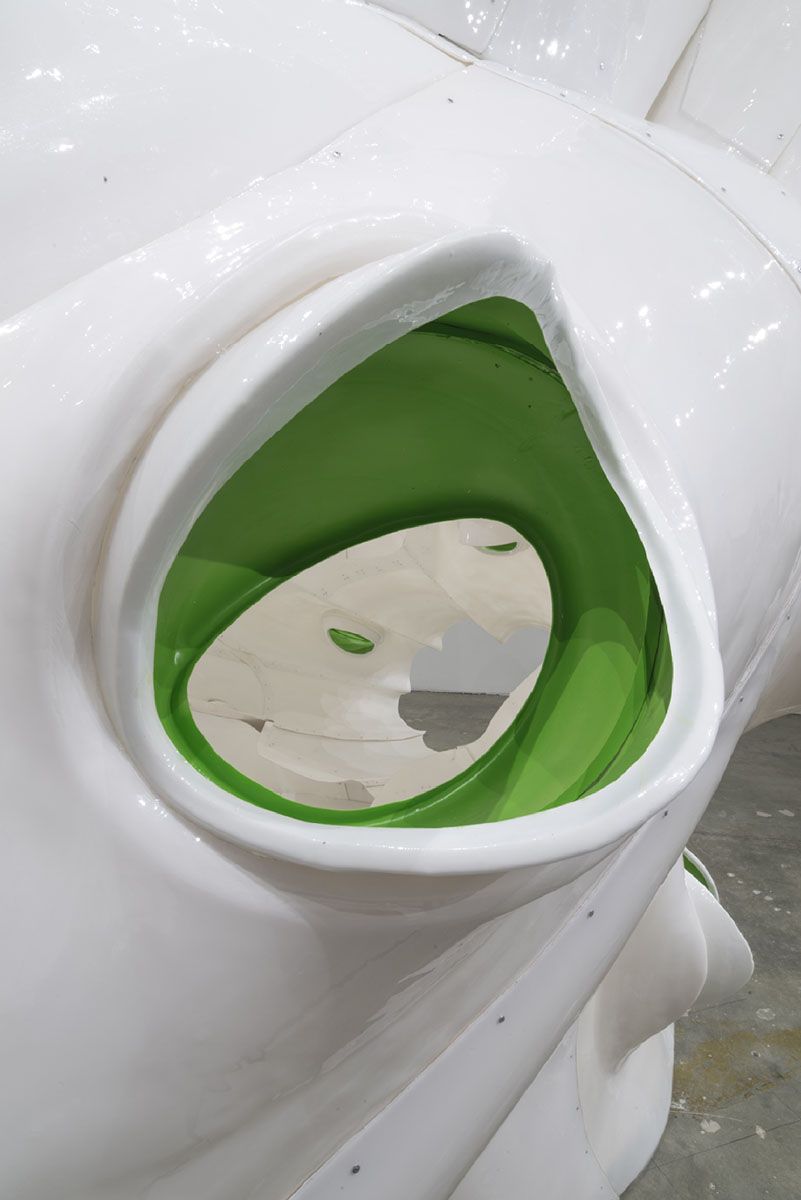
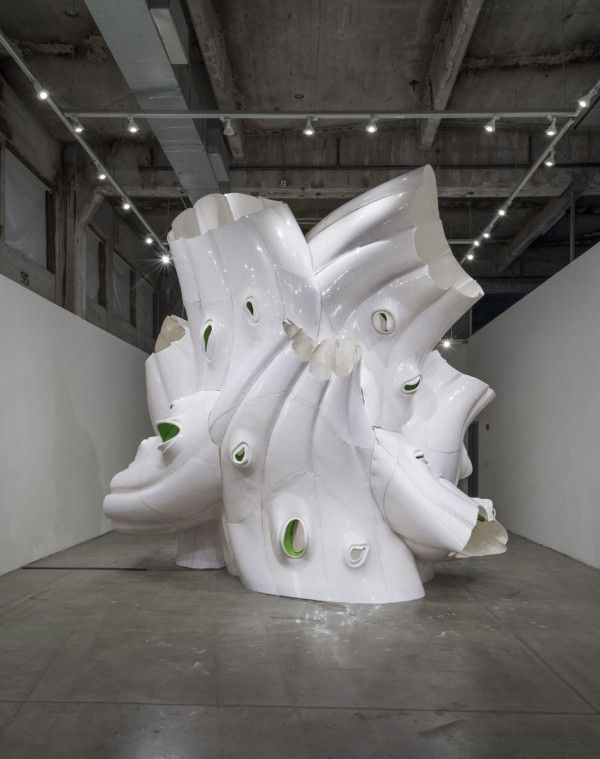
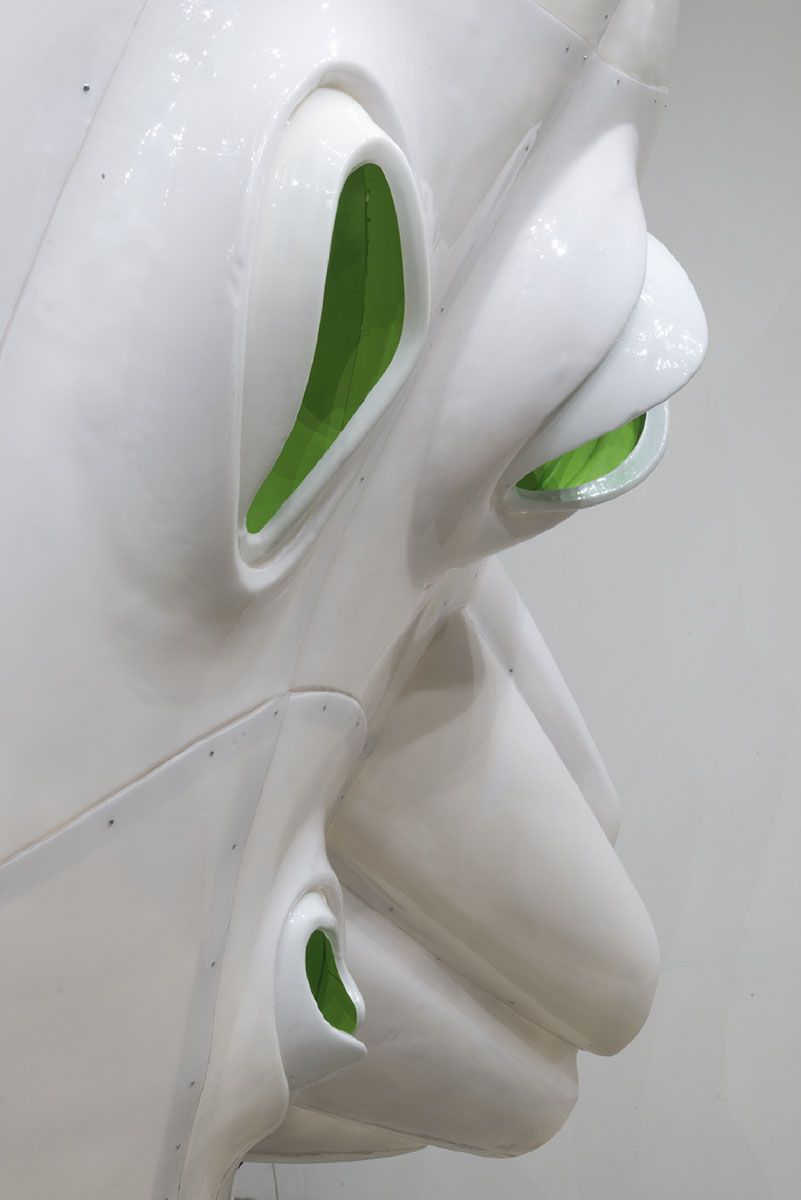
Apertures is a pavilion design which is the direct manifestation of research by BAUMGARTNER + URIU (B+U). The focus is to bridge the gap between technology and nature by using digital tools to mimic organic forms. The name being derived from the many different sized holes it holds.
photography by © Joshua White
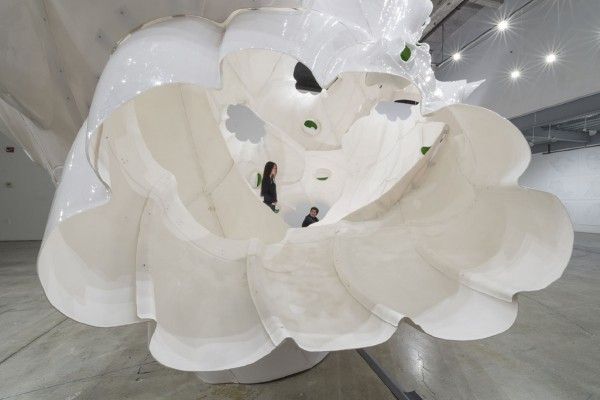
The pavilion is built on the reinterpretation of an opening, more specifically a window. How it can be more than just a visual frame and also instead have physical interaction with the spectator too. To also redefine it in terms of material and appearance. The pavilion causes the viewer to experience his or her own biorhythms through heat sensors and sounds hence acts as a window to self.
photography by © Joshua White
The structure is 16 ft tall high and its form and material are also responsible for holding it up without any external support. It is made of 172 unique CNC mill cut panels. Each panel is made of a combination of polyurethane foam and heat formed out of thermoplastic polymer resin laminated together and yet only 1/8 ” thick.
photography by © Joshua White
The proposal readdresses the building as an organism and hence also takes in account its reactions with external stimulus. In this case the pavilion and the human body interacting in an controlled immersive environment.
photography by © Joshua White


Anastasia Andreieva is an accomplished Architectural Projects Editor at Arch2O, bringing a unique blend of linguistic expertise and design enthusiasm to the team. Born and raised in Ukraine, she holds a Master’s degree in Languages from Taras Shevchenko National University of Kyiv. Her deep passion for architecture and visual storytelling led her to transition from translation and editorial roles into the world of design media. With a keen eye for conceptual clarity and narrative structure, Anastasia curates and presents global architectural projects with precision and flair. She is particularly drawn to parametric and digital design, cultural context, and emerging voices in architecture. When I’m not analyzing the latest architectural trends, you’ll probably find me searching for hidden gems in cityscapes or appreciating the beauty of well-crafted spaces. After all, great design—like great connections—can be found in the most unexpected places. Speaking of connections, because architecture isn’t the only thing that brings people together.