


Apassionata Adventure Park
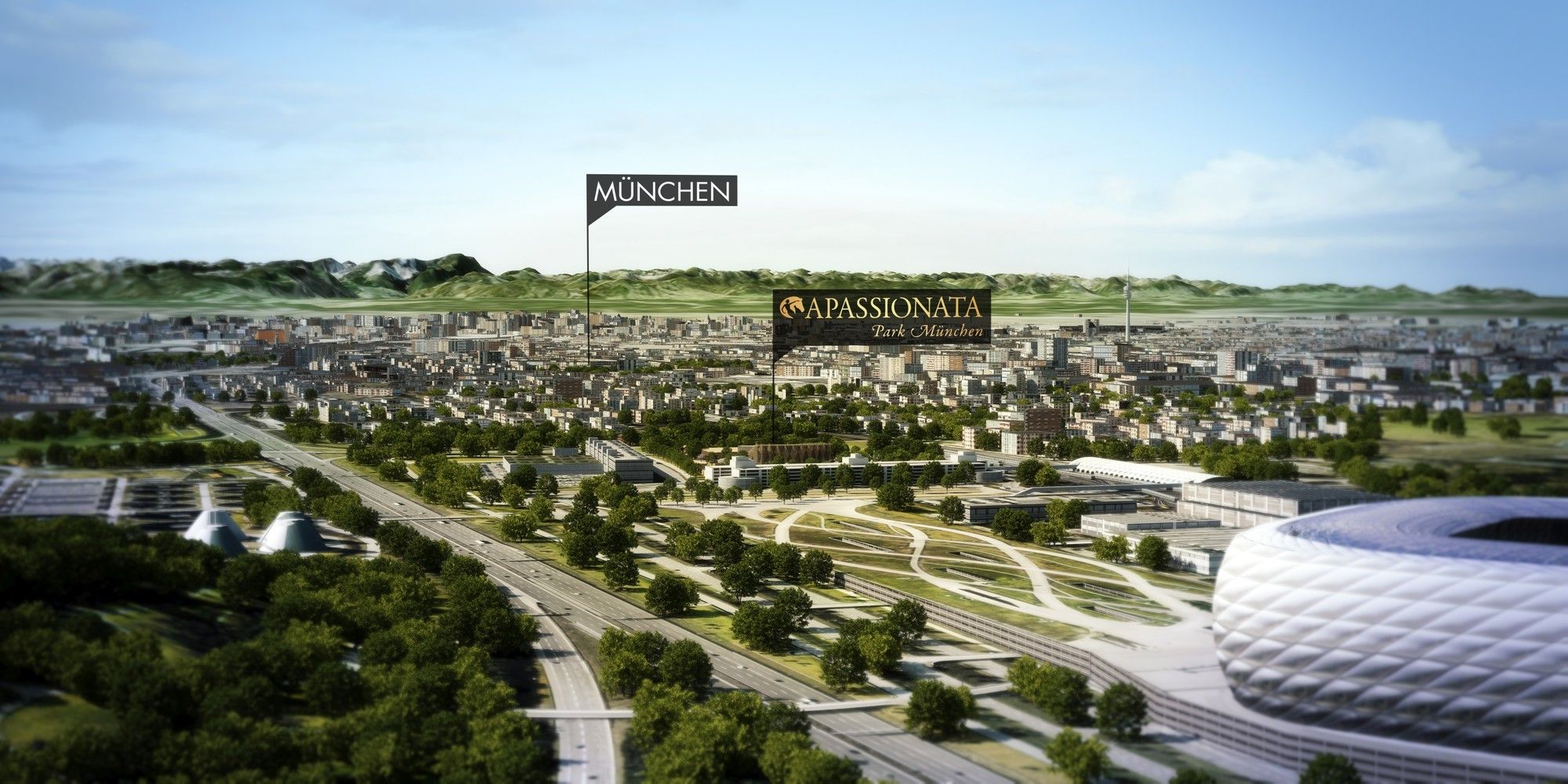
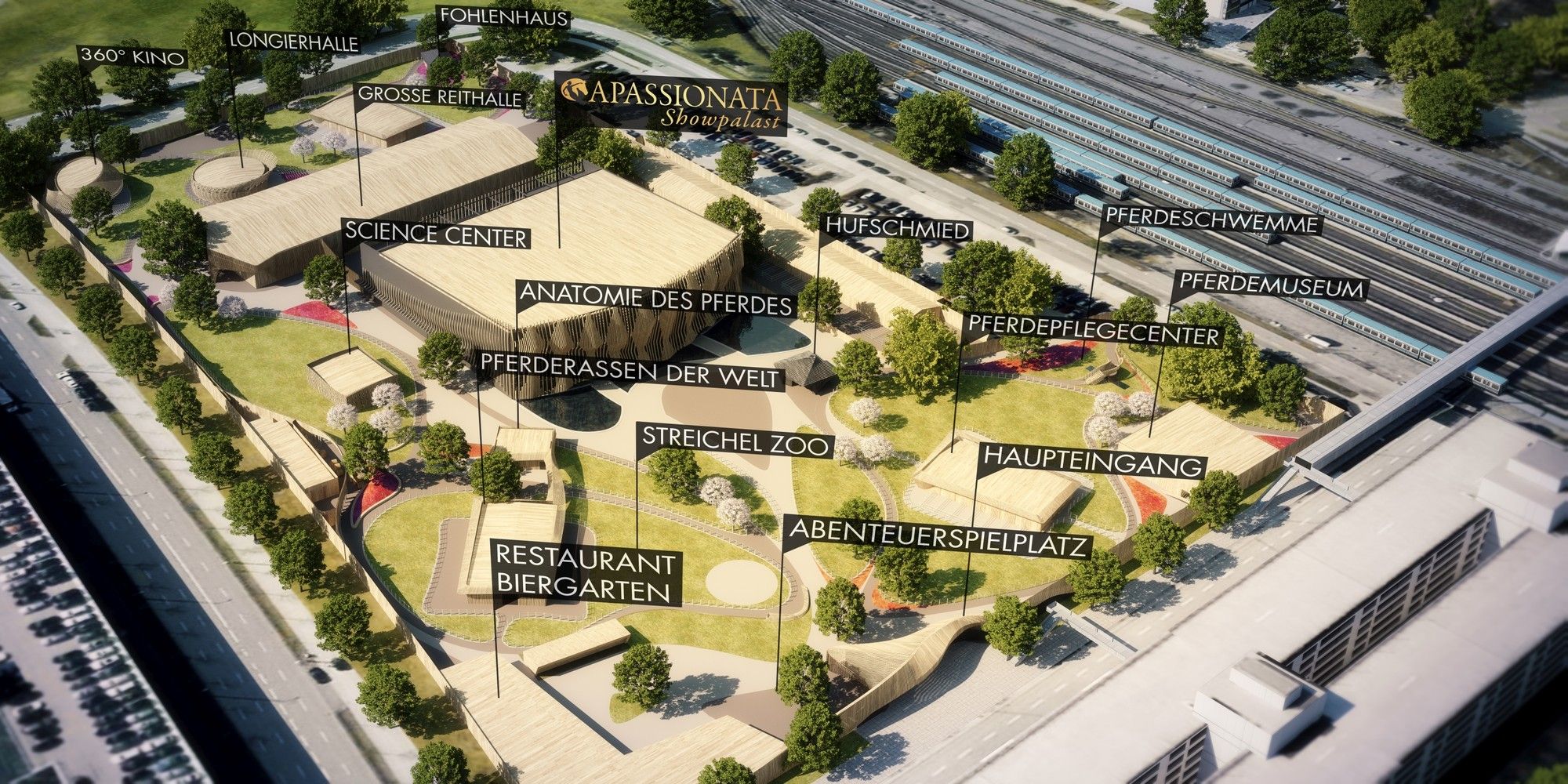
The new design by GRAFT for the Apassionata Park to be constructed in Munich, Germany is emblematic of the brand. Serving as an entertainment show and park for horses, it will have a show palace and 12 themed pavilions.
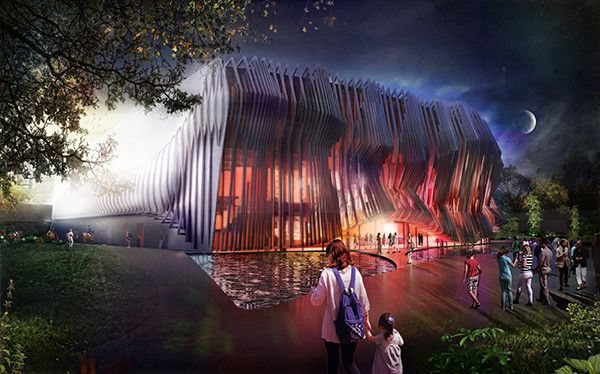
Right from the entrance, one can sense an aura of grandeur. The experience of the horse show and the pavilions is meant to be enthralling, but it is the architecture of the space that is to be credited for creating an out-and-out magical affair.
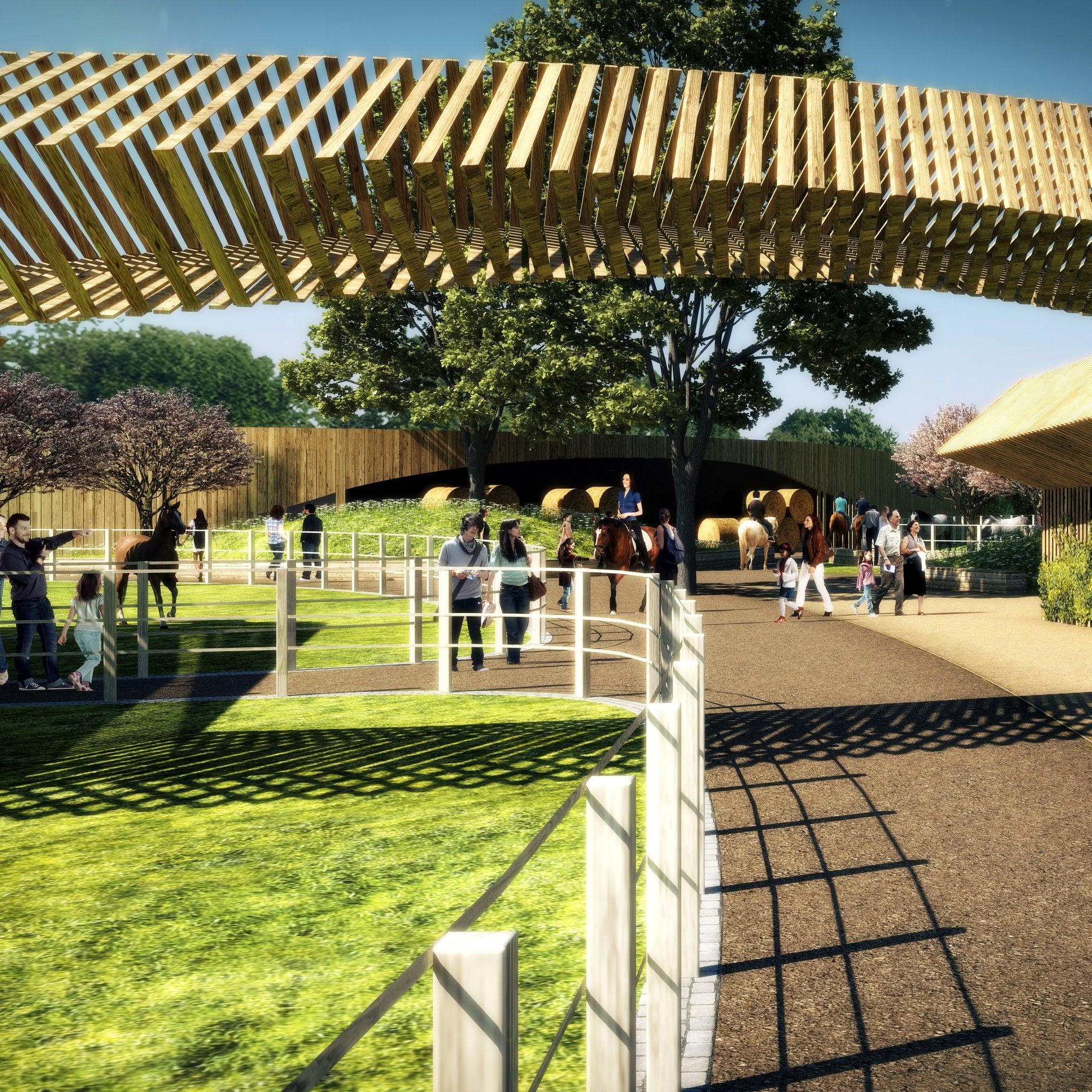
courtesy of GRAFT
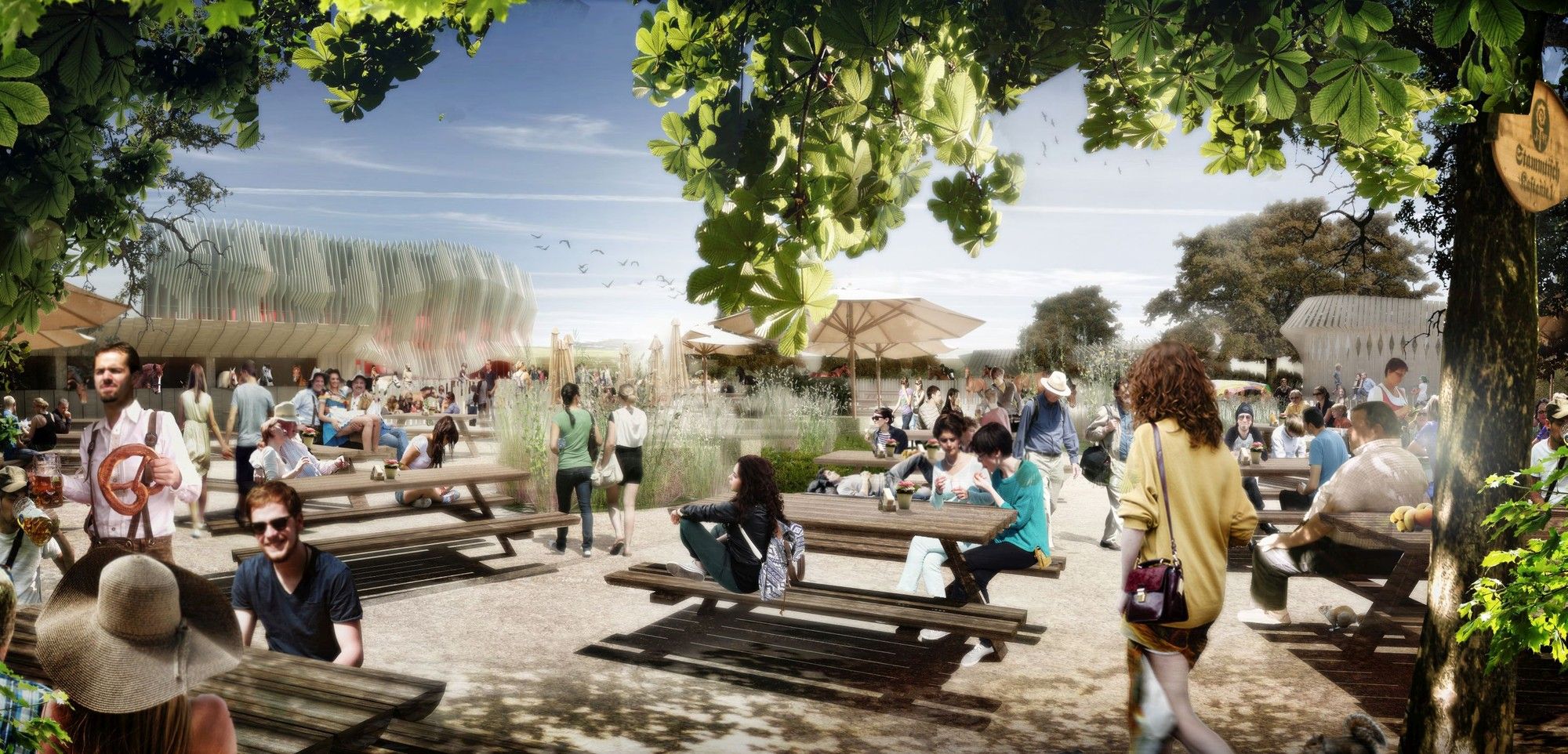
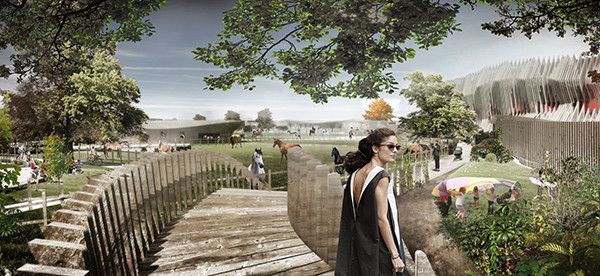
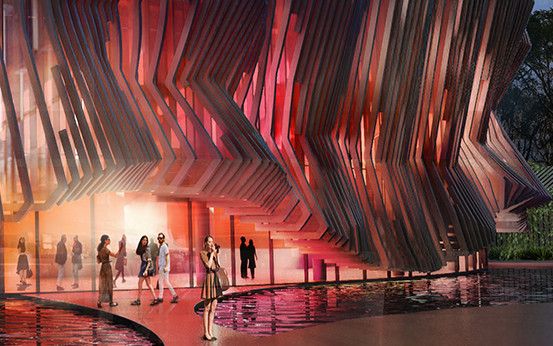
The entire park and all the pavilions, though separately placed are unified in character as they all use the same material – wood. Used in a creative manner, the material forms a language of its own. Sections of wood have been used to create forms that seem to freely flow, capturing the dynamic movements and beauty of running horses. The forms seem light and penetrable, completing the landscape, instead of overpowering through their presence. Each pavilion has been made to look unique to attract the visitors.
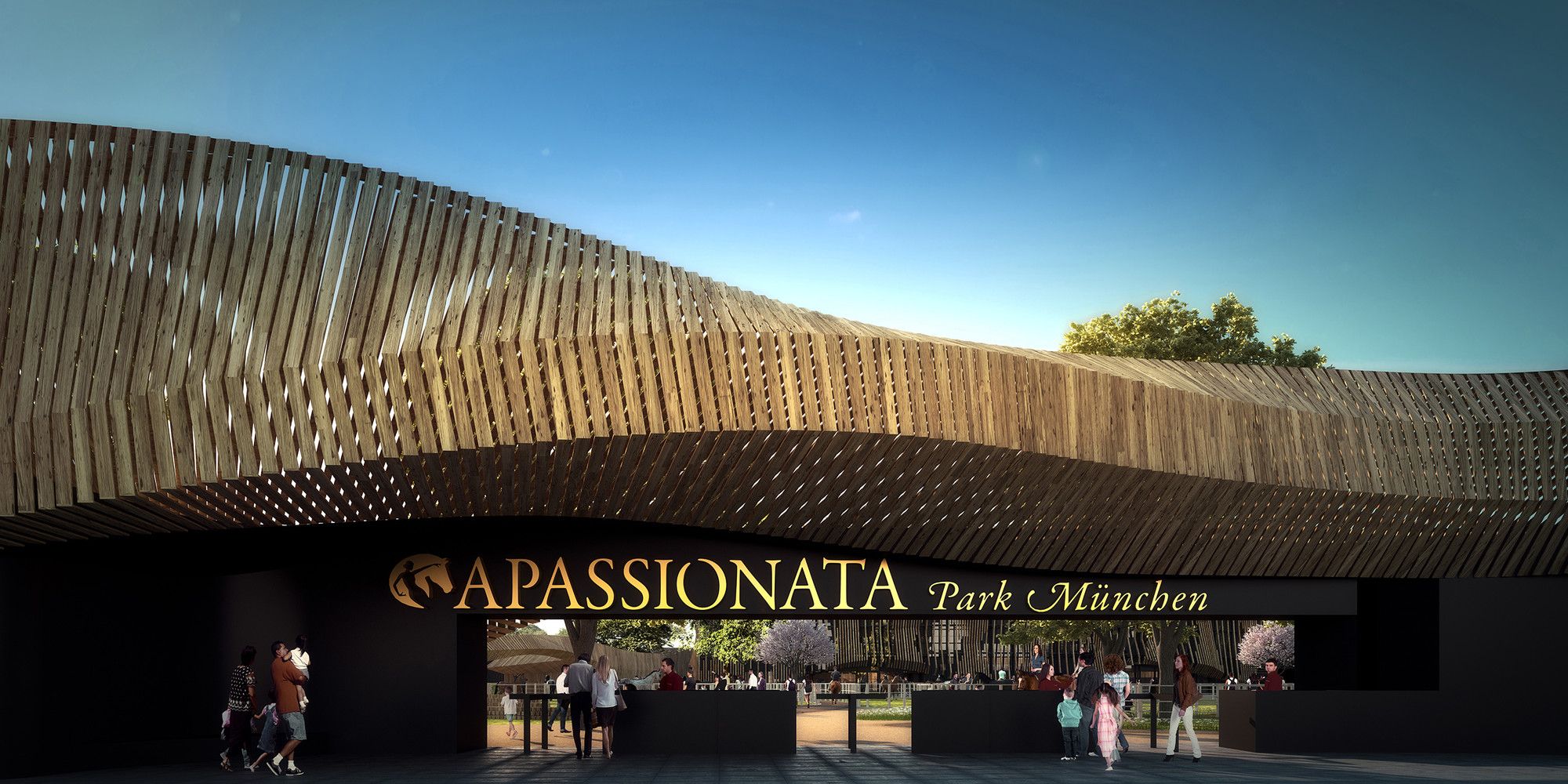
courtesy of GRAFT
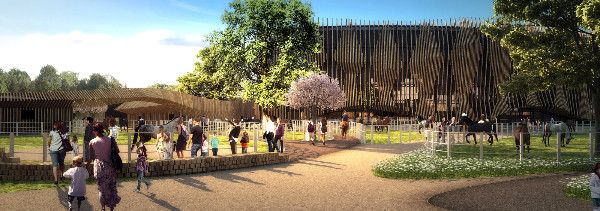
The show palace is positioned centrally in the 5 hectare land and is visible from the entrance of the park. Its rising and falling façade lifts to form an entryway. It showcases a bold use of a combination of light and wood. Watching their video it first seems that sections of wood have been used such that at some places they are dense, and at other places so sparse that light shines through. But in fact, the sparse areas have been shaped in the form of galloping horses that will be clearly visible, when red light flashes through them at night.
The pavilions are strategically placed to form a relationship with each other. At the front of the show palace is an adventure park, a restaurant, a petting zoo, horse breeds of the world pavilion, equine care centre and a blacksmith. At the back are a 360° cinema, a large riding hall and a foal house, among others.
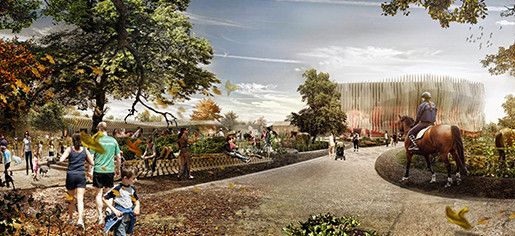
courtesy of GRAFT
By: Sahiba Gulati

Sahiba Gulati is a former assistant editor at Arch2O and current Assistant Professor at the Balwant Sheth School of Architecture in Mumbai. Her academic and editorial work is deeply rooted in researching gender and public space, exploring how built environments shape—and are shaped by—social identities and power dynamics. With experience in both publishing and academia, Sahiba brings a critical, nuanced perspective to Arch2O’s discourse on inclusive urban design, spatial equity, and the role of architecture in public life .